Biomedical Engineering: Meaning, Scope, Career Opportunities & Future in Healthcare

Biomedical Engineering

Imagine a scenario in which prosthetic limbs move as naturally as your own, minuscule devices implanted in the chest detect heart problems well in advance of their becoming life-threatening, and people who have lost their hearing can hear once more through a tiny implant. These are not images from a futuristic movie, but real advances created by biomedical engineers.

If you’ve been interested in the science that enables you to breathe, that allows doctors to treat patients, or that enhances the lives of millions worldwide, you’ve already dabbled in the interesting field of biomedical engineering. 

What is Biomedical Engineering?

Biomedical engineering is, at its core, the fusion of engineering and medicine. It’s a place where inventive minds marry the rigor of engineering with the science of biology and medicine to develop solutions that enhance healthcare. Think of it as the link between the hospital bedside and the engineering lab.

Biomedical engineers use the principles of engineering to understand biology and the human body with the ultimate goal of developing technologies to improve health. They don’t just hypothesize– they invent, manufacture and enhance the medical tools that doctors rely on every day. From Designing the pacemaker to keep hearts beating consistently to developing artificial joints that let people walk pain-free, biomedical engineers are the invisible allies behind modern medicine. 

The field has been exploding in growth in the last 10-20 years. What was once an interdisciplinary subspecialty is now its own unique discipline, regarded worldwide as one of the most influential branches of engineering. 

Technologies You Should Know About

So what is it that biomedical engineers do? Here are five of the most incredible and life-altering inventions developed by biomedical engineers: 

Pacemakers: The Heartbeat Conductor

Do you remember when a heart rhythm problem was a ticket to a life of severe restriction? That was before a pacemaker. But the origin of these impulses is for a small device, about the size of a coin, that is implanted in the chest or abdomen near the collarbone, and sends electrical impulses to cause the heart to beat at an appropriate rate. 
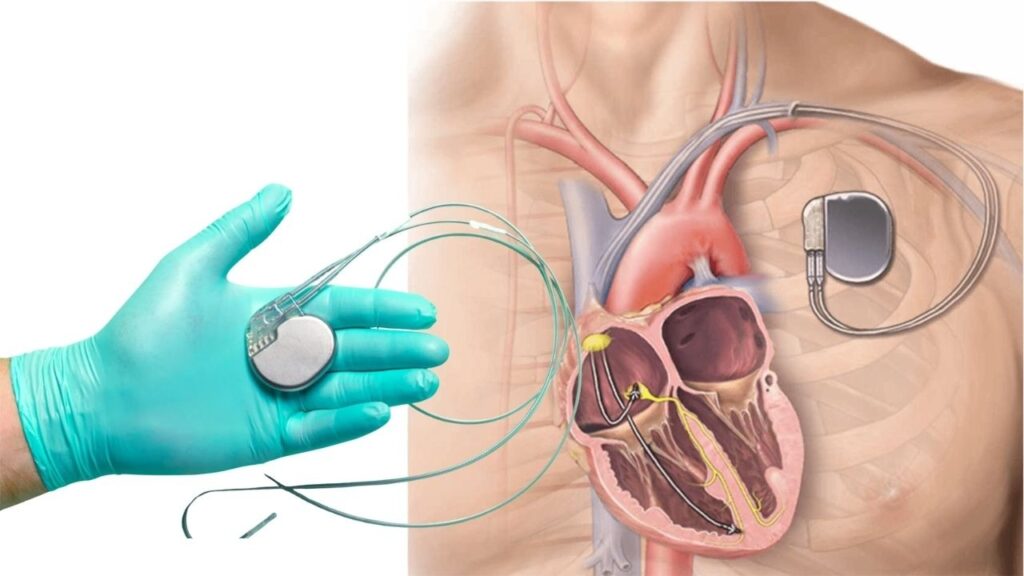
The first pacemaker was implanted back in 1958, and it was revolutionary! Since then, biomedical CEs have developed smaller, more reliable, and intelligent devices—some even equipped with artificial intelligence that can learn a patient’s heart patterns and modify its treatment in real time. 

Prosthetics: More Than Fake Body Parts

If you lose a leg or arm, a talented biomedical engineer who specializes in prosthetics can give you your life back. Today’s prosthetic limbs are made of high-tech materials and use biomechanics to move almost like a natural limb. Now athletes with prosthetics are even competing in the Olympics – something that seemed unthinkable just decades ago!

Medical Imaging: Looking Within Without Cutting Open

Ever had an MRI scan? That machine is a work of biomedical engineering. Biomedical engineers are responsible for the development of the devices that enable doctors to peer inside your body without making a single incision, including X-ray machines, MRI scanners, and ultrasound machines. Those imaging technologies have revolutionized diagnosis and saved countless lives. 

Cochlear Implants: Restoring Hearing in a Silent World

People born deaf or who have lost their hearing can have their lives changed by a cochlear implant. This little device is implanted in the ear through surgery and converts sounds into electrical signals that the brain can interpret. It’s an elegant mix of biology, materials science and electronics. 

The Different Categories of Biomedical Engineering

Biomedical engineering isn’t a thing, it’s a whole universe of things. Biomedical engineers can specialize in numerous areas depending upon their interests and qualifications, such as the: 

Biomechanics is the study where researchers investigate blood flow down arteries and stress on bone as people move, and seek to design better orthopedic implants.

Biomaterials involve the development or the selection of materials that can safely be used within or on the human body. This has been used to develop artificial joints, stents and tissue scaffolds. 

Tissue Engineering is probably the most futurist-sounding specialty. Here, scientists grow living tissue in the lab using cells, scaffolds and biologically active molecules – they’re essentially manufacturing replacement parts for the body.

Medical Imaging and Bioinstrumentation concentrates on designing sensors and instruments to help doctors detect diseases. This ranges from very simple blood pressure monitors to very sophisticated MRI machines.

Neural engineering is the field of the brain and nervous system. The engineers at this company are also working on brain-computer interfaces, which might one day allow paralyzed people to control robotic arms with their thoughts.

Rehabilitation Engineering focuses on the process of enabling individuals to restore or adapt to their environment as a result of injury or disability. The design duo apply their ingenuity to cutting-edge technology including exoskeletons, high-tech wheelchairs and other aids. 

How Do You Become a Biomedical Engineer?

Education Journey

Generally, the route to becoming a biomedical engineer begins at the undergraduate level with students opting for Bachelor of Technology (BTech) in Biomedical Engineering which is a 4 years course. 

  • Eligibility: For admission in such a course you should have completed your Class 12th (or equivalent) with Science stream with Physics, Chemistry and Mathematics as your subjects – with minimum 50-60% marks.
  • BTech syllabus is an interesting combination of both engineering and medical science. In your first year, you’ll learn the basics in applied physics, engineering mechanics and chemistry. As you progress, you’ll also begin to specialize in topics including human anatomy and physiology, biomechanics, bioinstrumentation and signal processing. 
  • A lot of these courses also have practical work in labs, hospital or medical device company internships, and a capstone project in which you take all that you have learned and apply it to a real medical problem. 
  • Once you’ve completed your bachelor’s degree if you’re keen on research, you can go ahead and do a Master’s (MTech) in Biomedical Engineering. It’s two years and goes into more depths in areas such as: tissue engineering, advanced biomaterials, medical imaging. 

Real Responsibilities

Once in the field, what you do on a daily basis depends on your position. These are some typical duties:

New product Design and Development Engineers are involved in product development from concept through to creating new medical devices or enhancing current devices. They work with doctors to find out what’s needed, make sketch designs, run simulations on computers and then test prototypes to be sure they really work — and are safe.

Field Service Engineers travel to hospitals and clinics to deliver and install new equipment, calibrate instruments, and resolve issues. It’s those technicians, after all, who make sure the MRI machine or the ventilator is humming along when a patient needs it. 

Quality assurance engineers are heavily involved in testing the medical device to confirm that it complies with all safety regulations and works as intended. Because a medical device failure could kill someone, this is really important.

A biomedical engineering research scientist is working on projects at the leading edge – possibly creating new biomaterials or investigating 3D printing human organs. They write papers, and redefine what’s possible. 

Career Scope and Earning Potential

Now, let’s get to the nuts and bolts — the jobs, and the money. Is biomedical engineering a good career? You bet!

Job Market

The need for biomedical engineers is increasing quickly. The market is predicted to continue growing due to continuing advances in healthcare technology and increasing investment by nations in healthcare infrastructure. Top employers include:

  • Medtronic, Boston Scientific, and Stryker are examples of medical device companies
  • GE HealthCare is an example of a diagnostic imaging firm
  • Pharmaceutical companies such as Abbott and Johnson & Johnson,
  • Research institutes or universities
  • Health care systems, hospitals
  • Fed healthcare agencies 

Salary Expectations

If you want to know if biomedical engineering is a good career in terms of salary, the answer is yes! At every level, the industry pays well.

In India:

  • Freshers in biomedical engineering with less than 1 year of experience get an average salary of ₹3-5 lakhs per annum, with some sources stating ₹12.58 lakhs per annum as a lucrative package for designing medical devices and application in R&D.
  • Engineers in the mid-level (with 5-9 years experience) generally make ₹6-12 lakhs per year, and some make as much as ₹17.65 lakhs per annum.
  • Senior-level professionals earn between ₹15-25 lakhs per annum and more. 

Globally:

  • Biomedical engineers make in the US would be more in telling your mother and it lies. The average compensation is $107,580 per year, and the 10th and 90th percentiles of the salary range fall between approximately $82,200 and $175,970, varying by years of experience and area of expertise.
  • The earning potential is also very real – with experience, advanced degrees and specialization in high demand areas, you could make a really nice living. Senior-level engineers and executives can earn six-figure salaries. 

Read More 👉 RSSB Clerk Jr-II / Junior Assistant Recruitment 2026 — Get Links & Important Details 

Emerging Trends Shaping Tomorrow’s Healthcare

Biomedical engineering is not just keeping pace – it is moving at breakneck pace. The following are some of the additional exciting trends that will shape the future:

Personalized Medicine

They throw everyone the same meds treatment is dying. Due to improvements in genetic sequencing and artificial intelligence, therapies are tailored to each individual’s specific genetic makeup. Among the tools they are developing to make this a reality are liquid biopsies that can detect cancer early, and AI-powered platforms that pinpoint indicators of disease.

3D Bioprinting and Tissue Engineering

Suppose you could buy a customized liver or kidney, 3D-printed from your own cells and good to go for transplant in a matter of days, rather than get one from a donor a few years down the road. “This is not science fiction any more,” and biomedical engineers are “bringing it to life.” They’re printing patient-specific implants, cartilage for joints, and even complex vascularized tissues. 

Brain-Computer Interfaces (BCIs)

From Neuralink to other similar ventures, companies are building technology that will enable those with paralysis to control devices with their thoughts. Such non-invasive interfaces are coming to fruition, bringing about new opportunities for rehabilitation and accessibility.

AI-Powered Diagnostics

Under the direction of biomedical engineers, artificial intelligence is diagnosing diseases more quickly and occasionally more accurately than human doctors. AI instruments can identify cancers at an early stage, anticipate disease evolution, and assist doctors in customizing treatment plans. 

Wearable Smart Devices

Your step-counting smartwatch is just the tip of the iceberg. The next wave of wearables will track blood sugar levels, oxygen saturation, cortisol levels and much more in real time. These machines are pouring data into AI systems that can foresee health problems before they arise.

Microrobotics and Nanotechnology

Tiny robots and nanodevices are being designed to deliver medicine straight to cancer cells, do surgery in cramped spaces or clear blocked arteries. It’s just incredible precision medicine at the nano scale.

Conclusion

Biomedi­cal Engineering is where art meets science, where creativity meets precision, where you combine the humanity of empathy with the intellect of engineering. It’s a place for students who want to apply their engineering skills to making the world a healthier place. Whether you dream of creating the next revolutionary medical device, developing new treatments through tissue engineering, or you simply wish to ensure that the gear that helps patients live in hospitals is working properly, biomedical engineering offers a fulfilling, challenging, and highly satisfying career. 

Leave a Comment

Your email address will not be published. Required fields are marked *

Aerospace Engineering Courses: Complete Guide to Soar into the Sky with the Right Education

Aerospace Engineering Courses

If you have ever been curious as to how the planes you ride on stay in the air or how a rocket can travel all the way to space, then you think like an aerospace engineer. From Aerospace Engineering Courses, eligibility criteria to future scope and interesting specializations available, this all you need to know guide will help you make an informed decision which you take for pursuing aerospace engineering course in India.

The Indian aerospace industry is booming. ISRO, DRDO, HAL, and a host of private companies are actively hunting for talented engineers to design, build and fly planes and spacecraft. With increasing demand and attractive salary packages, this is the way to your dream career. 

What Exactly is Aerospace Engineering?

Aerospace engineering is the primary engineering discipline concerned with the design, construction, science and technology of aircraft and spacecraft. It is a combination of physics, mathematics, materials science, and advanced tech that address real life problems in the fields of aviation and space travel. 

The range of activities in this field is so broad that it divides into four key specializations:

Aeronautics — This pertains to air within the atmosphere and includes such things as commercial jets, military planes, helicopters, drones (UAVs), and blimps. Aeronautical engineers study flow-air, aircraft design, motion, and propulsion.

Astronautics — A subject of business such as astronauts, rockets, satellites and all the stuff that goes beyond the atmosphere. Astronautical engineers specialize in orbital mechanics, satellite communications, rocket propulsion, and space exploration missions.

Avionics — These are the electronics and computers used in an aircraft and spacecraft. Avionics engineers create the system software of navigation, communication and autopilot systems, etc., in raw air borne machines.

Defense Technologies — This area concentrates on military, and its ability to develop and deploy new systems involving missiles, defense technologies, military drones and weaponized technology. This is important part of national security and defense system. 

Aerospace Engineering Courses

Now let’s move on to the various types of courses under aero space engineering. Whether you are a high school beginner or already have a bachelor’s degree, there is a path for you.

1.Diploma in Aerospace Engineering (3 Years) 

If you are looking forward to pursue a career in aerospace engineering, you can opt for the Diploma in Aerospace Engineering from a reputable board after 10th class.

This is good to start if you have done your 10th grade. It is not really theoretical but ‘practical’ which provides aerospace technologies experience. 

AspectDetails
Duration3 years
Eligibility10th pass with Mathematics and Science (minimum 50% marks)
FocusPractical skills and industry-ready training
Career PathCan pursue B.Tech (lateral entry) or start working
Average Fees₹2-4 Lakh for the entire program

2. Bachelors in Aerospace Engineering — B.Tech (4 Years)

It serves the largest client base and is considered the gateway course for professional aerospace. It is a bachelor’s degree course and the eligibility is 10+2 with Physics, Chemistry and Mathematics (PCM). 

AspectDetails
Duration4 years (8 semesters)
Eligibility12th pass with PCM (minimum 50-60% depending on college)
AdmissionBased on JEE Main Score, state-level exams, or direct merit
Average Fees₹ 2-2.5 Lakh/year in government; ₹5-10 Lakh/year in Private colleges
Total Program Cost₹4-40 Lakh depending on college type

The B.Tech is an all-inclusive course which includes theory and practical based knowledge. Subjects like mathematics, physics, and general engineering will be included in your first two years for foundation then you can choose specializing in aerospace-related subjects in your third year.

3. M.Tech in Aerospace Engineering (2 Years)

M.Tech in Aerospace suits better for those who want a higher level of education in aerospace engineering. Building a professional level career internationally, you must need this degree.

AspectDetails
Duration2 years (4 semesters)
EligibilityB.Tech/BE in Aerospace or related field with 55% minimum marks
AdmissionThrough GATE exam (for government colleges) or merit-based (private)
Average Fees₹40,000-1 Lakh/year in Government; ₹2-4 Lakh/year in Private colleges
Career AdvantageHigher salaries, research opportunities, senior positions

Job opportunities for M.Tech graduates are applicable in research, designing and higher level management. Top companies and research centres look for M.Tech holders for their specialised projects. 

4. Ph.D. in Aerospace Engineering (3-5 Years)

“This Is for the Research and Innovative Curious”. It’s the top aerospace engineer qualification for those who want to know how to research and innovate. 

AspectDetails
Duration3-5 years
EligibilityM.Tech or equivalent with GATE qualification
FocusOriginal research and innovation
OpportunityTeaching, research at ISRO, universities, private labs

5. Aerospace Engineering Few Months Certification Courses 

In just 6 months to 1 year duration, you can enhance knowledge or skills in certain areas. It is best for hands-on experience in a specific field.

Course TypeDurationCostSuitable For
CAD and Aircraft Design6 months₹20,000-50,000Working professionals, students
Avionics Systems6-8 months₹30,000-60,000Interested in Electronics
Propulsion Systems3-6 months₹15,000-40,000Engineers wanting specialization
Aerospace Materials4-6 months₹25,000-50,000Manufacturing professionals

B.Tech Aerospace Engineering Core Subjects

YearSemestersEssential Subjects
1st YearSem 1-2Mathematics/Physics/Chemistry help develop problem-solving skillsEngineering Mechanics/Thermodynamics/Fluid Mechanics/ and Basic Electronics introduce how physical laws apply to real engineering systems.
2nd YearSem 3-4Gas Dynamics and Aerodynamics, which explain how air behaves around aircraftPropulsion and Aircraft Structures teach how engines work and how aircraft are builtStrength of Materials and Computer Programming strengthen technical and analytical skills.
3rd YearSem 5-6You study higher-level aerodynamics, flight dynamics, and structural analysis Heat Transfer and Avionics.
4th YearSem 7-8You learn advanced tools like Computational Fluid Dynamics (CFD)Aircraft Design and Systems

Aerodynamics describes how air moves around air and is an important factor in the level of efficiency of airflow around the wings.

  • Propulsion: Discussion of jet engines, rockets, turboprops
  • Structures deals with building an aircraft to be as strong as possible but still as light as possible.
  • Stability and control the motion of an aircraft.
  • CFD Computational Fluid Dynamics: Uses computers to emulate airflow — a modern necessity
  • Aircraft Design: All of the above are brought to bear on realistic, total aircraft design projects.
  • Most B.Tech courses will involve a lot of lab work, wind tunnel testing, simulators and a capstone design project where you actually design an aircraft or spacecraft. 

Who Are Eligible For Aerospace Engineering

B.Tech (Undergraduate)Need to pass 12th class with PCMB or PCB and should have obtained 50 to 60% marks Meet the age criteria of 17 to 28 yearsEntrance exams such as JEE Main, State Level Exam etc
M.Tech (Postgraduate)Hold a valid B.Tech/BE degree in Aerospace or equivalent with 55% marks Valid GATE score (for government colleges)
DiplomaAfter 10th with Mathematics and Science having 50% marks as a minimum15 years as a minimum age
Lateral Entry to B.Tech 3-year engineering diplomaBSc in Physics, Chemistry, Mathematics

Where Will Aerospace Engineers Work?

OrganizationTypeSpecializationSalary Range (Fresh)
ISROGovernmentSatellites, space missions, rocket development₹8-10 LPA
DRDOGovernmentDefense systems, missile technology₹7-10.5 LPA
HAL (Hindustan Aeronautics)GovernmentAircraft manufacturing, defense₹7-9.5 LPA
Boeing IndiaInternationalAircraft systems, defense solutions₹8-12 LPA
Airbus IndiaInternationalAircraft manufacturing, maintenance₹7-10 LPA
GE AviationInternationalAerospace engine design₹7-9 LPA
Rolls-Royce IndiaInternationalPropulsion systems₹8-11 LPA
Tata Advanced SystemsPrivateAircraft components, defense₹7-11 LPA
Godrej AerospacePrivateSpace and defense hardware₹5.5-7.5 LPA

Salary & Career Growth 

India's aerospace engineering salary

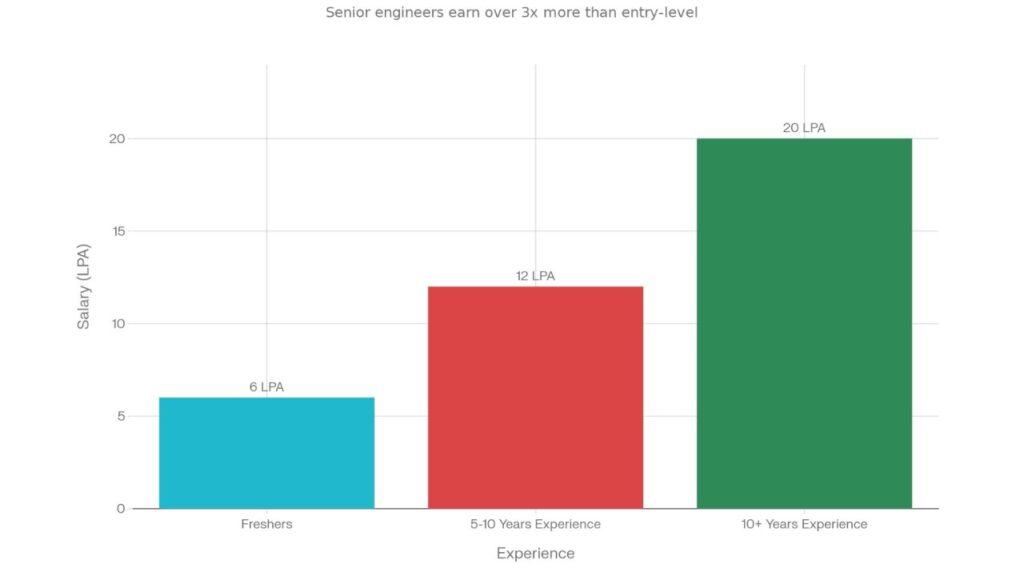
Aerospace Engineering Salary Progression in India

LevelsSalary — LPAMonthly IncomeStages
Fresher (0-1 year)₹4.5-7₹37,500-58,333Graduate joining first job
2-5 years₹8-12₹66,667-1,00,000Intermediate engineer
5-10 years₹8-15₹66,667-1,25,000Senior engineer or team lead
10+ years₹15-25+₹1,25,000-2,08,000+Manager, specialist, researcher

Salary by Sector:

SectorFresher PackageExperienced Package
Government (ISRO, DRDO, HAL)₹7-10 LPA₹20+ LPA
Private Indian Companies₹5-9 LPA₹12-18 LPA
International Companies (Boeing, Airbus)₹8-12 LPA₹20-28+ LPA
Startups & Newer Companies₹4.5-6.5 LPA₹10-14 LPA

The Future Looks Bright

India’s aerospace engineering salary will increase by 20-25% by 2030 and is highly influenced by demand in electric aircraft, AI integration, space exploration, and green aviation related technologies, suggest the industry projections. .

Read More 👉 HR Professional Courses: Get Complete Guide on Career Path, Salary & Growth

The Roadmap To Become Aerospace Engineer

Year 1 & 2: Begin From Basics

The initial two years are dedicated to core subjects such as mathematics, physics and general engineering. These years are tough, but necessary. If you have a strong base in these stuff, then you can understand high level stuff in aero easily later on. 

Year 3: Where Aerospace Engineering Gets Exciting

In year 3, the real aerospace journey begins. You then go on to such specialised areas as aerodynamics, propulsion and aircraft structures.  

Year 4: Major Project and Real-World Problem Solving

Senior year is spent mostly on a senior project. You could design an airplane, build spacecraft systems, or even study a real problem in aerospace engineering. Many of these projects are sponsored by industry, giving students real-world experience and making them more employable. 

Internships: The Key to Career Growth

The majority of aerospace engineering programs require 2 to 3 internships, such as summer and at times semester-long training. Top organizations including ISRO, HAL and Boeing hire interns on a regular basis. This hands on experience is invaluable and it contributes a lot in building a strong resume and career in future. 

Choose Your Specializations

SpecializationFocusScopePreferred Companies
AerodynamicsAirflow, drag reduction, aircraft efficiencyAircraft design, researchISRO, Airbus, NASA etc
PropulsionEngines in Jet engines, space rocketsEngine design, space missionsGE Aviation, Rolls-Royce, ISRO
Flight Dynamics & ControlAircraft stability, autopilots, guidance systemsControl systems, UAVsBoeing, HAL, Airbus
Aircraft StructuresMaterials, stress analysis, lightweight designDesign Structure, & aerospace manufacturingAirbus, HAL
AvionicsRadio System, navigation, ElectronicsUAVs & Avionics Boeing, DRDO

Best Aerospace Engineering Colleges in India

CollegeTypeLocationSpecialization
IIT BombayGovernmentMumbaiAll specializations
IIT MadrasGovernmentChennaiAircraft & Space
IIT KharagpurGovernmentWest BengalAll specializations
IIT KanpurGovernmentUttar PradeshAll specializations
Mahindra UniversityPrivateHyderabadComprehensive curriculum
SRM ISTPrivateChennaiModern labs & industry focus
Chandigarh UniversityPrivatePunjabIndustry-driven curriculum
Ramaiah InstitutePrivateBangaloreWell-equipped facilities
Manipal AcademyPrivateBangaloreResearch-oriented

Conclusion

Aerospace Engineering Courses aren’t simple, it’s a journey through innovation, precision and human ability. Whether you want to design the next generation of commercial planes, put satellites into space, or work on autonomous drones, this is a field with limitless options.

The Indian aerospace industry is poised for growth. With ISRO’s ambitious space programs, HAL’s indigenous aircraft development and international partnerships with Boeing and Airbus, there is no dearth of opportunities. And if you are in the top performers, the world is your sky. 

Leave a Comment

Your email address will not be published. Required fields are marked *

BTech CSE Fees at IIT Delhi – Latest Fee Structure and Scholarships

BTech CSE Fees at IIT Delhi

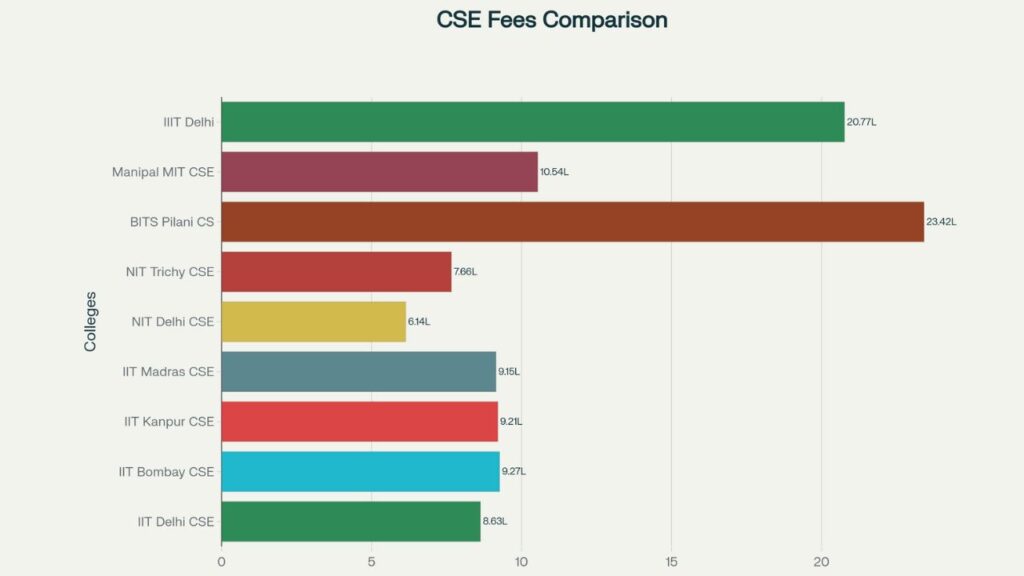
B.Tech CSE Fees at IIT Delhi is one of the best quality top engineering program in India which is given at a very affordable fee. It is the cheapest for the top tier IITs with an overall 4-year cost of ₹8.63 lakhs. For SC/ ST students and MCM scholarship holders, the amount could come down by the fee till ₹4.5 lakhs and 5.3 lakhs respectively. IIT Delhi offers great value for money in education, in comparison to private universities such as BITS Pilani (₹23.42 lakhs) and IIIT Delhi (₹20.77 lakhs). 

Total Course Fees For IIT Delhi B.Tech CSE 

Tuition Fee8,00,000
Caution Deposit8,000
Registration, Library, Exam Fees54,550
Total Academic Fees8,63,000

Full fee ₹2.28 lakh for the first year payable in installments at two end semesters. This covers tuition and a set of one-time fees. From the second year on, you will be required to pay around ₹2 lakh per year. 

Total Cost For The Entire B.Tech Course From IIT Delhi 

Category-Wise Fee Structure

General and OBC Students₹8.63 lakhs for 4 years
SC/ST/PwD ₹62,550 for 4-year 

The perks include a full waiver on the tuition fees, which is a saving of ₹8 lakhs. Also, the hostel seat rent is waived for the students whose family income is below Rs 8 lakhs per annum, thus assuring affordable accommodation. Added to this, basic free messing, which includes the core meals of the hostellers. In addition to this, there is also a pocket allowance of ₹1,000 a month to cover incidentals.

Hostel and Living Expenses

Old Hostels38,580 for one Semester
New Hostels (Non-AC)41,580 for one Semester
New Hostels (AC)52,980 for one Semester

The rule for most first year students is to stay in hostels, and they are levied per semester with mess services included. Based on the hostel chosen, the fees for 4 years or 8 semesters are somewhere in the range of ₹3,10,000 to ₹4,20,000. It also includes a one time hostel deposit of ₹22,000 that has a refundable security deposit of ₹15,000 and a non-refundable BHM fee of ₹7,000. 

Complete 4-Year Cost Estimate

Academics8,63,000
Hostel 3,50,000
Grand Total1,213,000 

Various Scholarship Options For IIT Delhi Students

Merit-cum-Means Scholarship

Students who belong to the low income family and want to pursue B.Tech, M.A, M.Sc, and MPP can access this scholarship for their studies. A monthly stipend of Rs 4,000, or Rs 48,000 per year is given to almost 25% of students. The tuition fee waiver of 8 lakhs completely for the entire course is a huge support. The maintenance of the minimum CGPA or SGPA of 6.0 and a valid proof of income are the prerequisites for renewal of the financial aid. The aim of the program is to encourage bright and ambitious students to pursue higher education and reduce their financial difficulty. 

Donor-Funded Scholarships

Scholarship NameAnnual AmountKey Eligibility
ABB ScholarshipUp to ₹1,00,000Merit & financial need
Bina Dewan Singh ScholarshipUp to ₹1,00,000Female students, financial need
Budhwanti Mrig Memorial AwardUp to ₹1,00,000Exceptional merit
Buti Foundation ScholarshipUp to ₹75,000Specific criteria
CS&E 1998 Batch ScholarshipVariesCSE students specifically
Keswani ScholarshipUp to ₹1,00,000Merit-based
IITDAA ScholarshipUp to ₹1,00,000Alumni-funded, merit-based

IIT Delhi vs Other Top Engineering Colleges Fees

BTech Fees Comparison

B.Tech CSE Fees Comparison Across Top Engineering Colleges in India

IIT vs IIT Comparison

IITB.Tech CSE Tuition (₹L)Total 4-Year Cost (₹L)Rank
IIT Delhi8.008.63#1 (Most Affordable)
IIT Madras8.009.15#2
IIT Bombay8.509.27#3
IIT Kanpur8.509.21#4

IIT vs NIT Comparison

CollegeTotal 4-Year Cost (₹L)Average Placement (₹ LPA)ROI Advantage
IIT Delhi CSE8.63₹20-25Best balance
NIT Delhi CSE6.14₹15-18Lower package
NIT Trichy CSE7.66₹14-17Lower package

IIT vs Private Colleges Comparison

CollegeTotal 4-Year Cost (₹L)Cost Relative to IIT Delhi
IIT Delhi CSE8.63Baseline
BITS Pilani CS23.42272% Higher
IIIT Delhi BTech20.77240% Higher
Manipal MIT CSE10.54122% Higher

BITS Pilani is costly by ₹14.79 lakhs in comparison to IIT Delhi for the same course. BITS, which charges higher fees also does not have the global brand value or the placement numbers of IIT Delhi. 

Fee Payment Schedule for semester-wise

To simplify budgeting for families, the fee is charged twice a year on a per semester basis. The tuition fees for 1st semester is ₹1,00,000. There are also one-time charges between ₹25,000 and ₹30,000. 

The fees for students who choose hostel accommodation is from 38,580 to 52,980. So, the total charges for the first semester will be between ₹1,63,000 and ₹1,83,000. The main fees range is around ₹1,38,000 including hostel fees from the second semester because the tuition fee is Rs. 1,00,000 per semester and a one time charge of Rs. ₹25,000-30,000 is removed.

Similar structure continues for all the semester throughout the course.

IIT Delhi’s CSE Program Worth the Cost

Outstanding Placement Record

The top tech firms are known to offer packages in the ballpark of 70+ lakhs per annum, and the program has an amazing average package of 20-25 LPA which is among the best in India. It still has over 98% amazing placement with prestigious, elite firms. Graduates typically recoup their ₹8.63 lakh outlay by four to five months post-graduation, ensuring substantial returns on though investment (ROI). The alumni base is also global and large too, with alums working at top companies including Google, Microsoft, Apple, Amazon, Goldman Sachs, McKinsey, and the list goes on. 

Research and Innovation Ecosystem

Students get access to world-class labs and research facilities Opportunities in AI, cybersecurity, cloud computing and other emerging tech areas. Partnerships with industry and government; externally funded research projects Industry collaborations and funded research projects. 

Conclusion

IIT Delhi’s B.Tech CSE program provides the highest return on investment in India for all the engineering courses. While the total 4-year fee is a bargain at around ₹8.63 lakhs compared to the pricier private schools like BITS Pilani or IIIT Delhi, in exchange, students get world-class teaching, cutting-edge research and excellent placement opportunities.

Top recruiters are packing in an average of ₹20-25 LPA and up to ₹70 LPA. The B.Tech CSE at IIT Delhi is considered to be the best and most lucrative engineering degree in India owing to its high placement rate and affordable tuition fees. 

Leave a Comment

Your email address will not be published. Required fields are marked *

Top Engineering Govt Jobs in India You Shouldn’t Miss in 2025

Top Engineering Govt Jobs in India

There are a large number of engineers in India shaping the country’s future to more advanced development and infrastructures. Engineering govt Jobs are the golden ticket for long-term stable career growth. Candidates who are willing to work in the government sector as engineers can take these top competitive exams. After clearing the examination, candidates can get the job role. You can beat the competition to secure a position in a government job, you must learn about the eligibility criteria, exam structure, and syllabus for study strategically and efficiently. 

UPSC Engineering Services Examination (ESE)

If you want to work in the engineering role for the nation then take this exam. This is the competitive exam. Large numbers of students are preparing for this exam. The departments in the government sector that have a need for engineering candidates are Indian Railways, Central Engineering Services, and Indian Defense Services. 

Eligibility Candidates must have engineering degree in Civil, Mechanical, or ElectricalAge range between 21 and 30 yearsFinal-year engineering students can apply
Salary60,000 to 1,80,000/month ( as it depends on the rank of the candidates)
Perks Travel allowance, pension, housing allowance, and medical coverage
Exam StructurePrelims, Mains, and Interview

Public Sector Undertakings (PSUs)

PSUs such as NTPC, GAIL, and ONGC are responsible for recruitment candidates for various job roles in the government sector. These recruitment processes are based on GATE scores. PSUs offer high package salaries to engineers according to their performance and experience.  

Eligibility Candidates must have engineering degree in any categoryGATE score mandatory specific to the year
Salary50,000 to 2,00,000/month ( as it depends on the position of the candidates)
Perks Travel allowance, pension, housing allowance, and medical coverage
Selection ProcessGATE score mandatory for selection in this job role, Group Discussion, and then Interview

Indian Railways (Junior Engineers, Senior Section Engineers)

The largest sector of employers is Indian Railways in India. RRB offers jobs roles such as Junior Engineer (JE) and Senior Section Engineer (SSE) across the department. Candidates who are willing to choose the challenging career can take the examination for selection in this job role.

Eligibility Diploma or degree in engineeringAge vary for job role as JE, age limit is 18 to 33 years and as SSE is 20 to 34 years
Salary35,000 to 80,000/month ( bonuses) 
Perks pension, housing, discount on Travel allowance
Selection ProcessComputer-Based Test, Document Verification (usual document of the past achievements and academic qualification), and Medical examination 

Technical Roles in Defense Services

There is a role for engineers in the Indian Army, Navy, and Air Force to protect the country from cyber attacks, thefts and protecting the data from the outside of the country. Candidates must have a relevant degree in Engineering to take the exam like TGC (Technical Graduate Course) and SSC Tech.

Eligibility Candidates must have degree in engineeringAge Limit: 20 to 27 years ( according to job roles)Physical FitMedical Fit
Salary56,100 plus bonuses 
Perks Pension, housing allowance, and medical coverage
Selection ProcessThe first stage of selection is Written ExamFitness examination, and Medical examination 

State Public Service Commissions For Engineering Posts

Job roles like Assistant Engineer (AE) and Junior Engineer (JE), candidates are recruited by the state PSCs for various departments in the government sector. The engineers who want a job but also career stability as well, can take this public work option as their future option for the high salary and career growth.

Eligibility Engineering degree or diploma certificate are mandatory for the job roleAge depends on the state rule (usually 21-35 years)
Salary50,000/month grow with experience
Perks Pension, housing allowance, and medical coverage
Selection ProcessThe first stage of selection is Written ExamSecond stage is Interview 

DRDO and ISRO Engineering Jobs

There are several organizations like the Defense Research and Development Organization and the Indian Space Research Organization that need engineers for many jobs in the department that depend on technical expertise. These are the Research-based roles for the engineers as they innovate new things or be reasonable in some new concepts in the technology.

Eligibility Engineering degree certificate are mandatory for the job roleAge must be below 30 years but age relaxation is given to some categories
Salary60,000/month grow with experience to 1,50,000/month
Perks Research Opportunities, housing allowance, and medical coverage
Selection ProcessThe first stage of selection is Written ExamSecond stage is Interview 

Banking Sector 

Government banks like RBI, SBI, and IBPS recruit engineering candidates for digitized banking services, they need some technical experts to do that work. These public sectors offer the Jobs roles such as Specialist Officers in IT, and electrical engineering roles. 

Eligibility Engineering degree certificate are mandatory for the job roleAge must be in the range of 21 to 30 years 
Salary50,000/month with allowance to 80,000/month
Perks Long-term stability and promotions
Selection ProcessPrelims and Mains (Written Exam) Second stage is Interview 

Indian Oil Corporation Limited (IOCL) and Other Energy PSUs

Energy sectors in government also offer an engineer job for engineering graduates. The BPCL and IOCL are the largest public sector in energy but there are some more names. The salary is high and stability of the career is secure with a government job as an Engineer.

Eligibility Engineering degree certificate in Mechanical, Chemical, or other are mandatory for the job roleValid GATE score
Salary60,000/month grow with experience to 1,50,000/month
Perks Incentives Opportunities, housing allowance, and travel coverage
Selection ProcessGATE score-based shortlistGD and Interview 

Teaching Jobs

Engineers can also apply for the teaching position in any government school, college or university. The big Universities of Engineering need real engineers who can teach students advanced level concepts. Those candidates who are interested in this job role can apply for this role.

Eligibility Engineering degree (B.Tech/B.E) certificate are mandatory for the job roleMasters is mandatory for higher positionsUGC NET/SET Qualification is necessary for the assistant professor role
Salary50,000/month grow with experience to 1,20,000/month
Perks Research Opportunities, Pension, and Housing
Selection ProcessQualifies any competitive examInterview by the School or College

Municipal Corporations (Engineering Roles)

Municipal corporations also recruit engineers for infrastructure, public infrastructure, development in areas, Urban planning. They need engineers to make the blueprints for the accurate measures and no errors in any projects. 

Eligibility Engineering degree in Civil or Mechanical is neededAge depends on the state rule
Salary45,000/month grow with experience to 90,000/month
Perks Pension, housing allowance, stability, job security
Selection ProcessThe first stage of selection is Written ExamSecond stage is Interview 

Leave a Comment

Your email address will not be published. Required fields are marked *

Top IET Lucknow CSE Placements – Highest Packages, Recruiters & Career Growth in 2025

IET Lucknow CSE Placements

IET Lucknow CSE is expected to witness a similar cut-throat competition in 2025 as well as it has been the top choice among the engineering candidates in the state of Uttar Pradesh. With growing placements, robust academics and an exploding tech ecosystem, the institute still shines through as a safe bet for students looking for careers in software, IT and emerging tech.

This guide will simplify everything you need to know about what to expect IET Lucknow CSE for this year in a practical, straightforward. If this is the course for you or if you are advising someone on college choices, these insights will give you a good idea what 2025 studying CSE at IET really means. 

Quick Overview of IET Lucknow CSE

Eligibility & Admission45% score in 12th, JEE Main/CUET with cutoff AIR 47,364-55,000, and counselling
Total Fee₹3.44-4.04 lakhs for 4-year course
Core TopicsProgramming, DSA, DBMS, Networking, AI/ML, Web Development, Cybersecurity, Operating System & Design
Placement RecordsRate: 80-90%, Package: ₹6-8 LPA

Eligibility & Admission For IET Lucknow CSE 

The applicant must have a 45% score in 12th or given its equivalent examination from a recognized board then apply for the admission in IET CSE course. Physics and Mathematics are compulsory and then one subject from Chemistry, Biology, Biotechnology, Technical Vocational Subjects or Computer Science is taken. 

Applicants from the general category should have at least 45% mark on aggregate in these subjects. Applicants for reserved seat quota should produce the valid certificate during the counselling. Please remember that 75% is nothing but a cut-off and that generality-based for admission to IET Lucknow. 

You are required to qualify in an entrance examination for admission as the entrance is not on merit basis for the B.Tech CSE course. It is mandatory to have a valid score in the JEE Main or CUET (UG) entrance examination. You have to apply for Uttar Pradesh Technical Admission Counselling (UPTAC) after getting the required score. 

The admission into various courses depends on your All India Rank in JEE Main or CUET UG and availability of seats. During the counselling, seat allotment is normally done on the basis of Common Rank List (CRL), considering category-wise quota. Important papers like your mark sheet, proof of identity, admit card/score card of the entrance exam, caste/domicile certificate etc. have to be submitted during document verification

All procedures to the application and admissions process must be done through the official portals of UPTAC and IET Lucknow. 

2025 Fee Structure For IET Lucknow CSE 

The total fee amount for the course is ₹3.40 lakhs in tuition and ₹34,100 for caution money, exam fees and other incidentals. Students are required to pay roughly Rs 1.05 lakh for the first year that covers the tuition and annual and one-time charges. The price of hostel stay without mess charges is around Rs 58,000 per annum, these are not education fees. The total fee for the course is around Rs 25.02 lakhs, making it way higher for NRI candidates.

Core Curriculum Topics

The scope of topics is broad and comprehensive to prepare the students with a solid background of computer science and discipline related areas. 

Programming knowledge is predicated on knowledge of data structures and programming concepts in such languages as C, C++, Python, and Java. Mathematics for computing includes topics in discrete mathematics, probability and statistics, linear algebra, and numerical methods, designed to enhance the student’s analytical thinking. In order for students to develop an overall understanding of computational theory, core courses in computer science focus on algorithms, computational theory, compiler design, operating systems, database management systems (DBMS), computer organization, and microprocessors

These topics were taught at an appropriate level to make students well grounded in computer science and related areas. Programming is based on data structures and programming principles in such languages as C, C++, Python, and Java. Mathematics for computing Discrete mathematics, probability and statistics, linear algebra and numerical methods to develop thinking skills are covered in this subject. In addition, core computer science classes include algorithms, theory of computation, compiler design, operating systems, dbms (database management systems), computer architecture, and microprocessors to allow for a full understanding of computational concepts. 

Students are now taught web technologies, cloud computing, object-oriented programming, and software engineering to prepare for industry use in web-based software development. Examples of network and security topics include modern connectivity and security concerns such as computer networks, information security, cryptography, network protocols. Also as advanced electives students can take courses-in machine learning, data mining, pattern recognition, natural language processing either in data science or artificial intelligence

The work experience is gained via lab work, industry training/internships and major project in the pre-final and final year of the course. Students can also pursue electives in more specific areas of interest and emerging technology like image processing, embedded systems, Internet of Things (IoT), high-performance computing.

Read More:-   Check IBPS Clerk 2025 Prelims Result – Latest Update & Direct Link

Placement Excellence

CSE branch has good placement opportunities with about 70-80% students getting placed. The average salary package is Rs. 6 to Rs. 8.5 LPA with a median of Rs. 6.15 lakh per annum.

Surprisingly, the highest package offered in this branch is as high as Rs. 13.5 lakh per annum, suggesting high paying jobs in top-notch companies. 

Top recruiters are reputed software and 50+ IT companies such as TCS, Amazon, Deloitte etc which generally release jobs for SDE (Software Development Engineers) - largest application to all Engineering streams and the highest paying jobs. Applications for internships open from the second year itself, with stipends up to ₹2 LPA in reputed firms, giving an early practical exposure. 

Career Growth Opportunities

Approximately 35% of graduates go on to complete higher education such as an MBA or M.Tech. The school has a strong alumni network that excels at multinational tech companies that provide mentorship and networks. In addition, vertical 24×7 incubation support is provided to entrepreneurs, stimulating a vibrant startup ecosystem. 

Revenues earned by AI and ML professionals is uniformly high and comparable to ER&D engineers with professionals earning between ₹10 and ₹16 LPA. NITIE promotes entrepreneurship through vibrant clubs like Innovation and Incubation Center (IIC) and the Entrepreneurship Cell (E-Cell) on campus, where students have the opportunity to transform their ideas into business ventures.  

How to Maximize Placements

  1. For achieving the success in your academic and professional life you are required to focus on these:
  2. Keep your CGPA 7.0+ or more so that you would have good academic record.
  3. Spend some time on competitive programming solving 200+ problems on LeetCode to improve your coding.
  4. Try to get some good summer internships from your 2nd year onwards.
  5. You can specialize in the field of AI/ML, DevOps or so on for best-paying jobs and best/utilising your education.
  6. Have a good GitHub profile with some real projects that demonstrate your technical skills.
  7. Join hackathons, coding competitions, etc.. to improve your problem solving skills and network! 

Why Choose IET Lucknow CSE?

Affordable fees (₹3.44-4.04 lakhs for 4 years), strong placements (80-90%, ₹8-9 LPA) and presence of some premium recruiters makes IET Lucknow CSE a very good investment. It has a 85% home state quota and hence very much easy for uttar pradesh residents. Growing packages for AI/ML roles, an enthusiastic startup culture and more – the institute offers many career options beyond traditional jobs. 

Conclusion

The Department of CSE at IET Lucknow, consistently shares steady placement, industry-oriented training, and a holistic technical exposure — all at a much reasonable fee than most of the engineering institutes in India. With an average package of 6-8 LPA, the institute has top recruiters like TCS, Amazon, Deloitte etc. and the campus culture revolves around coding, internships and innovation, giving students great preparation for both company roles and higher studies.

In case if you care for quality of learning, good return of investment, and good career growth in software, AI/ML, research, or entrepreneurship field to name a few, then IET Lucknow CSE is your safe and value for money option for 2025. 

Leave a Comment

Your email address will not be published. Required fields are marked *

Scroll to Top