If you also want a job that pays you on a high scale and is suitable for a lifetime. Here is the list of the Top 30 Most Handsome Central Government Jobs in India that secure your future on the right path. You can get additional benefits in government jobs. After retirement, you will be financially stable and have no worries like in a private job.
Central jobs are highly reputed and authoritative with high salaries. But you must start preparation early and strategically to beat the competition in their respective exams.
Set your goal with one or two jobs that align with your interest and start preparation. Always check recent updates for the recruitment.
As India steadily moves forward with its vision of becoming Viksit Bharat by 2047, the year 2025 serves as a milestone of double-speak reflecting the government’s developmental agenda. The central government has announced an array of progressive and inclusive Government Schemes this year to boost the economy, enhance social welfare and ensuring that the fruits of development reach the last mote of the country.
These interventions cover the full spectrum of agriculture, education, employment, entrepreneurship and skill development indicating a comprehensive approach to building the nation. For lobbying farmers and upskilling youth to backing gig workers and opening up education, the 2025 policy roadmap aims to fortify India’s base for enduring growth.
All these schemes have transformative aspirations – generating millions of jobs, reforming technical education, raising rural productivity levels, and increasing access to health care and research. They collectively reflect a clear intent to inclusive development and self-reliance in ensuring that the story of India’s progress touches each and every citizen.
Pradhan Mantri Viksit Bharat Rozgar Yojana
Among the most challenging 2025 job schemes is the Pradhan Mantri Viksit Bharat Rozgar Yojana (PMVBRY) launched on 15 August 2025, with a whopping outlay of Rs. If successful, this employment-linked incentive scheme would lead to the creation of 3.5 crore jobs in two years, with maximum benefit going to first time job seekers entering workforce.
The new scheme is aimed at the youth who makes up 68 percent of the country’s population first-time employees would be eligible to receive up to Rs 15,000 in two installments and the employers will get an incentive of up to Rs 3,000 per month for the hire of new staff. The scheme has a special emphasis on manufacturing and MSME sectors and extends financial assistance by way of direct benefit transfer to incentivise formal employment and cover social security.
MERITE Scheme: Transforming Technical Education
The MERITE Scheme is expected to provide around 7.5 lakh students the benefits of enhanced quality, equity and governance in technical education in line with National Education Policy 2020. Major interventions comprise internship options, updation of curriculum aligned with the industry, faculty development programmes, research centres and skill labs for increasing the employability and diminishing the unemployment of engineering graduates.
The PM Dhan-Dhaanya Krishi Yojna was announced by prime minister Narendra Modi in October 2025. Inspired from Aspirational Districts Programme, this scheme focuses on 100 low-productivity districts of the country covering around 1.7 crore farmers, of which the majority are small and marginal.
The schema subsumes 36 existing schemes of agriculture and allied sectors and is being implemented through 11 ministries with focus on districts which have low crop productivity, medium cropping intensity and have been identified as “having languishing status of credit flow”. The programme is expected to enhance irrigation facilities, increase crop productivity, facilitate greater access to credit and storage facilities and promote sustainable farming practices.
PM Internship Scheme
The Prime Minister’s Internship Scheme was launched on 3 October, 2024 with an aim to provide 1 crore paid internship in top 500 companies of India for a period of five years. The scheme provides 1.25 lakh seats for institutions which are of 12 months duration during 2024-25 and out of that duration, 6 months is to be spent in gaining practical experience. Interns in the age group 21-24 years get a monthly stipend of Rs. 5,000 and a one-time assistance of Rs.6,000 along with industry exposure in 24 sectors, ranging from IT, banking, automotive, manufacturing to hospitality.
One Nation One Subscription
From January 1, 2025, the One Nation One Subscription scheme for students and faculty will cover 13,000 international scholarly journals from 30 leading publishers, allowing 1.8 crore students and researchers of 6,500+ government higher education and R&D institutions to access these journals. Backed by Rs.6000 crore for 2025-2027, ONOS is set to remove subscription barriers and duplication, providing free access to research of publishers including that of Oxford, Cambridge and Elsevier, thus making it easier to conduct interdisciplinary research and democratising knowledge in all Indian institutions – including those in tier 2 and tier 3 cities.
Healthcare for Gig Workers
In a major social security boost, the government also said it had registered 1 crore gig and platform workers on the e-Shram portal, offering them healthcare coverage under PM Jan Arogya Yojana (Ayushman Bharat). The program acknowledges the expanding workforce in the gig economy and offers some formal social security protection to workers in ride sharing, food delivery and other platform-based services who, until now, were without universal health insurance coverage.
Conclusion
The 2025 government schemes seem to be focused on the overall development of a nation including employment generation, skill building, farm output, excellence in education, support to entrepreneurs and social welfare. These schemes pitch in billions of dollars in investments and underline the government’s dedication to realising Viksit Bharat by 2047. If you are a farmer, student, entrepreneur, job seeker or researcher, these schemes can help you find paths to empowerment, prosperity and inclusive growth. Keep track of the eligibility requirements and how to apply through the official portals to make the most out of these programmes that are transforming the future of India.
If you have completed 12th with a science subject and are interested to join the Uttar Pradesh Police Force then this is the chance to transform your life! The application process has begun for the Uttar Pradesh Police Recruitment & Promotion Board (UPPRPB) Computer Operator Grade-A vacancies – the total number of vacancies is 1,352. So, let’s get into all that we need to know about this golden opportunity.
A career with UP Police is an excellent opportunity for youth having technology savvy to establish their bright future in law-enforcement. With 1,352 vacancies available and a good pay scale of Level-4 (₹25,500 – ₹81,100), this job is not only offering colorful career but also financial security. The registration is valid for both men and women across the UP, so the whole terrain of the state could participate in it.
Mark Your Calendar With These Dates
Event
Date
Online Application Start
December/16/2025
Registration Deadline
January/15/2026
Fee Payment Last Date
January/15/2026
Fee Correction Window
January/16-18/2026
Exam Date
To be notified
Admit Card Release
Notify Later
Do You Qualify For This Post?
Requirement
Details
Age Limit
18-28 years
Educational Qualification
10+2 with Physics & Mathematics
Computer Certification
DOEACC ‘O’ Level OR Diploma in IT/Computer/Electronics Engineering
The procedure of application for Uttar Pradesh Police Recruitment and Promotion Board (UPPBPB) is easy and in online mode only. Step by step instructions are provided below:
1. Visit the official page of UPPBPB at the official website which is also mentioned in the article.
2. Sign up with a valid mobile number and email id.
3. Follow the guidelines to complete the One-Time Registration (OTR).
4. Fill in the details in the application form correctly related to your Personal and Educational Qualification etc.
5. Attach all relevant documents, i.e. mark sheets, certificates, a recent photograph and the signature.
6. Submit the application fee as applicable through the online mode.
7. Complete this and then apply with your full application and print the confirmation page for your document.
Make sure that all the information they are providing is true and correct, and that the files they upload are according to the size, format, etc. specified above so that they don’t have to face any trouble.
Application Fee
General/OBC/EWS
₹500
SC/ST
₹400
Selection Process
Stage
Description
Written Examination
200 MCQ questions (400 marks)
Typing Test
Hindi & English typing skill test
Document Verification
Authenticate original certificates
Final Merit List
Based on written exam performance
Exam Pattern
The question paper has a General Hindi, General Knowledge, Mental Aptitude/Reasoning and Computer Science section. All the three sections contain 50 questions and every question carries two marks thereby the maximum score for the paper is 100 marks.
Cracking the UPSC exam isn’t that easy, you need the right strategy to prepare and beat the competition. These Best Online Coaching for UPSC will help you to cover every topic with practice test series that help you pinpoint your weak points and clear every doubt. The syllabus is vast and maintaining consistency is difficult, these online coachings offering both interactive session and recorded session to cover up.
In a rising online education, these coaching are also growing as most of the students prefer to take online classes rather than finding offline coachings. Some of the most talked about online platforms are Drishti IAS, Vision IAS, Physics Wallah, Vajiram & Ravi, Clear IAS, Insight IAS, and Nirnay IAS.
Let’s check their best features and overview details to decide which one is right for you.
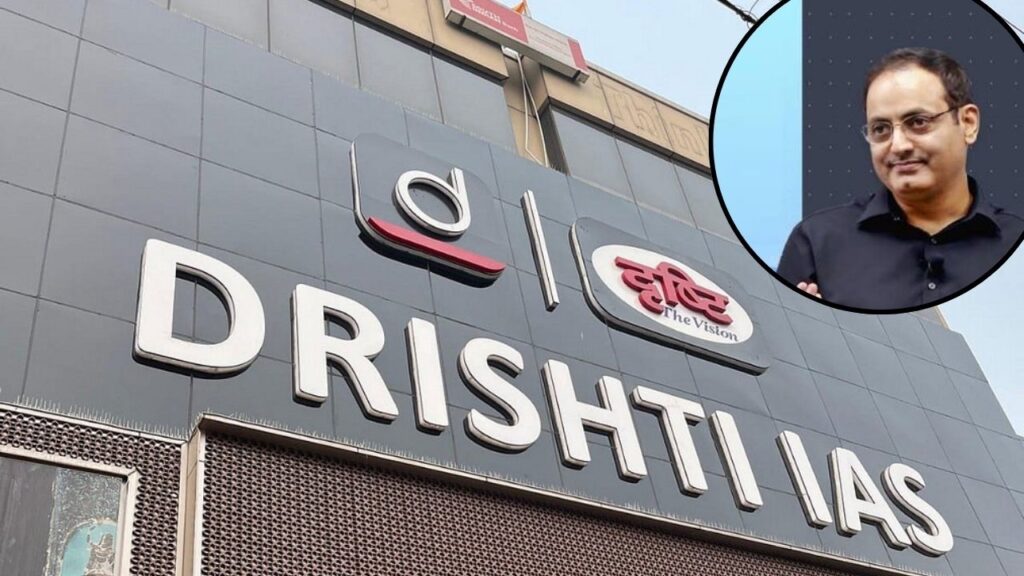
Drishti IAS
The Drishti IAS is most popular platform for IAS preparation, ideal for UPSC aspirants from both Hindi and English medium. It offers a structured and motivational teaching style which is helpful during UPSC preparation as it is the hardest exam.
Best Features:
It is best for students who can give 15 to 16 months to this course with 400+ live classes.
Extensive study material can help for learning
Excellent test series to improve regular practice, total of 24 mains and prelims tests available for 3 years.
No language barrier, it is easy for every student.
Vajiran and Ravi
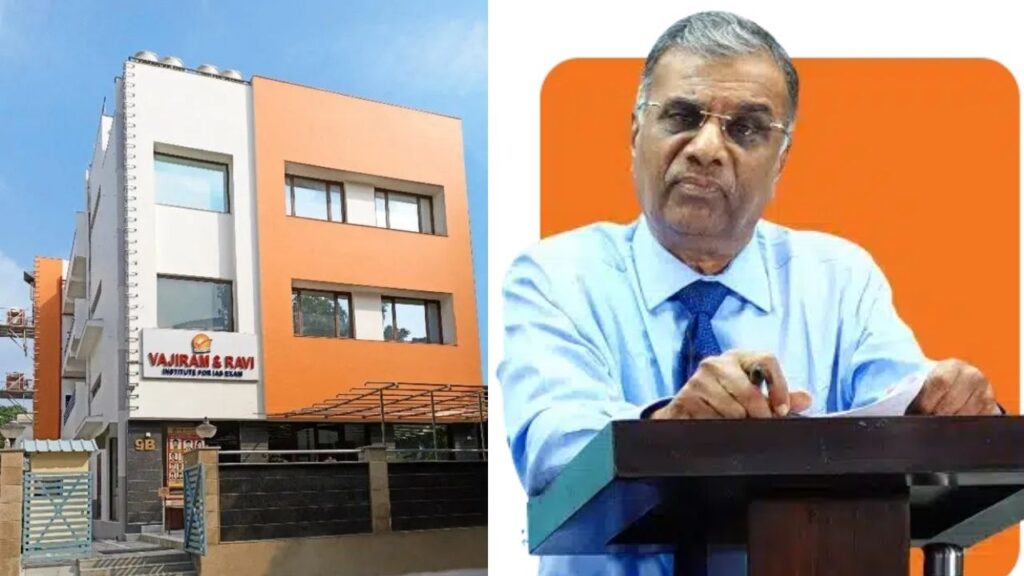
Vajiram and Ravi coaching originated offline and marked a name in the top UPSC coachings and is now available online that delivers the same quality teaching for UPSC aspirants.
Best Features:
Ideal for those who wanted to cover every topic with depth, 1000+ hours of lectures needed plenty of time.
Detail study and notes are also available for quality learning
Consistently maintain its record for producing toppers for years
Cost effective for providing best learning to ensure clarity for every doubt.
Clear IAS is also one of the best online coaching which provides a super 50 program for specifically UPSC preparation. It is well-known for its focus on more personal guidance and small batches. Ideal for aspirants who prefer self-paced learning with doubt clearing sessions at low fees.
Best Features
There are a large number of recorded lectures which can provide detailed learning for UPSC.
700+ hours lectures and 1500+ study material
Test series to maintain daily practice for doubts clarity, mentorship support, and interview guidance.
Vision IAS
Vision IAS provides the best test series which are helpful to become habitual with the exam environment. It is famous for its analytical function that helps to track student’s practice records.
Best Features
Students can check their weak areas due to their recording track of assessments and make it strong by working on it.
Flexible batches is accessible to every aspirant
Free Resources is a great advantage for preparation. Topic-wise specific content, current affairs, and previous year questions are available for free.
Physics Wallah
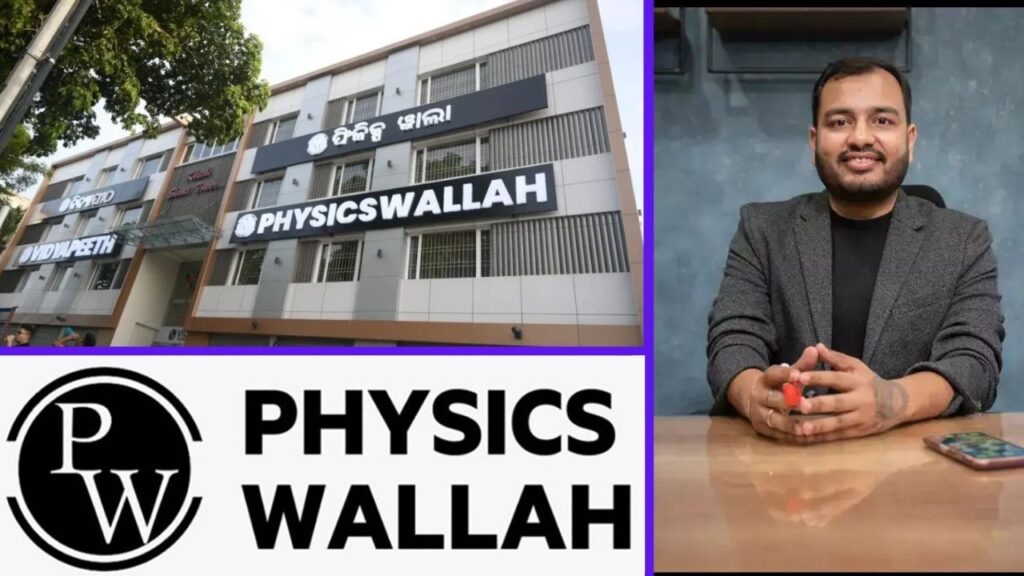
Physics Wallahis rapidly growing coaching and its UPSC preparation course is effective for cracking the exam. Its main advantage is delivering conceptual learning that helps students to remember and quickly adapt new concepts.
Best Features
Affordable price is accessible to everyone
The teaching style is student-friendly that helps in complex problems to understand quickly.
Best for beginner students who began to prepare for UPSC
Strengthen every weak concepts and clear every doubt
Mentor support and recorded sessions.
Nirnay IAS
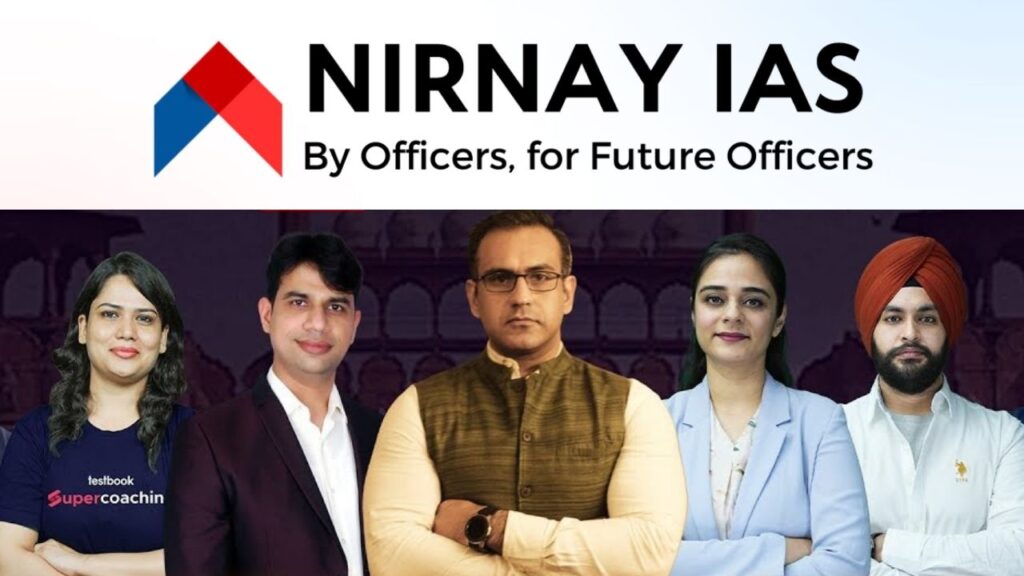
Nirnay IAS is available on the testbook platform which offers well-structured courses and practice-oriented strategy for UPSC preparation. It has gained attention in a little time due to its practice material and offline resources to self-study.
Best Features
Students who prefer to learn at their best time.
No regular classes, 30+ structured courses are best for quick preparation.
Cover prelims, mains, and other preparation topics
Mock test and previous years papers for best practices
Recorded lectures helpful to working professionals who don’t have time for live classes
Insights IAS
Insight IAS is also best for UPSC preparation at a low price. Aspirants can begin their preparation with quality study resources and test series with reasonable prices.
Best Features
Strong test series that structured properly for both prelims and mains
Best for beginners and advanced with its foundation courses
Well-designed topic notes and syllabus clarity for effective learning
Affordable courses, every student can get quality education at their own pace
Identify your learning style – if you need someone to push or motivate you consistently for UPSC, Drishti & Vision provide teacher interaction which might help you. Clear IAS, Nirmay or Insights are best for those who prefer to learn at their own pace.
Check your budget – PW, Clear IAS, and Insight are affordable but if you are ready to invest more, Vajiram & Ravi or Vision offers premium packages.
Test Series – if you want insightful and exam-focused test series then Vision and Insights are the best option. Drishti IAS is also providing detailed study and exam based test series.
Conclusion
The Best Online Coaching for UPSC isn’t the one with popularity or your friend is joining, someone’s opinion doesn’t help you to get the right platform. The right platform matters because every student’s mind works differently, they understand differently. Even in their preferred language, they are unable to grasp the concept of the topic. So, it might be best for you to take a demo class from online coachings, if you understand well about the topic due to clear explanations, or teaching style that might be your destined platform for UPSC preparation.
Whether you are a student who studied the whole year for UP Polytechnic JEECUP 2026 exam or just started to prepare, if you approach the right strategy then you can clear the exam and become a future engineer. There has been a small change in the schedule as the Joint Entrance Examination Council Uttar Pradesh (JEECUP) has revised the exam dates from mid-May to June 2 to June 9, 2026.
This means you still have enough time to prepare and crack this exam. Diplomas are efficient to find a job in your respective field easily but you can only select college in your preferences and score good to take an admission. The authorities will decide the final selections and provide you college.
Let’s take a look at this guide that will help you understand where you need to focus more and least to push your luck.
Quick Update on The Examination
The exam will be held on June 2 to June 9, 2026 which means you have little more time to prepare.
Admit Cards for UP Polytechnic JEECUP 2026 are available now on the official website.
You can download it by entering your credentials and taking out a print out.
The exam is totally online on a computer, no need to fill OMR sheets with black pens!
Event
Date
Apply Start
15/January/2026
Last Date for Apply
10/May/2026 (Extended)
Last Date Fee Payment
10/May/2026
Exam Date
02–09/June/2026
Admit Card
27/May/2026 — Available Now
Result Declared
Will be updated here soon
Decoding the JEECUP 2026 Exam Pattern
You can quickly prepare for the exam if you know the pattern which tells you exactly what to expect when you sit down in front of that computer screen.
Feature
The Details You Need to Know
Exam Mode
Online (Computer-Based Test)
Exam Duration
2 hours 30 minutes (150 minutes)
Total Questions
100 Multiple Choice Questions (MCQs)
Language Options
English and Hindi (you can choose what you are comfortable with)
Marks Per Correct Answer
+4 Marks
Negative Marking
-1 Mark for every incorrect answer
Unanswered Questions
0 Marks (No penalty, no reward)
Many educators suggest that if you don’t know the answer then leave it because if you answer it wrong, you can lose hard-earned marks. Only take an educated guess if you can confidently eliminate two of the four options.
The Subject Breakdown (Focusing on Group A)
There are multiple fields to choose in polytechnic divided in groups A–K. Group A (Diploma in Engineering & Technology) will have questions heavily focused on science from Class 10th syllabus:
50 questions from Mathematics, 50 from Physics and Chemistry means half the questions depend on your maths. And the pattern will be the same in other groups too but subjects will be changed. If you choose Group E (Diploma in Pharmacy) then major questions come from chemistry and biology.
Quick Preparation Strategy For UP Polytechnic JEECUP
Since we are just days away from the exam, you can approach a different strategy than looking at a 500-page textbook. Do the smart work and maximize your score in the remaining days.
Step 1: Stop Reading New Topics
Keep your mind fresh and solve easy questions first, take your maths previous year question or mock test and revise it. Don’t stick to one complex topic for hours and waste your time. New topics take time and you don’t have much so double down on the topics you already know.
Step 2: The Power of Mock Tests
This is the time for mock tests which can test your knowledge and make your speed fast to solve.
Don’t skip any answer in the mock test. Daily practice makes it easier to understand questions easily.
Do not allow unnecessary distraction for straight 2 hours and 30 minutes.
Take mock tests from the best apps and websites to familiarize with the UI and provide you with repeated questions.
Step 3: Analyze Your Mistakes
Check all your answers and take deep analysis where you get stuck, check where you make mistakes and lose most of the marks. Identify your patterns of errors and fix them.
Step 4: Revise Formulas and Short Tricks
Remembering formulas is tough but it solves half of the problem for Mathematics and Physics. Create a “cheat sheet” of all the important formulas, theorems, and chemical equations so you can revise it 10 times in a day.
Subject-Wise Quick Hacks
Mathematics (50% Weightage): Prepare major subject first because it covers 50% of the Group A paper, Focus heavily on High-Value Topics like Algebra, Surface Area and Volume, Trigonometry, and Coordinate Geometry.
Use shortcuts for percentages, profit and loss, and simple/compound interest to calculate and it is very easy at the 10th-grade level. But don’t get stuck on one problem, resolve which takes less time first then come back to lengthy questions.
Physics (25% Weightage): Physics in JEECUP focuses on Light, Reflection, Refraction, Electricity, Magnetism, and the Laws of Motion. And units always matter in physics. Sometimes questions are just asking simple basic definitions and direct formulas.
Chemistry (25% Weightage): Chemistry questions are time saving and they are not lengthy like physics and maths. Most valued topics are Metals and Non-Metals, Periodic Table, Acids, Bases, and Salts.
Common names and chemical formulas of the element and compound. Practice balancing basic chemical equations, as these are easy marks to grab.
Managing Time Inside the Exam Hall
Go through the entire paper from question 1 to 100 and answer those questions which you are 100% sure about within the first 45 Minutes. Chemistry names and formula or physics quick answers.
Then go to the questions that take some calculation but you can easily solve them within 60 minutes. After that, spend the next 30 minutes on tricky questions. If a question is still completely alien to you, leave it. You don’t want your marks to get deducted.
Use the last 15 minutes to review your answers. Check that you tick the right answers on the computer screen.
The JEECUP authorities will release the answer key so you can check the answers and calculate your score. If you know that you have given the right answer then you can raise an objection.
The result is expected to be released in late July 2026. You can check the official website regularly for the result.
Once you clear this exam, you will be called for a document verification and counselling process. Admission to polytechnic colleges is based purely on your rank and the choices you fill during the online counselling process.
Conclusion
Getting ready for UP Polytechnic JEECUP may seem like scaling a mountain but keep in mind that every engineer began from where you are at this point. Focus on the easy topics first to memorize them perfectly. Manage your time accordingly for preparation because it’s a big chance to start your bright career.
Don’t ruin your mentality by provoking negative thoughts, just try to learn and prepare with quick notes and daily mock tests. Test yourself regularly as you already study everything in your 10th grade. So there’s nothing new that you can’t beat that up.
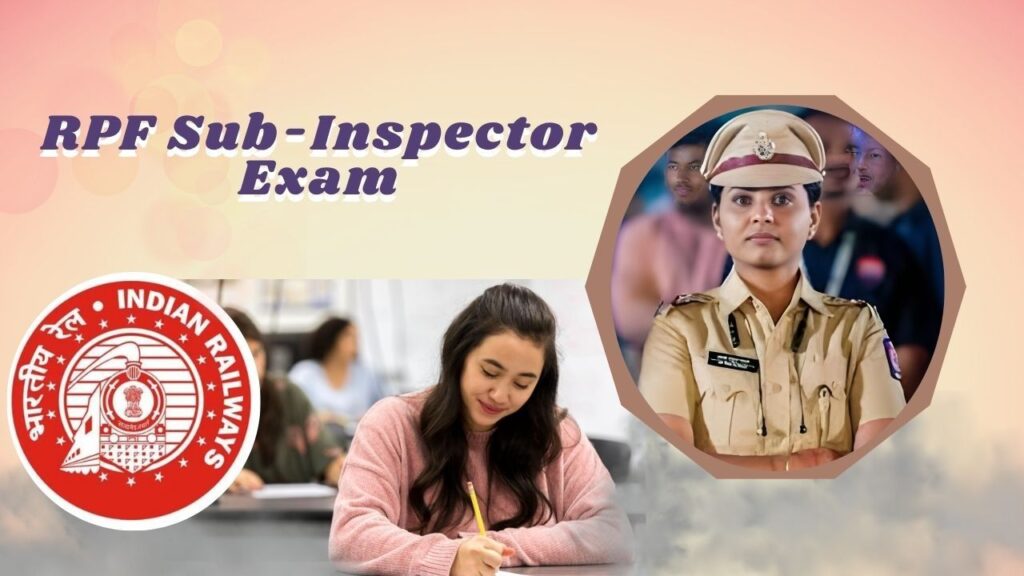
The RRB RPF Sub-Inspector exam is considered as one of the toughest national level exam in India and it is conducted by Railway Recruitment Board under the Ministry of Railways. The exam is held to select eligible and committed candidates for the post of Sub Inspector in Railway Protection Force, a specialized security force which ensures the safety of railway passengers, railway premises, and vital rail components in every zone of Indian Railways.
RPF SI Recruitment is prestigious post and government job and it has good salary package, so, that is way it is most demanded exam in our country. The exam is conducted as computer based test (CBT) in 15 languages apart from English such as Hindi, Urdu, Tamil, Telugu, Kannada, Odia, Malayalam, Marathi, Gujarati, Bengali, Assamese, Punjabi, Manipuri and Konkani, for the convenience of candidates from all corners of the country.
Eligibility Rules for RPF Sub-Inspector
Will you be entitled for the RPF Exam or not? Those who fulfill the Railway Protection Force eligibility criteria can apply for this prestigious job.
Age Limit: The upper age is 28 years on 1st July of the year of recruitment and the lower is 20 years. However, various relaxations applicable for different categories is stated as below:
SC/ST
5 years
OBC
3 years
domiciled Candidates from J&K and LadakhOR Central Government employees
UR/EWS – 5 yearsOBC – 8 yearsSC/ST – 10 years
Widows
UR/EWS – 2 yearsOBC – 5 yearsSC/ST – 7 years
Educational Qualification: The candidate should possess a Bachelor’s Degree in any stream from a recognized university for RPF Sub-Inspector exam. The requirement of Graduation is in place to get a basic intellectual knowledge which is required to hold duties of administration and leadership in security services.
Nationality: You must be an Indian citizen for this recruitment.
Physical Fitness Standards: Basic eligibility does not specifically state this, nonetheless candidates have to be physically fit to meet with the standards laid down in the efficiency test and physical measurement which are critical to the selection procedure.
Posting choices are due to the candidates holding down their preferred location during the filling of the preference form as the posts are spread across multiple railway zones in India which include Eastern Railway, Southern Railway, RPSF (Railway Protection Special Force) and many other zones. Since candidates can opt for postings near their home state/region, this zonal arrangement makes the exam less inaccessible.
Exam Pattern and Question Distribution
The knowledge of exam pattern is needed for the strategic preparation. The RPF SI exam is a single level exam which is conducted in the form of an online computer-based test, having multiple choice questions, which is of 2 hours duration.
There are three sections in the RPF SI Exam:
General Awareness (50 Questions, 50 Marks): This section is an evaluation of your knowledge about Indian history, the Indian constitution, polity, geography, Indian economy, the general science, sports, current national and international events and also a few questions on current governments recently introduced. The questions test both your static and dynamic awareness or knowledge of current affairs.
Arithmetic (35 Questions, 35 Marks): The arithmetic section includes questions on number systems expansion, simplification by BODMAS rule, ratio and proportion, percentage, profitable loss, interest calculation on SI and CI, time and work question average time related queries and simple topic of algebra.
General Intelligence and Reasoning (35 Questions, 35 Marks): Assess your ability to think logistically and solve problems through verbal and non-verbal reasoning and General Intelligence via questions on Analogies, Classifications, Coding Decoding, Series Completion, Blood Relations, Directions, Logical Reasoning and Pattern Recognition.
To promote accuracy rather than the recklessness of wild guesses, each correct answer is awarded one mark, while for each wrong answer one-third of a mark is deducted. The exam is available in fifteen different Indian languages but most of the candidates opt either Hindi or English.
Topic-Wise Syllabus Breakdown
General Awareness Topics
Domestic and International news, political scenes, social conditions, notable events and progress, awards and accolades.
Indian history is divided into independence movements, ancient India, medieval India, modern India and significant historical personalities.
Indian Constitution: Sections and their significance, process of making amendments, rights to the individuals and guiding principles of state policy
Physical and Global geography, environmental concerns, and Indian geography basics.
General Science: All Physics, Chemistry and Biology topics for Class 10–12
Athletics, such as football, great players, artistic genres, music, dance, literary, performing arts performances sport and culture.
Arithmetic Topics
Number system: prime and composite numbers, divisibility, whole numbers, and HCF, and LCM
Simplification: BODMAS rule application, square roots, decimals, and fractions
Ratio and Proportion: Sharing issues, partnerships, direct and indirect proportion, and mixtures
Percentage: Simple percentage calculations, percentage increase or decrease
Cost price, selling price, profit and loss, discount and percentage of profit and loss
Simple and compound interest: applications of principal, rate and time, and formulae
Time and Work: Pipe and cistern problems, work and work efficiency, work with wages
Average: Weighted averages, age-related averages, and averages formulas
Algebra: Basics of algebraic expressions and linear equations
General Intelligence and Reasoning Topics
Analogies: Finding relationships between word pairs
Classification: Categorizing similar items and identifying the odd one out
Coding- Decoding: Decoding the pattern of coded messages
Finding pattern in numerical or alphabetic series is called Completion of series.Blood Relations: Understanding family relationships
Directions: Solving puzzles on directions
Logical Reasoning: Understanding the statement and making the argument
Finding unseen patterns in logical or visual series
Selection Process For RPF Sub-Inspector
RPF SI Selection Process is the multi-level RPF SI selection process that aims to assess the candidates on various parameters. Understanding all stages enable you to be prepared in every possible way.
Computer-Based Test (CBT) at Stage 1: The initial challenge is a 90-minute pen and paper test consisting of 120 questions. A high score is required to advance to the second stage, as this round finishes off a large number of applicants.
Stage 2: The candidates who clear the CBT are called for the Physical Efficiency Test (PET) and Physical Measurement Test (PMT). The PMT is a measurement of height and chest for male applicants, and height for female applicants. The Physical Efficiency Test examines physical stamina by way of demanding routines.
Stage 3Document Verification (DV): The PET/PMT qualified candidates are called for the document verification. At this stage, the information provided by the candidates is matched with the original educational certificates, caste certificate and identity proofs.
Stage 4 involves a complete Medical Examination by CAPF/Govt. Your medical examination confirms that you have the physical ability to do your demanding job.
Salary and Job Benefits
The RPF Sub-Inspector post is attractive for various reasons like good income, stable government job and good facility.
Salary Structure
The 7th CPC has fixed the minimum pay for RPF SI as Rs 35,400 per month with a grade pay of Rs 4,200. Yet the net pay, after subsidy and deductions, is Rs. 43,000 and Rs. 54,162 per month.
Additional Allowances and Benefits
Medical Facilities: Comprehensive coverage for the healthcare of you and your family
Travel and Transfer Allowance: Assistance with relocating and traveling for work
Pass and Privilege Ticket Orders: Discount train travel for you and your family
Education Support: Support for your children’s education
Provident Fund (PF): A provident fund is a savings cum retirement benefit scheme available to all salaried classes of individuals
Gratuity: Lumpsum on exit
Application Fee and Where To Apply
The fee structure is designed keeping in mind everyone and also in compliance with the government norms. Rs 500 as the fee for General, OBC, and EWS candidates. SC, ST, PH ( hearing impaired) candidates and all women candidates are required to pay only Rs.250.
You do the entire application online at the RRB site (rpf.indianrailways.gov.in). This allows you to apply from anywhere in India.
Preparation Tips and Strategy
Success in RPF SI exam requires a solid study plan along with theoretical knowledge and that of practicing. Candidates must focus on the General Awareness section by keeping them updated with current affairs on a monthly basis, practice regular mock test for improving accuracy, and to be able to perform in a limited time. The sensible marking scheme and relatively small extent of syllabus make this test attainable with concentrated 4-6 months of preparation.
Conclusion
The RPF SI exam provides a golden opportunity to all the educated candidates to get a respectable government job. It means steady work, good pay and a major part in keeping the nation safe. Determination, good Study material and regular Practice can make your Dream of becoming RPF Sub-Inspector into Reality.