Best Government Jobs in West Bengal in 2025

If you are willing to work in a government sector and prefer to stay in your state, look for the Best Government Jobs in West Bengal. It is hard to beat the competition for these exams but the students who prepare well can achieve a high score and secure a government job in West Bengal.

S.No.Job TitleDepartment/OrganizationEligibilityOfficial Website
1WBCS Officer (Executive)West Bengal Public Service Commission (WBPSC)Graduationpsc.wb.gov.in
2Assistant TeacherWest Bengal School Service Commission (WBSSC)Graduation + B.Ed.westbengalssc.com
3Police Sub-Inspector/ConstableWest Bengal Police10th / 12th Pass / Graduationwbpolice.gov.in
4Staff NurseWest Bengal Health Recruitment Board (WBHRB)GNM / B.Sc. Nursingwbhrb.in / wbhealth.gov.in
5Food Sub-InspectorWBPSC12th Passpsc.wb.gov.in
6Lower Division ClerkVarious Departments10th / 12th Passpsc.wb.gov.in
7Judicial Service (Judge)West Bengal Judicial ServiceLaw Graduatepsc.wb.gov.in
8Engineer (Civil/Electrical/Mech)WBSEDCL, PWD, Municipal ServicesB.E. / B.Techwbsedcl.in / wb.gov.in
9Block Development Officer (BDO)WBPSCGraduationpsc.wb.gov.in
10Forest Ranger / GuardWest Bengal Forest Department12th Pass / Graduationwbpsc.gov.in
11Accountant / Audit OfficerWB Audit & Accounts ServiceGraduation (Commerce)psc.wb.gov.in
12Railway Jobs (Group C & D, NTPC)Indian Railways10th / 12th Pass / Graduationrrcer.com / indianrailways.gov.in
13Postal Assistant / GDSWest Bengal Postal Circle10th Passindiapost.gov.in
14Fire Services Officer / FiremanWest Bengal Fire Services10th / 12th Passwb.gov.in
15Data Entry Operator / TechnicianHealth / Education / Various Departments12th Pass / Graduationwbhealth.gov.in / wb.gov.in

Leave a Comment

Your email address will not be published. Required fields are marked *

Allied Medical Courses Roadmap 2026: Eligibility, NEET, Courses & Career Scope

Allied Medical Courses Roadmap 2026: Eligibility, NEET, Courses & Career Scope

In the constantly changing healthcare environment, the focus is changing. Doctors and nurses may be the public face of medicine, but there is a whole engine room of professionals holding the system together: the Allied Health Professionals. To become one, you need to break down the Allied Medical Courses Roadmap.

If you have ever asked yourself questions like “who runs that fancy MRI machine?”, “who handles the complex chemistry of a pathology lab?”, or “who assists a runner to walk again after a devastating injury?”, you have now become the proud owner of a glimpse into the world of Allied Health. 

As the 2026 Union Budget announced the addition of ten new allied health disciplines and targets to train one lakh professionals in five years, there is no better time to chart your path in this domain. 

What are Allied Medical Courses?

Allied Health Sciences (AHS) are career options in the healthcare sector where professionals work in tandem with doctors and provide diagnostic, technical, therapeutic and other support services. These courses are specialized rather than comprehensive like an MBBS. They’re the hands-on, practical side of medicine—taking the technology and therapy and making them work to save lives. 

Who Can Choose Allied Medical Courses?

These are the courses that are available for science stream students after 12th, and they consist of theory, practicals and also internships. Unlike MBBS, they are open (3-4 years), cheap (₹50k-₹5 lakhs total), and now NEET-compulsory under NCAHP for uniformity. Perfect for students looking at colleges like King George’ Medical University or the privates. 

Allied Medical Courses Roadmap

Charting a course for this vocation from high school to the hospital is going to be a bit of a balancing act, particularly with new rules set to be implemented in 2026. 

1. The Foundation (Class 12)

Allied health programs require a science core including physics, chemistry, and biology (PCB). Although certain diploma courses earlier admitted students from other streams, the drift in 2026 is towards making science a single stream for clinical jobs. 

2. The Entrance Era (NEET 2026 onwards)

As per the notification of National Commission for Allied and Healthcare Professions, NCAHP dated 31st May 2023 NEET UG is going to be made compulsory for admissions in various undergraduate allied courses from 2026-27. It implies that the “non-NEET” option to some of the best institutes is being gradually closed, which will help enhance the quality and professional recognition of the graduates. 

3. Choosing Your Path: Degree vs. Diploma

Bachelor’s Degree (B.Sc./BPT): Normally 3 to 4.5 years. They offer more theoretical knowledge and are oftentimes necessary for obtaining work permits in other countries.

Diploma (DMLT/DRT): 2 years in general. These “accelerated” tracks offer a practical focus on talent for students interested in moving quickly into the workforce. 

Read More:- UPSC Civil Services IAS/IFS Pre Recruitment 2026:  Notification, Dates & Apply Complete Guide

Top Allied Medical Specializations for 2026

CourseFocus AreaRole
BSc (MLT) — Medical Lab Technology Studying samples like blood, tissue, and other body fluids.Lab Technologist
Bachelor of Physiotherapy — BSc (BPT)Helping in regaining strength through Physical rehabilitation Physiotherapist
BSc with Radiology & ImagingScanning through X-rays, CT scans, and MRIs to detect injuriesRadiology Technologist
B.Sc. Anaesthesia & OT TechSupporting surgeons and managing ICUs.OT Technician
B.Sc. Cardiac Care TechnologyMonitoring heart health and ECGs.Cardiac Technician

Why Choosing an Allied Medical Courses Roadmap is Right?

Entry to workforce more quickly

While an MBBS requires 5.5 years (plus specializations), most allied health programmes make you career-ready within 3 to 4 years. This is your lane if you just want to start making a difference and earning sooner.

High Demand

There is a massive demand for healthcare technicians worldwide and skilled professionals capable of meeting that demand are difficult to find, making it a path to high opportunity around the globe. Expansion of the Regional Medical Hubs (introduced in 2026 Budget) is expected to generate thousands of jobs in diagnostics and rehabilitation in India alone. 

Technological Integration

If you’re a gadget geek or tech enthusiast, then Allied Health is the way to go. You don’t just read charts, you’re running some of the most sophisticated AI-enabled machines on the earth. 

Future Scope and Salary

The era when Allied Health was considered a “plan B” is behind us. By 2026, the starting salaries of freshers can vary from ₹2.5L per annum to ₹5L per annum based on the specialization. Specialized positions such as Perfusionists or Cardiac Technicians also attract even higher premiums.

Additionally these degrees have great international mobility. Countries such as the UK, the UAE and Canada have specific visa tracks for Allied Health workers, so this is really your ticket to a global career. 

Conclusion 

The Allied Medical Courses Roadmap isn’t a secret trail anymore — it’s a fast moving highway. With a government emphasis on skilling and the standardization of entrance exams, these professions are enjoying a newfound prestige.

If you love science but don’t want to go to medical school for ten years, the Allied Health track is a balanced, tech-forward, and profoundly satisfying way to go. 

UPSSSC UP Combined Lower Subordinate Services (Graduate Level) Recruitment Process, Eligibility, And Salary

UPSSSC UP Combined Lower Subordinate Services

Get ready to secure a UPSSSC Lower PCS job to enjoy purposeful life in Uttar Pradesh. UPSSSC UP Combined Lower Subordinate Services (Graduate Level) recruitment is live right now, you can fill the application now. But you must understand each phase of selection, eligibility and preparation to pass the exam.

With 2,285 vacancies up for grabs, this is one of the biggest opportunities of the year for graduates looking to secure a Group ‘C’ administrative foothold in the state.

What is UPSSSC Lower Subordinate Services? (Job Profile)

The Lower Subordinate Services recruitment fills different positions in state government offices. There are most common job roles such as executive, supervisory, and auditing that require candidates who can immediately step into the work to handle public services, implementing government schemes, and making sure rules and policies are followed properly. 

The roles are just simple desk jobs, they offer executive authority to tackle every task. Depending on your qualification and ranking, you could land any of these roles:

  • Executive Officer (Municipal Administration): Manages urban local bodies, public civic amenities, and local revenue collection.
  • Assistant Treasury Accountant / Auditor: Ensures fiscal health, monitors departmental budgets, and conducts financial audits.
  • Mandi Supervisor / Amin: Oversees agricultural market regulations, auction fair play, and revenue reporting for the Mandi Parishad.
  • Assistant Consolidation Officer (Chakbandi): Resolves land disputes, manages agricultural land redistribution, and maintains accurate land maps.

Who Can Apply? (Eligibility Criteria)

Before you hit apply, ensure you tick all the structural requirements set by the UPSSSC:

Educational Qualification

  • Mandatory Foundation: You must hold a Bachelor’s Degree from a recognized Indian university.
  • The PET Gateway: The Main exam needs a valid PET scorecard otherwise they will not let you enter in the exam hall. 
  • Post-Specific Extras:
    • For Auditor/Accountant: You must hold a B.Com degree. 
    • For Mandi Supervisor: Degree in Agriculture, Commerce, or Economics with a minimum of 50% marks.
    • Executive Officer: A computer ‘O’ Level diploma is required for service confirmation.

Age Limit (As of July 1, 2026)

Minimum 21 years
Maximum 40 years.
Age relaxation given to reserved categories ( OBC, SC, ST, )and Ex-Servicemen 

Important Dates & How to Apply

The application window is brief, so do not leave things to the final day when servers traditionally crawl to a halt.

Application Starts29/May/2026
Last Date to Apply18/June/2026
Correction Window Last Date25/June/2026
Admit CardUpdate Later

Step-by-Step Application Process

The Commission relies heavily on your existing PET data to make authentication seamless:

  1. Authentication via PET: Go to the official portal at upsssc.gov.in. Use your PET-2025 Registration Number to login for UPSSSC Lower PCS.
  2. Check Details: Information about your qualification, photograph, caste category are automatically filled from the PET database. Verify everything carefully and fill out any pending post-specific preferences.
  3. Submit Processing Fees: Pay the standard online processing fee of ₹25 for all categories via net banking, UPI, or credit/Debit cards. Note: Shortlisted candidates will pay the structural Main Exam fee later.
  4. Final Printout: Review your final application form, submit it, and download/print the confirmation form for verification rounds.

Vacancy Matrix (2,285 Posts)

The vacancies span several state departments, providing brilliant diversity in career paths. Here is how the open positions look across major segments:

Department / BoardPost NameVacancies
Directorate of Treasury, UPAssistant Treasury Accountant548
Cooperative Societies & PanchayatAccounts Inspector / Auditor419
State Agriculture Mandi ParishadAmin / Auctioneer / Clerk552
Municipal Administration DirectorateExecutive Officer238
Office of Consolidation CommissionerAssistant Consolidation Officer168
Other Allied DepartmentsTechnical Assistants / Supervisors360

Selection Process & Exam Pattern

Getting selected requires navigating a clear, objective framework. There are no interviews for these Group ‘C’ cadres. Your merit relies entirely on written execution.

Step 1: Get UPSSSC PET 2025 Scorecard first

Step 2: Give Main exam and secure good marks

Step 3: Document Verification to check all the information is valid in your application.

The Exam Blueprint

Prepare yourself with understanding the topics that are important in this exam, Lower PCS exam pattern includes:

  1. General Intelligence & Reasoning: to test your logic ability and analytical thinking.
  2. General Knowledge (GK): knowing about your Uttar Pradesh is important to handle any work regarding the state. So increase knowledge in Indian History, Geography, Polity, Economy, and Uttar Pradesh’s History, Administration, and Culture.
  3. General Science & Arithmetic: basic level physics, chemistry, biology, and math.
  4. General Hindi: Focuses on comprehensive reading, letter writing, grammar (Sandhi, Samas, Muhavare), and vocabulary translation.

Strategic Preparation Plan

The competition is high so you have to make a plan that helps you achieve good scores over fractions of marks. Here is a realistic roadmap:

  • Own the UP Specific Section: Knowledge of the state will let you secure 20-25% of GK questions. Research and keep updated with Uttar Pradesh’s budget, schemes, geography, and cultural folklore. Dedicate solid hours to local current affairs.
  • Do Not Avoid Hindi: General Hindi is highly scoring. Mastering basic grammar rules and practicing official letter formats can drastically push your score above average cut-offs.
  • Analyze Mock Tests Weekly: Build your speed and precision. Track where you lose marks to negative scoring and adjust your accuracy levels accordingly.

Read More 👉 Quick Preparation Guide for UP Polytechnic JEECUP 2026

Salary and Career Growth

Let’s talk about the rewards. Apart from massive social prestige, these positions offer financial stability governed by the 7th Pay Commission.

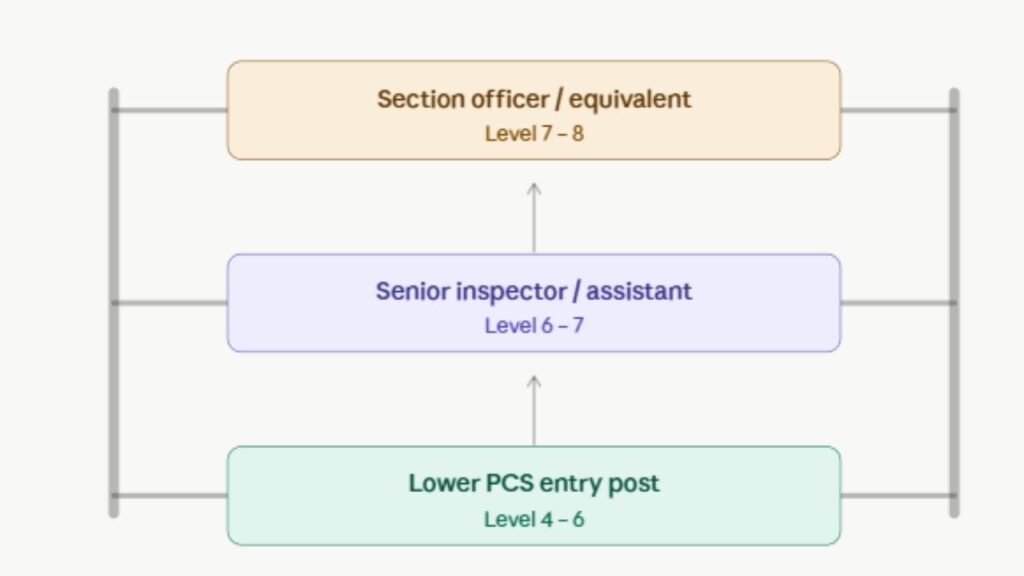
The salary of Uttar Pradesh. Combined Lower Subordinate Services (Graduate Level) are based on their job profile and experience but it ranges between Pay Level 4 to Level 6.

Level 4 (Clerks/Typists)₹25,500 – ₹81,100
Level 5 (Accountants/Amin)₹29,200 – ₹92,300
Level 6 (Executive Officers/ACO)₹35,400 – ₹1,12,400

In-Hand salary will increase because of the multi allowance you will get once you are assigned to your job. So the entry-level gross salaries range from ₹35,000 to ₹55,000 per month depending on city tiers.

The Promotion Ladder

Your career trajectory doesn’t stall. Junior officers systematically advance through departmental reviews and service experience:

Conclusion

The UPSSSC UP Combined Lower Subordinate Services (Graduate Level) Recruitment is a cycle that ends in a few days and you need to fill the form if you don’t want to miss this opportunity to secure a career in Uttar Pradesh. The competition is very high for the 2,285 seats, so the right strategy to prepare for the exam is mandatory.

Ensure your application goes through successfully before June 18, lock down your study desk, and start structured preparation today. For a comprehensive breakdown of the syllabus, safe score metrics, and targeted departmental tactics, check out this detailed UPSSSC Lower PCS Strategy Guide which covers exactly how to maximize your score in the Mains exam.

SEBI Officer Grade A Recruitment 2025: Key Dates and Application Process 

SEBI Grade A Officer 2025

The SEBI Grade A recruitment 2025 notification has been released by Securities and Exchange Board of India (SEBI) for the General, Legal, Information Technology, Research, Official Language, Engineering (Electrical), and Engineering (Civil) posts. There are 110 vacancies are announced and the online application for the same has been started from 30 October 2025 from the website. Aspirants should go through the full notification for knowledgability eligibility criteria, application fees, age limit, pay scale, selection process, and more. More details and SEBI Grade A Online Registration Application Form 2025 are available from the link given on this blog and also on the official website. 

Dates & Application Fee For Online Form For SEBI Grade A Recruitment 2025 

EventDate
Short Notification Date08/October/2025
Application Start30/October/2025
Apply Online Last DateUpdate Soon
Correction DateUpdate Soon
Exam DateUpdate Soon
Application Fee
Gen/ OBC/ EWS₹1180/-
SC/ ST/ PWD₹118/-

Age Limit: Any hopefuls should be no older than 30 years as of September 30, 2025. This implies that their date of birth should be on or after October 1, 1995. 

Read More :- Navodaya Admit Card Release – Check Exam Date & Download Steps

Number of Vacancies With Required Eligibility Details

Post NameVacancyRequired Qualification
Grade A General56Master’s/PG Diploma (2 yrs) in Any Discipline, OR Bachelor in Law/Engineering, OR CA/CFA/CS/CMA, OR Equivalent from Recognized University/Board
Grade A Legal20Bachelor in Law OR Equivalent from Recognized University/Board, with 2 years Advocate experience
Grade A Information Tech22Bachelor in Engineering (Any Branch) OR Bachelor’s + PG in Computer Science/IT/Applications, OR Equivalent from Recognized University/Board
Grade A Research4Master’s/PG Diploma (2 yrs) in Economics, Commerce, Finance, Statistics, Data Science, etc., OR Equivalent from Recognized University/Board
Grade A Official Language3Master in Hindi/Hindi Translation with English OR in English/Sanskrit/Commerce/Economics with Hindi at Graduation, OR Equivalent from Recognized University/Board
Grade A Engineering (Electrical)2Bachelor in Electrical Engineering or equivalent; experience in electronic systems, maintenance, and project administration
Grade A Engineering (Civil)3Civil Engineering degree or equivalent, professional, project management, and CAD/CAM design

Exam Pattern 

Phase IOnline Examination (Two Papers)
Phase IIOnline Examination (Two Papers).
Phase IIIInterview

Salary And Benefits

The salary range is ₹62,500 to ₹1,26,100 per month, along with additional perks such as NPS Contribution, DA, Family, Local, Learning & Special Allowances, Medical benefits, LTC, Furnishing Scheme, Subsidized Lunch, and more.

Step-by-Step Guide for the SEBI Grade A Recruitment 2025 

  1. Read the details and instructions in the SEBI Grade A Notification 2025 PDF. 
  2. Just Get to the official website or click on the Apply Online link which is provided here. 
  3. Fill in the SEBI Grade A Online Application Form 2025 with correct details. 
  4. Upload the required documents as detailed in the notification. 
  5. Pay the fee for application, if any. 
  6. Make a print of the application as it is needed in the future. 
Useful Links
Apply NowClick Here
NotificationClick Here
Official WebsiteClick Here

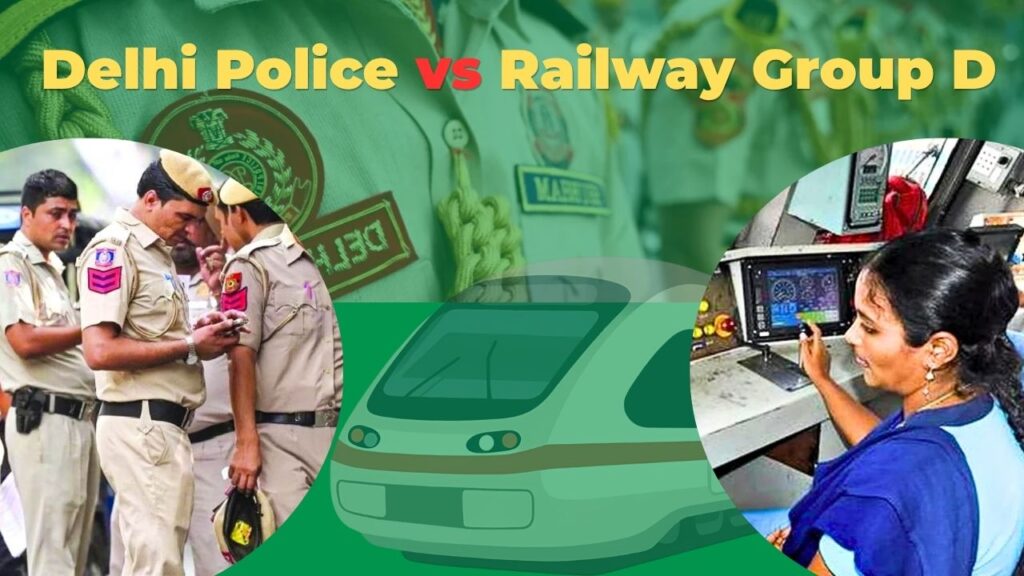
Delhi Police vs Railway Group D: Complete Guide to Decide Your Job in Government Sector

Delhi Police vs Railway Group D

Finding a government job in India is just like a dream for many people as it offers financial security, job stability and respect in the society. There are large-scale recruitment every year which attracts recruiters from across the country but deciding between Delhi Police vs Railway Group D is hard because both offer great pay and career opportunities.

Both provide access to the elite government sector, but are tailored to vastly separate lifestyles, career paths, and abilities. One puts you in the national capital in a prized khaki uniform and the other has you running the Fourth Largest Rail Network in the world. 

If you are confused between Delhi Police vs Railway Group D then must read this complete comparison on Work Profile, Eligibility, Salary, and Career Growth for a clear decision. 

Delhi Police (Constable / Head Constable) Recruitment 

Job Profile and Responsibilities

Becoming a member of the Delhi Police is to enter a world of dynamism, action and public interface As a cop in the national capital, where the pace of duty is naturally non-stop.

Your main duty is law enforcement. They patrol certain beats, work to deter crime, provide assistance with investigations and with traffic.

You would keep meeting the citizens, attend to panic callers, receive complaints (FIR), and your presence would be assuredness of keep to the public.

The Officers of Delhi police are to be seen in the front lines fighting and securing the capital at large and also protecting the top VIPs of the country and sometimes protecting foreign delegates. So, it is both challenging and high profile. 

Delhi Police Eligibility

The candidates must hold a 10+2 marksheet from any recognized board. The ages considered are generally between 18 and up to 25 years of age. However, there is a relaxation in upper age limit for the SC/ST category (5 years), OBC (3 years), and other special categories

Male applicants must have a valid LMV Driving License (Motorcycle or Car) at the time of physical test. LCs are not accepted 

Physical Standards and Selection Process

Delhi Police expects physical fitness of a high order since the duties of the post involve both muscular strength and bodily agility. The selection process comprises Computer Based Test(CBT) which tests the candidates General Knowledge, Reasoning, Numerical Ability and basic knowledge of Computer.

Candidates have to clear the written exam and then a tough Physical Endurance and Measurement Test. It also contains certain height requirements (male candidates approx 170 cm and female 157 cm large), chest measurement for men and physical activities such as 1600 meter race, long jump and high jump.

After that, the candidates are subject to a rigorous medical examination. This is to make sure that your vision is (minimum 6/12 in both eyes with or without glasses), you are not color blind and you are fit and healthy.

Salary Structure, Perks, and Allowances

Constables in Delhi Police are placed in Pay Level 3 with a basic pay of Rs 21,700 per month. The gross salary at the initial level after including the allowance is anything from Rs. 38000 to Rs. 40000 per month. 

Receiving an HRA of 27% (Delhi is an ‘X’ city), as well as DA, TA, and Uniform allowance on an yearly basis. Other job benefits include use of specialised health care facilities and government quarters. 

Career Growth and Promotions

The promotion prospects in Delhi Police are well-organized and with high prestige. Then, the junior police officer can be promoted through the ranks by seniority or by passing some departmental examinations. Promotion ladder goes like this:

Constable → Head Constable → Assistant Sub-Inspector (ASI) → Sub-Inspector (SI) → Inspector

SSC CPO exam is crucial and a life achieving door which can open directly at the Sub-Inspector level. Those who want to settle at a high-level fast, they can prepare themselves for this exam.

Work Environment and Lifestyle Factors of Delhi Police

You will be assigned to the National Capital Region (NCR) for life. You can be assigned for different tasks in the city or outside of the city. So, it’s a bit challenging for your family and kids to move but you get excellent city services, decent schools for your kids, and no-remote areas, unlike many other jobs in India.

It’s no secret that police work is tough. They work long hours that are unpredictable, as you are essentially on call all the time. Holidays and festivals usually involve long days working managing crowds and security.

Many young aspirants hesitate to choose this field because the uniform confers instant reverence and authority. 

Railway Recruitment Board For Group D Jobs

Group D staff are a pillar of Indian Railways Functions as the role requires technical and manual work that keeps the train running on their tracks smoothly across the country. Jobs like Track Maintainer, Assistant Pointsman, Assistant Loco Shed, and multiple other maintenance roles. 

Job Profile and Responsibilities

Based on the post, work is related to the railway tracks (Track Maintainer) and operation of railway switches (Pointsman) to work in signal telecom and electrical departments.

This job is different from being a police officer in that you do not really deal with the general public. As such, the primary focus is on infrastructure maintenance, technical support, and safe operations.

Most Group D jobs, in particular Track Maintainers, require you to do hard physical work and be out in the elements to ensure the tracks are secure. 

Railway Group D Eligibility

The educational requirement is a 10th pass (matriculation) from a recognized board. But those having ITI (Industrial Training Institute) certificate or National Apprenticeship Certificate (NAC) are also eligible and that too for some technical posts they are preferred. 

The age limit is also more lax here, from 18 to 33 years (or 36 years in recent revised notifications), this opens it up to older candidates. Age relaxation as per government norms for reserved categories. 

Physical Standards and Selection Process

Railways is not choosing its candidates based on their height or combat-style fitness, they choose candidate’s ability to perform physical work consistently. A written examination on General Science, Mathematics, General Intelligence & Reasoning and General Awareness.

Candidates are now required to demonstrate their strength during the Physical Efficiency Test (PET) instead of height/chest measurement. For instance, a male aspirant is required to lift and carry 35 kg weight for 100 meter without putting it down in 2 minutes followed by 1000 meters run in 4 minutes and 15 seconds. Women candidates have reduced weight (20 kg) and time limits.

The standards for vision in railways are rigid, because color blind or poor sighted persons can commit havoc in track and signal. 

Salary Structure, Perks, and Allowances

The Railway Group D employee will receive ₹18,000 per month as per Pay Level 1. Depending on place of posting, the salary in hand is approx. 22,000 to 25,000 Rs per month.

Although the salary is modest, Indian Railways provide many useful benefits. These are DA, HRA, TA, Night Duty Allowance and Risk or Hardship Allowance for jobs such as track maintainer. 

One of the best perks of the job is the free or concessionary rail pass for staff and their families, enabling them to travel around the country for very little money. There are also well-equipped Railway hospitals, which the staff can avail. 

Railway Group D Career Growth and Promotions

Indian railways is famous for its internal promotion opportunities for hardworking employees. A Group D employee can be promoted to Group C through competitions like LDCE (Limited Departmental Competitive Examination) and GDCE (General Departmental Competitive Examination).

For instance, A Track Maintainer or Pointsman have the chance to rise to posts like Assistant Station Master, Goods Guard, Ticket Clerk, and in some cases even to high technical posts subject to their educational qualifications and their performance in these examinations. 

Life in Railway Group D

Indian Railways is zonal when Indian Railways Introduction is considered. Although you can select your zone during application, you will be posted to remote country stations, small towns, or busy city junctions. Movement within zone is allowed.

The hours are usually more stable and predictable (typically 8-hour shifts), with a more consistent daily work/life balance than the police force. But the labour of outdoor work – in the boiling summers or the monsoons – is punishing.

The work is largely behind the scenes and out of the public eye and political pressure. It is a quiet, steady life, with the reassurance of a huge, understanding railway community. 

Read More:- DUVASU Mathura PVT Online Form And Full Details On Admissions, Eligibility, and Preparation

Conclusion (Delhi Police vs Railway Group D)

Choosing between Delhi Police vs Railway Group D depends on who you are, your educational qualifications and what you aim in life.

Opt for Delhi Police if:

If you are an active young person, love working under pressure and want your job to be authoritative and respectful in society. If you have 10+2 qualification, love to stay in a big metropolitan city forever, and can sacrifice on time for huge initial pay, the police force is your calling. 

Opt for Railway Group D if: 

You want to work in a non-public service, your job is technically focused or you have routine jobs. Railways is a good option if you have a 10th pass or ITI qualification, are physically fit, and want a predictable shift routine. Besides, the higher age limit provides an opportunity for aged candidates to get a stable central government job along with the best travel and medical benefits for their family.

Both have been very honourable ways of serving the nation. Consider your physical abilities, your preference for urban or pan-India lifestyle, and your long-term goals, and you’ll have an answer for what form to fill out next! 

MPESB Recruitment 2026: Form Reopens on 13 October for Group 3 Sub Engineer & Other Posts

MPESB Recruitment 2026

The MPESB Recruitment 2026 application form reopens on 13 October and closes on 27 October 2026. This is the Madhya Pradesh Employees Selection Board’s combined drive for Group 3 Sub Engineer, Sahayak Manchitrakar (Draftsman), Technician and equivalent posts, and the rules have shifted since the first notice.

Look into the MPESB recruitment drive to understand eligibility criteria, age limit, how to apply for the different posts to get the well-paying job. Keep follow up the dates for the next phase on the official website.

MPESB Group 3 Sub Engineer Recruitment 2026 Date

MPESB posted the first Group-3 notice on 18 August for 1,040 posts which was cancelled and brought next month the combined recruitment exam of Group 3 posts. The application window was opened from 29 August to 12 September 2026 then it shut down. 

The MPESB Group 3 Sub Engineer recruitment 2026 application re-opens because the number of posts increased and the reservation roster was revised. Anyone who applied earlier can edit their form during the correction window.

The form is open again because the number of posts increased and the reservation roster was revised. Anyone who applied earlier can edit their form during the correction window.

EventDate
First application window29 Aug – 12 Sep 2026
Reopened form starts13 Oct 2026
Last date to apply27 Oct 2026
Correction window13 – 28 Oct 2026
Computer-based testDec 2026 – Jan 2027 (exact date not confirmed)

Posts and Vacancies

The pre-reopening notification counted 1,700 posts across 131 post codes, spread over departments, directorates and polytechnic colleges. Because posts were added, that total is probably out of date, and the reopened notice does not give one grand figure. 

The Public Works Department lists 225 and 68 Sub Engineer posts in two groups, Indore Development Authority has 41 and 3, Survey and Land Records has 14 Surveyor posts, and Geology and Mining has 4 Mineral Surveyor posts. Polytechnic colleges add Laboratory Technician and Draftsman posts in ones and twos.

Education and Age Requirement 

Different posts require different qualifications from you so apply for the post that matches your degree. If you have done graduation in engineering then you can apply for Group-3 Sub Engineering post. Candidates must check the official notification before applying.

  • Age: 18 to 40 years
  • MP relaxation: SC, ST, OBC and women candidates of Madhya Pradesh can get up to 45 years, subject to official rules. 
  • Aadhaar: registration is mandatory.
  • Employment exchange: Madhya Pradesh residents need a live registration. Check yours is active before you open the form, because an expired one is the kind of problem that surfaces on the last day.

Application Fee

Unreserved candidates pay ₹500 per post. SC, ST, OBC, EWS and PwD candidates who are Madhya Pradesh residents pay ₹250. Backlog posts under direct recruitment carry no fee. The portal charge is reported at ₹20 for the kiosk or MP Online route.

How to Apply Online MPESB Recruitment 2026

  1. Open esb.mp.gov.in and log in to your MPESB profile.
  2. Look at the notification and click on “Group-3 Combined Recruitment Exam” which will redirect you to the form page.
  3. Choose whichever post you are trying for based on your education.
  4. Upload documents that are required with your application and pay the fee.
  5. Submit and use the correction window to fix errors. But review the application before submit to avoid any correction later.

Documents such as ID, education certificates, domicile, and employment exchange card ready before you start filling the application form.

Exam Pattern and a Prep Tip

The exam dates are still unconfirmed but you can prepare yourself for the 200 marks question paper which also cuts off 0.25 marks if you give the wrong answer. This is a computer-based test held in two shifts for 3-hours. The test provides you bilingual in Hindi and English, with four options per question. 

After the test, you are called for the document verification and a medical exam, and this is where you have to be sure that you must have the proof of the information you are provided in the application and no health issues.

The application closes at the end of the month and exam starts after two months so there is a lot of time for you to start three-hour mocks now and track how many questions you skip. Blind guesses will eat up your marks, so aim to learn which question you can skip without losing your rank. This practice will also reduce your time to solve every question.

Read More 👉 NTA UGC NET JRF Online Form 2026: Last Date, Fees, Eligibility and How to Apply

Conclusion

If you have a diploma and engineering degree in any field, you can fill the form. Don’t wait for the 27 October, apply early to secure your position.

If you applied in September, log in during the correction window and recheck your post preferences, since the added posts may offer better options than the ones you picked. If your qualification only loosely fits a post, read that department’s recruitment rule first, because a rejected application costs you the fee and the cycle.

Scroll to Top