The demand for government jobs in Bihar is increasing every year because these jobs offer job security, good salary and social respect. If you are a resident of Bihar and want to make your career strong through a government job, you are at the right place. In this blog, we have brought for you a list of Best Government Jobs in Bihar which includes major government jobs of Bihar for which you can apply. In the table given below, you will find information about each job’s name, department, eligibility criteria and official website so that you can easily start preparing for your desired job.
NEET PG 2025 Admissions Exam Date Out for the advanced programs in the medical field. If you want to prepare yourself for the National Eligibility cum Entrance Test for Postgraduate (NEET PG) 2025 check the exam pattern and syllabus. Check the admit card before the examination date. Check the official notification and stay updated about the exam details. Before applying candidates must meet eligibility criteria and hold the MBBS certificate. NEET PG 2025 is one the crucial examinations for post-graduation across India. The exam is scheduled for 3 August 2025, and thousands of candidates are preparing to appear in this exam for MS/MD/PG Diploma courses.
Highlights of NEET PG 2025
Exam Conducting Body
National Board of Examination
Exam Name
NEET PG
Purpose
Entrance Exam for MS/MD/PG Diploma
NEET PG 2025 Admissions Exam
This is an entrance exam for advanced training programs for those who want growth in their medical field. You can appear in the exam if you have completed your MBBS.
Candidates must hold an MBBS degree from the Medical Council of India. Better with the proof of Pass Certificate of MBBS for this exam. It is mandatory to complete a one-year rotating internship program before applying for NEET PG 2025. There is no upper age limit for this exam so anyone can take this exam but candidates who are interested in advanced medical courses must have a valid registration certificate issued by the MCI.
NEET PG 2025 Admissions Exam Details
Exam Pattern for the NEET PG 2025
Section
No of Questions
Marks
Clinical Subjects
100
400
Pre-Clinical Subjects
50
200
Para-Clinical Subjects
50
200
The duration is 3 hours & 30 minutes for the NEET PG 2025 paper. The marking of answer in the paper is +4 for the correct answer and -1 for the wrong answer as negative marking. Students should prepare well and efficiently for this examination as it is the entrance exam for the post-medical courses. Students get admission to Medical College/University after clearing this exam.
Perks of This Exam
Specialization Opportunities: For students who want to study advanced medical courses and wish for medical training in their specific field, this is the best option for them.
Prestigious Institutions: Offers a chance to study in reputed institutions.
Career Growth: To enhance the practical ability and concepts for better job roles and salaries.
Selection Process
Written Examination
Result Declaration
Counseling Process
The First stage of this exam is a computer-based objective-type question and the level of question is hard, exam covering the MBBS syllabus
Check the NBE portal on the day of result declaration, search your name in the merit list for qualified candidates.
Counseling conducted by MCC for the qualified candidates for seat allocation in MS/MD/PG Diploma course
Syllabus for NEET PG 2025
Section
Key topics
Clinical Subjects
General Surgery, Gynecology and Pediatrics, and General Medicine
Microsoft Offers Buyouts to 60,000 Employees as AI spending surges across India across the US, the UK, and Canada, that wasn’t a hypothetical scenario—it was reality. More than a quarter of Microsoft’s global workforce of 2,23,000 full-time staff just received a “Voluntary Exit Offer”.
Before panic sets in, let’s clear up the biggest misconception floating around social media. Microsoft is not firing 60,000 people. In fact, CFO Amy Hood expects 3,000 or fewer employees to actually take the deal and walk away by the end of the year.
Still, extending an exit door to a quarter of your company is a massive cultural moment. And when you look at the timing, it reveals an uncomfortable truth about where Big Tech is headed: the bill for the artificial intelligence revolution has arrived, and companies are rearranging everything—including their people—to pay for it.
This is Not a Traditional Layoffs, Career Change Opportunity
Unlike traditional layoffs where people are blindsided and lose access to their accounts overnight, this is a calculated, optional off-ramp. Microsoft’s Chief People Officer, Amy Coleman, framed the move in an internal memo as a way to let employees who are already contemplating a career change “make that transition now with support”.
The details of the offer show just how broad this shake-up is:
Who is eligible: Employees in the Group below Staff Level 70 (Vice President level) across participating teams in India, US, Canada and the UK. This is unlike previous retirement policies with no age or length of time in the business requirements and past performance is disregarded.
The payout: The package is expected to equal roughly a month of pay for every year in service at Microsoft. Staff have until December to make up their minds.
The teams included: Employees in Windows + Devices, Xbox, Finance, HR, and—surprisingly—even parts of the Copilot and AI Experiences teams are on the list.
The untouchables: If you work directly inside data centres, cybersecurity, sales, marketing, or quantum computing, you aren’t getting this email. Microsoft needs every single pair of hands in those departments right now.
A $175 Billion AI Appetite Is Really A Reason Or a Cover Up
Why would one of the richest companies on the planet suddenly try to trim its payroll? Because building the future of AI is astronomically expensive.
With $175 billion, Microsoft has predicted capital expenditures for all of 2026. To put that in perspective, their capital spend more than doubled from $64.6 billion in FY2025 to $116 billion in FY2026 — nearly 35% of their annual revenue.
That money isn’t going toward office perks or sprawling campuses. It is being poured into concrete, cooling systems, power grids, and millions of ultra-expensive AI chips to keep Azure and Copilot running. In fact, just days after announcing the employee buyouts, Microsoft went to the US debt market for the first time since 2017 to raise $25 billion through an immense bond sale.
When a company spends $175 billion on hardware, borrowing additional tens of billions, Wall Street is keen on watching the operating margins. Every dollar that company saves is a dollar that helps offset the depreciation of a brand-new AI server farm.
The Quiet Death of Pandemic-Era Hiring
There is also a deeper structural shift happening under the hood. During the COVID-19 boom between 2019 and 2022, tech companies hired aggressively, assuming the digital boom would grow in a straight line forever. Microsoft’s headcount swelled by over 50%, hitting roughly 2,21,000 in 2022, and has stayed mostly flat since.
Meanwhile, the entire direction of the software industry changed overnight. A company that hired tens of thousands of people for a pre-AI world now needs a completely different mix of skills.
Instead of enduring the PR nightmare and morale crush of another round of mass layoffs—following the 15,000 cuts in 2025 and 4,800 cuts earlier in 2026—Microsoft is trying a softer reset. If 3,000 unmotivated or burnt-out employees voluntarily take a cheque and leave, managers get to shrink their budgets or free up headcount for specialised roles without having to play the bad guy.
For those of us watching from the Indian IT sector and global tech hubs, Microsoft’s move is a wake-up call. Notice how even employees inside the Copilot and AI divisions were offered buyouts, while hard-infrastructure data centre staff and cybersecurity engineers were strictly excluded.
The era of “growth at all costs” with sprawling teams is over. Today’s tech giants want leaner teams, heavier automation, and capital freed up for raw computing power. Offering 60,000 people a polite, paid exit isn’t a sign that Microsoft is struggling—it is a sign that in the AI arms race, silicon is now taking priority over headcount.
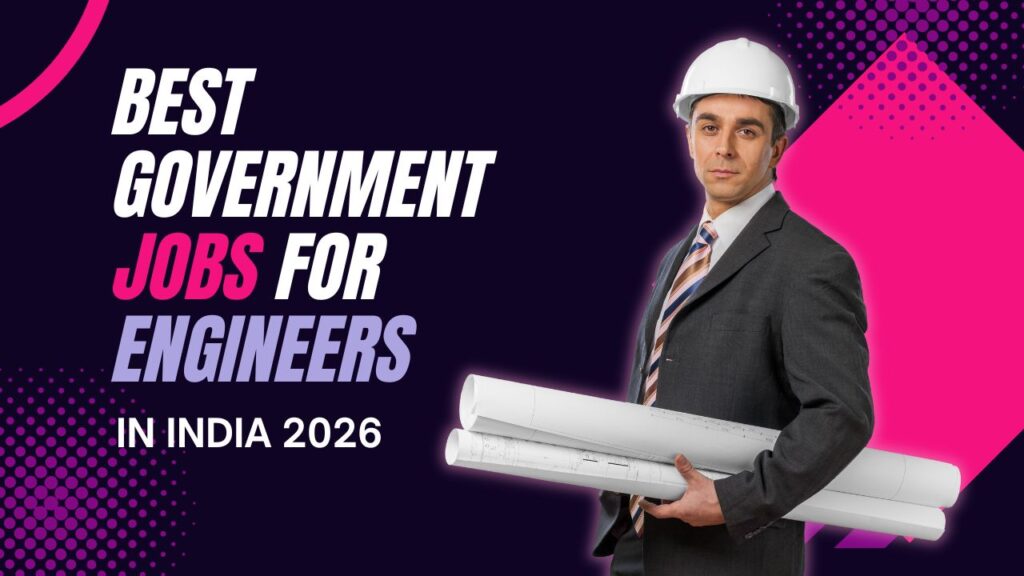
If you are an engineer at the crossroads of your career and question if you should jump into the private sector rat race or check out government jobs for jollies, we have some good news for you. The Indian government and its PSUs are going to recruit a massive number of engineers in 2026, and this might be your golden opportunity to get a job with immense stability, good pay and superb benefits. Now, let’s take a look at Best Government Jobs for Engineers in India 2026 that are waiting for you.
Why Government Jobs Matter for Engineers
Here’s the thing about government jobs that many young engineers seem not to realize: government jobs offer something that’s increasingly hard to come by in this volatile economic climate — stability and long-term security, even if it means starting with a lower salary (and slower pace of promotion) than you might get in the private sector. You won’t have to worry about sudden lay-offs when the market takes a dive, and your job security is guaranteed by the power of the whole nation to back you up.
The pay scale in government service has also undergone a sea-change. A recently qualified engineer in a government job is paid somewhere between ₹3,00,000 and ₹4,50,000 per year, with regular, foreseeable increments based on your years of service. Further, government jobs have full medical coverage, housing allowances, pensions schemes, flexible working hours and good leave policies – benefits that are all but vanished in private organisations.
Top Government Job Categories for Engineers in 2026
1. PSU Recruitment Through GATE
PSUs (Public Sector Undertakings) are the behemoths of India’s industrial sector, and they are hiring in a big way in 2026. Over 50 major PSUs such as IOCL, ONGC, NTPC, BHEL, Power Grid, GAIL are on recruiting mode for engineering graduates. These organizations pay a competitive salary of ₹40,000 to ₹80,000 per month for entry level jobs with quick career advancement.
If you have done well in your B.Tech / B.E., then good GATE (Graduate Aptitude Test in Engineering) score will help you in getting through. GATE scores are valid for 3 years, so you can still be content even if you haven’t appeared for it yet, so start booking your seats on these high profile jobs.
Major PSUs to recruit in 2026 are Power Grid Corporation (for electrical engineers), IOCL (for mechanical, electrical and computer science engineers), ONGC (for offshore and onshore engineering posts), NTPC (for thermal, hydro power projects) and GAIL (for pipeline and energy management posts).
2. UPSC Engineering Services Examination (ESE)
This is the highest and most difficult scale of government engineering jobs. The UPSC Engineering Services Exam is the door to Grade A and Group B posts in services like the Indian Engineering Service, Indian Telecommunication Service and Indian Engineering Service, Central Water Engineering Service, Border Roads Engineering Service etc.
The Date for the ESE 2026 (prelims) is 8th February 2026 and for mains is 21st June 2026. The competition is fierce, but so are the prizes. Selected candidates are placed at pay level 10 of 7th Pay Commission matrix, which implies good salary growth along with prestige. The job involves huge responsibilities and the opportunity to make a real impact in driving the infrastructure and development projects in India.
Selection procedure is a 3-step process: preliminary exam (500 marks), the mains exam (600 marks), and personality test (200 marks).
3. SSC Junior Engineers and Assistant Engineers
The SSC JE recruitment is conducted for multiple Ministerial and Departmental posts under group “B” between its two divisions Central Public Work Department and Survey of India and other such Departments of the Government of India. These jobs are Group B (non-gazetted) positions at Level 6 and the pay-scale is Rs 55,000 to Rs 65,000 per month after the take home is calculated in allowance.
What makes SSC JE positions so desirable, is that old people can sit for the exam. It’s a pretty simple format for an exam all about engineering basics and common sense/general knowledge. The promotion prospect is fixed and you can get promoted to Assistant Executive Engineer (AEE) after getting experience which in turn you can get promoted to Executive Engineer , salary wise you can earn up to 1,80,000 p.m. as an Executive Engineer.
4. Indian Railways and Infrastructure Projects
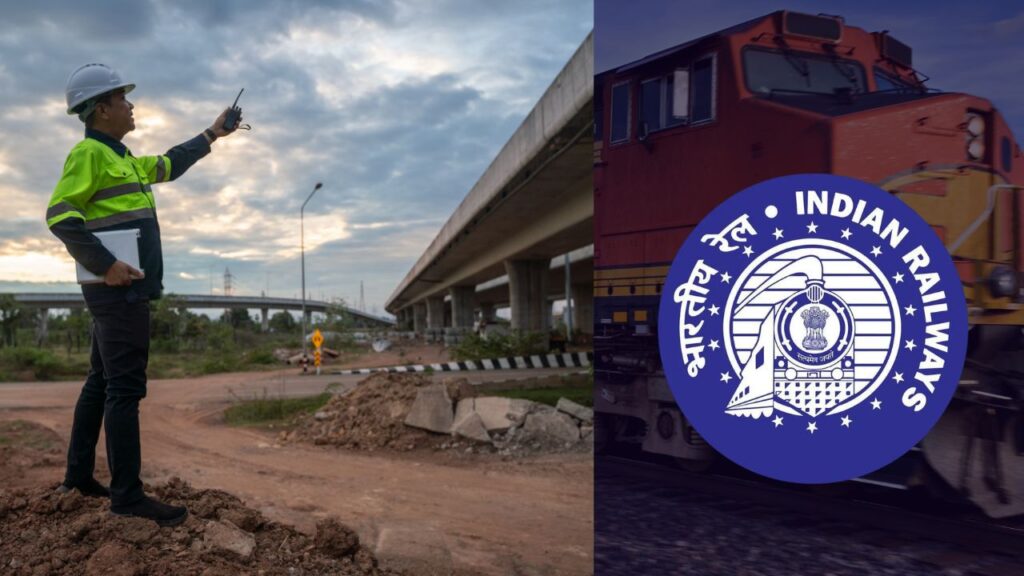
Indian Railways, having a large rail network in the world, is constantly recruiting engineers in track maintenance, signal systems and infrastructure development. These posts also carry special allowances for field posting and provision of accommodation in various parts of India.
On the same lines, NHAI, CPWD, state public works departments also recruit civil engineers from time to time. If you like the idea of watching your work become real highways, bridges, and other public works, these agencies provide tremendously fulfilling careers.
5. Defense and Space Research Organizations
For engineers with an interest in high-tech and national security, ISRO (Indian Space Research Organisation), DRDO (Defense Research and Development Organisation) and BEL (Bharat Electronics Limited) are dream organisations. ISRO also hires in large numbers for satellite programmes, launch vehicles and space applications. DRDO is related to defense technology development.
These jobs are mentally stimulating, have cutting-edge equipment, and give you a deep feeling of having played a part in your country’s technological progress. The pay is competitive, though often little lower than the best PSUs, but the feeling of a fulfilling career and the scope for innovation are unmatched.
Engineering Branches with Maximum Government Job Opportunities
If you are still studying in college or if you are planning to choose a specialization, then these are the engineering branches which will have maximum demand for government jobs in 2026:
Civil Engineering roles are plenty in Infrastructure development, Railways, and Water resources projects. Mechanical Engineering finds good demand with manufacturing PSUs and thermal power stations. Electrical Engineering is always sought after in power generation, transmission and distribution. CSE & ECE has been the most sought after branch with the arrival of the digital age, leading to many opportunities in telecommunications, space programmes and defence research.
The path is well-defined: Your academic performance should be of high standard – most government bodies ask for a minimum of 60-65% in your engineering stream. Second, for those going for PSU jobs, crack GATE exam in 4-6 months of focused-study. Third, for the coveted ESE examination, if you can bear to start early, score high, because competition is tough but rewards are great.
Start with official website of recruiting bodies such as UPSC, SSC, GATE and individual PSU websites. Create job alerts on government job websites, subscribe to official notifications on Facebook and Twitter, and do not forget to apply for the jobs. Many positions close within days of notification.
Is a Government Job Right for You?
Government work is for you, if you care more for stability than getting rich quickly, like the predictability of your daily schedule, and want to do something useful for the country. The salary increment may look like a slow pace compared to the private sector counterparts at the start, but you can enjoy better lifetime earning and security through pension schemes and long term benefits.
There are more openings than ever before across government agencies for the year 2026. If you are a fresh graduate or an individual with experience looking for a career change, your time is now. With focus, the right approach, and a bit of luck, securing a top government engineering position in 2026 can be less of a pipe dream and more of an attainable objective.
So start preparing today and you may be launching a multidimensional government career offering security, advancement and the satisfaction of playing a part in India’s development story by the turn of the year.
Conclusion
Best Government Jobs for Engineers in India 2026 aren’t just about steady pay—they are about establishing a stable, respected, and mission-driven career. There is massive hiring across PSUs, UPSC Engineering Services, Railways, infrastructure bodies and premier organisations like ISRO, DRDO where engineers have more national development converging with professional growth opportunities than ever before.
The private sector might offer faster rewards, yet government jobs have security for life, predictable growth and benefits which really stand the test of time. If you want to prepare smartly and stay focused, then 2026 could be the year that you transition from being lost in the career wilderness to a future defined by stability, impact, and pride for having served the nation.
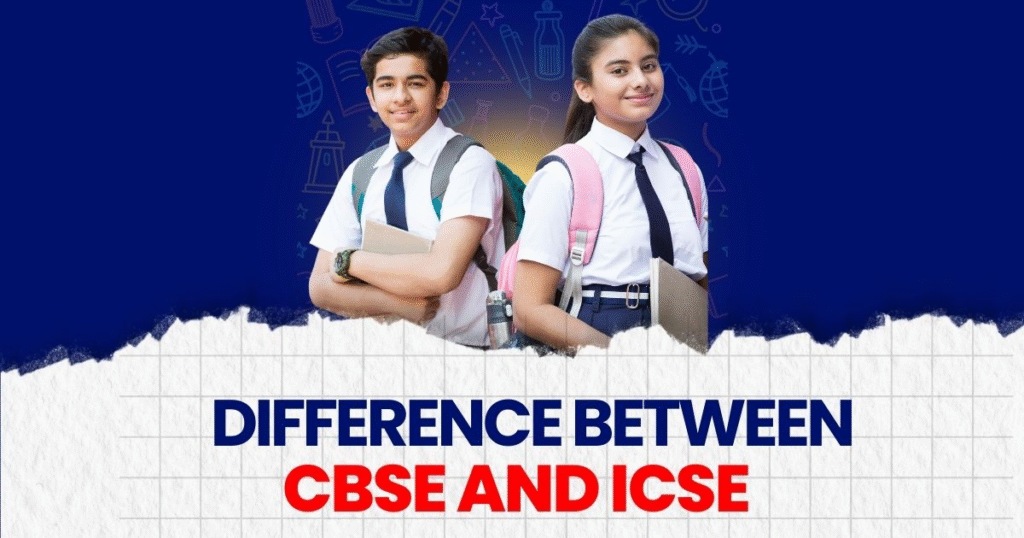
Finding out the Difference Between CBSE and ICSE is important because it matters for the future of students. In India, ICSE (Indian Certificate of Secondary Education) affiliated schools are expensive but recognized internationally, and have become popular among students who want to achieve international opportunities.
And CBSE (Central Board of Secondary Education) has a wide range of affiliated schools which makes it cheaper but effective for national-level exams. Both have different teaching methods, syllabus structure, exam pattern & marks, and career opportunities.
This comparison is not for making it good or bad, showing their strengths and weaknesses will help students to decide better for their future.
Overview of CBSE and ICSE
CBSE – Central Board of Secondary Education
CBSE board is run under the Government of India.
A wider range of schools are affiliated to CBSE.
It is more on the side of theoretical education and focuses on subjects like Science & Maths.
Popular among aspirants of NEET, JEE, NDA, and UPSC as it covers all the exams syllabus concisely.
ICSE – Indian Certificate of Secondary Education
Council for the Indian School Certificate Examinations (CISCE) is a private education board which governs ICSE board.
As compared to CBSE, schools affiliated to ICSE in India and abroad are less in numbers.
It focuses on both theoretical and practical knowledge equally on all subjects including arts, science, and languages.
Its balanced education is valued internationally.
Curriculum and Teaching Style
CBSE curriculum is more structured and straightforward, it does not contain any extra details on any topic which makes it less but precise for exams. It prioritizes subjects like Science and Mathematics, designed with theoretical conceptual knowledge which makes it ideal for competitive exams. Other subjects like English and Hindi have fewer chapters and syllabi in comparison to ICSE. It is best for the engineering, medical, or government exams focused students.
ICSE curriculum is designed with lengthy explanations and balanced across subjects. It also focuses on other subjects like Literature, language and practical projects for balanced education. ICSE boards students have to study in-depth of each subject. That feels burdened sometimes but it improves analytical ability. It is best for overall knowledge, communication skills, and global recognition opportunities seeking students.
CBSE is easier in comparison to ICSE as it has a concise syllabus that covers easily within less time. It encourages more theoretical knowledge than projects. Students can easily clear exams with less academic pressure but it improves basic knowledge. ICSE is more detailed on every topic and stressing on projects, lab world, internal assessments making it heavier for children to cover. But it is best for building overall skills that improves analytical thinking.
Examination Pattern and Grading System
CBSE follows a continuous and comprehensive evaluation system to reduce exam stress and declaring results in CGPA Cumulative Grade Point Average system. Questions in the exam are based on the NCERT books.
ICSE follows marks-based evaluation and grades are assigned according to the percentage. Questions asked in exams need both depth of knowledge and analytical ability to represent the answer. In the final result, 20-30% makes are dependent on the internal assessments so projects are becoming necessary.
Recognition in India and Abroad
CBSE is recognized in major schools in India, making it best for students who plan to continue study in India. It is popular among the JEE, NEET, NDA and UPSC aspirants. ICSE is recognized globally by foreign universities. Developing language and communication skills with its english-oriented syllabus can help students to continue their studies in foreign universities.
Language and Communication Skills
If students want to continue their studies abroad, develop communication skills, and aim for jobs where language like English will be needed then ICSE is the best option because CBSE is more focused on Science and Maths. However, CBSE emphasizes English and Hindi but not on the higher level.
Which is More Expensive?
Many government schools are affiliated to CBSE board which make it affordable for the students. Private CBSE schools also have affordable fees in comparison to ICSE affiliated schools. More expensive due to their huge curriculum, projects, and emphasis on quality teaching.
Career and Competitive Exams
Competitive exams aspirants prefer to study in CBSE affiliated schools because it covers a more concise syllabus on important subjects like Economics, Maths and Science. However, ICSE boards schools produce creative minds. They emphasize on English Language & Literature, and analytical skills to help students secure their career in international companies.
Pros and Cons at a Glance
CBSE Pros
Cons
Easier syllabus
Lack of strong foundation in English and humanities
Affordable Fees
Limited application-based learning
20,000+ schools
Ideal for competitive exams
ICSE Pros
Cons
Tough syllabus
More-time consuming
International Recognition
Expensive schools
Strong English and analytical skills
Less useful for Indian competitive exams
Encourages overall development
Which Board Should You Choose?
It totally depends on your future goals, aiming to make your career in the medical field, engineering, or government sector then CBSE is a good option because it contains an overall concise syllabus that is needed to study in most of the Indian entrance exams. CBSE board students also can go abroad but they have to study hard even on their english and communication skills. Where ICSE is providing overall development, students can go abroad for higher studies with strong language skills and well-rounded knowledge.
Both boards have their strengths and weaknesses, for making the right decision, students should choose their board according to their interest, learning style, and career plan.
Students aiming for holistic or overseas education
Conclusion
Which board is best is a little bit complex, you must know the Difference Between CBSE and ICSE before you select your board. Students and parents both have to understand what are the career goals and which board is good for their children. Some students are not able to handle the tough syllabus of ICSE and some students want to go abroad, so it should be according to your plan not by other people’s recommendation.
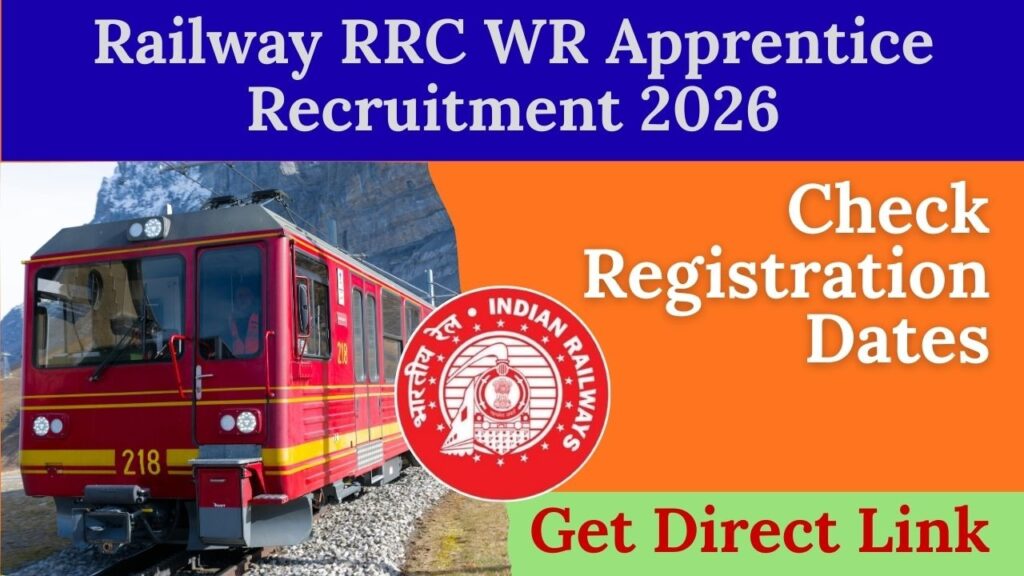
The Railway RRC WR Apprentice Recruitment 2026 notification for the posts of RRC WR Apprentice by Railway Recruitment Cell of Western Railways has been released now, 5349 vacancies are available in this zone. This massive recruitment drive is part of Indian Railways’ continuing efforts to enhance skill development and provide real career options to young aspirants in the railway system.
You need to have class 10th marksheet and ITI certificate that is relevant for the job. Check the registration dates before applying because the portal will be closed on 23/March/2026 Candidates who are interested may apply online through the official site of Railway RRC WR Apprentice Recruitment 2026 or direct link given in this blog.
Detail
Information
Post
RRC WR Apprentice
Vacancy
5349
Notification Date
18/February/2026
Application Start Date
21/February/2026
Application Last Date
23/March/2026
Application Fee Payment Deadline
23/March/2026
Application Fee
₹100 for General and OBC candidates
Age Limit
15 to 24 years as of 23/March/2026
Who can Apply for a Railway Apprentice?
The railway apprentice program asks for your 10th marksheet so you should have gained atleast 50% marks in aggregate & an ITI certificate in the concerned trade. These two are necessary qualifications for the job.
Applications are invited from the Students who cleared the National Apprenticeship Certificate (NAC) as well. Further, those who have pursued an Act Apprenticeship in any related field to this already, are eligible to participate in the Hiring.
Candidates should meet other eligibility conditions as mentioned in the official recruitment notification besides the educational qualifications and age limits including good physical condition and having the required documents to justify their application.
Download the online application form from the official website of the Railway RRC WR Apprentice Recruitment 2026 Cell (RRC). If you are a new user, Please Register at the portal by furnishing all the required details and generating your login ID and password.
With all that set, sign in to the web site and complete your application.
Please Verify the authenticity of the information provided to your knowledge as even an iota of mistake may cause problems in subsequent processes.
Then, upload whatever documents are needed, usually it’s:
Educational certificates in original and photocopy (attested).
ITI certificates
Caste certificate (if applicable)
Recent passport-size photograph
Then, pay the fee online. The fee may differ for your category.
After checking everything and the documents, submit your application. Please make a photocopy of your application so you should possess proof for the future.
Selection Process
The aim of the Railway RRC WR Apprentice Recruitment 2026 is to ensure that the best and most suitable candidates are selected for 5,349 apprentices posts in various railway trades. There are a series of stages, starting with the simple checks for eligibility, with tests of know-how and practical skills.
Stages of Selection
Check of Eligibility: First of all, the candidates should have the requisite qualification. It generally implies completing an ITI course in the relevant trade and also adhering to the specified age limit as mentioned in the official notification.
Written Exam: The first big hurdle is the written test. This exam assesses your general knowledge and abilities, and covers such topics as general knowledge, mathematics, reasoning and technical subjects related to your trade. It takes out those who have sound academic and technical knowledge.
Interview Round: Candidates that qualify the written test are invited for an interview. This round is to test your communication, technical knowledge, confidence and your overall suitability for the apprentice position. It’s also where they can evaluate how much real-world know-how and practical experience you have in a trade.
Medical Examination: Selected candidates have to undergo a medical test after the interview. It ensures that they are fit to be employed in technical and operational railway posts, wherein health and fitness are vital for the safety and performance.
List of Successful Candidates: A merit list is drawn on the basis of the written exam, interview and medical. Top scorers among the candidates are ranked highest and are selected for the apprenticeship posts.
GovUpdatewala is your trusted source for real-time updates on government exams and jobs in India. We provide verified info on SSC, UPSC, Banking, Railways, Defense, and Teaching exams. From syllabus and patterns to important dates and career tips — we support aspirants at every step.