Government Teaching Jobs in India 2026: Latest Vacancies, Eligibility & Recruitment Updates

Government Teaching Jobs in India

If you have ever wanted to impact society on a large scale and have a stable, secure job with great benefits, teaching for the government might be just right for you. In 2026, the government’s education department in India is experiencing a massive surge in job offerings and thousands of opportunities are available in schools and colleges across the country. Whether you’re a new graduate with a teaching degree, or a career changer, there has never been a better time to pursue a Government Teaching Jobs in India.

The beauty of governmental teaching jobs is not just the competitive salary packages, but the unbeatable job security, lifetime pension benefits, and the gratification of making a difference in the lives of young minds. With India making massive investments in education infrastructure, the need for qualified teachers has never been greater. 

The Current Recruitment Landscape

2026 is going to be a critical juncture for aspiring teachers in India. Big organizations are hiring at a scale that’s never been seen before:

Kendriya Vidyalaya Sangathan (KVS) has released the notification for 9126 posts for both teaching and non-teaching posts. These elite central government schools provide some of the best teaching jobs in the country for Trained Graduate Teachers (TGT) and Post Graduate Teachers (PGT) in several subjects.​

Navodaya Vidyalaya Samiti (NVS), which runs high standard residential schools all over rural India is also inviting application for 5841 posts. If you love to deliver quality education in rural areas and you have commitment then NVS is the best place to do that. 

Delhi Subordinate Services Selection Board (DSSSB), India’s largest recruiter, has thrown open the window with 5,346 vacancies for Trained Graduate Teachers and 1,180 vacancies for Primary Teachers. If you have your heart set on becoming a teacher in the capital of India, never let a spring pass without applying for some of the most competitive jobs on the planet.​

Uttar Pradesh, the most populous state in India, is also to recruit around 2 lakh (200,000) teachers in three phases by 2026. This montage of recruitment speaks volumes of the opportunities that exist for Indian teachers!

However outside of these large providers numerous Sainik Schools, state governments and educational boards release notifications throughout the year making teaching opportunities a steady flow. 

What You Need to Qualify

One of the biggest myths is that there are complex eligibility criteria to apply for teaching jobs. Actually the rest is simple, and the ones that are should have been enough to allow talented people to get into the profession.

When it’s About Becoming Primary Teachers 

Along with the 12th standard or its equivalent examination with at least 50% aggregate from a recognized board, you also need to clear the Central Teacher Eligibility Test (CTET) or your State Teacher Eligibility Test (TET) and have either a 2-year Diploma in Elementary Education (D.El.Ed. or 4-year Bachelor of Elementary Education (B.El.Ed.). 

When it’s About Becoming Trained Graduate Teachers 

You must have 50% marks in your subject along with B.Ed. You have to qualify CTET as well as state TET exam. TGT teachers usually teach classes 6-10. 

For Post-Graduate Teachers (PGT)

For the dreamers who still went for higher education. A minimum of 50% marks in a master’s degree in your subject along with the B.Ed qualification is required. Classes 11-12 and specialisations are handled by PGT teachers.​

For Railway and Sainik School Teaching Posts

The eligibility is almost same, but with minor changes as per organization type. Age limit varies from 21 to 40 years as per category.​

The CTET Advantage In Teaching Jobs

The Central Board of Secondary Education (CBSE) the Central Teacher Eligibility Test (CTET) is a boon for teachers in the making. Why it’s so good: 

Validity of CTET Score: It is now clear that CTET score validity has been increased – CTET scores will now be your lifelong companion, which means you don’t have to sit again for the exam even after years of so-called re-preparation.​

Pan-India Mobility : After qualifying CTET, you can apply to teach in central government schools such as Kendriya Vidyalayas, Navodaya Vidyalayas or union territory schools throughout the nation—not just in your native state.

Exams Advantage: Performing well in CTET examination also enhances your chances to get superior teaching job in central govt schools for which the pay and perks are the most lucrative.

The CTET examination for 2026 is scheduled for the 8th of February, and the application process is already open. The Paper I is conducted for the aspirants who want to teach classes 1 to 5 and Paper II is conducted for the aspirants want to teach 6 to 8 classes. Percentage required — You should a minimum of 60% to qualify! 

Salary and Benefits: Why Government Teaching Pays Off

Teaching is no longer a low paying job. Teaching professionals in India have a lot to smile now as they receive an extremely attractive pay scale:

Primary Teachers: A primary teacher will start with approx ₹35,400 as basic pay (₹42,000-₹45,000 with allowances) and can go up to ₹50,000+ in a decade through promotions and increments.​

Trained Graduate Teachers (TGT): with a basic pay of ₹44,900 (₹59,282 with allowances) and it can go up to ₹ 60,000-70,000 with incentives and experience. 

Post-Graduate Teachers (PGT) : Having the highest salaries at school level at a basic pay of ₹47,600 (₹ 56,320 with allowances) and may go beyond ₹75,000-80,000 per month with allowances and increments.​

Apart from the salary, teachers of the government get:

Dearness Allowance (DA): At present DA is about 38% of the Basic Pay and it is revised twice a year considering inflation

House Rent Allowance (HRA) : An additional monthly allowance is given to the employee based on his/her duty Station/location of post.

Transport Allowance: Very good for teachers and further higher in urban.

Medical Facility: Free medical treatment for you and your family in any hospital recognised by the bank’s medical cell.

Gratuity: A lump-sum amount on retirement

Pension Security: Immerse your lifestyle in wealth, NPS is the default pension plan for civil servants which guarantees a lifelong pension of fixed amount in return for financial security in old age.

Leave Benefits: Maternity Leave – 180 days, Paternity Leave – 15 days.

Benefits for Education of Your Children: Education benefits for your children, and your own kids’ education, consider scholarships and fee concessions. 

Read More 👉 Top IET Lucknow CSE Placements – Highest Packages, Recruiters & Career Growth in 2025

Types of Government Teaching Jobs

If you want to teach in India, these are some of the options that attract different types of teachers.

Central Government Schools 

KVS and NVS posts provide the most secure, stable and highest paid teaching jobs along with good perks and national level working.

State Government Schools 

Every state holds its own TET recruitment which provides the benefit of local stability and a home state posting ideally if you want to stay close to your family.

Railway Schools

Recruitment of teachers through Railway Recruitment Board (RRB) which invites applications from eligible candidates for the post of Teacher in various categories with attractive salary and benefits.

Sainik Schools

These elite military backed schools provide teacher with added advantage of working in a disciplined teaching, with great infrastructure and exposure to.

Delhi Government Schools 

The DSSSB recruitment leads to some of the best schools in India at Delhi, now opened for applications. 

The Selection Process

Knowing what to expect in the selection process enables you to be strategic in your preparation. Usually the procedure the candidates have to go through includes a written test to check your subject knowledge and teaching methodology (for TGT/PGT), verification of your qualification in which your educational certificates are scrutinized and in some cases a demo class/test on teaching is conducted where you have to teach a subject to a panel.​

This regimented process guarantees that only the most dedicated, and highest qualified teachers make it to the system. 

Preparation Tips

  • Start by preparing seriously for the CTET or your state TET – these are the pillars of your teaching career. 
  • Enroll in coaching centers if necessary, concentrate on the subject and solve the question papers on a regular basis. 
  • Have good communication skills and be aware of the policies of education. 
  • And more than anything, have a real love for teaching – that comes across waves in interviews and demo classes. 

Conclusion

Government teaching jobs in India will be more than just a job—they will provide a chance to contribute to building India’s future, along with monetary compensation and social prestige. With tens of thousands of vacancies, competitive pay, generous benefits, and a defined career ladder, now is an excellent time to enter this noble profession.

Whether it is the joy of imparting knowledge, the stable job and pension benefits, or the chance to do something for society, government teaching remains a profession that earns you respect for life. The options are there, the way is clear, and your teaching future is just around the bend. So take that leap of faith today—register for CTET, prepare well and stake your claim as an educator of India’s tomorrows. 
Leave a Comment

Your email address will not be published. Required fields are marked *

Top Government Jobs for Medical Students in 2025 You Shouldn’t Miss!

Top Government Jobs for Medical Students in 2025

Choosing a government job after a medical degree is a wise option for your career. Find top government jobs for medical students and stay updated on the recruitment notification. The competition is high, and it’s not easy to get a job in the medical field. The selection process might be difficult with a lot of competition but keep focus on preparation. With the right preparation, you can be a medical officer in defense or other public sectors.

Medical Officer

Becoming a Medical Officer is worth the MBBS degree. Many MBBS graduates prefer to become a Medical Officer in a government hospital rather than in any private hospital. The role requires the responsibility to provide healthcare services, manage the hospital, and treat patients.

Government hospitals recruit medical officers through examinations such as the State Public Service Commission, the Union Public Service Commission, and the National Health Missions.
This post allows you to diagnose patients, manage hospitals, and lead junior staff. Rural areas require such types of public services for health care.

Eligibility: You must have an MBBS degree and valid registration in any medical council.
Salary range: The starting salary is 50,000 and rises to 100,000/month. Government hospitals pay the doctors according to their experience and location.
Selection Process: The recruitment for this job starts with the written exam, and then the shortlisted candidates are called for an interview. After these processes, candidates will be selected for a medical officer position if they clear the interview.

Armed Forces Medical Services

If you want your future to be a little more adventurous, join the Armed Forces Medical Services. It provides medical services to the Army, Navy, and Air Force medical units to heal them during national emergencies. If you are physically and medically fit then this post is a good match for you. It’s a respectable post and has a great pay-scale. After clearing the examination, you will be called for an interview and then a medical examination. You must meet the medical standards of this position even if you passed all the stages.

Eligibility: MBBS graduate and valid certification from MCI.
Salary range: Medical officers in the army have starting salaries of 75,000, plus additional benefits. The salary will increase with experience and performance.
Selection Process: Candidates shortlisted for the interview are given a level of commissioned officer.

Combined Medical Services

MBBS graduates can work with the central government agencies UPSC CMS exam. Combined Medical Services gives roles like General Duty Medical Officer (GDMO), etc. The work depends on the job role but mostly involves outpatient care, emergency, and administration. These roles are assigned in organizations like the Railway, Municipal Corporations, and the Central Health Services.
The recruitment process happens each year, and candidates should have prepared well to clear the exam and achieve their goals. These roles offer a stable career, respect, and a chance to secure long-term benefits.

Eligibility: Graduate with MBBS with valid registration from MCI.
Salary range: 56,100 to 1,77,500 per month, salary range varies on the candidate’s experience.
Selection process: After clearing the UPSC exam, candidates are shortlisted for the interview and selected for their role.

AIIMS and Other Central Government Institutes

JIPMER, AIIMS, and PGIMER are the exam-conducting bodies that recruit medical professionals for roles like Junior Resident, Senior Resident, and Medical Officers. These jobs are well-paid and reputed jobs for Indian doctors.

Working with these research centers is the best chance to improve practical skills and exposure to medical research.

Posts: Doctor, healthcare professional, research scientist, administrative.
Eligibility: MBBS or MD graduates with medical certificate.
Salary range: These posts give a huge pay scale once you get experience. Candidate’s starting salary is 35,000 then rise to 1,77,500 with additional benefits.
Selection process: Written Exam, Interview for the respective post.

Indian Council of Medical Research

If you want to go into the research and public health field not just clinical practice then explore various opportunities by ICMR. It has a big role playing in biomedical research. If you’re interested in epidemiology, clinical trials can step into this role. You can apply for roles like Research Officer, Project Associate, or Scientist but it offers a promotion with more experience.

You have to focus and study hard to be able to beat this competition and secure a role for your lifetime stability.

Posts: Scientists B/C/D, Research (Junior, Senior), Administrator.
Salary range: These posts have a good pay-scale. Candidate’s starting salary is 35,000 and with experience it will increase to 1,77,500 per month.
Selection process: Screening test, Interview.

State Health Services

There are several health departments in India that frequently announce vacancies for doctors, dentists, and practitioners. Some states often offer posts including Community Health, Rural Medical Officer, or District Medical Officer. Recruitment for these roles is through state PSCs. If you wish to have a good salary and job security, you can consider applying for this role after MBBS.

Posts: Medical Officer, District Medical Officer
Salary range: Candidate’s starting salary is 50,000 and with performance, it will increase to 1,00,000 per month.
Selection process: The candidates are recruited through exams then they are shortlisted for an interview.

Public Sector Undertakings (PSUs)

Not just engineers but PSUs also recruit for medical field candidates where companies like Coal India, ONGC, BHEL, NTPC, and GAIL give the posts according to the interview base. Many students score well in MBBS so they’re recruited directly by PSUs but interview is mandatory for these roles. If you’re seeking a less hectic medical career then this is the perfect role for you. The pay scale is highly impressive and also has additional perks.

Posts: The work involves implementing government schemes for healthcare and other initiatives.
Salary range: The salary ranges between 40,000 to 1,20,000 per month.
Selection process: Recruited by public health sectors like NTPC or BHEL.

Conclusion

Working in government organizations after a medical degree is a great deal of pride. You serve the nation whether as an army medical officer or just in a government hospital. People who can’t afford private hospital expenses come to the government hospital. Your work directly affects public health, especially for the rural people. However, it is difficult to secure a government job in the medical field but you can achieve it with the right preparation and stay updated for the latest jobs. Keep an eye on recruitment notifications on official websites to apply for government jobs.

Leave a Comment

Your email address will not be published. Required fields are marked *

RBI Bank Office Attendant Recruitment 2026: Notification, Apply Online & Details

RBI Bank Office Attendant

RBI has released an official notification for Office Attendant posts for the year 2026. The Board has issued the notification on 15 January 2026 and invites applications from the candidates who have qualified 10th standard. The registration process for the online application has started with the notification release. 

The Starting Salary for an RBI Office Attendant is ₹24,250 Per Month in the PAY SCALE 24,250–53,550. Employees also receive allowances like DA, HRA, CCA, Grade Allowance etc. along with the basic pay. 

RBI Bank Office Attendant Dates

EventsDates
Notification Release Date15th/January/2026
Online Application Process15th/January/2026
Closure for Editing Application Details4th/February/2026
Admit Card Release DateFebruary/2026
Online Exam Date28th February and 1st March 2026
CategoryApplication Fee
SC/ST/PwBD/EXSRs. 50/- (Intimation Charges) 
OBC/EWS/General candidatesRs. 450/- (Exam fee + Intimation Charges) 

Read More 👉 RSSB Agriculture Supervisor Recruitment 2026 — Get Details & Link To Apply

Are You Eligible for RBI Office Attendant 2026 

Age Criteria

Age Limit
Min age18 years 
Max age25 years
DOBBetween 02/January/2001 and 01/January/2008

Your Education 

RequirementDetails
Minimum Qualification10th Pass (SSC/Matriculation)
BoardRecognised board of concerned State/UT
Graduation StatusMust be undergraduate (Graduates not eligible)
Ex-Servicemen Qualification10th Pass + minimum 15 years defence service (not graduated outside Armed Forces)

Steps to Apply Online for RBI Office Attendant Recruitment 2026

  1. Go to the RBI official site at rbi.org.in.
  2. Scroll down and tap on “Recruitment Related Advertisement”.
  3. Choose ‘Recruitment for the Office Attendant posts in RBI.’
  4. Hit the ‘New Registration’ and register.
  5. Enter basic information to get Registration Number & Password (via email/SMS).
  6. Use your credentials to log in and apply.
  7. Upload the necessary documents: photograph, signature, left-thumb impression and handwritten declaration. 
Apply NowClick Here
Download NotificationClick Here
Official WebsiteClick Here

Leave a Comment

Your email address will not be published. Required fields are marked *

Top NEET Colleges in Lucknow with High Ranks, Fees, Seats and Details

Top NEET Colleges in Lucknow

Lucknow, the Capital of Uttar Pradesh, has now become a prominent area for medical education in India. If you’re a NEET aspirant looking to get admission in a good medical college, then the city of Lucknow holds an impressive list of both government and private colleges who are recognized at the national and international level. For those who are looking for an economical government seat or want to know the top private colleges with world-class amenities, this article will help you in knowing the top NEET colleges in Lucknow, along with detailed information about the rankings, fee structure, availability of seats and the USP of each institute.  

Understanding the Medical College Landscape in Lucknow

Before we get into the names of specific colleges, it is necessary to know that the medical education in Lucknow is multi-faceted and thriving. Ranging from government colleges with very minimal fees to super premium private colleges having infrastructure at par with global standards. It has national level post graduate institutes, century old undergraduate medical colleges and some of the best private medical colleges in the country with rigorous academic regimen and modern day teaching methodologies.​  

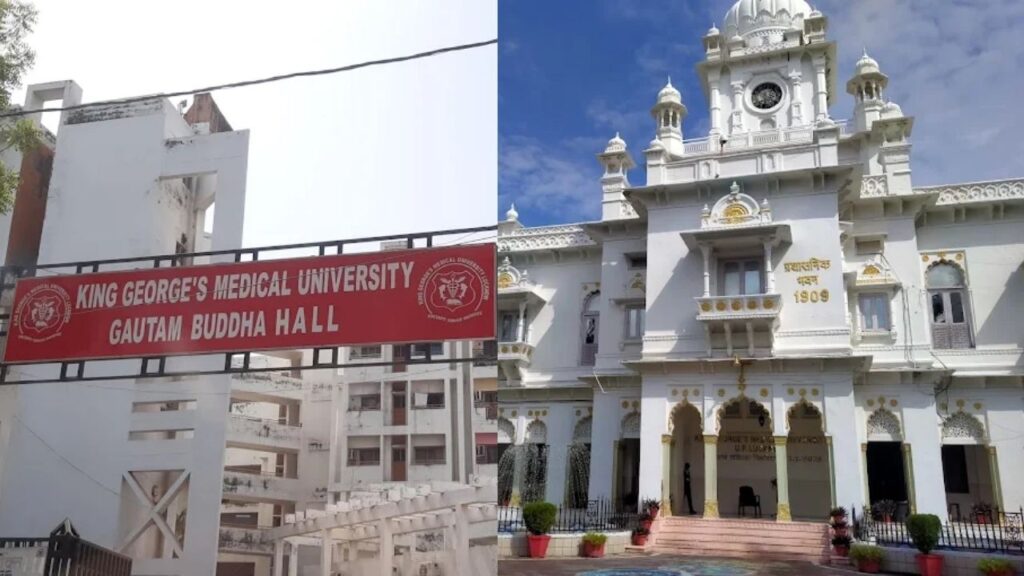
King George’s Medical University (KGMU)

King George's Medical University
Ranking & Recognition
KGMU is a premier medical college in India and is ranked 8th in the NIRF 2025 medical college ranking. KGMU has been a synonym of medical excellence in North India, that has been a legacy for more than a century. The university is well known for its research in oncology, transplant sciences and infectious-disease genomics. 
Fees & Seat 
The KGMU MBBS seat matrix is a total of 250 seats, with 15% seats allotted to the All India Quota and 85% seats are for State Quota. For state quota candidates, the fee per year is about ₹54,600, and for non-resident students, it is ₹3,52,400 per year, which is really cheap. There are some who will say they can afford higher fees but the reality is that a total fee of around rupees 2.38 lakhs for a 5.5 year (4.5 years of classwork and 1 year internship) course is a bargain for a quality medical education. 
NEET Score
King George’s Medical University takes students through NEET score which is expected to be around 625-635 marks. 
Hostel & Campus Life
The charges for Single Seater room is of Rs. 3600/- per annum and the electricity charges are Rs. 3500/-. On the other hand, the Double Seater Room is available for Rs. 2400/- per annum electricity charges are to be paid separately. 

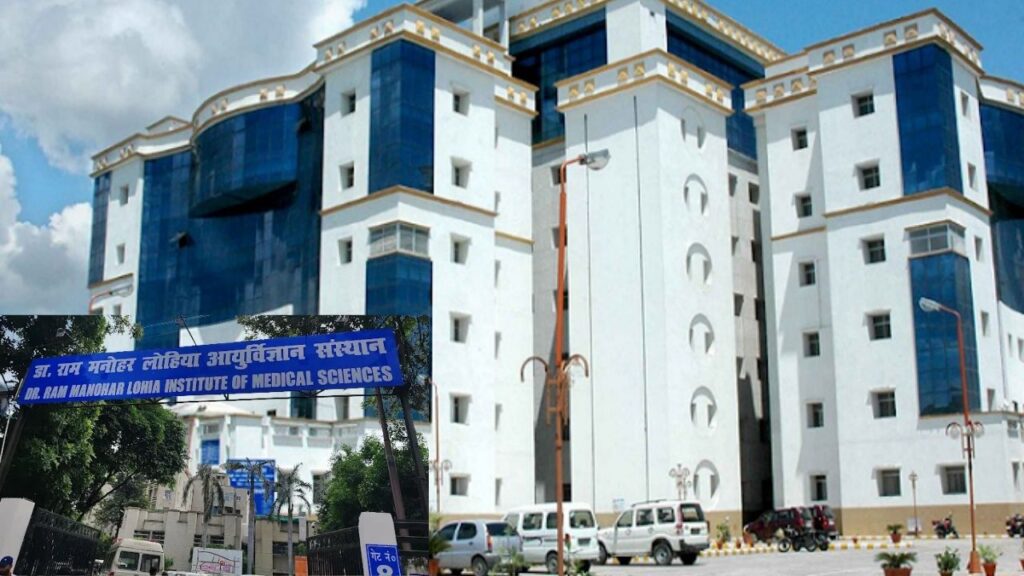
Dr. Ram Manohar Lohia Institute of Medical Sciences

Dr. Ram Manohar Lohia Institute of Medical Sciences
Ranking & Recognition
RMLIMS was formed and became operational as a State University from 2018 and has the distinction of being ranked at 61 position among Medical Colleges (NIRF 2025) which is a great achievement with an overall score of 982/2000. The institute has been established in Gomti Nagar in a spacious 42 acres campus with ultramodern infrastructure.  
Seat Distribution & Admission
The college has 200 seats in MBBS from this year, out of which 50% will be filled through All India Quota (AIQ) by MCC and 50% will be filled under State Quota by UP NEET counselling. This balance accommodates opportunities also for candidates at the state level in addition to the national level. 
Fee Structure
For the whole course, the Rs 1.82 lakh fee of MBBS at RMLIMS is one of the cheapest among all government medical colleges. The fee for the year is around Rs 49,700 which covers all tuition and examination fees.  
NEET Score Required
General category 2024 cutoff rank was approximately 2683. For AIQ seats, the aspirants who want to take admission must have been targeting a rank below 2000 with NEET score of 640 marks or above. Due to domicile preferences, the state quota cutoff rank is usually slightly lower.  
Internship & Career Prospects
Students doing internship at RMLIMS get stipend from ₹10,000 to ₹16,000 per month. The university also has 100% placements, with its students getting jobs in renowned organisations like the SGPGI, KGMU, PSUs and private hospitals.   

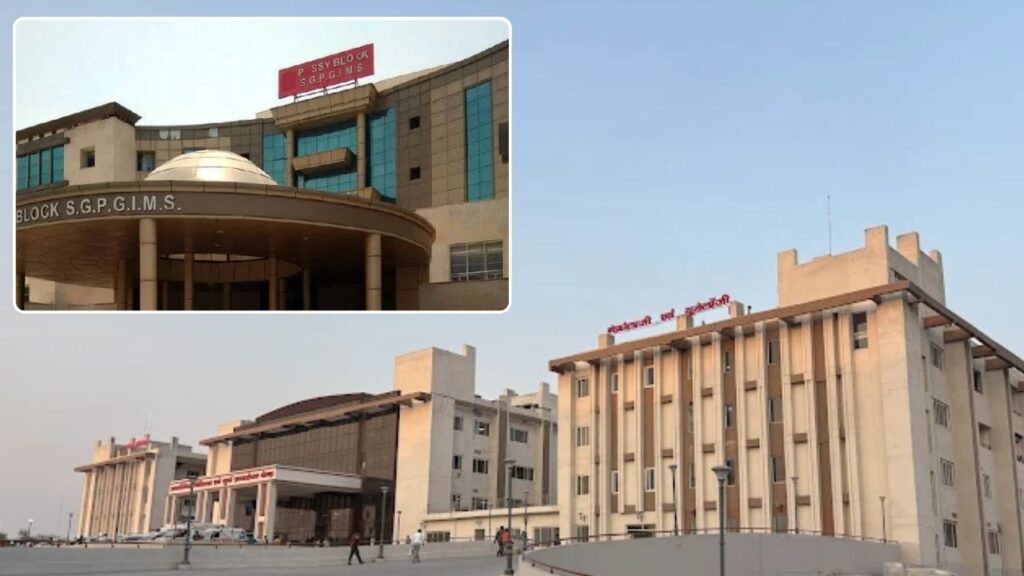
Sanjay Gandhi Medical Sciences Institute

Sanjay Gandhi Medical Sciences Institute
National Stature & Rankings
SGPGIMS is an institute of national importance and ranks 5th in India as per NIRF 2025 with a laudable score of 70.09. The university is known for its high standards in teaching, research, and clinical services and is one of the best medical institutes in India.   
Important Note on SGPGIMS
SGPGIMS is an institute for post graduate and superspeciality courses. For MBBS UG, only KGMU and RMLIMS. However, for post graduation for a specialist, SGPGIMS is the be all and end all.  

Top Private Medical Colleges in Lucknow

Candidates who are looking for private medical colleges that have good infrastructure and other facilities can check out the following list containing the best private medical colleges in Lucknow. 

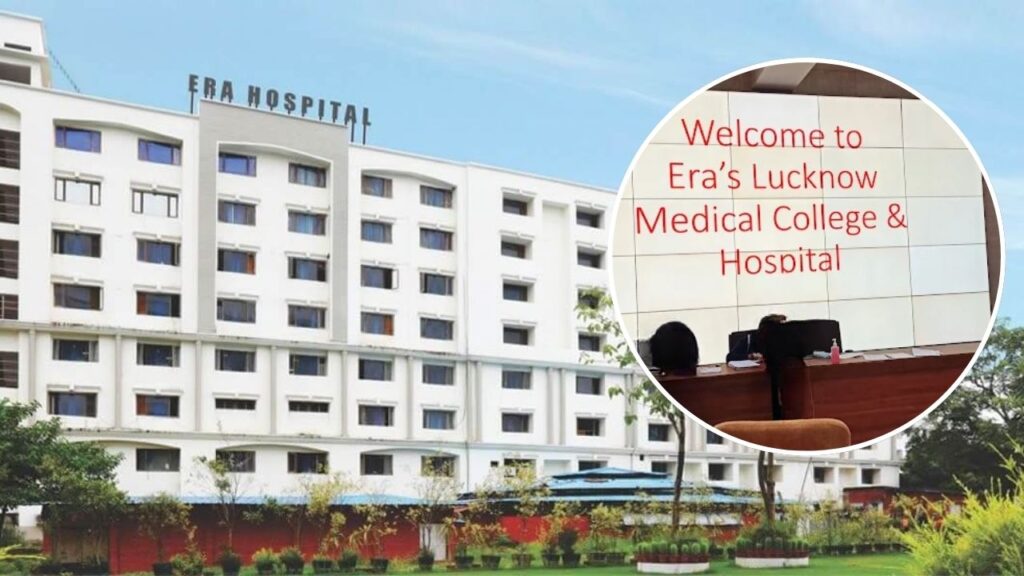
Era’s Lucknow Medical College and Hospital

Era’s Lucknow Medical College has been ranked 32 by India Today 2024 and it is one of the best paramedical colleges in India which provides 200 MBBS seats every year the highest in any pmt college in India. The National Medical Commission (NMC) recognizes the university, and the institution is NABH accredited which implies high educational standards.​

Era's Lucknow Medical College and Hospital

The complete MBBS course fee at Era’s Lucknow is approximately ₹16.6 lakhs p.a, making the the total 5 year program fee to be ₹71.16 Via. NEET cut off 2024 was a general category closing rank of 375,564 as per UP state counselling data.

Era’s is attached to a 750-bed teaching hospital with more than 1,690 OPD cases each day, which is remarkable clinical exposure. The faculty of the college is well qualified doctors and institutions have UG & PG courses. 

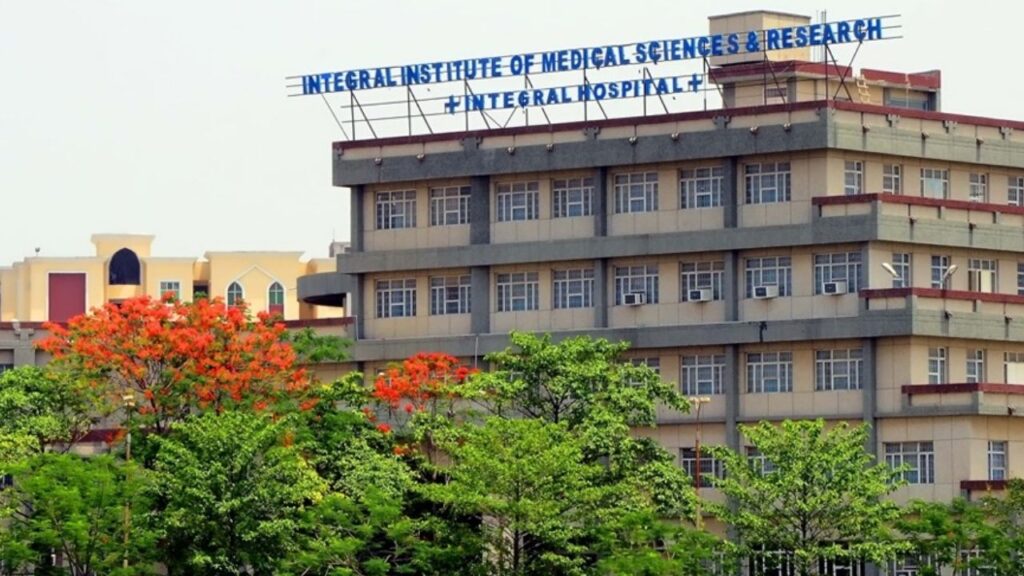
Integral Institute of Medical Sciences & Research 

IIMSR Lucknow was established in 2013 and it provides 150 seats for the course of MBBS and is placed at 118th position in NIRF Ranking with 825 score. The yearly fee is ₹11,40,000, while the overall fees for the course is ₹81 lakhs which include the cost of living in the hostel, mess etc.​

Integral Institute of Medical Sciences & Research 

For 2024, U.P State Counselling the general category closing rank was approximately 428,214. College infrastructure is good and gives internship stipend of Rs. 12,000 – 18,000 per month as per MCI. 

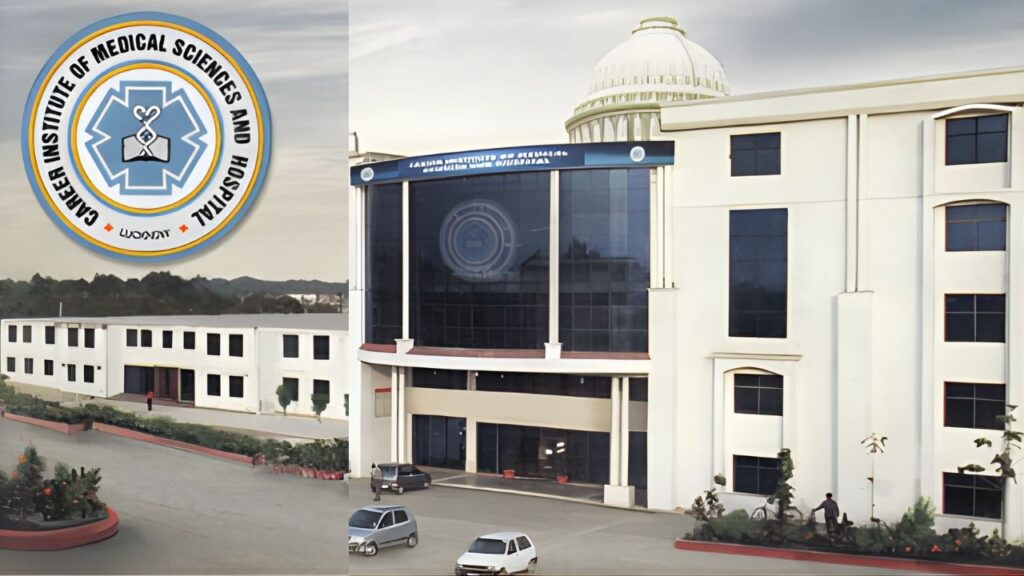
Career Institute of Medical Sciences (CIMSH)

CIMSH has 150 MBBS seats with a fee of ₹71.1 lakhs per year. The closing rank for general in 2024 was 452,601, which is a bit higher than some of the other best private colleges.

Career Institute of Medical Sciences (CIMSH)

The college follows the norms stipulated by the National Medical Commission and imparts overall medical education with clinical training in associated hospital. 

Comparative Fee Structure Overview

Government Colleges
KGMU₹2.38 lakhs total : ₹54,600 annually
RMLIMS₹1.82 lakhs total (₹49,700 annually)
Private Colleges
Era’s Lucknow₹71.16 lakhs total (₹16.6 lakhs annually)
Integral University₹81 lakhs total (₹11.4 lakhs+ annually)
Career Institute₹71.1 lakhs total (approximately ₹14.2 lakhs annually)

Understanding NEET Cutoffs and Rankings

The NEET cutoff denotes the threshold-score and rank prescribed for getting the admission, the one that is the basic requirement aspirants have to meet. It’s important to keep in mind that cutoffs differ wildly between types of applicants:

AIQ (All India Quota) – It tends higher competitiveness, with higher cutoffs, through the MCC for admission.

State Quota – For students of Uttar Pradesh only, higher cutoffs are generally included because of domiciliary preference.

For most government colleges like KGMU, a score of 700+ in NEET for AIQ, 690+ for state quota is a safe bet for gen category aspirants. It would help if you aimed for 640+ marks in RMLIMS if you belong to a competitive category.​

The cutoff of private colleges is very fluctuating as per intake and managing members. But do keep in mind that the fees are significantly higher at Private colleges with lower cutoff ranks.

Read More 👉  Bihar BSSC Inter Level Online Form 2025: Apply Online, Dates & Eligibility

Preparing for NEET to Secure Admission

With a 650+ score in NEET, you have great chances in top government colleges. A 600+ score makes you competitive to RMLIMS as well, below 600 scores are mainly for the private colleges or least ranked government colleges. 

Begin your NEET study preparations around 12-18 months prior to the exam. Work on making concepts crystal clear, no rote learning. Enroll in good coaching if required, be consistent in your studies, and take mock tests frequently to know about your progress. Remember, NEET is to test on your knowledge, analytical abilities and time management. 

Internship Opportunities and Career Prospects

One major benefit of doing medicine in Lucknow is the quality of the internship. Government colleges provide stipend for internship in the range of ₹12,000 to ₹20,000 per month whereas private colleges generally pay ₹12,000 to ₹18,000 per month. And more importantly, lucknow medical colleges have so many diversified medical affiliated hospitals and specialty centers.

After your MBBS then have good scope in lucknow for Post Graduation especially through SGPGIMS which has been nationally recognized for its PG courses. Many graduates of MBBS from Lucknow Colleges like KGMC secure seats in premier institutions for further specialisation. 

Conclusion

The medical colleges in Lucknow provide an all-round ecosystem for quality education at different price brackets. Be it a merit-cum-based student looking at government institutes or a well-heeled parent to afford the best of private institutes in the city, Lucknow has some to match your dreams. The secret is to know what are your strengths, financials, career goals and select based on that.

Start your preparation seriously, be consistent and “Believe in yourself”. Lucknow is one city where you can certainly “make it” if you set your mind to it, your determination and efforts and get into one of the best colleges there is, there is no doubt about that. The right college choice is what starts you on your journey to becoming a compassionate and skilled doctor – and when it comes to that, Lucknow certainly has some great places to get the journey started. 

Leave a Comment

Your email address will not be published. Required fields are marked *

Aerospace Engineering Courses: Complete Guide to Soar into the Sky with the Right Education

Aerospace Engineering Courses

If you have ever been curious as to how the planes you ride on stay in the air or how a rocket can travel all the way to space, then you think like an aerospace engineer. From Aerospace Engineering Courses, eligibility criteria to future scope and interesting specializations available, this all you need to know guide will help you make an informed decision which you take for pursuing aerospace engineering course in India.

The Indian aerospace industry is booming. ISRO, DRDO, HAL, and a host of private companies are actively hunting for talented engineers to design, build and fly planes and spacecraft. With increasing demand and attractive salary packages, this is the way to your dream career. 

What Exactly is Aerospace Engineering?

Aerospace engineering is the primary engineering discipline concerned with the design, construction, science and technology of aircraft and spacecraft. It is a combination of physics, mathematics, materials science, and advanced tech that address real life problems in the fields of aviation and space travel. 

The range of activities in this field is so broad that it divides into four key specializations:

Aeronautics — This pertains to air within the atmosphere and includes such things as commercial jets, military planes, helicopters, drones (UAVs), and blimps. Aeronautical engineers study flow-air, aircraft design, motion, and propulsion.

Astronautics — A subject of business such as astronauts, rockets, satellites and all the stuff that goes beyond the atmosphere. Astronautical engineers specialize in orbital mechanics, satellite communications, rocket propulsion, and space exploration missions.

Avionics — These are the electronics and computers used in an aircraft and spacecraft. Avionics engineers create the system software of navigation, communication and autopilot systems, etc., in raw air borne machines.

Defense Technologies — This area concentrates on military, and its ability to develop and deploy new systems involving missiles, defense technologies, military drones and weaponized technology. This is important part of national security and defense system. 

Aerospace Engineering Courses

Now let’s move on to the various types of courses under aero space engineering. Whether you are a high school beginner or already have a bachelor’s degree, there is a path for you.

1.Diploma in Aerospace Engineering (3 Years) 

If you are looking forward to pursue a career in aerospace engineering, you can opt for the Diploma in Aerospace Engineering from a reputable board after 10th class.

This is good to start if you have done your 10th grade. It is not really theoretical but ‘practical’ which provides aerospace technologies experience. 

AspectDetails
Duration3 years
Eligibility10th pass with Mathematics and Science (minimum 50% marks)
FocusPractical skills and industry-ready training
Career PathCan pursue B.Tech (lateral entry) or start working
Average Fees₹2-4 Lakh for the entire program

2. Bachelors in Aerospace Engineering — B.Tech (4 Years)

It serves the largest client base and is considered the gateway course for professional aerospace. It is a bachelor’s degree course and the eligibility is 10+2 with Physics, Chemistry and Mathematics (PCM). 

AspectDetails
Duration4 years (8 semesters)
Eligibility12th pass with PCM (minimum 50-60% depending on college)
AdmissionBased on JEE Main Score, state-level exams, or direct merit
Average Fees₹ 2-2.5 Lakh/year in government; ₹5-10 Lakh/year in Private colleges
Total Program Cost₹4-40 Lakh depending on college type

The B.Tech is an all-inclusive course which includes theory and practical based knowledge. Subjects like mathematics, physics, and general engineering will be included in your first two years for foundation then you can choose specializing in aerospace-related subjects in your third year.

3. M.Tech in Aerospace Engineering (2 Years)

M.Tech in Aerospace suits better for those who want a higher level of education in aerospace engineering. Building a professional level career internationally, you must need this degree.

AspectDetails
Duration2 years (4 semesters)
EligibilityB.Tech/BE in Aerospace or related field with 55% minimum marks
AdmissionThrough GATE exam (for government colleges) or merit-based (private)
Average Fees₹40,000-1 Lakh/year in Government; ₹2-4 Lakh/year in Private colleges
Career AdvantageHigher salaries, research opportunities, senior positions

Job opportunities for M.Tech graduates are applicable in research, designing and higher level management. Top companies and research centres look for M.Tech holders for their specialised projects. 

4. Ph.D. in Aerospace Engineering (3-5 Years)

“This Is for the Research and Innovative Curious”. It’s the top aerospace engineer qualification for those who want to know how to research and innovate. 

AspectDetails
Duration3-5 years
EligibilityM.Tech or equivalent with GATE qualification
FocusOriginal research and innovation
OpportunityTeaching, research at ISRO, universities, private labs

5. Aerospace Engineering Few Months Certification Courses 

In just 6 months to 1 year duration, you can enhance knowledge or skills in certain areas. It is best for hands-on experience in a specific field.

Course TypeDurationCostSuitable For
CAD and Aircraft Design6 months₹20,000-50,000Working professionals, students
Avionics Systems6-8 months₹30,000-60,000Interested in Electronics
Propulsion Systems3-6 months₹15,000-40,000Engineers wanting specialization
Aerospace Materials4-6 months₹25,000-50,000Manufacturing professionals

B.Tech Aerospace Engineering Core Subjects

YearSemestersEssential Subjects
1st YearSem 1-2Mathematics/Physics/Chemistry help develop problem-solving skillsEngineering Mechanics/Thermodynamics/Fluid Mechanics/ and Basic Electronics introduce how physical laws apply to real engineering systems.
2nd YearSem 3-4Gas Dynamics and Aerodynamics, which explain how air behaves around aircraftPropulsion and Aircraft Structures teach how engines work and how aircraft are builtStrength of Materials and Computer Programming strengthen technical and analytical skills.
3rd YearSem 5-6You study higher-level aerodynamics, flight dynamics, and structural analysis Heat Transfer and Avionics.
4th YearSem 7-8You learn advanced tools like Computational Fluid Dynamics (CFD)Aircraft Design and Systems

Aerodynamics describes how air moves around air and is an important factor in the level of efficiency of airflow around the wings.

  • Propulsion: Discussion of jet engines, rockets, turboprops
  • Structures deals with building an aircraft to be as strong as possible but still as light as possible.
  • Stability and control the motion of an aircraft.
  • CFD Computational Fluid Dynamics: Uses computers to emulate airflow — a modern necessity
  • Aircraft Design: All of the above are brought to bear on realistic, total aircraft design projects.
  • Most B.Tech courses will involve a lot of lab work, wind tunnel testing, simulators and a capstone design project where you actually design an aircraft or spacecraft. 

Who Are Eligible For Aerospace Engineering

B.Tech (Undergraduate)Need to pass 12th class with PCMB or PCB and should have obtained 50 to 60% marks Meet the age criteria of 17 to 28 yearsEntrance exams such as JEE Main, State Level Exam etc
M.Tech (Postgraduate)Hold a valid B.Tech/BE degree in Aerospace or equivalent with 55% marks Valid GATE score (for government colleges)
DiplomaAfter 10th with Mathematics and Science having 50% marks as a minimum15 years as a minimum age
Lateral Entry to B.Tech 3-year engineering diplomaBSc in Physics, Chemistry, Mathematics

Where Will Aerospace Engineers Work?

OrganizationTypeSpecializationSalary Range (Fresh)
ISROGovernmentSatellites, space missions, rocket development₹8-10 LPA
DRDOGovernmentDefense systems, missile technology₹7-10.5 LPA
HAL (Hindustan Aeronautics)GovernmentAircraft manufacturing, defense₹7-9.5 LPA
Boeing IndiaInternationalAircraft systems, defense solutions₹8-12 LPA
Airbus IndiaInternationalAircraft manufacturing, maintenance₹7-10 LPA
GE AviationInternationalAerospace engine design₹7-9 LPA
Rolls-Royce IndiaInternationalPropulsion systems₹8-11 LPA
Tata Advanced SystemsPrivateAircraft components, defense₹7-11 LPA
Godrej AerospacePrivateSpace and defense hardware₹5.5-7.5 LPA

Salary & Career Growth 

India's aerospace engineering salary

Aerospace Engineering Salary Progression in India

LevelsSalary — LPAMonthly IncomeStages
Fresher (0-1 year)₹4.5-7₹37,500-58,333Graduate joining first job
2-5 years₹8-12₹66,667-1,00,000Intermediate engineer
5-10 years₹8-15₹66,667-1,25,000Senior engineer or team lead
10+ years₹15-25+₹1,25,000-2,08,000+Manager, specialist, researcher

Salary by Sector:

SectorFresher PackageExperienced Package
Government (ISRO, DRDO, HAL)₹7-10 LPA₹20+ LPA
Private Indian Companies₹5-9 LPA₹12-18 LPA
International Companies (Boeing, Airbus)₹8-12 LPA₹20-28+ LPA
Startups & Newer Companies₹4.5-6.5 LPA₹10-14 LPA

The Future Looks Bright

India’s aerospace engineering salary will increase by 20-25% by 2030 and is highly influenced by demand in electric aircraft, AI integration, space exploration, and green aviation related technologies, suggest the industry projections. .

Read More 👉 HR Professional Courses: Get Complete Guide on Career Path, Salary & Growth

The Roadmap To Become Aerospace Engineer

Year 1 & 2: Begin From Basics

The initial two years are dedicated to core subjects such as mathematics, physics and general engineering. These years are tough, but necessary. If you have a strong base in these stuff, then you can understand high level stuff in aero easily later on. 

Year 3: Where Aerospace Engineering Gets Exciting

In year 3, the real aerospace journey begins. You then go on to such specialised areas as aerodynamics, propulsion and aircraft structures.  

Year 4: Major Project and Real-World Problem Solving

Senior year is spent mostly on a senior project. You could design an airplane, build spacecraft systems, or even study a real problem in aerospace engineering. Many of these projects are sponsored by industry, giving students real-world experience and making them more employable. 

Internships: The Key to Career Growth

The majority of aerospace engineering programs require 2 to 3 internships, such as summer and at times semester-long training. Top organizations including ISRO, HAL and Boeing hire interns on a regular basis. This hands on experience is invaluable and it contributes a lot in building a strong resume and career in future. 

Choose Your Specializations

SpecializationFocusScopePreferred Companies
AerodynamicsAirflow, drag reduction, aircraft efficiencyAircraft design, researchISRO, Airbus, NASA etc
PropulsionEngines in Jet engines, space rocketsEngine design, space missionsGE Aviation, Rolls-Royce, ISRO
Flight Dynamics & ControlAircraft stability, autopilots, guidance systemsControl systems, UAVsBoeing, HAL, Airbus
Aircraft StructuresMaterials, stress analysis, lightweight designDesign Structure, & aerospace manufacturingAirbus, HAL
AvionicsRadio System, navigation, ElectronicsUAVs & Avionics Boeing, DRDO

Best Aerospace Engineering Colleges in India

CollegeTypeLocationSpecialization
IIT BombayGovernmentMumbaiAll specializations
IIT MadrasGovernmentChennaiAircraft & Space
IIT KharagpurGovernmentWest BengalAll specializations
IIT KanpurGovernmentUttar PradeshAll specializations
Mahindra UniversityPrivateHyderabadComprehensive curriculum
SRM ISTPrivateChennaiModern labs & industry focus
Chandigarh UniversityPrivatePunjabIndustry-driven curriculum
Ramaiah InstitutePrivateBangaloreWell-equipped facilities
Manipal AcademyPrivateBangaloreResearch-oriented

Conclusion

Aerospace Engineering Courses aren’t simple, it’s a journey through innovation, precision and human ability. Whether you want to design the next generation of commercial planes, put satellites into space, or work on autonomous drones, this is a field with limitless options.

The Indian aerospace industry is poised for growth. With ISRO’s ambitious space programs, HAL’s indigenous aircraft development and international partnerships with Boeing and Airbus, there is no dearth of opportunities. And if you are in the top performers, the world is your sky. 

Leave a Comment

Your email address will not be published. Required fields are marked *

JEE Main Result 2026 – Eligibility, Syllabus, Dates, Pattern Explained

JEE Main Result

The JEE Main 2026 exam has been made the necessary academic test for Indian engineering aspirants since now for the engineering aspirants. On 16th February 2026, candidates who appeared for the exam will be able to check the JEE Main Result 2026 for January session. JEE Main is a system that requires one to be mentally strong, strategically enduring and regulation-tight  not only about ability. 

JEE Main Result the gateway exam for prestigious technical institutions in the country including the National Institutes of Technology (NITs), Indian Institutes of Information Technology (IIITs), and Centrally Funded Technical Institutes (CFTIs) the exam goes through a scale of participation that is unprecedented globally. Because it also serves as the single entrance path to the JEE Advanced, it represents a major turning point for the Indian education system. 

The information shows a strong increase in registrations with more than 1.35 million candidates for Session 1 alone. This demographic bulge requires a granular analysis of the test’s structural elements, including eligibility rules and the statistical normalization of scores. 

NTA Reforms & Administrative Changes in JEE Main 2026

In a bid to ensure the sanctity of the procedure, the NTA has brought in game changing measures:

  • Biometric Security : Now there is a “Live Photograph” taken during application that restricts impersonation.
  • Operative Changes: The test will be given on multiple dates and will require an advanced statistical “normalization” process to equate different levels of difficulty.
  • JEE Main Result Timeframes: Although administrative delays such as the Session 1 result postponement from February 12 to February 16, 2026 — do induce stress, they are vital for thorough validation of data. 

Examination Schedule and Timeline 

The NTA has adopted a two-tier system for the hour long sessions, offering candidates a tactical cushion. This enables students to view the January attempt as a baseline and the April attempt as a fine-tuning move.

The JEE Main Result 2026 Session 1 

Paper 1 (B.E. / B.Tech) was held on January 21, 22, 23, 24, and 28 over multiple days, while Paper 2 (B.Arch/Planning) was held on January 29.

The JEE Main Result delay is due to the complexity of the normalization process, it is now expected on February 16. For the NTA to be fair, it must normalize the scores within the millions of data points. 

Session 2 Dates 

EventSession 1 (January)Session 2 (April)
Application WindowConcluded1—25/Feb/ 2026
Exam Dates21–29/Jan/20262–9/Apr/2026
JEE Main Result Declaration16/Feb/202620/Apr/2026 (Expected)

Eligibility Architecture: The 75% Rule and Beyond

It is necessary to know the funnel of eligibility to avoid getting disqualified in the stage of admission process.

Age and Attempts Age: There is no upper age limit for JEE Main, however some institutions may have their own fixed limits.

The Three-Year Window: You should have passed Class 12 in 2024, 2025 or appearing in 2026.

Attempts: The exam can be attempted for three consecutive years by the candidates. 

The Performance Threshold

But the access to NITs, IIITs and CFTIs is limited by eligibility criteria that includes:

General/OBC-NCL/EWS: Minimum 75% in aggregate in class 12th.

SC/ST: 65% aggregate minimum.

Option 2: Be in the Top 20 percentile of your respective Board. 

State of Eligibility

Your ‘Home State Quota’ will be decided on the basis of the state of examination of your Class 12, not your residential status. For example, a student of Bihar coaching in Kota (Rajasthan) will come under Rajasthan Home State quota. 

Read More:- Railway RRB ALP Admit Card 2026: Download Now From Direct Link

Examination Pattern For JEE Main

AspectDetails
Exam ModeComputer-Based Test (CBT); focuses on application and speed.
Total Marks300
Duration3 Hours
SubjectsPhysics, Chemistry, Mathematics (each with two sections)
Section A20 Mandatory MCQs per subject
Section B10 Numerical Value Questions (NVQs) per subject; attempt any 5
Penalty Rule-1 negative marking for both MCQs and NVQs; precision required

Subject-Wise Syllabus Breakdown

Mathematics, Physics and Chemistry have strategic places where one must focus to improve performance:

Mathematics:  

Learn Calculus and Algebra well as they are the basics.Don’t ignore Vectors and 3D Geometry as these are very easy and carry good amount of marks in examinations.Also focus on Coordinate Geometry, Matrices and Statistics for high yield.

Physics:  

Concentrate on concepts and the use of the formulas. Modern Physics, Semiconductors = very good marks, not much calculation. Things are inevitably going to move around in your lab, so you need to be comfortable with experimental skills, especially Vernier Calipers and Error Analysis, handy points as well.

Chemistry:  

Chemistry is a very efficient subject for which you could save a lot of time and spend more time in Mathematics.  

Physical Chemistry: Be good at numericals to do well.  

Inorganic Chemistry: Be good in p-block trends;solidify your knowledge of Coordination Compounds.  

Organic Chemistry: Learn the reaction mechanisms and Biomolecules,bcoz they are very important.

Your study time can be better used and your score can be higher by focusing on these areas with the greatest yield. 

Post-Session 1 Roadmap to April

Reviewing how you did in January is the first step towards doing well in April.

  • Category A (98+ Percentile): Begin dedicating 70% of your time to JEE Advanced questions.
  • Category B (90-98 Percentile): Look for “low-hanging fruit.” Earn higher accuracy in Physics and Chemistry to enter the elite group.
  • Category C (<90 Precentile): Go back to basics. Concentrate your efforts on the most common chapters that ask questions instead of covering all the syllabus. 

The “Golden Window”

To Those Who Are Taking Boards In Feb-March The gap between the last Board exam and JEE on April 2 is crucial. Prepare Board to learn NCERT concepts which are directly used in the questions of Inorganic Chemistry and theoretical Physics. 

JoSAA & CSAB Counselling Process 2026

Admissions counselling for engineering in India is not limited to just ranking, as the Centralised Joint Seat Allocation (JoSAA) Authority in six rounds of seat allotment. Candidates may opt Freeze to accept and confirm their seat, Float to accept their seat and appear for seat updation in subsequent rounds, or Slide to retain the seat and try for an improved branch in the same institute. If there are still vacant seats after the JoSAA rounds, the procedure is continued by CSAB through special rounds which tend to be the last chance for many students with lower ranks to get an admission in a reputed NITs and other top institute. 

Conclusion

JEE Main 2026 is not just a good entrance exam—it is a good portal to sift through all the engineering institutes in the top Indian engineering colleges. Success is based on more than just knowledge: you also need to have a plan, be consistent, and make smart decisions. From understanding the exam pattern and eligibility criteria to utilising both attempts to the maximum and managing JoSAA–CSAB counselling effectively, every step will determine your outcome. Clarity, discipline, long term vision and direction in studying helped these students not only to qualify, but to open the right “doors” for their future. 

Leave a Comment

Your email address will not be published. Required fields are marked *

Scroll to Top