Top NEET Colleges in Lucknow with High Ranks, Fees, Seats and Details

Top NEET Colleges in Lucknow

Lucknow, the Capital of Uttar Pradesh, has now become a prominent area for medical education in India. If you’re a NEET aspirant looking to get admission in a good medical college, then the city of Lucknow holds an impressive list of both government and private colleges who are recognized at the national and international level. For those who are looking for an economical government seat or want to know the top private colleges with world-class amenities, this article will help you in knowing the top NEET colleges in Lucknow, along with detailed information about the rankings, fee structure, availability of seats and the USP of each institute.  

Understanding the Medical College Landscape in Lucknow

Before we get into the names of specific colleges, it is necessary to know that the medical education in Lucknow is multi-faceted and thriving. Ranging from government colleges with very minimal fees to super premium private colleges having infrastructure at par with global standards. It has national level post graduate institutes, century old undergraduate medical colleges and some of the best private medical colleges in the country with rigorous academic regimen and modern day teaching methodologies.​  

King George’s Medical University (KGMU)
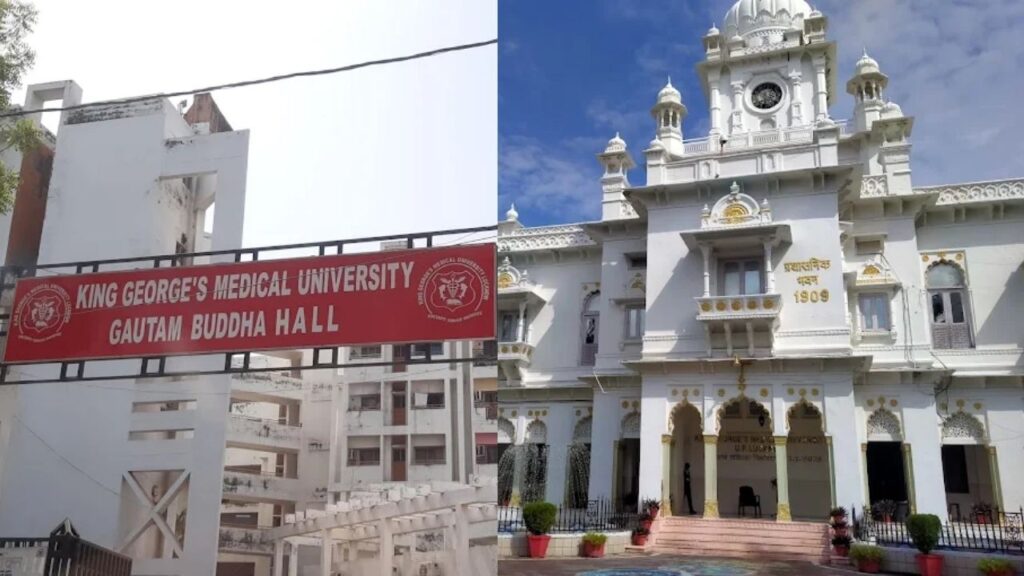
King George's Medical University
Ranking & Recognition
KGMU is a premier medical college in India and is ranked 8th in the NIRF 2025 medical college ranking. KGMU has been a synonym of medical excellence in North India, that has been a legacy for more than a century. The university is well known for its research in oncology, transplant sciences and infectious-disease genomics. 
Fees & Seat 
The KGMU MBBS seat matrix is a total of 250 seats, with 15% seats allotted to the All India Quota and 85% seats are for State Quota. For state quota candidates, the fee per year is about ₹54,600, and for non-resident students, it is ₹3,52,400 per year, which is really cheap. There are some who will say they can afford higher fees but the reality is that a total fee of around rupees 2.38 lakhs for a 5.5 year (4.5 years of classwork and 1 year internship) course is a bargain for a quality medical education. 
NEET Score
King George’s Medical University takes students through NEET score which is expected to be around 625-635 marks. 
Hostel & Campus Life
The charges for Single Seater room is of Rs. 3600/- per annum and the electricity charges are Rs. 3500/-. On the other hand, the Double Seater Room is available for Rs. 2400/- per annum electricity charges are to be paid separately. 

Dr. Ram Manohar Lohia Institute of Medical Sciences
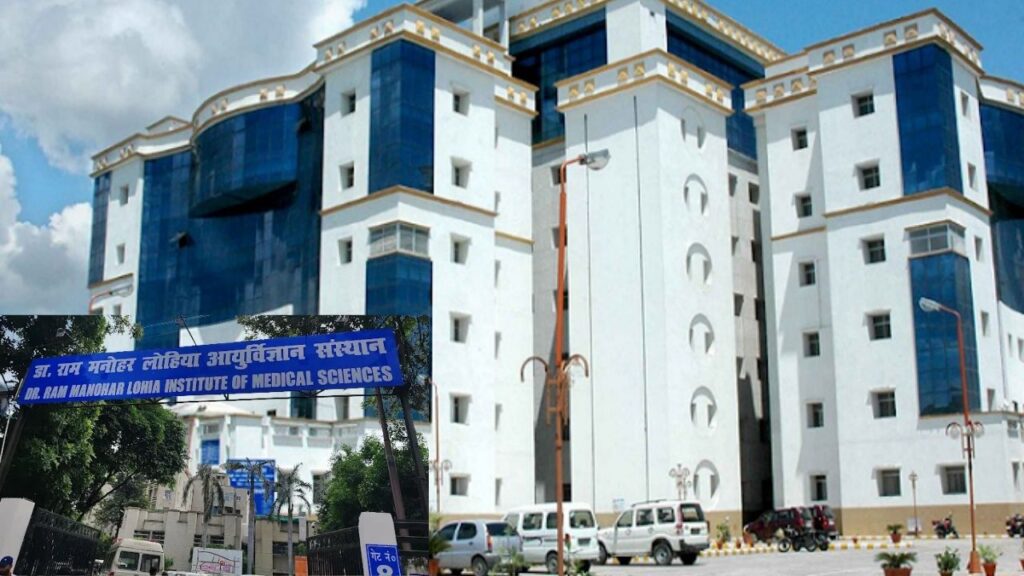
Dr. Ram Manohar Lohia Institute of Medical Sciences
Ranking & Recognition
RMLIMS was formed and became operational as a State University from 2018 and has the distinction of being ranked at 61 position among Medical Colleges (NIRF 2025) which is a great achievement with an overall score of 982/2000. The institute has been established in Gomti Nagar in a spacious 42 acres campus with ultramodern infrastructure.  
Seat Distribution & Admission
The college has 200 seats in MBBS from this year, out of which 50% will be filled through All India Quota (AIQ) by MCC and 50% will be filled under State Quota by UP NEET counselling. This balance accommodates opportunities also for candidates at the state level in addition to the national level. 
Fee Structure
For the whole course, the Rs 1.82 lakh fee of MBBS at RMLIMS is one of the cheapest among all government medical colleges. The fee for the year is around Rs 49,700 which covers all tuition and examination fees.  
NEET Score Required
General category 2024 cutoff rank was approximately 2683. For AIQ seats, the aspirants who want to take admission must have been targeting a rank below 2000 with NEET score of 640 marks or above. Due to domicile preferences, the state quota cutoff rank is usually slightly lower.  
Internship & Career Prospects
Students doing internship at RMLIMS get stipend from ₹10,000 to ₹16,000 per month. The university also has 100% placements, with its students getting jobs in renowned organisations like the SGPGI, KGMU, PSUs and private hospitals.   

Sanjay Gandhi Medical Sciences Institute
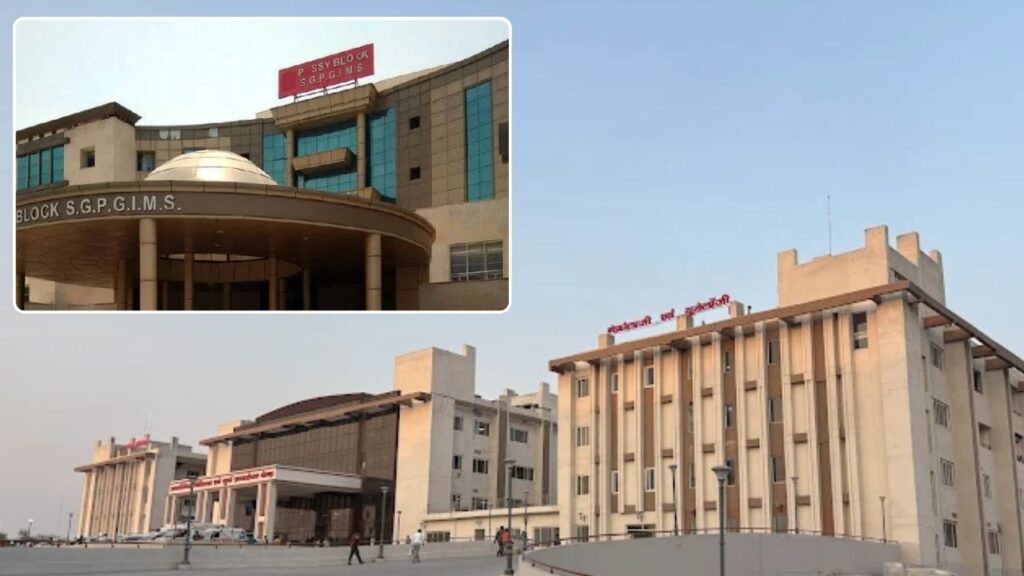
Sanjay Gandhi Medical Sciences Institute
National Stature & Rankings
SGPGIMS is an institute of national importance and ranks 5th in India as per NIRF 2025 with a laudable score of 70.09. The university is known for its high standards in teaching, research, and clinical services and is one of the best medical institutes in India.   
Important Note on SGPGIMS
SGPGIMS is an institute for post graduate and superspeciality courses. For MBBS UG, only KGMU and RMLIMS. However, for post graduation for a specialist, SGPGIMS is the be all and end all.  

Top Private Medical Colleges in Lucknow

Candidates who are looking for private medical colleges that have good infrastructure and other facilities can check out the following list containing the best private medical colleges in Lucknow. 

Era’s Lucknow Medical College and Hospital

Era’s Lucknow Medical College has been ranked 32 by India Today 2024 and it is one of the best paramedical colleges in India which provides 200 MBBS seats every year the highest in any pmt college in India. The National Medical Commission (NMC) recognizes the university, and the institution is NABH accredited which implies high educational standards.​

Era's Lucknow Medical College and Hospital

The complete MBBS course fee at Era’s Lucknow is approximately ₹16.6 lakhs p.a, making the the total 5 year program fee to be ₹71.16 Via. NEET cut off 2024 was a general category closing rank of 375,564 as per UP state counselling data.

Era’s is attached to a 750-bed teaching hospital with more than 1,690 OPD cases each day, which is remarkable clinical exposure. The faculty of the college is well qualified doctors and institutions have UG & PG courses. 

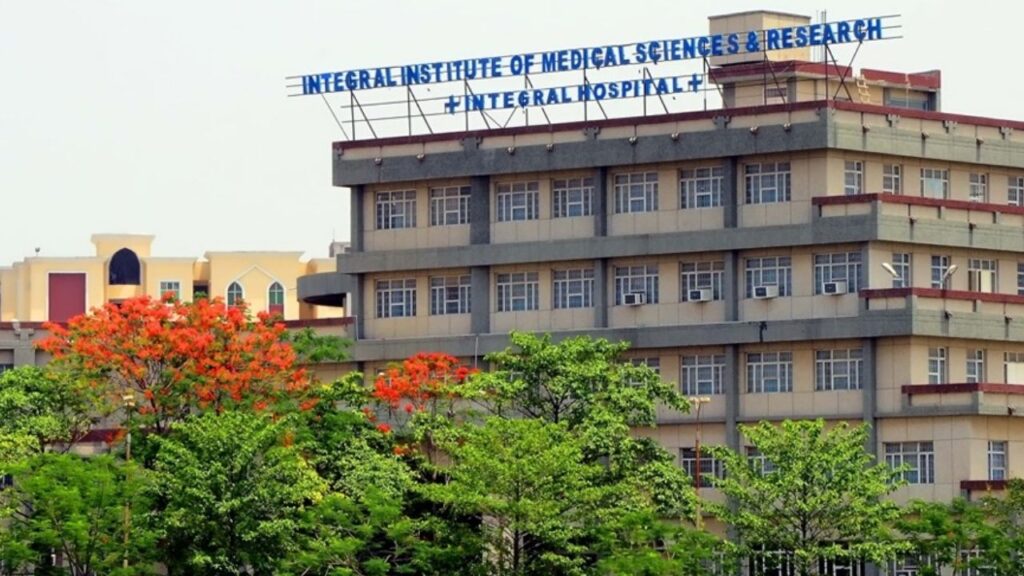
Integral Institute of Medical Sciences & Research 

IIMSR Lucknow was established in 2013 and it provides 150 seats for the course of MBBS and is placed at 118th position in NIRF Ranking with 825 score. The yearly fee is ₹11,40,000, while the overall fees for the course is ₹81 lakhs which include the cost of living in the hostel, mess etc.​

Integral Institute of Medical Sciences & Research 

For 2024, U.P State Counselling the general category closing rank was approximately 428,214. College infrastructure is good and gives internship stipend of Rs. 12,000 – 18,000 per month as per MCI. 

Career Institute of Medical Sciences (CIMSH)

CIMSH has 150 MBBS seats with a fee of ₹71.1 lakhs per year. The closing rank for general in 2024 was 452,601, which is a bit higher than some of the other best private colleges.

Career Institute of Medical Sciences (CIMSH)

The college follows the norms stipulated by the National Medical Commission and imparts overall medical education with clinical training in associated hospital. 

Comparative Fee Structure Overview

Government Colleges
KGMU₹2.38 lakhs total : ₹54,600 annually
RMLIMS₹1.82 lakhs total (₹49,700 annually)
Private Colleges
Era’s Lucknow₹71.16 lakhs total (₹16.6 lakhs annually)
Integral University₹81 lakhs total (₹11.4 lakhs+ annually)
Career Institute₹71.1 lakhs total (approximately ₹14.2 lakhs annually)

Understanding NEET Cutoffs and Rankings

The NEET cutoff denotes the threshold-score and rank prescribed for getting the admission, the one that is the basic requirement aspirants have to meet. It’s important to keep in mind that cutoffs differ wildly between types of applicants:

AIQ (All India Quota) – It tends higher competitiveness, with higher cutoffs, through the MCC for admission.

State Quota – For students of Uttar Pradesh only, higher cutoffs are generally included because of domiciliary preference.

For most government colleges like KGMU, a score of 700+ in NEET for AIQ, 690+ for state quota is a safe bet for gen category aspirants. It would help if you aimed for 640+ marks in RMLIMS if you belong to a competitive category.​

The cutoff of private colleges is very fluctuating as per intake and managing members. But do keep in mind that the fees are significantly higher at Private colleges with lower cutoff ranks.

Read More 👉  Bihar BSSC Inter Level Online Form 2025: Apply Online, Dates & Eligibility

Preparing for NEET to Secure Admission

With a 650+ score in NEET, you have great chances in top government colleges. A 600+ score makes you competitive to RMLIMS as well, below 600 scores are mainly for the private colleges or least ranked government colleges. 

Begin your NEET study preparations around 12-18 months prior to the exam. Work on making concepts crystal clear, no rote learning. Enroll in good coaching if required, be consistent in your studies, and take mock tests frequently to know about your progress. Remember, NEET is to test on your knowledge, analytical abilities and time management. 

Internship Opportunities and Career Prospects

One major benefit of doing medicine in Lucknow is the quality of the internship. Government colleges provide stipend for internship in the range of ₹12,000 to ₹20,000 per month whereas private colleges generally pay ₹12,000 to ₹18,000 per month. And more importantly, lucknow medical colleges have so many diversified medical affiliated hospitals and specialty centers.

After your MBBS then have good scope in lucknow for Post Graduation especially through SGPGIMS which has been nationally recognized for its PG courses. Many graduates of MBBS from Lucknow Colleges like KGMC secure seats in premier institutions for further specialisation. 

Conclusion

The medical colleges in Lucknow provide an all-round ecosystem for quality education at different price brackets. Be it a merit-cum-based student looking at government institutes or a well-heeled parent to afford the best of private institutes in the city, Lucknow has some to match your dreams. The secret is to know what are your strengths, financials, career goals and select based on that.

Start your preparation seriously, be consistent and “Believe in yourself”. Lucknow is one city where you can certainly “make it” if you set your mind to it, your determination and efforts and get into one of the best colleges there is, there is no doubt about that. The right college choice is what starts you on your journey to becoming a compassionate and skilled doctor – and when it comes to that, Lucknow certainly has some great places to get the journey started. 

Leave a Comment

Your email address will not be published. Required fields are marked *

UP Board Exam Date 2026 – Latest Time Table, Schedule & Updates

UP Board Exam Date 2026

UP Board Exam Date 2026 has been announced — and it will be the moment for students across Uttar Pradesh to stop waiting and start preparing. The Uttar Pradesh Board (UPMSP) has released the modified schedule for Class 10 and Class 12 on the official website upmsp.edu.in, Students can now check the revised time table for UP Board 2023 on the official site. As exams are from 18 February to 12 March 2026, students can now prepare study plan accordingly and stay free from last moment pressure. 

Whether you are finalizing your notes, giving last minute practice tests, or cramming difficult calculations, holding the official schedule brings a ne find structure to your day. To cater to the large number of candidates the board has also declared two shifts for the exam that will be conducted in well-organized manner at the centers across the state. 

So, the final schedule is here now, students can get ready for the first step in their life for their career journey. 

Revised Exam Dates For UP Board 2026

The board examinations for class 10 and 12 of this session (2026) will be conducted from 18 February to 12 March 2026. Now everyone can get relief about the exam dates because it’s time to prepare yourself for the final exam. The official time table was published in early November 2025 and it makes everyone’s life easier who is preparing for one of India’s biggest state board exams.​

So, whether you are cracking your last mock tests or memorizing those hard formulas, keep remember that this marksheet will be a valuable asset for the lifetime and make sure to mark these dates on your calendar. 

Two Shifts for the Board Exams

The board has mentioned that the exams will be conducted in the morning and afternoon to manage the large number of students:  

Morning Shift8:30 am to 11:45 am
Afternoon Shift2:00 pm to 5:15 pm

This system is better to handle the huge crowds, and it would allow everyone ample time to get to the exam site and take the paper with no rush whatsoever.​

Pro tip: It is wise to arrive at your exam center at least an hour before your shift begins. This will help you avoid facing last minute hassles or getting delayed and start your exam with a peaceful mind. 

Dates & Subjects For Board 2026

Some important dates and topics are as follows for the UP Board exams. This is a sample of how the major subjects for classes 10 and 12 are spread roughly across the dates, though the exact subject wise date sheet may vary:   

UP Board High School (Class 10)

DateShiftSubject
18/February/20268:30 am – 11:45 amHindi
18/February/20262:00 pm – 5:15 pmElementary Hindi
19/February/20268:30 am – 11:45 amComputer
20/February/20268:30 am – 11:45 amSocial Science
23/February/20268:30 am – 11:45 amEnglish
25/February/20268:30 am – 11:45 amScience
27/February/20268:30 am – 11:45 amMathematics
28/February/20268:30 am – 11:45 amSanskrit
9/March/20268:30 am – 11:45 amUrdu
12/March/20268:30 am – 11:45 amAgriculture

Note: For Class 12th, the afternoon shift will be given mostly but please check on the official website for accurate timing details of each paper.

To view or download a detailed subject-wise routine, you can visit the official website of UPMSP (upmsp.edu.in) and get the latest PDF timetable. 

What Changed in the Revised Time Table?

The most important modification of the schedule for 2026 is that the schedule adjustment applies to certain big papers such as Hindi. Earlier, Hindi (Both Class 10 & 12) was conducted in the same shift but due to the large number of students, the UP Board has now divided them. For instance, Class 10 Hindi will be held in the morning shift, and Class 12 Hindi will be held in the evening shift on the day. ​

The segregation is expected to check the latest rush at exam centers and the smooth and fair conduct of exams. In the same vein, the board also changed the shift for the Class 12 Sanskrit exam to lessen congestion. 

Exam Center Allocation

The UP Board is also adopting a digital, computer-based center allotment process for 2026. Within a radius of 7 – 15 km from your school or residence, you will be assigned an exam centre. This digital policy is aimed at ensuring that students do not have to travel too far and the centres are determined based on availability of infrastructure, safety etc.​

The process of center determination has already been initiated and it will be finalized by December 2025 so students can expect to know their exact centers for various courses. 

How to Download the Official Date Sheet

  1. Getting your official exam dates is super simple:
  2. Visit the Official UP Board Website: upmsp.edu.in 
  3. Check for the link “UP Board Time Table 2026” or “Date Sheet 2026” on the main page.
  4. Press the link of Class 10 or Class 12 as your requirement.
  5. Save the PDF and take a printout for future reference.
  6. Always trust on the official UPMSP website for the latest updates and don’t believe in rumours from non-official sources. 

Related Exam Updates 

  1. September 1, 2025 was the last date of submission of fee for board examination. School has confirmed all your details are correct or not on 6th of September 2025. Ensure that your details are correct before submission as corrections could be problematic afterwards.
  2. Correction Period: For any error in the registration form, a correction window was open from September 12 – 20, 2025.
  3. Admit Card: You’ll get your admit card through your school, or you can download them from the official site.​
  4. Lab Tests: These shall be held separately prior to the theory test, tentatively in January – February 2026. To be informed on dates by your school.

Useful Tips to Prepare for UP Board Exams

  • Make a revision schedule: The exam dates are now out, so decide on your revision topics and give yourself days to focus on tricky subjects.
  • Solve previous years’ papers: It makes you familiar with the pattern and important questions.
  • Schedule rest stops and downtime: You’re not getting any points for working yourself to the bone – you need to rest and relax to be able to focus.
  • Keep in touch with your teachers: Ask for help if you need it – don’t be afraid. 
  • The official updates, reschedules, or other notices would be announced on the UPMSP website only. 
  • Check regularly, as your admit card and practical exam dates are approaching.Don’t believe in rumours— rely on only official announcements for information about your board exams. 

Conclusion

The UP Board exam 2026 syllabus is now well-organized and clear, and some steps have been taken to make the experience fair and smooth for the students. The 2026 Olympics will take place from February 18 to March 12, 2026, and with all the major updates already out of the way, it’s time to set your mind to preparation with a calm and clear plan.

Keep in mind that you don’t need to work hard for a board exam to do well but work smart and timely. Good luck to all the candidates! may you get the results you want for all your efforts. 

Leave a Comment

Your email address will not be published. Required fields are marked *

CAT Exam Syllabus 2025: Complete Section-Wise Guide to Crack the Test

The Common Admission Test can open the doors for India’s most prestigious colleges. Students get stressed with the syllabus most of the time and get confused, so it is important to know the CAT exam syllabus 2025 section-wise. This can help you understand the important topics that must be considered prior while preparing. The powerful strategy to prepare for any competitive exam is according to exam pattern. Read the full article to assess this knowledge which can help you beat the CAT exam. 

It’s not about a lot of time and resources, just the right planning to assess important knowledge is required. Whether you are an average student or brighter one but CAT is not that simple as you think. Masters from top colleges matter in your placement. If you really want to take admission in an MBA or other postgraduate program, you need to clear the CAT exam.

Exam Pattern Overview

CAT is conducted online through a computer-based test format. The total 68 questions come in the examination which get distributed into three sections. This 120 minutes exam carries 204 marks to decide your future in your education journey. However 40 minutes is given for each section with +3 marks if the answer is correct but negative marking of -1 for each wrong answer. There’s no negative marking for TITA (Type In The Answer) questions.

Section-wise Distribution

Verbal Ability & RC carries 72 marks for 24 question
Data Interpretation & Logical Reasoning carries 66 marks for 22 questions
Quantitative Aptitude carries 66 marks for 22 questions

Section 1: Verbal Ability & Reading Comprehension (VARC)

This section covers 36% of the paper. It focuses on RC more than grammar means 16 questions come from the Reading comprehension so it covers 66% of VARC section. While Verbal ability covers 33% of the section. The reading comprehensive features 4 passages with 4-5 questions per passage. The topic in these passages is almost relevant to niches like economics, psychology, literature, and current affairs. 

Verbality Ability comprises 8 questions From:

  • Para summary question
  • Para jumbles 
  • Odd sentence out
  • Sentence completion tasks

Section 2: Data Interpretation & Logical Reasoning (DILR)

This section 32% of the exam paper and considered most unpredictable questions come from the Data Interpretation & Logical Reasoning section. While the questions are in the sets of 3-4 questions, making it difficult to solve easily. 

Topics of Data Interpretation & Logical Reasoning questions:

Data InterpretationLogical Reasoning
Tables and charts analysisPuzzles and arrangements
Bar graphs and pie chartsSeating arrangements
Line graphs and scatter plotsBlood relations and family trees
Caselets with numerical dataCoding-decoding problems
Syllogisms and Venn diagrams

Section 3: Quantitative Aptitude (QA)

Quantitative aptitude holds 32% weightage in the paper. It covers Arithmetic and Algebra topics, making it the hardest section. 

Topics of Quantitative Aptitude Questions

Arithmetic (8-9 questions)Algebra (5-7 questions)Geometry (2-3 questions)Modern Mathematics
Ratios and ProportionsLinear equations and inequalitiesCoordinate geometryPermutations and combinations
Percentages and their applicationsQuadratic equationsMensurationProbability
Profit, Loss, and Simple/Compound InterestFunctions and graphsTriangles and circlesLogarithms and surds
Time, Work, and Distance problemsProgressions and series
Mixtures and Allegations

Topic-wise Weightage Analysis

Highest Priority Topics:

Reading Comprehension16 questions
Arithmetic8 questions
Algebra5-7 questions
Puzzles & Arrangements8-10 questions

Medium Priority Topics:

Data Interpretation8-9 questions
Geometry3 questions
Verbal Ability8 questions

Lower Priority Topics:

Modern Mathematics2-3 questions
Number Systems1-3 questions

Effective Preparation Strategy

Preparing for the CAT isn’t that easy but with right strategy planning you can clear out the exam. There is no need to rote memorization because these subjects require focus and proper time to understand every concept. 

CAT needs comprehensive preparation with proper time duration like 6 to 9 months. Know your weaknesses, so you can distribute your time more on that topic. Divide all three sections with specific duration to complete your preparation properly.

Read More 👉 Best BCA Data Science Colleges in Chennai for a Future-Ready Career

Daily Practice Target

  • Deep analysis and carefully 2-3 Reading comprehension daily is important
  • Solve 2-3 sets of Data Interpretation and logical reasoning to understand and filled in your brain
  • Daily solve at least 15-16 questions from the quantitative aptitude section. Try to solve easy problems first then go to the hard topics.

Mock Test Strategy

After preparing for 2 months, get ready to take mock tests section-wise and extend your mock test practice before the exam. Because analyzing every question helps you keep remembering the concepts and maintain your confidence.

Resource Selection

Choose online resources to prepare fast because the latest notes and mock tests can help you a lot during preparation for the CAT exam. Stick to single quality resources, don’t switch every time and focus on concept clarity rather than multiple resources and question papers. 

Conclusion

Success in CAT requires strength, strategic preparation, and daily practice for clearing every doubt. Focus on high priority topics first then move on the medium priority to balance every section easily. Remember that quality study is more helpful to clear the exams rather than a lot of study material and wasting time on unnecessary topics. So, it is important to prepare according to the CAT exam syllabus 2025 section-wise for best outcome.

Leave a Comment

Your email address will not be published. Required fields are marked *

PNB LBO Application Form 2025 — Apply Online For Local Bank Officers 

PNB LBO Application Form 2025

Punjab National Bank (PNB) has officially released the notification for the recruitment of Local Bank Officers (LBO) for 2025. Candidates who are waiting for this position can apply now through the official website of PNB. Application Schedule, What is the Application Schedule for BO 2025? This recruitment drive is 750 vacancies. For the eligibility criteria, age limit, education, job profile, syllabus, exam pattern and other important information, the candidates should go through the detailed notification. 

A direct link for notification download and further updates on recruitment process will be provided on the official website. Applicants are advised to submit their applications at the earliest and ensure that they fulfill all the criteria as mentioned in the notification. 

Quick Info About PNB LBO Recruitment

OrganizationPunjab National Bank
Exam NamePNB LBO 2025
PostBank Officers
Post Vacancy750
Application Last Date23/November/2025
Official WebsiteClick Here

General Dates For PNB Local Bank Officers Recruitment

EventDate 
Application Begin03/November/2025
Application Ends On23/November/2025
Last Date for Fee Payment23/November/2025
PNB LBO Admit Card AvailableBefore Exam
PNB LBO Exam DateDecember 2025 OR January 2026
PNB LBO Result 2025Update Soon

Category Wise Application Fee

CategoryFee
General / OBC / EWSRs. 1180
SC / ST / PHRs. 59

Read More:- RPF Sub-Inspector Exam: Your Complete Guide to 2025 Recruitment

Guide To Apply Online For PNB LBO Recruitment

Candidates need to read the official notification and apply for PNB recruitment 2025. Candidates must have a graduation degree in any course and age criteria must meet the age limit (20–30 years) of this post.

  • You must read the notification before you start to apply. 
  • To avoid errors, candidates are recommended to ensure that they fill in all required information including name, parents’ names, date of birth, address and educational qualifications properly in the application form. 
  • Ensure you upload all the documents in the right size and format( pdf or jpeg) if required by the application form. 
  • Before you submit the form, check that all the details you have entered and the documents you have uploaded are correct. 
  • When you have submitted your application successfully, it is advised to take print out of application form or save in pdf format for future reference. 

The following tips will make your Punjab National Bank Recruitment 2025 application easier. 

Useful Links
Apply OnlineClick Here
Download NotificationClick Here
Official WebsiteClick Here

Leave a Comment

Your email address will not be published. Required fields are marked *

Difference Between Central Government and State Government Jobs – Full Comparison Revealed!

Difference Between Central Government and State Government Jobs

If you are seeking a job in the public sector, it may be useful to know that there are some differences between central government and state government jobs. This guide is for you to understand these differences, Government employees are responsible for controlling and monitoring public rights, administration, and discipline within the country. State government employees work for the individual state and central government employees act at the national level. 

The government employee acts under the service laws that regulate the conditions of work including authority, recruitment, promotion, transfer, and other perks. The recruitment bodies for central government employees are UPSC, RRB, and SSC, and for state governments are UPPSC, TNPSC, and MPPSC, etc.

In the central government, employees can be transferred across the country but state government employees can serve within the state. Transfers typically happen.

State Government Objectives:

  • State governments function at the regional level, operating within the boundaries of individual states.
  • They handle police, agriculture, and public order by implementing laws.
  • According to the state’s situation, a legislative body can pass the law.
  • Each state has a Chief Minister, who leads the administration of the state.
  • He is the highest authority of an individual state that manages the budget, expenditure, and ensures the development projects run smoothly.
  • States can make their own rules but it doesn’t mean that they can violate any central laws. 
  • They have to align with the legal boundaries and National objectives.

Central Government Objectives:

  • The central government functions at a national level and administers the entire nation.
  • It makes laws on union list topics under the Constitution such as defense, foreign relations, and banking among others.
  • The prime minister is responsible for national administration as he is the executive head and holds the highest authority. 
  • State governance works have been monitored by the central government under the constitution. 
  • Central government develops and executes policies at the national level. Supports national budgets, funds, and foreign issues.

Read More 👉 Madras University Result 2025 Declared – Download Scorecard & Direct Link

Difference Between Central Government and State Government

Authority: Central government employees get more power than the state-level employees because the state-level are set to rule the state and region of the country. The central government covers the whole country’s operations.

Legal Powers: According to the Indian constitution, the state government can work in the department for the items that come under the state list. Meanwhile, the central government can take action under national security, foreign affairs, and banking. 

Powers that both have: Some powers are given to both for some important areas like healthcare, education, and criminal laws. They work together as they share responsibility and the coordination helps to run operations smoothly.

Central Government JobsState Government Jobs
Indian Administrative ServiceState Administrative Service: Tehsildar, Sub-Divisional Magistrate 
Indian Police ServiceState Police Service (DSP, SI, Constable)
Indian Revenue Service (IRS) OfficerState Public Service Commission (PSC) – Administrative & Technical posts
Indian Foreign Service (IFS) OfficerState Education Department: Government School Teacher, Lecturer, Principal
Banking Sector: Probationary Officer (PO), Clerk, Specialist Officer (SO) in nationalized banks (IBPS, SBI)State Health Department: Medical Officer, Nurse, Pharmacist, Lab Technician
Railways: Assistant Loco Pilot, Junior Engineer, Ticket Collector, Group D postsJob for State Forest: Assistant Conservator, Guard, Wildlife officer, Forest Ranger
Defence Services: Indian Army, Air Force, Indian NavyState Transport Department: Traffic Management, Transport Sub Inspector, licensing
Through Staff Selection Commission: Junior Engineer, Income Tax Officer, Multi-Tasking Staff, Lower Divisional Clerk, Translator, Assistant Section Officer,  Assistant Sub-Inspector, JSAIn the State Judiciary department: Judges, Court Clerk, Legal Assistant, Stenographer
Public Sector Undertakings: Trainee, Managers, Executive roles, Engineer, OfficersState Revenue Department: Officer, Revenue Inspector, Lekhpal, Deputy, Clerk
Central Departments: Assistant Director, Scientist, specialist, Engineer, Regional OfficerState PSUs: Engineer, Technician, Assistant in state-run corporations
Postal Services: Assistant, PostmanLocal Bodies: JE, Clerk, Sanitary Inspector
Teaching: Central University Faculty, Professor, School teacher.Agriculture Department: Agriculture Officer, Development Officer, and Extension Officer

Why Central Government Jobs Offer Better Career Growth Than State Jobs

When it comes to professional growth for long-term development and a high salary, central government jobs often have the upper hand over state-level positions. Let’s look into the factors that backed up this statement: 

1. Wider Career Scope

Central government employees usually get the chance to work on nationwide projects and schemes. The nationwide projects provided larger benefits such as expanding their work experience, providing a diverse and high-level career path for their professional growth. So, these perks come with central government jobs, not from state departments. 

2. Faster and Transparent Promotions

The larger project initiatives often provide a quality of experience to the person that can help in fast promotion. Internal promotions through departmental examination often happen and deserving candidates can usually get the chance to climb the career ladder faster. In many state services where the process can be slower or less systematic.

3. National Recognition of Experience

Another major point is that the experience of central government employees is more valued than state department employees. If someone decides to switch roles and departments then it is harder for a state-level employee than a central-level employee as it carries more weight in their resume. 

4. Exposure to a Global Network

Working in the central government, dealing with foreign affairs sometimes opens a wider range of interactions and helps build a network from various departments. This act helps them develop their mind with administrative skills and also helps build valuable connections that can support future growth and collaborations.

5. Pay Scale

State government jobs have followed the central pay commission. It may vary depending on the state’s financial growth and decisions. Meanwhile, central government jobs have to pay under the 7th Pay Commission.

Conclusion 

Whether you are preparing for a job as an engineer or officer in the government sector. You can decide which job you can apply for that aligns with your future goal after learning the difference between central government and state government jobs. Their salaries, posts, authorities, and many more. You must know the differences between the two for your career growth.

Leave a Comment

Your email address will not be published. Required fields are marked *

Azim Premji Scholarship 2025: Girls Can Win ₹30,000 – Apply Today!

Candidates, specifically female students who wish to study further but are not able to continue due to financial issues can now get higher level education with Azim Premji Scholarship 2025. Students who have proven 12th class marksheet with good score from a recognized board are eligible for this scholarship. The step-by-step instructions to apply for this scholarship are mentioned in the article. You can apply until the last date of registration after that the portal will be closed for this  Azim Premji Scholarship 2025.

The eligibility criteria is simple, females who passed 10 and 12 as a regular student from any recognized school or board. Then take admission for any undergraduate course in the session 2025-26 as regular students or pursuing diplomas of 1-2 year duration are eligible for this scholarship.

Short Details for Azim Premji Scholarship 2025

Scholarship NameAzim Premji Scholarship 2025
Offered ByAzim Premji Foundation
Scholarship Amount₹30,000 annually
EligibilityOnly Females who have completed their 10+2 from a government school
Offered for CoursesUndergraduate and diploma courses of 2-5 years
Registration Last Date30 September 2025
Official WebsiteClick Here

Steps to Apply for the Scholarship Application 2025

If you are a girl and recently completed your 10th and 12th studies then you are eligible to apply for this scholarship worth Rs 30,000 annually for your undergraduate or diploma course. Follow the instructions to proceed with the application:

  1. First, click on the official website to link to the Azim Premji Foundation site.
  2. When you land on the homepage, navigate the ‘What We Do’ section then click on ‘Education’.
  3. All the info available right there, if you are new then register yourself first.
  4. After registration, login with registration number/username and password.
  5. You can fill out all the details that are necessary for the further procedure and submit.
  6. Download the copy for maintaining the record.

Read More:- Top 7 Best B Pharma Colleges in Lucknow You Must Know in 2025

Necessary Documents for Azim Premji Scholarship

Before applying for the scholarship, candidates should get ready their mandatory documents that are required to submit with the application.

  • Passport Size photograph with size 2×2 inch
  • Clean SIgnature 
  • Adhaar Card Scanned image of both sides
  • Bank Passbook Image Front page where your account number and IFSC code are showing.
  • Class 10 and 12th marksheet
Useful Links
Scholarship NoticeClick Here
For Scholarship Click Here
Official WebsiteClick Here

Leave a Comment

Your email address will not be published. Required fields are marked *

Scroll to Top