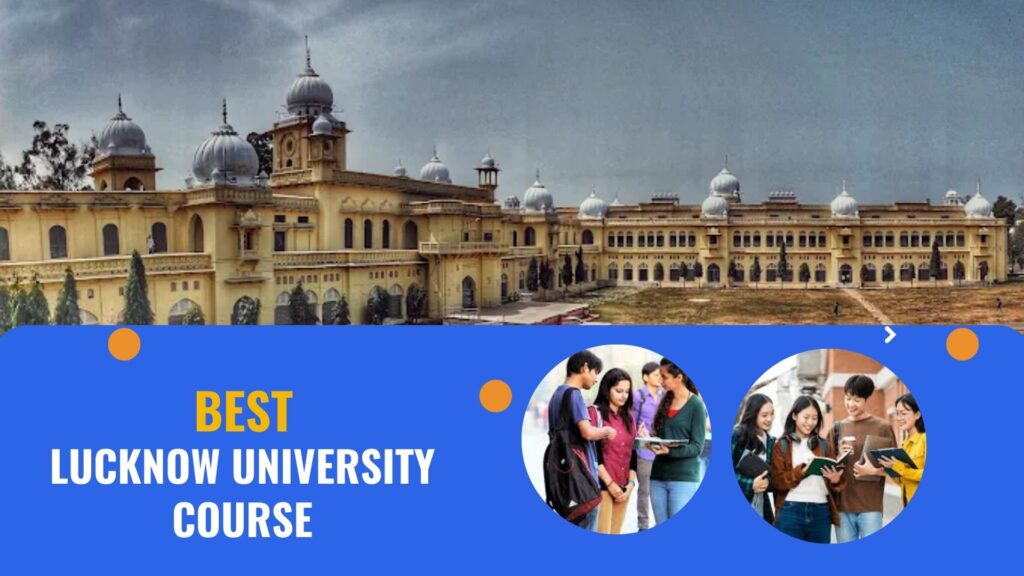
Lucknow University is one of the oldest and most respected universities in India. Many students dream of studying here. If you want to know about the best Lucknow University courses in 2025, this article is for you. We will talk about the main courses at undergraduate (UG), postgraduate (PG), and diploma levels. We will also look at some popular professional courses. This guide will help you find the right course for your future.
Main Types of Lucknow University Courses
- Undergraduate (UG) Courses
- Postgraduate (PG) Courses
- Professional and Vocational Courses
- Diploma and Certificate Courses
Let’s explore each type.
Undergraduate (UG) Courses at Lucknow University
Undergraduate courses start after class 12. These courses help you build basic knowledge for your career. Here are some of the best UG Lucknow University courses:
Bachelor of Arts (BA)
The BA is a famous course. You can choose subjects like:
- Hindi
- English
- History
- Political Science
- Sociology
- Economics
The course is for three years. There are many subject combinations, so you can pick what suits your interest best.
Bachelor of Science (BSc)
This course is good for students who love science. The BSc at Lucknow University comes with many subjects like:
- Physics
- Chemistry
- Mathematics
- Botany
- Zoology
- Statistics
BSc is a three-year full-time course. There are also special groups like BSc (Physics, Chemistry, Mathematics) or BSc (Botany, Zoology, Chemistry).
Bachelor of Commerce (BCom)
BCom is best for students interested in business, finance, or accounting. At Lucknow University, you learn subjects like:
- Accountancy
- Business Law
- Economics
- Management
BCom is a three-year course and gives you great career options in banking, finance, and business.
Bachеlor of Computеr Applications (BCA)
BCA is for thosе who want to work in computеrs and IT. You lеarn softwarе, programming, and computеr basics. It is a popular Lucknow Univеrsity coursе for tеch lovеrs. Thе coursе is for thrее yеars.
Bachеlor of Businеss Administration (BBA)
If you drеam of managing a businеss or bеing a lеadеr, BBA is thе right choicе. You will study businеss, markеting, financе, human rеsourcе, and morе. BBA is a thrее-yеar coursе at Lucknow Univеrsity.
Bachеlor of Laws (LLB and BA LLB)
LLB is for studеnts who want to bеcomе lawyеrs. Lucknow Univеrsity offеrs both thrее-yеar (aftеr graduation) and fivе-yеar (aftеr class 12) coursеs. You will lеarn about Indian law, constitution, criminal law, human rights, and othеr law-rеlatеd topics.
Bachеlor of Education (BEd)
If you want to tеach, BEd prеparеs you for a carееr in schools. This is a two-yеar coursе aftеr graduation. It tеachеs you about tеaching mеthods, child psychology, and classroom managеmеnt.
Bachеlor of Finе Arts (BFA)
BFA is for crеativе studеnts intеrеstеd in painting, sculpturе, or appliеd art. It is a four-yеar coursе. Lucknow Univеrsity givеs you modеrn and classical art training.
Bachelor of Journalism and Mass Communication (BJMC)
BJMC teaches skills for journalism, mass media, and communication. It is a great course for students who want to become reporters, news editors, or work in media houses.
Postgraduate (PG) Courses at Lucknow University
After graduation, you can do PG courses. These courses give you deeper knowledge and better job options. Here are some of the popular PG Lucknow University courses:
Master of Arts (MA)
You can choose from subjects like:
- Hindi
- English
- History
- Political Science
- Sociology
- Psychology
- Economics
MA is usually a two-year course. It gives you in-depth subject knowledge.
Master of Science (MSc)
MSc is best for science graduates. Subjects include:
- Physics
- Chemistry
- Mathematics
- Zoology
- Botany
- Statistics
This course sharpens your skills for research or teaching careers.
Master of Commerce (MCom)
MCom is for students who want to work in finance, banking, or accounts. The course covers subjects like advanced accountancy, business management, and financial studies.
Master of Business Administration (MBA)
MBA helps students take up high-level jobs in business, marketing, or management fields. You learn about Human Resources, Finance, Marketing, International Business, and more. MBA is a top-rated Lucknow University course and has high value.
Master of Computer Applications (MCA)
MCA is good for tech and computer graduates. It teaches about advanced computer programming, networks, and software. MCA is a two-year PG course.
Master of Laws (LLM)
This PG course is for law graduates. Students can select specializations like:
- Constitutional Law
- International Law
- Corporate Law
- Criminal Law
- Environmental Law
LLM helps in building expert knowledge in law.
Master of Social Work (MSW)
MSW is for those who want to help people and do social service. The course trains you in working with communities, helping children, and working for social causes.
Master of Education (MEd)
For those who already have a BEd, MEd makes you an expert in education and teaching.
Popular Professional Lucknow University Courses
Lucknow University has many professional courses. These courses are designed for fast jobs and skilled work.
- Bachelor of Pharmacy (BPharma): For working in medical and pharma companies.
- Bachelor of Technology (BTech): Lucknow University offers Computer Science and Artificial Intelligence as main branches.
- Bachelor of Law (LLB/BA LLB): For legal practice or judiciary.
- Bachelor and Master of Business Administration (BBA/MBA): For careers in business, human resources, retail, and finance.
- Bachelor of Computer Applications (BCA): For software and IT industry.
- Bachelor of Journalism and Mass Communication (BJMC): For media, public relations, and journalism careers.
- Master of Social Work (MSW): For social service, NGOs, and government roles.
These Lucknow University courses give you practical skills that are needed in jobs right after graduation.
Engineering and Technology Courses
Lucknow University offers BTech courses in fields like:
- Computer Science and Engineering
- Artificial Intelligence
These engineering courses are in high demand. You get updated labs, good teachers, and industry exposure. BTech at Lucknow University is a four-year course and opens doors to IT, government, and private jobs.
Read More 👉 Best Nursing Colleges in Lucknow with Fees, Courses & Admission 2025
Management Programs
If you want to lead teams or companies, these are popular choices:
- BBA: For business basics at UG level.
- MBA: For high-level management, finance, marketing, and HR skills.
Lucknow University’s MBA program is known for good placements and modern teaching.
Law Programs
Law is one of the oldest faculties at Lucknow University. These are major law Lucknow University courses:
- LLB (Three Years): For graduates.
- BA LLB (Five Years): After class 12.
- LLM: For those who want to do research or become experts in the legal field.
Students can learn about Indian law, legal techniques, and courtroom skills.
Computer and IT Courses
Computers and information technology are important today. These courses include:
- BCA: Basics of computer applications for UG students.
- MCA: For PG students who want deep knowledge in computers.
You learn computer languages, programming, and web development.
Science Courses
Science has many UG and PG courses. Lucknow University offers:
- BSc: Physics, Mathematics, Botany, Zoology, Chemistry, and Statistics.
- MSc: The same branches are available at PG levels, with more focus on research and practicals.
These Lucknow University courses are best for students who want to work in labs, hospitals, research centers, or teach in schools.
Arts and Humanities Courses
If you like literature, history, or languages, you can choose:
- BA: Hindi, English, History, Economics, Psychology, Philosophy, and Political Science.
- MA: Any of those subjects for advanced study.
These courses help you prepare for teaching, civil service, or further research.
Commerce and Management Courses
Commerce students can study:
- BCom: UG level, building basics in commerce, accountancy, and business.
- MCom: PG level, advanced studies in finance, accounts, and management.
Many students pick these Lucknow University courses to work in business, banking, or government jobs.
Diploma and Certificate Courses
Lucknow University offers diplomas and certificates in many fields. These short courses give you job skills fast. Some diploma courses include:
- Diploma in Computer Applications
- Diploma in Yoga
- Diploma in Business Management
- Certificate courses in foreign languages like French and German
These Lucknow University courses are good for skill-building in a short time.
PhD and Research Programs
If you want to do research, Lucknow University offers PhD programs in arts, sciences, commerce, law, management, and engineering. You need a master’s degree to apply. Lucknow University has modern research labs and good guides for researchers.
Special Facilities and Student Life
Lucknow University has many facilities:
- Modern libraries
- Computer centers
- Science labs
- Hostels for boys and girls
- Sports grounds
- Medical care
Campus life is active and full of different events. You can join clubs, sports, or cultural activities.
Which Lucknow University Course is Right for You?
It depends on your interest. Here are some tips:
- If you like science, choose BSc or MSc.
- If you like business, pick BBA, MBA, or BCom.
- Law students can go for LLB or BA LLB.
- Computer lovers can do BCA or MCA.
- Future teachers can select BEd or MEd.
- Art and literature fans should choose BA or MA.
- Those looking for quick jobs can select diploma or certificate courses.
Talk to teachers or University counselors if you are confused.
Admission Process
To get into most Lucknow University courses, you need to:
- Fill the online form
- Meet the eligibility (pass class 12 for UG, have a graduation degree for PG)
- Take entrance tests for some courses like BBA, MBA, LLB, B.Ed, and BCA
- Appear for counseling in some professional and PG courses
Read all University rules while applying.
Important Points about Lucknow University Courses
- Lucknow University is known for many options, from regular degrees to expert professional courses.
- It has great links with companies for placements.
- Fees are pocket-friendly. Most courses are affordable for everyone.
- Courses change from time to time, and new ones are added as needed.
- Old and new subjects mix to give you the best of both worlds.
Placement and Career Options
Lucknow University students get good jobs after finishing their courses. Many companies visit the campus to hire graduates. You can get jobs in:
- Government offices
- Private companies
- Banks
- Schools and colleges
- Hospitals and labs
- Law firms and courts
Some students also start their own business after studying Lucknow University courses.
Scholarships and Support
There are many scholarships for both meritorious and needy students. If you do well in studies or have problems in paying fees, you can get help through University schemes.
Tips to Succeed in Lucknow University Courses
- Attend your classes every day.
- Take part in extra activities.
- Practice writing answers and speaking in English.
- Use the University library for more learning.
- Talk to teachers if you have doubts.
Conclusion: Your Pathway Starts With Lucknow University Courses
With good quality education, and good career outcomes, Lucknow University is a smart choice for students. With a range of Lucknow University courses in arts, science, commerce, computers, technology, law, management, and health sciences, there is something for everyone at Lucknow University. Whether you are looking for a simple degree, professional qualification, or a fast diploma, you will find the go to Lucknow University courses for you.