Supreme Court Law Clerk Recruitment 2026 of India announced notification released on 20 January 2026 and opened the portal to receive applications for Law Clerk-cum-Research Associate (LCRA) for the year 2026, marking a fantastic opportunity for budding legal minds. Supreme Court Law Clerk Recruitment is a paid position with 200 seats available and the stipend amounting to ₹80,000 per month, making it a prestigious and fulfilling experience.
The applications started on February 7, 2026 and should be sent through the official website of the Supreme Court of India (sci.gov.in). Interested candidates are advised to send their application before the last date 10th March 2026. This is an extraordinary opportunity to acquire priceless experience in the legal industry.
Date Schedule for Supreme Court Law Clerk Recruitment
Phase
Date/Details
Notification
20/January/2026
Application Window
20/January —- 7/Feb
Exam
10/March/2026
Interviews
June/2026
Joining
August/2026
Quick Eligibility Check
You can apply if you are a fresh LLB graduate from the 3-year or 5-year program with a cumulative score of 55% across all years and have a degree from a University/Institute recognized by NLU or from the top-10 NIRF ranked law schools (2020-2024).
In the academic department, the standard is well defined and just: you require 55% marks in graduation minimum, with relaxation to 50% for SC/ST candidates.
Age: As on 01/08/2026 Candidate should be under 32 years and above 20 years.
There’s no experience required but you have to go full-time no side hustles.
Its merit-based magic: shortlisting will be on the basis of a written exam (objective + subjective on law/constitution) followed by an interview for the toppers. Question on constitutional, IPC, current affairs.
Candidates have to fill out the application form to access the admit card for the examination. Follow the three phase selection process for Law Clerk Recruitment 2026, online MCQ test, Written test then prepare yourself for interview.
How to Fill Application and Fees
You need to register yourself on the official website of SCI.
Login with your credential to fill the entire details required to complete the form and check again.
Submit Rs. 750 via online payment to complete the process
Students after 12th with PCM can get confused while choosing the right course and it is one of the most important decisions in a student’s life. That’s why I’ve listed the top high-salary courses after 12th PCM that have a scope and career in the future. At this stage, you are not deciding just a course or degree but you are shaping your future career, lifestyle, and earning potential.
Maybe you already know about your interest and field to choose, but can still get confused because there are hundreds of options out there. Other people and your parents also suggest you courses but you need a proper guide to choose the right course.
These are not just “Popular” courses after 12th PCM but ones that offer good job opportunities, high salaries, and real growth in India and abroad.
Top High-Salary Courses After 12th PCM
1. Engineering Course – B.Tech or B.E
Engineering is still one of the top choices after 12th PCM. But the difference is that some branches are in demand now like Computer Science, Artificial Intelligence, Data Science, Architecture and Electronics offer high salaries and great jobs.
Duration
Starting Salary
Top Recruiters
Entrance Exams
4 years
₹6–12 LPA (IIT/NIT more)
Google, Microsoft, Amazon, TCS, Infosys
JEE Main, JEE Advanced, CET
Why choose it?
If you are interested in technology, software, gadgets, or architecture this is the best path. With coding, AI, and tech booming, the demand for smart engineers is only rising. The demand for new gadgets is always on trend.
2. Commercial Pilot Training
If you want the highest-paying career options after PCM. Choosing to become a pilot, also depends on your interest and skills. It offers other perks which any other job can’t provide such as flying and a different lifestyle.
Duration
Starting Salary
Top Recruiters
Admission Process
1.5 to 2 years
₹10–20 LPA
Vistara, Qatar Airways, and Air India
12th (PCM), Medical Test, DGCA Flying School Entrance
Why choose it?
It gives you a high salary, travel opportunities, and a respected job but training costs are also high, so plan accordingly.
3. B.Sc in Computer Science + Specializations
Not interested in a 4-year engineering course? No problem. A 3-year B.Sc or BCA in Computer Science, when combined with trending skills like Data Science, Cybersecurity, or Web Development, can also give you a high-paying career. BSc also offers many other programs which have high-paying careers like BSc with chemistry, maths, and statistics can open a lot of opportunities for you in fields like government teacher or researcher.
Duration
Salary
Top Colleges
Admission
3 years
₹5–10 LPA
Delhi University, VIT, Christ Univ.
Direct or CUET/state-level entrance
Why choose it?
Without spending lakhs on B.Tech, you can achieve your goal in the tech industry if you focus on practical skills. BSc also offers teaching and research options for you.
4. B.Des (Design) – UI/UX, Animation, Game Design
Most of the students think that design is just about fashion or drawing. But it’s not anymore. In today’s world, UI/UX Designers, Game Designers, and Animators are earning lakhs per year in India and abroad.
Duration
Salary
Top Colleges
Entrance Exams
4 years
₹6–15 LPA
NID, MIT Institute, Pearl Academy
UCEED, NID DAT
Why choose it?
It opens many opportunities for you in designing the world on a global platform. You can earn in this field by sitting at home. If you’re creative and love visuals, then this field is a well-paying option.
This course will open many opportunities abroad. If you are interested in space, planes, and defense, this branch of engineering is perfect. You can get a job in a high-paying government organization like ISRO and DRDO.
Duration
Salary
Top Colleges
Entrance
4 years
₹6–12 LPA
IIT Kanpur, IIST, Hindustan Inst.
JEE Advanced, college-level
Why choose it?
In the future, India will become more frequent in space projects, this field offers exciting opportunities.
6. Data Science & Artificial Intelligence (Integrated Courses)
Securing, managing, and providing data is a consistently growing concern in tech industries and the government sector. Private companies relying on data for every decision, Data Scientists and AI experts are in huge demand. It opens the future scope for both private and government jobs.
Duration
Salary
Top Colleges
Admission
3–5 years
₹8–18 LPA
IIT Madras, Shiv Nadar, Ashoka University
CUET or college-specific
Why choose it?
Students who have skills in analytics and logical thinking, this future-proof field is perfect for you.
7. Marine Engineering
This is a high-salary and adventurous job where you work on international ships. People who love the sea can work in this area passionately because they have to spend long months at sea.
Duration
Salary
Top Colleges
Admission
3–4 years
₹12–25 LPA
IMU campuses, T.S. Chanakya, Samundra Inst.
IMU-CET, Medical & Physical Tests
Why choose it?
It pays in dollars and offers early career growth. If you are interested in marine areas and travel the world as it gives you global exposure, this is the best option for you.
8. Chartered Accountancy (CA)
Do not get confused as this career is chosen by commerce students mostly but science students who don’t have an interest in tech and any other options related to science can also choose this course. Your math background helps you a lot.
Duration
Salary
Top Recruiters
Admission Process
4.5 years
₹7–20 LPA
Deloitte, EY, Govt, MNCs
CA Foundation course after 12th
Why choose it?
Skilled in math? It’s easy for you in finance, accounting, or business, this is a high-paying and respected career.
9. Law (B.Sc LLB or BA LLB)
There are consistently growing risks of data leaks and cyber attacks whether it’s a private organization or a government organization. There’s a growing need for lawyers in cyber law, intellectual property, and corporate law. Science students have more logical ability so they can do really well here.
Duration
Salary
Top Colleges
Entrance
5 years
₹6–15 LPA
NLSIU Bangalore, NLU Delhi, Symbiosis Pune
CLAT, LSAT
Why choose it?
It combines legal knowledge with your science background to open up modern legal careers.
10. B.Stat / B.Math (Statistics & Mathematics)
For those who are truly intellectual and love maths and numbers, this field is purely related to Statistics or Mathematics. It offers high salaries in research, finance, and data jobs.
Duration
Salary
Top Colleges
Admission
3 years
₹6–15 LPA
ISI, CMI, Delhi University
ISI Entrance, CMI Entrance
Why choose it?
It leads to careers as statisticians, actuaries, data scientists, and all well-paid and intellectually satisfying.
How to Choose the Best Course for YOU?
Everyone wants a high salary, but success comes only when you love what you do. But some courses are expensive so check the reality before you choose, Consider the following points before selecting a course:
What are your interests? – You must ask yourself before reaching any conclusion – Do you like coding? Maths? Designing? Flying?
Career Goals – Some courses offer fast career growth but some take time to grow. Look at their duration and future scopes.
Check the reality – Course fees, job market, and top colleges.
Focus on skills – Degree matters, but skills + internships can get you the real jobs.
Avoid herd mentality – Don’t choose any course because your friends are choosing that career.
The SSC CPO SI CAPF Online Form 2026 finally went live on 10 September, now you can go on the official website to fill it. The official notification of SSC CPO brings fewer seats and a reshuffled exam pattern. The Staff Selection Commission has opened applications for CPO Sub-Inspector posts in Delhi Police and Central Armed Police Force (CAPF) Exam 2026.
The window runs from 10 September to 30 September 2026, 11 PM, and if past years are anything to go by, the SSC server tends to buckle in the last 48 hours. Registering early isn’t just good advice, it’s basic risk management.
Details
Information
Exam name
SSC Sub-Inspector in Delhi Police and CAPFs Examination 2026
There are a total 1,871 vacancies for 2026 announced by SSC which is less in numbers from last year. Even after CISF’s new Fire wing added 234 posts to the count. Still it doesn’t beat last year’s vacancy count.
SSC CPO SI male seats rose from 142 to 205 and SI female vacancies doubled from 70 to 112 this year. CAPF SI (GD) postings, which usually get higher in number, have shrunk considerably this year.
Sub-Inspector in CAPF seats for male are 1173 and 147 for females. So the total empty seats in CAPF are 1320.
Sub-Inspector (Fire) in CISF also vacant for 234 male candidates. The category-wise distribution of seats is also accessible from the official notification. The conclusion is general category male seats are more in numbers than other categories or females.
Eligibility For SSC CPO in 2026
Education and Age Limit For SI: Any bachelor degree from a recognised university is accepted. Candidates’ age must lie between 20 to 25 years for Delhi Police SI and CAPF SI. The age relaxation is given for 3-years (OBC) and 5 years (SC/ST).
CISF SI (Fire) runs on a separate, wider band of 18 to 30 years, so if you’ve aged out of the general SSC CPO bracket, this is worth a second look.
Male applicants for Delhi Police SI (Executive) must hold a valid LMV driving licence — both motorcycle and car — on the day of the physical test, not on the day of application. If you don’t have one yet, start the process now; RTOs aren’t fast.
Candidates from specified hill areas, North-Eastern States and Sikkim
165 cm
80 cm unexpanded, 85 cm expanded
155 cm
Scheduled Tribe candidates
162.5 cm
77 cm unexpanded, 82 cm expanded
154 cm
Physical Endurance Test for SI Post
Candidate
Event
Requirement
Male
100-metre race
16 seconds
Male
1.6-kilometre race
6.5 minutes
Male
Long jump
3.65 metres in 5 attempts
Male
High jump
1.2 metres in 3 attempts
Female
100-metre race
18 seconds
Female
800-metre race
4 minutes
Female
Long jump
2.7 metres in 3 attempts
Female
High jump
0.9 metre in 3 attempts
What’s Changed in the SSC CPO SI CAPF Online Form 2026 Exam Pattern
SSC has restructured both papers for this cycle, and different question counts and marks splits for Paper I and Paper II.
Paper I remains the general screening test covering Reasoning, General Awareness, Quantitative Aptitude, and English Comprehension, and Paper II is the English Language and Comprehension paper, with negative marking of 0.25 for wrong answers carried over from the previous pattern.
For the exact number of questions and marks per section, go to the official notification PDF provided by the Staff Selection Commission.
How To Apply — SSC CPO SI CAPF Application Form
Visit on the official website mentioned in the above overview.
If you already have a One Time Registration (OTR) profile, log in and apply directly against the SSC SI in Delhi Police and CAPFs Examination, 2026 listing.
New applicants need to register first.
SSC is pushing Aadhaar-based authentication hard this cycle — opt into it, because it exempts you from photo and signature rejections on formatting grounds and saves you from carrying printed photo ID to the exam centre.
The photograph itself has to be captured live through the application at the time of registration; you can’t upload an old passport photo.
Signatures go in as a JPEG between 10 and 20 KB.
General, OBC, and EWS candidates pay a ₹100 application fee; women, SC/ST, PwBD, and ex-servicemen candidates are exempt, as usual.
Once you’ve paid and submitted, use the preview option before final submission of SSC CPO SI CAPF online form— corrections later are limited to a fixed window (8 to 10 October, per current reporting) and won’t cover every field.
Salary of Sub-Inspector in Delhi Police and Central Armed Police Force
Salary is given under Pay Level 6 of the 7th Pay Commission, candidates who get selected for SI post going to earn up to ₹35,400 which rise up to ₹1,12,400. The total in-hand salary of a SSC CPO SI CAPF is somewhere between ₹55,000 and ₹75,000 a month by adding allowances.
The fixed salary of Sub-Inspector is shared with you after the selection depending upon the location of your post, as metro postings pull the number toward the higher end because of city-category HRA.
Fill SSC CPO SI CAPF Online Form 2026 now to secure your seat because waiting for the last hour means you can make a mistake while filling the form in hurry or the site will crash down at the last minute and you’ll miss the chance.
So don’t take that risk and apply now for Sub-Inspector, prepare for the theory examination as well as physical standards. Check the eligibility and get your documents ready before going to fill the form.
For the students preparing for the SSC CGL exam, the Current Affair section is important to cover up. Many students think that it is an easy section and it will get your score with a little preparation and strategy. These Best Current Affairs Teachers for SSC CGL will help you make every update remember their context.
They’re not only helping you in keeping updated but they also gave you SSC CGL relevant current events which can come in the exam. Check news daily, read newspaper or e-news, follow social media news channels, read magazines and make revision for each topic.
Previous year papers might be not helpful so try mock quizzes and practice questions daily. These teachers have also shared a lot of MCQs, you can try and improve your speed and accuracy.
You better be consistent through your preparation, otherwise it won’t be helpful if you forgot everything you learn.
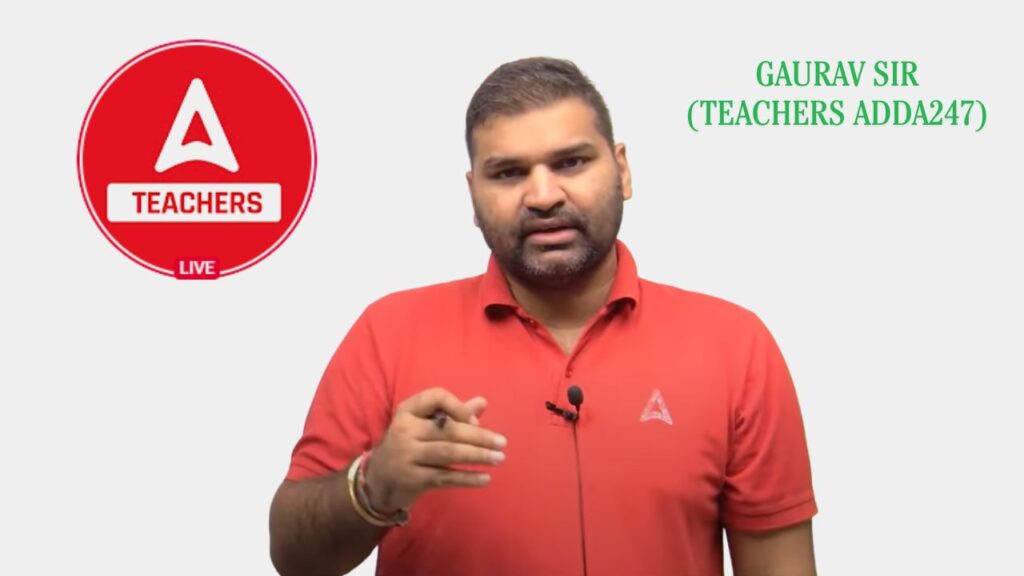
Gaurav Sir (Adda247)
Gaurav Sir is known for his ability of connecting current events to static GK which help students to memorize everything. He encouraged a comprehensive understanding of current events rather than just rote memorization. His engaging and interactive teaching style involves deep explanations and real-life examples to elaborate concepts that help understanding complex topics easily.
Ideal for those students who want to understand the “why” behind the news. Gaurav Sir will help you to understand every topic beyond the headline. He is teaching serious topics in a friendly way that will be remembered by every student with a deep understanding of context. He also provides revision classes to keep tracking the previous sessions.
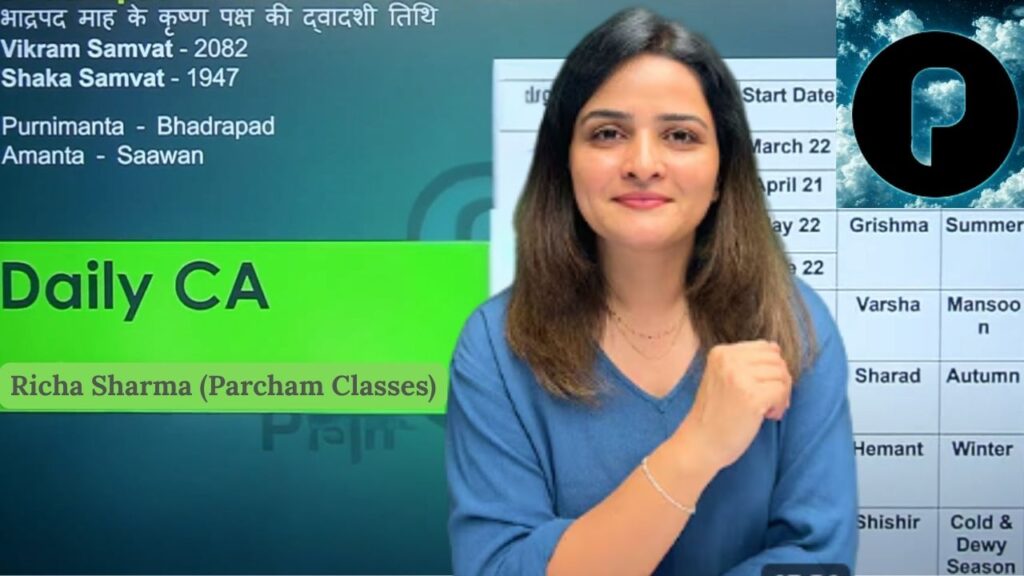
Richa Sharma (Parcham Classes)
Richa Sharma is best to help SSC aspirants for concise and exam-oriented preparation. Richa Ma’am’s teaching style is clear and structured which helps every student to understand current events that are relevant to SSC CGl. She specifically makes point-to-point notes for easy memorization and applies other techniques such as mnemonics to help in revision.
She is best for those students who prefer to prepare the current affair section with less time & efforts. It’s hard for many students to remember dates, names, and numbers. Richa Ma’am fits them because she uses simple flowcharts and bullet points to simplify the topic. You can easily remember them and cover all the topics within a short period of time.
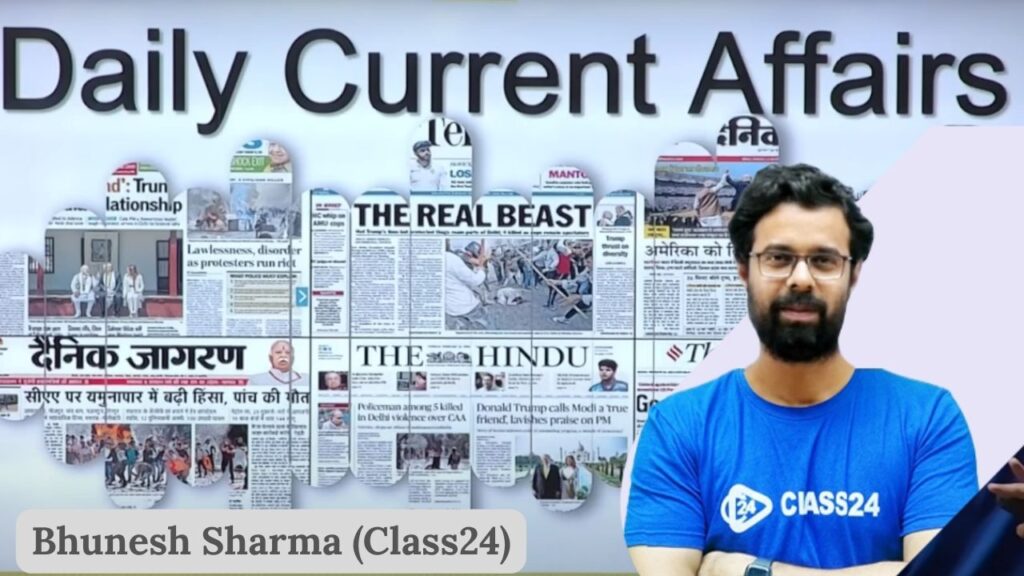
Bhunesh Sharma (Class24)
Bhunesh Sharma is experienced and popular for his lucid explanation which helps to understand complex topics of current affairs easily. He uses visuals and diagrams in its teaching to memorize every concept. Most importantly, it’s easily available for every student who is preparing for the SSC CGL Exam.
If you have a problem in understanding current affairs then Bhunesh Sir is best, he simplifies every topic with his friendly teaching style. Be ready for the In=depth analysis on a complex topic which can help you understand its core reasons, making you able to solve every question confidently.
Gaurav Maurya from Testbook
For daily current affairs updates, watchGaurav Maurya sir lectures because he gives updates in a very good explanation which helps many students to understand it. The factual accuracy and exam relevant topic in his sessions makes it a more precise choice for SSC CGL aspirants. He will prepare you for the exam in a short period of time.
He focuses on relevant information which can come in the SSC’s objective exam. Students can score well in current affairs sections if they cover all the Gaurav Maurya sessions. He prepares students for the competition with quizzes and practice questions in his classes. You can get all the daily information in one place.
Krati Ma’am by SSC Wallah
Krati Ma’am is a perfect teacher for students who get bored easily. Her intrusive way of teaching can help SSC CGL aspirants to memorize each current affairs topic with interactive elements and discussion. She keeps you motivated for your preparation and guides you through the entire session.
Her fun and energetic session is excellent for students who get distracted easily. Krati Ma’am focuses on motivating and encouraging students to follow their journey with focus and positivity. Her teacher methods including storytelling, playing quizzes, and interactions are excellent.
Finding Your Ideal Current Affairs Guru: A Personalized Approach
It is hard to find the best teacher for current affairs. This section seems easy but it is not, many students try so hard to remember each event but can’t help themselves. A short guide to help you make a right choice:
Know Your Needs
Level of Understanding: Current affairs is your weakness or you are a beginner then understanding each and every thing with deep-analysis is important.
Time Commitment: Each subject needs time but decide how much time you can give to the Current Affairs section to cover every topic.
Learning Style: Know which teaching style helps you understand complex topics easily — engaging, visualising, or quick facts.
Exam Focus: These SSC CGL focused teachers can help you prepare fast and easily, you just have to know which one can simplify fast for you.
Explore and Experiment
Watch Demo Lectures: if you are still confused which one is right for you, watch demo sessions of a few teachers so you can see their teaching style.
Check Reviews and Testimonials: Many students who have already taken their lectures have shared their feedback on social media. You can have their opinion.
Consider Multiple Sources: once you select any teacher, it doesn’t mean you can’t access another teacher’s resources or study material. You can take one or two teachers’ lessons and notes to get well-rounded daily updates.
Evaluate Effectiveness
Assess Your Retention: practice questions and solve test series to know about your memorization. It helps to understand if you forgot the information taught by the teacher.
Track Your Progress: observing changes in your current event knowledge and performance in mock test
Stay Updated on Exam Trends: It’s important that your teacher prepares you for the SSC CGL new exam pattern.
Conclusion
If you are thinking about clearing SSC CGL examination and score well, focus on every section including current affairs is important. Best Current Affairs Teacher for SSC CGL will help you get ahead on the preparation and enhance your chances of success in the examination. You must understand the fact that each teacher brings a unique strength to the table and the “best” one for you is the one that aligns with your preferences.
RBI has released an official notification for Office Attendant posts for the year 2026. The Board has issued the notification on 15 January 2026 and invites applications from the candidates who have qualified 10th standard. The registration process for the online application has started with the notification release.
The Starting Salary for an RBI Office Attendant is ₹24,250 Per Month in the PAY SCALE 24,250–53,550. Employees also receive allowances like DA, HRA, CCA, Grade Allowance etc. along with the basic pay.
If you possess this skill to play futures trades on rails or solve complex technical/mechanical problems, those are the two pieces of this dream. Getting the post of Assistant Loco Pilot (ALP) in Indian Railways will make your dream come true. But you must know every detail about RRB ALP Exam to approach it with the right strategy.
With over 11,000 vacancies announced for the 2026 cycle, the competition is going to be fierce. So, the right strategy will not help you become a genius but it will set the game’s rules and manage your time to clear it in a single attempt.
Let’s break down exactly how you can prepare for the RRB ALP Exam and get a railway job with high salary and career growth.
What Does an Assistant Loco Pilot Do?
Assisting the main Loco Pilot and making sure that train moves smoothly on their track is Assistant Loco Pilot duty. Engineering related field students are ideal for this job because it requires system maintenance, checking the locomotive’s engine, and fixing technical snags required knowledge.
This job requires fit and healthy people to make sure that they finish their jobs properly. Most importantly their eye-sight matters the most for RRB ALPposts.
Eligibility Criteria For Assistant RRB ALP Exam
Check your eligibility criteria is important before applying for this position. The Railway Recruitment Board set some rules for the recruiters to ensure they have capable working professionals.
Educational Qualification
You need more than just a regular high school degree. Having 10th class marksheet is mandatory along with:
ITI certificate from an NCVT/SCVT recognized institution in Electrician, Mechanic, Turner, etc.
3-year Diploma in Mechanical, Electrical, Electronics, or Automobile Engineering.
B.E./B.Tech Degree in any stream.
Age Limit & Medical Standards
18 to 30 years old candidates are eligible for this job but reserved category candidates will get age relaxation.
Medical standards are non-negotiable, particularly 6/6 vision without glasses, perfect color vision, and no history of night blindness. Eye sight is important while driving a train because safety depends entirely on your sight.
Railway RRB ALP Selection Process
You have to clear each of the stages to secure a position. From the first online test, second online test with more depth questions, and Computer Based Aptitude Test. After clearing these tests, you are called for document verification to confirm your position.
Exam Structure and Pattern
CBT 1
Total Questions
75 Questions
Duration
60 Minutes
Negative Marking
1/3rd mark deduction
Core Subjects
Mathematics, General Intelligence & Reasoning, and General Science
CBT 2
Parts
Total Questions
Duration
Topic
Passing Score
Part A
100 Questions
90 Mins
Maths, Reasoning, and Basic Science & Engineering.
50% of your final merit selection
Part B
75 Questions
60 Mins
Relevant to engineering branch or ITI trade
35% to pass
CBAT
It is basically a “Psycho Test,” which means they will check your responses including reflexes, focus, depth perception, and mental calmness under pressure. It covers 50% weightage in your ranking but not negative marking.
Salary and Perks
Indian Railways pays its pilots extraordinarily well. Though minimum pay scale is Rs 19,900 (Level 2 of 7th CPC), actual take home salary is on higher side owing to heavy allowances.
Component
Approximate Amount
Basic Pay
Rs. 19,900
Dearness & House Rent Allowances
Varies by location (approx. Rs. 11,000+)
Running Allowance
Varies by km (approx. Rs. 6,000–Rs. 10,000)
Expected Monthly In-Hand Salary
Rs. 30,000 to Rs. 45,000
The Corporate Ladder: Career Growth
From the entry level position of Assistant Loco Pilot (ALP) you are going to Senior Assistant Loco Pilot position with departmental exams and experience. Next Loco Pilot (Goods), Loco Pilot (Passenger / Mail) and then move to the higher authority Loco Supervisor / Crew Controller position.
Start with hard chapters and practice them daily and don’t lose focus on long formulas, solve with shortcuts for Arithmetic and reasoning.
Step 2: Fall in Love with NCERT Science
Basic science is not tough, you can easily prepare from Class 9 and Class 10 NCERT textbooks of Physics and Chemistry.
Step 3: Keep Your Technical Trade Alive
Spend at least an hour every day reviewing your basic engineering books. For clearing CBT, focus on solving previous year question papers to increase your speed and accuracy.
Step 4: The Mock Test Ritual
Answering 75 questions in 60 minutes requires incredible speed. To build that speed, Start giving weekly mock tests early on, and increase the frequency.
Conclusion
Clearing the RRB ALP Exam is not for genius but for the disciplined person. Accuracy also plays a vital role in RRB ALP exam because of its negative marking. Make a daily routine, concentrate a lot on science and technical basics, and support your preparation with continuous mock tests. Steady your focus, work consistently and you’ll be running the rails in no time.