IAF AFCAT 02/2025 Recruitment Out! Apply Online for 284 Air Force Vacancies Now!

IAF AFCAT 022025 Online Form

If you are interested in joining AIF then it is a golden opportunity for you to apply for IAF AFCAT 02/2025 Recruitment Form. There are a total of 284 vacancies in AIF. Candidates can register online from the direct link in the article. Notification releases for this recruitment and vacancy are great in various branches. Anyone who has a graduation degree with a 60% score is eligible to apply. 

Exam Conducting byIndian Air Force
Total Vacancies284
IAF AFCATCandidates who are interested in the Indian Air Force (IAF) can apply online. This recruitment process fills 284 vacancies in AIF.
Mode of applicationOnline
Date of Application Start2/06/2025
Last Date of Apply Online01/07/2025
Apply OnlineClick Here
Official WebsiteClick Here

Eligibility Criteria

CriteriaDetails
Age Limit (as of August 1, 2025)AFCAT: 20-24 Years
Ground Duty Technical or Non-Technical: 20-26 Years
Educational QualificationFlying Branch: Any Graduate with 60% marks and must have passed Physics and Mathematics in 10+2.
Ground Duty (Technical): Bachelor’s degree in the relevant engineering stream with 60% marks.
Ground Duty (Non-Technical): Graduate with any stream with 60% marks or equivalent.

Application Fee

AFCAT Entry (for all Candidates)550/-
NCC EntryNIL
ModeOnline 

It is necessary to pay the Application fee for AFCAT entry candidates. The application deadline for paying the fee is 01/07/2025 ensure to pay the fee before the last date. The NCC special entry candidates are free from any fee. This step validates your application, and without it, your form will stay invalid.

Documents Required

  • Recent passport-sized photograph
  • Scanned signature
  • Class 10+2 and Graduation mark sheet
  • Caste and domicile certificates (if applicable)

Selection Process

Online ExaminationAFSB Interview:Medical Examination
Multiple-choice questions covering General Awareness, Verbal Ability, Numerical Ability, and Reasoning.Shortlisted candidates will attend an interview conducted by the Air Force Selection Board.The Final selection in AIF is based on the medical fitness and merit of the candidates.

Some Useful Links

Apply OnlineClick Here
Download NotificationClick Here
Official WebsiteClick Here

Leave a Comment

Your email address will not be published. Required fields are marked *

Top Agriculture College in Uttar Pradesh: Courses, Fees & Admission Details

Top Agriculture College in Uttar Pradesh

Uttar Pradesh is one of the most agriculturally capable states in India and its Top Agriculture Colleges in Uttar Pradesh are a testimony to this heritage. Whether you are a student passionate about sustainable farming, agricultural innovation, or agribusiness, Uttar Pradesh state has some of the best centers to develop your career in this important sector. If you want to study agriculture in UP, this blog is for you to see the list of top colleges, know about courses, fee structure and the admission process. 

Why Choose Agriculture Education in Uttar Pradesh?

Farming in Uttar Pradesh isn’t just small-scale ploughing anymore. The state’s agricultural schools combine research and state-of-the-art technology with practical work in the field to give students the skills necessary for 21st-century farming. 

In areas such as crop science, agricultural engineering, agribusiness and sustainable farming methods, these colleges provide students with the tools to become leaders in the agricultural industry. 

The Top Agriculture Colleges in Uttar Pradesh

1. Chandra Shekhar Azad University — (CSAUAT), Kanpur

The CSAUAT is a leading Indian agricultural university and played a pivotal role in laying the foundation for the development of the university system of agriculture in the state right from the beginning in 1975. Located in the heart of the agro-based state of Uttar Pradesh, this Government institute has built a name for itself for a long time now.​ 

Chandra Shekhar Azad University

Courses Available – B.Sc.(Hons) Agriculture, B.Tech in Dairying Technology, B.Tech Dairying, M.Sc. Agri in different specializations like Agronomy, Plant Pathology, Soil Science, and Ph.D. courses. 

Fees: The B.Sc. (hons.) The annual fees of B.Sc Agriculture is about ₹1.07 lakhs per semester (The total fee is ₹4.28 lakhs for 4 years), which is very reasonable under this course. B.Tech courses are charged at about ₹1.50-1.64 lakhs per annum.​

Admission: Applicants can apply if they are passed 10+2 with 50% minimum marks (with PCM/PCB subjects) and applicable for the UPCATET entrance exam. The counseling procedure is on merit.​

Placement & Career Growth: It will let you earn around ₹3-5 LPA package which is quite enough for freshers. Some even receive packages as high as ₹7 LPA, depending on their skills. 

2. Sam Higginbottom Agriculture University, Prayagraj

A leading private deemed university, SHUATS is recognized for its integrated approach of farming systems and industry relevant curriculum. The campus is located at Prayagraj and has state of the art infrastructure for imparting agricultural education.​

Sam Higginbottom Agriculture University

Courses are B.Sc Agriculture, B.Tech in Agricultural Engineering, M.Sc Agriculture in various disciplines, PG Diploma/ Diploma in food technology. 

Fees: B.Sc. (Hons.) Agriculture fees is ₹1,08,000-1,20,000 per year at various universities in India. But SHUATS is much better when it comes to scholarships, candidates who are eligible can get waivers ranging from 30-40% on the fees, plus additional concessions for christian students.​

Eligibility: Candidates must have passed 10+2 in PCM/PCMB/PCB with minimum of 45% marks. The admission is merit based on an entrance test conducted by the university, usually in the month of May.​

Placement & Career Prospects: The salary package is exceptional, the one can earn around ₹6.20 lakhs. The package is based on the skills of the students that can be up to ₹3 LPA. 

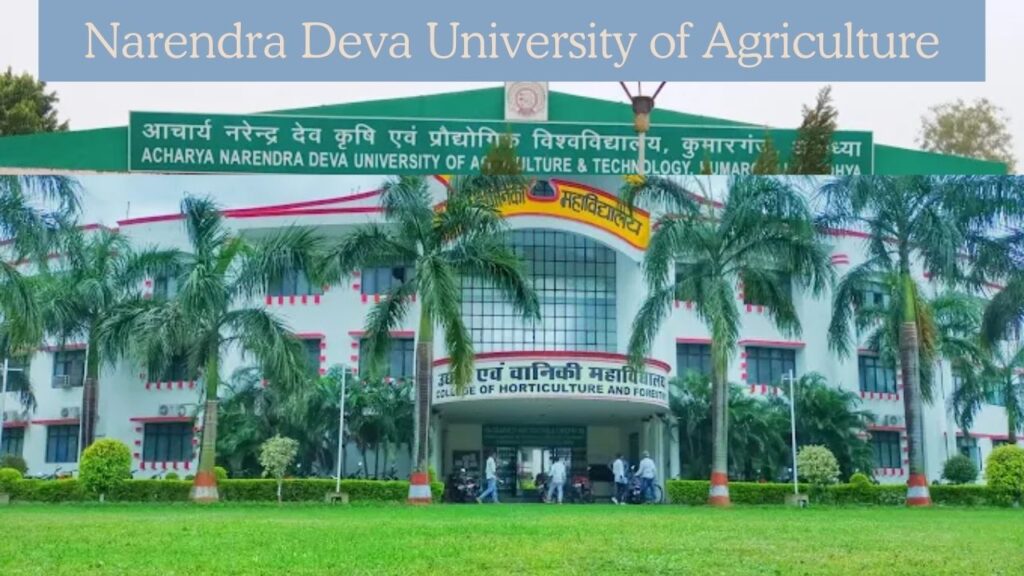
3. NDUAT — Narendra Deva University of Agriculture 

The NDUAT is an agricultural university, It focuses primarily on horticulture and crop science. It is a government institution in Ayodhya and provides good quality education at low cost.​

Narendra Deva University of Agriculture 

Courses available: B.Sc. (Hons) in Agriculture, B.Tech specialisations, M.Sc. courses in B.V.Sc. & A.H. (Veterinary), as well as B.F.Sc. (Forestry).​

Fees: The B.Sc. (Hons.) Agriculture course fee is around ₹1.05 lakhs for 4 years, while B.Tech fees range between ₹1.64-1.70 lakhs. 

Admissions: The minimum qualification is 10+2 with 50% marks in the PCB/PCM group of subjects. Admission is based on UPCATET entrance examination and then counseling on merit.​

Placement & Career Prospects: The candidates who graduated have a placement with an average package of ₹3 LPA in both private and government sectors. 

4. Sardar Vallabhbhai Patel Agriculture University  

SVPUAT is the best university which is located in Meerut, making it easy for students. With all the government funding support, SVPUAT is known for its research on crop improvement and agriculture mechanization.

Fees: The fees for the whole course in AY is around ₹45,000 which is one of the cheapest in the state.

Placement: The strong ties with agribusiness companies, research institutes and government agencies enable graduates to obtain good placements. 

5. Teerthanker Mahaveer University (TMU), Moradabad

TMU is one of the best private universities in uttar pradesh with world class infrastructure and industry oriented syllabus.​

Teerthanker Mahaveer University

Course Offered: B.Sc. Agriculture, M.Sc. Agriculture courses based on ICAR norms.​

Fees details: The total duration of B.Sc. (Hons. ) Agriculture at TMU is 4 years The fees for B.Sc. (Hons.) The duration of B.Sc Agriculture is 3 years and for M.Sc. Agriculture 2 years. The tuition fee is Rs 45,000 per semester for MSc Agronomy. 

Facilities: There are world-class labs, practical training, and strong linkages with the industry, in the university. 

Understanding the UPCATET Entrance Exam

Most of the government agricultural universities in Uttar Pradesh take their admissions via UPCATET(Uttar Pradesh Combined Agriculture and Technology Entrance Test). 

Here’s what you need to know:​

Exam Details: The exam is held every year in offline mode by the universities. For UG courses, the exam is generally conducted in June. 

Eligibility: 10+2 passed students having science subject (PCM, PCB or with Agriculture subject) with a minimum of 50% marks are eligible to apply. There is a benefit for reserved category students, they can get marks relaxation up to 5%.​

Exam Pattern: The UPCATET contains 200 questions from general knowledge, agriculture science, mathematics, and English. The examination will last for 3 hours.​

Age Limit: Applicants must be aged between 16-22 years for UG courses at the time of admission. 

Read More:- ITI Admission Fees in Government College: Complete Fee Structure Guide

Course Overview

The first years of agriculture in UP colleges are generally the basic courses in crop production, soil science, plant pathology, entomology and agricultural economics. Students specialize as well, choosing from such options as horticulture, seed technology, agricultural extension, agricultural engineering. 

A number of courses have fieldwork components and the Rural Agricultural Work Experience (RAWE) allows students to work with farmers as they confront challenges of farming in the field.  

Career Growth & Salary Package 

There are many opportunities for the graduates of agriculture. For the freshers agriculture college students —- the packages will be near about ₹20,000-35,000 per month for job profiles like agricultural assistant and farm supervisor etc in the entry level The amount varies with the university from which students have passed. 

Professionals at an intermediate level with 2-3 years of experience can earn around ₹40,000-60,000 per month. The salary of Agriculture Officer or Agriculture Development Officer in the government lies between 35,000 – 60,000 Rs per month. 

Conclusion

Selecting an agriculture college in Uttar Pradesh is all about shaping the future of India. Be it a renowned government college like CSAUAT or a up-to-the-minute private university like SHUATS, you will find a route that leads you both with practical experience in the real world of life and a theoretical academic purity. 

With manageable fees, quality faculty, research opportunities and robust placements, the agriculture colleges in UP prove to be the best when it comes to anyone with a zeal and passion to bring a change in the agriculture scenario of India. 

SBI Clerk Recruitment 2025 Out – 5000+ Vacancies! Apply Now Before Last Date

SBI Clerk Recruitment 2025

The SBI Clerk Recruitment 2025 is started as it was released officially on the SBI website. You can check the notification for the entire process details of the recruitment. The examination is expected to happen on 20th September 2025, if you want to apply for this post then fill the form before the closing date. 

Short Details for SBI Clerk Recruitment 2025

Post NameClerk
OrganizationState Bank of India
Vacancy6589
Exam ModeOnline
Recruitment ProcessPrelims, Mains, Language Proficiency Test
SalaryRs. 46,000 
Official WebsiteClick Here

Key Dates for SBI Clerk Recruitment 2025

Notification Release Date5th/August/2025
Application Starts On6/ August/2025
Application Ends On26/August/2025
Exam Date (prelims)20–28 September 2025 (expected)
Exam Date (mains)15–16 November 2025 (expected)

Eligibility Criteria for SBI Clerk Recruitment 2025

Education: Candidates must have a valid graduation degree from a recognized university or college. Final year students can also apply but they must have proof of the passed graduation exam at the time of selection.

Age Limit20 to 28 years
Age Relaxation
OBC/EWS3 years
SC/ST5 years
Disabled Gen10 years
Disabled OBC13 years
Disabled SC/ST15 years
Widowed/Divorced females7 years

Also Read: IBPS PO vs SBI PO Which Is Better? Full Comparison 2025

How to Apply Online?

  1. You need to visit the official website of the Bank mentioned in the article.
  2. Click on the recruitment for SBI clerk 2025
  3. First register yourself with your name and phone number then fill out the entire application.
  4. Enter the valid details in the application form.
  5. Attach the documents with the application to click on submit
  6. Once the application is done, you can download its copy on your device.
Important Links
Download NotificationClick Here
Apply OnlineClick Here
Official WebsiteClick Here

Switching Jobs? Don’t Ignore Your EPF, NPS, and Mutual Fund Investments 

Jobs

Your resignation letter is signed, the new offer is accepted, and you’re ready for switching Jobs but what happens to the EPF account and should the new company’s NPS enrollment change anything about how you’re already investing through mutual funds? Don’t Ignore your EPF, NPS and Mutual Fund which most people already are doing.

The EPF vs NPS vs mutual funds decision isn’t really one choice — it’s three separate accounts with three different rules, and a job switch is exactly the moment most people either transfer things correctly or lose track of money they’ve already earned.

What Is EPF, NPS, and Mutual Funds

EPF — 8.25% for FY 2025-26, third year running at that rate, govt-backed, EEE (contribution, interest, withdrawal all tax-free if you cross 5 years’ continuous service). Mandatory for salaried staff at covered establishments; you don’t really “choose” this one, you’re already in it.

NPS — Market-linked, mix of equity/debt/govt bonds you can allocate; extra ₹50,000 deduction under 80CCD(1B) on top of the 80C limit. At exit, minimum 40% of the corpus must go into an annuity — you don’t get the whole pot in cash, and annuity payout rates in India have historically been mediocre (5–6% range).

Mutual funds — No lock-in except ELSS (3 years); LTCG/STCG taxed, no EEE treatment. Best long-run equity return potential of the three, but zero forced discipline — nothing stops you from redeeming during a panic.

Don’t Ignore Your EPF, NPS, and Mutual Funds After Switching Job

Your EPF doesn’t “carry over” automatically. A lot of people assume EPF just follows them to the new job. It doesn’t — not unless you actually transfer it.

When you leave a company, your EPF account under that employer becomes inactive. Your new employer opens a fresh account. If you don’t link the two using your UAN (Universal Account Number), you end up with multiple EPF accounts scattered across your career. Each one earns interest for a while, but an account that stays inactive for 36 months stops earning interest altogether.

How To Set Up Your EPF Account After Job Switch

  • Use the “One Employee One EPF Account” (OEEOA) transfer request on the EPFO portal, or let your new employer initiate it.
  • Don’t withdraw your EPF just because it feels like “extra cash” during the job switch. Withdrawing before 5 years of continuous service makes it taxable, and you lose out on decades of compounding.
  • Check your UAN is correctly linked to Aadhaar and your new employer’s establishment ID — half of all transfer delays come from mismatched KYC details.

The instinct to cash out is understandable when you’re between Jobs and expenses are piling up. But EPF is one of the few instruments giving you a stable, tax-free return over the long run. Treat withdrawal as a last resort, not a bonus.

Read More 👉 Your Credit Score Ignores 90% of Your Financial Life — What Your First Credit Card Changes 

Check Your NPS Before Leaving the Company

Your NPS account isn’t tied to your employer at all. It’s tied to you, through your PRAN (Permanent Retirement Account Number). So technically, nothing needs to be “transferred.”

But there’s a catch. If your NPS contribution was happening through your employer under the corporate NPS model, that contribution stops the day you resign. Your new employer may or may not offer an NPS benefit. If they don’t, your account doesn’t close but it goes silent unless you start contributing on your own through the eNPS platform or a POP (Point of Presence).

What to check:

  • Confirm your new employer’s NPS deduction is active and linked to your existing PRAN — don’t let them create a second one by mistake.
  • If your new company doesn’t offer NPS, decide if you want to keep contributing voluntarily. Many people simply let it sit, which defeats the purpose of consistent, long-term retirement investing.
  • Update your bank and nominee details after the switch — this is the most commonly skipped step.

NPS rewards discipline more than any other retirement product because of how compounding and low fund management costs stack up over 20-30 years. A gap of even a couple of years in contributions has a real, measurable impact on your final corpus.

Mutual funds: the SIPs nobody remembers to check

Job switches usually come with a change in salary account, and that’s where mutual fund SIPs quietly break. If your SIP auto-debit was linked to your old salary account and you close that account (or stop maintaining the minimum balance), your SIP simply fails. Most people don’t notice for months — until they check their portfolio and realize three or four SIP cycles never went through.

What to do immediately after switching:

Re-link your SIP mandates to your new primary bank account, or keep enough balance in the old one until the transition is smooth.

Review your asset allocation. A new job often means a new salary, new expenses, maybe new financial goals (relocation, higher rent, a shorter or longer commute cost). Your SIP amounts should reflect your current life, not your old one.

If you got a signing bonus or relocation allowance, resist the urge to let it sit in a savings account. Even a lump sum top-up into an existing fund puts that money to work instead of losing value to inflation.

What Happens If You Neglect These Procedures

None of this is complicated. It’s just easy to postpone because nothing about it feels urgent in the middle of a job change. But delayed EPF transfers lose interest. Paused NPS contributions lose compounding years you can’t get back. Broken SIPs mean missed market cycles.

A Jobs switch is one of the few moments where you’re forced to look at your entire financial setup at once — new salary, new perks, new expenses. Use that moment. Spend one weekend afternoon logging into EPFO, checking your PRAN, and confirming your SIPs are active. It’s boring, unglamorous work. It’s also the difference between a retirement corpus that actually reflects your career and one that has quiet, unexplained gaps in it.

Your new job deserves your excitement. Your old investments deserve five minutes of your attention before you move on.

Read More 👉 Collateral vs No Collateral Loan Amount Where Collateral Starts Making Financial Sense

Conclusion

Switching Jobs is exciting but don’t ignore your EPF, NPS, and mutual funds investment as it is a chance to reset your financial checklist. Your EPF needs to be transferred, your NPS needs to stay linked to your PRAN, and your mutual fund SIPs need to keep running without interruption.

You don’t have to choose between EPF vs NPS vs mutual funds, understanding the role each plays in your long-term financial plan is important. EPF provides retirement stability, NPS adds a dedicated retirement investment option, while mutual funds offer greater flexibility and growth potential.

Business Ideas for Students With Zero Investment — Easy Startup Guide

Business Ideas

Your semester fees just went out, your parents already transferred money twice this month, and asking again feels wrong. Meanwhile, half your hostel WhatsApp group is talking about someone in third year who’s making pocket money reselling kurtis on Instagram, and another guy is tutoring juniors for ₹500 an hour between classes. You’ve got a laptop, a phone, and more free time than you think — what you don’t have is capital. That’s fine, because none of the Business Ideas for students with zero investment below need any.

It’s a practical rundown of what students in India are actually doing right now to earn without touching their savings or taking a loan — plus how to do it without your attendance or your grades taking the hit.

Why Students Need These Business Ideas

Your parents are already paying the education cost in lakhs. Tuition, hostel fees, textbooks, and the occasional weekend trip are climbing faster than your father’s income. You thought of eating maggi at dinner to save the money but it won’t help. Customer service jobs or fixed shifts at retail shops pay the working hours so it affects your studies and classes. These Business Ideas for students are flexible, even if you start small, you can keep earning through referrals, repeat orders and content that stays active while you’re busy in exams. 

There’s a second reason that matters just as much: what you build now becomes proof of work later. A recruiter reading “ran a 200-follower food page that landed three restaurant collaborations” or “sold ₹40,000 worth of handmade jewellery on Instagram over one semester” is reading initiative, sales sense, and follow-through — things a transcript can’t show. 

Freelance platforms like Fiverr and Upwork, and reselling apps like Meesho, have made the entry point for all of this genuinely free; you’re not renting a shop or buying inventory, you’re renting your own time.

How to Manage a Startup With Your Studies?

The honest risk with any student business is letting it eat into exam prep. A few ground rules keep that from happening:

  1. Block fixed hours, not “free time.” “I’ll work on it when I’m free” usually means never. Pick two or three specific slots a week — say, 7–9 PM on Tuesdays and Thursdays — and treat them like a lab session you can’t skip.
  2. Start with one product or one client, not five. Trying to tutor, resell, and run a YouTube channel in the same month usually means all three stay half-finished. Pick one, get it earning something small and consistent, then add the next.
  3. Use what your campus already gives you for free. Wi-Fi, a decent camera on a hostel-mate’s phone, a common room for shoots, a WhatsApp broadcast list of 60 classmates — that’s most of the “startup cost” covered before you spend a rupee.
  4. Protect exam weeks on purpose. Pause client work or batch your content a week in advance before internals and end-sems. A business that costs you a backlog isn’t worth running.
  5. Treat semester breaks as your test lab. Two months without lectures is the best window to try an idea at full speed and see if it’s worth continuing during term time, or if it was only ever a break-time project.

Read More👉 Best Laptops for Coding and Programming: Top Picks for Every Budget

Business Ideas for Students With Zero Investment

Each of these can be started with a phone, an internet connection, and whatever skill or spare time you already have. No inventory to buy, no shop to rent.

1. Tutoring & Trainer

If you’re good at a subject, a language, or even a sport, someone younger is struggling with exactly that right now. Offline, this means tutoring school kids in your neighbourhood or juniors in your own course during exam season. 

Online, platforms like Vedantu, Superprof, and Unacademy let you list yourself as a subject tutor without paying a listing fee, and you can also just post in your college’s WhatsApp/Telegram groups. Beyond academics, “trainer” covers fitness coaching, yoga sessions, or teaching a musical instrument over video call — anything you already know how to do.

2. Reselling Products

Reselling apps let you sell fashion, home, and lifestyle products through your own WhatsApp and Instagram without holding stock — the supplier ships directly to the buyer. Meesho is the platform most Indian resellers currently use for this. You share a product link, add your margin, and the platform handles logistics. It’s genuinely zero-investment because you never buy stock upfront. You can purchase for yourself and make review videos for Youtube — a content idea that helps your channel monetize and receive more brand promotions.

3. Handmade & Crafted Items

If you make jewellery, resin art, candles, crochet pieces, or hand-painted items, you already have a product — you just need a shopfront. Instagram works as a free storefront on its own; a basic Shopify store is an option once orders pick up, though Shopify does charge a subscription once your free trial ends, so weigh that against your order volume first. 

College fests and flea markets are also underrated distribution: a single fest stall can outsell a month of Instagram posts because people can touch the product before buying.

4. Local Influencer

You don’t need lakhs of followers to start earning as a food, travel, or campus-news page — brands doing local marketing often care more about engagement rate than follower count. 

A food page covering canteens and local eateries near campus, a travel page documenting budget weekend trips, or a campus-news account covering fests and placements can all start picking up small paid collaborations once the page has a real, active audience — even a few thousand followers.

5. Share Your Skills on YouTube

Teaching what you know on camera works because the content keeps earning views long after you upload it. Coding walkthroughs, recipe videos, DIY room-decor tutorials, study-with-me sessions, or a “learn Spanish in 10 minutes” series are all formats students are already running successfully. 

YouTube’s Partner Programme requires a watch-hour and subscriber threshold before ad revenue kicks in, so early on this is more about building an audience and a portfolio than instant income — brand deals usually arrive before AdSense money does.

6. Graphic Design

If you can put together a clean logo, an Instagram carousel, or a poster, small businesses and even fellow students will pay for it — most don’t have an in-house designer. Canva’s free tier is enough to start; Canva Pro is worth the (still low) cost only once you have paying clients. 

Fiverr is the easiest place to list design gigs with zero setup cost. Print-on-demand — designing T-shirts, mugs, or phone cases that a platform like Redbubble prints and ships only when someone orders, is the same skill applied to a physical product, again with no inventory risk.

7. Social Media Management and Content Writing

Small businesses — a local salon, a café, a tuition centre — often know they need Instagram content but don’t have time to make it. Managing 2–3 such accounts for a monthly fee is realistic freelance work you can do from a hostel room. 

Content writing runs in parallel: blogs, product descriptions, and SEO articles are in constant demand, and platforms like Upwork and Contentmart are common entry points for beginners. If you’d rather build something of your own instead of freelancing for others, a niche newsletter or blog you grow yourself can eventually monetise through ads or sponsorships too.

Read More👉 How to Apply for a Student Loan to Get a Higher Education & Make Career

8. Repairing Mobiles and Laptops

Every hostel has someone with a cracked screen, a dead battery, or a laptop that won’t boot, and most students don’t want to make a trip to a service centre for something small. If you’re comfortable with basic hardware fixes and software troubleshooting — clearing malware, reinstalling an OS, replacing a battery — you can build a reputation purely through word of mouth in your own hostel block. This one scales slowly but has almost no competition on campus.

9. Making/Selling Notes, and Reselling Old Books

Well-organised, exam-focused notes are worth real money to juniors who’d rather buy clarity than make it themselves. Selling PDF notes or a compiled formula sheet through your class WhatsApp group costs you nothing but the time you’d have spent making them for yourself anyway. 

The same logic applies to old textbooks and reference books gathering dust after your exams — sell them directly to incoming juniors or through campus resale groups instead of letting them sit unused.

10. Tiffin or Food Delivery on Campus

Hostel food gets old fast, and a home-style tiffin service run out of your own kitchen (or a family member’s) fills a real gap — this works especially well if you live near campus and can cook, or partner with someone who does. 

Start with a small WhatsApp order list for your block before expanding, and be upfront about your kitchen’s hygiene standards since that’s the first thing customers will ask about.

11. Dropshipping Business

Dropshipping lets you run an online store — usually on Shopify where a supplier ships products directly to your customer, so you never hold stock. It’s worth being honest about one thing here: while there’s no inventory cost, most dropshipping stores don’t get real traffic without some ad spend, so “zero investment” mostly holds if you’re driving traffic organically through social media rather than paid ads, at least until the store proves itself.

12. Photography

If you already have a decent phone camera or access to a friend’s DSLR, campus fests, birthdays, and small local events are a steady source of paid photography work that needs no equipment purchase to start. Portfolio-building is the real first step — shoot a few events for free or cheap, post the best shots, and let those bookings lead to paid ones.

13. Audiobooks and Dubbing

If you have a clear speaking voice, platforms built for Indian-language audio content — Kuku FM and Pocket FM among them — regularly look for narrators and voice talent, and Audible’s ACX opens up English narration and dubbing work globally. This is genuinely zero-cost to start — a quiet room and a phone mic are enough for a demo reel.

You can use this skill to upload on Youtube without using copyright content and earn when thousands of people listen to it.

Read More👉 Best Student Loans for College Students

14. Creating AI Agents

This is the newest idea on the list and the one moving fastest. No-code automation tools — Zapier, Make, and n8n among them — let you build simple AI agents and chatbots (a WhatsApp order-taking bot for a local shop, an FAQ agent for a small business website) without writing production code. 

Local businesses that can’t afford a developer are a realistic first client base, and Fiverr/Upwork already have a growing “build me an AI agent” category. Because this space is changing month to month, treat any specific tool or pricing claim here as a starting point to verify, not a fixed fact.

15. Tour Coach

If you know your city well — the food streets, the history, the spots tourists never find on Google — you can run informal walking tours for other students, exchange-programme visitors, or tourists passing through. 

This starts as pure word-of-mouth and a shared Google Form for bookings; no licence or investment is needed for small informal group walks, though it’s worth checking your city’s local rules if you plan to scale it into a formal, paid business.

How to Choose One Business Option for Yourself

With fifteen options on the table, picking one comes down to three honest questions:

What do you already do without being asked? If you’re the one editing everyone’s assignment for grammar, that’s writing or content work. If you’re the one people ask to fix their laptop, that’s repair. The idea that fits fastest is usually the one closest to a habit you already have.

How many hours can you actually spare each week? Tutoring and freelance writing can run for 3–4 hours weekly. A tiffin service or reselling business needs closer to daily attention. Be honest about your semester’s course load before committing to something time-heavy.

Does your campus or city actually have demand for it? A tiffin service needs hungry hostel students nearby. A tour-coach idea needs a city with something to show. Match the idea to where you actually are, not to what worked for someone in a different city’s Instagram reel.

If two ideas still feel equally right, run both for two weeks each during a low-pressure period and let actual results — not your gut — make the call.

Read More 👉 Best Noise-Cancelling Headphones for Online Classes and Mock Tests 

Conclusion

You don’t need capital to start earning as a student — you need one skill, a few free hours a week, and the willingness to start small enough that a bad exam week doesn’t sink the whole thing. Pick the one idea from this list of “Business Ideas for students” that matches something you’re already good at, give it thirty days of consistent effort before judging it, and treat the first version as a test rather than a final plan. 

Most student businesses that actually last didn’t start as a five-year vision — they started as someone testing whether people would pay for something they were already doing for free.


DECE-LE Admission Form 2026: Apply Online, Eligibility, Exam Date & Full Details

DECE-LE Admission Form 2026

If any student of Bihar is eager to get admission to the polytechnic colleges from second year by lateral mode, DECE-LE Admission Form 2026 is the channel for them through which they can fulfill their dreams. The Bihar Combined Entrance Competitive Examination Board (BCECEB) offers an opportunity to eligible candidates to take a leap of faith into the second year of the diploma engineering courses in various polytechnic colleges of the state of Bihar.

Be it a fresh 12th pass with science subject or a 10th pass ITI graduate, you bet this exam will be the game changer in your technical education. So, here’s going to have everything you need to know about from filling out that crucial application form to putting your worrying hat away and marking your calendar with key dates.  

The Application Window is Open

Excitement grows as DECE-LE Admission Form 2026 application process is live now from 20th March 2026. If you’re reading this and you still haven’t applied, no panic — but yes, do hurry. The last Date to Apply Online is 23-04-2026, so you have a good amount of time to apply.

Here is something practical to remember: you have until the 23rd to file your form, but you do have an extra day to make your payment The deadline for payment is April 24, 2026. Life happens and sometimes we let deadlines slip by a whisker. BCECEB is aware of this and that’s why they have announced the application correction window from 25th to 26th April 2026. This is your little buffer — in case you made a typo in your name or your personal details or if you uploaded the wrong document, two days later is when you can fix that stuff, no questions asked. 

The fee to apply is ₹2,200 for all categories: General, BC, EBC, SC, ST, PD candidates. Equal fees in all categories is reflective of the equal opportunity principle the board wants to convey. You can pay using various online methods including credit card, debit card, net banking or UPI. No more waiting in never-ending bank queues or stressing over demand drafts. 

Who Can Apply?

Route 1: The 12th Grade Route

You just need to complete the 12th with relevant subjects. The board also allows an unexpectedly wide range of subjects Physics, Mathematics, Chemistry, Computer Science, Electronics, IT (Information Technology), Biology, Informatics Practices, Bio technology, Technical Vocational subjects, Agriculture, Engineering Graphics, Business Studies or Entrepreneurship. This broad-based philosophy reflects an understanding that engineering potential can be nurtured through different academic paths and not just the conventional PCM (Physics-Chemistry-Math) stream. 

Pathway 2: Through the ITI Route

Have you passed 10th standard and then did a 2 year ITI course? We would love to have you. This route recognizes the hands on training that an ITI student gets and provides them with a formalized pathway to progress into diploma engineering courses. 

Age is Just a Number

There is no age limit for the DECE-LE Admission Form 2026 entrance exam. You’re welcome, whether you’re a seasoned professional returning to school or a fresh out of high school eighteen year old. 

The board also said that adequate bridge courses in maths, physics and engineering drawing will be provided to students of all streams by the affiliating body. It is to allow for all who take the diploma, no matter what their pre-entry academic background, will be more or less (academically) the same.  

Key Dates for DECE-LE Admission Form 2026

EventDate
Application Start Date20/March/2026
Last Date to Apply23/April/2026
Fee Payment Deadline24/April/2026
Application Correction Window25—26/April/2026
Admit Card Release15/May/2026
Exam Date24/May/2026

Print and read all the information on your Admit card in advance of the examination. The admit cards were released on 15/May/2026. If the suggested exam date of 24/May/2026 is finalized, then that will leave about two months to study. 

Step-by-Step Guide to Fill the DECE-LE Admission Form 2026

Although the online application process at official website is simple enough, a lot of us do get frustrated when using government websites but is what it is. Here’s how to breeze through it:

Step 1: Registration

Register using a valid email ID and mobile number. That information will be your lifeline going forward. Use an email address that you check regularly and a phone number that is not going to change over the next couple of months. Once registered, these cannot be changed.

Step 2: Fill in Your Details

Provide false ID proofs and other details, educational qualifications, contact information, etc. Upload your photograph, signature and thumb impression as per the instructions given that it relates to official notice. 

Step 3: Review and Submit

This is your final opportunity to correct mistakes before the form is sent to the system. So review it carefully.

Step 4: Pay the Fee

Make the payment of ₹2,200 through any online mode which you find convenient. Retain the proof of payment – don’t just trust email confirmations.

Step 5: Download Confirmation

Post your successful submission and fee payment, you may download and take a printout of the Confirmation Page. Keep several copies. You”ll need it all along your admission trip. 

Read More:- Your Ultimate Guide to Apply for the UP B.Ed JEE 2026 Online Form

The Next Step After Submitting the Application

Use the time to your advantage to get ready for the test. The DECE-LE Admission Form 2026 test is held offline in pen and paper mode and the duration of the test is 2 hours and 15 minutes. The question paper consists of 150 objective questions from Physics, Chemistry and Mathematics. 

Old question papers are the ultimate resource to make preparation easier. They give you an idea about the examination pattern, difficulty level and how to manage the time. Various educational portals provide them for practice.

Answer keys will be released by the board after examination, followed by results in the form of rank cards. Your rank is what positions you for counselling and seat allotment. 

The process goes on with: 

  • Registration, 
  • Choice filling, 
  • Choice locking, 
  • Seat allotment, 
  • Document verification 
  • And finally reporting to your allotted college.

Conclusion

DECE-LE Admission Form 2026 is not just any other entrance exam- it is a stepping stone from your current credentials to your engineering dreams. For these nursing students around Bihar, this exam is chance, light, and the promise of a technical career.

When you go through the process, know that thousands of students are pacing up and down this floor. If you feel stumped, ask for help— from teachers, successful seniors, or the official BCECEB helpdesk. The candidates also have the option to contact the department in case of any queries.

Scroll to Top