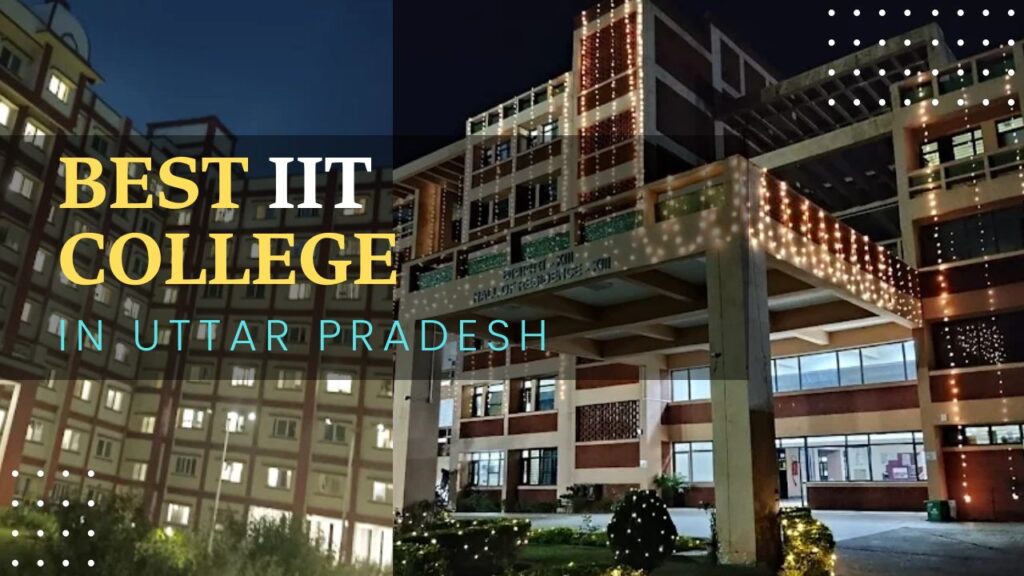
Best IIT College in Uttar Pradesh – Complete Ranking & Admission Guide

Best IIT College in Uttar Pradesh

Selecting the Best IIT Colleges in Uttar Pradesh is the largest challenge to face any engineering aspirant. The state has only two IITs – IIT Kanpur and IIT (BHU) Varanasi – but its institutions have perennially churned out India’s top engineers, researchers, innovators and global leaders. The two colleges have excellent reputations on both national and international scales, world-class faculties, state-of-the-art labs, and one of the best placement records in the nation.

Whether you’re shooting for a top-300 JEE Advanced rank or making your way to a legacy-rich IIT with great future prospects, this guidance narrates rankings, fees, application process, placements and career outcomes, helping you make a smart and informed choice. So, let’s take a look at the top engineering colleges in Uttar Pradesh. 

IIT Kanpur: The Engineering Powerhouse

Founded in 1959, IIT Kanpur is now the best engineering school in UP. Ranked #4 in NIRF Engineering Rankings 2025, It always manages to be among the best universities making it as top engineering schools in India. The institute provides a high quality of education with its sprawling 1037-acre campus in Kalyanpur, Kanpur. 
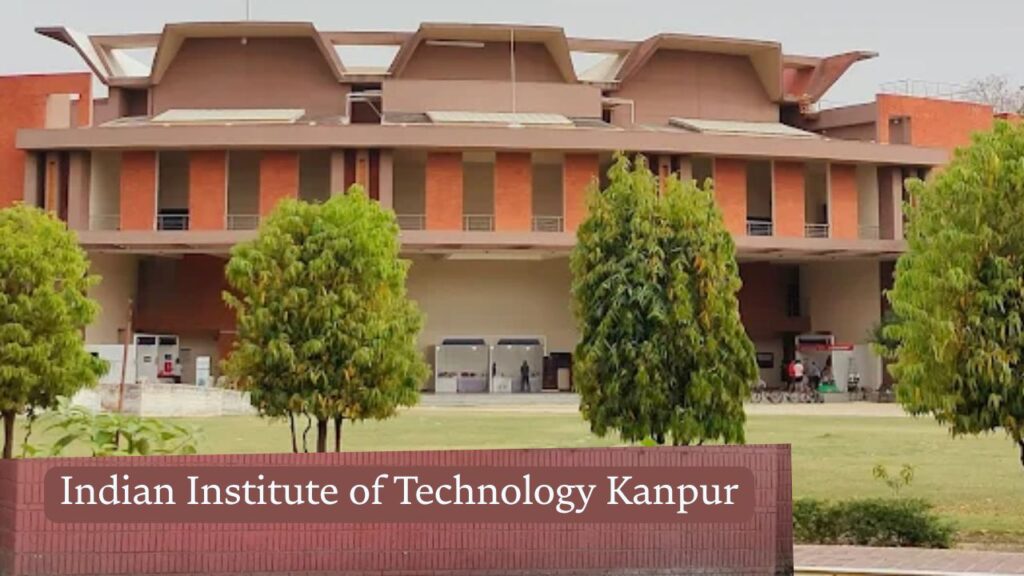
IIT Kanpur
Image credit: IIT Kanpur

Admission and Eligibility

The admissions in the undergraduate B.Tech courses of IIT Kanpur are through JEE Advanced only. The cutoff for cse (computer science and engineering) for the year 2025 was 271 in very high competitions. Along with your JEE Advanced score you should have a minimum of 75% in Class 12 (65% for SC/ST categories). The institute accepts GATE scores for some of the postgraduate programmes (depending on the discipline), as well as IIT JAM and CAT scores. 

Fee Structure 

B.Tech fees is ₹ 2.30 – 2.50 lakhs per year, and ₹ 20,000 to ₹ 30,000 a semester for mess and hostel. So, a higher secondary B.Tech Degree will cost around Rs 8.6 lakhs, which is reasonable for quality education. Apart from these the institute has several other scholarships such as Merit-cum-Means (MCM) Scholarship, schemes for SC/ST students etc. 

Career Prospects & Placements  

Placement record of IIT Kanpur is known to be excellent. The average package for the B.Tech graduates is between ₹ 26.90 and ₹ 30.86 LPA while the highest package is ₹ 1.9 crore per annum. Top recruiters such as Google, Microsoft, Amazon, Tata Steel etc. ensure good options in core and tech industries. 

IIT (BHU) Varanasi: The Heritage Institution

IIT (BHU) Varanasi was formed in 1919 to deliver vast education to new generations and is still doing it. Its one purpose is served well as everyone can see with their own eyes on the alumni network of IIT BHU. It is also grounded in a tradition of academic excellence spanning centuries, even now it actually tops on the edge and holds 10th position, according to NIRF Engineering Rankings 2025.
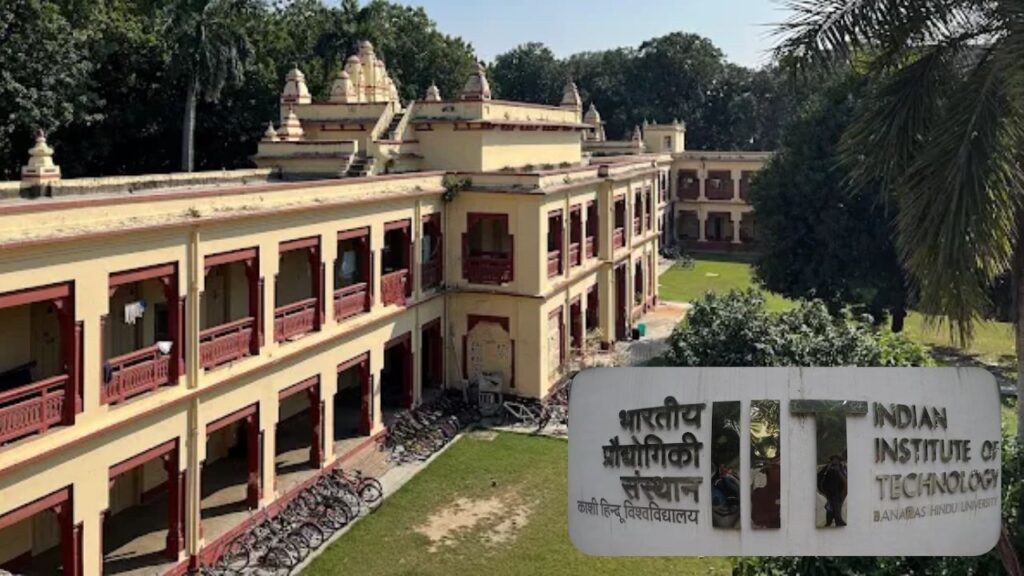
IIT (BHU) Varanasi
Image credit: BHU

Admissions Process & Eligibility Requirement

BHU conducts admissions through JEE Advanced as well, similar to IIT Kanpur. The closing rank for CSE in 2025 was around 2,500, however the cutoff is significantly lower. This means that if you take the JEE via BHU, you could get into a good IIT even if you don’t make a very high rank. For students of general category, minimum 75% is required in class 12 fulfilling the eligibility criteria. 

BHU B.Tech Fees

Banaras Hindu University B.Tech program fees range from 3.17 L to 8.51 L for full course, whereas tuition fee is in the range of 1,00,000 to 1,20,000 per semester and hostel fee ranges between 25,000 to 28,000. With this, it rates somewhere around or even less expensive than IIT Kanpur, depending on the branch. 

Career Prospects & Placements

BHU has no less amazing placement figures. The highest package is ₹1.68 crore per annum and the average package is ₹22.77 LPA. Over 80% of students were placed in 2024, and the CSE average lies within ₹25-₹28 LPA. Google, Qualcomm, Uber and Goldman Sachs are the top recruiters. 

Read More 👉 Bihar DElEd Entrance Result 2025 OUT: Check Marks, Rank & Admission Status

Making Your Choice

The selection is on the basis of your JEE Advanced score but both colleges are great for education. IIT Kanpur has a slightly better average package as well as branding if you fall under the top 300–400. Then, IIT (BHU) Varanasi is your best bet if your rank lies between 1,500 and 3,000. It combines legacy with excellent career outcomes. In both situations you are paying for the brightest engineering futures in India, twice. 

Comparison Between IIT BHU & IIT Kanpur

The top JEE advanced students looking for a slightly better average package and brand name in a tier 2 engineering college should go with IIT Kanpur. It has a good number of students with a rank below 500, as the the #4 ranking for NIRF along with the world class facilities attracts students from all over the country.

IIT BHU Varanasi is equally competitive and is a great choice, though it does have a lower ranking (#15). Owing to a much lower cutoff rank (~2,500 as compared to ~271 for CSE), a lot more students qualify for it and yet it boasts great placement stats. The history of the institution is over 100 years and that provides some historical prestige but that many applicants doesn’t value. 
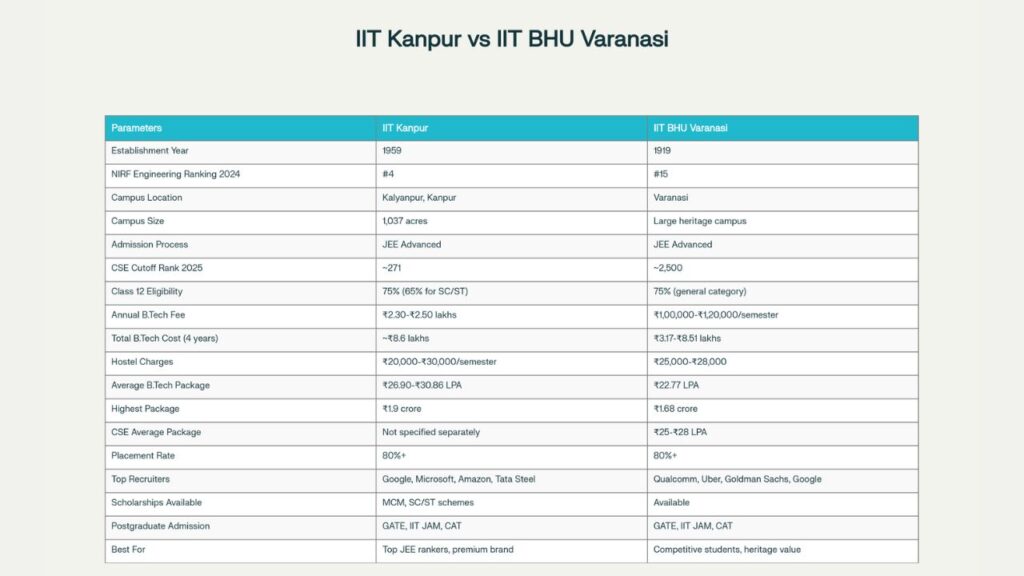
Comprehensive Comparison of IIT Kanpur and IIT BHU Varanasi

Both universities provide good scholarship opportunities, have good placement and see participation from best global companies. Your decision should be based on your JEE Advanced rank, finances, and if you place more value in brand (Kanpur) or accessibility + heritage (BHU Varanasi). 

Conclusion

These are the best IIT colleges in Uttar Pradesh which offer outstanding core academics, research, placements, and student life. If you are a high ranked aspirant and looking for an elite brand name with more research options and slightly higher average packages then IIT Kanpur is the clear winner.

But for hot IIT rank holders in the range of 1,500–3,000 and who want an IIT that combines tradition with bang for your bucks, a rock solid faculty and stellar placements year in and year out, IIT (BHU) Varanasi is the way to go. 

Whichever institution you opt for, both pave the way to brilliant careers, worldwide prospects and a life-changing four-year experience of engineering. 
Leave a Comment

Your email address will not be published. Required fields are marked *

Meet the Best GS Teacher for SSC CGL Who Can Skyrocket Your Scores

Starting to prepare for the SSC CGL exam to establish your career in the government job is the dream success in many student’s lives. But understanding how you can achieve this success among the lakh of students is important. Many students give up because it is hard to achieve high rank for post selection. There — Best GC Teacher for SSC CGL is needed to strategically prepare and cover every topic.

Many students make a mistake to take the General Studies section lightly and get doomed. This part is crucial in this exam to boost your final score. Unlike Math or Reasoning, GS covers many subjects —

  • History
  • Geography
  • Indian Polity
  • General Science
  • Economics’
  • Static GK 

So, let’s explore the Best GS teachers for SSC CGL exam, their unique styles and platforms.

Khan Sir

Khan Sir is an Indian educator who offers a wider range of courses through Youtube which makes 19 million subscribers within three years and is still consistently growing. He provides both offline and online coaching glasses with extensive coverage of core subjects. His general studies courses are designed for strategic preparation for competitive exams like SSC CGL. He motivates students through his lectures. He is using practical examples for simplifying the complex concepts of subjects including History (Ancient, Medieval, Modern), Geography (Physical, Indian, World), Polity (Indian Constitution), Economics, Science, and Current Affairs.  

The “GS Crash Course by Khan Sir & Team,” is basically designed for SSC CGL aspirants to understand more precisely concepts. Khan Global Studies offers test series, daily quizzes, sessions for solving doubts, previous year questions and a vast range of study material. 

Many students praised his teaching style and ability to explain every concept with real world examples which makes it easier to learn for students. KGS delivers high-quality education at an affordable price which makes it a well-equipped facility for rural students who are unable to join offline classes. 

Manikant sir (The Study IAS)

Manikant Singh is an experienced educator who offers a wider range of lectures which focuses on core subjects for competitive exams like SSC CGL. His strong fundamental pursuit of General Studies, especially History which is beneficial for the aspirants. The Study IAS offers both offline and online platforms for students to access all the available resources for the exam. 

Students are showing good response because of his teaching style to explain each concept with clarity through his experience. His strong potential to provide strategic requirements for the preparation of SSC CGL exam is helpful. 

Parmar Sir (Parmar SSC)

Parman sir is highly recommended by most of the former students who have appeared in SSC CGL exam. His experienced knowledge of General Studies is basically providing the core content that is relevant to this competitive exam. His teaching style is different and also offers a variety of courses and test series through Youtube channel and Parmar Academy. 

The course is specifically designed to cover subjects like Basic GK, History, Polity, Geography, and Science. His content is focused on strategic preparation by analyzing and solving previous year’s questions.  Students can learn every core topic in both languages (Hindi & English).

Amandeep Sharma 

Amandeep Sharma specializes in General Studies and provides online education though learning platforms like Unacademy and Testbook. He is also known for his teaching ability to make complex problems easily understandable for the students through previous year questions technique and explanation style. 

He has more than 5 years experience teaching over 100,000 students for many competitive exams, especially SSC CGL. Some of his lectures are also available on Youtube where students can start preparing for SSC CGL. 

Gaurav Kumar by Utkarsh

Gaurav Kumar is a General Studies educator who focuses on current affairs as well to provide every topic detailed explanation for SSC aspirants. He is providing online classes focused on topics such as history, geography, polity, static GK, and basic science, integrating them with current affairs. Ideal for students who want to cover every topic with deeper knowledge and relevant current events. 

His engaging style often uses storytelling, mnemonics, and unique examples to make learning more easier. Classes are both free & paid through Utkarsh Classes app and on youtube. 

Abhishek Suman by Careerwill

Abhishek Suman is an online educator with proficient knowledge of General Studies to prepare students for competitive exams like SSC CGL. His history lessons are not boring, this unique ability makes him the best history teacher. He covers variety of topics which comes in a question paper including Polity, Static GK, and modern and ancient history. 

Students who want to study with detailed explanations for each topic can consider taking his lessons. He is teaching on Careerwill and also prepares previous year questions for helping students to simplify the complex topics with a vast range of GK syllabus.

Smart Preparation Strategy and Time Management

You can’t just read every topic in GS, you need to prepare strategically. Just remember these factors while learning:

Weightage of the section: check previous year’s papers to analyze questions and which topic has covered up more. While Polity and Static GK has come more often and covers vast areas of the section.

Focus on Concepts: don’t just rote learning, understanding each concept will help remember for a long time.

Make Short Notes: Short notes, bullet points, and charts are helpful to remember and in quick revision.

Daily revision: Take 20-40 minutes extra for revising everything you have studied. 

PYQ’s Practice: practice makes a man perfect, applies on the competitive exam, solving previous year questions will help you analyze how much you understand the topic.

Time Management: you have to divide your time accordingly for all topics and give extra time to your weak concepts.

TeacherSpecialty SubjectTeaching StyleAssociated PlatformBest For
Khan SirGeneral Studies (All Subjects)Explains complex concepts with real-world examples.Khan Global Studies (KGS)Comprehensive preparation, conceptual clarity.
Manikant SirHistoryStrong conceptual focus, detailed lectures.The Study IASIn-depth historical knowledge.
Parmar SirGeneral KnowledgeExam-oriented, focus on previous year questions.Parmar SSC (YouTube & Academy)Quick and focused preparation.
Amandeep SharmaGeneral Studies, General SciencePYQ-based, simplifies complex topics.Unacademy, TestbookEasy understanding, exam-oriented clarity.
Gaurav KumarCurrent Affairs, Static GKEngaging style, uses mnemonics.Utkarsh ClassesDaily current affairs + static GK.
Abhishek SumanHistory, PolityDetailed and explanatory teaching.CareerwillIn-depth study of history and polity.

Conclusion

General Studies is an important section of SSC CGL exam paper which students have to prepare. But it’s hard to prepare without a mentor. These Best GS Teachers for SSC CGL are delivering each topic in detail with a unique way of teaching to help you beat the competition.

Leave a Comment

Your email address will not be published. Required fields are marked *

Bank PO vs SSC CGL: Which Offers Better Salary and Career Growth?

In India, the two powerful career paths in government jobs have always been in debate — Bank PO vs SSC CGL, both are highly competitive, prestigious, and give assurance for lifetime financial stability. Students aiming for a government job will probably get confused in one question – which one is better? By exploring both Bank PO and SSC CGL post details will help you make a decision, but make sure that your interest aligns with the job.

What is Bank PO?

A Bank PO is an entry-level job in the government banks. Candidates must clear the main exams including IBPS PO and SBI PO to get selected and complete the training and probation period to become Assistant Manager. 

What is SSC CGL?

SSC CGL is offering Group B and Group C posts in different central government departments. The recruitment process is conducted by Staff Selection Commission through exams for jobs in ministries, CBI, tax department and more.

Eligibility Criteria For a Bank PO & SSC CGL

It has some eligibility criteria, for this job candidate’s must match to this criteria:

The nationality of the candidate must be Indian. Candidates subjected to Nepal/Bhutan and Tibetan refugees who came before 1 january 1962 to Indian permanently are also eligible for this post. 

Candidates completed their graduation from a recognised university or college are eligible for a Bank PO job. Age limit must vary between 20 to 30 years, as per government rules age relaxation is given to reserved category. 

For SSC CGL, candidates must have a degree of graduation in any field and age must vary between 18 and 32 years old. 

Also Read: Best Online Coaching for Bank Exam

The Financial Showdown: Salary and Allowance

This is often the main point for the comparison in these two job posts because of their attractive salaries. Here is the detailed salary structure for your help in this decision.

Bank PO Salary

The entry-level job in various ministries is offering an attractive pay, especially in leading banks like the SBI or IBPS. The initial salary for an entry-level is around Rs. 48,480. It will become higher when you add allowance and perks. 

The total monthly salary will be around Rs 70,000 to Rs 85,000 for a new Bank PO. It also provide very generous perks of this job that includes:

Dearness Allowance: Due to inflation, regular adjustment in the basic pay will happen on the basis of your salary package. 

House Rent Allowance: Banks often provided House to PO, especially on relocations.

City Compensatory Allowance: Bank will provide compensation for higher cost of living in metro cities.

Medical Finances: For any health issues, you can get 100% medical coverage.

Low-Interest Loans: Bank PO can get the most beneficial offer of availability of personal, home, and car loans with lower interest.

Other allowances like travel can also provide you.

Also Read: IBPS PO vs SBI PO Which Is Better?

SSC CGL Salary

The SSC CGL salary varies upon the level -– 7th Pay Commission. But its salary is based on the specific post and Pay Level it falls under. Overall, Pay-Level includes the highest paying job is Assistant Audit Officer and Assistant Accounts Officer offers basic pay salary around Rs 47,600 which falls under the Pay Level 8. Posts like Inspector of Income Tax or Assistant Section Officer have a basic pay around Rs. 44,900 that falls into Pay Level 7. 

In-hand salary for a high-level SSC CGL post can range between Rs. 65,000 and Rs 70,000. It can go higher with the experience and post level that will reach around Rs. 75,000 to Rs 80,000 per month. The allowance pay also given to employee:

Dearness Allowance: Based on the percentage of the basic pay.

House Allowance: It is given to almost every SSC CGL employee according to the city, it gets higher for metro cities.

Transport Allowance and Other Allowance like leave travel concession, medical coverage are also given.

Career Growth and Promotions

Aspirants need to check growth opportunities, not just paycheck because now these two paths have different roads.

Bank PO Career Growth

Career growth is fast in the banking sector as it depends on the candidate’s performance and experience. A PO can aspire to become a Manager of the Bank’s branch by clearing internal exams. The promotion can be stepped up with hard work and dedication. Candidates can reach to the higher positions like Deputy General Manager within a few years of hard work. It’s proven that most of the managing directors in public sector banks started their career as Probationary Officer (PO).

The promotion hierarchy (lowest to higher positions) for a Bank PO is as follows:

  • Probationary Officer (Assistant Manager)
  • Deputy Manager
  • Manager
  • Chief Manager
  • Assistant General Manager
  • Deputy General Manager
  • General Manager

SSC CGL Career Growth

Central government jobs have slower career growth, the promotion is based on the years of commanding and departmental exams. It varies upon the department’s number of vacancies. An Income Tax Inspector can get their first promotion after 7-9 years experience. Job security and financial stability is guaranteed but rapid promotions are not as fast as the Banking sector. SSC CGL freshers will have to spend long years to reach the highest level position.

The promotion hierarchy for SSC CGL employee as (Inspector in a department)

  • Inspector
  • Income Tax Officer/Superintendent
  • Assistant Commissioner
  • Deputy Commissioner
  • Commissioner
FeatureBank PO (SBI/IBPS etc.)SSC CGL Officer (AAO/Income Tax/Excise/Other posts)
Job ProfileManagerial, customer-facing, target-drivenMostly administrative, desk-based, or inspection-focused
Starting Salary (in-hand)₹70k – ₹85k+ with attractive perks₹65k – ₹75k+ depending on post and location
Career GrowthVery fast, performance-based. Quick promotions possibleSlower, mostly seniority-based. Predictable but gradual
Work-Life BalanceLess balanced, long hours, high pressureGenerally good, fixed hours, comparatively stress-free
TransfersFrequent, including rural postingsLess frequent, relatively more stable
Ideal For…Ambitious, dynamic individuals aiming at fast career growthThose preferring stability, work-life balance and job security

How to Make the Right Choice?

No definite answer for this because it depends on the candidate’s personal perspective and life priorities.

If a candidate wants to thrive quickly and handle a target-driven environment can choose a Bank PO job. It offers rapid career growth and high income. When the priority is work-life balance and job security, you have to patiently wait for career growth. So, candidates who are willing to settle down with a desk-job in one place can choose the SSC CGL path.

Conclusion

It has always been a Bank PO vs SSC CGL because both offer respectable career paths and financial stability for entire life. This article will provide you with detailed information on the salary and career growth for both professional paths. It helps you to make the right decision for your career. The right choice will shape your life, so make it correct.

Leave a Comment

Your email address will not be published. Required fields are marked *

Time Management Tips for Students and Government Job Aspirants

Time Management Tips

The reality is that most people don’t have a problem with time. They have a problem with managing time. The Time Management Tips for students and government job aspirants is important. For instance, two students may have identical 24 hours, the same syllabus, and the same exam date — yet end up in completely different places on result day. It’s because almost always how they spend their hours. 

This guide analyses the time management principle that really applies for us Indians — students in school & college, competitive exam aspirants for SSC, RRB, UPSC, banking and state-level, entrance exam students aiming for IIT, NEET, or law entrances, and working professionals attempting to study after holding a full day at the office. The circumstances may vary, but the fundamental discipline is one and the same. 

Why Time Management Tips Actually Matters 

It’s not that they don’t know “time management is important,” it’s just that no one actually has time to do it, not that they need it any more than the rest of us do. For exam candidates in particular, bad time management means not only less revision. It has three very real and very specific costs. 

First, it makes your syllabus look bloated. A topic that should take roughly three weeks gets stretched out over two months, not because it’s difficult, but because you’re learning in fragmented, distracted sessions rather than in concentrated blocks. 

Second, it kills your mock test performance. Candidates who are poor at managing their prep time tend to be procrastinators and pick up the easy topics first and push the difficult topics towards the end, so that by the time mocks begin, half the syllabus feels like a stranger under exam pressure. 

Third, and this is the one no one talks about nearly enough, it destroys your confidence. When you’re always feeling “behind,” you begin to question your own competence, even though the real problem was never intelligence — it was planning. 

Effective time management is not a matter of finding more hours in the day. It’s realizing that you actually already have the time, you just need to make it work. 

Time Management Tips for Students

Students who are balancing regular academics, tuition and assignments along with personal life also need a system which is practical and not a strict timetable copied from a top scorer’s Instagram post. 

Start with a weekly map, not a daily one. Daily to-do lists come crashing down as soon as one thing goes wrong — a pop quiz, a family gathering, feeling too tired. A weekly perspective allows you to reschedule your responsibilities without thinking you are having a bad day. Block out any non-negotiable obligations (class time, work, sleeping) and then plan your study periods around those. 

Use the “two-subject rule” for evenings. Attempting to cover every topic every day tends to result in none of them being covered very well. Choose two topics each night and dive in, cycling through the week. Depth outperforms breadth in terms of real retention. 

Protect your first hour after school. Most students spend the golden hour after school on their phones scrolling “just for ten minutes” which ends up being ninety. That first hour, when the day’s lessons were still fresh, was the best time for revision — not for new topics. 

Treat sleep as part of your study plan, not separate from it. Sleep deprivation to “make more time” is the most common error students make, and it backfires almost every time. Retention falls off a cliff with poor sleep, so those extra two hours often result in less learning than one focused hour on a well-rested brain. 

Time Management Tips for Government Job and Recruitment Exam Preparation

Preparation for government exams — SSC CGL, SSC JE, RRB NTPC, RRB ALP, Agniveer, UPSSSC, banking exams, state PCS has its own trap: it has a huge, fixed syllabus that remains more or less unchanged every year, making it very easy to remain stuck in a “preparation phase” without feeling ever ready. 

Reverse-engineer your timeline from the exam date, not from the syllabus. Most aspirants begin by telling themselves “I’ll finish RC, quant, then GK” without even assessing if that speed is even sustainable till the exam. Count backwards instead: How many weeks are there until the exam, how many subjects do you have to learn, and how many practice tests do you want to do before the D-day. This one change detects date problems three months in advance rather than three weeks before the test. 

Separate “learning time” from “practice time” clearly. Many candidates confuse these two processes — theory reading and question practice in one session and slow themselves down in both. Assign some fixed duration blocks solely for concept learning, and some solely for solving past year papers & mocks in a timed environment. They develop different abilities.

Make a weekly slot for current affairs you gear towards a level, don’t squash it in as a bit of leftover time. For exams like ssc, rrb,state level recruitment exam current affairs/general awareness is often pushed to “whenever i find time to study”,which is usually never. Settle for one or two brief daily sessions instead of waiting for free moments that never come. 

Mock tests deserve a full time slot, not a rushed one. Scheduling simulation the real exam length is as important as doing the questions. Your practice test should honor that 90 minutes of pressure since it should help simulate the real exam (and the review afterward) — not just the solving. 

Time Management Tips for Entrance Exam Aspirants

Entrance exams such as JEE, NEET, CLAT, and CUET operate on a different time scale as compared to the recruitment exams – they meld board exam stress with competitive exam intensity, and that too, in the same academic year. 

Sync your school syllabus and entrance syllabus instead of running two separate tracks. An enormous portion of time is wasted due to students studying the same subject chapter twice — once for boards, and once for the entrance exam in entirely separate sittings. Studying the two simultaneously, at entrance-level depth from day one, is months ahead of the full prep cycle. 

Rotate subjects daily instead of exam-cramming one at a time. These exams cover more than one subject at a time, so you have to keep your mind warmed up in all of them and not just be sharp on one subject and rusty on the others. A steady rotation — even if uneven in the number of hours per subject, keeps all the subjects “alive” in your mind. 

Track mistakes, not just completed chapters. Sorting out what you have achieved in the syllabus feels productive, but it doesn’t tell you information about what is actually going wrong. Keep a list of mistakes you make again and again when doing practice questions — that list is your revision material that will be the most efficient in the last month. 

Read More 👉 Data Science vs AI: Which Career Is Better?  

Time Management Tips for Working Professionals Preparing Alongside a Job

This may be the most difficult version of the problem since the constraint is not motivation — it’s literally hours in the day. Working professional-level test such as a government exam or a career-switch entrance exam does not have the luxury of a 8-hour study day. 

Accept the 90-minute reality and plan around it. The majority of working people truly have only about 60 to 120 minutes of concentrated work time in a day, divided between early morning and late evening. Struggling against this reality by aiming for 5 hours a day is just setting yourself up for failure and guilt. Schedule for the attainable during a weekday, and save the heavy-duty work for weekends — full-length mocks, madly difficult topics, revision marathons. 

Use commute and break time for low-effort, high-repetition tasks. Formulas, vocabulary, current affairs and short revision notes can easily be crammed into a commute or a lunch break. Save your truly fresh, high-powered hours — typically in the morning for the subjects that actually demand thinking of the deep kind. 

Don’t try to “catch up” by sacrificing entire weekends repeatedly. Burnout for working professionals generally results from this very pattern: lean weekdays, and then trying to fit a week’s worth of goals into Saturday and Sunday. It lasts for a couple of weeks, then crumbles. A sustainable pace beats a heroic one that quits come month three.  

Tell your workplace and family what you’re doing, even loosely. Candidates who do not share details of their preparation for the exam generally end up with more distractions during their study sessions as no one with whom they dwell or live is aware that those hours are sacrosanct. A modest notice - “I study from 6 to 7:30 every day” – cuts interruptions more effectively than any planner or app could. 

The One Habit That Ties All of This Together

Across students, government exam aspirants, entrance candidates, and working professionals, the single most useful habit is the same: reviewing the week, not just planning it. Most people plan on Sunday and then never look back until the next Sunday. Spending fifteen minutes reviewing what actually got done versus what was planned and being honest about why the gap happened is what turns a time management system from a wishlist into something that actually works over months of preparation.

Time management Tips for exams was never really about finding more hours. Every aspirant, regardless of which exam they’re preparing for, is working for the same 24 hours as everyone else. What separates a good result from a missed one is usually not effort — it’s whether those hours were spent on the right things, at the right time, consistently enough to matter.

Conclusion

Time management tips for students and government job aspirants is important for sustaining consistency in preparation for SSC, UPSC, RRB, banking, work, or JEE, NEET exams. Begin with attainable goals in mind, focus on the most important things, check in on your progress each week, and then rest appropriately. Little bit of betterment you make up every day adds together over months of training. 

Leave a Comment

Your email address will not be published. Required fields are marked *

Top Private Medical Colleges in South India You Shouldn’t Miss in 2025

Top Private Medical Colleges in South India You Shouldn’t Miss in 2025 with best education, facilities, and placements

Most of the students prefer to study in private colleges because of the faculty support in education, practical training, and placement opportunities. If you have completed 12th with PCB, you must pursue a medical degree from the best colleges. So, I have listed some of the Top Private Medical Colleges in South India. 

If you are from South India and confused about the college for medical studies then this guide will help you select the one. Every student must clear NEET-UG before stepping into the medical field. It is the most common entrance exam for admission to colleges.

Top Private Medical Colleges in South India 

1. St. John’s Medical College

St. John’s Medical College: This private college is situated in Karnataka and is the oldest college. If you want to study in this reputed college then you should prepare for the entrance to take admission. It has a legacy of producing some of the finest medical professionals who serve both in India and abroad. The college is known for its value-based education, strong research backing, and vast hospital network.

Admission ProcessFee (General)Placement & Package
NEET-UG required; apply via Karnataka state counseling (KEA); seats under General + Management quotaApprox ₹6.28 lakhs/yearPlacements in St. John’s Hospital or through govt postings; avg. ₹7–10 LPA (PG); ₹20k–₹25k/month internship

2. Narayana Medical College

Narayana Medical College campus with integrated hospital facilities for advanced medical training

Narayana Medical College in Andhra Pradesh. If you are a citizen of this state, you can take admission here. It also has a flow of patients as it integrates college and hospital which helps students gain real-time clinical experience. It has one of the largest private teaching hospitals in the region and offers advanced training in medicine and surgery.

Admission ProcessFee (General)Fee (Management)Placement & Package
NEET-UG mandatory; apply via Dr. NTRUHS counseling portal; management quota for non-local students₹12.50 lakhs/year₹24+ lakhs/yearGood absorption into Narayana Hospital network; avg. ₹6–8 LPA after PG; ₹15k–₹20k/month internship

3. GSL Medical College, Rajahmundry

GSL Medical College, Rajahmundry campus with modern infrastructure and hospital facilities for medical students

GSL Medical College is best for those students who want a good education but at an affordable fee. The infrastructure is modern, and the hospital on campus sees a good variety of patients, allowing students to learn practically from early on.

Admission ProcessFee (General)Fee (Management)Placement & Package
NEET-UG, Dr. NTRUHS counseling; management seats at higher fees₹12 lakhs/year₹24 lakhs/yearAndhra hospitals/PG; Avg. ₹5–6 LPA after PG; ₹18k/month internship

Also Read : Best Nursing Colleges in Lucknow with Fees, Courses & Admission 2025

4. M.S. Ramaiah Medical College

M.S. Ramaiah Medical College campus with advanced medical training facilities and hospital support

M.S. Ramaiah Medical College is offering high class education and advanced practical training to the future doctors. It’s known for high academic standards, overall world collaboration, and a strong hospital for clinical training.

Admission ProcessFeePlacementAverage Package
NEET-UG qualification is a must, Seat allotment happens through KEA-CET and All-India counseling. NRI and management quota are available.₹10.9 lakhs for one year for general students ₹40+ lakhs for the Mgmt/NRI students.Students can choose to study for further medical courses and medical opportunities also happen in the college.The salary package depends on the skills and knowledge of the students. Average salary package is ₹8–12 LPA 

5. Kempegowda Institute of Medical Sciences

Kempegowda Institute of Medical Sciences campus with hospital facilities for practical medical training

KIMS is a well-established private college with a strong hospital setup. Students have got the opportunity for practical training. The institution is affordable compared to other top private options, making it a favorite for middle-income families.

Admission ProcessFeePlacementAverage Package
Students have to clear NEET-UG and apply via KEA counseling (Karnataka). Management quota also available₹7.1 lakhs per year (General), ₹35+ lakhs (Mgmt)Self hospital offers and other hospital offers are also given to the students.Students can have a lot of opportunities from this college and average package is around ₹5–8 LPA after PG; ₹20k/month during internship

6. Jubilee Mission Medical College

Jubilee Mission Medical College campus with ethical medical education and hospital training facilities

Jubilee Mission Medical College: Jubilee Mission is a church-run institution known for its ethical approach to medicine and patient care. It offers quality education with emphasis on hands-on training and moral values.

Admission ProcessFeePlacementAverage Package
NEET-UG is required  Apply through Kerala state counseling (CEE Kerala). Management and NRI quotas available₹7.5 lakhs for one yearIt vary upon the coursesHigh number of students pursue PG; some absorbed into church-run hospitalsStudents can get the salary package around ₹6–9 LPA (post-PG); ₹22k per month internship.

7. Amala Institute of Medical Sciences

Amala Institute of Medical Sciences campus with well-equipped hospital and peaceful learning environment

Amala Institute of Medical Sciences: Amala offers medical courses such as MD, MS, and MBBS for students to establish their career in the medical field. It offers students practical training opportunities in a hospital environment. It provides a peaceful learning environment and good exposure through its well-equipped hospital.

Admission ProcessFeePlacementAverage Package
NEET-UG is mandatory.Students can apply via CEE Kerala. Seats under general, management, and NRI quotas₹7.5 lakhs for one year Moderate placements, many opt for PG₹5–7 LPA; ₹18k–₹20k/month internship

Also Read : Medical vs Engineering: Which Career Will Make You More Successful in 2025

8. Christian Medical College (CMC)

Christian Medical College (CMC) campus with advanced healthcare training and research facilities

Christian Medical College (CMC): If you want to be a doctor in India’s best hospitals, this college provides excellent healthcare education and research. Although it’s a minority institution, it offers world-wide opportunities. With its top-notch education making it extremely hard to get into.

Admission ProcessFeePlacementAverage Package
NEET-UG required
Must clear CMC’s own selection criteria after NEET
Minority Christian candidates given preference
Approx ₹48,530/year (highly subsidized)Top placements in India and abroad₹10–15 LPA (PG level); internship ₹20–25k/month

9. SRM Medical College

SRM Medical College campus with modern infrastructure and diverse student community

SRM Medical College is best in providing world class education and training to the students for improving their medical skills. It has good hostel facilities and student diversity.

Admission ProcessFeePlacementAverage Package
Admission via NEET-UG
Apply through MCC AIQ or direct via SRM
NRI quota available
₹25 lakhs/year (MBBS); ₹35–40 lakhs for PGAbsorption in SRM Hospital; good PG placements₹6–8 LPA after PG; ₹20k/month during internship

10. Apollo Institute of Medical Sciences and Research

Apollo Institute of Medical Sciences and Research campus with integrated Apollo hospital facilities for clinical training

Apollo Institute of Medical Sciences and Research: This institute offers one of the best corporate-style clinical exposures as it is connected to Apollo hospital. Students get trained under experienced doctors in a real-world hospital setting.

Admission ProcessFeePlacementAverage Package
Must qualify NEET-UG
Apply through Telangana state counseling (KNRUHS)
Management quota available
₹15.6 lakhs/year (General),Apollo Group directly hires top interns and PGs₹7–9 LPA; internship stipend around ₹25k/month

Conclusion

While deciding to grow in the medical field, the best college is the first step you consider for better opportunities and practical training. Choose according to your budget, goals, and career path among the Top Private Medical Colleges in South India. 

Leave a Comment

Your email address will not be published. Required fields are marked *

MPPGCL AE/ JE Recruitment 2025 Officially Out – Gov Update Wala Has All the Details!

MPPGCL AE JE Recruitment

MPPGCL has officially announced the release of notification for MPPGCL AE/JE Recruitment 2025 on their official website. Candidates can start filling application forms before the portal will close on 21/Aug/2025. Download the official notification for more post-vise eligibility details. You can find a direct link for the official application form link in the article below.

Short Details For MPPGCL AE/ JE Recruitment 2025

Recruitment BoardMadhya Pradesh Power Generating Company (MPPGCL)
PostAssistant Engineer, Plant Assistant, Officer Assistant, Junior Engineer, & other various post
Level of ExamState-Level
PurposeMadhya Pradesh Government is enlisting candidates through this exam for various posts.
Total Posts346
Exam ModeOnline/CBT
Official WebsiteClick Here

MPPGCL AE/ JE Recruitment Dates

Application Starts On23/July/2025
Last Date for Application21/Aug/2025
Last Date for Fee Submission21/Aug/2025
Exam DateUpdate Soon
Admit CardUpdate Soon

Read More 👉 HTET 2025 Admit Card Out: Download Now from bseh.org.in for 30-31 July Exam

MPPGCL AE/ JE Recruitment Eligibility

Candidates can apply for JE post if they are above 18 years old. The minimum age for other posts is 21 years and maximum age is 43 years

Assistant EngineerBachelor’s degree in Engineering such as BE/B.TechObtaining score must be above 65% (Gen/OBC) or 55% (Reserved Category)
Junior EngineerDiploma/Bachelor’s degree in Engineering such as BE/B.TechObtaining score must be above 65% (Gen/OBC) or 55% (Reserved Category)
Other Post10+2 is mandatory in most of the posts. 

Steps To Fill MPPGCL AE/ JE Recruitment Application Form

Step 1Click on the link to the official website. The link will redirect you to the official website of MPPCGL, Haryana.
Step 2On the Official Website, Click on Careers, the new page will open.
Step 3Click on the link “Direct Recruitment For AE/JE” 
Step 4Register yourself by entering your correct details.
Step 5Pay the Application Fee after checking all the details carefully.
Step 6Save the copy of application for future preference
Application Fee
GeneralRs. 1200
EWS/OBC/SC/STRs. 600
Payment ModeOnline
Important Links
Application LinkClick Here
Download NotificationClick Here
Official WebsiteClick Here
HomepageClick Here

Leave a Comment

Your email address will not be published. Required fields are marked *

Scroll to Top