The NEET PG exam city slip has been released with only the details of the city, the exact location of the exam centre will be provided later. Candidates can download NEET PG 2025 exam city slip from the official website of National Board of examination in Medical Sciences. The admit card will be released on 31/July/2025 for more details of the exam. You can download your exam city slip and admit card from the official website.
Exam Name
National Eligibility cum Entrance Test Postgraduate
Exam Conducting Body
National Board of Examination in Medical Sciences
Status
Exam City Slip Released
Purpose
Entrance exam for admission in postgraduate medical courses like MD or MS.
Certification: Internship certificate after MBBS, State Medical Council registration certificate.
Age Limit: No maximum age is declared.
Number of Attempts: No limit
Selection Process
After qualifying the exam, candidates are eligible for the next stage which is a counselling process for seat allocation. The NEET PG Counselling conducts on various stages – Registration, Choice filing, Seat Allotment, then reporting. After the seat allotment candidates must confirm the seat to complete the admission process.
Delhi University is a great university for UG, PG and doctoral programs which attracts thousands of candidates from all over the country. If you are planning to take admission to the most popular university then you must know about the admission process. So, here’s a guide for you which helps you get ready for the procedure.
DU offers a plenty of programs for Arts, Science, and Commerce students. First, know your interest that aligns with the future goal. It will help you select the field of study and decide which program you have to take admission. Admission process is same but eligibility criteria and cutoff marks is different on most of the programs.
Step-By-Step Guide for DU Admission Process
Entrance Exams
DU offers multiple courses in every stream through the entrance exams for the particular field. So, score well in exams to get a admission in Delhi University, here are the following exams:
CUET Examination
DU offers UG courses such as BA, B.Com, B.Sc, BBA, MA, MCA, M.Sc, and B.Ed through the Common University Entrance Test.
JEE Main
Candidates who are willing to take admission in the Engineering programs such as B.Tech have to appear in the JEE examination.
CAT Examination
DU offers an MBA program through the CAT examination, you must appear in the examination and score well in that to get an admission.
CLAT Examination
For LLB and LLM programs, candidates have to pass the CLAT exam.
UGC NET/CSIR NET/NTA
These are the examinations for admission in PhD.
Register to CSAS Portal
Candidates must have cleared the entrance exam for their courses then register for CSAS. Its full form is Common Seat Allocation System and this is the stage where you have to fill your college preferences and courses.
Seat Allotment
This round takes time because it’s a lengthy process, seat allotment based on your scores of the entrance exam, preference you fill, and category you belong to. Seat availability is critical in some cases, you can freeze your seat if you are satisfied with the given seat or wait for the next round.
Final Step: Confirmation
Once you freeze the seat which is offered by the university. Your admission is confirmed after your acceptance.
Check your eligibility for the particular program you are choosing to take admission. For UG courses you must pass 12th class, for PG courses, it requires a graduation marksheet. Admission in PG courses may require a CUET PG score.
Search for the SOL admission portal, when you click on that the registration page will appear then click on the registration link.
Enter your information in the form carefully to complete the registration.
Log in with your registration number and password.
Fill out the rest of the details with correct information to further proceed.
Carefully fill in the details, so it cannot be incorrect.
Attach the required documents required for the application in your admission.
Submit application fee then download the copy.
You can check application status from your account.
Delhi University Offers Wider Options for All Kinds of Students
1. Regular Degree Programs (Full-Time)
DU offers plenty of programs for students to study higher education. DU offers programs in streams like Arts, Science, Commerce, Management, Law, and Engineering. The admission in these streams through their entrance exams respectively.
2. School of Open Learning (SOL)
If you are a working professional, parent, or any other responsibilities, you can pursue degrees such as BA, B.Com, MA, M.Com, and M.Sc without any entrance exam. SOL is beneficial for most of the students who can’t attend the college regularly due to any reason.
3. Non-Collegiate Women’s Education Board
NCWEB is designed specially for women who cannot attend full time courses due to responsibilities, work, or any other reasons. Women who prefer weekends or evening classes to complete their education can take admission but it happens through merit score.
4. Variety and Specializations
Students who want specializations in any field can also think of Delhi University as the best option for them. The various fields of specializations which DU offers are – English, Hindi, Economics, and Political Science, Physics, Chemistry, Mathematics, Law, and Management.
Courses at Delhi University with Admission Without Entrance Exam
Delhi University primarily takes students through entrance exams but there are certain programs and modes of study where students can take admission without appearing in the entrance exam.
SOL – It is designed to provide education for students who cannot attend the regular classes due to work, distance, or any other reason. SOL offers many UG & PG programs without an entrance exam.
Courses
Admission process
Mode
BA, B.Com, MA, M.Com, M.Sc
Admission is based on Merit
Distance education
Some UG Courses based on Merit – DU affiliated colleges are offering some UG programs like B.Com, BA, and many other courses without an entrance exam.
Passed 12th (50% score minimum) in commerce stream
Through CUET UG + CSAS Counselling
B.Tech
Passed 12th with PCM, minimum 60% marks
JEE Main + JAC Counselling
BA LLB / BBA LLB
Accomplish 12th or equivalent (50% score minimum)
CLAT UG + CLAT Counselling
BBA
10+12th or equivalent (50% score minimum)
Through CUET UG + CSAS Counselling
B.El.Ed
Accomplish 12th or equivalent with 50%
Through CUET UG + CSAS Counselling
BFA
Accomplish 12th or equivalent (45% score minimum)
Through CUET UG + CSAS Counselling
B.Lib.I.Sc
Accomplish 12th or equivalent (45% score minimum)
Through CUET UG + CSAS Counselling
Eligibility for PG Courses at Delhi University
Course Name
Who Can Apply?
How Selection Happens?
MA
Bachelor’s degree (50% score minimum)
CUET PG + CSAS Counselling OR Merit-Based
M.Com
B.Com/B.Com (Hons) (50% score minimum)
CUET PG + CSAS Counselling
M.Sc
B.Sc in relevant subject with at least 50% marks
CUET PG + CSAS Counselling
MBA
Bachelor’s degree in any discipline
CUET PG + Group Discussion & Interview
MCA
BCA or equivalent degree
CUET PG + CSAS Counselling
B.Ed
Graduation degree (50% score minimum)
CUET PG + CSAS Counselling
LLB
UG OR PG degree in any with at least 50% marks
CUET PG + CSAS Counselling
LLM
LLB (3-year or 5-year) (50% score minimum)
CUET PG + CSAS Counselling
M.Tech
B.Tech/BE in relevant field (60% score minimum)
CUET PG + CSAS Counselling
M.Ed
B.Ed/B.El.Ed or equivalent (60% score minimum)
CUET PG + CSAS Counselling
Eligibility for PhD at Delhi University
Points
Details
Who can apply?
– Master’s degree (55% score minimum) marks – 5% relaxation for reserved category
How do you get selected?
First Option – Through UGC-NET, UGC-CSIR NET, DBT-JRF, ICMR-JRF, once you pass this, you can appear directly for an interview.Second Option – You must appear for the CUET-PhD entrance test. If you don’t want to take the first option. – Next step for selected candidates is an interview. – Everyone (including exempted candidates) must attend the interview.
What happens after selection?
– Merit list is prepared based on entrance and interview performance.- Selected candidates must verify original documents in person at the department.- Seats are filled as per department’s decision and university norms.
Other important points
– Final subject relevance is decided by the Departmental Research Committee (DRC).- No PhD through distance mode at DU.
Cracking the UPSC exam isn’t that easy, you need the right strategy to prepare and beat the competition. These Best Online Coaching for UPSC will help you to cover every topic with practice test series that help you pinpoint your weak points and clear every doubt. The syllabus is vast and maintaining consistency is difficult, these online coachings offering both interactive session and recorded session to cover up.
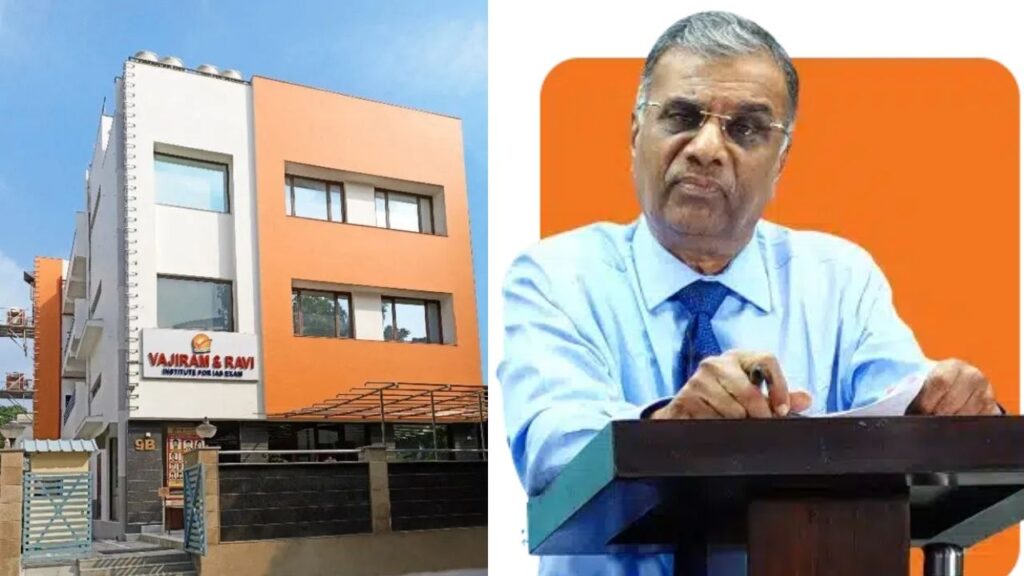
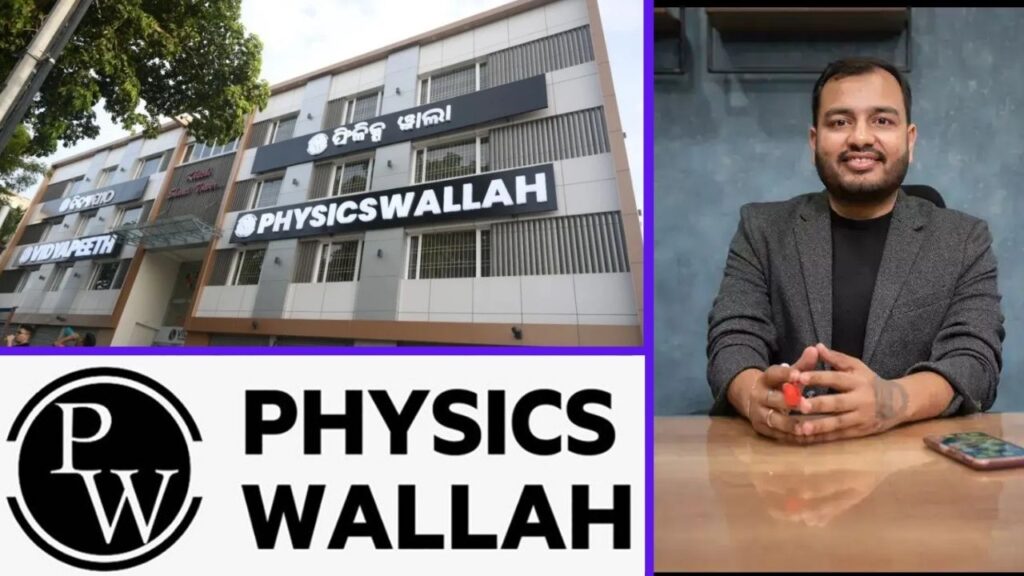
In a rising online education, these coaching are also growing as most of the students prefer to take online classes rather than finding offline coachings. Some of the most talked about online platforms are Drishti IAS, Vision IAS, Physics Wallah, Vajiram & Ravi, Clear IAS, Insight IAS, and Nirnay IAS.
Let’s check their best features and overview details to decide which one is right for you.
Drishti IAS
The Drishti IAS is most popular platform for IAS preparation, ideal for UPSC aspirants from both Hindi and English medium. It offers a structured and motivational teaching style which is helpful during UPSC preparation as it is the hardest exam.
Best Features:
It is best for students who can give 15 to 16 months to this course with 400+ live classes.
Extensive study material can help for learning
Excellent test series to improve regular practice, total of 24 mains and prelims tests available for 3 years.
No language barrier, it is easy for every student.
Vajiran and Ravi
Vajiram and Ravi coaching originated offline and marked a name in the top UPSC coachings and is now available online that delivers the same quality teaching for UPSC aspirants.
Best Features:
Ideal for those who wanted to cover every topic with depth, 1000+ hours of lectures needed plenty of time.
Detail study and notes are also available for quality learning
Consistently maintain its record for producing toppers for years
Cost effective for providing best learning to ensure clarity for every doubt.
Clear IAS is also one of the best online coaching which provides a super 50 program for specifically UPSC preparation. It is well-known for its focus on more personal guidance and small batches. Ideal for aspirants who prefer self-paced learning with doubt clearing sessions at low fees.
Best Features
There are a large number of recorded lectures which can provide detailed learning for UPSC.
700+ hours lectures and 1500+ study material
Test series to maintain daily practice for doubts clarity, mentorship support, and interview guidance.
Vision IAS
Vision IAS provides the best test series which are helpful to become habitual with the exam environment. It is famous for its analytical function that helps to track student’s practice records.
Best Features
Students can check their weak areas due to their recording track of assessments and make it strong by working on it.
Flexible batches is accessible to every aspirant
Free Resources is a great advantage for preparation. Topic-wise specific content, current affairs, and previous year questions are available for free.
Physics Wallah
Physics Wallahis rapidly growing coaching and its UPSC preparation course is effective for cracking the exam. Its main advantage is delivering conceptual learning that helps students to remember and quickly adapt new concepts.
Best Features
Affordable price is accessible to everyone
The teaching style is student-friendly that helps in complex problems to understand quickly.
Best for beginner students who began to prepare for UPSC
Strengthen every weak concepts and clear every doubt
Mentor support and recorded sessions.
Nirnay IAS
Nirnay IAS is available on the testbook platform which offers well-structured courses and practice-oriented strategy for UPSC preparation. It has gained attention in a little time due to its practice material and offline resources to self-study.
Best Features
Students who prefer to learn at their best time.
No regular classes, 30+ structured courses are best for quick preparation.
Cover prelims, mains, and other preparation topics
Mock test and previous years papers for best practices
Recorded lectures helpful to working professionals who don’t have time for live classes
Insights IAS
Insight IAS is also best for UPSC preparation at a low price. Aspirants can begin their preparation with quality study resources and test series with reasonable prices.
Best Features
Strong test series that structured properly for both prelims and mains
Best for beginners and advanced with its foundation courses
Well-designed topic notes and syllabus clarity for effective learning
Affordable courses, every student can get quality education at their own pace
Identify your learning style – if you need someone to push or motivate you consistently for UPSC, Drishti & Vision provide teacher interaction which might help you. Clear IAS, Nirmay or Insights are best for those who prefer to learn at their own pace.
Check your budget – PW, Clear IAS, and Insight are affordable but if you are ready to invest more, Vajiram & Ravi or Vision offers premium packages.
Test Series – if you want insightful and exam-focused test series then Vision and Insights are the best option. Drishti IAS is also providing detailed study and exam based test series.
Conclusion
The Best Online Coaching for UPSC isn’t the one with popularity or your friend is joining, someone’s opinion doesn’t help you to get the right platform. The right platform matters because every student’s mind works differently, they understand differently. Even in their preferred language, they are unable to grasp the concept of the topic. So, it might be best for you to take a demo class from online coachings, if you understand well about the topic due to clear explanations, or teaching style that might be your destined platform for UPSC preparation.
Lucknow, the Capital of Uttar Pradesh, has now become a prominent area for medical education in India. If you’re a NEET aspirant looking to get admission in a good medical college, then the city of Lucknow holds an impressive list of both government and private colleges who are recognized at the national and international level. For those who are looking for an economical government seat or want to know the top private colleges with world-class amenities, this article will help you in knowing the top NEET colleges in Lucknow, along with detailed information about the rankings, fee structure, availability of seats and the USP of each institute.
Understanding the Medical College Landscape in Lucknow
Before we get into the names of specific colleges, it is necessary to know that the medical education in Lucknow is multi-faceted and thriving. Ranging from government colleges with very minimal fees to super premium private colleges having infrastructure at par with global standards. It has national level post graduate institutes, century old undergraduate medical colleges and some of the best private medical colleges in the country with rigorous academic regimen and modern day teaching methodologies.
King George’s Medical University (KGMU)
Ranking & Recognition
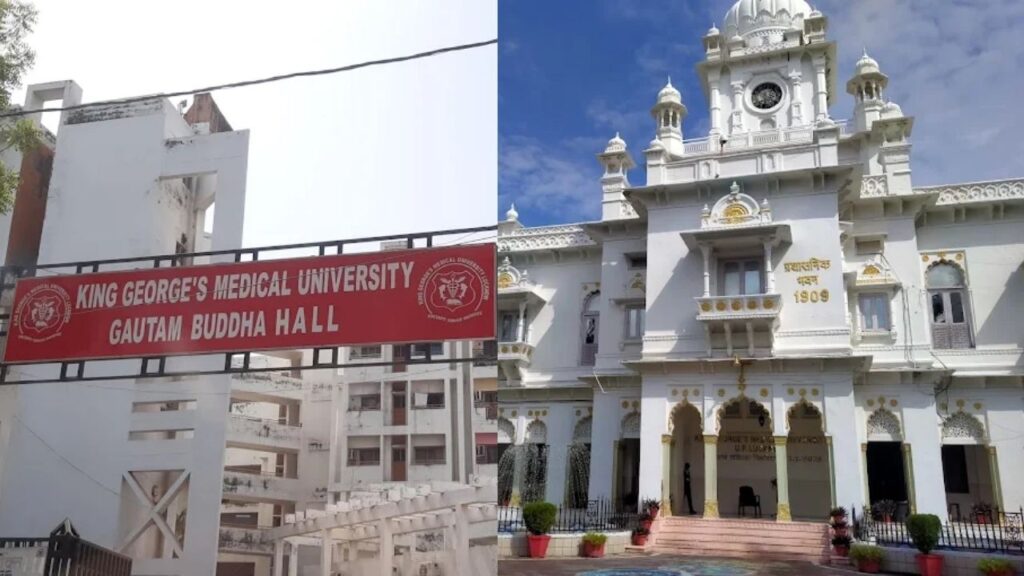
KGMU is a premier medical college in India and is ranked 8th in the NIRF 2025 medical college ranking. KGMU has been a synonym of medical excellence in North India, that has been a legacy for more than a century. The university is well known for its research in oncology, transplant sciences and infectious-disease genomics.
Fees & Seat
The KGMU MBBS seat matrix is a total of 250 seats, with 15% seats allotted to the All India Quota and 85% seats are for State Quota. For state quota candidates, the fee per year is about ₹54,600, and for non-resident students, it is ₹3,52,400 per year, which is really cheap. There are some who will say they can afford higher fees but the reality is that a total fee of around rupees 2.38 lakhs for a 5.5 year (4.5 years of classwork and 1 year internship) course is a bargain for a quality medical education.
NEET Score
King George’s Medical University takes students through NEET score which is expected to be around 625-635 marks.
Hostel & Campus Life
The charges for Single Seater room is of Rs. 3600/- per annum and the electricity charges are Rs. 3500/-. On the other hand, the Double Seater Room is available for Rs. 2400/- per annum electricity charges are to be paid separately.
Dr. Ram Manohar Lohia Institute of Medical Sciences
Ranking & Recognition
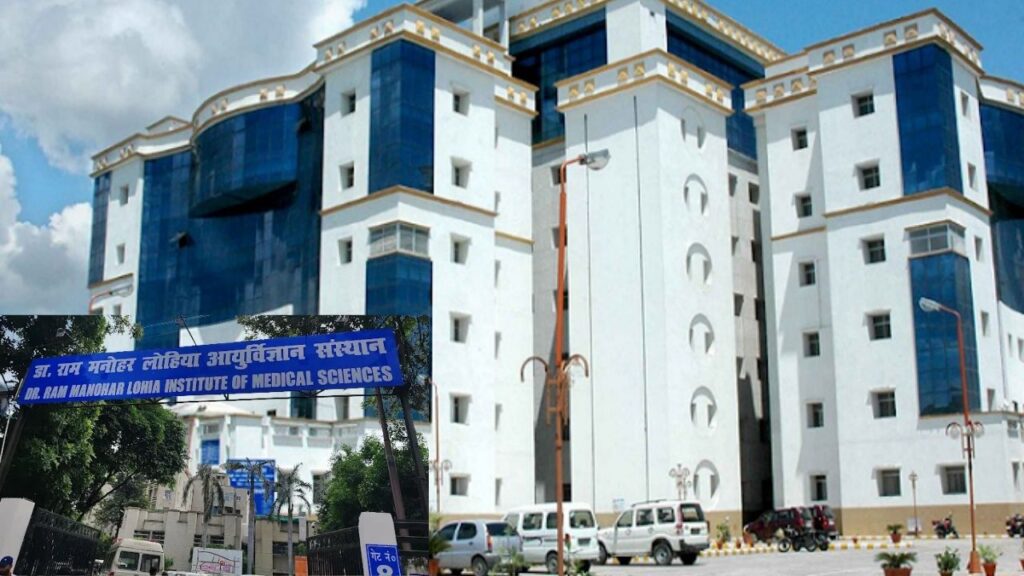
RMLIMS was formed and became operational as a State University from 2018 and has the distinction of being ranked at 61 position among Medical Colleges (NIRF 2025) which is a great achievement with an overall score of 982/2000. The institute has been established in Gomti Nagar in a spacious 42 acres campus with ultramodern infrastructure.
Seat Distribution & Admission
The college has 200 seats in MBBS from this year, out of which 50% will be filled through All India Quota (AIQ) by MCC and 50% will be filled under State Quota by UP NEET counselling. This balance accommodates opportunities also for candidates at the state level in addition to the national level.
Fee Structure
For the whole course, the Rs 1.82 lakh fee of MBBS at RMLIMS is one of the cheapest among all government medical colleges. The fee for the year is around Rs 49,700 which covers all tuition and examination fees.
NEET Score Required
General category 2024 cutoff rank was approximately 2683. For AIQ seats, the aspirants who want to take admission must have been targeting a rank below 2000 with NEET score of 640 marks or above. Due to domicile preferences, the state quota cutoff rank is usually slightly lower.
Internship & Career Prospects
Students doing internship at RMLIMS get stipend from ₹10,000 to ₹16,000 per month. The university also has 100% placements, with its students getting jobs in renowned organisations like the SGPGI, KGMU, PSUs and private hospitals.
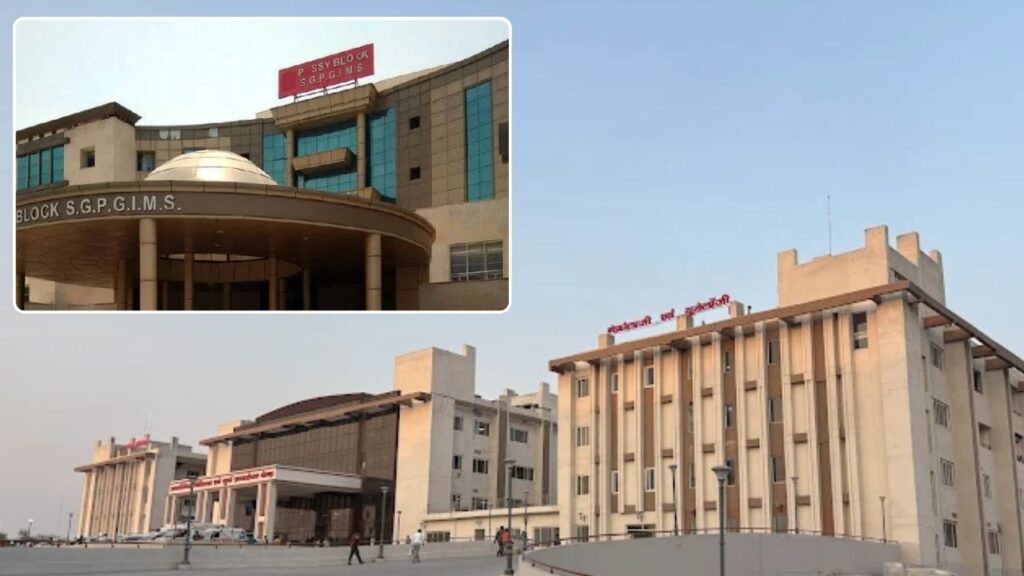
Sanjay Gandhi Medical Sciences Institute
National Stature & Rankings
SGPGIMS is an institute of national importance and ranks 5th in India as per NIRF 2025 with a laudable score of 70.09. The university is known for its high standards in teaching, research, and clinical services and is one of the best medical institutes in India.
Important Note on SGPGIMS
SGPGIMS is an institute for post graduate and superspeciality courses. For MBBS UG, only KGMU and RMLIMS. However, for post graduation for a specialist, SGPGIMS is the be all and end all.
Top Private Medical Colleges in Lucknow
Candidates who are looking for private medical colleges that have good infrastructure and other facilities can check out the following list containing the best private medical colleges in Lucknow.
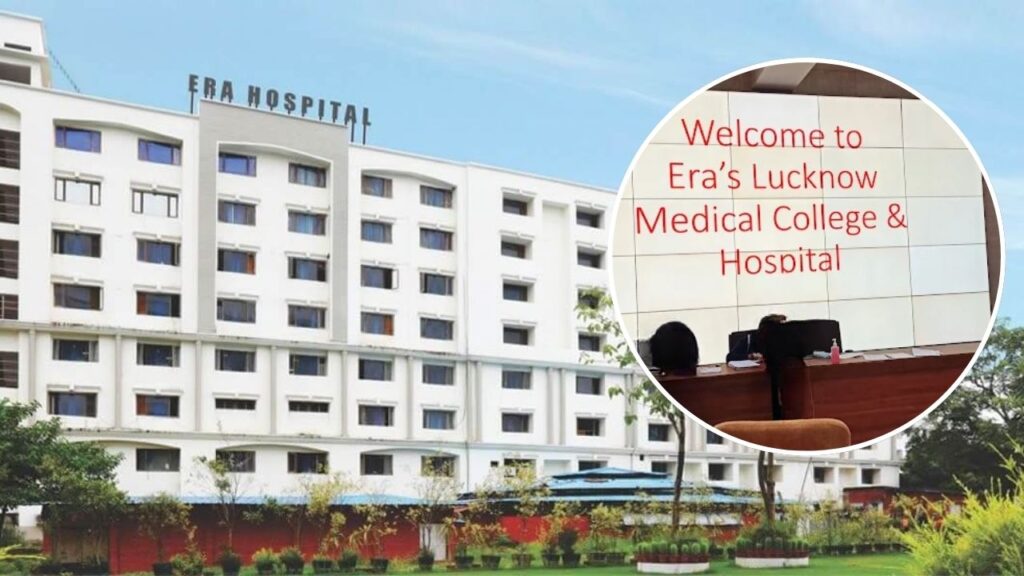
Era’s Lucknow Medical College and Hospital
Era’s Lucknow Medical College has been ranked 32 by India Today 2024 and it is one of the best paramedical colleges in India which provides 200 MBBS seats every year the highest in any pmt college in India. The National Medical Commission (NMC) recognizes the university, and the institution is NABH accredited which implies high educational standards.
The complete MBBS course fee at Era’s Lucknow is approximately ₹16.6 lakhs p.a, making the the total 5 year program fee to be ₹71.16 Via. NEET cut off 2024 was a general category closing rank of 375,564 as per UP state counselling data.
Era’s is attached to a 750-bed teaching hospital with more than 1,690 OPD cases each day, which is remarkable clinical exposure. The faculty of the college is well qualified doctors and institutions have UG & PG courses.
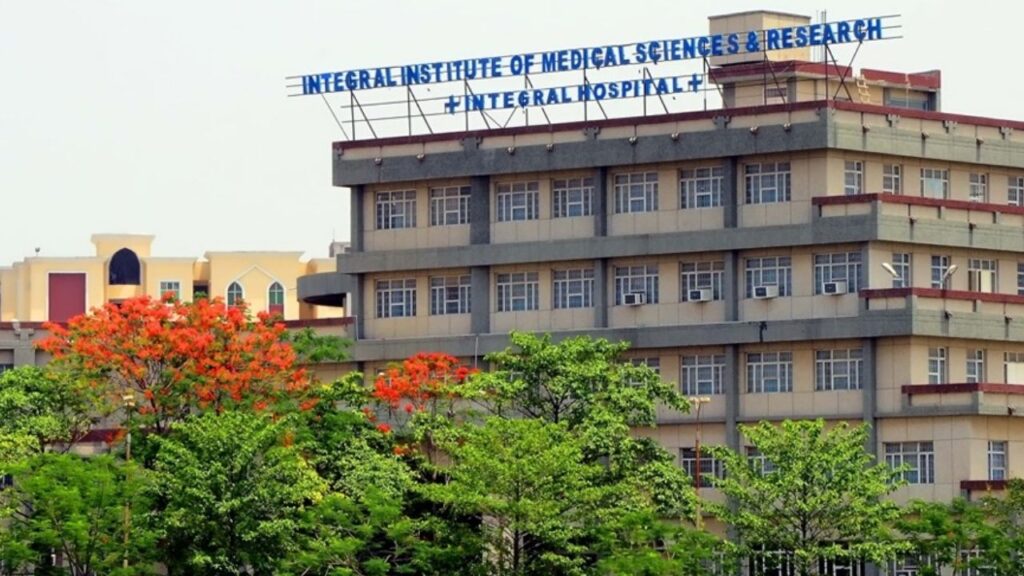
Integral Institute of Medical Sciences & Research
IIMSR Lucknow was established in 2013 and it provides 150 seats for the course of MBBS and is placed at 118th position in NIRF Ranking with 825 score. The yearly fee is ₹11,40,000, while the overall fees for the course is ₹81 lakhs which include the cost of living in the hostel, mess etc.
For 2024, U.P State Counselling the general category closing rank was approximately 428,214. College infrastructure is good and gives internship stipend of Rs. 12,000 – 18,000 per month as per MCI.
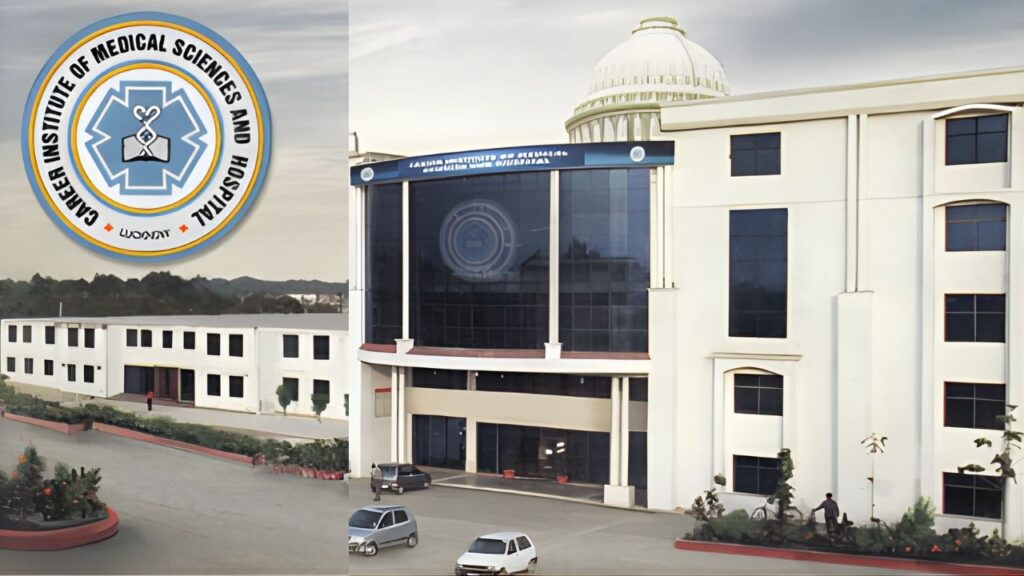
Career Institute of Medical Sciences (CIMSH)
CIMSH has 150 MBBS seats with a fee of ₹71.1 lakhs per year. The closing rank for general in 2024 was 452,601, which is a bit higher than some of the other best private colleges.
The college follows the norms stipulated by the National Medical Commission and imparts overall medical education with clinical training in associated hospital.
Comparative Fee Structure Overview
Government Colleges
KGMU
₹2.38 lakhs total : ₹54,600 annually
RMLIMS
₹1.82 lakhs total (₹49,700 annually)
Private Colleges
Era’s Lucknow
₹71.16 lakhs total (₹16.6 lakhs annually)
Integral University
₹81 lakhs total (₹11.4 lakhs+ annually)
Career Institute
₹71.1 lakhs total (approximately ₹14.2 lakhs annually)
Understanding NEET Cutoffs and Rankings
The NEET cutoff denotes the threshold-score and rank prescribed for getting the admission, the one that is the basic requirement aspirants have to meet. It’s important to keep in mind that cutoffs differ wildly between types of applicants:
AIQ (All India Quota) – It tends higher competitiveness, with higher cutoffs, through the MCC for admission.
State Quota – For students of Uttar Pradesh only, higher cutoffs are generally included because of domiciliary preference.
For most government colleges like KGMU, a score of 700+ in NEET for AIQ, 690+ for state quota is a safe bet for gen category aspirants. It would help if you aimed for 640+ marks in RMLIMS if you belong to a competitive category.
The cutoff of private colleges is very fluctuating as per intake and managing members. But do keep in mind that the fees are significantly higher at Private colleges with lower cutoff ranks.
With a 650+ score in NEET, you have great chances in top government colleges. A 600+ score makes you competitive to RMLIMS as well, below 600 scores are mainly for the private colleges or least ranked government colleges.
Begin your NEET study preparations around 12-18 months prior to the exam. Work on making concepts crystal clear, no rote learning. Enroll in good coaching if required, be consistent in your studies, and take mock tests frequently to know about your progress. Remember, NEET is to test on your knowledge, analytical abilities and time management.
Internship Opportunities and Career Prospects
One major benefit of doing medicine in Lucknow is the quality of the internship. Government colleges provide stipend for internship in the range of ₹12,000 to ₹20,000 per month whereas private colleges generally pay ₹12,000 to ₹18,000 per month. And more importantly, lucknow medical colleges have so many diversified medical affiliated hospitals and specialty centers.
After your MBBS then have good scope in lucknow for Post Graduation especially through SGPGIMS which has been nationally recognized for its PG courses. Many graduates of MBBS from Lucknow Colleges like KGMC secure seats in premier institutions for further specialisation.
Conclusion
The medical colleges in Lucknow provide an all-round ecosystem for quality education at different price brackets. Be it a merit-cum-based student looking at government institutes or a well-heeled parent to afford the best of private institutes in the city, Lucknow has some to match your dreams. The secret is to know what are your strengths, financials, career goals and select based on that.
Start your preparation seriously, be consistent and “Believe in yourself”. Lucknow is one city where you can certainly “make it” if you set your mind to it, your determination and efforts and get into one of the best colleges there is, there is no doubt about that. The right college choice is what starts you on your journey to becoming a compassionate and skilled doctor – and when it comes to that, Lucknow certainly has some great places to get the journey started.
Post 12th Government exams are the best means to get a lucrative job in the government sector in India. Due to high salaries, job security, and lifetime benefits, these exams are dream of lakhs of students. In 2026, as we look to the future, several big recruitment cycles in Railways, SSC, Banking, Defence and Police departments are expected to be announced, which will once again pour in its biggest ever recruitment for 12th pass candidates.
Whether you are going to appear for RRB, SSC CHSL, MTS, Police or Defence services i.e. NDA or Navy, you can get complete information about Eligibility, Salary, Age Limit, Exam Pattern. If you have been looking for Govt exams for 12th pass 2026 then what you are reading is the most exhaustive 2026 roadmap for government jobs after 12th you will find online.
Railway Exams (RRB)
RRB NTPC is one of the most popular railway recruitment to apply for jobs in Commercial Cum Ticket Clerk, Accounts Clerk Cum Typist, Junior Clerk Cum Typist etc.
Image Creadit : govupdatewala
3,058 Posts are notified with the pay scale between ₹ 19,900 to ₹ 35,400.
12th pass or equivalent with 50% marks in aggregate is minimum eligibility.
Selection Process: The selection will be two CBT (CBT 1 & CBT 2), typing skill test and document verification.
Age Limit: 18-30 years.
RRB Group D is one of the biggest recruitment by Indian Railways. Amidst the ongoing exams from November 2025 to January 2026, the recruitment process will extend to 2026. This exam can be appeared by both 10th and 12th pass candidates and it will be about 1 lakh of vacancy every year. Posts such as Track Maintainers, Helpers and more under Level 1 category. Salary ranges from ₹18,000 to ₹35,000, in most cases. The selection includes CBT, PET, Document Verification, Medical Examination.
SSC (Staff Selection Commission) Exams
SSC CHSL (10+2) 2022 is conducted for the posts of LDC (lower division clerk), DEO (data entry operator). As per the 2025-26 calendar, this exam is generally held in September with the dates of the exam scheduled from 8-18 September 2025 and the following cycles continuing in 2026. The minimum qualification is 12th pass in from a recognized board.
SSC MTS (Multi-Tasking Staff) is a non-technical post but the pay is lucrative. As per SSC schedule, notifications are usually issued in the month of June with exams in the month of September-October cycles. The pay scale is between ₹18,000 and ₹29,200 according to the post and experience.
Image Creadit : govupdatewala
Recruitment for 2026 will be conducted in January-February 2026 with an expected 25,000-50,000 vacancies. The age limit is 18-23 years and the aspirants must be 12th pass. The selection procedure is Computer-Based Test (CBT), Physical Standard Test (PST), Physical Efficiency Test (PET) and Medical Test.
SSC Stenographer (Grade C & D) is a 12th class level exam of SSC that requires good typing skills in English or Hindi. These are usually published around June-July and later in the year the exam is conducted.
IBPS Banking Exams
IBPS RRB Clerk has Pre (Online) examinations on 06, 07, 13 & 14 December 2025 and IBPS RRB Clerk Mains 2025 on 01 February 2026. These roles generally offer pay per packages from ₹18,000 per month upwards. Age limits for the candidates is 18 to 28 years depending on the post.
Image Creadit : govupdatewala
The IBPS PO 2026 will probably follow the pattern of former cycles, the notifications to be released around August 2026, application process in August-September 2026, Preliminary Exam in October 2026, and Mains in November 2026. Applications are invited from eligible candidates to fill the posts of Electronic Engineer (EE) for this position PO requires generally a graduate degree; however, watch the notifications as for some posts the eligibility is 12th pass.
Police & Armed Forces Recruitment
SSC Delhi Police Constable Recruitment 2020 is out @ssc.nic.in, Apply online for 7565 posts via 10+2 or equivalent. Age Limit 18-25 years. Selection Procedure is Computer Based Examination (CBE), Physical Endurance Test (PE&MT) and Document Verification. Candidates should possess a valid driving license (2-wheeler or 4-wheeler) for LMV (Motorcycle/Car). Salary Generally Salary ₹25,000-40,000 Per month.
Recruitment for the police is state dependent The State Police in most states recruit for the position of Constable in the year 2026. The Age limit is generally between 18-25 years with relaxations for reserved categories. Education qualification is 10th/12th pass. Written Exam, Physical Efficiency Test (PET), Physical Standard Test (PST), Medical Test and Document Verification are the part of selection procedure.
Image Creadit : govupdatewala
12th Pass From a Recognized Board is Required for Indian Navy (Sailor SSR) Recruitment. Sailor jobs are the highest paying in this country to compete with salary packages. Age is usually 17.5 to 21 years.
Indian Coast Guard Navik GD (General Duty) is for those candidates who have passed 12th with Physics and Mathematics. The age limit is 18-22 years for 260 vacancies declared for 01/2026 and 310 for 02/2026.The selection process consists of Written Exam(Stage I), Physical Fitness Test, Document Verification and Medical Examination.
Indian Coast Guard Navik DB (Domestic Branch) is not only for the 10th pass candidates but 12th pass students can also apply. This is a little more within reach for the 12th pass candidates.
NDA (National Defence Academy)
It happens two times a year, usually in April and September.
The minimum age is 16.5, Candidates born between January 2, 2008, and January 1, 2011 are eligible to apply for 2026.
For Air Force and Naval Wings you need to have passed 12th with Physics & Chemistry as compulsory subjects.
There is no age relaxation in any category.
The selection procedure consists of Written Exam( Mathematics and General Ability Test), SSB Interview and Medical Test.
Choose the examinations according to your interests and strengths, do not attempt all at once. Stability and pension benefits are the other advantages of the railway jobs. It’s competitive to clear the Banking exams but the salary growth is amazing.
A study planner will help you to schedule every topic for a limited time. You must focus on subjects including quantitative aptitude, reasoning, English, general awareness.
Previous year question papers & Mock Test helps to understand the pattern and importance of the particular topic.
Keep track of the notifications on the official website for the latest updates regarding exam date/pattern.
Exam
Eligibility
Age Limit
Starting Salary
Highest Pay
Selection Process
RRB NTPC
12th Pass with 50%
18–30 yrs
₹19,900
₹35,400
CBT 1 & 2, Typing, DV
RRB Group D
10th / 12th Pass
18–33 yrs
₹18,000
₹35,000
CBT, PET, DV, Medical
SSC CHSL
12th Pass
18–27 yrs
₹25,500
₹81,100
CBT 1, CBT 2, Skill Test
SSC MTS
10th / 12th Pass
18–23 yrs
₹18,000
₹29,200
CBT, PET, PST, Medical
SSC Stenographer C & D
12th Pass + Typing
18–30 yrs
₹25,000
₹81,100
CBT + Skill Test
IBPS RRB Clerk
12th / Graduation (varies)
18–28 yrs
₹18,000+
–
Prelims + Mains
Delhi Police Constable
12th Pass + Driving License
18–25 yrs
₹25,000
₹40,000
CBE, PET, PMT, DV
State Police Constable
10th/12th Pass
18–25 yrs
₹20,000
₹45,000
Written + PET + Medical
Indian Navy SSR
12th PCM
17.5–21 yrs
₹35,000
₹45,000
Written, PFT, Medical
Indian Coast Guard Navik GD
12th with PCM
18–22 yrs
₹25,000
₹35,000
Written, PFT, DV, Medical
NDA
12th PCM
16.5–19.5 yrs
Stipend + Officer Pay
–
Written + SSB + Medical
Conclusion
The preparation for government exams in the 12th standard itself is a smart move to secure a bright future. Well with thousands of job vacancies expected in 2026, Railways, SSC, Police, Defence, Banking you name it is raining vacancies, the wait is finally over and it is time for aspirants to start structured preparation.
Pick your exam wisely based on interest and strength, uniformed services, clerical posts, railways, defence and stick with practice tests and mock exams. If you want a job that’s solid with long-term perks, this is the time to go. Begin at the right time, maintain your focus and the right opportunity will be yours.
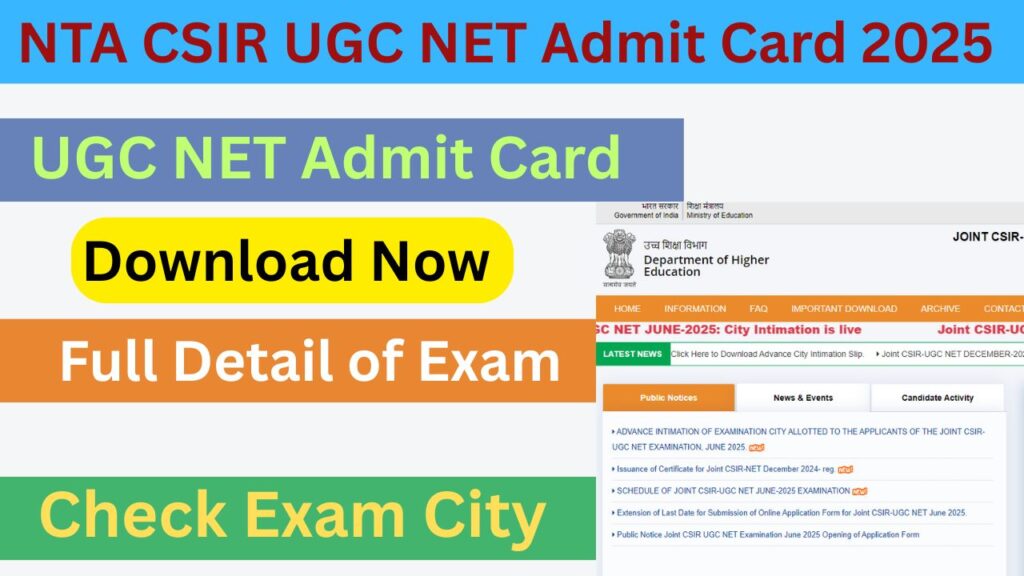
Candidates who have applied for the UGC NET exam can check their NTA CSIR NET Admit Card 2025 on the official website. Candidates must download their admit card to know the exact location of the exam centre. The admit card consists of Name, Exam centre, Exam Name, Shift Timing, Roll Number, etc.
There are a total of three parts – A, B, and C where part A contains objective-questions from general aptitude, the rest of the two parts are based on the subjects. Negative marking is applicable, so candidates must prepare well for this exam.