How to Take Admission in Delhi University in 2025 – Full Process Explained!

How to Take Admission in Delhi University

Delhi University is a great university for UG, PG and doctoral programs which attracts thousands of candidates from all over the country. If you are planning to take admission to the most popular university then you must know about the admission process. So, here’s a guide for you which helps you get ready for the procedure.

DU offers a plenty of programs for Arts, Science, and Commerce students. First, know your interest that aligns with the future goal. It will help you select the field of study and decide which program you have to take admission. Admission process is same but eligibility criteria and cutoff marks is different on most of the programs.

DU offers multiple courses in every stream through the entrance exams for the particular field. So, score well in exams to get a admission in Delhi University, here are the following exams: 

  • CUET Examination

DU offers UG courses such as BA, B.Com, B.Sc, BBA, MA, MCA, M.Sc, and B.Ed through the Common University Entrance Test.  

  • JEE Main

Candidates who are willing to take admission in the Engineering programs such as B.Tech have to appear in the JEE examination.

  • CAT Examination

DU offers an MBA program through the CAT examination, you must appear in the examination and score well in that to get an admission.

  • CLAT Examination

For LLB and LLM programs, candidates have to pass the CLAT exam.

  • UGC NET/CSIR NET/NTA 

These are the examinations for admission in PhD.

Candidates must have cleared the entrance exam for their courses then register for CSAS. Its full form is Common Seat Allocation System and this is the stage where you have to fill your college preferences and courses.


This round takes time because it’s a lengthy process, seat allotment based on your scores of the entrance exam, preference you fill, and category you belong to. Seat availability is critical in some cases, you can freeze your seat if you are satisfied with the given seat or wait for the next round.

Once you freeze the seat which is offered by the university. Your admission is confirmed after your acceptance. 

Read More 👉 Top 10 MBA Colleges in Lucknow You Shouldn’t Miss in 2025

Check your eligibility for the particular program you are choosing to take admission. For UG courses you must pass 12th class, for PG courses, it requires a graduation marksheet. Admission in PG courses may require a CUET PG score.

  1. Visit the official website of DU
  2. Search for the SOL admission portal, when you click on that the registration page will appear then click on the registration link.
  3. Enter your information in the form carefully to complete the registration.
  4. Log in with your registration number and password.
  5. Fill out the rest of the details with correct information to further proceed.
  6. Carefully fill in the details, so it cannot be incorrect.
  7. Attach the required documents required for the application in your admission.
  8. Submit application fee then download the copy.
  9. You can check application status from your account.

DU offers plenty of programs for students to study higher education. DU offers programs in streams like Arts, Science, Commerce, Management, Law, and Engineering. The admission in these streams through their entrance exams respectively.

If you are a working professional, parent, or any other responsibilities, you can pursue degrees such as BA, B.Com, MA, M.Com, and M.Sc without any entrance exam. SOL is beneficial for most of the students who can’t attend the college regularly due to any reason. 

NCWEB is designed specially for women who cannot attend full time courses due to responsibilities, work, or any other reasons. Women who prefer weekends or evening classes to complete their education can take admission but it happens through merit score. 

Students who want specializations in any field can also think of Delhi University as the best option for them. The various fields of specializations which DU offers are – English, Hindi, Economics, and Political Science, Physics, Chemistry, Mathematics, Law, and Management.

Delhi University primarily takes students through entrance exams but there are certain programs and modes of study where students can take admission without appearing in the entrance exam. 

SOL – It is designed to provide education for students who cannot attend the regular classes due to work, distance, or any other reason. SOL offers many UG & PG programs without an entrance exam.

CoursesAdmission processMode
BA, B.Com, MA, M.Com, M.ScAdmission is based on MeritDistance education

Some UG Courses based on Merit – DU affiliated colleges are offering some UG programs like B.Com, BA, and many other courses without an entrance exam.

Read More 👉 Top Government Jobs After MBA | Best Careers 2025 Guide

Course NameWho Can Apply?How Selection Happens?
BA OR BA (Hons)10+12th from any stream  (50% score minimum)Through CUET UG + CSAS Counselling
B.Sc OR B.Sc (Hons)10+12th (50% score minimum) in science streamThrough CUET UG + CSAS Counselling
B.Com OR B.Com (Hons)Passed 12th (50% score minimum) in commerce streamThrough CUET UG + CSAS Counselling
B.Tech Passed 12th with PCM, minimum 60% marksJEE Main + JAC Counselling
BA LLB / BBA LLBAccomplish 12th or equivalent (50% score minimum) CLAT UG + CLAT Counselling
BBA10+12th or equivalent (50% score minimum) Through CUET UG + CSAS Counselling
B.El.EdAccomplish 12th or equivalent with 50%Through CUET UG + CSAS Counselling
BFAAccomplish 12th or equivalent (45% score minimum)Through CUET UG + CSAS Counselling
B.Lib.I.ScAccomplish 12th or equivalent (45% score minimum)Through CUET UG + CSAS Counselling
Course NameWho Can Apply?How Selection Happens?
MABachelor’s degree (50% score minimum)CUET PG + CSAS Counselling OR Merit-Based
M.ComB.Com/B.Com (Hons) (50% score minimum)CUET PG + CSAS Counselling
M.ScB.Sc in relevant subject with at least 50% marksCUET PG + CSAS Counselling
MBABachelor’s degree in any discipline CUET PG + Group Discussion & Interview 
MCABCA or equivalent degreeCUET PG + CSAS Counselling
B.EdGraduation degree (50% score minimum)CUET PG + CSAS Counselling
LLBUG OR PG degree in any with at least 50% marksCUET PG + CSAS Counselling
LLMLLB (3-year or 5-year) (50% score minimum)CUET PG + CSAS Counselling
M.TechB.Tech/BE in relevant field (60% score minimum)CUET PG + CSAS Counselling
M.EdB.Ed/B.El.Ed or equivalent (60% score minimum)CUET PG + CSAS Counselling
Points Details
Who can apply?– Master’s degree (55% score minimum) marks – 5% relaxation for reserved category
How do you get selected?First Option  – Through UGC-NET, UGC-CSIR NET, DBT-JRF, ICMR-JRF, once you pass this, you can appear directly for an interview.Second Option  – You must appear for the CUET-PhD entrance test. If you don’t want to take the first option.  – Next step for selected candidates is an interview.  – Everyone (including exempted candidates) must attend the interview.
What happens after selection?– Merit list is prepared based on entrance and interview performance.- Selected candidates must verify original documents in person at the department.- Seats are filled as per department’s decision and university norms.
Other important points– Final subject relevance is decided by the Departmental Research Committee (DRC).- No PhD through distance mode at DU.

Leave a Comment

Your email address will not be published. Required fields are marked *

HTET 2025 Admit Card Out: Download Now from bseh.org.in for 30-31 July Exam

HTET 2025 Admit Card Out

Candidates who are waiting for the HTET 2025 Admit Card can now download from the official website of the Board of School Education, Haryana. You can download the notification for more details about this exam. The official date is 22/July/2025 for declaration of the admit card for examination on 30th to 31st July, 2025. By passing this state-level government exam, candidates are eligible for teaching in haryana government schools. 

Short Details on HTET 2025

ExamHaryana Teachers Eligibility Test
BoardBoard of School Education
Level of ExamState-Level
PurposeHTET is a state-level government exam to assess the knowledge of candidates for teaching.
Exam Duration2 hours 30 minutes
Exam ModeOMR/Offline
Admit CardClick Here
Official WebsiteClick Here

HTET 2025 Admit Card Dates

HTET Admit Card22/July/2025
PGT Level 3 Exam Date30/July/2025
TGT Level 2 Exam Date31/July/2025
PRT Level 1 Exam Date31/July/2025

Read More 👉 UPPSC Assistant Teacher Online Form 2025 Released for 7466 Posts

Eligibility For HTET Admit Card

This is a state-level government exam which makes you eligible for teaching positions in Haryana government schools and colleges. But there are some educational qualifications which are required for this examination.

There are three different levels of teachers – level 1 (primary teacher), level 2 (TGT Teacher), and level 3 (PGT Lecturer). With 10+12 marksheets, you need some higher education for this position. Here is the detail:

Primary TeacherMarksheet of 12th & Pass Certificate of D.Ed/B.El.Ed
TGT TeacherGraduation Degree & B.Ed/ Integrated Bachelor’s with B.Ed
PGT LecturerMaster Degree & B.Ed/ Integrated program

Steps To Download HTET Admit Card

Step 1Click on the link to the official website. The link will redirect you to the official website of Board of School Education, Haryana.
Step 2 Scroll down & Click on the “Haryana TET Admit Card” link.
Step 3Click on Login, the new page will open.
Step 4Enter Registration or Phone Number & Password to log in.
Step 5Admit Card will be shown, now you can download it.
Step 6Save your Admit card in your mobile or laptop for printout.
Important Links
Admit CardClick Here
Download NotificationClick Here
Official WebsiteClick Here

Leave a Comment

Your email address will not be published. Required fields are marked *

Best Government Jobs After 10th

Best Government Jobs After 10th

There are many government jobs in various sectors that require minimum qualifications candidates can apply after they pass 10th with any recognised board.

  1. Asha worker
  2. Para legal volunteer
  3. ICTC driver
  4. PGT or TGT
  5. Data entry operator
  6. Medical Officer
  7. Staff Nurse
  8. Peon
  9. Attendee
  10. FLC Counsellor
  11. Caseworker
  12. ITI Trade Apprentice
  13. Apprentice
  14. Constable
  15. Tax Assistant
  16. Havaldar
  17. General Duty Attendant
  18. Electrician
  19. Office Assistant

Step 1: Go to the official Government and select the location and position you want to apply for.
Step 2: Jump to the dashboard to find the online application link and click on it.
Step 3: Some empty blanks show on the screen to get your information including contact number, username, and password then complete verification.
Step 4: Follow up on the notification and upload a photograph (passport size, no filter), and signature within the prescribed format.
Step 5: To complete the process pay an application fee.
Step 6: Preview the form for any mistakes.

Note: There may be some changes in the application form according to the position in which you are applying for. So, check well before filling out the details in the form.

Also Read: SSC CGL Syllabus 2025 Explained

  • Candidates must pass 10th standard from a recognized board.
  • Candidates must score above 50% score in the 10th standard to apply in the sectors including Railways, Defence, and Banking.
  • Candidate age should be 18 or above, some posts may require an age between 36 and 40 years. Check the official notification for the specific post to confirm the age limit.
  • Age relaxation is provided for SC/ST, candidates from the general category may not have that. Reserved category candidates should check their age relaxation on the official government website.
  • The Candidate must be an Indian Citizen.

The salary range depends on the position and location of the candidates, it may differ in various sectors. However, the government gives some other benefits along with the salary which are medical expenses, pension plans, and bonuses.

Most entry-level government jobs starting salary in the range of ₹5,200 to ₹20,000

  • Railway Track Maintainer :- ₹18,000 – ₹22,000
  • Postman :- ₹20,000 – ₹25,000
  • Paramedical workers :- ₹10,000
  • Gramin Dak Sewak :- ₹10,000 – ₹14,000
  • Defence Soldier :- ₹25,000 – ₹30,000
  • Clerk/Assistant :- ₹25,000 – ₹30,000

If you are applying for the Railway Group D posts, it includes:

  • Computer Based Test (CBT)
  • Physical test
  • document verification

It is mandatory to clear the exam for the position you applied for

  • Railway: Track maintainer, Helper, Technician, Assistant.
  • SSC Multi-tasking Staff (MTS): Conducted by Staff Selection Commission.
  • Indian Army Soldier: Soldier (General duty), soldier Technical, Clerk.
  • Indian Navy Tradesman Mate & Matrix Recruitment (MR): Tradesman Mate and Matric Recruit in the Indian Navy.
  • Indian Air Force Group C Civilian Posts: Multi Tasking Staff, lower division clerk, Cook
  • State Police Constable Exam
  • Indian Post Gramin Dak Sevak (GDS): Postal department jobs including GDS are open for 10th pass.
  • Border Security Force (BSF) Constable Tradesman
  • Central Reserve Police Force (CRPF) Constable
  • Indian Coast Guard Navik
  • Polytechnic Entrance Exams: entrance exam for diploma in engineering courses.
  • Olympiads (NSO, IMO, IEO, NCO): both on national and international level exams.
  • Indian Navy SSR & MR: To enter the Indian Navy entry level jobs.All India Entrance Exam for Scholarship (AIEES): scholarship exam for 10 class students.

Many students want to do a government job. In India, people want to grab the opportunity as soon as possible. After 10th anyone (Indian Citizen) can apply for entry-level positions in sectors including Railway, Medical Staff, Apprentice, Postal and Defense.

Can I apply for railway jobs after 10th-pass?

Yes, You can apply for railway jobs in India after 10th. Indian Railway offers many entry-level jobs for 10th-pass candidates, particularly in Group D.

Which government exams can I take after 10th?

After 10th you can apply for Railway jobs, Apprentice, postal, and defense. These are the sectors you can get into after clearing the exams.

Is there any police job available after 10th class?

Yes, there are many jobs in defense you can apply for after 10th. The most common entry-level position is a Police Constable.
There are available posts after 10th in Police: Constable (General Duty), Senior Police Constable, Junior Constable, Technical and Tradesman Posts (in some forces), Auxiliary Police, and Firemen.

What is the salary of 10th pass government jobs?

The starting salary range for the 10th pass government employee is ₹5,200 to ₹20,000. The salary is increasing after the promotion of the candidate in a particular sector.

Leave a Comment

Your email address will not be published. Required fields are marked *

UPSC CDS 1 Recruitment 2026 Notification, Eligibility, Application Dates Guide

UPSC CDS 1 Recruitment 2026

The Union Public Service Commission (UPSC) has notified the Combined Defence Services (CDS) Examination 1 for the year 2026. This recruitment is for a number of academies that are the Indian Military Academy (IMA), Indian Naval Academy, Air Force Academy and Officer Training Academy and the number of vacancies is 450+.

The application form filling process will start from 10th/December/2025 and the last date to apply for the UPSC CDS 1 2025 will be 30th/December/2025. Interested and Eligible candidates are advised to read the official notification before apply online for understand the eligibility, Application Fee, Age Limit, Salary, Selection Process before applying for it.

Candidates need to visit the UPSC official website for detailed information and application. Before the time ends, you need to make sure that each one of the necessary information is filled accurately. 

Follow These Dates To Apply

Application Start10/December/2025
Last Date For Application30/December/2025
Fee Payment last date30/December/2025
Correction DateUpdate Soon
Admit Card DateUpdate Later
Exam Date12/April/2026

UPSC CDS 1 Age Limit & Application Fee

CategoryAge LimitPosts Expected
IMA & INA 19 — 24 years450+
Air Force 20 —- 24 years
OTA 19 —- 25 years
Gen/ OBC/ EWS₹200
SC/ ST0

UPSC CDS 1 Vacancy & Educational Qualification

The courtesy details of UPSC CDS 1 Eligibility 2025 are mentioned below:

  1. Indian Military Academy (IMA): The candidate will have to hold a Bachelor’s Degree in any discipline/stream from any recognized University/Institution in India.
  2. Indian Naval Academy: The candidate must hold a Bachelor’s Degree in Engineering or equivalent from a recognized university/institute in India.
  3. Air Force Academy: Candidate should have passed 10+2 with Physics and Mathematics in any stream from a recognized board or have a Bachelor of Engineering/Bachelor of Technology or similar qualification from recognized university.
  4. Officer Training Academy: The Candidate must have a Bachelor’s degree in any Discipline/stream from any recognized university or Institution in India.

For more and latest updates you can go through the official UPSC CDS 1 Recruitment 2025 Exam Notification. 

Read More 👉 Railway Protection Force Constable: Salary, Selection, and Exam Details – complete guide

Salary & Allowances

The candidate can earn up to Rs 1,77,500 per month with allowances as per government norms. The starting salary can be less with Rs 56,100 for entry level candidates.

Guide to Apply UPSC CDS 1 Online

How to Apply for UPSC CDS 1 Recruitment 2025: Apply Online through the official website of UPSC.

1. Know Details from UPSC CDS 1 Notification 2025 PDF.

2. Click on the “apply online” link or go to the Official UPSC website: upsc.gov.in.

3. Fill UPSC CDS 1 2025 Online Application Form.

4. Upload all the documents as per the notification.

5. Remit the requisite application fee by one of the modes available.

6. Take a print out of the application form once it is filled for your records. 

Apply OnlineLink Activate Soon
Download NotificationLink Activate Soon
Official WebsiteClick here

Leave a Comment

Your email address will not be published. Required fields are marked *

Indian Navy Agniveer SSR / MR Recruitment 2026: Eligibility, Dates, Salary & Apply Online

Indian Navy Agniveer SSR

If you want a respectable job and interested in defence then this will be your best chance to enter the Indian Navy Agniveer SSR. Underneath the gleaming, wave-piercing hulls of the latest destroyers and over the thunder of carrier-based jets is a more basic change in the types of people who operate them. MR Recruitment 2026 Notification, Navy shows aggressive approach to shape a force that is youthful, tech-savvier and quickest.

Whether you’re a young aspirant staring at the blue skies or just someone curious to speculate on how India is evolving its maritime defence, 2026 cycle offers an interesting peek into the “Agnipath” model at play. 

The MR Recruitment 2026 Ecosystem

The MR Recruitment 2026 drive is not simply a call for applications, it is a ‘stress test’ for a new method of military talent management. With the Navy moving away from legacy long-term service models, it wants to reduce the average age of its ranks. This means that those on the front lines have the highest end physical and digital literacy needed to run modern sensor nets and high-end weapons. 

This cycle for Indian Navy Agniveer SSR is composed of three main pillars:

SSR (Senior Secondary Recruit): The fleet’s technical backbone.

MR (Matric Recruit): The ship’s vital logistic and support core.

SSR (Medical Assistant): A specialized cadre of combat lifesavers.

Critical Timeframes for Indian Navy Agniveer SSR

The Navy runs on “man-of-war precision,” and so too does the recruitment calendar. The period for submitting applications is deliberately short to discourage procrastination among candidates. 

EventDate
Online Applications Open14/March/2026
Application Deadline06/April/2026
Correction Window10 – 11/April/2026
Stage I (INET) ExamMay/2026
Induction (Batch 01/2027)December/2026

Who Can Apply?

The Indian Navy Agniveer SSR has a very particular group in mind. They seek people at the height of their “biological plasticity” — i.e., they are young enough to be shaped by strenuous training and old enough to take on the enormous duty of naval service.

Marital Status and Age

17.5 to 21 years old candidates are eligible for this post, neither below nor above. So check your age as you must have been born on or between the 1st day of December, 2004 — and the 31st day of October, 2009 to lie between these range cycles. 

And all applicants must be single. Intense mobilization and deployment are hallmarks of the four-year Agniveer stint. The Navy wants people who can keep their laser focus on the mission, not who have the immediate bureaucratic hassles of legal dependents. 

Education Standards

  • Indian Navy Agniveer SSR: You should have a 10+2 (Intermediate) education with Maths and Physics along with one more subject such as Chemistry, Biology, or Computer Science. 50% in aggregate is compulsory.
  • MR Recruitment 2026: A day scholar can be a simple pass in Class 10 (Matriculation) with 50% marks from a state-recognized board.
  • SSR (Medical Assistant): This is the most academically demanding route. Higher education with Science subjects, and gain at least 40–50% in Phy, Che, Bio to be eligible.

Stage I: The INET

The first barrier is the Indian Navy Entrance Test (INET). It’s not only a test of what you know, it’s a test of how fast you know it.

For SSR – 100 questions and 60 minutes. That’s about 36 seconds per question. This is the same high-pressure decision making you need in a navy emergency. The syllabus includes classical mechanics and thermodynamics ( necessary for engine rooms ), up to higher calculus ( needed for navigational work and missile trajectories ).

Note on Marking Scheme: You get a mark for every correct answer but a wrong answer deducts 0.25 marks. Random guessing is life-threatening in the Navy, you can’t be careless. 

Read More:- MPESB Group 5 Paramedical Recruitment 2026: Complete Guide to 291 Government Jobs in MP

Stage II: The Crucible of Physical Fitness

If you are successful in the written examination you get the physical test. Life aboard a warship is a physical ordeal. You’re always walking on rolling decks, carrying gear and going up and down steep ladders.

The Benchmarks

The given numbers are especially designed for men and women with different approach to give maximum smoothness in their fitness standard qualification:

Physical TestMaleFemale
1.6 km Run6m 30s8m 00s
Squats (Uthak Baithak)2015
Push-ups15
Bent Knee Sit-ups1510

Additionally, a candidate’s height also matters in order to use shipboard systems including isolation valves and bridge consoles. So, for men, the min height required is 157cm and 152cm for women.

Life as an Agniveer

The Agnipath scheme’s fiscal mechanism is a 180-degree change from the past. It is meant to be a “capital infusion” rather than a long-term pension obligation.

The “Seva Nidhi” Package

It starts from Rs 30,000 to Rs 40,000 as it will increase every month for four years. But 30% is deducted and matched by the Government.

At the completion of your four-year stint, you walk away with the Seva Nidhi package, which is estimated to be around ₹11.71 Lakh. Importantly, this sum is completely tax-free. That’s a huge financial leg-up for a 21-year-old to start a business, go for higher education, or head into a corporate job. 

The Medical Assistant Exception

Fascinatingly, the Indian Navy Agniveer SSR post as a Medical Assistant takes a different trajectory. Since medical training is highly specialized, the Navy likes to retain these people. After their initial training stipend, they are placed into the Level 3 Defence Pay Matrix (₹21,700 – ₹69,100), indicating that some niche skills are just too valuable for the standard four-year turnover. 

Conclusion

A recruitment year for I st year in Indian Navy Agniveer SSR and being a part of pioneering generation. You are the digital natives who will sail on the next generation of stealth frigates and indigenous aircraft carriers. Whether you are staying just for 4 years or for one permanent role (which about 25% of the batch will), the discipline and technical skill and financial foundation that you come away with, is unmatched.

Are you ready to take the watch? You have enough time to fill the application for Indian Navy Agniveer SSR and is available until 6/April/2026 for MR Recruitment 2026. 

Leave a Comment

Your email address will not be published. Required fields are marked *

Government Jobs After Graduation in India: Complete Guide for 2026

Government Jobs After Graduation in India Complete Guide for 2026 Most of the students join the corporate sector but private jobs won’t provide security, high-salary, and additional perks which the government sector offers to the employees. But position matters in government jobs too if you have a higher position in the department, your salary will be more and other perks. There are many government jobs after graduation in India in the different departments. But you must understand which department suits you best. Let’s look into the details of each government job after graduation. Don’t rush, just focus on what you want to achieve in life. Why Government Jobs Still Matter People who spent years working in a public sector bank or Ministry of finance described that money attracts you but the major reason is you never have to worry about if you’ll have a job next year or not. If you watch it closely, you are going to understand — A government job in India isn't just a paycheck. It comes with job security that private companies rarely match. It comes with a pension through the National Pension System, so the years after retirement aren't a financial scramble. Government jobs offer fixed working hours, but there are exceptions. Defence and UPSC is tougher and no fixed hours. Most jobs are not that tough so you can give time to your family. In India, society gives more respect to government employees than private employees. There is one more thing, if you belong to SC, ST, OBC, and EWS categories, government recruitment includes reservation benefits that make the competition a little more balanced than it is in the open private market. None of this means government jobs are easy to get. But it explains why so many students keep this door open, even while exploring others. Government Jobs After Graduation in India There is no one big exam for a government job, it gives you job security and high salaries that makes it tough to compete with lakhs of students and being selected. In Finance and Accounting Department IBPS conducts the PO and Clerk exams for most public sector banks, while State Bank of India runs its own separate recruitment for similar roles. If you want something closer to economic policy, RBI hires for Grade B officer and Assistant positions, and NABARD focuses specifically on rural and agricultural banking. Job Title Minimum Qualifications Example Employers Recruiting Bodies Accountant Junior Accountant Bachelor’s degree in Commerce (B.Com) or equivalent; some posts accept diploma in accounting State departments, municipal corporations, central ministries, cultural institutions Assistant Accounts Officer Assistant Executive (F&A) B.Com M.Com MBA(Finance) CA Inter PSUs, autonomous bodies, government companies Junior Accounts Officer Junior Accountant (Ministry) B.Com, proficiency in Tally Govt accounting rules Department of Economic Affairs, ministries, central govt offices Treasury Officer Cashier (Treasury) B.Com; sometimes specific treasury certificates State treasuries, municipal treasuries Internal Revenue Agent Revenue Inspector Graduation; specialized departmental exams Tax departments, revenue directorates Central Government Jobs The Staff Selection Commission runs several exams worth knowing. SSC CGL is the big one, opening doors to positions like Income Tax Inspector and Assistant Audit Officer. SSC CHSL leads to roles like Data Entry Operator or Lower Division Clerk. If you studied engineering, SSC JE is built specifically for you. And if you can take dictation quickly, there's SSC Stenographer. Job Exam Minimum Qualification Common Extra Requirement SSC CGL Graduation degree Post-wise age and skill test requirements SSC CHSL 12th pass OR Graduation Typingskill test for some posts SSC MTS 10th pass OR Graduation Age relaxation as per category SSC JE Diploma or B.E.B.Tech in relevant field Technical qualification in engineering branch SSC CPO Graduation in any stream Fitness and medically fit Railways, Largest Employer in the Country RRB NTPC opens up roles like Station Master and Traffic Assistant for general graduates. RRB ALP is for those drawn to operating trains as Assistant Loco Pilots. RPF handles railway security and law enforcement. And RRB JE, again, is the engineering route. Railway Job Post Main Work Basic Eligibility Usual Recruitment Route Station Master Controls train movement and station operations Graduation in any stream RRB NTPC Graduate-level exam Goods Train Manager Manages goods train operations and coordination Graduation in any stream RRB NTPC Graduate-level exam Senior Clerk cum Typist Handles records, typing, office work, and data entry Graduation with typing skill where required RRB NTPC Graduate-level exam Junior Accounts Assistant cum Typist Accounts work, billing, clerical finance tasks Graduation, usually commerce preferred RRB NTPC Graduate-level exam Commercial cum Ticket Clerk Ticketing, passenger support, commercial counters Graduation in any stream RRB NTPC Graduate-level exam Trains Clerk Train records, movement entries, office coordination Graduation in any stream RRB NTPC Graduate-level exam Traffic Apprentice Supports railway operations and traffic control work Graduation in any stream RRB recruitment NTPC-related notifications Section Controller Monitors train operations and sectional control Graduation; often a high-responsibility post RRB notification senior railway recruitment Junior Engineer (JE) Technical supervision in civil, electrical, mechanical, signal, etc. Diploma or B.Tech, depending on post RRB JE exam UPSC Civil Services, Bigger Ambitions & Highest Authority Job the exam that produces IAS and IPS officers. It's open to graduates from any stream, but it's also the toughest exam in this entire list, with three stages testing not just knowledge but stamina and patience. Each state also runs its own version through its Public Service Commission. UP has UPPSC, Bihar has BPSC, Madhya Pradesh has MPPSC, and so on, each recruiting for state-level administrative roles. UPSC Service Post Group Main Work Basic Eligibility Indian Administrative Service (IAS) All India Service District administration, policy implementation, public welfare, law and order coordination Graduation in any stream Indian Police Service (IPS) All India Service Internal security, policing, crime control, public order Graduation in any stream Indian Foreign Service (IFS) Group A Diplomacy, foreign relations, embassies, international representation Graduation in any stream Indian Revenue Service (IRS - Income Tax) Group A Tax assessment, collection, investigation, enforcement Graduation in any stream Indian Revenue Service (IRS - Customs & Indirect Taxes) Group A Customs duties, GST-related enforcement, indirect tax administration Graduation in any stream Indian Audit and Accounts Service (IA&AS) Group A Government audit, accounts, financial compliance Graduation in any Indian Civil Accounts Service (ICAS) Group A Central government accounting and financial reporting Graduation in any stream Indian Defense Accounts Service (IDAS) Group A Defence finance, budgeting, accounts management Graduation in any stream Indian Railway Protection Force Service (if allotted through UPSC-related services) Group AB depending on cadre Security and protection of railway property and passengers Graduation in any stream Central Civil Services Group A Group A Administration in central ministries and departments Graduation in any stream Central Civil Services Group B Group B Assistant-level administrative and policy work Graduation in any stream Defense Jobs If discipline and service appeal to you more than office work, the defence sector offers CDS for officer entry into the Army, Navy, and Air Force, and AFCAT specifically for the Air Force. Defence Job Entry Main Role Basic Eligibility Selection Route Indian Army Officer Lead troops, field operations, administration Graduation in any stream CDS SSC (Non-Technical) other officer entries Indian Navy Officer Naval operations, technical or executive duties Graduation; engineering degree for technical entries CDS SSC Executive technical entries Air Force Officer Flying, ground duty, administration, support roles Graduation in any stream for many entries AFCAT CDS NCC special entry Short Service Commission Officer Temporary officer role in Army, Navy, or Air Force Graduation; post-specific rules apply SSC entry routes CDS Officer Entry Commissioned officer in Army, Navy, or Air Force Graduation in any stream CDS written exam, SSB, medical AFCAT Officer Entry Air Force officer in flying, technical, or ground duty branches Graduation in any stream; technical branches need relevant degree AFCAT, interview, medical NCC Special Entry Officer entry for NCC cadets Graduation + NCC certificate requirements Direct officer selection, no written AFCATCDS in some cases Territorial Army Officer Soldier Route Support and reserve-duty role Graduation for officer routes; other posts vary Territorial Army recruitment CRPF BSF CISF ITBP Officer-level or specialist posts Internal security, border protection, force administration Graduation, depending on post UPSCSSCdepartmental recruitment DRDO Scientist Technical Staff Defence R&D, systems, research, testing Graduation in engineeringscience for technical roles DRDO recruitment GATE-based selection for some posts Defence Production HAL PSU Jobs Engineering, planning, operations, management Graduation; technical degree for many roles Direct recruitment deputation Teaching Jobs Teaching has its own path too. CTET or your state's TET exam qualifies you to teach in schools, while UGC NET is for those who want to lecture at the college level. KVS and Navodaya Vidyalaya recruitment also fall in this teaching bucket. Important Tip You didn't need to pick just one. Many students prepare for two or three of these at the same time, since the subjects often overlap. Teaching Job Level Basic Eligibility Main Exam Route Primary Teacher (PRT) Class 1–5 Graduation in some cases, usually with D.El.Ed B.El.Ed; CTET Paper 1 for central jobs CTET TET + recruitment exam Trained Graduate Teacher (TGT) Class 6–10 Graduation in relevant subject + B.Ed; CTET Paper 2 for central schools CTET TET + recruitment exam Guest Teacher School institute Graduation, sometimes B.Ed preferred Local government recruitment walk-in contract basis Special Educator School level Graduation + special education qualification Recruitment through education department DSSSB state boards Who Can Actually Apply The good news is that most of these exams simply ask for a graduation degree, in any subject. You don't need a specific stream unless the job itself is technical, like engineering posts in SSC JE or RRB JE, which obviously expect an engineering background. Most exams accept candidates roughly between 18 and 32, though SC, ST, and OBC candidates usually get age relaxation, and the exact numbers shift slightly from year to year. You also need to be an Indian citizen for nearly all of these roles, and for defence or paramilitary jobs like CDS or RPF, there are physical fitness standards on top of everything else. Never assume for the exam updates. Dates are extended sometimes and shifts every year. Every government organization publishes its own official notification that declares eligibility and process. Rules shift slightly year to year, so do not rely on people’s words or what happened last year. How the Application Actually Works Once you decide which field you are going to join, you have to figure out the process itself, which felt confusing the first time but became simple once he broke it down. It starts with tracking official notifications. Websites like ssc.nic.in, ibps.in, rrbcdg.gov.in, and upsc.gov.in post recruitment notifications which include detailed instruction and a timeline to open the portal where you can apply. It happens every year, so checking them regularly matters. Once a notification drops, the first step is registering online, usually with just a mobile number and email. Then comes the actual application form, where personal details, educational background, category, and post preferences need to be filled in carefully. Remember that correction windows are short, so a careless mistake here can follow you for the whole process. After that, documents like your photograph, signature, and category certificates need to be scanned and uploaded. Then there's the application fee, though SC, ST, PWD, and female candidates often get a waiver or discount here. Once everything is submitted, the admit card becomes available a few weeks before the exam date, and then it's just down to showing up and going through whatever stages that particular exam has, whether that's a single test or a longer chain of prelims, mains, and interview. How To Prepare For Government Exams Once you know that these exams exist doesn’t mean you are fully prepared for it. You need to read the syllabus properly instead of skimming it. Every exam leans on a mix of Current Affairs, Simple Mathematics, Logic and Reasoning, and English or Hindi, but the weight given to each section changes depending on the exam. After you study the topics of a specific exam, check previous year papers, not to memorize answers, but to understand the pattern, the difficulty level, and how questions are usually framed and paired with regular mock tests. This technique will teach you how to manage time under pressure, since most of these exams are brutally time-bound. Make Current affairs a daily habit too, especially since banking and SSC exams lean heavily on it. If your exam has more weightage on Current Affairs then prepare well for it day-by-day. What made the real difference, though, was a basic timetable. Not a rigid one, just something that kept you showing up every day instead of cramming in bursts. And you had to decide between coaching and self-study. Most students who cracked their exams recommend choosing both. As some subjects are hard that need guidance and some are easy, you can prepare it by yourself. There's no universal right answer here. It depends on how you learn best. Common Mistakes Students Should Avoid For decades, students have been doing wrong while preparing for the government exams which can be put away and made aware future generations to stop going wrong. Some students put all their effort into one single exam and ignore everything else, which is risky given how competitive these exams are. Others miss notification deadlines simply because they weren't checking regularly. A lot of students skip mock tests entirely, only to be blindsided by time pressure on the actual exam day. And many treat current affairs as optional, which costs them marks in exams where it's actually a major scoring section. Conclusion There are massive numbers of vacancies every year in government jobs after graduation in India. If you also finish your college this year or previous year, you can apply for any of the jobs which fits into your profile. Government Jobs After Graduation

Most of the students join the corporate sector but private jobs won’t provide security, high-salary, and additional perks which the government sector offers to the employees. But position matters in government jobs too if you have a higher position in the department, your salary will be more and other perks. There are many government jobs after graduation in India in the different departments. 

But you must understand which department suits you best. Let’s look into the details of each government job after graduation. Don’t rush, just focus on what you want to achieve in life.

Why Government Jobs Still Matter

People who spent years working in a public sector bank or Ministry of finance described that money attracts you but the major reason is you never have to worry about if you’ll have a job next year or not. 

If you watch it closely, you are going to understand — A government job in India isn’t just a paycheck. It comes with job security that private companies rarely match. It comes with a pension through the National Pension System, so the years after retirement aren’t a financial scramble. Government jobs offer fixed working hours, but there are exceptions. Defence and UPSC is tougher and no fixed hours. Most jobs are not that tough so you can give time to your family. In India, society gives more respect to government employees than private employees. 

There is one more thing, if you belong to SC, ST, OBC, and EWS categories, government recruitment includes reservation benefits that make the competition a little more balanced than it is in the open private market. 

None of this means government jobs are easy to get. But it explains why so many students keep this door open, even while exploring others. 

Government Jobs After Graduation in India

There is no one big exam for a government job, it gives you job security and high salaries that makes it tough to compete with lakhs of students and being selected.

Read More 👉 HSSC CET Group D Recruitment 2026: Get All the Details to Apply 

In Finance and Accounting Department 

IBPS conducts the PO and Clerk exams for most public sector banks, while State Bank of India runs its own separate recruitment for similar roles. 

If you want something closer to economic policy, RBI hires for Grade B officer and Assistant positions, and NABARD focuses specifically on rural and agricultural banking. 

Job TitleMinimum QualificationsExample Employers / Recruiting Bodies
Accountant / Junior AccountantBachelor’s degree in Commerce (B.Com) or equivalent; some posts accept diploma in accountingState departments, municipal corporations, central ministries, cultural institutions 
Assistant Accounts Officer / Assistant Executive (F&A)B.Com / M.Com / MBA(Finance) / CA InterPSUs, autonomous bodies, government companies 
Junior Accounts Officer / Junior Accountant (Ministry)B.Com, proficiency in Tally / Govt accounting rulesDepartment of Economic Affairs, ministries, central govt offices 
Treasury Officer / Cashier (Treasury)B.Com; sometimes specific treasury certificatesState treasuries, municipal treasuries 
Internal Revenue Agent / Revenue InspectorGraduation; specialized departmental examsTax departments, revenue directorates 

Central Government Jobs

The Staff Selection Commission runs several exams worth knowing. SSC CGL is the big one, opening doors to positions like Income Tax Inspector and Assistant Audit Officer. SSC CHSL leads to roles like Data Entry Operator or Lower Division Clerk. 

If you studied engineering, SSC JE is built specifically for you. And if you can take dictation quickly, there’s SSC Stenographer. 

Job / ExamMinimum QualificationCommon Extra Requirement
SSC CGLGraduation degreePost-wise age and skill test requirements 
SSC CHSL12th pass OR Graduation Typing/skill test for some posts 
SSC MTS10th pass OR Graduation Age relaxation as per category 
SSC JEDiploma or B.E./B.Tech in relevant fieldTechnical qualification in engineering branch 
SSC CPO Graduation in any stream Fitness and medically fit 

Railways, Largest Employer in the Country 

RRB NTPC opens up roles like Station Master and Traffic Assistant for general graduates. RRB ALP is for those drawn to operating trains as Assistant Loco Pilots. 

RPF handles railway security and law enforcement. And RRB JE, again, is the engineering route. 

Railway Job PostMain WorkBasic EligibilityUsual Recruitment Route
Station MasterControls train movement and station operationsGraduation in any streamRRB NTPC Graduate-level exam 
Goods Train ManagerManages goods train operations and coordinationGraduation in any streamRRB NTPC Graduate-level exam 
Senior Clerk cum TypistHandles records, typing, office work, and data entryGraduation with typing skill where requiredRRB NTPC Graduate-level exam 
Junior Accounts Assistant cum TypistAccounts work, billing, clerical finance tasksGraduation, usually commerce preferredRRB NTPC Graduate-level exam 
Commercial cum Ticket ClerkTicketing, passenger support, commercial countersGraduation in any streamRRB NTPC Graduate-level exam 
Trains ClerkTrain records, movement entries, office coordinationGraduation in any streamRRB NTPC Graduate-level exam 
Traffic ApprenticeSupports railway operations and traffic control workGraduation in any streamRRB recruitment / NTPC-related notifications 
Section ControllerMonitors train operations and sectional controlGraduation; often a high-responsibility postRRB notification / senior railway recruitment 
Junior Engineer (JE)Technical supervision in civil, electrical, mechanical, signal, etc.Diploma or B.Tech, depending on postRRB JE exam 

UPSC Civil Services, Bigger Ambitions & Highest Authority Job

the exam that produces IAS and IPS officers. It’s open to graduates from any stream, but it’s also the toughest exam in this entire list, with three stages testing not just knowledge but stamina and patience. 

Each state also runs its own version through its Public Service Commission. UP has UPPSC, Bihar has BPSC, Madhya Pradesh has MPPSC, and so on, each recruiting for state-level administrative roles. 

UPSC Service / PostGroupMain WorkBasic Eligibility
Indian Administrative Service (IAS)All India ServiceDistrict administration, policy implementation, public welfare, law and order coordinationGraduation in any stream 
Indian Police Service (IPS)All India ServiceInternal security, policing, crime control, public orderGraduation in any stream 
Indian Foreign Service (IFS)Group ADiplomacy, foreign relations, embassies, international representationGraduation in any stream 
Indian Revenue Service (IRS – Income Tax)Group ATax assessment, collection, investigation, enforcementGraduation in any stream 
Indian Revenue Service (IRS – Customs & Indirect Taxes)Group ACustoms duties, GST-related enforcement, indirect tax administrationGraduation in any stream 
Indian Audit and Accounts Service (IA&AS)Group AGovernment audit, accounts, financial complianceGraduation in any 
Indian Civil Accounts Service (ICAS)Group ACentral government accounting and financial reportingGraduation in any stream
Indian Defense Accounts Service (IDAS)Group ADefence finance, budgeting, accounts managementGraduation in any stream 
Indian Railway Protection Force Service (if allotted through UPSC-related services)Group A/B depending on cadreSecurity and protection of railway property and passengersGraduation in any stream 
Central Civil Services Group AGroup AAdministration in central ministries and departmentsGraduation in any stream 
Central Civil Services Group BGroup BAssistant-level administrative and policy workGraduation in any stream 

Defense Jobs

If discipline and service appeal to you more than office work, the defence sector offers CDS for officer entry into the Army, Navy, and Air Force, and AFCAT specifically for the Air Force.

Defence Job / EntryMain RoleBasic EligibilitySelection Route
Indian Army OfficerLead troops, field operations, administrationGraduation in any streamCDS / SSC (Non-Technical) / other officer entries 
Indian Navy OfficerNaval operations, technical or executive dutiesGraduation; engineering degree for technical entriesCDS / SSC Executive / technical entries 
Air Force OfficerFlying, ground duty, administration, support rolesGraduation in any stream for many entriesAFCAT / CDS / NCC special entry 
Short Service Commission OfficerTemporary officer role in Army, Navy, or Air ForceGraduation; post-specific rules applySSC entry routes 
CDS Officer EntryCommissioned officer in Army, Navy, or Air ForceGraduation in any streamCDS written exam, SSB, medical 
AFCAT Officer EntryAir Force officer in flying, technical, or ground duty branchesGraduation in any stream; technical branches need relevant degreeAFCAT, interview, medical 
NCC Special EntryOfficer entry for NCC cadetsGraduation + NCC certificate requirementsDirect officer selection, no written AFCAT/CDS in some cases 
Territorial Army Officer / Soldier RouteSupport and reserve-duty roleGraduation for officer routes; other posts varyTerritorial Army recruitment 
CRPF / BSF / CISF / ITBP Officer-level or specialist postsInternal security, border protection, force administrationGraduation, depending on postUPSC/SSC/departmental recruitment 
DRDO Scientist / Technical StaffDefence R&D, systems, research, testingGraduation in engineering/science for technical rolesDRDO recruitment / GATE-based selection for some posts 
Defence Production / HAL / PSU JobsEngineering, planning, operations, managementGraduation; technical degree for many rolesDirect recruitment / deputation 

Read More 👉 Allahabad High Court RO / ARO / CA Recruitment 2026 For 543 Seats

Teaching Jobs

Teaching has its own path too. CTET or your state’s TET exam qualifies you to teach in schools, while UGC NET is for those who want to lecture at the college level. KVS and Navodaya Vidyalaya recruitment also fall in this teaching bucket.

Important Tip: You didn’t need to pick just one. Many students prepare for two or three of these at the same time, since the subjects often overlap. 

Teaching JobLevelBasic EligibilityMain Exam / Route
Primary Teacher (PRT)Class 1–5Graduation in some cases, usually with D.El.Ed / B.El.Ed; CTET Paper 1 for central jobsCTET / TET + recruitment exam 
Trained Graduate Teacher (TGT)Class 6–10Graduation in relevant subject + B.Ed; CTET Paper 2 for central schoolsCTET / TET + recruitment exam 
Guest TeacherSchool / instituteGraduation, sometimes B.Ed preferredLocal government recruitment / walk-in / contract basis 
Special Educator School level Graduation + special education qualification Recruitment through education department / DSSSB / state boards 

Who Can Actually Apply

The good news is that most of these exams simply ask for a graduation degree, in any subject. You don’t need a specific stream unless the job itself is technical, like engineering posts in SSC JE or RRB JE, which obviously expect an engineering background. 

Most exams accept candidates roughly between 18 and 32, though SC, ST, and OBC candidates usually get age relaxation, and the exact numbers shift slightly from year to year. 

You also need to be an Indian citizen for nearly all of these roles, and for defence or paramilitary jobs like CDS or RPF, there are physical fitness standards on top of everything else. 

Never assume for the exam updates. Dates are extended sometimes and shifts every year. Every government organization publishes its own official notification that declares eligibility and process. Rules shift slightly year to year, so do not rely on people’s words or what happened last year. 

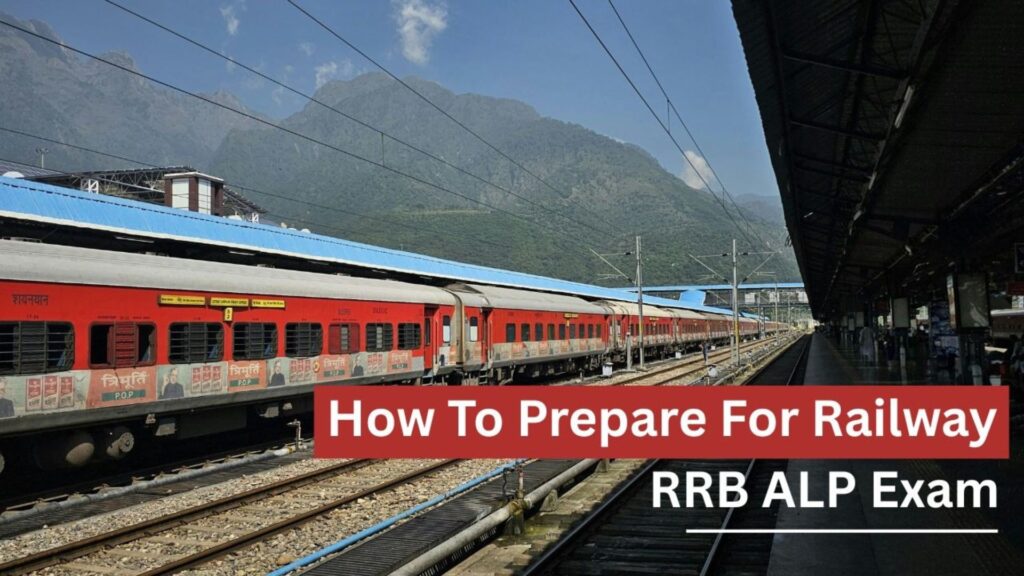
Read More 👉 How To Prepare For Railway RRB ALP Exam And Secure High-Paying Government Job

How the Application Actually Works

Once you decide which field you are going to join, you have to figure out the process itself, which felt confusing the first time but became simple once he broke it down. 

It starts with tracking official notifications. Websites like ssc.nic.in, ibps.in, rrbcdg.gov.in, and upsc.gov.in post recruitment notifications which include detailed instruction and a timeline to open the portal where you can apply. It happens every year, so checking them regularly matters.

Once a notification drops, the first step is registering online, usually with just a mobile number and email. Then comes the actual application form, where personal details, educational background, category, and post preferences need to be filled in carefully. 

Remember that correction windows are short, so a careless mistake here can follow you for the whole process. After that, documents like your photograph, signature, and category certificates need to be scanned and uploaded. 

Then there’s the application fee, though SC, ST, PWD, and female candidates often get a waiver or discount here. Once everything is submitted, the admit card becomes available a few weeks before the exam date, and then it’s just down to showing up and going through whatever stages that particular exam has, whether that’s a single test or a longer chain of prelims, mains, and interview. 

How To Prepare For Government Exams?

Once you know that these exams exist doesn’t mean you are fully prepared for it. You need to read the syllabus properly instead of skimming it. 

Every exam leans on a mix of Current Affairs, Simple Mathematics, Logic and Reasoning, and English or Hindi, but the weight given to each section changes depending on the exam. 

After you study the topics of a specific exam, check previous year papers, not to memorize answers, but to understand the pattern, the difficulty level, and how questions are usually framed and paired with regular mock tests.

This technique will teach you how to manage time under pressure, since most of these exams are brutally time-bound. Make Current affairs a daily habit too, especially since banking and SSC exams lean heavily on it. If your exam has more weightage on Current Affairs then prepare well for it day-by-day.

What made the real difference, though, was a basic timetable. Not a rigid one, just something that kept you showing up every day instead of cramming in bursts. And you had to decide between coaching and self-study. Most students who cracked their exams recommend choosing both. As some subjects are hard that need guidance and some are easy, you can prepare it by yourself. There’s no universal right answer here. It depends on how you learn best.

Read More 👉 UP GNM Entrance Test UPGET: Eligibility, Syllabus, and Selection Process

Common Mistakes Students Should Avoid

For decades, students have been doing wrong while preparing for the government exams which can be put away and made aware future generations to stop going wrong.

  • Some students put all their effort into one single exam and ignore everything else, which is risky given how competitive these exams are. 
  • Others miss notification deadlines simply because they weren’t checking regularly. 
  • A lot of students skip mock tests entirely, only to be blindsided by time pressure on the actual exam day. 
  • And many treat current affairs as optional, which costs them marks in exams where it’s actually a major scoring section. 

Conclusion

There are massive numbers of vacancies every year in government jobs after graduation in India. If you also finish your college this year or previous year, you can apply for any of the jobs which fits into your profile. 

Check the official notifications daily to find the dates for application, admit card, and exam date. Some exams take multiple phases to get selected but some require a simple exam. Students who can stay consistent, give hours to study, and set their goals can achieve it by going through a tough process of selection.

Leave a Comment

Your email address will not be published. Required fields are marked *

Scroll to Top