Top Agriculture College in Uttar Pradesh: Courses, Fees & Admission Details

Top Agriculture College in Uttar Pradesh

Uttar Pradesh is one of the most agriculturally capable states in India and its Top Agriculture Colleges in Uttar Pradesh are a testimony to this heritage. Whether you are a student passionate about sustainable farming, agricultural innovation, or agribusiness, Uttar Pradesh state has some of the best centers to develop your career in this important sector. If you want to study agriculture in UP, this blog is for you to see the list of top colleges, know about courses, fee structure and the admission process. 

Why Choose Agriculture Education in Uttar Pradesh?

Farming in Uttar Pradesh isn’t just small-scale ploughing anymore. The state’s agricultural schools combine research and state-of-the-art technology with practical work in the field to give students the skills necessary for 21st-century farming. 

In areas such as crop science, agricultural engineering, agribusiness and sustainable farming methods, these colleges provide students with the tools to become leaders in the agricultural industry. 

The Top Agriculture Colleges in Uttar Pradesh

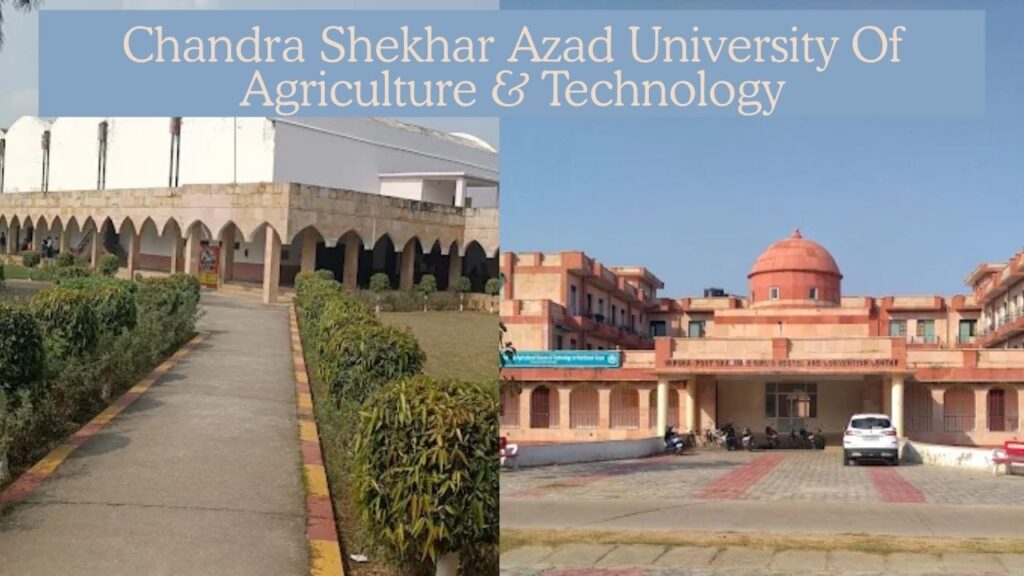
1. Chandra Shekhar Azad University — (CSAUAT), Kanpur

The CSAUAT is a leading Indian agricultural university and played a pivotal role in laying the foundation for the development of the university system of agriculture in the state right from the beginning in 1975. Located in the heart of the agro-based state of Uttar Pradesh, this Government institute has built a name for itself for a long time now.​ 

Chandra Shekhar Azad University

Courses Available – B.Sc.(Hons) Agriculture, B.Tech in Dairying Technology, B.Tech Dairying, M.Sc. Agri in different specializations like Agronomy, Plant Pathology, Soil Science, and Ph.D. courses. 

Fees: The B.Sc. (hons.) The annual fees of B.Sc Agriculture is about ₹1.07 lakhs per semester (The total fee is ₹4.28 lakhs for 4 years), which is very reasonable under this course. B.Tech courses are charged at about ₹1.50-1.64 lakhs per annum.​

Admission: Applicants can apply if they are passed 10+2 with 50% minimum marks (with PCM/PCB subjects) and applicable for the UPCATET entrance exam. The counseling procedure is on merit.​

Placement & Career Growth: It will let you earn around ₹3-5 LPA package which is quite enough for freshers. Some even receive packages as high as ₹7 LPA, depending on their skills. 

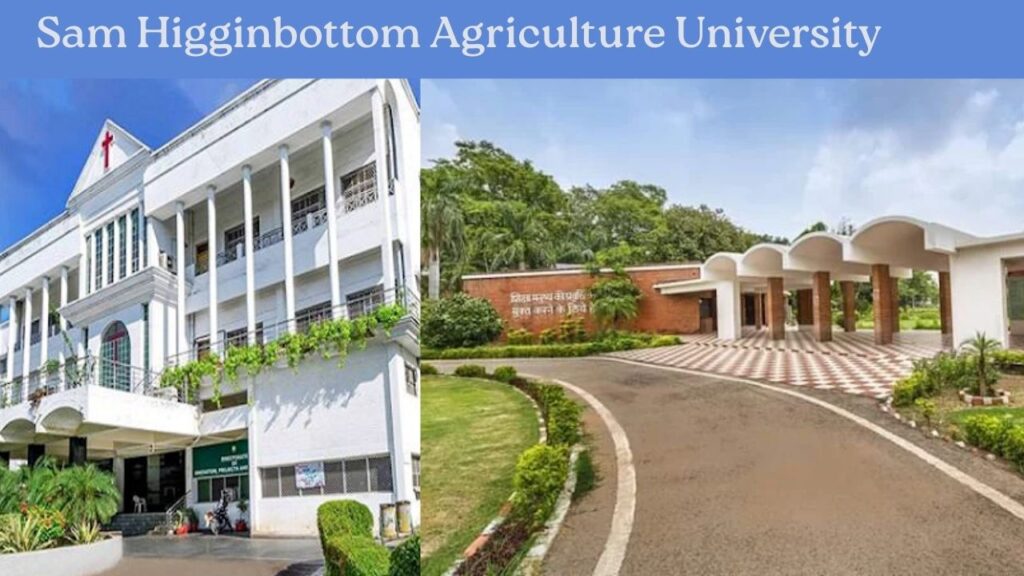
2. Sam Higginbottom Agriculture University, Prayagraj

A leading private deemed university, SHUATS is recognized for its integrated approach of farming systems and industry relevant curriculum. The campus is located at Prayagraj and has state of the art infrastructure for imparting agricultural education.​

Sam Higginbottom Agriculture University

Courses are B.Sc Agriculture, B.Tech in Agricultural Engineering, M.Sc Agriculture in various disciplines, PG Diploma/ Diploma in food technology. 

Fees: B.Sc. (Hons.) Agriculture fees is ₹1,08,000-1,20,000 per year at various universities in India. But SHUATS is much better when it comes to scholarships, candidates who are eligible can get waivers ranging from 30-40% on the fees, plus additional concessions for christian students.​

Eligibility: Candidates must have passed 10+2 in PCM/PCMB/PCB with minimum of 45% marks. The admission is merit based on an entrance test conducted by the university, usually in the month of May.​

Placement & Career Prospects: The salary package is exceptional, the one can earn around ₹6.20 lakhs. The package is based on the skills of the students that can be up to ₹3 LPA. 

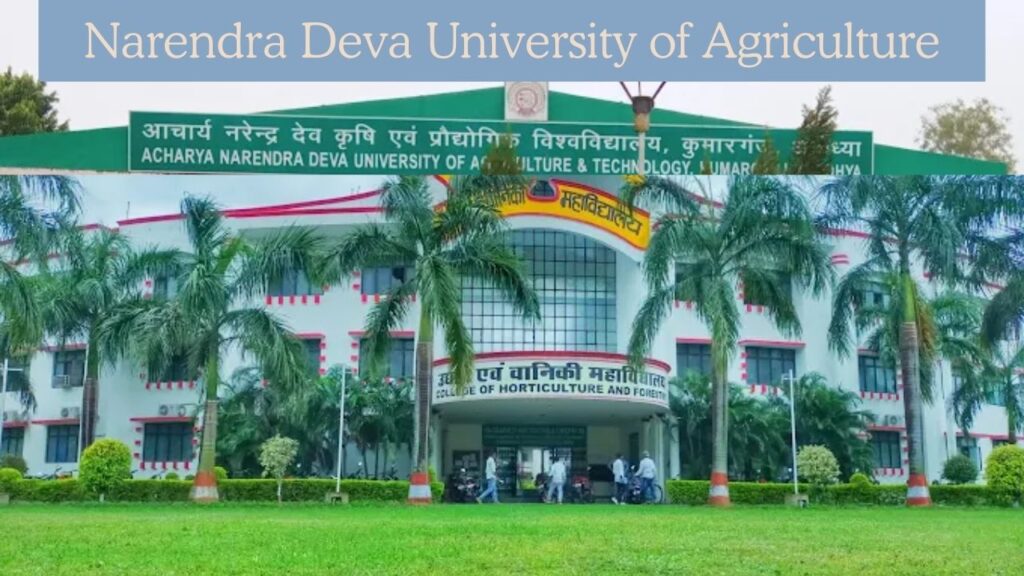
3. NDUAT — Narendra Deva University of Agriculture 

The NDUAT is an agricultural university, It focuses primarily on horticulture and crop science. It is a government institution in Ayodhya and provides good quality education at low cost.​

Narendra Deva University of Agriculture 

Courses available: B.Sc. (Hons) in Agriculture, B.Tech specialisations, M.Sc. courses in B.V.Sc. & A.H. (Veterinary), as well as B.F.Sc. (Forestry).​

Fees: The B.Sc. (Hons.) Agriculture course fee is around ₹1.05 lakhs for 4 years, while B.Tech fees range between ₹1.64-1.70 lakhs. 

Admissions: The minimum qualification is 10+2 with 50% marks in the PCB/PCM group of subjects. Admission is based on UPCATET entrance examination and then counseling on merit.​

Placement & Career Prospects: The candidates who graduated have a placement with an average package of ₹3 LPA in both private and government sectors. 

4. Sardar Vallabhbhai Patel Agriculture University  

SVPUAT is the best university which is located in Meerut, making it easy for students. With all the government funding support, SVPUAT is known for its research on crop improvement and agriculture mechanization.
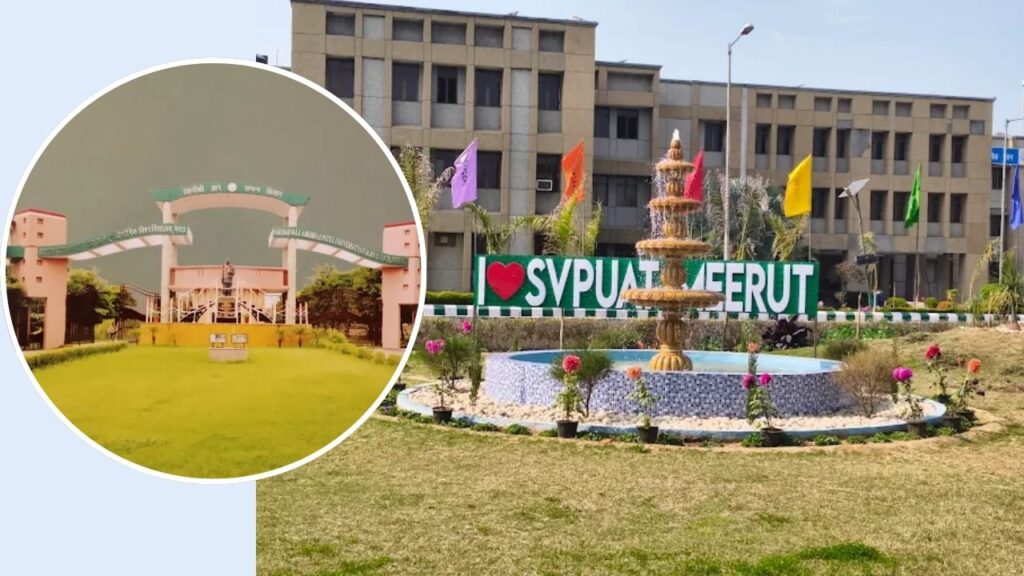
Fees: The fees for the whole course in AY is around ₹45,000 which is one of the cheapest in the state.

Placement: The strong ties with agribusiness companies, research institutes and government agencies enable graduates to obtain good placements. 

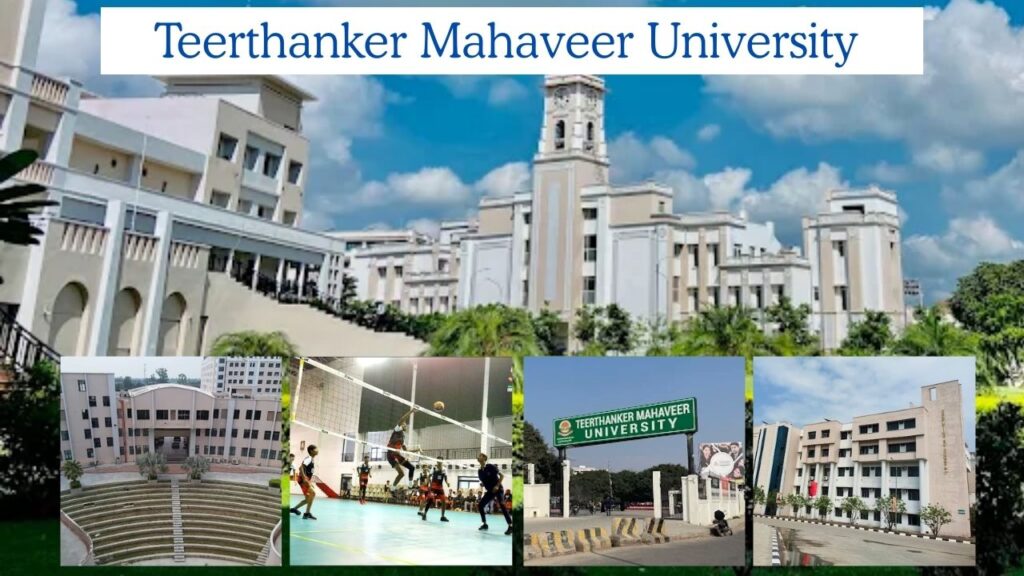
5. Teerthanker Mahaveer University (TMU), Moradabad

TMU is one of the best private universities in uttar pradesh with world class infrastructure and industry oriented syllabus.​

Teerthanker Mahaveer University

Course Offered: B.Sc. Agriculture, M.Sc. Agriculture courses based on ICAR norms.​

Fees details: The total duration of B.Sc. (Hons. ) Agriculture at TMU is 4 years The fees for B.Sc. (Hons.) The duration of B.Sc Agriculture is 3 years and for M.Sc. Agriculture 2 years. The tuition fee is Rs 45,000 per semester for MSc Agronomy. 

Facilities: There are world-class labs, practical training, and strong linkages with the industry, in the university. 

Understanding the UPCATET Entrance Exam

Most of the government agricultural universities in Uttar Pradesh take their admissions via UPCATET(Uttar Pradesh Combined Agriculture and Technology Entrance Test). 

Here’s what you need to know:​

Exam Details: The exam is held every year in offline mode by the universities. For UG courses, the exam is generally conducted in June. 

Eligibility: 10+2 passed students having science subject (PCM, PCB or with Agriculture subject) with a minimum of 50% marks are eligible to apply. There is a benefit for reserved category students, they can get marks relaxation up to 5%.​

Exam Pattern: The UPCATET contains 200 questions from general knowledge, agriculture science, mathematics, and English. The examination will last for 3 hours.​

Age Limit: Applicants must be aged between 16-22 years for UG courses at the time of admission. 

Read More:- ITI Admission Fees in Government College: Complete Fee Structure Guide

Course Overview

The first years of agriculture in UP colleges are generally the basic courses in crop production, soil science, plant pathology, entomology and agricultural economics. Students specialize as well, choosing from such options as horticulture, seed technology, agricultural extension, agricultural engineering. 

A number of courses have fieldwork components and the Rural Agricultural Work Experience (RAWE) allows students to work with farmers as they confront challenges of farming in the field.  

Career Growth & Salary Package 

There are many opportunities for the graduates of agriculture. For the freshers agriculture college students —- the packages will be near about ₹20,000-35,000 per month for job profiles like agricultural assistant and farm supervisor etc in the entry level The amount varies with the university from which students have passed. 

Professionals at an intermediate level with 2-3 years of experience can earn around ₹40,000-60,000 per month. The salary of Agriculture Officer or Agriculture Development Officer in the government lies between 35,000 – 60,000 Rs per month

Conclusion

Selecting an agriculture college in Uttar Pradesh is all about shaping the future of India. Be it a renowned government college like CSAUAT or a up-to-the-minute private university like SHUATS, you will find a route that leads you both with practical experience in the real world of life and a theoretical academic purity. 

With manageable fees, quality faculty, research opportunities and robust placements, the agriculture colleges in UP prove to be the best when it comes to anyone with a zeal and passion to bring a change in the agriculture scenario of India. 

Leave a Comment

Your email address will not be published. Required fields are marked *

CTET Exam 2026: Check Exam City, Notice, Exam Dates, Syllabus and Eligibility Information

CTET Exam 2026

The golden opportunity is announced for all the Teachers in India through CTET exam 2026. Organized by CBSE, this country level examination is for teaching jobs in government and private schools for Class 1 to 8. Candidates who apply in December 2025 for this examination should get ready for the exams.

Notification Details

Exam notice is released for CTET exam 2026, you can also get official notification on the official website for all the details about the exam. Candidates who filled the forms in November — 18 December 2025 can prepare themselves for the examinations in prior time to avoid panic at the end.

CTET February 2026 Exam Dates and Format 

FeatureDetails
Exam Date7 & 8 /February /2026 (Saturday & Sunday)
Mode of ExamOffline (Pen & Paper / OMR Sheet)
Number of Cities132 to 140 Cities Nationwide
Total PapersFor 1-5 Standard: Paper I;  For 6-8 standard: Paper II
Question Type150 Multiple Choice Questions 
Total Marks150 Marks per paper
Duration150 Minutes (2.5 Hours)
Negative MarkingNone
Language OptionsBilingual (Hindi/English) + 20 Regional Languages

Syllabus Overview

Paper 1 consists of questions from Child Development & Pedagogy, Language I & II, Science (for Science group), Social Studies (for Social studies group), Mathematics, and Environmental Studies, the emphasis is primarily on assessing the capability to teach at mali-ly school children. 

Paper 2 deals with Child Development, Language I and II and options such as Maths/Science or Social Studies for senior levels. 

Subjects stress pedagogy, theories of learning, and content of subjects based on guidelines of NCTE. 

Pass requirement is 60% for general (55% for reserved). 

Education and Age Limit Rule

  • There is no age limit here—everyone is welcome to apply, if you are Indian or you have Indian roots. 
  • For Paper 1, you should have a minimum of 50% in 10+2 with a 2-year Diploma in Elementary Education (D.El.Ed) or graduation with B.Ed. 
  • Paper 2: Graduation with minimum 50% marks and B.Ed or its equivalent like B.Ed (Special Education) is essential. . 
  • Reserved Category (SC/ST/OBC/PwD) Candidates can get Relaxations of 5% less in qualifying marks. 
  • Candidates who are appearing in the last year of their course are also eligible. 

CTET exam 2026 Admit Card Download Step-by-Step Instructions

  1. Go to the Important links section below and click on the Admit Card option.
  2. Enter your login details correctly to avoid interruptions and download your admit card
  3. Admit Card will appear 3-4 days before the exam, kindly wait for it.
  4. After the CTET admit card has been issued, get print out from here to carry a copy with you to the exam centre. 
Important Links
Exam NoticeClick Here
Date & City of examClick Here
Admit CardClick Here
Official WebsiteClick Here

Leave a Comment

Your email address will not be published. Required fields are marked *

RPF Sub-Inspector Exam: Your Complete Guide to 2025 Recruitment

RPF Sub-Inspector Exam

The RRB RPF Sub-Inspector exam is considered as one of the toughest national level exam in India and it is conducted by Railway Recruitment Board under the Ministry of Railways. The exam is held to select eligible and committed candidates for the post of Sub Inspector in Railway Protection Force, a specialized security force which ensures the safety of railway passengers, railway premises, and vital rail components in every zone of Indian Railways. 

RPF SI Recruitment is prestigious post and government job and it has good salary package, so, that is way it is most demanded exam in our country. The exam is conducted as computer based test (CBT) in 15 languages apart from English such as Hindi, Urdu, Tamil, Telugu, Kannada, Odia, Malayalam, Marathi, Gujarati, Bengali, Assamese, Punjabi, Manipuri and Konkani, for the convenience of candidates from all corners of the country. 

Eligibility Rules for RPF Sub-Inspector

Will you be entitled for the RPF Exam or not? Those who fulfill the Railway Protection Force eligibility criteria can apply for this prestigious job.

Age Limit: The upper age is 28 years on 1st July of the year of recruitment and the lower is 20 years. However, various relaxations applicable for different categories is stated as below: 

SC/ST5 years 
OBC 3 years 
domiciled Candidates from J&K and LadakhOR Central Government employeesUR/EWS – 5 yearsOBC – 8 yearsSC/ST – 10 years
WidowsUR/EWS – 2 yearsOBC – 5 yearsSC/ST – 7 years

Educational Qualification: The candidate should possess a Bachelor’s Degree in any stream from a recognized university for RPF Sub-Inspector exam. The requirement of Graduation is in place to get a basic intellectual knowledge which is required to hold duties of administration and leadership in security services. 

Nationality: You must be an Indian citizen for this recruitment.

Physical Fitness Standards: Basic eligibility does not specifically state this, nonetheless candidates have to be physically fit to meet with the standards laid down in the efficiency test and physical measurement which are critical to the selection procedure. 

Read More 👉 UPSSSC Mukhya Sevika Salary 2025 – Check Pay Level, Job Profile & Perks

RPF SI Job Recruitment Vacancies 

Posting choices are due to the candidates holding down their preferred location during the filling of the preference form as the posts are spread across multiple railway zones in India which include Eastern Railway, Southern Railway, RPSF (Railway Protection Special Force) and many other zones. Since candidates can opt for postings near their home state/region, this zonal arrangement makes the exam less inaccessible. 

Exam Pattern and Question Distribution

The knowledge of exam pattern is needed for the strategic preparation. The RPF SI exam is a single level exam which is conducted in the form of an online computer-based test, having multiple choice questions, which is of 2 hours duration. 

There are three sections in the RPF SI Exam:

General Awareness (50 Questions, 50 Marks): This section is an evaluation of your knowledge about Indian history, the Indian constitution, polity, geography, Indian economy, the general science, sports, current national and international events and also a few questions on current governments recently introduced. The questions test both your static and dynamic awareness or knowledge of current affairs. 

Arithmetic (35 Questions, 35 Marks): The arithmetic section includes questions on number systems expansion, simplification by BODMAS rule, ratio and proportion, percentage, profitable loss, interest calculation on SI and CI, time and work question average time related queries and simple topic of algebra.

General Intelligence and Reasoning (35 Questions, 35 Marks): Assess your ability to think logistically and solve problems through verbal and non-verbal reasoning and General Intelligence via questions on Analogies, Classifications, Coding Decoding, Series Completion, Blood Relations, Directions, Logical Reasoning and Pattern Recognition.

To promote accuracy rather than the recklessness of wild guesses, each correct answer is awarded one mark, while for each wrong answer one-third of a mark is deducted. The exam is available in fifteen different Indian languages but most of the candidates opt either Hindi or English.

Topic-Wise Syllabus Breakdown

General Awareness Topics

  • Domestic and International news, political scenes, social conditions, notable events and progress, awards and accolades.
  • Indian history is divided into independence movements, ancient India, medieval India, modern India and significant historical personalities.
  • Indian Constitution: Sections and their significance, process of making amendments, rights to the individuals and guiding principles of state policy
  • Physical and Global geography, environmental concerns, and Indian geography basics.
  • Economy: Goods and services inflation rate, stock market economy, macroeconomic microeconomic budgetary terms
  • Public Law — The legal institutions, gov. etc.
  • General Science: All Physics, Chemistry and Biology topics for Class 10–12
  • Athletics, such as football, great players, artistic genres, music, dance, literary, performing arts performances sport and culture. 

Arithmetic Topics

  • Number system: prime and composite numbers, divisibility, whole numbers, and HCF, and LCM
  • Simplification: BODMAS rule application, square roots, decimals, and fractions
  • Ratio and Proportion: Sharing issues, partnerships, direct and indirect proportion, and mixtures
  • Percentage: Simple percentage calculations, percentage increase or decrease
  • Cost price, selling price, profit and loss, discount and percentage of profit and loss
  • Simple and compound interest: applications of principal, rate and time, and formulae
  • Time and Work: Pipe and cistern problems, work and work efficiency, work with wages
  • Average: Weighted averages, age-related averages, and averages formulas
  • Algebra: Basics of algebraic expressions and linear equations 

General Intelligence and Reasoning Topics

Analogies: Finding relationships between word pairs

Classification: Categorizing similar items and identifying the odd one out

Coding- Decoding: Decoding the pattern of coded messages

Finding pattern in numerical or alphabetic series is called Completion of series.Blood Relations: Understanding family relationships

Directions: Solving puzzles on directions

Logical Reasoning: Understanding the statement and making the argument

Finding unseen patterns in logical or visual series 

Selection Process For RPF Sub-Inspector 

RPF SI Selection Process is the multi-level RPF SI selection process that aims to assess the candidates on various parameters. Understanding all stages enable you to be prepared in every possible way.

Computer-Based Test (CBT) at Stage 1: The initial challenge is a 90-minute pen and paper test consisting of 120 questions. A high score is required to advance to the second stage, as this round finishes off a large number of applicants. 

Stage 2: The candidates who clear the CBT are called for the Physical Efficiency Test (PET) and Physical Measurement Test (PMT). The PMT is a measurement of height and chest for male applicants, and height for female applicants. The Physical Efficiency Test examines physical stamina by way of demanding routines. 

Stage 3 Document Verification (DV): The PET/PMT qualified candidates are called for the document verification. At this stage, the information provided by the candidates is matched with the original educational certificates, caste certificate and identity proofs. 

Stage 4 involves a complete Medical Examination by CAPF/Govt. Your medical examination confirms that you have the physical ability to do your demanding job. 

Salary and Job Benefits

The RPF Sub-Inspector post is attractive for various reasons like good income, stable government job and good facility.

Salary Structure 

The 7th CPC has fixed the minimum pay for RPF SI as Rs 35,400 per month with a grade pay of Rs 4,200. Yet the net pay, after subsidy and deductions, is Rs. 43,000 and Rs. 54,162 per month.

Additional Allowances and Benefits

Medical Facilities: Comprehensive coverage for the healthcare of you and your family

Travel and Transfer Allowance: Assistance with relocating and traveling for work

Pass and Privilege Ticket Orders: Discount train travel for you and your family

Education Support: Support for your children’s education

Provident Fund (PF): A provident fund is a savings cum retirement benefit scheme available to all salaried classes of individuals

Gratuity: Lumpsum on exit 

Application Fee and Where To Apply

The fee structure is designed keeping in mind everyone and also in compliance with the government norms. Rs 500 as the fee for General, OBC, and EWS candidates. SC, ST, PH ( hearing impaired) candidates and all women candidates are required to pay only Rs.250.

You do the entire application online at the RRB site (rpf.indianrailways.gov.in). This allows you to apply from anywhere in India. 

Preparation Tips and Strategy

Success in RPF SI exam requires a solid study plan along with theoretical knowledge and that of practicing. Candidates must focus on the General Awareness section by keeping them updated with current affairs on a monthly basis, practice regular mock test for improving accuracy, and to be able to perform in a limited time. The sensible marking scheme and relatively small extent of syllabus make this test attainable with concentrated 4-6 months of preparation. 

Conclusion

The RPF SI exam provides a golden opportunity to all the educated candidates to get a respectable government job. It means steady work, good pay and a major part in keeping the nation safe. Determination, good Study material and regular Practice can make your Dream of becoming RPF Sub-Inspector into Reality. 

Leave a Comment

Your email address will not be published. Required fields are marked *

Best IIT College in Uttar Pradesh – Complete Ranking & Admission Guide

Best IIT College in Uttar Pradesh

Selecting the Best IIT Colleges in Uttar Pradesh is the largest challenge to face any engineering aspirant. The state has only two IITs – IIT Kanpur and IIT (BHU) Varanasi – but its institutions have perennially churned out India’s top engineers, researchers, innovators and global leaders. The two colleges have excellent reputations on both national and international scales, world-class faculties, state-of-the-art labs, and one of the best placement records in the nation.

Whether you’re shooting for a top-300 JEE Advanced rank or making your way to a legacy-rich IIT with great future prospects, this guidance narrates rankings, fees, application process, placements and career outcomes, helping you make a smart and informed choice. So, let’s take a look at the top engineering colleges in Uttar Pradesh. 

IIT Kanpur: The Engineering Powerhouse

Founded in 1959, IIT Kanpur is now the best engineering school in UP. Ranked #4 in NIRF Engineering Rankings 2025, It always manages to be among the best universities making it as top engineering schools in India. The institute provides a high quality of education with its sprawling 1037-acre campus in Kalyanpur, Kanpur. 

IIT Kanpur
Image credit: IIT Kanpur

Admission and Eligibility

The admissions in the undergraduate B.Tech courses of IIT Kanpur are through JEE Advanced only. The cutoff for cse (computer science and engineering) for the year 2025 was 271 in very high competitions. Along with your JEE Advanced score you should have a minimum of 75% in Class 12 (65% for SC/ST categories). The institute accepts GATE scores for some of the postgraduate programmes (depending on the discipline), as well as IIT JAM and CAT scores. 

Fee Structure 

B.Tech fees is ₹ 2.30 – 2.50 lakhs per year, and ₹ 20,000 to ₹ 30,000 a semester for mess and hostel. So, a higher secondary B.Tech Degree will cost around Rs 8.6 lakhs, which is reasonable for quality education. Apart from these the institute has several other scholarships such as Merit-cum-Means (MCM) Scholarship, schemes for SC/ST students etc. 

Career Prospects & Placements  

Placement record of IIT Kanpur is known to be excellent. The average package for the B.Tech graduates is between ₹ 26.90 and ₹ 30.86 LPA while the highest package is ₹ 1.9 crore per annum. Top recruiters such as Google, Microsoft, Amazon, Tata Steel etc. ensure good options in core and tech industries. 

IIT (BHU) Varanasi: The Heritage Institution

IIT (BHU) Varanasi was formed in 1919 to deliver vast education to new generations and is still doing it. Its one purpose is served well as everyone can see with their own eyes on the alumni network of IIT BHU. It is also grounded in a tradition of academic excellence spanning centuries, even now it actually tops on the edge and holds 10th position, according to NIRF Engineering Rankings 2025.

IIT (BHU) Varanasi
Image credit: BHU

Admissions Process & Eligibility Requirement

BHU conducts admissions through JEE Advanced as well, similar to IIT Kanpur. The closing rank for CSE in 2025 was around 2,500, however the cutoff is significantly lower. This means that if you take the JEE via BHU, you could get into a good IIT even if you don’t make a very high rank. For students of general category, minimum 75% is required in class 12 fulfilling the eligibility criteria. 

BHU B.Tech Fees

Banaras Hindu University B.Tech program fees range from 3.17 L to 8.51 L for full course, whereas tuition fee is in the range of 1,00,000 to 1,20,000 per semester and hostel fee ranges between 25,000 to 28,000. With this, it rates somewhere around or even less expensive than IIT Kanpur, depending on the branch. 

Career Prospects & Placements

BHU has no less amazing placement figures. The highest package is ₹1.68 crore per annum and the average package is ₹22.77 LPA. Over 80% of students were placed in 2024, and the CSE average lies within ₹25-₹28 LPA. Google, Qualcomm, Uber and Goldman Sachs are the top recruiters. 

Read More 👉 Bihar DElEd Entrance Result 2025 OUT: Check Marks, Rank & Admission Status

Making Your Choice

The selection is on the basis of your JEE Advanced score but both colleges are great for education. IIT Kanpur has a slightly better average package as well as branding if you fall under the top 300–400. Then, IIT (BHU) Varanasi is your best bet if your rank lies between 1,500 and 3,000. It combines legacy with excellent career outcomes. In both situations you are paying for the brightest engineering futures in India, twice. 

Comparison Between IIT BHU & IIT Kanpur

The top JEE advanced students looking for a slightly better average package and brand name in a tier 2 engineering college should go with IIT Kanpur. It has a good number of students with a rank below 500, as the the #4 ranking for NIRF along with the world class facilities attracts students from all over the country.

IIT BHU Varanasi is equally competitive and is a great choice, though it does have a lower ranking (#15). Owing to a much lower cutoff rank (~2,500 as compared to ~271 for CSE), a lot more students qualify for it and yet it boasts great placement stats. The history of the institution is over 100 years and that provides some historical prestige but that many applicants doesn’t value. 

Comprehensive Comparison of IIT Kanpur and IIT BHU Varanasi

Both universities provide good scholarship opportunities, have good placement and see participation from best global companies. Your decision should be based on your JEE Advanced rank, finances, and if you place more value in brand (Kanpur) or accessibility + heritage (BHU Varanasi). 

Conclusion

These are the best IIT colleges in Uttar Pradesh which offer outstanding core academics, research, placements, and student life. If you are a high ranked aspirant and looking for an elite brand name with more research options and slightly higher average packages then IIT Kanpur is the clear winner.

But for hot IIT rank holders in the range of 1,500–3,000 and who want an IIT that combines tradition with bang for your bucks, a rock solid faculty and stellar placements year in and year out, IIT (BHU) Varanasi is the way to go. 

Whichever institution you opt for, both pave the way to brilliant careers, worldwide prospects and a life-changing four-year experience of engineering. 

Leave a Comment

Your email address will not be published. Required fields are marked *

DSSSB MTS Recruitment 2026: Apply Online for Multi-Tasking Staff Posts

DSSSB MTS Recruitment 2026

DSSSB MTS Recruitment 2026: The Delhi Subordinate Services Selection Board (DSSSB) has released the Notification for the Recruitment of Multi Tasking Staff (MTS) vacancies for the Year 2026. There are 714 posts in all. The application form submission will start from 17th December, 2025 and will end on 15th January, 2026. Eligible and interested candidates may apply online from the official DSSSB website. Candidates can check the detailed notification for eligibility criteria, application fee, age limit, salary, selection procedure, etc. 

Follow the link to download the detailed notification and to apply. Hope you apply if you qualify. Information regarding eligibility criteria, application fee, age limit, salary and selection process is provided in the notification. Make sure you have gone through the official notification before you apply. 

Details of DSSSB MTS Recruitment at a Glance

OrganizationDelhi Subordinate Services Selection Board
PostMulti Tasking Staff
Vacancy 714 
Min Age to apply18 years
Max Age to apply27 years
Salary Lie Between ₹18,000 to ₹56,900/- Per Month
Official WebsiteClick Here

Dates To Remember For Application Process

EventDate
Notification Date11/December/2025
Application Start17/December/2025 
Last Date Apply Online15/January/2026 
Last Date Fee Payment15/January/2026 
Correction DateAs Per Schedule 
Admit CardUpdate Soon 
Exam DateUpdate Soon 

Read More:- SSC Exam Calendar 2026–27: Complete SSC Exam Schedule

Follow These Steps To Apply 

DSSSB MTS Notification 2026 has been published on 30 September 2025 for 5159 vacancies. of MTS has been released on 17/December/2025. 

To Apply Online for Multi Tasking Staff, Follow These Steps:

1. Observe the DSSSB MTS Notification 2026 PDF for complete details.

2. Go to the Official site at dsssb.delhi.gov.in or click below to Apply Online.

3. Fill in the DSSSB MTS Online Application Form 2026 with the necessary details.

4. Upload the required files to prove your claimed information.

5. Submit the requisite fee via the mode of payment mentioned.

6. Print a copy of your application form after you have submitted it.

If you’d like, you can also check out reasoning ability practice tests’, exam preparation courses’, and time management techniques’ for more help. 

Useful Links
Apply NowClick Here
Download NotificationClick Here
Official WebsiteClick Here

Leave a Comment

Your email address will not be published. Required fields are marked *

Top Law Government Jobs in India You Must Target in 2025

Top Law Government Jobs in India

There are a large number of engineers in India shaping the country’s future to more advanced development and infrastructures. Engineering govt Jobs are the golden ticket for long-term stable career growth. Candidates who are willing to work in the government sector as engineers can take these top competitive exams. After clearing the examination, candidates can get the job role. You can beat the competition to secure a position in a government job, but you must learn about the eligibility criteria, exam structure, and syllabus to study strategically and efficiently. 

Company Secretary & GM-Legal, Manager Legal

If you aim to put your legal experience in the company as Company Secretary that meets the goals of the company under the legal compliances to ensure that the organization follows the governance duties. The strategic responsibilities of legal advisory are effective in corporate organizations for growth and stability. You can apply for this role if you are willing to work in the organization.

EducationLaw Degree (LLB)Membership with the ICSI for the company secretary
Experience7-10 years in corporate legal posts

Responsibilities for the Company Secretary & GM-Legal

Analyzing legal documents, agreements, and contracts to ensure the statutory laws and corporate regulations are compliant with the project or not. The secretary represents the organization in court as their legal expert, it is their responsibility. Supervising board meetings of the company which are held between the shareholders and any illegal activity in the company will not be performed by any senior or junior employee otherwise, legal actions would happen. It is mandatory to keep maintaining the legal records clean.

Salary & Perks

The average salary range for the company secretary & GM-Legal is 12-20 lakhs per annum, along with bonuses. Perks include career-high salary, allowance for housing, medical benefits, and pension. This is a smart career move for the law professional to target this job role in 2025.

Professor, Associate Professor, Assistant Professor  in Law

If you have an interest in Teaching and Law then you can choose this option as your career. You can start teaching law as a Professor, Associate Professor, and Assistant Professor in government colleges and National Law Universities. These posts offer a most stable job with high salaries, shaping your future into the best life joy with your legal mind. 

Qualification required post-wiseStage 1: You can be selected as Assistant Professor at first after completing a Masters in Law with NET/SET.Stage 2: Promoted to Associate Professor after 8 years of experience with PhD in Law.Stage 3: Professor
Experience7-10 years of experience in college with PhD in Law

Responsibilities as Professor/ Associate Professor in Law

Deliver Lectures on Legal Subjects to spread your knowledge to all the students with real-world examples. Researching and publishing relevant information through national or international journals or articles. Mentorship, development, and updating laws and policies are the key structures for these roles. You have to implement these key points in yourself.

Salary & Perks

Assistant ProfessorAssociate ProfessorProfessor
₹57,700–₹1,82,400 per month₹1,31,400–₹2,17,100 per month₹1,44,200–₹2,18,200 per month.

Executive Posts in Law

Executive posts in the legal domain, such as Legal Advisors, Legal Executives, and Senior Legal Officers, are crucial roles in the public sector and government organizations. To comply with the organization’s activity with the law is the primary motive of these roles. The Organization needs a legal advisor on activities such as contracts dealing and tender agreements etc. 

EducationLLB Degree is mandatory LLM is optional (some organizations require it)
Experiencesenior positions require 5 to 10 years of experience in a legal advisory role.

Responsibilities of Executive

Ensuring the organizations comply with the law, contracts, and legal documents reviewed for navigating any illegal activity is mentioned. While performing transactions, agreements, and tenders to make sure everything is in compliance with corporate and legal regulations. This post allows the professional to turn their legal expertise and administrative responsibility into an ideal professionalism.

Salary & Perks

The Executive role offers a salary range between 60,000 to 2,00,000 rupees per month depending on the experience level and organization. Allowance in housing and medical, benefits of retirement like pension, and other benefits

Experienced Legal Advisor

An Experienced Legal Advisor has a responsibility to make efficient decisions in government departments and PSUs under the law and regulations. This role is to provide legal guidance for the organization’s development and growth. To ensure the organization meets the legal regulations and regulations.

EducationLLB Degree is mandatory LLM preferred
Experience10+ years of experience in a legal advisor role in the corporate or government sector
Additional SkillsExpertise in legal drafting and negotiation skills should be strong.

Responsibilities for the Experience Legal Advisor

Advising management on legal matters, policies, and confirming the procedures run through under law. Representing in the court as a sector Experience Legal advisor. Offering strategic and best solutions to corporate domains. Drafting and reviewing contracts, and monitoring compliance with statutory obligations.

Salary & Perks

The salary range for this role is 15 to 25 lakhs per annum. The salary structure depends on the organization. There are lots of perks one can get from this role such as Securing the pension plan, medical coverage, and travel allowance. The expert who has years of experience can use that knowledge and expertise to handle this job role as this is an excellent career choice for them. 

Legal Assistant / Legal Officer

The Legal Assistant and Legal Officer offer legal expertise to the teams in the organization. There are entry-level and mid-level positions for these roles where the candidate has to provide solutions in compliance with the law and policies. You can put your legal expertise into this role and build the organization’s operations in compliance with the statutory and regulatory frameworks. These roles involve supporting legal teams in ensuring compliance, handling documentation, and assisting with litigation matters.

EducationLLB Degree is mandatory 
ExperienceFor legal assistant: 0-3 yearsFor legal officer: 3-5 years
Additional SkillsProficiency in legal drafting, deeper knowledge of Indian Laws, and details 

Responsibilities of Legal Assistant / Legal Officer

Reviewing legal documents and agreements to assist in managing legal decisions. Maintaining and organizing legal records and documents. Conducting legal research to support case preparation.

Salary & Perks

The starting salary for Legal Assistant is ₹30,000–₹50,000 per month. The minimum salary for the Legal is ₹50,000 and goes high to ₹1,00,000 per month as it depends on the organization and experience. Medical coverage and Housing Allowance.

Leave a Comment

Your email address will not be published. Required fields are marked *

Scroll to Top