How to Apply for Bihar Police SI Recruitment 2026

Bihar Police SI

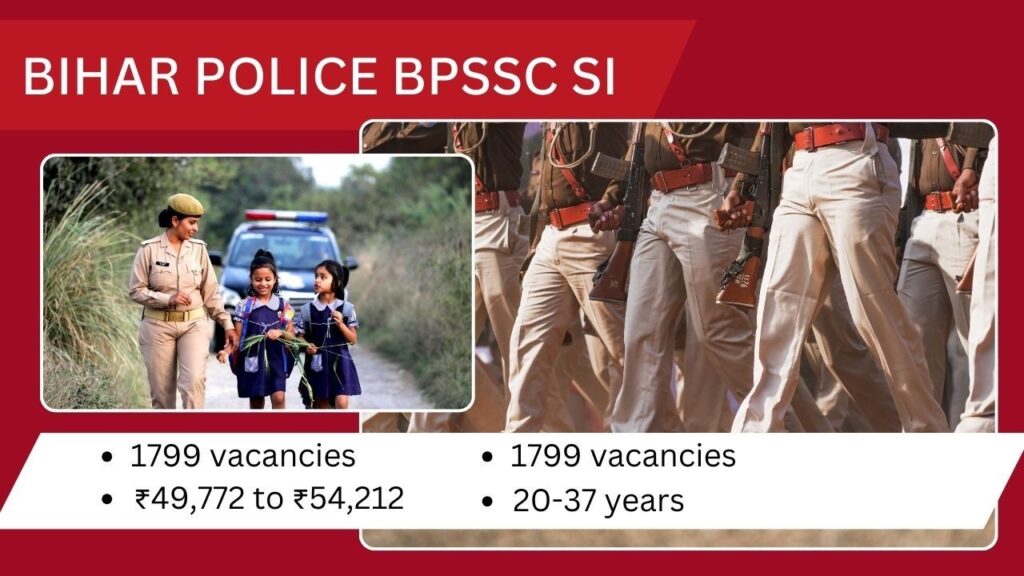
Bihar Police SI: Are you dreaming of Serving your State as a Police? The Bihar Police Subordinate Services Commission (BPSSC) SI recruitment is your best shot at securing a prestigious and well-paid job in the police department. With 1799 Vacancies Released under Advt. This is the high time to apply, as this is to best government jobs in bihar. Let me take you through all the information you need about the SI post from How To Apply to Salary Structure and Career Opportunities. 

What Exactly is a Sub Inspector in Bihar Police?

The Sub Inspector (SI), also known as “Daroga” in Hindi, is an important office in the police force that is scathing about peace, social security, and law in their areas of jurisdiction. Consider them as the police station department of operations. They’re not just desk jockeys — SI’s participate in field operations, investigations, and oversee junior officers. 

They tend to have their hands in all sorts of things like registering First Information Reports (FIRs), investigating crimes, maintaining law and order, and even supervising constables. From conducting raids, to building relationships with the community, to litigating cases in court, SI’s work is ever-changing and requires one to be physically and mentally strong. 

What Does an SI Actually Do?

Let me give you the drab realities of what your daily life as an SI looks like. You’ll have multiple critical jobs to do:

  • Crime Investigation: After investigating the crimes registered in your jurisdiction, you will be required to register FIRs and collect evidence.
  • Supervision: You will also be responsible for the supervision of constables and other junior staff, who you will deploy for patrols and duties.
  • Law and Order: Conducting patrolling at regular intervals so as to check on illegitimate activities and to keep the peace intact.
  • Court Appearances & Litigation Liaison: Handle routine court appearances and day-to-day inquiries from the court, and monitor court administrative compliance. 
  • Community Relations: Establishing reports with the public and keeping in contact with those who live in an area.
  • Paper Trail: Recordkeeping, report writing and office work.
  • Raids & Operations: You will be part of the raids and operations on criminals, but under senior officers.

Basic Eligibility Requirements

Before you start dreaming about recruiting, let’s make sure you meet a couple of very basic eligibility requirements. The good news is that the criteria are straightforward and relatively broad. 

Educational Qualification

You are required to have a bachelor’s degree in any stream from a recognized university. It doesn’t matter whether in any stream – arts, science, commerce or else. All that is required is that you have a valid graduation certificate. You can apply if you are in your final year too, but you will have to submit your degree certificate at the time of document verification. 

Age Limit

CategoryMalesFemales
General20-37 yearsUp to 40 years
OBC/EBCUp to 40 yearsUp to 40 years
SC/STUp to 42 yearsUp to 42 years

Nationality & Other Requirements

you should be an Indian citizen. There is no explicit ban on how many times you can try, just keep in mind you should be within the age limit for each time you apply. 

Note: You will be disqualified by the BPSSC at any stage if you are found ineligible. 

Read More 👉 DSSSB MTS Recruitment 2026: Apply Online for Multi-Tasking Staff Posts

How to Apply For Bihar Police Subordinate Services Commission (BPSSC) SI?

The Application Process is completely online. Here are the steps:

Step 1: Registration

Then go to the official website bpssc.bihar.gov.in and on the Apply Online link for Sub Inspector (SI) recruitment to apply. Register with your e-mail ID and mobile number and then enter basic details like name, date of birth and address. 

Step 2: Pay the Application Fee

The application fee is only ₹100 for all categories, including male, female, and transgender candidates. You have the option to pay by credit card, debit card, net banking or UPI. 

Step 3: Complete Your Application

Now we’ll get to the bottom line. Fill in your educational qualifications, address details etc and upload your photograph and signature. Make sure your photo is 3.5cm × 4.5cm and meets the above requirements. You will also need to upload your certificates and documents applicable to that notification. 

Step 4: Submit and Save

After reviewing everything, submit. Make a printout of the application form and retain it for your records. 

Exam Pattern and Syllabus

To get selected as SI in Bihar police you need to pass through different phases of examination which include your knowledge, physical fitness and your suitability to be the police officer. 

Stage 1: Preliminary Written Examination

Prelims is your first step in the race. It is an objective examination having 100 multiple choice questions in the paper worth 200 marks, with 2 marks allotted for each question. You have two hours to take it. The entire examination is based on General Knowledge and Current Affairs and has questions on:

  • Indian History, 
  • Geography of India, 
  • Indian Polity, 
  • Indian Economy, 
  • Science and Technology, 
  • Art and Culture, 
  • Sports, Awards and recent national and international News. 

There’s negative marking – 0.2 marks get deducted for every wrong answer. You must obtain a minimum of 30% marks to be eligible. Around 20 times the number of vacancies (about 35,980 candidates for 1799 posts) will be shortlisted for the mains examination. 

Stage 2: Mains Written Examination

Once you clear the prelims, a main examination is held which is tougher and more comprehensive in nature.The mains has two papers, 200 marks each: 

Paper I: General Hindi is Preliminaries level to be computed from the following items: grammar, comprehension, vocabulary, synonyms, antonyms and sentence correction. You get 2 hours.

Paper II: General Studies is the second and lengthier paper assessing your knowledge in a wide array of subjects namely Civics, Indian History, Indian Geography, General Science, Economics, Current Affairs, and Mathematics with Mental Ability. This paper also duration of two hours.

All in all, you would be taking 200 questions from both the papers, carrying 400 marks altogether. The qualifying nature of mains is merit based and about 6 times the number of vacancies are called for the physical test. 

Stage 3: Physical Efficiency Test (PET) and Physical Standard Test (PST)

CategoryHeight (cm)Chest (cm) MinWeight Requirement
Males (General/OBC/EBC/EWS)16879Proportionate to height
Males (SC/ST)16079Proportionate to height
Females155Minimum 48 kg
TransgenderAs determinedAs determinedAs determined

Stage 4: Document Verification and Medical Examination

Finally, after you pass the physical standards, you will be subjected to the document verification at which you must bring all your original certificates, and a medical examination to prove that you are physically and mentally capable to perform police duties. The health check includes vision, hearing and general health. 

Exam Dates of Bihar Police SI 

Remember to appear in The Bihar Police SI Prelims Exam will be held on 18 & 21/January/2026. Two sessions will be conducted on both days:

First Shift: 10:00 AM to 12:00PM (Report at 08:30 AM)

Second Shift: 2:30 PM to 4:30 PM (Report at 1:00 PM)

The admit cards were released on 30th december 2025 so download it from the official website. 

Basic Salary Structure

AllowanceAmount (₹)
Basic Pay35,400 per month
Dearness Allowance (DA)4,248
House Rent Allowance (HRA)2,124 to 5,664
Ration Money Allowance3,000
Transport/City Aid600 to 1,500
Medical Allowance1,000
Uniform Allowance900
Vehicle Allowance2,500

All these factors combine to result in a monthly salary of ₹49,772 to ₹54,212. 

Salary Growth Over Time

The interesting thing is your payslip doesn’t stay the same. You will get yearly bumps to your pay that will keep increasing your basic pay every year. After 5 years of service, with the consideration of increments and possible revisions in DA, your salary in hand may be around ₹58,000 to ₹62,000 per month and more than this with a promotion. 

Career Growth of SI

It’s not just the starting salary that makes the job attractive, the role is a springboard to a very rewarding career. The promotion ladder is simple and hierarchical:

SI → Inspector → Deputy Superintendent of Police (DSP) → Additional SP (ASP) → Superintendent of Police (SP)

You advance to a greater pay matrix level with each promotion resulting in tremendous salary hikes. For instance if you are promoted to Inspector your basic pay could rise to a higher stage with which you also get increments in all the allowances.

Promotion is on merit performance on seniority experience and departmental examinations. Good work, solving cases, and maintaining a clean record can fast-track your career.​ 

Conclusion

To be a BPSI is not only a government job but also it is a duty to serve in the society, uphold the law and order and a career opportunity to earn good name with good growth. The pay is good, the work is steady, and the potential for promotion is significant. Here is your opportunity to bring about a change with 1799 vacancies to be filled.

If you are eligible and interested to work hard then no one can stop you from applying. Begin your preparation today, keep on pace and best of luck. The dream to become a Daroga and to make you proud Bihar Police is definitely within your reach! 
Leave a Comment

Your email address will not be published. Required fields are marked *

HPSC Recruitment For PGT Post Graduate Teacher (PGT) Computer Science 2026

HPSC Recruitment

The HPSC Recruitment for 2026 Post Graduate teacher (PGT) Computer science Vacancy is out. There are a total of 1,672 posts and the process of application is going on. Those interested in this job can apply on-line from 16/February/2026 to 09/March/2026. Here is a golden opportunity  for all the aspirants who want to become a teacher in Haryana. 

Candidates should meet the eligibility criteria as per the HPSC to apply for the Teaching Posts. There is full information regarding eligibility, application fees, exam pattern and selection procedure in the notification. Applicants are advised to go through this notification carefully of HPSC Recruitment to ensure that they meet the eligibility criteria. 

Application Fees of HPSC Recruitment

CategoryFee
General/EWS/OBC₹1,000
SC/BC/PwD/Ex-Serviceman₹250
Females₹250
PH (Divyang)No fee

Schedule For Haryana HPSC PGT Teacher

EventDate
Notification Release5/February/2026
Online Application Start16/February/2026
Application Deadline9/March/2026 
Fee payment deadline9/March/2026

Education Requirement

QualificationDetails
M.Sc. Computer Science2-year regular course 
MCA3-year regular course
BE/B.Tech in Computer Science/ITFrom recognized university, minimum 55% aggregate 

Age Limit

CategoryAge Range
Minimum18 years
Maximum42 years (relaxations apply) 

Application Process

  1. View the Official Notification Or Apply Online: Interested candidates can apply online through the HPSC website.
  2. Now, go to the “Recruitment” section, check and click on the advertisement for PGT Computer Science.
  3. Select the option for Online Registration. Make sure you provide the correct number and DOB for registration in this step.
  4. Then, after registering for an account, you can complete your application form with the necessary details. It includes the details of educational qualification, ID, etc.
  5. Now, make the payment of the application fee as specified in the notification. You need to ensure that you do this step otherwise your application will not proceed further.
  6. After filling the form and making the payment of the fee, you may attach the required documents and submit the application. 

NOTE: Do keep a printout of your application form and payment slip for your reference. 

Read More:- BSc Dialysis Technology: Course Details, Eligibility, Salary & Career Scope

Selection Process and Exam Pattern 

The PGT selection procedure of HPSC Recruitment is meant to be a just and fair assessment through a simple two-tier exam system where your basic knowledge as well as expertise in the subject is tested.

1. Screening Test:

This is the initial level of screening. It combines your general knowledge with rudimentary knowledge of your subject to get rid of the non-serious and non-able candidates.

2. Subject Knowledge Test:

This is the main exam phase. It examines more deeply into your subject and examines what extent your conceptual clarity, understanding and hold of the subject is.

The selected candidates may be called for interview which will be concentrated for personality, communication/interactive skill and teaching aptitude after these written tests. 

Total Questions100 
Total Marks100 
Marking Scheme+1 mark per correct answer (0.25 negative marking in screening test) 

Syllabus for the HPSC PGT Exam

The HPSC PGT syllabus is very well crafted, as it is designed to impart teaching basics along with in-depth subject knowledge, guiding candidates to prepare in a comprehensive and methodical manner. It’s not just a test of what you know—it’s also a test of how well you know teaching.

General Topics (Applicable to all Subject)

These components are designed to focus on developing effective teaching practices:

Educational Psychology: Provides knowledge of how students learn, think, and grow, as well as some significant theories of learning and development.

Pedagogy: Practical teaching techniques, teaching in the classroom as well as learning to learn.

TLM (Teaching-Learning Materials): Related to production, use and management of TLM for efficient and effective classroom learning. 

Subject Specific Knowledge 

Each PGT subject has its own defined detailed syllabus by HPSC which is depth orientated and specialised.

For instance: For example, in Computer Science — Data structures, searching and sorting, algorithm analysis, graph theory getting solid computational and logical foundations.

English: A focus on reading comprehension, critical thinking and analysis of texts is effectively promoted by the syllabus. 

Conclusion

The application for HPSC Recruitment for PGT Computer Science 2026 is expected to be filled with aspiring candidates who wish to establish their career in the teaching field through this Haryana Public Service Commission Teaching jobs. With 1,672 vacancies dealing with a transparent selection process & a well-structured exam pattern, this recruitment serves as the best platform to enter into Haryana education. 

If you qualify for the eligibility and have the enthusiasm to teach, now is your time to take the plunge. Smart Preparation, Strategic Syllabus, brief Application Procedure & Get all Official Notifications. HPSC Recruitment 2026 can be the stepping stone for a bright and safe career in the Haryana’s Education System with hard work and integrity. 

GovUpdatewala is your trusted source for real-time updates on government exams and jobs in India. We provide verified info on SSC, UPSC, Banking, Railways, Defense, and Teaching exams. From syllabus and patterns to important dates and career tips — we support aspirants at every step.

Leave a Comment

Your email address will not be published. Required fields are marked *

Best Govt Teacher Jobs in India You Shouldn’t Miss in 2025

Best Govt Teacher Jobs in India

If you are considering teaching as a career option, here are some of the best govt teacher jobs you can look into. Government teachers are very respectable and offer high salaries with career stability. You can choose this profession if you are interested in teaching, there are several opportunities for aspiring teachers you can explore in this article. First of all, government jobs provide high perks such as a large pay scale, job security, promotions, and pensions. Second, it is not a very hectic profession. You can easily educate youngsters on specific subjects.

Top Government Teacher Jobs in India

1. Primary School Teachers (PRT)

EligibilityB.Ed is compulsory or D.Ed
CTET-qualified or STET-qualified
SalaryStarting pay from ₹30,000 to ₹40,000 per month.
Allowance benefit

Recruitment Process for Primary School Teachers

If you are eligible to be a primary school teacher, you can apply for this position after passing the eligibility test conducted by the government. This is a written exam that includes the basics of the subjects. After passing the exam the next stage is document verification and interview. The interview is taken by the school or college directly after the document verification. 

2. Trained Graduate Teachers

EligibilityGraduate with any relevant subject
B.Ed degree and CTET certification. Both are required 
SalaryStarting pay from ₹40,000 – ₹55,000 per month.
Dearness Allowance and House Rent Allowance

Requirement Process

The organizations like DSSSB, KVS, and state education are taking the exam for this role. Only the qualified teachers are eligible to teach in the Schools. If you are planning to establish a career as a government teacher then start preparing for the exam and beat the competition for securing a job role. 

3. Post Graduate Teachers 

EligibilityPost-graduate degree in a specific subject
B.Ed qualification 
CTET preferred in some states
SalaryStarting pay from ₹60,000 – ₹80,000 per month.

Recruitment Process

By clearing the National-Level exams like KVS, NVS, or any other state-specific, you can get a position as the post-graduate teacher in a school. It depends on your subject choice which teacher you can become and how much teaching experience you have. 

Specialized Teaching Roles

Assistant Professors in Colleges

Assistant Professor is the first stage position as a teacher in any college or university. The candidate has to gain experience through this position for teaching as an associate professor. The requirement of experience is required in some colleges but a master’s degree is compulsory for this position. The qualification of PhD is mandatory, if you clear the NET are eligible for this role without the PhD. The NET/SLET qualified candidates are eligible for this position. 

EligibilityMaster’s degree with at least 55% marks
NET or PhD qualification 
SalaryStarting pay from ₹70,000 – ₹1,20,000 per month.
Research opportunity

Recruitment Process

The selection process for Assistant Professors in Colleges happened after clearing the UGC-NET exam or state-level exam. You will be selected for the next stage for an interview directly from college. Both stages are mandatory for assistant professor positions in any college.

Special Education Teachers

The special teachers are delivering education to those students who do not understand easily as they have a lack of development, intelligence, and emotional disabilities. The aim is to support these children in learning and help the students achieve their full potential in academic and social settings. 

EligibilityBachelor’s/Master’s degree with at least 55% marks in Special education 
RCI registration (Rehabilitation Council of India)
SalaryStarting pay from ₹45,000 – ₹60,000 per month.

Recruitment Process

The recruitment for the special education teacher is conducted by the state board or CBSE. NGOs are involved in this process too. This role requires teaching certification of specific special education, maybe it is not required by some states. Training is preferred for assessing knowledge of various disabilities like autism, dyslexia, or ADHD because it helps teachers to understand the child problem.

Centralized Teaching Jobs

Kendriya Vidyalaya Sangathan Teacher

The Kendriya Vidyalaya Sangathan is the organization under the government of India. The KVS teachers are responsible for this education system of all the schools under the central government, sometimes we call KVS teachers the heart of this system.

EligibilityPRT: Graduation in a relevant subject (B.Ed/D.Ed, CTET)
TGT: Graduation with a B.Ed/D.Ed, CTET
PGT: Post-Graduation in a relevant subject + B.Ed
Age: 18-40 years
SalarySalaries are as per the 7th pay commission, ranges between 40,000 to 90,000
Other benefits such as allowance and medical coverage is given to the teachers

Recruitment Process

The candidates have to take the written examination test for this position. The PRT, TGT, and PGT positions are require some specific examination clearance. You must clear the written exam then you go to the interview stage if you are selected in these two stages only then come on to the next stage which is the Skill Test. The Skill test is based on the specific post you are applying for like music, dance teacher, or any other category.

Navodaya Vidyalaya Samiti Teachers

The Navodaya Vidyalaya Samiti is also under the Ministry of education, which is the central government organization specializing in providing quality education to children from rural areas. This is a free education providing talented children. The motive of the teacher is to develop academic excellence in every area of the country.

EligibilityTGT: Graduation with B.Ed/D.Ed, CTET
PGT: Post-Graduation in any relevant subject + B.Ed
Age: 18-50 years
SalarySalary range between 40,000 to 85,000
Other benefits like allowance, and professional development

Recruitment process

You have to take the written examination that evaluates subjects of knowledge in aptitude, reasoning, and general awareness. The next step is an interview, if you are selected in the first step you are eligible for the interview. The last and final stage is a skill test which is taken for specific posts like music, art, or physical education. The recruitment for this position is published on the NVS official website.

State Government Teaching Jobs

State Education Board Teachers

The various state governments in India are recruiting teachers for the state education board education. The State Education Board Teacher has a responsibility to teach students according to the syllabus and exam pattern. The students came from urban and rural areas on this board. Teachers must maintain lesson plans and assist in implementing state-level education initiatives. 

Types of State Education Board Teachers

Primary School Teachers Teach students from 1 to 5
Upper Primary School TeachersTeach students from 6 to 8
Secondary and Higher Secondary TeachersTeach grades 9 to 12 specialized subjects such as Mathematics History, English, etc
Prepare them for the state exam

Recruitment Exams for Teacher Jobs

Central Teacher Eligibility Test (CTET)This test is taken by the CBSE for PRT and TGT teachers.
State Teacher Eligibility Test (TET)This exam is a state-specific exam taken under the state board like UPTET, HTET, etc.
Other Exams:DSSSB (Delhi Subordinate Service Selection Board)KVS/NVS examsUGC-NET 

Conclusion

There are a plethora of govt teacher jobs in India for you, whether you aim for teaching or government jobs, this is the best opportunity for you to teach in either school, college, or university. Check the eligibility criteria and selection process before applying for the teaching job. Keep track of the application process through the official website https://www.ncs.gov.in/ for these job roles.

Leave a Comment

Your email address will not be published. Required fields are marked *

Medical vs Engineering: Which Career Will Make You More Successful in 2025

Medical vs Engineering

If you are an Indian student in Class 10, 11, or 12, chances are you’ve heard a version of this line at least a dozen times. The age-old battle between Medicine and Engineering is a part of our DNA. For generations, these two streams have been seen as the ultimate tickets to a successful, secure, and respectable life.

The world is rapidly changing in 2025 with a lot of new career options for students. But when it comes to choosing between two different careers, everyone gets confused: Which path is better? Medical or Engineering? 

It’s a big decision of your life, both careers need your full potential whether you are preparing for NEET or JEE. It affects your life and your parent’s life too. Choose your path which aligns with your interest and skills.

The First Hurdle: The Challenging Road of Education

Before you can even dream of a stethoscope or a high-tech lab, you have to cross the battlefield of entrance exams. This is the first and most critical difference.

NEET (for Medical): The Marathon of Memory

  • The Exam: This is a single entrance exam for admission in MBBS. In 2024, over 23 lakh students fought for just over 1 lakh MBBS seats. The competition is insane.
  • The Challenge: Tons of topics to cover in Physics, Chemistry, and especially Biology, inside and out. It’s less about complex problem-solving and more about incredible memory, accuracy, and speed.
  • The Journey: The path is long. The time period is 5.5 years for MBBS with an internship certificate. After becoming a doctor at beginner level. You must do a postgraduate degree (MD/MS) to become professional, which is another 3 years after clearing another tough entrance exam, NEET-PG.
  • The Cost: Government medical colleges are very affordable (a few lakhs for the entire course). But getting a seat is like winning a lottery. You must be ready to invest ₹50 lakh to over ₹1 crore for MBBS course and more for postgraduation.

JEE (for Engineering): The Sprint of Logic

  • The Exam: This is a two-step process. JEE Main is the first filter. If you clear it, you can get into NITs and other good colleges. Admission in IITs is tough, you need to clear JEE Advanced.
  • The Challenging Step: If you are interested and have deep understanding in Maths, chemistry and physics, preparing for JEE isn’t that hard for you. But you must prepare with right strategy to beat the competition and get a chance for better college option. Because without a valuable degree, you will not get a high package of jobs. 
  • The Journey: A B.Tech degree is 4 years long. After this, you are an engineer and can start working immediately. A postgraduate degree (M.Tech) is an option, not a necessity, unless you want to get into research or specialised teaching roles.
  • The Cost: The fee for IITs and NITs is around ₹8-12 lakhs for the entire course, which is much more affordable than private medical colleges. Private engineering colleges have a huge range, from a few lakhs to ₹20-25 lakhs.

The stress of Kota coaching factories, the pressure from family, the fear of “wasting a year” – it’s real for both aspirants. A medical journey requires your time and money to become a doctor. You have to make commitments for this career.

Read More 👉 Top Engineering Govt Jobs in India 2025 – High Salary

Career Scope & Opportunities in 2025?

Engineering: it offers a diverse range of opportunities on national and international level.

The word ‘engineer’ is broad. The opportunities in 2025 depend heavily on your branch.

  • Computer Science & IT: This is the king of the jungle right now. With AI, Machine Learning, Data Science, and Cybersecurity booming, a skilled software engineer from a good college can land a job even before their final exams. 
  • Electronics & Communication: This field also requires engineers for running a network, designing for semiconductors, and automation. ECE engineers can get a lot of opportunities with a good salary package.
  • Mechanical & Civil: These are ‘evergreen’ branches. If students have skills and ability to construct, manufacture, and renewable energy then they can pick this career for their career.
  • Abroad: IIT or NIT qualified engineers are well-respected globally. With the right skills you can work on large projects abroad such as the US, Europe, and Australia.

Medical: Job security, secure future, and Respect in society

With an increasing health crisis, everyone needs a doctor who can cure and treat them. After MBBS, Medical training is also mandatory for every student. India has a huge shortage of doctors, with a doctor-patient ratio far below WHO recommendations.

  • In India: A doctor will never be jobless. You can have plenty of options like your own clinic, work in government or private hospitals. After specialization (e.g., cardiologist, dermatologist, oncologist), you will be demanded everywhere. The respect you get from society is unparalleled.
  • Abroad: MBBS degree is a door to open many options abroad but to work in countries like the US or UK, you need to clear their licensing exams (USMLE for the US, PLAB for the UK). Indian doctors can apply for them after a few years of experience in India because it is tough and expensive but the financial rewards and quality of life can be extraordinary.

Salary & Financial Growth

This is where the paths differ significantly.

  • Engineering: if you have done engineering in computer science from a reputed college or IIT, you can get a good placement package from top companies. IITs can get a starting package of ₹20-30 LPA. For other branches and colleges, it might be in the ₹6-12 lakh range. Your professional growth depends on how fast you can update your skills.
  • Medical: The financial journey is a slow burn. During your internship and PG residency, you earn a stipend, not a salary (around ₹25,000 to ₹80,000 per month depending on the state and college). The real earning starts after you are nearly 30 years old. But once you are a specialist, your earning potential is immense and stable. A successful specialist in a city can earn lakhs per month, far surpassing most engineers.

The Verdict: Engineering gives you a 6-8 year head start in earning. Medicine promises higher and more stable lifetime earnings, but you have to wait for it.

Read More 👉 Top 10 Central Universities in India 2025 – NIRF Ranking with Full Details

Work-Life Balance & Job Satisfaction

Success isn’t just about your bank balance. It’s about being happy.

A Doctor’s Life:

Heavy responsibility of a patient, being available for emergencies. So, this is not just a regular desk job. You need deal with many new things:

  • The Bad: The hours are brutal. Health crises can happen anytime-anywhere but being a doctor it’s your responsibility to be available for your patients. There are no weekends or festivals when there’s an emergency. Be ready to deal with everyday life and death situations. The small mistake can cost a life, so being focused and emotionally stable is mandatory to handle.
  • The Good: The job satisfaction is on another level. The feeling of saving a life or healing someone is a reward that money can’t buy. The trust and respect you receive from your patients and community are profound.

An Engineer’s Life:

Being an engineer is about creating and solving problems.

  • The Bad: Especially in the IT sector, there’s pressure of deadlines, project delivery, and constantly learning new technologies to stay relevant. Burnout is a real risk. Your job security is often tied to the performance of your company and the economy.
  • The Good: You often have more predictable work hours (though this can vary wildly). You have your weekends off. The work sometimes gives you hard challenges, but a lot of benefits like you can start your own side business after years of experience. You get to build things that millions of people might use, which is a great feeling.

What Should YOU Choose?

Forget about your friend’s suggestions. Forget about what your relatives will say. Ask yourself these questions with an honest heart.

Choose Engineering if:

  • You are fascinated by how things work. You are able to solve complex problems within less time and have a logical and analytical mind.
  • You love to solve quizzes from Maths and Physics.
  • Quickly understands new technologies and skills throughout your life. You don’t have a problem with quick changes in your professional world.
  • You want a faster entry into the professional world and want to start earning relatively early.
  • You are a creator and a builder at heart, whether it’s software, machines, or bridges.

Choose Medical if:

  • You have a deep, genuine desire to help people directly. Your primary motivation is service.
  • You have incredible patience and are prepared for a decade-long educational journey before you are fully settled.
  • You have quickly memorized diagrams and names of the phenomenon. You must adapt a habit to study consistently for very long hours.
  • You love to care about others and have strength to handle the pressure of life and death situations calmly. 
  • You want lifelong respect and a long-term future for your career.

In the end, there is no “better” field. There is only a “better fit” for you. A happy and successful engineer will always do better in life than a frustrated and burnt-out doctor, and vice-versa.

Success in 2025 and beyond will not come from choosing the most popular or the highest-paying stream. It will come from choosing the path where your natural interests and skills lie. It will come from choosing a profession that you won’t just ‘do’ for a living, but one that you will be proud to live every single day. So, talk to your parents, talk to people from both fields, and most importantly, listen to your own heart. The right answer is right there.e-old battle between Medicine and Engineering is a part of our DNA. For generations, these two streams have been seen as the ultimate tickets to a successful, secure, and respectable life.

Leave a Comment

Your email address will not be published. Required fields are marked *

BSc Radiology and Imaging Technology: Course, Eligibility, Fees & Career

BSc Radiology and Imaging Technology

BSc Radiology and Imaging Technology is a three-year program (with one-year internship that is mandatory in most of the institutions) that equips the students with the knowledge of medical imaging. The core science portion of the curriculum (focusing on physics, chemistry, and biology) is integrated with clinical imaging courses including: anatomy and pathology, radiographic procedures, sonography techniques, ultrasound physics, computed tomography (CT), magnetic resonance imaging (MRI), and radiation protection. 

The Bachelor of Science in Medical Radiology and Imaging Technology is becoming the backbone of diagnostic medicine today. This transformation is being driven by three coalescing factors: the full enforcement of National Commission for Allied and Healthcare Professions (NCAHP) Act 2021, the adoption of advanced artificial intelligence (AI) in diagnostic workflow, and the growing world-wide need for expert imaging technologists. 

The course is intended to prepare competent technologists (“radiographers”) who will be well versed in the operation of contemporary imaging equipment and have a solid foundation in the science of diagnostic radiology. 

Who is a Radiology Technologist?

The Radiology Technologist/Radiographer is a clinical scientist who holds at least a B.Sc. or M.Sc. degree in Radiography. They don’t just know how to run the machines, they understand the physics behind the formation of images, the physiological basis of pathology and the important issues surrounding patient safety and radiation protection. 

Why Has This Course Become Important in Diagnostics?

Imaging is at the heart of diagnostics, which are critical to contemporary medicine; more than 80% of hospital care relies on them. B.Sc. In addition to machinery handling the Technician holder needs to perform a large part in the day to day imaging workflow by the year 2026 MRIT graduates holders can expect to be involved with state of the Art technology like PET-MRI, SPECT-CT, Protocol Optimization, Post Processing, QC. 

Also this line job is work during recession. There is a long-term demand for skilled radiographers, particularly those trained in PACS and RIS, as the population of India grows older, lifestyle ailments become more common, and digital healthcare is enhanced under the ‘Ayushman Bharat Digital Mission’. 

Entrance Exams & Eligibility Details For Admission 

NEET UG 2026

National Eligibility cum Entrance Test (NEET UG) shall be the single entrance examination for admission to all the undergraduate allied and healthcare courses like BSc Radiology and Imaging Technology from the academic year 2026-27, according to NCAHP. 

AIIMS — 2026 Paramedical Entrance Test

Along with NEET, there is the AIIMS entrance Test which is held by AIIMS for paramedical courses leading to B.Sc. and M.Sc. The date of AIIMS B.Sc. Paramedical 2026 exam is tentatively on 30 May 2026. 

Note:- Candidates are requested to cross-check this with official notification as some calendars mention July for Examination, however May is the only projected window as per academic calendar.

How to apply:

  • Basic Registration: The schedules released in 2026 March/April. You can create a Registration ID.
  • Final Registration: Involves the generation of a Unique Code (RUC), payment of application fee, usually in May 2026.

Test Format: This computer-based test will consist of 90 multiple-choice questions (MCQs) on biology/mathematics, chemistry, and physics and will last for 90 minutes. Any wrong answer can take away ⅓ marks.

Admissions at JIPMER & PGIMER

JIPMER (Puducherry): B.Sc admissions The admissions to the B.Sc shall be The Allied Health Science at JIPMER (Puducherry) for the year 2026 will be on the basis of the NEET UG scores. JIPMER normally holds its own counseling for these seat(s). 

PGIMER (Chandigarh): The institution holds a separate CBE, these are usually conducted in the months of August/September. The process of application normally commences in June. 

State and Private University Tests

CUET (Common University Entrance Test): Central universities, such as Banaras Hindu University (BHU), utilise the CUET. The essential subject combination for Radiology is Physics, Chemistry, and Biology / Mathematics.

Manipal: in MAHE, Phase 1 is scheduled for April 2026 for admission test, and the next Phase 2 for May 2026. 

CMC Vellore: It is a tough Institute level CBT (Computer Based Test) followed by a Step-2 evaluation (Practical tests and interviews.) 

Eligibility Criteria 2026

Educational qualification: Should be passed class 12th board with physics, chemistry and biology (pcb) and English. Some of the institutes like AIIMS allow mathematics (pcm) for Radiology courses.

Minimum Marks: For the general/EWS/OBC category, it is 50% aggregate and for the SC/ST category, it is 45%.

Read More:- Supreme Court Law Clerk Recruitment 2026 Notification Details

List of Colleges For BSc Radiology and Imaging Technology

There are 140+ colleges around India that offer BSc Radiology and Imaging Technology without taking too much fees, especially in government colleges. If you have interest in lab technologies or figuring out body structures and making reports then take admission for securing your career in this field.

CollegeLocationApprox. FeesNotes 
AIIMS—New DelhiDelhi₹4,500Elite training facility as it is Top-ranked college
PGIMERChandigarh₹10,500Members are mindful and placements opportunities
JIPMERPuducherry₹94,000Excellent internships
AIIMS—RishikeshUttarakhand₹46,000High packages up to ₹24L
GMCHChandigarh₹39,000Affordable govt option
Integral UniversityLucknow, UP₹3.15LGood infra, local pick
Parul UniversityVadodara₹4.6LPrivate, placements ₹6L avg
SGT UniversityGurgaonVariesModern facilities

Academic Curriculum for the Course 

Theory and laboratory practice are included in the curriculum of BSc Radiology and Imaging Technology. The following topics were covered: Human anatomy/physiology, Imaging Physics, General Radiography, Ultrasound Imaging, CT Scanning, MRI Basics, Radiobiology and Radiation Protection, Digital Image Processing, and General Patient Care. 

BSc Radiology and Imaging Technology is a four year degree course. The first three years were spent attending didactic lectures, practical laboratory courses, and clinical observations. The fourth year is a required, full-time clinical internship during which the student serves as a student technologist at a hospital. 

PhaseDurationFocus Areas
Year 1Semesters 1-2Basic Medical Sciences, Communication Skills, Computer Basics
Year 2Semesters 3-4Core Radiography, Radiation Physics, Conventional Imaging
Year 3Semesters 5-6CT, MRI, USG, etc Interventional Radiology
Year 4Semesters 7-8Clinical Internship, Logbook, Project Work

The 2026 Curriculum is intended to establish progressively developing competencies. 

Year 1: The Foundation

The goal is to give the student a foundation in the human body and the hospital setting.

  • Human Anatomy & Physiology: This Is Not a “Fly By” Tour Students are required to study detailed osteology (bones) to learn how to position for radiographic.
  • They are taught body systems physiology to understand how to administer contrast media.
  • General Physics: The basic laws of physics applicable to the production of radiation.
  • Clinical Pathology & Biochemistry: Basics of blood tests (creatinine, urea) which are important prior to contrast administration.
  • English & Communication: Necessary to describe techniques to patients and to calm them. 

Year 2: The Core

Students access the realm of diagnostic imaging in BSc Radiology and Imaging Technology.

  • Radiation physics: The production of X-rays, their interaction with matter, and the design of X-ray tubes.
  • Radiographic Positioning, the science and art of positioning the patient to radiograph the body part (i.e. Towne’s view for skull, Skyline view for patella).
  • Darkroom to Digital: Darkrooms may be a thing of the past, but knowing the history is key. Emphasis is placed upon Computer Radiography (CR) and Direct Digital Radiography (DR) modalities.
  • Radiation Protection: Students learn the ALARA (As Low As Reasonably Achievable) concept along with shielding and dose limit for worker and patient. 

Year 3: The Advanced Frontier

This is the year when the high-end modalities that shape contemporary radiology are covered.

  • Computed Tomography (CT): CT Physics, generations of scanners, helical vs. axial scanning, and protocols for different body regions.
  • Magnetic Resonance Imaging (MRI): Principles of the complicated physics of nuclear magnetic resonance, safety issues related to ferromagnetic materials, and pulse sequences.
  • Ultrasonography (USG): Essentials of acoustics, transducer design, and the technologist’s function in the operation of the sonographer.
  • Interventional Radiology (IR): Orientation to the Cath Lab Sterility and Equipment utilized in Angiography.   
  • Radiation and Radioactivity in Nuclear Medicine Basics of PET-CT Handling of Radioisotopes including Technetium-99m. 

Year 4: The Internship

The purpose of the internship is to transition a student to a worker. Interns rotate through different departments, including X-ray, CT, MRI, Emergency and ICU. They need to keep a logbook of cases they have done, and are evaluated on their technical skills and dealing with patients. 

BSc Radiology and Imaging Technology Career Scope & Salary

Skilled radiographic professionals are sought after in India’s growing healthcare sector. Radiology technicians also work in public and private hospitals, diagnostic laboratories (pathology and imaging centres), government health schemes, private practitioners and emerging digital health platforms including teleradiology and artificial intelligence (AI) imaging start-ups. 

BSc Radiology and Imaging Technology

Clinical Roles

  • Radiologic Technologist: The typical baseline position. Duties are to perform x-rays, triage patients and maintain radiation safety .
  • CT Technologist: So, what’s the place in the hierarchy. Knowledge of cross-sectional anatomy and contrast administration is required.
  • MRI Technologist: A step up. MRI scanners are complicated, and patient safety (screening for metal) is critical. The technologists here typically make 20-30% more than a general radiographer.
  • IR Technologist: The Cath Lab Experience. In a stressful environment, high volume dealing with cardiac and vascular interventions. You’ve got to wear thick lead aprons for long hours – but when you’re done, you’re king and you’ve got money in your pocket.
  • Mammographer: Expert in breast imaging. Because of the sensitive nature of the exam, female technologists are preferred for this position. 

Sector & Role Wise Salary (2026)

RoleExperienceSectorApprox. Monthly Salary (INR)
Jr Technologist0-2 YearsPrivate sector Hospital Rs 18–25k
Jr Technologist0-2 YearsAIIMS/Govt (Contract)Rs 25–35k
Sr Technologist5+ YearsCorporate HospitalRs 45–60k
MRI Specialist3-5 YearsDiagnostic ChainRs 35–50k
Application Specialist2-5 YearsMedical Device Co.Rs 50–80k + other allowance
Govt. PermanentEntry LevelGovernmentRs 45–55k (Initial + Allowance)

Who is Ideal For this Course?

BSc Radiology and Imaging Technology course is for students who like science and technology and want to work in the health sector. The ideal candidate: is detail oriented, is able to follow protocols which are critical for safety, is comfortable using computers and complex machinery, and can interact with patients (explain procedures, position patients). A BSc radiology student should be well versed with biology and physics and should also be calm and responsible because any mistake in imaging can impact the diagnosis. 

Future Value of BSc Radiology and Imaging in Healthcare

In India’s upcoming healthcare scenario, BSc Radiology and Imaging Technology are a must-have. With the proliferation of private hospitals and diagnostic chains in Tier II/III cities, the need for imaging services is on the rise.

Technologies, such as AI-based image analysis, hybrid imaging (e.g. PET/CT), etc, indicate that the profession will continue to be hitech. So BSc (Hons) in Radiography graduates will play a vital role in connecting technology and patient care. The course produces practical professionals who can contribute immediately to hospitals’ diagnostic teams, which is critical in a country like India, where there is a shortage of doctors. 

Conclusion

In a day and age when technology and medicine are coming together closer than ever, the Radiology Technologist is at the controls of the medical world’s most powerful machines. For individuals who are detail-oriented, have a caring nature, and technical mind, BSc Radiology and Imaging Technology offers a fulfilling, stable and ever-changing career. 

Leave a Comment

Your email address will not be published. Required fields are marked *

CCRAS Group A B C Eligibility, Selection Process and Other Details

CCRAS Group A B C

Getting a government job in the healthcare and research sector is a big achievement for any competitive exam aspirant. The Central Council for Research in Ayurvedic Sciences (CCRAS) provides hundreds of vacancies in CCRAS Group A B C posts in different departments. Candidates who are interested in Ayurvedic medicines and treatments can enter this field.

If you are a doctor, nurse or a 10+2 holder aspiring to come to the administration sector, then CCRAS Group A B C is just for you with a heaping number of opportunities. Now, as the Computer-Based Tests (CBT) are over and the 2026 results are officially out, let’s take stock of these posts, know the basic eligibility requirements and give a peek into the selection process to be undergone by successful candidates. 

So, let’s get into the full, simple explanation of the CCRAS Group A B C vacancies. 

What is the CCRAS Recruitment Drive?

CCRAS works under the Ministry of Ayush, The Central Council for Research in Ayurvedic Sciences is a statutory body. It is the foremost national body for promotion of scientific research in Ayurveda and is responsible for evolution, standardisation, propagation of research and also funding. 

For the effective functioning of its large network of institutes and centers of research, Cadre Posts were classified in three hierarchical groups according different organizational functions: 

Group A: These are specialized, premier positions for advanced medical professionals and senior researchers.

Group B includes posts which require an intermediate level of technical knowledge and skills, such as nursing staff, translators and senior laboratory technicians. 

Group C is at working level to perform day-to-day functions which is critical to the daily functioning of the organisation, which includes the office staff, junior assistants, pharmacists and Multi-Tasking Staff (MTS).  

Eligibility CCRAS Group A B C 

Struggling to understand who qualifies is one of the most befuddling parts of any mass government announcement. To make things simple and clear, here is a neat summary of essential eligibility criteria and age limits for the main posts in each group. 

Group A Posts (Specialized & Medical)

For the posts of Research Officer (Ayurveda) and Research Officer (Pathology), the candidates are required to fulfill the Eligibility Conditions i.e. should possess a Postgraduate Degree (MD/MS) in the concerned discipline from a recognized university.  

Further, the candidates must be eligible for registration (or registered) with the State/Central Medical Council. The upper age limit is generally 40 years. 

Group B Posts (Technical & Supervisory)

The Group B posts have their own educational and professional prerequisites. For example:

  • Staff Nurse: B.Sc. Nursing or GNM (Diploma) is mandatory. The candidate should have an experience of minimum two years in teaching or research hospital.  
  • Assistant Research Officer (Pharmacology): The candidate should have M.Pharm or M.Sc in Medicinal Plants specializing in pharmacology with one year of experience after degree.  
  • Translator (Hindi Assistant): The candidate should have a Master‘s degree in the prescribed Hindi / English subject combination and a recognized translation diploma.

The general upper age limit for Group B posts is 30 years. 

Group C Posts (Administrative & Support)

Group C has a different kind of job offer that you can get after your 12th or graduation. These various posts require different qualifications:

Post CCRAS Group A B CEducational QualificationAdditional requirements / Experience
Upper Division Clerk (UDC) & AssistantsGraduate (any stream)Basic knowledge of computers
Lower Division Clerk (LDC)12th passTyping speed: 35 WPM in English or 30 WPM in Hindi
Pharmacist (Grade‑I)– Diploma in Pharmacy / D.Pharm (Ay.) with 2 years experience, or- B.Pharm (Ay.) degreeMust be related to Ayurveda as per CCRAS norms
MTS & Laboratory Attendants12th pass with Science (Physics, Chemistry, Biology)1 year of relevant experience
Age Limit (General)Must be between 25 to 30 yearsRelaxations applicable as per category (SC/ST/OBC/EWS/PwD) as per official notification

Selection Process and Exam Pattern

It is important to understand the testing of candidates for the good preparation in days to come. The entire procedure of the selection was rigidly controlled and transparent by CCRAS. 

1. The Computer-Based Test (CBT)

Exam GroupCBT MarksCorrect Answer (+ Mark)Wrong Answer (- Mark)CitiesExam Period
Group A70+1-0.2538 cities across IndiaNov-Dec 2025
Group B, C, MTS100+1-0.2538 cities across IndiaNov-Dec 2025

2. Skill Tests

Aspiring candidates for the posts of LDC or Stenographer have to undergo stringent typing and shorthand tests to ascertain their practical speed and accuracy. 

3. The Interview Round

For the posts of Group A, the CBT is only a part of examination. The selected candidates also have to go a specialized interview with 30 marks to judge their deep subject matter knowledge and suitability for higher research positions. 

CCRAS Group A B C Cut Off Marks

Official CCRAS Group A B C cut off for the session 2025-26 has not been released in the form of a single cumulative table on the website as yet but as of April 2026 the result and cut off update is activated. 

The cutoff scores are different based on categories like UR, OBC, SC, ST, EWS. Also, the cutoff depends on the post for which you have applied, i.e. Whether you are applying for LDC, UDC, MTS, Lab Attendant or any other post. 

Read More:- UPSSSC Lower PCS Recruitment 2026: Notification, Vacancy, Eligibility & Apply Online

How to check exact cut‑offs

  1. To download the CCRAS Group A B C Cut Off 2026, candidates are advised to visit the official website at https://ccras.nic.in. 
  2. Go to the “Recruitment” or “Results” tab. Search for the link or PDF file named “CCRAS Group A B C Cut Off 2026” or the merit list for the particular post. 
  3. Open the PDF to check the minimum qualifying marks which is divided into UR, OBC, SC, ST & EWS. 

Conclusion

The CCRAS Group A B C will provide many posts which is an excellent chance for the individuals who desire a bright future and want to become a part of India’s AYUSH system of medicines. With a carefully crafted selection procedure – from regular CBTs to special skill assessment – the Council makes certain that they end up with the most passionate students.

The 2025–2026 cycle is already serving as a beacon for those who will come after us, even as we await our final appointment letters. Good luck in the next steps of your career journey, stay tuned and keep your paperwork in order! 

Leave a Comment

Your email address will not be published. Required fields are marked *

Scroll to Top