Those Candidates who are interested in MVI can apply for BPSC Motor Vehicle Inspector Recruitment 2025. The Motor Vehicle Inspector is a technical post for inspecting vehicles for public safety on roads, and emission standards. BPSC conducts this recruitment to fill MVI positions in Bihar Transport Department. Candidates can apply online for this government post 10/06/2025 to 03/07/2025. Check out the important dates, structure, and syllabus to prepare before applying.
Summary of BPSC Motor Vehicle Inspector Recruitment 2025
Exam Conducted
Bihar Public Service Commission (BPSC)
Post Name
Motor Vehicle Inspector (MVI)
Vacancy
28
BPSC Motor Vehicle Inspector Recruitment 2025
To fill the Motor Vehicle Inspector Bihar Government conduct this process. Candidates who passed 10th or diploma are eligible for this exam
Objective type Questions from all the 3 subjects: Mechanical Engineering, General Studies, Motor Vehicle Laws
Interview
For candidates qualified in written exam only appear in Interview
Document Verification
Final stage with certificate checking
Educational Qualification
Candidates who pass 10th from any recognised board are eligible for this exam. A diploma is required to this role from any recognized institute or board in Engineering. Valid driving license is mandatory. Check the eligibility criteria on the official website of the Bihar Government.
Documents Required
Class 10 Marksheet to prove that you have passed the 10th
Diploma Certificate for ensuring the knowledge you gain in engineering
When thinking about starting a career in engineering then choosing among the top BTech Colleges in India is the priority for every student. The race for a Bachelor of Technology (BTech) course has gotten much tougher and thrilling as there are plethora of options for would-be engineers across the country. If you’re a Class 12 student planning to appear for entrance exams or a parent navigating the admissions maze, this one-stop guide will give you an overview of the current scenario of top BTech colleges in India, their rankings, placements and admission criteria.
Understanding the Current Landscape: NIRF Rankings 2025
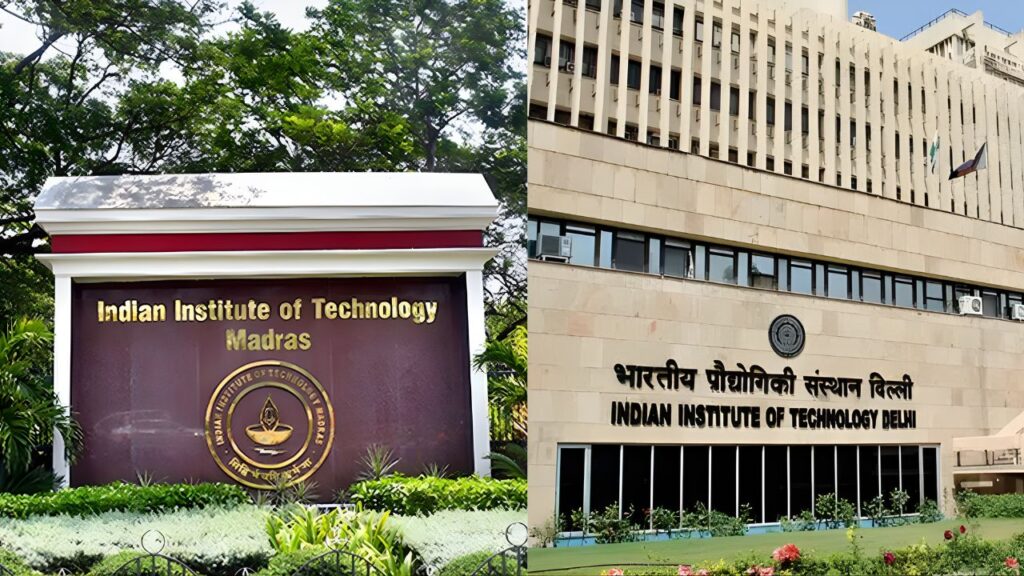
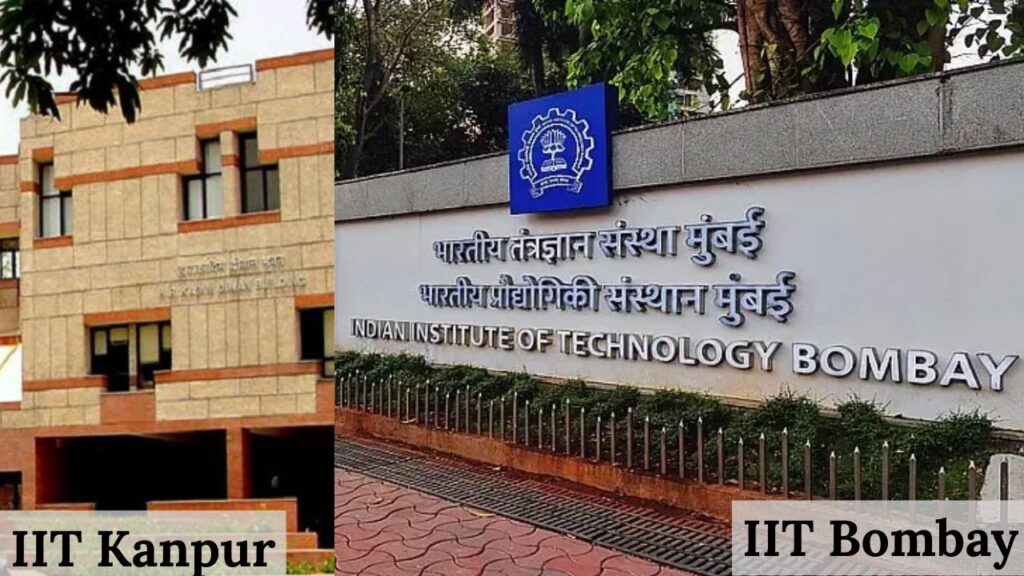
Indian BTech Colleges NIRF Ranking 2025 is considered as the standard for deciding the best BTech colleges in India. As per the updated list, IIT Madras ranked 1st once again for the ninth straight year, further consolidating its hold on engineering. The top five Engineering institutes in India according to NIRF 2025 are IIT Madras, IIT Delhi, IIT Bombay, IIT Kanpur, and IIT Kharagpur.
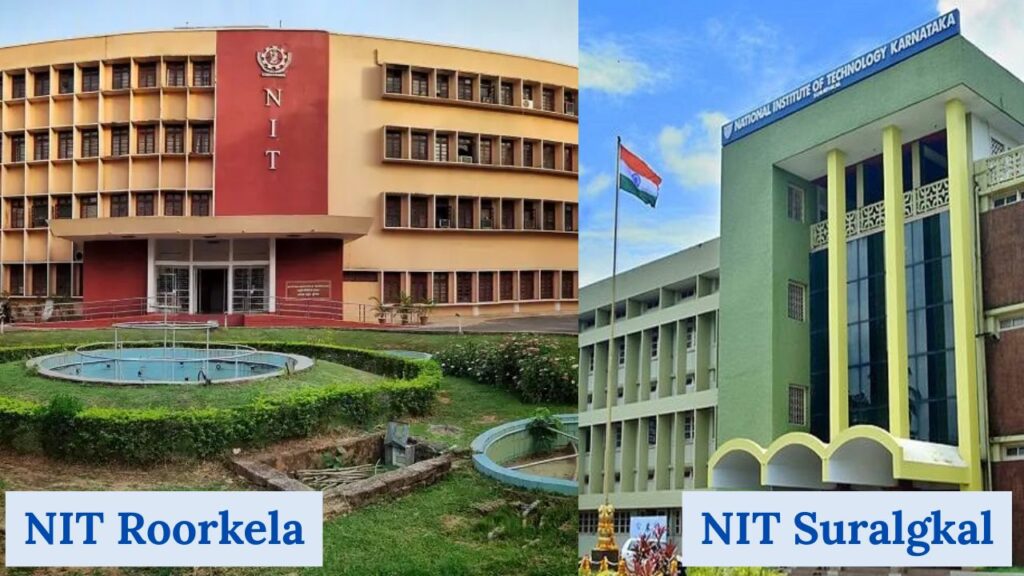
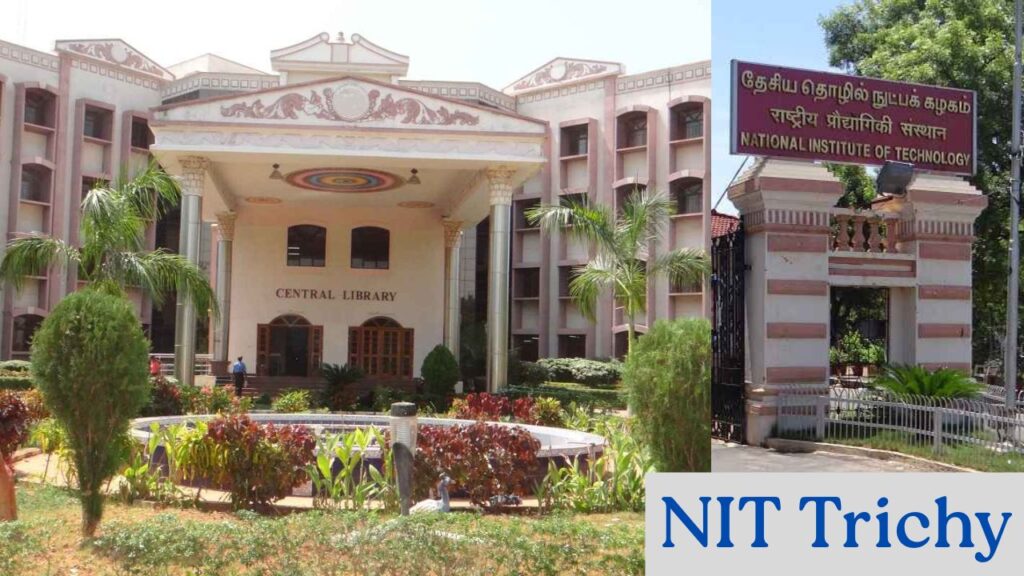
But the story is not all IITs, the NIRF Rankings are not limited to the only IITs. As far as the National Institutes of Technology (NITs) are considered, only NIT Trichy emerges among the top 10 at rank 9 in the list, which speaks about the immense competition in rankings. Following NIT Trichy we have the older NITs like NIT Roorkela, NIT Suralgkal, we have NIT Calicut who all regularly get top 25!
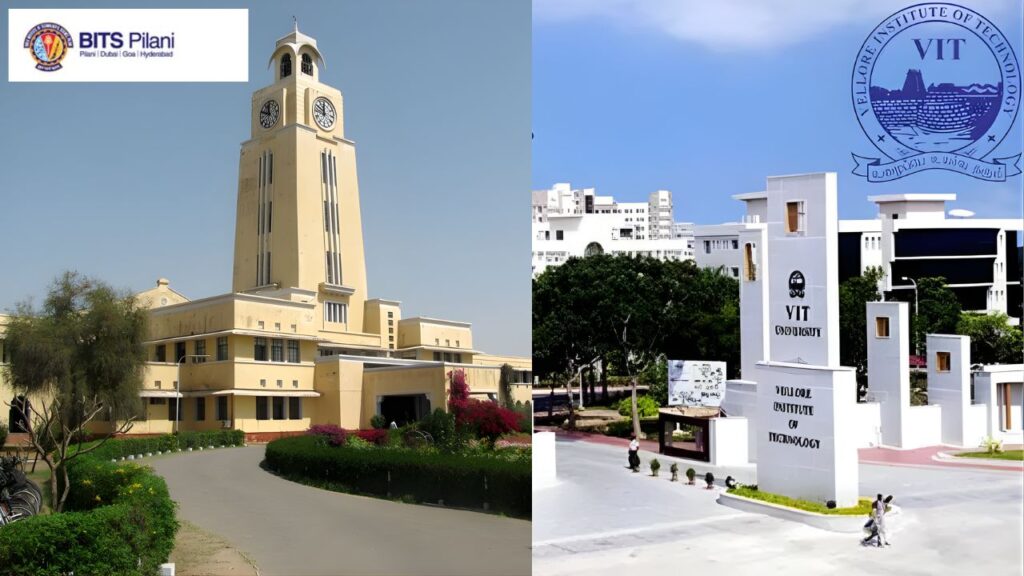
Private institutes have also made a place for themselves, with BITS Pilani at Rank 11 and VIT Vellore at Rank 16 in NIRF 2025. These colleges are no joke, they do provide a world class education and you will have no problem finding employment.
The Tier System
In addition to the usual rankings, a number of industry insiders grade schools according to tiers based on placement results, presence of recruiters, and number of competitive cutoffs. This gives a more refined sense of the college pecking-order.
Tier 1 (Premier Institutes) consists of the legendary IITs such as IIT Bombay, IIT Delhi, IIT Madras, IIT Kanpur, IIT Kharagpur, IIT Roorkee, IIT Hyderabad, and IIT Guwahati. These are also engineering colleges which dream destinations for most engineering aspirants. Indian academics are tough and placement records are also excellent.
Tier 1.5 (Strong and Competitive) has institutes such as IIT BHU (Varanasi), IIT Indore, BITS Pilani, IIT Ropar, IIT Gandhinagar, NIT Trichy, NIT Surathkal, and NIT Warangal. These universities have good academics and employment potential and have gained significant traction in reputation.
Tier 2 (Well established with Consistent Track Records) Institutes of the second tier like IIT Mandi, IIT Jodhpur, IIT Bhubaneswar, IIT ISM Dhanbad, NIT Rourkela, NIT Calicut, BITS Goa, BITS Hyderabad, and the likes, boast of consistent placement records coupled with strong alumni network. These are established institutes and provide assured opportunities for students for career growth and links with industry.
Placement Statistics
While selecting a college, the chief concern is usually the placement. Let’s dig into the real figures. The average salary package at IIT Bombay soared to ₹23.5 LPA in the 2024 placement drive, showing a 7.7% rise from last year’s ₹21.8 LPA. The highest package at IIT Bombay soared to a staggering ₹3.67 crore, with 22 students bagging offers scaling the ₹1 crore per annum mark.
The placement rate for IIT Bombay’s BTech programme is a healthy 74.53%, with 1,475 students placed out of 1,979 registered. Curiously, Computer Science Engineering is the most in demand branch with 230 offers, then closely matched by Electrical Engineering (232) and again by Mechanical Engineering (229).
The average package at IIT Kanpur hiked up to ₹26.27 LPA, whereas IIT Delhi saw an average package of ₹17.60 LPA with a highest package of ₹2.05 crore. These statistics attest to the amazing value top engineering colleges provide their students.
Admission Process For B.Tech
Anyone with ambitions to be a part of these institutions should know the process of meteoric rise, which is Understanding the process of admissions is essential for any aspirant who wants to get into these esteemed organizations. The route for BTech admission in India: Your Class 12 results and entrance exams largely decide your fate.
An all India examination termed JEE Main is required to be passed by the candidates for admission to the institutes like IITs, NITs. Candidates are required to qualify in JEE Advanced, which is the next level after JEE Main, for seeking admission to IITs. JEE Advanced for admission to IITs can be attempted only by JEE Main rank holders (JEE Main is qualifying exam for JEE Advanced), and seat allotment in IITs is done on the basis of JEE Advanced ranks alone.
The eligibility criteria is simple, but important: candidates should have completed class 12th (science stream with physics, chemistry, and mathematics) with minimum marks of 50% to 75% which varies as per the institute and category. For reserved category contenders the qualification is generally 65%.
The BTech admission schedule is designed in a manner that helps you to plan well in advance. Application period: It may be from November to March of next year, subject to specific entrance examination.
Entrance exams are generally held in April-June, followed by counselling and seat allotment after the exams then classes usually start around August or September.
Cutoff Ranks Matters
In top colleges, an applicant with a JEE Main rank less than 5,000 can expect to get one of the top five NITs. For example, NIT Trichy’s Computer Science Engineering has an opening and closing rank of 1000-2000 in general category, NIT Surathkal’s CSE has ranks in the range of 1500-3500.
General
91-95
EWS
79-83
OBC-NCL
77-81
SC
58-62
ST
44-48
Under this category, the likely cutoff percentile for JEE Main 2025 is General (91-95), EWS (79-83), OBC-NCL (77-81), SC (58-62), ST (44-48). But, all these are predictions based on the past year’s trends of the exam, the actual figure of cutoff may be different.
Popular BTech Specializations
The present day BTech courses are not only confined to traditional engineering branches. Computer Science Engineering (CSE) leads the list as the most preferred branch for a bright career in software development, data science and cybersecurity.
But today the BTech branches in the specializations are far more than the CSE. Mechanical Engineering, Civil Engineering, ECE (Electronics and Communication Engineering), and IT (Information Technology) are still the standard choice but some new fields are emerging that are taking over the engineering world. AI and Data Science, Cyber Security, Cloud Computing, Biomedical Engineering, and Robotics and Automation Engineering are the courses currently making waves owing to high demand in industry.
Emerging disciplines such as these are the future of engineering, and firms looking to attract the best graduates in those niche are already hard-pressed to come up with competitive salary packages.
Understanding the Financial Reality
It is also necessary to consider the expenses related to BTech. The entire course fee amountfor government colleges like NITs and IITs is generally between ₹8.35 lakhs and ₹9.17 lakhs which is really affordable considering the kind of opportunities these institutes offer.
Private universities such as BITS Pilani have much higher fees at ₹23.9 lakh for the full course, although they do have a variety of advantages such as more flexible curricula and better placement results.
With a low fee structure of ₹8.35 lakh, IIT BHU, Varanasi also has the highest ROI of 239.52%, due to a median package of ₹20 LPA.
Conclusion
Selecting a BTech college is among the most crucial decisions in your academic life. Despite the importance of rankings and placement statistics, you must keep in mind your interests, what you want to do in your career and your personal circumstances. If you’re going for the elite IITs, the perpetually decently performing NITs, or the private ones like BITS Pilani, do remember that your success depends as much on how hard you work as how good your education institution is.
Start your JEE Main preparation today, aim for a good rank, and keep track of the dates of the admission process. After all the efforts and proper guidance, it’s not going to be long before you’re striding down the hallways of the top engineering colleges in India, ready to make a mark on the world.
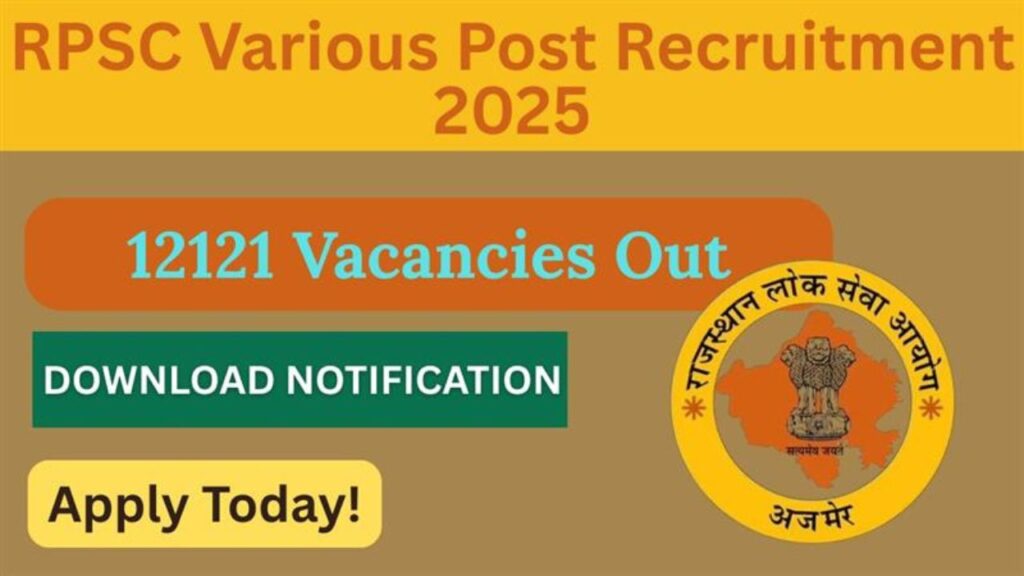
Rajasthan Public Service Commission Recruitment 2025 has been announced for various posts such as Sub Inspector, Lecturer PGT Teacher, Sr Teacher TGT Teacher, Veterinary Officer, and Assistant Agriculture Engineer. You can download the notification for full details on these posts. Thetotal number of vacancies are 12,121, to apply you must fill the application online from the official website of RPSC.
Best Hindi Teacher: If you aim to clear the competitive exams like SSC, UPSC, RRB, & state-level exam, right guidance for best scoring is important. And for that, the choice of a teacher matters. While preparing for other subjects likeGeneral Knowledge, Mathematics, Reasoning, and English. Don’t forget to focus on Hindi because it is most important in many government exams. Hindi teachers not only help you by providing the core syllabus but they will prepare strategically for the exam. These teachers have a unique teaching style that will help you understand grammar, comprehension, Letter Writing, Unseen Passages and vocabulary.
Aspirants can learn easily through their guidance including exam pattern, mock test, and shortcut methods that will help you to memorize. Few teachers provide live sessions, recorded videos, notes, and quizzes, so you can easily prepare for the examination.
Mock test series will help you in revision and remember that every teacher has their unique way to explain hindi. Take a demo class to select the right teacher whose explanation reaches into your mind.
Explore best Hindi teachers, they are known for their deep knowledge, best teaching style and make complex concepts of grammar easy for students.
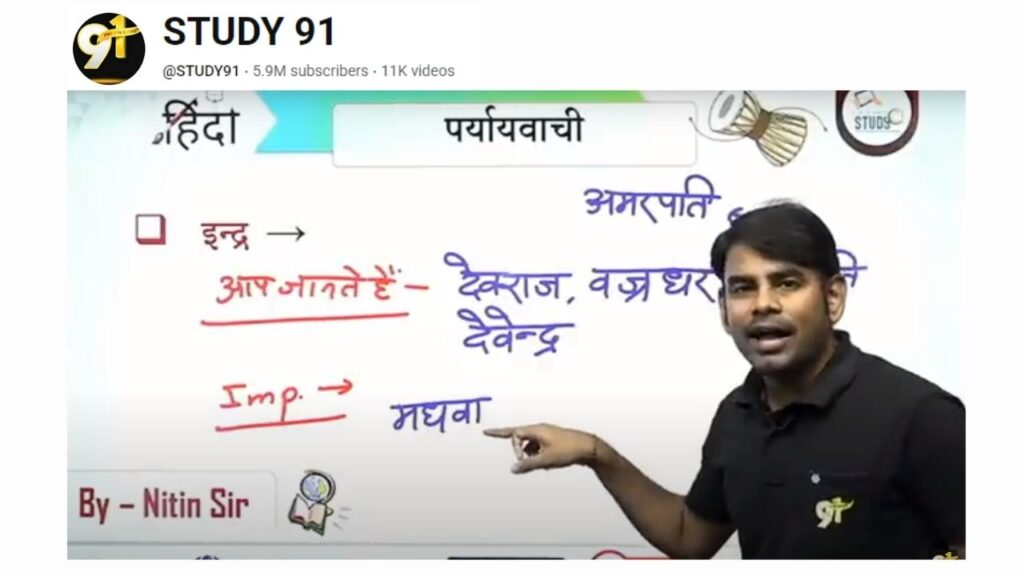
Nitin Sir
Nitin Sir from Study91 is known for clear explanations with a practical approach. He doesn’t just explain from books but tries to relate with real-life examples from newspapers or stories to make the hardest grammar rules easy for students to understand.
Students easily memorize it, but most importantly they understand why grammar rules are used. He also gives plenty of questions to practice which is the real key to success.
Vivek Sir
Vivek Sir’s creative style of teaching makes him one of the best Hindi teachers in India. Hindi is a language of culture and creativity, according to Vivek Sir. That clearly showed his mastery of story-based teaching style which makes grammar memorable. He uses humour, short stories that don’t make students bored in Hindi classes.
Ideal for those who don’t memorize anything easily and it’s hard for preparing Hindi for exams like Railway, SSC or TET. His method is effective to recall in exams quickly, so these techniques will make students remember even under pressure.
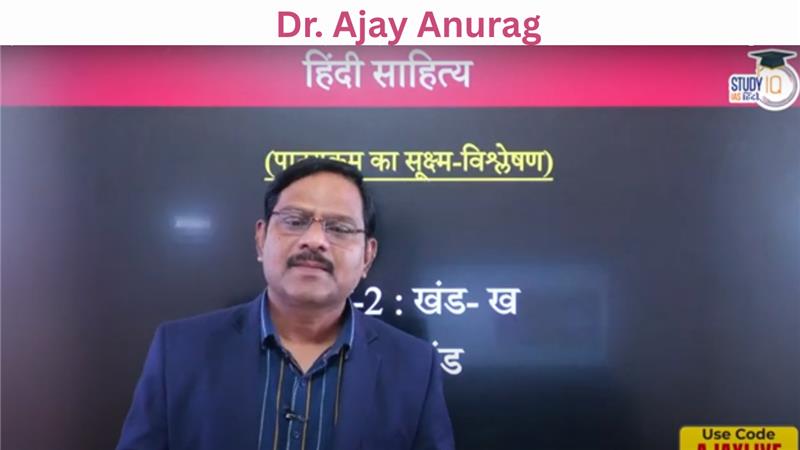
Dr. Ajay Anurag
Dr. Ajay Anurag is a best educator of Study IQ and reputed for his deep knowledge in Hindi grammar and literature. Students looking for one teacher who can teach them both grammar and literature, Ajay Sir is the best choice.
His concept-based teaching makes you understand each topic easily in minimum duration. But he doesn’t rush topics, he explains “why” behind every grammar rule.
Students who don’t just want to learn but understand Hindi topics can easily access his systematic and well-structured lessons. He also provides study material which is so detailed and exam-focused that it makes it easier for the students who are preparing for government exams.
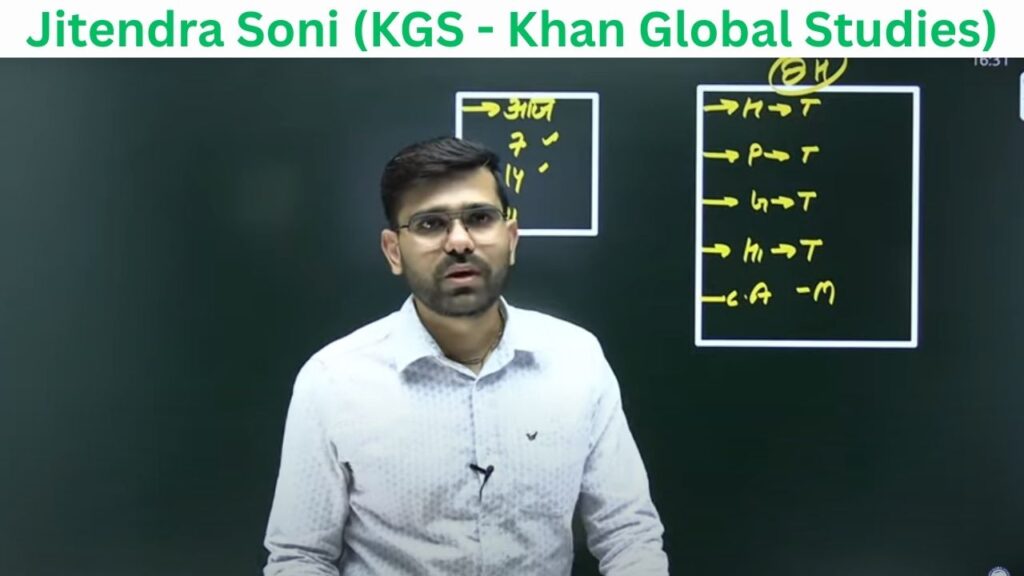
Jitendra Soni (KGS – Khan Global Studies)
He is the best educator of KGS who is extremely popular for his Hindi Foundation Batch. Jitendra Soni is focused on friendly-tone, conduct doubt-clearing sessions, and handwritten notes.
Students can simply understand every topic due to his explanation of lengthy stories, complex topics of grammar, and comprehension. Once you have taken his demo class or follow on YouTube, you will know how interactive and energetic his sessions are.
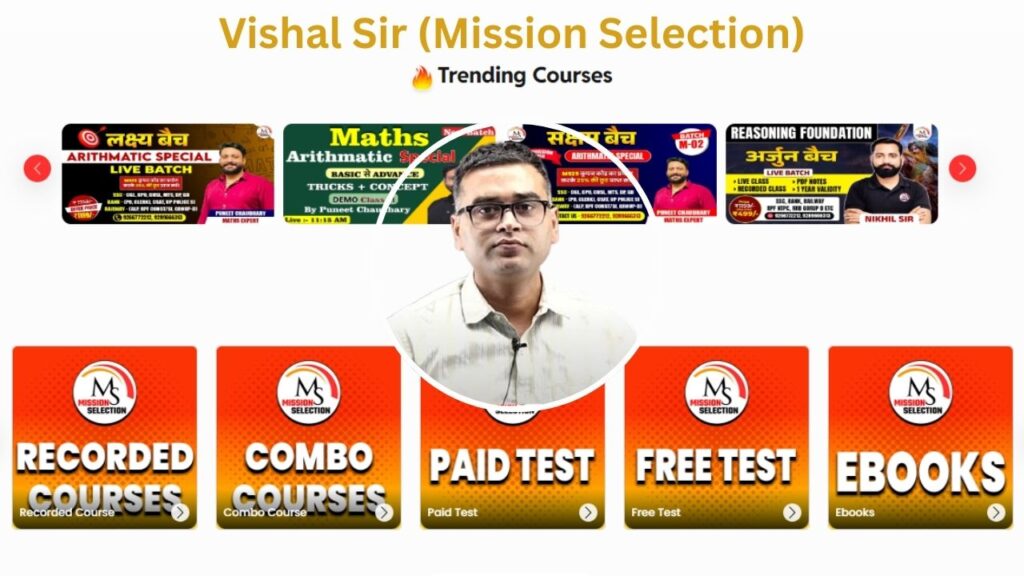
Vishal Sir (Mission Selection)
Vishal Sir is a well-known Hindi teacher on the growing platform Mission Selection. Vishal Sir is popular among the students because of his exam-oriented preparation method. His short explanations are impactful, he helped many students with shortcuts, tricks, and practical approaches.
He is the best teacher for Police, SSC GD, Railway, Constable, and state-level exams preparations. Students who want to complete this subject within less time, they can follow Vikas Sir.
Arun Sir
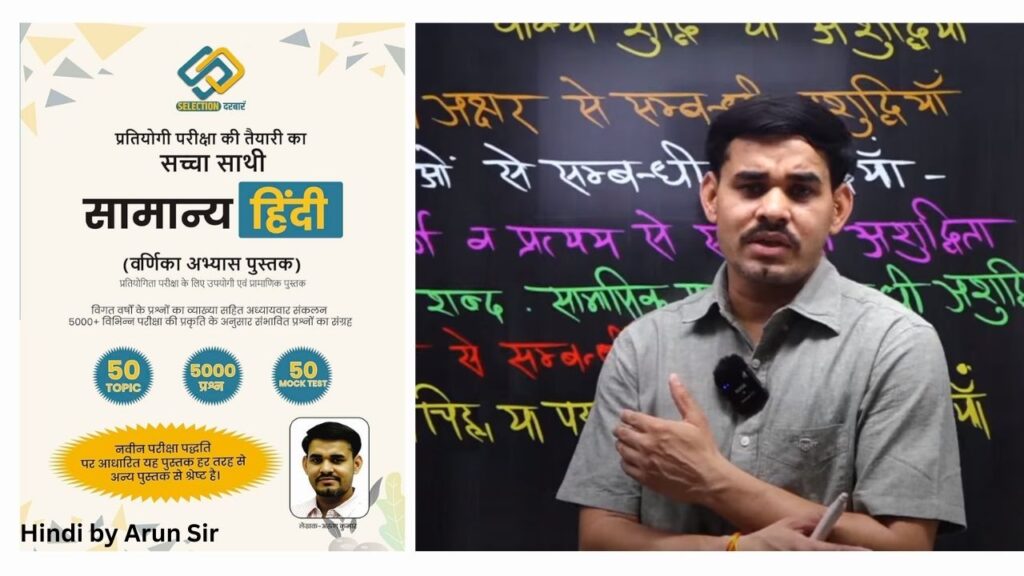
Arun Sir is an excellent teacher who teaches many students for the competitive exams. He focuses on Hindi grammar complex topics to provide a detailed explanation which can help students to understand Hindi in more depth. His command over vocabulary, comprehension, and writing are valuable for the exams like SSC, Railway, and UPSC.
Students can easily understand his way of teaching as breaking complex topics into simpler parts including real-life examples. He helps students to practice mock tests and previous year questions for building their strong foundation on Hindi.
Naveen sir
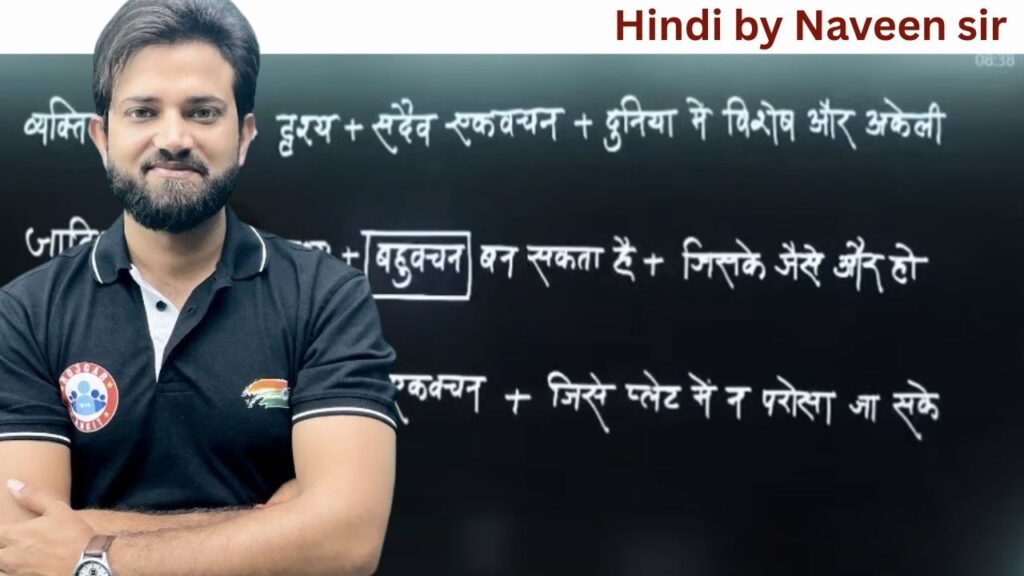
Naveen Sir is a master of answer writing, if you are preparing for UPSC or state exam then you should make your descriptive writing good in Hindi. You will become an expert in essay writing, letter writing, and precise writing in Hindi with his consistent training.
He is an ideal teacher for students who want to improve their writing skills and present their answers in clean, structured, and detailed.
Other Recommended Hindi Teachers
Apart from the above names, there are a few more respected teachers who can provide you best lessons for Hindi in competitive exams:
Dr Vikas Divyakirti (Drishti IAS) – He teaches Hindi Literature with depth and clarity, making him ideal for UPSC aspirants.
Alok Sir (Adda247) – Alok Sir is focused on short-trick and not go for lengthy explanations that makes him ideal for SSC aspirants
Ritesh Sir – he also helps students to prepare for the SSC exam because he makes Hindi grammar easy through continuous practice.
Apart from their unique teaching styles, they have the same common qualities that make them best Hindi teachers.
Simple explanation – they explain every topic in easy language that helps every student to understand easily.
Practical Approach – their style including examples from newspapers, current events, and daily-life that make Hindi more understandable.
Focus on Practice – continuous practice of questions from previous year and test series, they ensure that every student solves enough questions to mentally prepare for the exam.
Motivation & Support – Hindi is so difficult for some students who came from convent schools, these teachers inspire them to make learning enjoyable.
When students are focusing on tough subjects to clear competitive exams, they often forget to prepare Hindi to fuel their score. With the right teacher, Hindi can become your strongest subject. These Best Hindi Teachers for Competitive Exams have already taught many successful students now you could become next.
If you give you full potential for your exam with their guidance, you can clear the most toughest exams. They focus on exam patterns and important topics that need to be prepared well for government exams.
Are you searching for Government Job Vacancy in UP? You have come at the right place! Since UP is the most populous state in India, it has been always throwing excellent job notifications in various departments and sectors. UP has something for you whether you mark as 10th pass, graduate or post graduate professional. So, let us get started with the latest government jobs in UP and apply easily.
Why Government Jobs in Uttar Pradesh?
There is a huge demand for the UPSC posts in the state as it provides the best job guarantee, salary and the work environment. Such jobs offer a level of security that often cannot be matched in the private sector. The possibilities are endless – from education to health, from administration to engineering. Added to this, the state government also holds the recruitment for various posts, for thousands of the same, pretty regularly; so there is a good chance for the people to apply for the same.
Current Major Job Vacancies in UP (November 2025)
The state have very recently notified some big vacancies and you must not miss these. Here are the highlights:
Position
Total Posts
Eligibility
Application Deadline
Official Portal
Anganwadi Worker & Helper
4,405+
10th/12th Pass
3/December/2025
upanganwadibharti.in
Junior Aided Teacher
1,894
UG Degree + B.Ed
5/December/2025
basiceducation.up.gov.in
UPSSSC Group C Posts
Multiple
10th/12th/Diploma
Varies
upsssc.gov.in
UPPSC Combined Exam
200+
Graduate/Post-Graduate
Varies
uppsc.up.nic.in
Anganwadi Recruitment
A major recruitment drive that is going on is for the post of Anganwadi Worker and Helper. This is especially good news for women applicants looking for regular government jobs. The Women and Child Development Department has a massive vacancy with thousands of posts in different UP districts.
Min: 18 years & Max: 35 yearsReserved category candidates get age relaxation
Education Required
Marksheet of 10th or 12th standard with good scores
If you’ve just finished 12th standard, this is a very easy point of entry into government service. The application process is all online, and there are great benefits—health insurance, provident fund, pension security.
Junior Aided Teacher Positions
Directorate of Education, UP has released the notification for recruitment of 1894 Junior Aided Teacher posts. This comprises 1,504 Assistant Teacher posts and 390 Headmaster posts at non government aided junior high schools in the State.
The application’s last date is December 5, 2025, so candidates are advised to fill it without losing any more time. It is a great opportunity for teachers and subject experts who want to influence the future generation and avail the benefits of government jobs.
The process of applying for a government job in UP may appear complex, but it is very simple when you know the steps to follow.Here Is A Simple Way To Get Through It For You:
Step 1: Get Your Documents Ready
Before you start filling any application form, you should have the following documents handy:
Scanned copy of Aadhaar card (or any other valid ID)
Recent passport size photograph (JPG/PNG Format)
Educational qualification certificates
Caste/Category certificate (if applicable)
Birth certificate or Class 10 marksheet
Active email ID and mobile number
Step 2: Visit the Official Portal
Visit the department’s official website (eg upanganwadibharti.in, basiceducation.up.gov.in, etc). Do not click on any links in the e-mails or from unknown sources – instead type the address of the government portal in your browser.
Step 3: Register Yourself
Sign up with your basic details such as phone number or email ID. If you are applying for UPPSC or UPSSSC, then complete the OTR (One-Time Registration) process first.
Step 4: Fill the Application Form
You can find the application form whenever the government conducting body will release the notification on their particular website. You must have to check regularly for these updates for not missing out any chance to fill the application.
Step 5: Attach All The Necessary Documents
You must fill correct details of yourself in the boxes and verify it with a document, so you have to attach your valid documents in a format (PDF or JPG, up to 1 MB) before submitting the application. Also rename it because some websites don’t accept special symbols.
Step 6: Pay the Application Fee
Sign up with your basic details. If you are applying for UPPSC or UPSSSC, then complete the OTR (One-Time Registration) process first.
Step 7: Submit and Download
Double-check all information prior to submission. When submission is successful, download a receipt and print it out for your records.
Government services in Uttar Pradesh pay well and the benefits are great, making them very attractive. The salary per month depend on the cadre and ranged from 19,900 to 63,200 or more. Employees can also avail additional benefits like:
Dearness Allowance (DA), which is revised periodically to compensate the inflation.
HRA of ₹700 to ₹2,000 per month.
A good health coverage for you and your family.
Pension facility after retirement to stay financially secure.
Enjoy your work-life balance with paid leaves, and other allowances.
These are the perks that ensure a bright and secure future, and hence making it an ideal career option in government jobs in UP.
Pro Tips for Success
Don’t wait until the last day! Technical difficulties on deadline days are common. Apply at least 3-4 days prior to the deadline.
A single error in your application can dooms it. double-check all the fields before submitting.
Write down your application number, registration ID and password and keep it safe for future use.
Read the notification properly and the information related to the document’s format, specification.
Get alert on official portals and follow them on social media for any new announcement, date of exam.
Conclusion
The government of Uttar Pradesh is busy hiring in multiple sectors, providing thousands of posts for candidates belonging from various educations. Entry-level or senior, a position for literally everyone. The trick is to keep informed, have your paperwork ready, and apply strategically.
It’s time to make your move! Head over to the official websites, verify your eligibility and apply for the desired posts before the deadline. Keep in mind that government jobs provide you with financial benefits as well as social respect, job stability, and professional development and – hence, they are the best options to go in your career in this era.
Finishing your 12th in any stream is a turning point in your life as a student. There are plenty of upcoming government exams after 12th in which you can apply in 2025. To a lot of students and their parents, government jobs are stability, respect and financial security. Students want to join the government sector after 12th to make their future bright and stable. Now with these vast opportunities for young minds to serve the nation in different sectors.
Why Choose Government Jobs Right After 12th?
Indian households prefer govt jobs for the regular work, pension, health care benefits and also the respect associated with them. Of course, some claim waiting until college graduates you for senior roles. But you can start early with 12th-grade exams that bring financial freedom and steady climbs through promotions and hands-on experience.
The fact is, the easier points of entry may initially lead to more basic roles. But these positions provide good opportunities to advance, full benefits, and ways to support your nation. Most of the government jobs for 12th pass are offering salaries from ₹20,000 to ₹60,000 per month. They come with extras like housing assistance, health care and retirement benefits.
Major Government Exams After 12th
SSC CHSL — Combined Higher Secondary Level
The Staff Selection Commission is already out with SSC CHSL 2025 the application for filling 3,131 posts. SSC CHSL is one of the most widely appeared exams for students who are passed from 12th class.
If you want a good job with a good salary and have no complicated eligibility criteria, then this is for you! the posts offering Lower Division Clerk (LDC), Data Entry Operator (DEO) and Junior Secretariat Assistant (JSA). The salary per month is between ₹25,000 to ₹35,000 and you will be provided some allowances as well. After completing your 12th in any stream is required for these positions but remember your age should be 18 to 27 years to apply.
RRB NTPC (Non-Technical Popular Categories)
Want a career in railways? Here’s your chance which you could miss! Applications are invited by a certain date for the vacancies of Station Master, Clerk, Typist and Ticket Collector. The pay is good, ranging from ₹25,000 to ₹35,000 per month. Do Keep a tab On these dates – The application process closes on November 20 and 27, 2025, for the positions. Don’t wait until the last minute—this may be your opportunity to grab a steady and fulfilling career.
NDA (National Defence Academy)
If a career in the Armed Forces is your goal, then NDA holds a special place among all the other options. You should have completed 12th with Physics and Maths, if you are going for Navy or Air Force and for Army any stream is acceptable. Age limit is 16.5 to 19.5 years so it is suitable for young aspirants. You will also be paid a stipend of ₹56,100 during training and the career options post that are really gratifying. It is a good route to take if you are keen on serving the country and want a stable, respectable future.
Indian Army Agniveer Recruitment
Indian Army is one of the oldest and most respected army in the world and it is the only one that offers a lot of vacancies for 12th pass aspirants. So, if you want to work for the country, ASD, a national-level recruitment organisation suggests you to apply for the post of Army Clerk Agniveer, Soldier General Duty (GD) and Store Keeper Technical. The age limits are 17.5 to 21 years, so it’s short and sweet for young aspirants willing to take a fresh challenge. If you have 10+2 qualification then you are eligible to apply and start your journey in defence sector. Apart from this, its salary is quite good which is from the range of 25000 to 40000 per-month, so you can have financial stability in this while protecting the nation. If this sounds like your calling, don’t wait too long – start prepping and snap up this opportunity!
State Police Recruitment
All over India, recruitment for the post of Police Constable is mainly carried out by various State Police Departments. If you want to be a police officer, you should take a look at these job openings! The age limit for applying varies from state to state, and in general, it is from 18 to 25 years of age. Police Constables Salary In India: The salary of a Police Constable is competitive and ranges from ₹25,000 to ₹35,000 per month on average.
Note: every state has different processes, criteria etc for recruitment. For more accurate and detailed information, visit your state’s official government website.
Common Eligibility Test (CET) is going to be a gamechanger in 2025, thanks to the National Recruitment Agency. The new protocol aims to bring unity in bureaucracy and streamline the recruitment process for government job by doing away with prelims examinations for SSC, IBPS, RRB, State PSCs. The CET is to be conducted twice a year and the validity of its score will be three years, which will make it super convenient for aspirants who apply to multiple agencies. It’s a big step forward, simplifying the application process and saving time and effort for all involved. Since this exam will open doors to so many different fields, preparing for the CET should be on the top of the list of aspirations for students who want a government job. It’s your chance to open up a bunch of different doors with just one exam — how cool is that?
Other Notable Opportunities
SSC Multi-Tasking Staff
Age Limit
18-25 years
Monthly Salary
₹20,000 – ₹25,000
Posts
Peon, Clerk, Support roles
Post Office — Gramin Dak Sevak
Age Limit
18-40 years
Monthly Salary
₹15,000 – ₹25,000
Work Location
Rural areas
State-Level Clerk and Patwari Exams
Age Limit
18-27 years
Monthly Salary
₹20,000 – ₹30,000
Conducting Body
Various state PSCs
Current Opportunities with Active Applications
Junior Secretariat Assistant
MTS Positions
UP Constable
Various State Government Posts
Preparation Strategy and Tips
Prioritise CET preparation first, as it has multiple recruitment boards under it.
Master the basics subjects : English, Mathematics,General Knowledge,Reasoning
Keep yourself informed about current affairs and government policies.
Practice previous years question papers and attend regular mock test.
Keep the body fit for defence/dpo positions.
How to Apply For These Positions?
A general guidelines for every recruitment process in the government sector. You just have to be updated to apply immediately.
Only on official websites, apply through online mode.
Preparation of documents in advance: Educational certificates (10th and 12th mark sheets ), Date of birth & category certificates, Valid email ID, mobile number and photographs.
Mind the deadlines and do not apply in a hurry.
Have multiple copies of the printout of the application form and fee receipts.
Cross check everything before final submission.
Conclusion
12th pass students got never before opportunities in the year 2025-26 for government jobs. There are around 1 lakh openings announced in railways, banking, defense, police and civil services among other sectors, good preparation can ensure a safe and dignified career. Keep in mind that preparation for a government job is a long run and not a short run. To win, you need to work consistently, have updated knowledge, and plan with your brain. Know the patterns of the tests, have good basics and then keep practicing regularly.