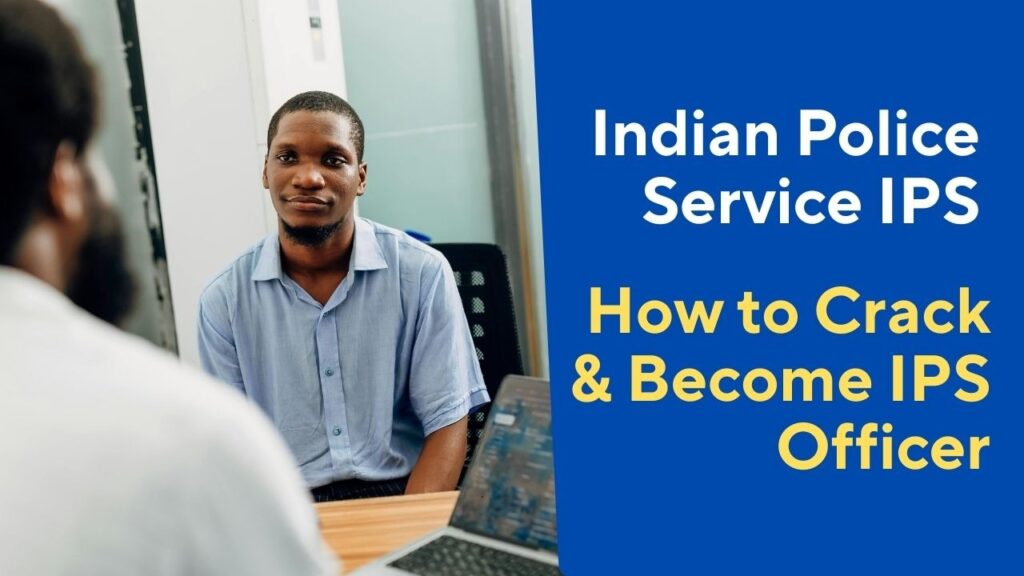
Indian Police Service IPS: How to Crack and Become IPS Officer

Indian Police Service

If you’re dreaming about the Indian Police Service (IPS) standing tall as a law and peace officer in the Indian Police Service. Whatever got you started on this dream, pursuing it in real life is more than just a passion to do. It requires a sharp strategy to prepare accordingly and what’s right to study. Not everything is important. 

Instituted in 1948 as a successor to the British colonial-era Indian Imperial Police, the IPS is the ground holder of India’s internal security system. But the reality check is that every year lakhs of candidates chase this dream and only a few hundred come out successful. So what separates those who make it and those who don’t? More often than not, it is the preparation strategy. 

Understanding the Battlefield: The Three-Stage War

Know what you are getting into before you go to the books and notes. The UPSC Civil Services Examination (CSE) is a rigorous three-tiered exam which tests not only your knowledge but stamina, analytical abilities & character. 

First Level— The Preliminary Examination 

Think of the Prelims as the bouncer at the door to that exclusive club — it sifts out the wheat from the chaff. It consists of two objective papers, each of two hours duration and carrying 200 marks. 

Paper – I is General Studies—current events, history, geography, polity, economy, environment and general science. The Civil Services Aptitude Test (CSAT), now known as Paper II, tests your concepts on comprehension, logical reasoning, decision making and basic numeracy. It is qualifying in nature and it just needs 33% to pass.  

Do not make the mistake to understand that Prelims score is gonna add in the final merit list, it’s important to score for going into the next stage but it doesn’t hold final value. So don’t get that to take it lightly because 97-98% of candidates are eliminated at this stage. 

Second Level: The Main Examination 

If Prelims is a sprint, Mains is like running a marathon. Nine descriptive papers across a few days with a total of 1750 marks designed to push how well you know what you know and how well you can express complex thoughts when you’re under a lot of stress.

The pattern is: two qualifying papers (English and an Indian language), one Essay paper (250 marks), four General Studies papers ranging from Indian heritage to ethics and integrity (250 marks each), and two papers on your chosen Optional subject (250 marks each).

The hard copy elective also has an impact on your total score with a weightage of 500 marks. Choosing the appropriate subject is very important. Although you have a whole bunch of popular subjects like Geography, History, Public Administration, Political Science etc, it is always advisable to go with the subject you are really interested in rather than seeing what others have taken up. 

Third Level: The Personality Test (The Interview)

The remaining 275 marks are given in the Personality Test, during which an UPSC panel evaluates your mental alertness, critical thinking, communication skills, leadership potential, and moral uprightness. They don’t want to know-your-everything; they want well-rounded people who can manage the enormous burden of public service. 

Check Your Eligibility For Indian Police Service

Nationality

IPS is only open to Indian citizens. The UPSC CSE permits Nepali, Bhutanese and Tibetan refugees (who came before 1 January 1962) to apply for certain services like IAS and IFS, the Indian Police Service, however, is limited to Indian citizens. 

Qualification

You must have a bachelor’s degree from a recognized university – all streams are acceptable.  If you’ve studied English Literature, Engineering or Zoology, you can apply.

Important caveat for final-year students: You may apply for the Preliminary examination as a final year student, but you need to submit degree certificate before going in for the Mains.  Don not count on your provisional certificate to arrive in time—make your plans accordingly.

Final MBBS students can also apply, but they have to submit a certificate from their university. 

Age Limit

CategoryAge LimitCut-off Birth Date (for 2026 exam)
General/EWS21-32 years2/August/1993 to 1/August/2005
OBC21-35 years (3 years relaxation)2/August/1990 to 1/August/2005
SC/ST21-37 years (5 years relaxation)2/August/1988 to 1/August/2005
PwBD21-42 years (10 years relaxation)2/August/1983 to 1/August/2005
Ex-servicemen5 years relaxation2/August/1988 to 1/August/2005

Attempts Restrictions

CategoryNo. of Attempts
General/EWS6 attempts
OBC9 attempts
SC/STUnlimited (until age 37)
PwBD9 attempts (until age 42)

The Physical Reality: More Than Just Books

Unlike IAS, Indian Police Service has certain physical eligibility condition which you need to fulfill. Male candidates should have a minimum height of 165 cm (160 cm for ST and some other categories) and must have chest measurements of 84 cm along with expansion. Female applicants need 150 cm height (145 cm for ST) .

Myopia shall not be more than minus 4.00D and hypermetropia shall not be more than plus 4.00D. Color blindness is a disqualification as well as squint. Begin training for your physical fitness right away — don’t wait until you have the written exam behind you. 

Height Requirements category-wise:

CategoryMaleFemale
General/OBC/SCMinimum 165 cmMinimum 150 cm
ST (except SC/OBC)Minimum 160 cmMinimum 145 cm
Gorkhas, Garhwalis, etc.Minimum 160 cmMinimum 145 cm

Read More:- AIIMS Nursing Officer Recruitment (NORCET-10) – 3600+ Vacancies, Eligibility, Exam Date & Apply Online

Application Process To Apply

  1. Stay tuned to the official UPSC website for the latest updates/notification of IPS. 
  2. After the notification is released, download it carefully and go through all the instructions and wait for the online process to start.  
  3. Check all the dates and fill the application before the deadline. 
  4. Fill valid and correct details in the form and then attached requisite documents with the application.
  5. Submit the form and the application fee is applicable.
  6. Print it for the proof in future and prepare yourself for the toughest examination.
CategoryFee
General/EWS/OBC (Male)₹100
SC/ST/PwBD/Female (All categories)Exempt (₹0)

Conclusion

Becoming an Indian Police Service officer is not only about passing an exam, it’s about dedicating oneself to a life of discipline, service, bravery, and accountability. Everything about the process, from meeting the eligibility and physical criteria to surviving one of the most competitive exams in the country, requires one to be consistent, resilient and long-term driven. Luck or short-cuts don’t make you succeed in this path- it takes strategy, smart preparation, mental toughness and commitment.

If you really want to see yourself in that uniform, leading from the front and serving the country, begin today—lay your groundwork, condition your body and mind, and approach preparation as a way of life, not a phase. The road to IPS is tough, but to those who make it through, it is one of the most dignified and influential careers in India. 

GovUpdatewala is your trusted source for real-time updates on government exams and jobs in India. We provide verified info on SSC, UPSC, Banking, Railways, Defense, and Teaching exams. From syllabus and patterns to important dates and career tips — we support aspirants at every step.

Leave a Comment

Your email address will not be published. Required fields are marked *

How to Crack UPPSC RO/ARO Without Coaching  

Crack UPPSC RO/ARO Without Coaching

Every year, lakhs of students in Uttar Pradesh start their RO/ARO preparation the same way — by joining a coaching institute the moment they decide to attempt the exam. It feels like the safe choice. Everyone around you is doing it, the institutes promise structured guidance, and the fear of “missing something important” pushes you toward enrolling even before you’ve opened a single book on your own.

I can’t speak for your specific goals, but what a lot of successful RO/ARO candidates will tell you once they’ve actually passed the test is: coaching never made the difference. What mattered was whether they understood the exam, built a routine around it, and stayed consistent long enough to see results. 

If you fall into the category of not being able to afford coaching or if you’re just an individual who likes to learn on his own terms, there’s no issue in attempting RO/ARO exams. You can start your preparations by yourself with the right guide. Proper syllabus, exam pattern, right schedule, responsibility are the core steps to take to prepare for the exam.

1. Understand Exam Pattern to Make the Right Strategy

You probably saw or heard that self-study failed many students not because they lacked intelligence but because they didn’t understand the exam’s purpose and importance. There are stages in the exams to clear and each one requires a different kind of preparation.

  1. UPPSC RO/ARO has a Preliminary exam to check how well you know General Studies and General Hindi and it rewards speed and accuracy over depth. 
  2. The Mains, on the other hand, wants you to write with clarity and present arguments, not just recall facts. 
  3. And the Typing Test, ignored by most aspirants until the last month, has quietly ended the dreams of candidates who cleared both written exams but never practiced typing seriously.

Before you buy a single book, spend two or three days just going through the official syllabus and the last five years of question papers. You’ll notice patterns almost immediately — certain topics from Indian History, Indian Polity, and UP-specific General Knowledge repeat in some form every year. This is the kind of pattern-recognition that coaching institutes charge lakhs to hand you on a platter. You can get there yourself with a notebook and some patience.

2. Build a Study Routine That Doesn’t Depend on Motivation

Coaching institutes work partly because they impose a schedule on you — classes at fixed times force a kind of discipline that self-study doesn’t naturally have. When you’re preparing alone, motivation runs out fast, usually within the first three weeks. What replaces it is routine.

Pick a time of day when your mind is sharpest — for most people, that’s early morning — and treat that slot as non-negotiable, exam day or not. Break up your week so that you have each subject in a chunk of the day, instead of bouncing around among all of them every day. A general division that helps for RO/ARO is General Studies in the morning, Hindi grammar and comprehension in the afternoon, and revision and mock tests in the evening. The exact hours matter less than the consistency of showing up.

What trips up most self-study candidates isn’t laziness — it’s the absence of a feedback loop. In a coaching class, a teacher tells you when you’re falling behind. Alone, you have to build that feedback into your own routine. Keep a simple tracker, even a basic notebook works, where you log what you studied and how confident you feel about it. Revisit that tracker every Sunday and be honest about the gaps.

Read More 👉 Data Science vs AI: Which Career Is Better?  

3. Choose the Right Books Instead of Too Many Books

One of the biggest traps for self-study aspirants is book overload. When you ask about which books toppers used, they might give you different answers. But each one of them has the topics which are frequently asked in the previous question papers. So, choose the book which you can understand when you read. Stick to that particular book per subject rather than jumping between multiple books hoping one of them “clicks.”

For General Studies, a common NCERT-based core syllabus in History, Geography, Polity and Economy is a much better option than jumping straight into exam-specific guides. Once your basics are solid, move to a UP-specific General Knowledge book, since a noticeable chunk of the RO/ARO paper focuses on state-level facts that national-level books simply don’t cover. For Hindi, focus heavily on grammar rules and previous year papers rather than generic Hindi literature books — the exam tests application, not literary depth.

Newspapers are non-negotiable, but read them with intent. Don’t read every article; scan for anything related to government schemes, UP-specific developments, and national events with policy implications. Ten focused minutes with a newspaper beats an hour of aimless reading.

4. Practice Like the Exam Is Already Tomorrow

Self-study candidates often make the mistake of treating mock tests as an afterthought — something to do once the syllabus is “finished.” In reality, mock tests should start early, even when you know only half the syllabus. Testing yourself regularly does two things coaching classes usually do for you: 

  • It shows you where your weak areas actually are 
  • And it trains your brain to work under time pressure

Solve at least one previous year’s paper or a full-length mock every week, and don’t just check your score — go through every wrong answer and understand why you got it wrong. Was it a factual gap, a silly mistake, or a comprehension issue? Each of these needs a different fix, and lumping them together as “I need to study more” won’t get you anywhere.

The typing test deserves its own separate practice schedule starting at least two months before your written exams are clear, not after. Waiting until results are declared to start practicing typing is one of the most common and avoidable mistakes RO/ARO aspirants make.

5. Find Your Community, Even Without a Classroom

The one genuine advantage of coaching is the peer group — people preparing for the same exam, sharing doubts, comparing notes, and keeping each other accountable. You can recreate this without paying for it. Online communities of RO/ARO aspirants, study groups on messaging apps, and even a couple of serious friends preparing for the same exam can replace this function almost entirely.

Use these groups to clarify doubts, share useful resources, and occasionally test each other. Just be careful they don’t turn into distraction hubs — the goal is accountability, not endless discussion about strategy that never converts into actual studying.

Read More 👉 Top 10 Mistakes to Avoid While Preparing for UPPSC RO/ARO

The Real Difference Between Coached and Self-Taught Candidates

Coaching gives structure to people who can’t build it themselves. If you can build that structure on your own — a study routine, the right books, regular self-testing, and a support system for accountability then there’s genuinely nothing coaching offers that you can’t replicate. 

What ends up separating candidates who clear RO/ARO from those who don’t isn’t whether they paid for classes. It’s whether they stayed consistent long enough, tested themselves honestly, and treated every mock test result as information rather than judgment.

Self-study for RO/ARO isn’t the harder path. It’s simply the path that asks more of your discipline instead of your wallet — and for a lot of aspirants across UP, that trade has worked out just fine.

Conclusion — How to Crack UPPSC RO/ARO Without Coaching

Clearing the UPPSC RO/ARO exam without coaching is entirely achievable if you get started with the right attitude and strategy. The course, past year papers, textbooks, sample tests, and current affairs are all available online nowadays. Because in the end, your success is going to be determined by the work that you do every day, not by how much money you spend on prep. The real challenge isn’t finding resources—it’s using them consistently.

Leave a Comment

Your email address will not be published. Required fields are marked *

SSC vs UPSC: The Ultimate Showdown for India’s Most Demanding Government Job Exams

SSC vs UPSC

This is not merely a comparison of two exams — SSC vs UPSC, it’s a life long career decision which makes you a completely different person in a very different category. But preparation for each exam is tougher than you can think of. So, if you are investing your time, money, mind and health in building something then choose wisely after a deep research.

Oh, I’ve seen people lose their mid-20s to these books. To assist you in determining which “beast” is worth your sanity, let’s take a look under the hood of what you will actually be asked to do on these exams in 2026. 

The Nature of the Struggle

Government jobs are a result of both, but the type of mental strength needed is different.

UPSC: The Marathon of Depth UPSC isn’t an exam, it’s a personality overhaul. It wants you to have an opinion on the morality of AI and the irrigation regimes of the 16th century. This is a three-stage process which requires your ability to think.

SSC: The Sprint of Precision

SSC CGL is like being a human calculator with the reflexes of a pro gamer. It’s a “Group B” and a “Group C” race where velocity is primacy. Solving, strategic methods, and puzzle-like questions are given for UPSC to check the ability of candidates. 

Numbers Matters in SSC vs UPSC

In SSC

The UPSC examination is considered the “rock face” in the mountain climbing of exam-taking required fortitude to overcome it. Whereas the SSC CGL is compared to a fast-flowing river, representing a different type of challenge because of the sheer number of applicants. With a mind boggling 15 to 20 lakh candidates competing for a mere 8,000 to 10,000 seats, the contest is cutthroat and requires equal parts of strategy and determination. 

It’s like repulsive physics up here. There are a lot of competitors out there and you have to beat them (1000) to secure your space in UPSC but SSC have only 200 to beat. “Better odds,” right? Not exactly. Since the SSC syllabus is more “teachable,” the difference between the topper and the person who misses out is often as little as half a mark. One bad day, one slow calculation, and you’re out. 

In UPSC

UPSC seems like a high-brow, high stakes game of poker. There are 10 to 12 lakh people applying every year. The final list is made up of only around 1,000. That equates to a success rate of 0.1%. 

To give you some perspective, you are more likely to be struck by lightning in some parts of the world than to find your name in the PDF. It’s a “predictable brutality” — you know the mountain is cruel, you know most people fall off, and you accept heartbreak as part of the journey. 

The Intellectual Demands

UPSC doesn’t matter whether you have memorised a date; it wants to know whether you know why that date changed history.

The Connection Game: You are not just learning Economics; you’re learning how a global oil crunch pinches a farmer in Vidarbha. You are not just studying Geography; you are seeing how climate change is redrawing political maps.

The “Mains” Marathon: Think 20 essay-style answers, in three hours — again, for five days in a row. You have to sound like a policy analyst, a philosopher and a centrist bureaucrat all at once.

Most former aspirants have said that It’s not the facts you need to know, It’s an opinion that sounds both brash and impeccably centrist. You have to give them exactly what they want and not make it look like you’re trying too hard. 

If UPSC is a philosophical discussion then SSC is like 100 meter race. Raw, mechanical speed is far more important than intellectual “depth.”

The Human Calculator: In the Quantitative Aptitude section, you are required to solve 25 difficult problems in 15 minutes. There’s no time to “think” about the beauty of a formula; you either know the shortcut, or you’re out.

The “Autocorrect” Reflex: The English portion is not about enjoying literature. It’s about finding a grammatical mistake faster than a spell-checker.

It’s less about “understanding the world” and more about pattern recognition. You practice until your hands are faster than your mind. 

The Duration of Torture

That is where SSC will tend to actually trump in “demanding” level status, ironically enough.

An informed crack at UPSC lasts 12 to 18 months. If you flop Prelims, you start the cycle all over next year. If you crash Mains, you wait for another year. It’s a sadistic but a defined loop.

The SSC exams in 2017 were also postponed to the year of 2022, that means you can be stuck for three years with no reason in just one attempt due to paper leaks and re-exams. The unpredictability as to when one’s work will be judged is in stark contrast to the regimented, mechanical routine of the UPSC exams, which prevent candidates from experiencing such wait-weariness. 

Fees and Investments

Prepping for the UPSC is like holding a blue-chip stock that might plummet to zero. The Price Tag: Between coaching fees and the rent exploding in Delhi, you’re talking about ₹2-3 lakhs a year, no sweat.

The “Social Contract”: What it means for most families is a dowry or a deposit on a house. They’ll for 2 or 3 tries because the payoff—the white curtained car, the bungalow, the prestige—is the ultimate Indian trophy.

The Normalized Sacrifice: The ecosystem has made it “okay” to miss out on your mid-twenties making zero rupees as your parents raid their retirement accounts. It’s a visible, high-stakes investment. 

SSC preparation is “cheaper” in theory, but it exacts a much higher price from you: your energy. An Income Tax Inspector or a CBI Sub-Inspector draws a decent, respectable income. But let’s get real: you don’t get the mandatory red beacon and the massive government complex that signify “success” in the local Whatsapp group.

As a result of the stakes feeling “lower,” a lot of SSC aspirants don’t have the luxury of studying for 12 hours in a library. They study on the Metro, they do math problems on lunch breaks at a soul-crushing 9-to-5, they record English vocabulary to listen to on their commutes.

The tiring juggle of working a dead-end job and studying for a high-speed competitive exam goes unseen. Nobody throws a party for the guy who hit the books after working a 10-hour day, but that mental fatigue is totally unbeatable. 

FactorUPSC InvestmentSSC Investment
Financial CostHigh (Coaching + Living)Low to Medium
Time Cost3–5 years of “Gap”1–2 years (often while working)
Social PayoffGenerational ShiftUpward Mobility
Safety NetUsually Parent-fundedUsually Self-funded

Mental Health is Also at Risk

Above all the books and the balances, there is a still, psychological tax that these exams extract every day. It’s the sort of stress that doesn’t appear on a marksheet, but you can see it in the way an aspirant’s posture evolves over three years. 

The UPSC doesn’t merely consume your days, it seeks to consume your spirit. After five years of informing relatives that you are “preparing,” you stop being a person who has hobbies, a favorite sport, or a personality. You become a “Potential Officer.” Your entire worth is tied to a PDF list that comes out once a year.

Losing is not just about getting fired; it feels like the universe is telling you that you’re not good enough. The Interview (Personality Test) is the ultimate mind-game. You sit opposite senior bureaucrats who will determine whether you possess “Officer Like Qualities” in a 30-minute conversation. It makes you question everything you say, every way you sit, and, eventually, who you really are. 

While UPSC is a question of identity, SSC is a matter of looking over the shoulder all the time. It’s an anxiety rooted in volume and mathematical enigma.

The Notification Trap: CGL, CHSL, MTS, GD, Stenographer— the notifications never end. It seems like you’re always “missing out” on something. If you are not submitting it, you are running late. It’s what makes life feel like an endless assembly line of exams.

The “Normalization” Nightmare: This is where the despair kicks in. Comprising multiple rounds of examination in several shifts, the commission “normalizes” everyone’s scores. You could get 180/200 on a “hard” shift and 190/200 on an “easy” shift and still not know how you did.

Mathematical helplessness: You can calculate your raw marks the moment the answer key comes out, but you have no idea whether the “system” will lift you up or knock you down. It’s like running a race where you determine the finish line by how everyone else ran. 

Read More:- Bihar Public Service Commission (BPSC): Full Form, Exam, Eligibility & Selection Process

Honest Truth Nobody Tells You

That’s what the coaching institutes don’t tell you: both exams are turning out to be less about merit and more about stamina. What separates someone who clears these exams from someone who doesn’t is often not intelligence, but the means to sit at a desk for 10 hours a day, to put off weddings and festivals, to see friends get promoted while you take mock tests.

The hardest exam is the one that you’re failing right now. That one that keeps you up at night wondering whether you burned out your best years. It’s the one that your parents increasingly ask “beta, backup plan kab banaoge?”.

In my opinion, do not move towards picking what others say, just analyze what’s right for you. Which type of job role you are interested in and the kind of life you want. UPSC gives you the authority to shape policy. SSC gives you the security to design your own life. Both are valid. Both are brutal. Both will take everything you have — and then ask you for more. 

Conclusion

SSC vs UPSC If intellectual rigor and prestige pressure are what make the examination “demanding,” then UPSC wins hands down. You have to read newspapers as if they were religious texts, you have to learn subjects ranging from anthropology to zoology, and you have to gain the ability to talk about Indo-China relations with diplomatic nuance.

But if “demanding” means the intensity of competition, the unpredictability, and the absolute pain of outlasting millions, then SSC could be even more brutal these days. The exam has turned into a default choice for every graduate who wants a government job security without the elitist obstacle of the UPSC. The result is a bloodbath of competition, where even 99 percentile scores sometimes do not guarantee selection.

Leave a Comment

Your email address will not be published. Required fields are marked *

IAS Preparation Roadmap: Step-by-Step UPSC Strategy That Actually Works

IAS Preparation Roadmap

After deciding to become an IAS officer, you have scanned through the UPSC notification, go through IAS Preparation Roadmap, watched numerous toppers interviews on Youtube, and may have argued with your parents that “art degrees are a waste of time and civil service is the path for glory.” 

I imagine you must be very scared and excited and overwhelmed right now. That’s normal. The Union Public Service Commission (UPSC) exam is more than just an exam, it is a marathon that changes you. If you’re starting now for the 2026 cycle, you have something most aspirants do not: Time. 

But time has two edges. Three years ~ 30-36 months is enough to learn all of the syllabus, yet it’s enough to get measured by complacency, boredom, or swallowed up by the sea of study materials.

This is not some robotic strategy cooked up by an AI. This explores you assuming that you are a person who has bad days, gets distracted by Netflix, and sometimes you just want to sleep in. Let’s look into this guide to prepare accordingly.

Phase 1: The First 6 Months That Matter Most

Objective: Start with basic for foundation

It looks like a mountain when you begin the syllabus. Don’t try to climb it in a day.

1. Stop Collecting, Start Reading:

The biggest mistake most beginners make is the “Library Syndrome” – they get every stock book that is suggested on the market, 50 GB of PDFs, and take every test series. Stop. Not yet, you don’t need them.

In your first six months, your only friends are NCERTs. Read History, Geography, Polity, Science and Economy from Class 6 to Class 12. Because they give you the basic topics of UPSC. They build the narrative. Read them as a storybook not as a textbook. 

2. The Newspaper Habit:

Start reading in The Hindu, or in The Indian Express. You are not going to get it all on Day 1. You look up ‘international relations’ and find yourself bewildered. That’s okay. The point is not to remember — it’s to notice. Spend 45 minutes to an hour every day. This is not for the exam yet; it’s to train your mind to the world around you. 

3. Decode the Syllabus:

Print out the UPSC syllabus. Paste it on your wall. Read it every Sunday. Treat it like your Bible. Whenever you read an article in a newspaper, try to relate it to a topic in the syllabus. This “linking” game is the secret sauce of a topper. 

Phase 2:  Strengthening Your IAS Preparation (Months 7-12)

Objective: Going into more Knowledge from General to Specific Concepts.

Once the Phase 1 beginning is over, the business of beginning is beginning. It is at this point you move from a layman to an aspiring.

1. Standard Textbooks (the “mains” core):

Start with the regular reference books: Laxmikanth for Polity, Ramesh Singh for Economy and Spectrum for Modern Indian History. Read them slo­wly. Take notes. But here is the human tip: Don’t take notes just for the sake of taking notes. If you know a topic, just highlight it. Just write down what you need to remember. If your notes are just the book copied down, you are wasting time. 

2. Selecting Your Optional (The Big Decision):

You will have to choose your optional subject by the end of this year. This is crucial. Don’t take Sociology because your buddy took it. Go through the syllabus, go through with the questions from the last year and ask yourself a question “I am I able to stick to this for 3 years without thinking about pulling my hairs out?” If the answer is yes, go for it.

3. Begin the CSAT Practice:

Most people neglect their CSAT (Paper II) till a month before the exam. Don’t be that guy. You don’t need to prep hardcore, but work an hour a week on some basic math and reading puzzles. It keeps your mind sharp. 

Phase 3: The “Deep Dive” – Mains Orientation (Year 2)

Objective: Shifting From “What” to “Why” in and “How”.

Halfway through your second year (mid-2025) you will be finished with your static reading. Now you have to be a writer. UPSC Mains is not what you know; it’s how you put it.

1. Answer Writing:

Yes this is the scary part. You will write bad answers. Your handwriting might look messy. Any thoughts on this? Good. Start now. Join a test series or start self-evaluation. Choose 2-3 questions daily and write out. This exercises the muscle memory that you’ll need to write 4,000 words in three hours on the real exam.

2. Integrating Current Affairs:

So now your static knowledge (books) has to meet dynamic knowledge (current affairs). When a budget is announced, don’t just read the highlights. Read the fine print and relate it to the articles in the Constitution you studied in Laxmikanth.

3. The Optional Intensive:

This is your year for your Optional subject. Plunge deep. Cover the syllabus entirely. Start writing answers for your optional. It is the optional subject where you can secure maximum marks; so treat it as such. 

Phase 4: Prelims For IAS Preparation Roadmap

Objectives: Accuracy in all work, Reassessment of answers and Mental Composure.

The atmosphere goes from “learning” to “revising” if this is your exam year.

The Prelims Mission (Feb – May): For the first five months of 2026, enter “Monk Mode.” Your focus should be solely on General Studies Paper 1 and CSAT.”

  • Revision: Revise your notes 5 times. Yes, 5 times.
  • Mock Tests: Take a test every other day. Analyze the test more than you take it. Don’t cry if you fail a mock. Learn why you got it wrong. Was it a silly error? Concept gap? Or lack of revision?” “I think that helped.”
  • Elimination: Learn to eliminate “wrong” answers. That’s how you crack Prelims. 

The Quick Turnaround (June – Sept): After the Prelims are over, relax. Maybe 3-4 days. Then, it’s off to Mains. You have somewhere between 100-120 days. This is where your answer writing practice from last year pays off. You don’t have to learn to write, you have to polish your material.

The Personality Test (Post-Mains): If you get to the interview, remember: they aren’t testing what you know. They tested that in Mains. Now, they will test you — Are you honest? Do you have integrity? Can you handle pressure? Be yourself. Don’t fake it. 

Read More:- RRB Isolated Categories Recruitment 2026 Exam: Posts, Eligibility & Salary

The “Human” Survival Guide To Become IAS

The above plan is all well and good on paper, but life is messy. So, here’s how to make it through like a person instead of a robot. 

1. The Comparison Trap:

You open Telegram or Instagram and see someone posting, “I studied for 14 hours today.” You could have studied for six. That’s fine. UPSC is a qualitative exam, not a quantitative. Four hours of distracted-free, intent study will trump 10 hours of looking at a page and then picking up your phone. Concentrate on your own race.

2. Burnout is Real:

There will be days, even weeks when you won’t lay a finger on a book. You are going to feel guilty. Strip away the guilt. Rest is productive. If you are burnt out, go for a walk, see a movie, hang out with a friend (not one who wants to know how you “have been preparing”). The tired mind cannot learn. 

3. A Social Life?

Yes, you can have one (they’re just a tad different). Obviously you’re not going to any late night parties, but you can still go for coffee with friends. You will need to keep your evenings and mornings free for studying. Tell your friends it’s a “busy spell.” Real friends will understand it. 

4. The “Why”:

Write down on a piece of paper why you want to be an IAS officer. Is it to make a difference? Is it for the challenge? Is it for the uniform? Whatever it is, keep that paper safe. When you want to give up (and you will), that “Why” is your fuel. 

Conclusion

IAS Preparation Roadmap journey is not even close. That’s the biggest advantage you have. No need to rush. You don’t have to start cramming 15 hours a day tomorrow.

Consistency over intensity. Daily consistency of 4 hours for 3 years beats 12 hours for 1 month and then disappears a million times over.

So start slow on a IAS Preparation Roadmap. Take that NCERT. On the first page. You have a long, beautiful, difficult road ahead of you, and the view from the summit is worth every step. Good luck, future officer. We are rooting for you. 

Leave a Comment

Your email address will not be published. Required fields are marked *

UPSSSC Lower PCS Recruitment 2026: Notification, Vacancy, Eligibility & Apply Online

UPSSSC Lower PCS 2026

It is now or never for those aspiring for an administrative job in Uttar Pradesh. On 30 March 2026 the notification of UPSSSC Lower PCS 2026 Recruitment was released to recruit candidates on various positions. A large number of candidates regard this as an excellent chance to get their foot in the door of the executive branch of the state, as opposed to merely an employment opportunity. 

This recruitment drive offers 2,285 job vacancies for 11 different departments for aspiring candidates. Look out this blog for every date and details to apply.

UPSSSC Lower PCS 2026 at a Glance

FeatureDetails
Notification Date30/March/2026 
Registration Period29/May/2026 to 18/June/2026 
Total Vacancies2,285 Posts 
Mandatory RequirementValid UPSSSC PET 2025 Scorecard 
Selection ModeMains Written Exam (Objective) 
Official WebsiteClick Here

Understanding the Vacancy Breakdown

The 2026 notification is surprisingly wide, including departments from Urban Development to Agriculture. With this range if you come from a background in Commerce, Arts or Science there is a niche for you. 

Post NameVacancies
Assistant Treasury Accountant548
Auditor (Lekha Parikshak)419 
Amin / Auctioneer323 
Executive Officer (Nagar Nikay)238 
Clerk-cum-Typist / Cashier229 
Assistant Consolidation Officer (Chakbandi)168
Assistant Manager (Non-Technical)134
Mandi Supervisor Grade-246

The posts of Executive Officer and Assistant Treasury Accountant are generally the most popular on account of the potential for administration and advancement. 

Eligibility for UPSSSC Lower PCS Recruitment

The lower PCS threshold has a dual-eligibility gate. It’s not just about having a degree, you have to have the right “ticket” from last year. 

1. The PET 2025 Mandate

In case, you possess a valid score card with non-zero marks and you didn’t appear for Preliminary Eligibility Test (PET) in 2025 then you are not eligible to apply for the Lower PCS 2026. To prepare a Initial Main exam list, the Commission consider PET scores. 

2. Educational Qualifications

If you have a graduation degree from any field, you are eligible to apply for this recruitment. 

Post-Specific Qualifications:

  • Executive Officer: Graduation is sufficient to apply, but for the purpose of regularisation, you require to have ‘O’ Level Computer Diploma from NIELIT.
  • Auditor: This post usually prefer candidates who are commerce background (B. Com) or post graduate diploma in accountancy.
  • Clerk-cum-Typist: in Hindi, 25 w.p.m. of speed is required. 

3.Age Limit (As of July 1, 2026)

The starting range of age is 21 years and you are allowed till 40 years. The government expands the maximum age limit according to the candidate’s category.

The Selection Process UPSSSC Lower PCS 2026

There are not so many long detailed interviews for these jobs now. The process for choosing the 2026 hosting is now simpler and more merit based.

  • Shortlisting: Candidates will be shortlisted for consideration based on their normalized PET 2025 scores. 
  • Main Written Examination: It is the most important stage and most of the times it determines your final selection.
  • Document Verification (DV): The last stage in which all your papers and certificates are verified for genuineness. 

Exam Pattern (Mains)

FeatureDetails
Total Questions100 MCQs
Total Marks100
Duration2 Hours (120 Minutes)
Negative Marking0.25 (1/4th) per wrong answer

Core Syllabus of UPSSSC Lower PCS

There are three papers in the 2026 syllabus. The secret is to find the right balance between the static general knowledge part and the dynamic UP Special part.

Part 1: Subject related & General knowledge (65 Marks) 

It covers the History of India and the Indian National Movement, Polity, Constitution, World Geography, and the Indian Economy. Science, Technology and Environmental Ecology also receives a great deal of attention. 

Part 2: Computer & IT (15 Marks)

With all the focus on e-governance, you will be tested on hardware/software, IT gadgets, MS Office (Word/Excel) and Internet Protocols. 

Part 3: General Knowledge of Uttar Pradesh (20 Marks)

This is often where homegrown candidates excel. It deals with the history, culture, art, festivals, geography, and present administrative patterns of UP. 

Read More :- Jail Prahari Recruitment 2026 For A Steady Salary, And Clear Career 

Salary and Perks

In 7th CPC, UPSSSC Lower PCS salary range is lucrative that lies between Pay levels 4 to 6.

Pay Scale: ₹25,500 to ₹1,12,400.

Salary range depends on region and profile of the job (Class A, B, OR C) so it can be up to ₹32,000 to ₹45,000 a month in-hand salary.

Benefits: HRA, DA, medical facilities, and the prestige of being a “Gazetted” or senior “Non-Gazetted” government officer. 

Step-by-Step Instructions To Fill the Form

  1. Sign In: Visit here and search for UPSSSC Lower PCS Online Application Form 2026. Register yourself with mobile/email or login.
  2. Information: Your personal information (Name, DOB, Gender, Domicile, Education) are required to be filled by you carefully.
  3. Documents: Attach all necessary documents required to validate your information.
  4. Payment of Fees: A token application fee of Rs 25 has been imposed across all categories (General/OBC/SC/ST). Please be informed that in case you are shortlisted for the Mains, a separate exam fee has to be paid subsequently.
  5. Print: Keep a print out of the final submitted application form at the time of Document Verification. 

Conclusion

The UPSSSC Lower PCS 2026 is a great opportunity for those who want to serve the people of Uttar Pradesh with a stable and respected career. The window from May 29 to June 18 is going to be too fast for you to catch it so keep your files ready (especially your PET 2025 scorecard and caste/domicile certificates). 

Leave a Comment

Your email address will not be published. Required fields are marked *

UPSC CDS 1 Recruitment 2026 Notification, Eligibility, Application Dates Guide

UPSC CDS 1 Recruitment 2026

The Union Public Service Commission (UPSC) has notified the Combined Defence Services (CDS) Examination 1 for the year 2026. This recruitment is for a number of academies that are the Indian Military Academy (IMA), Indian Naval Academy, Air Force Academy and Officer Training Academy and the number of vacancies is 450+.

The application form filling process will start from 10th/December/2025 and the last date to apply for the UPSC CDS 1 2025 will be 30th/December/2025. Interested and Eligible candidates are advised to read the official notification before apply online for understand the eligibility, Application Fee, Age Limit, Salary, Selection Process before applying for it.

Candidates need to visit the UPSC official website for detailed information and application. Before the time ends, you need to make sure that each one of the necessary information is filled accurately. 

Follow These Dates To Apply

Application Start10/December/2025
Last Date For Application30/December/2025
Fee Payment last date30/December/2025
Correction DateUpdate Soon
Admit Card DateUpdate Later
Exam Date12/April/2026

UPSC CDS 1 Age Limit & Application Fee

CategoryAge LimitPosts Expected
IMA & INA 19 — 24 years450+
Air Force 20 —- 24 years
OTA 19 —- 25 years
Gen/ OBC/ EWS₹200
SC/ ST0

UPSC CDS 1 Vacancy & Educational Qualification

The courtesy details of UPSC CDS 1 Eligibility 2025 are mentioned below:

  1. Indian Military Academy (IMA): The candidate will have to hold a Bachelor’s Degree in any discipline/stream from any recognized University/Institution in India.
  2. Indian Naval Academy: The candidate must hold a Bachelor’s Degree in Engineering or equivalent from a recognized university/institute in India.
  3. Air Force Academy: Candidate should have passed 10+2 with Physics and Mathematics in any stream from a recognized board or have a Bachelor of Engineering/Bachelor of Technology or similar qualification from recognized university.
  4. Officer Training Academy: The Candidate must have a Bachelor’s degree in any Discipline/stream from any recognized university or Institution in India.

For more and latest updates you can go through the official UPSC CDS 1 Recruitment 2025 Exam Notification. 

Read More 👉 Railway Protection Force Constable: Salary, Selection, and Exam Details – complete guide

Salary & Allowances

The candidate can earn up to Rs 1,77,500 per month with allowances as per government norms. The starting salary can be less with Rs 56,100 for entry level candidates.

Guide to Apply UPSC CDS 1 Online

How to Apply for UPSC CDS 1 Recruitment 2025: Apply Online through the official website of UPSC.

1. Know Details from UPSC CDS 1 Notification 2025 PDF.

2. Click on the “apply online” link or go to the Official UPSC website: upsc.gov.in.

3. Fill UPSC CDS 1 2025 Online Application Form.

4. Upload all the documents as per the notification.

5. Remit the requisite application fee by one of the modes available.

6. Take a print out of the application form once it is filled for your records. 

Apply OnlineLink Activate Soon
Download NotificationLink Activate Soon
Official WebsiteClick here

Leave a Comment

Your email address will not be published. Required fields are marked *

Scroll to Top