Indian Navy Agniveer SSR / MR Recruitment 2026: Eligibility, Dates, Salary & Apply Online

Indian Navy Agniveer SSR

If you want a respectable job and interested in defence then this will be your best chance to enter the Indian Navy Agniveer SSR. Underneath the gleaming, wave-piercing hulls of the latest destroyers and over the thunder of carrier-based jets is a more basic change in the types of people who operate them. MR Recruitment 2026 Notification, Navy shows aggressive approach to shape a force that is youthful, tech-savvier and quickest.

Whether you’re a young aspirant staring at the blue skies or just someone curious to speculate on how India is evolving its maritime defence, 2026 cycle offers an interesting peek into the “Agnipath” model at play. 

The MR Recruitment 2026 Ecosystem

The MR Recruitment 2026 drive is not simply a call for applications, it is a ‘stress test’ for a new method of military talent management. With the Navy moving away from legacy long-term service models, it wants to reduce the average age of its ranks. This means that those on the front lines have the highest end physical and digital literacy needed to run modern sensor nets and high-end weapons. 

This cycle for Indian Navy Agniveer SSR is composed of three main pillars:

SSR (Senior Secondary Recruit): The fleet’s technical backbone.

MR (Matric Recruit): The ship’s vital logistic and support core.

SSR (Medical Assistant): A specialized cadre of combat lifesavers.

Critical Timeframes for Indian Navy Agniveer SSR

The Navy runs on “man-of-war precision,” and so too does the recruitment calendar. The period for submitting applications is deliberately short to discourage procrastination among candidates. 

EventDate
Online Applications Open14/March/2026
Application Deadline06/April/2026
Correction Window10 – 11/April/2026
Stage I (INET) ExamMay/2026
Induction (Batch 01/2027)December/2026

Who Can Apply?

The Indian Navy Agniveer SSR has a very particular group in mind. They seek people at the height of their “biological plasticity” — i.e., they are young enough to be shaped by strenuous training and old enough to take on the enormous duty of naval service.

Marital Status and Age

17.5 to 21 years old candidates are eligible for this post, neither below nor above. So check your age as you must have been born on or between the 1st day of December, 2004 — and the 31st day of October, 2009 to lie between these range cycles. 

And all applicants must be single. Intense mobilization and deployment are hallmarks of the four-year Agniveer stint. The Navy wants people who can keep their laser focus on the mission, not who have the immediate bureaucratic hassles of legal dependents. 

Education Standards

  • Indian Navy Agniveer SSR: You should have a 10+2 (Intermediate) education with Maths and Physics along with one more subject such as Chemistry, Biology, or Computer Science. 50% in aggregate is compulsory.
  • MR Recruitment 2026: A day scholar can be a simple pass in Class 10 (Matriculation) with 50% marks from a state-recognized board.
  • SSR (Medical Assistant): This is the most academically demanding route. Higher education with Science subjects, and gain at least 40–50% in Phy, Che, Bio to be eligible.

Stage I: The INET

The first barrier is the Indian Navy Entrance Test (INET). It’s not only a test of what you know, it’s a test of how fast you know it.

For SSR – 100 questions and 60 minutes. That’s about 36 seconds per question. This is the same high-pressure decision making you need in a navy emergency. The syllabus includes classical mechanics and thermodynamics ( necessary for engine rooms ), up to higher calculus ( needed for navigational work and missile trajectories ).

Note on Marking Scheme: You get a mark for every correct answer but a wrong answer deducts 0.25 marks. Random guessing is life-threatening in the Navy, you can’t be careless. 

Read More:- MPESB Group 5 Paramedical Recruitment 2026: Complete Guide to 291 Government Jobs in MP

Stage II: The Crucible of Physical Fitness

If you are successful in the written examination you get the physical test. Life aboard a warship is a physical ordeal. You’re always walking on rolling decks, carrying gear and going up and down steep ladders.

The Benchmarks

The given numbers are especially designed for men and women with different approach to give maximum smoothness in their fitness standard qualification:

Physical TestMaleFemale
1.6 km Run6m 30s8m 00s
Squats (Uthak Baithak)2015
Push-ups15–
Bent Knee Sit-ups1510

Additionally, a candidate’s height also matters in order to use shipboard systems including isolation valves and bridge consoles. So, for men, the min height required is 157cm and 152cm for women.

Life as an Agniveer

The Agnipath scheme’s fiscal mechanism is a 180-degree change from the past. It is meant to be a “capital infusion” rather than a long-term pension obligation.

The “Seva Nidhi” Package

It starts from Rs 30,000 to Rs 40,000 as it will increase every month for four years. But 30% is deducted and matched by the Government.

At the completion of your four-year stint, you walk away with the Seva Nidhi package, which is estimated to be around ₹11.71 Lakh. Importantly, this sum is completely tax-free. That’s a huge financial leg-up for a 21-year-old to start a business, go for higher education, or head into a corporate job. 

The Medical Assistant Exception

Fascinatingly, the Indian Navy Agniveer SSR post as a Medical Assistant takes a different trajectory. Since medical training is highly specialized, the Navy likes to retain these people. After their initial training stipend, they are placed into the Level 3 Defence Pay Matrix (₹21,700 – ₹69,100), indicating that some niche skills are just too valuable for the standard four-year turnover. 

Conclusion

A recruitment year for I st year in Indian Navy Agniveer SSR and being a part of pioneering generation. You are the digital natives who will sail on the next generation of stealth frigates and indigenous aircraft carriers. Whether you are staying just for 4 years or for one permanent role (which about 25% of the batch will), the discipline and technical skill and financial foundation that you come away with, is unmatched.

Are you ready to take the watch? You have enough time to fill the application for Indian Navy Agniveer SSR and is available until 6/April/2026 for MR Recruitment 2026. 

Leave a Comment

Your email address will not be published. Required fields are marked *

UPSSSC PET Answer Key 2026 – Download Link & Check Now

UPSSSC PET

The UPSSSC PET Answer Key 2026 is expected to be released in the first week of November 2026 on the official website of the Uttar Pradesh Subordinate Services Selection Commission (UPSSSC). The PET examination is scheduled for 25 October, 30 October, and 1 November 2026. Candidates who appeared in the examination will be able to download the provisional answer key and compare their responses to estimate their expected scores. After the provisional answer key is released, candidates will also get an opportunity to raise objections against incorrect answers within the specified deadline.

Once the objection window closes, UPSSSC will review the submitted challenges and release the final answer key. Candidates are advised to regularly visit the official website at upsssc.gov.in for the latest updates regarding the answer key, response sheet, objection process, and result. Stay connected for the latest UPSSSC PET 2026 updates so you don’t miss any important announcements.

What is the UPSSSC PET Exam?

Preliminary Eligibility Test is conducted through Uttar Pradesh Subordinate Services Selection Commission to test candidates’s capability and knowledge to let them enter into the Group C recruitments. Candidates who are targeting job posts like Lekhpal, Junior Assistant, Village Development Officer, X-Ray Technician, or Stenographer must apply for PET exam first, once you clear the exam only then you become eligible to apply when UPSSSC opens Mains-level recruitment for a specific post.

And the PET scores are valid for the next three years so you can apply in multiple recruitment drives in that time. Lakhs of candidates apply for this exam, even if they are planning to hit on a specific job next year. 

UPSSSC Exam Date 2026: Latest Schedule

There is no fixed date for the UPSSSC PET Exam Date 2026 but the notification released on 1st August which includes official information including dates, eligibility, fees, and the exam pattern — not an exam date. 

In previous cycles, UPSSSC PET exam was held 2-3 months later once registration gets closed. If application last date is 1st September 2026, then PET exam date is expected around October-December 2026. It means, candidates have enough time to prepare fully for this exam.

Treat that as a rough pattern, not a promise — UPSSSC has both delayed and advanced exams relative to that gap before. Now, you can only practice by yourself and check the exam date after the fee submission portal gets closed. 

Important Dates for UPSSSC PET Exam 2026

Event Date/Details
Notification released 1st August 2026
Online Start On 3rd August 2026
Last date to register and pay fee 1st September 2026
Fee reconciliation / application correction window Until 8th September 2026
PET exam date 25, 30 October, 1 November 2026
Admit card release

Download Answer Key
Download Admit Card

Click Here

UPSSSC PET Admit Card 2026: Release Date

The admit card will be released after the exam date is declared, so it’s pending due to the same reason — test dates are not announced by UPSSSC as yet. Going by how the commission has handled past PET cycles, the admit card usually goes live about a week to ten days before the exam, through candidates’ One Time Registration (OTR) login rather than a separate portal. 

Once an exam date is announced, expect the admit card link to follow on a fixed lag rather than a fixed calendar date — so track the notification, not a countdown.

Read More 👉 Best Student Laptops for School and University in 2026 

How to Download UPSSSC PET Admit Card 2026?

  1. Go to the official UPSSSC website, upsssc.gov.in.
  2. Click the admit card link for PET 2026 once it’s active — it will sit under the “Admit Card” or “Important Links” section.
  3. Log in using your OTR (One Time Registration) credentials — registration number and password/date of birth.
  4. Once you find your admit card with details including your exam center, shift, and reporting time, verify that everything is correct or not which you filled in your application form.
  5. Print and download multiple copies: One for the Exam Center, and one for you to keep on file until you receive your result. 

UPSSSC Exam Pattern 2026

Candidates can prepare themselves with the right strategy and pattern of the paper. You must check previous year papers to take a hint on what to prepare first, what to leave behind and divide the syllabus with the given time. 

The exam duration is 2-hours, OMR-based, offline mode having 100 objective type questions with 1 mark for every correct answer and 0.25 marks will be deducted for every wrong answer. 

There’s no official claim on this exact pattern, so take only hints and presume the pattern does not depend on a particular paper. Once UPSSSC releases the detailed exam-pattern PDF, you can check again after downloading it. Don’t finalize your negative-marking strategy until you have cross-checked it with the version linked on your admit card. 

Subject-wise UPSSSC PET Exam Pattern

The previous cycle’s PET spread its 100 marks across 15 sections. If this structure holds for 2026, here’s roughly how it breaks down:

  • Indian History — 5 marks
  • Indian National Movement — 5 marks
  • Geography (India & UP) — 5 marks
  • Indian Economy — 5 marks
  • Indian Constitution & Public Administration — 5 marks
  • General Science — 5 marks
  • Elementary Arithmetic (up to Class 10 level) — 5 marks
  • General Hindi — 5 marks
  • General English — 5 marks
  • Logical Reasoning — 5 marks
  • Current Affairs — 10 marks
  • General Awareness — 10 marks
  • Analysis of two unseen Hindi passages — 10 marks
  • Graph interpretation (2 graphs) — 10 marks
  • Table interpretation and analysis (2 tables) — 10 marks

Current Affairs and General Awareness together account for a fifth of the paper, and Graph plus Table interpretation combine for another 20 — those three areas are worth prioritizing if your prep time is limited, since candidates tend to under-practice data interpretation relative to its weight.

UPSSSC PET Syllabus 2026 (Overview)

Every government exam focuses on Indian History and Geography as you already know. But this is an entry gate for the Mains, so prepare basics of Economy, Science, Civics, Arithmetic, Hindi, and English. You can take NCERT Class 6–10 level books to prepare easily, so if you’ve cleared your board exams, it’s a revision job more than a fresh-learning one. 

Current Affairs and General Awareness include national as well as UP-specific news, so in state news, you have to pay equal attention to state news (including government schemes, key appointments, infrastructure projects, and major policy decisions) as you do to national news. Reasoning, Hindi passage analysis, and graph/table interpretation are skill-based sections — they reward practice with past papers more than memorization.

Documents Required on Exam Day

  • Printed admit card (with a valid photograph clearly visible)
  • One original valid photo ID — Aadhaar card, PAN card, voter ID, or driving license
  • Passport-size photographs matching the one uploaded during registration
  • Category, PwD, or ex-servicemen certificate if you claimed the corresponding reservation, since verification can happen at the center

Carry the same ID whose number you entered during registration — a mismatch between your application details and the ID you bring has gotten candidates turned away at the gate in past UPSSSC exams.

UPSSSC PET Exam Day Guidelines

Reach your center at least an hour before the reporting time on your admit card — UPSSSC exams typically close entry 30 minutes before the shift starts, with no exceptions for traffic or last-minute issues. 

Electronic devices, including smartwatches and calculators, are barred from the exam hall; leave them at home rather than trying to store them at the center. Since this is an OMR-based test, bring your own black or blue ballpoint pen — center staff aren’t always able to provide one, and pencil marks risk not being read correctly by the scanner.

Read More 👉 UPSSSC PET Syllabus 2026 PDF: Subject-wise Topics & Exam Pattern

Conclusion

The one action worth taking today is registering before 1st September — everything downstream, including the actual UPSSSC PET Exam Date 2026, depends on UPSSSC first closing that window. Don’t lock your revision schedule around any unofficial exam-date guess floating online; instead, set a reminder to check upsssc.gov.in in the second week of September, since that’s typically when the commission has moved from registration to scheduling in past cycles. 

Till then, the best use of your time is to bring your knowledge up to NCERT level for all the subjects and to practice Mathematics as that pair of skills alone accounts for 30 out of 100 marks in the paper. 


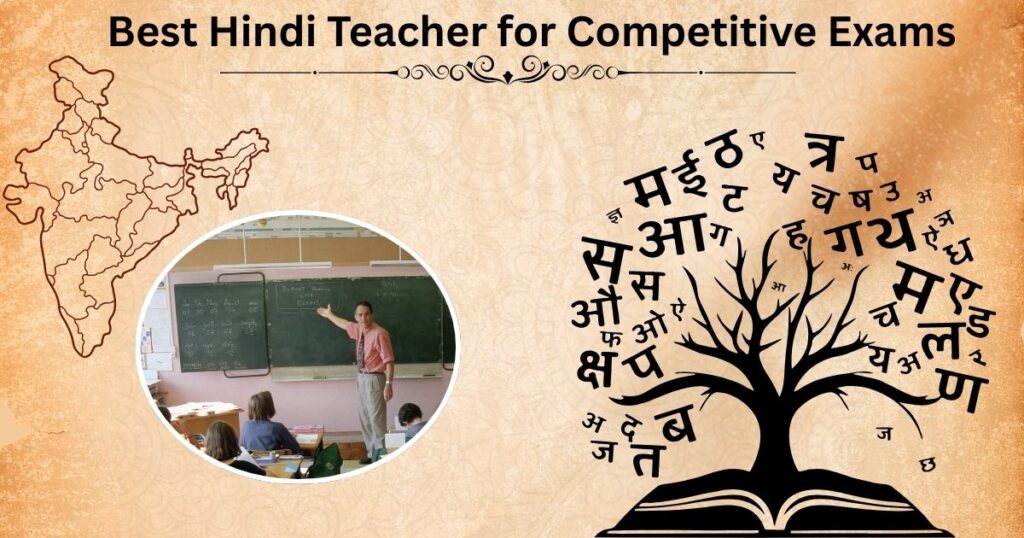
Meet the Best Hindi Teacher for Competitive Exams Who Can Boost Your Success

Best Hindi Teachers for Competitive Exams – SSC, UPSC, Railway & State Level

Best Hindi Teacher: If you aim to clear the competitive exams like SSC, UPSC, RRB, & state-level exam, right guidance for best scoring is important. And for that, the choice of a teacher matters. While preparing for other subjects likeGeneral Knowledge, Mathematics, Reasoning, and English. Don’t forget to focus on Hindi because it is most important in many government exams. Hindi teachers not only help you by providing the core syllabus but they will prepare strategically for the exam. These teachers have a unique teaching style that will help you understand grammar, comprehension, Letter Writing, Unseen Passages and vocabulary.  

Aspirants can learn easily through their guidance including exam pattern, mock test, and shortcut methods that will help you to memorize. Few teachers provide live sessions, recorded videos, notes, and quizzes, so you can easily prepare for the examination. 

Mock test series will help you in revision and remember that every teacher has their unique way to explain hindi. Take a demo class to select the right teacher whose explanation reaches into your mind. 

Explore best Hindi teachers, they are known for their deep knowledge, best teaching style and make complex concepts of grammar easy for students.

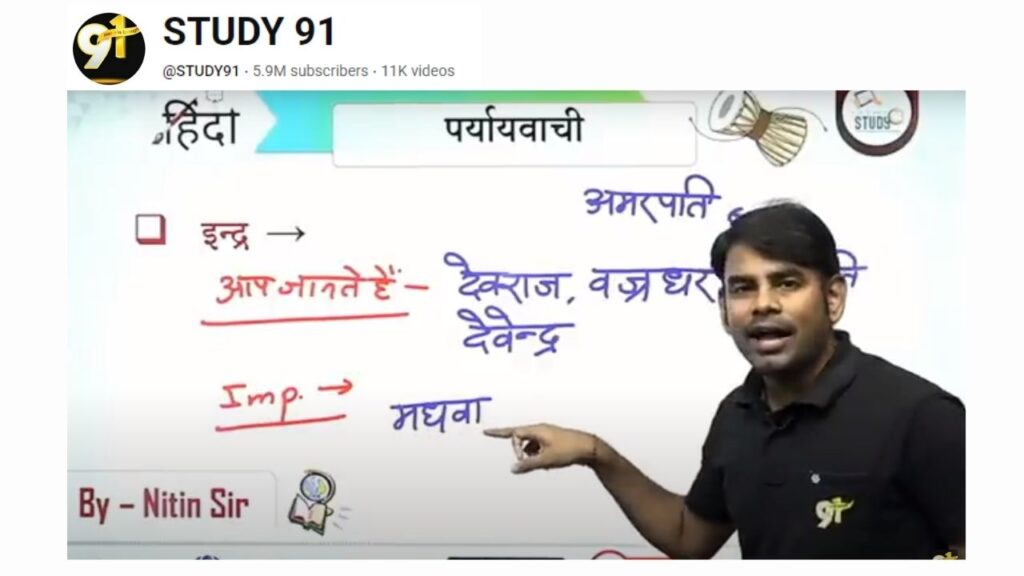
Nitin Sir

Nitin Sir from Study91 is known for clear explanations with a practical approach. He doesn’t just explain from books but tries to relate with real-life examples from newspapers or stories to make the hardest grammar rules easy for students to understand.

Nitin Sir Hindi Teacher Study91

Students easily memorize it, but most importantly they understand why grammar rules are used. He also gives plenty of questions to practice which is the real key to success.

Vivek Sir

Vivek Sir’s creative style of teaching makes him one of the best Hindi teachers in India. Hindi is a language of culture and creativity, according to Vivek Sir. That clearly showed his mastery of story-based teaching style which makes grammar memorable. He uses humour, short stories that don’t make students bored in Hindi classes.

Vivek Sir Hindi Teacher for SSC, Railway, TET

Ideal for those who don’t memorize anything easily and it’s hard for preparing Hindi for exams like Railway, SSC or TET. His method is effective to recall in exams quickly, so these techniques will make students remember even under pressure.

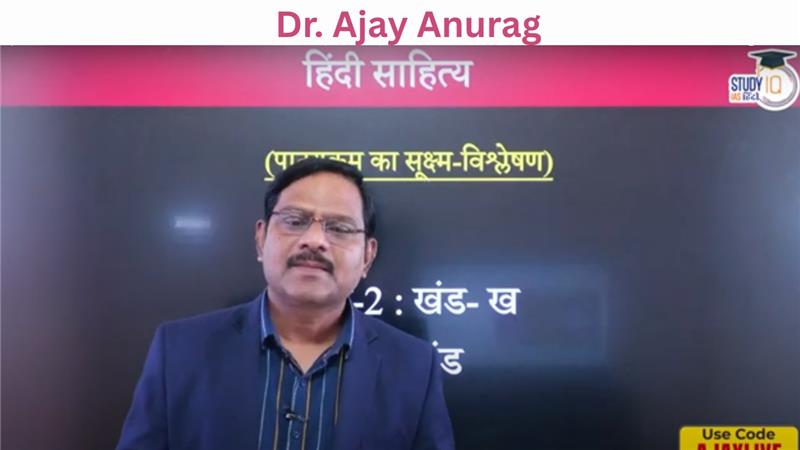
Dr. Ajay Anurag

Dr. Ajay Anurag is a best educator of Study IQ and reputed for his deep knowledge in Hindi grammar and literature. Students looking for one teacher who can teach them both grammar and literature, Ajay Sir is the best choice.

His concept-based teaching makes you understand each topic easily in minimum duration. But he doesn’t rush topics, he explains “why” behind every grammar rule.

Students who don’t just want to learn but understand Hindi topics can easily access his systematic and well-structured lessons. He also provides study material which is so detailed and exam-focused that it makes it easier for the students who are preparing for government exams.

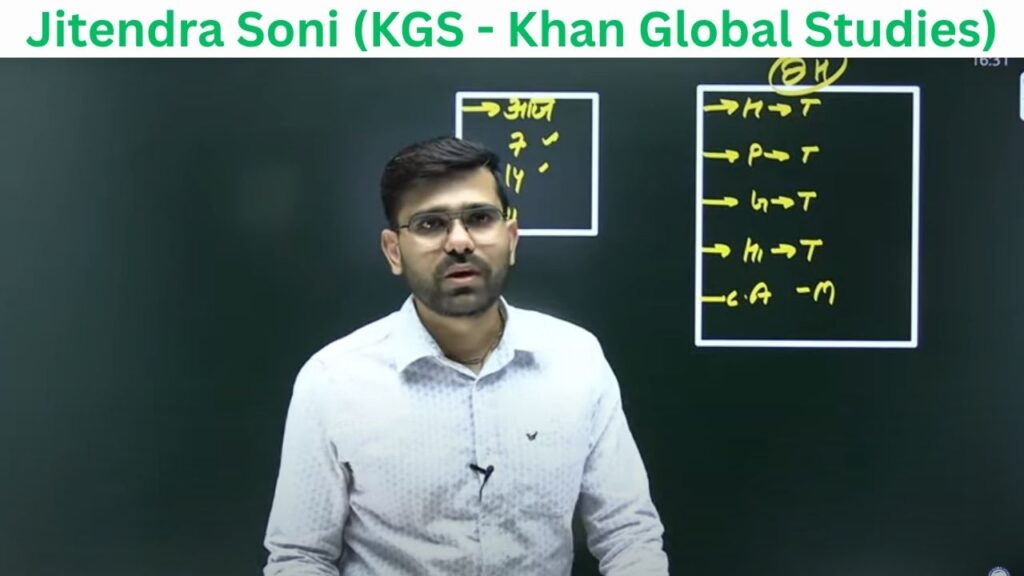
Jitendra Soni (KGS – Khan Global Studies)

He is the best educator of KGS who is extremely popular for his Hindi Foundation Batch. Jitendra Soni is focused on friendly-tone, conduct doubt-clearing sessions, and handwritten notes.

Jitendra Soni Hindi Teacher KGS

Students can simply understand every topic due to his explanation of lengthy stories, complex topics of grammar, and comprehension. Once you have taken his demo class or follow on YouTube, you will know how interactive and energetic his sessions are.

Vishal Sir (Mission Selection) 

Vishal Sir is a well-known Hindi teacher on the growing platform Mission Selection. Vishal Sir is popular among the students because of his exam-oriented preparation method. His short explanations are impactful, he helped many students with shortcuts, tricks, and practical approaches.

Vishal Sir Hindi Teacher Mission Selection

He is the best teacher for Police, SSC GD, Railway, Constable, and state-level exams preparations. Students who want to complete this subject within less time, they can follow Vikas Sir.

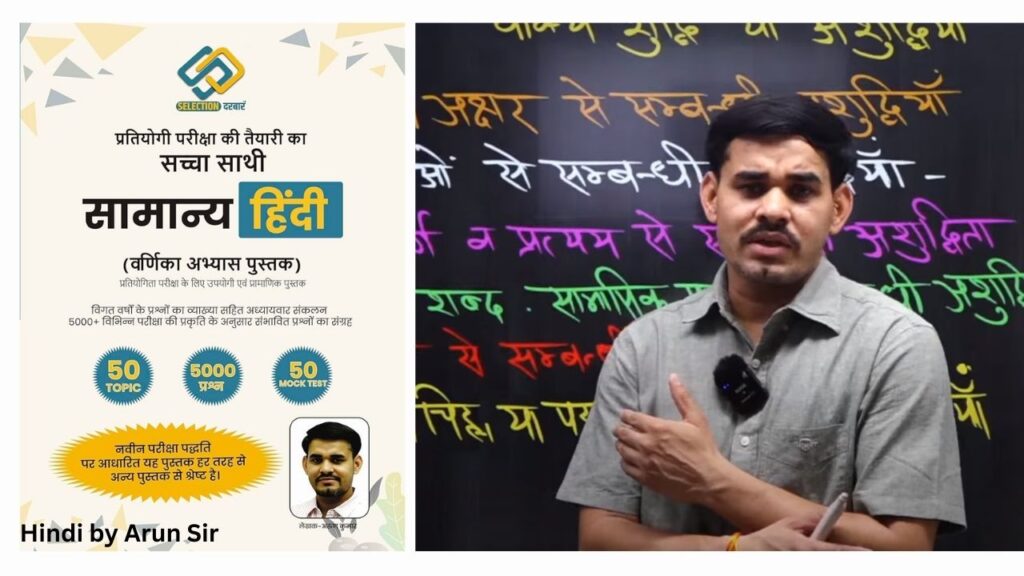
Arun Sir

Arun Sir is an excellent teacher who teaches many students for the competitive exams. He focuses on Hindi grammar complex topics to provide a detailed explanation which can help students to understand Hindi in more depth. His command over vocabulary, comprehension, and writing are valuable for the exams like SSC, Railway, and UPSC. 

Arun Sir Hindi Teacher for SSC and UPSC

Students can easily understand his way of teaching as breaking complex topics into simpler parts including real-life examples. He helps students to practice mock tests and previous year questions for building their strong foundation on Hindi.

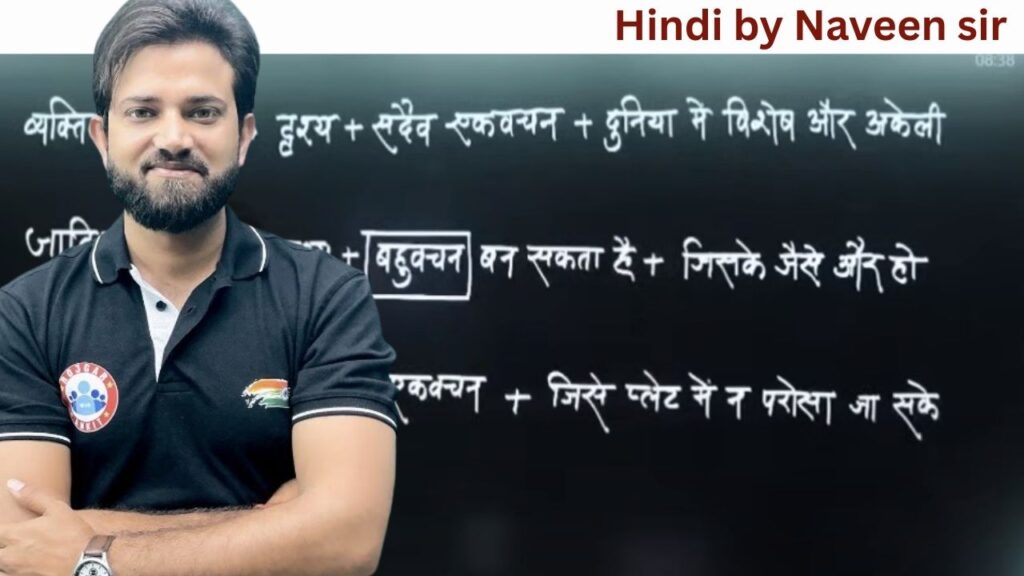
Naveen sir

Naveen Sir is a master of answer writing, if you are preparing for UPSC or state exam then you should make your descriptive writing good in Hindi. You will become an expert in essay writing, letter writing, and precise writing in Hindi with his consistent training.

Naveen Sir Hindi Teacher for UPSC Answer Writing

He is an ideal teacher for students who want to improve their writing skills and present their answers in clean, structured, and detailed.

Other Recommended Hindi Teachers

Apart from the above names, there are a few more respected teachers who can provide you best lessons for Hindi in competitive exams:

Dr Vikas Divyakirti (Drishti IAS) – He teaches Hindi Literature with depth and clarity, making him ideal for UPSC aspirants.

Alok Sir (Adda247) – Alok Sir is focused on short-trick and not go for lengthy explanations that makes him ideal for SSC aspirants

Ritesh Sir – he also helps students to prepare for the SSC exam because he makes Hindi grammar easy through continuous practice.

Read More 👉 Meet the Best Current Affairs Teacher for SSC CGL Who Can Boost Your Score

Why these teachers stand out

Apart from their unique teaching styles, they have the same common qualities that make them best Hindi teachers.

Simple explanation – they explain every topic in easy language that helps every student to understand easily.

Practical Approach – their style including examples from newspapers, current events, and daily-life that make Hindi more understandable.

Focus on Practice – continuous practice of questions from previous year and test series, they ensure that every student solves enough questions to mentally prepare for the exam.

Motivation & Support – Hindi is so difficult for some students who came from convent schools, these teachers inspire them to make learning enjoyable.

Read More: Best Online Coaching for Bank Exam: Master Every Topic for Success

Final Thoughts

When students are focusing on tough subjects to clear competitive exams, they often forget to prepare Hindi to fuel their score. With the right teacher, Hindi can become your strongest subject. These Best Hindi Teachers for Competitive Exams have already taught many successful students now you could become next.

If you give you full potential for your exam with their guidance, you can clear the most toughest exams. They focus on exam patterns and important topics that need to be prepared well for government exams.

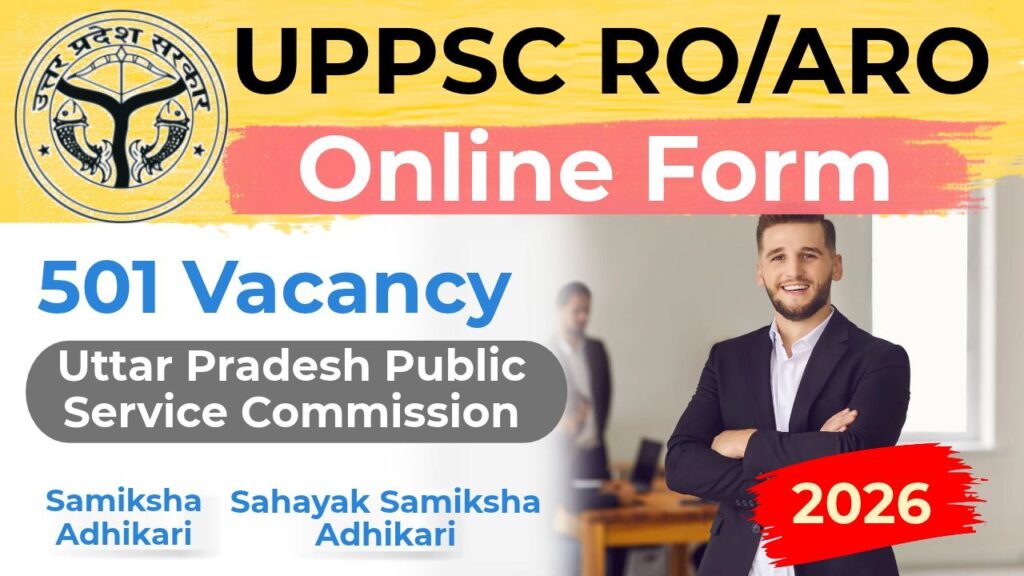
UPPSC RO / ARO Recruitment 2026 – Online Form (501 Posts)

UPPSC RO / ARO Recruitment 2026

Uttar Pradesh Public Service Commission (UPPSC) has released the notification for Samiksha Adhikari (RO) / Sahayak Samiksha Adhikari (ARO) and other posts under Advertisement No. A-4/E-1/2026. A total of 501 vacancies have been announced. The online application process started on 26 October 2026, and eligible candidates can apply until 26 November 2026. Candidates should read the official notification carefully before filling out the application form.

UPPSC RO / ARO Online Form 2026 – Started

UPPSC RO / ARO Recruitment 2026: Short Details
Important Dates
Online Apply Start Date : 26 October 2026
Online Apply Last Date : 26 November 2026
Last Date for Fee Payment : 26 November 2026
Correction Date : 03 December 2026
Examination Date : To Be Notified 
Admit Card Date : Before the Examination
Result Date : To Be Updates 
Candidates are advised to verify all dates on the official UPPSC website.
Application Fee
General / OBC / EWS:₹125/-
SC / ST : ₹65/-
Persons with Disabilities (PwD):₹25/-
Payment Mode: Online, as available on the official application portal.
UPPSC RO / ARO Recruitment 2026: Age LimitTotal Post
Age Limit as on 01 July 2026

Minimum Age: 21 Years

Maximum Age: 40 Years

Age Relaxation: Applicable to eligible categories according to UPPSC rules and the official notification.
501 Post
UPPSC RO / ARO Recruitment 2026: Vacancy Details
Post/Selection TypeVacancies 
General Selection495
Special Selection6
Total501

The recruitment includes RO, ARO and other posts specified in the official advertisement. Check the notification for the exact post-wise vacancy distribution.

UPPSC RO / ARO Recruitment 2026: Eligibility

  • Candidates must possess a Bachelor’s degree from a recognized university for posts where graduation is prescribed.
  • Additional computer qualifications, Hindi typing skills or other specific qualifications may be required for particular posts.
  • Candidates should check the detailed notification for post-wise eligibility before applying.

How to Fill UPPSC RO / ARO Online Form 2026

  1. Visit the official UPPSC website.
  2. Open the recruitment notification for Advertisement No. A-4/E-1/2026.
  3. Complete One Time Registration (OTR), if not already completed.
  4. Log in to the application portal using the prescribed details.
  5. Fill in the required personal and educational information.
  6. Upload the required documents, photograph and signature as instructed.
  7. Pay the applicable examination fee.
  8. Review the application form and submit it before the last date.
  9. Download or print the submitted application for future reference.

Note: Candidates should carefully check their details and eligibility before submitting the application.

UPPSC RO / ARO Recruitment 2026: Mode of Selection

  • Preliminary Examination
  • Main Examination
  • Typing / Computer Skill Test, wherever applicable
  • Document Verification

The final selection stages will be as prescribed in the official notification for the relevant post.

Important Links
Link Status
Apply Online Click
Official Notification View Notification
One Time Registration (OTR)Click Here 
Official Website UPPSC Official Website 

Apply Now for RRB Station Recruitment 2026

UPPSC RO / ARO Recruitment 2026: Important Questions

Q. When did the online application start?

Answer: The online application started on 26 October 2026.

Q. What is the last date to apply online?

Answer: The last date is 26 November 2026.

Q. How many vacancies are available?

Answer: A total of 501 vacancies have been announced.

Q. What is the age limit?

Answer: The prescribed age limit is 21 to 40 years as on 01 July 2026, subject to applicable relaxation rules.

Q. What is the official website of UPPSC?

Answer: The official website is https://uppsc.up.nic.in/.

Disclaimer: Candidates should refer to the official UPPSC advertisement for complete details regarding fees, age relaxation, educational qualifications, vacancy distribution and selection rules. In case of any discrepancy, the official notification will prevail.

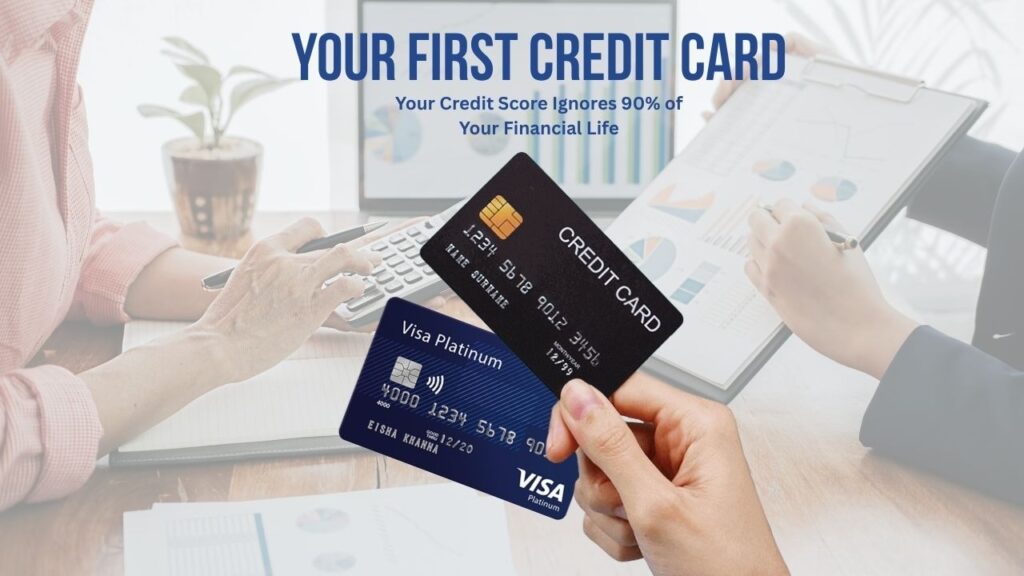
Your Credit Score Ignores 90% of Your Financial Life — What Your First Credit Card Changes 

Credit Score

Once your first credit card is approved, you probably think that you are eligible for loan or finance. But you’re wrong because your credit score matters and it is built from repayment history not from your financial status or expenses. There are four active bureaus (CIBIL, Experian, Equifax, CRIF High Mark) in India and they all sit between 300 and 900 score. 

And it doesn’t know your salary, your savings account, your mutual fund SIPs, or the fact that you’ve never once missed a rent payment. It tracks exactly one thing closely: how you’ve handled borrowed money. 

That gap between what the score sees and what your financial life actually looks like is where most first-time cardholders get caught off guard.

What Your Credit Score Measures in Your Financials

A score is built almost entirely from repayment behavior. FICO, the US model most bureaus borrow their logic from, publishes its weighting: payment history (about 35%), credit utilization (about 30%), length of credit history (about 15%), credit mix (about 10%), and new credit inquiries (about 10%). 

It breaks it down, the ingredients look roughly like this:

  • Payment history — whether you’ve paid EMIs and card bills on time. This carries the heaviest weight, often estimated at around 30-35%.
  • Credit utilization — how much of your available credit limit you’re actually using. Maxing out a card, even if you pay it off in full, can quietly hurt you. 
  • Length of credit history — how long your oldest active account has been open. This is exactly why closing your first credit card years later can lower your score instead of helping it. 
  • Credit mix — a blend of secured loans (car, home) and unsecured ones (credit cards, personal loans) reads better than having only one type. 
  • New credit inquiries — every time you apply for a loan or card, a “hard inquiry” gets logged, and too many in a short window signals risk to lenders. 

CIBIL doesn’t publish its exact formula, but the underlying behavior it rewards and punishes is the same. None of this touches your bank balance. It only starts once you’ve borrowed something — a loan, an EMI, a credit card and shows how consistently you paid it back.

Read More 👉 Best App To Get Instant Loan Without Salary Slip

The 90% of Credit Score Never Sees Your Financial Life

Your salary doesn’t appear on your first credit card report. Neither does your savings balance, your fixed deposits, your stock or mutual fund portfolio, property you own, freelance or side income, or rent you’ve paid on time for years (unless you’ve specifically enrolled in one of the newer rent-reporting services, which are still rare in India). Utility bills and UPI spending don’t count either, since none of that is borrowed money. 

This cuts both ways. Someone with a strong income and zero loans can be “credit invisible” — no score at all, simply because they’ve never borrowed. Someone drowning in personal debt but paying the minimum on time every month can carry a technically decent score while their actual finances are falling apart. The number reflects repayment discipline, not net worth.

Why This Number Still Runs Your Financial Life

Even though it’s a narrow measurement, it’s the one lenders trust most. A home loan applicant with a score above 750 might get an interest rate a full percentage point lower than someone below 650 — on a 20-year loan, that gap alone can add up to lakhs of rupees in extra interest. 

Your score also decides which credit cards you qualify for and what limit you’re offered, and in some sectors — finance, banking, occasionally government roles — employers run a credit check as part of background verification. 

Landlords in a few metro markets have started asking for credit reports too. None of that is about how much you earn. It’s entirely about whether you’ve paid back what you owed, on time, before.

The Mistakes That Wreck a First-Time Cardholder’s Score

Paying Only the Minimum Due

The minimum due usually around 5% of the outstanding bill — keeps your account technically current, but the remaining balance starts accruing interest immediately, typically in the range of 3 – 3.5% a month, which works out to somewhere near 36–42% annualized. It’s one of the most expensive ways to borrow money that exists, and the balance compounds faster than most first-time users expect.

Maxing Out the Limit

Spending close to your full limit every month signals risk to lenders, even if you clear the bill in full. Keeping usage under roughly 30% of your available limit protects the score far more than people assume — this is often a bigger factor than the actual bill amount.

Applying for Multiple Cards in the First Year

Every new application triggers a hard inquiry, and each one dents the score slightly while sitting on your report for a couple of years. Several applications close together read to lenders as credit hunger, not creditworthiness.

Missing the Due Date, Even Once

A single day late usually just costs a late fee. But once a payment crosses roughly 30 days overdue, it typically gets reported to the bureau and that single entry can move the score sharply and stay visible for years.

Closing the Card Too Early

Shutting down  your first credit card within the first year shortens your average credit age, which is one of the more underrated factors in the score. A longer, active history — even on a card you barely use — tends to help more than starting fresh with a new one.

Read More 👉 How to Apply for an Education Loan Online

The Right Way to Spend From Your First Card

Treat it like a debit card with a receipt trail, not free money. Pick one or two recurring expenses — a mobile recharge, one subscription, fuel and route them through the card on autopay. This builds a steady, low-risk repayment pattern without tempting you into overspending. 

Pay the full statement balance every cycle, not the minimum. Check your statement monthly for errors or unfamiliar charges. Avoid withdrawing cash on the card entirely — interest usually starts from the day of withdrawal with no grace period, on top of a flat fee near 2.5–3%. 

And think twice before converting purchases to EMI, even “no-cost” ones; the discount you’d have gotten on the outright price is often quietly folded back into the total.

How Fast Can a Credit Score Really Move?

Scores don’t jump in percentages — there’s no such thing as a score rising “by 90%.” They move in points, and how fast depends on which factor you’re fixing. 

Utilization moves quickest: pay down a high balance before your statement date, and the next reporting cycle, usually 30 to 45 days later, can reflect a meaningful jump, sometimes 50 or more points on the 900-point scale, because utilization updates almost as fast as your balance does. 

Payment history moves slower and compounds instead: one on-time payment barely registers, but six to twelve months of consistent on-time payments builds a track record lenders actually trust. Bureau errors — a closed loan still showing as open, a paid card marked as defaulted, can also produce a fast correction once flagged, sometimes within a single reporting cycle. 

For someone starting with a thin or nonexistent credit file, a workable, lender-friendly score in six to twelve months of disciplined use is a realistic target. Overnight is not.

Before Cardholder Swipe That First Time

Pull your free annual report from the bureau and note your starting number before you spend a single rupee. Set autopay for the full statement amount, not the minimum, and add a separate calendar reminder a few days before the due date as backup. 

Pick one recurring bill to run through  your first credit card and leave the rest alone for now. Then check the number again in three months, not three weeks — that’s roughly how long it takes the system to actually reflect what you did.

Read More 👉 Business Ideas for Students With Zero Investment — Easy Startup Guide

Conclusion

Your financial health doesn’t increase your Credit Score and it is important to maintain that score. It’s a way for lenders to understand how responsibly you’ve handled borrowed money, not how much you earn, save, invest, or own. 

For a first-time cardholder, utilization should be lower, pay the statement balance on time, do not fill unnecessary applications, be patient and give time for your credit history to grow. Treat your first credit card as a tool for building trust with lenders, so when you actually need a bigger loan or good credit, you can get it easily. 

Junior Assistant vs Clerk: Complete Guide of Job Profiles, Responsibilities And Career Growth 

Junior Assistant vs Clerk

Junior Assistant vs Clerk debate is a common topic of discussion for office and government jobs more than you could imagine. On the surface, the two positions appear to be very similar – dealing with files, processing data and helping to keep the office running. But as you start to identify responsibilities, skills and career movement, you’ll start to see more differences emerge.

If you’re studying for competitive exams or just confused about which job suits you more, a differentiation between Junior Assistant and Clerk can really help. In this guide we will explain everything in straightforward practical terms which will help you in taking the right decision for your future. 

Junior Assistant vs Clerk: What’s the Real Difference?

The Classic Office Hero: What is a Clerk?

A clerk is just the spine of the work of day to day office handling. They are the book keepers of the business or department of government. In the old days, this was ledgers and file cabinets. Now, the most part is spreadsheets, databases and digital archives. 

Clerk is responsible to Maintain the Accuracy of Data entry and paperwork organization on daily basis so that everything is at its place. 

Key Responsibilities:

  • Data entry is the act of entering or updating data into a computer system, most commonly data bases and sheets. 
  • Document Organization: Organizing critical paperwork (in a filing cabinet or online), ensuring it’s easy to locate when needed.
  • Dealing with Correspondence: Receive orderly, incoming mail, and send out letters, in an orderly way.
  • Simple Procedures: Processing standard requests, such as changing a customer’s address or checking simple form information. 

It’s a job that needs immense precision. Maybe the clerk isn’t making the big executive decisions, but if the clerk puts a typo in a financial ledger, the entire department might have a fiery meltdown at month’s end. It is very regimented, routine-laden, and unbelievably important. 

The Modern Multitasker: Enter the Junior Assistant

If the clerk is the one safeguarding the records, the Junior Assistant is the one helping the office function with those records.

The word “Assistant” is the important one here. It suggests that you are assisting someone—typically senior officers, managers or a particular department—in carrying out their day to day tasks.It’s a somewhat more active role and frequently serves as liaison between the clerical personnel and management team. 

Though a Junior Assistant may still perform some data entry, their role is typically far broader and a little more contemporary. They are not simply filing information; they are sometimes required to write documents, speak to people, and assist with the office’s workflow. 

Key Responsibilities: 

  • Drafting and Typing — Checking Email and responding to them, official memos and reports receiving and sending to senior staff.
  • Liaison – Communicating with and between departments, scheduling meetings and possibly some light event planning.
  • Public/Client Contact: Handling Telephone calls, answering public enquiries or serve as a first point of contact for an office.
  • Tech-Savvy To Do List: Preparing Power Point presentations; managing electronic calendars; doing background Web research for a project.  

The Junior Assistant definitely skews more fluid. One minute you’re formatting a Word doc and the next you’re on the phone with a vendor trying to find out why the office internet is down. 

1. The Nature of the Work

The main difference is that it’s routine work versus dynamic work. A clerk’s job is fundamentally routine, the chore of repetitions that has become predictable through rules. All days start with a to do list, and they pretty much know what they’re going to do. 

The role of Junior Assistant is a little different with tasks, depending on more adaptability. Their work can change on a weekly basis as required by the office or their supervisors, so they have to be flexible and attentive.  

2. Skill Requirements

To be a great clerk, the only superpowers you really need are accuracy and speed. You will find typing speed is tested in a big way in clerical exams (such as ibps for banks or ssc ldc). You have to be methodical, organized, and able to do repetitive work.

For Junior Assistant, although typing is still essential but communication skills matter more. You’ve got to know how to write a polite but firm email. If you plan to work in an office, you need to know your way around MS Office (and not just Excel, Word and PowerPoint as well). Good interpersonal skills are a huge bonus as you’ll be speaking to a lot more people. 

3. Career Growth and Promotions

Now, this is where things get really interesting, especially if you’re talking government jobs.

Historically “Clerk” is a low-level position. A Lower Division Clerk(LDC) is promoted to an Upper Division Clerk (UDC) then maybe to a Head Clerk or Office Superintendent.

The Junior Assistant is regarded as a modest elevation from a plain clerk if not identical rank with increased modern potential. A Junior Assistant is promoted to Senior Assistant, and from there, they can often leap far more quickly into administrative or executive officer positions. Junior Assistants often have more contact with management and drafts, and consequently are sometimes faster to acquire the skills to move upward in the family or corporate hierarchy. 

4. The Prestige Factor

Let’s be honest, people care about titles. These days, many organisations – both government and private ones – have begun changing the titles of their “Clerk” positions to “Junior Assistant” just because it sounds more hip and professional. The word “clerk” has a somewhat antiquated, dusty-file-cabinet feel for some, while “assistant” feels more active, involved and excited. So a Junior Assistant could be a fancy new name for a clerk depending on which application you are using! 

Government vs Private Sector Reality

The Government Sector lines are very clearly demarcated by pay scales and gazetted that. An LDC (Clerk) and a Junior Assistant may have a little varied pay, different exam and certain strict duties.

In the Private Sector, though? In the private sector it’s the wild west. A startup will label you a Junior Assistant but you’re essentially a clerk, an HR manager and the coffee-runner all bundled into one. Corporations rarely use the term “clerk” anymore unless its within the accounting department (i.e., Accounts Clerk, Payroll Clerk). They are UBER-heavy on “Assistant” or “Coordinator” titles. 

Which Path is Right For You?

If you’re standing at a crossroads wondering which exams to take or which jobs to apply for, think about your personality.

Do you love orchestrated chaos? Do you like to Put Your Headphones On, Get Into a Giant Spreadsheet, and Investigate Every Single Number Balances Out Perfectly Without Being Distracted by a Phone that Rings Every Five Minutes? The clerical route brings huge stability and a straightforward workday. 

Do you enjoy writing, engaging with people, and tackling the daily challenges of your team? And do you plan on moving up into management at some point? If that sounds like you, going for a Junior Assistant position is going to provide you with the exposure and fast paced environment to excel. 

Read More:- IIT JEE Advanced Online Form 2026: Registration, Eligibility, and Key Dates

Conclusion

At the end of the day, neither position is intrinsically “better” than the other. Both of them were essential to the functioning of offices would collapse within 48 hours without them. The Clerk is an important position because all the data is recorded and finding is their responsibility. And Junior Assistant roles provide a smooth workflow with their day-to-day tasks. Whatever your title ends up being, give thanks to yourself for being the glue that holds the workplace together. 

GovUpdatewala is your trusted source for real-time updates on government exams and jobs in India. We provide verified info on SSC, UPSC, Banking, Railways, Defense, and Teaching exams. From syllabus and patterns to important dates and career tips — we support aspirants at every step.

Scroll to Top