Top 10 Best MBA Colleges in Chandigarh (2025) with Fees, Placements & Ranking Revealed!

Chandigarh has largely emerged with schools and colleges in North India, especially in management education. Aspiring many students and working professionals to pursue a Master of Business Administration (MBA) degree from the colleges of this city. Here are some Top 10 Best MBA Colleges in Chandigarh that are excellent in delivering world-class education and growth opportunities.

Let’s look at the details of their fee structures, placement records, and latest rankings that can help you further to decide the college. Which college you should choose totally depends on the goal and priorities. 

We already know that IIMs are the best colleges for Business Studies across India. In Chandigarh, there are many top colleges which offer competitive and specialized MBA programs to take a top place in NIRF and IIRF ranking across Chandigarh.

Understanding MBA Rankings

MBA rankings serve as an important point of a college because ranking is an overall overview of the college. The important factors are academic quality, experienced faculty, well-oriented research facility, industry exposure, and placement success. Various national and international groups judge the colleges with their own ways to provide students multiple views on their choices.

Ranking Methodologies

College ranking frameworks including NIRF and IIRF assess colleges based on their Teaching & Resources, Research Practices, Assessments, Students Result, and Feedbacks. Some other notable rankings such as QS World University, Business Today Rankings based on the factors such as Education Quality, Faculty Expertise, Strong Curriculum, and Placement of Students.

Read More 👉 Top Government Jobs After MBA in 2025 You Shouldn’t Miss!

Top MBA Colleges in Chandigarh 

These are the best Chandigarh’s colleges for MBA programs which can lead you to vast career opportunities and quality education to achieve your goal. 

1. Panjab University (University Business School – UBS)
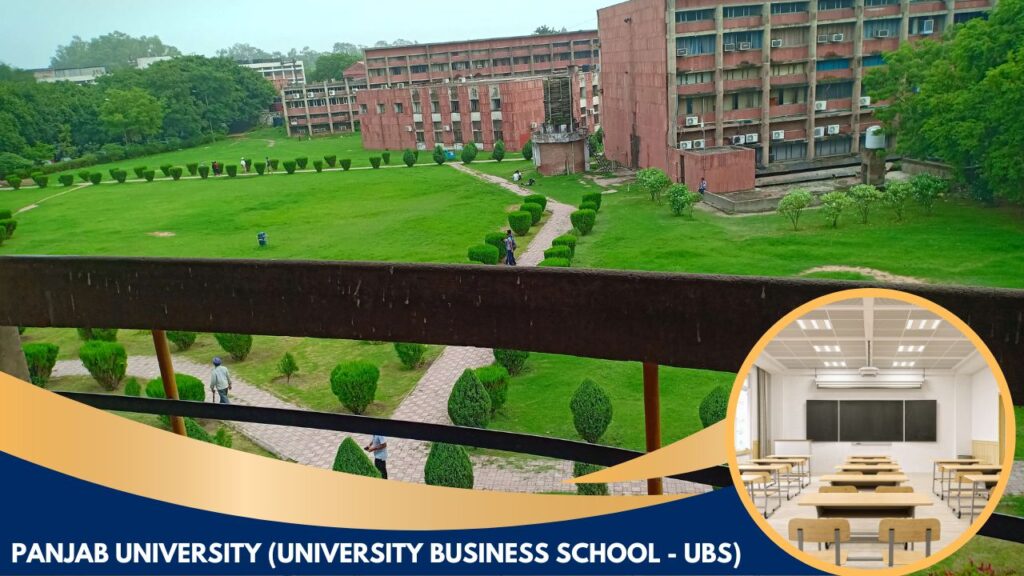
Credit source: Collegedunia

Panjab University is one of the government colleges which can offer a wider range of courses. It was established in 1995 and is the most esteemed MBA institute. 

MBA Programs & Fees: UBS offers a two year MBA programs in specific specializations such as HR, Foreign Business, Entrepreneurship. Some new programs are entered in the college including Business Data Analytics for the 2025 academic year.

The annual fee ranges from INR 23,945 to INR 2 Lakhs, depending on the specialization. The total fee is around ₹1,49,214 for the General MBA. 

Placement Record: UBS Chandigarh placement record is good, many top companies like Deloitte, HDFC, and Amazon are offering the highest CTC was INR 24 LPA, with an average CTC of INR 12.43 LPA

UBS stood out a chance in the top 50 colleges in India for business education and got a 15th position on the NIRF ranking. The college’s ROI is making an MBA program affordable with high-quality education, training, and strong curriculum. It has strong connections with its alumni network and industry leaders that become valuable for strong placements and provide students industry knowledge that can help them to be ready for the job or business. The latest advanced specializations like business analytics and digital marketing are now essential for MBA graduates.

2. Chandigarh University 
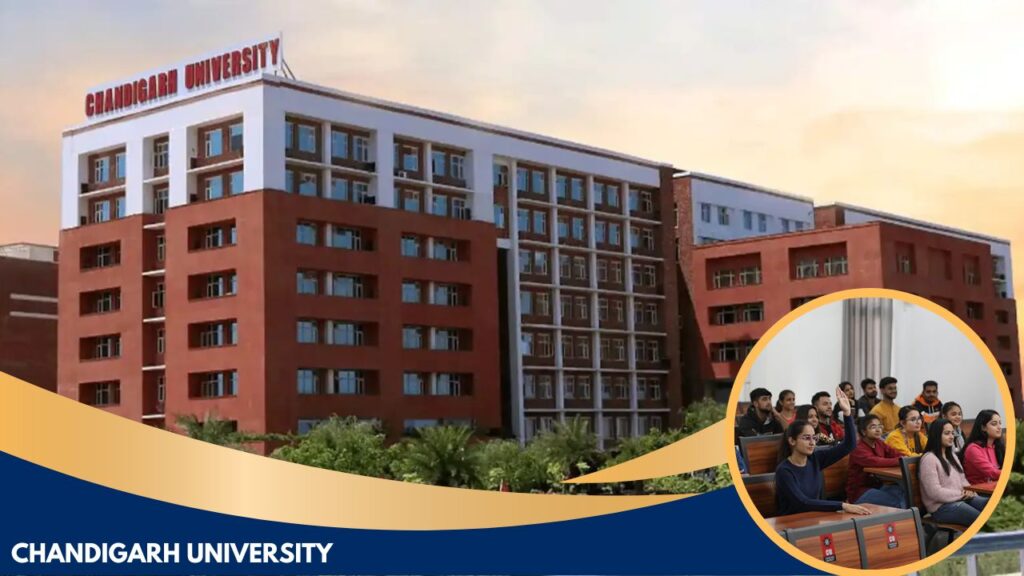
Credit source: Learning Routes

Chandigarh University is a private university which offers well-established MBA programs for providing world-class education. It got A+ from NAAC and has a reputation in the global standards.

MBA Programs & Fees: CU offers MBA programs in various specializations such as Finance, Marketing, HR, Analytics. New specializations like Capital Markets, Global Business Management, and Media & Entertainment Management are added in the options. 

First Year Fee is around Rs. 3,18,500 and total fee ranges between Rs. 6,00,000 and Rs. 7,00,000.

Placement: The chances of placement is very high as it has a good record in placement of many students in top companies like Flipkart, VIVO, ICICI, ITC. The average package Rs. 5 LPA to Rs. 6 LPA and highest will be around Rs. 18 LPA which can be extended up to Rs 28 LPA with international offer. 

CU got 1st position in QS asia ranking and 36th position on NIRF 2024 ranking. It offers industry-aligned curriculum that make a unique impression of the students in global industries. The key point is they provide global exposure through exchange programs and certificates to prepare candidates for international careers. They focused on in-demand skills, industry insights and relevant knowledge on the global economies.

3. Chitkara Business School
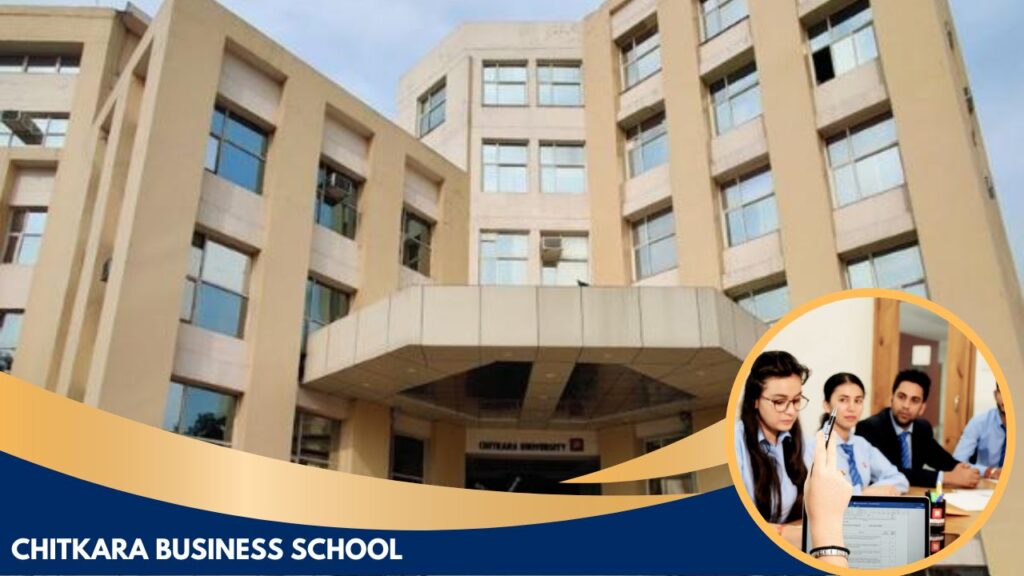
Credit Source: Boarding School

Chitkara Business School is delivering industry-specific MBA programs developed under the top global industry consultation. It got A+ from NAAC and offers high-quality education with industry exposure. 

MBA Programs & Fees: Students can pursue MBA from Chitkara Business School in specializations such as HR, Finance, Marketing, Business Analytics, Logistics, and many more. 

Total Fee ranges between Rs. 7 Lakhs and Rs 9 Lakh depends on the specialization you choose to study. The high demanding course is more costly than the general MBA program. 

Placement: CBS has a strong record of placement — highest placement can go up to Rs. 44 LPA for MBA in Marketing and Average Package will be around Rs. 10 LPA in the same specialization. It depends on the company’s revenue and projects. Main recruiters from CBS are both national and international companies. 

Chitakara Business School is the top choice in terms of MBA program as it offers strong learning and practical education to their students. The institution provides an entrepreneurial ecosystem and startup mentoring initiative for building a robust career and ensuring that students get settled after the 2 years of masters programs. They are not offering just a degree but overall training, knowledge, and environment to create leaders. 

4. Chandigarh Group of Colleges 
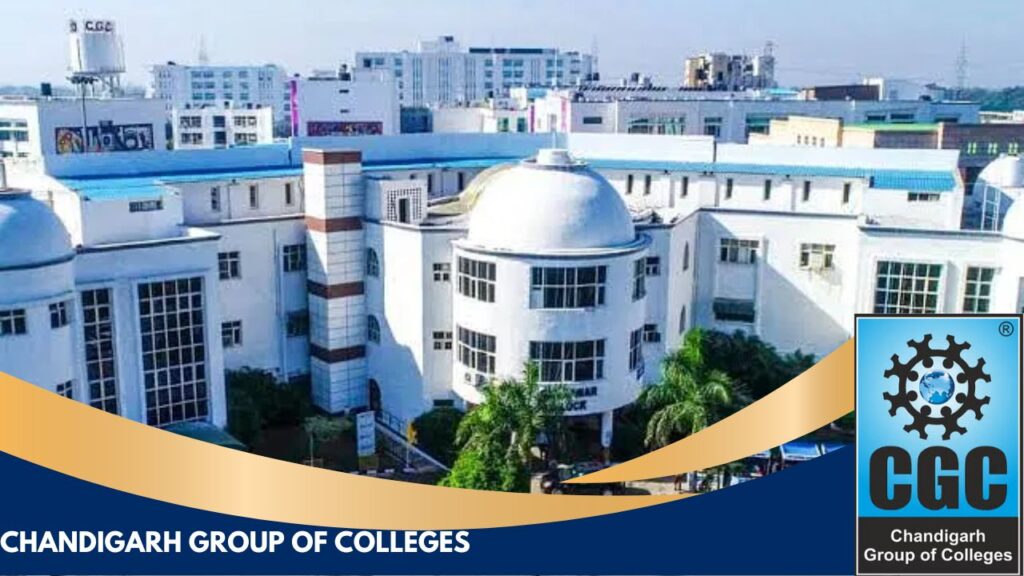
Credit source: Collegedunia

Chandigarh Group of Colleges affiliated to IKGPTU and offers career-centric MBA programs that are designed to build practical skills and knowledge to produce industry-ready candidates. 

MBA Programs & Fees: CGC offers various popular specializations such as Marketing, Finance, Business Analytics, HR in a two year MBA program. 

The annual fee is around Rs. 1,32,560 Lakhs that may fluctuate based on the specialization.

Placements: The percentage is good and thousands of students get hired from this college in top companies like IBM, TCS, Dell, and Capgemini. The average package is around Rs. 17.79 LPA and the highest package can go up to Rs. 50 LPA.

It is ranked 6th position in Punjab universities, offers real-world assessments, quality learning, leadership skills that can help students build their mind to get inside the top companies. The regular performance check up and internships offer a dynamic blend of experience in the business world. The strong connection with industries will ensure the opportunities from top companies. The college focuses on developing skills like leadership, professionalism, communication, and teamwork along with key topics like business ethics which are valuable for the fresh minds to adapt. 

5. LM Thapar School of Management
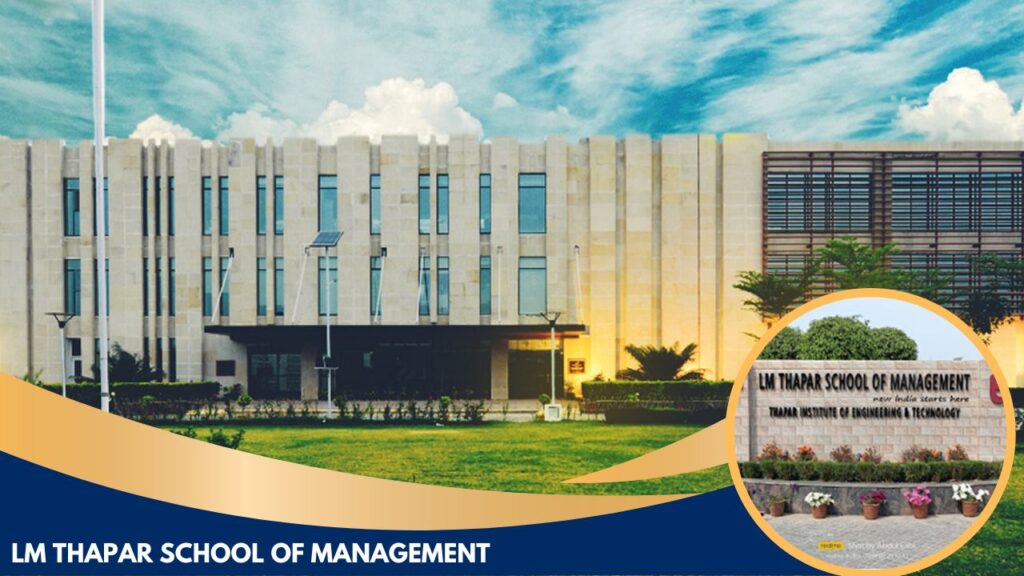
Credit source: LM Thapar School of Management

LM Thapar School of Management is offering quality business education in Northern India. It is a private college that connects globally to prepare industry based curriculum for MBA programs that transform students into professionals.

MBA Programs & Fees: It offers various specializations such as  Entrepreneurship & Innovation, International Management & Strategy, Information Systems, Marketing, and Finance. 

Fee: The annual Fees is around Rs. 1,89,480 depending upon the specialization. Fees can increase with highly demanded fields in MBA. 

Placement: The highest package can be around Rs. 24.82 LPA and average package is Rs. 8.17 LPA. The packages depend on the company and field.

LMTSM is ranked 3rd position in the NIRF ranking and consistently among the top MBA colleges. It offers students an opportunity to approach for the better options at international level and adapt the spirit of entrepreneur.  The curriculum is maintained for providing significant knowledge and learning to produce leaders and corporate professionals. It also gave the exchange programs with internships and placement abroad to many students. 

6. Gian Jyoti Institute of Management and Technology
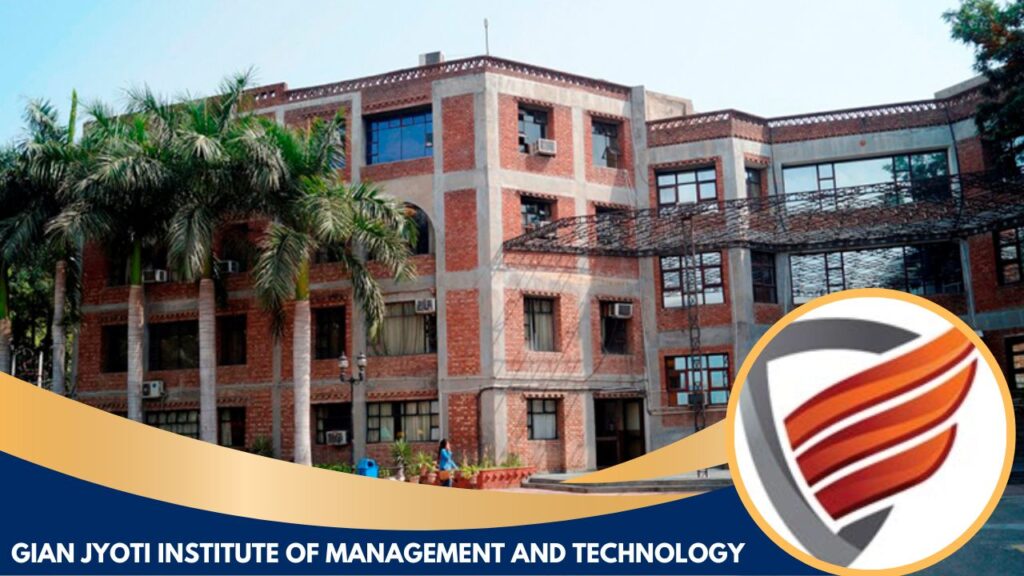
Credit source: Shiksha

Gian Jyoti Institute of Management and Technology was approved by AICTE and is offering training courses and providing excellent value for money. It was established in 1998 in Chandigarh. 

MBA Programs & Fees: It offers two year programs in various specializations such as HR, Marketing, Operation. The first-year fee is Rs. 1.01 Lakhs and total fee ranges between Rs. 1,60,400 to Rs. 1,95,800

Placement: The highest package is approximately Rs. 12 LPA and Average package is nearly Rs. 5.40 LPA from the top companies like Airtel, Axis Bank, Puma, Reliance, and many others.

It is consistently on the top MBA colleges list due to its wider range of placement offers. Students can get hired if they choose the most demanding specialization in MBA. This college not only provides a degree but a strong curriculum that builds the skills in the students to make them professional. It provides training programs, global summer programs and dual specialization for enhancing students ability in the business world.

7. University Institute of Applied Management Sciences 
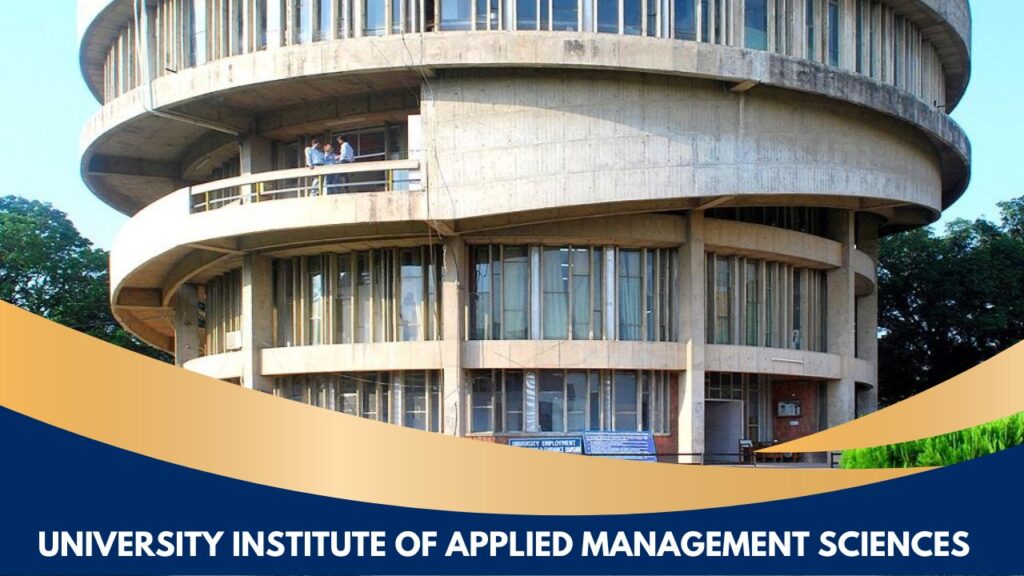
UIAMS is a public university and affiliated to Punjab University. It prepares students for the corporate world with a highly industrial-based curriculum and training. 

MBA Programs & Fees: It offers many sector specific MBA courses such as Hospital management, Banking, Retail, Pharmaceutical. 

The fee is Rs. 126,415 for a semester and an entire course fee is Rs. 4.92 Lakhs while some specialization may raise the fee cost. 

Placement: The Average Package is Rs. 8.5 LPA for students but it has been seen that mostly placements scaled up in Sales and HR department. The major departments like Banking offer good packages.

UIAMS is a good choice for students who want an MBA degree with valuation to specialize in management in core functional areas such as Marketing, Finance, Operations, and HR. The course structure is fine to provide knowledge and business ethics to the students to get them ready for the corporate world.

8. Aryans Group of Colleges
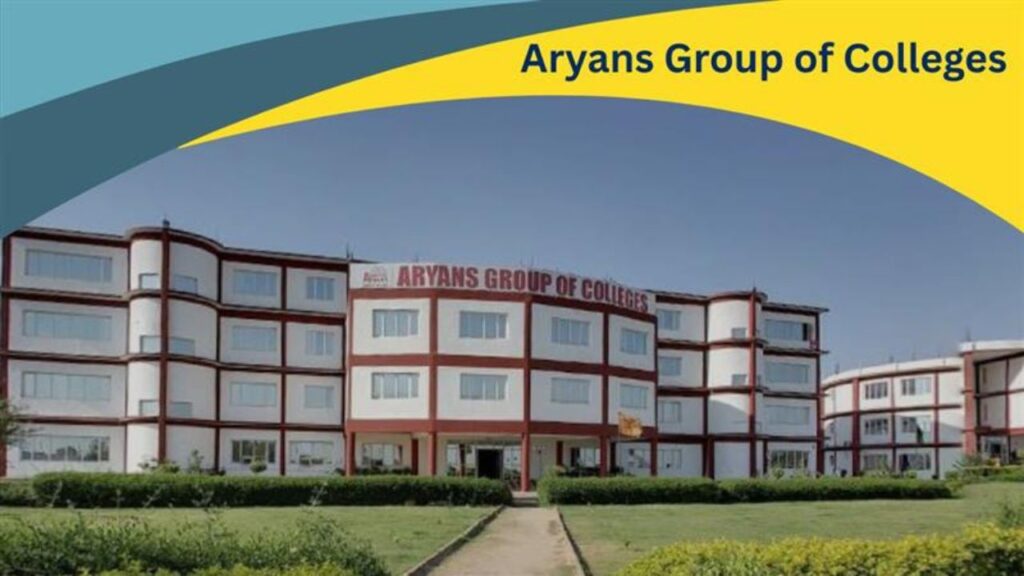
Credit source: Shiksha

Aryans Group of Colleges is offering an industry-ready MBA program for developing student’s knowledge and skills. It is affiliated with IKGPTU and established in 2007. It offers a wider range of specializations in MBA such as IT, Fiance, Marketing, HR, Operations. 

Fee: The total fees range between Rs. 1,20,000 to Rs. 1.28 Lakhs depends on the specialization of the course. 

Placement: The college has marked a record of 60% placement of students in top companies like HCl, HDFC, and Tech Mahindra. The average package students get is around Rs. 3 LPA and the highest can go around Rs. 12 LPA.

9. DAV College
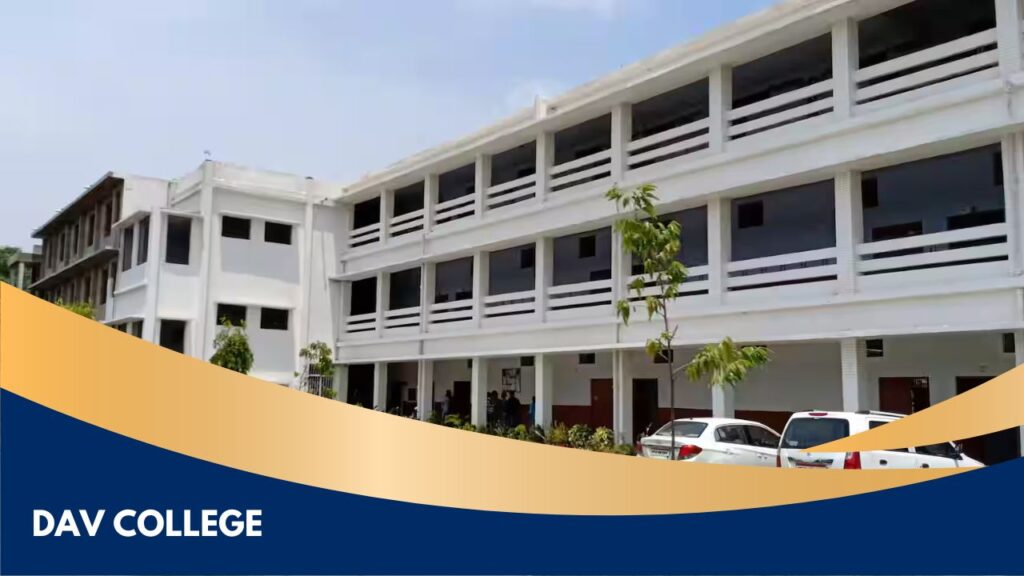
Credit source: Justdial

DAV College is a private college in Chandigarh which was established in 1958. It has a high reputation in offering excellence academic tradition at an affordable fee. Aspiring many students to study a two-year MBA program from this college which provides a comprehensive understanding of business and management ethics. 

Fee: The total fee is nearly Rs. 3.31 Lakhs for the entire course. 

Placement: The average package is Rs. 2,16,000 which can go up to Rs. 65 LPA respectively. 

10. RIMT University
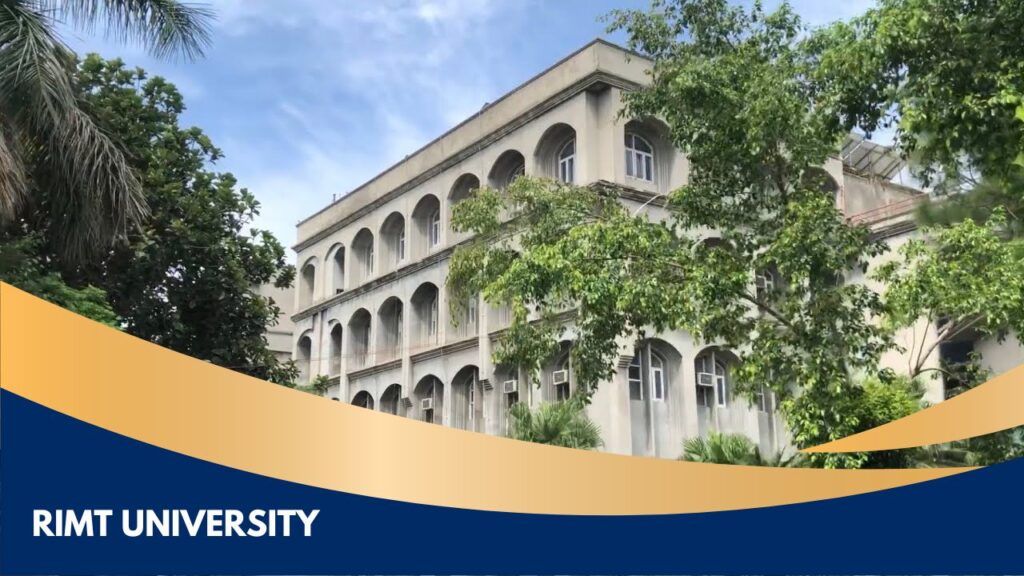
Credit source: Youtube

RIMT is also a private institution that offers a MBA program to develop the knowledge of students for management. It offers various specializations with Choice Based Credit System. It actually allows students to study their interested field of course for improving their skills. 

The total fees for the MBA program ranges between Rs 96,667 to Rs. 1,70,000 annually. The scholarship will be applicable based on the student’s performance.

Placement: The highest package can go around Rs. 30 LPA and the average is Rs. 4 LPA.

Conclusion

MBA aspirants can take admission in public or private colleges of Chandigarh which offers strong industry-based curriculum and experiential learning to develop professionals. These Top 10 Best MBA Colleges in Chandigarh not only offer reported fees, placement and ranking but blend of industry level approach and global networking which led to highest packages in specific specializations like Business Analytics, Finance, and Marketing. 

Leave a Comment

Your email address will not be published. Required fields are marked *

Difference Between CBSE and ICSE: Which Board is Better for Your Future?

Students studying in classrooms representing CBSE and ICSE boards, highlighting differences in learning styles

Finding out the Difference Between CBSE and ICSE is important because it matters for the future of students. In India, ICSE (Indian Certificate of Secondary Education) affiliated schools are expensive but recognized internationally, and have become popular among students who want to achieve international opportunities. 

And CBSE (Central Board of Secondary Education) has a wide range of affiliated schools which makes it cheaper but effective for national-level exams. Both have different teaching methods, syllabus structure, exam pattern & marks, and career opportunities.

This comparison is not for making it good or bad, showing their strengths and weaknesses will help students to decide better for their future.

Overview of CBSE and ICSE

CBSE – Central Board of Secondary Education

  • CBSE board is run under the Government of India.
  • A wider range of schools are affiliated to CBSE.
  • It is more on the side of theoretical education and focuses on subjects like Science & Maths.
  • Popular among aspirants of NEET, JEE, NDA, and UPSC as it covers all the exams syllabus concisely. 

ICSE – Indian Certificate of Secondary Education

  • Council for the Indian School Certificate Examinations (CISCE) is a private education board which governs ICSE board.
  • As compared to CBSE, schools affiliated to ICSE in India and abroad are less in numbers.
  • It focuses on both theoretical and practical knowledge equally on all subjects including arts, science, and languages.
  • Its balanced education is valued internationally.

Curriculum and Teaching Style

CBSE curriculum is more structured and straightforward, it does not contain any extra details on any topic which makes it less but precise for exams. It prioritizes subjects like Science and Mathematics, designed with theoretical conceptual knowledge which makes it ideal for competitive exams. Other subjects like English and Hindi have fewer chapters and syllabi in comparison to ICSE. It is best for the engineering, medical, or government exams focused students.

ICSE curriculum is designed with lengthy explanations and balanced across subjects. It also focuses on other subjects like Literature, language and practical projects for balanced education. ICSE boards students have to study in-depth of each subject. That feels burdened sometimes but it improves analytical ability. It is best for overall knowledge, communication skills, and global recognition opportunities seeking students.

Read More 👉 Meet the Best History Teacher for Competitive Exams Who Can Boost Your Score

Difficulty Level

CBSE is easier in comparison to ICSE as it has a concise syllabus that covers easily within less time. It encourages more theoretical knowledge than projects. Students can easily clear exams with less academic pressure but it improves basic knowledge. ICSE is more detailed on every topic and stressing on projects, lab world, internal assessments making it heavier for children to cover. But it is best for building overall skills that improves analytical thinking.

Examination Pattern and Grading System

CBSE follows a continuous and comprehensive evaluation system to reduce exam stress and declaring results in CGPA Cumulative Grade Point Average system. Questions in the exam are based on the NCERT books. 

ICSE follows marks-based evaluation and grades are assigned according to the percentage. Questions asked in exams need both depth of knowledge and analytical ability to represent the answer. In the final result, 20-30% makes are dependent on the internal assessments so projects are becoming necessary.

Recognition in India and Abroad

CBSE is recognized in major schools in India, making it best for students who plan to continue study in India. It is popular among the JEE, NEET, NDA and UPSC aspirants. ICSE is recognized globally by foreign universities. Developing language and communication skills with its english-oriented syllabus can help students to continue their studies in foreign universities. 

Language and Communication Skills

If students want to continue their studies abroad, develop communication skills, and aim for jobs where language like English will be needed then ICSE is the best option because CBSE is more focused on Science and Maths. However, CBSE emphasizes English and Hindi but not on the higher level.

Which is More Expensive?

Many government schools are affiliated to CBSE board which make it affordable for the students. Private CBSE schools also have affordable fees in comparison to ICSE affiliated schools. More expensive due to their huge curriculum, projects, and emphasis on quality teaching.

Career and Competitive Exams

Competitive exams aspirants prefer to study in CBSE affiliated schools because it covers a more concise syllabus on important subjects like Economics, Maths and Science. However, ICSE boards schools produce creative minds. They emphasize on English Language & Literature, and analytical skills to help students secure their career in international companies.

Pros and Cons at a Glance

CBSE ProsCons
Easier syllabusLack of strong foundation in English and humanities
Affordable FeesLimited application-based learning
20,000+ schools
Ideal for competitive exams
ICSE ProsCons
Tough syllabusMore-time consuming
International RecognitionExpensive schools
Strong English and analytical skillsLess useful for Indian competitive exams
Encourages overall development

Which Board Should You Choose?

It totally depends on your future goals, aiming to make your career in the medical field, engineering, or government sector then CBSE is a good option because it contains an overall concise syllabus that is needed to study in most of the Indian entrance exams. CBSE board students also can go abroad but they have to study hard even on their english and communication skills. Where ICSE is providing overall development, students can go abroad for higher studies with strong language skills and well-rounded knowledge. 

Both boards have their strengths and weaknesses, for making the right decision, students should choose their board according to their interest, learning style, and career plan. 

FeatureCBSEICSE
Curriculum FocusScience & Math oriented, exam-basedBalanced syllabus, includes languages & arts
Difficulty LevelEasier, conciseDetailed, more challenging
Teaching StyleTheoretical, less projectsPractical, project-based, strong English focus
RecognitionBest for Indian exams (NEET, JEE, UPSC)Internationally valued, good for global studies
EvaluationCGPA/percentage, NCERT-style questionsMarks-based, detailed assessment + projects
LanguageModerate EnglishStrong English & literature
AvailabilityWidely available, govt. & private schools, affordableLimited, mostly private and costlier
ExtracurricularAcademics priority, fewer activitiesEqual focus on academics & extracurriculars
Best ForStudents preparing for Indian competitive examsStudents aiming for holistic or overseas education

Conclusion

Which board is best is a little bit complex, you must know the Difference Between CBSE and ICSE before you select your board. Students and parents both have to understand what are the career goals and which board is good for their children. Some students are not able to handle the tough syllabus of ICSE and some students want to go abroad, so it should be according to your plan not by other people’s recommendation.

Leave a Comment

Your email address will not be published. Required fields are marked *

UP Board Exam Date 2026 – Latest Time Table, Schedule & Updates

UP Board Exam Date 2026

UP Board Exam Date 2026 has been announced — and it will be the moment for students across Uttar Pradesh to stop waiting and start preparing. The Uttar Pradesh Board (UPMSP) has released the modified schedule for Class 10 and Class 12 on the official website upmsp.edu.in, Students can now check the revised time table for UP Board 2023 on the official site. As exams are from 18 February to 12 March 2026, students can now prepare study plan accordingly and stay free from last moment pressure. 

Whether you are finalizing your notes, giving last minute practice tests, or cramming difficult calculations, holding the official schedule brings a ne find structure to your day. To cater to the large number of candidates the board has also declared two shifts for the exam that will be conducted in well-organized manner at the centers across the state. 

So, the final schedule is here now, students can get ready for the first step in their life for their career journey. 

Revised Exam Dates For UP Board 2026

The board examinations for class 10 and 12 of this session (2026) will be conducted from 18 February to 12 March 2026. Now everyone can get relief about the exam dates because it’s time to prepare yourself for the final exam. The official time table was published in early November 2025 and it makes everyone’s life easier who is preparing for one of India’s biggest state board exams.​

So, whether you are cracking your last mock tests or memorizing those hard formulas, keep remember that this marksheet will be a valuable asset for the lifetime and make sure to mark these dates on your calendar. 

Two Shifts for the Board Exams

The board has mentioned that the exams will be conducted in the morning and afternoon to manage the large number of students:  

Morning Shift8:30 am to 11:45 am
Afternoon Shift2:00 pm to 5:15 pm

This system is better to handle the huge crowds, and it would allow everyone ample time to get to the exam site and take the paper with no rush whatsoever.​

Pro tip: It is wise to arrive at your exam center at least an hour before your shift begins. This will help you avoid facing last minute hassles or getting delayed and start your exam with a peaceful mind. 

Dates & Subjects For Board 2026

Some important dates and topics are as follows for the UP Board exams. This is a sample of how the major subjects for classes 10 and 12 are spread roughly across the dates, though the exact subject wise date sheet may vary:   

UP Board High School (Class 10)

DateShiftSubject
18/February/20268:30 am – 11:45 amHindi
18/February/20262:00 pm – 5:15 pmElementary Hindi
19/February/20268:30 am – 11:45 amComputer
20/February/20268:30 am – 11:45 amSocial Science
23/February/20268:30 am – 11:45 amEnglish
25/February/20268:30 am – 11:45 amScience
27/February/20268:30 am – 11:45 amMathematics
28/February/20268:30 am – 11:45 amSanskrit
9/March/20268:30 am – 11:45 amUrdu
12/March/20268:30 am – 11:45 amAgriculture

Note: For Class 12th, the afternoon shift will be given mostly but please check on the official website for accurate timing details of each paper.

To view or download a detailed subject-wise routine, you can visit the official website of UPMSP (upmsp.edu.in) and get the latest PDF timetable. 

What Changed in the Revised Time Table?

The most important modification of the schedule for 2026 is that the schedule adjustment applies to certain big papers such as Hindi. Earlier, Hindi (Both Class 10 & 12) was conducted in the same shift but due to the large number of students, the UP Board has now divided them. For instance, Class 10 Hindi will be held in the morning shift, and Class 12 Hindi will be held in the evening shift on the day. ​

The segregation is expected to check the latest rush at exam centers and the smooth and fair conduct of exams. In the same vein, the board also changed the shift for the Class 12 Sanskrit exam to lessen congestion. 

Exam Center Allocation

The UP Board is also adopting a digital, computer-based center allotment process for 2026. Within a radius of 7 – 15 km from your school or residence, you will be assigned an exam centre. This digital policy is aimed at ensuring that students do not have to travel too far and the centres are determined based on availability of infrastructure, safety etc.​

The process of center determination has already been initiated and it will be finalized by December 2025 so students can expect to know their exact centers for various courses. 

How to Download the Official Date Sheet

  1. Getting your official exam dates is super simple:
  2. Visit the Official UP Board Website: upmsp.edu.in 
  3. Check for the link “UP Board Time Table 2026” or “Date Sheet 2026” on the main page.
  4. Press the link of Class 10 or Class 12 as your requirement.
  5. Save the PDF and take a printout for future reference.
  6. Always trust on the official UPMSP website for the latest updates and don’t believe in rumours from non-official sources. 

Related Exam Updates 

  1. September 1, 2025 was the last date of submission of fee for board examination. School has confirmed all your details are correct or not on 6th of September 2025. Ensure that your details are correct before submission as corrections could be problematic afterwards.
  2. Correction Period: For any error in the registration form, a correction window was open from September 12 – 20, 2025.
  3. Admit Card: You’ll get your admit card through your school, or you can download them from the official site.​
  4. Lab Tests: These shall be held separately prior to the theory test, tentatively in January – February 2026. To be informed on dates by your school.

Useful Tips to Prepare for UP Board Exams

  • Make a revision schedule: The exam dates are now out, so decide on your revision topics and give yourself days to focus on tricky subjects.
  • Solve previous years’ papers: It makes you familiar with the pattern and important questions.
  • Schedule rest stops and downtime: You’re not getting any points for working yourself to the bone – you need to rest and relax to be able to focus.
  • Keep in touch with your teachers: Ask for help if you need it – don’t be afraid. 
  • The official updates, reschedules, or other notices would be announced on the UPMSP website only. 
  • Check regularly, as your admit card and practical exam dates are approaching.Don’t believe in rumours— rely on only official announcements for information about your board exams. 

Conclusion

The UP Board exam 2026 syllabus is now well-organized and clear, and some steps have been taken to make the experience fair and smooth for the students. The 2026 Olympics will take place from February 18 to March 12, 2026, and with all the major updates already out of the way, it’s time to set your mind to preparation with a calm and clear plan.

Keep in mind that you don’t need to work hard for a board exam to do well but work smart and timely. Good luck to all the candidates! may you get the results you want for all your efforts. 

Leave a Comment

Your email address will not be published. Required fields are marked *

NTA CSIR UGC NET Admit Card 2025 Released – Check Exam City & Download Now on Gov Update Wala!

NTA CSIR UGC NET Admit Card

Candidates who have applied for the UGC NET exam can check their NTA CSIR NET Admit Card 2025 on the official website. Candidates must download their admit card to know the exact location of the exam centre. The admit card consists of Name, Exam centre, Exam Name, Shift Timing, Roll Number, etc. 

There are a total of three parts – A, B, and C where part A contains objective-questions from general aptitude, the rest of the two parts are based on the subjects. Negative marking is applicable, so candidates must prepare well for this exam.

Qualifying candidates will be eligible for different opportunities such as Junior Research Fellowship, Assistant Professor, and PhD admission

Short Details for the NTA CSIR UGC NET Admit Card

Exam NameUGC NET
Exam Conducting BodyNational Testing Agency
StatusAdmit Card Released
PurposeUGC NET is a national-level exam to open the path for programs in research and scientific fields.
Exam Date28/July/2025
Exam ModeOnline
Duration of Exam180 minutes
Official WebsiteClick Here

NTA CSIR UGC NET Admit Card 2025 Dates

Application Date03–23 June, 2025
Last Date for Fee Payment24/June/2025
Exam Date26, 27, & 28/July/2025
Admit Card DateJuly/2025 (before exam)
Exam City Intimation19/July/2025

For the latest update on the admit card, candidates should check the official website. The admit card will be released soon (before the exam date).

Guide to NTA CSIR UGC NET Admit Card Download 

  1. You need to click on the link to the Official NTA Website.
  2. Then navigate the login section or click on the direct link to log in from this article.
  3. Candidates must enter an application number and password to log in.
  4. After logging in, you can download your admit card or exam city slip to your system.
  5. Save it for future reference.
Important Links
Log inClick Here
NotificationClick Here
Short NoticeClick Here
Official WebsiteClick Here

Leave a Comment

Your email address will not be published. Required fields are marked *

How to Take Admission in Delhi University in 2025 – Full Process Explained!

How to Take Admission in Delhi University

Delhi University is a great university for UG, PG and doctoral programs which attracts thousands of candidates from all over the country. If you are planning to take admission to the most popular university then you must know about the admission process. So, here’s a guide for you which helps you get ready for the procedure.

DU offers a plenty of programs for Arts, Science, and Commerce students. First, know your interest that aligns with the future goal. It will help you select the field of study and decide which program you have to take admission. Admission process is same but eligibility criteria and cutoff marks is different on most of the programs.

DU offers multiple courses in every stream through the entrance exams for the particular field. So, score well in exams to get a admission in Delhi University, here are the following exams: 

  • CUET Examination

DU offers UG courses such as BA, B.Com, B.Sc, BBA, MA, MCA, M.Sc, and B.Ed through the Common University Entrance Test.  

  • JEE Main

Candidates who are willing to take admission in the Engineering programs such as B.Tech have to appear in the JEE examination.

  • CAT Examination

DU offers an MBA program through the CAT examination, you must appear in the examination and score well in that to get an admission.

  • CLAT Examination

For LLB and LLM programs, candidates have to pass the CLAT exam.

  • UGC NET/CSIR NET/NTA 

These are the examinations for admission in PhD.

Candidates must have cleared the entrance exam for their courses then register for CSAS. Its full form is Common Seat Allocation System and this is the stage where you have to fill your college preferences and courses.


This round takes time because it’s a lengthy process, seat allotment based on your scores of the entrance exam, preference you fill, and category you belong to. Seat availability is critical in some cases, you can freeze your seat if you are satisfied with the given seat or wait for the next round.

Once you freeze the seat which is offered by the university. Your admission is confirmed after your acceptance. 

Read More 👉 Top 10 MBA Colleges in Lucknow You Shouldn’t Miss in 2025

Check your eligibility for the particular program you are choosing to take admission. For UG courses you must pass 12th class, for PG courses, it requires a graduation marksheet. Admission in PG courses may require a CUET PG score.

  1. Visit the official website of DU
  2. Search for the SOL admission portal, when you click on that the registration page will appear then click on the registration link.
  3. Enter your information in the form carefully to complete the registration.
  4. Log in with your registration number and password.
  5. Fill out the rest of the details with correct information to further proceed.
  6. Carefully fill in the details, so it cannot be incorrect.
  7. Attach the required documents required for the application in your admission.
  8. Submit application fee then download the copy.
  9. You can check application status from your account.

DU offers plenty of programs for students to study higher education. DU offers programs in streams like Arts, Science, Commerce, Management, Law, and Engineering. The admission in these streams through their entrance exams respectively.

If you are a working professional, parent, or any other responsibilities, you can pursue degrees such as BA, B.Com, MA, M.Com, and M.Sc without any entrance exam. SOL is beneficial for most of the students who can’t attend the college regularly due to any reason. 

NCWEB is designed specially for women who cannot attend full time courses due to responsibilities, work, or any other reasons. Women who prefer weekends or evening classes to complete their education can take admission but it happens through merit score. 

Students who want specializations in any field can also think of Delhi University as the best option for them. The various fields of specializations which DU offers are – English, Hindi, Economics, and Political Science, Physics, Chemistry, Mathematics, Law, and Management.

Delhi University primarily takes students through entrance exams but there are certain programs and modes of study where students can take admission without appearing in the entrance exam. 

SOL – It is designed to provide education for students who cannot attend the regular classes due to work, distance, or any other reason. SOL offers many UG & PG programs without an entrance exam.

CoursesAdmission processMode
BA, B.Com, MA, M.Com, M.ScAdmission is based on MeritDistance education

Some UG Courses based on Merit – DU affiliated colleges are offering some UG programs like B.Com, BA, and many other courses without an entrance exam.

Read More 👉 Top Government Jobs After MBA | Best Careers 2025 Guide

Course NameWho Can Apply?How Selection Happens?
BA OR BA (Hons)10+12th from any stream  (50% score minimum)Through CUET UG + CSAS Counselling
B.Sc OR B.Sc (Hons)10+12th (50% score minimum) in science streamThrough CUET UG + CSAS Counselling
B.Com OR B.Com (Hons)Passed 12th (50% score minimum) in commerce streamThrough CUET UG + CSAS Counselling
B.Tech Passed 12th with PCM, minimum 60% marksJEE Main + JAC Counselling
BA LLB / BBA LLBAccomplish 12th or equivalent (50% score minimum) CLAT UG + CLAT Counselling
BBA10+12th or equivalent (50% score minimum) Through CUET UG + CSAS Counselling
B.El.EdAccomplish 12th or equivalent with 50%Through CUET UG + CSAS Counselling
BFAAccomplish 12th or equivalent (45% score minimum)Through CUET UG + CSAS Counselling
B.Lib.I.ScAccomplish 12th or equivalent (45% score minimum)Through CUET UG + CSAS Counselling
Course NameWho Can Apply?How Selection Happens?
MABachelor’s degree (50% score minimum)CUET PG + CSAS Counselling OR Merit-Based
M.ComB.Com/B.Com (Hons) (50% score minimum)CUET PG + CSAS Counselling
M.ScB.Sc in relevant subject with at least 50% marksCUET PG + CSAS Counselling
MBABachelor’s degree in any discipline CUET PG + Group Discussion & Interview 
MCABCA or equivalent degreeCUET PG + CSAS Counselling
B.EdGraduation degree (50% score minimum)CUET PG + CSAS Counselling
LLBUG OR PG degree in any with at least 50% marksCUET PG + CSAS Counselling
LLMLLB (3-year or 5-year) (50% score minimum)CUET PG + CSAS Counselling
M.TechB.Tech/BE in relevant field (60% score minimum)CUET PG + CSAS Counselling
M.EdB.Ed/B.El.Ed or equivalent (60% score minimum)CUET PG + CSAS Counselling
Points Details
Who can apply?– Master’s degree (55% score minimum) marks – 5% relaxation for reserved category
How do you get selected?First Option  – Through UGC-NET, UGC-CSIR NET, DBT-JRF, ICMR-JRF, once you pass this, you can appear directly for an interview.Second Option  – You must appear for the CUET-PhD entrance test. If you don’t want to take the first option.  – Next step for selected candidates is an interview.  – Everyone (including exempted candidates) must attend the interview.
What happens after selection?– Merit list is prepared based on entrance and interview performance.- Selected candidates must verify original documents in person at the department.- Seats are filled as per department’s decision and university norms.
Other important points– Final subject relevance is decided by the Departmental Research Committee (DRC).- No PhD through distance mode at DU.

Leave a Comment

Your email address will not be published. Required fields are marked *

How to Join Indian Army — Your Complete Guide to Serving the Nation

How to join Indian Army

How to join Indian Army: It’s not just a job, a profession or a service, it’s a way of life to be in the Indian Army and a lifetime commitment to the nation. For millions of young Indians, the olive-green uniform stands for honor, meaning and pride that far surpasses any regular jobs. But the path to joining the Indian Army isn’t a smooth one it requires vision, preparation, stamina and the knowledge of different entry points available. 

Whether you are a 10 or 12 student, a graduate or one aspiring to get commissioned, the Indian Army has multiple avenues to make that dream a reality. Unique in this sense, this guide shows you everything from entry schemes, through selection stages, fitness, documents, medical standards, ensuring that you can prepare as best you can to help you realise your own dream to serve the nation with pride.  

Understanding Your Entry Options

There are hardly any rigid models for recruitment of the Indian Army. The company understands that people with potential can come from anywhere educationally and that is why it has different entry schemes. If you are a class 12 passer, the Agniveer scheme is for you. If you’re a graduate or an engineer, you can apply for the Short Service Commission (SSC) or the Technical Graduate Course (TGC). For people still in class 12 with strong academics, the NDA is a well-known route that leads to officer-level commissions.

What I like about Indian Army recruitment is its open door policy. For soldiers and officers, technical and manpower roles for that matter, there is something for everyone. Your starting point might be different from your colleague’s, but the destination – serving the nation – is the same. 

The Most Popular Route: Agniveer Scheme

For most hopefuls it has become like the Agniveer scheme and this is the only option going forward. Introduced to recruit a younger, more dynamic force into the Armed Forces, the scheme is available for men and women aged 17.5 to 21 years. You must have passed class 10th/12th from a recognized board with minimum 50% marks in aggregate.

The submission of the application is easy. Go to the official site joinindianarmy.nic.in and register providing your basic details, e-mail and mobile number. You will fill up application details with your 10th certificate with as per rules. After you have submitted, you will be given a registration number—hold on to this, it is the key to the next step. 

Read More 👉 UPSSSC Lekhpal Online Form 2025: Apply Online for 7,994 Revenue Posts

The Three-Phase Selection Gauntlet

After the registration you must prepare yourself for three intense stages. The first state is the Common Entrance Exam (CEE), a written test conducted offline. This test examines your understanding of General Knowledge, Mathematics, Science and Reasoning. It’s not like you need to memorize stuff, the exam is on your logical thinking and problem solving skill.

If you clear the CEE, then you will be invited for the second stage: the Recruitment Rally. This is your physical fitness moment! The rally comprises a Physical Fitness Test (PFT) which is truly exhausting. You must run 1.6 km in 5 minutes and 45 seconds, do at least 6 pull-ups, jump a 9-foot ditch, and complete a zig-zag balance test. They’re not just random drills, they’re meant to test whether or not your body can keep up with the rigors of military life.

The third stage is the medical test and document confirmation. Medical examinations are extensive – they examine your vision, hearing, bone density, heart health, and your general well-being. The Army needs soldiers who aren’t just strong but also medically able to go where it’s hard to go. 

Physical Fitness

Being physically fit matters, and you really can’t ignore your way through it. If you really want to join, start your fitness regimen now. Running is your foundation—start with distances you can handle and slowly increase your speed and distance. Do interval training by alternating between high-intensity bursts and recovery intervals.

For pull-ups, who you are is more important than how many you can do right now. If you have no pull-ups yet, use resistance bands/assisted pull-ups or work on negatives to start building strength. Add push-ups, sit-ups and squats for full body strength. Flexibility and balance are also important for many candidates don’t realise, but it is this which is tested in the zig-zag test. Add yoga and agility drills to your training.

Nutrition-related matters are just as vital/nutrition matters are just as vital/nutrition is just as vital Nutrition & hydration are equally important Nutrition Jones in Sydney opined: “it is not only the training [that is important], nutrition is [also]. Fuel your body with protein, complex carbohydrates, fruits and vegetables. Keep hydrated as you train, and stay away from junk food that zaps your energy. 

The Officer Route: A Different Path

If you are a class 12 student with good academic record and want to join Indian Army, consider the Technical Entry Scheme (TES for NDA) or the National Defence Academy (NDA). The NDA is conducted by the Union Public Service Commission (UPSC) and the applicants must be aged between 16.5 and 19.5 years have qualified 10+2 to be eligible. The competition is stiff with only 5 to 10 percent getting selected but the reward is a three year training at the National Defence Academy and then a permanent commission in the Indian Army.

​For graduates, the Combined Defence Services (CDS) exam, which leads to Indian Military Academy (IMA). Male and female candidates who are graduates are also eligible and the selection procedure consists of a written exam and then the infamous Services Selection Board (SSB) interview.

The SSB Interview: The Ultimate Test

If there is a stage that divides the dreamers and the doers it is the SSB interview. This isn’t your run-of-the-mill job interview; you’ll be subjected to a five-day psychological and personality test to determine how officer-like you are. You will be having the Officer Intelligence Rating (OIR) test, Picture perception and discussion (PPDT), psychological tests, group discussions, outdoor tasks and a personal interview.

Leadership, teamwork, bravery, and the capacity to think on your feet are the qualities that the SSB wants. It evaluates the consistency between what you think, what you say and what you do — an idea based on the ancient “Manasa, Vacha Karmana” principle. The interviewing officer will question your background, your motivation for enlisting, your knowledge of current events, and your capacity to stress. 

Documents Required For This Position

  • 10th and 12th mark sheets and certificates
  • Domicile certificate with photograph
  • Caste certificate
  • Religion certificate
  • School character certificate
  • Unmarried certificate (if below 21 years)
  • Aadhar card or ID proof
  • 20 passport-size color photographs
  • Any NCC certificates or sports achievements

The Medical Examination

After passing the physical and mental evaluations, you will have a full medical check-up. The Army requires its soldiers to withstand harsh environments, so the standards are tough. After you cross this last barrier, you will get your joining letter and will be sent to the respective training academy. 

Conclusion

Enrolling in the Indian Army is not just about getting a job and a stable source of income. You’d be serving your country, joining a brotherhood that has stayed vigilant over the nation for generations, and doing something that’s bigger than you are. The path is tough, the competition is fierce and the training will test you to your limits.

But here is what makes it so worthwhile: the privilege of wearing the uniform, the gratification of serving one’s country, and the realization that you are a member of an organization that has influenced the future of the nation. If you have the passion, if you have the resolve, and if you can run – the Indian Army awaits you. Start today, hold fast, and who knows maybe, just maybe, a year from now you’ll be standing tall in that uniform, serving the nation with pride. 

Leave a Comment

Your email address will not be published. Required fields are marked *

Scroll to Top