Google Launches Fitbit Air in India: Features, Price and Availability

Fitbit Air

Picture a fitness tracker you forget you’re wearing. It has no screen to check mid-meeting and no buzz on your wrist at 2 a.m. That’s the idea behind the Fitbit Air. Google has now launched it in India at ₹13,999, with sales starting October 2. It’s the company’s smallest and lightest FitBit yet, and it arrives in a market where most people expect a wearable to have a display. 

The Fitbit Air isn’t a smartwatch. It’s a small sensor “pebble” that sits in a band and tracks your body in the background. Everything you want to read, like sleep scores, workout recaps and heart trends, lives in the Google Health app on your phone.

This isn’t a brand-new product. Google announced the Fitbit Air globally on May 7, 2026, with US shipping from May 26. India is getting it about four months later.

Fitbit Air Price in India And Launch Offers

The India price is ₹13,999 for all four colours. The box includes a three-month trial of Google Health Premium. That trial matters because it unlocks the Google Health Coach, the AI assistant Google built this tracker around.

For comparison, the US price is $99.99. Indian buyers will pay noticeably more than the US sticker price. On bank offers, buyers using eligible HDFC Bank and ICICI Bank cards get ₹1,000 cashback at launch, and it can be combined with six-month no-cost EMI. The exact terms may vary depending on the bank’s conditions.

Google Health Premium will cost is different in India after the trial ends. In the US, it runs $9.99 a month. Google hasn’t shared an Indian figure in the launch details, so check the Google Store listing before you buy.

More Helpful : Voice-to-Notes Tools for Students

What Fitbit Air Features Tracks And How Long It Lasts

Sensors

Google says the sensors cover 24/7 heart rate, heart rhythm monitoring with Afib alerts, SpO2, resting heart rate, heart rate variability, and sleep stages and duration. However, Google’s own footnote says the Afib feature is not available in all countries. So it is still unconfirmed whether it will be switched on in India at launch. If irregular-rhythm alerts are a deciding factor for you, verify this first.

Battery life is the other reliable feature 

Google claims up to a week per charge, and five minutes of fast charging gives you roughly a full day. Those numbers come from Google’s own pre-production testing, so real-world results may be lower.

Workout tracking is where the Google Health Coach comes in 

The Air detects common activities automatically, and you can also start a session from the app. With Premium, you can snap a photo of a cardio machine or a gym whiteboard routine and have it logged.

Hardware details from the global launch:

SpecFitbit Air
DisplayNone
WeightAbout 5 g for the pod alone, 12 g with a band
Water resistance50 metres 
BatteryUp to 7 days (Google’s claim)
Phone supportAndroid 11 or higher, iOS 16.4 or higher
Colours (India)Obsidian, Berry, Lavender, Fog

A reviewer at The5KRunner reported that the Air has no built-in GPS, so run distances will depend on your phone. 

Bands

The pebble pops out, so you can swap bands. The Performance Loop, made from recycled materials, comes in the box. The sweatproof Active Band and the dressier Elevated Modern Band are sold separately. India pricing for those extra bands wasn’t available at the current time.

Fitbit Air Availability In India

The Fitbit Air goes on sale October 2 through the Google Store, Flipkart, Croma, Reliance Digital and Vijay Sales. That offline spread is a smart move for a product people may want to try on first. A screenless tracker is odd enough that holding one makes it easier to understand.

👉 Explore More: Apple iPhone Duo Cost-Effective Methods

Fitbit Air vs Whoop: How Does it Compare?

The obvious rival is Whoop, which pioneered the screenless band. The 5.0 is bulkier, at about 27 g with its band, and rated for 10 metres of water resistance. The bigger difference is the business model. 

Whoop requires a membership starting at $199 a year, while the Fitbit Air’s core tracking works without a required subscription. WHOOP’s current India pricing and availability weren’t clear, so the comparison below uses US pricing only. 

Beyond that, the Fitbit Air competes with cheaper straps like the Amazfit Helio Strap and with Fitbit’s own older display trackers. Those give you a screen for similar money. If you want to glance at the time or your heart rate mid-run, a screenless band is a step backward.

Conclusion

You can buy a Fitbit Air if sleep and recovery data matter more to you than notifications, you already like the Google ecosystem. If you’ve been curious about Whoop but dislike paying a yearly fee. Then it makes you confused, what you need matters most. The Fitbit Air is more comfortable to use around 24/7. A 12 g band is easier to wear to bed than a smartwatch.

Skip it if you want on-wrist GPS, quick glances at stats, or music and payments. Also hold off if the Premium price after the three-month trial is unclear to you, since the Coach is the main reason to choose this over cheaper trackers.

Wait for the October 2 listings, check the final Premium pricing and bank-offer terms, and compare against any display tracker you’re considering at ₹13,999. Then decide which one you can need.

Leave a Comment

Your email address will not be published. Required fields are marked *

Upgrade Laptop Like New Model In Low Budget

Laptop

Upgrade Laptop in low budget is more beneficial than buying a new one. It doesn’t mean that new laptops aren’t worth buying but upgrading from i3 to i7 can be quick and affordable for students. Working on a laptop which takes minutes to open and making noises while turning on kills the vibes for coding, gaming, or video editing.

However, it is worth knowing before making a decision to buy a brand new laptop this festive season, the machine slowing you down probably isn’t dying — it’s just outdated in one or two specific ways, and fixing those is often a fraction of the cost of a new one.

Laptop upgrades on a budget aren’t about replacing everything. Find the vulnerability of the system caused by one or two old elements and change it. Most 3–5 year old laptops are held back by Hard Drive and RAM most of the time. Fixing both can allow users to experience faster and smooth performance.

But how you can upgrade laptop like a brand new is something to understand first before buying anything you find on flipkart or amazon.

Diagnose Your Laptop Internally

This step is crucial because without knowing the cause of your system, how can you fix it? If you skip the diagnosis, and buy $60 RAM but end up waiting for your computer to respond faster and do the work, you wasted your money. 

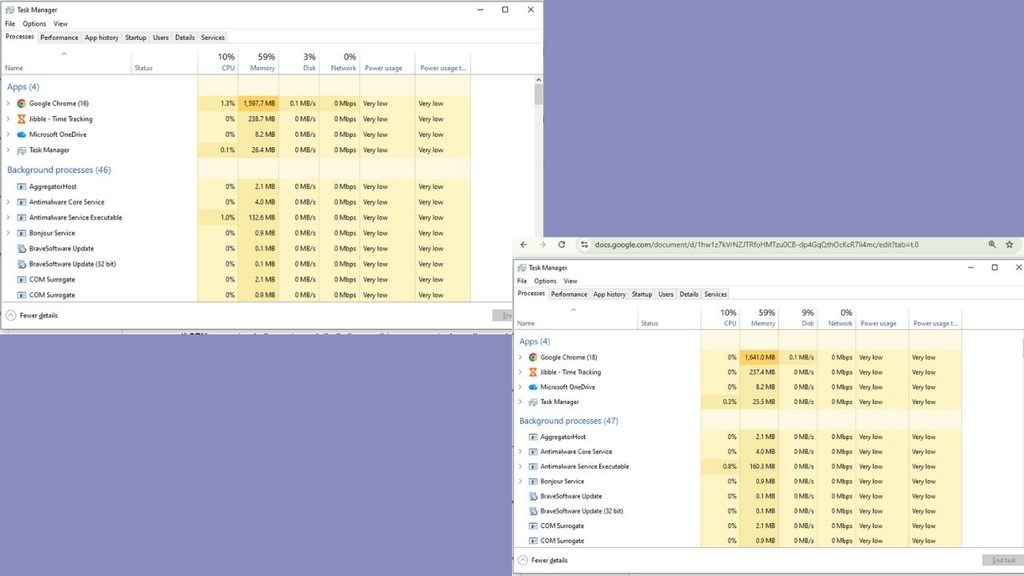
So Open Task Manager on Windows — shortcut keys are Ctrl+Shift+Esc or in MAC — go to Activity Monitor and watch it for a minute while working usually.

Check These Three Things in Your System:

The task manager shows you how much usage has been used to run your apps, if it’s near 100% then your storage drive is the bottleneck — almost certainly a traditional hard disk drive (HDD). Most of the older laptops suffer from this issue that’s why they’re too slow and fixing it (with SSD) is the cheapest and highest impact upgrade for your laptop.


Memory usage above 85% continuously means more RAM is needed. Heavier apps like Zoom, Team and Word running altogether with 15 browser tabs should be run smoothly at 8 GB. But if building applications and gaming is your main course then you need more than 8 GB. Since this amount is default on a lot of budget and mid-range laptops sold in the last five years.

If CPU usage is the thing hitting its limit, that’s one part you generally can’t upgrade on a laptop. CPU bottleneck won’t be solved by swapping components because it is soldered to the motherboard usually so knowing it before you start spending your money on an upgrade that won’t help is important.

Most people diagnosing a “slow laptop” for the first time are surprised to learn its disk, not processor. That distinction is the whole game.

SSD Swap: The Single Best Upgrade You Can Make

By replacing a mechanical hard drive with a Solid State Drive is the single most efficient upgrade that makes a laptop feel like new hardware. It improves the speed and multi-tasking process, boot times can drop from 90+ seconds to under 15 and regular tasks like switching between apps or opening them won’t lag.

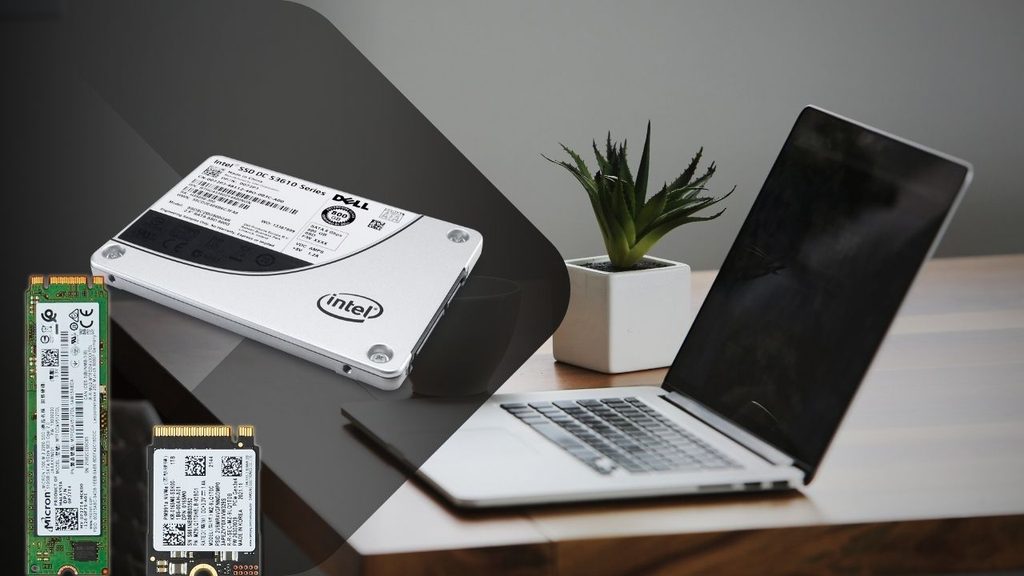
A basic 480GB–500GB SATA SSD, such as the Crucial MX500, Kingston A400, or WD Blue, usually costs around ₹2,500–₹3,500 in India, depending on ongoing pricing and sales. The price is far less than buying a whole new laptop, this upgrade can make your older laptop fresh.

Before buying an SSD, confirm two things: whether your laptop has a 2.5-inch SATA bay, an M.2 slot, or both (this determines which SSD form factor you need), and whether it has a spare slot or you’ll be replacing your existing drive entirely. Most laptops from 2016 onward that shipped with an HDD have a 2.5-inch bay that’s a direct, tool-light swap — usually just a few screws on the base panel.

There’s two options always given to you while rebooting, keeping your existing Windows installation and files onto the new drive or clean installation. If you choose to keep, Cloning software like Macrium Reflect (free tier) or EaseUS Todo Backup will help transfer your programs and settings from old HDD onto the new SSD so you don’t need to reinstall and set things up.

If the laptop is too old then fresh Windows installation onto the new SSD is a better option, it removes old or hidden leftover junk which consumed your memory.

See Details:- iPhone Duo Changes the Cost Effectively With These Methods

Add RAM: The Second-Cheapest Speed Fix

If your diagnostic check flagged high memory usage, this is your next move, and it’s usually inexpensive. Most laptops from the last decade that have 4GB or 8GB of RAM have room to go to 8GB or 16GB, either by adding a stick into a free slot or replacing existing sticks with higher-capacity ones.


It’s not a costly upgrade, an 8GB DDR4 SODIMM stick price is somewhere around
₹1,500-₹2,200 depending on the current market.

Before Buying, Check Which Type Of Ram is Compatible

Your laptop’s supported RAM type (DDR3 vs DDR4 vs DDR5 — check your model’s spec sheet, since installing the wrong type simply won’t work) and its maximum supported capacity, because some budget laptops cap out at 8GB even if there’s a second slot.

The install itself is usually the easiest upgrade on this list — a single panel on the bottom of most laptops, a couple of screws, and the RAM stick clicks into a slot at an angle before you press it flat. 

No cloning, no software, no reinstalling anything. If your laptop’s diagnostic showed disk usage as the real bottleneck rather than memory, though, don’t bother with this one first — RAM won’t fix a slow HDD, and you’d be spending money on the wrong problem.

Clean Out the Software Bloat You’ve Been Carrying for Years

Hardware isn’t the whole story. A laptop that’s had the same Windows installation for three or four years accumulates a genuinely surprising amount of drag: startup programs that launch silently every boot, background services from software you uninstalled ages ago, and browser extensions you forgot you added.

Open Task Manager’s Startup tab and disable anything you don’t need running the moment you log in — most people find five to ten programs quietly launching that have no business doing so (Spotify, printer software, half a dozen “helper” apps from programs installed years ago). This alone can shave real time off boot-up without touching a single piece of hardware.


Beyond that, uninstall software you genuinely don’t use anymore, clear out temp files (Windows’ built-in Disk Cleanup or Storage Sense handles this automatically), and check your browser extensions — each one adds a small but real memory and CPU tax that compounds when you’re already running an older machine.

If your laptop has never had a clean OS reinstall after SSD swap, this is the moment to consider it. A fresh Windows install onto new hardware, with only the software you actually use, often produces the single most dramatic “this feels like a new laptop” moment of the entire process — more than any single component swap.

Read More:- How AI Could Change India’s Digital Public Infrastructure

Don’t Skip the Physical Cleaning

This one costs close to nothing and gets ignored constantly. Laptops that have run for years without ever being opened up accumulate dust inside the fan and heatsink assembly, which traps heat, which causes the CPU to throttle its own performance to avoid overheating — meaning your laptop is deliberately slowing itself down to protect itself.

To reduce fan noise and prevent thermal throttling, cleaning fan blades and heatsink fins can be helpful. Replace dried-out thermal paste so it brings down temperature between the CPU and heatsink. It can cost around ₹300, and helps the laptop’s processor maintain its performance for longer under heavy workloads. 

This is the cheapest and under-appreciated fix but helps cool the processor because dust buildup and dried thermal paste don’t trigger warning as hard drive does, they just slow your laptop and get a little hotter all the time.

Small External Upgrades That Change How the Laptop Works

Not every upgrade needs to happen inside the case. Coders and Gamers need big screen resolution, a budget external monitor changes the entire experience without spending a new laptop’s cost.


Additionally, better-quality external keyboard and mouse will maximize that experience by making typing and navigating more easy and responsive, even if the internals haven’t changed at all.

A basic cooling pad (₹800-₹1,500) can also help laptops that run hot during longer sessions, buying you more sustained performance during demanding tasks like video calls or heavier multitasking, without opening the machine at all.

Know When Upgrading Laptop Stops Making Sense

If the laptop’s bottleneck isn’t the RAM and disk but CPU then do not spend a single rupee on the laptop upgrade because it’s useless. The process is the one component you almost never can replace on a laptop.

Old laptop battery-life usually degraded to holding half its original charge. Changing that will help if your laptop is just 2-3 years old because a five-plus years old laptop doesn’t come with a user-replaceable battery so that’s where you should start saving for a new laptop. It’s worth actually comparing the two costs side by side rather than assuming the upgrade is always cheaper. 

Read More :- Why ChatGPT Ads Deserve a Place In Your 2027 Media Plan 

Conclusion

If you’re staring at a slow laptop right now, check Task Manager first. If disk usage is maxed out, an SSD swap is your highest-impact move and should come before anything else. If memory is the constraint, add RAM — it’s cheap and takes ten minutes. 

Do both of those, clean out years of startup bloat, blow the dust out of the fans, and you’ve addressed the four things that account for the vast majority of “this laptop feels old” complaints — usually for less than a tenth of what a new laptop would cost.

Overall, if your bottleneck turns out to be the processor itself, no combination of these fixes will get you there, and that’s the one scenario where saving up for new hardware is genuinely the right call instead of the expensive-sounding one.

Leave a Comment

Your email address will not be published. Required fields are marked *

Business Ideas for Students With Zero Investment — Easy Startup Guide

Business Ideas

Your semester fees just went out, your parents already transferred money twice this month, and asking again feels wrong. Meanwhile, half your hostel WhatsApp group is talking about someone in third year who’s making pocket money reselling kurtis on Instagram, and another guy is tutoring juniors for ₹500 an hour between classes. You’ve got a laptop, a phone, and more free time than you think — what you don’t have is capital. That’s fine, because none of the Business Ideas for students with zero investment below need any.

It’s a practical rundown of what students in India are actually doing right now to earn without touching their savings or taking a loan — plus how to do it without your attendance or your grades taking the hit.

Why Students Need These Business Ideas

Your parents are already paying the education cost in lakhs. Tuition, hostel fees, textbooks, and the occasional weekend trip are climbing faster than your father’s income. You thought of eating maggi at dinner to save the money but it won’t help. Customer service jobs or fixed shifts at retail shops pay the working hours so it affects your studies and classes. These Business Ideas for students are flexible, even if you start small, you can keep earning through referrals, repeat orders and content that stays active while you’re busy in exams. 

There’s a second reason that matters just as much: what you build now becomes proof of work later. A recruiter reading “ran a 200-follower food page that landed three restaurant collaborations” or “sold ₹40,000 worth of handmade jewellery on Instagram over one semester” is reading initiative, sales sense, and follow-through — things a transcript can’t show. 

Freelance platforms like Fiverr and Upwork, and reselling apps like Meesho, have made the entry point for all of this genuinely free; you’re not renting a shop or buying inventory, you’re renting your own time.

How to Manage a Startup With Your Studies?

The honest risk with any student business is letting it eat into exam prep. A few ground rules keep that from happening:

  1. Block fixed hours, not “free time.” “I’ll work on it when I’m free” usually means never. Pick two or three specific slots a week — say, 7–9 PM on Tuesdays and Thursdays — and treat them like a lab session you can’t skip.
  2. Start with one product or one client, not five. Trying to tutor, resell, and run a YouTube channel in the same month usually means all three stay half-finished. Pick one, get it earning something small and consistent, then add the next.
  3. Use what your campus already gives you for free. Wi-Fi, a decent camera on a hostel-mate’s phone, a common room for shoots, a WhatsApp broadcast list of 60 classmates — that’s most of the “startup cost” covered before you spend a rupee.
  4. Protect exam weeks on purpose. Pause client work or batch your content a week in advance before internals and end-sems. A business that costs you a backlog isn’t worth running.
  5. Treat semester breaks as your test lab. Two months without lectures is the best window to try an idea at full speed and see if it’s worth continuing during term time, or if it was only ever a break-time project.

Read More👉 Best Laptops for Coding and Programming: Top Picks for Every Budget

Business Ideas for Students With Zero Investment

Each of these can be started with a phone, an internet connection, and whatever skill or spare time you already have. No inventory to buy, no shop to rent.

1. Tutoring & Trainer

If you’re good at a subject, a language, or even a sport, someone younger is struggling with exactly that right now. Offline, this means tutoring school kids in your neighbourhood or juniors in your own course during exam season. 

Online, platforms like Vedantu, Superprof, and Unacademy let you list yourself as a subject tutor without paying a listing fee, and you can also just post in your college’s WhatsApp/Telegram groups. Beyond academics, “trainer” covers fitness coaching, yoga sessions, or teaching a musical instrument over video call — anything you already know how to do.

2. Reselling Products

Reselling apps let you sell fashion, home, and lifestyle products through your own WhatsApp and Instagram without holding stock — the supplier ships directly to the buyer. Meesho is the platform most Indian resellers currently use for this. You share a product link, add your margin, and the platform handles logistics. It’s genuinely zero-investment because you never buy stock upfront. You can purchase for yourself and make review videos for Youtube — a content idea that helps your channel monetize and receive more brand promotions.

3. Handmade & Crafted Items

If you make jewellery, resin art, candles, crochet pieces, or hand-painted items, you already have a product — you just need a shopfront. Instagram works as a free storefront on its own; a basic Shopify store is an option once orders pick up, though Shopify does charge a subscription once your free trial ends, so weigh that against your order volume first. 

College fests and flea markets are also underrated distribution: a single fest stall can outsell a month of Instagram posts because people can touch the product before buying.

4. Local Influencer

You don’t need lakhs of followers to start earning as a food, travel, or campus-news page — brands doing local marketing often care more about engagement rate than follower count. 

A food page covering canteens and local eateries near campus, a travel page documenting budget weekend trips, or a campus-news account covering fests and placements can all start picking up small paid collaborations once the page has a real, active audience — even a few thousand followers.

5. Share Your Skills on YouTube

Teaching what you know on camera works because the content keeps earning views long after you upload it. Coding walkthroughs, recipe videos, DIY room-decor tutorials, study-with-me sessions, or a “learn Spanish in 10 minutes” series are all formats students are already running successfully. 

YouTube’s Partner Programme requires a watch-hour and subscriber threshold before ad revenue kicks in, so early on this is more about building an audience and a portfolio than instant income — brand deals usually arrive before AdSense money does.

6. Graphic Design

If you can put together a clean logo, an Instagram carousel, or a poster, small businesses and even fellow students will pay for it — most don’t have an in-house designer. Canva’s free tier is enough to start; Canva Pro is worth the (still low) cost only once you have paying clients. 

Fiverr is the easiest place to list design gigs with zero setup cost. Print-on-demand — designing T-shirts, mugs, or phone cases that a platform like Redbubble prints and ships only when someone orders, is the same skill applied to a physical product, again with no inventory risk.

7. Social Media Management and Content Writing

Small businesses — a local salon, a café, a tuition centre — often know they need Instagram content but don’t have time to make it. Managing 2–3 such accounts for a monthly fee is realistic freelance work you can do from a hostel room. 

Content writing runs in parallel: blogs, product descriptions, and SEO articles are in constant demand, and platforms like Upwork and Contentmart are common entry points for beginners. If you’d rather build something of your own instead of freelancing for others, a niche newsletter or blog you grow yourself can eventually monetise through ads or sponsorships too.

Read More👉 How to Apply for a Student Loan to Get a Higher Education & Make Career

8. Repairing Mobiles and Laptops

Every hostel has someone with a cracked screen, a dead battery, or a laptop that won’t boot, and most students don’t want to make a trip to a service centre for something small. If you’re comfortable with basic hardware fixes and software troubleshooting — clearing malware, reinstalling an OS, replacing a battery — you can build a reputation purely through word of mouth in your own hostel block. This one scales slowly but has almost no competition on campus.

9. Making/Selling Notes, and Reselling Old Books

Well-organised, exam-focused notes are worth real money to juniors who’d rather buy clarity than make it themselves. Selling PDF notes or a compiled formula sheet through your class WhatsApp group costs you nothing but the time you’d have spent making them for yourself anyway. 

The same logic applies to old textbooks and reference books gathering dust after your exams — sell them directly to incoming juniors or through campus resale groups instead of letting them sit unused.

10. Tiffin or Food Delivery on Campus

Hostel food gets old fast, and a home-style tiffin service run out of your own kitchen (or a family member’s) fills a real gap — this works especially well if you live near campus and can cook, or partner with someone who does. 

Start with a small WhatsApp order list for your block before expanding, and be upfront about your kitchen’s hygiene standards since that’s the first thing customers will ask about.

11. Dropshipping Business

Dropshipping lets you run an online store — usually on Shopify where a supplier ships products directly to your customer, so you never hold stock. It’s worth being honest about one thing here: while there’s no inventory cost, most dropshipping stores don’t get real traffic without some ad spend, so “zero investment” mostly holds if you’re driving traffic organically through social media rather than paid ads, at least until the store proves itself.

12. Photography

If you already have a decent phone camera or access to a friend’s DSLR, campus fests, birthdays, and small local events are a steady source of paid photography work that needs no equipment purchase to start. Portfolio-building is the real first step — shoot a few events for free or cheap, post the best shots, and let those bookings lead to paid ones.

13. Audiobooks and Dubbing

If you have a clear speaking voice, platforms built for Indian-language audio content — Kuku FM and Pocket FM among them — regularly look for narrators and voice talent, and Audible’s ACX opens up English narration and dubbing work globally. This is genuinely zero-cost to start — a quiet room and a phone mic are enough for a demo reel.

You can use this skill to upload on Youtube without using copyright content and earn when thousands of people listen to it.

Read More👉 Best Student Loans for College Students

14. Creating AI Agents

This is the newest idea on the list and the one moving fastest. No-code automation tools — Zapier, Make, and n8n among them — let you build simple AI agents and chatbots (a WhatsApp order-taking bot for a local shop, an FAQ agent for a small business website) without writing production code. 

Local businesses that can’t afford a developer are a realistic first client base, and Fiverr/Upwork already have a growing “build me an AI agent” category. Because this space is changing month to month, treat any specific tool or pricing claim here as a starting point to verify, not a fixed fact.

15. Tour Coach

If you know your city well — the food streets, the history, the spots tourists never find on Google — you can run informal walking tours for other students, exchange-programme visitors, or tourists passing through. 

This starts as pure word-of-mouth and a shared Google Form for bookings; no licence or investment is needed for small informal group walks, though it’s worth checking your city’s local rules if you plan to scale it into a formal, paid business.

How to Choose One Business Option for Yourself

With fifteen options on the table, picking one comes down to three honest questions:

What do you already do without being asked? If you’re the one editing everyone’s assignment for grammar, that’s writing or content work. If you’re the one people ask to fix their laptop, that’s repair. The idea that fits fastest is usually the one closest to a habit you already have.

How many hours can you actually spare each week? Tutoring and freelance writing can run for 3–4 hours weekly. A tiffin service or reselling business needs closer to daily attention. Be honest about your semester’s course load before committing to something time-heavy.

Does your campus or city actually have demand for it? A tiffin service needs hungry hostel students nearby. A tour-coach idea needs a city with something to show. Match the idea to where you actually are, not to what worked for someone in a different city’s Instagram reel.

If two ideas still feel equally right, run both for two weeks each during a low-pressure period and let actual results — not your gut — make the call.

Read More 👉 Best Noise-Cancelling Headphones for Online Classes and Mock Tests 

Conclusion

You don’t need capital to start earning as a student — you need one skill, a few free hours a week, and the willingness to start small enough that a bad exam week doesn’t sink the whole thing. Pick the one idea from this list of “Business Ideas for students” that matches something you’re already good at, give it thirty days of consistent effort before judging it, and treat the first version as a test rather than a final plan. 

Most student businesses that actually last didn’t start as a five-year vision — they started as someone testing whether people would pay for something they were already doing for free.


Leave a Comment

Your email address will not be published. Required fields are marked *

NBEMS NEET PG Answer Key 2026: How To Download & Calculate Your Score

NEET PG Answer Key

NBEMS NEET PG Answer Key will be released soon on the official website, since August 30, over 2.65 lakh candidates are constantly searching and waiting for that. The exam held across 1,111 centres in 338 cities, and exam centres in Sitapura, Jaipur disrupted by a power failure and sat a re-examination on September 5 instead. This situation is also important to consider because NBEMS is processing two exam batches into one result and one answer key cycle, so that can be the reason why the board hasn’t rushed the provisional key out yet.

NEET PG Answer Key 2026 Important Dates

EventDate
Issue of Admit Cards27/August/2026
Examination Date30/August/2026
Declaration of ResultBy 30/September/2026
Cut-off Date for Completion of Internship Towards Eligibility for NEET-PG 202630/September/ 2026

When Will NBEMS NEET PG Answer Key Release?

As of previous year NBEMS NEET PG exam cycle the provisional key was released after the time gap of three to four weeks from the day of exam. The NEET PG 2025 was held on August 3, and the answer key was released on August 29, 2025.

So you can expect a similar gap this year too, due to power cut situations in some districts leading to re-examination of NEET PG, that is probably the reason for the delay in the result. A mid-to-late September release for the NBEMS NEET PG answer 2026 key is a reasonable expectation so check out the official notice section on natboard.edu.in directly.

Why This Year’s Key Looks Different

This year’s release isn’t just another routine update — it follows a Supreme Court directive from 2025 that instructed NBEMS to build more transparency into the NEET PG process. 

The National Board of Examination of Medical Sciences updated the format — they will release candidate’s individual response sheets alongside the provisional answer key. It will allow candidates to check their own marked responses side by side with the correct answers, so you don’t have to remember what you tick on the test day.

The exam pattern was also revised for NEET PG 2026, now the paper carries 180 questions worth 720 marks, not the 200-question format which was used in previous years. The marking pattern is the same as before — 4 marks for each correct answer and -1 for every wrong answer. 

But it’s worth recalculating your expectations of scores rather than guessing because the paper is shorter this year, so how much a single wrong guess costs you relative to your total score calculation is important.

How to Download NEET PG Answer Key Once It’s Live

  1. Head to the official website and look for the NEET PG 2026 notice link on the homepage — NBEMS typically doesn’t send individual emails for this, so you have to go find it. 
  2. You’ll need to log in using your registered application number and password, the same credentials you used for your admit card. 
  3. Once you’re in, the answer key and your personal response sheet should both be downloadable as PDFs. 
  4. Before you close the tab, cross-check the Question ID numbers on the key against your response sheet line by line — mismatches here are exactly what the objection window exists for.

Read More 👉 Apple iPhone Duo Changes the Cost Effectively With These Methods

How to Calculate Your Probable Score

Once the NEET PG Answer Key is released and download it to check your answers, calculation is not that hard. Use a simple formula to get your NEET PG score, multiply your total number of correct answers by four and minus by the total number of incorrect answers. Unattempted questions don’t count either way.

So if you attempted 165 of the 180 questions and your correct answers are 130 and 35 are incorrect according to the answer key. Put the numbers as: 

(Correct Answer × 4) − (Incorrect Answer × 1)
(130 × 4) − (35 × 1) = 485

Which means your probable score would be 485 out of 720. 

Do this calculation as soon as the key drops, before you start second-guessing individual answers — it gives you a real number to work with instead of an anxious estimate.

If You Disagree With an Answer

Once the provisional NEET PG Answer Key is out, NBEMS is expected to open a short window for candidates to raise objections against specific answers — based on past cycles, this window has typically stayed open for just two to three days, so it isn’t something to sit on. 

Objections generally need to be backed by references to standard textbooks, not just a strong feeling that the key is wrong, and there’s usually a small fee attached per question challenged. Check the official notification to know the process and fee amount. NBEMS will check your objections carefully and issue a final answer key before declaring results.

The moment the NEET PG Answer Key and response sheet go live, download and save, don’t leave it to login after and match the answers because the site servers may crash down later.  

What Happens After NEET PG Answer Key Is Released?

NBEMS has scheduled the NEET PG 2026 result for September 30, though the board has released results earlier than its stated deadline in previous years, so don’t be surprised if it moves up. 

Once results are out, MCC counselling for MD, MS, and PG diploma seats follows on a fairly tight timeline, which means the NEET PG Answer Key isn’t really the finish line — it’s the number that tells you which counselling conversations are actually worth planning for. 

Use the score you calculate today to start looking at realistic cutoffs for your target specialty, rather than waiting for the official result to start that homework.

Read More 👉 Bihar STET 2026 Online Form Out: Check Exam Syllabus and Pattern To Get Teacher Job

Conclusion

Once the NEET PG Answer Key is out by the authority, start your counselling preparation for the next phase of your career. If you want to check the final score, you have to wait for final results which will be released once the objections against specific answers will close.

Candidates can download & save the PDF once it is released on the official website of NBEMS, but don’t refresh the site every hour because it’ll come out in mid-to-late September. Check the steps to download and calculate your score.

Leave a Comment

Your email address will not be published. Required fields are marked *

SSC CPO SI CAPF Online Form 2026

SSC CPO SI CAPF

The SSC CPO SI CAPF Online Form 2026 finally went live on 10 September, now you can go on the official website to fill it. The official notification of SSC CPO brings fewer seats and a reshuffled exam pattern. The Staff Selection Commission has opened applications for CPO Sub-Inspector posts in Delhi Police and Central Armed Police Force (CAPF) Exam 2026.

The window runs from 10 September to 30 September 2026, 11 PM, and if past years are anything to go by, the SSC server tends to buckle in the last 48 hours. Registering early isn’t just good advice, it’s basic risk management.

DetailsInformation
Exam nameSSC Sub-Inspector in Delhi Police and CAPFs Examination 2026
Conducting bodyStaff Selection Commission
Total vacancies1,871
Application modeOnline
Online application begins10 September 2026
Last date to apply30 September 2026
Official websitessc.gov.in
Application fee₹100 for applicable candidates
Fee exemptionWomen, SC, ST and Ex-Servicemen candidates

Vacancies SSC CPO Are Numbered This Year

There are a total 1,871 vacancies for 2026 announced by SSC which is less in numbers from last year. Even after CISF’s new Fire wing added 234 posts to the count. Still it doesn’t beat last year’s vacancy count. 

SSC CPO SI male seats rose from 142 to 205 and SI female vacancies doubled from 70 to 112 this year. CAPF SI (GD) postings, which usually get higher in number, have shrunk considerably this year.

Sub-Inspector in CAPF seats for male are 1173 and 147 for females. So the total empty seats in CAPF are 1320.

Sub-Inspector (Fire) in CISF also vacant for 234 male candidates. The category-wise distribution of seats is also accessible from the official notification. The conclusion is general category male seats are more in numbers than other categories or females.

Eligibility For SSC CPO in 2026 

Education and Age Limit For SI: Any bachelor degree from a recognised university is accepted. Candidates’ age must lie between 20 to 25 years for Delhi Police SI and CAPF SI. The age relaxation is given for 3-years (OBC) and 5 years (SC/ST).

CISF SI (Fire) runs on a separate, wider band of 18 to 30 years, so if you’ve aged out of the general SSC CPO bracket, this is worth a second look.

Male applicants for Delhi Police SI (Executive) must hold a valid LMV driving licence — both motorcycle and car — on the day of the physical test, not on the day of application. If you don’t have one yet, start the process now; RTOs aren’t fast. 

Read More 👉 Your Dollar Income Isn’t Fixed: How INR Volatility Changes Freelancers Earning 

Physical Standards For SSC CPO SI Post 

Candidate categoryMale heightMale chestFemale height
General/OBC/SC/EWS170 cm80 cm unexpanded, 85 cm expanded157 cm
Candidates from specified hill areas, North-Eastern States and Sikkim165 cm80 cm unexpanded, 85 cm expanded155 cm
Scheduled Tribe candidates162.5 cm77 cm unexpanded, 82 cm expanded154 cm

Physical Endurance Test for SI Post

CandidateEventRequirement
Male100-metre race16 seconds
Male1.6-kilometre race6.5 minutes
MaleLong jump3.65 metres in 5 attempts
MaleHigh jump1.2 metres in 3 attempts
Female100-metre race18 seconds
Female800-metre race4 minutes
FemaleLong jump2.7 metres in 3 attempts
FemaleHigh jump0.9 metre in 3 attempts

What’s Changed in the SSC CPO SI CAPF Online Form 2026 Exam Pattern

SSC has restructured both papers for this cycle, and different question counts and marks splits for Paper I and Paper II. 

Paper I remains the general screening test covering Reasoning, General Awareness, Quantitative Aptitude, and English Comprehension, and Paper II is the English Language and Comprehension paper, with negative marking of 0.25 for wrong answers carried over from the previous pattern. 

For the exact number of questions and marks per section, go to the official notification PDF provided by the Staff Selection Commission.

How To Apply — SSC CPO SI CAPF Application Form

  1. Visit on the official website mentioned in the above overview.
  2. If you already have a One Time Registration (OTR) profile, log in and apply directly against the SSC SI in Delhi Police and CAPFs Examination, 2026 listing. 
  3. New applicants need to register first. 
  4. SSC is pushing Aadhaar-based authentication hard this cycle — opt into it, because it exempts you from photo and signature rejections on formatting grounds and saves you from carrying printed photo ID to the exam centre. 
  5. The photograph itself has to be captured live through the application at the time of registration; you can’t upload an old passport photo. 
  6. Signatures go in as a JPEG between 10 and 20 KB. 
  7. General, OBC, and EWS candidates pay a ₹100 application fee; women, SC/ST, PwBD, and ex-servicemen candidates are exempt, as usual.
  8. Once you’ve paid and submitted, use the preview option before final submission of SSC CPO SI CAPF online form— corrections later are limited to a fixed window (8 to 10 October, per current reporting) and won’t cover every field.

Salary of Sub-Inspector in Delhi Police and Central Armed Police Force

Salary is given under Pay Level 6 of the 7th Pay Commission, candidates who get selected for SI post going to earn up to ₹35,400 which rise up to ₹1,12,400. The total in-hand salary of a SSC CPO SI CAPF is somewhere between ₹55,000 and ₹75,000 a month by adding allowances.

The fixed salary of Sub-Inspector is shared with you after the selection depending upon the location of your post, as metro postings pull the number toward the higher end because of city-category HRA.

Read More👉 UP SuperTET Vacancy Notification 2026: Check Out Details, Dates, & Eligibility

Conclusion

Fill SSC CPO SI CAPF Online Form 2026 now to secure your seat because waiting for the last hour means you can make a mistake while filling the form in hurry or the site will crash down at the last minute and you’ll miss the chance.

So don’t take that risk and apply now for Sub-Inspector, prepare for the theory examination as well as physical standards. Check the eligibility and get your documents ready before going to fill the form.

Leave a Comment

Your email address will not be published. Required fields are marked *

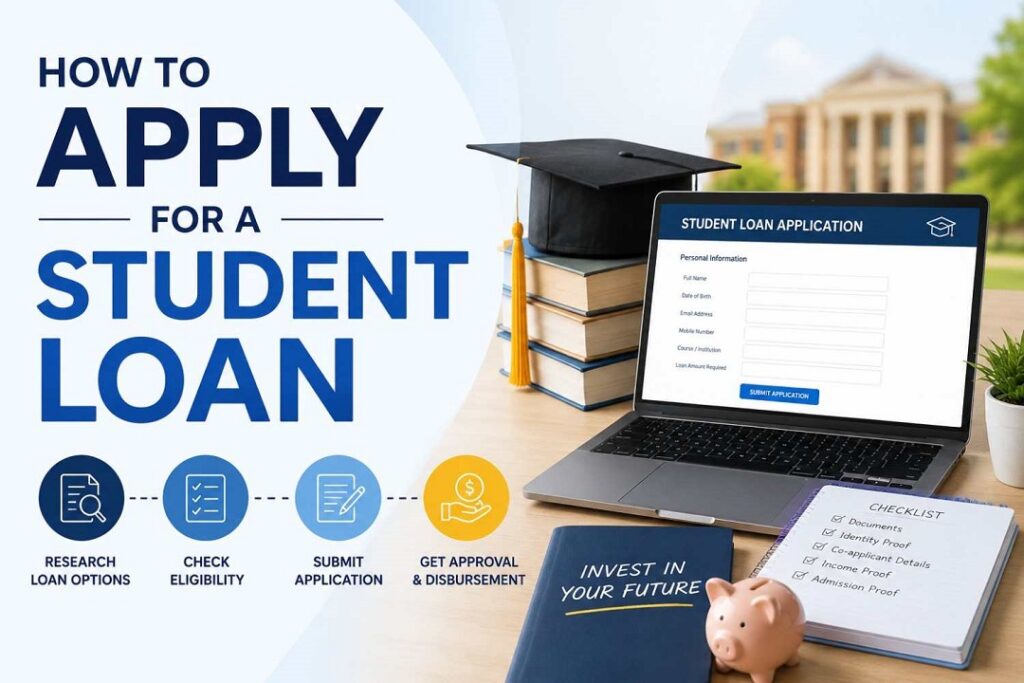
How to Apply for a Student Loan to Get a Higher Education & Make Career

Student Loan

How to apply for a Student Loan doesn’t come randomly in anyone’s mind. Getting into a good college is only half the battle. The other half starts the moment you realize a B.Tech at a decent private university now costs ₹8–15 lakh, an MBA at a tier-2 B-school can run past ₹12 lakh, and a master’s abroad easily crosses ₹40 lakh once you add living costs. 

If you don’t have that sort of money lying around, a Student Loan is the only realistic option — and how to get one usually determines how much of that money actually gets deposited into your account, and how much you end up overpaying in interest over the next 10 years. 

This guide walks through the process as it actually works in India in 2026, not the version that shows up in a bank’s marketing brochure.

How to Apply for a Student Loan Through the Vidya Lakshmi Portal

Almost every organized education loan in India now runs through the Vidya Lakshmi portal, a government-backed single window that connects more than three dozen banks and well over 100 loan schemes to one common form. Instead of visiting five bank branches and filling five different applications, you fill one — the Common Education Loan Application Form (CELAF), prescribed by the Indian Banks’ Association and accepted by every participating lender.

The process, in order:

  • Register on the portal with your email ID and a mobile number, ideally the one linked to your Aadhaar, since OTP verification runs through it.
  • Fill the CELAF in sections — personal details, course and institution details, cost breakdown, and your co-applicant’s financial information.
  • Upload KYC documents, academic transcripts, and your admission letter in the required digital format.
  • Use the “Search and Apply” tab to filter loan schemes by amount, interest rate, and whether you’re studying in India or abroad.
  • Shortlist and apply to a maximum of three banks in one go — a sensible mix is usually one public-sector bank (lower rate, slower processing) and one private bank or NBFC (faster, more flexible).
  • Track status from your dashboard. If a bank marks your application “on hold,” it means they want more documents — check the remarks column rather than waiting for an email.

The portal is also linked to the National Scholarship Portal, so if you qualify for a central or state scholarship, you can apply for it in the same sitting.

Where the PM Vidyalaxmi Scheme Fits In

Layered on top of Vidya Lakshmi since 2024–25 is the PM Vidyalaxmi Scheme, a Central Sector Scheme aimed specifically at students who’ve secured admission — through merit-based or open competitive selection — into a Quality Higher Education Institution (QHEI). The official list currently runs past 800 institutions and keeps expanding as new NIRF-ranked colleges get added, so don’t assume your college qualifies; check the current QHEI list on the portal before you plan around this scheme.

What it actually gets you:

  • No collateral, no guarantor for eligible loans. Some official sources describe this as applying to the entire loan regardless of amount; others cap the collateral-free portion at ₹7.5 lakh, after which the bank may ask for security on the balance. This detail genuinely varies by bank in practice — confirm it directly with your chosen lender before you apply, don’t assume either version.
  • A 75% government credit guarantee on loans up to ₹7.5 lakh, which is what makes banks comfortable lending without collateral in the first place.
  • Interest subvention during the moratorium period (course duration plus one year) — full interest subsidy if annual family income is up to ₹4.5 lakh, and a 3% subsidy if family income falls between ₹4.5 lakh and ₹8 lakh, both capped at loans up to ₹10 lakh.
  • Above ₹8 lakh family income, you still get the collateral-free structure and credit guarantee — you just pay the bank’s normal interest rate with no subsidy.

To claim the subvention, you submit an “intent” declaration on the portal along with income proof from an authorized state government authority — it isn’t automatic just because you’re eligible.

Eligibility Criteria You Need to Meet For Student Loan Across Indian Banks

Setting PM Vidyalaxmi aside, general education loan eligibility across Indian banks looks fairly consistent:

  • You need to be an Indian national with confirmed admission to a recognized, full-time regular course — part-time and distance programs are excluded by most lenders, though a few NBFCs make exceptions.
  • A co-applicant, almost always a parent or guardian, is required by nearly every bank once the loan crosses a modest threshold (often ₹4 lakh), and their income and credit history factor directly into how much you’re sanctioned.
  • For merit-based schemes like SBI’s Scholar Loan or PM Vidyalaxmi’s QHEI route, your entrance exam rank or admission channel matters as much as your family’s finances — these schemes exist precisely to reward the admission, not the collateral.
  • There’s no universal age cap, but banks do informally weigh whether you’re likely to complete the course and start repaying within a reasonable working-age window.

Documents to Keep Ready Before You Apply

Missing paperwork is the single most common reason applications sit in limbo for weeks. Have these ready before you start the CELAF, not after:

  • Admission letter and the institution’s official fee/cost structure
  • Mark sheets for 10th, 12th, and any prior degree
  • Identity proof — Aadhaar and PAN at minimum
  • Co-applicant’s income proof: recent salary slips or ITR, and the last six months of bank statements
  • Collateral documents, if your loan amount or scheme requires security
  • Passport and visa copy, if you’re studying abroad

Keep names spelled identically across every document — a mismatch between your Aadhaar and your admission letter is a small thing that causes real delays.

How Much Will It Cost You Across Every Sector Banks

Interest rates on Indian education loans in 2026 span a wide range depending on lender type:

  • Public-sector banks (SBI, PNB, Bank of Baroda, Union Bank, Canara Bank) generally price standard education loans between roughly 8% and 10.75% p.a., floating, tied to each bank’s repo-linked or external benchmark rate. As of mid-2026, the RBI repo rate itself sits around 6.25% — the actual benchmark moves at each monetary policy review, so treat any quoted rate as a starting point to verify, not a fixed number.
  • SBI’s Scholar Loan, reserved for students admitted to premier institutes like IITs, IIMs, and NITs, runs noticeably lower — roughly 6.9% to 7.65% p.a. — compared to its regular Student Loan Scheme at around 9.4% to 9.9%.
  • Private banks and NBFCs (HDFC Credila, Avanse, and similar) typically charge 9.5% to 16% p.a. Rates are higher, but sanction and disbursal are usually faster, and many offer larger unsecured amounts.
  • Most public banks give a 0.5% interest concession to girl students — worth asking about explicitly, since it isn’t always advertised upfront.
  • Several lenders, including SBI and PNB, offer a 0.5–1% rate discount if you pay simple interest during the moratorium period instead of letting it accumulate. Skipping this is the single most expensive mistake students make: unpaid interest during your study years gets added to the principal, so your EMI ends up calculated on a bigger loan than you actually borrowed.

Claiming the Section 80E Tax Benefit Once You Start Repaying

Once repayment begins, Section 80E of the Income Tax Act lets you deduct the entire interest component of your EMI from taxable income — not the principal, just the interest, but with no upper cap, which is unusual among Indian tax deductions.

A few conditions determine whether you actually qualify:

  • The deduction is available for a maximum of eight consecutive years, starting from the year you begin paying interest, or until the interest is fully repaid, whichever comes first.
  • It only applies if you’ve opted for the old tax regime — under the new regime, this deduction isn’t available at all, so run the comparison before you file.
  • The loan must come from a recognized bank, financial institution, or an approved charitable institution. A loan from an employer, a relative, or an informal lender does not qualify, no matter how similar the repayment terms look.
  • You can claim it for a loan taken for yourself, your spouse, your children, or a legal ward — and it applies whether the course was pursued in India or abroad.
  • You’ll need an interest certificate from your lender each financial year, clearly splitting principal from interest, to actually file the claim.

How To Avoid Application Rejection

A few patterns show up again and again in rejected or delayed applications: 

  • Applying to just one bank instead of shortlisting two or three through Vidya Lakshmi and comparing offers side by side
  • Assuming your college is on the PM Vidyalaxmi QHEI list without checking the current portal listing
  • Letting moratorium interest pile up instead of paying it as simple interest each quarter
  • Submitting documents where your name, date of birth, or address doesn’t match exactly across your Aadhaar, admission letter, and bank KYC. 

Each of these is fixable in an afternoon but only if you catch it before submission, not after a bank has already put your file on hold.

Select the Reliable Option for Student Loan

If you’ve been admitted to a QHEI on the current PM Vidyalaxmi list and your family’s annual income is under ₹8 lakh, start there through the Vidya Lakshmi portal — the interest subvention alone can save you lakhs over the loan’s life, and it’s the closest thing to free money in this entire process. 

If your institution isn’t on that list, or your loan requirement crosses ₹10 lakh, shortlist two or three public-sector banks, compare their post-moratorium rates head-to-head, and ask each one directly what your EMI looks like once the subsidy or discount period ends. Not the headline interest rate but that one question is where most students get blindsided.

Conclusion 

The paperwork for Student Loan application is simpler once you have your documents in order, have compared lenders and know the government schemes that apply to you. Vidya Lakshmi portal provides students a one-stop shop to apply for education loans and also compare the loans, while PM Vidyalaxmi can help eligible students by lightening their financial load through interest support and collateral-free loans. 

Before you accept any offer, look beyond the stated interest rate. Check the terms of the moratorium (temporary period in which you don’t have to start paying the regular EMI), your eligibility for subsidy, the amount you need to repay, the amount of collateral required and the total interest you will pay. A bit of comparison before signing can make a big difference to your finances after you graduate.

Leave a Comment

Your email address will not be published. Required fields are marked *

Scroll to Top