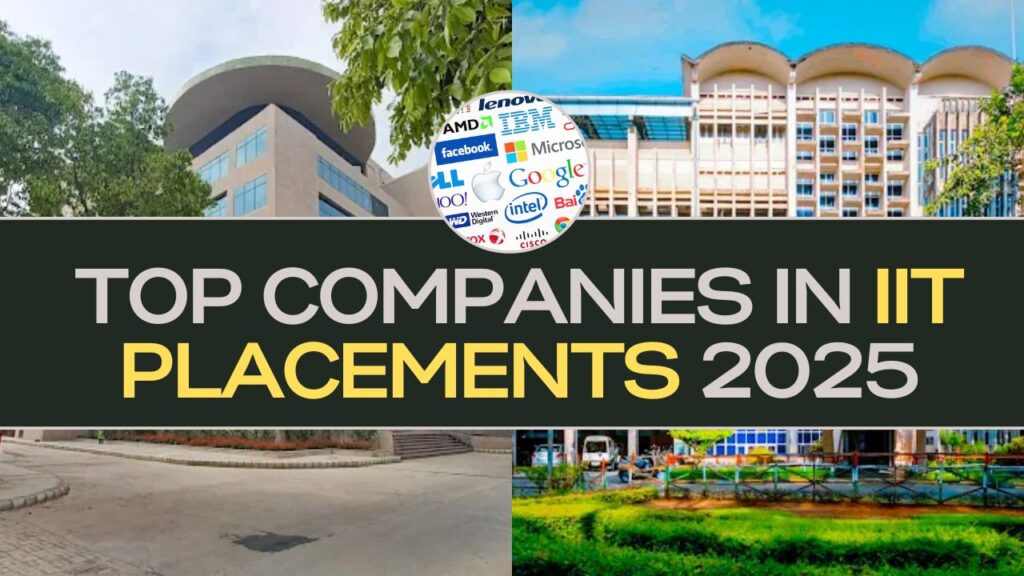
Top Companies in IIT Placements 2025: Top Hiring Firms, Salary Trends & Full Details

Top Companies in IIT Placements 2025

The Indian Institutes of Technology (IITs) have yet again proven their exceptional placement performance in 2025, with Top Companies in IIT vying for the brightest minds from India’s top engineering colleges. This year’s placement season has seen a wide range of records being broken, record high salary packages, more international offers, and companies from more diverse sectors attending the campus recruitment drives. So here’s a (rough) full picture of which companies are recruiting picking up on which salary issues, and the trends within the ever-morphing IIT scene. 

Record-Breaking Numbers and Overall Trends

The very fact the 2024-25 placement season has been outstanding for IIT students appears to be an under-statement. As per the latest official figures, top IITs like IIT Delhi and Bombay have received over 1,200 job offers each, and more than 1,150 unique students have been placed in the first phase alone. What’s more heartening is the jump in offers in all salary buckets including the premium packages of more than one crore per annum. For instance, IIT Bombay has received 22 offers beyond the one crore mark in 2024-25 as against 16 in the previous year, a stupendous rise of 37.5%

The highest salary package in India among IITs hovered at a staggering ₹2.2 crore per annum, offered by Da Vinci Derivatives, an IIT Bombay CSE student for a position at Amsterdam. Meanwhile, the international packages have gone even higher at the top IITs, with the highest international offer at IIT Bombay at ₹3.67 crore per annum. These figures signify an exceptionally lucrative market for the IIT graduates in India as well as abroad. 

The Tech Giants Lead the Charge

With reference to hires from IITs, the large tech firms continue to dominate. Microsoft, Google, Amazon, Apple, Meta and Qualcomm are the biggest recruiters in pretty much all the IITs. These companies — known as the MAANG or FAANG firms — compete fiercely for talent and are willing pay top packages for it. 

The Tech Giants Lead the Charge

At IITB, it was again Google, Microsoft, Amazon and NVIDIA that turned out to be the biggest hiring companies. IITB reports suggest, M.Tech CSE students from IIT Bombay got offers in the range of ₹30 to ₹46 LPA with an average of ₹30 LPA. The CSE students at IIT Delhi received even higher average packages, hovering at around ₹34 LPA and with maximum figures reaching as high as ₹48 LPA from Google, Microsoft and Atlassian

Emerging Sectors and Diverse Opportunities

While technology continues to dominate recruitment, the 2025 placements season saw a considerable number of hiring from the finance, consulting, and core engineering domains. At IIT Delhi, the placement breakup shows that 34% of the total placement was in core technical companies, followed by 

  • IT – 20%, 
  • Consulting – 14% and 
  • Management – 13%. 

This diversification is indicative of a changing career landscape for IIT graduates.​

Emerging Sectors and Diverse Opportunities

In the finance and consulting arena, companies such as Goldman Sachs, BCG (Boston Consulting Group), McKinsey, JP Morgan Chase, Barclays and American Express are well represented on IIT campuses. These firms provide typical packages between ₹35 and ₹45 LPA for beginners, with substantial growth in the money for high performers. 

SectorKey CompaniesTypical Package Range (LPA)Offer Share % 
Technology (IT)Google, Microsoft, Amazon, NVIDIA, Qualcomm, Atlassian30-4820%
Core TechnicalTexas Instruments, Intel, Micron Tech, Tata, Reliance20-3534%
ConsultingBCG, McKinsey, Barclays35-4514%
FinanceGoldman Sachs, JP Morgan, American Express35-454%
Management/AnalyticsMeesho, OLA, PayU, Quadeye25-4013% / 7%

Average Packages and Salary Trends

There is now a trend in salaries in 2025 toward increasing when compared to past years. The average package offered by IIT Bombay rose from ₹21.8 LPA in 2023-24 to ₹23.5 LPA in 2024-25 – an increment of 7.7%. The average package reported by IIT Delhi is around ₹32 LPA for all programmes with an average of around ₹21.9 LPA being offered to BTech students and ₹32 LPA to MTech students. Students at IIT Kanpur were offered an average package of ₹ 26.27 LPA and IIT Madras continues to keep its average package competitive at approximately ₹17-20 LPA for all its programmes.​

Interesting is also how salaries differ depending on branch. The best packages are still offered to Computer Science and Engineering (CSE), for which the median predefined offers also exceed ₹30 LPA at top IITs. After that comes Electrical Engineering and then mechanical, civil engineering students generally get packages between ₹15-25 LPA based on which sector they go for. 

Global Opportunities and International Offers

Among the most eye-popping trends in the 2025 placement season has been the uptick in overseas offers. With all-India (national) offers counting towards overall highest packages, IIT Delhi witnessed more than 50 international offers in Phase 1 from over 15 companies across countries including USA, Japan, Netherlands, South Korea, Taiwan, UAE, and the UK. This indicates rising global demand and better pay packages for graduate-level engineers from India, as well as multinational companies increasingly hiring IIT graduates for global roles.​

The salaries of firms providing roles for the international are notably higher, which is between 30-50% increase on domestic norms especially for roles in developed countries. The offer by Da Vinci Derivatives of ₹3.67 crore for an Amsterdam is an illustration of this trend. 

Read More 👉 Best IIT College in Uttar Pradesh – Complete Ranking & Admission Guide

Sector-Wise Breakdown and Career Paths

Recruitment has gotten more and more multifaceted. Although software development engineers and data scientists are paid the most in the tech industry, core engineering roles, especially at companies such as Tata, Reliance, BPCL and Schlumberger, lure students focused on manufacturing, energy and infrastructure. 

Public sector undertakings (PSUs): Organisations PSU are – ISRO, DRDO, BARC they always remain to be answer to bring in the best brains, it’s just the pay package is slightly low, but they offer Job Security, Prestige, and for those who want to make a long term career they offer Career Growth.​

Zomato, Ola, Swiggy, Flipkart and other startups/unicorns have also been leading recruiters, especially for those students who are attracted to growing-stage companies and entrepreneurial environments. These companies usually have competitive packages including stock options and have energetic work cultures. 

Lowest Packages and Market Reality For IITians

While the highest salaries make the headlines, it is essential to look at the overall picture. At IIT Bombay, the lowest packages were reported at ₹4 LPA for the year 2024-25, a steep fall from the ₹5.4 LPA in the previous year. This decrease is indicative of the tightening recruitment at entry level by companies and the influence of economic cycles on entry-level jobs in certain industries. 

Tips for IIT Students in the Current Job Market

IIT students now who are about to go in for placements can glean quite a few pointers from 2025 trends. 

  • For one, technical excellence and programming ability especially would be unlikely to diminish for technology roles. 
  • Second, gaining domain knowledge through internships greatly enhances placement potential– internship conversion rates to PPOs (Pre-Placement Offer) continue to be robust at most IITs. 
  • Third, the increasing number of AI and data analytics positions means that skills in machine learning and data science can be extremely useful. 
  • And finally, don’t forget that foreign opportunities may lead to significantly better paychecks and career advancement. 

Conclusion

The placement seasons of IIT’s in 2024-25 can undoubtedly be called as a landmark year with the highest ever packages, varied sectoral participation and opportunities extending across the globe. With companies such as Microsoft, Google, Amazon, and Goldman Sachs battling for top talent and average pay packages trending upward, IIT graduates continue to be among the most in-demand professionals in India and beyond. 

Adaptable, knowledgeable, and able to think critically—even in the face of rapidly changing landscapes in higher education and the corporate world— these qualities among others that IIT students possess which ensures that they are valuable assets to employers across the globe. 

For prospective engineers dreaming of trying out for IIT admissions, these placement trends act as a strong inspiration showing how great career and financial benefits await them, down the line, if they make it to these premier institutions. 

Leave a Comment

Your email address will not be published. Required fields are marked *

UPSSSC Mukhya Sevika Salary 2025 – Check Pay Level, Job Profile & Perks

UPSSSC Mukhya Sevika Salary 2025

For those prospective female candidates, Uttar Pradesh Subordinate Service Selection Commission (UPSSSC) Mukhya Sevika post is a great chance. Choosing a career in government service can alter the course of an individual’s life. But even as of 2025 this role remains a highly prestigious and solid one and keeps on with professional development and welfare of community and women empowerment. With the 2025 updates of UPSSSC Mukhya Sevika Salary and official information, you can choose the right path. Here are all the details including benefits, job description, eligibility, and recruitment process.

Mukhya Sevika (female head supervisor) job, in Child Development Services and Nutrition Department in Uttar Pradesh. This post entails monitoring Anganwadi centers, implementing welfare schemes for children and women, and ensuring smooth functioning in districts. The recruitment is conducted by the UPSSSC and the process is only for female graduates and has excellent potential for societal good and job security. 

UPSSSC Mukhya Sevika Salary Structure

The application of UPSSSC Mukhya Sevika comes with an princely sum of benefits under the 7th Pay Commission, so you can say that the salary is another compelling reason to apply for this post.Here is the latest details for 2025: 

Pay Level5 (Pay Band-1)
Grade Pay₹2,800
Basic Salary₹29,200/month
Dearness Allowance (DA, 38%)₹11,096/month
House Rent Allowance (HRA, 27%)₹7,884/month
In-hand Salary (Min.)₹39,596/month
Gross Salary (Est.)₹42,000–₹45,000/month
After Deductions₹37,000–₹43,000/month

The salary consists of the basic pay, dearness allowance as applicable from time to time and house rent allowance as per city classification. It also includes other state allowances and deductions. After standard cuts for pensions or NPS contributions, take-home pay can land anywhere between ₹37,000 and ₹43,000 a month. This makes it one of the highest paying graduate jobs in social work. 

Benefits and Perks

  • Pension
  • Insurance Coverage
  • Leave Travel Concession
  • Medical Reimbursement
  • Leave Encashment
  • Official Transport Allowance
  • Other Allowances

Every month employees are also sent a detailed salary slip where the salary, allowances and deductions are mentioned - this is necessary for availing loans and for other official work. 

Job Profile of Mukhya Sevika

A Mukhya Sevika in 2025 will have a host of responsibilities to be fullfilled besides being an office administrator. It involves supervision of Anganwadi Centers under the assigned blocks and ensuring successful implementation of various state and central schemes for women and child welfare. Supervision of Mukhya Sevika is also responsible for organizing training programs for Anganwadi workers and helpers. 

Among their priorities, they run awareness drives in rural and semi urban pockets focussing on educating the community on education, nutrition and health. They have to monitor and follow up on key activities related to immunization, nutrition and education outreach to ensure timely implementation and progress. To keep transparency and accountability, data and updates need to be reported regularly to the higher authorities. The position requires working closely with government departments and health offices to coordinate and monitor that the general development and assistance schemes are adequately being delivered to target populations. 

Read More 👉 BTech CSE Fees at IIT Delhi – Latest Fee Structure and Scholarships

How You Get Selected

Eligibility: This position is only for female candidates. Candidates should have a degree in Arts with subjects like Sociology, Social Work, Home Science, Nutrition and Child Development. Age Limit: 21 to 40 years as on July, 2022. Reserved categories are given relaxation in age. 

Preliminary Eligibility Test is mandatory to apply.

Written (Mains) Exam: Candidates have to appear in an OMR-based written exam of 2 hours, 100 questions (1 mark each) is conducted in a paper, with a ¼ mark penalty for wrong answers.

Document Verification: All the documents to prove your previous qualification, identity, and cast are necessary to attach.

Final Merit List: After the exam, candidates are shortlisted according to their scores with category-wise cut offs

UROBCSCSTEWS
67+62+56+47+58+

Opportunities After Joining—Career Development

Promotion from Seniority: Advancement into senior supervisory and management positions within Child Development Services is based on strong performance and years of experience.

Departmental Exams: Successfully completing additional examinations at the departmental or state level facilitates advancement to senior administrative positions.

Professional Training The Government offers regular training modules on community health, nutrition, management and leadership.

Lead Larger Teams: Agencies may also offer their best employees the opportunity to become Senior Mukhya Sevika or Block Supervisor to lead larger teams, and so on.

Transfers within the Government and Variety in Posts: Staff can apply to transfer to other districts for family reasons or professional development. 

Conclusion

UPSSSC Mukhya Sevika is a good career in the government sector with good salary, job security and service to the society. Since 2025, the company is known for having the best entry-level salaries and benefits for college graduates. And the job also establishes stronger local communities, because so much of child and women’s welfare work is done there. There’s a transparent hiring process, predictable promotion trajectory, and strong perks. This role is ideal for females seeking meaningful work that makes a difference and enduring career success. If you are eligible, prepare to take the lead in ushering change in Uttar Pradesh. 

Leave a Comment

Your email address will not be published. Required fields are marked *

BSc Physiotherapy (BPT): Course Details, Eligibility, Fees & Career Scope

BSc Physiotherapy

BSc physiotherapy is a 4-year undergraduate professional course, that can be opted by those students who wish to pursue a career in healthcare services or wish to provide care to patients through physical rehabilitation and therapeutic care. The course gives you a thorough knowledge of human body anatomy, movement science and modern physiotherapy techniques as medical science and clinical practice. Due to increasing emphasis on physical well-being, rehabilitation, and sports medicine, physiotherapy has become a well-established and sought after profession and BSc Physiotherapy is a particularly good academic option for students who take interest in patient care, science of recovery and holistic health. 

Overview of BSc Physiotherapy

The bachelor’s degree in physiotherapy is an application of clinical and science based physiotherapy. This course is conducted for four years both for theoretical sessions and practical training where the course participants learn basics of anatomy and physiology as well as methodology of physical therapy. 

Students also complete clinical placements or internships where they have the opportunity to work with patients who have a range of bodily ailments. This practical experience is key to acquiring the skills you need to become a physiotherapist. 

Course Curriculum for BSc Physiotherapy

The BSc Physiotherapy course combines theory and practice in equal measure to develop sound clinical and professional competence. It begins with core modules in anatomy, physiology, biochemistry, pharmacology, assessment techniques, research methodologies, and communication skills in order to build a robust base.

Students also take higher-level courses in rehabilitation techniques, therapeutic interventions, sports physiotherapy, kinesiology, and biomechanics in the second year. It also involves clinical training with practical placements, enabling students to put their knowledge into practice in real-life healthcare environments. Assessment of learning in physiotherapy is by written papers and practical examinations and project work, all of which are designed to ensure students’ all-round competence in the practice of physiotherapy. 

Eligibility for BSc Physiotherapy

The requirements for admission to a Bachelor of Science (BSc) in Physiotherapy would vary from one institute to another and is subject to the individual decisions of the institute. 

Basic academic requirement: candidates generally should have completed their 12th-grade higher secondary education with not less than 50% aggregate in science stream. 

Eligibility for BSc Physiotherapy

Requirements for Subjects: Apart from the total percentage, he/she has to compulsorily pursue some core subjects in class 12. The essential subjects to be studied usually are:

  • Physics
  • Chemistry
  • Biology

These are important subjects because they help you learn basics which are required to know the human body, its functions and scientific rules which are applied in physiotherapy. 

Further Information: Vocational qualifications such as BTECs may be accepted by some institutions in addition to or in place of equivalent qualifications, subject to their individual application requirements. 

The best universities might also have additional requirements such as entrance examinations (NEET, CUET, or state-level exams) or interviews to assess candidates. 

Admission Process in Best Universities of India

Admission for the BSc Physiotherapy course is based on entrance exam conducted either by individual colleges or through centralized examination system. 

These are the most common entrance exams: 

  • NEET 
  • CUET 
  • KCET 
  • IPU CET 
  • LPU NEST 

Application Process

  1. Get/Download the Application Form: Students can either download the application form for the respective college or university from the official website or they can get the application form from the college or university itself by visiting the institute. 
  2. Submission of Documents: Documents to be submitted are usually the Class 10 and Class 12 mark sheets, photographs, identity proof, etc. as per the norms of the institution.
  3. Entrance Exam: Aspirants need to take the designated entrance test by the specified deadlines of the college/university.
  4. Cut-off list/Interview: When the entrance examinations are over, the college may announce a cut-off list/interview for finalizing the admission on the basis subject and other criteria.
  5. Confirm Admission: After this, the qualified candidates have to confirm their admission by submitting the requisite fee and the formalities for the same are provided by the concerned institution. 

Fees Range in India’s Best Colleges

In India, the BSc Physiotherapy course fees in the top institutes are generally in a range of INR 50,000 – 3,00,000 per year depending on whether it is a government or private institution. 

Some of the top ranks such as All India Institute of Medical Sciences (AIIMS) and Christian Medical College (CMC) can command fees on the higher end of this, while others have much lower overall costs of training due to government subsidies.

All in all, the expenditure of Bsc Physiotherapy Education varies in different countries and institutions and it is recommended to explore each college for further information about tuition fee and living expenditure. 

Future Opportunities

Career Focus with BSc Physiotherapy in India

BSc Physiotherapy is a good career option and has a very bright future in India as the demand of qualified physiotherapists is increasing all over the world. Graduates have several options to choose from, including options that are designed to work with patients that have different needs and in different healthcare environments. 

Clinical Physiotherapy

One of the primary career opportunities is that of a Clinical Physiotherapist, which allows the graduates to work in hospitals, clinics and rehabilitation centers. Physiotherapists assess and treat patients in institutions, but may also be employed as independent consultants. Students can assess as orthopedics, neurology, pediatrics, geriatrics, and cardiopulmonary physiotherapy. 

Sports Physiotherapy

Another important area is Sports Physiotherapy which relates the treatment and prevention of sports injuries. Sports physiotherapists work with athletes to improve performance and prevent injuries and they may be found working with sports teams and gymnasiums. 

Rehabilitation Therapy

Rehabilitative is a key discipline the physiotherapists are concerned with rehabilitation and restoration of motion and function to people. Physiotherapy is important for post operative rehabilitation after surgery. It helps to regain function, manage pain and discourage complications, which are essential elements in the promotion of the best recovery. 

Academic and Research Opportunities

The graduates can also go for academics, and teach the candidates in Physiotherapy in colleges and universities. Opportunities for higher education like MPT (Master of Physiotherapy) or even PhD will also add on to career options. 

Government and Private Sector

BSc Physiotherapy graduates can apply for jobs in both the government and private sector. Qualified physiotherapists are in demand in government hospitals, health campaigns, non-governmental organizations (NGO), but they also have important positions in private clinics, companies, health care programs and sports clubs. 

Career Focus with BSc Physiotherapy Abroad

Working abroad can increase chances of finding a job for physiotherapy graduates. Countries like Australia, Canada, Germany and Switzerland are very friendly to international physiotherapists and in many cases allow for foreign trained professionals to obtain licensure.

Professional Growth

Professional development is necessary in the field of physiotherapy. Additional to the physiotherapy degree, many physiotherapists also get specialised qualification/education in the field of paediatric physiotherapy, geriatrics or rehabilitation to name a few.

Work within international physiotherapy organizations and/or attend workshops or conferences in a foreign country to further your career development and to acquire a competitive advantage make you more marketable as a graduate when you’re seeking employment. 

Salary Expectations

In India, a physiotherapist’s average annual salary is INR 1,018,527 (USD 12,300). Fresher physiotherapists are paid around INR 15,000 to 25,000 per month (varies as per employer and city conditions) or can get a stipend from the higher education institute from where they had studied. 

With more experience, salaries are estimated at INR 50,000 – 80,000 per month. 

Canadian physiotherapists can count on earning from $70,000 to 85,000 USD, which is quite a high salary when compared to that of other countries. Newly graduated physiotherapists in Australia generally earn a salary of around AUD 65,000 which grows significantly for more finding its way to up to around AUD 140,000 in senior positions or clinical educators.

Physiotherapists in Gulf countries like Saudi Arabia, UAE, Qatar, also enjoy good pay scales. Staff physical therapists in these areas typically make between USD 3,500 and 5,000, while senior therapists could be paid up to 6,000 USD or more per month.

The salary forecasts for physiotherapists indicate a wide range depending on region of work, sector specialisation and level of experience. 

BSc Physiotherapy Comparison with BPT

The BSc physiotherapy is more a scientifically based approach covering a wide range, but the Bachelor of Physiotherapy (BPT) is also mixed with a considerable amount of practical training, which focuses on the therapeutic procedures and assessment methods required in the industry. BPT courses may also focus on the use of physiotherapy in different clinical areas so graduates can find employment there too. 

BSc Physiotherapy Comparison with BPT

The BPT course is innovatively crafted which equips students not only with theoretical knowledge but also with practical expertise required to evaluate, diagnose and treat various physical disorders, thus it is a good option for students who want to pursue a career in which they help patients regain mobility and quality of life vision enabled by physical rehabilitation. 

Overall, BSc and the BPT in physiotherapy provide different routes to a career in physiotherapy BSc offers a wider scientific base and BPT concentrates more on clinical aspects and therapeutic procedures. Both courses could lead to rewarding careers in the ever changing area of physiotherapy, specific to the interests and talents of the graduates. 

Conclusion

BSc Physiotherapy is a great opportunity to explore what a rewarding healthcare career could be like, with well-rounded knowledge in sciences, clinical practice and career types. Physiotherapy today is a dynamic and expanding profession all over the world including our country with multifaceted activities starting from hospital, sports rehabilitation to research, academic and international exposure.

Whether students are going into clinical practice, further education, or opportunities abroad, they will graduate from this program with the knowledge, skills and confidence to guide their growth. In essence, BSc Physiotherapy it not just a degree—it is a journey to a rewarding career dedicated to improving mobility, health and quality of life. 

Leave a Comment

Your email address will not be published. Required fields are marked *

How to Join Indian Army — Your Complete Guide to Serving the Nation

How to join Indian Army

How to join Indian Army: It’s not just a job, a profession or a service, it’s a way of life to be in the Indian Army and a lifetime commitment to the nation. For millions of young Indians, the olive-green uniform stands for honor, meaning and pride that far surpasses any regular jobs. But the path to joining the Indian Army isn’t a smooth one it requires vision, preparation, stamina and the knowledge of different entry points available. 

Whether you are a 10 or 12 student, a graduate or one aspiring to get commissioned, the Indian Army has multiple avenues to make that dream a reality. Unique in this sense, this guide shows you everything from entry schemes, through selection stages, fitness, documents, medical standards, ensuring that you can prepare as best you can to help you realise your own dream to serve the nation with pride.  

Understanding Your Entry Options

There are hardly any rigid models for recruitment of the Indian Army. The company understands that people with potential can come from anywhere educationally and that is why it has different entry schemes. If you are a class 12 passer, the Agniveer scheme is for you. If you’re a graduate or an engineer, you can apply for the Short Service Commission (SSC) or the Technical Graduate Course (TGC). For people still in class 12 with strong academics, the NDA is a well-known route that leads to officer-level commissions.

What I like about Indian Army recruitment is its open door policy. For soldiers and officers, technical and manpower roles for that matter, there is something for everyone. Your starting point might be different from your colleague’s, but the destination – serving the nation – is the same. 

The Most Popular Route: Agniveer Scheme

For most hopefuls it has become like the Agniveer scheme and this is the only option going forward. Introduced to recruit a younger, more dynamic force into the Armed Forces, the scheme is available for men and women aged 17.5 to 21 years. You must have passed class 10th/12th from a recognized board with minimum 50% marks in aggregate.

The submission of the application is easy. Go to the official site joinindianarmy.nic.in and register providing your basic details, e-mail and mobile number. You will fill up application details with your 10th certificate with as per rules. After you have submitted, you will be given a registration number—hold on to this, it is the key to the next step. 

Read More 👉 UPSSSC Lekhpal Online Form 2025: Apply Online for 7,994 Revenue Posts

The Three-Phase Selection Gauntlet

After the registration you must prepare yourself for three intense stages. The first state is the Common Entrance Exam (CEE), a written test conducted offline. This test examines your understanding of General Knowledge, Mathematics, Science and Reasoning. It’s not like you need to memorize stuff, the exam is on your logical thinking and problem solving skill.

If you clear the CEE, then you will be invited for the second stage: the Recruitment Rally. This is your physical fitness moment! The rally comprises a Physical Fitness Test (PFT) which is truly exhausting. You must run 1.6 km in 5 minutes and 45 seconds, do at least 6 pull-ups, jump a 9-foot ditch, and complete a zig-zag balance test. They’re not just random drills, they’re meant to test whether or not your body can keep up with the rigors of military life.

The third stage is the medical test and document confirmation. Medical examinations are extensive – they examine your vision, hearing, bone density, heart health, and your general well-being. The Army needs soldiers who aren’t just strong but also medically able to go where it’s hard to go. 

Physical Fitness

Being physically fit matters, and you really can’t ignore your way through it. If you really want to join, start your fitness regimen now. Running is your foundation—start with distances you can handle and slowly increase your speed and distance. Do interval training by alternating between high-intensity bursts and recovery intervals.

For pull-ups, who you are is more important than how many you can do right now. If you have no pull-ups yet, use resistance bands/assisted pull-ups or work on negatives to start building strength. Add push-ups, sit-ups and squats for full body strength. Flexibility and balance are also important for many candidates don’t realise, but it is this which is tested in the zig-zag test. Add yoga and agility drills to your training.

Nutrition-related matters are just as vital/nutrition matters are just as vital/nutrition is just as vital Nutrition & hydration are equally important Nutrition Jones in Sydney opined: “it is not only the training [that is important], nutrition is [also]. Fuel your body with protein, complex carbohydrates, fruits and vegetables. Keep hydrated as you train, and stay away from junk food that zaps your energy. 

The Officer Route: A Different Path

If you are a class 12 student with good academic record and want to join Indian Army, consider the Technical Entry Scheme (TES for NDA) or the National Defence Academy (NDA). The NDA is conducted by the Union Public Service Commission (UPSC) and the applicants must be aged between 16.5 and 19.5 years have qualified 10+2 to be eligible. The competition is stiff with only 5 to 10 percent getting selected but the reward is a three year training at the National Defence Academy and then a permanent commission in the Indian Army.

​For graduates, the Combined Defence Services (CDS) exam, which leads to Indian Military Academy (IMA). Male and female candidates who are graduates are also eligible and the selection procedure consists of a written exam and then the infamous Services Selection Board (SSB) interview.

The SSB Interview: The Ultimate Test

If there is a stage that divides the dreamers and the doers it is the SSB interview. This isn’t your run-of-the-mill job interview; you’ll be subjected to a five-day psychological and personality test to determine how officer-like you are. You will be having the Officer Intelligence Rating (OIR) test, Picture perception and discussion (PPDT), psychological tests, group discussions, outdoor tasks and a personal interview.

Leadership, teamwork, bravery, and the capacity to think on your feet are the qualities that the SSB wants. It evaluates the consistency between what you think, what you say and what you do — an idea based on the ancient “Manasa, Vacha Karmana” principle. The interviewing officer will question your background, your motivation for enlisting, your knowledge of current events, and your capacity to stress. 

Documents Required For This Position

  • 10th and 12th mark sheets and certificates
  • Domicile certificate with photograph
  • Caste certificate
  • Religion certificate
  • School character certificate
  • Unmarried certificate (if below 21 years)
  • Aadhar card or ID proof
  • 20 passport-size color photographs
  • Any NCC certificates or sports achievements

The Medical Examination

After passing the physical and mental evaluations, you will have a full medical check-up. The Army requires its soldiers to withstand harsh environments, so the standards are tough. After you cross this last barrier, you will get your joining letter and will be sent to the respective training academy. 

Conclusion

Enrolling in the Indian Army is not just about getting a job and a stable source of income. You’d be serving your country, joining a brotherhood that has stayed vigilant over the nation for generations, and doing something that’s bigger than you are. The path is tough, the competition is fierce and the training will test you to your limits.

But here is what makes it so worthwhile: the privilege of wearing the uniform, the gratification of serving one’s country, and the realization that you are a member of an organization that has influenced the future of the nation. If you have the passion, if you have the resolve, and if you can run – the Indian Army awaits you. Start today, hold fast, and who knows maybe, just maybe, a year from now you’ll be standing tall in that uniform, serving the nation with pride. 

Leave a Comment

Your email address will not be published. Required fields are marked *

Allied Medical Courses Roadmap 2026: Eligibility, NEET, Courses & Career Scope

Allied Medical Courses Roadmap 2026: Eligibility, NEET, Courses & Career Scope

In the constantly changing healthcare environment, the focus is changing. Doctors and nurses may be the public face of medicine, but there is a whole engine room of professionals holding the system together: the Allied Health Professionals. To become one, you need to break down the Allied Medical Courses Roadmap.

If you have ever asked yourself questions like “who runs that fancy MRI machine?”, “who handles the complex chemistry of a pathology lab?”, or “who assists a runner to walk again after a devastating injury?”, you have now become the proud owner of a glimpse into the world of Allied Health. 

As the 2026 Union Budget announced the addition of ten new allied health disciplines and targets to train one lakh professionals in five years, there is no better time to chart your path in this domain. 

What are Allied Medical Courses?

Allied Health Sciences (AHS) are career options in the healthcare sector where professionals work in tandem with doctors and provide diagnostic, technical, therapeutic and other support services. These courses are specialized rather than comprehensive like an MBBS. They’re the hands-on, practical side of medicine—taking the technology and therapy and making them work to save lives. 

Who Can Choose Allied Medical Courses?

These are the courses that are available for science stream students after 12th, and they consist of theory, practicals and also internships. Unlike MBBS, they are open (3-4 years), cheap (₹50k-₹5 lakhs total), and now NEET-compulsory under NCAHP for uniformity. Perfect for students looking at colleges like King George’ Medical University or the privates. 

Allied Medical Courses Roadmap

Charting a course for this vocation from high school to the hospital is going to be a bit of a balancing act, particularly with new rules set to be implemented in 2026. 

1. The Foundation (Class 12)

Allied health programs require a science core including physics, chemistry, and biology (PCB). Although certain diploma courses earlier admitted students from other streams, the drift in 2026 is towards making science a single stream for clinical jobs. 

2. The Entrance Era (NEET 2026 onwards)

As per the notification of National Commission for Allied and Healthcare Professions, NCAHP dated 31st May 2023 NEET UG is going to be made compulsory for admissions in various undergraduate allied courses from 2026-27. It implies that the “non-NEET” option to some of the best institutes is being gradually closed, which will help enhance the quality and professional recognition of the graduates. 

3. Choosing Your Path: Degree vs. Diploma

Bachelor’s Degree (B.Sc./BPT): Normally 3 to 4.5 years. They offer more theoretical knowledge and are oftentimes necessary for obtaining work permits in other countries.

Diploma (DMLT/DRT): 2 years in general. These “accelerated” tracks offer a practical focus on talent for students interested in moving quickly into the workforce. 

Read More:- UPSC Civil Services IAS/IFS Pre Recruitment 2026:  Notification, Dates & Apply Complete Guide

Top Allied Medical Specializations for 2026

CourseFocus AreaRole
BSc (MLT) — Medical Lab Technology Studying samples like blood, tissue, and other body fluids.Lab Technologist
Bachelor of Physiotherapy — BSc (BPT)Helping in regaining strength through Physical rehabilitation Physiotherapist
BSc with Radiology & ImagingScanning through X-rays, CT scans, and MRIs to detect injuriesRadiology Technologist
B.Sc. Anaesthesia & OT TechSupporting surgeons and managing ICUs.OT Technician
B.Sc. Cardiac Care TechnologyMonitoring heart health and ECGs.Cardiac Technician

Why Choosing an Allied Medical Courses Roadmap is Right?

Entry to workforce more quickly

While an MBBS requires 5.5 years (plus specializations), most allied health programmes make you career-ready within 3 to 4 years. This is your lane if you just want to start making a difference and earning sooner.

High Demand

There is a massive demand for healthcare technicians worldwide and skilled professionals capable of meeting that demand are difficult to find, making it a path to high opportunity around the globe. Expansion of the Regional Medical Hubs (introduced in 2026 Budget) is expected to generate thousands of jobs in diagnostics and rehabilitation in India alone. 

Technological Integration

If you’re a gadget geek or tech enthusiast, then Allied Health is the way to go. You don’t just read charts, you’re running some of the most sophisticated AI-enabled machines on the earth. 

Future Scope and Salary

The era when Allied Health was considered a “plan B” is behind us. By 2026, the starting salaries of freshers can vary from ₹2.5L per annum to ₹5L per annum based on the specialization. Specialized positions such as Perfusionists or Cardiac Technicians also attract even higher premiums.

Additionally these degrees have great international mobility. Countries such as the UK, the UAE and Canada have specific visa tracks for Allied Health workers, so this is really your ticket to a global career. 

Conclusion 

The Allied Medical Courses Roadmap isn’t a secret trail anymore — it’s a fast moving highway. With a government emphasis on skilling and the standardization of entrance exams, these professions are enjoying a newfound prestige.

If you love science but don’t want to go to medical school for ten years, the Allied Health track is a balanced, tech-forward, and profoundly satisfying way to go. 

Leave a Comment

Your email address will not be published. Required fields are marked *

Top B.Tech Colleges in India: Latest Ranking & Admission Guide

BTech Colleges in India

When thinking about starting a career in engineering then choosing among the top BTech Colleges in India is the priority for every student. The race for a Bachelor of Technology (BTech) course has gotten much tougher and thrilling as there are plethora of options for would-be engineers across the country. If you’re a Class 12 student planning to appear for entrance exams or a parent navigating the admissions maze, this one-stop guide will give you an overview of the current scenario of top BTech colleges in India, their rankings, placements and admission criteria. 

Understanding the Current Landscape: NIRF Rankings 2025

Indian BTech Colleges NIRF Ranking 2025 is considered as the standard for deciding the best BTech colleges in India. As per the updated list, IIT Madras ranked 1st once again for the ninth straight year, further consolidating its hold on engineering. The top five Engineering institutes in India according to NIRF 2025 are IIT Madras, IIT Delhi, IIT Bombay, IIT Kanpur, and IIT Kharagpur.​

 IIT Madras, IIT Delhi

But the story is not all IITs, the NIRF Rankings are not limited to the only IITs. As far as the National Institutes of Technology (NITs) are considered, only NIT Trichy emerges among the top 10 at rank 9 in the list, which speaks about the immense competition in rankings. Following NIT Trichy we have the older NITs like NIT Roorkela, NIT Suralgkal, we have NIT Calicut who all regularly get top 25! 

NIT Roorkela and NIT Suralgkal

Private institutes have also made a place for themselves, with BITS Pilani at Rank 11 and VIT Vellore at Rank 16 in NIRF 2025. These colleges are no joke, they do provide a world class education and you will have no problem finding employment. 

The Tier System

In addition to the usual rankings, a number of industry insiders grade schools according to tiers based on placement results, presence of recruiters, and number of competitive cutoffs. This gives a more refined sense of the college pecking-order. 

Tier 1 (Premier Institutes) consists of the legendary IITs such as IIT Bombay, IIT Delhi, IIT Madras, IIT Kanpur, IIT Kharagpur, IIT Roorkee, IIT Hyderabad, and IIT Guwahati. These are also engineering colleges which dream destinations for most engineering aspirants. Indian academics are tough and placement records are also excellent.​

IIT Kanpur and IIT Bombay

Tier 1.5 (Strong and Competitive) has institutes such as IIT BHU (Varanasi), IIT Indore, BITS Pilani, IIT Ropar, IIT Gandhinagar, NIT Trichy, NIT Surathkal, and NIT Warangal. These universities have good academics and employment potential and have gained significant traction in reputation. 

Tier 2 (Well established with Consistent Track Records) Institutes of the second tier like IIT Mandi, IIT Jodhpur, IIT Bhubaneswar, IIT ISM Dhanbad, NIT Rourkela, NIT Calicut, BITS Goa, BITS Hyderabad, and the likes, boast of consistent placement records coupled with strong alumni network. These are established institutes and provide assured opportunities for students for career growth and links with industry.  

Placement Statistics

While selecting a college, the chief concern is usually the placement. Let’s dig into the real figures. The average salary package at IIT Bombay soared to ₹23.5 LPA in the 2024 placement drive, showing a 7.7% rise from last year’s ₹21.8 LPA. The highest package at IIT Bombay soared to a staggering ₹3.67 crore, with 22 students bagging offers scaling the ₹1 crore per annum mark. 

The placement rate for IIT Bombay’s BTech programme is a healthy 74.53%, with 1,475 students placed out of 1,979 registered. Curiously, Computer Science Engineering is the most in demand branch with 230 offers, then closely matched by Electrical Engineering (232) and again by Mechanical Engineering (229).​

The average package at IIT Kanpur hiked up to ₹26.27 LPA, whereas IIT Delhi saw an average package of ₹17.60 LPA with a highest package of ₹2.05 crore. These statistics attest to the amazing value top engineering colleges provide their students. 

Admission Process For B.Tech

Anyone with ambitions to be a part of these institutions should know the process of meteoric rise, which is Understanding the process of admissions is essential for any aspirant who wants to get into these esteemed organizations. The route for BTech admission in India: Your Class 12 results and entrance exams largely decide your fate.​

NIT Trichy

An all India examination termed JEE Main is required to be passed by the candidates for admission to the institutes like IITs, NITs. Candidates are required to qualify in JEE Advanced, which is the next level after JEE Main, for seeking admission to IITs. JEE Advanced for admission to IITs can be attempted only by JEE Main rank holders (JEE Main is qualifying exam for JEE Advanced), and seat allotment in IITs is done on the basis of JEE Advanced ranks alone. 

The eligibility criteria is simple, but important: candidates should have completed class 12th (science stream with physics, chemistry, and mathematics) with minimum marks of 50% to 75% which varies as per the institute and category. For reserved category contenders the qualification is generally 65%.​

Admission Process For B.Tech

The BTech admission schedule is designed in a manner that helps you to plan well in advance. Application period: It may be from November to March of next year, subject to specific entrance examination. 

Entrance exams are generally held in April-June, followed by counselling and seat allotment after the exams then classes usually start around August or September. 

Cutoff Ranks Matters

In top colleges, an applicant with a JEE Main rank less than 5,000 can expect to get one of the top five NITs. For example, NIT Trichy’s Computer Science Engineering has an opening and closing rank of 1000-2000 in general category, NIT Surathkal’s CSE has ranks in the range of 1500-3500. 

General 91-95
EWS 79-83
OBC-NCL77-81
SC 58-62
ST 44-48

Under this category, the likely cutoff percentile for JEE Main 2025 is General (91-95), EWS (79-83), OBC-NCL (77-81), SC (58-62), ST (44-48). But, all these are predictions based on the past year’s trends of the exam, the actual figure of cutoff may be different. 

Popular BTech Specializations

The present day BTech courses are not only confined to traditional engineering branches. Computer Science Engineering (CSE) leads the list as the most preferred branch for a bright career in software development, data science and cybersecurity. 

Popular BTech Specializations

But today the BTech branches in the specializations are far more than the CSE. Mechanical Engineering, Civil Engineering, ECE (Electronics and Communication Engineering), and IT (Information Technology) are still the standard choice but some new fields are emerging that are taking over the engineering world. AI and Data Science, Cyber Security, Cloud Computing, Biomedical Engineering, and Robotics and Automation Engineering are the courses currently making waves owing to high demand in industry. ​

Emerging disciplines such as these are the future of engineering, and firms looking to attract the best graduates in those niche are already hard-pressed to come up with competitive salary packages. 

Understanding the Financial Reality

It is also necessary to consider the expenses related to BTech. The entire course fee amount for government colleges like NITs and IITs is generally between ₹8.35 lakhs and ₹9.17 lakhs which is really affordable considering the kind of opportunities these institutes offer.​

Private universities such as BITS Pilani have much higher fees at ₹23.9 lakh for the full course, although they do have a variety of advantages such as more flexible curricula and better placement results.​

With a low fee structure of ₹8.35 lakh, IIT BHU, Varanasi also has the highest ROI of 239.52%, due to a median package of ₹20 LPA. 

Conclusion

Selecting a BTech college is among the most crucial decisions in your academic life. Despite the importance of rankings and placement statistics, you must keep in mind your interests, what you want to do in your career and your personal circumstances. If you’re going for the elite IITs, the perpetually decently performing NITs, or the private ones like BITS Pilani, do remember that your success depends as much on how hard you work as how good your education institution is.

Start your JEE Main preparation today, aim for a good rank, and keep track of the dates of the admission process. After all the efforts and proper guidance, it’s not going to be long before you’re striding down the hallways of the top engineering colleges in India, ready to make a mark on the world. 

Leave a Comment

Your email address will not be published. Required fields are marked *

Scroll to Top