SSC CGL Syllabus 2025 Explained: Tier 1 & Tier 2 Subject-Wise Topics to Crack the Exam

SSC CGL Syllabus 2025

To prepare and score well for the government job exam you must have to acknowledge SSC CGL Syllabus 2025. Lakhs of students are attempting the SSC CGL (Staff Selection Commission Combined Graduate Level) exam every year. Here is the breakdown of the SSC CGL exam syllabus and exam pattern.

Introduction

The SSC CGL exam is conducted by the SSC (Staff Selection Commission (SSC) for those who want to make a career in government job roles including Income Tax Officer, Assistant Section Officer, Excise Inspector, JSO, AAO, SO, and Upper division clerk. This exam comes with a stable career but also an attractive salary and other benefits. SSC CGL is a golden opportunity for job seekers to work in a government job.

Why Updated 2025 Syllabus is crucial to prepare strategically
The SSC CGL syllabus can be updated each year to keep the examination relevant and aligned with the latest requirements. To prepare strategically and efficiently students must understand the importance of checking the updated syllabus. It will help you to focus on the most important topic to avoid irrelevant topics that can waste your time while preparing.

Also Read: SSC MTS Syllabus 2025 Out! Get Full Syllabus & New Pattern Details Here

SSC CGL 2025 Exam Structure Overview

The SSC CGL exam is conducted in two parts, i.e. Tier 1 and Tier 2. Tier 1 is the first step to qualify the candidate for the next stage. Tier 1 marks are not counted for the final selection but it is necessary to clear the exam to reach Tier 2. After qualification, the candidate is eligible to attempt the Tier 2 main exam, the marks obtained in this stage are counted in the final selection and rank matters for various roles in government posts.

FeatureTier 1Tier 2
SubjectsGeneral Intelligence & Reasoning, General Awareness, Mathematics, EnglishMathematical Abilities, Logic & Reasoning, English Language, General Awareness, Computer Knowledge, Statistics (for some posts)
Total Marks200 (each section for 50 marks)Each paper for 200 marks
Total Question100 (each section has 25 questions)Paper 1, Paper 2, and Paper 3 (each paper has a various sections)
Duration60 minutesEach paper for 2 hours 
Negative MarkingYes (0.50 per wrong answer)Yes (varies by section, usually 1 mark per wrong answer in some papers)

SSC CGL Tier 1 Exam Syllabus: Topic-Wise

General Intelligence and Reasoning

In this section, the candidate’s ability to think logically and problem-solving skills are tested. This section covers topics such as Numbers, Analytics which involves patterns, number problems, and basic operations. Coding-Decoding checks the ability how fast and reliably you can solve the code. Syllogistic reasoning helps you to understand and make the conclusion from statements. Analogy questions check the ability to understand the relation between the phrases or words. Series questions are challenging. It will open up your ability to recognize sequences-based algorithms.

General awareness

This section highlights the importance of general knowledge. Candidate must be aware of the environment and recent events in the country. This section checks the ability of your basic knowledge in the History span from ancient to modern, Geography that covers global value, physical features, and important locations. Science takes another assessment of the candidate’s basic knowledge of normal phenomena. The economic section checks the awareness of policies that affect the entire nation. Most importantly financial system is important to understand to secure the wealth from fraudsters. Polity covers the law and governance, and current Affairs is a dynamic topic that includes Important Days & Events.

Quantitative Aptitude

Quantitative aptitude or mathematics covers the basic topic of the subject. The candidates who were having PCM in 10th grade were already prepared for this topic. It is a simple and basic mathematics topic that candidates can prepare easily. The topics include Number System, Percentage, Profit & Loss, Time & Distance, Trigonometry, Statistics, Algebra, Geometry, and Ratio & Proportion.

English Comprehension

Candidates should improve their grammar to score well in English, the topics include Active/Passive, Antonyms, Synonyms, Comprehension, Sentence improvement, Indirect/Direct Speech, Idioms & Phrases, and Error Spotting.

SSC CGL Tier 2 Syllabus for 2025 In-Depth Topics

The SSC CGL conducted three papers in Tier 2, Paper 1 is necessary for all the posts. Paper 2 is important only for those who are applying for the Junior Statistical Officer posts. Paper 3 is for the Assistant/Accounts Officer posts. Paper 1 concluded with three sections and each section has various topics. Here is the breakdown for the Paper 1:

Mathematical Abilities

In the Mathematics section, the topics are generally to help assess a candidate’s ability to solve typical patterns and numbers. This topic included Trigonometry, Geometry, Algebra, Profit & Loss, Mensuration Statistics and Data interpretations, and Probability. Mastering these topics will help you excel in the Mathematics paper and qualify for the job position.

Reasoning & General Intelligence

Verbal & Non-Verbal Reasoning helps to understand the ability of the candidates. Candidates must be able to connect words and phrases to a conclusion. Critical thinking covers the concept of higher-level objectives in the real world. Problem-solving and Syllogism topics are important for Reasoning & General Intelligence.

English Language & Comprehension

English Paper covers a range of topics from correcting the sentence to making the structure of the sentences. Grammar rules, Vocabulary, Synonyms & Antonyms are relevant topics in the Comprehension. Preparing well in these topics will help you score in English Paper.

General Awareness

This section involves the general science & technology questions which help to improve the ability in basic awareness. Economy, Government Schemes & Policies for improving the knowledge in the current information related to the country. Geography, History & Culture have spanned from ancient to modern and global locations and important places. Current Affairs are important for this competitive exam. Mastering these topics will help you excel in the General Awareness paper.

Computer Knowledge (Tier 2 Only)

Computer fundamentals, MS Office, Cyber Security & Threat, Networking Concepts. These topics are easy and necessary knowledge required for some job roles. Practical Skills can be helpful for banking and railway jobs. Additionally, Understanding the Common threats and backup data can be helpful. You must know the basics to clear this section and score well.

Statistics (For JSO Post Only)

This paper 2 is especially for the candidates who are applying for the Junior Statistical Officer (JSO) post. To perform analysis and Presentation of Statistical Data is a work in this job role. The section covers relevant topics like methods to collect data and presenting in a manner for better understanding and making decisions to perform the operations. Sampling Theory, Correlation and Regression and Probability Theory are also important topics. Mastering these topics will help you excel in the Statistics paper and qualify for the JSO post.

Finance and Economics

This is 3rd paper of Tier 2 which includes the topic of basic financing such as Limitations of Financial Accounting, Basic concepts and Conventions, Nature, and scope. This paper has some accounting concepts too, Basic Concepts of Accounting, which improve the concept of banking.

Preparation Tips for SSC CGL Exam 2025

To score higher in each subject you must divide every subject with your routine to learn. You can start preparation according to the exam pattern. Knowing the pattern helps you improve the ability to navigate important topics first. Clearing out the SSC CGL exam for a government job in any sector is a golden opportunity you do not wanna miss it.

Conclusion

The candidates for the SSC CGL exam 2025 must understand the updated syllabus before the exam preparation to prepare well and efficiently to pass this competitive exam and grab the job post. There are lakhs of students every year to attempt this exam. The syllabus updates are important to make the exam paper relevant. Candidates can know all the details about SSC CGL Syllabus 2025 here before the examination.


Leave a Comment

Your email address will not be published. Required fields are marked *

UPTET Online Form 2026: Eligibility, Timeline and Other Details

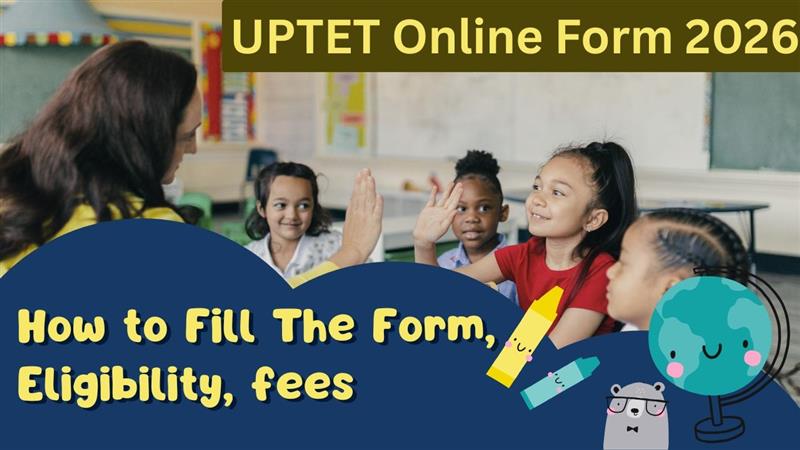
UPTET Online Form 2026

UPTET Online Form 2026 portal is open to receive applications from the interested candidates or who want to make a career in teaching. D.El.Ed students or you have been around looking for this moment can apply now on the official website. Because after 4 long years, a whole new set of rules will be established, UPTET Online Form 2026 might just be your opportunity to make a difference in education. 

Aspirants who wish to apply for these jobs in UP Schools must check their eligibility first, instructions, fees and the updates of this form. 

Keep The Dates Marked for UPTET Online Form 2026

EventDate
Notification Released20/March/2026
Online Applications Start27/March/2026
Application Deadline26/April/2026
Correction Window Close01/May/2026
Exam Dates2—4/July/2026

UPTET Certificates Validity

Before, the qualification lapsed after five years, compelling a lot of aspirants to appear again in the exam just to remain qualified. Now, once you clear UPTET 2026, you are good for life. No more worries about expire-dates and reappear-ing every two years.

Another important update: The requirements for eligibility have been relaxed. As per the recent notification, all the D.El.Ed trainees including in-service assistant teachers are eligible to apply. This brings to a big problem where previously nearly 3 lakh aspirants were left out. If you are training at present or you are teaching already, you can teach, you’re in the running. 

Understanding the Basics: Paper 1 vs. Paper 2

Before you are going to fill in the form in hurry, you should know that which paper is applicable to you:

  • Paper 1 is for candidates who wish to teach Classes 1 to 5 (Primary Level)
  • Paper 2 is applicable for aspirants who want to teach Classes 6 to 8 (Upper Primary Level)
  • Both Papers if you want to remain eligible from Class 1 to 8

Paper 1 is for people who adore the energy of young children and want to establish foundational skills. Paper 2 is tough because it is prepared for those teachers who can teach more deeper topics to older children. Taking both the examination is best shot if you are confused. 

Application Fees for UPTET Online Form 2026

CategoryOne PaperBoth Papers
General/OBC₹600₹1,200
SC/ST₹400₹800
Persons with Disabilities₹100₹200

Step-by-Step Guide to Fill The Form

Keep the valid documents, photo, ID ready to fill the application because one small error can lead you to miss this opportunity. 

  • Step 1: Visit the official portal, which is the official website of UPTET and register with email or phone, and generate your profile.
  • Step 2: Adhaar ID, Passport size photo, Signature on Paper, Marksheets of passed qualification be ready to be scanned or attached.
  • Step 3: Login on the site again to complete the UPTET Online Form 2026 application. 
  • Step 4: Fill every block of each section and re-check it then attach your valid documents.
  • Step 5: Submit the form with paying its fees through online payment methods.
  • Step 6: Make sure to keep the copy of the application with yourself in a hard copy.

Eligibility Details for the Applicants

For Paper 1 (Primary Level):

  • D.El.Ed/BTC pursuing or completed students are eligible to apply.
  • Any degree + B.Ed completed students with a minimum 50% score.
  • 12th + 4-year B.El.Ed completed course is required to fill this application.

For Paper 2 (Upper Primary)

  • 2-year D.El.Ed/BTC  + Any Degree
  • Graduation/Masters + B.Ed also required 
  • 4-year BSc/B.El.Ed course + 12th Marksheet

Candidates who are fit in this range 18 to 35 years can apply.

Read More:- UPSSSC Agriculture Technical Assistant Preparation: Complete Guide to Cracking AGTA Exam

Conclusion

The UPTET Online Application Form 2026 is your chance to make your dream to become a teacher come true. You can take this exam which is valid for lifetime now and its eligibility is expanded. So, apply before the timeline ends.

As you can face server crashes or document mishaps or panic while filling the form. Begin your preparation today, we will collect your documents this week and it further guide you through the entire process. 

SSC Combined Graduate Level CGL Online Form 2025 Released – Apply Now for 14582 Posts!

SSC Combined Graduate Level CGL Online Form 2025 Released

SSC CGL Online Form 2025: SSC Combined Graduate Level CGL Online Form 2025 Released for multiple posts in government sector. Candidates who graduated from any stream can apply to appear in the exam. There are a total of 14582 vacancies, for online form check the link in this article and apply directly to join Combined Graduate Level Exam.

SSC Combined Graduate Level CGL Online Form Details

Recruitment AgencyStaff Selection Commission (SSC)
Exam NameCombined Graduate Level Exam
SSC CGL Notification 2025 Click Here
Post Vacancies14582
Exam modeOnline (CBT)
SSC CGL Exam Dates Tier 1 202513 to 30 August 2025
Online Form Click Here
Official WebsiteClick Here

Application Fee for SSC Combined Graduate Level CGL 

General / OBC / EWSSC / ST / PHAll Category FemaleCorrection Fee 1st TimeCorrection Fee 2nd Time
100/-00200500

Application Form Expected Exam Dates

Start Date9-June-2025
End Date 4-July-2025
Correction Date9 to 11 – July-2025
Admit Card – Tier 1August 2025
Exam Date Tier 113-30 – August-2025
Exam Date Tier 2December-2025

Department-Wise Post Detail for SSC Combined Graduate Level CGL Online Form 2025

Post NameAge-LimitEligibility
Auditor in AG or otherMinistries, Accountant in AG or Other, Sr Secretarial Assistant in Electronics, IT, UDC, CSCS, Tax Assistant in CBDT, CBIC, CBN18-27 YearsBachelor in Any Stream
Sub Inspector in NIADivisional Accountant in OfficesResearch Assistant, Assistant in Other ministriesInspector in Central Narcotics, DOP, CBIC, in Income Tax (CBDT)18-30 yearsBachelor in Any Stream
Sub Inspector in CBI 20-30 yearsBachelor in Any Stream
Junior Statistical Officer in MSPI18-32 YearsBachelor in Any Stream with Statistics as Statistics

Medical Courses After 12th PCB in India: Complete Roadmap, NEET, MBBS & Career Options

Medical Courses After 12th PCB in India

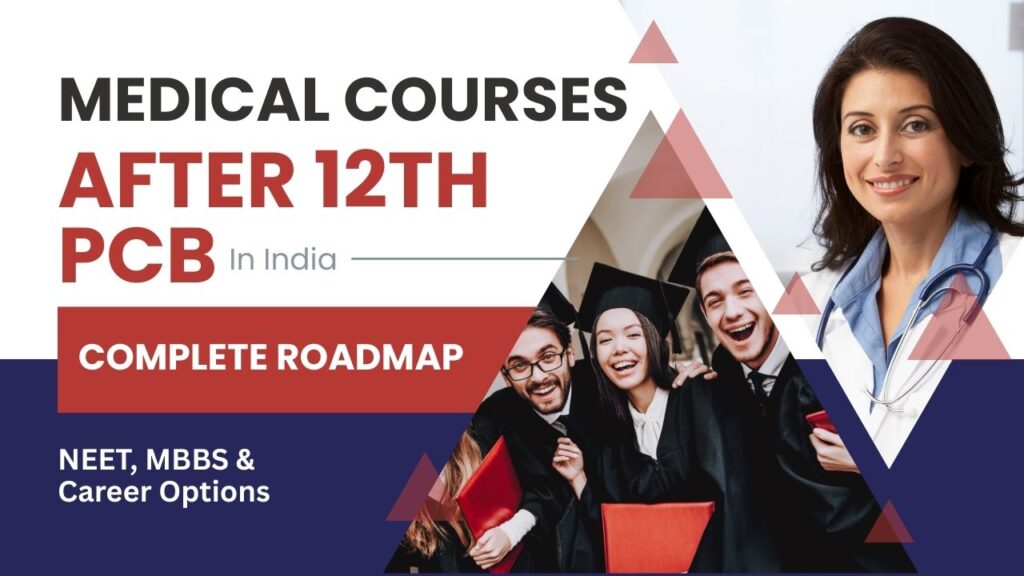
To become a medical sciences professional in India, students have to opt for the Bachelor of Medicine, Bachelor of Surgery (MBBS) degree, which is an arduous and comprehensive five-year program that aims to develop the students into healthcare professionals. But the path to Medical Courses After 12th PCB in India is a confusing maze of courses and entrance exams (the most important is National Eligibility-cum-Entrance Test (NEET).

NEET entrance exam has played a pivotal role in making the process of admission of MBBS more transparent and ensuring the method of admission on merit basis and curbing malpractices in India. 

The usual path through medical training is to go straight from medical school into a foundation program, then core training, higher specialty training and then either general practice or hospital specialist/consultant. This lengthy, complex training process exists to make certain that doctors have the critical foundational knowledge, the practical skills unique to their specialty, and the clinical understanding needed to safely contribute to patient care. 

Other than MBBS, there are plenty of other medical and paramedical courses out for students PCB which are Bachelor of Dental Surgery (BDS), Bachelor of Ayurvedic Medicine and Surgery (BAMS) and Bachelor of Homeopathic Medicine and Surgery (BHMS). 

Medical Courses After 12th PCB in India

Most Popular and Hard-Level Courses

These courses offer a variety of specializations in the healthcare domain for the interested and the ambitious. For example, MBBS is a course on allopathic medicine while BAMS and BHMS are courses on Indian and homeopathy systems of medicines respectively which have profound history in India. Such classic systems, such as Ayurveda, are conceptually coherent and dynamically insightful intellectual traditions with unique theories of physiology.  

The content in medical education is constantly being updated to reflect advances in science and to prepare students adequately for clinical practice. For instance, personalized medicine is more and more being implemented in undergraduate medical education by using spiraled learning approaches. This design exposes undergraduates to evidence-based and clinically pertinent personalized medicine principles during all four years in medical school. 

Easy Courses in Biomedical Science

In the same vein, growing awareness of the need to incorporate artificial intelligence (AI) – a tool that enhances patient management and care in specialties like radiology and pathology in biomedical science education to foster healthcare education advancement is emerging. 

EBM Courses in Medical Courses After 12th PCB

Today’s medical education demands that students gain scientific foundational knowledge and not only practical exposure and clinical reasoning skills. Pragmatic EBM courses, such as the one at our institution, are intended to prepare students to sift through large bodies of evidence to answer clinical questions preparing them for the transition from undergraduate to graduate medical education. 

Cultivating systems thinking in medical education may contribute to educating scientists and clinicians of the future by counteracting dwindling interests in science through early involvement, hands-on experience, and improved coordination between educational phases. 

Professional Exams — Membership of the Royal Colleges of Surgeons

Medical education is organized into levels that sequentially increase in complexity. Following primary medical education, a phase of practical training under supervision, e.g. postgraduate residency training, is essential in order to convert theoretical knowledge into applied skills in the delivery of care to patients. 

This stage is said to be a formalised apprenticeship, to guarantee that practitioners are ready to work on their own. Passing professional exams, such as the Intercollegiate Membership of the Royal Colleges of Surgeons (MRCS) exam, is required for candidates to begin advanced specialty training in a number of specialties. 

Practical Specialization in Medical Science

Practical Specialization in Medical Science

The number of specialties open to students is huge and they can focus on general practice or pursue a highly specialised field. For instance, these are pediatric rehabilitation medicine physicians who are subspecialists working to optimize the health and function of children with disabilities across the lifespan. 

Specialties can also provide their own focus training on particular aspects, such as behavioral health, as behavior disorders are frequently seen in children and pediatric residency training in India is now having integrated behavioral health modules. Consideration is also being given to global health challenges of the future, for example increasing paediatric surgery provision in low and middle-income countries. 

Other Specializations Paths

There are also other specialist routes besides the core medical degrees. The radiation biology, dosimetry, and imaging aspects of medical physics intertwine with biology, anatomy, and physiology, and are subject to the rigorous education and training that is needed for safe and quality patient care. 

Medical physics educational programs range from undergraduate to doctoral level to facilitate the collaborative practice of physicists and physicians in a clinical environment. Likewise, clinical chemistry and biochemistry are recognized specialties requiring dedicated postgraduate training.

Choosing The Right Path in Medical is Important

Becoming a health care provider is challenging, and continuous learning and adaptation are necessary. Medical education curricula are regularly revised to be more integrated and competency based with an emphasis on the application of knowledge and on the development of problem-solving skills. This prepares future clinicians to manage complex medical knowledge and varied patient demands. 

Students need to be provided with necessary information to help them make right decisions regarding their career option after 12th class as choosing the right course is a crucial decision which will determine their future. 

In addition to MBBS being a popular-choice, it is also important to know different career options in healthcare and non-healthcare fields. Different admissions routes are being introduced into Medical Courses After 12th PCB, which enable students from under-represented groups to access medicine and aim to widen participation in the selection process are being developed. 

Conclusion

The path of Medical Courses After 12th PCB in India is the jack of all trades’ requiring preparation for entrance exams like NEET and dedication towards lifelong specialized training. The curriculum is changing as constantly evolving science, including personalized medicine and AI, is being introduced and the next generation of healthcare professionals will take on the challenges of the modern medical field. 

The option isn’t only MBBS, now there are other streams like dentistry, Ayurveda, Homeopathy and scientific specializations under Medical Courses After 12th PCB which can be integrated into healthcare. 

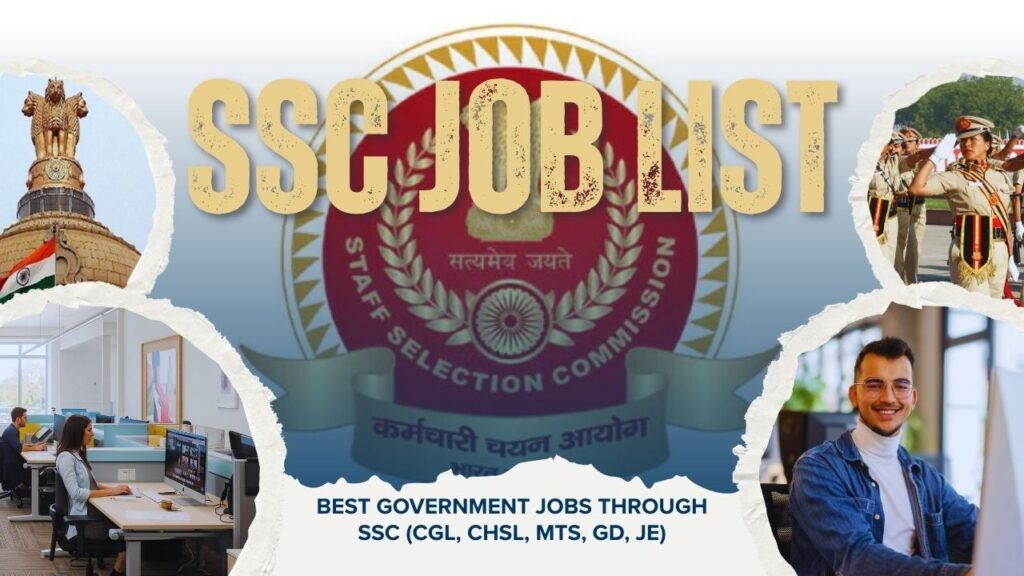
SSC Job List 2026: Complete Guide to SSC Posts, Exams and Eligibility

SSC Job List 2026

For decades, a government job has been the most lucrative career option in India. These SSC Job List 2026 will help you to take the right direction of your career. As we head into 2026, the Staff Selection Commission (SSC) still remains the dream gate for lakhs of aspirants to get their foot into stability, respect and serving the nation.

If you are preparing your career roadmap for this year, then getting to know about the huge range of SSC jobs is step one! From the Central Secretariat to paramilitary forces, desk-bound jobs to high-octane field jobs, the SSC 2026 calendar is bulging.

So, here is the detailed information of Your SSC Job List 2026 by Exams and Qualification. 

SSC Combined Graduate Level (CGL) 

The SSC CGL which is popularly known as ‘Mini-IAS’ exam is the most reputed exam for selection to Group B and C posts in various SSC Job List 2026 in ministries and departments. Candidates need to have a Bachelor’s Degree in any stream to be eligible. 

Some of the SSC Job List 2026 under SSC CGL are: 

1. Assistant Section Officers (ASOs) watchful policy realization in the Central Secretariat Service (CSS) in the Ministry of External Affairs (MEA), or Intelligence Bureau (IB) or the ASOs business is largely on one’s table at any rate!Desk based post of execution policy.

2. Roles in the Ministry of Finance related to taxation that are high-paying and profitable are Income Tax Inspector and GST Inspector.

3. AAO or Assistant Audit Officer – Indian CAG This is the Gazetted post In SSC CGL under the Indian Comptroller and Auditor General (CAG) and working with the Indian Comptroller & Auditor General this post is unique.

4. Sub-Inspector in CBI: This post is for those who are willing to serve in the National Investigative Agency. 

SSC Combined Higher Secondary Level

SSC CHSL is a great opportunity for 12th pass candidates to get an entry level post in the government sector. 

Job Roles:

1. These posts (Junior Secretariat Assistant and Lower Divisional Clerk) are the best paying jobs at entry level which are the backbone of office administration and are indispensable to the smooth working of the office.

2. Data Entry Operator (DEO): Hold the responsibility for maintenance of essential Government files, up-to-date and complete, with accuracy. 

This examination leads to secure and respectable employment within government organizations. 

SSC MTS & Havaldar 

This is an excellent opportunity to enter in the Multi Tasing Staff job role or Havaldar, 10th pass candidates can get a central government job/staff.

Job Roles:

MTS (Multi Tasking Staff): It serves as a kind of general office support, some such duties include, running files, pushing files from one desk to another, housekeeping in office space, across various government ministries.

Havaldar: Havaldar post Candidate Should belong to Central Board of Indirect Taxes & Customs (CBIC) and Central Bureau of Narcotics (CBN). The duties of the security personnel are all field-based i.e. they are related to security and watch and ward. 

SSC GD Constable

The SSC GD Constable 2026 Recruitment if you would like to serve in uniform and keep yourself physically fit, then consider it. The exam is held for recruitment to various Paramilitary forces like:

  • BSF —-Border Security Force  
  • CISF —-Central Industrial Security Force  
  • CRPF —-Central Reserve Police Force  
  • ITBP —-Indo-Tibetan Border Police  
  • SSB —-Sashastra Seema Bal  
  • AR —Assam Rifles  

Qualification Criteria: The applicants must have cleared 10th standard with some physical standards in order to be eligible for the recruitment. 

SSC CPO

The SSC CPO exam is a good chance for the ones who want to be a Sub-Inspector (SI). It is a tough but rewarding path to take. Candidates are required to have a graduation degree and Qualify Physical Endurance Test to be eligible. 

Selected candidate have the opportunity to serve in prestigious position like Sub-Inspector in Delhi Police (which is considered one of the most orderly police service) or Sub-Inspector in Central Armed Police Forces (CAPFs) – BSF, CRPF and more. 

SSC Specialized Exams

Stenographer (Grade C & D)

If you are good at shorthand typing and can crack SSC Exam then SSC Stenographer may be a door for you to enter into government jobs. 

Via this exam candidate is selected for the post of Stenographer in various ministries, departments and organizations of Government. 

The core responsibilities of this role involve providing dictation assistance to senior officials, drafting official documents, processing correspondence and carrying out administrative tasks. 

They frequently are called upon to assist higher-ranking officers, making it a key supporting position in the government system. You can get a great pay from this job role as it requires your skills. 

Junior Engineer 

The SSC Junior Engineer exam is disputed for the candidates who have a Diploma/Degree from the recognized board in a relevant field of engineering i.e. Civil, Mechanical, Electrical etc. 

The result of SSC Junior Engineer Exam contains qualified candidates who are selected for appointment in various government departments, organizations such as public works, infrastructure, etc. 

They also oversee such projects as cleaning and maintaining government buildings and roads, write technical reports, and verify that engineering projects conform to safety and quality requirements. 

SSC Selection Posts (Phase XIV):

The Staff Selection Commission Selection Post Exam is a good opportunity to get a government job for the person who has educational qualification of 10th pass 12th pass and Graduates. 

Unlike other SSC exams which appoint the candidates for common posts, this exam appoints candidates for distinct and specialised posts in various central government departments. 

These posts can be for Scientific Assistant or Laboratory Attendant or even Library Clerk, Data Entry Operator or Technical Assistant. Every post has different eligibility criteria and different skills that are needed as per the requirement of department. 

Due to the wide range of posts, the Selection Post examination is an ideal platform for the people who are having professional or vocational qualifications and interested to work in a particular domain in the government sector. 

Read More:- BSc Operation Theatre Technology: Course Guide, Fees, Career & Salary

Why SSC Job List 2026 is Important?

  1. Job Security: Students can rely on their jobs for lifetime as it is not like private jobs undisputed, particularly in times of economic downturn.
  2. Work-Life Balance: There are public holidays and weekends leave can be more relaxful and also on the weekdays you have to work only 9 to 5.
  3. Salary and Perks: The salary is very competitive with the 7th Pay Commission norms. Benefits such as HRA (House Rent Allowance), DA (Dearness Allowance) and medical benefits for family are some of the major highlights.
  4. Social Prestige: It is a centrally administered ministry, so it has a good standing in society to serve in it or the national police force. 

SSC Job List 2026 Exam Timeline

The SSC Job List 2026 exam timeline is given for the students to take an idea to begin their journey, accurate date and time are declared by the official website of SSC. Students who are interested in any of these job posts can check the official notice of the exam on the official website.

Exam Name (2026)Notification Date (Expected)Exam Month
CGL March/2026May—June/2026
CHSL April/2026July—Sept/2026
MTS June/2026Sept—Nov/2026
CPO May/2026Oct–-Nov/2026
GD Sept//2026Jan—March/2027

Conclusion

Whether you are a 10th-pass student or a postgraduate engineer, the SSC Job List 2026 has all the opportunities for you. The only question you must ask yourself is which post defines my personality better? If you love discipline and being outdoors, go for CPO or GD, if you love a quiet office and wielding admin powers, go for CGL. 

JEE Main Result 2026 – Eligibility, Syllabus, Dates, Pattern Explained

JEE Main Result

The JEE Main 2026 exam has been made the necessary academic test for Indian engineering aspirants since now for the engineering aspirants. On 16th February 2026, candidates who appeared for the exam will be able to check the JEE Main Result 2026 for January session. JEE Main is a system that requires one to be mentally strong, strategically enduring and regulation-tight  not only about ability. 

JEE Main Result the gateway exam for prestigious technical institutions in the country including the National Institutes of Technology (NITs), Indian Institutes of Information Technology (IIITs), and Centrally Funded Technical Institutes (CFTIs) the exam goes through a scale of participation that is unprecedented globally. Because it also serves as the single entrance path to the JEE Advanced, it represents a major turning point for the Indian education system. 

The information shows a strong increase in registrations with more than 1.35 million candidates for Session 1 alone. This demographic bulge requires a granular analysis of the test’s structural elements, including eligibility rules and the statistical normalization of scores. 

NTA Reforms & Administrative Changes in JEE Main 2026

In a bid to ensure the sanctity of the procedure, the NTA has brought in game changing measures:

  • Biometric Security : Now there is a “Live Photograph” taken during application that restricts impersonation.
  • Operative Changes: The test will be given on multiple dates and will require an advanced statistical “normalization” process to equate different levels of difficulty.
  • JEE Main Result Timeframes: Although administrative delays such as the Session 1 result postponement from February 12 to February 16, 2026 — do induce stress, they are vital for thorough validation of data. 

Examination Schedule and Timeline 

The NTA has adopted a two-tier system for the hour long sessions, offering candidates a tactical cushion. This enables students to view the January attempt as a baseline and the April attempt as a fine-tuning move.

The JEE Main Result 2026 Session 1 

Paper 1 (B.E. / B.Tech) was held on January 21, 22, 23, 24, and 28 over multiple days, while Paper 2 (B.Arch/Planning) was held on January 29.

The JEE Main Result delay is due to the complexity of the normalization process, it is now expected on February 16. For the NTA to be fair, it must normalize the scores within the millions of data points. 

Session 2 Dates 

EventSession 1 (January)Session 2 (April)
Application WindowConcluded1—25/Feb/ 2026
Exam Dates21–29/Jan/20262–9/Apr/2026
JEE Main Result Declaration16/Feb/202620/Apr/2026 (Expected)

Eligibility Architecture: The 75% Rule and Beyond

It is necessary to know the funnel of eligibility to avoid getting disqualified in the stage of admission process.

Age and Attempts Age: There is no upper age limit for JEE Main, however some institutions may have their own fixed limits.

The Three-Year Window: You should have passed Class 12 in 2024, 2025 or appearing in 2026.

Attempts: The exam can be attempted for three consecutive years by the candidates. 

The Performance Threshold

But the access to NITs, IIITs and CFTIs is limited by eligibility criteria that includes:

General/OBC-NCL/EWS: Minimum 75% in aggregate in class 12th.

SC/ST: 65% aggregate minimum.

Option 2: Be in the Top 20 percentile of your respective Board. 

State of Eligibility

Your ‘Home State Quota’ will be decided on the basis of the state of examination of your Class 12, not your residential status. For example, a student of Bihar coaching in Kota (Rajasthan) will come under Rajasthan Home State quota. 

Read More:- Railway RRB ALP Admit Card 2026: Download Now From Direct Link

Examination Pattern For JEE Main

AspectDetails
Exam ModeComputer-Based Test (CBT); focuses on application and speed.
Total Marks300
Duration3 Hours
SubjectsPhysics, Chemistry, Mathematics (each with two sections)
Section A20 Mandatory MCQs per subject
Section B10 Numerical Value Questions (NVQs) per subject; attempt any 5
Penalty Rule-1 negative marking for both MCQs and NVQs; precision required

Subject-Wise Syllabus Breakdown

Mathematics, Physics and Chemistry have strategic places where one must focus to improve performance:

Mathematics:  

Learn Calculus and Algebra well as they are the basics.Don’t ignore Vectors and 3D Geometry as these are very easy and carry good amount of marks in examinations.Also focus on Coordinate Geometry, Matrices and Statistics for high yield.

Physics:  

Concentrate on concepts and the use of the formulas. Modern Physics, Semiconductors = very good marks, not much calculation. Things are inevitably going to move around in your lab, so you need to be comfortable with experimental skills, especially Vernier Calipers and Error Analysis, handy points as well.

Chemistry:  

Chemistry is a very efficient subject for which you could save a lot of time and spend more time in Mathematics.  

Physical Chemistry: Be good at numericals to do well.  

Inorganic Chemistry: Be good in p-block trends;solidify your knowledge of Coordination Compounds.  

Organic Chemistry: Learn the reaction mechanisms and Biomolecules,bcoz they are very important.

Your study time can be better used and your score can be higher by focusing on these areas with the greatest yield. 

Post-Session 1 Roadmap to April

Reviewing how you did in January is the first step towards doing well in April.

  • Category A (98+ Percentile): Begin dedicating 70% of your time to JEE Advanced questions.
  • Category B (90-98 Percentile): Look for “low-hanging fruit.” Earn higher accuracy in Physics and Chemistry to enter the elite group.
  • Category C (<90 Precentile): Go back to basics. Concentrate your efforts on the most common chapters that ask questions instead of covering all the syllabus. 

The “Golden Window”

To Those Who Are Taking Boards In Feb-March The gap between the last Board exam and JEE on April 2 is crucial. Prepare Board to learn NCERT concepts which are directly used in the questions of Inorganic Chemistry and theoretical Physics. 

JoSAA & CSAB Counselling Process 2026

Admissions counselling for engineering in India is not limited to just ranking, as the Centralised Joint Seat Allocation (JoSAA) Authority in six rounds of seat allotment. Candidates may opt Freeze to accept and confirm their seat, Float to accept their seat and appear for seat updation in subsequent rounds, or Slide to retain the seat and try for an improved branch in the same institute. If there are still vacant seats after the JoSAA rounds, the procedure is continued by CSAB through special rounds which tend to be the last chance for many students with lower ranks to get an admission in a reputed NITs and other top institute. 

Conclusion

JEE Main 2026 is not just a good entrance exam—it is a good portal to sift through all the engineering institutes in the top Indian engineering colleges. Success is based on more than just knowledge: you also need to have a plan, be consistent, and make smart decisions. From understanding the exam pattern and eligibility criteria to utilising both attempts to the maximum and managing JoSAA–CSAB counselling effectively, every step will determine your outcome. Clarity, discipline, long term vision and direction in studying helped these students not only to qualify, but to open the right “doors” for their future. 

Scroll to Top