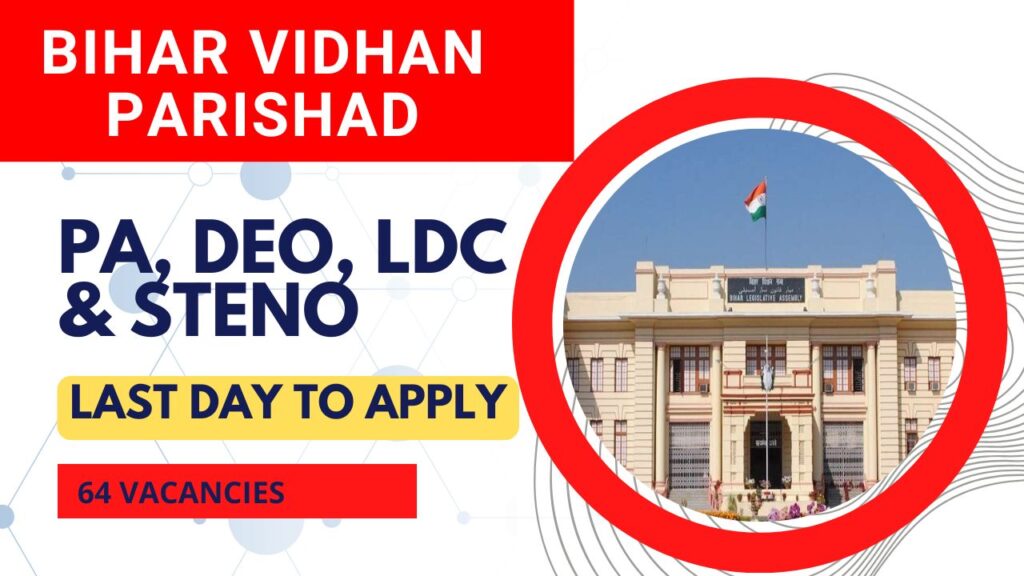
Bihar Vidhan Parishad BVP Recruitment 2025: Bihar Vidhan Parishad (BVP) under Government Of Bihar has invited BVP Recruitment application for 64 vacancies of Personal Assistant, Data Entry Operator (DEO), Lower Division Clerk (LDC), Stenographer posts. Eligible candidates can apply from 28 November 2025 to 05 January 2026. The applicant must be above 18 years of age and there is an age limit for maximum which is 42 years on 01 August 2025. For more information, candidates can visit the official website or read the notification.
If you are an intermediate pass or graduate or a sure shot middle class, you are sure to get posts in Bihar Vidhan Parishad: the door is open for all.
Dates, Application Fee & Short Details of Bihar Vidhan Parishad Recruitment
UG Degree/Stenography 100 wpm & also Typing Speed 30 wpm
₹44,900 accor. to 7th pay Level 7
Data Entry Operator—DEO
35
Intermediate Marksheet/133 keystrokes per minute
₹25,500 accor. To the (Level 4)
Lower Division Clerk—LDC
10
Intermediate Marksheet/Speed should be 30 wpm
₹19,900 – ₹63,200 (Level 2)
Stenographer
12
Graduation/Stenography 80 wpm/Typing 30 wpm
₹25,500 – ₹81,100 (Level 4)
The position of DEO is undoubtedly the star of this recruitment with a staggering 35 vacancies – your chances of selection are truly bright! But don’t rule out the PA position if you have the stenographic skills, the pay is unbelievable at Level 7, it affords the best financial package of any job.
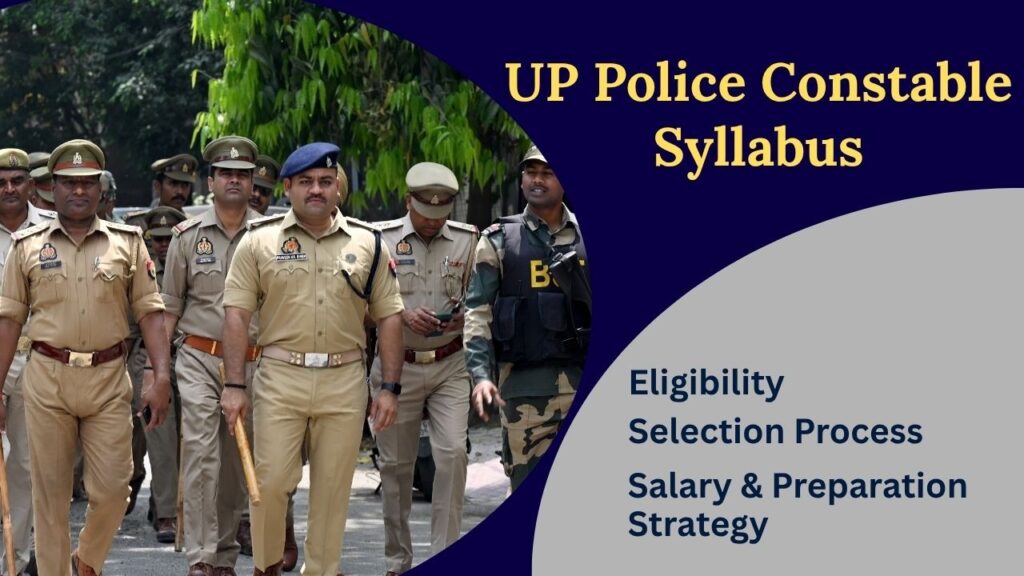
Getting a government job in India isn’t a cakewalk, and UP Police Constable exam is no exception to it. Every year, thousands of applicants vie for handful vacancies, which is making it one of the popular and toughest exams in the state. With a right approach toward UP Police Constable syllabus, and with persistent preparation, this target is of course achievable.
If you want to put on the khaki with pride or if you want a stable career with good salary and benefits, this exam could be your ticket. But these benefits asked you to work harder and get it. This breakdown—eligibility, selection process, syllabus, salary, and a practical preparation plan of UP Police Constable will help you plan to crack this exam.
Eligibility Requirement For UP Police Constable
You need to check eligibility requirements before buying books for studying UP Police Constable syllabus and doing push ups. UPPRPB is recruiting candidates for this post under strict guidelines. So you must follow before applying:
Educational Qualification
No fancy degrees are required for a UP Police Constable. Candidates must acquire 12th standard (Intermediate) marksheet from any recognized board in India.
Age Limit
Male Candidates (General)
18 to 25 years
Female Candidates (General)
18 to 28 years
Reserved category candidates can get age relaxation but you must check the latest recruitment official notification to know age relaxation.
Physical Standards (PST)
Category
UR/OBC/SC
ST
Height for Males
168 cm
160 cm
Chest for Males
79–84 cm
77–82 cm
Height for Females
152 cm
147 cm
Weight for Females
Minimum 40 kg
Minimum 40 kg
UPPRPB Selection Process For UP Police Constable
It’s not just one written exam here, you must pass all the stages to reach that position. It requires commitment and hard work for securing an honourable government job for the nation.
Stage 1: The Written Examination
It’s a written offline OMR-based exam. Candidates have to get above the cut off marks by answering all the MCQs accurately then you move on to the physical rounds. Questions come from the four main subjects (GK, Hindi, Mathematics, Reasoning).
Stage 2: Verify Docs And Physical Standard Test (PST)
Once you qualify stage 1 with preparation and hard work, you need to provide documents– 10th/12th mark sheets, caste certificates, domicile papers for verification. And your body measurements like height, weight and chest (men) will be taken to pass you on to the next stage of selection.
Stage 3: Physical Efficiency Test (PET)
PET is a mandatory exam for candidates without getting marks. This final round can throw you out of the list if you fail.
Running for a 4.8 km run in 25 minutes is a mandatory test for male candidates.
If you are a woman then you must be able to run 2.4 km in 14 minutes.
Stage 4: Detailed Medical Examination (DME)
Physical and mental health matters for this job, it has regulations if you have weak eyesight, color blindness, hearing, flat feet, knock knees.
UP Police Constable Syllabus Breakdown
The written test contains 150 questions which is of 300 marks (2 marks per question). But be careful, there’s negative marking!
The written exam is divided into four main subjects which you can qualify with right preparation on the syllabus.
I. General Knowledge (38 Questions)
Knowing about the world revolves around you, especially Uttar Pradesh is necessary. GK tests you based on the questions based on national and international current affairs, History/Civics, Geography, Science and Finance of India.
II. General Hindi (37 Questions)
If you attended a Hindi-medium school, this is your section to score. Even if you didn’t, you can get good marks by doing some basic grammar practice. Focus on Hindi Grammar (Vyakaran) , Unseen Passage, Famous writers & their work, Synonyms, Antonyms, Idioms and Phrases (Muhavare).
III. Numerical and Mental Ability (38 Questions)
Question comes from basic mathematics of 9th and 10th, if you are good at maths then practice daily on Number systems, Percentages, Profit & Loss, Ratio and Proportion, Simple & Compound Interest, Time, Work & Distance, Mensuration and Data Interpretation (Tables and Graphs).
IV. Mental Aptitude, IQ & Reasoning Ability (37 Questions)
This part examines your mind and thinking ability, and also tells you how you could potentially think in police work situations. Coding-decoding, Series, Blood Relation, Direction Sense, Syllogism, Venn Diagram, Non-Verbal (Pattern and Figure). There will also be situation based questions to test your attitude towards public interest, laws and order, communal harmony and police force.
How to Prepare For A Police Constable
Avoid beginning to study with difficult mock tests. Instead, strengthen your foundation with standard books like Lucent GK, R.S. Aggarwal (Math & Reasoning) and a good hindi grammar book.
Keep practicing last year’s question papers. They give you a clear idea about the exam level and the types of questions that are asked. UPPRPB also has a penchant for posing questions similar (even a same question sometimes) to what they had already asked.
Once you have completed about 60-70% of the syllabus, begin attempting full-length mock tests. Use a timer when you practice so you can work on your speed and accuracy. Check your mistakes to correct them each day.
Don’t neglect physical fitness. Most candidates qualify the written exam but they are unable to clear the 4.8 km run. Something as simple as a 30-minute jog each day will smoke out your stale lungs and build your stamina.
So, for the present events keep it simple. Just subscribe to a good monthly magazine (eg. the Economist) or a decent Youtube channel and don’t bother with the dailies.
Salary and Perks After Getting a Job
UP Police pays its constables quite a good salary with additional perks that makes it worth the struggle to secure a position.
Category
Amount
Pay Scale
Rs. 5,200 – 20,200
Grade Pay
Rs. 2,000
Basic Pay Matrix
Rs. 21,700
Under the 7th Pay Commission, the salary is distributed but other allowances also given to the constable which sum up to Rs. 27,000 to Rs. 32,000 per month.
Dearness Allowance (DA)
House Rent Allowance (HRA)
Travel Allowance (TA) & City Compensatory Allowance.
Ration Money & Uniform Allowance
Career Growth & Promotions
A government job is not just a job, it is a career for a lifetime. Joining as a Constable does not imply that you will retire with that rank. The UP Police is providing a transparent path for promotions along the years of services, departmental exams and your performance record.
Police Constable (Your starting point)
Senior Constable
Head Constable
Assistant Sub-Inspector (ASI)
Sub-Inspector (SI)
Inspector
If you have the ambition, you can appear for departmental exams for Sub-Inspector which will speed up your promotion rather than waiting wholly on seniority. An honest and sincere police officer can easily get retired as Inspector and in some rare cases even as DSP (Deputy Superintendent of Police) from the post of Constable with the blessing of the Almighty.
Passing the UP Police Constable exam is a challenge for mind and body. It needs a balanced approach, practicing math and checking daily news then getting up to run on the track.
Focus on UP Police Constable Syllabus and your health to secure your position. The large number of applicants is not to be discouraging. You just need to prepare yourself for one seat.
The salary and additional perks are good with lifetime growth opportunities in the department, so there’s a golden door, you just need to jump long.
The MPESB Recruitment 2026 application form reopens on 13 October and closes on 27 October 2026. This is the Madhya Pradesh Employees Selection Board’s combined drive for Group 3 Sub Engineer, Sahayak Manchitrakar (Draftsman), Technician and equivalent posts, and the rules have shifted since the first notice.
Look into the MPESB recruitment drive to understand eligibility criteria, age limit, how to apply for the different posts to get the well-paying job. Keep follow up the dates for the next phase on the official website.
MPESB Group 3 Sub Engineer Recruitment 2026 Date
MPESB posted the first Group-3 notice on 18 August for 1,040 posts which was cancelled and brought next month the combined recruitment exam of Group 3 posts. The application window was opened from 29 August to 12 September 2026 then it shut down.
The MPESB Group 3 Sub Engineer recruitment 2026 application re-opens because the number of posts increased and the reservation roster was revised. Anyone who applied earlier can edit their form during the correction window.
The form is open again because the number of posts increased and the reservation roster was revised. Anyone who applied earlier can edit their form during the correction window.
Event
Date
First application window
29 Aug – 12 Sep 2026
Reopened form starts
13 Oct 2026
Last date to apply
27 Oct 2026
Correction window
13 – 28 Oct 2026
Computer-based test
Dec 2026 – Jan 2027 (exact date not confirmed)
Posts and Vacancies
The pre-reopening notification counted 1,700 posts across 131 post codes, spread over departments, directorates and polytechnic colleges. Because posts were added, that total is probably out of date, and the reopened notice does not give one grand figure.
The Public Works Department lists 225 and 68 Sub Engineer posts in two groups, Indore Development Authority has 41 and 3, Survey and Land Records has 14 Surveyor posts, and Geology and Mining has 4 Mineral Surveyor posts. Polytechnic colleges add Laboratory Technician and Draftsman posts in ones and twos.
Education and Age Requirement
Different posts require different qualifications from you so apply for the post that matches your degree. If you have done graduation in engineering then you can apply for Group-3 Sub Engineering post. Candidates must check the official notification before applying.
Age: 18 to 40 years
MP relaxation: SC, ST, OBC and women candidates of Madhya Pradesh can get up to 45 years, subject to official rules.
Aadhaar: registration is mandatory.
Employment exchange: Madhya Pradesh residents need a live registration. Check yours is active before you open the form, because an expired one is the kind of problem that surfaces on the last day.
Application Fee
Unreserved candidates pay ₹500 per post. SC, ST, OBC, EWS and PwD candidates who are Madhya Pradesh residents pay ₹250. Backlog posts under direct recruitment carry no fee. The portal charge is reported at ₹20 for the kiosk or MP Online route.
How to Apply Online MPESB Recruitment 2026
Open esb.mp.gov.in and log in to your MPESB profile.
Look at the notification and click on “Group-3 Combined Recruitment Exam” which will redirect you to the form page.
Choose whichever post you are trying for based on your education.
Upload documents that are required with your application and pay the fee.
Submit and use the correction window to fix errors. But review the application before submit to avoid any correction later.
Documents such as ID, education certificates, domicile, and employment exchange card ready before you start filling the application form.
Exam Pattern and a Prep Tip
The exam dates are still unconfirmed but you can prepare yourself for the 200 marks question paper which also cuts off 0.25 marks if you give the wrong answer. This is a computer-based test held in two shifts for 3-hours. The test provides you bilingual in Hindi and English, with four options per question.
After the test, you are called for the document verification and a medical exam, and this is where you have to be sure that you must have the proof of the information you are provided in the application and no health issues.
The application closes at the end of the month and exam starts after two months so there is a lot of time for you to start three-hour mocks now and track how many questions you skip. Blind guesses will eat up your marks, so aim to learn which question you can skip without losing your rank. This practice will also reduce your time to solve every question.
If you have a diploma and engineering degree in any field, you can fill the form. Don’t wait for the 27 October, apply early to secure your position.
If you applied in September, log in during the correction window and recheck your post preferences, since the added posts may offer better options than the ones you picked. If your qualification only loosely fits a post, read that department’s recruitment rule first, because a rejected application costs you the fee and the cycle.
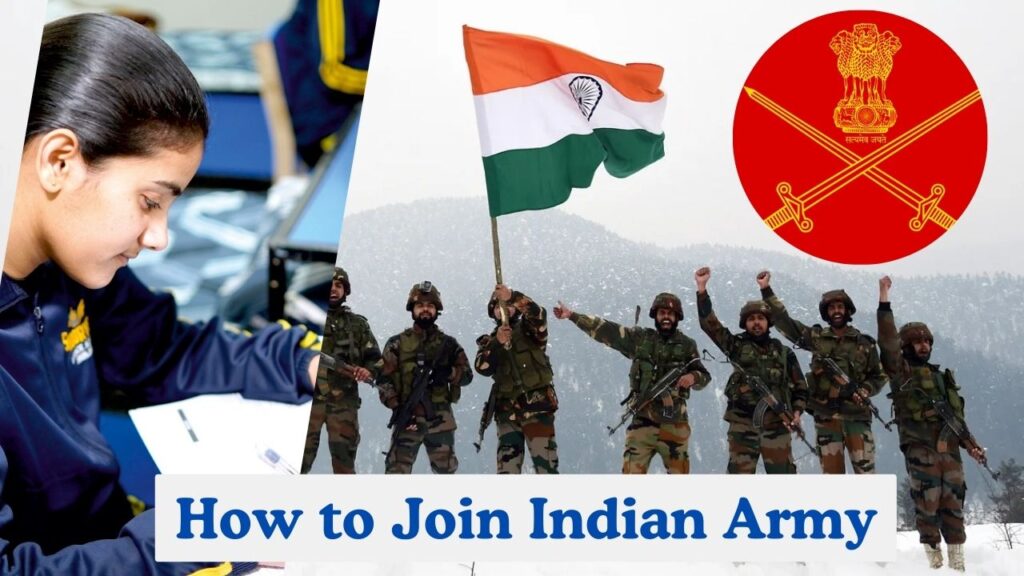
How to join Indian Army: It’s not just a job, a profession or a service, it’s a way of life to be in the Indian Army and a lifetime commitment to the nation. For millions of young Indians, the olive-green uniform stands for honor, meaning and pride that far surpasses any regular jobs. But the path to joining the Indian Army isn’t a smooth one it requires vision, preparation, stamina and the knowledge of different entry points available.
Whether you are a 10 or 12 student, a graduate or one aspiring to get commissioned, the Indian Army has multiple avenues to make that dream a reality. Unique in this sense, this guide shows you everything from entry schemes, through selection stages, fitness, documents, medical standards, ensuring that you can prepare as best you can to help you realise your own dream to serve the nation with pride.
Understanding Your Entry Options
There are hardly any rigid models for recruitment of the Indian Army. The company understands that people with potential can come from anywhere educationally and that is why it has different entry schemes. If you are a class 12 passer, the Agniveer scheme is for you. If you’re a graduate or an engineer, you can apply for the Short Service Commission (SSC) or the Technical Graduate Course (TGC). For people still in class 12 with strong academics, the NDA is a well-known route that leads to officer-level commissions.
What I like about Indian Army recruitment is its open door policy. For soldiers and officers, technical and manpower roles for that matter, there is something for everyone. Your starting point might be different from your colleague’s, but the destination – serving the nation – is the same.
The Most Popular Route: Agniveer Scheme
For most hopefuls it has become like the Agniveer scheme and this is the only option going forward. Introduced to recruit a younger, more dynamic force into the Armed Forces, the scheme is available for men and women aged 17.5 to 21 years. You must have passed class 10th/12th from a recognized board with minimum 50% marks in aggregate.
The submission of the application is easy. Go to the official site joinindianarmy.nic.in and register providing your basic details, e-mail and mobile number. You will fill up application details with your 10th certificate with as per rules. After you have submitted, you will be given a registration number—hold on to this, it is the key to the next step.
After the registration you must prepare yourself for three intense stages. The first state is the Common Entrance Exam (CEE), a written test conducted offline. This test examines your understanding of General Knowledge, Mathematics, Science and Reasoning. It’s not like you need to memorize stuff, the exam is on your logical thinking and problem solving skill.
If you clear the CEE, then you will be invited for the second stage: the Recruitment Rally. This is your physical fitness moment! The rally comprises a Physical Fitness Test (PFT) which is truly exhausting. You must run 1.6 km in 5 minutes and 45 seconds, do at least 6 pull-ups, jump a 9-foot ditch, and complete a zig-zag balance test. They’re not just random drills, they’re meant to test whether or not your body can keep up with the rigors of military life.
The third stage is the medical test and document confirmation. Medical examinations are extensive – they examine your vision, hearing, bone density, heart health, and your general well-being. The Army needs soldiers who aren’t just strong but also medically able to go where it’s hard to go.
Physical Fitness
Being physically fit matters, and you really can’t ignore your way through it. If you really want to join, start your fitness regimen now. Running is your foundation—start with distances you can handle and slowly increase your speed and distance. Do interval training by alternating between high-intensity bursts and recovery intervals.
For pull-ups, who you are is more important than how many you can do right now. If you have no pull-ups yet, use resistance bands/assisted pull-ups or work on negatives to start building strength. Add push-ups, sit-ups and squats for full body strength. Flexibility and balance are also important for many candidates don’t realise, but it is this which is tested in the zig-zag test. Add yoga and agility drills to your training.
Nutrition-related matters are just as vital/nutrition matters are just as vital/nutrition is just as vital Nutrition & hydration are equally important Nutrition Jones in Sydney opined: “it is not only the training [that is important], nutrition is [also]. Fuel your body with protein, complex carbohydrates, fruits and vegetables. Keep hydrated as you train, and stay away from junk food that zaps your energy.
The Officer Route: A Different Path
If you are a class 12 student with good academic record and want to join Indian Army, consider the Technical Entry Scheme (TES for NDA) or the National Defence Academy (NDA). The NDA is conducted by the Union Public Service Commission (UPSC) and the applicants must be aged between 16.5 and 19.5 years have qualified 10+2 to be eligible. The competition is stiff with only 5 to 10 percent getting selected but the reward is a three year training at the National Defence Academy and then a permanent commission in the Indian Army.
For graduates, the Combined Defence Services (CDS) exam, which leads to Indian Military Academy (IMA). Male and female candidates who are graduates are also eligible and the selection procedure consists of a written exam and then the infamous Services Selection Board (SSB) interview.
The SSB Interview: The Ultimate Test
If there is a stage that divides the dreamers and the doers it is the SSB interview. This isn’t your run-of-the-mill job interview; you’ll be subjected to a five-day psychological and personality test to determine how officer-like you are. You will be having the Officer Intelligence Rating (OIR) test, Picture perception and discussion (PPDT), psychological tests, group discussions, outdoor tasks and a personal interview.
Leadership, teamwork, bravery, and the capacity to think on your feet are the qualities that the SSB wants. It evaluates the consistency between what you think, what you say and what you do — an idea based on the ancient “Manasa, Vacha Karmana” principle. The interviewing officer will question your background, your motivation for enlisting, your knowledge of current events, and your capacity to stress.
Documents Required For This Position
10th and 12th mark sheets and certificates
Domicile certificate with photograph
Caste certificate
Religion certificate
School character certificate
Unmarried certificate (if below 21 years)
Aadhar card or ID proof
20 passport-size color photographs
Any NCC certificates or sports achievements
The Medical Examination
After passing the physical and mental evaluations, you will have a full medical check-up. The Army requires its soldiers to withstand harsh environments, so the standards are tough. After you cross this last barrier, you will get your joining letter and will be sent to the respective training academy.
Conclusion
Enrolling in the Indian Army is not just about getting a job and a stable source of income. You’d be serving your country, joining a brotherhood that has stayed vigilant over the nation for generations, and doing something that’s bigger than you are. The path is tough, the competition is fierce and the training will test you to your limits.
But here is what makes it so worthwhile: the privilege of wearing the uniform, the gratification of serving one’s country, and the realization that you are a member of an organization that has influenced the future of the nation. If you have the passion, if you have the resolve, and if you can run – the Indian Army awaits you. Start today, hold fast, and who knows maybe, just maybe, a year from now you’ll be standing tall in that uniform, serving the nation with pride.
If you are an agriculture graduate from UP and want to grab a secure government job, then UPSSSC Agriculture Technical Assistant Preparation is crucial to get this golden opportunities. With 3,446 posts announced recently in the recruitments, this Group-C job with the Department of Agriculture not only offers you secure job in India’s largest state but also a meaningful work in serving the farmers of the state.
But here is the reality check: clearing this exam is not just about being B.Sc. The competition is stiff, the syllabus is vast and the exam pattern itself has some quirks that can take you by surprise. Having reviewed the new notification and strategies adopted by the successful candidates, I have tried to make this guide exhaustive to help you in your preparation journey.
Are You Qualified?
You must fulfill the UPSSSC Eligibility Criteria to apply for the UPSSSC. As on the date of notification, your age should be 21 years to 40 years. But the SC/ST/OBC candidates are allowed to get the relaxation on age as per the rule of the state government. Applications received from ineligible candidate(s) will be rejected, so check your eligibility before applying.
Degree: Graduation in the Agricultural field is required as your knowledge is beneficial for a job. It must come from a recognized university or college.
List of course are good choice for your degree:
B.Sc. (Hons.) Agriculture
B.Sc. Horticulture / B.Sc. (Hons.) Horticulture
B.Sc. Forestry / B.Sc. (Hons.) Forestry
B.Tech (Agriculture Engineering)
B.Sc. (Hons.) Science from a University of Agriculture and Technology
The PET catch: Since 2022, UPSSSC has made the UP Preliminary Eligibility Test (PET) mandatory for every candidate to pass this exam with required score then applying for any main exam of AGTA.
Exam Pattern Decoded
There are no multiple phases for the AGTA, you just have to clear this one and the powerful UPSSSC Agriculture Technical Assistant recruitment exam with document verification and grab your chance for a government job.
Total Questions: 100 objective-type MCQs
Total Marks: 100
1 Question = 1 Mark
Duration: 2 hours
For incorrect answer, ¼ mark will be deduct
This marking system indicates that you need accuracy in your answer rather than attempting.
Subject-wise Distribution
Subject
Questions
Marks
Crop Science
25
25
Biotechnology, Plant Breeding & Crop Physiology
10
10
Soil & Water Conservation
15
15
Agriculture Extension
5
5
Agriculture Economics & Schemes
5
5
Dairy & Animal Husbandry
5
5
Computer Concepts & IT
15
15
General Information of Uttar Pradesh
20
20
TOTAL
100
100
What You Actually Need to Study
Part 1: Core Agriculture (65 Marks)
Crop Science involves the Study of various cereals, pulses, and oilseeds and also covers modern agricultural practices such as integrated, natural and organic farming. So you have to know about seed production, about pest management, about post-harvest technology and storage systems. Let’s get real—what is a field officer going to tell farmers?
Biotechnology & Plant Breeding covers Genetics Concepts, Photophosphorylation, Respiration, and Plant Metabolism. ISE don’t memorize definitions; actually understand what biotechnology is and how it works, and how it’s used in agriculture now.
Soil & Water Conservation involves Master soil properties, erosion control, fertilizer classification, irrigation, and watershed management.. I think the 15 questions are generally easy if you have your basics clear.
Agriculture Extension covers rural development concepts, farmer’s schemes issued by the Government, and training methods. This ties right into what you’re doing in your future job.
Agricultural Economics has MBA contents such as MSP (Minimum Support Price) of various Crops, Agriculture commodities trading, import-export strategies and UP’s One Trillion Economy plan. Be a regular user of agri policies.
Dairy & Animal Husbandry includes a lot of practical training but what’s the right way to do Animal Breeds, Feed management, Milk production, Poultry farming, Diseases management. Even if you were a crop science major, don’t sleep on this 5-mark question.
Part 2: Computer and IT (15 Marks)
This isn’t just basic computer know-how anymore. The syllabus cover crucial IT related questions which means you need study hard:
It involves from Hardware, software and operating system to MS Word and MS Excel operations
Internet Protocol and Email Management
Digital financial instruments and e-Governance
New technologies – AI, Machine Learning, Big Data, IOT and India’s IT feats
You don’t have to think that new technologies are not needed, the first rule for the tech engineer is opting for new technologies every year. So, AI and Machine Learning are now part of an agriculture exam. The UPSSSC needs officers with a flair for technology who can put traditional farming together with digital India.
Part 3: UP General Knowledge of 20 marks
To succeed in this field, one should have deep knowledge of history, culture, art and architecture of Uttar Pradesh. A good understanding of its physical geography with its climatic differences, soil groups, forest, wild life and mineral resources, will be found helpful.
Also, a good knowledge of the state economy in terms of agriculture, industry and commercial conditions is essential. Keeping abreast with the day’s news and the work of the state government you shall further enrich yourself and make yourself even more capable.
Selection Process
After clarifying the written test, candidates need to verify their documents (ID, Marksheets, DOB certificate, etc). The written test passing score is depending on your category. Final merit list will be made upon these scores not on interview as there is no interview.
Crop Science and Soil Science is a very important part as they hold maximum marks in the exam. So, prepare well with understanding, not rote learning. BSc notes and NCERT agriculture textbooks are very helpful as resources for your study.
After clearing your basics, dive deeper with “A Textbook of Agricultural Field Crops” by V. Venkataraman to prepare for the Crop Science subject.
And “Soil Science” by D.K. Das is a perfect option for Soil Science.
Many students recommended “Uttar Pradesh General Knowledge” by Dr. C.L. Khanna for increasing UP knowledge.
Try Youtube or free resources online to learn about Computers assets and other new techs related to the agriculture field.
The last Months 4-6 is given for the Practice & Revision of previous year papers for making a speed to solve fast in the exam. Weekly mock tests are best for your preparations. Everything is available on the internet, so do not stress about the resources. To avoid mark deduction, master to Maintain an error log.
There is a strategy and of course general scoring strategies are applicable too that candidates must follow to win in this agriculture based exams. What several candidates tend to miss is the fact there are non-agricultural parts like Computer (15 marks) and UP GK (20 marks), which have a big weightage of marks. Disregarding these can drastically hit your overall results.
How to approach the Stage II exams, Time Management is very helpful for Effective preparation. Although two hours is more than enough time, candidates often find themselves stuck on difficult questions, for instance in biotechnology, with not enough time left at the end to tackle items such as UP GK. so that way you can avoid that.
Also, academic knowledge from one’s degree is no place to rely on. The focus is not on theoretical understanding, but on practical application and problem-solving at field level.
Before you start preparing for the AGTA exam, you must be aware that you must meet all the eligibility requirements (like qualifying the PET) for the same. Non-compliance of such requisites may result in jeopardizing a candidate’s whole preparation and risk that nothing has been achieved in all those years toiling. A complete scan of the eligibility dates is hence highly recommended to avoid any last minute surprises.
Conclusion
The UPSSSC Agriculture Technical Assistant is one such post which will help in this regard. The active UPSSSC Agriculture Technical Assistant Recruitment 2026 Advertisement is a good opportunity for the job seekers. You should go for 6-8 Months UPSSSC Agriculture Technical Assistant Preparation to increase your chances of selection and should Follow the Syllabus Strictly. Your position on the merit list can be decided by the marks obtained. Get started on your preparation now with full dedication and consistency to get success in this very competitive selection.
Cracking the UPSC exam isn’t that easy, you need the right strategy to prepare and beat the competition. These Best Online Coaching for UPSC will help you to cover every topic with practice test series that help you pinpoint your weak points and clear every doubt. The syllabus is vast and maintaining consistency is difficult, these online coachings offering both interactive session and recorded session to cover up.
In a rising online education, these coaching are also growing as most of the students prefer to take online classes rather than finding offline coachings. Some of the most talked about online platforms are Drishti IAS, Vision IAS, Physics Wallah, Vajiram & Ravi, Clear IAS, Insight IAS, and Nirnay IAS.
Let’s check their best features and overview details to decide which one is right for you.
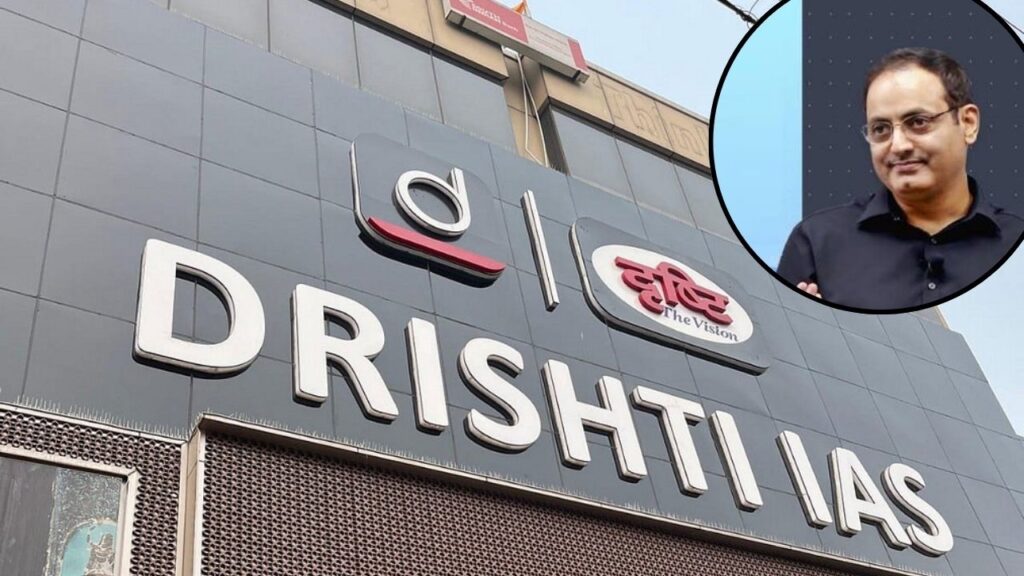
Drishti IAS
The Drishti IAS is most popular platform for IAS preparation, ideal for UPSC aspirants from both Hindi and English medium. It offers a structured and motivational teaching style which is helpful during UPSC preparation as it is the hardest exam.
Best Features:
It is best for students who can give 15 to 16 months to this course with 400+ live classes.
Extensive study material can help for learning
Excellent test series to improve regular practice, total of 24 mains and prelims tests available for 3 years.
No language barrier, it is easy for every student.
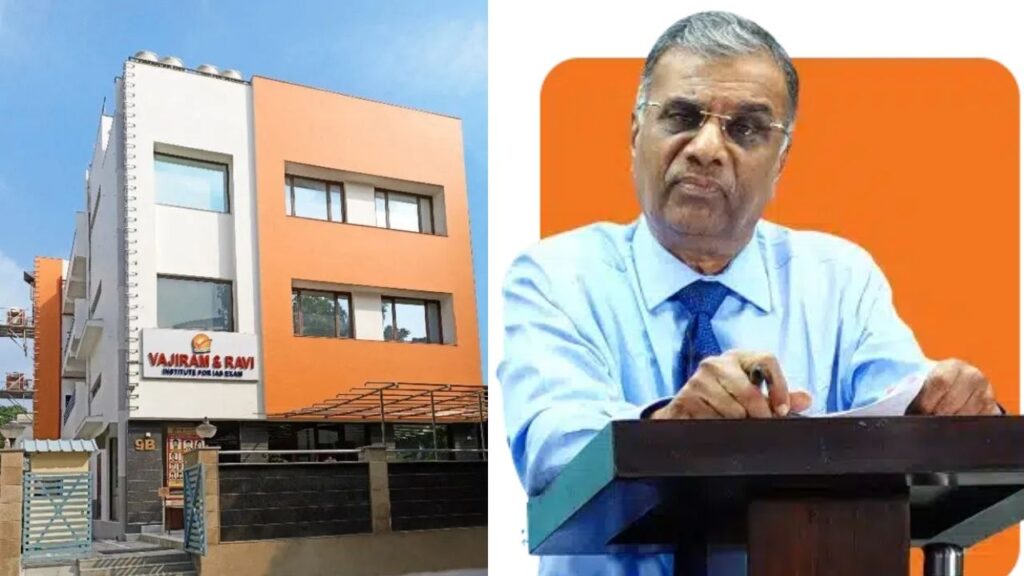
Vajiran and Ravi
Vajiram and Ravi coaching originated offline and marked a name in the top UPSC coachings and is now available online that delivers the same quality teaching for UPSC aspirants.
Best Features:
Ideal for those who wanted to cover every topic with depth, 1000+ hours of lectures needed plenty of time.
Detail study and notes are also available for quality learning
Consistently maintain its record for producing toppers for years
Cost effective for providing best learning to ensure clarity for every doubt.
Clear IAS is also one of the best online coaching which provides a super 50 program for specifically UPSC preparation. It is well-known for its focus on more personal guidance and small batches. Ideal for aspirants who prefer self-paced learning with doubt clearing sessions at low fees.
Best Features
There are a large number of recorded lectures which can provide detailed learning for UPSC.
700+ hours lectures and 1500+ study material
Test series to maintain daily practice for doubts clarity, mentorship support, and interview guidance.
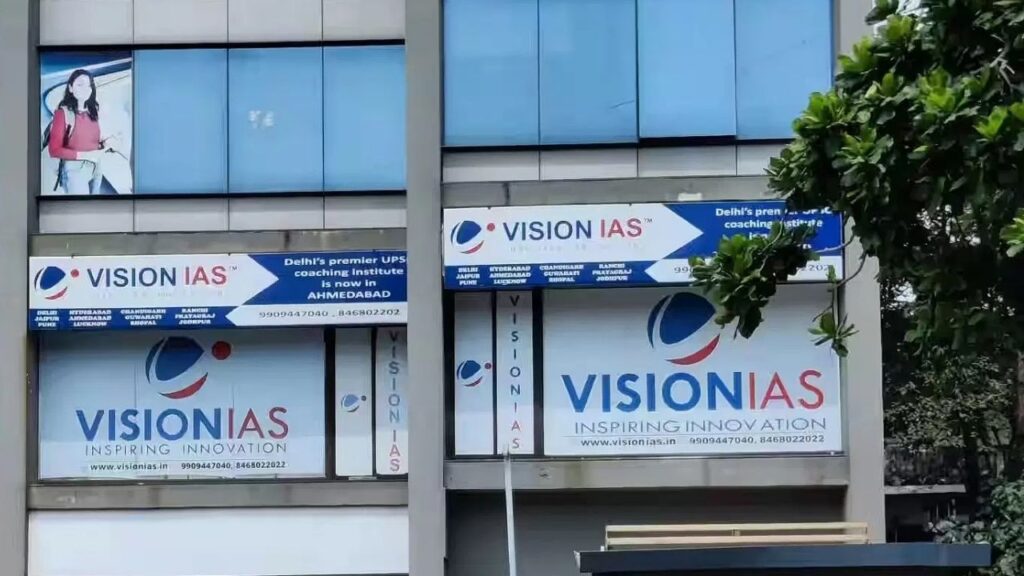
Vision IAS
Vision IAS provides the best test series which are helpful to become habitual with the exam environment. It is famous for its analytical function that helps to track student’s practice records.
Best Features
Students can check their weak areas due to their recording track of assessments and make it strong by working on it.
Flexible batches is accessible to every aspirant
Free Resources is a great advantage for preparation. Topic-wise specific content, current affairs, and previous year questions are available for free.
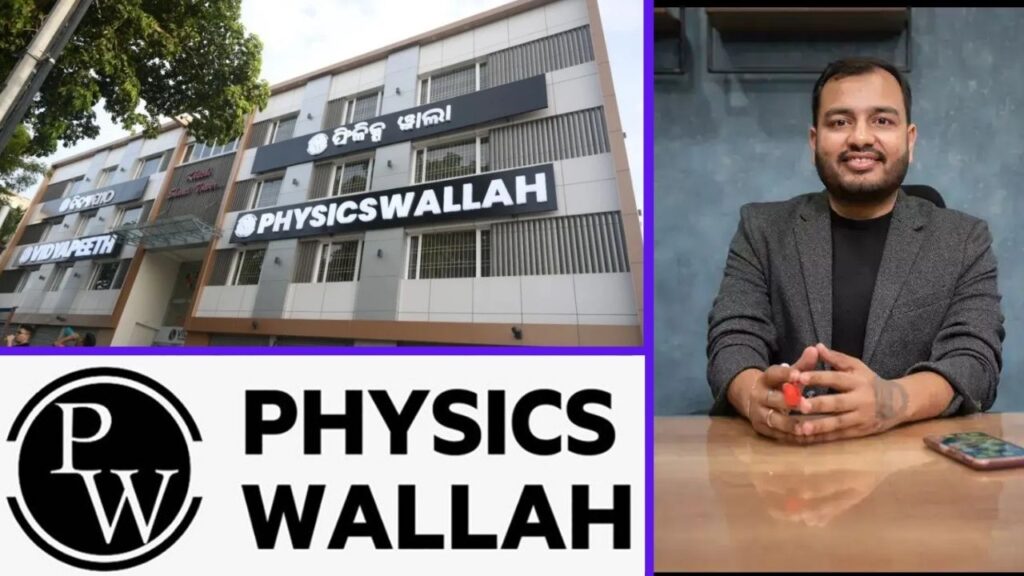
Physics Wallah
Physics Wallahis rapidly growing coaching and its UPSC preparation course is effective for cracking the exam. Its main advantage is delivering conceptual learning that helps students to remember and quickly adapt new concepts.
Best Features
Affordable price is accessible to everyone
The teaching style is student-friendly that helps in complex problems to understand quickly.
Best for beginner students who began to prepare for UPSC
Strengthen every weak concepts and clear every doubt
Mentor support and recorded sessions.
Nirnay IAS
Nirnay IAS is available on the testbook platform which offers well-structured courses and practice-oriented strategy for UPSC preparation. It has gained attention in a little time due to its practice material and offline resources to self-study.
Best Features
Students who prefer to learn at their best time.
No regular classes, 30+ structured courses are best for quick preparation.
Cover prelims, mains, and other preparation topics
Mock test and previous years papers for best practices
Recorded lectures helpful to working professionals who don’t have time for live classes
Insights IAS
Insight IAS is also best for UPSC preparation at a low price. Aspirants can begin their preparation with quality study resources and test series with reasonable prices.
Best Features
Strong test series that structured properly for both prelims and mains
Best for beginners and advanced with its foundation courses
Well-designed topic notes and syllabus clarity for effective learning
Affordable courses, every student can get quality education at their own pace
Identify your learning style – if you need someone to push or motivate you consistently for UPSC, Drishti & Vision provide teacher interaction which might help you. Clear IAS, Nirmay or Insights are best for those who prefer to learn at their own pace.
Check your budget – PW, Clear IAS, and Insight are affordable but if you are ready to invest more, Vajiram & Ravi or Vision offers premium packages.
Test Series – if you want insightful and exam-focused test series then Vision and Insights are the best option. Drishti IAS is also providing detailed study and exam based test series.
Conclusion
The Best Online Coaching for UPSC isn’t the one with popularity or your friend is joining, someone’s opinion doesn’t help you to get the right platform. The right platform matters because every student’s mind works differently, they understand differently. Even in their preferred language, they are unable to grasp the concept of the topic. So, it might be best for you to take a demo class from online coachings, if you understand well about the topic due to clear explanations, or teaching style that might be your destined platform for UPSC preparation.