BSNL Recruitment 2026: Apply Online for 120 SET Vacancies, Eligibility & Full Details

BSNL Recruitment 2026

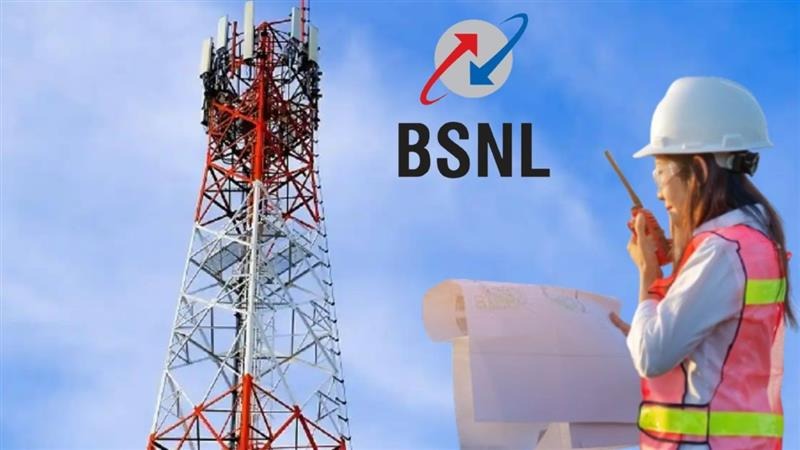
Bharat Sanchar Nigam Limited (BSNL) has been releasing multiple vacancies for various posts under its BSNL Recruitment 2026 notification and it is a very good opportunity for the young and energetic candidates to apply for this largest Telecom PSU of the country. The news has created a wave of excitement among the job seekers across the nation, and for those who were waiting to take their first step into the industry, they can’t get a better opportunity.

BSNL, the Indian state-owned telecom company has released a notification for Senior Executive Trainee (SET) Recruitment 2026. There are a total of 120 prestigious vacancies to be filled by professionals. The last date to submit an application for this job is 15 April 2026.

Dates For BSNL Recruitment 2026

EventDate/Details
Notification release29/January/2026
Application start05/February/2026
Last date to apply15/April/ 2026 (extended)
Application correctionAround April 8–23, 2026 
Exam dateTo be notified later

Breaking Down the Vacancies

Let’s get down to the numbers, because that’s really what matters when you’re plotting your career move. Out of 120 posts, 95 posts are reserved for Telecom Stream and 25 posts for the Finance Stream. The category wise distribution goes like this: 51 general, 31 OBC, 18 SC, 9 ST and 11 for EWS candidates.

StreamVacancies
Telecom95 
Finance25
Total120 

What makes this BSNL Recruitment 2026 all the more interesting is that BSNL has unequivocally given preference to technical knowhow – nearly 80% of the posts are in the telecom operations domain, underscoring the firm’s commitment to ramp up its core infrastructure and services. 

Eligibility Scale

For Telecom Stream A full-time B.E/B.Tech with minimum 60% marks in the following related disciplines is required: Electronics and Telecommunication, Electronics, Computer Science, Information Technology, Electrical, Instrumentation. The essential point being “full-time”; a distance learning degree or part-time degree is not acceptable. 

The Finance Stream, too, is very specific: you must be an ICSI member, in other words, a qualified Chartered Accountant (CA) or Cost and Management Accountant (CMA). This is no compromise either.

You should be between 21 and 30 years of age as on March 7, 2026. Apart from this, if you belong to reserved categories, you are allowed some relaxation: 3 years for OBC candidates, 5 years for SC/ST candidates, and 10 years for Persons with Benchmark Disabilities (PwBD). The exact duration depends on their category. 

How Much You Can Earn?

Selected candidates will receive according to the IDA E-3 pay scale with the pay ranging from ₹24,900 to ₹50,500 per month. Add into the mix House Rent Allowance (HRA), Dearness Allowance (DA), Travel Allowance (TA), and a variety of other perks for which PSUs are renowned and it is a very tempting salary package when you add the job security and work-life balance of the job. 

The Selection Process

BSNL is not giving these posts on a platter. The process is stringent and intended to select the best. This is how it is done:

  • Initially, you will appear in a Computer Based Test (CBT) containing 200 multiple choice questions for 3 hours. 
  • It is a two part test: a general aptitude test containing 40 questions and a technical or finance knowledge test having 160 questions, this depends on your stream. 
  • Candidates who are guessing blindly can face the deduction of 0.25 marks if their guess will go wrong so it may not be the best strategy. 
  • You must achieve Minimum 45% marks in each section and 50% marks overall if you belong to the General Category. Candidates from other categories need 35% in each section and 45% overall is enough to pass the exam. 
  • If you clear the written exam, you will be called for document verification and medical examination. 
  • Clear all these hurdles, and you’re in but with a condition. There is also a boundation that you must serve 2 year probation and 5 year service period.

Step-by-Step Guide to Apply

  1. You can find the link of application process on BSNL Official Website. 
  2. Register with your valid email ID and mobile number.
  3. Enter all your details (Personal and Education) correctly, even a single error can cost you the chance.
  4. Upload your photo, signature, you require certificates
  5. General/OBC/EWS candidates should pay a fee of ₹2,500 and SC/ST/PwBD candidates are exempted from half the application fee i.e. ₹1,250. 2,500 online.
  6. Submit and download or print your Print off your records, and any evidence of submission for your application to keep safe. 

Read More:- SSC vs UPSC: The Ultimate Showdown for India’s Most Demanding Government Job Exams

Conclusion

BSNL Recruitment 2026 is a golden chance for the candidates who want to make a good career in the infrastructure of India. With 120 vacancies, the National Company Law Appellate Tribunal (NCLAT) is inviting applications from freshly graduated engineering and CA/CMA professionals who are looking forward to a career-building or establishing job in the public sector. The application deadline has been extended to 15 April 2026, plenty of time to get ready.

Ensuring that you have all the paperwork and documents in order Getting your technical skills ready up to scratch Getting yourself comfortable with the CBT (Computer- Based Test) format Remember, preparation is key if you want to ace the exams. 

For those who are looking to start their career in the Indian Telecom industry, especially BSNL,then it is recommended to visit this official site. Get the Latest Notification for knowing about BSNL Recruitment 2026 Procedure of Application and eligibility criteria. Making that initial move might lead to a bright future in the industry.

Leave a Comment

Your email address will not be published. Required fields are marked *

MPPSC Scientific Officer Details: Lab Geek to Crime-Solving Pro Journey

If you love solving puzzles and investigating small incidents in your life then your mind is already adapted with critical thinking. If you are interested in biology, it will be a bonus point to choose to become a MPPSC Scientific Officer.

The Madhya Pradesh Public Service Commission (MPPSC) regularly recruits Scientific Officers to work in the state’s Forensic Science Laboratories (FSL). If you have a strong education degree with biology and chemistry then you can apply for this role. It is one of the most unique, respected, and fascinating government jobs out there.

It requires specialized skills as this is such a specialized role, you probably have a lot of questions like how can you apply for this role? 

Here is the whole guide to become a Scientific Officer and eligibility criteria to apply for the MPPSC Scientific Officer role. 

What Does an MPPSC Scientific Officer Actually Do?

You probably imagine a government job as tons of files on the desk and endless tasks to complete. But the role of a Scientific Officer is entirely different. 

The Criminal Justice system needs a man with expertise to identify and analyze the founding elements (evidence) from a crime scene. This duty comes with a huge responsibility that is why the Scientific Officer considered the backbone of the criminal justice system. If you are selected for this job, you will be posted in any forensic labs across Madhya Pradesh. 

The job is divided into different disciplines based on your educational background:

Physics Division: Marks on the wall, floor, crack glass, tool marks, are the expertise of the Scientific Officer (physics division) who has to analyze the crime scenes and examine crime scene photographs.

Chemistry & Toxicology Division: Any crime conducted using chemicals, illicit drugs, explosives, are the Chemistry & Toxicology Division Scientific Officer responsibility to examine. He also tests for poisons in biological samples.

Biology & Serology Division: Involves with biology evidence like DNA from hair and blood stain and profiling is Biology & Serology Division Scientific Officer responsibility.

In this role, you are not working in the lab. The police department and court rely upon your reports. It can literally make or break a criminal investigation. So, it’s a strong sense of ethics and absolute precision. 

Who Can Apply? 

Since it’s such a technical position, you can’t just walk in with a regular bachelor’s degree. The MPPSC needs experts on the subject. 

Educational Qualifications: 

You need a Master’s degree (M.Sc.) but choose a particular subject according to the requirement of the division.

You can choose Physics or Forensic Science in both BSc and MSc if you want to enter a physics division.

You can choose Chemistry or Forensic Science in both BSc and MSc if you want to enter a chemistry division.

You can choose Botany, Zoology, Biochemistry, Microbiology, Genetics, or Forensic Science in both BSc and MSc if you want to enter a Biology division.

Age Limit: 

For candidates from Madhya Pradesh the age limit is generally 21 to 40 years. But, a big age relaxation is there mentioned for SC/ST/OBC candidates, women candidates and govt employees of mp. The upper age limit for the candidates applying from out of madhya pradesh is usually 28 or 30 years, as per the particular notification. 

The Exam Pattern

The MPPSC selection process for this post is quite simple. There are generally two stages: a written exam (OMR-based) and an interview.

So, Let’s check at the written exam: It is in two parts and the full exam is of 450 marks with 50 marks for the interview. 

Part A: General Knowledge and Computer Knowledge (150 Marks) 

This is the stumbling block for many science students. Maybe you’re a genius in the lab, but you›ve also got to know your state. Part A comprises of:

B) General Knowledge of Madhya Pradesh – History, geography, economy, arts and culture of MP. You have to know the state like the back of your hand.

National and International Current Affairs: What the world and India is up to at present.

Information and Communication Technology: Basic computer literacy, internet, cybersecurity and e-governance. 

Part B: Your Subject Specialization (300 Marks) 

This is your moment to shine. B is completely specific to the subject you applied for (Physics, Chemistry, or Biology). The syllabus of this part is actually your whole M.sc. You can anticipate deep, conceptual, and technical multiple choice questions. 

One mark can be cut from your answer sheet if you answer incorrectly and give you 3 marks for the right answer.

Read More:- State Police SI vs SSC MTS: Most Prestigious Government Jobs Comparison

Salary of the MPPSC Scientific Officer

Scientific Officer is a Class-II Gazetted Officer post. So this is equal to respect to and you enjoy a good pay scale. The pay scale and the grade pay of the basic pay fall under a very comfortable range of pay (usually basic pay would be in the range of Rs. 56,100 as per 7th Pay Commission). 

After including DA, HRA and other government benefits, your net salary becomes very attractive. In addition, you receive unbeatable job security afforded by a state government position, plus health care and a pension plan. 

Conclusion

MPPSC Scientific Officer is not merely a job, rather it’s a platform to utilize your scientific knowledge for the welfare of the society. It’s hard, mind-bending work, and a fantastic feeling. 

The competition exists, but as the eligibility is limited to certain post-graduate degrees, the crowd is much lesser when compared to common exams like the State Service Exam (PCS). You don’t have to compete against millions; you have to compete against your peers. 

If you have the prescribed qualification and a planned study schedule, then there is no way this exam can not be cleared by you. Be clear with your concepts, be updated with current affairs of mp and start your preparation from today itself. Good luck! 

Leave a Comment

Your email address will not be published. Required fields are marked *

UP Police Computer Operator Grade-A Online Form 2025: Apply, Dates & Eligibility

UP Police Computer Operator

If you have completed 12th with a science subject and are interested to join the Uttar Pradesh Police Force then this is the chance to transform your life! The application process has begun for the Uttar Pradesh Police Recruitment & Promotion Board (UPPRPB) Computer Operator Grade-A vacancies – the total number of vacancies is 1,352. So, let’s get into all that we need to know about this golden opportunity. 

A career with UP Police is an excellent opportunity for youth having technology savvy to establish their bright future in law-enforcement. With 1,352 vacancies available and a good pay scale of Level-4 (₹25,500 – ₹81,100), this job is not only offering colorful career but also financial security. The registration is valid for both men and women across the UP, so the whole terrain of the state could participate in it. 

Mark Your Calendar With These Dates

EventDate
Online Application StartDecember/16/2025
Registration DeadlineJanuary/15/2026
Fee Payment Last DateJanuary/15/2026
Fee Correction WindowJanuary/16-18/2026
Exam DateTo be notified
Admit Card ReleaseNotify Later

Do You Qualify For This Post?

RequirementDetails
Age Limit18-28 years
Educational Qualification10+2 with Physics & Mathematics
Computer CertificationDOEACC ‘O’ Level OR Diploma in IT/Computer/Electronics Engineering
Hindi Typing Speed25 words per minute (WPM)
English Typing Speed30 words per minute (WPM)

Category-wise Vacancy Breakdown

CategoryVacancies
General577
Other Backward Classes (OBC)364
Scheduled Caste (SC)283
Scheduled Tribe (ST)128

Read More 👉 BBA in Artificial Intelligence: Course Details, Admission, Fees and Career Scope

Simple Steps to Fill The Form

The procedure of application for Uttar Pradesh Police Recruitment and Promotion Board (UPPBPB) is easy and in online mode only. Step by step instructions are provided below:

1. Visit the official page of UPPBPB at the official website which is also mentioned in the article.

2. Sign up with a valid mobile number and email id.

3. Follow the guidelines to complete the One-Time Registration (OTR).

4. Fill in the details in the application form correctly related to your Personal and Educational Qualification etc.

5. Attach all relevant documents, i.e. mark sheets, certificates, a recent photograph and the signature.

6. Submit the application fee as applicable through the online mode.

7. Complete this and then apply with your full application and print the confirmation page for your document.

Make sure that all the information they are providing is true and correct, and that the files they upload are according to the size, format, etc. specified above so that they don’t have to face any trouble. 

Application Fee
General/OBC/EWS₹500
SC/ST₹400

Selection Process

StageDescription
Written Examination200 MCQ questions (400 marks)
Typing TestHindi & English typing skill test
Document VerificationAuthenticate original certificates
Final Merit ListBased on written exam performance

Exam Pattern

The question paper has a General Hindi, General Knowledge, Mental Aptitude/Reasoning and Computer Science section. All the three sections contain 50 questions and every question carries two marks thereby the maximum score for the paper is 100 marks. 

Useful Links
Apply HereClick Here
Download NotificationClick Here
Official WebsiteClick Here

Leave a Comment

Your email address will not be published. Required fields are marked *

Best M Tech Colleges in India Without GATE You Can Apply to in 2025

best M Tech colleges in India without GATE

There are several Best MTech Colleges in India without Gate, you can take admission with other entrance exams and personal interviews. Some top colleges of India for MTech are IITs, NITs, Anna University, Delhi University, Banaras University, and some private universities such as BITS Pilani, VIT, SRM, and Jamia Millia Islamia. Let’s explore the best colleges in India which can offer you an MTech degree.

You don’t have to go through the GATE exam but still  you need to score in their respective entrance exam. Some private institutes like VIT and SRM can offer MTech on merit. These colleges not just provide degrees but also offer placement opportunities to their students. 

Best M Tech Colleges in India Without GATE

IIT Delhi

IIT Delhi

IIT Delhi offers admission through GATE but some seats are vacant for the industry-sponsored candidates for MTech. It also offers a part-time MTech program for working professionals. You may have to clear their own entrance exam to get admission. Your graduation CGPA also matters as a part of the admission process. 

Fee (Approx.)₹36,950 per semester
M.Tech SpecializationsComputer Science, VLSI, Data Science, Cyber Security, Structural Engg, Mechanical Design, others
Average to Highest Salary₹18.8LPA – ₹41.1LPA

Delhi Technological University

Delhi Technological University

If you are searching for the best college for MTech program in Delhi then this is one of the best in engineering where you can get quality education and placement opportunities. If candidates do not have GATE scores then they must pass the entrance test for the admission. DTU approves candidates with above 60% marks in their Bachelor’s degree.

Fee (Approx.)₹90,000 – ₹1,60,000 per semester
M.Tech SpecializationsCS, IT, VLSI Design, Thermal, Structural, Manufacturing, Mechanical, Electronics, others
Average to Highest Salary₹10 to ₹60 LPA

Jamia Millia Islamia

Jamia Millia Islamia

Jamia Milliam Islamia is one of the oldest universities that offers various programs. MTech from this college will be worth your career opportunities. Admission is conducted via GATE but it also offers MTech through their own entrance exam. 

Fee (Approx.)₹18,350–₹56,590
MTech SpecializationComputer Engineering, Env. Science & Engineering, ECE, Mechanical, Nanotechnology, Power Systems, Control Systems, Data Processing, Thermal Engineering, Energy Science, Production & Industrial, Earthquake Engg.
Average to Highest Placement ₹5–₹22 LPA

Aligarh Muslim University

MTech offers vast opportunities to the AMU students with good placement opportunities. That’s not it, AMU offers a professional program on a low budget so every student can get equal opportunity for higher education. The admission is done through GATE or their own entrance exam. You can take that entrance exam and secure your seat in MTech.

Fee (Approx.)₹6,000 – ₹15,000 per semester
M.Tech SpecializationsStructural, Electronics, Environmental, Civil, Mechanical, Electrical Machines, CS, others
Average to Highest Salary Package₹5 to ₹20 LPA

Jawaharlal Nehru University

Jawaharlal Nehru University

JNU offers MTech at lower price, students can easily pursue their higher education but they must have cleared the JNU entrance exam for the admission. Candidates must score 55% above in graduation. 

Fee (Approx.) for MTech in other field₹1.28 Lakhs for entire course
Fee (Approx.) for MTech in CS₹385 per year
MTech SpecializationComputer Science & Technology is a key specialization available at JNU. Other specializations are limited as JNU primarily focuses on niche areas.
Average to Highest Placement ₹11 to ₹33 LPA

SRM Institute of Science and Technology 

SRM Institute of Science and Technology

This is a private institute which offers MTech in Computer Science, Electronics, and many more. A degree is valuable if you want a good position in the industry, many companies hiring students from this college with a good package. The admission is done through SRMJEEE PG entrance exam other than GATE.

Fee (Approx.)₹1.12 to ₹3.2 lakhs per semester
MTech SpecializationCS, Mechatronics, Biomedical, Chemical, Electronics, IT, others
Average to Highest Placement ₹7 to ₹50 LPA

Read More:- Top Government MTech Colleges in India You Must Know in 2025

BITS Pilani

BITS Pilani

BITS Pilani: This is one of the best colleges for MTech programs, you can get admission through your GATE score or BITS HD Test. If you hold a bachelor’s degree with above 60% score in engineering then you are eligible for this program. 

Fee (Approx.)₹2.42 L to ₹10.38 L for entire program
MTech SpecializationBiotechnology, Civil, Chemical, Computer Science, Manufacturing, Microelectronics, Cloud Computing, others
Average to Highest Placement ₹14.45 to 21.6 LPA

Amity University

Amity University, Lucknow Campus

Amity is also a private university and offers a good education to the MTech students. Students can get admission through other entrance exams and it depends on your graduation marks. The campus is a good and well-oriented research facility for students.

Fee (Approx.)₹2.9 Lakhs for entire program
MTech SpecializationElectrical, Microelectronics, Mechanical, advanced programs
Average to Highest Placement ₹8 to ₹45 LPA

Vellore Institute of Technology

Vellore Institute of Technology

VIT also takes industry-sponsored students and its highly advanced courses are in demand for the industries. An MTech from VIT is worth your career growth and high salary. The admission is done through their own entrance exam. 

Fee (Approx.)₹3.85 Lakh for 2 years
MTech SpecializationMechanical, Computer Science, Civil, Electronics, Advanced IT programs
Average to Highest Placement ₹9 to ₹60 LPA

Conclusion

There are Best MTech Colleges in India without GATE which can open doors to the best opportunities in the top companies. They offer a good salary package because the colleges have provided quality education and industry exposure through their assessments that make them smart and adaptive in industry work. 

Whether you choose Government or private college for admission in MTech. Kindly check their exam fees and admission dates on their official websites. The fee and placement packages we mentioned here are based on approximate data. You must check on their official procedures before applying.

Leave a Comment

Your email address will not be published. Required fields are marked *

O Level Course 2025: Complete Guide to Fees, Syllabus, Duration & Job Benefits

O Level Course 2025

Students who are interested in the Technical Field can achieve great heights in their career after pursuing NIELIT ‘O’ Level. It opens up the door in both private and government sectors as the requirement of an IT employee is needed everywhere. The world is evolving more into digitalization which has made this field wider and open more vacancies for the candidates. If you also want to make your career stable with a good career path, high-salary, and less hectic job then grab this course now.

Why NIELIT ‘O’ Level Matters in the Digital Age

Chasing after stable and well-paying jobs in India, job-seekers are often driven towards the public sector, where security of jobs and strong perks are widely considered as givens. In today’s increasingly digitised world, being in possession of a recognized and accredited Information technology qualification is not just an advantage – it is a requirement. The NIELIT ‘O’ Level course is at the Midnight of this requirement. 

It is officially considered the same as a Foundation Level CA course. This government approval is really important and gives you the edge that private not accredited courses can never get. The value of this certification is further ratified with its inclusion in the national framework, having been recognized under the National Skills Qualifications Framework (NSQF) at Level 4. 

What Job Roles Can You Get After NIELIT ‘O’ Level

The O Level was structured in such a way as to be responsive to the short-term technical needs of the then contemporary public and private sectors. The stated goal is to prepare students with the skills needed to work in today’s IT-enabled jobs. Among these targeted profiles are User Interface (UI) Designer, Web Designer, Web Publication Assistant, Office Automation Assistant, and IoT Application Integrator.These intentional integration with operational IT rather than simple clerical data entry clearly situates the course as a practical instrument for aspirants to take on current digital workplace requirements. 

Detailed Eligibility Criteria

The basic eligibility criteria require either passing 10+2, or holding a one-year ITI Certificate after Class 10, along with a minimum of one year of experience in the area related to the IT industry. 

The applicants who have passed second year of polytechnic engineering diploma after 10th standard from a government recognized institute are also eligible to apply. 

O’Level Course Duration 

The six-month timeline for graduates enables them to get this commonly required IT credential quickly, thereby reducing the amount of career time lost while waiting for certification. Hence, the ‘O’ Level serves as an important means for enhancing one’s eligibility in a short span of time after the completion of the degree. However, this registration remains valid for five years.

Why Is O’Level Course Value Increasing Day-By-Day?

Mastery in the Revised Syllabus

The importance of NIELIT ‘O’ Level certification in the present high technology world is that O level syllabus is regularly revised and updated which in turn helps to keep the students updated with the latest information and technology available. This syllabus is much beyond the basic knowledge of computing which is now considered old to cater to the demand of the industry for the skills and the industries supported the potential of having high paying jobs. 

Structure and Examination Pattern

The course is staffed with four core theoretical modules, the compulsory practical component, and a project. The four theory modules are:

M1-R5: Information Technology Tools and Network Basics

M2-R5: Web Designing & Publishing

M3-R5: Programming and Problem Solving through Python

M4-R5: Internet of Things and its Applications 

Detailed Module Analysis

All theory subjects will be assessed by a three hours written examination carrying 100 marks. Besides these theory papers candidates are required to pass one full practical examination (PR1-R5) based on the contents of all 4 theory modules, also carrying 100 marks and of three hours duration. Practical work is usually done at the institutionally approved places offering the course. A Project Work (PJ1-R5) is also necessary for certification. 

Read More 👉 Which Entrance Exam Is Best for MBA Abroad in 2025?

Official NIELIT Fees 

The cost a candidate has to bear when applying directly through NIELIT (without availing external tuition) is surprisingly small:

  • Registration Fee is Rs.500 and this registration is valid for 5 years. 
  • A Fee of ₹100.00 is applicable for processing exam applications per examination cycle.
  • The O’ level course fees for each module in the Revision 5 is 1,000 Rs. The total of four modules fee is Rs 4,000.
  • O Level Project Fee (once only for PJ1-R5 submission) The compulsory O Level project fee PJ1-R5 is only ₹100. 

Candidates pursuing O’Level courses from private institutions can get different fees or entire course fees. So, check the total fees amount for this course from the institutions you choose.

Career Pathways in the Private Sector and High-Paying Roles

The NIELIT O Level certification is an address both for private and government jobs. Although the public sector is considered to be the most stable, the private sector has many points of entry and is an important source of early career experience. 

Target Job Profiles 

The level of competence proven through ‘O’ Level is very applicable. There are plenty of O level benefits in government jobs. The roles targeted include vital gating roles such as UI Designer, Web Designer and IoT Application Integrator. Outside these roles, the certification still strongly validates the holder’s knowledge of key IT skills, such as being computer literate, managing data efficiently, using office automation tools, creating simple web applications, and handling databases. These skills are necessary for help desk, IT support, and web maintenance positions in a broad range of private industry. 

Salaries Offered by IT Sector

The average O level course jobs salary in the Private Sector after doing NIELIT ‘O’ Level is around 3 LPA (Lakhs Per Annum). This base figure amounts to roughly ₹ 25,000 per month which is considered as the minimum expectation for blue-collar jobs at the level of data entry operators, junior IT support, or clerical jobs with some know-how of office automation. 

However, In the government sector, For certain technical posts, including Scientific Assistant and some Assistant Programmer positions, that require or consider the O Level equivalency, the Basic Pay can be as high as ₹35,400 even at the entry level. The resulting In-Hand Salary typically settles between ₹45,000 and ₹50,000 per month.  

The Future After O’Level Course 

The NIELIT ‘O’ Level is not a standalone qualification, but it is the essential beginning in a standardized, government-approved system of IT certification that focuses on sustained career advancement. This Systematic faire up Turn is called the DOEACC octuplet. 

From ‘O’ to ‘A’ Level: Advanced Diploma Equivalence

Students may take NIELIT ‘A’ Level after successful completion of ‘O’ Level based on NIOS. This allowed the applicants to expand their skill set to a great extent in specialized areas like Advanced Post Graduate Diploma in Computer Application (APCDCA) or Advanced Diploma (AD) in Computer Hardware Maintenance and Networking. Passing of ‘A’ Level also allows access to mid-level private sector work and makes one more eligible for higher grade government technical posts. 

‘B’ Level and MCA Equivalence

For aspirants to senior management, software developer or research positions the NIELIT route ends with the B Level course. The ‘B’ Level is the high-end among the course level certifications of NIELIT and is professionally recognized by MHRD to be equivalent to Master of Computer Applications (MCA) Degree Course. 

Conclusion

The NIELIT ‘O’ Level is the anchor, pocket friendly and the only entry-level based examination for aspirants who aim at getting a high paying job along with stable income from Indian Public Sector IT for immediate term. It is the basic qualification that enables the accredited path to further study that is comparable to a Master’s degree, so a career begun in government IT isn’t just safe, it has a well-defined and boldly optimistic path for growth. 

Leave a Comment

Your email address will not be published. Required fields are marked *

Best Private University in India for Quality Education and Innovation

Best Private University in India

The scenario of higher education in India has been a significant transfigurement in last 10 years. It is no longer the case that the best private universities in India are the only standard setters for excellence. Private universities today are reinventing the world-class education allowing them to differentiate in quality academics, through leading-edge innovation and creating environments where students are not just learning but also creating, discovering and leading. 

Well, if you are looking for higher education in India then it is important to know what the differences are in the top private universities. They are not simply teaching bodies but they are breeding grounds for tomorrow’s captains of industry, researchers and innovators who will chart courses through industries and address global challenges. 

The Top Contenders

In the NIRF 2025 rankings, the private university sector is led by a few good institutions. The Manipal Academy of Higher Education (MAHE) emerges 3rd among universities across the country and stands as the best private university in the country. Closely following are BITS Pilani at rank 7, Amrita Vishwa Vidyapeetham at rank 8, VIT Vellore, LPU, Amity University and SRM Institution of Science and Technology at rank 11. 

However, not only in rankings, Ashoka University is transforming Indian higher education. Ranked as the best new-age private university and awarded as the “University of the Year (Emerging)” in 2025 at the FICCI Higher Education Summit, Ashoka is the future of liberal arts and interdisciplinary education in India. 

Manipal Academy of Higher Education (MAHE) Amrita Vishwa Vidyapeetham
BITS PilaniVIT Vellore
SRM Institution of Science and TechnologyAmity University
Ashoka UniversityLovely Professional University (LPU)

What Makes These Universities Stand Out?

Research and Innovation at the Core

Today’s private universities know that good teaching without innovation is half-truth. BITS Pilani has been especially creative in institutionalizing research amongst students. The institute, since 2023, has published more than 6,500 research papers in journals with average impact factor more than 4.1, filed 325+ patents, completed 13+ technology transfers, and incubated 138+ deep-tech startups with a combined valuation of over USD 300 million.These are not simply figures—they represent actual technology developed by students and professors that are reshaping markets and addressing real-world problems. 

The Manipal Academy too has made huge investment in innovation infrastructure. Its Innovation Centre is a dynamic ecosystem that offers seed funding, incubation support, mentorship for patent filing and commercialization. The university has a state-of-the-art Central Analytical Instrumentation Facility (CAIF) with world class instruments such as SEM, NMR, XRD which enables interdisciplinary research in emerging areas like material science, biotech etc. 

Ashoka University has now set up the Ashoka-Zeiss Core Imaging Facility, the first such facility in India, which caters to high end research in Cell Biology, Biophysics and Structural Biology. Inspiringly, in 2025, Ashoka was awarded the highest distinction for its research and innovation activities, demonstrating a strong commitment to advancing the frontiers of knowledge.

Faculty Excellence and Academic Rigor

The standard of faculty decides the standard of education. These elite private colleges have gone all out in trying to hire outstanding scholars, researchers, practitioners. Amity University has right faculty student ratio to provide quality education in meaningful mentorship and is supported by 2,100+ well experienced faculty members in helping 37,000 students in different campuses.​

The curriculum at these schools is more than just textbooks. Many elite private universities weave in industry perspectives into their curriculum through guest lectures, internships and group work. That means students learn not only the theoretical underpinnings, but real-world applications and evolving industry issues. 

Global Partnerships and International Exposure

It is always true that in a connected world, you need global exposure to get a good education. Ashoka University, one of India’s leading liberal arts universities, has partnered with 60+ prestigious institutions globally across 28 countries and five continents including Yale University, Sciences Po, University of Melbourne, EYH Paris. Partner organizations also provide opportunities for interaction with group and field trips during semester exchanges, summer programs, research collaborations and faculty exchange. 

Similarly, Manipal University holds joint research programmes with top-notch institutions worldwide and is funded for research by various agencies such as DST, CSIR, AICTE. This global network ensures that students have access to an array of perspectives and world class academic resources. 

Placement Excellence and Career Readiness

Quality education in the end translates into job opportunities. Manipal Academy secured more than 90% placement in 2025, with 8,000+ students placed across multiple programs. The highest package for engineering students went up to ₹69.25 LPA with average package of ₹12.31 LPA. Top recruiters: Microsoft, Amazon, Deloitte, IBM, Standard Chartered, and BookMyShow. 

Inclusive Accessibility and Scholarships

Although being good quality generally carries a cost, many leading private universities understand that that should be manageable. These schools provide merit-based scholarships, aid packages and need-based grants so that gifted students aren’t turned away because of money. 

The Innovation Ecosystem

What really sets the best private universities of today apart is their strategies for innovation across the board. BITS Pilani has created a number of innovation tracks to address a range of contexts – SPARKLE for transdisciplinary problem solving, SOLVE for applied innovation and PIEDS (Pilani Innovation & Entrepreneurship Development Society) along startup development.​

Ashoka University launched the Young Scholars Programme: Innovators in Science & Tech (YSP IST). It’s for the high schoolers and it’s a 10 day live-in camp. It enables them to learn difficult subjects such as environmental chemistry, neuroscience, quantum computing and genetic engineering. These camps help create future inventors. They also ignite science curiosity at a young age.  

Read More 👉 Top Agriculture College in Uttar Pradesh: Courses, Fees & Admission Details

Choose Your Path Wisely

Choosing a university is a very personal matter. If you are interested in a multidisci­plinary education close to industry, Manipal Academy is excellent if you like comprehensive education with strong links to industry. If you want the best research and entrepreneurship route, BITS Pilani is unparalleled. Ashoka University, for those interested in liberal arts with a global outlook, provides a new frontier in Indian higher education.

What matters most is knowing what you want. Are you a basic researcher? Do you want to build startups? Are you looking for global exposure? The finest private Indian universities today cater to such journeys 

The Future of Private Higher Education

The Indian private university sector is evolving fast. They are not simply copying public universities, they are innovating, conducting cutting edge research and drawing talent from around the world. This focus on quality, innovation, research and international collaboration is indicative of a vibrant, competitive ecosystem, and students stand to gain immensely from this.

Keep in mind as you start your higher education journey, Rankings are just one measure. What makes a school is its learning community, the quality of its faculty, the substance of its research, and its aspiration to produce not just accomplished professionals but responsible global citizens. India’s finest private universities are increasingly making the case that they can indeed deliver exactly that.

Conclusion

India’s leading private universities are transforming higher education with cutting-edge research, global outlook, industry-centred curriculum, and incubators of innovation. From BITS Pilani’s entrepreneurial culture to MAHE’s research excellence and Ashoka’s revolutionary liberal arts model, you will find a way to map out a future-ready career.

So when you’re picking your uni, focus on what suits your ambitions – be it research, startups, global learning or industry know-how. 

Ultimately, these top private colleges in India are showing that they can shape not just degrees, but the leaders of tomorrow. 

Leave a Comment

Your email address will not be published. Required fields are marked *

Scroll to Top