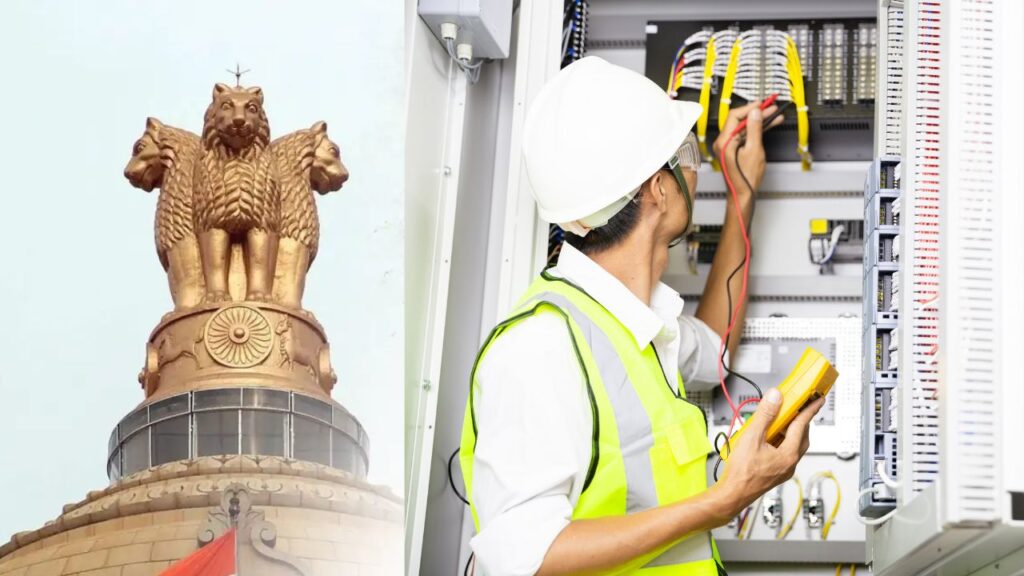
Best Government Jobs for Engineers in India 2026

Best government jobs for engineers

If you are an engineer at the crossroads of your career and question if you should jump into the private sector rat race or check out government jobs for jollies, we have some good news for you. The Indian government and its PSUs are going to recruit a massive number of engineers in 2026, and this might be your golden opportunity to get a job with immense stability, good pay and superb benefits. Now, let’s take a look at Best Government Jobs for Engineers in India 2026 that are waiting for you. 

Why Government Jobs Matter for Engineers

Here’s the thing about government jobs that many young engineers seem not to realize: government jobs offer something that’s increasingly hard to come by in this volatile economic climate — stability and long-term security, even if it means starting with a lower salary (and slower pace of promotion) than you might get in the private sector. You won’t have to worry about sudden lay-offs when the market takes a dive, and your job security is guaranteed by the power of the whole nation to back you up.​

The pay scale in government service has also undergone a sea-change. A recently qualified engineer in a government job is paid somewhere between ₹3,00,000 and ₹4,50,000 per year, with regular, foreseeable increments based on your years of service. Further, government jobs have full medical coverage, housing allowances, pensions schemes, flexible working hours and good leave policies – benefits that are all but vanished in private organisations. 

Top Government Job Categories for Engineers in 2026

1. PSU Recruitment Through GATE

PSUs (Public Sector Undertakings) are the behemoths of India’s industrial sector, and they are hiring in a big way in 2026. Over 50 major PSUs such as IOCL, ONGC, NTPC, BHEL, Power Grid, GAIL are on recruiting mode for engineering graduates. These organizations pay a competitive salary of ₹40,000 to ₹80,000 per month for entry level jobs with quick career advancement.​

If you have done well in your B.Tech / B.E., then good GATE (Graduate Aptitude Test in Engineering) score will help you in getting through. GATE scores are valid for 3 years, so you can still be content even if you haven’t appeared for it yet, so start booking your seats on these high profile jobs. 

Major PSUs to recruit in 2026 are Power Grid Corporation (for electrical engineers), IOCL (for mechanical, electrical and computer science engineers), ONGC (for offshore and onshore engineering posts), NTPC (for thermal, hydro power projects) and GAIL (for pipeline and energy management posts). 

2. UPSC Engineering Services Examination (ESE)

This is the highest and most difficult scale of government engineering jobs. The UPSC Engineering Services Exam is the door to Grade A and Group B posts in services like the Indian Engineering Service, Indian Telecommunication Service and Indian Engineering Service, Central Water Engineering Service, Border Roads Engineering Service etc.​

UPSC Engineering Services Examination

The Date for the ESE 2026 (prelims) is 8th February 2026 and for mains is 21st June 2026. The competition is fierce, but so are the prizes. Selected candidates are placed at pay level 10 of 7th Pay Commission matrix, which implies good salary growth along with prestige. The job involves huge responsibilities and the opportunity to make a real impact in driving the infrastructure and development projects in India. 

Selection procedure is a 3-step process: preliminary exam (500 marks), the mains exam (600 marks), and personality test (200 marks).

3. SSC Junior Engineers and Assistant Engineers

The SSC JE recruitment is conducted for multiple Ministerial and Departmental posts under group “B” between its two divisions Central Public Work Department and Survey of India and other such Departments of the Government of India. These jobs are Group B (non-gazetted) positions at Level 6 and the pay-scale is Rs 55,000 to Rs 65,000 per month after the take home is calculated in allowance.

What makes SSC JE positions so desirable, is that old people can sit for the exam. It’s a pretty simple format for an exam all about engineering basics and common sense/general knowledge. The promotion prospect is fixed and you can get promoted to Assistant Executive Engineer (AEE) after getting experience which in turn you can get promoted to Executive Engineer , salary wise you can earn up to 1,80,000 p.m. as an Executive Engineer. 

4. Indian Railways and Infrastructure Projects

Indian Railways, having a large rail network in the world, is constantly recruiting engineers in track maintenance, signal systems and infrastructure development. These posts also carry special allowances for field posting and provision of accommodation in various parts of India.
Indian Railways and Infrastructure Projects

On the same lines, NHAI, CPWD, state public works departments also recruit civil engineers from time to time. If you like the idea of watching your work become real highways, bridges, and other public works, these agencies provide tremendously fulfilling careers. 

5. Defense and Space Research Organizations

For engineers with an interest in high-tech and national security, ISRO (Indian Space Research Organisation), DRDO (Defense Research and Development Organisation) and BEL (Bharat Electronics Limited) are dream organisations. ISRO also hires in large numbers for satellite programmes, launch vehicles and space applications. DRDO is related to defense technology development.​

These jobs are mentally stimulating, have cutting-edge equipment, and give you a deep feeling of having played a part in your country’s technological progress. The pay is competitive, though often little lower than the best PSUs, but the feeling of a fulfilling career and the scope for innovation are unmatched. 

Engineering Branches with Maximum Government Job Opportunities

If you are still studying in college or if you are planning to choose a specialization, then these are the engineering branches which will have maximum demand for government jobs in 2026:

Civil Engineering roles are plenty in Infrastructure development, Railways, and Water resources projects. Mechanical Engineering finds good demand with manufacturing PSUs and thermal power stations. Electrical Engineering is always sought after in power generation, transmission and distribution. CSE & ECE has been the most sought after branch with the arrival of the digital age, leading to many opportunities in telecommunications, space programmes and defence research. 

Read More 👉 Nainital Bank Recruitment 2025: Clerk, PO, SO Exam Date & Details

How to Prepare and Apply

The path is well-defined: Your academic performance should be of high standard – most government bodies ask for a minimum of 60-65% in your engineering stream. Second, for those going for PSU jobs, crack GATE exam in 4-6 months of focused-study. Third, for the coveted ESE examination, if you can bear to start early, score high, because competition is tough but rewards are great.

Start with official website of recruiting bodies such as UPSC, SSC, GATE and individual PSU websites. Create job alerts on government job websites, subscribe to official notifications on Facebook and Twitter, and do not forget to apply for the jobs. Many positions close within days of notification. 

Is a Government Job Right for You?

Government work is for you, if you care more for stability than getting rich quickly, like the predictability of your daily schedule, and want to do something useful for the country. The salary increment may look like a slow pace compared to the private sector counterparts at the start, but you can enjoy better lifetime earning and security through pension schemes and long term benefits.​

There are more openings than ever before across government agencies for the year 2026. If you are a fresh graduate or an individual with experience looking for a career change, your time is now. With focus, the right approach, and a bit of luck, securing a top government engineering position in 2026 can be less of a pipe dream and more of an attainable objective. 

So start preparing today and you may be launching a multidimensional government career offering security, advancement and the satisfaction of playing a part in India’s development story by the turn of the year. 

Conclusion

Best Government Jobs for Engineers in India 2026 aren’t just about steady pay—they are about establishing a stable, respected, and mission-driven career. There is massive hiring across PSUs, UPSC Engineering Services, Railways, infrastructure bodies and premier organisations like ISRO, DRDO where engineers have more national development converging with professional growth opportunities than ever before. 

The private sector might offer faster rewards, yet government jobs have security for life, predictable growth and benefits which really stand the test of time. If you want to prepare smartly and stay focused, then 2026 could be the year that you transition from being lost in the career wilderness to a future defined by stability, impact, and pride for having served the nation.


Leave a Comment

Your email address will not be published. Required fields are marked *

BSc Emergency and Trauma Care: Get Trained to Serve in Emergencies

BSc Emergency and Trauma Care

In the intense hospital setting, there is a place where seconds count and the word “routine” hasn’t been uttered in years. It’s the Emergency Room (ER) after BSc Emergency and Trauma Care. Although the faces with which we most commonly associate life saving are those of the doctors and nurses, there is an equally specialised group of para-professionals working with them: Emergency and Trauma Care Technologists.

Requirement for BSc Emergency and Trauma Care

A candidate must possess 10+2 in Science (PCMB/PCMC) & it’s important to know that some colleges asked for a 45%- 55% minimum score. This course prepares students to pursue a career on an emergency basis like when an urgent requirement of a doctor arise in an emergency room, on an operating table etc.

English is normally compulsory subject in class 12th and you should be minimum of 17 years of age at the time of the admission, medical fitness certificate is also required at times. 

Duration and Course Subjects

The 3-­4-year BSc Emergency and Trauma Care course enables students with the necessary skills and knowledge to deliver care to the traumatized and the emergency patient. The content sequentially increases in complexity starting with the basic sciences and advancing to clinical interventions.

The following topics are repeatedly addressed:

Basic Sciences

  • Human Anatomy 
  • Physiology 
  • Biochemistry 
  • Pathology 
  • Microbiology

Emergency Care 

  • Emergency Medical Services 
  • Pre-hospital Trauma Life Support 
  • CPR & Airway Management 
  • Hemorrhage Control

Clinical Emergencies 

  • Medical Emergencies 
  • Trauma & Surgical Emergencies 
  • Pediatric and Special Population Emergencies 
  • Critical Care Technology

The program is focused on theoretical and clinical training, designed to equip students to manage high-stakes trauma environments with both assurance and thoroughness. 

Semester Breakdown

SemesterCore Subjects
1st/2ndAnatomy, Physiology, Biochemistry, Intro to EMS, Pharmacology
3rd/4thMedical Emergencies, Trauma Emergencies, Pathology, Biostatistics
5th/6thDisaster Management, Patient Monitoring, Advanced Life Support

Mail Skill You Must Have

While the “BSc” part of the title sounds academic, the job is deeply emotional. You will become a patient’s life-saver on the worst day of their life.

Empathy in the moment is a talent they don’t always rate you on, but it’s the most important one you’ll have. You’re not just treating a body but also confronting the panic and worry and sorrow of the people surrounding it. Those relatives, too, are often in over their heads, and those patients are frightened. You’ve got to be a genuinely kindhearted person to remain calm, tell them everything will be all right and comfort them while you are doing something like firing up a ventilator.  

Career Goal 

The demand for graduates from the BSc Emergency and Trauma Care course continues to grow within the health care industry, with opportunities for employment with both public and private providers, transport­ focused roles in emergency situations, and roles such as the immediate stabilization of patients. It is one of the best courses which open your professional way with good packages because experience in this field has many different responsibilities. 

Roles & Responsibility 

RoleResponsibility
Trauma TechnicianTake part in Trauma Cases with surgeons and ER doctors to stand as a pillar on saving lives.
Emergency Medical Technician (EMT)Quick Response to save life’s on the spot emergencies techniques. 
Flight ParamedicWorking on air ambulances or rescue helicopters for remote locations.
Critical Care AssistantManaging patients in the ICU who require constant monitoring.
Disaster Management OfficerWorking with Social Work Organisations like NGOs or governments to plan responses to natural disasters.

Top Employers

SectorExamples
HospitalsApollo, Fortis, Max Healthcare, Medanta
Ambulance ServicesGVK EMRI, Air Ambulance
Government/OtherIndian Red Cross, Fire Department Emergencies, Disaster Organizations

Jobs Salary After BSc Emergency & Trauma Care

The BSc Emergency and Trauma Care salary in India varies as per the job position, skills, experience, work location (metros like Delhi, Bangalore provide higher salary) and type of the company. For 3 to 5 years of experience, the salary can be 5 — 8 lakhs per year along with allowances for shifts or overtime. 

Salary by Role

RoleFresher Salary (₹/month)Experienced salary in LPA
Emergency Medical Technician20,000-40,0003-7
Trauma Care Technician25,000-50,0005-8
ER Coordinator30,000-55,0005-9
Disaster Specialist40,000-70,0006-10

How to Get Government Jobs After This Degree

For government job after BSc Emergency and Trauma Care, concentrate on the paramedical recruitment in state health departments, NHM, and hospitals as these are the very places that consider this as a preferred degree for EMT and trauma-related Jobs.

Preparation includes watching portals, acquiring certifications such as BLS/ACLS, and passing written tests or interviews. 

Steps to make a career in government healthcare or allied services: 

  1. Get updated: Get into the habit of visiting the official websites regularly i.e. NHM, State Health Society, ESIC, AIIMS, and 108 Ambulance Services. These sites raise alerts for complainants for job notification, recruitment-related news and other information which might help you get one step closer to your dream job.
  2. Boost your profile: Having professional certification can do wonders in polishing up your resume. Courses like BLS (Basic Life Support), ACLS (Advanced Cardiovascular Life Support) and ITLS (International Trauma Life Support) bring weightage to your profile. Along with these certifications, relevant field experience 1-2 years will make a great difference in your selection. 
  3. Apply and Prepare: Apply online for exams that generally comprise multiple choice questions (MCQs) on anatomy, emergency care, and general information. 
RecruiterRoles7th CPC Salary
NHM/State Health Societies EMT/ParamedicRs 25500—81100 at Level-4 Rs 35400—1,12,400 at Level-6 
AIIMS/Government Hospitals and ESICTrauma Technician, ER AssistantRs 25000—50,000 entry role
Armed Forces/Disaster BodiesAmbulance TechnicianVaries by level

The Future of Emergency Care

As medicine becomes more specialized, the need for full-time trauma providers is growing exponentially. We are going from “general” care to “specialized,” rapid response. With the advent of smart ambulances and telemedicine, an BSc Emergency and Trauma Care alumnus is no longer a mere “aide”, they are a high-tech clinician leading the cutting-edge of medicine.

 Read more: MPESB Group 5 Paramedical Recruitment 2026

Conclusion

A BSc Emergency and Trauma Care is not just an academic qualification; it is a key which opens the door to the human condition. It is a profession for the strong, the fast-thinking and the kind. If you’re looking for a career in which you’ll keep on learning, and where you can tell people, “You really needed me today,” this is the road for you. 

Leave a Comment

Your email address will not be published. Required fields are marked *

UPSC CDS 1 Recruitment 2026 Notification, Eligibility, Application Dates Guide

UPSC CDS 1 Recruitment 2026

The Union Public Service Commission (UPSC) has notified the Combined Defence Services (CDS) Examination 1 for the year 2026. This recruitment is for a number of academies that are the Indian Military Academy (IMA), Indian Naval Academy, Air Force Academy and Officer Training Academy and the number of vacancies is 450+.

The application form filling process will start from 10th/December/2025 and the last date to apply for the UPSC CDS 1 2025 will be 30th/December/2025. Interested and Eligible candidates are advised to read the official notification before apply online for understand the eligibility, Application Fee, Age Limit, Salary, Selection Process before applying for it.

Candidates need to visit the UPSC official website for detailed information and application. Before the time ends, you need to make sure that each one of the necessary information is filled accurately. 

Follow These Dates To Apply

Application Start10/December/2025
Last Date For Application30/December/2025
Fee Payment last date30/December/2025
Correction DateUpdate Soon
Admit Card DateUpdate Later
Exam Date12/April/2026

UPSC CDS 1 Age Limit & Application Fee

CategoryAge LimitPosts Expected
IMA & INA 19 — 24 years450+
Air Force 20 —- 24 years
OTA 19 —- 25 years
Gen/ OBC/ EWS₹200
SC/ ST0

UPSC CDS 1 Vacancy & Educational Qualification

The courtesy details of UPSC CDS 1 Eligibility 2025 are mentioned below:

  1. Indian Military Academy (IMA): The candidate will have to hold a Bachelor’s Degree in any discipline/stream from any recognized University/Institution in India.
  2. Indian Naval Academy: The candidate must hold a Bachelor’s Degree in Engineering or equivalent from a recognized university/institute in India.
  3. Air Force Academy: Candidate should have passed 10+2 with Physics and Mathematics in any stream from a recognized board or have a Bachelor of Engineering/Bachelor of Technology or similar qualification from recognized university.
  4. Officer Training Academy: The Candidate must have a Bachelor’s degree in any Discipline/stream from any recognized university or Institution in India.

For more and latest updates you can go through the official UPSC CDS 1 Recruitment 2025 Exam Notification. 

Read More 👉 Railway Protection Force Constable: Salary, Selection, and Exam Details – complete guide

Salary & Allowances

The candidate can earn up to Rs 1,77,500 per month with allowances as per government norms. The starting salary can be less with Rs 56,100 for entry level candidates.

Guide to Apply UPSC CDS 1 Online

How to Apply for UPSC CDS 1 Recruitment 2025: Apply Online through the official website of UPSC.

1. Know Details from UPSC CDS 1 Notification 2025 PDF.

2. Click on the “apply online” link or go to the Official UPSC website: upsc.gov.in.

3. Fill UPSC CDS 1 2025 Online Application Form.

4. Upload all the documents as per the notification.

5. Remit the requisite application fee by one of the modes available.

6. Take a print out of the application form once it is filled for your records. 

Apply OnlineLink Activate Soon
Download NotificationLink Activate Soon
Official WebsiteClick here

Leave a Comment

Your email address will not be published. Required fields are marked *

Top 10 Best MBA Colleges in Chandigarh (2025) with Fees, Placements & Ranking Revealed!

Chandigarh has largely emerged with schools and colleges in North India, especially in management education. Aspiring many students and working professionals to pursue a Master of Business Administration (MBA) degree from the colleges of this city. Here are some Top 10 Best MBA Colleges in Chandigarh that are excellent in delivering world-class education and growth opportunities.

Let’s look at the details of their fee structures, placement records, and latest rankings that can help you further to decide the college. Which college you should choose totally depends on the goal and priorities. 

We already know that IIMs are the best colleges for Business Studies across India. In Chandigarh, there are many top colleges which offer competitive and specialized MBA programs to take a top place in NIRF and IIRF ranking across Chandigarh.

Understanding MBA Rankings

MBA rankings serve as an important point of a college because ranking is an overall overview of the college. The important factors are academic quality, experienced faculty, well-oriented research facility, industry exposure, and placement success. Various national and international groups judge the colleges with their own ways to provide students multiple views on their choices.

Ranking Methodologies

College ranking frameworks including NIRF and IIRF assess colleges based on their Teaching & Resources, Research Practices, Assessments, Students Result, and Feedbacks. Some other notable rankings such as QS World University, Business Today Rankings based on the factors such as Education Quality, Faculty Expertise, Strong Curriculum, and Placement of Students.

Read More 👉 Top Government Jobs After MBA in 2025 You Shouldn’t Miss!

Top MBA Colleges in Chandigarh 

These are the best Chandigarh’s colleges for MBA programs which can lead you to vast career opportunities and quality education to achieve your goal. 

1. Panjab University (University Business School – UBS)

Credit source: Collegedunia

Panjab University is one of the government colleges which can offer a wider range of courses. It was established in 1995 and is the most esteemed MBA institute. 

MBA Programs & Fees: UBS offers a two year MBA programs in specific specializations such as HR, Foreign Business, Entrepreneurship. Some new programs are entered in the college including Business Data Analytics for the 2025 academic year.

The annual fee ranges from INR 23,945 to INR 2 Lakhs, depending on the specialization. The total fee is around ₹1,49,214 for the General MBA. 

Placement Record: UBS Chandigarh placement record is good, many top companies like Deloitte, HDFC, and Amazon are offering the highest CTC was INR 24 LPA, with an average CTC of INR 12.43 LPA

UBS stood out a chance in the top 50 colleges in India for business education and got a 15th position on the NIRF ranking. The college’s ROI is making an MBA program affordable with high-quality education, training, and strong curriculum. It has strong connections with its alumni network and industry leaders that become valuable for strong placements and provide students industry knowledge that can help them to be ready for the job or business. The latest advanced specializations like business analytics and digital marketing are now essential for MBA graduates.

2. Chandigarh University 

Credit source: Learning Routes

Chandigarh University is a private university which offers well-established MBA programs for providing world-class education. It got A+ from NAAC and has a reputation in the global standards.

MBA Programs & Fees: CU offers MBA programs in various specializations such as Finance, Marketing, HR, Analytics. New specializations like Capital Markets, Global Business Management, and Media & Entertainment Management are added in the options. 

First Year Fee is around Rs. 3,18,500 and total fee ranges between Rs. 6,00,000 and Rs. 7,00,000.

Placement: The chances of placement is very high as it has a good record in placement of many students in top companies like Flipkart, VIVO, ICICI, ITC. The average package Rs. 5 LPA to Rs. 6 LPA and highest will be around Rs. 18 LPA which can be extended up to Rs 28 LPA with international offer. 

CU got 1st position in QS asia ranking and 36th position on NIRF 2024 ranking. It offers industry-aligned curriculum that make a unique impression of the students in global industries. The key point is they provide global exposure through exchange programs and certificates to prepare candidates for international careers. They focused on in-demand skills, industry insights and relevant knowledge on the global economies.

3. Chitkara Business School

Credit Source: Boarding School

Chitkara Business School is delivering industry-specific MBA programs developed under the top global industry consultation. It got A+ from NAAC and offers high-quality education with industry exposure. 

MBA Programs & Fees: Students can pursue MBA from Chitkara Business School in specializations such as HR, Finance, Marketing, Business Analytics, Logistics, and many more. 

Total Fee ranges between Rs. 7 Lakhs and Rs 9 Lakh depends on the specialization you choose to study. The high demanding course is more costly than the general MBA program. 

Placement: CBS has a strong record of placement — highest placement can go up to Rs. 44 LPA for MBA in Marketing and Average Package will be around Rs. 10 LPA in the same specialization. It depends on the company’s revenue and projects. Main recruiters from CBS are both national and international companies. 

Chitakara Business School is the top choice in terms of MBA program as it offers strong learning and practical education to their students. The institution provides an entrepreneurial ecosystem and startup mentoring initiative for building a robust career and ensuring that students get settled after the 2 years of masters programs. They are not offering just a degree but overall training, knowledge, and environment to create leaders. 

4. Chandigarh Group of Colleges 

Credit source: Collegedunia

Chandigarh Group of Colleges affiliated to IKGPTU and offers career-centric MBA programs that are designed to build practical skills and knowledge to produce industry-ready candidates. 

MBA Programs & Fees: CGC offers various popular specializations such as Marketing, Finance, Business Analytics, HR in a two year MBA program. 

The annual fee is around Rs. 1,32,560 Lakhs that may fluctuate based on the specialization.

Placements: The percentage is good and thousands of students get hired from this college in top companies like IBM, TCS, Dell, and Capgemini. The average package is around Rs. 17.79 LPA and the highest package can go up to Rs. 50 LPA.

It is ranked 6th position in Punjab universities, offers real-world assessments, quality learning, leadership skills that can help students build their mind to get inside the top companies. The regular performance check up and internships offer a dynamic blend of experience in the business world. The strong connection with industries will ensure the opportunities from top companies. The college focuses on developing skills like leadership, professionalism, communication, and teamwork along with key topics like business ethics which are valuable for the fresh minds to adapt. 

5. LM Thapar School of Management

Credit source: LM Thapar School of Management

LM Thapar School of Management is offering quality business education in Northern India. It is a private college that connects globally to prepare industry based curriculum for MBA programs that transform students into professionals.

MBA Programs & Fees: It offers various specializations such as  Entrepreneurship & Innovation, International Management & Strategy, Information Systems, Marketing, and Finance. 

Fee: The annual Fees is around Rs. 1,89,480 depending upon the specialization. Fees can increase with highly demanded fields in MBA. 

Placement: The highest package can be around Rs. 24.82 LPA and average package is Rs. 8.17 LPA. The packages depend on the company and field.

LMTSM is ranked 3rd position in the NIRF ranking and consistently among the top MBA colleges. It offers students an opportunity to approach for the better options at international level and adapt the spirit of entrepreneur.  The curriculum is maintained for providing significant knowledge and learning to produce leaders and corporate professionals. It also gave the exchange programs with internships and placement abroad to many students. 

6. Gian Jyoti Institute of Management and Technology

Credit source: Shiksha

Gian Jyoti Institute of Management and Technology was approved by AICTE and is offering training courses and providing excellent value for money. It was established in 1998 in Chandigarh. 

MBA Programs & Fees: It offers two year programs in various specializations such as HR, Marketing, Operation. The first-year fee is Rs. 1.01 Lakhs and total fee ranges between Rs. 1,60,400 to Rs. 1,95,800

Placement: The highest package is approximately Rs. 12 LPA and Average package is nearly Rs. 5.40 LPA from the top companies like Airtel, Axis Bank, Puma, Reliance, and many others.

It is consistently on the top MBA colleges list due to its wider range of placement offers. Students can get hired if they choose the most demanding specialization in MBA. This college not only provides a degree but a strong curriculum that builds the skills in the students to make them professional. It provides training programs, global summer programs and dual specialization for enhancing students ability in the business world.

7. University Institute of Applied Management Sciences 

UIAMS is a public university and affiliated to Punjab University. It prepares students for the corporate world with a highly industrial-based curriculum and training. 

MBA Programs & Fees: It offers many sector specific MBA courses such as Hospital management, Banking, Retail, Pharmaceutical. 

The fee is Rs. 126,415 for a semester and an entire course fee is Rs. 4.92 Lakhs while some specialization may raise the fee cost. 

Placement: The Average Package is Rs. 8.5 LPA for students but it has been seen that mostly placements scaled up in Sales and HR department. The major departments like Banking offer good packages.

UIAMS is a good choice for students who want an MBA degree with valuation to specialize in management in core functional areas such as Marketing, Finance, Operations, and HR. The course structure is fine to provide knowledge and business ethics to the students to get them ready for the corporate world.

8. Aryans Group of Colleges

Credit source: Shiksha

Aryans Group of Colleges is offering an industry-ready MBA program for developing student’s knowledge and skills. It is affiliated with IKGPTU and established in 2007. It offers a wider range of specializations in MBA such as IT, Fiance, Marketing, HR, Operations. 

Fee: The total fees range between Rs. 1,20,000 to Rs. 1.28 Lakhs depends on the specialization of the course. 

Placement: The college has marked a record of 60% placement of students in top companies like HCl, HDFC, and Tech Mahindra. The average package students get is around Rs. 3 LPA and the highest can go around Rs. 12 LPA.

9. DAV College

Credit source: Justdial

DAV College is a private college in Chandigarh which was established in 1958. It has a high reputation in offering excellence academic tradition at an affordable fee. Aspiring many students to study a two-year MBA program from this college which provides a comprehensive understanding of business and management ethics. 

Fee: The total fee is nearly Rs. 3.31 Lakhs for the entire course. 

Placement: The average package is Rs. 2,16,000 which can go up to Rs. 65 LPA respectively. 

10. RIMT University

Credit source: Youtube

RIMT is also a private institution that offers a MBA program to develop the knowledge of students for management. It offers various specializations with Choice Based Credit System. It actually allows students to study their interested field of course for improving their skills. 

The total fees for the MBA program ranges between Rs 96,667 to Rs. 1,70,000 annually. The scholarship will be applicable based on the student’s performance.

Placement: The highest package can go around Rs. 30 LPA and the average is Rs. 4 LPA.

Conclusion

MBA aspirants can take admission in public or private colleges of Chandigarh which offers strong industry-based curriculum and experiential learning to develop professionals. These Top 10 Best MBA Colleges in Chandigarh not only offer reported fees, placement and ranking but blend of industry level approach and global networking which led to highest packages in specific specializations like Business Analytics, Finance, and Marketing. 

Leave a Comment

Your email address will not be published. Required fields are marked *

India Post GDS 2026 Recruitment Notification & Apply Guide

India Post GDS Recruitment

India Post GDS 2026 Recruitment will start soon and you can apply directly from the official website once the link will be activated. Until then prepare your documents and read the notification to apply as soon as possible for various posts including Gramin Dak Sevak (GDS), Branch Postmaster (BPM), Assistant Branch Postmaster (ABPM) and Dak Sevak. A large number (28,890) of vacancies is posted by the India Post.

This is an opportunity for 10th pass jobseekers of strong mettle and the beginning of the online applications process for the 1230 India Post jobs is expected shortly on the official website of India Post. 

Follow These Dates to Apply for India Post GDS

EventDate
Official Notification Released28/January/2026
One-Time Registration Starts31/January/2026
Application Submission Starts02/February/2026
Last Date to Apply (Till 5 PM)16/February/2026
Correction Window18 — 19/February/2026
First Merit List Release28/February/2026
Process Completion Date30/June/2026

Qualification Needed For These Posts

If you also have completed your 10th with Maths and English then you are eligible to apply for GDS. 

Candidate’s age should lie between 18 to 40 years as of 16 February 2026.

Age relaxation is admissible as per government rules: 5 years for SC/ST, 3 years for OBC and 15 years for PwBD candidates of the SC/ST category.

The selection procedure is merit-based, on the basis of Class 10 marks, with grades being converted into marks on the basis of a multiplication factor of 9.5. 

Education10th standard marksheet
Age Limit18-40 years

Application Fee 

Only General/OBC/EWS candidates must pay Rs. 100 while submitting the online form for this post. Other caste candidates do not have to pay any amount.

Read More 👉 Paramedical Courses Career Roadmap After 12th: Jobs, Salary & Scope

Circle-Wise Vacancies For India Post GDS

CircleVacancies
Uttar–Pradesh3,169
West–Bengal2,982
Maharashtra3,553
Madhya–Pradesh2,120
Telangana609
Tamil–Nadu2,009
Bihar1,347
Andhra–Pradesh1,060
Assam639
Chhattisgarh1,155
Delhi42
Gujarat1,830
Haryana270
Himachal–Pradesh520
Jammu/Kashmir 267
Jharkhand908
Karnataka1023
Kerala1,691
North Eastern1,041
Odisha1,191
Punjab262
Rajasthan634
Uttarakhand445
Total28,740

Pay-Scale 

India Post GDS 2026 Recruitment: The TRCA amount varies between ABPM/Dak Sevak and BPM, with ABPM/Dak Sevak receiving a sum ranging from ₹10,000-₹24,470 to BPM ranging from ₹12,000-₹29,380, along with 3% annual increase, DA, gratuity and pension like schemes. 

Work: 4 to 5 hours daily in villages. 

Application Form 

  1. Click on the Official Website link in the below link section
  2. If you are new then register yourself with email & number
  3. Login to fill the entire application form with correct details, attach photo and signature.
  4. You must prepare your all the documents to attach it with your application and submit with application fee
  5. Print it out for offline proof
Useful Links
NotificationClick Here
InstructionsClick Here
Official WebsiteClick Here

Leave a Comment

Your email address will not be published. Required fields are marked *

Government Teaching Jobs in India 2026: Latest Vacancies, Eligibility & Recruitment Updates

Government Teaching Jobs in India

If you have ever wanted to impact society on a large scale and have a stable, secure job with great benefits, teaching for the government might be just right for you. In 2026, the government’s education department in India is experiencing a massive surge in job offerings and thousands of opportunities are available in schools and colleges across the country. Whether you’re a new graduate with a teaching degree, or a career changer, there has never been a better time to pursue a Government Teaching Jobs in India.

The beauty of governmental teaching jobs is not just the competitive salary packages, but the unbeatable job security, lifetime pension benefits, and the gratification of making a difference in the lives of young minds. With India making massive investments in education infrastructure, the need for qualified teachers has never been greater. 

The Current Recruitment Landscape

2026 is going to be a critical juncture for aspiring teachers in India. Big organizations are hiring at a scale that’s never been seen before:

Kendriya Vidyalaya Sangathan (KVS) has released the notification for 9126 posts for both teaching and non-teaching posts. These elite central government schools provide some of the best teaching jobs in the country for Trained Graduate Teachers (TGT) and Post Graduate Teachers (PGT) in several subjects.​

Navodaya Vidyalaya Samiti (NVS), which runs high standard residential schools all over rural India is also inviting application for 5841 posts. If you love to deliver quality education in rural areas and you have commitment then NVS is the best place to do that. 

Delhi Subordinate Services Selection Board (DSSSB), India’s largest recruiter, has thrown open the window with 5,346 vacancies for Trained Graduate Teachers and 1,180 vacancies for Primary Teachers. If you have your heart set on becoming a teacher in the capital of India, never let a spring pass without applying for some of the most competitive jobs on the planet.​

Uttar Pradesh, the most populous state in India, is also to recruit around 2 lakh (200,000) teachers in three phases by 2026. This montage of recruitment speaks volumes of the opportunities that exist for Indian teachers!

However outside of these large providers numerous Sainik Schools, state governments and educational boards release notifications throughout the year making teaching opportunities a steady flow. 

What You Need to Qualify

One of the biggest myths is that there are complex eligibility criteria to apply for teaching jobs. Actually the rest is simple, and the ones that are should have been enough to allow talented people to get into the profession.

When it’s About Becoming Primary Teachers 

Along with the 12th standard or its equivalent examination with at least 50% aggregate from a recognized board, you also need to clear the Central Teacher Eligibility Test (CTET) or your State Teacher Eligibility Test (TET) and have either a 2-year Diploma in Elementary Education (D.El.Ed. or 4-year Bachelor of Elementary Education (B.El.Ed.). 

When it’s About Becoming Trained Graduate Teachers 

You must have 50% marks in your subject along with B.Ed. You have to qualify CTET as well as state TET exam. TGT teachers usually teach classes 6-10. 

For Post-Graduate Teachers (PGT)

For the dreamers who still went for higher education. A minimum of 50% marks in a master’s degree in your subject along with the B.Ed qualification is required. Classes 11-12 and specialisations are handled by PGT teachers.​

For Railway and Sainik School Teaching Posts

The eligibility is almost same, but with minor changes as per organization type. Age limit varies from 21 to 40 years as per category.​

The CTET Advantage In Teaching Jobs

The Central Board of Secondary Education (CBSE) the Central Teacher Eligibility Test (CTET) is a boon for teachers in the making. Why it’s so good: 

Validity of CTET Score: It is now clear that CTET score validity has been increased – CTET scores will now be your lifelong companion, which means you don’t have to sit again for the exam even after years of so-called re-preparation.​

Pan-India Mobility : After qualifying CTET, you can apply to teach in central government schools such as Kendriya Vidyalayas, Navodaya Vidyalayas or union territory schools throughout the nation—not just in your native state.

Exams Advantage: Performing well in CTET examination also enhances your chances to get superior teaching job in central govt schools for which the pay and perks are the most lucrative.

The CTET examination for 2026 is scheduled for the 8th of February, and the application process is already open. The Paper I is conducted for the aspirants who want to teach classes 1 to 5 and Paper II is conducted for the aspirants want to teach 6 to 8 classes. Percentage required — You should a minimum of 60% to qualify! 

Salary and Benefits: Why Government Teaching Pays Off

Teaching is no longer a low paying job. Teaching professionals in India have a lot to smile now as they receive an extremely attractive pay scale:

Primary Teachers: A primary teacher will start with approx ₹35,400 as basic pay (₹42,000-₹45,000 with allowances) and can go up to ₹50,000+ in a decade through promotions and increments.​

Trained Graduate Teachers (TGT): with a basic pay of ₹44,900 (₹59,282 with allowances) and it can go up to ₹ 60,000-70,000 with incentives and experience. 

Post-Graduate Teachers (PGT) : Having the highest salaries at school level at a basic pay of ₹47,600 (₹ 56,320 with allowances) and may go beyond ₹75,000-80,000 per month with allowances and increments.​

Apart from the salary, teachers of the government get:

Dearness Allowance (DA): At present DA is about 38% of the Basic Pay and it is revised twice a year considering inflation

House Rent Allowance (HRA) : An additional monthly allowance is given to the employee based on his/her duty Station/location of post.

Transport Allowance: Very good for teachers and further higher in urban.

Medical Facility: Free medical treatment for you and your family in any hospital recognised by the bank’s medical cell.

Gratuity: A lump-sum amount on retirement

Pension Security: Immerse your lifestyle in wealth, NPS is the default pension plan for civil servants which guarantees a lifelong pension of fixed amount in return for financial security in old age.

Leave Benefits: Maternity Leave – 180 days, Paternity Leave – 15 days.

Benefits for Education of Your Children: Education benefits for your children, and your own kids’ education, consider scholarships and fee concessions. 

Read More 👉 Top IET Lucknow CSE Placements – Highest Packages, Recruiters & Career Growth in 2025

Types of Government Teaching Jobs

If you want to teach in India, these are some of the options that attract different types of teachers.

Central Government Schools 

KVS and NVS posts provide the most secure, stable and highest paid teaching jobs along with good perks and national level working.

State Government Schools 

Every state holds its own TET recruitment which provides the benefit of local stability and a home state posting ideally if you want to stay close to your family.

Railway Schools

Recruitment of teachers through Railway Recruitment Board (RRB) which invites applications from eligible candidates for the post of Teacher in various categories with attractive salary and benefits.

Sainik Schools

These elite military backed schools provide teacher with added advantage of working in a disciplined teaching, with great infrastructure and exposure to.

Delhi Government Schools 

The DSSSB recruitment leads to some of the best schools in India at Delhi, now opened for applications. 

The Selection Process

Knowing what to expect in the selection process enables you to be strategic in your preparation. Usually the procedure the candidates have to go through includes a written test to check your subject knowledge and teaching methodology (for TGT/PGT), verification of your qualification in which your educational certificates are scrutinized and in some cases a demo class/test on teaching is conducted where you have to teach a subject to a panel.​

This regimented process guarantees that only the most dedicated, and highest qualified teachers make it to the system. 

Preparation Tips

  • Start by preparing seriously for the CTET or your state TET – these are the pillars of your teaching career. 
  • Enroll in coaching centers if necessary, concentrate on the subject and solve the question papers on a regular basis. 
  • Have good communication skills and be aware of the policies of education. 
  • And more than anything, have a real love for teaching – that comes across waves in interviews and demo classes. 

Conclusion

Government teaching jobs in India will be more than just a job—they will provide a chance to contribute to building India’s future, along with monetary compensation and social prestige. With tens of thousands of vacancies, competitive pay, generous benefits, and a defined career ladder, now is an excellent time to enter this noble profession.

Whether it is the joy of imparting knowledge, the stable job and pension benefits, or the chance to do something for society, government teaching remains a profession that earns you respect for life. The options are there, the way is clear, and your teaching future is just around the bend. So take that leap of faith today—register for CTET, prepare well and stake your claim as an educator of India’s tomorrows. 

Leave a Comment

Your email address will not be published. Required fields are marked *

Scroll to Top