Best Nursing Colleges in Lucknow with Fees, Courses & Admission 2025

Nursing Colleges in Lucknow

If you are compassionate about caring for people then nursing will open up a path for a dynamic and rewarding career. Nurses are in demand in health care centers, private, and government hospitals. Degree, diploma, and certification courses are available in the Best Nursing Colleges in Lucknow with details of admission, fee, and placement opportunities.

Many students aim for a stable career, personal fulfillment, and a chance to care for others. Nursing is the best option for them, and it is easy. 

Some colleges admit students through entrance exams and some conduct direct admissions. Whether you pursue a Bachelor’s degree or a Diploma, you can get a lot of opportunities in this field.

Best Nursing Colleges in Lucknow

King George’s Medical University

Nursing students at King George’s Medical University in Lucknow during clinical training

King George’s Medical University: You can make a golden career if you get a chance to pursue nursing from the KGMU which is located in Lucknow, Uttar Pradesh. NAAC A+ accredited and experienced faculty can provide you with advanced knowledge. B.Sc Nursing from the Medical University costs between Rs. 48,000 and Rs. 3,00,000 for the entire course. Students can get a lot of opportunities after this course, average packages offer around Rs. 7.2LPA.  

Era University

Era University nursing lab with students learning under faculty supervision.

Era University is new but growing faster with its advanced medical courses. The advancement in practical training will help students to learn and research. Admission is processed based on class 12th marks. The nursing course annual fee is around Rs. 50,000. The modern infrastructure and experienced faculty are strongly supportive in providing students with effective learning. 

Dr. Ram Manohar Lohia Institute of Medical Sciences

Students at RMLIMS Lucknow attending a nursing class.

RMLIMS is a government institution that offers many medical courses that have great value. The total fee of Rs. 3.90 lakhs for the RMLIMS Nursing course. Admission happens through CNET with a good score. Students can secure positions in the government hospitals.

Atal Bihari Vajpayee Medical University
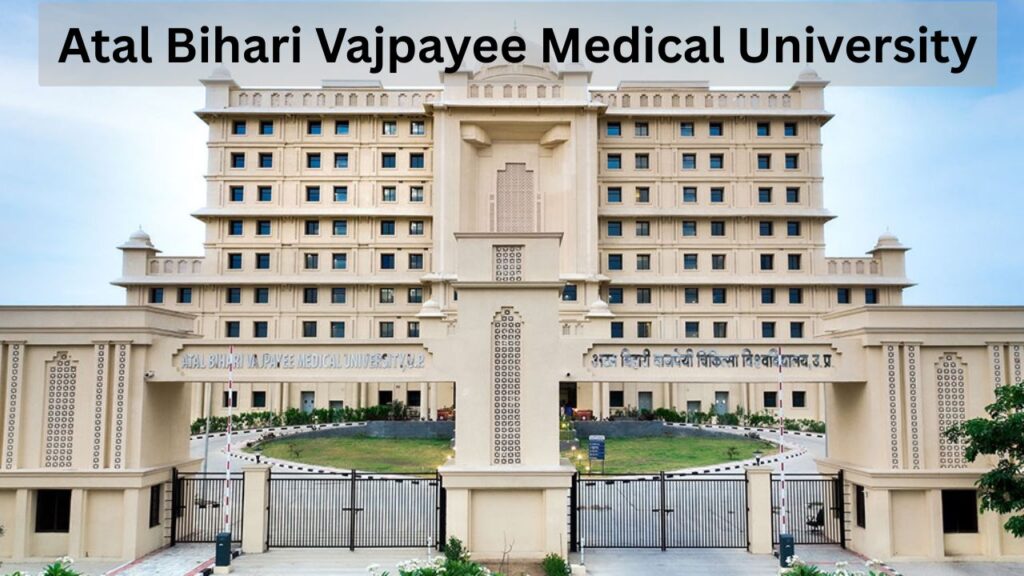
 Nursing students engaged in a group discussion at Atal Bihari Vajpayee Medical University.

Atal Bihari Vajpayee Medical University: This is a government institute for medical courses, with nursing as one of them. Students pursuing nursing courses from this college can get opportunities with top packages and a stable life. Students must appear in the CNET exam for admission. Total fee of Rs. 1.25 lakhs for the graduate program in nursing. Placement in government hospitals and research institutes is possible from this college. 

SR Group of Institutions
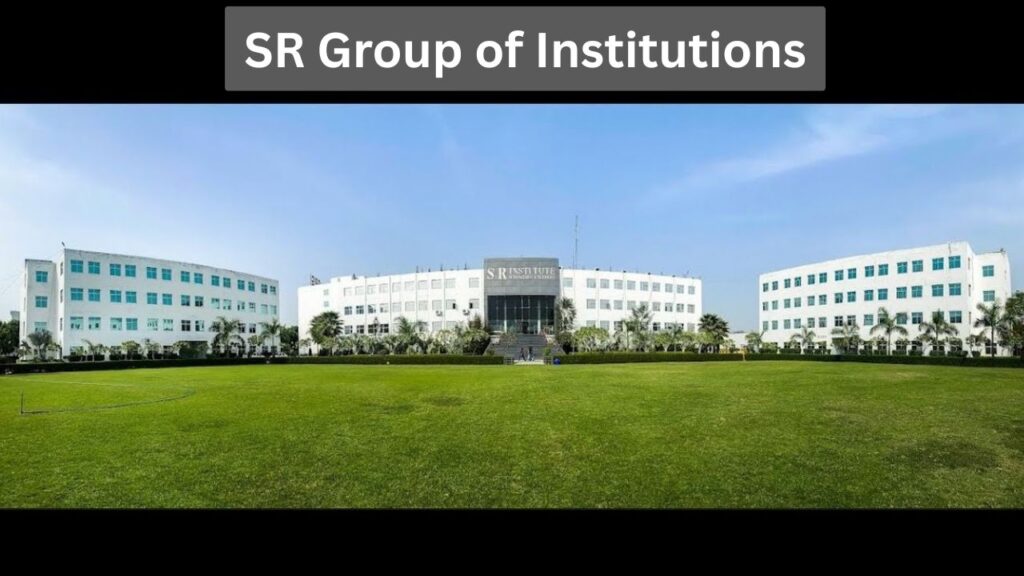
SR Group nursing students practicing patient care in a skills lab.

SR Group of Institutions: This is the best private institution for nursing courses as it offers practical training and a modern lab which helps students to engage with their work practically so they can gain skills and improve themselves to work more confidently and perfectly. The nursing course fee is around Rs. 58,000. Students get various opportunities after completing the course due to the institute’s support in placement. 

Integral University
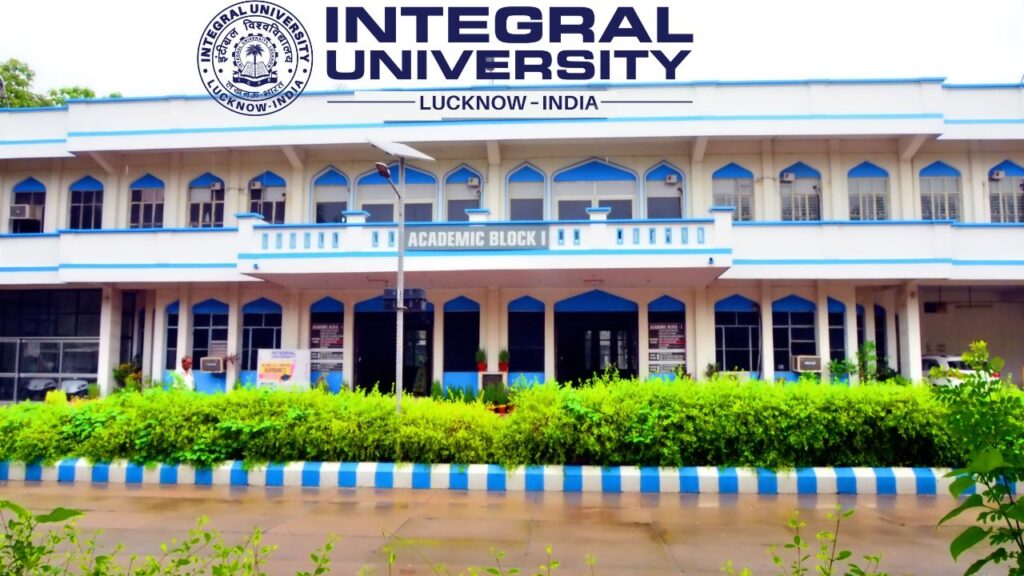
Integral University, Lucknow

Integral University has a strong faculty and is best for providing educational quality but it can be costly for most students. B.Sc Nursing fee is around Rs. 1.45 lakh for a year. Total sum up of 5.6 lakh for the 4-year course which can be expensive. So, if you can afford it then you can take admission by applying online on the official website. 

Bora Institute of Allied Health Sciences

This institution offers various courses and nursing is one of them. Total fee for B.Sc Nursing is approximately Rs. 4.50 lakh. BIAHS is a world-class institute that conducts admissions through CNET. Be sure to score well on the entrance exam for admission. 

Read More 👉 Medical vs Engineering: Which Career Will Make You More Successful in 2025

Career Opportunities With Nursing Course

Nursing courses from these colleges offer a lot of opportunities in private and government hospitals, health centers, and research labs. Nurses are in high demand in India because of their skills and work ethic. Graduating from a top college can secure a high package in the best organizations. You can also go abroad for higher studies and work there in healthcare.

Why Choose Lucknow for Nursing?

These top institutions in Lucknow are not just best in faculty and their campus but for educational qualification and training. Nurses trained from these colleges are best in their work because the high-quality practical exposure and understanding of their purpose to care for people is their motive from the beginning of their course. Ethics ensures that students are not just skilled professionals but compassionate caregivers, this is about more than medicine.

Types of Nursing Courses

Degree Courses

  • B.Sc Nursing is a graduation degree for students who want both theoretical and practical training in their studies.
  • Post Basic B.Sc Nursing is the best option for those who have completed their diploma and want to have a UG degree to upgrade their education qualifications.
  • M.Sc Nursing is a postgraduate program for those students who have completed their graduation and aim for leadership roles.
Course NameDurationEligibilityTypical FeesCareer Outcome
B.Sc Nursing4 years10+2 (Science: PCB & English), 45-50% marks₹20,000–₹2.5 lakh/yrRegistered Nurse, Staff Nurse
Post Basic B.Sc Nursing2 yearsGNM + Registered Nurse License₹40,000–₹1.75 lakh/yrSenior Nurse, Supervisor
M.Sc Nursing2 yearsB.Sc Nursing/Post Basic B.Sc Nursing₹50,000–₹2 lakh/yrNurse Educator, Manager

Diploma Courses

  • GNM is a diploma course for those who can’t afford degree programs; a diploma in nursing is also valuable. Many students start working after graduation and continue their studies for better positions.
  • ANM is best for those who are compassionate about maternal and child health care. Mostly demanding of community health workers.
Course NameDurationEligibilityTypical FeesCareer Outcome
GNM (General Nursing & Midwifery)3 years + 6 months internship10+2 (Any stream, 40-45% marks)₹10,000–₹5 lakh totalStaff Nurse, Clinical Nurse
ANM (Auxiliary Nurse Midwifery)2 years10+2 (Any stream, 40-45% marks)₹15,000–₹80,000/yrCommunity Health Worker

Certificate Courses

These are the short-term courses for those who aim to enter nursing but can’t afford expensive degrees and have a long time for their studies. These are the best options but jobs are mostly offered for maternal care and home care.

Course NameDurationEligibilityTypical FeesCareer Outcome
Certificate in Maternal and Child Health Nursing6 months–1 year10+2 or Nursing Diploma₹3,000–₹35,000Maternal/Child Health Aide
Certificate in Home-based Health Care6 months10+2 or Nursing Diploma₹3,000–₹35,000Home Care Nurse

Conclusion 

Nursing is about caring for patients at their most vulnerable state. With the help of these courses, you can enhance your skills to provide care in hospitals, health centers, and NGOs. Make sure to choose the right college for professional skills and practical training. These Best Nursing Colleges in Lucknow can offer you practical exposure, ethical foundation, and a culture of compassion to grow your career. Strong mentorship and support are the most encouraging parts. Graduates have placement options in India and abroad are high.


Leave a Comment

Your email address will not be published. Required fields are marked *

Best Government Jobs for Women in India – Secure, Respected & High Paying Careers!

Best Government Jobs for Women

There are plenty of Best Government Jobs for Women in India which offer high salaries, job security, and a reputed career. If you want to work in a disciplined environment without relocation, you can choose a government job. In India, women have the leverage to get promoted and reserve vacancies in the women’s seats but you must clear out the examination. 

Whether you are a young graduate or a married woman returning to work, both can apply for these government jobs. You can serve the nation with pride and also relief from future headaches after retirement. Explore these roles and select your path that aligns with your interests and qualifications.

There are several posts in teaching such as PGT, TGT, and PRT. The school time for teachers is 6 to 7 hours which is usually less than any corporate job. One of the benefits is holidays during summer and winter vacations. Most of the women in India prefer to become teachers because it’s not that hard, also getting promotions to vice principal or principal.

Teaching jobs are the most reliable jobs for women who love teaching and are B.Ed qualified. Also, women can easily handle this job with their children’s responsibilities. It is the best option to ensure stable career growth and job security. In the government sector, teachers also get high salaries.

Posts: 

  1. PRT (Primary Teacher)
  2. TGT (Trained Graduate Teacher)
  3. PGT (Post Graduate Teacher)

Why It’s a Good Fit For Women:

  • Working hours are less, usually for 6-7 hours a day. That’s a huge benefit for the women to handle both work and family.  
  • Vacation holidays are one of the perks. 
  • You don’t have to relocate for the job. You can teach in small-town schools.
  • Generally, the school staff has women in more numbers than men. So, it is safe for women to work there.
Government Teacher Jobs

Graduates with a commerce stream can choose their career in banking. If you are interested in finance, accounting, account management, and many other posts that can give you a chance to get a high-salary. 

Post: 

  1. Probationary Officer (PO)
  2. Clerk
  3. Assistant (RBI, NABARD)

Why It’s a Good Fit for Women:

  • Banking jobs are usually for 8 to 9 hours but it has weekends off, especially for clerk roles. It fits for the woman who wants a career in banking.
  • There is no need to stress out about the relocation of the job.
  • Government banks offer high-paying jobs and allowances. 
  • It also provides maternity leaves so it is good for women to establish both career and personal life.

Growth Path:

The promotion happens internally so you can grow professionally from clerk to manager or from PO to General Manager.

Read More 👉 Top Highest Paying Government Jobs in India That Pay Like Private Sector!

Posts:

  1. Indian Administrative Service (IAS)
  2. Indian Foreign Service (IFS)
  3. Indian Revenue Service (IRS)

Why It’s a Good Fit for Women:

  • If you have skills that fit this role such as decision-making and logical thinking.
  • It provides authority, Power, and Policy-making.
  • Women officers who are successful in this role already inspire others.
  • It provides authority, Power, and Policy-making.
  • Women officers who are successful in this role already inspire others.

Reality Check:

IPS is a highly respectable and high-paying job but includes field duties, which may be difficult to cooperate sometimes with women due to family responsibilities.

Best For:

Women who are ambitious to serve the nation with pride and take leadership roles. So, if you are willing to serve your life for this life, you can take the job by preparing well for competitive examinations and fitness.

Also Read: Government Job vs Private Job: Which Career Offers a Better Future in 2025?

Popular posts:

  1. Assistant Audit Officer
  2. Income Tax officer
  3. Statistical Investigator
  4. Assistant Section Officer
  5. Assistant Audit Officer (AAO)

Why It’s a Good Fit for Women:

  • If you don’t want to work in the field and prefer a desk job then it is a fit role for you. 
  • Most of the posts are desk jobs.
  • All-India postings but women often get local postings.
  • The additional benefits are very attractive.

Growth Path:

There is a chance for professional growth internally in the secretary position.

Best for:

If you want a well-stabilized career with a high-paying government job in regular office hours, you can select this sector after graduating from any stream.

Posts:

  1. Anganwadi Supervisor
  2. Lower Division Clerk
  3. Village Development Officer
  4. State PSC Officers

Why It’s a Good Fit for Women

  • Women’s postings mostly happen in their hometown.
  • So there is no need to struggle with understanding a new language.
  • The selection process is not that hard as compared to UPSC or SSC.
  • Fixed working hours and a safe environment.

Best for: 

Those who want to work in their hometown without leaving their family. Women can be selected for this role because the selection process is not hard.

Posts:

  1. Assistant Manager
  2. Engineers
  3. Administrative Officers

Why Are PSUs Good for Women?

  • The salary for these roles is higher with other benefits.
  • Other benefits like medical coverage, flexible leave, and a good environment.
  • Fixed hour making is more comfortable for women.
  • Women with children can manage their working lives with these jobs.

Best For:

Those who have a background in science or commerce. Some roles require engineering graduates and other roles looking for MBA graduates. These desk jobs are reliable and comfortable for women but they must have a required qualification to apply.

Posts:

  1. Assistant Loco Pilot
  2. Station Master
  3. Junior Engineer
  4. Ticket Collector/Examiner
  5. Goods Guard
  6. Travelling Ticket Examiner (TT/TTE)

Why Are Clerk, JE, and Station Master Good for Women?

  • These jobs are non-field and safe for women, typists and office assistants are less hectic than any corporate job.
  • Women often get posted in their hometowns or local urban areas.
  • Additional benefits in government jobs are impressive such as medical insurance, travel allowance, and education for children. 

Cons:

There are technical or station-based roles that involve shift timings that might get hard for women. Most women get manageable locations so they can manage.

Best For:

Women who have a background in arts and commerce can also be considered to apply for Railway jobs. If they want to apply in technical roles then they must have an engineer’s degree.

Posts:

  1. SSC Officer in Logistics
  2. Education Officer
  3. Administrator

Why Do These Roles Fit for Women?

  • These roles offer good pay, respect in society, and discipline.
  • Women have to serve 10 to 15 years on a service commission and get retirement benefits.
  • Selection in NDA can happen based on merit.
  • Who want to establish their life in adventure and challenges, it is perfect for young women who want to take short but impactful experiences.

Reservation for female candidates in PSUs is 30-35%. This advantage can draw women to choose their career in the government sector where they get special allowances including maternity leave, additional leaves, and travel allowance.

Women often get promoted by preferences for relocation due to their family responsibilities. Senior community of women are supportive of fellow women and they receive high cooperation which makes their life easier and financially stable.

  • If you want desk jobs then go for the PSUs and SSC because they often offer jobs like these to women. 
  • Physically fit women can prefer jobs in defense and UPSC civil service because they require physical fitness and capabilities.
  • If you prefer rotational shifts or technical roles in railway as it is a high-paying job then you can choose this path.
  • There are higher numbers of women who prefer teaching jobs due to their holiday benefits and fewer hours of working. You can choose to be a teacher in any location so there’s no need to relocate and you can easily spend time with families.

The concern about finding a high-paying job ends up stressing out and makes you agitated with your career. If you want to build a career that provides a balanced work life, and mental peace, and allows you to spend time with family, consider government jobs. Whether you are a young woman or married and returning to work, government jobs offer stability, job security and other perks. Find the Best Government Jobs for Women in India and select a career path that aligns with your personality and priorities. 

Leave a Comment

Your email address will not be published. Required fields are marked *

Time Management Tips for Students and Government Job Aspirants

Time Management Tips

The reality is that most people don’t have a problem with time. They have a problem with managing time. The Time Management Tips for students and government job aspirants is important. For instance, two students may have identical 24 hours, the same syllabus, and the same exam date — yet end up in completely different places on result day. It’s because almost always how they spend their hours. 

This guide analyses the time management principle that really applies for us Indians — students in school & college, competitive exam aspirants for SSC, RRB, UPSC, banking and state-level, entrance exam students aiming for IIT, NEET, or law entrances, and working professionals attempting to study after holding a full day at the office. The circumstances may vary, but the fundamental discipline is one and the same. 

Why Time Management Tips Actually Matters 

It’s not that they don’t know “time management is important,” it’s just that no one actually has time to do it, not that they need it any more than the rest of us do. For exam candidates in particular, bad time management means not only less revision. It has three very real and very specific costs. 

First, it makes your syllabus look bloated. A topic that should take roughly three weeks gets stretched out over two months, not because it’s difficult, but because you’re learning in fragmented, distracted sessions rather than in concentrated blocks. 

Second, it kills your mock test performance. Candidates who are poor at managing their prep time tend to be procrastinators and pick up the easy topics first and push the difficult topics towards the end, so that by the time mocks begin, half the syllabus feels like a stranger under exam pressure. 

Third, and this is the one no one talks about nearly enough, it destroys your confidence. When you’re always feeling “behind,” you begin to question your own competence, even though the real problem was never intelligence — it was planning. 

Effective time management is not a matter of finding more hours in the day. It’s realizing that you actually already have the time, you just need to make it work. 

Time Management Tips for Students

Students who are balancing regular academics, tuition and assignments along with personal life also need a system which is practical and not a strict timetable copied from a top scorer’s Instagram post. 

Start with a weekly map, not a daily one. Daily to-do lists come crashing down as soon as one thing goes wrong — a pop quiz, a family gathering, feeling too tired. A weekly perspective allows you to reschedule your responsibilities without thinking you are having a bad day. Block out any non-negotiable obligations (class time, work, sleeping) and then plan your study periods around those. 

Use the “two-subject rule” for evenings. Attempting to cover every topic every day tends to result in none of them being covered very well. Choose two topics each night and dive in, cycling through the week. Depth outperforms breadth in terms of real retention. 

Protect your first hour after school. Most students spend the golden hour after school on their phones scrolling “just for ten minutes” which ends up being ninety. That first hour, when the day’s lessons were still fresh, was the best time for revision — not for new topics. 

Treat sleep as part of your study plan, not separate from it. Sleep deprivation to “make more time” is the most common error students make, and it backfires almost every time. Retention falls off a cliff with poor sleep, so those extra two hours often result in less learning than one focused hour on a well-rested brain. 

Time Management Tips for Government Job and Recruitment Exam Preparation

Preparation for government exams — SSC CGL, SSC JE, RRB NTPC, RRB ALP, Agniveer, UPSSSC, banking exams, state PCS has its own trap: it has a huge, fixed syllabus that remains more or less unchanged every year, making it very easy to remain stuck in a “preparation phase” without feeling ever ready. 

Reverse-engineer your timeline from the exam date, not from the syllabus. Most aspirants begin by telling themselves “I’ll finish RC, quant, then GK” without even assessing if that speed is even sustainable till the exam. Count backwards instead: How many weeks are there until the exam, how many subjects do you have to learn, and how many practice tests do you want to do before the D-day. This one change detects date problems three months in advance rather than three weeks before the test. 

Separate “learning time” from “practice time” clearly. Many candidates confuse these two processes — theory reading and question practice in one session and slow themselves down in both. Assign some fixed duration blocks solely for concept learning, and some solely for solving past year papers & mocks in a timed environment. They develop different abilities.

Make a weekly slot for current affairs you gear towards a level, don’t squash it in as a bit of leftover time. For exams like ssc, rrb,state level recruitment exam current affairs/general awareness is often pushed to “whenever i find time to study”,which is usually never. Settle for one or two brief daily sessions instead of waiting for free moments that never come. 

Mock tests deserve a full time slot, not a rushed one. Scheduling simulation the real exam length is as important as doing the questions. Your practice test should honor that 90 minutes of pressure since it should help simulate the real exam (and the review afterward) — not just the solving. 

Time Management Tips for Entrance Exam Aspirants

Entrance exams such as JEE, NEET, CLAT, and CUET operate on a different time scale as compared to the recruitment exams – they meld board exam stress with competitive exam intensity, and that too, in the same academic year. 

Sync your school syllabus and entrance syllabus instead of running two separate tracks. An enormous portion of time is wasted due to students studying the same subject chapter twice — once for boards, and once for the entrance exam in entirely separate sittings. Studying the two simultaneously, at entrance-level depth from day one, is months ahead of the full prep cycle. 

Rotate subjects daily instead of exam-cramming one at a time. These exams cover more than one subject at a time, so you have to keep your mind warmed up in all of them and not just be sharp on one subject and rusty on the others. A steady rotation — even if uneven in the number of hours per subject, keeps all the subjects “alive” in your mind. 

Track mistakes, not just completed chapters. Sorting out what you have achieved in the syllabus feels productive, but it doesn’t tell you information about what is actually going wrong. Keep a list of mistakes you make again and again when doing practice questions — that list is your revision material that will be the most efficient in the last month. 

Read More 👉 Data Science vs AI: Which Career Is Better?  

Time Management Tips for Working Professionals Preparing Alongside a Job

This may be the most difficult version of the problem since the constraint is not motivation — it’s literally hours in the day. Working professional-level test such as a government exam or a career-switch entrance exam does not have the luxury of a 8-hour study day. 

Accept the 90-minute reality and plan around it. The majority of working people truly have only about 60 to 120 minutes of concentrated work time in a day, divided between early morning and late evening. Struggling against this reality by aiming for 5 hours a day is just setting yourself up for failure and guilt. Schedule for the attainable during a weekday, and save the heavy-duty work for weekends — full-length mocks, madly difficult topics, revision marathons. 

Use commute and break time for low-effort, high-repetition tasks. Formulas, vocabulary, current affairs and short revision notes can easily be crammed into a commute or a lunch break. Save your truly fresh, high-powered hours — typically in the morning for the subjects that actually demand thinking of the deep kind. 

Don’t try to “catch up” by sacrificing entire weekends repeatedly. Burnout for working professionals generally results from this very pattern: lean weekdays, and then trying to fit a week’s worth of goals into Saturday and Sunday. It lasts for a couple of weeks, then crumbles. A sustainable pace beats a heroic one that quits come month three.  

Tell your workplace and family what you’re doing, even loosely. Candidates who do not share details of their preparation for the exam generally end up with more distractions during their study sessions as no one with whom they dwell or live is aware that those hours are sacrosanct. A modest notice - “I study from 6 to 7:30 every day” – cuts interruptions more effectively than any planner or app could. 

The One Habit That Ties All of This Together

Across students, government exam aspirants, entrance candidates, and working professionals, the single most useful habit is the same: reviewing the week, not just planning it. Most people plan on Sunday and then never look back until the next Sunday. Spending fifteen minutes reviewing what actually got done versus what was planned and being honest about why the gap happened is what turns a time management system from a wishlist into something that actually works over months of preparation.

Time management Tips for exams was never really about finding more hours. Every aspirant, regardless of which exam they’re preparing for, is working for the same 24 hours as everyone else. What separates a good result from a missed one is usually not effort — it’s whether those hours were spent on the right things, at the right time, consistently enough to matter.

Conclusion

Time management tips for students and government job aspirants is important for sustaining consistency in preparation for SSC, UPSC, RRB, banking, work, or JEE, NEET exams. Begin with attainable goals in mind, focus on the most important things, check in on your progress each week, and then rest appropriately. Little bit of betterment you make up every day adds together over months of training. 

Leave a Comment

Your email address will not be published. Required fields are marked *

MPSC Exam Calendar 2025: All Key Dates & Details

MPSC Exam Calendar 2025

Maharashtra Public Service Commission is an organization to proceed recruitment for various posts through competitive exams. News The MHRD has released details regarding the examination dates, pattern, eligibility, fees and selection process. The schedule incorporates also approved modifications and updates to the latest developments. This is the most important tool for aspirants who are going for MPSC exams to prepare and aware about updates. 

Major MPSC Exams Calendar For Early Preparations

MPSC Rajyaseva Exam

Notification Release18th/March/2025
Application 28/March—17/April/2025
Prelims Exam Date9th/November/2025
Vacancies385 
Posts State Civil Services, Forest Services, Civil Engineering Services
Mains Exam29th/March—26th/April/2026
ResultJuly/2026

MPSC Group B Combined Services Exam

Notification Release29/July/2025
Application 1—21/August/2025
Prelims Exam Date21st/December/2025
Vacancies282
Mains Exam17th/May/2026

MPSC Group C Combined Services Exam

Notification ReleaseLast of the 2024
Prelims Exam Date1/June/2025
ResultOctober/2025
Mains Exam29/June/2025

Other Major MPSC Exams

Forest Service Main 5—9/May/2026
Civil & Agricultural Main Exam 202516th/May/2026
Group C Combined Prelims4th/January/2026
Group C Combined Main 7/June/2026

Eligibility For MPSC Exams

The educational standard is usually graduation for most of the examinations. 

The age limit is 18 to 38 years as general, but may change for post to post and reserved category. For more details on age relaxation, criteria, please refer to the official notification. 

Read More :- SSC Exam Calendar 2025-26: Check Full Schedule, Upcoming Exam Dates and Notifications

Selection Process

The process of MPSC exams is 3 tiered for all major exams.

Prelims: Objective/MCQs papers, on qualifying basis Rajyaseva, 2 papers (GS & Aptitude/Language), Group B & C as per notification.

Mains: Several papers of different subjects, including a language paper, a general studies paper and papers on the candidate’s discipline. Marks obtained here are useful for final merit.

Interview and Document Verification: After qualifying in Mains, candidates are called for Interview and Document Verification. 

Guide to Download Calendar MPSC Exam Calendar 2025

  1. Check on the official website of MPSC.
  2. Search for MPSC Exam Calendar 2025 as it holds a link for the pdf.
  3. Every year exam calendar is available, you can download by clicking it, the pdf will download automatically.
  4. Keep it safe to be prepared early for the competitive exams.

Recommendations to Keep Updated for The MPSC Exams

Refer to the official website and download the pdf of the entire exam schedule and notification for more information.

Prepare as per syllabus: Prelims: General studies, aptitude. Mains are subject specific (history, polity, geography, HRD, economy) etc.

Keep track of result & admit card dates: Dates are susceptible to change due to unforeseen circumstances like floods, administrative rescheduling.

Vacancies: High number of posts particularly for Rajyaseva and Group B and C, leads to tough competition. 

Leave a Comment

Your email address will not be published. Required fields are marked *

RBI Grade B Admit Card 2025 – Direct Download Link, Exam Date & Instructions

RBI Grade B Admit Card 2025

RBI Grade B Admit Card 2023: Download Link Out – Candidates can start their exam preparation after the release date of RBI Grade B Admit card on the official website. Candidates can get the direct link to download the admit card and take a printout of it as it contains valid information of the candidate. There are 120 posts in total for Grade B and the exam will take place on 18th and 19th October 2025. 

Candidates can get the examination hall details in the admit card. Take your admit card along with you to the examination hall. It contained your name, roll number, and centre name etc., various positions are offered in this recruitment.  

Highlights & Important Dates of RBI Grade B Admit Card 2025

DetailInformation
OrganisationReserve Bank of India (RBI)
Post NameOfficer Grade B (General, DEPR, DSIM)
Total Vacancies120
Admit Card Release Date12th October 2025
Phase 1 Exam Date (General)18th October 2025
Phase 1 Exam Date (DEPR/DSIM)19th October 2025
Login Credentials NeededRegistration Number & Password/Date of Birth
Official WebsiteClick Here

Eligibility Criteria for RBI Grade B

Minimum Age21 years 
Maximum Age30 years 
Educational QualificationGraduation/Post-Graduation as per post requirements
Age RelaxationSC/ST: 5 years, OBC: 3 years, PwBD: up to 15 years

Read More 👉 SLPRB Final Result 2025 Declared – Download Constable & SI Merit List

Steps to Download RBI Grade B Admit Card 2025:

  1. Visit the RBI Official website www.rbi.org.in or click on the direct link for admit card.
  2. Go to ”Opportunities@RBI” or career opportunities.
  3. Download the Relevant MERIT, CUT OFF, and ANSWER KEY for the above said result/scheme from the link given below for may RBI Grade B Phase 1 Admit Card 2025.
  4. Type in registration number/roll number and password/date of birth.
  5. Verify Captcha, and Submit.
  6. Download the call letter in PDF form and print it out. 

Remember these points:

  • Arrive at the exam center much before the reporting time. 
  • Bring the printed admit card and an ID proof. 
  • Read all the rules and regulations given on the Hall Ticket and prescribed by the Exam Authorities. 
  • Use of mobile phones, calculators or any other electronic gadgets is not allowed in the examination hall.” 

Leave a Comment

Your email address will not be published. Required fields are marked *

SSC CGL Exam Date & Admit Card 2025 Out Soon – Don’t Miss These Key Updates!

SSC CGL Exam Date & Admit Card 2025

The exam dates for SSC CGL are officially announced and SSC CGl Admit Card will be released soon. The candidate’s details include name, date of birth, exam center, roll number, and exam name is listed in the SSC CGL Admit Card. students can check the official website once SSC CGL Exam Date & Admit Card 2025 out. 

The tier 1 exam will be held from 12th September to 26th September 2025 to fill out the vacancies of about 14,582 candidates for Group B and Group C positions.

The admit card is important to take for the examination hall as it mentions the date and shift of the exam along with other necessary details.

Read More 👉 Meet the Best History Teacher for Competitive Exams Who Can Boost Your Score

Short Info about SSC CGL Exams

Conducting ByStaff Selection Commission
Exam NameSSC CGL 2025
Tier 1 Exam Date12–26 September 2025
Vacancies14,582
Admit Card Release3–4 days before the exam
PostGroup B & C jobs in central government ministries & departments
Important Dates
Application Date09 June — 04 July 2025
Correction Date09–10 July, 2025
Admit Card Date3-4 days before exam
Exam Dates12 September to 26 September 2025
Result DateUpdate Later

Also Read: Meet the Best GS Teacher for SSC CGL Who Can Skyrocket Your Scores

Follow the Instructions for SSC CGL Tier 1 Admit Card

  • Click on the link to the official website of SSC.
  • The official website will open in your browser, navigate to the admit card link.
  • After clicking on the Admit card link, you must provide details such as registration number and DOB.
  • Click on submit and download it for making a copy.
  • Use it to enter the examination hall along with your ID.
Important Links
Exam CityClick Here
Download Admit CardUpdate Soon
Download Exam Date noticeClick Here
Official WebsiteClick Here

Leave a Comment

Your email address will not be published. Required fields are marked *

Scroll to Top