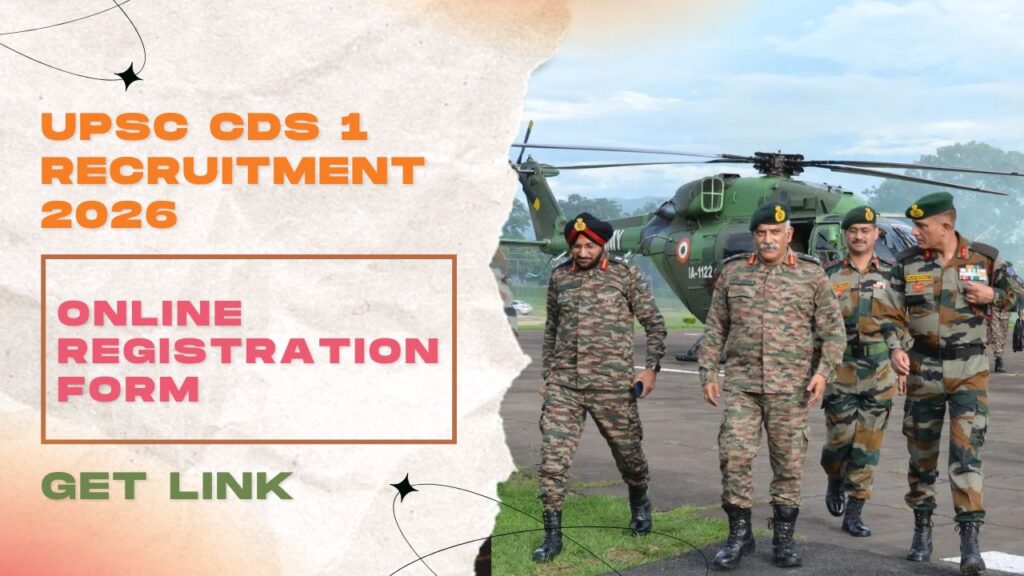
The Union Public Service Commission (UPSC) has notified the Combined Defence Services (CDS) Examination 1 for the year 2026. This recruitment is for a number of academies that are the Indian Military Academy (IMA), Indian Naval Academy, Air Force Academy and Officer Training Academy and the number of vacancies is 450+.
The application form filling process will start from 10th/December/2025 and the last date to apply for the UPSC CDS 1 2025 will be 30th/December/2025. Interested and Eligible candidates are advised to read the official notification before apply online for understand the eligibility, Application Fee, Age Limit, Salary, Selection Process before applying for it.
Candidates need to visit the UPSC official website for detailed information and application. Before the time ends, you need to make sure that each one of the necessary information is filled accurately.
Follow These Dates To Apply
Application Start
10/December/2025
Last Date For Application
30/December/2025
Fee Payment last date
30/December/2025
Correction Date
Update Soon
Admit Card Date
Update Later
Exam Date
12/April/2026
UPSC CDS 1 Age Limit & Application Fee
Category
Age Limit
Posts Expected
IMA & INA
19 — 24 years
450+
Air Force
20 —- 24 years
OTA
19 —- 25 years
Gen/ OBC/ EWS
₹200
SC/ ST
0
UPSC CDS 1 Vacancy & Educational Qualification
The courtesy details of UPSC CDS 1 Eligibility 2025 are mentioned below:
Indian Military Academy (IMA): The candidate will have to hold a Bachelor’s Degree in any discipline/stream from any recognized University/Institution in India.
Indian Naval Academy: The candidate must hold a Bachelor’s Degree in Engineering or equivalent from a recognized university/institute in India.
Air Force Academy: Candidate should have passed 10+2 with Physics and Mathematics in any stream from a recognized board or have a Bachelor of Engineering/Bachelor of Technology or similar qualification from recognized university.
Officer Training Academy: The Candidate must have a Bachelor’s degree in any Discipline/stream from any recognized university or Institution in India.
For more and latest updates you can go through the official UPSC CDS 1 Recruitment 2025 Exam Notification.
The candidate can earn up to Rs 1,77,500 per month with allowances as per government norms. The starting salary can be less with Rs 56,100 for entry level candidates.
Guide to Apply UPSC CDS 1 Online
How to Apply for UPSC CDS 1 Recruitment 2025: Apply Online through the official website of UPSC.
1. Know Details from UPSC CDS 1 Notification 2025 PDF.
2. Click on the “apply online” link or go to the Official UPSC website: upsc.gov.in.
3. Fill UPSC CDS 1 2025 Online Application Form.
4. Upload all the documents as per the notification.
5. Remit the requisite application fee by one of the modes available.
6. Take a print out of the application form once it is filled for your records.
When you are dreaming about passing the Indian Revenue Service exam, many of them aspire to three letters: IAS. But among the tens of thousands of them, there is a quieter, sharper posse that it looks like the mainstream hasn’t quite tuned into yet – the Indian Revenue Service could well be the best career choice in the entire civil services ecosystem.
What is the Indian Revenue Service?
When most people hear Indian Revenue Service they think of someone sitting with a bunch of papers behind a dusty desk, stamping tax returns. That couldn’t be further from the truth.
The Indian Revenue Service is, at bottom, a law enforcement and policy-making juggernaut. It is also the financial backbone of India — the body that raises the funds that pay for hospitals, highways, schools, and defence. The service was formed in its current style in 1953 and is divided into two significant arms, the IRS (Income Tax) and the IRS (Customs and Indirect Taxes).
Nearly 9,775 officers, the two branches of the chargeable revenue service are testament to a cadre that pervades nearly every facet of the Indian economy.
Eligibility
Applicants must be Indian citizens or belong to certain categories of Persons of Indian Origin (PIO) to apply for the IRS.
The basic educational qualification is a Bachelor’s degree in any stream from any recognized university by the Government.
UPSC is quite flexible in this regard as it permits the students pursuing the final year of University to appear in the Preliminary examination for the CSE examination on a provisional basis, however, they are required to submit the passing certificates before joining the Mains exam.
The age limit is 21 — 30 years, you can check further below.
Applicant Category
Minimum Age
Maximum Age Limit
Permitted Examination Attempts
General
21 Years
32 Years
6 Attempts
Economically Weaker Section (EWS)
21 Years
32 Years
6 Attempts
Other Backward Classes (OBC)
21 Years
35 Years
9 Attempts
Scheduled Castes / Scheduled Tribes (SC/ST)
21 Years
37 Years
Unlimited (up to maximum age limit)
Persons with Benchmark Disability (PwBD – General/EWS)
These are the people who appear and plunder the offices of billionaires at the break of dawn. They follow cryptocurrency tracks across borders. They capture drugs off the shore. They bust shell companies that hide thousands of crores in black money. And yes, they also sit in hearings, argue byzantine tax law before tribunals and help shape the very policies that dictate how India earns its revenue.
This is not a desk job. This is one of the most intellectually challenging, operationally thrilling and financially rewarding career in Indian public service.
Participate & Crack IRS
Hacking the Indian Revenue Service is tough but then, nothing good ever is. The only avenue of entry is through the UPSC Civil Services Examination, which is attempted by about 1.1 million aspirants every year. The exam takes place in three stages, all tough.
The first is the Preliminary exams – a two-paper objective test to weed out the unprepared.
Then there is Mains, nine descriptive papers penned down over a period of a few days, examining one on history and geography, ethics and economics, and so on.
A final interview by a panel of seasoned bureaucrats and scholars.
Mains Examination Paper
Subject Focus and Syllabus Parameters
Maximum Marks
Paper I (Essay)
Multiple topics requiring analytical and philosophical discourse.
250
Paper II (GS I)
Indian History, national Geography and geo of the World and culture.
250
Paper III (GS II)
Law & Constitution, Social Science, and International Affairs.
250
Paper IV (GS III)
Tech, hacking, Economic Development, Bio-diversity, and crisis management.
250
Paper V (GS IV)
Ethics, Integrity, and Aptitude (Case studies on administrative morality).
250
Paper VI (Optional I)
Subject chosen by the candidate from a predefined list of 48 disciplines.
250
Paper VII (Optional II)
Second paper of the chosen Optional Subject.
250
Top Recommendations for Exam Preparation
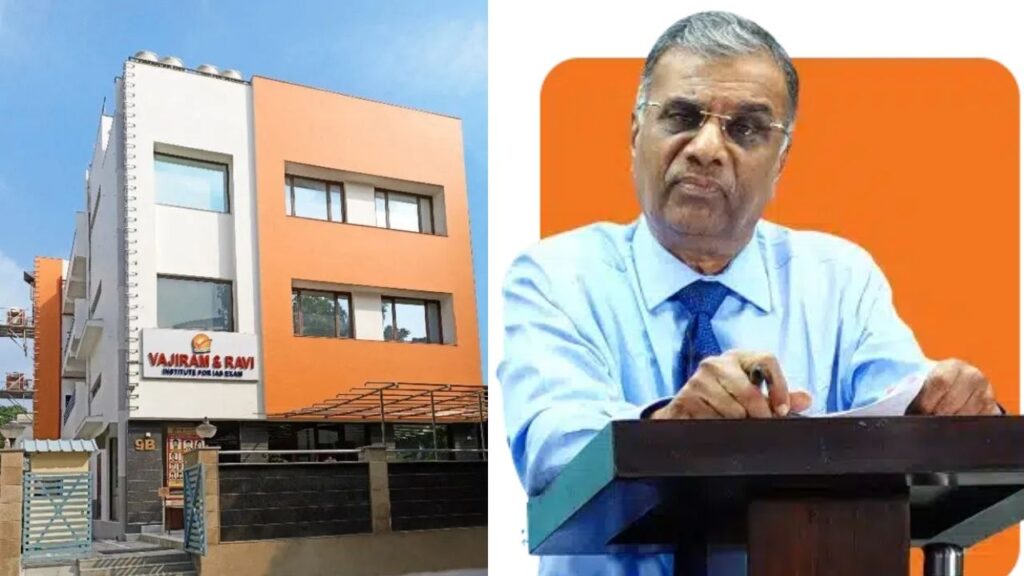
The whole process, beginning to end, can take years of preparation. Most of the toppers are second-time IAS aspirants and they spend 2-4 years mugging up the NCERT textbooks, M Laxmikanth Indian Polity, Ramesh Singh Indian Economy and reading daily newspapers like The Hindu. They write answers daily in practice. Join offline coachings or attend world-class online platforms such as Vision IAS or Vajiram & Ravi from wherever they live.
Cutoff Marks Needed for Selection
A candidate from general category is usually required to rank between 239-379 to get IRS (Income Tax). For IRS (Customs and Indirect Taxes), the range is a little wider — something like 265 to 497. They are excellent ranks, well within the top 0.5% of all candidates. But unlike the IAS cut-off which is near impossible, the IRS is a realistic and achievable target for those who seriously prepare.
Service
General Category (Last Rank)
OBC Category (Last Rank)
SC Category (Last Rank)
ST Category (Last Rank)
IAS (2024 Trends)
78 —- 96
435 —- 457
567—- 629
528 —- 625
IPS (2024 Trends)
225 — 252
480 —-656
638 — 865
645 — 867
IRS (Income Tax)
239 — 379
485 — 706
602 — 969
674 — 1032
IRS (Customs & IT)
265 —- 497
515 — 823
649 — 970
680 —- 1053
The “big three” services—consisting of the Indian Administrative Service (IAS), the Indian Foreign Service (IFS) and the Indian Police Service (IPS)—are in the topmost Tier 1 class. These services traditionally take the bulk of the top 150 candidates. The IAS is the undisputed king of the civil services, with unparalleled executive powers, while the IFS has the glamour of global diplomatic representation, and the IPS has the unmatched power of the uniform.
The Indian Revenue Service holds the very prestigious Tier 2 bracket and is known for its unbeatable power in financial affairs along with a good urban living. With a bigger cadre size and distinct preference pattern giving priority to metro stability rather than rural administration, the IRS (IT) and IRS (C&IT) take a large chunk of the successful candidates which are ranked between 240 and 650 in the general category.
What Happens After the IRS Exam?
IRS (Income Tax) officers are on their way to Nagpur’s National Academy of Direct Taxes (NADT) — a sprawling green-fitted campus, where a 16-month professional course converts the generalist officers into financial experts. The content is demanding: income tax law, corporate accounting, forensic investigation, international taxation, transfer pricing. It’s not just classroom theory, either. Officers labor months in the trenches, conducting real assessments and audits with seasoned veterans.
IRS (Customs and Indirect Taxes) officers are trained at the brand new NACIN campus in Palasamudram, Andhra Pradesh — a breathtaking 500-acre establishment which also serves as a World Customs Organization regional training centre for the Asia-Pacific region. The syllabus here includes GST, customs law, border management, narcotics control and contemporary areas such as data analytics and artificial intelligence.
Holistic development is taken seriously in both academies. Morning physical training, evening cultural programmes and personal hobbies. The objective is to produce officers who are not just technically competent but mentally tough, well rounded human beings who can manage in high-pressure environments without losing their cool.
The pay of IRS officers is very good and is governed by the 7th central pay commission (CPC). Financial estimates for the 8th CPC, as the pay commission is next in line, indicate a possible 2.25 multiplier to the basic pay, which would again make being in the service financially attractive. Officers join the service at Pay Level 10 ( Junior Time Scale ) and can rise in 30 years of service through the ranks to the Apex Scale at Pay Level 17.
The following outlines the elaborate and comprehensive financial and hierarchical system:
IRS Designation
Pay Level
Basic Pay (7th CPC)
Estimated Gross Monthly Salary
Career Timeline (Approx.)
Assistant Commissioner
Level 10
Rs 56100
Rs 85000
0 – 4 Years
Deputy Commissioner
Level 11
Rs 67700
Rs 100,000
5 – 8 Years
Joint Commissioner
Level 12
Rs 78800
Rs 1,25,000
9 – 12 Years
Additional Commissioner
Level 13
Rs 118500
Rs 1,60,000
13 – 16 Years
Commissioner
Level 14
Rs 1,44,200
Rs 2,00,000
17 – 20 Years
Principal Commissioner
Level 15
Rs 1,82,200
Rs 2,40,000
20+ Years
Chief Commissioner
Level 16
Rs 2,05,400
Rs 2,80,000
25+ Years
Principal Chief Commissioner
Level 17 (Apex)
Rs 2,25,000
Rs 3,20,000
Apex Career Stage
In cases where government accommodation is either not available or refused within the government-officer circle, the officers are paid a handsome House Rent Allowance (HRA) of 8% to 24% of their basic pay based on the tier categorization of the city in which they are posted.
Conclusion
Indian Revenue Service is not just a career option but a vocation for those who want to make a real difference and are willing to work in the shadows and not in the spotlight. It is a combination of power and responsibility, brain and brawn, permanence and challenge. IRS officers at the national and state level are, quite literally, the core of India’s power but theirs is an unobtrusive, unshowy, and often unacknowledged influence.
In a culture where the IAS, IPS and IFS reign supreme in public imagination, the IRS gets overlooked not because it does not hold enough power or prestige or purpose but because it doesn’t shout about it. And yet, for those with the time to can see its nuances, it provides one of the most rounded existences in Indian public service — professional esteem, financial security, urban postings, intellectual stimulation, and tangible national outcomes.
GovUpdatewala is your trusted source for real-time updates on government exams and jobs in India. We provide verified info on SSC, UPSC, Banking, Railways, Defense, and Teaching exams. From syllabus and patterns to important dates and career tips — we support aspirants at every step.
If you’re recently completed your graduation you can appear in these top 10 list of exams conducted by UPSC after graduation. UPSC is responsible for recruitment in various government positions all over India. To secure a stable future and a good income salary, you can apply for the government job by cracking the exam.
This is the most popular exam of UPSC. A lot of candidates start preparing for this exam after high school because it is the toughest exam all over the world. Candidates are highly passionate to attempt the exam. The IAS and IPS positions are highly respected and consist of policymaking, welfare, public security, and administration.
Category: Group A Eligibility: Any Graduation pass candidate with any recognised board. Age Limit: It is based on the category of the candidates – General category: 21 to 32 years, OBC: max 32 years, SC/ST: max 37 years Exam Stages: Prelims, Mains, and Interview
2. Indian Forest Service Examination (IFS)
The duty of IFS officers is the protection and conservation of forest around the region. Candidates who are interested in wildlife or have a wish to protect forests for the conservation of forest can choose this field as their career. It provides stability and their interest in work but working hard to clear this exam is mandatory.
Purpose: Recruitment for Forest Service Officers Eligibility: Graduation in Science or Engineering streams. Age Limit: 21 to 32 years Exam Stages: Prelims (with CSE), Mains, and Interview
3. Combined Defence Services Examination (CDS)
Building a career in defense you need to be physically healthy and have good stamina. If you’re fine and playing sports, this career will be your best choice to secure a permanent job. It is conducted twice a year and offers permanent commission in the armed forces.
Purpose: For joining the Indian Army, Navy, and Air Force Eligibility: It depends on the job position, For Army sector (Any Stream). For Air Force, (B.E/B.Tech) is mandatory Age Limit: 19 to 25 years Exam Stages: Written Exam and SSB Interview
4. Central Armed Police Forces (CAPF) Examination
Those who want to serve in Forces such as CRPF, BSF, CISF, and ITBP can take this exam and join. It’s also required for your fitness test and medical test so your body must be fit and fine to join these forces.
Purpose: Recruitment of Assistant Commandants Category: Group A Eligibility: Any graduate Age Limit: 20 to 25 years Exam Stages: Written, Physical Test, and Interview
5. Engineering Services Examination (ESE/IES)
You have completed engineering and now you wish to join the government sector or having a government job will help you to secure a better future in IES or ISE. IES officers duties in the departments like Railways, CPWD, and Defence. This is one of the most reputed exams for engineering candidates.
Purpose: Recruitment of engineers in government departments Eligibility: B.E./B.Tech in relevant subjects Age Limit: 21 to 30 years Exam Stages: Prelims, Mains, and Interview
6. Indian Economic Service (IES)/Indian Statistical Service (ISS)
After Post Graduation you can apply for this position. The IES and ISS duties require the knowledge of statistical knowledge of analyzing data and representing it in a manner. These officers handle policy-making based on economic data.
Purpose: Recruitment for economics and statistics roles in central services Eligibility: Postgraduate in Economics/Statistics Age Limit: 21 to 30 years Exam Stages: Written Exam and Interview
7. Combined Geo-Scientist Examination
Geo-Scientist examination for the role of geologist and related roles. Candidates who pass graduation with science stream then later continue in higher studies. If they wish to enter in the research-oriented government roles can take this exam be eligible for the job role
Purpose: Recruitment for geologists, hydrogeologists, and related roles Eligibility: Master’s in Geology, Chemistry, Live science Age Limit: 21 to 32 years Exam Stages: Prelims, Mains, and Interview
8. Indian Statistical Service (ISS) Examination
Those who are best in the data analyzing and taking great responsibilities on their accuracy of the analytical work. The field is rare but has a high value of work. The job has a high paying salary so if you’re studying statistics as a subject you must consider this job role as a great future for your future.
Purpose: Recruitment in various statistical departments of the government Eligibility: Bachelor’s with Statistics + Postgrad with same field Age Limit: 21 to 30 years Exam Stages: Written Exam and Interview
9. UPSC EPFO (Enforcement or Accounts Officer)
This is a semi-administrative government job with regular hours. Those who want a stable job and not wishing to join private sectors must consider high paying salary job in government sector. If you are interested in the administration role, you can appear in this examination after graduation with any field.
Purpose: Recruitment in the Employees’ Provident Fund Organisation Eligibility: Any graduate Age Limit: 21 to 30 years Exam Stages: Written Exam and Interview
10. UPSC Combined Medical Services (CMS) Exam
Medical graduates can appear in this examination for securing a government job in medical practices. CMS is the best option for candidates who are interested in the medical field and have graduated with an MBBS degree. They have plenty of options but joining the government sector means ensuring the stability and growth for the career.
Purpose: Recruitment of doctors in various central government organizations Eligibility: MBBS Degree Age Limit: 32 years Exam Stages: Written Exam and Interview
Why Consider UPSC Exams After Graduation?
It is the hardest exam around the globe but has great value for those who clear this exam. Who crack this exam can enter the government sector and have a great life with high salary, bonuses, Job security and respect in society. You are working for the nation eventually and Scope for growth and promotion and also there are Wide range of services and job roles.
Conclusion
Top 10 List of Exams Conducted by UPSC After Graduation in 2025. So, after graduation you can take these exams mentioned in this article, some may require the masters but most of them are eligible for the graduate candidates. However, if you are interested in any of the works or departments you wish to join then take the exams and grab the opportunity to secure your position, stable career and growth. Choose wisely for the career because it depends on the knowledge and eligibility for the exam.
Cracking the UPSC exam isn’t that easy, you need the right strategy to prepare and beat the competition. These Best Online Coaching for UPSC will help you to cover every topic with practice test series that help you pinpoint your weak points and clear every doubt. The syllabus is vast and maintaining consistency is difficult, these online coachings offering both interactive session and recorded session to cover up.
In a rising online education, these coaching are also growing as most of the students prefer to take online classes rather than finding offline coachings. Some of the most talked about online platforms are Drishti IAS, Vision IAS, Physics Wallah, Vajiram & Ravi, Clear IAS, Insight IAS, and Nirnay IAS.
Let’s check their best features and overview details to decide which one is right for you.
Drishti IAS
The Drishti IAS is most popular platform for IAS preparation, ideal for UPSC aspirants from both Hindi and English medium. It offers a structured and motivational teaching style which is helpful during UPSC preparation as it is the hardest exam.
Best Features:
It is best for students who can give 15 to 16 months to this course with 400+ live classes.
Extensive study material can help for learning
Excellent test series to improve regular practice, total of 24 mains and prelims tests available for 3 years.
No language barrier, it is easy for every student.
Vajiran and Ravi
Vajiram and Ravi coaching originated offline and marked a name in the top UPSC coachings and is now available online that delivers the same quality teaching for UPSC aspirants.
Best Features:
Ideal for those who wanted to cover every topic with depth, 1000+ hours of lectures needed plenty of time.
Detail study and notes are also available for quality learning
Consistently maintain its record for producing toppers for years
Cost effective for providing best learning to ensure clarity for every doubt.
Clear IAS is also one of the best online coaching which provides a super 50 program for specifically UPSC preparation. It is well-known for its focus on more personal guidance and small batches. Ideal for aspirants who prefer self-paced learning with doubt clearing sessions at low fees.
Best Features
There are a large number of recorded lectures which can provide detailed learning for UPSC.
700+ hours lectures and 1500+ study material
Test series to maintain daily practice for doubts clarity, mentorship support, and interview guidance.
Vision IAS
Vision IAS provides the best test series which are helpful to become habitual with the exam environment. It is famous for its analytical function that helps to track student’s practice records.
Best Features
Students can check their weak areas due to their recording track of assessments and make it strong by working on it.
Flexible batches is accessible to every aspirant
Free Resources is a great advantage for preparation. Topic-wise specific content, current affairs, and previous year questions are available for free.
Physics Wallah
Physics Wallahis rapidly growing coaching and its UPSC preparation course is effective for cracking the exam. Its main advantage is delivering conceptual learning that helps students to remember and quickly adapt new concepts.
Best Features
Affordable price is accessible to everyone
The teaching style is student-friendly that helps in complex problems to understand quickly.
Best for beginner students who began to prepare for UPSC
Strengthen every weak concepts and clear every doubt
Mentor support and recorded sessions.
Nirnay IAS
Nirnay IAS is available on the testbook platform which offers well-structured courses and practice-oriented strategy for UPSC preparation. It has gained attention in a little time due to its practice material and offline resources to self-study.
Best Features
Students who prefer to learn at their best time.
No regular classes, 30+ structured courses are best for quick preparation.
Cover prelims, mains, and other preparation topics
Mock test and previous years papers for best practices
Recorded lectures helpful to working professionals who don’t have time for live classes
Insights IAS
Insight IAS is also best for UPSC preparation at a low price. Aspirants can begin their preparation with quality study resources and test series with reasonable prices.
Best Features
Strong test series that structured properly for both prelims and mains
Best for beginners and advanced with its foundation courses
Well-designed topic notes and syllabus clarity for effective learning
Affordable courses, every student can get quality education at their own pace
Identify your learning style – if you need someone to push or motivate you consistently for UPSC, Drishti & Vision provide teacher interaction which might help you. Clear IAS, Nirmay or Insights are best for those who prefer to learn at their own pace.
Check your budget – PW, Clear IAS, and Insight are affordable but if you are ready to invest more, Vajiram & Ravi or Vision offers premium packages.
Test Series – if you want insightful and exam-focused test series then Vision and Insights are the best option. Drishti IAS is also providing detailed study and exam based test series.
Conclusion
The Best Online Coaching for UPSC isn’t the one with popularity or your friend is joining, someone’s opinion doesn’t help you to get the right platform. The right platform matters because every student’s mind works differently, they understand differently. Even in their preferred language, they are unable to grasp the concept of the topic. So, it might be best for you to take a demo class from online coachings, if you understand well about the topic due to clear explanations, or teaching style that might be your destined platform for UPSC preparation.
Union Public Service Commission (UPSC) has released the Civil Services (IAS) and Indian Forest Service (IFS) Prelim 2026 notification, now apply for 933 prestigious Union Government posts in Civil Services (IAS) and IFS 2026.
The online application process to fill up the posts began on February 04, 2026. Eligible candidates who aspire to join India’s top administrative services can apply through the official website on or before February 24, 2026.
Prelims will be held on 24 May 2026, Admit cards to be issued soon. Mains follow in August, but focus on Prelims first.
Follow These Event Dates For UPSC Civil Services IAS/IFS Pre Recruitment 2026
Event
Date
Online Apply Start Date
04/February/2026
Last Date for Fee Payment
24/February/2026
Pre Exam Date
24/May/2026
Admit Card
Before Exam
Result Date
Updated Soon
Application Fees
General/OBC/EWS,
₹100
SC/ST/PwD/women
NIL
Eligibility Essentials
You should have a bachelor’s degree from a recognized university.
Age Limit: The age of the applicants for this post should be between 21 to 32 Years (as on 01/August/2026) i.e. they should not be born before 02 August 1994 and after 01/August/2005.
Age Relaxation: As per Govt. Norms, the relaxation in age will be given- 3 yrs for OBC candidate, 5 yrs for SC/ST candidate, more relaxation would be admissible for PwD and Ex-servicemen candidates.
Citizenship: The rules are applicable for Indian citizens or as.
Go to the official website (upsc.gov.in) to apply. or upsconline.nic.in.
Apply through the pre-registration (One-Time Registration or OTR) if new
Complete Part I (personal information) and Part II (upload photograph and signature, pay fee).
Charges: ₹100 for General/OBC/EWS, no charge for SC/ST/PwD/women.
Verify all before you submit the application.
Print the form for future reference
What is Exam Pattern
Prelims consists of two papers: GS Paper I (200 marks, counts for merit) and CSAT (qualifying). There is also negative marking, so approach is important. It’s your way to Mains — only rankers move ahead.
This is not merely a comparison of two exams — SSC vs UPSC, it’s a life long career decision which makes you a completely different person in a very different category. But preparation for each exam is tougher than you can think of. So, if you are investing your time, money, mind and health in building something then choose wisely after a deep research.
Oh, I’ve seen people lose their mid-20s to these books. To assist you in determining which “beast” is worth your sanity, let’s take a look under the hood of what you will actually be asked to do on these exams in 2026.
The Nature of the Struggle
Government jobs are a result of both, but the type of mental strength needed is different.
UPSC: The Marathon of Depth UPSC isn’t an exam, it’s a personality overhaul. It wants you to have an opinion on the morality of AI and the irrigation regimes of the 16th century. This is a three-stage process which requires your ability to think.
SSC: The Sprint of Precision
SSC CGL is like being a human calculator with the reflexes of a pro gamer. It’s a “Group B” and a “Group C” race where velocity is primacy. Solving, strategic methods, and puzzle-like questions are given for UPSC to check the ability of candidates.
Numbers Matters in SSC vs UPSC
In SSC
The UPSC examination is considered the “rock face” in the mountain climbing of exam-taking required fortitude to overcome it. Whereas the SSC CGL is compared to a fast-flowing river, representing a different type of challenge because of the sheer number of applicants. With a mind boggling 15 to 20 lakh candidates competing for a mere 8,000 to 10,000 seats, the contest is cutthroat and requires equal parts of strategy and determination.
It’s like repulsive physics up here. There are a lot of competitors out there and you have to beat them (1000) to secure your space in UPSC but SSC have only 200 to beat. “Better odds,” right? Not exactly. Since the SSC syllabus is more “teachable,” the difference between the topper and the person who misses out is often as little as half a mark. One bad day, one slow calculation, and you’re out.
In UPSC
UPSC seems like a high-brow, high stakes game of poker. There are 10 to 12 lakh people applying every year. The final list is made up of only around 1,000. That equates to a success rate of 0.1%.
To give you some perspective, you are more likely to be struck by lightning in some parts of the world than to find your name in the PDF. It’s a “predictable brutality” — you know the mountain is cruel, you know most people fall off, and you accept heartbreak as part of the journey.
The Intellectual Demands
UPSC doesn’t matter whether you have memorised a date; it wants to know whether you know why that date changed history.
The Connection Game: You are not just learning Economics; you’re learning how a global oil crunch pinches a farmer in Vidarbha. You are not just studying Geography; you are seeing how climate change is redrawing political maps.
The “Mains” Marathon: Think 20 essay-style answers, in three hours — again, for five days in a row. You have to sound like a policy analyst, a philosopher and a centrist bureaucrat all at once.
Most former aspirants have said that It’s not the facts you need to know, It’s an opinion that sounds both brash and impeccably centrist. You have to give them exactly what they want and not make it look like you’re trying too hard.
If UPSC is a philosophical discussion then SSC is like 100 meter race. Raw, mechanical speed is far more important than intellectual “depth.”
The Human Calculator: In the Quantitative Aptitude section, you are required to solve 25 difficult problems in 15 minutes. There’s no time to “think” about the beauty of a formula; you either know the shortcut, or you’re out.
The “Autocorrect” Reflex: The English portion is not about enjoying literature. It’s about finding a grammatical mistake faster than a spell-checker.
It’s less about “understanding the world” and more about pattern recognition. You practice until your hands are faster than your mind.
The Duration of Torture
That is where SSC will tend to actually trump in “demanding” level status, ironically enough.
An informed crack at UPSC lasts 12 to 18 months. If you flop Prelims, you start the cycle all over next year. If you crash Mains, you wait for another year. It’s a sadistic but a defined loop.
The SSC exams in 2017 were also postponed to the year of 2022, that means you can be stuck for three years with no reason in just one attempt due to paper leaks and re-exams. The unpredictability as to when one’s work will be judged is in stark contrast to the regimented, mechanical routine of the UPSC exams, which prevent candidates from experiencing such wait-weariness.
Fees and Investments
Prepping for the UPSC is like holding a blue-chip stock that might plummet to zero. The Price Tag: Between coaching fees and the rent exploding in Delhi, you’re talking about ₹2-3 lakhs a year, no sweat.
The “Social Contract”: What it means for most families is a dowry or a deposit on a house. They’ll for 2 or 3 tries because the payoff—the white curtained car, the bungalow, the prestige—is the ultimate Indian trophy.
The Normalized Sacrifice: The ecosystem has made it “okay” to miss out on your mid-twenties making zero rupees as your parents raid their retirement accounts. It’s a visible, high-stakes investment.
SSC preparation is “cheaper” in theory, but it exacts a much higher price from you: your energy. An Income Tax Inspector or a CBI Sub-Inspector draws a decent, respectable income. But let’s get real: you don’t get the mandatory red beacon and the massive government complex that signify “success” in the local Whatsapp group.
As a result of the stakes feeling “lower,” a lot of SSC aspirants don’t have the luxury of studying for 12 hours in a library. They study on the Metro, they do math problems on lunch breaks at a soul-crushing 9-to-5, they record English vocabulary to listen to on their commutes.
The tiring juggle of working a dead-end job and studying for a high-speed competitive exam goes unseen. Nobody throws a party for the guy who hit the books after working a 10-hour day, but that mental fatigue is totally unbeatable.
Factor
UPSC Investment
SSC Investment
Financial Cost
High (Coaching + Living)
Low to Medium
Time Cost
3–5 years of “Gap”
1–2 years (often while working)
Social Payoff
Generational Shift
Upward Mobility
Safety Net
Usually Parent-funded
Usually Self-funded
Mental Health is Also at Risk
Above all the books and the balances, there is a still, psychological tax that these exams extract every day. It’s the sort of stress that doesn’t appear on a marksheet, but you can see it in the way an aspirant’s posture evolves over three years.
The UPSC doesn’t merely consume your days, it seeks to consume your spirit. After five years of informing relatives that you are “preparing,” you stop being a person who has hobbies, a favorite sport, or a personality. You become a “Potential Officer.” Your entire worth is tied to a PDF list that comes out once a year.
Losing is not just about getting fired; it feels like the universe is telling you that you’re not good enough. The Interview (Personality Test) is the ultimate mind-game. You sit opposite senior bureaucrats who will determine whether you possess “Officer Like Qualities” in a 30-minute conversation. It makes you question everything you say, every way you sit, and, eventually, who you really are.
While UPSC is a question of identity, SSC is a matter of looking over the shoulder all the time. It’s an anxiety rooted in volume and mathematical enigma.
The Notification Trap: CGL, CHSL, MTS, GD, Stenographer— the notifications never end. It seems like you’re always “missing out” on something. If you are not submitting it, you are running late. It’s what makes life feel like an endless assembly line of exams.
The “Normalization” Nightmare: This is where the despair kicks in. Comprising multiple rounds of examination in several shifts, the commission “normalizes” everyone’s scores. You could get 180/200 on a “hard” shift and 190/200 on an “easy” shift and still not know how you did.
Mathematical helplessness: You can calculate your raw marks the moment the answer key comes out, but you have no idea whether the “system” will lift you up or knock you down. It’s like running a race where you determine the finish line by how everyone else ran.
That’s what the coaching institutes don’t tell you: both exams are turning out to be less about merit and more about stamina. What separates someone who clears these exams from someone who doesn’t is often not intelligence, but the means to sit at a desk for 10 hours a day, to put off weddings and festivals, to see friends get promoted while you take mock tests.
The hardest exam is the one that you’re failing right now. That one that keeps you up at night wondering whether you burned out your best years. It’s the one that your parents increasingly ask “beta, backup plan kab banaoge?”.
In my opinion, do not move towards picking what others say, just analyze what’s right for you. Which type of job role you are interested in and the kind of life you want. UPSC gives you the authority to shape policy. SSC gives you the security to design your own life. Both are valid. Both are brutal. Both will take everything you have — and then ask you for more.
Conclusion
SSC vs UPSC If intellectual rigor and prestige pressure are what make the examination “demanding,” then UPSC wins hands down. You have to read newspapers as if they were religious texts, you have to learn subjects ranging from anthropology to zoology, and you have to gain the ability to talk about Indo-China relations with diplomatic nuance.
But if “demanding” means the intensity of competition, the unpredictability, and the absolute pain of outlasting millions, then SSC could be even more brutal these days. The exam has turned into a default choice for every graduate who wants a government job security without the elitist obstacle of the UPSC. The result is a bloodbath of competition, where even 99 percentile scores sometimes do not guarantee selection.