Latest UPSC Notification & Exam Pattern Changes For 2025

UPSC Notification & Exam Pattern Changes

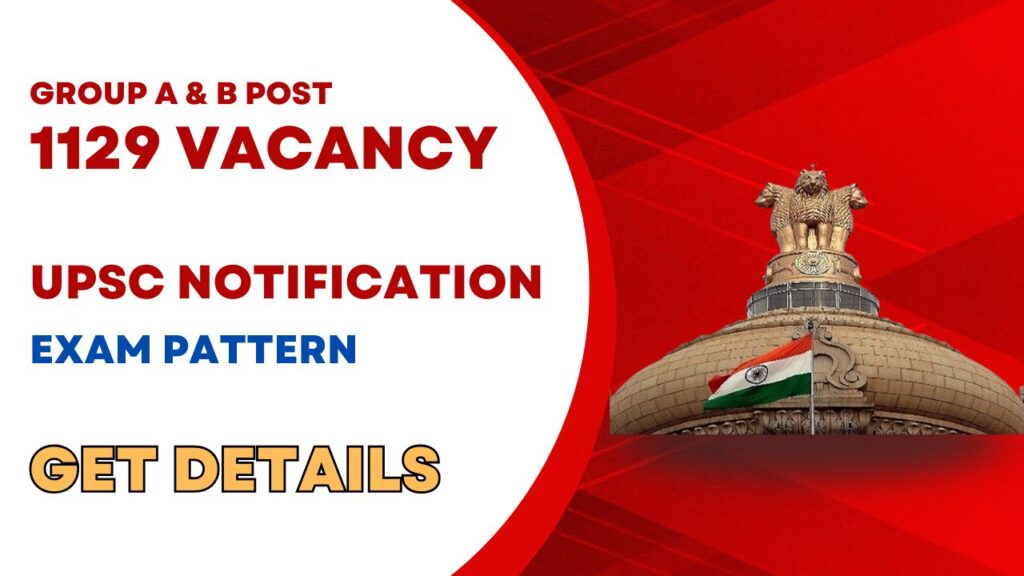
If you are preparing for the UPSC exam then getting every update for the exam is necessary to appear in the exam and achieve your goal. Get UPSC Notification for UPSC CSE 2025 Exam which will happen in 3 phases—Prelims, Mains, and Interview. Aspirants should prepare according to the exam pattern. You can check the eligibility criteria, and exam pattern in this article.

Highlights Of The UPSC Exam

Conducting ByUnion Public Service Commission
Exam NameUPSC Civil Service Exam
PostsGroup A & B Officers
Vacancy1129
Selection ProcessPrelims, Mains, Interview
Starting SalaryRs. 56,100 per Month
Notification Release22/January/ 2025
Application Starts On 22/January/ 2025
Application Ends On11/February/ 2025
UPSC Prelims Exam Date25/ May/ 2025
UPSC Mains Exam Dates 22, 23, 24, 30, & 31/August/2025
Final Result Update Soon

Exam Pattern for UPSC Exam 2025

Prelims: General Studies and CSAT, the two objective types of paper are conducted in prelims. Candidates must complete the first paper within 2 hours, the same duration applies to 2nd paper 2 too. Each paper is holding 200 marks, negative marking of 1/3 for every wrong answer. 

CSAT Qualifying: 33% is the least to get in Paper 2 (CSAT) for clearing the exam and there is no change in the marking scheme. 

Mains: Nine papers descriptive in terms 3 hours each, total marks 1750. 

Interview: Personality Test is conducted of 275 marks

No major changes: In exam pattern for 2025, just procedural changes happen this year and you can find the updates on the official website.

Read More 👉 RBI Grade B Admit Card 2025 – Direct Download Link, Exam Date & Instructions

Eligibility Criteria

Age LimitGeneral: 21 to 32 years
Age Relaxation for Reserved categoryOBC: up to 35 yearsSC/ST: up to 37 yearsPwBD: up to 42 years
Education QualificationGraduate degree or final-year students eligible but they must provide proof of their education until Mains stage
Attempts6 (General), 9 (OBC), unlimited for SC/ST

Useful Links

NoticeClick Here
NotificationClick Here
Official WebsiteClick Here

Leave a Comment

Your email address will not be published. Required fields are marked *

Best Online Coaching for UPSC – Top IAS Preparation

Cracking the UPSC exam isn’t that easy, you need the right strategy to prepare and beat the competition. These Best Online Coaching for UPSC will help you to cover every topic with practice test series that help you pinpoint your weak points and clear every doubt. The syllabus is vast and maintaining consistency is difficult, these online coachings offering both interactive session and recorded session to cover up. 

In a rising online education, these coaching are also growing as most of the students prefer to take online classes rather than finding offline coachings. Some of the most talked about online platforms are Drishti IAS, Vision IAS, Physics Wallah, Vajiram & Ravi, Clear IAS, Insight IAS, and Nirnay IAS.

Let’s check their best features and overview details to decide which one is right for you.

Drishti IAS

The Drishti IAS is most popular platform for IAS preparation, ideal for UPSC aspirants from both Hindi and English medium. It offers a structured and motivational teaching style which is helpful during UPSC preparation as it is the hardest exam. 

Best Features:

  • It is best for students who can give 15 to 16 months to this course with 400+ live classes. 
  • Extensive study material can help for learning
  • Excellent test series to improve regular practice, total of 24 mains and prelims tests available for 3 years.
  • No language barrier, it is easy for every student.

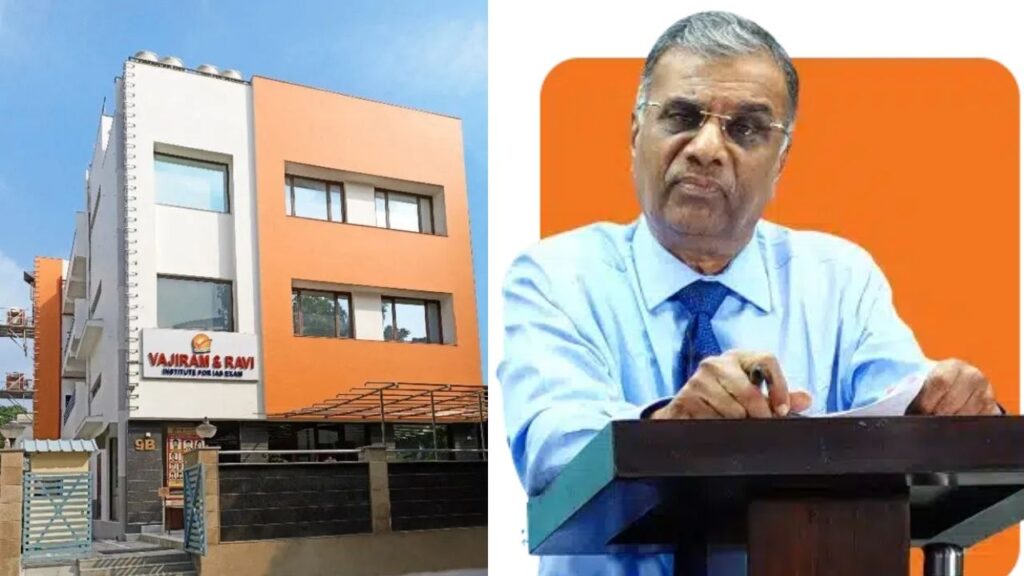
Vajiran and Ravi

Vajiram and Ravi coaching originated offline and marked a name in the top UPSC coachings and is now available online that delivers the same quality teaching for UPSC aspirants. 

Best Features:

  • Ideal for those who wanted to cover every topic with depth, 1000+ hours of lectures needed plenty of time.
  • Detail study and notes are also available for quality learning
  • Consistently maintain its record for producing toppers for years
  • Cost effective for providing best learning to ensure clarity for every doubt.

Read More 👉 Best Online Coaching for Bank Exam: Master Every Topic for Success

Clear IAS

Clear IAS is also one of the best online coaching which provides a super 50 program for specifically UPSC preparation. It is well-known for its focus on more personal guidance and small batches.  Ideal for aspirants who prefer self-paced learning with doubt clearing sessions at low fees.

Best Features

  • There are a large number of recorded lectures which can provide detailed learning for UPSC.
  • 700+ hours lectures and 1500+ study material
  • Test series to maintain daily practice for doubts clarity, mentorship support, and interview guidance.

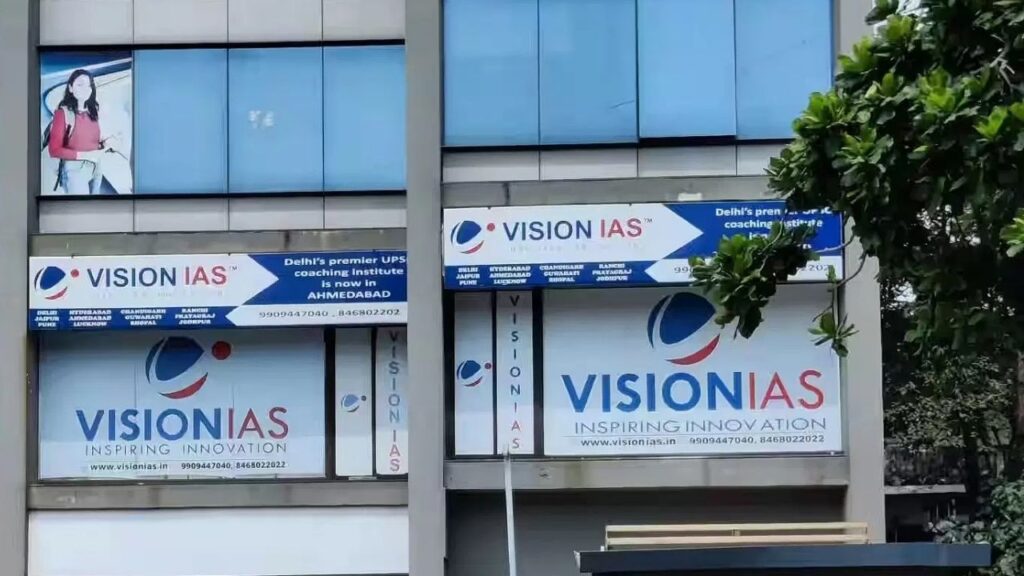
Vision IAS

Vision IAS provides the best test series which are helpful to become habitual with the exam environment. It is famous for its analytical function that helps to track student’s practice records.

Best Features

  • Students can check their weak areas due to their recording track of assessments and make it strong by working on it.
  • Flexible batches is accessible to every aspirant
  • Free Resources is a great advantage for preparation. Topic-wise specific content, current affairs, and previous year questions are available for free. 

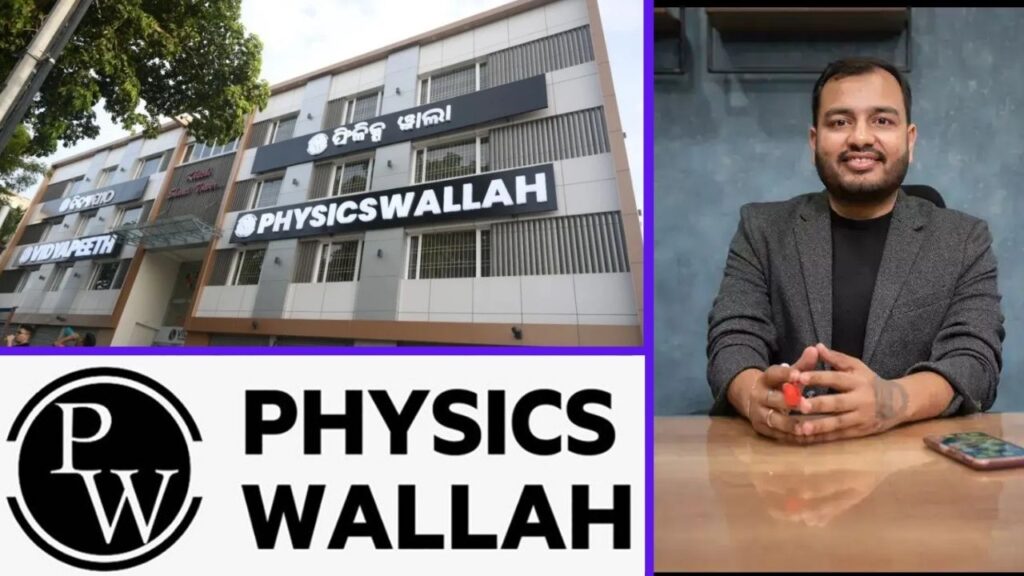
Physics Wallah

Physics Wallah is rapidly growing coaching and its UPSC preparation course is effective for cracking the exam. Its main advantage is delivering conceptual learning that helps students to remember and quickly adapt new concepts.

Best Features

  • Affordable price is accessible to everyone 
  • The teaching style is student-friendly that helps in complex problems to understand quickly.
  • Best for beginner students who began to prepare for UPSC
  • Strengthen every weak concepts and clear every doubt
  • Mentor support and recorded sessions.

Nirnay IAS

Nirnay IAS is available on the testbook platform which offers well-structured courses and practice-oriented strategy for UPSC preparation. It has gained attention in a little time due to its practice material and offline resources to self-study.

Best Features

  • Students who prefer to learn at their best time.
  • No regular classes, 30+ structured courses are best for quick preparation.
  • Cover prelims, mains, and other preparation topics
  • Mock test and previous years  papers for best practices 
  • Recorded lectures helpful to working professionals who don’t have time for live classes

Insights IAS

Insight IAS is also best for UPSC preparation at a low price. Aspirants can begin their preparation with quality study resources and test series with reasonable prices.

Best Features

  • Strong test series that structured properly for both prelims and mains
  • Best for beginners and advanced with its foundation courses 
  • Well-designed topic notes and syllabus clarity for effective learning
  • Affordable courses, every student can get quality education at their own pace
Coaching NameKey StrengthBest Suited For
Drishti IASBilingual, motivational teachingStructured, mentor-led prep
Vision IASAnalytics & test feedbackData-driven learners
Physics WallahSimplified basics, low costBeginners on budget
Nirnay IASModular & practice-heavySelf-paced learners
Vajiram & RaviLegacy, detailed coverageSerious long-term prep
Clear IASAffordable with mentorshipSelf-motivated learners
Insights IASBudget + good contentDisciplined planners

How to Choose the Right Platform

Identify your learning style – if you need someone to push or motivate you consistently for UPSC, Drishti & Vision provide teacher interaction which might help you. Clear IAS, Nirmay or Insights are best for those who prefer to learn at their own pace.

Check your budget – PW, Clear IAS, and Insight are affordable but if you are ready to invest more, Vajiram & Ravi or Vision offers premium packages.

Test Series – if you want insightful and exam-focused test series then Vision and Insights are the best option. Drishti IAS is also providing detailed study and exam based test series.

Conclusion

The Best Online Coaching for UPSC isn’t the one with popularity or your friend is joining, someone’s opinion doesn’t help you to get the right platform. The right platform matters because every student’s mind works differently, they understand differently. Even in their preferred language, they are unable to grasp the concept of the topic. So, it might be best for you to take a demo class from online coachings, if you understand well about the topic due to clear explanations, or teaching style that might be your destined platform for UPSC preparation.

Leave a Comment

Your email address will not be published. Required fields are marked *

UPPSC APO Admit Card 2026 Out: Check Exam Center and Date

UPPSC APO Admit Card 2026

The wait has ended for thousands of law graduates in Uttar Pradesh. UPPSC APO Admit Card 2026 Out – Download Uttar Pradesh Public Service Commission Assistant Prosecution Officer Hall Ticket at official website of UPPSC. If you’ve been studying the books, memorizing sections of the newly written laws, and keeping track of every notification, this is the “green light” you’ve been waiting for.

The post of Assistant Prosecution Officer (APO) is among the most prestigious posts in the state’s legal system, and with 182 vacancies this year, the competition is fierce as ever. This is your ultimate guide to everything on the admit card, about the exam and how to survive the last days of your preparation. 

Key Dates for UPPSC APO 2026

EventImportant Date
Admit Card Release Date12/March/2026
Exam Date22/March/2026
Exam Timing9:00 AM – 11:30 AM (Single Shift)
Official WebsiteClick Here

UPPSC APO eligibility

Candidates should have done LLB from a recognised university by UGC and approved by Bar Council of India. They should be citizens of India (or in case of special provisions for subjects of Nepal/Bhutan, Tibetan refugees prior to 1962, or certain migrants). The reservation benefits are applicable for the Uttar Pradesh Domicile holders only, rest of the candidates will be treated in unreserved category. 

Age Criteria

From 21-40 years old candidates are allowed for this exam and age relaxation detail given below: 

CategoryAge RelaxationMax Age
SC/ST/OBC (UP)+5 years45
PwD (UP)+15 years55
Women (UP domicile)+5 years45
Ex-servicemenService yearsPer 

The 2026 Exam Pattern

This year is crucial as the syllabus is revised to include the repeal of old colonial-era laws and their replacement with the new Indian legal regimes. The Prelims are a screening test, your marks for them will not get added to your final merit list, but you will have to clear the cut-off for them to be eligible for Mains. 

Prelims Structure (150 Marks)

General Knowledge (50 Marks): This section includes Indian History, National Movement, World Geography and Current Affairs.

Law (100 marks): The big change here is you’re no longer tested on the old IPC, CrPC and Evidence Act, but on the Bharatiya Nyaya Sanhita (BNS), Bharatiya Nagarik Suraksha Sanhita (BNSS) and Bharatiya Sakshya Adhiniyam (BSA).

Add U.P. Police Act and the Indian Constitution both for better preparation.

Beware of Negative Marking! There is a penalty or mark deduction of 0.33 (1/3rd) for every incorrect answer. If you don’t know the answer, you’re usually better off not guessing blindly. 

Follow These Steps to Download Your UPPSC APO Admit Card 2026

The process has been made digital and is fairly simple to execute through the One-Time Registration (OTR). How to download hall ticket without any glitch:-

  1. Go to the Portal: Visit the website of UPPSC.
  2. Locate the Link: Find the “Important Alerts” section. A link will be available to Download UPPSC APO Admit Card 2026.
  3. Input Your Information: To retrieve your hall ticket, you must have OTR number, Date of Birth and Gender.
  4. Confirmation: Type Captcha as is or select Captcha as you are told to from the screen.
  5. Download, Print and Save: As soon as your admit card is displayed on your screen, download it. 
  6. Pro-tip: Print at least 2–3 copies. Put one in your bag, one in your house for backup. 
CategoryFee (₹)
General/OBC/EWS125
SC/ST/Ex-Servicemen65
PwD25

Selection Stages

  • Preliminary Exam: Paper objective type with negative marking (150 marks, 2 hours) on General Knowledge and Law; only for screening, with 0.33 negative marking.
  • Mains Exam: 500 marks of question paper came which you have to solve in Descriptive manner. It contains law and general studies questions and its important one as the marks are included in the final merit list.
  • Interviews (50 marks) are given on the basis of their interview which is conducted mostly on legal knowledge, communication and suitability.

Read More:- Indian Navy Agniveer SSR / MR Recruitment 2026: Eligibility, Dates, Salary & Apply Online

Merits Stage-Wise

StageMarksPurpose
Prelims150 (qualifying)Screening
Mains500Core evaluation
Interview50Personality 

Success Roadmap

Next StepsAction
TodayDownload/print admit card (OTR no. + DOB needed)
Daily (Mar 16-21)2 mocks + weak area revision (new laws priority)
Exam DayCarry ID and Admit Card, Arrive on Time

Preparation Tips

It’s important to prepare well for 150-mark prelims as it’s an entry gate for the mains and avoid guesses because of 0.33 negative marking. After prelims, focus on descriptive Mains (500 marks) where your legal depth will shine, and an interview of 50 marks that tests clarity and conviction. You’ve already the qualification, and you have paid the fees, and you’ve cleared the first hurdle — now take the plunge with discipline for one of 182 most coveted legal posts in UP. 

Conclusion

The UPPSC APO Admit Card 2026 release is coming near and it is a final chance for those follower who is wants to get 182 APPO post in Uttar Pradesh. The exam is set to be held on March 22, so candidates can now gear up for their last phase of preparation by revising important legal concepts, attempting mock tests, and making sure that they have all the requisites for the exam day. 

Leave a Comment

Your email address will not be published. Required fields are marked *

UPSSSC Lower PCS Recruitment 2026: Notification, Vacancy, Eligibility & Apply Online

UPSSSC Lower PCS 2026

It is now or never for those aspiring for an administrative job in Uttar Pradesh. On 30 March 2026 the notification of UPSSSC Lower PCS 2026 Recruitment was released to recruit candidates on various positions. A large number of candidates regard this as an excellent chance to get their foot in the door of the executive branch of the state, as opposed to merely an employment opportunity. 

This recruitment drive offers 2,285 job vacancies for 11 different departments for aspiring candidates. Look out this blog for every date and details to apply.

UPSSSC Lower PCS 2026 at a Glance

FeatureDetails
Notification Date30/March/2026 
Registration Period29/May/2026 to 18/June/2026 
Total Vacancies2,285 Posts 
Mandatory RequirementValid UPSSSC PET 2025 Scorecard 
Selection ModeMains Written Exam (Objective) 
Official WebsiteClick Here

Understanding the Vacancy Breakdown

The 2026 notification is surprisingly wide, including departments from Urban Development to Agriculture. With this range if you come from a background in Commerce, Arts or Science there is a niche for you. 

Post NameVacancies
Assistant Treasury Accountant548
Auditor (Lekha Parikshak)419 
Amin / Auctioneer323 
Executive Officer (Nagar Nikay)238 
Clerk-cum-Typist / Cashier229 
Assistant Consolidation Officer (Chakbandi)168
Assistant Manager (Non-Technical)134
Mandi Supervisor Grade-246

The posts of Executive Officer and Assistant Treasury Accountant are generally the most popular on account of the potential for administration and advancement. 

Eligibility for UPSSSC Lower PCS Recruitment

The lower PCS threshold has a dual-eligibility gate. It’s not just about having a degree, you have to have the right “ticket” from last year. 

1. The PET 2025 Mandate

In case, you possess a valid score card with non-zero marks and you didn’t appear for Preliminary Eligibility Test (PET) in 2025 then you are not eligible to apply for the Lower PCS 2026. To prepare a Initial Main exam list, the Commission consider PET scores. 

2. Educational Qualifications

If you have a graduation degree from any field, you are eligible to apply for this recruitment. 

Post-Specific Qualifications:

  • Executive Officer: Graduation is sufficient to apply, but for the purpose of regularisation, you require to have ‘O’ Level Computer Diploma from NIELIT.
  • Auditor: This post usually prefer candidates who are commerce background (B. Com) or post graduate diploma in accountancy.
  • Clerk-cum-Typist: in Hindi, 25 w.p.m. of speed is required. 

3.Age Limit (As of July 1, 2026)

The starting range of age is 21 years and you are allowed till 40 years. The government expands the maximum age limit according to the candidate’s category.

The Selection Process UPSSSC Lower PCS 2026

There are not so many long detailed interviews for these jobs now. The process for choosing the 2026 hosting is now simpler and more merit based.

  • Shortlisting: Candidates will be shortlisted for consideration based on their normalized PET 2025 scores. 
  • Main Written Examination: It is the most important stage and most of the times it determines your final selection.
  • Document Verification (DV): The last stage in which all your papers and certificates are verified for genuineness. 

Exam Pattern (Mains)

FeatureDetails
Total Questions100 MCQs
Total Marks100
Duration2 Hours (120 Minutes)
Negative Marking0.25 (1/4th) per wrong answer

Core Syllabus of UPSSSC Lower PCS

There are three papers in the 2026 syllabus. The secret is to find the right balance between the static general knowledge part and the dynamic UP Special part.

Part 1: Subject related & General knowledge (65 Marks) 

It covers the History of India and the Indian National Movement, Polity, Constitution, World Geography, and the Indian Economy. Science, Technology and Environmental Ecology also receives a great deal of attention. 

Part 2: Computer & IT (15 Marks)

With all the focus on e-governance, you will be tested on hardware/software, IT gadgets, MS Office (Word/Excel) and Internet Protocols. 

Part 3: General Knowledge of Uttar Pradesh (20 Marks)

This is often where homegrown candidates excel. It deals with the history, culture, art, festivals, geography, and present administrative patterns of UP. 

Read More :- Jail Prahari Recruitment 2026 For A Steady Salary, And Clear Career 

Salary and Perks

In 7th CPC, UPSSSC Lower PCS salary range is lucrative that lies between Pay levels 4 to 6.

Pay Scale: ₹25,500 to ₹1,12,400.

Salary range depends on region and profile of the job (Class A, B, OR C) so it can be up to ₹32,000 to ₹45,000 a month in-hand salary.

Benefits: HRA, DA, medical facilities, and the prestige of being a “Gazetted” or senior “Non-Gazetted” government officer. 

Step-by-Step Instructions To Fill the Form

  1. Sign In: Visit here and search for UPSSSC Lower PCS Online Application Form 2026. Register yourself with mobile/email or login.
  2. Information: Your personal information (Name, DOB, Gender, Domicile, Education) are required to be filled by you carefully.
  3. Documents: Attach all necessary documents required to validate your information.
  4. Payment of Fees: A token application fee of Rs 25 has been imposed across all categories (General/OBC/SC/ST). Please be informed that in case you are shortlisted for the Mains, a separate exam fee has to be paid subsequently.
  5. Print: Keep a print out of the final submitted application form at the time of Document Verification. 

Conclusion

The UPSSSC Lower PCS 2026 is a great opportunity for those who want to serve the people of Uttar Pradesh with a stable and respected career. The window from May 29 to June 18 is going to be too fast for you to catch it so keep your files ready (especially your PET 2025 scorecard and caste/domicile certificates). 

Leave a Comment

Your email address will not be published. Required fields are marked *

PCS Exam (Provincial Civil Services): Roles, Structure and Selection Process

PCS Exam (Provincial Civil Services)

PCS Exam (Provincial Civil Services) is an important pillar for the state administration in Indian states. And this is what closely shapes the state through its good governance, which is ultimately determined by the effective application of the policies and programmes. This blog will be a brief account of what PCS is about, the exam pattern for PCS, the recruitment procedure, the responsibilities, duties to be performed by PCS officers and importance of civil services in the Indian scenario. 

What is PCS?

The Provincial Civil Services (or PCS Exam) is an administrative services of state, which works under state government. Whereas every state in India has its own civil services responsible for law and order of the state, execution of the policies of the government and delivery of services to the citizens. The PCS officers are state government officers and are posted at various levels to district administration, revenue and welfare of public. 

Importance of PCS

Administrative Backbone: The PCS Exam is considered to be the backbone of the state administration, as it is the vehicle for enforcement of the government at the village level.

Service to Public: Public servants under the PCS Exam have the duty of dispensing important public services — health, education, infrastructure.

Implementation of Policies: They are also instrumental in the execution of several government plans and programmes for the citizens.

Local Governance: In many cases, PCS officers serve in local governments, which brings them closer to the population they administer. 

Structure of PCS

State Administrative Service (SAS)

  • The State Administrative Service (SAS), a key component of PCS Exam, is equivalent to IAS at the state level that deals with core district administration. 
  • Officers begin their careers as Deputy Collectors or Sub-Divisional Magistrates (SDMs) and are District revenue officers in charge of implementing Schemes such as MNREGA and PMAY, Revenue matters, Public grievances and Disaster management. 
  • After 8-10 years they get promoted to DM at Pay Level 10 (₹56,100–₹1,77,500) along with benefits like official residence, vehicles, and allowances. 
  • It is conducted through PCS Exam Prelims, Mains and Interview, is having a bachelor’s degree and aged between 21-40. For instance, in UPPCS, one can expect SAS posts to start as Naib Tehsildars in tehsils. 

State Police Service (SPS)

  • The State also has its own police force namely the State Police, which is the principal law enforcement agency.
  • DSPs are recruited through PCS Exam with physical tests as mandatory duties include investigation of crimes, dealing with cybercrime, providing security to VIPs, managing traffic and community policing and from there you can be promoted to the ranks of Superintendent of Police or DIG.  
  • Pay levels vary from 10-12 (₹56,100–₹2,08,300) with uniform and arms allowances. 
  • Relevant for graduates between the ages of 21-40, is popular in urban-heavy states like Uttar Pradesh, where DSPs combat Noida crime surges. 

State Revenue Service (SRS)

  • Land Revenue and Taxation and Records is a branch of the State Revenue Service (SRS) that acts as the keeper of land revenue and taxation and related records, it is directly linked with the highest levels of the member starting from entry level as Naib Tehsildars through PCS exams. 
  • The Officers are responsible for issuing caste/income certificates, they settle land disputes under various acts like UP Zamindari Abolition, they also collect stamp duty and also supervise mutation, they also get promoted as Tehsildars or Additional Collectors. 
  • Level 10 Pay is inclusive of rural-related allowances. 
  • Awareness of land laws is indispensable for this cadre and for an agrarian state like Rajasthan where water and wastelands are such a big issue. 

Other Services

PCS has a number posts such as State Forest Service (SFS) for wildlife conservation and anti poaching (like Uttarakhand PCS). It also contains the State Engineering Service (SES) in public works and irrigation (MPCPS). 

Other posts include BDOs, Commercial Tax Officers, and many state specific posts like Bagasse Officers in Bihar. 

Percentage varies 40-50% SAS, 20-30% Police, Technical background preferred for technical posts. It used to have its own state level administration which was only after 8+ years that were IAS/IPS. 

Read More:-India Post GDS 2026 Recruitment Notification & Apply Guide

Recruitment Process of PCS in Detail

Who Can Apply

The candidates should meet the following criteria to apply for the PCS officer:

Qualification: The minimum requirement for this is a bachelor’s degree from an accredited institution. 

Age Limit: The age limit is generally 21-32 years, with relaxation in upper age limit for reserved categories.

Nationality: The applicant should be an Indian citizen or a non-resident Indian and he should fulfill certain criteria laid down by the state government. 

Examination Process

Generally, the recruitment procedure for PCS Exam is as follows:

  • Preliminary Examination: This is an objectivity-type exam which measures the general knowledge and awareness level of aspirants. It acts as a test in eliminating the candidates for the main exam.
  • Main Examination: The eligible candidates who have successfully qualified in the preliminary exam can apply for the main exam. These are descriptive type papers based on different subjects like general studies, language and optional subjects.
  • Interview: In this round candidates are assessed on their personality, communication ability and whether they have the makings to be part of the civil services. 
  • Final Selection: Final merit list will be prepared on the basis of result of main exam and Interview. 

Roles and Responsibilities of PCS Officers

PCS officers are given a multitude of duties, depending on where they are posted. Some of the most important ones are:

What is a District Collector? 

The District collector is the head of the district administration and is responsible for the collection of revenue, maintenance of law and order, and implementation of various development schemes. 

Sub-Divisional Officer (SDO): 

SDO is the chief officer of a sub-division and the officer-in-charge of administration at the sub-divisional level, monitors developmental works in the sub-division along with maintenance of law and order. 

Tehsildar

This officer is responsible for revenue collection, maintenance of land records, settlement of land disputes, and execution of government schemes at the grass root level at tehsil level. 

Block Development Officer (BDO)

At the block, BDOs have to implement, run and monitor the rural development programmes, coordinate with the local bodies, and attend to public grievances and be the communication between the Government and the rural people. 

Challenges Faced by PCS Officers

Having the title of a PCS officer is a prestigious and fulfilling job, but it has its share of challenges:

  • Work Pressure: Officers are regularly under tremendous pressure to meet deadlines and provide output on a timely basis.
  • Political Interference: The political environment is not always easy for the officers to perform its duties in the political interference of nature.
  • Public Expectations: Expectations from the street can be very high, and officers have to try to live up to them with limited resources.
  • Corruption: Nowhere is the battle more difficult to win, or the temptation to strangle it with myriad legs more prevalent than in the PCS system. 

The Significance of PCS in Society

The importance of PCS Exam in society is invaluable. These officers play a crucial role in determining the future of the state and in translating government policies into action. They serve as the government’s interface with citizens to redress grievances and promote development.

Furthermore, the PCS allows people to positively give back to society. It draws passionate and driven people looking to have an impact in their communities. The feeling of doing service to the public and being part of the process of governance is only one among many reasons which make the PCS a dream for many. 

Conclusion

The PCS Exam (Provincial Civil Services) is the catalyst of the state administration in India. It provides an exciting and challenging career for those who love public service and governance. With its organised selection procedure, varied assignments, and the chance to bring about positive changes in society, PCS continues to lure men and women of talent dedicated to the nation. As we march forward for building a New and Modi-led India, the role of PCS officers will be no less important in spearheading this change and in ensuring the effective governance of the state.

So, for the candidates who are willing to apply for the exam, knowing about the PCS exam and preparing well can give them a good career in civil services, through which they can contribute to their state and the country. 

Leave a Comment

Your email address will not be published. Required fields are marked *

UPSC Principal and Vice-Principal Recruitment 2026: Must Check Complete Details

UPSC Principal and Vice-Principal Recruitment 2026

UPSC Principal and Vice-Principal Recruitment 2026 has started and now is the time to grab the chance if you want to become a government school head. UPSC has only put out a short notice so far. The detailed advertisement including the one with the actual syllabus, exam pattern, and category-wise vacancy split hasn’t dropped yet. So here’s a full breakdown of the recruitment drive.

If you’re an educator eyeing a senior administrative role in the government school system, this is  the largest hiring drive right now.

Overview of UPSC Principal and Vice-Principal Recruitment 2026

UPSC released the short notice for UPSC Principal and Vice-Principal Recruitment 2026 on 21 July 2026, for hiring multiple candidates for this position. This is a huge chance for educators in India, if you are one of them and want to apply then hurry. The online application form will be accepted from 25 July 2026 to 14 August 2026.

Here’s the vacancy split:

  • Principal: 124 posts (Pay Level-12), including 7 reserved for Persons with Benchmark Disability (PwBD)
  • Vice-Principal: 704 posts (Pay Level-10)
  • Total: 828 posts

That’s a heavily Vice-Principal-weighted drive — for every Principal vacancy, there are roughly five to six Vice-Principal openings. If you’re an aspirant with fewer years of leadership experience, the odds naturally favor the Vice-Principal track.

Important Dates for UPSC Principal and Vice-Principal Recruitment 2026 

You should start preparing for collecting the documents and be ready to apply on 25/July/2026.

EventDate
Notification released21 July 2026
Online application start25 July 2026
Last date to apply (online)14 August 2026 (till 11:59 PM)
Last date for fee payment14 August 2026
Exam / selection dateTo be notified later

Eligibility Needed for this Recruitment

Education Requirement: The short notice indicates that candidates need a Master’s degree from a recognized university and a Bachelor of Education (B.Ed) or equivalent qualification, along with relevant teaching and administrative experience. 

Experience: Exact experience requirements (how many years and in what role you have worked before) has not been confirmed yet – that kind of detail is usually in the full notification. But still min 10 years as PGT/TGT in recognised schools for principal post is needed and min 2 years as PGT or 3 years as TGT in recognised schools for Vice‑Principal.

Age Limit: The maximum age is placed between 35 and 50 years depending on the post, and is reckoned as on 14 August 2026 (the last date of application). The relaxation in age will be applicable as per the standard rules of Govt. of India for reserved category. If you’re close to a cutoff, don’t eyeball it — run your date of birth through an age calculator against 14 August 2026 before you assume you’re eligible.

Application Fee

Reported fee for General/OBC/EWS male candidates is Rs. 25, payable online via net banking, debit/credit card, or UPI. As always with UPSC, women candidates and SC/ST/PwBD candidates typically get fee exemptions — but confirm this against the official notification rather than a secondary source once it’s out.

Scope in UPSC Principal and Vice-Principal Recruitment 2026 

A few things make this recruitment worth paying attention to beyond the headline vacancy count:

It’s Group-A territory. Selected Principals will function as Group-A gazetted officers, which puts this squarely in the same administrative tier as many other UPSC-recruited posts — not just a teaching promotion, but a genuine entry into government administrative service.

Pay Level-12 for Principal is a serious jump. For anyone currently at a lower pay level in the school, this is a meaningful step up the ladder, not a lateral move.

828 posts in one go is unusually large. Government recruitment drives of this size don’t come around often, which also means competition will likely be intense, especially for the 124 Principal seats.

Read More 👉 NICL Assistant Online Form 2026: Apply Online & Eligibility

What to Do Right Now

  1. Don’t wait for the detailed notification to start preparing your documents. Educational certificates, experience certificates, and category certificates take time to compile — start pulling these together now.
  2. Double-check your age eligibility against 14 August 2026 using the post-wise limits once confirmed.
  3. Register or update your One-Time Registration (OTR) on the UPSC ORA portal if you haven’t already — this step trips up more candidates at the last minute than almost anything else.
  4. Keep checking upsc.gov.in directly, not just other sites, but check the official website and notification for every update on this recruitment. 

How to Fill Application Form for UPSC Principal And Vice-Principal Recruitment 2026 

Click on https://upsconline.nic.in/ora to redirect on the official website.

  1. If you are new then do One‑Time Registration with a valid Mobile number and email ID.
  2. Login to apply for Principal and Vice‑Principal recruitment 2026 or go to the recruitment section.
  3. Fill the application form with your correct information like Personal Details, education, teaching experience, Reservation Details, Posting Preference etc.
  4. Once you fill it now upload the documents of the same detail as you mentioned in the application form.
  5. Preview & Verify then submit Application Fee if you don’t belong to the reserved category.
  6. Submit and save the form for your records.

Conclusion 

This is a genuine opportunity for experienced educators to move into senior administrative roles within Delhi’s government school system, with a clear pay grade jump and Group-A status attached. But the sensible move right now is preparation, not panic — get your documents in order, watch the official portal for the detailed notification, and apply well before the 14 August deadline rather than in the final scramble.

Leave a Comment

Your email address will not be published. Required fields are marked *

Scroll to Top