UP ITI Admissions 2025 – Apply Online, Eligibility, Dates

UP ITI

UP ITI Admissions 2025 is beginning now and you can apply before the last date of registration. If you’re interested in stabilizing your future with a government then this is the golden opportunity for you. It is the vocational training program to train the candidates after the 12th for both engineering and non-engineering posts. Apply online from an official website or direct link given in this article. Check out the eligibility criteria and postcode wisely before filling out the application form.

Exam Conducting byState Council for Vocational Training (SCVT), Uttar Pradesh
PostEngineering and non-engineering posts
UP ITI Admissions 2025 Apply OnlineThis is training programming for candidates who are interested in establishing their careers in the technical field
Mode of applicationOnline
Date of Application Start12/05/2025
Last Date of Apply Online22/06/2025
Apply OnlineClick Here
Official WebsiteClick Here

Eligibility Criteria

CriteriaDetails
Age Limit (as of August 1, 2025)Minimum 14 years (no upper age limit)
Educational QualificationPassed Class 10 from a recognized board
NationalityIndian
ReservationAccording to the rules of the state government

Application Fee

General / OBC 250/-
SC/ST150/-
ModeOnline or through ITI College prepaid mode

Documents Required

  • Recent passport-sized photograph
  • Scanned signature
  • Class 10 mark sheet
  • Caste and domicile certificates (if applicable)

Course Code

Program NameCodeDurationUP ITI Admission Eligibility 
Plastic Processing Operation0221 YearHigh School & Intermediate with Physics, Maths
Turner2212 Year10+2 PCM
Fitter2272 Year10+2 PCM
Mechanist2222 Year 10+2 PCM
Electrician2312 Year10+2 PCM
Instrument Mechanic0372 Year10+2 PCM
Mechanic Fridge and AC2182 Year10+2 PCM
Tools Maker2292 Year10+2 PCM
Die Maker2282 Year10+2 PCM
Machine tool mechanic2252 Year10+2 PCM
Draftsman Mechanic 2242 Year10+2 PCM
Surveyor2071 year10+2 PCM
Electronic Mechanic2192 Year10+2 PCM
Electrician1072 Year10+2 PCM
Motor Vehicle Mechanic2152 Year10+2 PCM
Computer Hardware & Network0191 YearHigh School Passed from any recognized Board
COPA2421 Year

Also Read: Best Government Jobs in Uttar Pradesh in 2025

List of Popular ITI Posts

Engineering PostNon-Engineering Posts
ElectricianCOPA (Computer Operator)
FitterStenography
Mechanic Dressmaking
TurnerSecretarial Practice

Some Useful Links

Apply OnlineGo To
Download Course ListGo To
Download NoticeGo To
Official WebsiteGo To

Leave a Comment

Your email address will not be published. Required fields are marked *

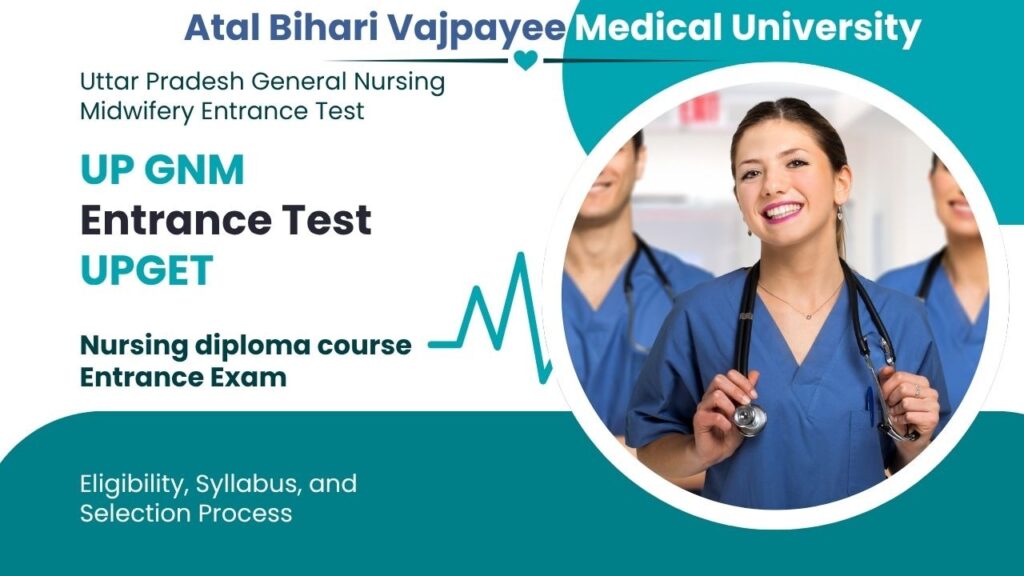
UP GNM Entrance Test UPGET: Eligibility, Syllabus, and Selection Process

UP GNM Entrance Test UPGET

UP GNM Entrance Test UPGET is conducted for the aspiring Nurse. Nursing is a field of taking care of injured, weakened, and fighting for life in the hospital or private care center. It is considered as the most respected and important field in the medical field. If you enjoy helping people, being a nurse can provide a lot of personal reward and job security. 

In the case of students of Uttar Pradesh who want to pursue this noble field, it is the best way to begin with the General Nursing and Midwifery (GNM) diploma course. 

But how to get admission in the best nursing college in UP? That is exactly where the UP GNM Entrance Test (UPGET) enters the scene. 

If you are a student perplexed about the UPGET, thinking who is it for, for what reason is it conducted or what to prepare, you have landed at the right place. In this complete guide for UPGET, we will cover each and every information regarding the UPGET exam, which will provide you with the latest updates as well as a clear path for your career. 

What Is The UPGET Exam? 

UP GNM Entrance Test UPGET is a way to proceed admission for those selected candidates who prefer to study 3 years General Nursing and Midwifery (GNM) diploma course.

Earlier the norms for GNM course admission were merit-wise based on the marks a student scored in their 10th and 12th board exams in uttar pradesh. But now, in a bid to make the admissions process more transparent and uniform, the Atal Bihari Vajpayee Medical University (ABVMU), Lucknow has been given the responsibility to conduct the UPGET. 

This examination is for one time for all. After passing the UPGET, students will be admitted to any of the Government GNM Training Centers and Private Nursing Colleges. 

(Latest Update: ABVMU officially conducting UPGET 2026 for the students, form portal is active from 29th April 2026 and exam will be held on 16th June 2026.)

Who Is This Test For? 

UPGET is conducted for those candidates who aspire for a career in nursing and healthcare but not for 4-year B.Sc. Nursing degree. The UPGET is designed for the candidates who want to pursue a career in nursing and healthcare but do not wish to take the route for a four years B.Sc.Nursing course or are not qualified for the same.  

Recent 12th Graduates: Those who have completed 12th standard (Intermediate) recently and want to enter the healthcare workforce at the earliest by opting for a 3-year diploma. 

Students from Diverse Academic Backgrounds: Science students are the most preferred for medical fields, but through UPGET the GNM course opens doors for students belonging to Arts and Commerce stream too to apply for the same if they have English as one of the core subject and other minimum percentage bar is met. 

Registered ANMs: Registered Auxiliary Nurse Midwives (ANMs) who wish to upgrade their qualification and career path can take this exam to shift to the higher GNM post. 

Why Is The UPGET Conducted? 

You may be thinking why an additional entrance examination is necessary when 12th-board marks are already there. Changing from a merit-based system to an entrance-exam system (UPGET) went through for several very compelling reasons: 

  • Different education boards (CBSE, ICSE, UP Board) follow their own set of marking schemes. Some are very strict, some a bit lazy. UPGET is a fair examination where all candidates are assessed on the same question paper. 
  • Nurses are going to deal with human lives. The government also wants to test students for a basic proficiency in science, logical thinking and English before they can enter government-run hospitals and the best private ones. 
  • Students though would no longer have to run from private college to private college seeking to pay heavy donation fees, UPGET ushers a system of centralized counselling. You appear for one exam, get one rank and then you choose your college online on the basis of merit. 

Eligibility Criteria For UP GNM Entrance Test UPGET

  • You must be above 17 years old and have no max age limit for this exam.
  • Intermediate passed candidates are eligible for this exam, with above scoring of 40% marks. 
  • You must know basic English or study it as a subject in 12th.

Alternative Eligibility for ANMs 

If you have passed the vocational course of ANM with a minimum of 40% marks or if you are registered as ANM and have qualifying marks, then you can apply for the UPGET. 

Citizenship 

Only Indian citizens are eligible for this exam. Possession of a valid Uttar Pradesh domicile certificate also assists in availing the benefits of state-sponsored reservations (SC/ST/OBC/EWS). 

Syllabus: What To Study For UPGET? 

The good thing about UPGET is that the syllabus is manageable, as opposed to NEET. It evaluates your fundamentals. Try each question (100 MCQs) as there is no negative marking.

Syllabus breakdown for right preparation:

1. General Science (Class 10th Level) 

Basic aspects of Physics, Chemistry and Biology are discussed in this section. Nurses therefore understand the human body and chemicals at a fundamental level, so focus heavily on Biology (human anatomy, diseases, nutrition, cells) with a bit of basic Physio as well. 

The questions on physics and chemistry are very basic—like motion, light, simple chemical reactions, and acids/bases. NCERT Science textbooks from Class 9 and Class 10 are very helpful to prepare yourself.

2. English (Class 12th Level)

A nurse needs to read medical charts, know what a prescription says and talk to people. Basic grammar rules, vocab, syno/anto-nyms, and correcting the sentences basically checks your ability to check the fundamentals of English.

3. General Knowledge & Current Affairs (Class 12th Level)

This part tests your general knowledge. It is on basic Indian history, geography, civics and some of the major current affairs(especially in health, science, and national news). Specially focus on healthcare schemes launched by the UP Government and the Central Government that are currently in progress.

Passing Marks & Required Score 

Due to no negative marking for the UPGET exam, the average marks are on the higher side. But the criteria vary for the Government College and for a Private College. 

There are required marks for the admission, 50% for Unreserved/General categories candidates and 40% for those who belong to SC/ST/OBC category.

You need to secure a seat with a higher score, Out of 100, aiming for a score of 75 to 85+ to take a chance. Private institutes will take you if you pass the cutoff marks along with the counseling process.

Step-by-Step Selection Process

Step 1: Candidates should visit the ABWMU Official website when the notification is out (Expected in April/May). You have to register,mention your personal and educational details,upload a live photograph and signature and pay the examination fee. 

Step 2: Admit cards are mandatory as they act as an entry card in the examination. Candidates need to download them when the official release is declared a few days before the exam and visit their allotted examination center. 

Step 3: The results will be declared by ABVMU on their portal. According to the scores, a state-wide Merit List is formed. Your position in this list is everything. 

Step 4: Qualified applicants will apply for online counseling. You need to fill your “Choices” (Colleges you want to opt in the order of preference). 

Step 5: Your college will be allotted to you on the basis of your rank, category and the options submitted. You have to accept the seat and then go to the college along with your original documents (12th mark sheet, Aadhar Card, Caste Certificate, Domicile) for verification and submission of fee. 

What to Do If You Don’t Clear UPGET?

Failing an entrance exam can seem like the end of the world but in medicine, setbacks are par for the course. You have plenty of good backup options if you don’t get a high enough score for admission: 

  • Take a Drop and Re-attempt, a dedicated 6-month preparation plan will almost guarantee a great rank next year. 
  • You can also consider a 2-year ANM diploma course which is actually easier to get into. 
  • There are other diploma courses which are highly demanded and are offered by the UP State Medical Faculty, including D.Pharma, DMLT, X-Ray Technician, or Physiotherapy. 
  • If you are willing to pay a slightly higher fee, you can approach private institutions directly to inquire if they accept direct admissions without a top UPGET rank  

Conclusion 

The UP GNM Entrance Test UPGET is a big chance for the one who wants to make career in nursing and serving the people in the state of Uttar Pradesh. As the state government switches to entrance test system, it would now be merit-based and allowing students from diverse background to compete and make it to the top nursing institutions. 

The way to success in UPGET is to know the syllabus, read the basic 10th science, refresh your English and keep updated with GK.

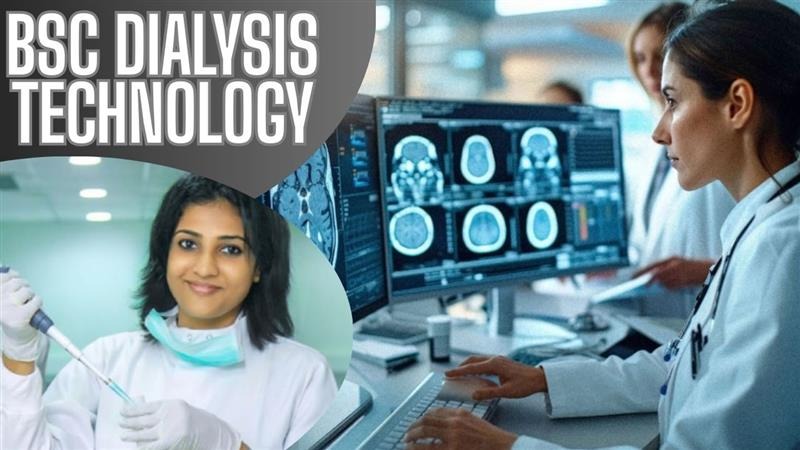
BSc Dialysis Technology: Course Details, Eligibility, Salary & Career Scope

BSc Dialysis Technology

BSc Dialysis Technology course is recognized a professional course under the regimen of which the students are prepared and polished to serve in the field of renal care and dialysis. The course duration is 3 to 4 years and is a mix of theoretical concepts as well as practical training. Subjects studied include anatomy, physiology, renal pathology, dialysis techniques, biochemistry and pharmacology. Also, patient care management is stressed so that graduates will be able to function at a high level in clinical environments, such as hospitals and dialysis centers. 

Eligibility and Admission

Requirements for the Admission in BSc Dialysis Technology courses are the possession of higher secondary education with a science background. Some colleges may also demand entrance tests and/or interviews as a part of the application process. Here is the full breakdown of Eligibility for Bsc Dialysis Technology:

Educational Background:

Candidates are generally expected to have passed their 10+2 or an equivalent higher secondary education examination with science stream (with the subjects of Physics, Chemistry, and Biology (PCB)) from a recognized board.45% to 60% in aggregate in these subjects is required by most institutions coming with variations as per applicant category i.e. general,sc/st or obc. 

Entrance Exams:

BSc Dialysis Technology programs entrance examination may differ from one college to another, however, many colleges conduct B.Sc in dialysis technician examination for admission, to check the candidate’s knowledge and comprehension of basic scientific concepts related to the field of dialysis-tech. So, they accept admissions through their merit scores. 

The mentioned premier institutions including JIPMER, SGPGI and Jamia Hamdard have started admitting students on the basis of entrance exams like NEET, CUET, KCET (Karnataka Common Entrance Test), KEAM (Kerala Engineering Architecture Medical). 

But most of the colleges accept students on their 10+2 scores with subjects including physics, chemistry and biology or mathematics.

Admission Process

Check the colleges that offer BSc Dialysis Technology courses then visit their official website to enroll yourself. 

  • The admission portal opens for a short period of time, mostly in April and March. Students need to apply with supportive documents which includes marksheets and certificates of qualifications. Please fill the application carefully while applying for admission.
  • If there is any entrance exam required during the admission then the notification will be released for the examination, you must check carefully.
  • Some programs may also require an interview after the entrance exam to determine if the candidate is truly interested and if he or she would be a good fit for the field of dialysis technology. 
  • Institutions generally prepare a merit list considering aggregate performance in the written-test, interview (if applicable) and the qualifying examination which is used for offering the admission to the applicants. 

BSc Dialysis Technology Syllabus Details

The educational content of the BSc Dialysis Technology syllabus is designed to be comprehensive for developing required skills in students to carry out dialysis procedures and patient care. The course duration is 3 years which may extend to 4 years including internships and practice-based activities. Important topics are:

  1. You’re going to learn the human body’s systems, mainly the renal system, so you know how dialysis works on your body.
  2. Renal Pathology: How the kidneys work, what goes wrong in the different kinds of kidney illnesses.
  3. Understanding Different Dialysis Modalities: Obtain specialized knowledge about various dialysis modalities, including hemodialysis and peritoneal dialysis, such as machine operation, procedures, and patient care during treatment.
  4. Biochemistry Metabolic alterations in patients with kidney diseases and the contribution of dialysis to these biochemical alterations.
  5. Pharmacology Medications used in renal care: Drug interactions and patient safety during dialysis.

The objective of the syllabus is to make the student well versed with the theoretical and practical aspects of the dialysis technology profession. 

Practical Training

Besides the core subjects the curriculum also includes practical modules, which enable the students to become familiar with the real work situation. This training is frequently conducted in the following settings:

  • Clinical Rotations: Students complete clinical rotations in hospitals or in specialized dialysis centers, offering hands-on experience with the dialysis processes and patient care procedures.
  • Simulation Labs: Numerous programs include simulation training to train students in a simulated environment prior to working with real patients. 

Elective Modules

In some universities, optional courses are available where students can develop their knowledge in particular fields, as:  

  • Nutritional Support in Renal Disease: This study unit focuses on the dietary management of renal patients, including those receiving dialysis.
  • Advanced Renal Nursing (Beginners) Suitable for residents who wish to further their nursing knowledge in renal care.
  • Investigations in Dialysis Technology: This section considers new developments and breakthroughs in the renal procedure. 

Assessment Methods

The syllabus often involves different methods of assessment including the following:

Written examinations: To test knowledge of theoretical subject areas.

Practical tests: At clinical rotations or labs, you will undergo testing.

Projects: To promote research and investigation on particular subjects in the field of dialysis technology. 

Skills Acquired in BSc Dialysis Technology

Dialysis Technicians are an important part of the healthcare team, especially in caring for patients with kidney disease that must undergo dialysis. What they need to learn are technical skills as well as interpersonal skills. 

Dialysis technicians require a suitable combination of technical skills and people skills. Technically, they have to operate dialysis machines, watch patient vital signs, handle vascular access and interpret lab results to deliver safe and efficient care. 

They must also be empathetic and possess the ability and skills to communicate with patients, attend to emergencies and work with medical teams. They serve an educational role, as well, teaching patients about treatment, lifestyle and managing illness, so patients can become active participants in their care. 

Career Opportunities & Future Scope

Dialysis technicians are a subset of technologists, who work with the machines located at a dialysis center, the dialysis machine. Indraprastha Apollo Hospitals (New Delhi), Fortis Memorial Research Institute (Gurgaon) and Max Hospital (Several locations) are among the best employers, offering vacancies for patient care technicians and clinical managers.

Hospitals: Dialysis Technicians may work in a hospital setting, providing care to patients who require dialysis. These specialized technicians are essential to deliver safe and effective treatment. 

Travel Placement: Something a few travel dialysis tech are able to do, is to work on a travel basis at various locations. Companies like Nephro Plus help these travel positions, typically with great pay and benefits.

Home Dialysis: Or in some cases, technicians work in the home care arena. Companies like DCDC Kidney Care aiding patients that dialyze in their own homes. They assist with instructions and follow-up care, monitoring that patients operate their equipment safely. 

Some of the top global Dialysis Hospitals and Companies that offer first class patient care, not only this but they hire in a massive figure from India too. So, students can also apply outside of India. There are few top Dialysis centers including AMN Healthcare, Aya Healthcare, Cross Country Healthcare etc.

Career Advancement

Specialization: Dialysis technicians may further specialize, and become a certified dialysis technician (CDT). This certification could improve employment opportunities and generally results in higher salaries and more advanced positions.

Additional Education: Further education, such as an associate’s degree in nursing or supplemental certifications in nephrology, may qualify you for more advanced positions as registered nurse roles.

Management Opportunities: Senior technicians or lead in-centre technicians frequently go on to management, they may manage teams, manage patient care provision, and day-to-day logistics of dialysis clinics – center operations management. 

Read More 👉 RRB ALP Admit Card 2026 Released: Download CBT-1 Hall Ticket Now

Dialysis Technician Salary Expectations

Dialysis technician salaries may be different according to various factors like the location, the experience, and the nature of the organization they work in.

Dialysis Technicians in India make about ₹2,00,000 to ₹4,00,000 a year. Our the ceiling is 5,00,000 which is not unrealistic for a technician with 8+ years of experience.

It is normal for people living in or around the cities of Delhi, Chennai etc to have a higher demand for health care. A skilled technician can make between ₹4,00,000 and ₹6,00,000 annually in these regions.

Also, earning specialized training – such as hemodialysis or peritoneal dialysis certification, salaries can also go up. They may earn the opportunity to further increase their income. 

In the US, the average dialysis technician salary is $25 per hour which is about $51,316 per year. For example, in California, the wage per hour for a dialysis technician is about $26.47. 

Conclusion

BSc Dialysis Technology is tailor made for Students who are aspiring to be a Backbone of Renal Healthcare Sector. This combination of theoretical and practical knowledge enables the graduate to confidently perform advanced procedures such as dialysis, patient care and clinical work. 

Due to the increasing number of patients suffering from kidney disorders in India as well as all over the world, the opportunity for trained Dialysis Technicians is also increasing. From hospitals and dialysis units to home-care agencies and world health services, job prospects are varied—and growing. 

For students seeking a secure, respected and impactful healthcare career with immense potential for growth, BSc Dialysis Technology is a winning choice that will not just help them reach their professional goals, but also provide them the satisfaction of being able to make a real difference to the lives of patients. 

UPSSSC Pharmacist Eligibility, Selection Process, How To Prepare For Exam 2026

UPSSSC Pharmacist

Understanding UPSSSC Pharmacist Eligibility is essential for students from the science stream who want to secure a government pharmacy job. Pharmacists are important for the hospitals, medical centres, and healthcare facilities for distributing the right dosage to the patients and providing them instructions to take those medicines. 

The demand for educated pharmacists in UP is heavily growing because lack of knowledge can let the patient suffer. So the recruitment board set some rules to the recruitment drive for picking up qualified healthcare professionals.

The result of the PET exam will be released soon on the official site of UPSSSC. Candidates can refresh the page to check the result and only shortlisted candidates can go to the main exam.

If you missed this chance, you can apply for the next recruitment cycle. But before applying, know every detail about the eligibility criteria, exam syllabus for the right preparation strategy.

What Is This Job Actually About UPSSSC Pharmacist? 

Uttar Pradesh Subordinate Services Selection Commission Pharmacist is a Group C government job which offers you to work in the government hospital, health centre, district hospital. You are responsible for the medicine management there.

You have to provide medicines to patients and clear instructions for dosage after getting a job.

In logistics, you have to keep detailed records of maintained stock, counsel for patients on how to take their medication, vaccination camps, and take part in disease control programs.

It’s a responsible and well-compensated job for you, if you want stability and long-term career growth.

UPSSSC Pharmacist Eligibility

Basic requirements for the allopathic pharmacist post:

You must pass your 10th and 12th with Science (PCM or PCB) along with Diploma in Pharmacy (D.Pharma) from a Pharmacy Council of India approved institution. Students who have these educational certificates can apply for this job. Register yourself in the State Pharmacy Council of Uttar Pradesh as it is mandatory. 

Your age doesn’t matter but still students above the age of 18 can apply. You are not welcome if you are above 40 years old.

Can B.Pharm or M.Pharm holders apply without a D.Pharm? 

D.Pharma is compulsory for this job as per the Supreme Court set this rule right under Article 309 of the Constitution. Even Higher degree holders must hold D.Pharma. This clearly makes sense as the Diploma curriculum covers over 500 hours of practical hospital dispensing training. 

B.Pharma and M.Pharma programs focused on research and pharma manufacturing, they don’t train you for the actual hospital dispensing but D Pharma offers that training. So if you have B.Pharma but also hold D.Pharma then you can apply.

There are also cadres for other systems of medicine:

  • Homeopathic Pharmacist: Diploma in Homeopathic Pharmacy is required within the 21 to 40 age group.
  • Ayurvedic Pharmacist: Diploma in Ayurvedic Pharmacy including Bheshaj Kalpana is required within the 18 to 40 age group.
Pharmacy SpecializationMandatory Technical QualificationRegistration Board RequirementAge Range Parameter
Allopathic PharmacistDiploma in Pharmacy (D.Pharm) from a PCI-approved institutionState Pharmacy Council, Uttar Pradesh18 to 40 Years
Homeopathic PharmacistTwo-year Diploma in Homeopathic Pharmacy or three years of state-approved trainingHomeopathic Medicine Board, Uttar Pradesh21 to 40 Years
Ayurvedic PharmacistDiploma in Ayurvedic Pharmacy (including study of Bheshaj Kalpana)State Ayurvedic and Unani Medicine Board, Uttar Pradesh18 to 40 Years

The Mandatory PET Qualification

The recruitment architecture uses a two-tier screening process. UPSSSC doesn’t allow you to appear directly in the main written examination. You have to score in the Preliminary Eligibility Test first.

General, OBC, SC and EWS candidates required a minimum PET score of 10.25 to become eligible. The cutoff for ST was 2.29. As a result, 25,859 candidates were selected and can now take the main test, which is scheduled on June 21, 2026. 

So, appearing in PET is the first thing to do then secure a valid score to enter in the main pharmacist exam.

Here’s the category-wise vacancy split: 

CategoryVacancies
Unreserved (UR)224
OBC151
SC118
EWS56
ST11
Total560

Application Procedure For UPSSSC Pharmacist

Follow the instructions step-by-step to apply for UPSSSC Pharmacist role and application is Rs. 25 for everyone.

  1. Candidates must log in using the same email linked to their PET registration.
  2. There’s no need to fill every detail from scratch because the system retrieves the candidate’s personal details from the PET database. But check the address and everything again.
  3. Enter your educational details or if any detail is missing or mistaken, you can fill out the details.
  4. Recheck and verify then pay the fee.
  5. Submit the application form to get an 11-digit registration number at the end. 

Recruitment Cycle and Detailed Schedule 

Phase MilestoneDate Scheduled
Official Recruitment Notification PublicationFebruary 28, 2026
Commencement of Online Application and Fee Deposit9/March/2026
Concluding Date for Online Application Submission29/March/2026
Last Date for Application Fee Submission5/April/2026
Last Date for Application Details Correction7/April/2026
Release of PET-2025 Shortlisting Results and Cut-offs18/May/2026
Closing Date for downloading qualifying scorecard7/June/2026
Main Written Examination21/June/2026

Evaluation Structure and Examination Pattern

Exam ModeOffline
Question TypeMultiple Choice Question
Total Question100
Duration120 minutes
Negative Marking0.25 marks

There are total three parts in the paper: 

Part 1 — Pharmacy (65 questions)

The D.Pharma curriculum covers Pharmaceutics, Pharmacognosy, Biochemistry and Clinical Pathology, Pharmacology and Toxicology, Human Anatomy and Physiology, Health Education and Community Pharmacy, Pharmaceutical Jurisprudence, Drug Store and Business Management, Hospital and Clinical Pharmacy.

Part 2 — Computer and IT (20 questions)

It covers common knowledge of computer systems which helps your workflow in future. There are four basic topics such as MS Word and Excel basics, Internet, IP addresses, email, Digital payments and e-governance in UP, AI, Machine Learning, IoT, Big Data. 

Part 3 — Uttar Pradesh General Knowledge (15 questions)

Focusing on Uttar Pradesh history and culture which helps you gain 15 marks. So do not neglect the UP GK part because it is easy and marks gaining. Just focus on daily news, history, geography, and culture which covers most of the question. Then cover Industrial hubs, state schemes and river systems of UP.

Salary and Perks 

Pay scale is Level 5 under the 7th Pay Commission. The initial salary starts at ₹29,200 then after some years of experience you can get up to ₹92,300.

So, the basic salary of a fresher after adding allowances can be around ₹48,180. After tax deduction, your in-hand salary would be approximately at ₹43,000–₹44,000 per month. 

Overall pay level is good for a pharmacist. Just prepare yourself and join but remember one thing that salary range may vary depending on your working region or centres.

Career progression looks like this:

You start as a Pharmacist (Level 5). Then move up to the next higher position with some increment, when you get on Pharmacy Officer position after 10 years which is Level 7 pay grade which means your salary will increase. 

How To Prepare For UPSSSC Pharmacist Exam

For 1–4 weeks: Focus on Pharmaceutics, Pharmacology, and Pharmacognosy as these cover most of the questions in Part 1. Don’t just read, write notes, comparison tables, and understand chapter by chapter. 

Build your foundation on Routes of drug administration and how drugs act on the central nervous system, Classification of drugs of natural origin, Inorganic compounds, acids, bases, buffers, antioxidants, gastrointestinal agents etc.

For 5–6 weeks: Take previous years papers for practice and do MCQs, try 100 Questions at least. Cover Pharmaceutical Jurisprudence, UP GK and Computer IT after practice.

For 7–8 weeks: Take a 120 minute test for yourself to prepare yourself for exams. It’s revision time and you have to spend as much time on review after each mock test. Find errors and mistakes then understand why you made that mistake. The pattern of your mistakes will tell you exactly where to spend your remaining time. 

Read More:- RRB NTPC Graduate New Vacancy Notification 2026 — Check Every Detail

Books worth using:

Subject areaRecommended book/resourcePurpose / Strength
Pharmacy corePharmacist Recruitment Exam Guide — Sunil BakliwalConceptual review; explains core pharmacy topics clearly
Pharmacy MCQ practicePharmacist at Your Fingertips — GDCExtensive multiple-choice practice and exam-style questions
Uttar Pradesh General Knowledge (UP GK)UP Sar Sankalan — Pariksha VaniStandard reference for UP-specific current affairs and static GK
Computer / IT (basic)Lucent’s Computer AwarenessCovers fundamental computer concepts and basics
Computer / IT (advanced, pharmacist-specific)GPT Sir / Wonderslate materialAdvanced topics and targeted practice tailored to pharmacist exams

Conclusion

The vacancy for government pharmacist jobs in UP is rare. 560 posts for a whole state, with above 25,000 eligible candidates appearing for the main exam — the competition is real. But it’s not unbeatable. The syllabus is defined. The pattern is known. It’s a simple game plan for preparing. 

Anyone who starts preparing now can crack the exam and secure the position for a high salary and stable career.

Best Government Jobs in Meghalaya

If you are a resident of Meghalaya state and are looking for a good government job in 2025, then you are at the right place. Every year Meghalaya government releases recruitment in many departments – such as education, police, health, engineering, and civil services. With a government job, you get a secure future, timely salary, and a respectable life.

In this blog, we have brought for you a useful and updated list of Best Government Jobs in Meghalaya in 2025.

Read the table given below carefully and see which government job is the best fit for you.

Top 15 Best Government Jobs in Meghalaya in 2025

S.No.Job TitleDepartment/OrganizationEligibilityOfficial Website
1Meghalaya Civil Services OfficerMeghalaya Public Service Commission (MPSC)Graduation + MPSC Civil Services Examhttps://mpsc.nic.in
2Police Sub-Inspector (SI)Meghalaya Police DepartmentGraduation + Physical Test + Written Examhttps://megpolice.gov.in
3Assistant Engineer (Civil/Electrical)Public Works Department (PWD), MeghalayaB.E./B.Tech in Engineeringhttps://megpwd.gov.in
4School Teacher (Elementary/Secondary)Directorate of School Education, MeghalayaD.El.Ed/B.Ed + TEThttps://megeducation.gov.in
5Medical OfficerMeghalaya Health & Family Welfare DepartmentMBBS + Medical Registrationhttps://meghealth.gov.in
6Forest RangerDepartment of Forests & Environment, MeghalayaGraduation in Science/Forestryhttps://megforest.gov.in
7Junior Engineer (JE)PWD / PHED / Power DepartmentDiploma in Civil/Electrical Engineeringhttps://megpwd.gov.in
8Secretariat AssistantMeghalaya Secretariat ServicesGraduation + Computer Knowledgehttps://meghalaya.gov.in
9Staff NurseDirectorate of Health Services, MeghalayaGNM / B.Sc. Nursing + State Registrationhttps://meghealth.gov.in
10Assistant LecturerDirectorate of Higher & Technical EducationPost Graduation + NET/SEThttps://megeducation.gov.in
11Veterinary OfficerAnimal Husbandry & Veterinary DepartmentB.V.Sc. & AHhttps://megahvt.gov.in
12Agriculture Development OfficerDepartment of Agriculture, MeghalayaB.Sc. Agriculturehttps://megagriculture.gov.in
13Lower Division Assistant (LDA)Various State Departments12th Pass + Typing + Computer Basicshttps://meghalaya.gov.in
14Excise InspectorExcise, Registration, Taxation Dept.Graduation + Written & Physical Testhttps://megexcise.gov.in
15Meghalaya Judicial Service (Civil Judge)High Court of MeghalayaLLB + Judicial Service Examhttps://meghalayahighcourt.nic.in

RRVUNL JE, Junior Assistant Recruitment 2026: Dates, Eligibility, and Exam Pattern 

RRVUNL JE, Junior Assistant Recruitment

If you’ve been waiting for the Rajasthan Rajya Vidyut Utpadan Nigam Limited to open the portal for candidates to apply for RRVUNL JE, Junior Assistant Recruitment 2026. Total vacancies are 2,005 which will be after the test on various positions including Junior Engineer, Junior Accountant, and Junior Assistant / Commercial Assistant-II. The timeline ends on August 25,  2026 but you have plenty of time from August 5 to apply.

RRVUNL JE, Junior Assistant Recruitment 2026 Short Notice Detail

RRVUNL has issued a short notice for the recruitment of posts in Five Rajasthan Power Utilities, namely, RVUN, RVPN, JVVN, AVVN, and JdVVN. Under Advertisement No. RVUN/Rectt./2026-27/01, the notification includes three types of posts – Junior Engineer (Electrical, Civil, Mechanical), Junior Accountant, and Junior Assistant/Commercial Assistant-II. 

The 2,005 figure is the combined total across all three; the post-wise and utility-wise split hasn’t been published yet and is expected with the detailed notification. If Junior Assistant is your target, keep an eye on that breakdown before you start serious preparation.

Who Are Eligible For This Recruitment

For the Junior Assistant / Commercial Assistant-II post, the qualification bar is straightforward: graduation in any discipline from a recognized university. No specific subject requirement, which is exactly why this post draws such heavy competition every cycle — it’s open to arts, commerce, and science graduates alike.

Age will be calculated as on January 1, 2026, and the usual government relaxations for reserved categories will apply. The exact minimum and maximum age limits for this cycle hadn’t been confirmed in the short notice at the time of writing, so don’t lock in your eligibility assumptions from last year’s cycle — wait for the detailed notification before you rule yourself in or out.

Key dates on your calendar

EventDate
Online Apply Start Date05 August 2026
Online Apply Last Date25 August 2026
Last Date For Fee Payment25 August 2026
Exam DateNotify Later

Treat everything from the detailed notification as the final word — short notices exist to give candidates a heads-up on timelines, not to lock in every eligibility detail.

The selection process — two phases, no interview

RRVUNL has kept this refreshingly simple: there’s no personal interview for these posts. Selection comes down to a written exam followed by document verification, and for Junior Assistant specifically, a second phase most candidates underestimate.

Phase-I is a computer-based test (CBT) — objective-type multiple choice questions, carrying 40% weightage in the final selection.

Phase-II is a Computer Proficiency Test: typing speed and efficiency checks in both Hindi and English. This phase carries 60% weightage — more than the written exam itself.

That weightage split is the single most important thing to internalize if you’re serious about this post. A lot of candidates pour every hour into GK and reasoning practice and treat typing as an afterthought to sort out “closer to the date.” For Junior Assistant, that’s backwards. If your Hindi and English typing speed isn’t already exam-ready, start now — it’s worth more to your final score than the written paper.

What The Written Exam Actually Tests

The Phase-I paper for Junior Assistant and Commercial Assistant-II covers five areas: General English, General Hindi, Reasoning and Mental Ability, Mathematics, and General Knowledge & Everyday Science. It’s a 120-minute objective paper with negative marking of 0.25 for each wrong answer, so accuracy matters as much as coverage — guessing blindly on a paper with this negative marking structure can cost you more than it earns.

The reasoning section leans on standard topics: number and letter series, coding-decoding, analytical reasoning, mirror images, and clock-based questions. Maths covers the usual government-exam staples — simple and compound interest, time and work, time and distance, HCF-LCM, ratios, and simplification. Hindi tests grammar, vocabulary, comprehension, and muhavare (idioms), while English mirrors that at a similar difficulty level. None of this is unfamiliar territory if you’ve prepared for any state-level clerical exam before — the syllabus is conventional, which makes cutoffs high and margins thin.

Salary and Pay Structure

RRVUNL has confirmed a starting salary around ₹33,800 per month for Junior Engineer posts, paid under the Level 10 pay matrix, along with Dearness Allowance, House Rent Allowance, Transport Allowance, and medical benefits. What hasn’t been separately confirmed yet is the exact Junior Assistant pay figure — most of what’s public so far centers on the JE post. 

Until it’s specifically stated in the detailed notification of RRVUNL JE, Junior Assistant Recruitment 2026, don’t presume Junior Assistant gets that salary too; in most of the state power utility recruitments, Junior Assistant and Junior Engineer have different pay levels. 

How To Apply For RRVUNL JE, Junior Assistant Recruitment 2026

Applications go through the official RRVUNL/Rajasthan power utilities recruitment portal once it opens on August 5. The process of RRVUNL JE, Junior Assistant Recruitment 2026 follows the standard pattern: 

Register first then login using User Id, Password along with Captcha, enter required details for education and personal information, photograph and signature in the prescribed format, pay the processing fee and submit the online application. 

Keep scanned copies of your graduation certificate, category certificate (if applicable), and ID proof ready in advance — form-filling day is not the time to be scrambling for document scans.

How to Prepare For The Exam

With the RRVUNL JE, Junior Assistant Recruitment 2026 application window closing August 25, here’s the realistic sequence: 

  • Verify your eligibility against the detailed notification the moment it drops, complete your form early rather than in the last 48 hours.
  • Start splitting your prep time between the written syllabus and typing practice from day one — not after Phase-I is behind you. 
  • Given the 60% weightage on the Computer Proficiency Test, candidates who start typing practice late are competing at a real disadvantage against those who’ve been building speed for weeks. 

That’s the edge worth building now, while the form is still open.

Conclusion 

RRVUNL JE, Junior Assistant Recruitment 2026 is a golden door to get recruited in the state of Rajasthan with five power utilities. Junior Assistant aspirants must note that though the written exam is important, the Computer Proficiency Test has a weightage of 60% and therefore, typing speed and accuracy are as important as the subject knowledge. 

The end date for submission of the online application is 25.08.2023, so complete the registration process before that date. Stay tuned for detailed notification of each post-wise vacancy and eligibility criteria. Start preparing for both the tests from day one to get a better chance of selection.

Scroll to Top