Top Highest Paying Government Jobs in India That Pay Like Private Sector!

top highest paying government jobs in India

If you are preparing for a government job, consider these top Highest Paying Government Jobs in India. Whether you have a background in science, commerce, or arts are eligible in various sectors. Becoming a scientist in the government sector is the best decision for engineers who want to take a chance on space research and solar system activities.

PSUs and Railways also offer high-paying jobs with additional benefits like allowance and career growth. So, choose the right path for your career to establish financial stability. Private sector doesn’t provide job security, pensions, and other perks while government sectors provide more than high salaries.

ISRO Scientists are highly trained engineers and researchers in India. They optimized their research on space exploration missions such as moon operations and other planets. They are innovative in designing and developing systems that capture real-time data of weather, disaster, or any other activity on the globe. Launching space materials to become the no.1 leader in technology around the whole world.

  • Eligibility: You must have a bachelor’s degree in Engineering or Technology like ECE, ME, CE, etc.
  • Salaries:
    • Entry-level pay – Rs. 56,000 – 70,000 per month.
    • Mid-Level Pay – Rs. 5 lakhs – 10 lakhs per month.
    • Senior Level Pay – Rs. 20 lakhs – 30 lakhs per month.
  • Benefits: 
  • Housing Allowance 
  • Travel Allowance
  • Dearness Allowance
  • Medical and LTC
  • Professional Growth
  • Career Progression: Level 10 to director levels with increment of salaries, level includes leadership and projects heads with also great responsibilities. Scientists evolving in big projects and achievements can have a chance to grow to the next level fast, the higher the level, the bigger the responsibilities but worth it all. 

DRDO Scientists are greatly admired because they are the most talented engineers who are responsible for specializing the defense technologies such as missiles, electronic materials, radars, and many more things that are helping our Armed Forces to stay ahead while under attack. They build advanced communication systems so they cannot be easily hacked, and research on new technologies like AI, ML & Cybersecurity to ensure support for the operational needs. Working with the military and shielding them with technologies is one of the pride jobs.

  • Eligibility: Master’s degree in Engineering like MS/PhD. To enter into a scientist position at DRDO, you must clear the entrance like SET or GATE.
  • Salaries (7TH Pay Commission):
    • Scientist B – Rs. 56,000 per month.
    • Scientist C – Rs. 67,700.
    • Scientist D – Rs. 78,800.
    • Scientist E – Rs. 1,23,100.
    • Scientist F – Rs. 1,31,100.
    • Scientist G – Rs. 1,44,200.
    • Secretary Level – Rs. 2.25 lakhs.
  • Benefits:
  • Housing Allowance up to 24%
  • Travel Allowance
  • Dearness Allowance
  • Medical and LTC
  • Professional Allowance per year.
  • Merit-Based Promotion
  • Career Progression: DRDO offers personal training in their institutions at Pune and Mussoorie are DIAT & ITM  respectively. Whether you want to acquire higher qualifications as a DRDO scientist or a chance for foreign deputation for training for specific assignments, you can go on further with any option.

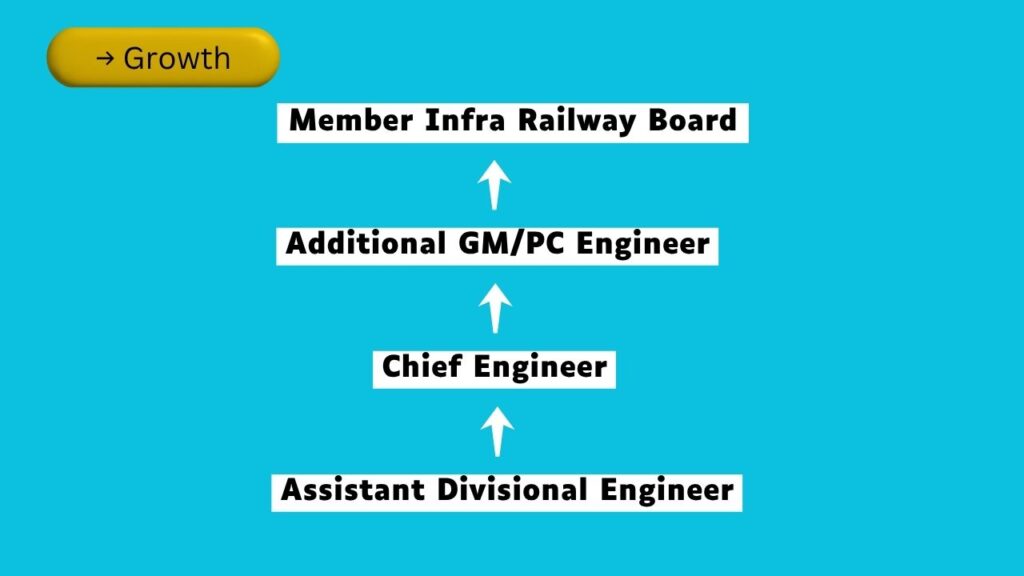
Working for infrastructure, maintenance, and railway track construction is part of the IRSE officer’s job. Safety, bridges, and tunnel development and maintenance are also under this job. The major projects also involved new railway lines, and coordination with other departments for operations like these.

  • Eligibility: B.tech or BE in Civil Engineering. For entering into an IRSE position in Indian Railway, you must clear the UPSC ESE exam.
  • Salaries:
    • Entry-Level: Rs. 56,100 + allowance per month.
    • Senior-Level: Rs. 35 lakhs per year. 
  • Benefits:
  • Housing Allowance up to 50%
  • Travel Allowance
  • Dearness Allowance
  • Medical and LTC
IRSE Officers (Indian Railway Service of Engineers)

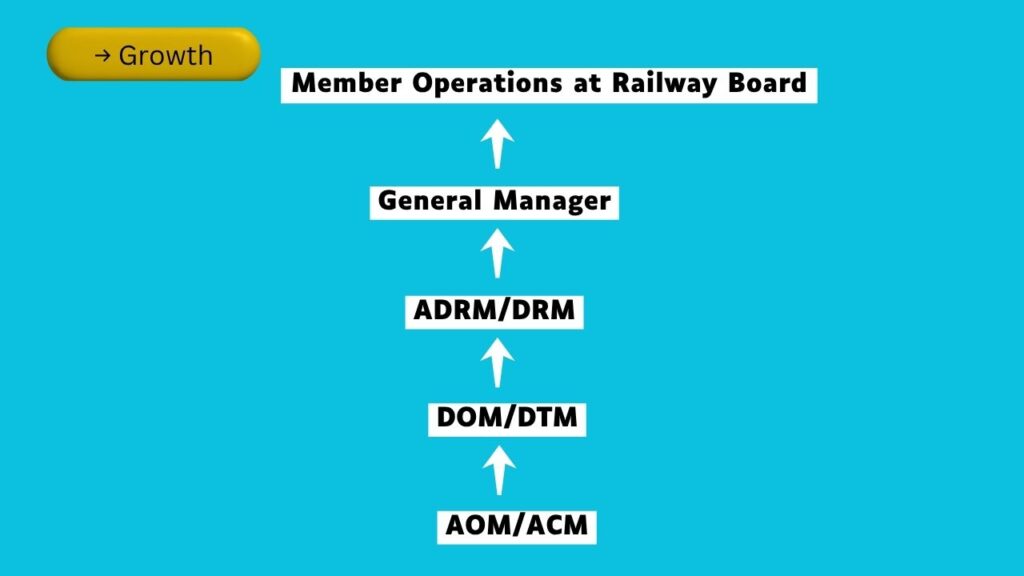
IRTS officers simply manage train operations, logistics, and other commercial disciplines that ensure the train reaches on time. The time track really disturbs other processes if they’re delayed due to a lack of attentiveness. So IRTS makes sure to check every process and transport that goods and passengers on time. Planning schedules for trains, and supervising operations both on trains and stations. Handling logistics and managing tickets to deliver the best services.

  • Eligibility: 50% of recruitment happens directly, and 50% is promoted from Group B. Candidates must have cleared the UPSC Service Exam.
  • Salaries:
    • Basic Salary – Rs. 56,000 per month.
    • Mid-Level Pay – Rs. 15 lakhs.
    • Senior-Level Pay – Rs. 2 lakhs.
  • Benefits:
  • Housing Allowance up to 24%
  • Travel Allowance
  • Dearness Allowance
  • Training at IIM & IIT
IRTS Officers

IAS officers are highly respected in Indian Society. The responsibility that comes with a badge is the top-level administration, where the administrator manages government policies, schemes, and daily operations related to states or cities at the national level. By acting as District Magistrates or Collectors they are maintaining law and order within the country. They have the responsibility to advise ministers, formulate policies, and ensure establishing success by managing any disaster.

  • Eligibility: Candidates must have cleared the UPSC Service Exam after passing their Graduation in any stream.
  • Salaries: 
  • Basic Salary – Rs.60,000 per month.
  • Mid-Level Pay (DM/Secretary) – Rs. 1.2 lakhs.
  • Senior-Level Pay (Cabinet Secretary) – Rs. 2.7 lakhs.
  • 50% dearness allowance
  • 8-24% housing allowance
IAS Officer

Indian Police Service: Leaders who lead police departments in states by investigating crimes, controlling any drug activities, and catching serial killers. Maintaining peace and preventing terrorism are their core responsibilities. Supervising team, implementing technologies in policy, and handling security under the protocol. Great responsibilities pay on a high-scale.

  • Eligibility: Candidates must have cleared the UPSC Service Exam after passing their Graduation in any stream.
  • Salaries: 
  • Basic Salary (DSP/ASP) – Rs. 80,000 per month.
  • Mid-Level Pay (SP) – Rs. 1.2 lakhs.
  • Senior-Level Pay (DGP) – Rs. 2.5 lakhs.

IPS Officers

NTPC is the largest organization in India for producing electricity from coal and gas. India’s reliable energy sector is responsible for serving energy around the country. They are establishing production, also expanding India’s renewable energy with solar and wind power projects.

  • Eligibility: Candidates must have cleared the PSU Exams. B.tech or Engineering degree with GATE scores. 
  • Salaries: Basic Salary – Rs. 60,000 per month. Additional allowances like housing, dearness, medical, and pension.

Oil & Natural Gas Corporation: It explores and drills for oil to make power that supplies to the industries, houses, and vehicles. Produces gas and oil for supply all over India and reduces reliance on other countries. It acts as empowering the country and cutting ties with other countries.

  • Eligibility: Candidates must have cleared GATE or PSU exams. B.tech or Engineering degree. 
  • Salaries: From Rs. 60,000 to 1.8 Lakhs per month to 1.4 Lakhs per month. Additional allowances like housing, dearness, medical, and pension.
Oil & Natural Gas Corporation

BEL is responsible for leading in radars, missile systems, and NAV systems. It specializes in providing national-level security and defense systems mainly in electronics.

  • Eligibility: Candidates must have cleared GATE or BEL exams. B.tech or Engineering degree in electronics or telecommunication. 
  • Salaries: From Rs. 1.5 Lakhs – 2.5 Lakhs per month. Additional allowances like housing, dearness, medical, and pension.
Bharat Electronics Limited

HAL works for defense in the air, they manufacture aero-engines, aircraft, and helicopters for the Indian armed forces. Most of the defense production is handled by the Hindustan Aeronautics Limited. The recruitment process for the jobs in the organization happens through the PSU exams.

  • Eligibility: Candidates must have cleared GATE or PSU exams. B.tech in aerospace or engineering in any other related field.
  • Salaries: From Rs. 1.25 Lakhs per month. Additional allowances like housing, dearness, medical, and pension.
Hindustan Aeronautics Limited (HAL)

There are a lot of bank jobs in the government sector that you can apply for if you are interested in finance, accounting, and management. Government bank’s roles including Probationary officer, Specialist Officer, and Managerial Roles are high-paying positions.

  • Eligibility: 
  • Probationary Officer (PO): Graduation in any stream.
  • Clerk: Graduation in any stream from a recognized college.
  • Specialist Officer (SO): Engineering degree for IT officer and MBA for marketing officer (relevant degree for specific posts).
  • Managerial Position: Post-Graduation with experience.
  • Benefits: Housing allowance, Travel allowance, and dearness allowance.
  • Salaries: Rs. 50,000 to ₹1,00,000 per month

Read More 👉 MPPSC Food Safety Officer Recruitment 2025 – High-Paying Govt Job! Apply Online Now

Defense services are highly respectable jobs in India that provide job security, pride, and high salaries. It requires both focus and physical fitness for selecting the roles in defense service, especially on the high-level jobs that pay high salaries.

  • Eligibility: 
  • Indian Army: 12th in any stream and Passed the NDA/CDS exam.
  • Soldier Ranks: 10th and 12th passed from a recognized board (depending on the roles).
  • Indian Air Force (IAF): 

Graduate in Physics + Maths for Pilots roles

Engineering degree for technical roles.

Graduation in any stream for non-technical roles.

  • Indian Navy: Officer Cadre roles required NDA/CDS pass + INET for specific branches.
  • Salaries: Rs. 56,000 to ₹2,50,000 per month.

Leave a Comment

Your email address will not be published. Required fields are marked *

MP Police Vacancy 2025: 7500 Constable Posts, Apply Fast!

Candidates can fill the application form of MP Police Vacancy 2025 for Constable posts. Candidates will apply online until the last date of submission. You can download the official notification to check every detail according to this selection. There are several vacancies around 7500 that will be filled through this selection process. Please check the eligibility criteria and age limit before applying for the constable post (General Duty). 

Candidates must be physically fit and have no health issues because after the written examination you are summoned for the physical and medical test. It is mandatory to pass these tests for the job role. 

MP Police Vacancy 2025 Highlights and Important Dates

OrganizationMadhya Pradesh Employee Selection Board
PostConstable
Number of Vacancies7500
Last date of Application29th September 2025
Selection ProcessWritten Exam → Physical → Fitness Test Medical Test
Official WebsiteClick Here
Application Starts On15th September 2025
Application Ends On29th September 2025
Exam Date30th October 2025
Admit CardUpdate Soon
ResultUpdate Soon

Eligibility Criteria

Educational QualificationClass 10th marksheet with a good score or 10+2 marksheet from a recognized board.
Age limitGen (male): 18 – 33 yearsReserved category got age relaxation up to 38 years

Read More 👉 CAT Exam Syllabus 2025: Complete Section-Wise Guide to Crack the Test

Application Fee 

General Category Rs. 500
SC, ST, OBC, EWSRs. 250

Instructions to Fill The MP Police Constable Application

Before applying for the MP Police Constable Bharti in 2025, candidates should know the instructions and eligibility criteria. This application will register your name for the examination that will happen in October. You will get selected after clearing this examination and then you are summoned for the next procedure. 

Let’s read this instruction to apply online:

  1. Visit on the official website where the link of the application is open.
  2. Click on that link and add your details in the form that appears on your screen on MPESB website. 
  3. Attach your valid documents with the application form and click to submit.
  4. Before the final submit, check all the filled details of yours to make sure everything’s correct.
  5. Save the copy of the application for your future reference.
Useful Links
Application FormClick Here
Official NotificationClick Here
Official Website Click Here

Leave a Comment

Your email address will not be published. Required fields are marked *

BSNL Recruitment 2026: Apply Online for 120 SET Vacancies, Eligibility & Full Details

BSNL Recruitment 2026

Bharat Sanchar Nigam Limited (BSNL) has been releasing multiple vacancies for various posts under its BSNL Recruitment 2026 notification and it is a very good opportunity for the young and energetic candidates to apply for this largest Telecom PSU of the country. The news has created a wave of excitement among the job seekers across the nation, and for those who were waiting to take their first step into the industry, they can’t get a better opportunity.

BSNL, the Indian state-owned telecom company has released a notification for Senior Executive Trainee (SET) Recruitment 2026. There are a total of 120 prestigious vacancies to be filled by professionals. The last date to submit an application for this job is 15 April 2026.

Dates For BSNL Recruitment 2026

EventDate/Details
Notification release29/January/2026
Application start05/February/2026
Last date to apply15/April/ 2026 (extended)
Application correctionAround April 8–23, 2026 
Exam dateTo be notified later

Breaking Down the Vacancies

Let’s get down to the numbers, because that’s really what matters when you’re plotting your career move. Out of 120 posts, 95 posts are reserved for Telecom Stream and 25 posts for the Finance Stream. The category wise distribution goes like this: 51 general, 31 OBC, 18 SC, 9 ST and 11 for EWS candidates.

StreamVacancies
Telecom95 
Finance25
Total120 

What makes this BSNL Recruitment 2026 all the more interesting is that BSNL has unequivocally given preference to technical knowhow – nearly 80% of the posts are in the telecom operations domain, underscoring the firm’s commitment to ramp up its core infrastructure and services. 

Eligibility Scale

For Telecom Stream A full-time B.E/B.Tech with minimum 60% marks in the following related disciplines is required: Electronics and Telecommunication, Electronics, Computer Science, Information Technology, Electrical, Instrumentation. The essential point being “full-time”; a distance learning degree or part-time degree is not acceptable. 

The Finance Stream, too, is very specific: you must be an ICSI member, in other words, a qualified Chartered Accountant (CA) or Cost and Management Accountant (CMA). This is no compromise either.

You should be between 21 and 30 years of age as on March 7, 2026. Apart from this, if you belong to reserved categories, you are allowed some relaxation: 3 years for OBC candidates, 5 years for SC/ST candidates, and 10 years for Persons with Benchmark Disabilities (PwBD). The exact duration depends on their category. 

How Much You Can Earn?

Selected candidates will receive according to the IDA E-3 pay scale with the pay ranging from ₹24,900 to ₹50,500 per month. Add into the mix House Rent Allowance (HRA), Dearness Allowance (DA), Travel Allowance (TA), and a variety of other perks for which PSUs are renowned and it is a very tempting salary package when you add the job security and work-life balance of the job. 

The Selection Process

BSNL is not giving these posts on a platter. The process is stringent and intended to select the best. This is how it is done:

  • Initially, you will appear in a Computer Based Test (CBT) containing 200 multiple choice questions for 3 hours. 
  • It is a two part test: a general aptitude test containing 40 questions and a technical or finance knowledge test having 160 questions, this depends on your stream. 
  • Candidates who are guessing blindly can face the deduction of 0.25 marks if their guess will go wrong so it may not be the best strategy. 
  • You must achieve Minimum 45% marks in each section and 50% marks overall if you belong to the General Category. Candidates from other categories need 35% in each section and 45% overall is enough to pass the exam. 
  • If you clear the written exam, you will be called for document verification and medical examination. 
  • Clear all these hurdles, and you’re in but with a condition. There is also a boundation that you must serve 2 year probation and 5 year service period.

Step-by-Step Guide to Apply

  1. You can find the link of application process on BSNL Official Website. 
  2. Register with your valid email ID and mobile number.
  3. Enter all your details (Personal and Education) correctly, even a single error can cost you the chance.
  4. Upload your photo, signature, you require certificates
  5. General/OBC/EWS candidates should pay a fee of ₹2,500 and SC/ST/PwBD candidates are exempted from half the application fee i.e. ₹1,250. 2,500 online.
  6. Submit and download or print your Print off your records, and any evidence of submission for your application to keep safe. 

Read More:- SSC vs UPSC: The Ultimate Showdown for India’s Most Demanding Government Job Exams

Conclusion

BSNL Recruitment 2026 is a golden chance for the candidates who want to make a good career in the infrastructure of India. With 120 vacancies, the National Company Law Appellate Tribunal (NCLAT) is inviting applications from freshly graduated engineering and CA/CMA professionals who are looking forward to a career-building or establishing job in the public sector. The application deadline has been extended to 15 April 2026, plenty of time to get ready.

Ensuring that you have all the paperwork and documents in order Getting your technical skills ready up to scratch Getting yourself comfortable with the CBT (Computer- Based Test) format Remember, preparation is key if you want to ace the exams. 

For those who are looking to start their career in the Indian Telecom industry, especially BSNL,then it is recommended to visit this official site. Get the Latest Notification for knowing about BSNL Recruitment 2026 Procedure of Application and eligibility criteria. Making that initial move might lead to a bright future in the industry.

Leave a Comment

Your email address will not be published. Required fields are marked *

Paramedical Courses Career Roadmap After 12th: Jobs, Salary & Scope

Paramedical Courses

The domain of paramedical sciences is an exciting path for students who have completed high school to explore the diverse aspects of the healthcare sector. In line with increasing need for trained personnel, Paramedical Courses Career Roadmap consist of specific training on diagnostics, emergency care, treatment and rehabilitation. 

These Paramedical Courses aim not only to provide technical knowledge but also to train students to overcome professional challenges in an ever-changing healthcare environment, which is the reason why this is such a popular career path for young aspirants.

Here, we provide a full-fledge career guide for all the high school graduates who aspire to establish a career in paramedical services in the near future. Here, we will discuss your eligibility, the course, different specializations, the procedure to move into the sector and a variety of attractive career options after you complete it. 

Why Choose a Paramedical Courses?

Types of paramedical jobs have also been included in the lists of healthcare occupations. What questions do you have about paramedics? They also play a vital role in critical diagnosis, emergency and outpatient treatment as well as in patient rehabilitation.Reasons to choose a job in paramedical science include: 

  • In high demand: Health care is growing. The reports state that the need for paramedical technicians will increase by 20-25% over the next few years, especially in the developing countries.
  • Endless Career Paths: There are endless career paths in paramedic including Emergency Medical Technician (EMT), Medical Laboratory Technologist, or taking a leap into new-age disciplines like telemedicine and health informatics.
  • Personal and Social Satisfaction: In direct patient care and its positive impact on society, the paramedical professionals have the greatest chance for both professional fulfillment and job security permanently. 

This has opened up a window of opportunity for high school graduates to make a career in the healthcare sector through paramedical courses. 

Eligibility and Requirements for High School Graduates

The path to a good paramedical career begins with the right academic background. For class 12 board takers, the online eligibility criteria for admission are as follows:

  • Educational qualifications: A high school diploma with science subjects like biology, chemistry and physics is mandatory. Many paramedical centers have the expectation that students will excel in those subjects because they are the basis of the more difficult material taught in further courses.
  • Basic Certifications:You can get some extra certifications like basic life support (BLS) or CPR Training which can help you stand out. These credentials not only prepare candidates for the hands-on practical aspects of healthcare, but also attest to their dedication to the field.
  • Entry Exams and Selection Process: A few courses may have an entrance exam or an aptitude test, and have an admission process that involves showing your enthusiasm for the science and health care.

These essential qualifications allow high school graduates to pursue a variety of Paramedical Courses, and so the door is opened to a multifaceted education. 

Read More:- RRB Group D Recruitment 2026 — Check Vacancy and Link

Courses and Specializations in the Paramedical Field

There are various types of Paramedical Courses that you can opt for—certificate and diploma courses to full degree courses. Theoretical as well as practical knowledge is imparted, so students gain a good understanding of what is required at workplaces in hospitals and other healthcare facilities. 

Below is a table with a brief summary of some of the specializations with the work they do and place of work: 

SpecializationRoleWork Settings
Medical Laboratory TechnologistBlood, Blood Fluids, Tissues Testing Diagnostic center, Hospitals, Research Facility
Radiology TechnicianX-rays, MRIs, CT scans using machinesRadiology Center
Emergency Medical Technician (EMT)Provide First-Aid in EmergencyER, Ambulance
PhysiotherapistEngage with Patients for Rehab and guide themRehabilitation Clinics and Hospitals
Anesthesia TechnologistAssisting with AnesthesiaOperation room
Other Roles (Optometrist, Dental Hygienist, Speech Therapist, Occupational Therapist)Patient Special CareMostly private clinics

This table is a sample of the multiple occupations which are available for the paramedical candidates but, all of them may vary in their complexity and challenges. The courses in these disciplines usually consist of lectures and laboratories and/or clinical rotations and or paid or unpaid work placements that provide students with hands-on experience required to work in their chosen field. 

Steps to a Successful Paramedical Career

A step-by-step advance is necessary for a career in paramedical work. The given flowchart depicts the straightforward career opportunity for the regular high school pass outs: 

The flowchart of Paramedical Courses shows the process step by step: Begin with a solid academic foundation, apply practical experience, get certified, and then specialize or move into management. Each phase relies on the previous one to build depth and breadth of skills in the professionals. 

Career Opportunities in the Paramedical Courses

Paramedical professions have a wealth of options and opportunities that go well beyond the usual roles. After completing their education, students can work in multiple fields such as: 

  • Hospital Environments: A large portion of paramedical professionals employed in hospitals include them in the diagnosis, patient care, and testing.
  • Diagnostic and Imaging Centers: Medical Laboratory Technologist, Radiology Technician and other allied health professionals play an essential role in identifying and diagnosing countless diseases.
  • EMS: EMTs and Paramedics are needed now as much as ever in ambulance services and emergency departments, where making split-second decisions in a pump-driven environment is part of the job.
  • Trend Trailers: As telemedicine and health informatics matures, more jobs are likely to emerge for people focused on the convergence of healthcare and technology.
  • Own Business: Many practitioners have transitioned from practicing to owning their own clinic, laboratory, or home healthcare service, and some contribute to the field by working in their own business while enjoying the personal freedom associated with being your own boss. 

The positive growth in the healthcare industry along with technology enhancements is expected to create additional jobs, which makes it a promising field for people looking to build a career in this industry. 

Benefits of a Paramedical Career

Benefits of a career in paramedics are numerous and high school graduates can look forward to a great future (Check out some of the pros and cons about joining this career below):

  • Employment Security: Increasing Paramedic jobs healthcare needs worldwide ensure a stable and promising future for paramedical practitioners.
  • High Salary: The salaries for a number of these positions are competitive, commensurate with their unique skill set and important responsibilities.
  • Variety of Opportunities: You can find job opportunities to suit your interest, whether that be hands-on with patient care, supporting diagnostics or working with new technology.
  • Personal Satisfaction: A career in paramedicine not only is financially rewarding, but it can positively affect the lives of thousands of patients and the community at large.
  • Career Advancement: Many health services have in place a career progression (e.g. the Paramedic Practice Advancement Ladder) to include rewarding experience and ongoing professional development. 

Institutional Support for Aspiring Paramedical Professionals

There are many reputed colleges which offer good facilities and infrastructure for students who want to make a career in paramedical. For example:

  • Belarani Institute of Paramedical & Allied Sciences: The Training provided is more practical oriented by the experts with well experienced trainers and Placement Support to the students on completion of their Training.
  • LifeLine EMS: Nowhere is this more true than in Southern California where LifeLine EMS provides seamless EMT to Paramedic pathways, comprehensive training, mentorship programs and well-defined internal career promotion tracks.
  • Colleges like Foothill College and The George Washington University: The programs which run the gamut from short-term, intensive 11.5-month programs to long-term degree programs include classroom instruction, skills labs, clinical rotations and field internships designed to fully prepare students to meet the challenges of the profession.

These schools do more than train students in the latest tools and technology, they create cultures where a commitment to lifelong learning and professional success is ingrained. 

Conclusion

Paramedical Courses Career Roadmap: High school graduates opting for a profession in paramedical sciences not only ensure a bright and stable career but also play an important role in the advancement of global healthcare. With the right skills and commitment, as the industry continues to grow, there will be countless opportunities for those dedicated to pursuing a career path with endless potential.

So whether you’re interested in the accuracy of laboratory diagnostics, the life-saving measures of emergency services, or the professional practice of physiotherapy and more, there’s no doubt that your career in the paramedical sector will be fulfilling and rich with opportunity. Begin your journey today and discover the opportunity to have a real impact on the lives of many. 

Leave a Comment

Your email address will not be published. Required fields are marked *

Best Private University in India for Quality Education and Innovation

Best Private University in India

The scenario of higher education in India has been a significant transfigurement in last 10 years. It is no longer the case that the best private universities in India are the only standard setters for excellence. Private universities today are reinventing the world-class education allowing them to differentiate in quality academics, through leading-edge innovation and creating environments where students are not just learning but also creating, discovering and leading. 

Well, if you are looking for higher education in India then it is important to know what the differences are in the top private universities. They are not simply teaching bodies but they are breeding grounds for tomorrow’s captains of industry, researchers and innovators who will chart courses through industries and address global challenges. 

The Top Contenders

In the NIRF 2025 rankings, the private university sector is led by a few good institutions. The Manipal Academy of Higher Education (MAHE) emerges 3rd among universities across the country and stands as the best private university in the country. Closely following are BITS Pilani at rank 7, Amrita Vishwa Vidyapeetham at rank 8, VIT Vellore, LPU, Amity University and SRM Institution of Science and Technology at rank 11. 

However, not only in rankings, Ashoka University is transforming Indian higher education. Ranked as the best new-age private university and awarded as the “University of the Year (Emerging)” in 2025 at the FICCI Higher Education Summit, Ashoka is the future of liberal arts and interdisciplinary education in India. 

Manipal Academy of Higher Education (MAHE) Amrita Vishwa Vidyapeetham
BITS PilaniVIT Vellore
SRM Institution of Science and TechnologyAmity University
Ashoka UniversityLovely Professional University (LPU)

What Makes These Universities Stand Out?

Research and Innovation at the Core

Today’s private universities know that good teaching without innovation is half-truth. BITS Pilani has been especially creative in institutionalizing research amongst students. The institute, since 2023, has published more than 6,500 research papers in journals with average impact factor more than 4.1, filed 325+ patents, completed 13+ technology transfers, and incubated 138+ deep-tech startups with a combined valuation of over USD 300 million.These are not simply figures—they represent actual technology developed by students and professors that are reshaping markets and addressing real-world problems. 

The Manipal Academy too has made huge investment in innovation infrastructure. Its Innovation Centre is a dynamic ecosystem that offers seed funding, incubation support, mentorship for patent filing and commercialization. The university has a state-of-the-art Central Analytical Instrumentation Facility (CAIF) with world class instruments such as SEM, NMR, XRD which enables interdisciplinary research in emerging areas like material science, biotech etc. 

Ashoka University has now set up the Ashoka-Zeiss Core Imaging Facility, the first such facility in India, which caters to high end research in Cell Biology, Biophysics and Structural Biology. Inspiringly, in 2025, Ashoka was awarded the highest distinction for its research and innovation activities, demonstrating a strong commitment to advancing the frontiers of knowledge.

Faculty Excellence and Academic Rigor

The standard of faculty decides the standard of education. These elite private colleges have gone all out in trying to hire outstanding scholars, researchers, practitioners. Amity University has right faculty student ratio to provide quality education in meaningful mentorship and is supported by 2,100+ well experienced faculty members in helping 37,000 students in different campuses.​

The curriculum at these schools is more than just textbooks. Many elite private universities weave in industry perspectives into their curriculum through guest lectures, internships and group work. That means students learn not only the theoretical underpinnings, but real-world applications and evolving industry issues. 

Global Partnerships and International Exposure

It is always true that in a connected world, you need global exposure to get a good education. Ashoka University, one of India’s leading liberal arts universities, has partnered with 60+ prestigious institutions globally across 28 countries and five continents including Yale University, Sciences Po, University of Melbourne, EYH Paris. Partner organizations also provide opportunities for interaction with group and field trips during semester exchanges, summer programs, research collaborations and faculty exchange. 

Similarly, Manipal University holds joint research programmes with top-notch institutions worldwide and is funded for research by various agencies such as DST, CSIR, AICTE. This global network ensures that students have access to an array of perspectives and world class academic resources. 

Placement Excellence and Career Readiness

Quality education in the end translates into job opportunities. Manipal Academy secured more than 90% placement in 2025, with 8,000+ students placed across multiple programs. The highest package for engineering students went up to ₹69.25 LPA with average package of ₹12.31 LPA. Top recruiters: Microsoft, Amazon, Deloitte, IBM, Standard Chartered, and BookMyShow. 

Inclusive Accessibility and Scholarships

Although being good quality generally carries a cost, many leading private universities understand that that should be manageable. These schools provide merit-based scholarships, aid packages and need-based grants so that gifted students aren’t turned away because of money. 

The Innovation Ecosystem

What really sets the best private universities of today apart is their strategies for innovation across the board. BITS Pilani has created a number of innovation tracks to address a range of contexts – SPARKLE for transdisciplinary problem solving, SOLVE for applied innovation and PIEDS (Pilani Innovation & Entrepreneurship Development Society) along startup development.​

Ashoka University launched the Young Scholars Programme: Innovators in Science & Tech (YSP IST). It’s for the high schoolers and it’s a 10 day live-in camp. It enables them to learn difficult subjects such as environmental chemistry, neuroscience, quantum computing and genetic engineering. These camps help create future inventors. They also ignite science curiosity at a young age.  

Read More 👉 Top Agriculture College in Uttar Pradesh: Courses, Fees & Admission Details

Choose Your Path Wisely

Choosing a university is a very personal matter. If you are interested in a multidisci­plinary education close to industry, Manipal Academy is excellent if you like comprehensive education with strong links to industry. If you want the best research and entrepreneurship route, BITS Pilani is unparalleled. Ashoka University, for those interested in liberal arts with a global outlook, provides a new frontier in Indian higher education.

What matters most is knowing what you want. Are you a basic researcher? Do you want to build startups? Are you looking for global exposure? The finest private Indian universities today cater to such journeys 

The Future of Private Higher Education

The Indian private university sector is evolving fast. They are not simply copying public universities, they are innovating, conducting cutting edge research and drawing talent from around the world. This focus on quality, innovation, research and international collaboration is indicative of a vibrant, competitive ecosystem, and students stand to gain immensely from this.

Keep in mind as you start your higher education journey, Rankings are just one measure. What makes a school is its learning community, the quality of its faculty, the substance of its research, and its aspiration to produce not just accomplished professionals but responsible global citizens. India’s finest private universities are increasingly making the case that they can indeed deliver exactly that.

Conclusion

India’s leading private universities are transforming higher education with cutting-edge research, global outlook, industry-centred curriculum, and incubators of innovation. From BITS Pilani’s entrepreneurial culture to MAHE’s research excellence and Ashoka’s revolutionary liberal arts model, you will find a way to map out a future-ready career.

So when you’re picking your uni, focus on what suits your ambitions – be it research, startups, global learning or industry know-how. 

Ultimately, these top private colleges in India are showing that they can shape not just degrees, but the leaders of tomorrow. 

Leave a Comment

Your email address will not be published. Required fields are marked *

Aerospace Engineering Courses: Complete Guide to Soar into the Sky with the Right Education

Aerospace Engineering Courses

If you have ever been curious as to how the planes you ride on stay in the air or how a rocket can travel all the way to space, then you think like an aerospace engineer. From Aerospace Engineering Courses, eligibility criteria to future scope and interesting specializations available, this all you need to know guide will help you make an informed decision which you take for pursuing aerospace engineering course in India.

The Indian aerospace industry is booming. ISRO, DRDO, HAL, and a host of private companies are actively hunting for talented engineers to design, build and fly planes and spacecraft. With increasing demand and attractive salary packages, this is the way to your dream career. 

What Exactly is Aerospace Engineering?

Aerospace engineering is the primary engineering discipline concerned with the design, construction, science and technology of aircraft and spacecraft. It is a combination of physics, mathematics, materials science, and advanced tech that address real life problems in the fields of aviation and space travel. 

The range of activities in this field is so broad that it divides into four key specializations:

Aeronautics — This pertains to air within the atmosphere and includes such things as commercial jets, military planes, helicopters, drones (UAVs), and blimps. Aeronautical engineers study flow-air, aircraft design, motion, and propulsion.

Astronautics — A subject of business such as astronauts, rockets, satellites and all the stuff that goes beyond the atmosphere. Astronautical engineers specialize in orbital mechanics, satellite communications, rocket propulsion, and space exploration missions.

Avionics — These are the electronics and computers used in an aircraft and spacecraft. Avionics engineers create the system software of navigation, communication and autopilot systems, etc., in raw air borne machines.

Defense Technologies — This area concentrates on military, and its ability to develop and deploy new systems involving missiles, defense technologies, military drones and weaponized technology. This is important part of national security and defense system. 

Aerospace Engineering Courses

Now let’s move on to the various types of courses under aero space engineering. Whether you are a high school beginner or already have a bachelor’s degree, there is a path for you.

1.Diploma in Aerospace Engineering (3 Years) 

If you are looking forward to pursue a career in aerospace engineering, you can opt for the Diploma in Aerospace Engineering from a reputable board after 10th class.

This is good to start if you have done your 10th grade. It is not really theoretical but ‘practical’ which provides aerospace technologies experience. 

AspectDetails
Duration3 years
Eligibility10th pass with Mathematics and Science (minimum 50% marks)
FocusPractical skills and industry-ready training
Career PathCan pursue B.Tech (lateral entry) or start working
Average Fees₹2-4 Lakh for the entire program

2. Bachelors in Aerospace Engineering — B.Tech (4 Years)

It serves the largest client base and is considered the gateway course for professional aerospace. It is a bachelor’s degree course and the eligibility is 10+2 with Physics, Chemistry and Mathematics (PCM). 

AspectDetails
Duration4 years (8 semesters)
Eligibility12th pass with PCM (minimum 50-60% depending on college)
AdmissionBased on JEE Main Score, state-level exams, or direct merit
Average Fees₹ 2-2.5 Lakh/year in government; ₹5-10 Lakh/year in Private colleges
Total Program Cost₹4-40 Lakh depending on college type

The B.Tech is an all-inclusive course which includes theory and practical based knowledge. Subjects like mathematics, physics, and general engineering will be included in your first two years for foundation then you can choose specializing in aerospace-related subjects in your third year.

3. M.Tech in Aerospace Engineering (2 Years)

M.Tech in Aerospace suits better for those who want a higher level of education in aerospace engineering. Building a professional level career internationally, you must need this degree.

AspectDetails
Duration2 years (4 semesters)
EligibilityB.Tech/BE in Aerospace or related field with 55% minimum marks
AdmissionThrough GATE exam (for government colleges) or merit-based (private)
Average Fees₹40,000-1 Lakh/year in Government; ₹2-4 Lakh/year in Private colleges
Career AdvantageHigher salaries, research opportunities, senior positions

Job opportunities for M.Tech graduates are applicable in research, designing and higher level management. Top companies and research centres look for M.Tech holders for their specialised projects. 

4. Ph.D. in Aerospace Engineering (3-5 Years)

“This Is for the Research and Innovative Curious”. It’s the top aerospace engineer qualification for those who want to know how to research and innovate. 

AspectDetails
Duration3-5 years
EligibilityM.Tech or equivalent with GATE qualification
FocusOriginal research and innovation
OpportunityTeaching, research at ISRO, universities, private labs

5. Aerospace Engineering Few Months Certification Courses 

In just 6 months to 1 year duration, you can enhance knowledge or skills in certain areas. It is best for hands-on experience in a specific field.

Course TypeDurationCostSuitable For
CAD and Aircraft Design6 months₹20,000-50,000Working professionals, students
Avionics Systems6-8 months₹30,000-60,000Interested in Electronics
Propulsion Systems3-6 months₹15,000-40,000Engineers wanting specialization
Aerospace Materials4-6 months₹25,000-50,000Manufacturing professionals

B.Tech Aerospace Engineering Core Subjects

YearSemestersEssential Subjects
1st YearSem 1-2Mathematics/Physics/Chemistry help develop problem-solving skillsEngineering Mechanics/Thermodynamics/Fluid Mechanics/ and Basic Electronics introduce how physical laws apply to real engineering systems.
2nd YearSem 3-4Gas Dynamics and Aerodynamics, which explain how air behaves around aircraftPropulsion and Aircraft Structures teach how engines work and how aircraft are builtStrength of Materials and Computer Programming strengthen technical and analytical skills.
3rd YearSem 5-6You study higher-level aerodynamics, flight dynamics, and structural analysis Heat Transfer and Avionics.
4th YearSem 7-8You learn advanced tools like Computational Fluid Dynamics (CFD)Aircraft Design and Systems

Aerodynamics describes how air moves around air and is an important factor in the level of efficiency of airflow around the wings.

  • Propulsion: Discussion of jet engines, rockets, turboprops
  • Structures deals with building an aircraft to be as strong as possible but still as light as possible.
  • Stability and control the motion of an aircraft.
  • CFD Computational Fluid Dynamics: Uses computers to emulate airflow — a modern necessity
  • Aircraft Design: All of the above are brought to bear on realistic, total aircraft design projects.
  • Most B.Tech courses will involve a lot of lab work, wind tunnel testing, simulators and a capstone design project where you actually design an aircraft or spacecraft. 

Who Are Eligible For Aerospace Engineering

B.Tech (Undergraduate)Need to pass 12th class with PCMB or PCB and should have obtained 50 to 60% marks Meet the age criteria of 17 to 28 yearsEntrance exams such as JEE Main, State Level Exam etc
M.Tech (Postgraduate)Hold a valid B.Tech/BE degree in Aerospace or equivalent with 55% marks Valid GATE score (for government colleges)
DiplomaAfter 10th with Mathematics and Science having 50% marks as a minimum15 years as a minimum age
Lateral Entry to B.Tech 3-year engineering diplomaBSc in Physics, Chemistry, Mathematics

Where Will Aerospace Engineers Work?

OrganizationTypeSpecializationSalary Range (Fresh)
ISROGovernmentSatellites, space missions, rocket development₹8-10 LPA
DRDOGovernmentDefense systems, missile technology₹7-10.5 LPA
HAL (Hindustan Aeronautics)GovernmentAircraft manufacturing, defense₹7-9.5 LPA
Boeing IndiaInternationalAircraft systems, defense solutions₹8-12 LPA
Airbus IndiaInternationalAircraft manufacturing, maintenance₹7-10 LPA
GE AviationInternationalAerospace engine design₹7-9 LPA
Rolls-Royce IndiaInternationalPropulsion systems₹8-11 LPA
Tata Advanced SystemsPrivateAircraft components, defense₹7-11 LPA
Godrej AerospacePrivateSpace and defense hardware₹5.5-7.5 LPA

Salary & Career Growth 

India's aerospace engineering salary

Aerospace Engineering Salary Progression in India

LevelsSalary — LPAMonthly IncomeStages
Fresher (0-1 year)₹4.5-7₹37,500-58,333Graduate joining first job
2-5 years₹8-12₹66,667-1,00,000Intermediate engineer
5-10 years₹8-15₹66,667-1,25,000Senior engineer or team lead
10+ years₹15-25+₹1,25,000-2,08,000+Manager, specialist, researcher

Salary by Sector:

SectorFresher PackageExperienced Package
Government (ISRO, DRDO, HAL)₹7-10 LPA₹20+ LPA
Private Indian Companies₹5-9 LPA₹12-18 LPA
International Companies (Boeing, Airbus)₹8-12 LPA₹20-28+ LPA
Startups & Newer Companies₹4.5-6.5 LPA₹10-14 LPA

The Future Looks Bright

India’s aerospace engineering salary will increase by 20-25% by 2030 and is highly influenced by demand in electric aircraft, AI integration, space exploration, and green aviation related technologies, suggest the industry projections. .

Read More 👉 HR Professional Courses: Get Complete Guide on Career Path, Salary & Growth

The Roadmap To Become Aerospace Engineer

Year 1 & 2: Begin From Basics

The initial two years are dedicated to core subjects such as mathematics, physics and general engineering. These years are tough, but necessary. If you have a strong base in these stuff, then you can understand high level stuff in aero easily later on. 

Year 3: Where Aerospace Engineering Gets Exciting

In year 3, the real aerospace journey begins. You then go on to such specialised areas as aerodynamics, propulsion and aircraft structures.  

Year 4: Major Project and Real-World Problem Solving

Senior year is spent mostly on a senior project. You could design an airplane, build spacecraft systems, or even study a real problem in aerospace engineering. Many of these projects are sponsored by industry, giving students real-world experience and making them more employable. 

Internships: The Key to Career Growth

The majority of aerospace engineering programs require 2 to 3 internships, such as summer and at times semester-long training. Top organizations including ISRO, HAL and Boeing hire interns on a regular basis. This hands on experience is invaluable and it contributes a lot in building a strong resume and career in future. 

Choose Your Specializations

SpecializationFocusScopePreferred Companies
AerodynamicsAirflow, drag reduction, aircraft efficiencyAircraft design, researchISRO, Airbus, NASA etc
PropulsionEngines in Jet engines, space rocketsEngine design, space missionsGE Aviation, Rolls-Royce, ISRO
Flight Dynamics & ControlAircraft stability, autopilots, guidance systemsControl systems, UAVsBoeing, HAL, Airbus
Aircraft StructuresMaterials, stress analysis, lightweight designDesign Structure, & aerospace manufacturingAirbus, HAL
AvionicsRadio System, navigation, ElectronicsUAVs & Avionics Boeing, DRDO

Best Aerospace Engineering Colleges in India

CollegeTypeLocationSpecialization
IIT BombayGovernmentMumbaiAll specializations
IIT MadrasGovernmentChennaiAircraft & Space
IIT KharagpurGovernmentWest BengalAll specializations
IIT KanpurGovernmentUttar PradeshAll specializations
Mahindra UniversityPrivateHyderabadComprehensive curriculum
SRM ISTPrivateChennaiModern labs & industry focus
Chandigarh UniversityPrivatePunjabIndustry-driven curriculum
Ramaiah InstitutePrivateBangaloreWell-equipped facilities
Manipal AcademyPrivateBangaloreResearch-oriented

Conclusion

Aerospace Engineering Courses aren’t simple, it’s a journey through innovation, precision and human ability. Whether you want to design the next generation of commercial planes, put satellites into space, or work on autonomous drones, this is a field with limitless options.

The Indian aerospace industry is poised for growth. With ISRO’s ambitious space programs, HAL’s indigenous aircraft development and international partnerships with Boeing and Airbus, there is no dearth of opportunities. And if you are in the top performers, the world is your sky. 

Leave a Comment

Your email address will not be published. Required fields are marked *

Scroll to Top