Best Government Jobs for Women in India – Secure, Respected & High Paying Careers!

Best Government Jobs for Women

There are plenty of Best Government Jobs for Women in India which offer high salaries, job security, and a reputed career. If you want to work in a disciplined environment without relocation, you can choose a government job. In India, women have the leverage to get promoted and reserve vacancies in the women’s seats but you must clear out the examination. 

Whether you are a young graduate or a married woman returning to work, both can apply for these government jobs. You can serve the nation with pride and also relief from future headaches after retirement. Explore these roles and select your path that aligns with your interests and qualifications.

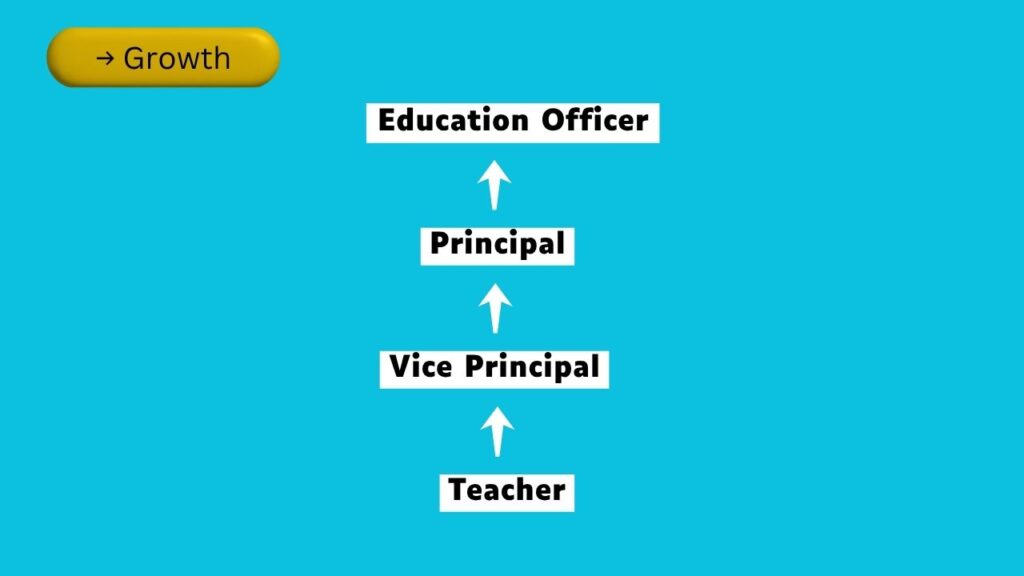
There are several posts in teaching such as PGT, TGT, and PRT. The school time for teachers is 6 to 7 hours which is usually less than any corporate job. One of the benefits is holidays during summer and winter vacations. Most of the women in India prefer to become teachers because it’s not that hard, also getting promotions to vice principal or principal.

Teaching jobs are the most reliable jobs for women who love teaching and are B.Ed qualified. Also, women can easily handle this job with their children’s responsibilities. It is the best option to ensure stable career growth and job security. In the government sector, teachers also get high salaries.

Posts: 

  1. PRT (Primary Teacher)
  2. TGT (Trained Graduate Teacher)
  3. PGT (Post Graduate Teacher)

Why It’s a Good Fit For Women:

  • Working hours are less, usually for 6-7 hours a day. That’s a huge benefit for the women to handle both work and family.  
  • Vacation holidays are one of the perks. 
  • You don’t have to relocate for the job. You can teach in small-town schools.
  • Generally, the school staff has women in more numbers than men. So, it is safe for women to work there.
Government Teacher Jobs

Graduates with a commerce stream can choose their career in banking. If you are interested in finance, accounting, account management, and many other posts that can give you a chance to get a high-salary. 

Post: 

  1. Probationary Officer (PO)
  2. Clerk
  3. Assistant (RBI, NABARD)

Why It’s a Good Fit for Women:

  • Banking jobs are usually for 8 to 9 hours but it has weekends off, especially for clerk roles. It fits for the woman who wants a career in banking.
  • There is no need to stress out about the relocation of the job.
  • Government banks offer high-paying jobs and allowances. 
  • It also provides maternity leaves so it is good for women to establish both career and personal life.

Growth Path:

The promotion happens internally so you can grow professionally from clerk to manager or from PO to General Manager.

Read More 👉 Top Highest Paying Government Jobs in India That Pay Like Private Sector!

Posts:

  1. Indian Administrative Service (IAS)
  2. Indian Foreign Service (IFS)
  3. Indian Revenue Service (IRS)

Why It’s a Good Fit for Women:

  • If you have skills that fit this role such as decision-making and logical thinking.
  • It provides authority, Power, and Policy-making.
  • Women officers who are successful in this role already inspire others.
  • It provides authority, Power, and Policy-making.
  • Women officers who are successful in this role already inspire others.

Reality Check:

IPS is a highly respectable and high-paying job but includes field duties, which may be difficult to cooperate sometimes with women due to family responsibilities.

Best For:

Women who are ambitious to serve the nation with pride and take leadership roles. So, if you are willing to serve your life for this life, you can take the job by preparing well for competitive examinations and fitness.

Also Read: Government Job vs Private Job: Which Career Offers a Better Future in 2025?

Popular posts:

  1. Assistant Audit Officer
  2. Income Tax officer
  3. Statistical Investigator
  4. Assistant Section Officer
  5. Assistant Audit Officer (AAO)

Why It’s a Good Fit for Women:

  • If you don’t want to work in the field and prefer a desk job then it is a fit role for you. 
  • Most of the posts are desk jobs.
  • All-India postings but women often get local postings.
  • The additional benefits are very attractive.

Growth Path:

There is a chance for professional growth internally in the secretary position.

Best for:

If you want a well-stabilized career with a high-paying government job in regular office hours, you can select this sector after graduating from any stream.

Posts:

  1. Anganwadi Supervisor
  2. Lower Division Clerk
  3. Village Development Officer
  4. State PSC Officers

Why It’s a Good Fit for Women

  • Women’s postings mostly happen in their hometown.
  • So there is no need to struggle with understanding a new language.
  • The selection process is not that hard as compared to UPSC or SSC.
  • Fixed working hours and a safe environment.

Best for: 

Those who want to work in their hometown without leaving their family. Women can be selected for this role because the selection process is not hard.

Posts:

  1. Assistant Manager
  2. Engineers
  3. Administrative Officers

Why Are PSUs Good for Women?

  • The salary for these roles is higher with other benefits.
  • Other benefits like medical coverage, flexible leave, and a good environment.
  • Fixed hour making is more comfortable for women.
  • Women with children can manage their working lives with these jobs.

Best For:

Those who have a background in science or commerce. Some roles require engineering graduates and other roles looking for MBA graduates. These desk jobs are reliable and comfortable for women but they must have a required qualification to apply.

Posts:

  1. Assistant Loco Pilot
  2. Station Master
  3. Junior Engineer
  4. Ticket Collector/Examiner
  5. Goods Guard
  6. Travelling Ticket Examiner (TT/TTE)

Why Are Clerk, JE, and Station Master Good for Women?

  • These jobs are non-field and safe for women, typists and office assistants are less hectic than any corporate job.
  • Women often get posted in their hometowns or local urban areas.
  • Additional benefits in government jobs are impressive such as medical insurance, travel allowance, and education for children. 

Cons:

There are technical or station-based roles that involve shift timings that might get hard for women. Most women get manageable locations so they can manage.

Best For:

Women who have a background in arts and commerce can also be considered to apply for Railway jobs. If they want to apply in technical roles then they must have an engineer’s degree.

Posts:

  1. SSC Officer in Logistics
  2. Education Officer
  3. Administrator

Why Do These Roles Fit for Women?

  • These roles offer good pay, respect in society, and discipline.
  • Women have to serve 10 to 15 years on a service commission and get retirement benefits.
  • Selection in NDA can happen based on merit.
  • Who want to establish their life in adventure and challenges, it is perfect for young women who want to take short but impactful experiences.

Reservation for female candidates in PSUs is 30-35%. This advantage can draw women to choose their career in the government sector where they get special allowances including maternity leave, additional leaves, and travel allowance.

Women often get promoted by preferences for relocation due to their family responsibilities. Senior community of women are supportive of fellow women and they receive high cooperation which makes their life easier and financially stable.

  • If you want desk jobs then go for the PSUs and SSC because they often offer jobs like these to women. 
  • Physically fit women can prefer jobs in defense and UPSC civil service because they require physical fitness and capabilities.
  • If you prefer rotational shifts or technical roles in railway as it is a high-paying job then you can choose this path.
  • There are higher numbers of women who prefer teaching jobs due to their holiday benefits and fewer hours of working. You can choose to be a teacher in any location so there’s no need to relocate and you can easily spend time with families.

The concern about finding a high-paying job ends up stressing out and makes you agitated with your career. If you want to build a career that provides a balanced work life, and mental peace, and allows you to spend time with family, consider government jobs. Whether you are a young woman or married and returning to work, government jobs offer stability, job security and other perks. Find the Best Government Jobs for Women in India and select a career path that aligns with your personality and priorities. 

Leave a Comment

Your email address will not be published. Required fields are marked *

How to Verify If a Job Offer Is Real or Fake? Top 7 Signs to Watch!

How to Verify If a Job Offer Is Real or Fake

In the new digitized India, fake job offers are becoming common. Let’s take a look at how to verify if a Job Offer is real or fake. Whether a private or government job, scams often happen in both sectors. Mostly, freshers get wrapped up in scammer’s false offer letters because they don’t have a clue from the real industry. Scammers often use real companies’ names to fool you out and ask for money as a security deposit. Here are the signs that can help you to spot a fake job offer and protect yourself.

Always remember the fact that real companies never ask for any kind of money from you. They hire on the basis of a person’s qualifications and skills. If they ask you any of the following:

  • Registration Fee
  • Internship Fee
  • Security Deposit
  • Job Guarantee

They‘re scamming you, and freshers get stuck into this thing once in their lifetime because they are easily manipulated by seeing a chance to start their career. No reputable company charges you to give a job, whether it’s a government or private. 

If they are offering Rs. 50,000 or Rs. 1 Lakh per month for just entry-level jobs. Think about it, getting a job with such a salary and without any experience is kind of a miracle, and miracles don’t happen in real time. These are usually fake because real companies check your skills and experience before offering big packages.

Real companies always hire you after an interview session whether it’s a government or private sector. If they say “NO INTERVIEW REQUIRED”, they are a red flag. Even if they ask for an interview on WhatsApp or Google Meet, you must check their company’s visibility on Google or LinkedIn. If they are not seen on any of the social platforms then it is a fake company. There are several rounds in the selection process:

  • Application review
  • HR round
  • Written Test
  • Technical Interview (if applying in the technical round)
  • Assessment
  • Experience Proof (if you have any)
  • Document Verification when you get selected after the interview.

Fake company’s emails or offer letters does not contain any of the following:

  1. Email ID: Fake company has emails including gmail.com or yahoo.com. However real companies own their domains like tcs.com or hdfcbank.com 
  2. Grammar Mistakes: You can check the spelling mistakes or errors in their mail or offer letter because they usually do that. If the scammers are pro they can send you a fluent message. So, try other things to check.
  3. Company Logo or details: Real offer letters always present their logo and company details like location, contact, and terms are clearly written on the letter.

If you are suspicious about the job offer, you must check their company name, details, and address. People who were scammed before by the same company also shared reviews on social media platforms. Search for the company first and don’t just be impressed by vague job descriptions like “work from home” or online project”.

If they say that job vacancies will be filled up sooner and accept the offer letter now. It is a really big fish in the pond, real companies always will give you time to think about it. So, take your time to check everything out about the company. Fake recruiters often say these things:

  • Hurry! Limited seats.
  • Confirm today or you will lose the job.
  • Register now with half payment. 
  • They ask you to pay anything like a security fee.

If they post online about the hiring check their company page, people reviews, or employees. If others have been cheated they usually post on social media for others to be aware of the scam. Real company has an official website, LinkedIn profile, and no bad reviews.

If a company asks for your Aadhaar Card, PAN Card, or Bank Details before the interview or official joining. It’s a fake company that wants to take advantage, freshers or experienced are advised to not share any personal details before the official joining. 

Try to use a trusted platform for the job:

Big companies review your resume on these websites and then ask for the interview round if they’re satisfied with your resume. The interviews are usually taken by the interviewer on screening or on-site.

Read More 👉 UP Lekhpal Vacancy 2025 – 7994 Posts Opening Soon! Eligibility, Exam Dates & How to Apply

Government Jobs often recruit candidates by a competitive examination by the particular organization. The announcement of the vacancies on the various posts will be presented on the official website. 

There are a lot of advertising papers on the wall in India that promise government jobs without an exam or get selected directly for government jobs. They are scamming you surely, making money in the name of a government job is common in India. 

If you ever cross paths with any agent who claims to get you hired because he has some connection on the inside in any sector like Railways/SSC/UPSC. They ask you to pay 50k or 60k for direct selection, never give them money.

Government jobs are only given through the examination and any details about the job process or list of candidates that are selected always came through from an official website for every government organization. There is no middleman who can get you a job.

Scammers copy the real website that looks like the real website and fool people around. Here is an example of a fake and real website difference:

  • Fake: sscrecruitment.com
  • Real: ssc.nic.in

Spot fake claims from coaching centres like:

  • 100% job guarantee in SSS/Railway.
  • Get placement after the course.

Be alert of these scams because no coaching centres can guarantee to give you a government job or help you get one. Only your exam performance and qualifications decide your selection for a government job.

You can apply for a government job through their official website. Whether you are applying in Railways, Scientist, Clerk, IAS, IPS, or any other post. The official websites for government jobs are:

If you are applying for a private job or government job, always double-check the offer letter and recruitment process. In both sectors, people are hired only by their performances, whether it’s experience, assessment, or merit list. The candidates who clear out the rounds of the selection process can get a job. If you don’t know How to Verify If a Job Offer Is Real or Fake? You can check out the signs to spot fake offers. Getting a real job takes effort, no shortcut can replace that.

Leave a Comment

Your email address will not be published. Required fields are marked *

RSSB Clerk Jr-II / Junior Assistant Recruitment 2026 — Get Links & Important Details 

RSSB Clerk Jr-II / Junior Assistant Recruitment 2026

RSSB Clerk Jr-II / Junior Assistant Recruitment 2026: Rajasthan Staff Selection Board (RSSB) has given an employment notification for the post of Clerk Grade-II/Jr Assistant. The application period will start on 15/January/2026 and end on 13/February/2026. The age limit to apply for SSB recruitment is minimum 18 years and maximum 40 years for the candidates as on 1st/January/2027. Interested candidates may please go through the detailed advertisement (Advt. No. 04/2026) for the complete details of the recruitment process. 

Check Out These Dates To Apply

EventDate
Online Apply Start Date15/January/2026
Online Apply Last Date13/February/2026
Last Date For Fee Payment13/February/2026
Exam Date05-06/July/2026 (Tentative)
Admit CardBefore Exam
Result DateWill Be Updated Here Soon

Application Fee Details For the Application

CategoryFee Amount
General, EWS, OBC (Creamy Layer)₹ 600/-
EWS, OBC (Non Creamy Layer)₹ 400/-
SC, ST, PH₹ 400/-
Correction Charge₹ 300/-

Age Limit & Education Required For This Post

Candidates between 18 and 40 years of age can apply for the Jr-II / Junior Assistant post of Clerk. Applicants should be passed 12th (Senior Secondary) from a recognized board and possess one of the following: NIELIT O/CCC, COPA/DPCS, a Diploma/Degree/Certificate in Computer Science or Computer Applications. 

12th with Computer as subject, Polytechnic Diploma in CS, HSCIT, or any other equivalent qualification as recognized by the government. 

Also, they should be conversant with Hindi in Devanagari script and have rudimentary knowledge of Rajasthani. 

Read Also: How to Apply for Bihar Police SI Recruitment 2026

Follow These Points to Apply Online for RSSB Clerk Jr-II / Junior Assistant Recruitment 2026

  • Interested candidates can apply for the Rssb post at the latest by 13/February/2026. 
  • Use the “Click Here” link given below under Important Links to apply online directly, or you can also visit the official website of RSSB to access the online application form. 
  • Fill your details in those empty boxes and re-check it.
  • Attach documents to confirm your claim.
  • Submit the form on time to avoid any hassle at the end. 
Important Links 
Apply NowUpdate Soon
Download NotificationClick Here
Official WebsiteClick Here

Leave a Comment

Your email address will not be published. Required fields are marked *

BTech vs BSc vs BA in 2025: Which Degree Offers the Best Future Scope?

BTech vs BSc vs BA in 2025: Which Degree Offers the Best Future Scope?

In today’s world, students must choose their field in which they have interest. Whether you choose BTech vs BSc vs BA in 2025, the future scope is consistently growing, if you follow the right direction. The right direction means if you are interested in teaching then BSc and BA is a good option but if you want to grow in the tech industry then BTech is the right option for you. Focus and the right college is also a matter to build your established career. 

Graduation is the first step in your career so take it wisely. The primary focus of BTech is Engineering & Technology. While BSc opens a path for you in science and research areas. BA is leading you towards further education to get a specialization in any specific subject. Students who are preparing for government exams can also pursue BA after 12th but many posts require other degrees. Before taking any action, you must check eligibility carefully for your future scope. 

Tips To Choose the Field for Graduation

Remember your passion, what you want to become in future? By acknowledging these questions, you can find the answer within yourself and then check the path to reach there. Once you know where to go, you will not get confused about your education. BA and BSc are easy courses, meanwhile BTech is hard, so if you want to become an engineer then you must pursue a BTech degree. 

If you want to become a Teacher, Journalist, Social Worker, HR, or Government Employee then BA is the best option for you. You can pursue other Technical courses and Specializations after BA. If you are interested in Teaching Science, Research, Nursing, or Higher Degrees, you can pursue a BSc. 

Comparison of BTech vs BSc vs BA

BTech (Bachelor of Technology), BSc (Bachelor of Science), and BA (Bachelor of Art) are highly demanding careers which offer a wider range of opportunities to the students. Their comparison is primarily focused on the career scope, course duration, course fees, eligibility and course curriculum.

Course Content of BTech vs BSc vs BA

BTech is a professional degree to deliver hands-on learning for engineering and technology. To advance technology with innovative minds is the motive of the industries. Colleges maintain their curriculum of BTech with application-based skills to get their students industry ready. It covers technical and applied aspects of specific engineering disciplines such as Mechanical, Civil, Computer Science, Chemical, Electrical, and Information Technology.

BSc is a graduation degree with more theoretical education in pure science like Physics, Chemistry, Zoology, Botany, Computer Science, IT, Statistics, Economic, Aeronautics, etc. It offers core concepts on the theories of science & technologies which get you focused on more research methodologies and theoretical understanding.

BA is involved in more Literature, History, Economics, Psychology, Sociology, Political Science, Geography, Journalism, Public Administration, and Social Work. It focuses on more theoretical concepts, creative writing and analytical skills, that is why it is perfect for those who want to become a professor in any of the subjects.

Read More:- SSC JE vs RRB JE: Which Govt Job Offers Better Salary, Growth & Stability in 2025?

Courses Duration 

  • BTech is entirely four years with one year internship. 
  • Standard BSc is a three year course which can be extended in specific programs such as Integrated program or BSc Honors.
  • BA standard degree is a total of three years course but BA honors is extended for four years. 

Eligibility for BTech, BSc, BA Courses

BTech & BSc graduation requires a 10+2 marksheet with science subjects including Physics, Chemistry, Biology & Mathematics. Admission in BSc can be done through an entrance test or direct admission. During BTech admission, you may have to clear JEE Mains/ Advanced which is hard to score well.

Students can take admission in BA after completing their 10+2 in any stream. It is not necessarily important to come from a science or commerce background. Students from arts, commerce, or science are eligible for BA.

Best Future Scope for BTech vs BSc vs BA

BTech Graduates are developing skills in engineering roles in departments of IT, Manufacturing, Chemical, Electrical, Production, Civil, Biomedical. After BTech, students can get a high salary in engineering roles from the top companies like Tata, IBM, Amazon, TCS, Infosys, Cisco, Godrej, and Siemens.

BSc Graduates are offering students a diverse range of opportunities to become job ready but for a higher scope, you should consider a master’s degree after BSc. There are some other specializations in technical courses, data science, and machine learning that can be helpful for getting a job in tech industries. You can also pursue higher education in pure science to become a lecturer or professor.

BA degree is offering many opportunities in further education for research, teaching, nursing, and creative arts & writing. Students can take a BA degree to establish a career in any specific field of subject. It offers many opportunities in the departments like HR, Media & Journalism, Social Work, Event Management, Hotel Management, Content Writer, Digital Marketing, Business Analyst, and Government Sector. Some of these require a diploma or certificate course for applying to the particular role.

How Can You Choose the Best Course?

There is a final answer for that because it all depends on your interest and budget. Let’s start from the lower budget course to the highest budget course:

Choose BA if:

  • You want to become a teacher, professor, analyst, content creator, digital marketing, sales executive, owning a business or preparing for a government job. 
  • You can’t afford the heavy expenses of the course.
  • You are working professionally and want to continue your education.
  • You want to pursue another degree (MA, BEd, LLB) or diploma and don’t want to burden yourself with a ton of syllabus.

Choose BSc if:

  • You are interested in science and want to research into this field.
  • You want to become a professor in a science subject.
  • You cannot afford BTech so you can choose BSc with a technical subject.
  • You are not prepared for the entrance tests, direct admission can happen in BSc.
  • You want further studies after graduation.

Choose BTech if:

  • You want to become an Engineer, interested in Physics, Chemistry, and mathematics.
  • You can afford to study from a recognized college.
  • You want the highest salary package after graduation.
  • You want a structured program to grab industry opportunities. 
  • Higher education like MTech for leadership roles in tech-driven industries. 

How do BTech, BSc, and BA degrees differ in career prospects

A comparison table will be good to observe the differences easily among them:

DegreeKey Career ProspectsTypical RolesSalary and Opportunities
BTechTechnology, engineering, IT, manufacturingSoftware engineer, mechanical engineer, data scientist, IT consultantHigher starting salaries, strong industry demand, direct recruitment in technical roles
BScResearch, academia, pharmaceuticals, environment, governmentResearch scientist, lab technician, data analyst, teacherModest starting salaries, very good with advanced qualifications, flexible career paths
BAHumanities, social sciences, media, civil servicesJournalist, teacher, public relations officer, civil servantGenerally requires higher studies for career growth, diverse but less technical roles

Conclusion

Whether it is a debate of BTech vs BSc vs BA, you can choose your degree according to your interest and need for your career scope. Let’s explore the differences in each degree’s details and career scope which can help you to decide the right degree for you. It’s a turning point of your life after 12th, you can’t decide just in a second. You have to list out your choices, interest, and budget then come back to this article to explore every detail for the BTech, BSc, and BA degree future scope.

Leave a Comment

Your email address will not be published. Required fields are marked *

IIT Delhi MTech Fees Structure — Complete Details of Tuition, Hostel & Other Charges

IIT Delhi MTech Fees Structure

Opting for MTech at IIT Delhi is not merely registering for a degree it is an investment towards your future, career and your net worth. As many engineering students from India apply to join IIT Delhi for its strong academics and unbeatable placement records, however the biggest question among these is always How much is the IIT Delhi MTech fee structure and what is the overall financial investment to get an MTech. 

Breaking Down IIT Delhi MTech Fee Structure 2025 

Fee ComponentAmount
Tuition Fee (2 years)₹3,00,000
Other Fees₹80,600
Total Tuition Fees₹3,81,000
Semester-wise Tuition₹95,000 

The overall expense for MTech students in 2025 is that the total fee comes close to ₹3.81 lakhs. This amount covers all the needs of the institute for two years, including tuition, an annual charge, and several optional fees. Each and every General, OBC, and EWS student has to shell out ₹3 lakh for tuition fees. Over and above that, around Rs 81,000 is charged for services such as amenities, exam fees and registrationAdmission security and deposits are separate but are not a major concern as they’re refundable on graduation. 

Living in a hostel is an added cost — and IIT Delhi is reasonable as well as efficient in this regard. The normal hostel fee is around ₹86,000 per annum and mess bill, cost of living is extra, however these are still within limits if compared to private accommodation or city based rentals. Living on campus is not only about saving money, the convenience, access to on-campus resources, and vibrant student community truly enhance the educational experience. 

Fee Payment Schedules Made Simple

IIT Delhi is empathetic towards the realities of students. Rather than a wire one-time payment, the fees can be paid in installments either annually or each semester – the bulk of the payments amount approximately to ₹1.9 lakhs annually. This setup allows some breathing room — whether you’re relying on a scholarship, personal savings or family support. Upon admission, new students pay a lump sum that includes their first tuition payment and all nonrecurring fees (such as deposits and insurance). Payments are due at the beginning of each term or each year after that, and you’ll be kept up to date with automated reminders. 

Specializations and Tailored Costs

Specialization fees are uniform, irrespective of specialization of your choice — Computer Science, VLSI Design, Data Science, Structural Engineering, Power Electronics etc. Each MTech branch at IIT Delhi for 2025 will be charged ₹3.81 lakhs for General/OBC/EWS students. However, substantial waivers are provided to SC/ST and PwD candidates, enabling them to pursue top-tier education for a lot more talent.With 49 MTech specializations available, you don’t have to worry about “hidden” charges for popular or emerging streams.

Read More 👉 PNB LBO Application Form 2025 — Apply Online For Local Bank Officers 

Scholarships: Your Gateway to Savings

Financial considerations should never deter one’s educational aspirations, and IIT Delhi is just great at throwing open doors in the form of scholarships and financial aid. From the GATE fellowships point of view, each qualifying student is awarded a monthly fellowship which is more than enough to bear the costs of living and studies. On the other hand merit-bursaries provide an incentive to perform well, and for the less fortunate it makes sure finances aren`t an obstacle to get into university. Category waivers are automatic — SC, ST, and PwD students are exempt from paying tuition fees in full, and only a small annual fee applies. 

Better still, over and above the Institutional Support, you get to waive fees under Govt schemes (central and state) as well. There are separate scholarships for women, economically weaker sections, and innovation/entrepreneurship themes, and all the application processes are straightforward and transparent. The result?Almost every candidate finds that, whether on account of merit or need, the aggregate financial obligation at IIT Delhi for her/him is a good deal less than the sticker price. 

Total Expense Of The M.Tech at IIT Delhi

In addition to the usual ₹3.81 lakh tuition fees, hostel and living expenses are to be anticipated. Bid meals, living daily, material educational, y cargos al azar del campus, una realidad Todo incluido para estudiantes General/OBC/EWS se ubica cerca de ₹4.7 lakh para dos años. For SC/ST or PwD candidates, the number falls due to waivers to around ₹1.6 lakh – and in many cases less with strong scholarship cover. 

Career Prospects After M.Tech at IIT Delhi

Here is the killer: MTech  graduates from IIT Delhi have one of the highest placement records and average salaries in India. Highest packages hover around the ₹24–30 lakh per annum for CSE, DS, VLSI Design etc and average for all streams lies around ₹11–24 lakh. Recruiters include big global tech giants (think Google, Amazon, Microsoft), top Indian corporates, automotive innovators, and government PSUs. Alumni networks, career progression and R&D opportunities made IIT Delhi renowned – and they keep pushing its graduates ahead of the curve. 

In practical terms, this results in an immediate return on investment. Most alumni have recovered the money they spent in fees within a year of graduating. Either way, the “IIT” tag is not just prestige — it’s an entry pass to elite opportunities, startup culture, cutting-edge research, and rapid professional growth. 

Conclusion

The 2025 MTech from IIT Delhi is still a good value for money for any engg grad. The institute lives up to every promise when it comes to quality academics, a transparent fee structure, a robust scholarship program, and unparalleled placement outcomes. If you are enrolling make sure you have a look at the exact fee breakup by specialization, see scholarship possibilities and get ready for two years of bonfire and brews in your glass. For many tens of thousands of hopefuls, the cost is not a barrier — it is a bridge to a fruitful future. 

Leave a Comment

Your email address will not be published. Required fields are marked *

CBSE vs State Board: Choose the Right Board For Primary Education

Comparison of Different Boards

Educational boards have different advantages and disadvantages for students in India. Schools are the first stage for students to build their knowledge and shape their minds for a career. A student’s entire future depends on it. If you are a parent or educator then you must understand that when it comes to the classic debate of CBSE vs State Board, there is no one-size-fits-all answer.

There are factors including a student’s learning style, future goal, or central/state opportunities which can help you to decide the right one. So, let’s walk through this guide which explains the core differences between CBSE and State Board to help you make the right decision.

What is The CBSE Board?

CBSE offers a standard curriculum for students, schools authorized by CBSE board offer the same syllabus whether it is in Mumbai or Lucknow. This is best for students who change their cities frequently, so their studies won’t be disturbed. It is managed under the Union Government and heavily focused on Science and Mathematics. Schools offer both medium English and Hindi.

What is a State Board?

In India, every state has its own educational board for schools. The curriculum is designed to have one state’s language along with English as the primary language. For example, Hindi/Sanskrit in UP board and Marathi in Maharashtra board. It is focused heavily on the state’s geography, history, culture with leaning more towards science and mathematics. 

Best board for students who are aiming for state-level government exams or jobs. The lessons are also easy and point-to-point that will help students to easily understand their topic within less time.

Core Differences in CBSE vs State Board

To understand which board is better, we need to compare them across several critical parameters.

1. Curriculum and Syllabus

CBSE: The syllabus has been designed considering NCERT curriculum which is more inclined towards integrated theory and practical aspects. Students who have high level of analytical thinking can easily handle the CBSE syllabus as it is not based on rote learning. 

State Board: They punch a lighter syllabus but are heavily skewed towards a local language, history and geography. That curriculum would not be gone into with the same depth in CBSE.

2. Difficulty Level and Grading

CBSE: The exam structure is tough and built to test students’ reasoning skills. Scoring basically depends on continuous and multiple exams in a year which reduces the pressure of a single final exam. overall difficulty level is high in CBSE board for students. 

State Board: Traditionally, this has come down to relatively simple calculations and memory-based tests. The end of year board examination is the most important one. In general, students consider that it is simpler to get high marks in the State Board exams as questions are more direct. 

3. Alignment with Competitive Exams

If student wanted to make their career in government sector then choose accordingly. 

CBSE: If the goal is to crack national-level entrance exams like the JEE or NEET as these are the biggest exams for engineering and medical students, CBSE board students have advantage because their exam curriculum are same as students’ high school syllabus. 

If student is thinking about central government jobs like IRS or defence job, the analytical foundation built by CBSE gives them a distinct edge.

State Board: State boards are excellent if the target is state-level engineering and medical entrance exams (like UPSEE or MHT-CET). They are also highly beneficial for state civil services exams, as the localized curriculum provides a strong base in regional general knowledge.

4. Extracurriculars and Holistic Development

CBSE: There is an active promotion of academic and non-academic activities by the board. The majority of the CBSE schools possess strong infrastructure in sports, arts, and debate and consider them as part of the curriculum. 

State Board: It’s all studied-based. There are some extracurricular activities, but these are generally subordinate and become dependent on the management of the particular school and what they can provide. 

Read More:- Skill Development Courses For Indian Students

Which Board Should You Choose?

The decision ultimately boils down to what you envision for the student’s future.

Choose CBSE if:

  • You are moving all over India because of your parent’s job.
  • The student is targeting national-level exams (JEE, NEET) or central government jobs.
  • You need a syllabus that’s focused on concepts and their application, and not on memorising.
  • You want the best of both worlds, academically and extra-curricularly with the extracurricular side not taking a back seat. 
  • You are looking for a balanced approach with equal focus on extracurricular development.

Choose State Board if:

You live in one state permanently and have no intention of moving. 

The student intends to enter the civil service, but only in that particular state. 

You want the student to be well versed in regional languages and local customs.  

The student is involved heavily in passions outside of school (like competitive sports or music production) and needs a more forgiving academic schedule.

Conclusion

No board is naturally “best” or “worst.” They are just for different uses.

The CBSE board reigns supreme for national competitiveness and standardized pan-India education. It equips students for the tough national exams and is very analytical in its method of teaching. hly analytical approach to learning.

State Boards provide a localized, accessible, and culturally relevant education. They tend to be more flexible, granting students additional time to partake in outside activities or to prepare for opportunities at the state level. 

Evaluate students’ strengths, talk about their long-term objectives and what board is best suited for their individual path. Choose the right one over the best. 

Leave a Comment

Your email address will not be published. Required fields are marked *

Scroll to Top