India Post GDS 2026 Recruitment will start soon and you can apply directly from the official website once the link will be activated. Until then prepare your documents and read the notification to apply as soon as possible for various posts including Gramin Dak Sevak (GDS), Branch Postmaster (BPM), Assistant Branch Postmaster (ABPM) and Dak Sevak. A large number (28,890) of vacancies is posted by the India Post.
This is an opportunity for 10th pass jobseekers of strong mettle and the beginning of the online applications process for the 1230 India Post jobs is expected shortly on the official website of India Post.
Follow These Dates to Apply for India Post GDS
Event
Date
Official Notification Released
28/January/2026
One-Time Registration Starts
31/January/2026
Application Submission Starts
02/February/2026
Last Date to Apply (Till 5 PM)
16/February/2026
Correction Window
18 — 19/February/2026
First Merit List Release
28/February/2026
Process Completion Date
30/June/2026
Qualification Needed For These Posts
If you also have completed your 10th with Maths and English then you are eligible to apply for GDS.
Candidate’s age should lie between 18 to 40 years as of 16 February 2026.
Age relaxation is admissible as per government rules: 5 years for SC/ST, 3 years for OBC and 15 years for PwBD candidates of the SC/ST category.
The selection procedure is merit-based, on the basis of Class 10 marks, with grades being converted into marks on the basis of a multiplication factor of 9.5.
Education
10th standard marksheet
Age Limit
18-40 years
Application Fee
Only General/OBC/EWS candidates must pay Rs. 100 while submitting the online form for this post. Other caste candidates do not have to pay any amount.
India Post GDS 2026 Recruitment: The TRCA amount varies between ABPM/Dak Sevak and BPM, with ABPM/Dak Sevak receiving a sum ranging from ₹10,000-₹24,470 to BPM ranging from ₹12,000-₹29,380, along with 3% annual increase, DA, gratuity and pension like schemes.
Work: 4 to 5 hours daily in villages.
Application Form
Click on the Official Website link in the below link section
If you are new then register yourself with email & number
Login to fill the entire application form with correct details, attach photo and signature.
You must prepare your all the documents to attach it with your application and submit with application fee
Choosing the right educational path after 12th with any stream is confusing. Many students want to work while pursuing their higher education and some of them want to focus on their studies properly. Regular vs Distance Education is best in their own perspective, whether you have an educational background in science, commerce or arts. Let’s look into this topic further to differentiate both the topics in more detail. To resolve the confusion, analyze – Which one holds more value? Which option is best for your career?
I have seen many students and parents discussing this issue and get confused. Let me tell you one thing, it depends on your degree. Theoretical degree – you can get from distance but not MBBS or B.Tech because it requires practical experience.
In this article, we will look at both options by giving every detail of both education, so you can make a smart choice that fits your life, your goals, and your budget.
What is Regular Education?
Think of regular education as the traditional “college life” you see in movies. You have to:
Attend classes on a fixed schedule.
Go to a physical campus every day.
Talk and be responsive to your teachers and classmates face-to-face.
Some colleges are strict about the 75% attendance percentage.
Students who aim to learn not from just books but also from being part of a college community, participating in events, and living the campus life.
What is Distance Education?
Distance education, also known as Open and Distance Learning (ODL), is all about flexibility.
You study further in your choice of career from anywhere in India.
Take resources at your preference such as online materials, videos, and books.
You can study at your preferred time and have no issues with attending daily classes.
No face-to-face Interaction with teachers and students. Interaction happens mostly on online platforms or weekends.
You can manage work and study parallely.
Top government-recognized universities like IGNOU and private ones like Symbiosis are offering distance education in India.
Quick Comparison for Regular vs Distance Education
Feature
Regular Education
Distance Education
Location
Fixed Campus
Anywhere in India
Schedule
Daily classes
Flexible
Cost
Very High (Tuition + Living)
Very Low (Mainly tuition)
Interaction
Face-to-face with teachers/peers
Virtual (Online forums, email)
Discipline
Driven by teachers & timetable
Requires high self-discipline
Best For
Practical, lab-based courses
Theory-based courses, upskilling
Regular Education – Pros & Cons
Pros:
Networking Growth: You can have a chance to grow your network in the same field for more career benefits. Strong relations to both students and teaching can develop your communication skills.
Direct Teacher Guidance: You can respond to teacher’s questions and ask them individually to clear your doubt. Some teachers are good at encouraging students for their career.
Campus Life: Extra curricular activities and sports can be beneficial for your mental and physical health. Overall development is something you only get on campus.
Cons:
Expensive: Some students can’t afford college fees, but they need to hold the degree to grow in their career.
No Flexibility: You cannot work a full-time job if you are attending regular classes. Part-time jobs can give you any experience for your career. If you want to prepare for any competitive exam then distance education is a good option.
Relocation for Studies: Students who live in lower regions have to move out for studies and it will be difficult for them.
Affordable: Anyone can afford distance education fees because these are half of the regular degree fees.
Earn While You Learn: You can do both at the same time – working full time and take your lessons whenever you get free.
Prepare for Competitive Exam: You can also prepare for the competitive exams.
Accessible from Anywhere: A student from a small town can get a degree from a top university in Delhi without leaving their hometown.
Cons:
Needs Self-Discipline: You need to focus on self-study because there is no teacher to push you.
The Digital Divide: While Improving, Still many students do not have laptop or wifi access to their home for study.
Limited Practical Labs: You can pursue master degree or theoretical education from distance education but for engineering and medical, you need hands-on lab experience.
Who Should Choose Regular Education?
Recent School Pass-outs (12th Graders): If you are young and want the full college experience, and your family can afford it, regular mode is a great choice.
Students Pursuing Technical/Lab Courses: For degrees like B.Tech, MBBS, or pure sciences, the hands-on practical training in a regular college is essential. These courses are not valuable for career and UGC also prohibits them.
Structured Environment: Many students are not able to study on their own so they need big support from teachers to help them stay on track.
Who Should Choose Distance Education?
Working Professionals: If you are already in a job and want to upskill for a promotion (e.g., getting an MBA), distance education is perfect.
Homemakers: women who can’t afford to attend regular classes because of their responsibilities can choose to continue their study from distance education
Competitive Exam Aspirants: UPSC, SSC, Railways or banking aspirants often take a distance B.A. or B.Com degree to meet the eligibility criteria while focusing on their main preparation.
Students in Rural: They mostly need to move out for education and some students can afford this, they can get quality education at their doorstep.
Career Scope & Recognition in India
This is the most important part. The University Grants Commission (UGC), the main body for higher education in India, has officially stated that degrees from Regular, Distance (ODL), and Online modes are to be treated as equivalent.
This means if a job requires a B.Com degree, a B.Com from IGNOU is just as valid as a B.Com from Delhi University for applying to that job, including government jobs. In 2025, Indian companies care more about your skills and whether your degree is from a UGC-recognized university, not the mode you studied in.
There is no single answer for this confusion, you must think about the option that aligns with your career, situation and budget.
Choose Regular Education if:
You can afford
You are a recent school graduate
You want an immersive campus experience
Choose Distance Education if:
You need flexibility
want to study while working
limited budget
focused on a competitive exam.
In today’s India, both paths can give you a better career if you have developed skills in yourself. There is no 100% guarantee in both education that you can get a placement. What can give you guarantee is your hard work and improved skills. The right path is the one that takes you to your destination without derailing your life.
Students must be aware of the entire IIT BHU fee structure if they are planning to pursue the B.Tech degree for 4 years, as the Institute operates on an income- and category-based system. IIT BHU is considered one of the best value for money engineering colleges in India with good placements and govt backed fee waivers and the fee is moderate as compared to many other IITs.
The overall academic fee for four years for General/OBC/EWS students having an annual family income of more than ₹5 lakh is almost ₹10.4 lakh, while due to hefty tuition fee waivers, the students coming from lower income groups or reserved categories are charged a lot less. Students should also keep in mind that in addition to tuition realistic these fees are as well as hostel and mess charges while calculating up the actual four-year budget.
IIT BHU B.Tech Fees Overview
IIT BHU (Varanasi) has a caste cum income-based fee structure and hence what you have to pay depends both on your caste category as well as your annual income. Academic fees include the fees for tuition, examination, registration, hostel seat rent and other institutional charges, but mess fees must be paid separately every semester.
For a General/OBC/EWS student with income above ₹5 lakh per annum, the total academic cost for 4 years of B.Tech (not including mess and personal expenses) comes to around ₹10.41 lakh. The addition of hostel and mess makes the true 4 year cost regularly cross ₹11.5-12 lakh, based on yearly revisions and your lifestyle.
IIT BHU B.Tech Fees Fee Structure Table
The following is the approximate fee structure of B.Tech course of IIT BHU for 4 years for various categories and income slabs (Mess charges are not included). These figures are for indicative purpose for 2025-entry students and are subject to minor changes in future circulars.
Category
Admission Cost
Semester Fee
First-Year Total
4-Year Total
GEN/OBC/EWS with Income less than ₹5L
₹15,750
₹1,06,350
₹1,21,600
₹10,00,000
GEN/OBC/EWS with Income less than ₹1-5L
₹15,750
₹39,683
₹54,933
~₹3,20,000
GEN/OBC/EWS with Income less than ₹1L
₹15,750
₹6,350
₹21,600
~₹50,000
SC/ST/PwD with no income limitations
₹15,750
₹6,050
₹21,300
~₹48,000
Fee Structure in More Detailed Way
One-Time Charges at Admission
₹5,750
Refundable Deposits at Admission
₹9,000
Tuition Fee
₹1,00,000
Additional Charges
₹16,500 per semester
Realistic Budget: Academic + Hostel + Mess
While academic fees only are quoted in brochures, parents should calculate fees with hostel and mess included so as to not suffer a financial shock later. IIT BHU Hostel fee (seat rent plus utilities) is very nominal compared to fees, but mess bills are a hefty recurring cost.
Seat rent for the hostel and utilities: a few thousand rupees per semester (added to the normal semester fee).
Mess advance: usually ₹15,000–17,000 a semester – rates depend on the mess committee.
Estimated four-year mess cost: ₹1.2–1.4 lakh (based on eight regular semesters and modest inflation has been taken into account).
General/OBC/EWS Candidates who have their house income less than 5 lakh have a good all inclusive practical 4 year budget (academics+hostel+mess) would be around 12 lakh.
This is the lower fee budget particularly for those who receive full or partial tuition waivers, students with lower-income can have a shot at IIT BHU.
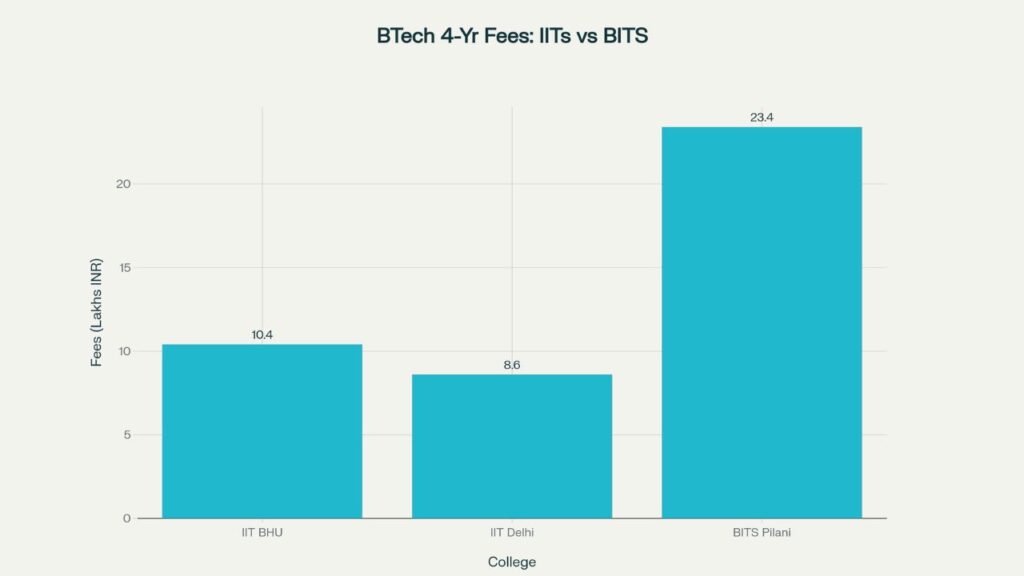
In order to get a sense of how affordable IIT BHU is, it makes sense to compare its 4-year B.Tech fee with that at other reputed institutes like IIT Delhi and BITS Pilani. The following amounts (approximates) are for General/OBC/EWS students with income above ₹5 lakh per year and do not include hostel/mess.
Both IIT BHU and IIT Delhi receive government subsidies that make the cost of tuition approximately ₹8–10 lakh for 4 years.
Since BITS Pilani is a private deemed institution the fees are much higher, the total cost for 4 years (including hostel and mess) can easily cross ₹22-24 lakh.
Fee Comparison With IIT Delhi And BITS Pilani
4-year BTech Academic Fee Comparison (2025)
IIT BHU and IIT Delhi 4-year fees are about ₹10.4 lakh and ₹8.6 lakh respectively for the same duration. Meanwhile, tuition fees at BITS Pilani vary from ₹19 lakh to ₹22 lakh for 4 years, not inclusive of inflation and full residential expenses.
For students who are granted income-based fee waiver or belong to SC/ST/PwD categories, IIT BHU becomes significantly better option over private colleges, as their burden of tuition fees is substantially reduced or waived off. This balance of modest fees, good placements and central government support is what makes IIT BHU one of the best ROI engineering options now available in India.
Conclusion
The B.Tech fee at IIT BHU is kept as per the income slabs of students, Hindi Medium assistance patches are provided. With substantial waivers for economically backward sections and SC/ST/PwD students, and government subsidies making the aggregate academic fee lesser than most of the premier institutes, IIT BHU promises one of the best ROI among the top engineering colleges.
The bottomline is that the 4-years cost of attendance remains affordable when compared to private institutes like BITS Pilani, whose fees can run to almost twice this amount, even after adding hostel and mess charges. If you are a student who wants a good mix of fees, quality education with good placements, IIT BHU is a very cost-effective and future proof bet.
UPSSSC Excise Constable Recruitment 2026 you are one who desires an opportunity to serve in a conservative but respectable and challenging government job in Uttar Pradesh, then this might very well be the dream you were waiting for. Uttar Pradesh Subordinate Services Selection Commission Notification: Uttar Pradesh Subordinate Services Selection Commission (UPSSSC) has released the notification for Excise Constable (Abkari Sipahi) Recruitment 2026 on 6th April 2026 — a ray of hope for thousands of job seekers.
There are a total of 722 posts in this recruitment which gives an opportunity to eligible and aspiring candidates to join a prestigious organization like Excise Department of Uttar Pradesh. If you are a first time user of government job portals, you must be aware that having a complete knowledge of the recruitment process is very important.
Let’s go deep into the every information you should know about this most expecting recruit – Important Dates, Eligibility, Physical Standards, Exam Pattern.
Overview of the Recruitment
The Uttar Pradesh Subordinate Service Selection Commission (UPSSSC) recruits for the office of the Excise Commissioner, U.P., Prayagraj through its examination. There are 722 posts in all in the General and Special Recruitment category under both the heads. The following is a small report on the distribution of these vacancies:
Category
Total
Unreserved (UR)
246
Other Backward Classes (OBC)
215
Scheduled Castes (SC)
174
Scheduled Tribes (ST)
26
Economically Weaker Sections (EWS)
61
Important Dates to Remember
Deadline disaster is an aspirant’s worst nightmare ever. These dates are for your reference; make sure you mark them down so that you don’t encounter any last minute rush!
Event
Date
Official Notification Release Date
06/April/2026
Online Application Start Date
04/June/2026
Last Date to Apply Online
24/June/2026
Last Date for Application Fee Payment
24/June/2026
Last Date for Application Correction/Modification
01/July/2026
Admit Card and Exam Date
To be announced soon
Don’t wait until June 24 to complete your form. Server traffic is known to spike dramatically in the last few days, which can cause panic and potential payment transaction failures.
There are certain eligibility criteria that the candidate needs to fulfill to apply for this post, as set by the UPSSSC. Prior to collecting your files, make certain that you really meet the following criteria:
Educational Qualifications & The PET Mandate
The most essential list of academic qualifications is quite simple – you should have passed your Class 12th (Intermediate) examination from a recognized board of exat in India.
But here the actual door opener is going to be the UPSSSC PET (Preliminary Eligibility Test) 2025. You should have appeared in PET 2025 examination and possess a valid scorecard with a positive (more than zero) normalised score. If you didn’t take the PET 2025, then you can’t apply for this particular recruitment cycle.
Age Limit
Below 18 Years are not allowed and age relaxation is given for reserved category candidates (SC, ST, OBC) after the maximum age of 40 Years is given for all category candidates.
Note: Having a NCC ‘B’ Certificate will increase your chances for the selection after the examination.
Physical Standards Must Match for Your Job Rules
Excise constables don’t have the luxury of working from the comfort of their desks. It also involves a lot of fieldwork, raids and active patrolling. So the physical standards are a must.
Physical Measurement Test (PMT):
A male candidate should not be shorter than 167.6 cm. The chest size should be 80 cm when unexpanded and 85 cm when inflated (a minimum extension of 5 cm is rigorously enforced). Female Applicants: must have a minimum weight of 45 kg and a minimum height of 152 cm (147 cm for SC/ST categories).
Physical Efficiency Test (PET – Running):
You must be physically fit to complete the given task. If you are giving hours to your study then workouts and running is also important for you to get selected.
For men, 3 miles running complete in 25 minutes
For women, completing 1.5 miles running in 14 minutes
Wanting both the girls and boys to finish the run within a time that indicated their endurance and speed was nothing new. To make sure you are running close to the required standards, start training now.
Selection Process for UPSSSC Excise Constable
The Abkari Sipahi wears the uniform in several rigorous phases of execution.
Your UPSSSC PET 2025 normalized score will solely decide your shortlist. The ones who get shortlisted for the written exam will be formally invited to appear in the Mains examination.
Main Written Exam: The major test on your specialized knowledge which tests your intellectual mettle.
Physical Measurement & Efficiency Test (PMT & PET) : As already told you that the condition of your physical for the post of handling position of will before you that you can bite in a very tough condition.
Checking of Documents and Medical Examination: The final administrative and medical examinations before the letter of appointment.
Understanding the Exam Pattern
The Main Written Exam is intended to test your overall general awareness, general logical reasoning and specialized subject knowledge to a large extent.
Parameter
Details
Total Questions
100 Objective MCQs
Total Marks
100
Duration
2 Hours (120 minutes)
Negative Marking
¼ deducted for each incorrect answer.
The syllabus is too broad. Part 1 includes History of India, Geography, Current Affairs, Data Interpretation, and a few legal issues related to the Policies of Uttar Pradesh excise. In Part 2 you are examined on your Computer and IT skills, and Part 3 is devoted to UP-specific General Knowledge.
Step-By-Step Application Process
On 4th June 2026 the application window will be opened, follow these easy steps to apply for yours so effortlessly:
Access the Official Website: Visit the official site of UPSSSC at upsssc.gov.in.
Get the Notification: Check latest announcement for Excise Constable (Aabkari Sipahi) Recruitment 2026 for the available vacancies.
Authentication: Sign In with your UPSSSC PET 2025 Registration Number. This is important, you basic information will be extracted and updated.
Complete the Form: Write and recheck every information about education and personal details carefully to avoid any errors.
Upload the Documents: Photo and Signature must be in a mentioned formatted size to scan and upload.
Fee Submission: The fee is astonishingly low—just ₹25 for all categories (General, OBC, EWS, SC, ST and PH). This basically works like an online processing fee. You can also make use of Credit/Debit card, Net Banking, UPI or SBI E-challan.
Send once Finish: Check all your entries carefully. When you are perfect,submit the form and get the print out for your future reference.
To crack the exam, you need to prepare yourself with the right strategies before applying for this post. So you can make a place for yourself among 722 people. Here are some pro tips to help you prepare:
Equalize the Plane and the Bookcase: During study don’t forget about the material world. Intervals Start Adding To Your Running Stamina Early. One big mistake many candidates make is to start campaigning only after the written exam results are out.
As UP GK and state excise law covers major parts of the syllabus, you by reading specialized books on these topics can gain a good hand over other competing candidates in the examination.
Accept Mock Tests: Blind guesses are detrimental since there’s 0.25 negative marking. Logical elimination will also be studied and time management by giving mock tests.
Keep Up: Allocate 30 minutes daily to read newspapers, focusing on national news and technical advancements as a portion of the syllabus to follow current affairs.
Conclusion
The UPSSSC Excise Constable Recruitment 2026 is a great opportunity for all the candidates who have the PET 2025 scorecard and pass class 12th. That is a rare combination of work profile that is active, societal respect and job security.
The notification is already out and the application window will open in June, so the clock is ticking. Collect your required materials, plan your daily study routine and begin your physical training regimen now. All you need to do to take advantage of this opportunity and walk away with a fulfilling career for life is be consistent, disciplined, and have the right strategic thinking.
Most of the students prefer to study in private colleges because of the faculty support in education, practical training, and placement opportunities. If you have completed 12th with PCB, you must pursue a medical degree from the best colleges. So, I have listed some of the Top Private Medical Colleges in South India.
If you are from South India and confused about the college for medical studies then this guide will help you select the one. Every student must clear NEET-UG before stepping into the medical field. It is the most common entrance exam for admission to colleges.
Top Private Medical Colleges in South India
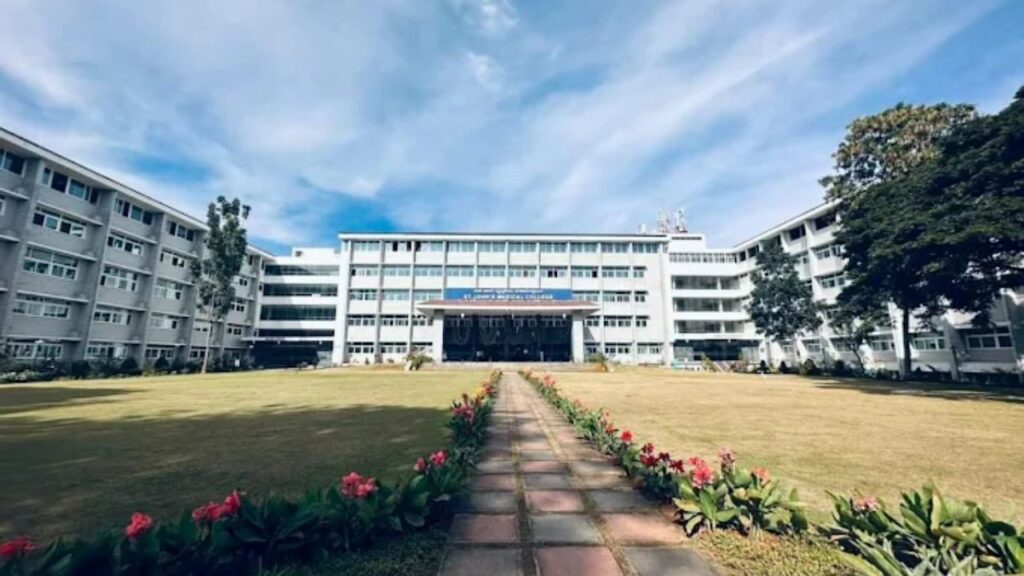
1. St. John’s Medical College
St. John’s Medical College: This private college is situated in Karnataka and is the oldest college. If you want to study in this reputed college then you should prepare for the entrance to take admission. It has a legacy of producing some of the finest medical professionals who serve both in India and abroad. The college is known for its value-based education, strong research backing, and vast hospital network.
Admission Process
Fee (General)
Placement & Package
NEET-UG required; apply via Karnataka state counseling (KEA); seats under General + Management quota
Approx ₹6.28 lakhs/year
Placements in St. John’s Hospital or through govt postings; avg. ₹7–10 LPA (PG); ₹20k–₹25k/month internship
2. Narayana Medical College
Narayana Medical College in Andhra Pradesh. If you are a citizen of this state, you can take admission here. It also has a flow of patients as it integrates college and hospital which helps students gain real-time clinical experience. It has one of the largest private teaching hospitals in the region and offers advanced training in medicine and surgery.
Admission Process
Fee (General)
Fee (Management)
Placement & Package
NEET-UG mandatory; apply via Dr. NTRUHS counseling portal; management quota for non-local students
₹12.50 lakhs/year
₹24+ lakhs/year
Good absorption into Narayana Hospital network; avg. ₹6–8 LPA after PG; ₹15k–₹20k/month internship
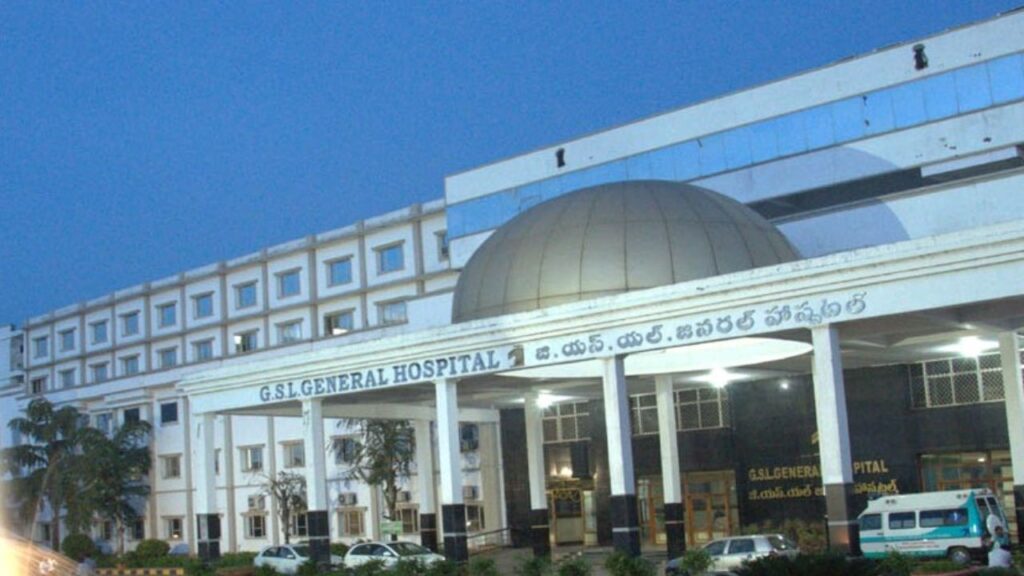
3. GSL Medical College, Rajahmundry
GSL Medical College is best for those students who want a good education but at an affordable fee. The infrastructure is modern, and the hospital on campus sees a good variety of patients, allowing students to learn practically from early on.
Admission Process
Fee (General)
Fee (Management)
Placement & Package
NEET-UG, Dr. NTRUHS counseling; management seats at higher fees
₹12 lakhs/year
₹24 lakhs/year
Andhra hospitals/PG; Avg. ₹5–6 LPA after PG; ₹18k/month internship
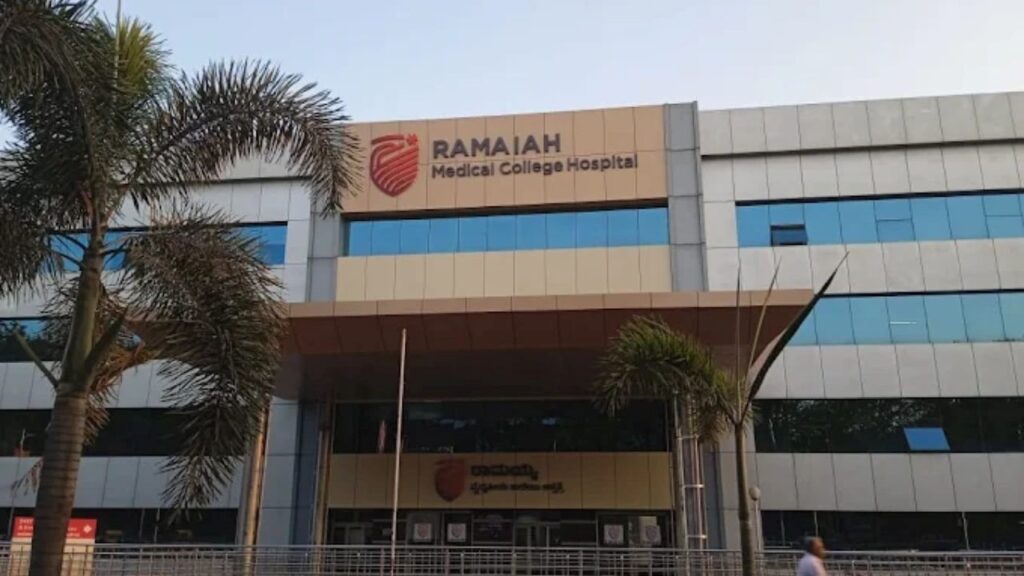
M.S. Ramaiah Medical College is offering high class education and advanced practical training to the future doctors. It’s known for high academic standards, overall world collaboration, and a strong hospital for clinical training.
Admission Process
Fee
Placement
Average Package
NEET-UG qualification is a must, Seat allotment happens through KEA-CET and All-India counseling. NRI and management quota are available.
₹10.9 lakhs for one year for general students ₹40+ lakhs for the Mgmt/NRI students.
Students can choose to study for further medical courses and medical opportunities also happen in the college.
The salary package depends on the skills and knowledge of the students. Average salary package is ₹8–12 LPA
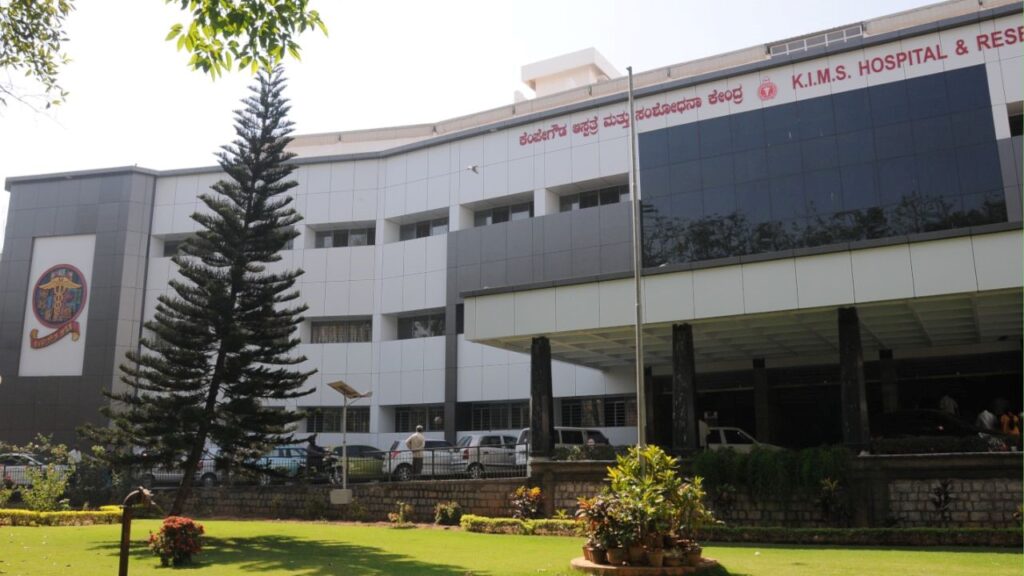
5. Kempegowda Institute of Medical Sciences
KIMS is a well-established private college with a strong hospital setup. Students have got the opportunity for practical training. The institution is affordable compared to other top private options, making it a favorite for middle-income families.
Admission Process
Fee
Placement
Average Package
Students have to clear NEET-UG and apply via KEA counseling (Karnataka). Management quota also available
₹7.1 lakhs per year (General), ₹35+ lakhs (Mgmt)
Self hospital offers and other hospital offers are also given to the students.
Students can have a lot of opportunities from this college and average package is around ₹5–8 LPA after PG; ₹20k/month during internship
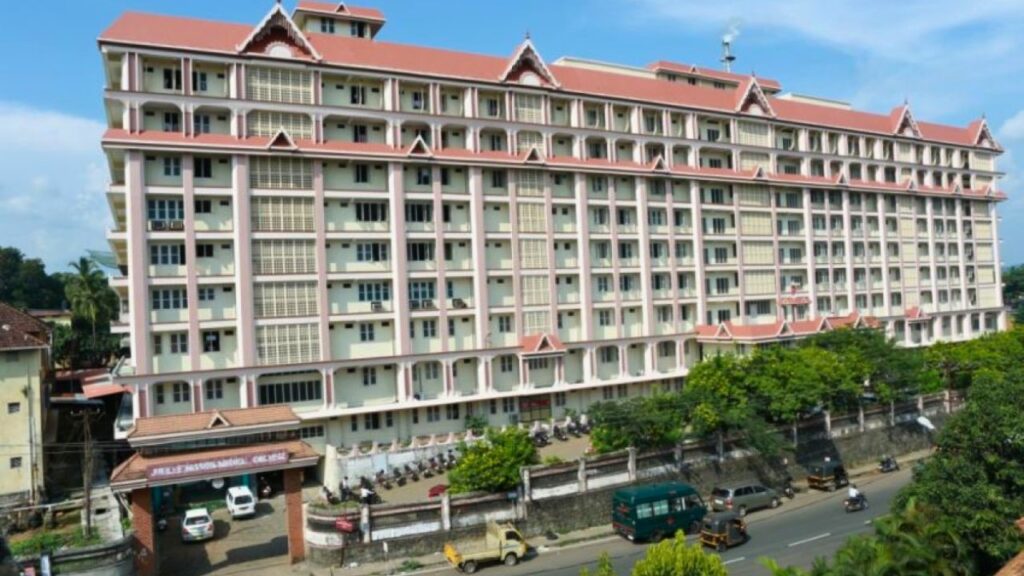
6. Jubilee Mission Medical College
Jubilee Mission Medical College: Jubilee Mission is a church-run institution known for its ethical approach to medicine and patient care. It offers quality education with emphasis on hands-on training and moral values.
Admission Process
Fee
Placement
Average Package
NEET-UG is required Apply through Kerala state counseling (CEE Kerala). Management and NRI quotas available
₹7.5 lakhs for one yearIt vary upon the courses
High number of students pursue PG; some absorbed into church-run hospitals
Students can get the salary package around ₹6–9 LPA (post-PG); ₹22k per month internship.
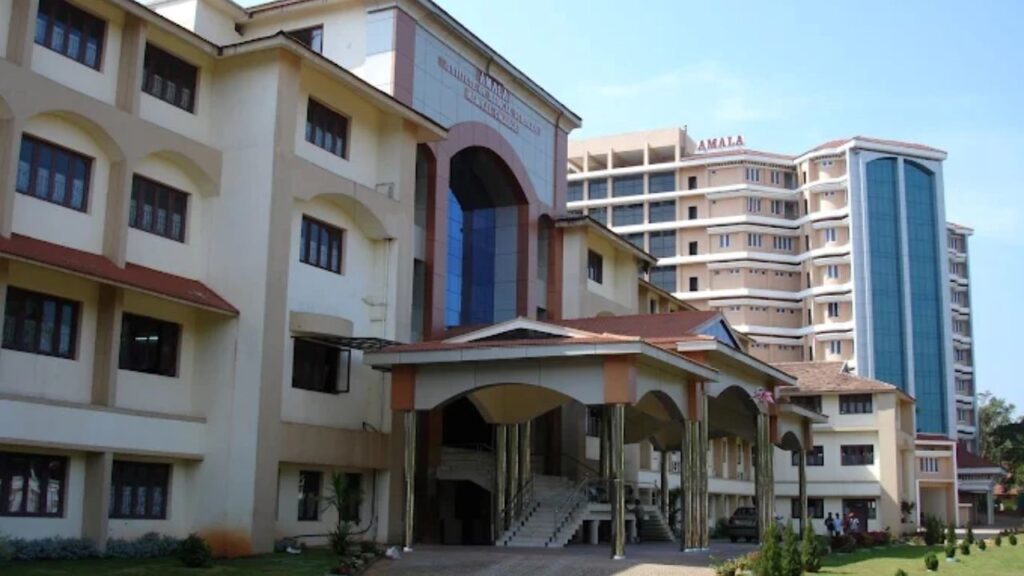
7. Amala Institute of Medical Sciences
Amala Institute of Medical Sciences: Amala offers medical courses such as MD, MS, and MBBS for students to establish their career in the medical field. It offers students practical training opportunities in a hospital environment. It provides a peaceful learning environment and good exposure through its well-equipped hospital.
Admission Process
Fee
Placement
Average Package
NEET-UG is mandatory.Students can apply via CEE Kerala. Seats under general, management, and NRI quotas
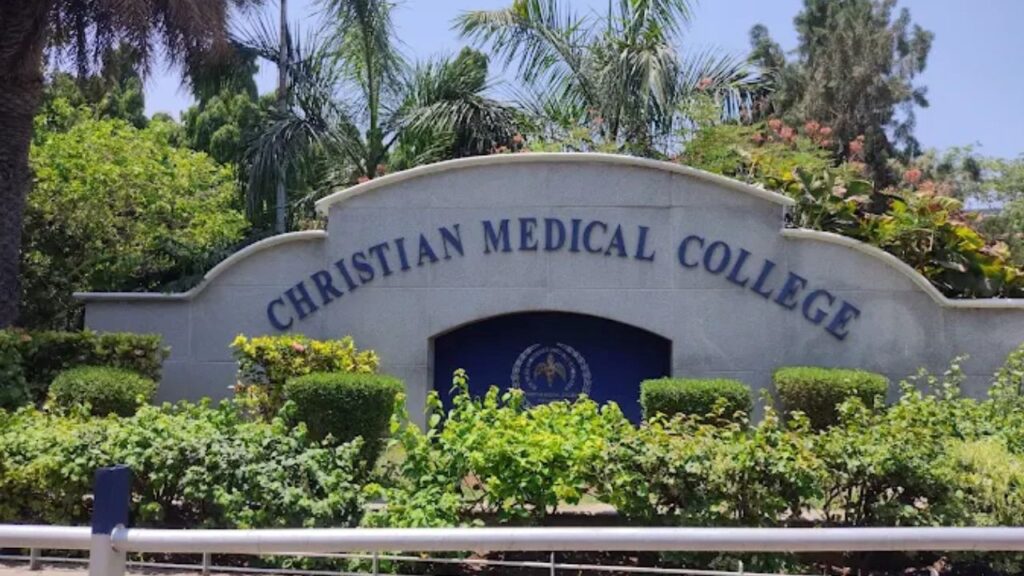
Christian Medical College (CMC): If you want to be a doctor in India’s best hospitals, this college provides excellent healthcare education and research. Although it’s a minority institution, it offers world-wide opportunities. With its top-notch education making it extremely hard to get into.
Admission Process
Fee
Placement
Average Package
NEET-UG required Must clear CMC’s own selection criteria after NEET Minority Christian candidates given preference
Approx ₹48,530/year (highly subsidized)
Top placements in India and abroad
₹10–15 LPA (PG level); internship ₹20–25k/month
9. SRM Medical College
SRM Medical Collegeis best in providing world class education and training to the students for improving their medical skills. It has good hostel facilities and student diversity.
Admission Process
Fee
Placement
Average Package
Admission via NEET-UG Apply through MCC AIQ or direct via SRM NRI quota available
₹25 lakhs/year (MBBS); ₹35–40 lakhs for PG
Absorption in SRM Hospital; good PG placements
₹6–8 LPA after PG; ₹20k/month during internship
10. Apollo Institute of Medical Sciences and Research
Apollo Institute of Medical Sciences and Research: This institute offers one of the best corporate-style clinical exposures as it is connected to Apollo hospital. Students get trained under experienced doctors in a real-world hospital setting.
Admission Process
Fee
Placement
Average Package
Must qualify NEET-UG Apply through Telangana state counseling (KNRUHS) Management quota available
₹15.6 lakhs/year (General),
Apollo Group directly hires top interns and PGs
₹7–9 LPA; internship stipend around ₹25k/month
Conclusion
While deciding to grow in the medical field, the best college is the first step you consider for better opportunities and practical training. Choose according to your budget, goals, and career path among the Top Private Medical Colleges in South India.
Opting for MTech at IIT Delhi is not merely registering for a degree it is an investment towards your future, career and your net worth. As many engineering students from India apply to join IIT Delhi for its strong academics and unbeatable placement records, however the biggest question among these is always How much is the IIT Delhi MTech fee structure and what is the overall financial investment to get an MTech.
Breaking Down IIT Delhi MTech Fee Structure 2025
Fee Component
Amount
Tuition Fee (2 years)
₹3,00,000
Other Fees
₹80,600
Total Tuition Fees
₹3,81,000
Semester-wise Tuition
₹95,000
The overall expense for MTech students in 2025 is that the total fee comes close to ₹3.81 lakhs. This amount covers all the needs of the institute for two years, including tuition, an annual charge, and several optional fees. Each and every General, OBC, and EWS student has to shell out ₹3 lakh for tuition fees. Over and above that, around Rs 81,000 is charged for services such as amenities, exam fees and registrationAdmission security and deposits are separate but are not a major concern as they’re refundable on graduation.
Living in a hostel is an added cost — and IIT Delhi is reasonable as well as efficient in this regard. The normal hostel fee is around ₹86,000 per annum and mess bill, cost of living is extra, however these are still within limits if compared to private accommodation or city based rentals. Living on campus is not only about saving money, the convenience, access to on-campus resources, and vibrant student community truly enhance the educational experience.
Fee Payment Schedules Made Simple
IIT Delhi is empathetic towards the realities of students. Rather than a wire one-time payment, the fees can be paid in installments either annually or each semester – the bulk of the payments amount approximately to ₹1.9 lakhs annually. This setup allows some breathing room — whether you’re relying on a scholarship, personal savings or family support. Upon admission, new students pay a lump sum that includes their first tuition payment and all nonrecurring fees (such as deposits and insurance). Payments are due at the beginning of each term or each year after that, and you’ll be kept up to date with automated reminders.
Specializations and Tailored Costs
Specialization fees are uniform, irrespective of specialization of your choice — Computer Science, VLSI Design, Data Science, Structural Engineering, Power Electronics etc. Each MTech branch at IIT Delhi for 2025 will be charged ₹3.81 lakhs for General/OBC/EWS students. However, substantial waivers are provided to SC/ST and PwD candidates, enabling them to pursue top-tier education for a lot more talent.With 49 MTech specializations available, you don’t have to worry about “hidden” charges for popular or emerging streams.
Financial considerations should never deter one’s educational aspirations, and IIT Delhi is just great at throwing open doors in the form of scholarships and financial aid. From the GATE fellowships point of view, each qualifying student is awarded a monthly fellowship which is more than enough to bear the costs of living and studies. On the other hand merit-bursaries provide an incentive to perform well, and for the less fortunate it makes sure finances aren`t an obstacle to get into university. Category waivers are automatic — SC, ST, and PwD students are exempt from paying tuition fees in full, and only a small annual fee applies.
Better still, over and above the Institutional Support, you get to waive fees under Govt schemes (central and state) as well. There are separate scholarships for women, economically weaker sections, and innovation/entrepreneurship themes, and all the application processes are straightforward and transparent. The result?Almost every candidate finds that, whether on account of merit or need, the aggregate financial obligation at IIT Delhi for her/him is a good deal less than the sticker price.
Total Expense Of The M.Tech at IIT Delhi
In addition to the usual ₹3.81 lakh tuition fees, hostel and living expenses are to be anticipated. Bid meals, living daily, material educational, y cargos al azar del campus, una realidad Todo incluido para estudiantes General/OBC/EWS se ubica cerca de ₹4.7 lakh para dos años. For SC/ST or PwD candidates, the number falls due to waivers to around ₹1.6 lakh – and in many cases less with strong scholarship cover.
Career Prospects After M.Tech at IIT Delhi
Here is the killer: MTech graduates from IIT Delhi have one of the highest placement records and average salaries in India. Highest packages hover around the ₹24–30 lakh per annum for CSE, DS, VLSI Design etc and average for all streams lies around ₹11–24 lakh. Recruiters include big global tech giants (think Google, Amazon, Microsoft), top Indian corporates, automotive innovators, and government PSUs. Alumni networks, career progression and R&D opportunities made IIT Delhi renowned – and they keep pushing its graduates ahead of the curve.
In practical terms, this results in an immediate return on investment. Most alumni have recovered the money they spent in fees within a year of graduating. Either way, the “IIT” tag is not just prestige — it’s an entry pass to elite opportunities, startup culture, cutting-edge research, and rapid professional growth.
Conclusion
The 2025 MTech from IIT Delhi is still a good value for money for any engg grad. The institute lives up to every promise when it comes to quality academics, a transparent fee structure, a robust scholarship program, and unparalleled placement outcomes. If you are enrolling make sure you have a look at the exact fee breakup by specialization, see scholarship possibilities and get ready for two years of bonfire and brews in your glass. For many tens of thousands of hopefuls, the cost is not a barrier — it is a bridge to a fruitful future.