MPESB Group 5 Paramedical Recruitment 2026: Complete Guide to 291 Government Jobs in MP

MPESB Group 5 Paramedical

After a long wait, it’s now or never for those aspiring for a government job in the healthcare and paramedical sector in Madhya Pradesh. The Madhya Pradesh Employees Selection Board — commonly referred to as MPESB has released the notification for its MPESB Group 5 Paramedical Recruitment 2026, and it is the one among the state’s highest job hirings this year. You definitely don’t want to snooze on this one – 291 vacancies are up for grabs in multiple departments.

Are you a just qualified diploma holder, an experienced lab technician, or a trained staff nurse seeking to go into government service, this MPESB Group 5 Paramedical Recruitment 2026

 has the right opportunity for you. Let’s break down all the details for you to understand.

What is MPESB?

Madhya Pradesh Employees Selection Board is also known as (MP Vyapam) and it is the right platform for the unbiased and merit based recruitment in Government Job in the State. Located in Bhopal – Chayan Bhawan, it conducts exams from Group 1 to Group 5 across various domains like education, healthcare, police and so on.

MPESB Group 5 Paramedical

It brings the notification, make the online registrations, issue the hall tickets, answer key and result – everything in the name of transparency. MPESB facilitates the recruitment process, From technical and administrative posts to health service and field posts, MPESB conducts thousands of recruitment every year.  

Quick Overview For MPESB Group 5 Paramedical Recruitment 2026

DetailInformation
Conducting BodyMadhya Pradesh Employees Selection Board (MPESB)
Recruitment NameMPESB Group 5 Paramedical Recruitment 2026 
Total Vacancies291 Posts
Application Start Date13/March/2026
Application End Date27/March/2026
Correction Window13/March/2026 – 01/April/2026
Exam Date15/April/2026 onwards
Official Websiteesb.mp.gov.in
Application ModeOnline Only

Posts Available and Vacancy Breakdown

The 291 posts are spread over 9 departments in Madhya Pradesh and consist of a good blend of clinical and non clinical work in the department of health. The following positions are available: 

Post NameDepartment/LocationTotal Vacancies
Ayurveda CompounderDirectorate of AYUSH125
Unani CompounderDirectorate of AYUSH30
Homeopathy CompounderDirectorate of AYUSH20
Lab AttendantGMC Ratlam/Vidisha18
Staff NurseESI Services Indore7
Pharmacist Grade-2Various15+
Others (Technician, Dresser, etc.)Multiple MCs/ESIRemaining 76

Who Can Apply? 

Qualification

Completed 12th grade with subjects including Phy, Che, and Bio and any diploma or certificate in the field of Paramedical by the recognized government of India.

This eligibility criteria makes sure that the aspirants have the basic academic as well as the professional training needed for paramedical field. 

MPESB Group 5 Paramedical Qualification

Further, you must have valid registration with the Madhya Pradesh Para-Medical Council (MP Sah-Chikitsiya Parishad). The detailed eligibility criteria are post-wise and are given in the official notification. 

Age Limit 

  • Age Minimum: 18 years (s) as on date of Advt.
  • Max Age: 40 years (General/Unreserved candidates)
  • Maximum Age Limit is 45 Years for SC, ST, OBC, Women, PwD, Gov. Employees, Home Guard of MP and Ex-Servicemen

The age has been calculated as per your date of birth mentioned in the High School or Higher Secondary certificate. No candidate shall be above 45 years of age as on the last date for receipt of application under any circumstance, except certain contractual employees and categories notified under Rule 14 of the MP government rules. 

Nationality

Under the MP Civil Services Recruitment Rules 1961, the candidate must be a citizen of India or a Citizen of Nepal. Non-MP resident candidates can apply only for OPEN/UR category posts and shall not be entitled to any kind of reservation or age relaxation. 

How to Apply — Step by Step

Application process is going online for MPESB Group 5 Paramedical Recruitment 2026, so you must follow these steps to apply:

  1. Open the official website of MPESB to apply for this recruitment.
  2. Join the recruitment tab and now click on the Recruitment Notification for the subject MPESB Group 5 Paramedical Post Recruitment 2026
  3. Sign up with your mobile number, Email ID, and some personal information
  4. Enter your name, parents’ name, education qualification and other required details in the application form.
  5. Upload a photograph, signature and your certificates if you are from a relevant category
  6. Make payment either online/offline for application/Examination fee.
  7. After submitting the form, keep your application no for future use. 

Read More:- BSc Emergency and Trauma Care

Application Fee

CategoryExam FeePortal FeeTotal
General/Other State₹500₹60₹560
SC/ST/OBC/PWD (MP Domicile)₹250₹60₹310
Direct BacklogNil₹60₹60

The fee is non-refundable and the fee amount is different for each category. You may pay online with Credit Cards, Debit Cards, Net Banking, IMPS, Cash Cards, or Mobile Wallets. 

How Will You Be Chosen?

The method of selection is simple and on the basis of meritorious:

  • Online Written Examination: The online written examination will consist of one objective type paper of 100 marks. The examination will be held from 15 April 2026 in two shifts.
  • Document Verification: The shortlisted candidates will be intimated for the verification of the original certificates.
  • The final candidates will have to go through a medical fitness test for the post as a part of the last selection stage.

There is no interview for this recruitment because selection is based on the Merit score of exam, so prepare well for the examination.

Exam Pattern & Syllabus

The test is a test of both general awareness and technical know-how. It has 100 questions and all questions carry 1 mark which means that the time duration of 2 hours would need to be utilized to solve a total of 100 questions. 

The exam is conducted in both online, or OMR sheets mode and the best part is that there is no negative marking, so go ahead and attempt every question without worrying about losing marks. 

General Section (25 Marks):

This section is for your general knowledge and talent. It contains questions from GK, Hindi, English, Maths, Science, Logical/Interest based reasoning. 

Technical Section (75 Marks):

This is the major part of the exam and tailors subject-specific knowledge of the post you have applied for. such as candidates applying for the posts of Lab Technician may get questions from Pathology and Biology or for Nursing candidates may ask questions from Anatomy, Pharmacology and other medical related subjects. 

In the GK section, questions are broadly asked from history and geography of mp and India, Govt. schemes, and Today Updates. 

Tips for Applicants

Here are some words of friendly advice so you don’t get caught up in this:­

  • Don’t wait for the last date, apply as soon as possible because there is a huge competition out there.
  • Verify all information twice before submitting. Corrections are allowed only up to 01.04.2026 with a fee for modification.
  • It is necessary to have that your MP Para-Medical Council Registration is Active and Valid before applying.
  • Before you begin, keep scanned copies of your photo, signature and all certificates ready.
  • Start preparing for the written exam – 100marks, objective type, no second chance after the window closes. 

Conclusion

MPESB Group 5 Paramedical Recruitment 2026 is indeed good news for all the healthcare professional and paramedical job seekers of Madhya Pradesh. It is not every day that you get an opening where there are 291 vacancies, a clean merit-based selection process, and the support of a reputable Government board.

Submit your application between 13 to 17/March/2026 and read the official notification properly and collect your documents then apply. Jobs in government health care are stable, provide a well-defined career path, and allow you to truly serve your community. This could be your moment.

Best of luck to everyone. Good preparation and no error in your application! 

Leave a Comment

Your email address will not be published. Required fields are marked *

Allied Medical Courses Roadmap 2026: Eligibility, NEET, Courses & Career Scope

Allied Medical Courses Roadmap 2026: Eligibility, NEET, Courses & Career Scope

In the constantly changing healthcare environment, the focus is changing. Doctors and nurses may be the public face of medicine, but there is a whole engine room of professionals holding the system together: the Allied Health Professionals. To become one, you need to break down the Allied Medical Courses Roadmap.

If you have ever asked yourself questions like “who runs that fancy MRI machine?”, “who handles the complex chemistry of a pathology lab?”, or “who assists a runner to walk again after a devastating injury?”, you have now become the proud owner of a glimpse into the world of Allied Health. 

As the 2026 Union Budget announced the addition of ten new allied health disciplines and targets to train one lakh professionals in five years, there is no better time to chart your path in this domain. 

What are Allied Medical Courses?

Allied Health Sciences (AHS) are career options in the healthcare sector where professionals work in tandem with doctors and provide diagnostic, technical, therapeutic and other support services. These courses are specialized rather than comprehensive like an MBBS. They’re the hands-on, practical side of medicine—taking the technology and therapy and making them work to save lives. 

Who Can Choose Allied Medical Courses?

These are the courses that are available for science stream students after 12th, and they consist of theory, practicals and also internships. Unlike MBBS, they are open (3-4 years), cheap (₹50k-₹5 lakhs total), and now NEET-compulsory under NCAHP for uniformity. Perfect for students looking at colleges like King George’ Medical University or the privates. 

Allied Medical Courses Roadmap

Charting a course for this vocation from high school to the hospital is going to be a bit of a balancing act, particularly with new rules set to be implemented in 2026. 

1. The Foundation (Class 12)

Allied health programs require a science core including physics, chemistry, and biology (PCB). Although certain diploma courses earlier admitted students from other streams, the drift in 2026 is towards making science a single stream for clinical jobs. 

2. The Entrance Era (NEET 2026 onwards)

As per the notification of National Commission for Allied and Healthcare Professions, NCAHP dated 31st May 2023 NEET UG is going to be made compulsory for admissions in various undergraduate allied courses from 2026-27. It implies that the “non-NEET” option to some of the best institutes is being gradually closed, which will help enhance the quality and professional recognition of the graduates. 

3. Choosing Your Path: Degree vs. Diploma

Bachelor’s Degree (B.Sc./BPT): Normally 3 to 4.5 years. They offer more theoretical knowledge and are oftentimes necessary for obtaining work permits in other countries.

Diploma (DMLT/DRT): 2 years in general. These “accelerated” tracks offer a practical focus on talent for students interested in moving quickly into the workforce. 

Read More:- UPSC Civil Services IAS/IFS Pre Recruitment 2026:  Notification, Dates & Apply Complete Guide

Top Allied Medical Specializations for 2026

CourseFocus AreaRole
BSc (MLT) — Medical Lab Technology Studying samples like blood, tissue, and other body fluids.Lab Technologist
Bachelor of Physiotherapy — BSc (BPT)Helping in regaining strength through Physical rehabilitation Physiotherapist
BSc with Radiology & ImagingScanning through X-rays, CT scans, and MRIs to detect injuriesRadiology Technologist
B.Sc. Anaesthesia & OT TechSupporting surgeons and managing ICUs.OT Technician
B.Sc. Cardiac Care TechnologyMonitoring heart health and ECGs.Cardiac Technician

Why Choosing an Allied Medical Courses Roadmap is Right?

Entry to workforce more quickly

While an MBBS requires 5.5 years (plus specializations), most allied health programmes make you career-ready within 3 to 4 years. This is your lane if you just want to start making a difference and earning sooner.

High Demand

There is a massive demand for healthcare technicians worldwide and skilled professionals capable of meeting that demand are difficult to find, making it a path to high opportunity around the globe. Expansion of the Regional Medical Hubs (introduced in 2026 Budget) is expected to generate thousands of jobs in diagnostics and rehabilitation in India alone. 

Technological Integration

If you’re a gadget geek or tech enthusiast, then Allied Health is the way to go. You don’t just read charts, you’re running some of the most sophisticated AI-enabled machines on the earth. 

Future Scope and Salary

The era when Allied Health was considered a “plan B” is behind us. By 2026, the starting salaries of freshers can vary from ₹2.5L per annum to ₹5L per annum based on the specialization. Specialized positions such as Perfusionists or Cardiac Technicians also attract even higher premiums.

Additionally these degrees have great international mobility. Countries such as the UK, the UAE and Canada have specific visa tracks for Allied Health workers, so this is really your ticket to a global career. 

Conclusion 

The Allied Medical Courses Roadmap isn’t a secret trail anymore — it’s a fast moving highway. With a government emphasis on skilling and the standardization of entrance exams, these professions are enjoying a newfound prestige.

If you love science but don’t want to go to medical school for ten years, the Allied Health track is a balanced, tech-forward, and profoundly satisfying way to go. 

Best Government Jobs in Madhya Pradesh 2025

If you are looking for a government job in Madhya Pradesh, then 2025 has brought new opportunities for you. There are many such posts in Best Government Jobs in Madhya Pradesh in 2025 which provide job security and respect along with good salary. Recruitment takes place every year in departments like MPPSC, Police, PWD, Health, Education, and Forest, which is beneficial for students of every qualification.

Whether you are 10th pass or graduate, Madhya Pradesh government has many great job options for you. There are good chances of promotion along with job. Below we have made a list of top 15 government jobs for you in which details of job title, department, eligibility and official website are given. This table will make it easier for you to choose the right job.

S.No.Job TitleDepartment/OrganizationEligibilityOfficial Website
1Deputy Collector (MPPSC)Madhya Pradesh Public Service CommissionGraduate Degreehttps://mppsc.mp.gov.in
2Deputy Superintendent of PoliceMadhya Pradesh Police DepartmentGraduate + Physical Standardshttps://mppolice.gov.in
3Assistant Engineer (Civil)MP Public Works Department (PWD)B.E./B.Tech in Civil Engineeringhttps://mppwd.gov.in
4Sub EngineerMP Urban Administration & DevelopmentDiploma in Engineeringhttps://urban.mp.gov.in
5Forest RangerMP Forest DepartmentGraduate in Science/Forestryhttps://forest.mponline.gov.in
6Staff NurseMP Health & Family Welfare DepartmentGNM / B.Sc. Nursinghttps://health.mp.gov.in
7Lecturer (School Education)MP School Education DepartmentPostgraduate + B.Ed + TEThttps://educationportal.mp.gov.in
8PatwariMP Revenue DepartmentGraduate + CPCT Certificatehttps://esb.mp.gov.in
9Jail PrahariMP Prisons Department12th Pass + Physical Fitnesshttps://esb.mp.gov.in
10Assistant Grade IIIMP Secretariat / Govt Offices12th Pass + Typinghttps://esb.mp.gov.in
11Food Safety OfficerMP Food Safety & Drug AdministrationB.Sc. in Food Tech / Microbiologyhttps://food.mp.gov.in
12Assistant District Public ProsecutorMP Law and Legislative Affairs DeptLLB + Advocate Licensehttps://law.mp.gov.in
13Veterinary Assistant SurgeonMP Animal Husbandry DepartmentB.V.Sc & AHhttps://animalhusbandry.mp.gov.in
14Rural Extension OfficerMP Panchayat & Rural DevelopmentGraduate Degreehttps://prd.mp.gov.in
15Junior Statistical OfficerMP Planning, Economics & Statistics DeptGraduation with Statistics/Mathshttps://mpplanning.gov.in

Foreign Education Loan Currency Explained: How INR Depreciation Can Increase Your Loan Cost 

Education Loan

A student who took an SBI Education Loan in early 2024, when the rupee was trading around ₹83 to the dollar, is repaying that same loan today at a rate closer to ₹94–95. If you understand Foreign Education Loan Currency, it will be easy for you to save yourself from extra loss. Nobody changed the interest rate on the loan or the tuition fee either. 

What changed is the number of rupees it takes to buy one dollar and that single variable can add lakhs to the real cost of an Education Loan that was sanctioned in Indian rupees. 

Most Indian education loans for study abroad are disbursed and repaid in INR, but the expense they’re funding — tuition, hostel fees, living costs is billed in a foreign currency. The loan itself doesn’t have currency risk. The gap between what you borrowed and what the university actually charges does.

How the Education Loan Currency Gap Works

When a bank sanctions a loan of ₹40 lakh for a one-year master’s programme in the UK, that sanction amount is usually based on the exchange rate at the time of approval. But the loan is disbursed in tranches — often per semester and each tranche gets converted from INR to the foreign currency at whatever the rate is on that transfer date. 

If the rupee has weakened between sanction and disbursement, your ₹40 lakh will convert into fewer pounds or dollars than it did when the loan was approved. Families either dip into savings to cover the shortfall or go back to the bank for a top-up, which restarts part of the paperwork and interest calculation.

For instance, a $50,000 annual tuition bill works out to around ₹42.8 lakh at an exchange rate of ₹85.64 to the dollar. If the rupee falls to ₹91.5 per dollar, that same tuition bill rises to about ₹45.75 lakh — nearly ₹3 lakh more, with tuition itself unchanged. That’s the currency gap, and it compounds every year the course runs and every year the loan is repaid after the student starts working, especially if the borrower’s income doesn’t move at the same pace as the exchange rate.

Read More 👉 Planning MBBS or Master’s Abroad? Country-Wise Costs, Loan Limits and Lenders

Why Currency Risk Matters More In 2026

As of September 2026, USD/INR has been trading mostly in the 94–96 range, after hitting a record low of nearly ₹96.6 in May. In the starting of 2026, the rupee is nearly ₹90 to the dollar but depreciation occurred in the first quarter due to crude oil prices, the Fed–RBI rate gap and dollar outflows — roughly a 4–5% decline in three months. It affects everything, even students’ education who planned expenses at ₹83/USD, which creates a ₹10–12 per dollar gap. That means education loans also pushed from ₹50 lakh to ₹56+ lakh without any increase in tuition fees.

Some institutions expect rupee to recover modestly toward the ₹90–91 range while others firms like Goldman Sachs and Bank of America suggest USD/INR could remain in the ₹96–99 band over the next couple of years. These numbers are always moving so students should keep that in mind while taking an Education Loan.

Students must check the live USD/INR rate before finalising any loan math, rather than anchoring to a snapshot number 

What Is a TCS Rule For Education Loan Abroad

Under the Finance Act 2026, remittances for education funded through a loan from a notified bank or financial institution are exempt from Tax Collected at Source (TCS) entirely — no TCS even above the ₹10 lakh threshold, as long as the loan qualifies under Section 80E. That’s a meaningful change from the older 5% TCS regime, and it only applies when the money is routed as loan disbursement, not as a self-funded remittance from savings. 

Self-funded transfers above ₹10 lakh now attract 2% TCS (down from 5%), reclaimable as a credit when filing your ITR. Bank sources still describe a 2% rate for loan-funded remittances too, so this is worth confirming directly with your bank’s forex desk before you rely on it — TCS rules on LRS have changed twice in two budget cycles, and banks are usually the fastest to have the current interpretation.

What an Actual Loan Costs Today

SBI’s Global Ed-Vantage scheme, one of the more commonly used routes for study-abroad financing, currently covers loan amounts from ₹7.5 lakh up to ₹3 crore across 28 countries, with interest rates starting around 8.65% for female applicants and 9.15% for male applicants, and collateral-free borrowing up to ₹50 lakh for students admitted to a list of recognised foreign universities. 

Repayment tenure runs up to 15 years, with a moratorium covering the course duration plus one year. These figures move with RBI’s repo rate and SBI’s internal benchmark, so treat them as a starting reference and verify against the bank’s published rate sheet before quoting them to a reader as final.

Practical Ways To Manage Currency Risk 

None of this means avoiding a Foreign Education Loan as it’s still the only realistic way to fund an overseas degree for most families. It means treating the exchange rate as a cost variable, not a fixed number. 

What actually determines what you pay back is that rate plus processing fees, the forex margin the bank quietly builds into every disbursement, and how your moratorium is structured — and those three add-ons can separate two “9% loans” by lakhs.

Take a ₹60 lakh abroad loan from a public sector bank at a floating 9.65%, a flat ₹10,000 processing fee, and a 2% forex margin on each tuition transfer — a fairly standard structure in 2026. Run that through a typical 10-year repayment and the interest alone comes to roughly ₹33.6 lakh; add the ₹1.2 lakh forex margin and the real payback lands near ₹94.8 lakh on a ₹60 lakh loan, before anyone factored in a repo rate hike.

Move the same ₹60 lakh to an unsecured NBFC loan at 11.5%, where interest capitalises through a full moratorium instead of being serviced as simple interest, and the principal you start repaying against can already have grown to ₹66–68 lakh by the time EMIs begin. Layers on the 1.25%-plus-GST processing fee NBFCs typically charge — around ₹88,000–90,000 on that loan size — and the same ₹60 lakh commitment can end up closer to ₹1.05 – 1.15 crore in total outgo.

There’s one real way to shrink this gap rather than just track it: SBI’s Scholar Loan, reserved for IIT/IIM/NIT admits, has been quoted around 6.9%–7.65% in 2026 — well below the standard Global Ed-Vantage rate, and worth checking eligibility for before assuming the general scheme is the only door open. 

Read More 👉 UP Anganwadi Bharti 2026 — District-Wise Vacancies & Recruitment Details

Conclusion 

Foreign Education Loan Currency is not a risk for getting a degree abroad. Once you get a job there, you might be able to repay on time but paying more than extra can crash you over. So understand how INR Depreciation Can Increase Your Loan Cost to save yourself from heavy risks.

The families who get burned aren’t the ones who took a foreign currency risk — every rupee-denominated loan funding a dollar or pound expense carries that risk by default. It’s the ones who assumed the sanctioned loan amount was the final cost, when the exchange rate on the day of each disbursement was always going to have the final word.

Best English Teacher for SSC CGL 2026– Top Faculty Revealed

Best English Teacher for SSC CGL

If you are preparing for SSC CGL 2026 then consider preparing English is important, not optional. Whether it’s Tier 1 or Tier 2 cracking the exam won’t be easy until you prepare well. But finding a mentor who really teaches you everything smoothly in English is hard. Here is a list of names of some Best English Teacher for SSC CGL. They will help you with vocabulary, grammar, comprehension, or error spotting. 

Why English Matters in SSC CGL

The English Paper will help you to maintain scoring as this is not that hard if you prepare it well. Many students take this subject politely and get low scores. If you want to get high scores then consider this subject important to you and practice well to understand every topic. 

  • Tier 1 English (25 Questions – 50 Marks)
  • Tier 2 English (45 Questions – 135 Marks)

That’s a total of 185 marks in English and nearly 50% of your selection chances depend on it. Did you know? Many students score well in Quant and Reasoning, but lag behind in English. Now that you know how valuable this paper is, you need expert teachers to boost your vocabulary and train you to read and solve fast.

Best English Teachers for SSC CGL 2026

1. Gopal Verma Sir – The Grammar Wizard

Gopal Verma Sir

Gopal Verma Sir is famous for his teaching techniques which involve grammar in-depth and clarity of every topic. You can take his classes through online platforms like YouTube and Paramount coaching classes. He launches his book called “Plinth to Paramount” – this book is very impactful for SSC aspirants. Students are considering this book as a grammar Bible.

YouTube Channel: English with Gopal Verma

In the SSC coaching world, Gopal Verma Sir has a reputation for English because of his conceptual and structured way of teaching. If you struggle with tense, voice, narration, articles, or prepositions, his methodical approach will clear your doubts. Ideal for those who have a weak base in grammar.

2. Jaideep Sir – The Concept King

Jaideep Sir

Jaideep Sir is also a wonderful teacher who focuses on concept mapping and practical teaching. He will teach you grammar rules that you can apply in exams. The way he uses simple tricks for complex questions is very useful and trains students for comprehension, para jumbles, and close tests, especially for Tier 2.

YouTube Channel: English By Jaideep Singh

Students who want to master English Grammar can learn from Jaideep Sir, you can connect with him through YouTube classes and offline coachings. Many students praise him for his quick responses, highly experienced, and natural tone that helps them to understand quickly.

3. Srikant Sir – Vocabulary & Mock Specialist

Srikant Sir

He simply prepares you with his storytelling technique by using good vocabulary. It helps you understand more perfectly because English vocabulary is not that easy to learn easily. Srikant Sir’s online sessions will let you remember more with funny and relatable stories. Many students scored full marks in vocab-based questions because of their daily loops of vocabulary practices and mock drills. 

YouTube Channel: The English Circle

Also, his mock paper-solving sessions are very exam-oriented. Ideal for those students who want to polish their vocabulary, not for deep learners.

4. Neetu Ma’am – Fortress of Smart Teaching

Neetu Ma'am

Neetu Ma’am is the best option for students who want to learn quickly and in points. She does not complicate the concepts and teaches you with her short tricks and summaries. She is the best teacher for those who want to revise or don’t want to waste their time as they usually learn deep lessons. She is the author of the “English for General Competitions” book. It is good for learning English. 

Books: Author of “English for General Competitions”

YouTube: English By Neetu Ma’am

Her content is especially useful in solving error detection, fill-in-the-blanks, and one-word substitution. Some students recommended her book because it’s well-structured and has point-to-point topics.

5. Sanjay Gupta Sir – The Mentor with Experience

Sanjay Gupta Sir

Sanjay Gupta Sir is perfect for those students who want to understand deeply and need good guidance. He offers offline classes and English Lectures online through YouTube. Deep doubt-solving and guidance. He gives a personalized experience mix in his lectures. He also points out your weak areas and helps you improve them. He also uses previous year questions to practice them and prepare you according to the exam pattern.

YouTube: English Grammar

If you aim to prepare well to crack the SSC exam, Sanjay Sir is a good option. You learn how to think in English, not just mug up rules. Ideal for those who are aiming for AIR ranks.

6. Aman Vashisth Sir – Master of English

Aman Vashisth Sir

Aman Sir is teaching on YouTube and other apps. SSC aspirants can learn English from him because his detailed analysis is enough to help them prepare for the SSC exam. His bilingual explanation (English + Hindi) is best for Hindi-medium students. 

YouTube: Aman Sir English

His interaction is very polite and gives instant doubt support. He also covers mock test practice and important rules of grammar with perfect examples that help students to remember properly. 

7. Rani Ma’am – The Smart Vocabulary Coach

Rani Ma’am

Other than Srikant Sir, Rani Ma’am is also an amazing teacher who helps you with word power, idioms, and expressions. She offers YouTube classes and crash courses. 

YouTube: English with Rani Ma’am

She uses creative ways of teaching for beginner-level students in English. Vocabulary is hard to remember and use. The proper way of learning vocab by using a fun or engaging way. Ideal for Tier 1 prep where vocab-based questions matter a lot.

Read More 👉 Meet the Best Math Teachers for SSC CGL – Crack Quant in 2026!

Who is The Right English Teacher?

Not every teacher suits every student. Here’s how to choose:

Your NeedBest Fit
Weak in grammarGopal Verma or Jaideep Sir
Need vocab boostSrikant Sir or Rani Ma’am
Want exam revisionNeetu Ma’am or Aman Vashisth
Hindi medium comfortAman Vashisth
Detailed learningSanjay Gupta Sir or Jaideep Sir
Fun + fast learningRani Ma’am or Neetu Ma’am

Final Tips for SSC CGL English Preparation

  • You don’t have to follow every teacher, just simply your needs and sharpen your weak points. 
  • Stay consistent with one or two teachers.
  • Practice daily mock tests and keep up with them until you learn everything.
  • Revise rules weekly and keep a vocabulary diary.
  • Tier 1 is easy but you need to clear it to get a good score.
  • But Tier 2 needs your real attention as it is hard to crack that’s where real selection depends.

Conclusion

There is not one teacher who can be best for everyone, choosing the right one for you is the hardest thing. Whether it’s the structured teaching of Gopal Verma Sir, the energy of Aman Vashisth, or the revision power of Neetu Ma’am – only you can understand which teacher helps you most in English Grammar.

SSC CGL 2026 is around the corner, so choose wisely and quickly. These Best English Teachers for SSC CGL can help you crack the exam. You can become stronger in English.

IIT Delhi MBA Fees – Complete Details on Tuition, Hostel And Other Charges

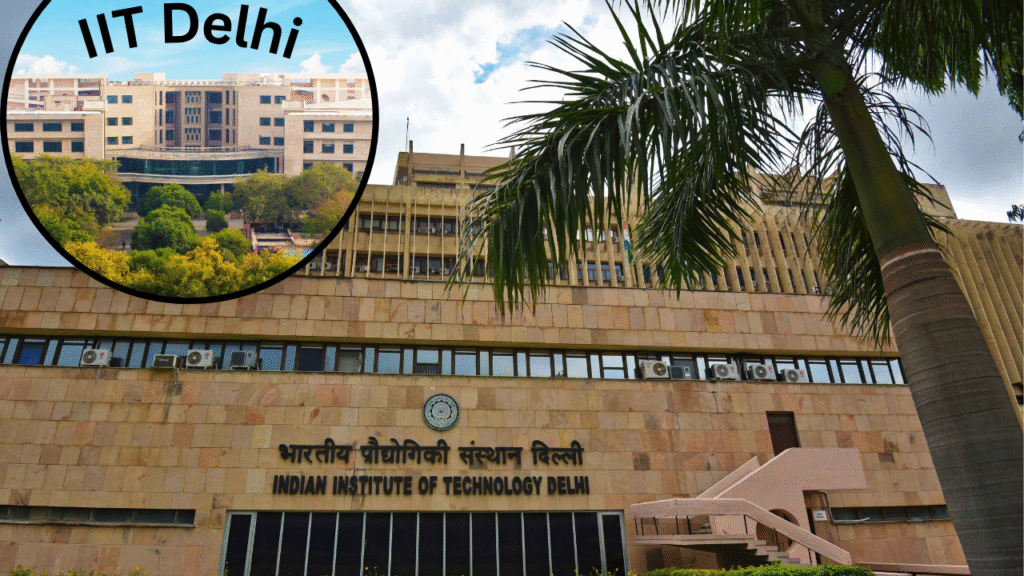
IIT Delhi

The IIT Delhi MBA is considered one among the best return on investment management course in India. Offering a perfect blend of quality education, good industry connect at a manageable fee, it enables students to dream big without the fear of being burdened with debts in private b-school cost. For 2025-27 batch, the total IIT Delhi MBA Fees 2025 is 12.17 lakhs which makes it one of the cost effective option in top management institutes of India. 

IIT Delhi makes quality affordable with a transparent detailed batch-wise payment plan, clearly defined hostel and academic fees, and several options for financial assistance. In addition, the program provides a good return on investment (ROI) as the average placement package is ₹25.82 LPA, which further adds to the enunciation as a top choice for prospective business leaders. 

IIT Delhi MBA Fee Structure 

IIT Delhi MBA fee is ₹ 12.17 lakhs for 2025-27 batch and this makes it one of the least expensive top Indian b-schools. The fee is designed so that the students can derive maximum benefit from it, but still, it should be within the reach of students coming from varied financial backgrounds.  

Complete Breakdown of Detailed Fee Components

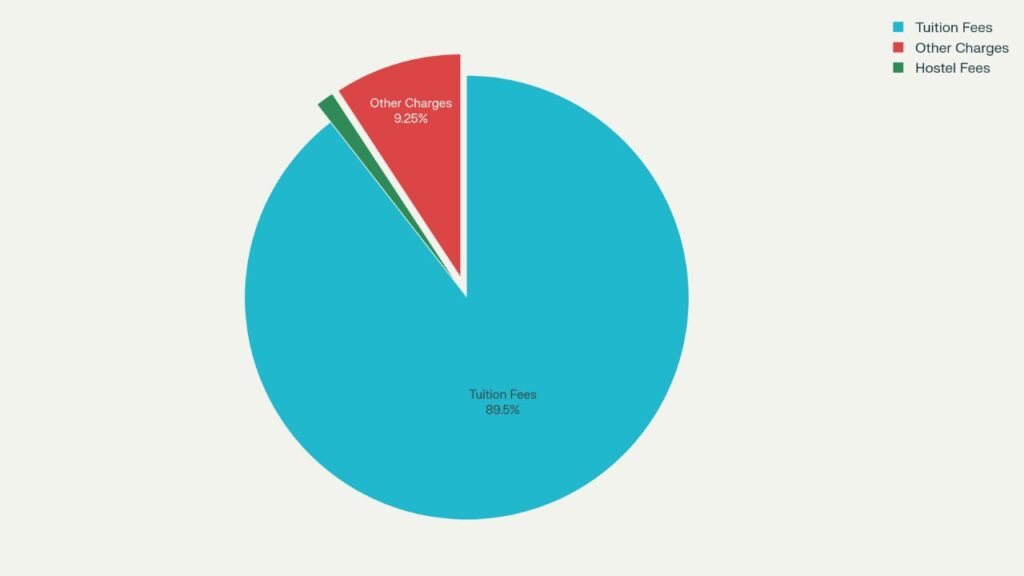
The tuition fee for the two-year course is ₹12,00,000, which is payable in four equal installments of ₹3,00,000 per semester. All the education fees, materials for courses and learning resources and even the use of campus facilities are covered by these fees. The total cost of accommodation in the dormitory for two years is Rs. 17,200 or 8,600 per semester.

Complete Breakdown of Detailed Fee Components

Mess fees are to be paid extra and they vary according to consumption, hostel fees are Rs 8,600 per semester. Semester fees are 22,400 for academic and administrative purposes which include the use of internet, sports equipment, library and student-welfare programs. 

Total tuition fees₹12,00,000
Per semester₹3,00,000
Total hostel₹17,200
Per semester hostel₹8,600
Academic charges₹22,400

First Semester Payment Structure

The admission fee structure is categorized based on the candidate’s classification. The fee for the first term for candidates in the General, OBC, and EWS categories is ₹3,31, 000, inclusive of hostel fees and other relevant expenditure like tuition. Those who belong to the SC, ST or PwD categories, however, get a Tuition Fee Waiver. First term fees are drastically reduced for these categories to Rs 31, 000, which is only for the hostel and other miscellaneous expenses. This tiered fee system also reflects a commitment to ensuring equitable access to education, as well as to financial viability for marginalized populations. 

How IIT Delhi MBA Fees Compare with Other Top Colleges

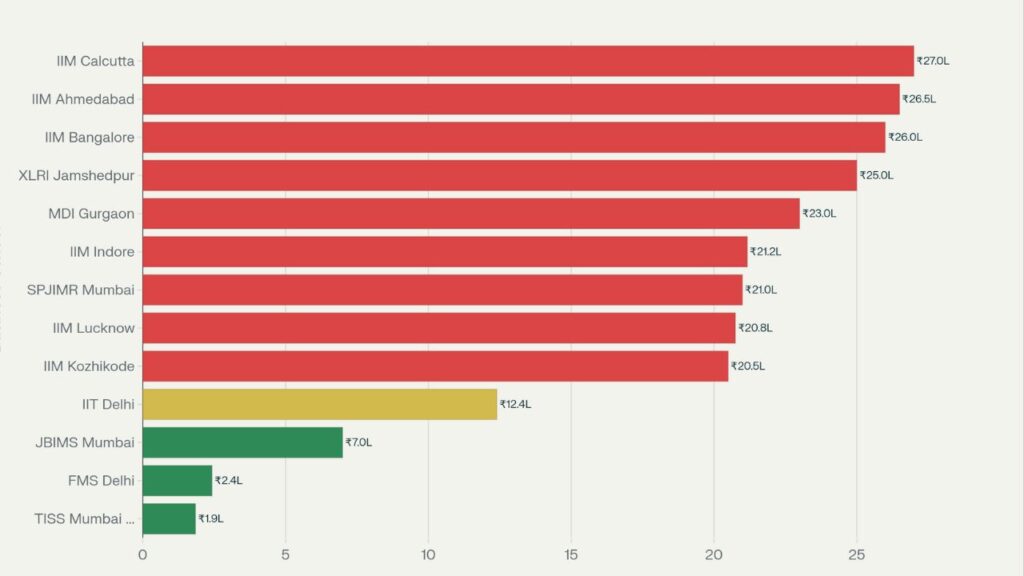
Comparison of MBA Fees Across Top Indian Colleges

How IIT Delhi MBA Fees Compare with Other Top Colleges

IIT Delhi offers great value for money as compared to other top b-schools in India. The fee structure makes it a kind of cross between the premium IIMs and the dirt cheap government ones. 

Old IIMs (Higher Fee Range)
IIM Calcutta₹27.00 lakhs
IIM Bangalore₹26.00 lakhs
IIM Ahmedabad₹26.50 lakhs
Newer IIMs (Moderate Fee Range)
IIM Lucknow₹20.75 lakhs
IIM Kozhikode₹20.50 lakhs
IIM Indore₹21.17 lakhs
Private B-Schools
XLRI (Xavier School of Management) Jamshedpur₹25.00 lakhs
ISB (Indian School of Business) Hyderabad₹40.50 lakhs
MDI (Management Development Institute) Gurgaon₹23.00 lakhs
SPJIMR (Shreyans Prasad Jain Institute of Management & Research ) Mumbai₹21.00 lakhs
Budget-Friendly Government Colleges
FMS (Faculty of Management Studies) Delhi₹2.43 lakhs
JBIMS (Jamnalal Bajaj Institute of Management Studies) Mumbai₹7.00 lakhs
TISS (Tata Institute of Social Sciences) Mumbai₹1.85 lakhs

Although these institutes charge very minimal fees, IIT Delhi gives a middle path with a reasonable fee structure and excellent results. 

IIT Delhi MBA Program Cost Breakdown (Total ₹12.17 Lakhs)

Return on Investment Analysis

The exceptional 2024 Placement Performance demonstrates that IIT Delhi’s MBA Program offers a tremendous return on investment (ROI). Graduates are offered an average salary package of ₹25.82 LPA, the highest package is an impressive ₹41.13 LPA while the median package is ₹24.45 LPA. The program’s remarkable 100 percent placement record is a testament to its strong industry relations and career support. It is the most lucrative choice for an aspiring management professional for a total programme fee of ₹ 12.17 Lakhs. Students have managed their expenses for a few months after they start working. 

Financial Support and Scholarship Options

IIT Delhi provides several support to the students who want to pursue MBA to ensure that everyone gets a chance of education. SC/ST/PwD students are entitled for 100% tuition fee waiver under category based benefits except for hostel and other fees. Furthermore, meritorious students are also eligible for merit scholarships, which are awarded on the basis of their programme-wide academic performance. Also, due to prestige of the institute, education loan for MBA course can be availed from all major banks. And given the school’s elite status, those loans typically carry competitive interest rates. 

Payment Schedule and Methods

In order to ensure transparency and ease of understanding for all students, the fee payment follows a semester-wise structured format. As per the schedule of payment, the fee for the 1st semester is to be paid at the time of admission. Fees are payable at the beginning of each subsequent semester. For your convenience, the fee can also be paid in two installments over two years, making finances a little easier to manage. 

Multiple modes of payments are available for easy transactions. Students can pay online from the time of official portals which ensures the safe and efficient process. Bank loans are disbursed by demand drafts. To suit different taste, there is also bank transfer payment option. This systematic procedure keeps the payment process formal and transparent, at the same time ensuring flexibility and accessibility to the students. 

Why Choose IIT Delhi MBA

Why Choose IIT Delhi MBA

Academic Excellence

The institute, which was ranked 4th in Management by NIRF 2024, is renowned for its outstanding academics and is supported by a strong faculty having rich research and industry experience. The curriculum is broad-based and focuses on experiential learning to ensure that the students are well-prepared to face real-world challenges. 

Industry Connections

It has great industry connections, and excellent placement support with top recruiters due to its vast alumni network in prestige companies, recurring industry interactions and guest lectures. 

Facilities & Location Advantage

The modern facilities on the state of the art campus include a well-equipped library, state of the art computer laboratories, sports and leisure facilities. Opportunity to work in corporate offices and the institution is located strategically in Delhi NCR, the emerging business hub of India making it the best for commerce studies.

Read More:- DSSSB Recruitment 2025 – Latest Vacancy, Eligibility & Application Details

Conclusion

For Indian business schools, the IIT Delhi MBA delivers the best price, quality and outcomes combination you can get. With a total fee of Rs 12.17 lakhs, it holds itself at a higher standard than many of the private IIMs while giving exceptional value for money when compared with the ones that are more prestigious. Given the reputed brand, good placements and affordable fees, it is an excellent value for money for MBA aspirants. 

Transparent breakdowns of fees and category-wise concessions ensure accessibility to students from diverse backgrounds. When viewed from the perspective of ROI, career opportunities and ranking experience, IIT Delhi MBArr its place among the topmost feasible options in India in business school arena. 

Scroll to Top