RRB NTPC Apply Online Form 2026: Graduate and UG Level Dates, Vacancies, and How to Apply

RRB NTPC

RRB NTPC 2026 short notice comes along with an opening of 5,165 Non-Technical Popular Categories posts. But the exact dates will be released after the official notification release. The Railway Recruitment Board announced both Graduate and Undergraduate levels posts. RRB NTPC 2026 Online Form will start on 15 October 2026. 

That detailed PDF, which will spell out final eligibility, exam pattern, and post-wise zone allocation, is scheduled for 7 October 2026 for Graduate posts and 14 October 2026 for Undergraduate posts. Until those land, treat today’s numbers as reliable but not final — RRB has occasionally revised vacancy counts and dates through corrigenda in past cycles.

Important Dates of RRB NTPC 2026

EventGraduate Level (CEN 06/2026)Undergraduate Level (CEN 07/2026)
Indicative / Short Notification Release21–26 September 202621–26 September 2026
Detailed Notification PDF7 October 2026 (tentative)To be notified
Online Application Start8 October 202615 October 2026
Last Date to Apply Online6 November 2026 (23:59 hrs)13 November 2026 (23:59 hrs)
Last Date for Application Fee Payment8 November 2026 (as per short notice)To be notified
Application Correction WindowTo be notifiedTo be notified
CBT-1 Exam DatesTo be announcedTo be announced
CBT-2 / Further StagesTo be announcedTo be announced
Age Calculation Cut-off Date1 January 2027 (as per notice)1 January 2027 (as per notice)

RRB NTPC Graduate 2026 (CEN 06/2026)

RRB NTPC Graduate 2026 is offering 3,477 seats this year, covering posts like Station Master, Goods Train Manager, Chief Supervisor. Typing is also required if the job is Junior Accounts Assistant cum Typist, and Senior Clerk cum Typist but they all sit under the Pay Level 5 and 6 of the 7th CPC matrix. 

Online applications open on 8 October 2026 and most sources have the window closing on 6 November 2026 at 11:59 PM, though a couple of reports list 11 November — worth confirming against the detailed CEN once it drops, since a five-day gap matters if you’re planning document uploads around a tight schedule.

For context, the last Graduate cycle (CEN 06/2025) pulled in over 58 lakh applications for 5,810 posts. This year’s pool is smaller — 3,477 against that backdrop — so competition per seat is realistically going to be tighter, not looser.

Read More 👉 Voice-to-Notes Tools for Students: Study Faster Without Typing

RRB NTPC Undergraduate 2026 (CEN 07/2026)

RRB NTPC Undergraduate posts (which require only a Class 12 pass) opens for 1,688 vacancies. The posts candidates will get are Commercial cum Ticket Clerk, Accounts Clerk cum Typist, Junior Clerk cum Typist, and Trains Clerk which falls under Pay Level 2 and 3.

Applications open on 15 October 2026 after a week of graduate level window — and close on 13 November 2026. Age for UG applicants is being cited as 18 to 30 years, calculated as on 1 January 2027, though this too should be treated as tentative until the detailed notification confirms it.

Eligibility For NTPC UG and Graduate Candidates

Graduate posts need a bachelor’s degree from a recognised university; a couple of roles, like JAA and Senior Clerk cum Typist, additionally require typing proficiency in English or Hindi. 

UG posts need a 12th pass certificate from a recognised board — no further qualification required at entry. 

On nationality, RRB accepts Indian citizens, subjects of Nepal and Bhutan, and Tibetan refugees who settled in India before 1 January 1962, along with a few other categories that need a government eligibility certificate before applying.

One thing last cycle’s notification did that’s worth watching for again: RRB gave Graduate-level candidates a one-time age relaxation, pushing the upper limit from 33 to 36. Whether that repeats for CEN 06/2026 isn’t confirmed yet — it’s the kind of detail that changes who’s even eligible to apply, so don’t finalize your own age-limit calculation until the detailed PDF is out.

Selection Process

Both levels follow the same broad structure: a First Stage CBT, a Second Stage CBT, a Typing Skill Test or Computer-Based Aptitude Test where the post requires it, and finally document verification with a medical exam. 

The first-stage CBT typically runs 90 minutes covering General Awareness, Mathematics, and General Intelligence & Reasoning, with a one-third negative mark for each wrong answer — that penalty structure alone is why guessing blind on NTPC papers tends to backfire more than it helps.

Read More 👉 Why ChatGPT Ads Deserve a Place In Your 2027 Media Plan 

Application Fee

Based on RRB’s standard structure across recent cycles, expect ₹500 for General and OBC candidates and ₹250 for SC/ST/PwBD/women/ex-servicemen/EBC candidates, with a partial refund issued to those who actually appear for CBT-1. 

Confirm the exact figure once the detailed CEN is published, since fee structures are one of the few things RRB does occasionally tweak between cycles.

How to Apply For RRB NTPC 2026 Online Form

  • Applications go through the official RRB portal at rrbapply.gov.in — not through any single national link, since each of the RRB zones runs its own regional application window. 
  • You’ll register with basic details, upload your photograph, signature, and required documents in RRB’s specified format.
  • Pay the fee online, and submit before the deadline for your category. 
  • Save your registration number; you’ll need it for every step afterward, including admit card download.

One Preparation Move Worth Making Now

Don’t wait for the detailed notification to start preparing — the CBT-1 syllabus for NTPC has stayed structurally consistent across cycles, so pull last year’s CEN 06/2025 CBT-1 question pattern and start timed practice sets on Mathematics and Reasoning now. Those two sections are where most candidates lose time, not marks, and three extra weeks of practice before the form even opens is three weeks your competition isn’t using.

The detailed notification will settle the open questions — final age limits, exact fee, zone-wise vacancy splits. Don’t wait for that, get ready your official documents including educational certificates, ID, cast certificate, and photo so your time doesn’t waste when the application opens. 

Read More 👉 Upgrade Laptop Like New Model In Low Budget

Conclusion

RRB NTPC 2026 brings 5,165 Graduate and Undergraduate vacancies, with applications starting in October. Since some details are still subject to the detailed notification, candidates should keep their documents ready and begin CBT preparation now rather than waiting for the final dates.

Leave a Comment

Your email address will not be published. Required fields are marked *

RRB RPF New Vacancy Notification 2026: Details Explained For RPF Constable

RRB RPF New Vacancy Notification 2026

RRB RPF New Vacancy Notification 2026 is still not released yet but it will come soon. Candidates who wanted to apply for RPF Constable post should check the official website for the official notification regularly to not miss the details and date for application form. 8000+ vacancies are expected to be released in this recruitment drive.

But before applying for this post, interested candidates must know every detail from educational qualification to selection process. Understanding these details will help you prepare to crack the examination and secure your position.

Major Change For RPF Constable Recruitment 2026 

Railway Recruitment Board (RRB) was conducting RPF Constable recruitment for years but now the conducting is changed. The examination taken under the Staff Selection Commission (SSC) authorities. 

RRB RPF Constable 2026 Breakdown

Job Profile & Duties 

Maintaining law and order on the train and railway station to keep the passengers and railway employees safe. There’s different types of violent people — thieves, killers, attackers and keeping the normal public safe from them is RRB RPF Constable duty. 

Not only people, but the system also should work smoothly without interruption, collecting information, and tracking railway security issues also comes under RPF Constable responsibility. 

This is not a 9 to 5 scheduled job, it’s a field job with an attentive mind. Controlling and maintaining the most crowded place in India is not that easy. Whether you are on the patrolling duty on the station or responding to emergencies, you will face new challenges everyday. 

Eligibility Criteria 

CriteriaDetails
NationalityIndian Citizen
Education10th Pass / Matriculation from a recognized board
Age Limit (General)18 to 25 years

Age Relaxation Category-Wise

CategoryAge relaxation
SC / ST5 years 
OBC-NCL3 years 
Ex-servicemenService period deducted, plus relaxation as per category rules 
Widowed OR divorced women2 years for UR/EWS, 5 years for OBC-NCL, 7 years for SC/ST 
Central govt employees with 3 years regular service / J&K domicile special case5 years for UR/EWS, 8 years for OBC-NCL, 10 years for SC/ST 

Physical standards

CategoryMale heightFemale heightMale chest
UR / OBC165 cm 157 cm 80 cm unexpanded, 85 cm expanded 
SC / ST160 cm 152 cm 80 cm unexpanded, 85 cm expanded 

Exam Pattern (CBT) 

You have to finish the 120 questions that come from Arithmetic, Reasoning, & General Awareness within a given time. Practice mock tests daily to maintain your accuracy and speed for finishing the paper in 90 minutes. But your answer must be accurate because if not, 1/3rd marks is going to be deducted for each wrong answer.

SubjectQuestionsMarks
General Awareness5050
Arithmetic3535
General Intelligence & Reasoning3535
Total120120

PET pattern

PET includes sports in which your body endurance will be measured like 1600 m run for men and 800 m run for women. The exam is not hard if you practice daily for 1 hour, the exam also consists of high jump and long jump.

TaskMaleFemale
Run1600m in 5 min 45 sec800m in 3 min 40 sec
Long Jump14 feet9 feet
High Jump4 feet3 feet

Selection Process 

This is not a single-stage process, the selection process for RPF Constable 2026 has three stages to pass by the candidates.

  • First stage: Computer Based Test in which your knowledge is tested through an exam. The questions come at 10th class difficulty level from Math, General Knowledge, and Logical. 
  • Second stage: You will be called for the second stage if you clear out the first stage with a good score. Candidates get only one chance to clear the PET & PMT.
  • Third stage: After passing these two stages, shortlisted candidates based on merit are called for document verification.

After DV, candidates 

RPF Constable 2026 Application Process

  1. RPF Constable 2026 application will be available on the official site of RRB or SSC soon.
  2. Visit the site and register yourself.
  3. Remember that credentials to login again and fill the form.
  4. Education qualification, personal details, and ID document will be uploaded along with the application in which you have filled these details.
  5. Continue to submit with the requisite amount of fee then download the application form for proof.

RPF Constable Salary & Allowances 

RPF Constable Salary is under Level 3 of the 7th CPC, so the basic pay is ₹21,700 per month which increases additional allowances such as DA, HRA, and Transport Allowance. 

City ClassMonthly In-Hand Salary
Class X (Metro — Delhi, Mumbai, Kolkata)~ Rs. 39,000
Class Y (Mid-size cities)~ Rs.37,420 
Class Z (Small towns/villages)~ Rs. 32,766 

RPF Constable Career Growth & Promotions 

Candidates who are in the Constable position can get a senior role as Head Constable then apply for Assistant Sub-Inspector (ASI) through departmental examination but most of the constables get promoted after years of experience. 

The highest positions are Sub-Inspector (SI) and Inspector where your salary also increases and you get other perks but overall responsibilities are also increased as of the senior post. 

Candidates not getting immediate promotion like in the private sector but they will get promoted based on their years of service, qualifying departmental exams, and Consistent performance appraisal.

Constable get their salary increases over time after 3 or 5 years on the same service. They also provide continued training to polish your skills.

Read More:- UPSSSC Pharmacist Eligibility, Selection Process, How To Prepare For Exam 2026

Conclusion

RRB RPF Constable 2026 is an excellent opportunity for candidates who want to build their career in the government sector and have a bright future along with providing respect and security in their life. From safeguarding railway passengers to ensuring law and order within one of the world’s biggest railway systems, the position carries a big responsibility and pride. 

RRB RPF New Vacancy Notification 2026 will be released soon by RRB for recruitment of Male and Female candidates. Now you must aware about the RRB RPF exam pattern which includes different stages exam pattern to complete analysis of the examination. With proper guidance and determination, getting selected as an RPF Constable can be a stepping stone to a flourishing career in railway security. 

Time Management Tips for Students and Government Job Aspirants

Time Management Tips

The reality is that most people don’t have a problem with time. They have a problem with managing time. The Time Management Tips for students and government job aspirants is important. For instance, two students may have identical 24 hours, the same syllabus, and the same exam date — yet end up in completely different places on result day. It’s because almost always how they spend their hours. 

This guide analyses the time management principle that really applies for us Indians — students in school & college, competitive exam aspirants for SSC, RRB, UPSC, banking and state-level, entrance exam students aiming for IIT, NEET, or law entrances, and working professionals attempting to study after holding a full day at the office. The circumstances may vary, but the fundamental discipline is one and the same. 

Why Time Management Tips Actually Matters 

It’s not that they don’t know “time management is important,” it’s just that no one actually has time to do it, not that they need it any more than the rest of us do. For exam candidates in particular, bad time management means not only less revision. It has three very real and very specific costs. 

First, it makes your syllabus look bloated. A topic that should take roughly three weeks gets stretched out over two months, not because it’s difficult, but because you’re learning in fragmented, distracted sessions rather than in concentrated blocks. 

Second, it kills your mock test performance. Candidates who are poor at managing their prep time tend to be procrastinators and pick up the easy topics first and push the difficult topics towards the end, so that by the time mocks begin, half the syllabus feels like a stranger under exam pressure. 

Third, and this is the one no one talks about nearly enough, it destroys your confidence. When you’re always feeling “behind,” you begin to question your own competence, even though the real problem was never intelligence — it was planning. 

Effective time management is not a matter of finding more hours in the day. It’s realizing that you actually already have the time, you just need to make it work. 

Time Management Tips for Students

Students who are balancing regular academics, tuition and assignments along with personal life also need a system which is practical and not a strict timetable copied from a top scorer’s Instagram post. 

Start with a weekly map, not a daily one. Daily to-do lists come crashing down as soon as one thing goes wrong — a pop quiz, a family gathering, feeling too tired. A weekly perspective allows you to reschedule your responsibilities without thinking you are having a bad day. Block out any non-negotiable obligations (class time, work, sleeping) and then plan your study periods around those. 

Use the “two-subject rule” for evenings. Attempting to cover every topic every day tends to result in none of them being covered very well. Choose two topics each night and dive in, cycling through the week. Depth outperforms breadth in terms of real retention. 

Protect your first hour after school. Most students spend the golden hour after school on their phones scrolling “just for ten minutes” which ends up being ninety. That first hour, when the day’s lessons were still fresh, was the best time for revision — not for new topics. 

Treat sleep as part of your study plan, not separate from it. Sleep deprivation to “make more time” is the most common error students make, and it backfires almost every time. Retention falls off a cliff with poor sleep, so those extra two hours often result in less learning than one focused hour on a well-rested brain. 

Time Management Tips for Government Job and Recruitment Exam Preparation

Preparation for government exams — SSC CGL, SSC JE, RRB NTPC, RRB ALP, Agniveer, UPSSSC, banking exams, state PCS has its own trap: it has a huge, fixed syllabus that remains more or less unchanged every year, making it very easy to remain stuck in a “preparation phase” without feeling ever ready. 

Reverse-engineer your timeline from the exam date, not from the syllabus. Most aspirants begin by telling themselves “I’ll finish RC, quant, then GK” without even assessing if that speed is even sustainable till the exam. Count backwards instead: How many weeks are there until the exam, how many subjects do you have to learn, and how many practice tests do you want to do before the D-day. This one change detects date problems three months in advance rather than three weeks before the test. 

Separate “learning time” from “practice time” clearly. Many candidates confuse these two processes — theory reading and question practice in one session and slow themselves down in both. Assign some fixed duration blocks solely for concept learning, and some solely for solving past year papers & mocks in a timed environment. They develop different abilities.

Make a weekly slot for current affairs you gear towards a level, don’t squash it in as a bit of leftover time. For exams like ssc, rrb,state level recruitment exam current affairs/general awareness is often pushed to “whenever i find time to study”,which is usually never. Settle for one or two brief daily sessions instead of waiting for free moments that never come. 

Mock tests deserve a full time slot, not a rushed one. Scheduling simulation the real exam length is as important as doing the questions. Your practice test should honor that 90 minutes of pressure since it should help simulate the real exam (and the review afterward) — not just the solving. 

Time Management Tips for Entrance Exam Aspirants

Entrance exams such as JEE, NEET, CLAT, and CUET operate on a different time scale as compared to the recruitment exams – they meld board exam stress with competitive exam intensity, and that too, in the same academic year. 

Sync your school syllabus and entrance syllabus instead of running two separate tracks. An enormous portion of time is wasted due to students studying the same subject chapter twice — once for boards, and once for the entrance exam in entirely separate sittings. Studying the two simultaneously, at entrance-level depth from day one, is months ahead of the full prep cycle. 

Rotate subjects daily instead of exam-cramming one at a time. These exams cover more than one subject at a time, so you have to keep your mind warmed up in all of them and not just be sharp on one subject and rusty on the others. A steady rotation — even if uneven in the number of hours per subject, keeps all the subjects “alive” in your mind. 

Track mistakes, not just completed chapters. Sorting out what you have achieved in the syllabus feels productive, but it doesn’t tell you information about what is actually going wrong. Keep a list of mistakes you make again and again when doing practice questions — that list is your revision material that will be the most efficient in the last month. 

Read More 👉 Data Science vs AI: Which Career Is Better?  

Time Management Tips for Working Professionals Preparing Alongside a Job

This may be the most difficult version of the problem since the constraint is not motivation — it’s literally hours in the day. Working professional-level test such as a government exam or a career-switch entrance exam does not have the luxury of a 8-hour study day. 

Accept the 90-minute reality and plan around it. The majority of working people truly have only about 60 to 120 minutes of concentrated work time in a day, divided between early morning and late evening. Struggling against this reality by aiming for 5 hours a day is just setting yourself up for failure and guilt. Schedule for the attainable during a weekday, and save the heavy-duty work for weekends — full-length mocks, madly difficult topics, revision marathons. 

Use commute and break time for low-effort, high-repetition tasks. Formulas, vocabulary, current affairs and short revision notes can easily be crammed into a commute or a lunch break. Save your truly fresh, high-powered hours — typically in the morning for the subjects that actually demand thinking of the deep kind. 

Don’t try to “catch up” by sacrificing entire weekends repeatedly. Burnout for working professionals generally results from this very pattern: lean weekdays, and then trying to fit a week’s worth of goals into Saturday and Sunday. It lasts for a couple of weeks, then crumbles. A sustainable pace beats a heroic one that quits come month three.  

Tell your workplace and family what you’re doing, even loosely. Candidates who do not share details of their preparation for the exam generally end up with more distractions during their study sessions as no one with whom they dwell or live is aware that those hours are sacrosanct. A modest notice - “I study from 6 to 7:30 every day” – cuts interruptions more effectively than any planner or app could. 

The One Habit That Ties All of This Together

Across students, government exam aspirants, entrance candidates, and working professionals, the single most useful habit is the same: reviewing the week, not just planning it. Most people plan on Sunday and then never look back until the next Sunday. Spending fifteen minutes reviewing what actually got done versus what was planned and being honest about why the gap happened is what turns a time management system from a wishlist into something that actually works over months of preparation.

Time management Tips for exams was never really about finding more hours. Every aspirant, regardless of which exam they’re preparing for, is working for the same 24 hours as everyone else. What separates a good result from a missed one is usually not effort — it’s whether those hours were spent on the right things, at the right time, consistently enough to matter.

Conclusion

Time management tips for students and government job aspirants is important for sustaining consistency in preparation for SSC, UPSC, RRB, banking, work, or JEE, NEET exams. Begin with attainable goals in mind, focus on the most important things, check in on your progress each week, and then rest appropriately. Little bit of betterment you make up every day adds together over months of training. 

UP Police Computer Operator Grade-A Online Form 2025: Apply, Dates & Eligibility

UP Police Computer Operator

If you have completed 12th with a science subject and are interested to join the Uttar Pradesh Police Force then this is the chance to transform your life! The application process has begun for the Uttar Pradesh Police Recruitment & Promotion Board (UPPRPB) Computer Operator Grade-A vacancies – the total number of vacancies is 1,352. So, let’s get into all that we need to know about this golden opportunity. 

A career with UP Police is an excellent opportunity for youth having technology savvy to establish their bright future in law-enforcement. With 1,352 vacancies available and a good pay scale of Level-4 (₹25,500 – ₹81,100), this job is not only offering colorful career but also financial security. The registration is valid for both men and women across the UP, so the whole terrain of the state could participate in it. 

Mark Your Calendar With These Dates

EventDate
Online Application StartDecember/16/2025
Registration DeadlineJanuary/15/2026
Fee Payment Last DateJanuary/15/2026
Fee Correction WindowJanuary/16-18/2026
Exam DateTo be notified
Admit Card ReleaseNotify Later

Do You Qualify For This Post?

RequirementDetails
Age Limit18-28 years
Educational Qualification10+2 with Physics & Mathematics
Computer CertificationDOEACC ‘O’ Level OR Diploma in IT/Computer/Electronics Engineering
Hindi Typing Speed25 words per minute (WPM)
English Typing Speed30 words per minute (WPM)

Category-wise Vacancy Breakdown

CategoryVacancies
General577
Other Backward Classes (OBC)364
Scheduled Caste (SC)283
Scheduled Tribe (ST)128

Read More 👉 BBA in Artificial Intelligence: Course Details, Admission, Fees and Career Scope

Simple Steps to Fill The Form

The procedure of application for Uttar Pradesh Police Recruitment and Promotion Board (UPPBPB) is easy and in online mode only. Step by step instructions are provided below:

1. Visit the official page of UPPBPB at the official website which is also mentioned in the article.

2. Sign up with a valid mobile number and email id.

3. Follow the guidelines to complete the One-Time Registration (OTR).

4. Fill in the details in the application form correctly related to your Personal and Educational Qualification etc.

5. Attach all relevant documents, i.e. mark sheets, certificates, a recent photograph and the signature.

6. Submit the application fee as applicable through the online mode.

7. Complete this and then apply with your full application and print the confirmation page for your document.

Make sure that all the information they are providing is true and correct, and that the files they upload are according to the size, format, etc. specified above so that they don’t have to face any trouble. 

Application Fee
General/OBC/EWS₹500
SC/ST₹400

Selection Process

StageDescription
Written Examination200 MCQ questions (400 marks)
Typing TestHindi & English typing skill test
Document VerificationAuthenticate original certificates
Final Merit ListBased on written exam performance

Exam Pattern

The question paper has a General Hindi, General Knowledge, Mental Aptitude/Reasoning and Computer Science section. All the three sections contain 50 questions and every question carries two marks thereby the maximum score for the paper is 100 marks. 

Useful Links
Apply HereClick Here
Download NotificationClick Here
Official WebsiteClick Here

RRB JE Syllabus 2025: CBT 1 & CBT 2 Exam Pattern Explained

RRB JE Syllabus 2025

RRB JE is a recruitment exam for Junior Engineer Jobs in the Railway sector. This is a competitive exam for those who wish to establish a stable career as an engineer in the Railways. It is conducted by the Railway Recruitment Board (RRB).

The RRB recruits junior engineers for the technical roles in Railways through this exam. Candidates who want to have a strong and stable career in the railway sector are preparing so well to get the highest score. Lakhs of students apply for this exam to get a job.

The RRB JE 2025 exam is designed to fill vacancies for Junior Engineers (JE), Junior Engineer (IT), Depot Material Superintendent (DMS), etc. For cracking the RRB JE 2025 you must consistently check the updated syllabus and exam pattern. Candidates must have the technical skills and knowledge before applying for this job role. The selection process is difficult as this reflects the critical responsibilities. Junior Engineers have a role in maintaining and developing systems across the Railway.

Exam Pattern for RRB JE CBT-1

In this exam, each question carries 1 mark, and the total number of questions is 100. The duration of the exam is 90 minutes. All the questions are objective-type multiple-choice. If there is an incorrect answer then the 1/3rd mark is deducted as a negative marking.

Sections and Distribution of Questions

SectionNumber of QuestionsMarks
Mathematics3030
General Intelligence & Reasoning2525
General Awareness1515
General Science3030
Total100100

Minimum Qualifying Marks

It depends on the category or financial status of the candidate. Economically weaker and unreserved candidates get 40% minimum qualifying marks. Scheduled Caste and Backward get 30% minimum qualifying marks. Scheduled Tribe gets 25% minimum qualifying marks.

RRB JE CBT 2 Exam Pattern 2025

Each question in CBT-2 carries 1 mark and makes a total of 150 marks. Candidates must complete the exam in 2 hours. For each Wrong answer, 1/3rd mark is deducted as a negative marking.

Sections and Distribution of Questions

SectionNumber of QuestionsMarks
General Awareness1515
Physics & Chemistry1515
Basics of Computers and Applications1010
Basics of Environment and Pollution Control1010
Technical Abilities (as per discipline)100100
Total150150

Minimum Qualifying Marks

For unreserved candidates minimum qualifying marks are 40%. Other backward classes and Scheduled caste got 30%, Scheduled Tribe got 25%.

Also Read: RRB NTPC Syllabus 2025: CBT 1 & 2 Detailed Exam Pattern

RRB JE Syllabus 2025

RRB JE CBT 1 Exam 2025 Syllabus

TThis exam pattern is dependent on assessing the candidates’ ability across four sections, i.e. Mathematics, General Intelligence & Reasoning, General Awareness, and General Science. To maximize your score you must prepare all the sections and every section has crucial topics. 

Mathematics

The mathematics section contains topics such as Number Systems, BODMAS, Decimals and Fractions, LCM & HCF, Ratio and Proportion, Simple and Compound Interest, and Profit and Loss, these topics are easy but important to practice for preparation. Percentages, Mensuration, Time, Work and Distance, Algebra, Geometry, Trigonometry, Elementary Statistics. Mastering these topics will get you ready for the quantitative section with confidence.

General Intelligence and Reasoning

This section assesses the candidate in their abilities through Analogies, Alphabetical and Number Series, Coding and Decoding, Mathematical Operations, Relationships, Syllogism, Venn Diagram, Data Interpretation and Sufficiency, Conclusions and Decision Making, Similarities and Differences, Analytical Reasoning, Statement (Arguments and Assumptions). By preparing this topic proof your logic and reasonable thoughts also enhance your speed in recognizing patterns. Candidate must practice for these topics consistently.

General Awareness

General Awareness contains topics such as Current Affairs, Indian Geography, Culture and History of India (including the freedom struggle), Indian Polity and Constitution, Indian Economy, Environmental Issues (India and the World), Sports, and General Scientific and Technological Developments. These topics have to enhance the powerful skill for staying updated or be the first to know everything that could effective and influential on the nation or internationally. Staying updated with daily news and revising static GK will be beneficial for this section.

General Science

Physics, Chemistry, and Life Sciences have a strong grasp of fundamental scientific principles. This section is easy because it contains the 10th class syllabus of basic science. However, it is easy as well as mandatory to rank high score in this section. 

RRB JE CBT 2 Syllabus

General Awareness

The General Awareness section in CBT 2 covers all topics from CBT 1—such as current affairs, Indian geography, history and culture, Indian polity, economy, environmental issues, sports, and scientific developments but with deeper topics and complexity. So, be prepared well for the CBT-2 because it is hard as compared to the CBT-1. As you have cleared out CBT-1, you could prepare a general awareness section easily it covers the day-to-day updates and old important events or locations. Focus more on national and international events, and government schemes.

Physics & Chemistry

CBT-2 focuses on deeper concepts of physics and chemistry that are relevant to engineering. Candidates are expected to have a solid grasp of core concepts from both subjects, the basic principles and laws, 10th class NCERT can also have such concepts which can help to crack this exam. 

Basics of Computers and Applications

This section focuses on computer fundamentals, networking, MS Office, and operating systems. Candidate must have basic knowledge of these basic computers. As for the engineering job posts technical skills are required and computer application is one of the concepts every candidate must learn. 

Basics of Environment and Pollution Control

This section includes environmental concepts of pollution (air, water, noise) and also its effect on the land, global warming (one of the rising topics of these days), ozone depletion is the layer around the earth which is decreasing day-by-day, waste management, and sustainable development. Sustainable development is rising in every sector because of the necessity and people’s support for a sustainable future. Mastering these topics will help you to maximize your score in these sections.

Technical Abilities (as per discipline)

The Technical Abilities section covers the topic of engineering and varies to the candidates’ branch such as Civil, Mechanical, Electrical, or Electronics. This section tests the knowledge of the candidate in their respective field of engineering. Ensuring a thorough assessment of core concepts and practical knowledge required for junior engineering roles in Indian Railways.

BranchKey Topics
Civil EngineeringBuilding material includes the construction needs to build the infrastructure.- Surveying: Measurement techniques, leveling, mapping, and surveying instruments. Without the help of the instrument, it is impossible to build something accurate.- Hydraulics: resources of water, Fluid properties, etc- Structural Engineering: Analysis and design of beams, and columns.- Transportation Engineering: all four means of transportations engineering.- Estimation and Costing: Preparation of budgets, cost analysis, valuation in construction.- Soil Mechanics: soil fertilization, classification, properties- Environmental Engineering: pollution and global warming effects, sustainability
Electrical Engineering– Basics of Electrical Circuits: Circuit laws, network theorems, analysis.- Electrical Machines: Transformers, motors, generators- Measurement techniques, instrument types, calibration.- Control Systems: Feedback mechanisms, stability, automation.- Utilization of Electrical Energy: Lighting, heating, traction, industrial applications.- Power Systems: Generation, transmission, distribution, protection systems.- Basic Electronics: Semiconductors, digital electronics, diodes
Mechanical Engineering– Strength of Materials: Stress-strain analysis, properties, failure theories.- Manufacturing Processes,  Engineering Mechanics, Heat Transfer: Conduction, convection, radiation, thermal insulation.- Thermodynamics, Machine Design, Fluid Mechanics
Electronics & Communication Engineering– Basic Electronics: Semiconductors, transistors- Digital Electronics: AND AND NOR- Logic gates- Communication Systems: Analog OR digital communication, modulation, transmission, frequency.- Control Systems: Feedback, stability, process control.- Network Theory: Circuit analysis, filters, network theorems.- Instrumentation: Measurement systems, transducers, signal conditioning. 
Computer Science & IT– PC Software: MS Windows, Word, Excel, PowerPoint.- Computer Fundamentals: Hardware, Software, Internet basics.- Programming Languages: OOP concepts, Java, C++- Data Structures: Arrays, stacks, searching, sorting.- DBMS: Relational models, SQL, triggers, database design.- Operating Systems: Linux, commands, system administration.- Web Technologies: HTML, web servers, internet protocols, security.- Networking: OSI model, TCP/IP, topologies, transmission media, error detection/correction.
Printing Technology– Printing Systems: Methods, image carriers, ink transfer, proofing.- Printing Materials: Substrates, inks, coatings, binding materials.- Flexo, Gravure, Screen Printing: Principles, preparation, press work.- Image Processing: Photography, digital processing, editing software.- Design & Advertising: Typography, book/magazine design, advertising agency operations. 

Top Agriculture College in Uttar Pradesh: Courses, Fees & Admission Details

Top Agriculture College in Uttar Pradesh

Uttar Pradesh is one of the most agriculturally capable states in India and its Top Agriculture Colleges in Uttar Pradesh are a testimony to this heritage. Whether you are a student passionate about sustainable farming, agricultural innovation, or agribusiness, Uttar Pradesh state has some of the best centers to develop your career in this important sector. If you want to study agriculture in UP, this blog is for you to see the list of top colleges, know about courses, fee structure and the admission process. 

Why Choose Agriculture Education in Uttar Pradesh?

Farming in Uttar Pradesh isn’t just small-scale ploughing anymore. The state’s agricultural schools combine research and state-of-the-art technology with practical work in the field to give students the skills necessary for 21st-century farming. 

In areas such as crop science, agricultural engineering, agribusiness and sustainable farming methods, these colleges provide students with the tools to become leaders in the agricultural industry. 

The Top Agriculture Colleges in Uttar Pradesh

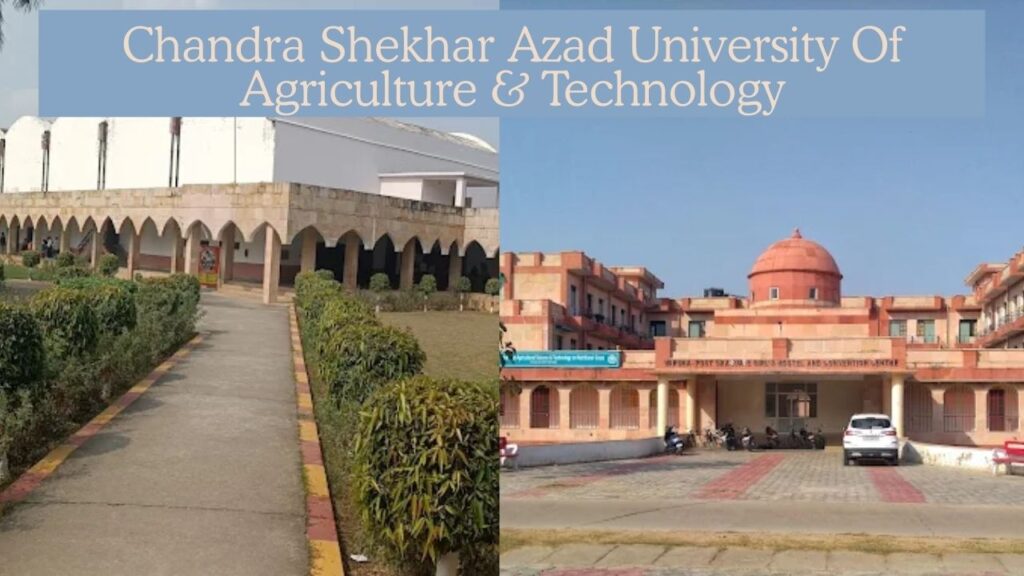
1. Chandra Shekhar Azad University — (CSAUAT), Kanpur

The CSAUAT is a leading Indian agricultural university and played a pivotal role in laying the foundation for the development of the university system of agriculture in the state right from the beginning in 1975. Located in the heart of the agro-based state of Uttar Pradesh, this Government institute has built a name for itself for a long time now.​ 

Chandra Shekhar Azad University

Courses Available – B.Sc.(Hons) Agriculture, B.Tech in Dairying Technology, B.Tech Dairying, M.Sc. Agri in different specializations like Agronomy, Plant Pathology, Soil Science, and Ph.D. courses. 

Fees: The B.Sc. (hons.) The annual fees of B.Sc Agriculture is about ₹1.07 lakhs per semester (The total fee is ₹4.28 lakhs for 4 years), which is very reasonable under this course. B.Tech courses are charged at about ₹1.50-1.64 lakhs per annum.​

Admission: Applicants can apply if they are passed 10+2 with 50% minimum marks (with PCM/PCB subjects) and applicable for the UPCATET entrance exam. The counseling procedure is on merit.​

Placement & Career Growth: It will let you earn around ₹3-5 LPA package which is quite enough for freshers. Some even receive packages as high as ₹7 LPA, depending on their skills. 

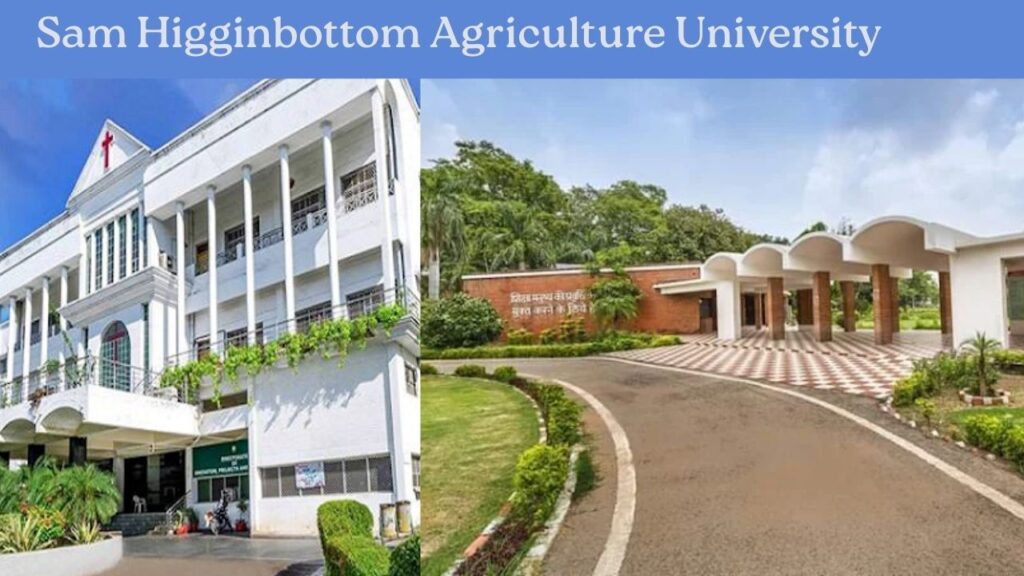
2. Sam Higginbottom Agriculture University, Prayagraj

A leading private deemed university, SHUATS is recognized for its integrated approach of farming systems and industry relevant curriculum. The campus is located at Prayagraj and has state of the art infrastructure for imparting agricultural education.​

Sam Higginbottom Agriculture University

Courses are B.Sc Agriculture, B.Tech in Agricultural Engineering, M.Sc Agriculture in various disciplines, PG Diploma/ Diploma in food technology. 

Fees: B.Sc. (Hons.) Agriculture fees is ₹1,08,000-1,20,000 per year at various universities in India. But SHUATS is much better when it comes to scholarships, candidates who are eligible can get waivers ranging from 30-40% on the fees, plus additional concessions for christian students.​

Eligibility: Candidates must have passed 10+2 in PCM/PCMB/PCB with minimum of 45% marks. The admission is merit based on an entrance test conducted by the university, usually in the month of May.​

Placement & Career Prospects: The salary package is exceptional, the one can earn around ₹6.20 lakhs. The package is based on the skills of the students that can be up to ₹3 LPA. 

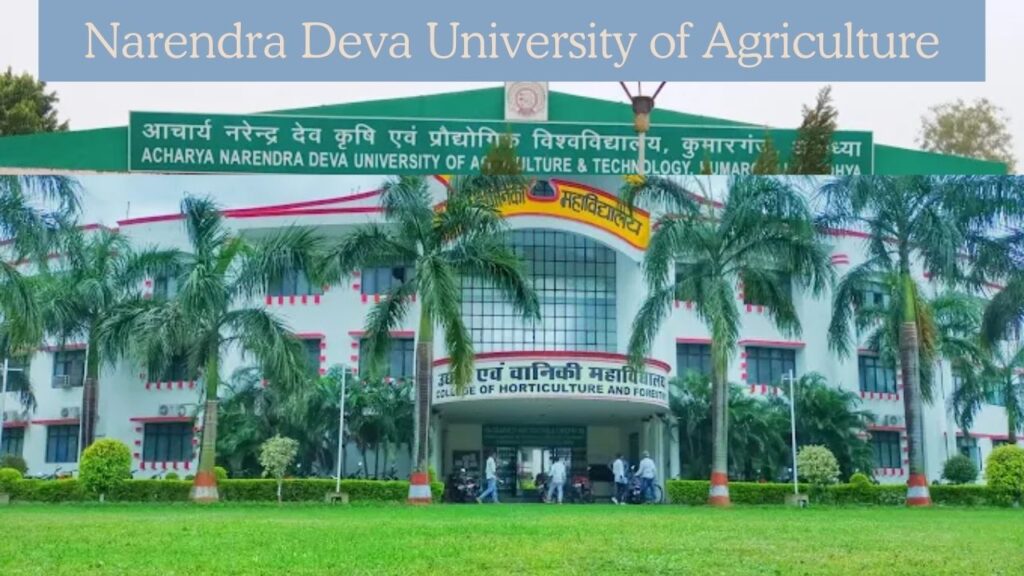
3. NDUAT — Narendra Deva University of Agriculture 

The NDUAT is an agricultural university, It focuses primarily on horticulture and crop science. It is a government institution in Ayodhya and provides good quality education at low cost.​

Narendra Deva University of Agriculture 

Courses available: B.Sc. (Hons) in Agriculture, B.Tech specialisations, M.Sc. courses in B.V.Sc. & A.H. (Veterinary), as well as B.F.Sc. (Forestry).​

Fees: The B.Sc. (Hons.) Agriculture course fee is around ₹1.05 lakhs for 4 years, while B.Tech fees range between ₹1.64-1.70 lakhs. 

Admissions: The minimum qualification is 10+2 with 50% marks in the PCB/PCM group of subjects. Admission is based on UPCATET entrance examination and then counseling on merit.​

Placement & Career Prospects: The candidates who graduated have a placement with an average package of ₹3 LPA in both private and government sectors. 

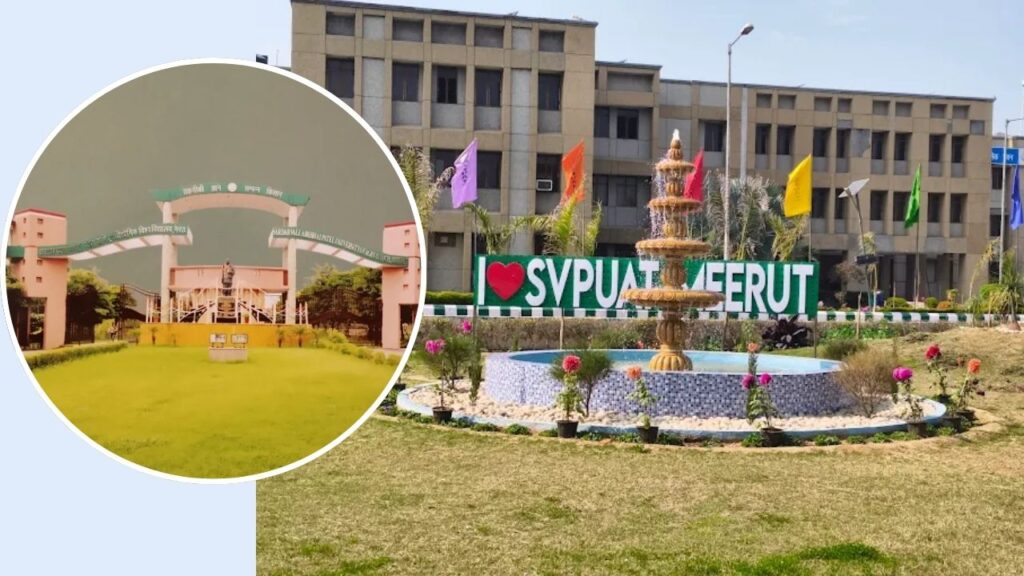
4. Sardar Vallabhbhai Patel Agriculture University  

SVPUAT is the best university which is located in Meerut, making it easy for students. With all the government funding support, SVPUAT is known for its research on crop improvement and agriculture mechanization.

Fees: The fees for the whole course in AY is around ₹45,000 which is one of the cheapest in the state.

Placement: The strong ties with agribusiness companies, research institutes and government agencies enable graduates to obtain good placements. 

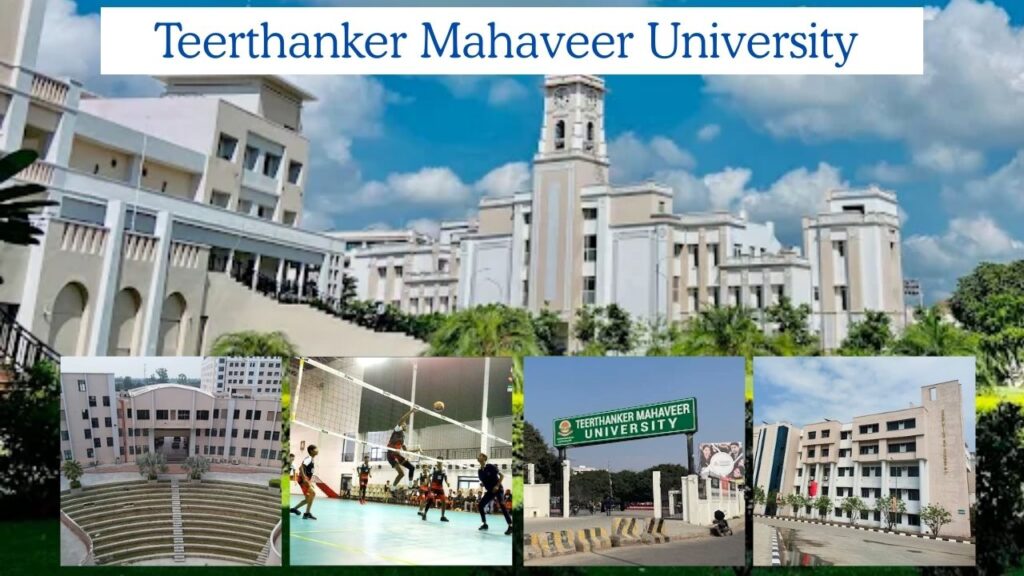
5. Teerthanker Mahaveer University (TMU), Moradabad

TMU is one of the best private universities in uttar pradesh with world class infrastructure and industry oriented syllabus.​

Teerthanker Mahaveer University

Course Offered: B.Sc. Agriculture, M.Sc. Agriculture courses based on ICAR norms.​

Fees details: The total duration of B.Sc. (Hons. ) Agriculture at TMU is 4 years The fees for B.Sc. (Hons.) The duration of B.Sc Agriculture is 3 years and for M.Sc. Agriculture 2 years. The tuition fee is Rs 45,000 per semester for MSc Agronomy. 

Facilities: There are world-class labs, practical training, and strong linkages with the industry, in the university. 

Understanding the UPCATET Entrance Exam

Most of the government agricultural universities in Uttar Pradesh take their admissions via UPCATET(Uttar Pradesh Combined Agriculture and Technology Entrance Test). 

Here’s what you need to know:​

Exam Details: The exam is held every year in offline mode by the universities. For UG courses, the exam is generally conducted in June. 

Eligibility: 10+2 passed students having science subject (PCM, PCB or with Agriculture subject) with a minimum of 50% marks are eligible to apply. There is a benefit for reserved category students, they can get marks relaxation up to 5%.​

Exam Pattern: The UPCATET contains 200 questions from general knowledge, agriculture science, mathematics, and English. The examination will last for 3 hours.​

Age Limit: Applicants must be aged between 16-22 years for UG courses at the time of admission. 

Read More:- ITI Admission Fees in Government College: Complete Fee Structure Guide

Course Overview

The first years of agriculture in UP colleges are generally the basic courses in crop production, soil science, plant pathology, entomology and agricultural economics. Students specialize as well, choosing from such options as horticulture, seed technology, agricultural extension, agricultural engineering. 

A number of courses have fieldwork components and the Rural Agricultural Work Experience (RAWE) allows students to work with farmers as they confront challenges of farming in the field.  

Career Growth & Salary Package 

There are many opportunities for the graduates of agriculture. For the freshers agriculture college students —- the packages will be near about ₹20,000-35,000 per month for job profiles like agricultural assistant and farm supervisor etc in the entry level The amount varies with the university from which students have passed. 

Professionals at an intermediate level with 2-3 years of experience can earn around ₹40,000-60,000 per month. The salary of Agriculture Officer or Agriculture Development Officer in the government lies between 35,000 – 60,000 Rs per month. 

Conclusion

Selecting an agriculture college in Uttar Pradesh is all about shaping the future of India. Be it a renowned government college like CSAUAT or a up-to-the-minute private university like SHUATS, you will find a route that leads you both with practical experience in the real world of life and a theoretical academic purity. 

With manageable fees, quality faculty, research opportunities and robust placements, the agriculture colleges in UP prove to be the best when it comes to anyone with a zeal and passion to bring a change in the agriculture scenario of India. 

Scroll to Top