Voice-to-Notes Tools for Students: Study Faster Without Typing

Voice-to-Notes Tools

Voice-to-Notes Tools are really helpful from turning large study lectures into simple notes in just few minutes. Writing everything down is an old fashion technique that takes a lot of time for a few pages notes but everything is going easy with fast pacing technologies. Whether it’s hours of session or long research sheets, enabling speech to text is the smarter way to take notes. 

You’re forty minutes into a lecture, the professor has moved through three concepts, and your notes still say “photosynthesis — light reaction —” because your hand gave up before your brain did. Speaking runs at roughly 150-160 words a minute while typing tops out around 40 for most people. 

That gap is the entire case for Voice-to-Notes Tools , and for Indian students juggling coursework in English, Hindi, or a regional language, the tool you pick matters more than the concept itself — because most of the tools were built for American office meetings, not for Indian classrooms. 

Best Voice-to-Notes Tools For Indian Students 

There are plenty of tools that can turn your voice into text but then you find an error — spelling, whole different word (except, accept), not able to turn your regional language — that’s because it doesn’t understand. Some AI integrated voice tools that turn your every word into text without major errors is here:

Gboard Voice Typing — free, and it’s already on your phone

Before downloading anything, check what you have. Google’s Gboard keyboard has an in-built voice typing feature which you can use by clicking on the mic icon. If the icon is invisible then enable it from the setting so Voice-to-Notes can be easy and quick without downloading any new app.


It works in Hindi plus eight regional languages — Bangla, Gujarati, Kannada, Malayalam, Marathi, Tamil, Telugu, and Urdu — Indian students can use this keyboard in any app that takes input in the same language, not just Google’s own apps. 

For a student jotting quick revision notes in Hindi between classes, this is the lowest-friction option because there is no signup, no subscription, no separate app to remember to open.

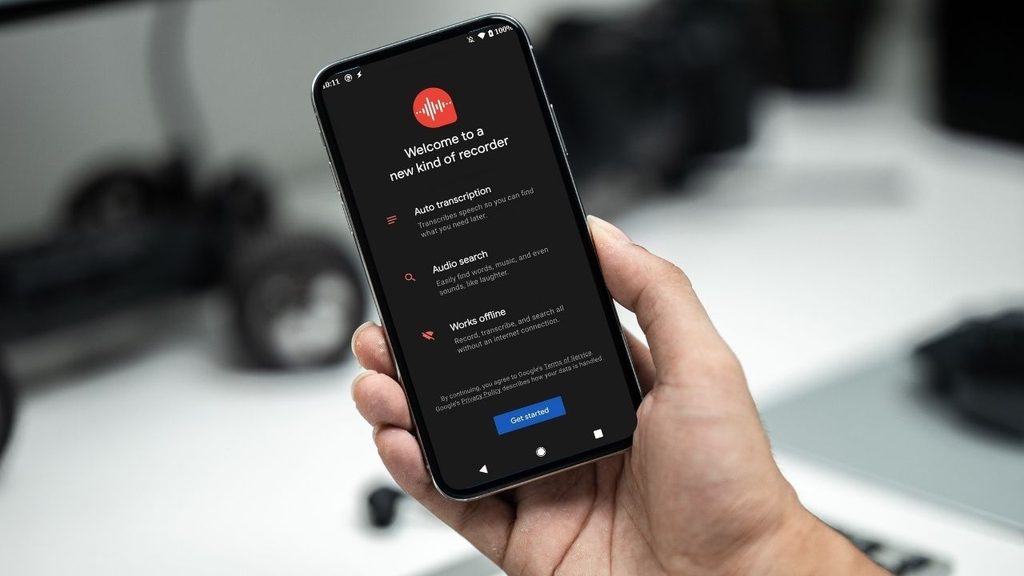
Google Recorder — real-time transcription, best if you have a Pixel

Google Recorder transcribes live as you speak and runs the processing on-device, which matters if your hostel Wi-Fi is unreliable. The catch: it’s tied to Pixel phones for its full real-time transcription experience, so if you’re on a different Android device or iPhone, this one’s off the table.

Otter.ai — good for English lectures, but it skips Hindi entirely

Otter is the name that comes up first in most “best Voice-to-Notes Tools” lists, and for English-medium lecture capture it’s genuinely capable — live transcription, speaker labels, searchable transcripts. 

The free tier gives you 300 minutes of transcription a month, capped at 30 minutes per recording, which covers maybe eight or nine standard lecture sessions before you hit the wall. The Pro plan runs $16.99/month billed monthly, or roughly $8.33/month if you pay annually (about $99.99/year). 

But for Indian students: Otter’s transcription supports English and a small set of other languages — Spanish, French, German, Japanese, Chinese depending on the source you check — but not Hindi or Indian regional languages. If your coursework happens in Hindi medium, Otter simply won’t understand you, no matter which plan you’re on.

Wispr Flow

Wispr Flow is the strongest option because it works inside almost any application. Students who want long-form writing and fast drafting can use this tool but unlimited dictation requires a subscription, which costs around $15 per month or $12 per month when billed annually. Since it supports more than 100 languages and gives accuracy for names and jargon along with AI editing, the cost is worth it.

VoiceToNotes.ai 

Its features include real-time transcription, grammar correction, AI summaries so it can become a useful tool for students which turn spoken thoughts into structured notes. Some professionals consider this tool as more affordable than many full-featured AI assistants but free usage is limited. The catch: accuracy still depends on microphone quality and background noise.

Mindgrasp

Mindgrasp is primarily an AI learning and content-understanding platform. Students can use it for lectures and study material — it helps in creating flashcards and quizzes automatically. Best for exam preparation and research but some features are tied to specific subscription tiers. 

Lisup 

Lisup focuses on accessibility and hands-free writing. It can be used across desktop applications so access will be easy and it is specifically designed for in-place speech-to-text features. It’s not built for broader use but enough for students to take notes easily. 

Soniox — the app actually built for Hindi dictation

Soniox is less well-known in student circles but solves exactly the gap Otter leaves open. It handles Hindi across regional varieties like Khariboli and Braj Bhasha, works system-wide across any app or text field on your phone rather than locking you into one note-taking interface, and covers 60-plus languages total with the ability to switch languages mid-sentence. 

It’s useful if you naturally code-switch between Hindi and English while explaining a concept to yourself. It’s free to start, with weekly free credits rather than a hard monthly cap, and the company states it doesn’t store your recordings or use them for model training, which is worth knowing if you’re dictating exam-prep notes you’d rather keep private.

Sarvam AI — worth watching, not quite a student app yet

Sarvam is India’s most-funded sovereign AI company, and its speech models (Saaras v3) handle 22 Indian languages with genuinely strong accuracy claims. But as of now, Sarvam’s product lineup is built mainly for enterprises — voice agents for banks and government call centers, APIs for developers — rather than a polished consumer app you’d install and use for lecture notes. 

A consumer-facing voice app was announced in February 2026, aimed at exactly this kind of mass-market, multilingual use case, but a public launch isn’t happening right now.

Read Also 👉 Why ChatGPT Ads Deserve a Place In Your 2027 Media Plan 

Why Do Students Need These Tools?

Most of the time students missed points while trying to understand the same topic simultaneously. Writing it down on paper or in a mobile is the same thing — it consumes a lot of time and misses points. So, these Voice-to-Notes Tools help students take notes without tiring their hands. 

There are some free and some paid tools, if you just need to take notes of what your processor is explaining then a free tool is enough for you. But if you are a Ph.D student or you need to do heavy research, organize every note, and make summaries from online content, you need a tool which can handle all of that, even if it costs you a little.

Which Speech-to-Text Tools are Best For Studies?

Google’s Gboard keyboard is the best free Voice-to-Notes Tools which I have used personally and crafting many documents in English, Hindi and Urdu. I recommended to students who wanted to take notes before exams and stop writing everything manually and waste their time. 


Gboard offers unlimited access to use on any other applications like docs, word, and on any device (mobile or laptop). Most of the students take their mobile to the college, so it runs smoothly. But sometimes it makes minor errors in spelling which you can edit later. 

Second is Wispr Flow but you have to pay after a limited use and many students can’t afford it but those who can afford can consider Wispr Flow as the best tool for making notes.

Read Also👉 Upgrade Laptop Like New Model In Low Budget

Conclusion for Voice-to-Notes Tools

The world is changing and for solving traditional problems by adapting new technology. One of the old problems is taking notes in a mid-session in your classrooms. Students have to understand the topic and write down their important concepts — two jobs at once.

If they forgot, they have to ask other students and it appears a problem if you don’t have a lot of friends. So the problem is solved now, you can spend your time to understand the topic without worrying about the notes as these Voice-to-Notes Tools do that job for you.


Leave a Comment

Your email address will not be published. Required fields are marked *

Top 10 Central Universities in India 2025 – NIRF Ranking with Full Details

10 Central Universities in India

The Public Universities that run under the Ministry of Education are known as Central Universities. Several frameworks ranked these universities according to their teaching and resources, research, placement record, campus facilities. Let’s look into these Top 10 Central Universities in India 2025 according to their NIRF ranking with their full details.

Jawaharlal Nehru is on the top of this list as it is the most reputed central university in India. These regional factors to define its ranking are important for efficient outcome to decide the most reputed, research and innovation based university for higher education.

Students who want to achieve a stable career, strong research support, professional growth, and excellent placement package. For admission, students must clear the entrance exam.

Top 10 Central Universities in India Overview

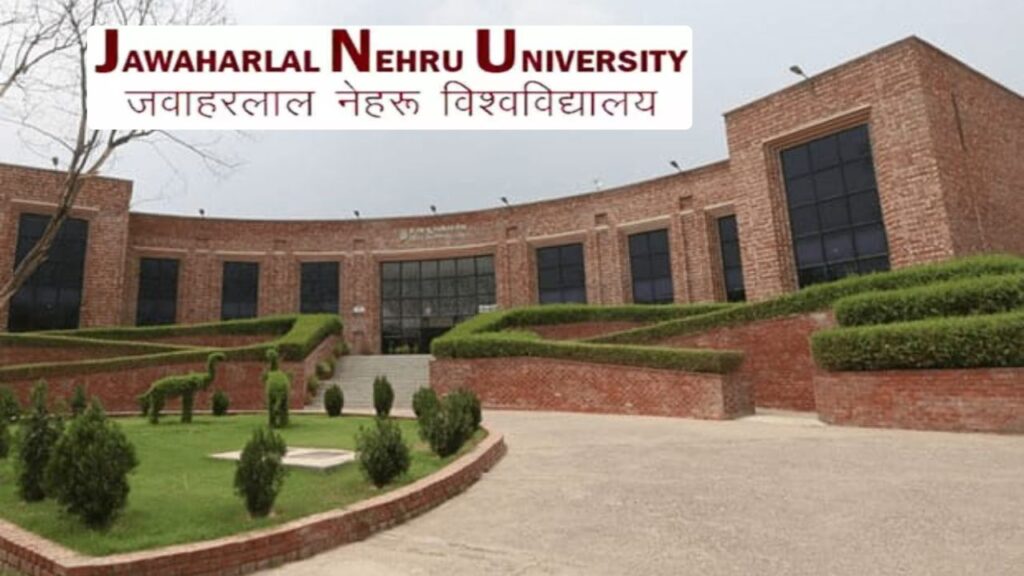
1. Jawaharlal Nehru University 

Jawaharlal Nehru University

#1 central university in India which offers many courses in each field including Arts, Science, and Commerce. The fee structure is dependent on the course – some have low tuition fees and some are high such as engineering, postgraduate, and doctoral courses. JNU is situated in New Delhi and known for its world-class education with strong faculty and training programs.

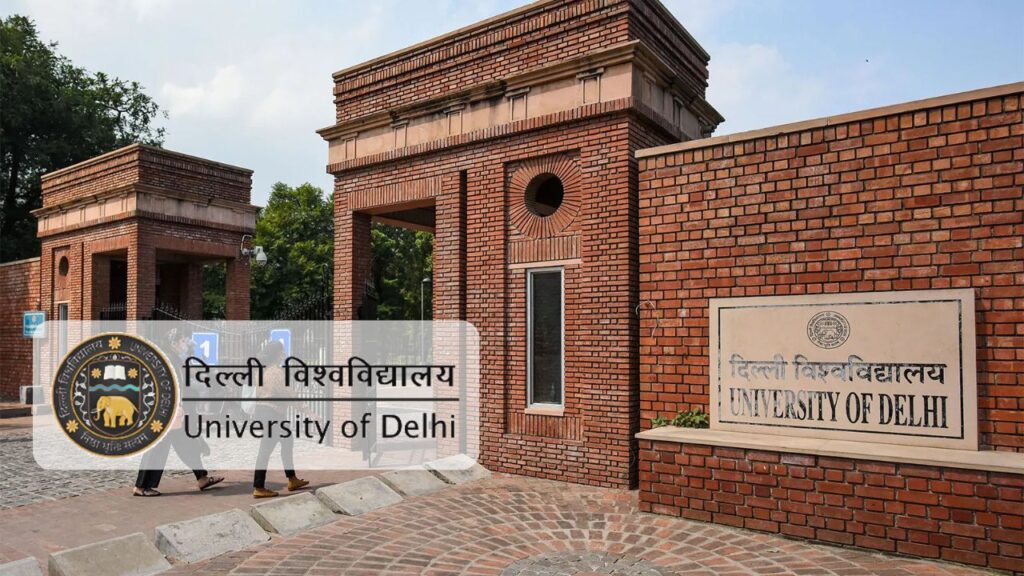
2. Delhi University

Delhi University

Delhi University is a research central university which offers undergraduate, postgraduate, diploma, and doctoral courses. The total of 201 courses available with 86 departments. Strong and experienced faculty holds the status of the campus at 2nd position in the NIRF ranking among central universities.  

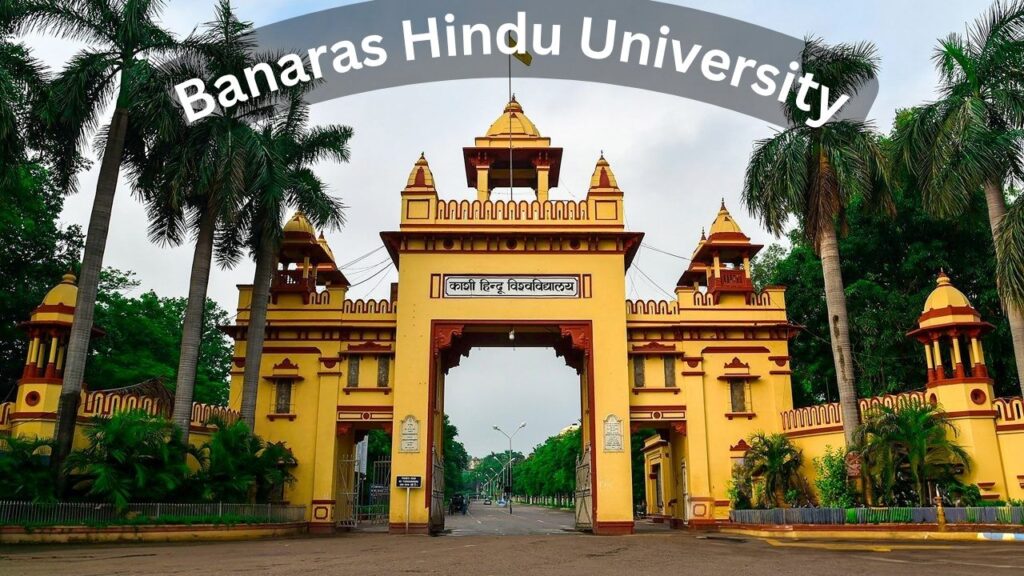
3. Banaras Hindu University

Banaras Hindu University

It’s on the 3rd position among universities with its culturally rich learning. Students most probably prefer BHU to pursue engineering and medical courses. Admission processed through the CUET exam and offering a diverse range of courses in each field.

Read More 👉 MTech vs MBA in 2025: Who Earns More and Why? Find Out Now!

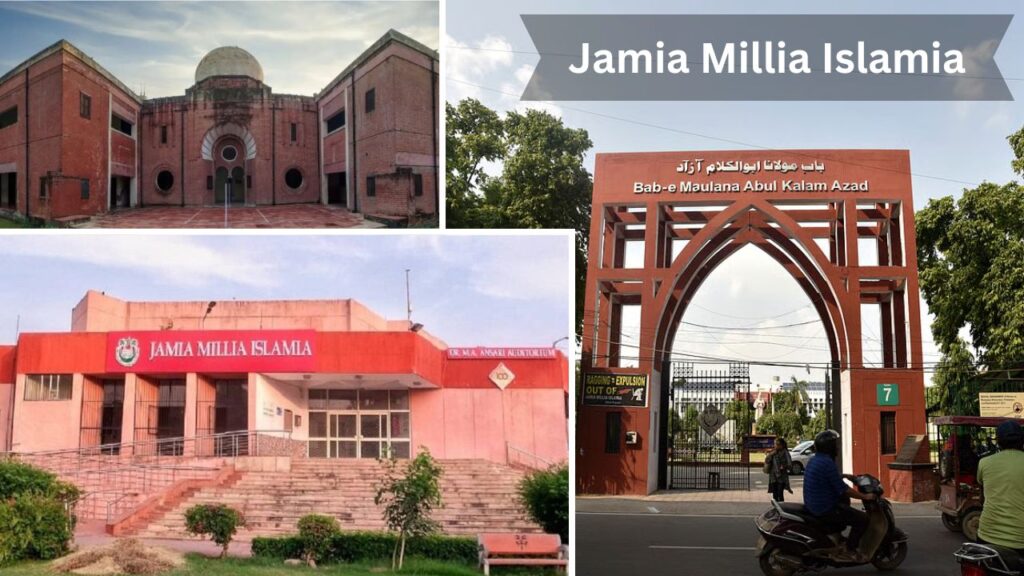
4. Jamia Millia Islamia

Jamia Millia Islamia

Jamia Millia Islamia: It was established in 1920, and ideal for those students who want to achieve good quality education at low fees. The institution focuses on research and specializations, offers a diverse range of advanced courses which help students to make a good career. Campus offers a wide range of facilities such as Extensive library, WIFI-enabled, 100 workstation online resources, MOOCs courses for their students to enhance their learning.

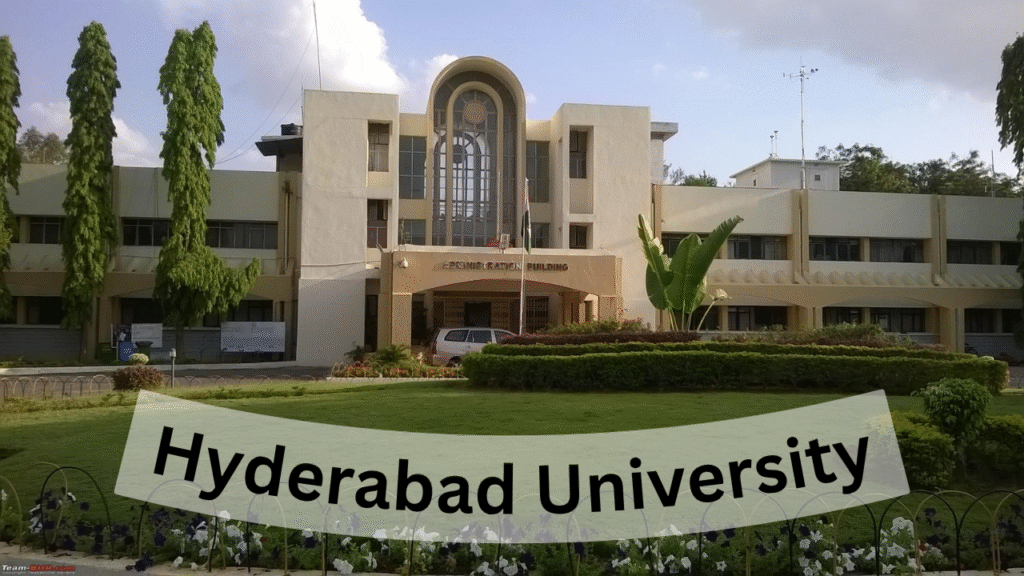
5. Hyderabad University

Hyderabad University

Hyderabad central university is well-known for its dynamic education support and research. It is located in Gachibowli, Hyderabad. Ideal for those who aspire for postgraduation and research. Most popular programs are MBA, B.Tech, M.Tech, and M.Sc that also involves high specialization in research and fields like biology also dedicated to the research area. So, this university is best for these programs but other than these there are a total 120 programs.

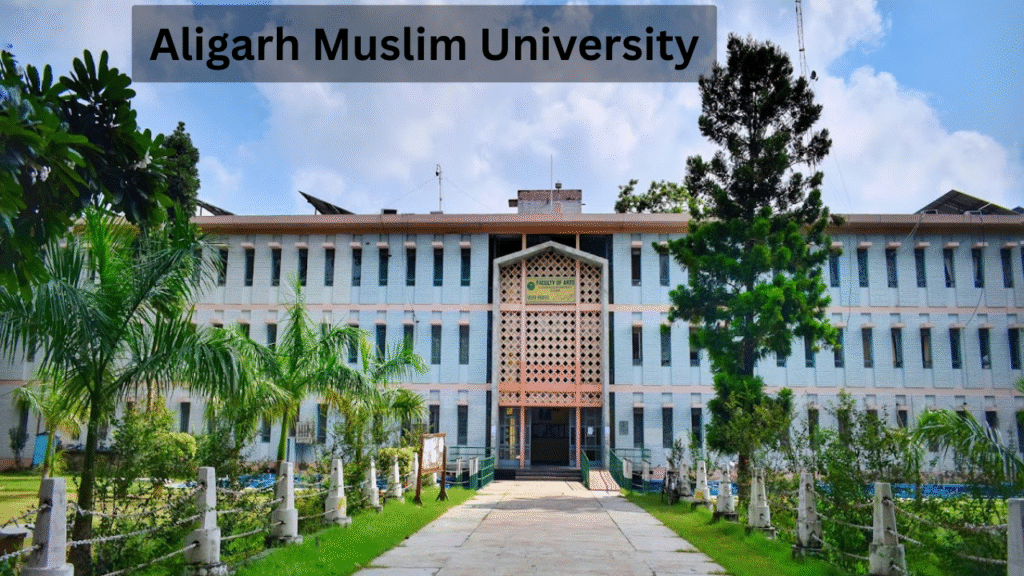
6. Aligarh Muslim University

Aligarh Muslim University

AMU has offered a diverse range of courses across different fields such as engineering, agriculture, medicine, law, management, and business. AMU admits students through entrance exams such as NEET, JEE, CUET, and GATE. University offers strong faculty support, placement opportunities, hostel facilities, and extensive library at very low fees. 

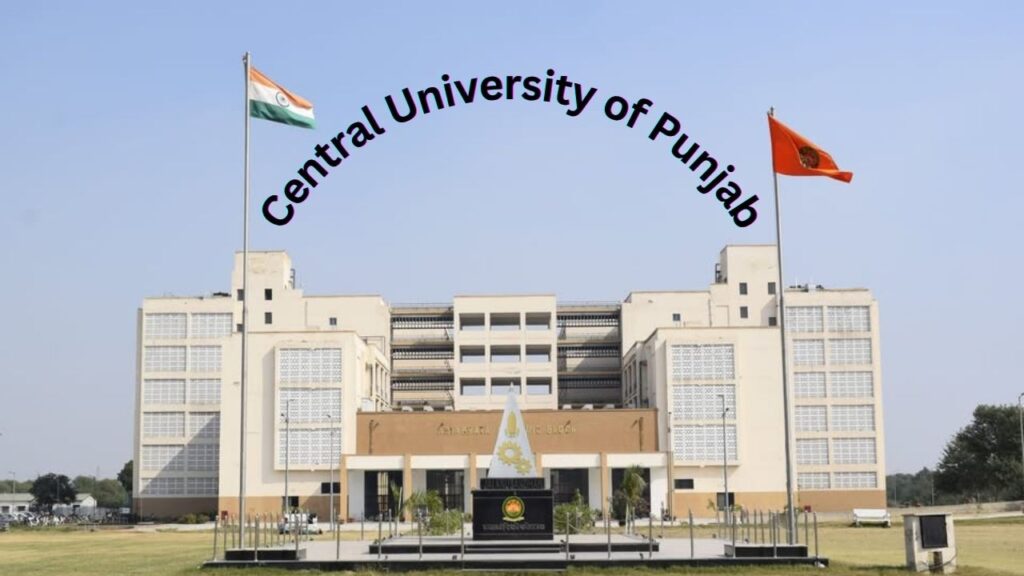
7. Central University of Punjab

Central University of Punjab

Central University of Punjab: This university was established in 2009 in bhatinda, Punjab but is growing fast with its wider range of courses in each stream such as science, arts, commerce, and humanities. There are some popular courses like B.Pharm, M.Pharm, B.Ed, LLB, and B.Tech. Students who are located near Punjab can take admission here through an entrance exam for a particular course.

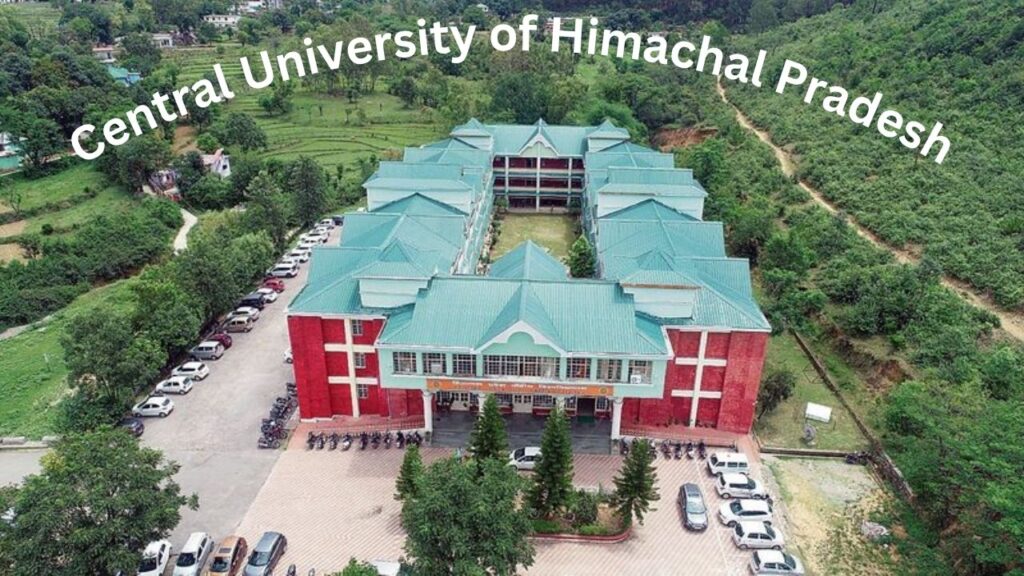
8. Central University of Himachal Pradesh

Central University of Himachal Pradesh

CUHP offers various courses in science, business, technology, and many others. The flagship courses are MBA and B.Sc, students who want to pursue graduation and postgraduation degree can take admission through CUET and registration to website portal of CUHP. The process is simple and easy for the admission. 

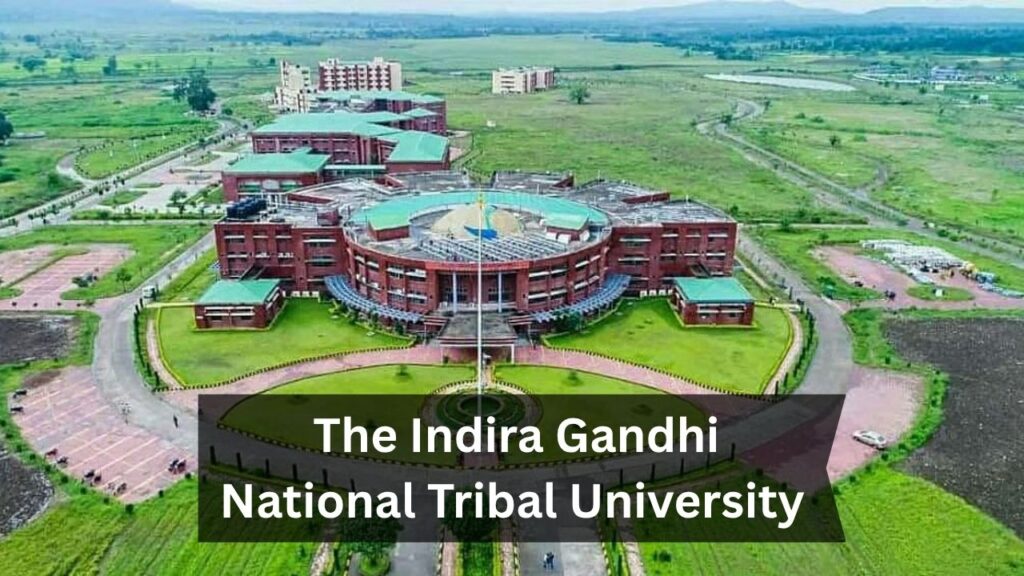
9. The Indira Gandhi National Tribal University 

The Indira Gandhi National Tribal University

IGNTU offers research and cultural studies such as computer science, biotechnology, political science, and social work. Many other courses are also offered there, students from tribal communities can have a great option to study in this vibrant campus.  

10. Pondicherry University

Pondicherry University: The largest university in the Pondicherry territory that focuses on research-based curriculum and offering unique programs such as Study India Programme. Admission approved through the CUET exam for UG courses and CUET PG for postgraduate courses. It offers full student support and a wifi enabled library with a large variety of books.

Read More 👉 Medical vs Engineering: Which Career is Better?

Top 10 Central Universities in India With Fee, Admission, & Placement Details

University (Rank 2025)Fees (UG/PG Major Courses)Admission ProcessTop Placement PackageAverage PackagePlacement % (Approx)
JNU, Delhi (1)UG: ₹881–₹5.51LPG: ₹533–₹12LCUET UG/PG for UG/PG Courses₹33 LPA UG: ₹6.5 LPA/PG: ₹9.5 LPA40–65%
Delhi University (2)UG: ₹360–₹73,985PG: ₹360–₹55,0007CUET UG/PG, Merit/Entrance + Cutoff₹35 LPA â‚ą7–9 LPA 60–95% 
BHU, Varanasi (3)UG: ₹1,700–₹7.23LPG: ₹4,000–₹6LCUET UG/PG, NEET, JEE (as per course)₹17–21 LPA â‚ą7–9 LPA (Median UG)60–80%
Jamia Millia Islamia, Delhi (4)UG: ₹5,700–₹4.28LPG: ₹13,400–₹1.61LCUET UG, PG: various entrance depend on courses₹25–30 LPA â‚ą8–11 LPA 70–80% (BTech)
University of Hyderabad (5)UG: ₹43.3K–3.39LPG: ₹18.6K–5.88LCUET UG/PG, CAT (MBA), GATE (MTech)₹17.89 LPA â‚ą6–8 LPA 65–80%
Aligarh Muslim University (6)UG: ₹800–16L (major UG: ₹25.5K–40.5K)CUET UG/PG, NEET, JEE, GATE (course-wise)₹21 LPA â‚ą7–8 LPA 60–80%
Central Univ. of Punjab (7)UG: ₹20–85KPG: ₹16–102KCUET UG/PG, Course-specific entrance₹6 LPA â‚ą2–4 LPA 50–90% (course-wise)
Central Univ. of Himachal Pradesh (8)UG/PG: ₹1,000–14,400CUET UG/PG, Online registration₹5.5 LPA â‚ą2–3.5 LPA 60–75%
Indira Gandhi Nat. Tribal Univ. (IGNTU) (9)UG: ₹2.7K–8.2KPG: ₹2.7K–2.73LCUET UG/PG, CAT/MAT for MBA₹5–6 LPA â‚ą2–3.5 LPA 55–75%
Pondicherry University (10)UG: ₹23.6K–2.72LPG: ₹6.3K–1.66LCUET UG/PG, CAT (MBA), GATE (MTech)₹10–12 LPA â‚ą3.5–6 LPA 55–75%

Conclusion

By exploring these Top 10 Central Universities in India, you can assess the good quality education and placement options in future to build your life more stable. Many students don’t want to just hold a degree but they want industry exposure, research opportunity, and academic environment.

RRB ALP Syllabus 2025: CBT‑1, CBT‑2 & CBAT Exam Topics

RRB ALP Syllabus 2025: CBT‑1, CBT‑2 & CBAT Exam Topics

Candidates who wish to crack this exam should understand the complete RRB ALP Syllabus 2025 to stay first step ahead. Knowing the crucial topic will help you to focus on smart preparation and beat the competition. Assistant Loco Pilot is a competitive exam by RRB for job recruitment in the Indian Railway sector.

RRB ALP Exam Pattern 2025

FeaturesCBT 1CBT 2 – Part ACBT 2 – Part B
Duration60 min90 min60 min
Total number of Questions7510075 
SubjectsMathematics, Reasoning, General Science, and Current AffairsMathematics, Reasoning, Science, Basic EngineeringPost-specific question ( based on selected postQualifying minimum marks 35%
Negative MarkingYes, 1/3rd marks deducted for wrong answer

RRB ALP Syllabus 2025: Detailed Section-Wise Exam Topics

CBT 1 Syllabus 2025: Topic-Wise

MathematicsNumber System: Natural numbers, whole, integer, rational & irrational
Bodmas: Application of order, Power, roots, division, multiplication, add, sub
Decimal & Fraction: Operations, Conversion, Comparison, Simplification
LCM & HCF: including word problem
Ratio and Proportion: Calculation, application in problem-solving
Percentage: Increase & decrease of percentage, various contexts
Mensuration: Measurement of Areas and volume, and geometric shapes
Time, Work & Distance: Speed, distance, time work done, relative speed, average speed
Profit and Loss: cost price, selling price, profit, loss, discount
Algebra: Basic algebraic operations, linear equations and quadratic
Simple and Compound Interest:principal, rate, and time for both simple and compound
Geometry and Trigonometry: geometric figures, angles, triangles, circles, trigonometric ratios
Statistics: Mean, median, mode
Square Root, Age Calculations
Reasoning & General IntelligenceAnalogies: identifying and figuring out  relationships between pairs of words, numbers
Alphabetical and Number Series: Recognize patterns in sequences
Coding and Decoding: Decode messages or words based on a given pattern
Mathematical Operations: basic mathematical rules or operations to numbers, letters
Relationships: identifying relationships from given information.
Syllogism: analyzing the statements and deduce logical theory
Jumbling: Rearrange jumbled words or sentences 
Venn Diagram: Use Venn diagrams to solve set relations, and logical grouping.
Data Interpretation and Sufficiency: Analyze and interpret data presented in various forms (tables, charts, etc.)
Conclusions and Decision Making: Draw valid conclusions from given statements or given information in the statements
Similarities and Differences: examine the similarity and difference  among words, numbers,
Analytical Reasoning: Solve complex logical problems involving patterns and sequences
Classification, Directions, Statement: Arguments & assumptions
General SciencePhysics: Concepts of motion, speed, velocity, Laws of Motion and Force, Work, Power, Energy, Heat & TemperatureLight: Reflection, RefractionSound, Electricity, Magnetism, Simple Machines, atmospheric pressure
Chemistry: Elements, Compounds, chemical bonding, atomic structure, acid, base, salts, metals & non-metals, Periodic Table, Environment Chemistry, Water Properties
Biology: Human body systems & functions, photosynthesis, reproduction, microorganism, nutrition & Health, Reproduction, Basics of genetics
General AwarenessCurrents Affairs: day-to-day national & International topics, 
Science & Technologies: latest discoveries, innovations Sports: tournaments, related news
Culture: heritage of India
Strong Personalities: political leaders, richest man
Economic: Policies, global economy, surveysPolitics,
Awards, Art & Culture and Government Schemes

CBT 2 (Part – A) Syllabus 

The CBT 2 Part A questions contained mostly the topics of CBT 1 syllabus. The slight difference in CBT 2 Part A is more advanced concepts on the same topics and more number of questions in the examination. It requires more effort and time on each section: Mathematics, Reasoning, General Awareness, General Science. 

CBT 2 (Part B) – Post-Specific Syllabus

This section involves the post specific test which is required in the field of choosing by the candidates at the time of registration. Some popular posts mentioned below and their key topics to cover in the CBT 2 Part B exam. Make sure you study from your ITI Trade books and NCVT curriculum for this part-

ElectricalElectrical Instrument, Refrigeration, Mechanic
Mechanical EngineeringFitter, Turner, maintenance, Refrigerator
Mechanic (Motor/Diesel)Tractor Mechanic, Heat Engine, Air-conditioning
Electronics MechanicalRadio and TV, Electronic Mechanic

CBAT – Computer-Based Aptitude Test (For ALP Only)

After clearing CBT 2 candidates will reach the next stage of CBAT. No negative marking in this test but require at least 42 marks in each test battery to clear out the exam. Focusing on exam syllabus and exam pattern will help you to beat this competition among lakhs of candidates. Your final merit for ALP will be based 70% on CBT 2 Part A + 30% on CBAT.

Conclusion 

To secure a government job you must study hard and stay focused on the preparation. The exam pattern and syllabus topic help you to learn strategy wise. The RRB ALP 2025 syllabus might look vast, but with smart planning and consistent efforts, you can master it. Keep practicing the aptitude question on each section and stay updated with Current Affairs.

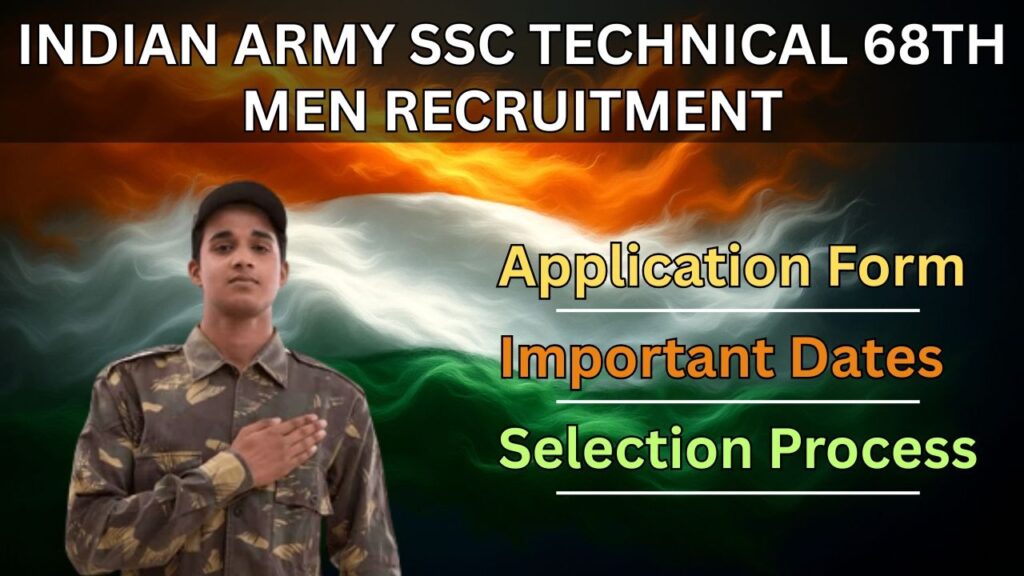
Indian Army SSC Technical 68th Men Recruitment: Details for Engineering Graduates

Indian Army SSC Technical 68th Men Recruitment

If you’re an engineering graduate eyeing a career in uniform, the wait is over. Indian Army SSC Technical 68th Men Recruitment is going on. The Indian Army has thrown open applications for the 68th Short Service Commission (Technical) Course, Men, set to commence in April 2027. Alongside it, the 39th SSCW Tech entry has been announced for women candidates. Together, the two intakes will fill 381 vacancies, and this piece breaks down everything a male candidate needs to know before hitting submit.

How Many Seats Are Actually Available

There are overall 381 posts, out of which 350 are for SSC Tech 68th Course for male candidates and 31 posts are for SSCW Tech 39th Course for female candidates. That’s a meaningful jump from recent cycles, where vacancy counts hovered in the double digits, so this is genuinely one of the larger technical intakes the Army has floated in a while.

Important Dates You Cannot Miss

The online application portal for male candidates opens from 9/July/2026 to 7/August/2026. That’s a short window for filling out the application form. 

ItemDetails
Opening date (male)9/July/2026
Closing date (male)7/August/2026
DurationLess than 30 days

Applications are submitted exclusively through the official Join Indian Army website, joinindianarmy.nic.in. No offline forms, no third-party portals — anything else claiming to process your application should be treated as a scam.

Who Can Apply

Eligibility is fairly specific, and getting it wrong is the easiest way to get your application rejected at the shortlisting stage itself.

Age limit: Candidates must be between 20 and 27 years old as reckoned against the course commencement benchmark.

Educational qualification: You need a B.E./B.Tech degree in a relevant engineering discipline from a recognized university. Final-year students aren’t excluded either — they can apply provided they submit proof of having cleared the degree, along with semester-wise mark sheets, by the time the selection process demands it.

Marital status: The entry is open only to unmarried male candidates.

Nationality: Applicants must be Indian citizens, or in specific cases, subjects of Nepal or Bhutan, or persons of Indian origin holding the requisite eligibility certificate.

The Selection Process For Indian Army SSC Technical 68th Men Recruitment

Here’s something that surprises a lot of first-time applicants — there’s no written entrance test for SSC Tech entries. Selection runs entirely on academic merit and a structured evaluation process. Once your application is cleared based on your records which you have provided, you’re called for the Services Selection Board interview.

The SSB interview is conducted over several days that takes assessment step-by-step to check the candidate’s leadership potential and mental resilience. There are group tasks, and personal interview rounds that are structured in a way that test skills of candidates rather than just textbook knowledge. 

Those who clear the SSB are required to appear for medical examination, and the medical board recommends the merit list after taking medical fitness into consideration. 

Where and How Long the Training Runs

Candidates who qualify in the final merit list will be put through the 49 weeks training at Officers Training Academy(OTA), Gaya, Bihar. Should the course commence as planned in April 2027, the training would end in the beginning of 2028 and exact training calendar will be confirmed by the Indian Army closer to the start of the course. 

During training, cadets receive a monthly stipend of ₹56,100, which cushions the transition before commissioning.

Read More 👉 Government Jobs After Graduation in India: Complete Guide for 2026

What You Earn Once Commissioned

On successful completion of the training, candidates are commissioned as Lieutenants in Pay Level 10 having a minimum pay of ₹56,100 which can go up to ₹1,77,500 in Level 10 as per the 7th CPC Pay Matrix. With military allowances and field area pay, and other perks added, a fresh lieutenant’s effective pay package normally works out to about the ₹17-18 lakh per annum figure although that doesn’t include free medical coverage or travel concessions. 

As officers move up the ranks — Captain, Major, and beyond — pay levels rise accordingly, all the way up to the Chief of Army Staff at Level-18.

Conclusion 

If you’re an engineering graduate looking for a career that combines technical work with leadership responsibility and long-term financial security, this is one of the more accessible entry points into the Indian Army officer cadre — no written exam, a straightforward merit-based shortlisting process, and one of the larger vacancy counts seen in recent SSC Tech cycles. The application window is short, though, so candidates planning to apply should start gathering their engineering mark sheets and eligibility documents well before 9 July 2026.

Best Government Jobs in Chandigarh

If you are living in Chandigarh and do not want to relocate for a stable career. You need to think of getting a government job that offers more salary, allowances, medical coverage, and other benefits. If you are an average student in your class you can clear the exam if you study hard and prepare well according to the exam pattern and new syllabus. Apply for a data entry operator job because this role does not require a master’s degree. 

S.NoJob TitleDepartment/OrganizationOfficial Website Name & Link
1Assistant CommandantChandigarh PoliceChandigarh Administration
2House SurgeonNational Health Mission (NHM), ChandigarhNHM Chandigarh
3Junior Engineer (Civil)Chandigarh Public Works Department (PWD)Chandigarh Administration
4Medical OfficerGovernment Multi-Specialty Hospital (GMSH), Sector 16Chandigarh Health Department
5Project Research ScientistPGIMER, ChandigarhPGIMER Official Website
6Lower Division Clerk (LDC)Chandigarh AdministrationChandigarh Administration
7Data Entry OperatorGovernment Medical College and Hospital (GMCH), ChandigarhGMCH Official Website
8Assistant ProfessorPanjab University, ChandigarhPanjab University Official Website
9Police ConstableChandigarh PoliceChandigarh Police
10Accounts ClerkChandigarh Municipal CorporationChandigarh Administration
11Project NursePGIMER, ChandigarhPGIMER Official Website
12Anganwadi HelperWomen and Child Development (WCD), ChandigarhChandigarh Administration
13FiremanChandigarh Fire and Emergency ServicesChandigarh Administration
14Multi-Task WorkerDepartment of Environment Studies, Panjab UniversityPanjab University Official Website
15Cooperative InternHaryana State Cooperative Apex Bank (HARCO), ChandigarhHARCO Bank Official Website

How to Join Indian Army — Your Complete Guide to Serving the Nation

How to join Indian Army

How to join Indian Army: It’s not just a job, a profession or a service, it’s a way of life to be in the Indian Army and a lifetime commitment to the nation. For millions of young Indians, the olive-green uniform stands for honor, meaning and pride that far surpasses any regular jobs. But the path to joining the Indian Army isn’t a smooth one it requires vision, preparation, stamina and the knowledge of different entry points available. 

Whether you are a 10 or 12 student, a graduate or one aspiring to get commissioned, the Indian Army has multiple avenues to make that dream a reality. Unique in this sense, this guide shows you everything from entry schemes, through selection stages, fitness, documents, medical standards, ensuring that you can prepare as best you can to help you realise your own dream to serve the nation with pride.  

Understanding Your Entry Options

There are hardly any rigid models for recruitment of the Indian Army. The company understands that people with potential can come from anywhere educationally and that is why it has different entry schemes. If you are a class 12 passer, the Agniveer scheme is for you. If you’re a graduate or an engineer, you can apply for the Short Service Commission (SSC) or the Technical Graduate Course (TGC). For people still in class 12 with strong academics, the NDA is a well-known route that leads to officer-level commissions.

What I like about Indian Army recruitment is its open door policy. For soldiers and officers, technical and manpower roles for that matter, there is something for everyone. Your starting point might be different from your colleague’s, but the destination – serving the nation – is the same. 

The Most Popular Route: Agniveer Scheme

For most hopefuls it has become like the Agniveer scheme and this is the only option going forward. Introduced to recruit a younger, more dynamic force into the Armed Forces, the scheme is available for men and women aged 17.5 to 21 years. You must have passed class 10th/12th from a recognized board with minimum 50% marks in aggregate.

The submission of the application is easy. Go to the official site joinindianarmy.nic.in and register providing your basic details, e-mail and mobile number. You will fill up application details with your 10th certificate with as per rules. After you have submitted, you will be given a registration number—hold on to this, it is the key to the next step. 

Read More 👉 UPSSSC Lekhpal Online Form 2025: Apply Online for 7,994 Revenue Posts

The Three-Phase Selection Gauntlet

After the registration you must prepare yourself for three intense stages. The first state is the Common Entrance Exam (CEE), a written test conducted offline. This test examines your understanding of General Knowledge, Mathematics, Science and Reasoning. It’s not like you need to memorize stuff, the exam is on your logical thinking and problem solving skill.

If you clear the CEE, then you will be invited for the second stage: the Recruitment Rally. This is your physical fitness moment! The rally comprises a Physical Fitness Test (PFT) which is truly exhausting. You must run 1.6 km in 5 minutes and 45 seconds, do at least 6 pull-ups, jump a 9-foot ditch, and complete a zig-zag balance test. They’re not just random drills, they’re meant to test whether or not your body can keep up with the rigors of military life.

The third stage is the medical test and document confirmation. Medical examinations are extensive – they examine your vision, hearing, bone density, heart health, and your general well-being. The Army needs soldiers who aren’t just strong but also medically able to go where it’s hard to go. 

Physical Fitness

Being physically fit matters, and you really can’t ignore your way through it. If you really want to join, start your fitness regimen now. Running is your foundation—start with distances you can handle and slowly increase your speed and distance. Do interval training by alternating between high-intensity bursts and recovery intervals.

For pull-ups, who you are is more important than how many you can do right now. If you have no pull-ups yet, use resistance bands/assisted pull-ups or work on negatives to start building strength. Add push-ups, sit-ups and squats for full body strength. Flexibility and balance are also important for many candidates don’t realise, but it is this which is tested in the zig-zag test. Add yoga and agility drills to your training.

Nutrition-related matters are just as vital/nutrition matters are just as vital/nutrition is just as vital Nutrition & hydration are equally important Nutrition Jones in Sydney opined: “it is not only the training [that is important], nutrition is [also]. Fuel your body with protein, complex carbohydrates, fruits and vegetables. Keep hydrated as you train, and stay away from junk food that zaps your energy. 

The Officer Route: A Different Path

If you are a class 12 student with good academic record and want to join Indian Army, consider the Technical Entry Scheme (TES for NDA) or the National Defence Academy (NDA). The NDA is conducted by the Union Public Service Commission (UPSC) and the applicants must be aged between 16.5 and 19.5 years have qualified 10+2 to be eligible. The competition is stiff with only 5 to 10 percent getting selected but the reward is a three year training at the National Defence Academy and then a permanent commission in the Indian Army.

​For graduates, the Combined Defence Services (CDS) exam, which leads to Indian Military Academy (IMA). Male and female candidates who are graduates are also eligible and the selection procedure consists of a written exam and then the infamous Services Selection Board (SSB) interview.

The SSB Interview: The Ultimate Test

If there is a stage that divides the dreamers and the doers it is the SSB interview. This isn’t your run-of-the-mill job interview; you’ll be subjected to a five-day psychological and personality test to determine how officer-like you are. You will be having the Officer Intelligence Rating (OIR) test, Picture perception and discussion (PPDT), psychological tests, group discussions, outdoor tasks and a personal interview.

Leadership, teamwork, bravery, and the capacity to think on your feet are the qualities that the SSB wants. It evaluates the consistency between what you think, what you say and what you do — an idea based on the ancient “Manasa, Vacha Karmana” principle. The interviewing officer will question your background, your motivation for enlisting, your knowledge of current events, and your capacity to stress. 

Documents Required For This Position

  • 10th and 12th mark sheets and certificates
  • Domicile certificate with photograph
  • Caste certificate
  • Religion certificate
  • School character certificate
  • Unmarried certificate (if below 21 years)
  • Aadhar card or ID proof
  • 20 passport-size color photographs
  • Any NCC certificates or sports achievements

The Medical Examination

After passing the physical and mental evaluations, you will have a full medical check-up. The Army requires its soldiers to withstand harsh environments, so the standards are tough. After you cross this last barrier, you will get your joining letter and will be sent to the respective training academy. 

Conclusion

Enrolling in the Indian Army is not just about getting a job and a stable source of income. You’d be serving your country, joining a brotherhood that has stayed vigilant over the nation for generations, and doing something that’s bigger than you are. The path is tough, the competition is fierce and the training will test you to your limits.

But here is what makes it so worthwhile: the privilege of wearing the uniform, the gratification of serving one’s country, and the realization that you are a member of an organization that has influenced the future of the nation. If you have the passion, if you have the resolve, and if you can run – the Indian Army awaits you. Start today, hold fast, and who knows maybe, just maybe, a year from now you’ll be standing tall in that uniform, serving the nation with pride. 

Scroll to Top