Best Noise-Cancelling Headphones for Online Classes and Mock Tests 

Headphones

You’re 40 minutes into a 3-hour mock test, deep into the reasoning section, and someone two floors down starts drilling a wall. Or it’s your neighbor’s TV bleeding through during a live online class, right when the teacher explains the one concept you actually needed. With best Noise-Cancelling Headphones, it is possible to block the noise out the room, stays comfortable for hours, and doesn’t die halfway through a session. 

As that kind of interruption doesn’t just annoy you — it costs you marks and attention you can’t get back. The right pair of Noise-Cancelling Headphones for online classes and mock tests is meant for this. Not just any Headphones — most people don’t need studio-grade audio for a lecture or a test window. Here are best picks that actually do that, across different budgets.

Why ANC Matters More for Exams Than for Music

Active noise cancellation in short ANC, helps prevent outside noise with an inverse sound wave by using a microphone and it is so effective on low-frequency and steady sound like traffic, fans, washing machine, TV, and construction site but less effective random sharp noises like barking or door slamming.

For a 2-3 hour mock test, that steady cancellation is what keeps your focus from draining. For live classes, you also need a decent mic, since ANC alone won’t help your teacher hear you over a ceiling fan.

Best Noise-Cancelling Headphones for Online Classes and Mock Tests

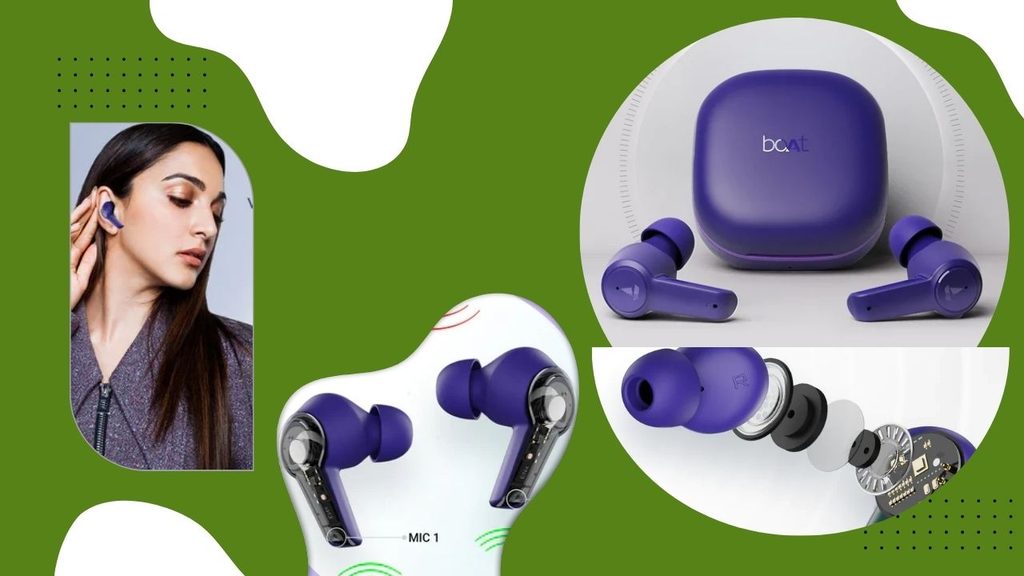
1. boAt Airdopes 413 ANC — ₹1,999

  • 25dB Active Noise Cancellation
  • ENx dual-mic technology for calls
  • ~20 hours total battery (earbuds + case)
  • In-ear TWS design


This is about as cheap as real ANC gets in India, and it holds up for what it is — steady background noise gets noticeably duller, which is the whole point during a test. The case battery isn’t huge, so charge it the night before a long mock test rather than assuming it’ll carry you through a full day.

Best for: the tightest possible budget where any real ANC beats none.

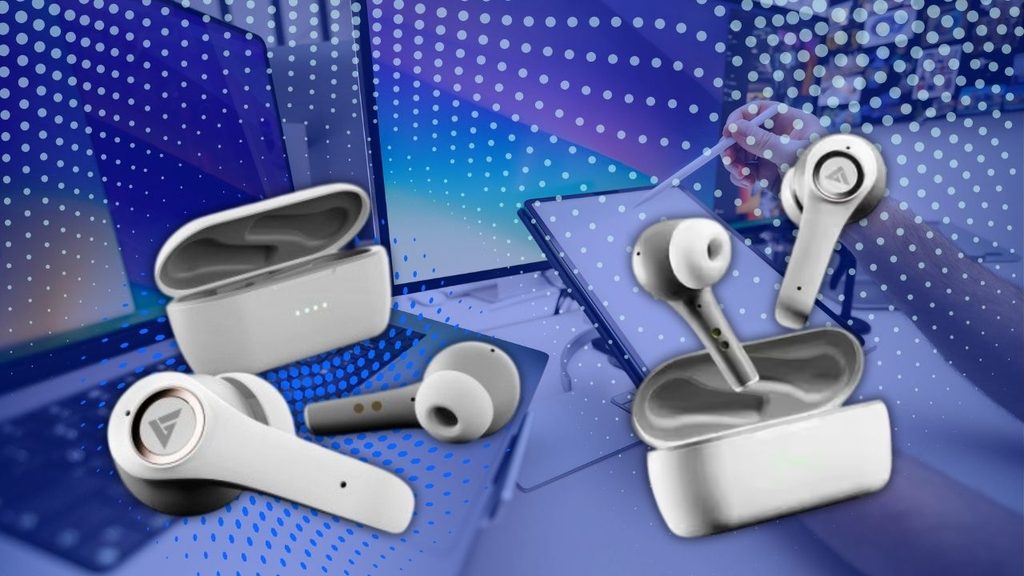
2. Boult Audio Omega — ₹2,499

  • Active Noise Cancellation + separate ENC chip for calls
  • 4 mics per stem, touch controls
  • ~32 hours total battery (8hr earbuds + 24hr case)
  • Dedicated Game Mode for low latency

The separate ENC chip is the standout here — it’s built for call clarity, which matters if your online classes involve a lot of back-and-forth with the teacher rather than passive listening. If you are also looking for gaming purposes, not just for mock test sessions then low-latency mode is an additional benefit in Boult Audio Omega.

Best for: students who have live classes and online courses to attend rather than recorded lectures.

3. Noise Buds Solo — ₹2,999

  • Active Noise Cancellation with switchable Transparency mode
  • 10mm driver, touch controls for calls/music/voice assistant
  • ~36 hours total battery (7hr earbuds + case)
  • Interchangeable eartips for fit
Noise Buds Solo


The 36-hour total battery is the best in this budget tier, and the switchable Transparency mode is genuinely handy — flip it on for five minutes if someone’s calling you from another room, without pulling an earbud out mid-test. Interchangeable eartips also make a bigger difference than you might realize; a bad seal will ruin passive noise isolation even before ANC activates. 

Best for: the best all-round earbud pick under ₹3,000 if battery life is your priority.

Read More👉 Best Laptops for Coding and Programming: Top Picks for Every Budget

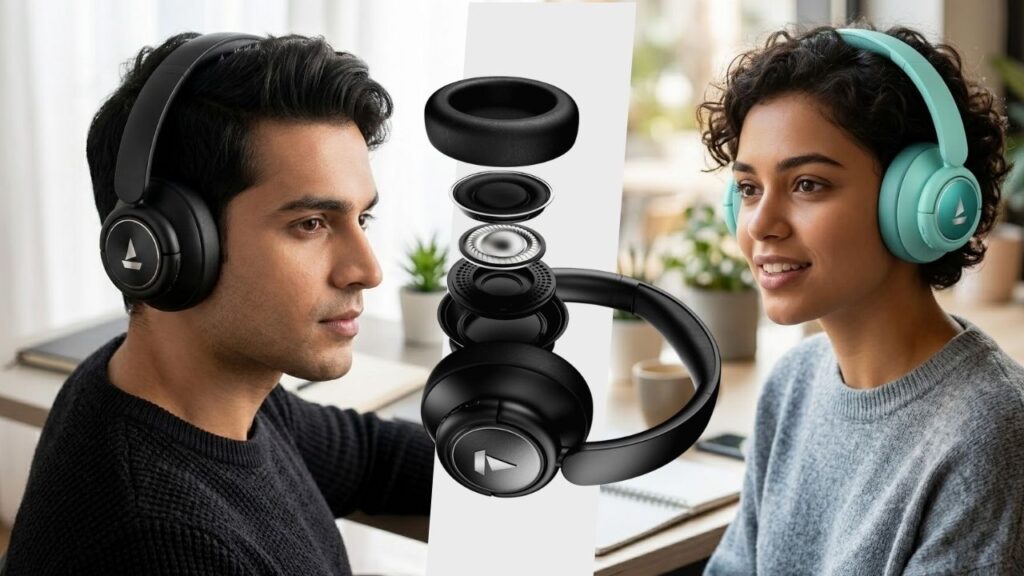
4. boAt Rockerz 450 ANC — ₹2,499–2,999

  • Hybrid ANC (up to 25dB reduction)
  • 20-hour battery life with ANC on
  • 40mm dynamic drivers, BEAST mode for low-latency audio
  • On-ear, foldable design
boAt Rockerz 450 ANC


This is the one to get if you just need to shut out a noisy house without spending a month’s pocket money. The ANC won’t touch a jackhammer, but it flattens fan noise, traffic hum, and a TV in the next room reasonably well. The ear cushions get a little warm after 2+ hours, and call clarity is average — fine for a mock test, less ideal if you’re live-unmuting often in class.

Best for: students on a tight budget who mainly need ANC for silent, focused test-taking.

5. Soundcore Q20i — ₹4,298

  • Hybrid ANC with Indoor/Outdoor/Transport modes
  • 40-hour battery life with ANC on
  • Soft protein-leather earcups
  • Wired mode available (3.5mm) when the battery does die
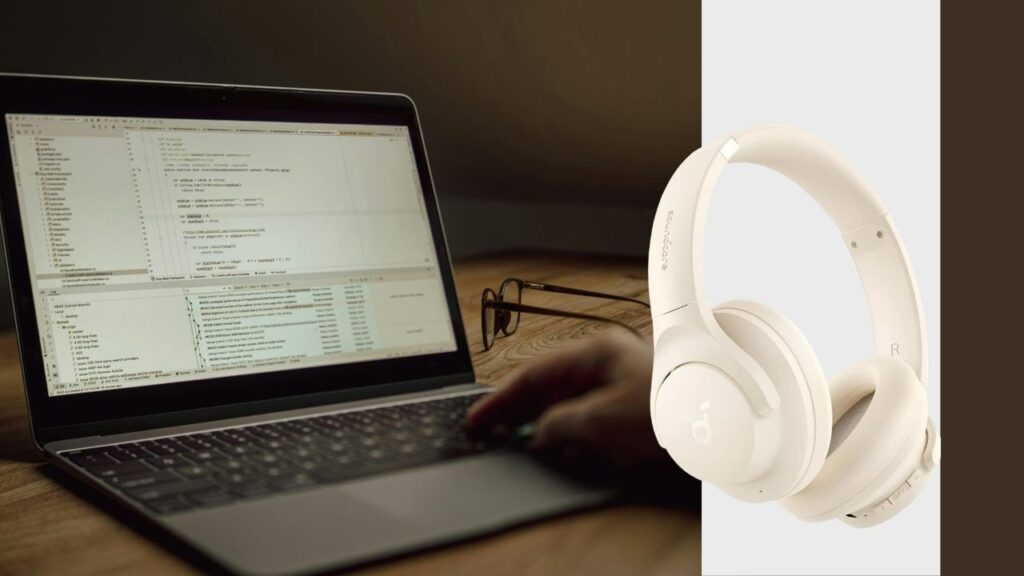
Soundcore Q20i


The battery life here is the real selling point — 40 hours means you could go through an entire mock-test series for a week without touching the charger. The Indoor mode specifically tunes the ANC for steady household noise rather than street sound, which is exactly the scenario most Indian students are dealing with. The bass is a bit boosted for critical listening, but for lectures and tests that’s irrelevant.

Best for: anyone who forgets to charge things — this Noise-Cancelling Headphones forgives you.

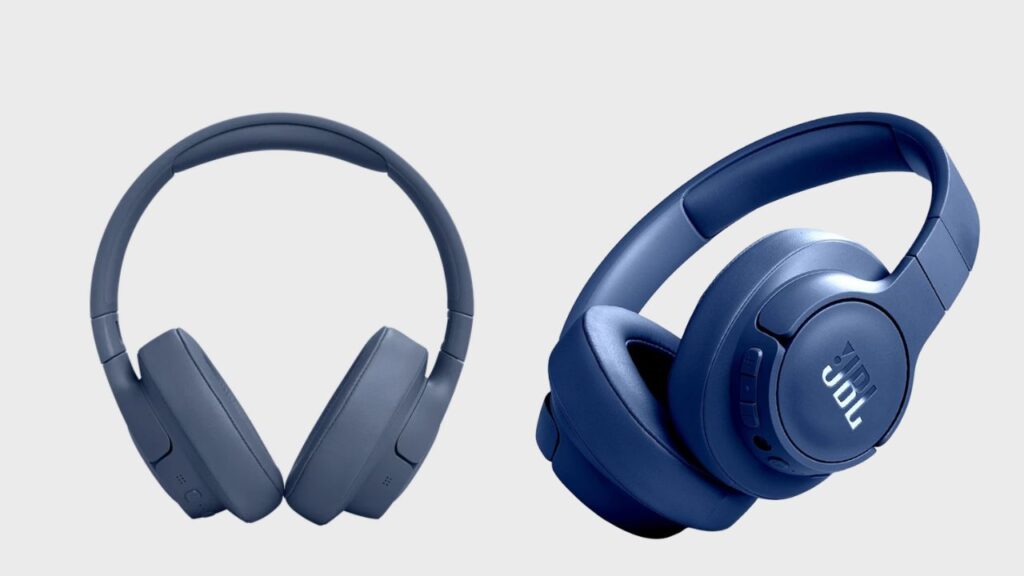
6. JBL Tune 770NC — ₹8,999–10,999

  • Adaptive ANC that responds very quickly to the surrounding noise automatically
  • 50-hour battery life (ANC off), around 44 hours with ANC on
  • Multipoint Bluetooth (connect to phone and laptop simultaneously)
  • 40mm drivers with JBL Signature Sound
JBL Tune 770NC

The multipoint pairing is genuinely useful if you attend classes on a laptop but take calls or check notifications on your phone — no fumbling with Bluetooth settings mid-lecture. Adaptive ANC means it automatically dials up cancellation when your maid starts sweeping and dials back down when it’s quiet, instead of a fixed on/off toggle. Bass is JBL’s usual signature — punchy, a little forward — which some people love and others find a bit much for spoken-word content.

Best for: students juggling both a laptop for classes and a phone for everything else.

7. Soundcore Space Q45 — ₹9,999 (often available around ₹8,500–9,000 on sale)

  • Adaptive ANC rated up to 98% noise reduction
  • 50-hour battery life with ANC on
  • LDAC support for Hi-Res audio over Bluetooth
  • Memory foam earcups, app-based custom EQ
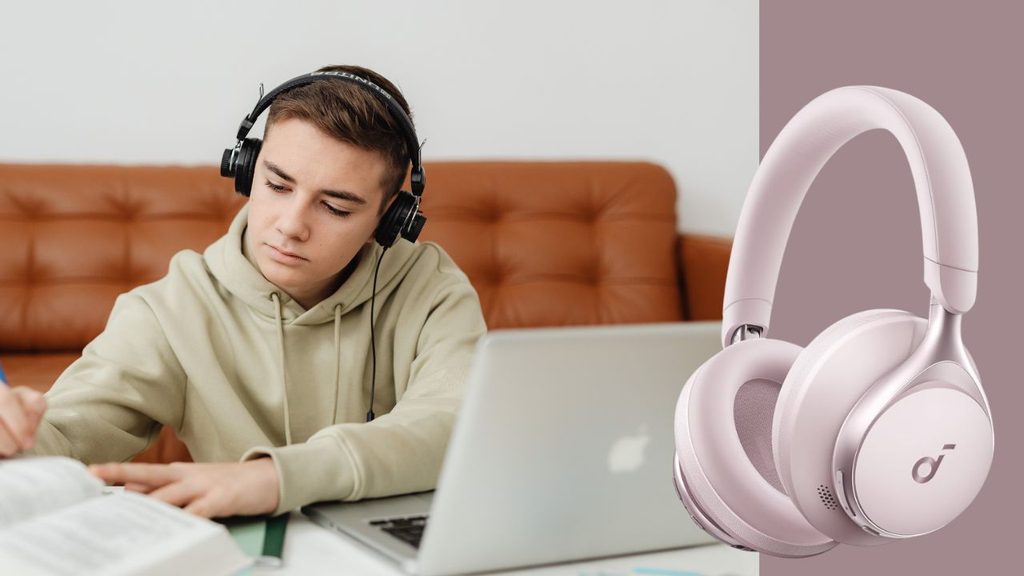
This is the closest thing to flagship-level ANC without paying flagship prices. The 98% noise reduction figure holds up well against consistent background noise — the kind you get from a busy street or a joint family household during the day. Good memory foam cushions really do make a difference during a 3-hour test because your ears are not sore at the end. The app is actually useful, allowing you to choose a “study” EQ preset that cuts mid-bass boom, making spoken word clearer while you’re studying or attending lectures.

Best for: the best all-round pick if you want near-premium ANC without the premium price tag.

Read More👉 Best Student Loans for College Students

8. Sony WH-1000XM5 — ₹29,990

  • Industry-leading ANC with 8-microphone array and dual processors
  • 30-hour battery life with ANC on
  • Speak-to-Chat: automatically pauses audio when you start talking
  • Precise Voice Pickup Technology for clearer calls
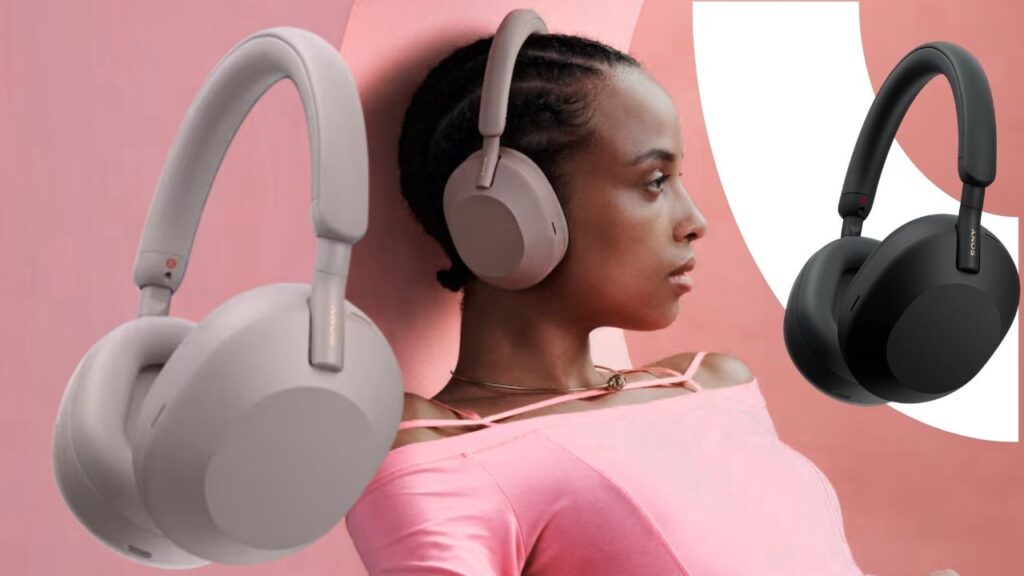
Sony WH-1000XM5

If your budget stretches this far, the XM5 is close to overkill for a student use case — but that’s not a bad thing. A duo which makes you feel like you are sitting in an exam hall rather than your house. When you’re nervous your voice gets lower that people sitting behind the system couldn’t understand but Sony WH-1000XM5 gives an automatic Speak-to-Chat feature that pauses automatically if you say something out loud and passes your lower voice very smoothly. But this is too expensive for students but college students who strictly need can buy it on EMI

Best for: students who treat this as a long-term investment across school, coaching, and eventually work-from-home use.

Sony WH-1000XM5 vs Soundcore Space Q45

Sony WH-1000XM5Soundcore Space Q45
Price₹29,990₹9,999
ANC strengthBest-in-class, handles sudden noise tooExcellent against steady noise, weaker on sudden sharp sounds
Battery (ANC on)30 hours50 hours
Mic quality for classesBest on this listGood, not exceptional
Value for a student budgetLow — premium pricingHigh — near-flagship ANC at a third of the price

If money weren’t a factor, the XM5 wins outright. For a student budget, though, the Space Q45 gets you 80-90% of the noise-cancelling experience for roughly a third of the price, plus a longer battery — which matters more than most people expect once exam season gets long.

Which Noise-Cancelling Headphones Should You Buy?

If you’re prepping for a single exam cycle and want the smallest possible spend, go with the boAt Rockerz 450 ANC or the Soundcore Q20i — either will hold up fine for mock tests where mic quality doesn’t matter. If you’re attending daily online classes on top of tests and need reliable multipoint connectivity, the JBL Tune 770NC earns its price. 

And if you’re looking for one pair that will cover you throughout years of coaching, college, and then working remotely, the Soundcore Space Q45 is the best value for money on this list, with the Sony WH-1000XM5 as the upgrade option if budget genuinely isn’t an issue. 

All of Noise-Cancelling Headphones are available on Amazon.in and Flipkart, boAt and Sony also sell directly from their own India stores if you want manufacturer warranty support without a third party seller in the mix. Prices above reflect typical listings as of August 2026 and do fluctuate with sale events — worth a quick price-check before you check out.

boAt Rockerz 450 ANC vs Noise Buds Solo

boAt Rockerz 450 ANC (Over-ear)Noise Buds Solo (Earbuds)
Price₹2,499–2,999₹2,999
Noise blockingANC + passive seal from ear cupsANC only, weaker passive isolation
Comfort for 2-3 hr sessionsBetter for most — no in-ear fatigueSome users get ear fatigue past 90 min
Battery20 hours~36 hours total (earbuds + case)
PortabilityFoldable but bulkierFits in a pocket

If you’re choosing between a headphone and earbuds at roughly the same price, format matters more than spec sheets here. Over-ear wins on raw silence for a long test window; earbuds win on battery life and portability if you’re carrying them between home, coaching class, and a library.

Read More 👉 How to Apply for a Student Loan to Get a Higher Education & Make Career

Conclusion

Best Noise-Cancelling Headphones for online class and mock tests are not always the expensive ones. For most students, the Soundcore Space Q45 provides the best combination of ANC, comfort, battery life, and price, while the boAt Rockerz 450 ANC and Soundcore Q20i are better choices for those on a tighter budget. 

If money is not an issue, the Sony WH-1000XM5 offers the best overall experience. In the end, decide based on the length of your studies, the noise level of your environment and whether you need better microphones or portability in addition to noise cancellation. 

Leave a Comment

Your email address will not be published. Required fields are marked *

Voice-to-Notes Tools for Students: Study Faster Without Typing

Voice-to-Notes Tools

Voice-to-Notes Tools are really helpful from turning large study lectures into simple notes in just few minutes. Writing everything down is an old fashion technique that takes a lot of time for a few pages notes but everything is going easy with fast pacing technologies. Whether it’s hours of session or long research sheets, enabling speech to text is the smarter way to take notes. 

You’re forty minutes into a lecture, the professor has moved through three concepts, and your notes still say “photosynthesis — light reaction —” because your hand gave up before your brain did. Speaking runs at roughly 150-160 words a minute while typing tops out around 40 for most people. 

That gap is the entire case for Voice-to-Notes Tools , and for Indian students juggling coursework in English, Hindi, or a regional language, the tool you pick matters more than the concept itself — because most of the tools were built for American office meetings, not for Indian classrooms. 

Best Voice-to-Notes Tools For Indian Students 

There are plenty of tools that can turn your voice into text but then you find an error — spelling, whole different word (except, accept), not able to turn your regional language — that’s because it doesn’t understand. Some AI integrated voice tools that turn your every word into text without major errors is here:

Gboard Voice Typing — free, and it’s already on your phone

Before downloading anything, check what you have. Google’s Gboard keyboard has an in-built voice typing feature which you can use by clicking on the mic icon. If the icon is invisible then enable it from the setting so Voice-to-Notes can be easy and quick without downloading any new app.


It works in Hindi plus eight regional languages — Bangla, Gujarati, Kannada, Malayalam, Marathi, Tamil, Telugu, and Urdu — Indian students can use this keyboard in any app that takes input in the same language, not just Google’s own apps. 

For a student jotting quick revision notes in Hindi between classes, this is the lowest-friction option because there is no signup, no subscription, no separate app to remember to open.

Google Recorder — real-time transcription, best if you have a Pixel

Google Recorder transcribes live as you speak and runs the processing on-device, which matters if your hostel Wi-Fi is unreliable. The catch: it’s tied to Pixel phones for its full real-time transcription experience, so if you’re on a different Android device or iPhone, this one’s off the table.

Otter.ai — good for English lectures, but it skips Hindi entirely

Otter is the name that comes up first in most “best Voice-to-Notes Tools” lists, and for English-medium lecture capture it’s genuinely capable — live transcription, speaker labels, searchable transcripts. 

The free tier gives you 300 minutes of transcription a month, capped at 30 minutes per recording, which covers maybe eight or nine standard lecture sessions before you hit the wall. The Pro plan runs $16.99/month billed monthly, or roughly $8.33/month if you pay annually (about $99.99/year). 

But for Indian students: Otter’s transcription supports English and a small set of other languages — Spanish, French, German, Japanese, Chinese depending on the source you check — but not Hindi or Indian regional languages. If your coursework happens in Hindi medium, Otter simply won’t understand you, no matter which plan you’re on.

Wispr Flow

Wispr Flow is the strongest option because it works inside almost any application. Students who want long-form writing and fast drafting can use this tool but unlimited dictation requires a subscription, which costs around $15 per month or $12 per month when billed annually. Since it supports more than 100 languages and gives accuracy for names and jargon along with AI editing, the cost is worth it.

VoiceToNotes.ai 

Its features include real-time transcription, grammar correction, AI summaries so it can become a useful tool for students which turn spoken thoughts into structured notes. Some professionals consider this tool as more affordable than many full-featured AI assistants but free usage is limited. The catch: accuracy still depends on microphone quality and background noise.

Mindgrasp

Mindgrasp is primarily an AI learning and content-understanding platform. Students can use it for lectures and study material — it helps in creating flashcards and quizzes automatically. Best for exam preparation and research but some features are tied to specific subscription tiers. 

Lisup 

Lisup focuses on accessibility and hands-free writing. It can be used across desktop applications so access will be easy and it is specifically designed for in-place speech-to-text features. It’s not built for broader use but enough for students to take notes easily. 

Soniox — the app actually built for Hindi dictation

Soniox is less well-known in student circles but solves exactly the gap Otter leaves open. It handles Hindi across regional varieties like Khariboli and Braj Bhasha, works system-wide across any app or text field on your phone rather than locking you into one note-taking interface, and covers 60-plus languages total with the ability to switch languages mid-sentence. 


It’s useful if you naturally code-switch between Hindi and English while explaining a concept to yourself. It’s free to start, with weekly free credits rather than a hard monthly cap, and the company states it doesn’t store your recordings or use them for model training, which is worth knowing if you’re dictating exam-prep notes you’d rather keep private.

Sarvam AI — worth watching, not quite a student app yet

Sarvam is India’s most-funded sovereign AI company, and its speech models (Saaras v3) handle 22 Indian languages with genuinely strong accuracy claims. But as of now, Sarvam’s product lineup is built mainly for enterprises — voice agents for banks and government call centers, APIs for developers — rather than a polished consumer app you’d install and use for lecture notes. 

A consumer-facing voice app was announced in February 2026, aimed at exactly this kind of mass-market, multilingual use case, but a public launch isn’t happening right now.

Read Also 👉 Why ChatGPT Ads Deserve a Place In Your 2027 Media Plan 

Why Do Students Need These Tools?

Most of the time students missed points while trying to understand the same topic simultaneously. Writing it down on paper or in a mobile is the same thing — it consumes a lot of time and misses points. So, these Voice-to-Notes Tools help students take notes without tiring their hands. 

There are some free and some paid tools, if you just need to take notes of what your processor is explaining then a free tool is enough for you. But if you are a Ph.D student or you need to do heavy research, organize every note, and make summaries from online content, you need a tool which can handle all of that, even if it costs you a little.

Which Speech-to-Text Tools are Best For Studies?

Google’s Gboard keyboard is the best free Voice-to-Notes Tools which I have used personally and crafting many documents in English, Hindi and Urdu. I recommended to students who wanted to take notes before exams and stop writing everything manually and waste their time. 


Gboard offers unlimited access to use on any other applications like docs, word, and on any device (mobile or laptop). Most of the students take their mobile to the college, so it runs smoothly. But sometimes it makes minor errors in spelling which you can edit later. 

Second is Wispr Flow but you have to pay after a limited use and many students can’t afford it but those who can afford can consider Wispr Flow as the best tool for making notes.

Read Also👉 Upgrade Laptop Like New Model In Low Budget

Conclusion for Voice-to-Notes Tools

The world is changing and for solving traditional problems by adapting new technology. One of the old problems is taking notes in a mid-session in your classrooms. Students have to understand the topic and write down their important concepts — two jobs at once.

If they forgot, they have to ask other students and it appears a problem if you don’t have a lot of friends. So the problem is solved now, you can spend your time to understand the topic without worrying about the notes as these Voice-to-Notes Tools do that job for you.

Leave a Comment

Your email address will not be published. Required fields are marked *

NBEMS NEET PG Answer Key 2026: How To Download & Calculate Your Score

NEET PG Answer Key

NBEMS NEET PG Answer Key will be released soon on the official website, since August 30, over 2.65 lakh candidates are constantly searching and waiting for that. The exam held across 1,111 centres in 338 cities, and exam centres in Sitapura, Jaipur disrupted by a power failure and sat a re-examination on September 5 instead. This situation is also important to consider because NBEMS is processing two exam batches into one result and one answer key cycle, so that can be the reason why the board hasn’t rushed the provisional key out yet.

NEET PG Answer Key 2026 Important Dates

EventDate
Issue of Admit Cards27/August/2026
Examination Date30/August/2026
Declaration of ResultBy 30/September/2026
Cut-off Date for Completion of Internship Towards Eligibility for NEET-PG 202630/September/ 2026

When Will NBEMS NEET PG Answer Key Release?

As of previous year NBEMS NEET PG exam cycle the provisional key was released after the time gap of three to four weeks from the day of exam. The NEET PG 2025 was held on August 3, and the answer key was released on August 29, 2025.

So you can expect a similar gap this year too, due to power cut situations in some districts leading to re-examination of NEET PG, that is probably the reason for the delay in the result. A mid-to-late September release for the NBEMS NEET PG answer 2026 key is a reasonable expectation so check out the official notice section on natboard.edu.in directly.

Why This Year’s Key Looks Different

This year’s release isn’t just another routine update — it follows a Supreme Court directive from 2025 that instructed NBEMS to build more transparency into the NEET PG process. 

The National Board of Examination of Medical Sciences updated the format — they will release candidate’s individual response sheets alongside the provisional answer key. It will allow candidates to check their own marked responses side by side with the correct answers, so you don’t have to remember what you tick on the test day.

The exam pattern was also revised for NEET PG 2026, now the paper carries 180 questions worth 720 marks, not the 200-question format which was used in previous years. The marking pattern is the same as before — 4 marks for each correct answer and -1 for every wrong answer. 

But it’s worth recalculating your expectations of scores rather than guessing because the paper is shorter this year, so how much a single wrong guess costs you relative to your total score calculation is important.

How to Download NEET PG Answer Key Once It’s Live

  1. Head to the official website and look for the NEET PG 2026 notice link on the homepage — NBEMS typically doesn’t send individual emails for this, so you have to go find it. 
  2. You’ll need to log in using your registered application number and password, the same credentials you used for your admit card. 
  3. Once you’re in, the answer key and your personal response sheet should both be downloadable as PDFs. 
  4. Before you close the tab, cross-check the Question ID numbers on the key against your response sheet line by line — mismatches here are exactly what the objection window exists for.

Read More 👉 Apple iPhone Duo Changes the Cost Effectively With These Methods

How to Calculate Your Probable Score

Once the NEET PG Answer Key is released and download it to check your answers, calculation is not that hard. Use a simple formula to get your NEET PG score, multiply your total number of correct answers by four and minus by the total number of incorrect answers. Unattempted questions don’t count either way.

So if you attempted 165 of the 180 questions and your correct answers are 130 and 35 are incorrect according to the answer key. Put the numbers as: 

(Correct Answer × 4) − (Incorrect Answer × 1)
(130 × 4) − (35 × 1) = 485

Which means your probable score would be 485 out of 720. 

Do this calculation as soon as the key drops, before you start second-guessing individual answers — it gives you a real number to work with instead of an anxious estimate.

If You Disagree With an Answer

Once the provisional NEET PG Answer Key is out, NBEMS is expected to open a short window for candidates to raise objections against specific answers — based on past cycles, this window has typically stayed open for just two to three days, so it isn’t something to sit on. 

Objections generally need to be backed by references to standard textbooks, not just a strong feeling that the key is wrong, and there’s usually a small fee attached per question challenged. Check the official notification to know the process and fee amount. NBEMS will check your objections carefully and issue a final answer key before declaring results.

The moment the NEET PG Answer Key and response sheet go live, download and save, don’t leave it to login after and match the answers because the site servers may crash down later.  

What Happens After NEET PG Answer Key Is Released?

NBEMS has scheduled the NEET PG 2026 result for September 30, though the board has released results earlier than its stated deadline in previous years, so don’t be surprised if it moves up. 

Once results are out, MCC counselling for MD, MS, and PG diploma seats follows on a fairly tight timeline, which means the NEET PG Answer Key isn’t really the finish line — it’s the number that tells you which counselling conversations are actually worth planning for. 

Use the score you calculate today to start looking at realistic cutoffs for your target specialty, rather than waiting for the official result to start that homework.

Read More 👉 Bihar STET 2026 Online Form Out: Check Exam Syllabus and Pattern To Get Teacher Job

Conclusion

Once the NEET PG Answer Key is out by the authority, start your counselling preparation for the next phase of your career. If you want to check the final score, you have to wait for final results which will be released once the objections against specific answers will close.

Candidates can download & save the PDF once it is released on the official website of NBEMS, but don’t refresh the site every hour because it’ll come out in mid-to-late September. Check the steps to download and calculate your score.

Leave a Comment

Your email address will not be published. Required fields are marked *

Switching Jobs? Don’t Ignore Your EPF, NPS, and Mutual Fund Investments 

Jobs

Your resignation letter is signed, the new offer is accepted, and you’re ready for switching Jobs but what happens to the EPF account and should the new company’s NPS enrollment change anything about how you’re already investing through mutual funds? Don’t Ignore your EPF, NPS and Mutual Fund which most people already are doing.

The EPF vs NPS vs mutual funds decision isn’t really one choice — it’s three separate accounts with three different rules, and a job switch is exactly the moment most people either transfer things correctly or lose track of money they’ve already earned.

What Is EPF, NPS, and Mutual Funds

EPF — 8.25% for FY 2025-26, third year running at that rate, govt-backed, EEE (contribution, interest, withdrawal all tax-free if you cross 5 years’ continuous service). Mandatory for salaried staff at covered establishments; you don’t really “choose” this one, you’re already in it.

NPS — Market-linked, mix of equity/debt/govt bonds you can allocate; extra ₹50,000 deduction under 80CCD(1B) on top of the 80C limit. At exit, minimum 40% of the corpus must go into an annuity — you don’t get the whole pot in cash, and annuity payout rates in India have historically been mediocre (5–6% range).

Mutual funds — No lock-in except ELSS (3 years); LTCG/STCG taxed, no EEE treatment. Best long-run equity return potential of the three, but zero forced discipline — nothing stops you from redeeming during a panic.

Don’t Ignore Your EPF, NPS, and Mutual Funds After Switching Job

Your EPF doesn’t “carry over” automatically. A lot of people assume EPF just follows them to the new job. It doesn’t — not unless you actually transfer it.

When you leave a company, your EPF account under that employer becomes inactive. Your new employer opens a fresh account. If you don’t link the two using your UAN (Universal Account Number), you end up with multiple EPF accounts scattered across your career. Each one earns interest for a while, but an account that stays inactive for 36 months stops earning interest altogether.

How To Set Up Your EPF Account After Job Switch

  • Use the “One Employee One EPF Account” (OEEOA) transfer request on the EPFO portal, or let your new employer initiate it.
  • Don’t withdraw your EPF just because it feels like “extra cash” during the job switch. Withdrawing before 5 years of continuous service makes it taxable, and you lose out on decades of compounding.
  • Check your UAN is correctly linked to Aadhaar and your new employer’s establishment ID — half of all transfer delays come from mismatched KYC details.

The instinct to cash out is understandable when you’re between Jobs and expenses are piling up. But EPF is one of the few instruments giving you a stable, tax-free return over the long run. Treat withdrawal as a last resort, not a bonus.

Read More 👉 Your Credit Score Ignores 90% of Your Financial Life — What Your First Credit Card Changes 

Check Your NPS Before Leaving the Company

Your NPS account isn’t tied to your employer at all. It’s tied to you, through your PRAN (Permanent Retirement Account Number). So technically, nothing needs to be “transferred.”

But there’s a catch. If your NPS contribution was happening through your employer under the corporate NPS model, that contribution stops the day you resign. Your new employer may or may not offer an NPS benefit. If they don’t, your account doesn’t close but it goes silent unless you start contributing on your own through the eNPS platform or a POP (Point of Presence).

What to check:

  • Confirm your new employer’s NPS deduction is active and linked to your existing PRAN — don’t let them create a second one by mistake.
  • If your new company doesn’t offer NPS, decide if you want to keep contributing voluntarily. Many people simply let it sit, which defeats the purpose of consistent, long-term retirement investing.
  • Update your bank and nominee details after the switch — this is the most commonly skipped step.

NPS rewards discipline more than any other retirement product because of how compounding and low fund management costs stack up over 20-30 years. A gap of even a couple of years in contributions has a real, measurable impact on your final corpus.

Mutual funds: the SIPs nobody remembers to check

Job switches usually come with a change in salary account, and that’s where mutual fund SIPs quietly break. If your SIP auto-debit was linked to your old salary account and you close that account (or stop maintaining the minimum balance), your SIP simply fails. Most people don’t notice for months — until they check their portfolio and realize three or four SIP cycles never went through.

What to do immediately after switching:

Re-link your SIP mandates to your new primary bank account, or keep enough balance in the old one until the transition is smooth.

Review your asset allocation. A new job often means a new salary, new expenses, maybe new financial goals (relocation, higher rent, a shorter or longer commute cost). Your SIP amounts should reflect your current life, not your old one.

If you got a signing bonus or relocation allowance, resist the urge to let it sit in a savings account. Even a lump sum top-up into an existing fund puts that money to work instead of losing value to inflation.

What Happens If You Neglect These Procedures

None of this is complicated. It’s just easy to postpone because nothing about it feels urgent in the middle of a job change. But delayed EPF transfers lose interest. Paused NPS contributions lose compounding years you can’t get back. Broken SIPs mean missed market cycles.

A Jobs switch is one of the few moments where you’re forced to look at your entire financial setup at once — new salary, new perks, new expenses. Use that moment. Spend one weekend afternoon logging into EPFO, checking your PRAN, and confirming your SIPs are active. It’s boring, unglamorous work. It’s also the difference between a retirement corpus that actually reflects your career and one that has quiet, unexplained gaps in it.

Your new job deserves your excitement. Your old investments deserve five minutes of your attention before you move on.

Read More 👉 Collateral vs No Collateral Loan Amount Where Collateral Starts Making Financial Sense

Conclusion

Switching Jobs is exciting but don’t ignore your EPF, NPS, and mutual funds investment as it is a chance to reset your financial checklist. Your EPF needs to be transferred, your NPS needs to stay linked to your PRAN, and your mutual fund SIPs need to keep running without interruption.

You don’t have to choose between EPF vs NPS vs mutual funds, understanding the role each plays in your long-term financial plan is important. EPF provides retirement stability, NPS adds a dedicated retirement investment option, while mutual funds offer greater flexibility and growth potential.

Leave a Comment

Your email address will not be published. Required fields are marked *

Bihar STET 2026 Online Form Out: Check Exam Syllabus and Pattern To Get Teacher Job

Bihar STET

Bihar STET 2026 Online Form Out on August 17 2026 and the last date to fill that form is September 15, 2026. Apply early to avoid last minute errors and server breaks, to score in Bihar State Eligibility Test (BSTET/STET 2026) examination, understand the exam syllabus and pattern.  

Download the official notification of Bihar STET 2026 to get all the details about eligibility, how to apply, and confirmed date for examination. While understanding the exam pattern which gets you selected.

Why Bihar STET 2026 Is Necessary For Teachers

Bihar STET — the Secondary Teacher Eligibility Test — isn’t a recruitment exam by itself. It’s a qualifying test conducted by BSEB that makes you eligible to apply for teaching posts in Bihar government-recognized schools, the same way BPSC TRE recruitment cycles have required in recent years. 

Clear it once, and BSEB now treats the certificate as valid for life rather than expiring after a few years, which is a meaningful change from the older TET/STET cycles where candidates had to keep re-qualifying. 

That’s the real reason so many people apply even when there’s no active teacher vacancy notification running at the same time — it’s a credential you bank for whichever recruitment drive comes next.

Bihar STET 2026 Important Dates

Save these dates into your calendar so don’t miss the day. Check updates on the official site every week for the exam date.

EventDate/Details
Notification released14/August/2026
Online application start17/August/2026
Original last date31/August/2026
Extended last date for application and fee payment15/September/2026
Official portalsThe dedicated application portal at stetregistration.cbrt.co.in
Exam DateThe exam date itself has not been officially announced. 

Eligibility Criteria for Paper 1 and Paper 2

The minimum age is 21 years as on August 1, 2026, confirmed consistently across the notification coverage. The upper limit is reported as 37 years for general candidates in some write-ups and as high as 42 for reserved and women candidates in others — since this figure hasn’t been consistent, check the age-relaxation table in the PDF notification itself before you rule yourself out.

Academic eligibility splits cleanly by paper:

  • Paper 1 (Secondary level, Classes 9–10): a Bachelor’s degree in the relevant subject with at least 50% marks, plus a B.Ed from an NCTE-recognized institution.
  • Paper 2 (Higher Secondary level, Classes 11–12): a Master’s degree in the relevant subject with at least 50% marks, plus a B.Ed.

Computer Science applicants are exempt from the mandatory B.Ed requirement if they meet the notification’s alternate qualification combinations, and the reduced qualifying marks, fee concessions, and age relaxations are only available to candidates with permanent Bihar domicile. 

Apply from outside the state, and you’re processed as a general-category male candidate regardless of your actual category — a detail that trips up a fair number of applicants from neighboring states every cycle.

Read More 👉 Your Dollar Income Isn’t Fixed: How INR Volatility Changes Freelancers Earning 

Bihar STET 2026 Online Form Fee Structure

The fee depends on category and on whether you’re applying for one paper or both:

  • General, BC, and EWS candidates: ₹960 for one paper, ₹1,440 for both
  • SC, ST, and PwD candidates: ₹760 for one paper, ₹1,140 for both

The fee is not refundable if you don’t pass the examination as this is the processing fee of your application.

Bihar STET 2026 Exam Pattern

Both papers follow the same structural pattern:

Exam ParticularsDetails
ModeComputer-Based Test (CBT)
Total questions150 multiple-choice questions
Total marks150 marks
Marks per question1 mark
Duration150 minutes (2 hours 30 minutes)
Negative markingNo negative marking

Of the 150 marks, 100 come from your chosen subject and the remaining 50 come from a section common to every candidate — Arts of Teaching and Other Competencies, covering General Knowledge, Reasoning Ability, Environmental Science, basic Mathematics, and Teaching Aptitude. 

Read More 👉 SSC CPO SI CAPF Online Form 2026

What To Study For Bihar STET Examination?

The subject-specific syllabus for Paper 1 broadly mirrors the graduate-level curriculum taught across Bihar’s universities. For Paper 2, it steps up to the graduate honours-level syllabus used for that subject in state universities — meaningfully deeper than Paper 1, which is worth remembering if you’re eyeing both papers back to back.

Your subject accounts for two-thirds of the total marks, so subject depth should be where most of your study hours go. But don’t write off the 50-mark common section as an afterthought — because most candidates do treat it as an afterthought, a candidate who actually revises General Knowledge, Reasoning, Environmental Science, and Teaching Aptitude systematically picks up an edge that’s disproportionate to how little competition they face there.

How to Apply for Bihar STET 2026

  1. Go to the official application portal of Bihar STET.
  2. Start a new registration and fill in basic details — name, mobile number, email.
  3. Verify your mobile number via OTP; a login ID and password get generated and sent to you.
  4. Log in and complete your personal and educational details in the application form.
  5. Upload a recent photograph, signature, and the required certificates.
  6. Pay the application fee online through the available payment modes.
  7. Submit the form and save or print the confirmation copy.

Several candidates in this cycle have reported that correction options after final submission are limited. Double-check your subject choice, category, and uploaded documents before you hit submit rather than assuming you can fix it afterward.

Selection Process and Certificate Validity

There’s no interview or separate merit round for STET itself — selection is based purely on your normalized CBT score against the qualifying threshold for your category. 

General category candidates need 50% to qualify; SC, ST, PwD, and women candidates need 40%. Once you clear that bar, BSEB issues a certificate that, under current policy, doesn’t expire — meaning you carry that eligibility forward into whichever Bihar teacher recruitment drive (including future BPSC TRE rounds) comes next, rather than needing to re-clear STET every cycle.

Read More 👉 Apple iPhone Duo Changes the Cost Effectively With These Methods

Conclusion

Bihar STET 2026 Online Form Out in August and now the deadline is coming, so you still have time to apply for the teacher eligibility test. Knowing the exam syllabus and pattern will help you get a high score and open many opportunities.

The one thing worth deciding today is whether you’re eligible for both papers — because qualifying for STET is separate from being recruited into a specific post, applying for both when you meet both qualification bars simply widens which recruitment drives you can walk into later without paying for and sitting through a second STET cycle. 

And since the exam date isn’t out yet, don’t waste energy hunting for a leaked schedule — put that time into the subject syllabus instead, since that’s the one variable in this entire process that’s already fully in your control.

Leave a Comment

Your email address will not be published. Required fields are marked *

Why ChatGPT Ads Deserve a Place In Your 2027 Media Plan 

ChatGPT Ads

ChatGPT is becoming another advertising platform for brands and businesses. In 2026, OpenAI opened self-serve access to its Ads Manager in India. But ChatGPT Ads doesn’t work like Google Search, PPC managers should understand before shifting a Google Ads/Paid Search budget to ChatGPT Ads. 

Before asking — why ChatGPT Ads deserve a place in your 2027 media plan? Decide whether you want visibility or conversion from the ads. The answer is not that simple because considering the fact that every business has different approaches and methods to connect with their customers.

But advertisers don’t receive a conversation history or chats, ChatGPT only discloses target, context hints, and intent. Context Hints also don’t work like traditional exact-match keywords. So let’s look into how it’s gonna work and why it’s better than Google search in most cases.

The Channel Is No Longer Experimental

OpenAI began testing ads for logged-in adult users on the Free and ChatGPT Go tiers in the US on February 9, 2026. Three months later, on May 5, it opened a self-serve Ads Manager to any US business, with no minimum spend requirement. By July, the platform had added a formal “Advertise in ChatGPT” hub with case studies from Best Buy, Lowe’s, and VistaPrint. 

By August, OpenAI said the ad business had crossed a $1 billion annualized revenue run rate in under 200 days, and international expansion was already underway — the UK, Mexico, Brazil, Japan, and South Korea by mid-August, with India, Europe, and parts of the Middle East and North Africa following in September.

ChatGPT is becoming a channel with a self-serve buying platform, agency integrations from Dentsu, Omnicom, Publicis, and WPP, and ad-tech partners like Adobe, Criteo, Kargo, and StackAdapt already plugged in. 

What ChatGPT Ads Look Like Inside a Conversation

When a user asks a question, and OpenAI’s system judges a sponsored result relevant, a small card appears below the AI’s answer — never inside it. The card carries a business name, a site icon, a headline, a short description, one square image, and a link out. It’s labelled “Sponsored” and visually separated from the response.

OpenAI has been consistent that the ad doesn’t touch what ChatGPT actually tells the user. Responses and ChatGPT ads from two separate systems.


Targeting doesn’t work the way Google Search advertisers are used to. There’s no exact-match keyword bidding. Instead, advertisers submit “context hints” — short descriptions of the topics, situations, or product categories where their ad might be relevant.

Then OpenAI matches those against the general subject of the conversation, not the user’s chat history or personal data. Advertisers never receive individual conversations, memories, or personally identifiable details. 

What they get back is aggregate performance data: impressions, clicks, spend, cost-per-click.

ChatGPT Ads Charges For a Campaign

ChatGPT ads launched in February at a fixed $60 CPM with a $200,000 minimum commitment — enterprise-only pricing designed to test with brands that could absorb the risk. By April, the minimum had dropped to $50,000 and a CPC pilot was alive. By May 5, both the minimum spend and the fixed pricing were gone entirely, replaced by a relevance-weighted, second-price auction with a $25 minimum daily budget.

As of mid-to-late 2026, CPM campaigns (bought under a Reach objective) run roughly $25 to $60, with real clearing prices often landing in the $25–$45 range as inventory has scaled. CPC campaigns (bought under a Clicks objective) start around $3 to $5 for most ecommerce and consumer categories, climbing to $8–$18 for competitive verticals like software and finance. 

For context, that CPC range sits close to Google Search’s reported Q1 2026 average of $2.96 across industries, but ChatGPT’s conversion rates have been reported in a wider and generally lower band — roughly 0.2% to 5.8%, compared to Google’s cross-industry figure near 8.18%. 

This is priced as premium, high-intent inventory, not as a cheap alternative to your existing channels. You’re not buying volume at a discount. You’re buying attention at a moment when someone is actively working through a decision.

Read More 👉 How AI Could Change India’s Digital Public Infrastructure

Why ChatGPT Ads Deserve a Place In Your 2027 Media Plan

Every performance channel has a window where being early is genuinely worth something, before the auction gets crowded and costs catch up to the value. Google Search had it in the early 2000s. Facebook had it around 2012. TikTok had it a few years ago. ChatGPT Ads is having that moment right now, and a handful of forces are converging to make 2027 the year it stops being optional for competitive categories.

First, the volume is already enormous. ChatGPT is processing billions of prompts a day, and a meaningful share of those are research and decision-making conversations — the exact moment advertisers spend fortunes trying to reach through search and comparison sites. Early advertisers are already seeing it translate into real traffic; Target, for instance, reported 40% month-over-month traffic growth from ChatGPT to its site during the early rollout.


Second, the competitive set is still thin. Ads are only reaching roughly half of eligible responses in the US as of mid-2026, and most advertisers in any given category simply haven’t shown up yet. That’s exactly the kind of gap that closes as more media buyers catch on — and once it closes, the “relevance discount” early movers are currently enjoying narrows. If you’re waiting for the safety of a crowded, well-benchmarked auction before you test, you’re also waiting until the cheap inventory is gone.

Third, the platform’s own roadmap points toward this becoming a full-fledged performance channel rather than a novelty placement. Conversion tracking (a Conversions API and pixel launched May 5), automated bidding, and conversion-based optimization have all landed within a matter of months. That’s the same maturity curve Google Ads and Meta Ads went through, just compressed into a fraction of the time.

Fourth, international expansion changes the calculus for any brand running global campaigns. What started as a US-only test in February had reached the UK, Mexico, Brazil, Japan, and South Korea by August, with India, parts of Europe, and the Middle East and North Africa opening up in September. A 2027 media plan built only around US inventory would already be behind where the platform is heading.

Do You Really Need to Run Campaign on OpenAI

None of this means ChatGPT Ads should replace anything in your current mix. It’s a complement, and a fairly specific one. 

ChatGPT ads strongest for categories where people genuinely research before buying — consumer electronics, home improvement, travel, financial products, higher education, software — because those are exactly the kinds of extended, multi-turn conversations the ad matching is built around. 

It’s a poor fit for anything in the excluded categories (health, politics, mental health), and it’s not yet the place to chase raw reach or awareness at the lowest possible cost, given the CPM sits above social platforms like Meta and closer to LinkedIn’s premium tier.

It’s also not a channel to fund with your test budget’s leftovers. Given the measurement is still aggregated rather than granular, and given automated bidding tools only perform well once there’s a real conversion history to learn from, this works best as a deliberate, funded pilot — enough spend to get past the “five conversions” threshold the platform’s own bidding tools need to function well, run for long enough to see a real trend rather than a single lucky week.

Question Worth Asking Before Shifting Your Marketing Budget

Before you set a number next to “ChatGPT Ads” in the 2027 budget, ask yourself – 

Does your brand already show up when someone asks ChatGPT an open-ended question in your category — with no ad involved? 

Because the sponsored card sits underneath the organic answer, and premium subscribers never see ads at all, meaning the only version of your brand a large and growing share of ChatGPT users will ever encounter is whatever the model says about you unprompted. 

If that organic answer already favors you, every paid dollar on top of it works harder. If it doesn’t, the ad budget is arguably the second problem to solve, not the first.


Your Business Needs a Brand Awareness Or Conversions? 

Brand awareness means getting in front of someone while they’re still researching, before they’ve decided what they want. 

Conversions means catching someone who already knows what they want and getting them to buy or fill out a form. 

Decide which one you’re paying for first, because the budget, the creative, and the way you judge success all flow from that one decision. 

How Ads Target a ChatGPT User?

When someone searches on Google “Best AI Agents for E-Commerce” will get the exact result. ChatGPT works in a different way. Due to the user’s chat privacy, Advertisers don’t get the exact keyword of the search, they are working on a context hint.

ChatGPT itself may understand what a user wants with far more nuance than a Google search does, but as the advertiser, you don’t get that same visibility. You’re targeting in the dark relative to what you’re used to on Search Engine. 

That gap should shape how much you’re willing to spend before you’ve proven the targeting actually reaches the right people.

Shifting From One Running Campaign Budget to Another Platform Is a Risk Marketer Shouldn’t Consider

Shifting a budget from a running campaign on Google Ads to ChapGPT is riskier if you get leads from the first platform already. So why consider ChatGPT ads? Platforms where you didn’t accomplish from the ads, replace that budget into ChatGPT ads. Pull smaller amounts from a few underperforming campaigns or channels instead, so a disappointing ChatGPT Ads result doesn’t cost you revenue you were already counting on.

Conclusion

ChatGPT Ads went from a $200,000-minimum enterprise pilot to an open, self-serve, globally expanding ad platform with automated bidding and conversion tracking in under seven months. That kind of speed doesn’t happen unless there’s real advertiser demand behind it, and real demand tends to mean real results. 

Google is often about: “I searched for something → show me relevant results/ads.”

ChatGPT can involve: “I’m researching something → I’m having a conversation → I’m comparing options → I’m trying to make a decision.”

Because ChatGPT Ads are still relatively new, marketers don’t have the same amount of historical data they have with Google Ads.

The auction is still relatively uncrowded, the CPCs are competitive with established search and social benchmarks, and the platform is adding exactly the tools — conversion optimization, expanded geography, agency integrations that turn a novelty placement into a durable channel.

Leave a Comment

Your email address will not be published. Required fields are marked *

Scroll to Top