Madras University has officially posted the results on their official website, Students who have given the examination of the V and VI semesters can check their results now. You can also check the result by following the direct link in this article. Those who are unsatisfied with the scores get an advantage to revaluation as per the university’s rules.
Students can get their results with details such as name, registration number, year, subject-wise marks, obtained and total marks, and result status.
Many students are confused about their career choice. After completing 12th with science, if you’re looking for high paying opportunities that don’t involve NEET. Here, the top 10 High Salary Courses After 12th Science Without NEET will help you to achieve that. You need to choose the right path for your career in which you’re interested in.
Radiology Technician – B.Sc in Radiology
Role: This job role has a responsibility to assist doctors in diagnosing illness of the patient with the help of technological equipment for imaging the internal system. The work is crucial in healthcare, so the need for a radiologist. This is a good option if you understand the technical things easily.
Salary: The Radiology Technician pay scale is around ₹4-6 LPA. The salary will increase with time the person gets more experience in the field. It can rise up to ₹20 LPA. Eligibility: After 12th with PCB you can get a Diploma course orB.Sc in Radiology. For admission in the institute, there may be an entrance exam.
Medical Laboratory Technician – B.Sc Degree in Medical Lab Technology
Role: MLTs perform the lab tests so that the illness will be diagnosed easily at the right time. This is a crucial process in recent times and demand for the MLTs is high. If you’re interested in the job you can check the eligibility and apply for the right position to start in your career. This government job is a stable career option for you, if you understand the diagnostics and laboratory work.
Salary: The MLTs salary is around 4 LPA at starting then it will increase with more experience and rise up to 15 LPA. Eligibility: Students must have a Diploma in related field or B.Sc degree in Medical Lab Technology. Intermediate passing with PCB is mandatory.
Pharmacist in Government Hospitals – Degree of B.Pharma
Role: Pharmacists have a crucial role in medicine, good knowledge of drugs and medicine can advise in public hospitals. Pharmacists can work in the government hospitals pharmacy because they dispense medications. It is a very secure and respected profession with a lot of opportunities in various healthcare setups.
Salary: Pharmacists have a pay scale around 4-7 LPA and additional benefits also come with the salary as extra allowance. The advantage of government jobs are additional perks. Eligibility: Students have to complete a four year degree of B.Pharma or Diploma in Pharmacy can also be accepted. Pharmacy Council certification required for pharmacists.
Nursing Officer – B.Sc Nursing
Role: Patient care is under the nurse role, nurses have a good salary but not a fixed hours. Their shifts almost change and the role involves administrator medications, and assisting doctors. They are mostly taken care of by the doctors. If you have an interest in taking care of others, this job is the best option for you.
Salary: Nurses in the government hospitals are earning up to 4-8 LPA, with additional benefits. Salary is good with a noble and stable job. Eligibility: Students who hold the degree of B.Sc Nursing or General Nursing & Midwifery have a chance to get a job in government nursing but clearance of state or central nursing exam is crucial for this role.
Occupational Therapist – Bachelors in Occupational Therapy
Role: Occupational therapists are praised by their patients because they understand the patients inside thoughts. They help regain mobility and improve their quality of life by understanding the fear in the patients. This role is highly trendy in recent times, many people need to take rehabilitation services to improve their life.
Salary: Therapists salary ranges from 5 LPA, it will rise with more experience and on the services basis go up to 14 LPA. Eligibility:Bachelors in Occupational Therapy – 12th and Bachelors degree needed. Students who are interested in this role can apply for this government job after a bachelor’s degree.
Health Inspector – Diploma in Sanitary Health Inspector
Role: In the government sector, becoming a health inspector is an impactful choice. This role requires inspection skills that are needed for the job. They have to inspect the facilities and implement regulations for better working in the health sector. If you want job security and career stability then this option is best.
Salary: Health Inspector salary is starting from 3-5 LPA, and it offers professional growth and additional benefits. Eligibility: Students must complete their 12th with PCB, Diploma in Sanitary Health Inspector or related courses.
Ayurvedic Doctor (BAMS)
Role: Ayurvedic doctors have responsibility for providing the treatment that comes from an ancient time. You have to learn traditional concepts and ways of processing to cure the illness. This is a respected career path blending traditional and modern healthcare practices.
Salary: Ayurvedic Doctors in government hospitals earn 4-7 LPA and the professionals with experience can earn up to 12-15 LPA. Eligibility: 12th and BAMS. If you want this role you need to complete the degree of BAMS.
Food Safety Officer
Role: Food safety officers have responsibility to inspect the food items and pass regulations in the market. The improper food consumption can cause severe diseases so the responsibility of the food inspector ensures the safety and quality of food products by conducting inspection and enforcing regulations.
Salary: Food Safety Officers have a starting salary of 4-6 LPA, and it will increase with time. Government jobs offer additional perks so this is a good role if you want to work in public health. Eligibility: Completed 12th with PCB, having a Bachelor’s degree in Food Technology, Microbiology, or any related field can help you secure a job.
Medical Coder – Certification in Medical Coding
Role: Medical Coder translates patients data into standardized codes for healthcare billing. This is the demanding role in recent times because everything data is secured in codes especially in the hospitals.
Salary: 4-6 LPA is the starting salary as a Medical coder and increases up to 12 LPA. So choose the path for the future security and stable income. Eligibility: Students have to secure a certification in Medical Coding after passing 12th with PCB.
Role: Physiotherapists help patients recover from physical injuries or patients who have moved for a few years and now they are not able to walk. They need physiotherapists to improve their mobility. It is really a rewarding career in these times. If you are interested in rehabilitation and patient care then you must consider this role.
Salary: Physiotherapists starting salary is around 4-6 LPA and increase up to 12 LPA with more experience in this role. Eligibility: Students completed 12th with PCB and Bachelors in Physiotherapy BPT are eligible for this role. Physiotherapists should have good practical training even if they have the degree.
Conclusion
These top 10 High Salary Courses After 12th Science Without NEET are the best chance for you to secure a stable job and professional growth in the medical field without attempting the NEET exam. If you are interested in any of the programs, you can apply after pursuing the degree required for each role. First know your interest and skills then pursue the program for the specific role.
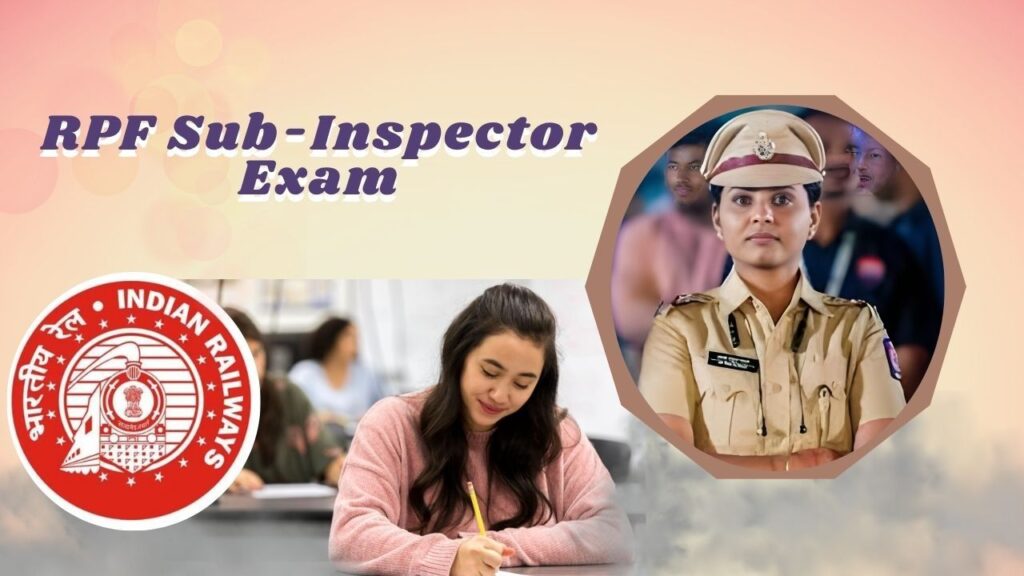
The RRB RPF Sub-Inspector exam is considered as one of the toughest national level exam in India and it is conducted by Railway Recruitment Board under the Ministry of Railways. The exam is held to select eligible and committed candidates for the post of Sub Inspector in Railway Protection Force, a specialized security force which ensures the safety of railway passengers, railway premises, and vital rail components in every zone of Indian Railways.
RPF SI Recruitment is prestigious post and government job and it has good salary package, so, that is way it is most demanded exam in our country. The exam is conducted as computer based test (CBT) in 15 languages apart from English such as Hindi, Urdu, Tamil, Telugu, Kannada, Odia, Malayalam, Marathi, Gujarati, Bengali, Assamese, Punjabi, Manipuri and Konkani, for the convenience of candidates from all corners of the country.
Eligibility Rules for RPF Sub-Inspector
Will you be entitled for the RPF Exam or not? Those who fulfill the Railway Protection Force eligibility criteria can apply for this prestigious job.
Age Limit: The upper age is 28 years on 1st July of the year of recruitment and the lower is 20 years. However, various relaxations applicable for different categories is stated as below:
SC/ST
5 years
OBC
3 years
domiciled Candidates from J&K and LadakhOR Central Government employees
UR/EWS – 5 yearsOBC – 8 yearsSC/ST – 10 years
Widows
UR/EWS – 2 yearsOBC – 5 yearsSC/ST – 7 years
Educational Qualification: The candidate should possess a Bachelor’s Degree in any stream from a recognized university for RPF Sub-Inspector exam. The requirement of Graduation is in place to get a basic intellectual knowledge which is required to hold duties of administration and leadership in security services.
Nationality: You must be an Indian citizen for this recruitment.
Physical Fitness Standards: Basic eligibility does not specifically state this, nonetheless candidates have to be physically fit to meet with the standards laid down in the efficiency test and physical measurement which are critical to the selection procedure.
Posting choices are due to the candidates holding down their preferred location during the filling of the preference form as the posts are spread across multiple railway zones in India which include Eastern Railway, Southern Railway, RPSF (Railway Protection Special Force) and many other zones. Since candidates can opt for postings near their home state/region, this zonal arrangement makes the exam less inaccessible.
Exam Pattern and Question Distribution
The knowledge of exam pattern is needed for the strategic preparation. The RPF SI exam is a single level exam which is conducted in the form of an online computer-based test, having multiple choice questions, which is of 2 hours duration.
There are three sections in the RPF SI Exam:
General Awareness (50 Questions, 50 Marks): This section is an evaluation of your knowledge about Indian history, the Indian constitution, polity, geography, Indian economy, the general science, sports, current national and international events and also a few questions on current governments recently introduced. The questions test both your static and dynamic awareness or knowledge of current affairs.
Arithmetic (35 Questions, 35 Marks): The arithmetic section includes questions on number systems expansion, simplification by BODMAS rule, ratio and proportion, percentage, profitable loss, interest calculation on SI and CI, time and work question average time related queries and simple topic of algebra.
General Intelligence and Reasoning (35 Questions, 35 Marks): Assess your ability to think logistically and solve problems through verbal and non-verbal reasoning and General Intelligence via questions on Analogies, Classifications, Coding Decoding, Series Completion, Blood Relations, Directions, Logical Reasoning and Pattern Recognition.
To promote accuracy rather than the recklessness of wild guesses, each correct answer is awarded one mark, while for each wrong answer one-third of a mark is deducted. The exam is available in fifteen different Indian languages but most of the candidates opt either Hindi or English.
Topic-Wise Syllabus Breakdown
General Awareness Topics
Domestic and International news, political scenes, social conditions, notable events and progress, awards and accolades.
Indian history is divided into independence movements, ancient India, medieval India, modern India and significant historical personalities.
Indian Constitution: Sections and their significance, process of making amendments, rights to the individuals and guiding principles of state policy
Physical and Global geography, environmental concerns, and Indian geography basics.
General Science: All Physics, Chemistry and Biology topics for Class 10–12
Athletics, such as football, great players, artistic genres, music, dance, literary, performing arts performances sport and culture.
Arithmetic Topics
Number system: prime and composite numbers, divisibility, whole numbers, and HCF, and LCM
Simplification: BODMAS rule application, square roots, decimals, and fractions
Ratio and Proportion: Sharing issues, partnerships, direct and indirect proportion, and mixtures
Percentage: Simple percentage calculations, percentage increase or decrease
Cost price, selling price, profit and loss, discount and percentage of profit and loss
Simple and compound interest: applications of principal, rate and time, and formulae
Time and Work: Pipe and cistern problems, work and work efficiency, work with wages
Average: Weighted averages, age-related averages, and averages formulas
Algebra: Basics of algebraic expressions and linear equations
General Intelligence and Reasoning Topics
Analogies: Finding relationships between word pairs
Classification: Categorizing similar items and identifying the odd one out
Coding- Decoding: Decoding the pattern of coded messages
Finding pattern in numerical or alphabetic series is called Completion of series.Blood Relations: Understanding family relationships
Directions: Solving puzzles on directions
Logical Reasoning: Understanding the statement and making the argument
Finding unseen patterns in logical or visual series
Selection Process For RPF Sub-Inspector
RPF SI Selection Process is the multi-level RPF SI selection process that aims to assess the candidates on various parameters. Understanding all stages enable you to be prepared in every possible way.
Computer-Based Test (CBT) at Stage 1: The initial challenge is a 90-minute pen and paper test consisting of 120 questions. A high score is required to advance to the second stage, as this round finishes off a large number of applicants.
Stage 2: The candidates who clear the CBT are called for the Physical Efficiency Test (PET) and Physical Measurement Test (PMT). The PMT is a measurement of height and chest for male applicants, and height for female applicants. The Physical Efficiency Test examines physical stamina by way of demanding routines.
Stage 3Document Verification (DV): The PET/PMT qualified candidates are called for the document verification. At this stage, the information provided by the candidates is matched with the original educational certificates, caste certificate and identity proofs.
Stage 4 involves a complete Medical Examination by CAPF/Govt. Your medical examination confirms that you have the physical ability to do your demanding job.
Salary and Job Benefits
The RPF Sub-Inspector post is attractive for various reasons like good income, stable government job and good facility.
Salary Structure
The 7th CPC has fixed the minimum pay for RPF SI as Rs 35,400 per month with a grade pay of Rs 4,200. Yet the net pay, after subsidy and deductions, is Rs. 43,000 and Rs. 54,162 per month.
Additional Allowances and Benefits
Medical Facilities: Comprehensive coverage for the healthcare of you and your family
Travel and Transfer Allowance: Assistance with relocating and traveling for work
Pass and Privilege Ticket Orders: Discount train travel for you and your family
Education Support: Support for your children’s education
Provident Fund (PF): A provident fund is a savings cum retirement benefit scheme available to all salaried classes of individuals
Gratuity: Lumpsum on exit
Application Fee and Where To Apply
The fee structure is designed keeping in mind everyone and also in compliance with the government norms. Rs 500 as the fee for General, OBC, and EWS candidates. SC, ST, PH ( hearing impaired) candidates and all women candidates are required to pay only Rs.250.
You do the entire application online at the RRB site (rpf.indianrailways.gov.in). This allows you to apply from anywhere in India.
Preparation Tips and Strategy
Success in RPF SI exam requires a solid study plan along with theoretical knowledge and that of practicing. Candidates must focus on the General Awareness section by keeping them updated with current affairs on a monthly basis, practice regular mock test for improving accuracy, and to be able to perform in a limited time. The sensible marking scheme and relatively small extent of syllabus make this test attainable with concentrated 4-6 months of preparation.
Conclusion
The RPF SI exam provides a golden opportunity to all the educated candidates to get a respectable government job. It means steady work, good pay and a major part in keeping the nation safe. Determination, good Study material and regular Practice can make your Dream of becoming RPF Sub-Inspector into Reality.
If you are looking for jobs that come with high salary, security, and lifetime growth for your career. You must check out UPSSSC Jobs List with Salary range. In 2025, there are a lot of opportunities in the government sector to start your career but be ready to prepare for their exams.
Choose the job that aligns with your interest and skills, government jobs offer you a good salary package for even a junior assistant job. So, trust your guts and know which exam you clear out.
UPSSSC is a state-level organization which offers multiple positions to ensure government work runs smoothly and stable.
UPSSSC Jobs List with Salary 2025
Junior Engineer (JE) – Civil/Electrical
Becoming an engineer is many people’s dream, you can be an engineer in the government sector too. With a Degree or Diploma in engineering, apply for the Junior Engineer post that gives you job security and stability. Whether in Civil or Electrical, JEs play a crucial role for planning, execution, and maintenance of government infrastructure projects.
Details
Information
Salary
₹35,400 – ₹1,12,400 (Level-6) + allowances
Qualification
B.Tech OR Diploma in Civil OR Electrical Engineering
Career Growth
Junior → Assistant → Executive Engineer
Samiksha Adhikari (Review Officer / RO)
This comes in one of the popular jobs because of its clerical nature. If you are seeking desk jobs in state secretariats, especially in Uttar Pradesh. This job is the best option for you.
Details
Information
Salary
₹47,600 – ₹1,51,100 (Level-8) + DA, HRA, etc.
Qualification
Graduate in any stream + Basic Computer Skills
Growth
RO → SO → Secretary
Mukhya Sevika
Mukhya Sevika is also called Head Female Supervisor and known for leading Anganwadi, supervising health and nutrition programs to ensure women and children are getting the benefit of government schemes.
Details
Information
Salary
₹29,200 – ₹92,300
Qualification
Graduation in any stream such as preferably Sociology OR Social Work
Growth
Mukhya Sevika → Child Development Project Officer (CDPO) → District Program Officer (DPO)
Internal Accountant
If you are good in math and keen eye for detail, choosing to become an Internal Accountant is the best option for you. You’ll be responsible for maintaining financial records and ensuring that government spending is tracked and reported accurately.
Auditors help maintain transparency in how government money is spent. Auditing reports, checking errors, and misuse of funds are responsibilities which come under this role.
Details
Information
Salary
₹29,200 – ₹92,300
Qualification
B.Com / M.Com / MBA (Finance) / CA
Growth
Auditor → Senior Auditor → Audit Officer
Laboratory Technician
A Laboratory Technician in hospitals and diagnostic centers are necessary to handle instruments that help in diagnosing. This role offers responsibilities such as medical tests on blood and urine samples, making accurate diagnosis reports, and also helping doctors. Lab technician course fee is low but salary is high.
This job involves working closely with farmers of sugarcane fields to ensure production improvement. Working in agriculture is not that bad because it has many responsible roles to handle on fields other than farmers.
Details
Information
Salary
₹25,500 – ₹81,100
Qualification
B.Sc in Agriculture
Growth
Supervisor → District Officer → Regional Officer
Revenue Lekhpal
Lekhpal is a field-level officer who collects data of land and revenues in rural or urban areas. Their job is to do surveys, and keeping that data records.
Village Development Officer – Gram Panchayat Adhikari
VDO is responsible for ensuring village people government schemes benefits. From sanitation to employment initiatives, all schemes should be provided by the VDO.
Details
Information
Salary
₹21,700 – ₹69,100
Qualification
Graduate + Computer Knowledge
Career Growth
VDO → BDO → DDO
Women Health Worker (ANM)
Healthcare services are increasing day by day because of consistently growing diseases. This role allows you to provide community service to work closely with women and children in villages. You are responsible to provide them medical care, vaccination, and health awareness programs.
Details
Information
Salary
₹21,700 – ₹69,100
Qualification
ANM Diploma + State Nursing Council Registration
Career Growth
ANM → Lady Health Visitor → Health Supervisor
Junior Assistant
This job is perfect for freshers with typing and administrative skills. Your role is required to handle office daily tasks and maintain records of the office.
Details
Information
Salary
₹21,700 – ₹69,100
Qualification
12th pass + Typing skills + Computer knowledge
Growth
Junior Assistant → Senior → SO
X-ray Technician
This job involves operating imaging equipment in hospitals for scanning any injuries internally. It helps doctors to cure patients after diagnosing.
This role is all about protecting wildlife from unnecessary occurrences, preventing illegal activities, and maintaining safety. If you love adventure and looking for a defense job then this is the right option.
Details
Information
Salary
₹19,900 – ₹63,200
Qualification
12th pass
Growth
Forest Guard → Forester → Range Officer
Agricultural Technical Assistant
If you are interested in helping farmers adopt modern farming techniques and make the best use of government schemes, then it is the best role for you. It’s a field-level job with real impact.
Details
Information
Salary
₹29,200 – ₹92,300
Qualification
B.Sc or Diploma Agriculture
Growth
Technical Assistant → Agri Officer → D.A.O
Conclusion
There are various options for you in UPSSSC, it is a state-level government body to recruit for these positions. So, you have to prepare well for the exam to get any of these job roles. Choose wisely from the UPSSSC job list with salary 2025 before you shape your future with your choice.
For decades, a government job has been the most lucrative career option in India. These SSC Job List 2026 will help you to take the right direction of your career. As we head into 2026, the Staff Selection Commission (SSC) still remains the dream gate for lakhs of aspirants to get their foot into stability, respect and serving the nation.
If you are preparing your career roadmap for this year, then getting to know about the huge range of SSC jobs is step one! From the Central Secretariat to paramilitary forces, desk-bound jobs to high-octane field jobs, the SSC 2026 calendar is bulging.
So, here is the detailed information of Your SSC Job List 2026 by Exams and Qualification.
SSC Combined Graduate Level (CGL)
The SSC CGL which is popularly known as ‘Mini-IAS’ exam is the most reputed exam for selection to Group B and C posts in various SSC Job List 2026 in ministries and departments. Candidates need to have a Bachelor’s Degree in any stream to be eligible.
Some of the SSC Job List 2026 under SSC CGL are:
1. Assistant Section Officers (ASOs) watchful policy realization in the Central Secretariat Service (CSS) in the Ministry of External Affairs (MEA), or Intelligence Bureau (IB) or the ASOs business is largely on one’s table at any rate!Desk based post of execution policy.
2. Roles in the Ministry of Finance related to taxation that are high-paying and profitable are Income Tax Inspector and GST Inspector.
3. AAO or Assistant Audit Officer – Indian CAG This is the Gazetted post In SSC CGL under the Indian Comptroller and Auditor General (CAG) and working with the Indian Comptroller & Auditor General this post is unique.
4. Sub-Inspector in CBI: This post is for those who are willing to serve in the National Investigative Agency.
SSC Combined Higher Secondary Level
SSC CHSL is a great opportunity for 12th pass candidates to get an entry level post in the government sector.
Job Roles:
1. These posts (Junior Secretariat Assistant and Lower Divisional Clerk) are the best paying jobs at entry level which are the backbone of office administration and are indispensable to the smooth working of the office.
2. Data Entry Operator (DEO): Hold the responsibility for maintenance of essential Government files, up-to-date and complete, with accuracy.
This examination leads to secure and respectable employment within government organizations.
SSC MTS & Havaldar
This is an excellent opportunity to enter in the Multi Tasing Staff job role or Havaldar, 10th pass candidates can get a central government job/staff.
Job Roles:
MTS (Multi Tasking Staff): It serves as a kind of general office support, some such duties include, running files, pushing files from one desk to another, housekeeping in office space, across various government ministries.
Havaldar: Havaldar post Candidate Should belong to Central Board of Indirect Taxes & Customs (CBIC) and Central Bureau of Narcotics (CBN). The duties of the security personnel are all field-based i.e. they are related to security and watch and ward.
SSC GD Constable
The SSC GD Constable 2026 Recruitment if you would like to serve in uniform and keep yourself physically fit, then consider it. The exam is held for recruitment to various Paramilitary forces like:
BSF —-Border Security Force
CISF —-Central Industrial Security Force
CRPF —-Central Reserve Police Force
ITBP —-Indo-Tibetan Border Police
SSB —-Sashastra Seema Bal
AR —Assam Rifles
Qualification Criteria: The applicants must have cleared 10th standard with some physical standards in order to be eligible for the recruitment.
SSC CPO
The SSC CPO exam is a good chance for the ones who want to be a Sub-Inspector (SI). It is a tough but rewarding path to take. Candidates are required to have a graduation degree and Qualify Physical Endurance Test to be eligible.
Selected candidate have the opportunity to serve in prestigious position like Sub-Inspector in Delhi Police (which is considered one of the most orderly police service) or Sub-Inspector in Central Armed Police Forces (CAPFs) – BSF, CRPF and more.
SSC Specialized Exams
Stenographer (Grade C & D)
If you are good at shorthand typing and can crack SSC Exam then SSC Stenographer may be a door for you to enter into government jobs.
Via this exam candidate is selected for the post of Stenographer in various ministries, departments and organizations of Government.
The core responsibilities of this role involve providing dictation assistance to senior officials, drafting official documents, processing correspondence and carrying out administrative tasks.
They frequently are called upon to assist higher-ranking officers, making it a key supporting position in the government system. You can get a great pay from this job role as it requires your skills.
Junior Engineer
The SSC Junior Engineer exam is disputed for the candidates who have a Diploma/Degree from the recognized board in a relevant field of engineering i.e. Civil, Mechanical, Electrical etc.
The result of SSC Junior Engineer Exam contains qualified candidates who are selected for appointment in various government departments, organizations such as public works, infrastructure, etc.
They also oversee such projects as cleaning and maintaining government buildings and roads, write technical reports, and verify that engineering projects conform to safety and quality requirements.
SSC Selection Posts (Phase XIV):
The Staff Selection Commission Selection Post Exam is a good opportunity to get a government job for the person who has educational qualification of 10th pass 12th pass and Graduates.
Unlike other SSC exams which appoint the candidates for common posts, this exam appoints candidates for distinct and specialised posts in various central government departments.
These posts can be for Scientific Assistant or Laboratory Attendant or even Library Clerk, Data Entry Operator or Technical Assistant. Every post has different eligibility criteria and different skills that are needed as per the requirement of department.
Due to the wide range of posts, the Selection Post examination is an ideal platform for the people who are having professional or vocational qualifications and interested to work in a particular domain in the government sector.
Job Security: Students can rely on their jobs for lifetime as it is not like private jobs undisputed, particularly in times of economic downturn.
Work-Life Balance: There are public holidays and weekends leave can be more relaxful and also on the weekdays you have to work only 9 to 5.
Salary and Perks: The salary is very competitive with the 7th Pay Commission norms. Benefits such as HRA (House Rent Allowance), DA (Dearness Allowance) and medical benefits for family are some of the major highlights.
Social Prestige: It is a centrally administered ministry, so it has a good standing in society to serve in it or the national police force.
SSC Job List 2026 Exam Timeline
The SSC Job List 2026 exam timeline is given for the students to take an idea to begin their journey, accurate date and time are declared by the official website of SSC. Students who are interested in any of these job posts can check the official notice of the exam on the official website.
Exam Name (2026)
Notification Date (Expected)
Exam Month
CGL
March/2026
May—June/2026
CHSL
April/2026
July—Sept/2026
MTS
June/2026
Sept—Nov/2026
CPO
May/2026
Oct–-Nov/2026
GD
Sept//2026
Jan—March/2027
Conclusion
Whether you are a 10th-pass student or a postgraduate engineer, the SSC Job List 2026 has all the opportunities for you. The only question you must ask yourself is which post defines my personality better? If you love discipline and being outdoors, go for CPO or GD, if you love a quiet office and wielding admin powers, go for CGL.
BBAU counselling dates have been released for the PG programme 2025-26. Candidates are shortlisted in the merit list who have scored well in the entrance exams. Now they have to prepare for the next round of the counselling which is document verification and fee submission. Total of three phases of the admission process, those who cannot find their name in the first phase can wait for the second phase merit list. Candidates are advised to follow up on the important dates through notification. You can download it from the link mentioned below in the article.
BBAU PG Admission Procedure
The candidates should give the CUET PG exam, which is an entrance exam for admission to postgraduate programs. Students can get admission in BBAU according to their CUET PG score. Next step, candidates should register themselves on the admission portal and select their choices in the course. The merit list will be declared on the official website, and shortlisted candidates can verify their documents. Candidates who are selected according to their CUET score can submit their fees through the online SAMARTH portal.