NICL AO Admit Card 2026 Is Out: Download Your Prelims Hall Ticket Before 17 November

NICL AO Admit Card 2026

National Insurance Company Limited (NICL) has officially released exam details for the post of Administrative Officer. The number of recruitment for the post are 321. The Phase-I preliminary exam is held on 17 November 2026. The NICL AO Admit Card 2026 released on 9 November. All interested candidates can download the admit card now in the given link below.

NICL AO Admit Card 2026 Dates You Need to Know

Short Notification 7 October 2026
Application Starts 8 October 2026
Application Ends 28 October 2026
Exam (Phase 1) 17 November 2026
Admit Card 9 November 2026
Exam (Phase 2) 22 December 2026
Interview Update Soon

Vacancy Details For NICL Administrative Officer

NICL AO notification published 321 positions including 200 for Generalists and 121 across Specialist disciplines. The 121 posts are splitting into followings:

Posts No of Vacancies
Risk Engineers  28
Finance (CA and CMA) 20
Legal  20
Automobile Engineers 20
Agriculture  20
Information Technology 11
Company Secretaries 2

How to Download the NICL AO Admit Card 2026

  1. Go to the official NICL website by clicking on the NICL AO Admit Card 2026 link.
  2. Find the Recruitment Section.
  3. Login with your registration and password, enter captcha. 
  4. Your admit card will appear on the screen. You can download it and save it for the print.
  5. Print it out and carry it with you to enter in the exam hall along with your ID. 

What to Carry to the Exam Centre

The printed NICL AO Admit Card 2026, an original valid photo ID, and the other documents named on the call letter. Phones, smartwatches and notes won’t get past the gate. Reach the centre early, since online exams run on strict shifts and the doors don’t wait.

NICL AO Prelims Pattern

100 questions for 100 marks in 60 minutes, split into English (30 questions), Reasoning (35) and Quantitative Aptitude (35), each timed separately at about 20 minutes. There is negative marking for wrong answers. The prelims is qualifying only. The marks that decide your rank come from the Mains.

Read More 👉  How to Make Money in the AI Era: Skills, Freelancing, and Career Opportunities

NICL AO Salary And Selection Process

The starting pay for the NICL Administrative Officer Scale I is ₹82,485 per month. The total monthly earn is up to ₹1.14 lakh after adding allowances. 

Salary Structure

Component Detail
Starting basic pay ₹82,485 per month 
Pay scale ₹82,485–4,050(14)–₹1,39,185–4,390(4)–₹1,56,745
Approximate monthly emoluments About ₹1,14,000 in metropolitan centres, including allowances
Benefits Allowances and benefits as per NICL rules

Selection Process

Stage What happens
Phase I: Prelims Online objective test; qualifying candidates are shortlisted for Mains.
Phase II: Mains Online main examination; includes objective and descriptive components.
Interview Candidates shortlisted after Mains appear for the personal interview. 
Final merit Final selection is based on the Mains objective test and Interview in an 80:20 ratio; the descriptive paper is qualifying and its marks are not counted in the final merit score.
Post-selection Document verification and pre-employment medical examination may apply.

Conclusion

National Insurance Company Limited (NICL) published the notification with all details for the post of Administrative Officer. There are 321 posts under this recruitment drive. All interested candidates must prepare for the exam on 17 November 2026. 

Download the NICL AO Admit Card 2026, print two copies, and email the PDF to yourself. Then check the official portal once more on the 15th, in case NICL posts a shift or centre update. 

Leave a Comment

Your email address will not be published. Required fields are marked *

Meet the Best Current Affairs Teacher for SSC CGL Who Can Boost Your Score

For the students preparing for the SSC CGL exam, the Current Affair section is important to cover up. Many students think that it is an easy section and it will get your score with a little preparation and strategy. These Best Current Affairs Teachers for SSC CGL will help you make every update remember their context. 

They’re not only helping you in keeping updated but they also gave you SSC CGL relevant current events which can come in the exam. Check news daily, read newspaper or e-news, follow social media news channels, read magazines and make revision for each topic.

Previous year papers might be not helpful so try mock quizzes and practice questions daily. These teachers have also shared a lot of MCQs, you can try and improve your speed and accuracy.

You better be consistent through your preparation, otherwise it won’t be helpful if you forgot everything you learn.

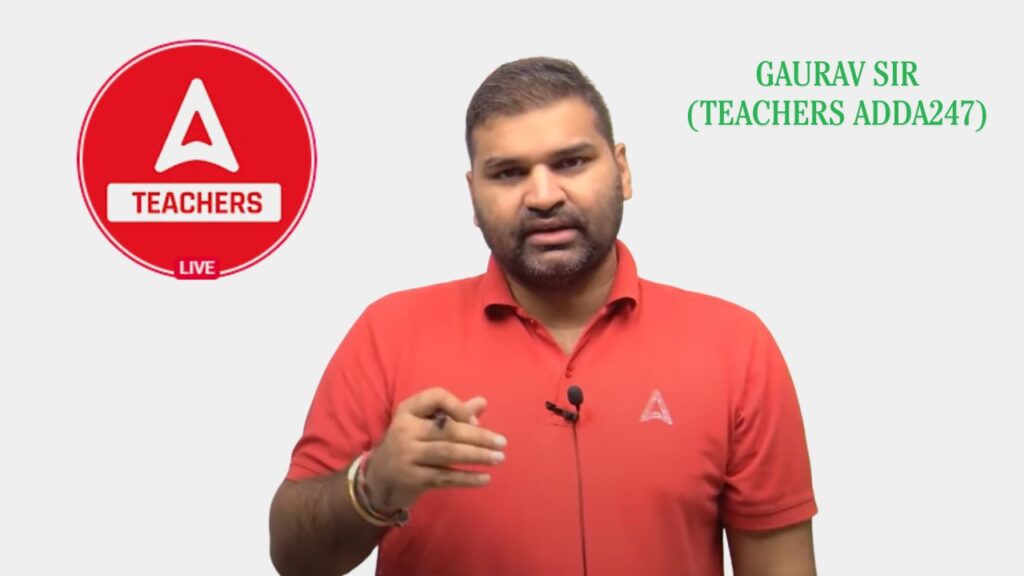
Gaurav Sir (Adda247)

Gaurav Sir (Adda247) best current affairs teacher for SSC CGL preparation

Gaurav Sir is known for his ability of connecting current events to static GK which help students to memorize everything. He encouraged a comprehensive understanding of current events rather than just rote memorization. His engaging and interactive teaching style involves deep explanations and real-life examples to elaborate concepts that help understanding complex topics easily.

Ideal for those students who want to understand the “why” behind the news. Gaurav Sir will help you to understand every topic beyond the headline. He is teaching serious topics in a friendly way that will be remembered by every student with a deep understanding of context. He also provides revision classes to keep tracking the previous sessions.

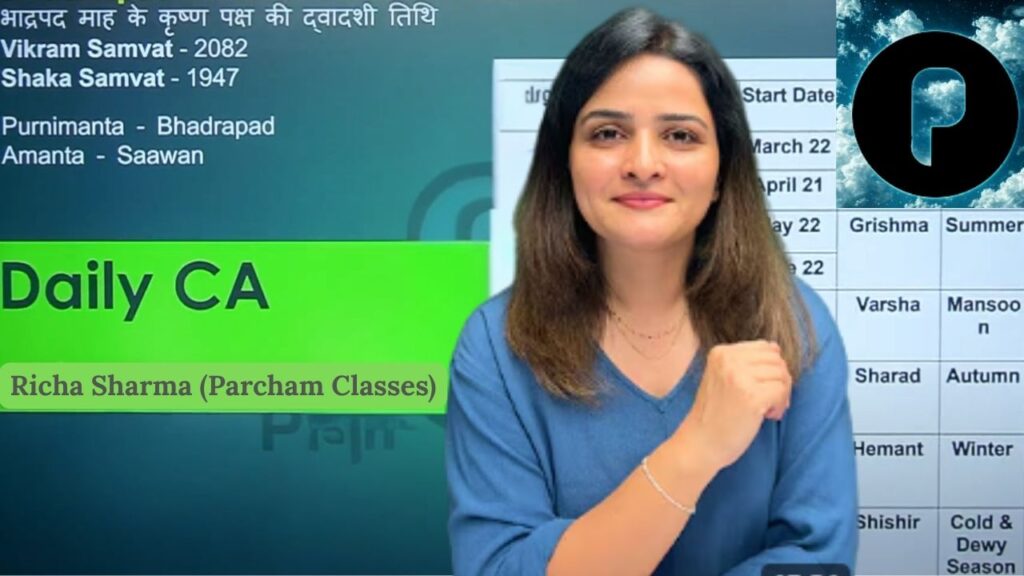
Richa Sharma (Parcham Classes)

Richa Sharma is best to help SSC aspirants for concise and exam-oriented preparation. Richa Ma’am’s teaching style is clear and structured which helps every student to understand current events that are relevant to SSC CGl. She specifically makes point-to-point notes for easy memorization and applies other techniques such as mnemonics to help in revision.

Richa Sharma (Parcham Classes) best current affairs teacher for SSC CGL

She is best for those students who prefer to prepare the current affair section with less time & efforts. It’s hard for many students to remember dates, names, and numbers. Richa Ma’am fits them because she uses simple flowcharts and bullet points to simplify the topic. You can easily remember them and cover all the topics within a short period of time.

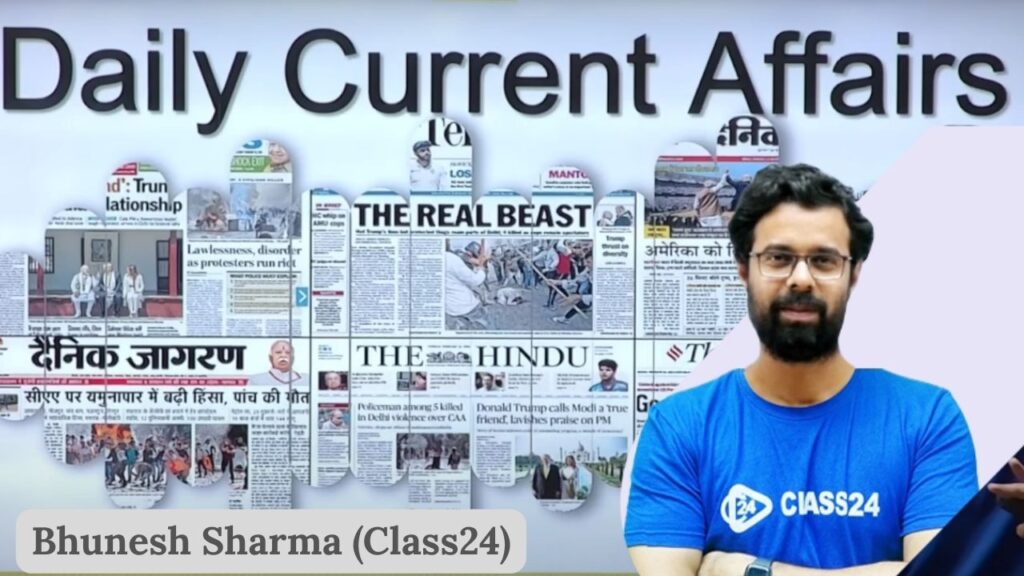
Bhunesh Sharma (Class24)

Bhunesh Sharma is experienced and popular for his lucid explanation which helps to understand complex topics of current affairs easily. He uses visuals and diagrams in its teaching to memorize every concept. Most importantly, it’s easily available for every student who is preparing for the SSC CGL Exam. 

Bhunesh Sharma (Class24) best current affairs teacher for SSC CGL

If you have a problem in understanding current affairs then Bhunesh Sir is best, he simplifies every topic with his friendly teaching style. Be ready for the In=depth analysis on a complex topic which can help you understand its core reasons, making you able to solve every question confidently.

Gaurav Maurya from Testbook

For daily current affairs updates, watch Gaurav Maurya sir lectures because he gives updates in a very good explanation which helps many students to understand it. The factual accuracy and exam relevant topic in his sessions makes it a more precise choice for SSC CGL aspirants. He will prepare you for the exam in a short period of time.

Gaurav Maurya from Testbook best current affairs teacher for SSC CGL

He focuses on relevant information which can come in the SSC’s objective exam. Students can score well in current affairs sections if they cover all the Gaurav Maurya sessions. He prepares students for the competition with quizzes and practice questions in his classes. You can get all the daily information in one place. 

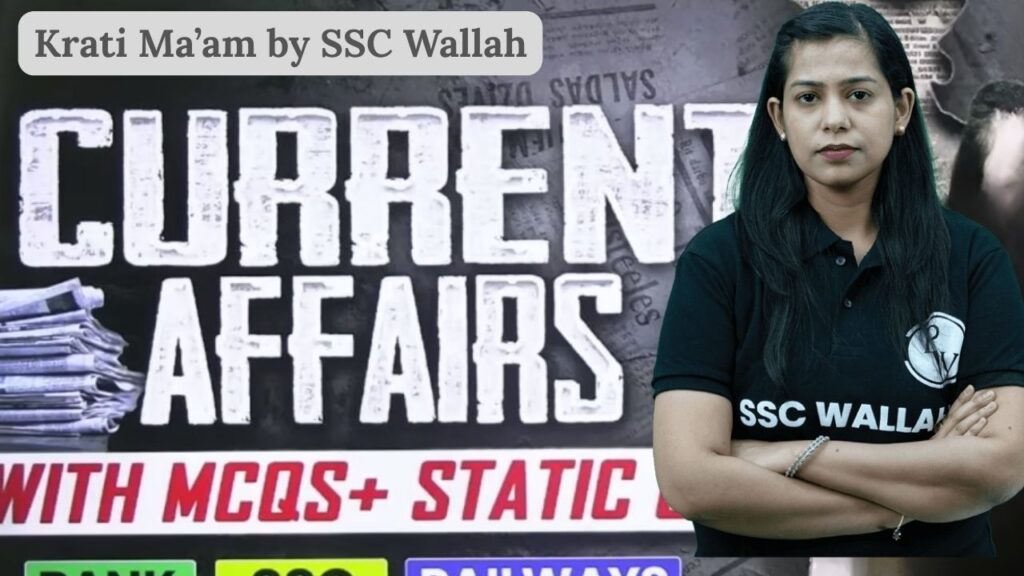
Krati Ma’am by SSC Wallah

Krati Ma’am by SSC Wallah best current affairs teacher for SSC CGL

Krati Ma’am is a perfect teacher for students who get bored easily. Her intrusive way of teaching can help SSC CGL aspirants to memorize each current affairs topic with interactive elements and discussion. She keeps you motivated for your preparation and guides you through the entire session. 

Her fun and energetic session is excellent for students who get distracted easily. Krati Ma’am focuses on motivating and encouraging students to follow their journey with focus and positivity. Her teacher methods including storytelling, playing quizzes, and interactions are excellent. 

Finding Your Ideal Current Affairs Guru: A Personalized Approach

It is hard to find the best teacher for current affairs. This section seems easy but it is not, many students try so hard to remember each event but can’t help themselves. A short guide to help you make a right choice:

Know Your Needs

Level of Understanding: Current affairs is your weakness or you are a  beginner then understanding each and every thing with deep-analysis is important.

Time Commitment: Each subject needs time but decide how much time you can give to the Current Affairs section to cover every topic.

Learning Style: Know which teaching style helps you understand complex topics easily — engaging, visualising, or quick facts.

Exam Focus: These SSC CGL focused teachers can help you prepare fast and easily, you just have to know which one can simplify fast for you. 

Explore and Experiment

Watch Demo Lectures: if you are still confused which one is right for you, watch demo sessions of a few teachers so you can see their teaching style.

Check Reviews and Testimonials: Many students who have already taken their lectures have shared their feedback on social media. You can have their opinion.

Consider Multiple Sources: once you select any teacher, it doesn’t mean you can’t access another teacher’s resources or study material. You can take one or two teachers’ lessons and notes to get well-rounded daily updates.

Evaluate Effectiveness

Assess Your Retention: practice questions and solve test series to know about your memorization. It helps to understand if you forgot the information taught by the teacher.

Track Your Progress: observing changes in your current event knowledge and performance in mock test

Stay Updated on Exam Trends: It’s important that your teacher prepares you for the SSC CGL new exam pattern. 

Conclusion

If you are thinking about clearing SSC CGL examination and score well, focus on every section including current affairs is important. Best Current Affairs Teacher for SSC CGL will help you get ahead on the preparation and enhance your chances of success in the examination. You must understand the fact that each teacher brings a unique strength to the table and the “best” one for you is the one that aligns with your preferences. 

UPPSC RO / ARO Recruitment 2026 – Online Form (501 Posts)

UPPSC RO / ARO Recruitment 2026

Uttar Pradesh Public Service Commission (UPPSC) has released the notification for Samiksha Adhikari (RO) / Sahayak Samiksha Adhikari (ARO) and other posts under Advertisement No. A-4/E-1/2026. A total of 501 vacancies have been announced. The online application process started on 26 October 2026, and eligible candidates can apply until 26 November 2026. Candidates should read the official notification carefully before filling out the application form.

UPPSC RO / ARO Online Form 2026 – Started

UPPSC RO / ARO Recruitment 2026: Short Details
Important Dates
Online Apply Start Date : 26 October 2026
Online Apply Last Date : 26 November 2026
Last Date for Fee Payment : 26 November 2026
Correction Date : 03 December 2026
Examination Date : To Be Notified 
Admit Card Date : Before the Examination
Result Date : To Be Updates 
Candidates are advised to verify all dates on the official UPPSC website.
Application Fee
General / OBC / EWS:₹125/-
SC / ST : ₹65/-
Persons with Disabilities (PwD):₹25/-
Payment Mode: Online, as available on the official application portal.
UPPSC RO / ARO Recruitment 2026: Age LimitTotal Post
Age Limit as on 01 July 2026

Minimum Age: 21 Years

Maximum Age: 40 Years

Age Relaxation: Applicable to eligible categories according to UPPSC rules and the official notification.
501 Post
UPPSC RO / ARO Recruitment 2026: Vacancy Details
Post/Selection TypeVacancies 
General Selection495
Special Selection6
Total501

The recruitment includes RO, ARO and other posts specified in the official advertisement. Check the notification for the exact post-wise vacancy distribution.

UPPSC RO / ARO Recruitment 2026: Eligibility

  • Candidates must possess a Bachelor’s degree from a recognized university for posts where graduation is prescribed.
  • Additional computer qualifications, Hindi typing skills or other specific qualifications may be required for particular posts.
  • Candidates should check the detailed notification for post-wise eligibility before applying.

How to Fill UPPSC RO / ARO Online Form 2026

  1. Visit the official UPPSC website.
  2. Open the recruitment notification for Advertisement No. A-4/E-1/2026.
  3. Complete One Time Registration (OTR), if not already completed.
  4. Log in to the application portal using the prescribed details.
  5. Fill in the required personal and educational information.
  6. Upload the required documents, photograph and signature as instructed.
  7. Pay the applicable examination fee.
  8. Review the application form and submit it before the last date.
  9. Download or print the submitted application for future reference.

Note: Candidates should carefully check their details and eligibility before submitting the application.

UPPSC RO / ARO Recruitment 2026: Mode of Selection

  • Preliminary Examination
  • Main Examination
  • Typing / Computer Skill Test, wherever applicable
  • Document Verification

The final selection stages will be as prescribed in the official notification for the relevant post.

Important Links
Link Status
Apply Online Click
Official Notification View Notification
One Time Registration (OTR)Click Here 
Official Website UPPSC Official Website 

Apply Now for RRB Station Recruitment 2026

UPPSC RO / ARO Recruitment 2026: Important Questions

Q. When did the online application start?

Answer: The online application started on 26 October 2026.

Q. What is the last date to apply online?

Answer: The last date is 26 November 2026.

Q. How many vacancies are available?

Answer: A total of 501 vacancies have been announced.

Q. What is the age limit?

Answer: The prescribed age limit is 21 to 40 years as on 01 July 2026, subject to applicable relaxation rules.

Q. What is the official website of UPPSC?

Answer: The official website is https://uppsc.up.nic.in/.

Disclaimer: Candidates should refer to the official UPPSC advertisement for complete details regarding fees, age relaxation, educational qualifications, vacancy distribution and selection rules. In case of any discrepancy, the official notification will prevail.

NTET 2026: Complete Information on Eligibility, Exam Pattern & Syllabus

NTET 2026

Do you want to develop the future of healthcare education in India? If you intend to apply for the post of Assistant Professor, Associate Professor or Professor in ISM or Homoeopathy, then the first step is to qualify the NTET 2026.

National Teachers Eligibility Test (NTET) for teaching in AYUSH Institutions (PCM/PCB) NCISM NCH has notified the conduct of National Teachers Eligibility Test (NTET) for educators in AYUSH colleges. From Minimum Eligibility Criteria, Exam Pattern, Syllabus, to preparation tips, this complete, evergreen guide dresses up all the essential aspects for NTET. 

Let us check out the details to start your academic career. 

What is the NTET 2026 Exam?

The National Teachers Eligibility Test (NTET) is a country level AYUSH teachers suitability test that aims at testing potential teaching capabilities, communication skills and knowledge of educational psychology of prospective AYUSH teachers. Be it Ayurveda, Unani, Siddha or Homoeopathy, the NTET 2026 is a mandatory requirement for teachers to keep abreast with contemporary teaching methods to train future doctors. It tests your teaching potential, not your medical know-how, which you have already been through a sufficient number of times in your postgraduate medical degree. 

NTET 2026 Eligibility Criteria

Cooperating with the rules of UPSC before applying to NTET is the right choice because you can waste your time if you’re not eligible for the examination. Whether it’s a document or age criteria, make sure you lie on the guidelines. NTET is solely for post graduates and final year students of certain medical and para-medical disciplines.

Here is the list for the minimum eligibility criteria:

Basic educational qualification: Must complete your masters in whatever field you have chosen. Graduated students can pursue any of these postgraduate degrees in Ayurveda, Unani, Siddha, Homoeopathy or allied areas to be eligible. 

Related fields: The candidates should have valid bachelor’s degree in AYUSH (BAMS, BUMS, BSMS, BHMS) withMaster of Public Health (MPH) or M.Sc in Anatomy, Physiology, Biochemistry orMicrobiology. 

Students in their final year of education can take the exam if you are progressing and have completed at least 30 months of your masters program. 

Career Stage: Only first time aspirants to the teaching profession (Assistant Professor) at the entry level are required to qualify in this exam. It is also necessary for higher teaching positions if the candidate is coming to teaching from clinical practice or research for a number of years and not for the first time. 

NTET Exam Pattern

FeatureDetails
Mode of ExaminationComputer-Based Test (CBT)
Total Duration120 Minutes (2 Hours)
Total Questions100
Question TypeMultiple Choice Questions (MCQs) with 4 options
Maximum Marks100 Marks
Marking Scheme+1 mark for every correct answer
Negative MarkingNo Negative Marking
Medium of PaperEnglish and Hindi
Difficulty Distribution40 Easy, 40 Medium, 20 Difficult questions

Detailed NTET 2026 Syllabus

The NTET 2026 syllabus is concerned only with teaching techniques, management of the class and human mind. It has been segmented into 8 modules. Here you go, this is What to Study:

Teaching & Training

  • Definition, aims, and levels of teaching (to teach at Memory Level, to teach at Understanding Level, to teach at Reflective Level).
  • Features of adult and youth learners (Educational, Social, Emotional, and Intellectual).
  • Contemporary methods of teaching, clinical teaching and teaching at the bedside.
  • VARK learning style (Visual, Aural, Reading/Writing in Learning, Kinesthetic). 

Communication

  • Definition, nature, types and barriers of communication.
  • Verbal vs non-verbal and intercultural communication.
  • Teacher-Learner and Doctor-Patient communication models.
  • Place of mass media in society and contemporary education.

Classroom Management

  • Maintaining studious engagement, and motivated learning in heterogeneous classrooms.
  • disciplinary management and discipline and positive, inclusive learning environments.
  • Work with real teaching environments such as OPDs, clinical labs, skill labs, and community outreach programs. 

Methods of Evaluation

  • The formative and summative assessment processes in learning.
  • Evaluation mechanisms under the CEC procedures.
  • Evaluation of clinical competence by OSCE (Objective Structured Clinical Exam), long case and short case.
  • Importance of organised feedback in learning.

Educational Technologies

  • The emergent and shifting terrain In medical education: ICT and its management.
  • The utilization of the Internet, e-mail and video conferencing in the contemporary teaching environment.
  • Knowledge of online teaching environments and MOOCs (e.g. SWAYAM and SWAYAMPRABHA). 

Educational Psychology

  • The cognitive development from childhood to adult with storing knowledge and learning through life experience by the human mind.
  • Psychological theories of relevance to teaching: Piaget’s cognitive development, Vygotsky’s sociocultural perspective, Bronfenbrenner’s social context.

Educational Andragogy 

  • Get to know Andragogy (the designated way and technique of teaching adult learners).
  • The principles, needs and characteristics of adult learning.
  • Building Skills for Self-Directed and Lifelong Learning.

Learning and Pedagogy

  • Fundamental notions and sequential procedures of pedagogical analysis.
  • Critical pedagogy and the development of particular learning outcomes.
  • A few guidelines to facilitate doing student-centred teaching-learning workflow effectively.
  • Eligibility Conditions and Validity of the Certificate

Examination Result: 

The candidates are required to obtain the minimum of 50% marks (without any rounding off) in the examination to be considered as “NTET Qualified”.

Certificate Validity: 

On clearing the NCTET, your NTET Eligibility certificate is valid for 10 years from the date of passing. If they fail to join teaching within the 10 years or take a career break of above 10 years, they would need to take up and clear the test once again to continue in teaching. 

Read More:- DECE-LE Admission Form 2026: Apply Online, Eligibility, Exam Date & Full Details

Tips to Crack the NTET 2026

Since teaching is what the NTET 2026 tests and not medical science, your prep plan needs to adjust slightly.

  • Learn the Pedagogy Fundamentals: To learn some of the main educational psychology concepts, read some of the key texts by Piaget, Vygotsky and from contemporary educational models.
  • Concentrate on Clinical Teaching: The usual pedagogy holds only tenuously when considering the OPD and in AYUSH teaching. Attending clinical, bed side and OPD teaching methods, they are very practical.
  • Manage Your Time: There are 100 questions in 120 minutes. Time is more than sufficient, but reading the lengthy scenario-based teaching method questions can be consuming. You will be building your reading speed with regular mock tests.
  • Take Advantage of the ‘No Negative Marking’ Rule: Have a guessing game plan for hard questions. Do not leave a question unanswered on your CBT screen.
  • Keep Abreast with Ed-Tech: Keep track of the latest digital education tools and steps taken by the Indian government in the education sector. 

Conclusion

The NRIMT or NTET 2026 is one of the excellent, forward-looking measures by NCISM & NCH to bring about a unified quality in the AYUSH education throughout the country. This idea of focusing on “how to teach” rather than “what to teach” makes future doctors be taught by qualified, caring and extremely capable teachers.

So with this article, get yourself prepared to land on the hot seat of the National Teachers Eligibility Test. Go in depth with your syllabus and learn to think like the psychology of adult learners and you are on your way to a very successful and satisfying career as a medical teacher.

BSc Dialysis Technology: Course Details, Eligibility, Salary & Career Scope

BSc Dialysis Technology

BSc Dialysis Technology course is recognized a professional course under the regimen of which the students are prepared and polished to serve in the field of renal care and dialysis. The course duration is 3 to 4 years and is a mix of theoretical concepts as well as practical training. Subjects studied include anatomy, physiology, renal pathology, dialysis techniques, biochemistry and pharmacology. Also, patient care management is stressed so that graduates will be able to function at a high level in clinical environments, such as hospitals and dialysis centers. 

Eligibility and Admission

Requirements for the Admission in BSc Dialysis Technology courses are the possession of higher secondary education with a science background. Some colleges may also demand entrance tests and/or interviews as a part of the application process. Here is the full breakdown of Eligibility for Bsc Dialysis Technology:

Educational Background:

Candidates are generally expected to have passed their 10+2 or an equivalent higher secondary education examination with science stream (with the subjects of Physics, Chemistry, and Biology (PCB)) from a recognized board.45% to 60% in aggregate in these subjects is required by most institutions coming with variations as per applicant category i.e. general,sc/st or obc. 

Entrance Exams:

BSc Dialysis Technology programs entrance examination may differ from one college to another, however, many colleges conduct B.Sc in dialysis technician examination for admission, to check the candidate’s knowledge and comprehension of basic scientific concepts related to the field of dialysis-tech. So, they accept admissions through their merit scores. 

The mentioned premier institutions including JIPMER, SGPGI and Jamia Hamdard have started admitting students on the basis of entrance exams like NEET, CUET, KCET (Karnataka Common Entrance Test), KEAM (Kerala Engineering Architecture Medical). 

But most of the colleges accept students on their 10+2 scores with subjects including physics, chemistry and biology or mathematics.

Admission Process

Check the colleges that offer BSc Dialysis Technology courses then visit their official website to enroll yourself. 

  • The admission portal opens for a short period of time, mostly in April and March. Students need to apply with supportive documents which includes marksheets and certificates of qualifications. Please fill the application carefully while applying for admission.
  • If there is any entrance exam required during the admission then the notification will be released for the examination, you must check carefully.
  • Some programs may also require an interview after the entrance exam to determine if the candidate is truly interested and if he or she would be a good fit for the field of dialysis technology. 
  • Institutions generally prepare a merit list considering aggregate performance in the written-test, interview (if applicable) and the qualifying examination which is used for offering the admission to the applicants. 

BSc Dialysis Technology Syllabus Details

The educational content of the BSc Dialysis Technology syllabus is designed to be comprehensive for developing required skills in students to carry out dialysis procedures and patient care. The course duration is 3 years which may extend to 4 years including internships and practice-based activities. Important topics are:

  1. You’re going to learn the human body’s systems, mainly the renal system, so you know how dialysis works on your body.
  2. Renal Pathology: How the kidneys work, what goes wrong in the different kinds of kidney illnesses.
  3. Understanding Different Dialysis Modalities: Obtain specialized knowledge about various dialysis modalities, including hemodialysis and peritoneal dialysis, such as machine operation, procedures, and patient care during treatment.
  4. Biochemistry Metabolic alterations in patients with kidney diseases and the contribution of dialysis to these biochemical alterations.
  5. Pharmacology Medications used in renal care: Drug interactions and patient safety during dialysis.

The objective of the syllabus is to make the student well versed with the theoretical and practical aspects of the dialysis technology profession. 

Practical Training

Besides the core subjects the curriculum also includes practical modules, which enable the students to become familiar with the real work situation. This training is frequently conducted in the following settings:

  • Clinical Rotations: Students complete clinical rotations in hospitals or in specialized dialysis centers, offering hands-on experience with the dialysis processes and patient care procedures.
  • Simulation Labs: Numerous programs include simulation training to train students in a simulated environment prior to working with real patients. 

Elective Modules

In some universities, optional courses are available where students can develop their knowledge in particular fields, as:  

  • Nutritional Support in Renal Disease: This study unit focuses on the dietary management of renal patients, including those receiving dialysis.
  • Advanced Renal Nursing (Beginners) Suitable for residents who wish to further their nursing knowledge in renal care.
  • Investigations in Dialysis Technology: This section considers new developments and breakthroughs in the renal procedure. 

Assessment Methods

The syllabus often involves different methods of assessment including the following:

Written examinations: To test knowledge of theoretical subject areas.

Practical tests: At clinical rotations or labs, you will undergo testing.

Projects: To promote research and investigation on particular subjects in the field of dialysis technology. 

Skills Acquired in BSc Dialysis Technology

Dialysis Technicians are an important part of the healthcare team, especially in caring for patients with kidney disease that must undergo dialysis. What they need to learn are technical skills as well as interpersonal skills. 

Dialysis technicians require a suitable combination of technical skills and people skills. Technically, they have to operate dialysis machines, watch patient vital signs, handle vascular access and interpret lab results to deliver safe and efficient care. 

They must also be empathetic and possess the ability and skills to communicate with patients, attend to emergencies and work with medical teams. They serve an educational role, as well, teaching patients about treatment, lifestyle and managing illness, so patients can become active participants in their care. 

Career Opportunities & Future Scope

Dialysis technicians are a subset of technologists, who work with the machines located at a dialysis center, the dialysis machine. Indraprastha Apollo Hospitals (New Delhi), Fortis Memorial Research Institute (Gurgaon) and Max Hospital (Several locations) are among the best employers, offering vacancies for patient care technicians and clinical managers.

Hospitals: Dialysis Technicians may work in a hospital setting, providing care to patients who require dialysis. These specialized technicians are essential to deliver safe and effective treatment. 

Travel Placement: Something a few travel dialysis tech are able to do, is to work on a travel basis at various locations. Companies like Nephro Plus help these travel positions, typically with great pay and benefits.

Home Dialysis: Or in some cases, technicians work in the home care arena. Companies like DCDC Kidney Care aiding patients that dialyze in their own homes. They assist with instructions and follow-up care, monitoring that patients operate their equipment safely. 

Some of the top global Dialysis Hospitals and Companies that offer first class patient care, not only this but they hire in a massive figure from India too. So, students can also apply outside of India. There are few top Dialysis centers including AMN Healthcare, Aya Healthcare, Cross Country Healthcare etc.

Career Advancement

Specialization: Dialysis technicians may further specialize, and become a certified dialysis technician (CDT). This certification could improve employment opportunities and generally results in higher salaries and more advanced positions.

Additional Education: Further education, such as an associate’s degree in nursing or supplemental certifications in nephrology, may qualify you for more advanced positions as registered nurse roles.

Management Opportunities: Senior technicians or lead in-centre technicians frequently go on to management, they may manage teams, manage patient care provision, and day-to-day logistics of dialysis clinics – center operations management. 

Read More 👉 RRB ALP Admit Card 2026 Released: Download CBT-1 Hall Ticket Now

Dialysis Technician Salary Expectations

Dialysis technician salaries may be different according to various factors like the location, the experience, and the nature of the organization they work in.

Dialysis Technicians in India make about ₹2,00,000 to ₹4,00,000 a year. Our the ceiling is 5,00,000 which is not unrealistic for a technician with 8+ years of experience.

It is normal for people living in or around the cities of Delhi, Chennai etc to have a higher demand for health care. A skilled technician can make between ₹4,00,000 and ₹6,00,000 annually in these regions.

Also, earning specialized training – such as hemodialysis or peritoneal dialysis certification, salaries can also go up. They may earn the opportunity to further increase their income. 

In the US, the average dialysis technician salary is $25 per hour which is about $51,316 per year. For example, in California, the wage per hour for a dialysis technician is about $26.47. 

Conclusion

BSc Dialysis Technology is tailor made for Students who are aspiring to be a Backbone of Renal Healthcare Sector. This combination of theoretical and practical knowledge enables the graduate to confidently perform advanced procedures such as dialysis, patient care and clinical work. 

Due to the increasing number of patients suffering from kidney disorders in India as well as all over the world, the opportunity for trained Dialysis Technicians is also increasing. From hospitals and dialysis units to home-care agencies and world health services, job prospects are varied—and growing. 

For students seeking a secure, respected and impactful healthcare career with immense potential for growth, BSc Dialysis Technology is a winning choice that will not just help them reach their professional goals, but also provide them the satisfaction of being able to make a real difference to the lives of patients. 

iPhone 18 Pro Launching Next Month: 12 New Features Worth Knowing About

iPhone 18 Pro

If you’ve been putting off a new iPhone purchase this month, that instinct is about to pay off. The iPhone 18 Pro launching next month means in September 2026, and unlike last year’s fairly incremental refresh, this generation brings changes that actually alter how the phone behaves day to day — not just how it looks in a colour catalogue. 

The iPhone 18 Pro comes up with twelve new features that keep resurfacing across leaks from potential sources, and enough of them line up with each other that the list is worth taking seriously, even months before Apple confirms anything on stage.

When Is the iPhone 18 Pro Launching in India?

Apple has not confirmed an exact date of launch but people are guessing according to the leaks of iPhone 18 Pro that it will launch on September 8 and other sources have cited a September 9 date, with sales starting around September 18. Either way, expect the announcement in the first half of September and phones on shelves roughly a week or two later — India has landed in Apple’s first launch wave for the last several cycles, so there’s no reason to expect a delay this time.

The bigger structural change is that Apple is reportedly splitting its iPhone 18 lineup across two events for the first time. Only the iPhone 18 Pro, iPhone 18 Pro Max, and Apple’s first foldable iPhone are expected this fall. The standard iPhone 18, a budget iPhone 18e, and a second-generation iPhone Air are said to be held back until around March 2027. If that holds, it’s a genuine break from Apple’s usual one-event calendar, not just a rumor footnote.

Read More👉 Best Student Laptops for School and University in 2026 

The iPhone 18 Pro Launching Next Month With New Features: 12 Upgrades Leaks 

1. A Smaller Dynamic Island

Apple’s Face ID flood illuminator is rumored to move under the display at the same time, allowing Apple to reduce the size of the pill-shaped cutout at the top of the display for the first time since its introduction. 

2. LTPO+ Displays

Screen sizes stay put at 6.3 inches and 6.9 inches, matching the iPhone 17 Pro line. What’s new is LTPO+ panel technology, which is expected to squeeze out extra battery life without changing the physical footprint.

3. Variable Aperture Camera

The 48-megapixel main camera is rumored to gain a variable aperture — a first for iPhone — giving more control over depth of field. Given how small phone camera sensors are compared to a real DSLR, how much this actually improves photos in practice is still an open question.

4. A20 Pro Chip on 2nm

This would be Apple’s first chip fabricated on TSMC’s 2nm node, up from the 3nm A19 Pro. There’s likely to be a huge jump in both performance and power efficiency, even if Apple hasn’t yet released any figures. 

5. Third-Generation C2 Modem

Apple’s in-house modem line continues past the C1 and C1X with a new C2 chip, expected to keep pushing speed and efficiency ahead of its predecessors.

6. 5G Connectivity via Satellite

Paired with the C2 modem, the iPhone 18 Pro is rumored to support satellite-based web browsing when there’s no Wi-Fi or cellular signal — useful well beyond emergency SOS messaging.

7. New N2 Wireless Chip

The chip that currently handles Wi-Fi, Bluetooth, and features like AirDrop and Personal Hotspot is due for an upgrade to N2. What specifically improves hasn’t leaked yet.

8. A New Dark Cherry Colourway

Reports consistently point to Dark Cherry replacing Cosmic Orange and Deep Blue as the standout shade, alongside Light Blue, Dark Gray, and Silver.

9. A Simplified Camera Control Button

Apple is expected to strip out touch sensitivity and haptic feedback from the Camera Control button, leaving a purely pressure-sensitive click — a response to complaints that the current button is fussy to use.

10. A Cleaner Rear Finish

The Ceramic Shield area around the MagSafe ring is rumored to move to a single frosted finish, replacing the two-tone look on current Pro models.

11. A Bigger Battery on the Pro Max

Alleged Chinese regulatory filings suggest the iPhone 18 Pro Max’s battery capacity could grow by close to 10% over the iPhone 17 Pro Max — a meaningful jump if it holds up.

12. A Thicker Pro Max Body

That extra battery could come with a price: the iPhone 18 Pro Max seems to be a bit thicker than the standard iPhone 18 Pro and last year’s Pro Max, according to leaks. 

iPhone 18 Pro Price in India: What to Expect

Still, no one outside Apple knows the real figure, so consider anything below as a pre-launch estimate and not a quote. Indian retailers trackers like Smartprix, Cashify and LatestLY are now pointing towards a base price of ₹1,39,900 for the 256GB base model of the iPhone 18 Pro — which would be ₹5,000 more than the iPhone 17 Pro started from. 

Some tech enthusiasts notes are less optimistic, citing rising costs for the 2nm chip and faster memory, with a few reports floating figures as high as ₹1,43,990 to ₹1,54,900 depending on storage tier and whether you’re looking at the standard Pro or Pro Max. The spread between these numbers is wide enough that none of them should be treated as settled until Apple confirms pricing at the keynote.

Should You Wait for the iPhone 18 Pro?

If you’re still on an iPhone 15 Pro or older, this generation is worth waiting for — the variable aperture camera and the A20 Pro’s efficiency gains are the kind of changes you’d actually notice in daily use, not just on a spec sheet. If you already own an iPhone 17 Pro, none of the 12 rumored changes look big enough on their own to justify an upgrade this cycle — the two most significant jumps, the larger battery and thicker body, apply mainly to the Pro Max. 

And if price is what’s holding you back either way, keep an eye on the iPhone 17 Pro once the new lineup launches — Apple typically keeps the outgoing Pro model on sale at a reduced price, and that discount is usually the better deal in late September than paying full price for year-one rumors that haven’t been battle-tested yet.

Read More 👉 Top Lightweight Student Laptops to Buy in 2026

Conclusion 

The iPhone 18 Pro launching next month seems like a worthwhile upgrade in a nutshell, featuring a new A20 Pro chip, variable-aperture camera, smaller Dynamic Island, better connectivity, and bigger Pro Max battery. But keep in mind that all of the 12 features are still leaks until Apple officially unveils the phone. 

If you have an older iPhone, then holding out for the September release is a good idea. If you’re already an iPhone 17 Pro owner, there’s probably no need to hurry unless the camera improvements or Pro Max battery life are plenty of temptation. 

Scroll to Top