People who are starting their career or doing a job, they want to make their own money. Wondering How to Make Money in the AI Era is harder when markets are changing rapidly and don’t know what clients would want.
The right way to start is polishing your skills or opt for new skills, and make 2-3 sample work with proven results so you can freelance at online platforms.
Using AI for faster results isn’t the only thing you have to learn, but understand how you can use AI as a productivity tool. Clients, businesses or companies see the real outcome of your work, not just a sober portfolio.
How to Make Money in the AI Era
Mid-sizing companies or small businesses need people who can use their mind for reliability and accountability with AI tools to get the job done faster and because owners don’t have the time or patience to learn. Clients pay for judgment, accuracy, reliability and someone who understands their business not for the AI tools.
Pick one service, not ten ideas.
Learn one AI workflow deeply.
Make three portfolio samples before asking anyone to pay.
Find 20 potential clients.
Offer a small paid pilot.
For example: Instead of offering every type of editing service, position yourself to make AI generated videos of the story. Practice one AI workflow to create visuals and moments, no more pauses, captions, voiceovers, and speed up your editing. Create three portfolio samples before approaching clients which shows your ability to create short series that tell a story, without any errors.
Check your client’s videos and make two videos for free if they like your work then you could offer two edited episodes for $150-200. If they like the way you work, take a chance to discuss monthly packages and remember your goal to sell your editing skills, storytelling, smooth transitions, ability to deliver on time.
Writing, editing, design, video editing, social media, research, resumes, translations
Beginners with communication or creative skills
Side income first; grows with clients
Automation services
Set up chatbots, lead follow-up, CRM updates, invoice/data workflows for local businesses
Organized people; basic no-code tools help
Higher-value service work
Content and audience
YouTube, courses, newsletters, niche websites, digital products
People willing to publish consistently
Slow start; can become scalable
AI training/data work
Label data, test AI answers, rate outputs, review quality
Entry-level, non-coders
Usually modest but accessible
Technical AI roles
AI engineer, data scientist, ML engineer, AI product manager
People who can learn coding/math or already have tech background
Strong full-time salaries
Micro-SaaS / AI products
Build a small tool solving one narrow problem
Builders, developers, no-code creators
High upside, high risk
There Are Two Broad Job Markets That Are Growing Rapidly in 2026
AI-Adjacent Jobs: Roles That Now Expect AI-Tool Fluency
People think learning AI means machine learning or Data science but now everything changes. Whether you are in marketing or sales or content creation, AI powered software makes things easier to work with. You can put your imagination into the words and it works as a collaborator to help you with that idea. How to Make Money in the AI Era across all these fields is knowing AI prompting, cross-check its data, and criticizing what you look inappropriate.
AI-Specialist Jobs: Technical Roles Behind the Tools
Data annotation, software automation, product management, data science are high technical positions that require AI-specialist roles that go far beyond using basic prompts. You must be able to actually build, test, and manage machine intelligence. If that’s what you do then you can figure out How to Make Money in the AI Era.
Most of the professionals say working with AI is as much about strategic problem-solving as it is about writing code. How to deploy and handle complex engineering comes under professionals who know programming and cloud infrastructure.
How to Make Money in the AI Era is a little confusing because work responsibilities are changing and you have to acquire new skills to work in the company or freelance.
Clients don’t ask to make a video for their brand, they ask you to increase the potential of their business through video. If you know how to do that, you can sell your services by placing a strong portfolio, and start approaching potential clients.
Pursuing a BPharma means you are going to enter in the drugs and medicine fields. Students can make their career bright by choosing the best college for their further education because the best college not only offers a degree but also offers industry knowledge, support in their training, and strong curriculum. Top 7 Best B Pharma Colleges in Lucknow stand a chance to provide you placement opportunities in pharmaceutical companies with good salary packages.
Lucknow is a growing education hub in almost every field. So, let’s look into the college’s details to help you decide which one aligns with your requirement and meets the budget area.
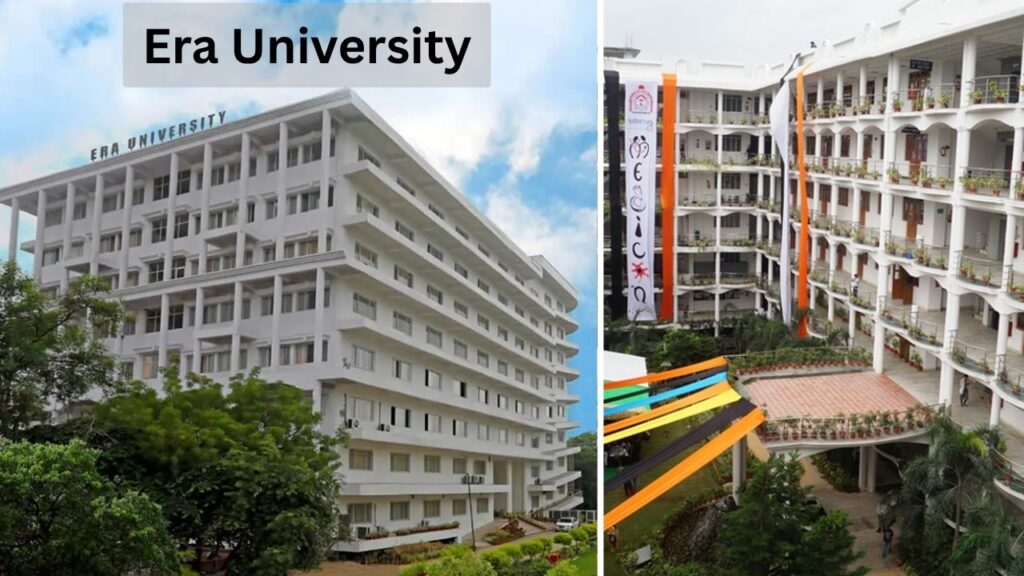
ERA University
Most of the students prefer to get admission in Era University for medical and pharmacy courses including B.Pharma. It is the best college in Lucknow for providing quality education with both theory and practical knowledge. BPharma
Era University fee, placement record, and admission process:
BPharma Total Fee
₹5,60,000
Placement
₹4 lakh per annum (achieve 90% placement rate)
Admission Process
10+2 in Science stream (Biology, Physics, Chemistry)Test-based selection
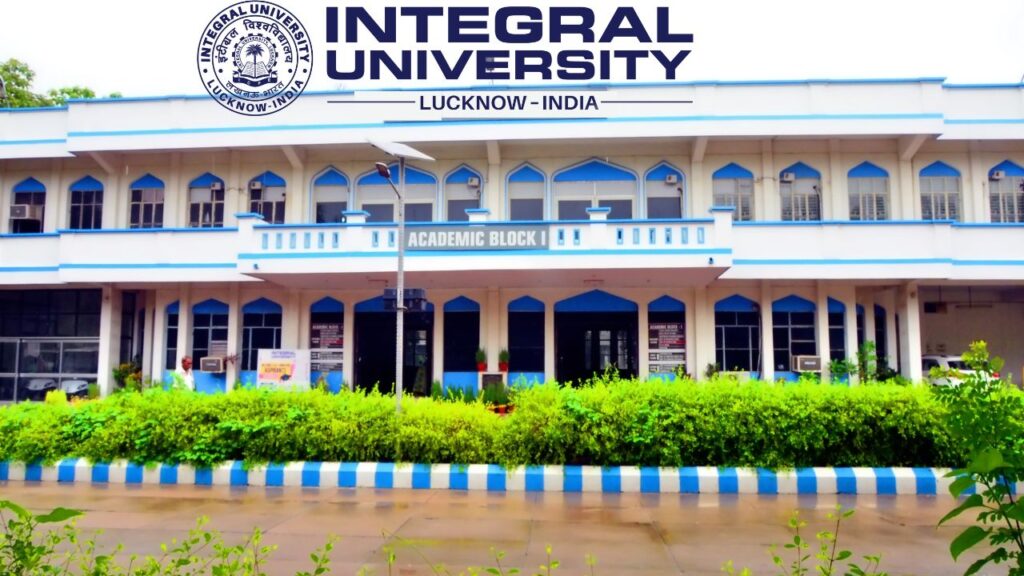
Integral University
Integral University offers various courses across diverse fields. It has become the best university in Lucknow and offers a four year BPharma program with a quality education, practical assessments, and good placement to most of the students.
Integral University fee, placement record, and admission process:
BPharma Total Fee
₹5,20,000 (additional fee may vary the final amount)
Placement
₹3–4 lakh per annum (achieve 85% placement rate)Highest package can go up to ₹32.57 LPA
Admission Process
10+2 in Science stream (Biology, Physics, Chemistry)Entrance: IUET (Integral University Entrance Test)100 seats for BPharma every year
Saroj Institute of Technology & Management
Saroj Institute of Technology is a private college which offers pharmacy courses that make your career shine in pharmaceuticals. Many companies hired students from this college through placement drives. Students can take admission in the popular programs including B.Pharma, D.Pharma, and M.Pharma.
Saroj Institute of Technology & management fee, placement record, and admission process:
BPharma Total Fee
₹2.82 lakh (additional fee may vary the final amount)
DPharma Total Fee
₹1 lakh
M.Pharma Total fee
₹1.5 lakh
Placement
₹3.8–4.2 LPA (achieve 90% placement rate)Highest package can go up to ₹7 lakh LPA
Admission Process
10+2 in Science stream (Biology, Physics, Chemistry)Entrance: CUET scoreCounselling after selection
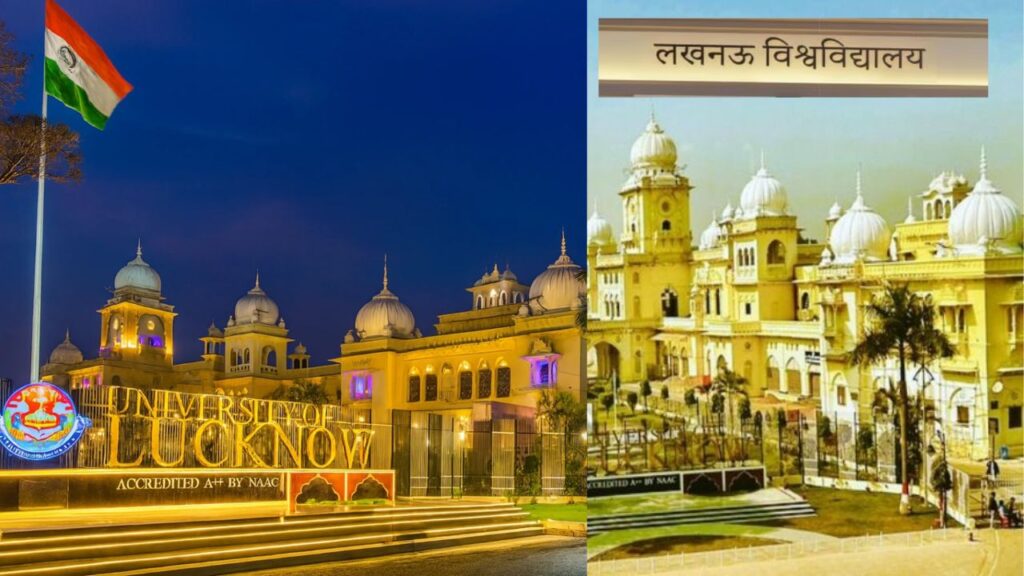
University of Lucknow
This well-known University of Lucknow offers students a better scope in their pharmacy field. This government university offers a four year BPharma program with a strong curriculum, training, and placement opportunities. Curriculum includes pharmacy practices, human anatomy, pharmaceutical analysis etc.
University of Lucknow fee, placement record, and admission process:
BPharma Total Fee
₹4.8 lakh (additional fee may vary the final amount)
Placement
₹3–4 LPA
Admission Process
10+2 with Physics, Chemistry, Biology/MathematicsEntrance: UPTAC counseling & UPSEE score
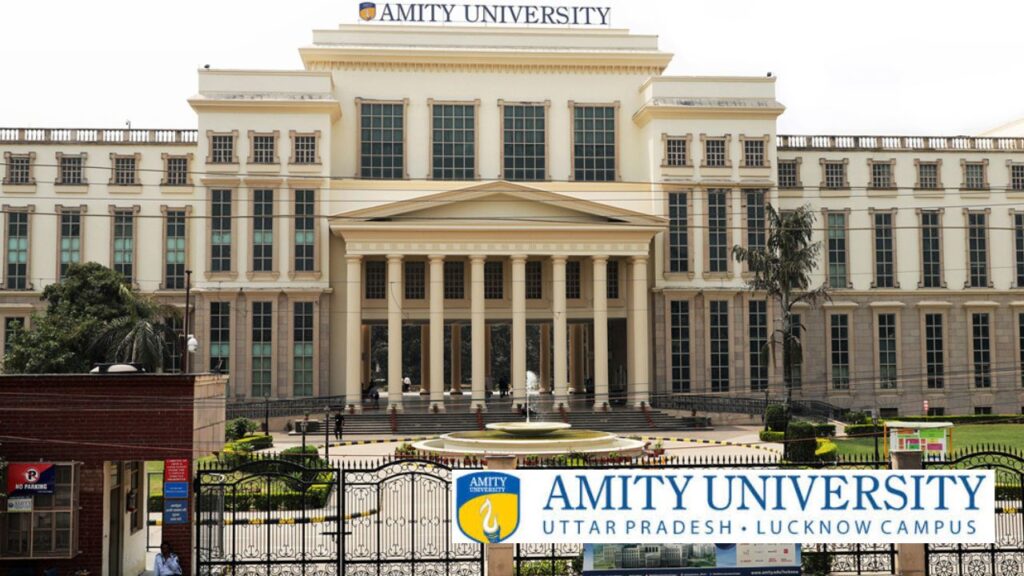
Amity University Lucknow Campus
Amity University is the most prestigious university of India which offers a diverse range of courses. Students can make their future brighter by pursuing BPharma course from this college. It can open up their opportunity in the pharmaceutical industry. It offers a strong curriculum with pharmacognosy, pharmaceutical analysis, health education, hospital training and placement support including skill-building workshops, strong industry connections, and internship opportunities.
Amity University Lucknow Campus fee, placement record, and admission process:
BPharma Total Fee
₹6.8 (additional fee may vary the final amount)
Placement
₹3–4 LPA it can go up to ₹6 LPAmajor pharmaceutical firms take part in Amity’s placement drives
Admission Process
10+2 with Physics, Chemistry, Biology/MathematicsEntrance: scores from Amity JEE or any other national/state-level entrance exam score
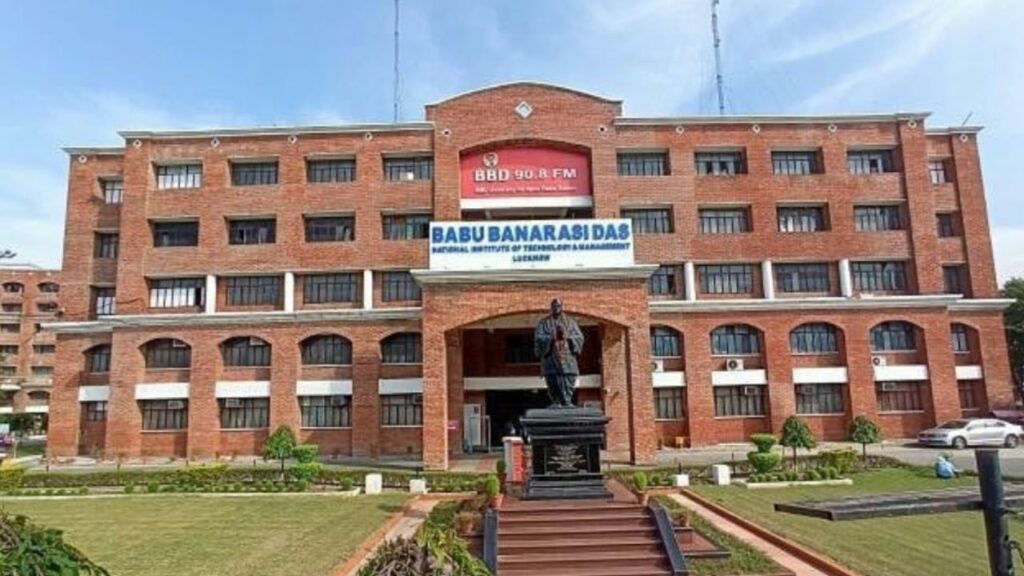
Babu Banarasi Das University
BBDU is considered as Lucknow’s best college which offers many programs including BPharma. It is a four year program designed for providing pharmaceutical careers to the students who are interested in pharmacy and drugs.
Babu Banarasi Das University fee, placement record, and admission process:
BPharma Total Fee
₹5.2–5.8 lakh (additional fee may vary the final amount)
Placement
₹3–4 LPA it can go up to ₹6 LPAmajor pharmaceutical firms take part in Amity’s placement drives
Admission Process
Minimum 50% in 10+2 with Physics, Chemistry, Biology/MathematicsEntrance: scores from NEET, UPSEE or any other national/state-level entrance exam score 100 seats for BPharma every year
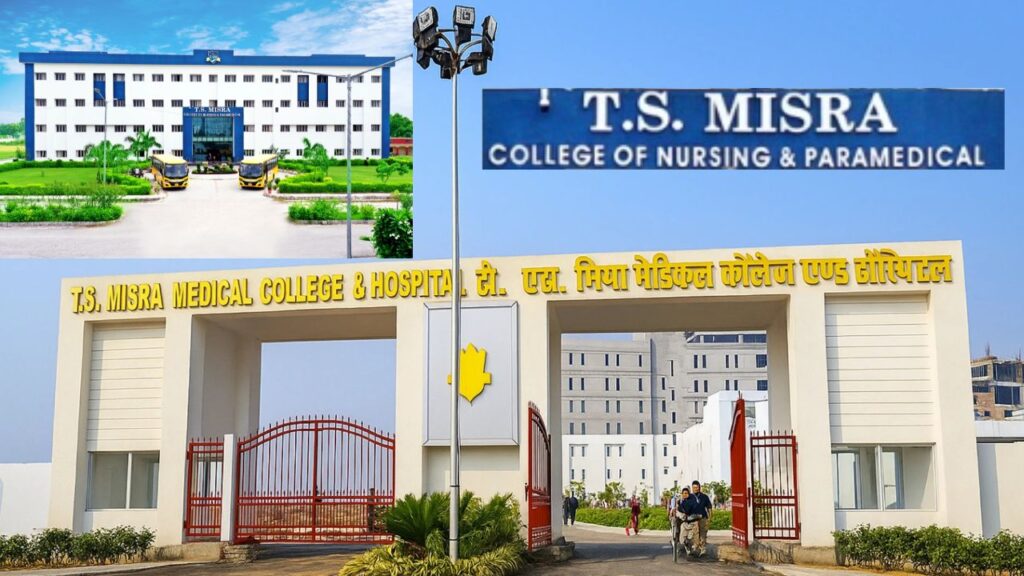
T.S.Mishra University, Lucknow
T.S Mishra University is a well-known university for BPharma course due to its strong curriculum, experienced faculty members, and practical approach. It produced industry-ready professionals with their designed course. It offers a 4 years BPharma course with 3 months of compulsory hospital training and 1 month of industrial training.
T.S.Mishra University fee, placement record, and admission process:
BPharma Total Fee
₹4.1 lakh (additional fee may vary the final amount)
Placement
₹3–4 LPA it can go up according to your resume
Admission Process
10+2 with Physics, Chemistry, Biology/MathematicsEntrance: merit-based selectionUniversity’s entrance tests60 seats for BPharma every year
Conclusion
Students can see all the best BPharma colleges in Lucknow in detail and choose the right one. These colleges offer practical and theoretical knowledge for pharmaceutical sciences which can help students to build their foundation in the field of medicine & Drugs.
Are you ready to dive headfirst into the world of research and academia? If you are planning for a PhD in 2025, then be ready to know about the PhD Entrance Exam Eligibility 2025! This guide will offer you all the information regarding Phd entrance exam eligibility. From fundamental academic qualifications to the newest information on entrance exams, so you should prepare according to the eligibility criteria and entrance exams. Whether you’ve just graduated and wanted to get into the research field and make your future brighter, or you’re a working professional thinking about a part-time PhD, we’ve got your back. Let us decode the eligibility criteria for you and help you pave your path for a doctorate!
Core Academic Qualification
The applicant should have one of the following qualifications from a recognized board/institution:
2-year/ 4-semester Master’s degree post a 3-year Bachelor’s degree or a 1-year/ 2-semester Master’s degree post a 4-year Bachelor’s degree.
Comparable foreign qualifications if recognized by the relevant bodies.
The M.Phil. is also being at least partly phased out in select instances M.Phil. degree holders may apply directly for PhD programmes, albeit.
Minimum Marks Required
55% marks in aggregate (or its equivalent grade in the relevant subject(s) of study).
Reserved category relaxation 5% relaxation in the marks (i.e. minimum 50%) is applicable to SC/ST/OBC (non-creamy layer)/PWD/EWS and other similar categories as per UGC policy.
New Direct Admission Pathways
If you are a 4-year bachelor’s degree holder and sold a minimum of 75%, you are lucky! You can go directly for the PhD without Doing a master’s degree. The catch? You just have to crack the entrance exam to get the seat. So if you’re eager to go right into researching after your undergrad, this might be a good way to skip ahead in your academic career. Just make sure you’re prepared and your grades are good!
Entrance Exam Requirement For PhD
Major National-Level Entrance Exams for PhD Admission — From 2025 on, the majority of universities and institutes in India will adopt UGC NET scores for PhD admissions, instead of institutional entrance exams. Science, Engineering and Medical PhD- Exam like CSIR NET, GATE, ICMR JRF, DBT JRF, JEST is still flagged.
Also, some institutions may consider GRE/GMAT scores for management-related disciplines. This change will also help in unifying the process of admission throughout the country.
Exemption Provision — Those candidates who have qualified national fellowship like NET-JRF, CSIR-JRF, GATE, etc. are usually not required to write the entrance exam but they need to take the interview.
Interview and Proposal
Admission to PhD programs is usually followed by a personal interview where the research potential and preparedness of the student is assessed, and where the student is questioned about his/her Statement of Purpose (SOP) or a draft research proposal.
Age Limit
No upper age limit: Adopting a relaxation for the age bar for pursuing a PhD, all those having the requisite academic qualifications will be able to apply for a PhD in India in 2025, there is no age bar for UGC NET or institution-based examinations.
Certain courses or universities (for instance, a few IIMs) may have an upper age limit (typically 40 years).
Part-Time and Full-Time PhD
Part-time PhD programs are indeed recognized, especially for working professionals, as long as they can provide a No Objection Certificate (NOC) from their employer.
However, full-time PhD programs demand regular attendance on campus so students must attend regular classes, the minimum 75% attendance is mandatory. Most universities offer hostel accommodations to support students during their studies.
Minimum length of stay: 3 years (coursework included).
Maximum Duration: 6 years (up to one year extension in exceptional circumstances for full-time students).
Compulsory propaedeutic course work on research methodology and core courses in the first terms.
Recent UGC Updates for 2025
NET score is compulsory for the admission from the session 2025, replacing the majority of university-level entrance examinations.
Professional/part-time mode with NOC with distance education allowed.
Direct PhDs from four-year undergraduate studies for deserving students.
Important Takeaways for 2025 Applicants
Most phd admissions are focused on NET scores.
It is mandatory to have a Master’s degree with an aggregate of 55% marks or equivalent, else the maximum marks will be relaxed by 5% for reserved categories.
There is no age limit for applying for most of the courses.
The provisions for Part-Time and Interdisciplinary Research are being promoted under NEP-2020.
Interviews and research proposals are required following preliminary screening.
Please refer to the individual university portals for detailed and discipline oriented parameters.
Regulations are evolving; always check university details before applying.
Conclusion
Remembering this as you gear up for your PhD journey: the ground is always shifting. Two new direct admission options, and a common entrance test for all, make 2025 the year to watch out for all research aspirants. Keep up with developments, watch out for your marks and check out to universities for fresher information. The dream of having a PhD is a bit nearer for you, and with a little guidance about PhD Entrance Exam Eligibility 2025, you will be able to take a first step towards making your mark in the world of academics. So, get excited, stay motivated and you know what it’s time to make that PhD dream a reality!
Students after 12th with PCM can get confused while choosing the right course and it is one of the most important decisions in a student’s life. That’s why I’ve listed the top high-salary courses after 12th PCM that have a scope and career in the future. At this stage, you are not deciding just a course or degree but you are shaping your future career, lifestyle, and earning potential.
Maybe you already know about your interest and field to choose, but can still get confused because there are hundreds of options out there. Other people and your parents also suggest you courses but you need a proper guide to choose the right course.
These are not just “Popular” courses after 12th PCM but ones that offer good job opportunities, high salaries, and real growth in India and abroad.
Top High-Salary Courses After 12th PCM
1. Engineering Course – B.Tech or B.E
Engineering is still one of the top choices after 12th PCM. But the difference is that some branches are in demand now like Computer Science, Artificial Intelligence, Data Science, Architecture and Electronics offer high salaries and great jobs.
Duration
Starting Salary
Top Recruiters
Entrance Exams
4 years
₹6–12 LPA (IIT/NIT more)
Google, Microsoft, Amazon, TCS, Infosys
JEE Main, JEE Advanced, CET
Why choose it?
If you are interested in technology, software, gadgets, or architecture this is the best path. With coding, AI, and tech booming, the demand for smart engineers is only rising. The demand for new gadgets is always on trend.
2. Commercial Pilot Training
If you want the highest-paying career options after PCM. Choosing to become a pilot, also depends on your interest and skills. It offers other perks which any other job can’t provide such as flying and a different lifestyle.
Duration
Starting Salary
Top Recruiters
Admission Process
1.5 to 2 years
₹10–20 LPA
Vistara, Qatar Airways, and Air India
12th (PCM), Medical Test, DGCA Flying School Entrance
Why choose it?
It gives you a high salary, travel opportunities, and a respected job but training costs are also high, so plan accordingly.
3. B.Sc in Computer Science + Specializations
Not interested in a 4-year engineering course? No problem. A 3-year B.Sc or BCA in Computer Science, when combined with trending skills like Data Science, Cybersecurity, or Web Development, can also give you a high-paying career. BSc also offers many other programs which have high-paying careers like BSc with chemistry, maths, and statistics can open a lot of opportunities for you in fields like government teacher or researcher.
Duration
Salary
Top Colleges
Admission
3 years
₹5–10 LPA
Delhi University, VIT, Christ Univ.
Direct or CUET/state-level entrance
Why choose it?
Without spending lakhs on B.Tech, you can achieve your goal in the tech industry if you focus on practical skills. BSc also offers teaching and research options for you.
4. B.Des (Design) – UI/UX, Animation, Game Design
Most of the students think that design is just about fashion or drawing. But it’s not anymore. In today’s world, UI/UX Designers, Game Designers, and Animators are earning lakhs per year in India and abroad.
Duration
Salary
Top Colleges
Entrance Exams
4 years
₹6–15 LPA
NID, MIT Institute, Pearl Academy
UCEED, NID DAT
Why choose it?
It opens many opportunities for you in designing the world on a global platform. You can earn in this field by sitting at home. If you’re creative and love visuals, then this field is a well-paying option.
This course will open many opportunities abroad. If you are interested in space, planes, and defense, this branch of engineering is perfect. You can get a job in a high-paying government organization like ISRO and DRDO.
Duration
Salary
Top Colleges
Entrance
4 years
₹6–12 LPA
IIT Kanpur, IIST, Hindustan Inst.
JEE Advanced, college-level
Why choose it?
In the future, India will become more frequent in space projects, this field offers exciting opportunities.
6. Data Science & Artificial Intelligence (Integrated Courses)
Securing, managing, and providing data is a consistently growing concern in tech industries and the government sector. Private companies relying on data for every decision, Data Scientists and AI experts are in huge demand. It opens the future scope for both private and government jobs.
Duration
Salary
Top Colleges
Admission
3–5 years
₹8–18 LPA
IIT Madras, Shiv Nadar, Ashoka University
CUET or college-specific
Why choose it?
Students who have skills in analytics and logical thinking, this future-proof field is perfect for you.
7. Marine Engineering
This is a high-salary and adventurous job where you work on international ships. People who love the sea can work in this area passionately because they have to spend long months at sea.
Duration
Salary
Top Colleges
Admission
3–4 years
₹12–25 LPA
IMU campuses, T.S. Chanakya, Samundra Inst.
IMU-CET, Medical & Physical Tests
Why choose it?
It pays in dollars and offers early career growth. If you are interested in marine areas and travel the world as it gives you global exposure, this is the best option for you.
8. Chartered Accountancy (CA)
Do not get confused as this career is chosen by commerce students mostly but science students who don’t have an interest in tech and any other options related to science can also choose this course. Your math background helps you a lot.
Duration
Salary
Top Recruiters
Admission Process
4.5 years
₹7–20 LPA
Deloitte, EY, Govt, MNCs
CA Foundation course after 12th
Why choose it?
Skilled in math? It’s easy for you in finance, accounting, or business, this is a high-paying and respected career.
9. Law (B.Sc LLB or BA LLB)
There are consistently growing risks of data leaks and cyber attacks whether it’s a private organization or a government organization. There’s a growing need for lawyers in cyber law, intellectual property, and corporate law. Science students have more logical ability so they can do really well here.
Duration
Salary
Top Colleges
Entrance
5 years
₹6–15 LPA
NLSIU Bangalore, NLU Delhi, Symbiosis Pune
CLAT, LSAT
Why choose it?
It combines legal knowledge with your science background to open up modern legal careers.
10. B.Stat / B.Math (Statistics & Mathematics)
For those who are truly intellectual and love maths and numbers, this field is purely related to Statistics or Mathematics. It offers high salaries in research, finance, and data jobs.
Duration
Salary
Top Colleges
Admission
3 years
₹6–15 LPA
ISI, CMI, Delhi University
ISI Entrance, CMI Entrance
Why choose it?
It leads to careers as statisticians, actuaries, data scientists, and all well-paid and intellectually satisfying.
How to Choose the Best Course for YOU?
Everyone wants a high salary, but success comes only when you love what you do. But some courses are expensive so check the reality before you choose, Consider the following points before selecting a course:
What are your interests? – You must ask yourself before reaching any conclusion – Do you like coding? Maths? Designing? Flying?
Career Goals – Some courses offer fast career growth but some take time to grow. Look at their duration and future scopes.
Check the reality – Course fees, job market, and top colleges.
Focus on skills – Degree matters, but skills + internships can get you the real jobs.
Avoid herd mentality – Don’t choose any course because your friends are choosing that career.
RRB Section Controller is the one who monitors every train to keep them on track without turning it into a chaos. The responsibility is hard but the salary is very good which comes with additional benefits. To hold the position, you must meet the eligibility criteria and understand everything about the job before applying for its application.
The good thing is this is the right time to know about this role and selection process because the Railway Recruitment Board is opening a fresh cycle for 2026.
Who Is an RRB Section Controller?
A Section Controller job is to handle the schedule of running trains. They are the ones who decide which train gets priority at a junction and which one has to wait on a line. The train moves on a signal, that signal is given by the section controller. Indian Railways trust only section controllers to move and stop the train.
It is a desk job with a practical responsibility, it comes with high punctuality and safety of the passengers. So sitting in a control room and making decisions in real time needs the full attention and focus of the person.
Indian Railways put this role under the Operating department and considered as mistakes are non-negotiable terms in this.
RRB Section Controller Eligibility 2026
This post has higher eligibility criteria compared to other RRB non technical posts as this post demands good judgement and coordination which is a higher requirement.
Educational qualification: You need a graduate degree from a recognised university, and the discipline does not matter. No matter if you are from commerce, arts, science, or engineering, you are eligible as long as the degree is completed. Aspirants awaiting their final year results cannot apply this cycle, so if your degree is ongoing, this will not be your chance now.
Age limit: The age of the candidates should be between 20 and 33 years (as on 1st January, 2026), standard age relaxation shall be applicable for reserved categories as per government rules. If you are near either limit, it is worth verifying the exact cutoff date once the detailed notification is out, since a few weeks can make/break eligibility.
Medical standard: candidates must meet the A2 medical standard to hold this position as it requires sustained attention and quick decision-making which includes specific vision and hearing benchmarks. This is more strict than a lot of other railway positions so it is worth getting a basic medical check up early on rather than be surprised later on in the process.
Nationality: Applicants should be Indian nationals or subjects of Nepal or Bhutan, Tibetan refugees who came to India before 1962.
Selection Process for RRB Section Controller
To become an RRB Section Controller, involves clearing four distinct stages. Each stage evaluates different skills and reduces the number of applicants.
It begins with a Computer-Based Test (CBT) that tests candidates on general awareness, reasoning, mathematics and general science and also the subject knowledge related to railway operations.
The aspirants who qualify the CBT are eligible to appear for Computer Based Aptitude Test (CBAT), a stage exclusive for posts of safety and control. This is not a test of theoretical knowledge, rather an examination of your ability to make decisions, maintain situational awareness and stay calm under pressure – all important attributes for a Section Controller.
Candidates who clear both rounds are called for Document Verification in which original certificates, proofs of category, and date of birth are verified with respect to the application.
The last step is a Medical Examination to ascertain the level of A2 fitness. Only those candidates who successfully clear all the stages are considered for the final merit list and merit is decided based on the aggregate performance in the CBT and fulfilling all the eligibility criteria at each stage.
On a daily basis, a Section Controller keeps track of trains running in their section with control charts and communication devices and remains in continuous communication with station masters, loco pilots, and other controllers on the route.
In case of a delay, a breakdown, or an unusual event such as a signal failure, it is the controller who makes the decisions in terms of rerouting or reprioritising trains to reduce the impact of disturbances not on the immediate line but on the total traffic.
It’s also a job with real accountability. The decisions a controller makes influence on-time performance statistics, freight movement goals, and, in certain cases, passenger safety itself.
It is a position that rewards those who can think multiple moves ahead and keep their composure when multiple things are going wrong at once, and that’s precisely why the CBAT phase is part of the selection process.
RRB Section Controller Salary and Benefits
The selected individuals are appointed on Pay Level 6 of 7th CPC having the starting basic pay of Rs. 35,400/month. In addition to the basic salary, employees are eligible for Dearness Allowance, House Rent Allowance, Travel Allowance, and other railway-related benefits such as free or concessional journey passes for the staff and their dependents.
Component
Details
Pay Level
Level 6, 7th CPC
Basic Pay
Rs. 35,400 per month
Job Type
Permanent, Central Government
Perks
DA, HRA, TA, railway travel passes, pension benefits
Advantages of Becoming a Section Controller
Apart from the pay, this is a Central Government job which brings the usual job stability, pension benefits and future security, which is what makes the railway recruitment a preferred choice for most of the graduates to begin with.
Section controllers can be promoted to senior controller and divisional posts in due course and the operational experience obtained at this level is highly regarded throughout the Traffic branch. For those who are looking for a government job that involves intellectually engaging, this post is like the best option through RRB.
Latest RRB Section Controller Recruitment 2026
The Railway Recruitment Board has confirmed 119 approved vacancies for this cycle under CEN 03/2026, spread across railway zones such as East Central Railway, which currently holds the highest zone-wise allocation.
Events
Details
Recruitment cycle
Railway Recruitment Board CEN 03/2026
Post
Section Controller
Approved vacancies
119
Highest zone-wise allocation
East Central Railway
Short notice released
23 June 2026
Detailed notification released
14 July 2026
Online application start date
15 July 2026
Online application last date
14 August 2026
This year vacancies are lesser than previous year for Section Controller so candidates should treat this as a genuinely competitive recruitment and prepare with the right strategy to beat the exam.
You need to apply entirely online through the website of the Railway Recruitment Board of your region. When you visit the official website, you can find this notification on the homepage or in the recruitment section.
Open Section Controller notification link and read all the necessary points before clicking on the apply now button.
Login with registration number and DOB, if you are new then register yourself with a valid phone number or email ID.
Don’t forget your password, write it somewhere to login again and fill the entire application with correct information for yourself.
Upload the required photograph and signature, pay the applicable examination fee around INR 250–500, and submit the form before the deadline.
It is worth downloading and saving a copy of the final submitted application and payment receipt for your own records.
Conclusion
The RRB Section Controller job is among those railway jobs which never get discussed as much as RRB NTPC or Group D, but it really should as it has more workload, salary, and long term job stability.
With 119 vacancies open under CEN 03/2026 and applications starting 15th July 2026, graduates who meet the eligibility criteria have a real window to build a serious career inside Indian Railways. The preparation period is brief, so if this position aligns with your interests, the best place to start is now for the CBT rather than later when the notification fully sinks in.
Understanding UPSSSC Pharmacist Eligibility is essential for students from the science stream who want to secure a government pharmacy job. Pharmacists are important for the hospitals, medical centres, and healthcare facilities for distributing the right dosage to the patients and providing them instructions to take those medicines.
The demand for educated pharmacists in UP is heavily growing because lack of knowledge can let the patient suffer. So the recruitment board set some rules to the recruitment drive for picking up qualified healthcare professionals.
The result of the PET exam will be released soon on the official site of UPSSSC. Candidates can refresh the page to check the result and only shortlisted candidates can go to the main exam.
If you missed this chance, you can apply for the next recruitment cycle. But before applying, know every detail about the eligibility criteria, exam syllabus for the right preparation strategy.
What Is This Job Actually About UPSSSC Pharmacist?
Uttar Pradesh Subordinate Services Selection Commission Pharmacist is a Group C government job which offers you to work in the government hospital, health centre, district hospital. You are responsible for the medicine management there.
You have to provide medicines to patients and clear instructions for dosage after getting a job.
In logistics, you have to keep detailed records of maintained stock, counsel for patients on how to take their medication, vaccination camps, and take part in disease control programs.
It’s a responsible and well-compensated job for you, if you want stability and long-term career growth.
UPSSSC Pharmacist Eligibility
Basic requirements for the allopathic pharmacist post:
You must pass your 10th and 12th with Science (PCM or PCB) along with Diploma in Pharmacy (D.Pharma) from a Pharmacy Council of India approved institution. Students who have these educational certificates can apply for this job. Register yourself in the State Pharmacy Council of Uttar Pradesh as it is mandatory.
Your age doesn’t matter but still students above the age of 18 can apply. You are not welcome if you are above 40 years old.
Can B.Pharm or M.Pharm holders apply without a D.Pharm?
D.Pharma is compulsory for this job as per the Supreme Court set this rule right under Article 309 of the Constitution. Even Higher degree holders must hold D.Pharma. This clearly makes sense as the Diploma curriculum covers over 500 hours of practical hospital dispensing training.
B.Pharma and M.Pharma programs focused on research and pharma manufacturing, they don’t train you for the actual hospital dispensing but D Pharma offers that training. So if you have B.Pharma but also hold D.Pharma then you can apply.
There are also cadres for other systems of medicine:
Homeopathic Pharmacist: Diploma in Homeopathic Pharmacy is required within the 21 to 40 age group.
Ayurvedic Pharmacist: Diploma in Ayurvedic Pharmacy including Bheshaj Kalpana is required within the 18 to 40 age group.
Pharmacy Specialization
Mandatory Technical Qualification
Registration Board Requirement
Age Range Parameter
Allopathic Pharmacist
Diploma in Pharmacy (D.Pharm) from a PCI-approved institution
State Pharmacy Council, Uttar Pradesh
18 to 40 Years
Homeopathic Pharmacist
Two-year Diploma in Homeopathic Pharmacy or three years of state-approved training
Homeopathic Medicine Board, Uttar Pradesh
21 to 40 Years
Ayurvedic Pharmacist
Diploma in Ayurvedic Pharmacy (including study of Bheshaj Kalpana)
State Ayurvedic and Unani Medicine Board, Uttar Pradesh
18 to 40 Years
The Mandatory PET Qualification
The recruitment architecture uses a two-tier screening process. UPSSSC doesn’t allow you to appear directly in the main written examination. You have to score in the Preliminary Eligibility Test first.
General, OBC, SC and EWS candidates required a minimum PET score of 10.25 to become eligible. The cutoff for ST was 2.29. As a result, 25,859 candidates were selected and can now take the main test, which is scheduled on June 21, 2026.
So, appearing in PET is the first thing to do then secure a valid score to enter in the main pharmacist exam.
Here’s the category-wise vacancy split:
Category
Vacancies
Unreserved (UR)
224
OBC
151
SC
118
EWS
56
ST
11
Total
560
Application Procedure For UPSSSC Pharmacist
Follow the instructions step-by-step to apply for UPSSSC Pharmacist role and application is Rs. 25 for everyone.
Candidates must log in using the same email linked to their PET registration.
There’s no need to fill every detail from scratch because the system retrieves the candidate’s personal details from the PET database. But check the address and everything again.
Enter your educational details or if any detail is missing or mistaken, you can fill out the details.
Recheck and verify then pay the fee.
Submit the application form to get an 11-digit registration number at the end.
Recruitment Cycle and Detailed Schedule
Phase Milestone
Date Scheduled
Official Recruitment Notification Publication
February 28, 2026
Commencement of Online Application and Fee Deposit
9/March/2026
Concluding Date for Online Application Submission
29/March/2026
Last Date for Application Fee Submission
5/April/2026
Last Date for Application Details Correction
7/April/2026
Release of PET-2025 Shortlisting Results and Cut-offs
18/May/2026
Closing Date for downloading qualifying scorecard
7/June/2026
Main Written Examination
21/June/2026
Evaluation Structure and Examination Pattern
Exam Mode
Offline
Question Type
Multiple Choice Question
Total Question
100
Duration
120 minutes
Negative Marking
0.25 marks
There are total three parts in the paper:
Part 1 — Pharmacy (65 questions)
The D.Pharma curriculum covers Pharmaceutics, Pharmacognosy, Biochemistry and Clinical Pathology, Pharmacology and Toxicology, Human Anatomy and Physiology, Health Education and Community Pharmacy, Pharmaceutical Jurisprudence, Drug Store and Business Management, Hospital and Clinical Pharmacy.
Part 2 — Computer and IT (20 questions)
It covers common knowledge of computer systems which helps your workflow in future. There are four basic topics such as MS Word and Excel basics, Internet, IP addresses, email, Digital payments and e-governance in UP, AI, Machine Learning, IoT, Big Data.
Part 3 — Uttar Pradesh General Knowledge (15 questions)
Focusing on Uttar Pradesh history and culture which helps you gain 15 marks. So do not neglect the UP GK part because it is easy and marks gaining. Just focus on daily news, history, geography, and culture which covers most of the question. Then cover Industrial hubs, state schemes and river systems of UP.
Salary and Perks
Pay scale is Level 5 under the 7th Pay Commission. The initial salary starts at ₹29,200 then after some years of experience you can get up to ₹92,300.
So, the basic salary of a fresher after adding allowances can be around ₹48,180. After tax deduction, your in-hand salary would be approximately at ₹43,000–₹44,000 per month.
Overall pay level is good for a pharmacist. Just prepare yourself and join but remember one thing that salary range may vary depending on your working region or centres.
Career progression looks like this:
You start as a Pharmacist (Level 5). Then move up to the next higher position with some increment, when you get on Pharmacy Officer position after 10 years which is Level 7 pay grade which means your salary will increase.
How To Prepare For UPSSSC Pharmacist Exam
For 1–4 weeks: Focus on Pharmaceutics, Pharmacology, and Pharmacognosy as these cover most of the questions in Part 1. Don’t just read, write notes, comparison tables, and understand chapter by chapter.
Build your foundation on Routes of drug administration and how drugs act on the central nervous system, Classification of drugs of natural origin, Inorganic compounds, acids, bases, buffers, antioxidants, gastrointestinal agents etc.
For 5–6 weeks: Take previous years papers for practice and do MCQs, try 100 Questions at least. Cover Pharmaceutical Jurisprudence, UP GK and Computer IT after practice.
For 7–8 weeks: Take a 120 minute test for yourself to prepare yourself for exams. It’s revision time and you have to spend as much time on review after each mock test. Find errors and mistakes then understand why you made that mistake. The pattern of your mistakes will tell you exactly where to spend your remaining time.
Extensive multiple-choice practice and exam-style questions
Uttar Pradesh General Knowledge (UP GK)
UP Sar Sankalan — Pariksha Vani
Standard reference for UP-specific current affairs and static GK
Computer / IT (basic)
Lucent’s Computer Awareness
Covers fundamental computer concepts and basics
Computer / IT (advanced, pharmacist-specific)
GPT Sir / Wonderslate material
Advanced topics and targeted practice tailored to pharmacist exams
Conclusion
The vacancy for government pharmacist jobs in UP is rare. 560 posts for a whole state, with above 25,000 eligible candidates appearing for the main exam — the competition is real. But it’s not unbeatable. The syllabus is defined. The pattern is known. It’s a simple game plan for preparing.
Anyone who starts preparing now can crack the exam and secure the position for a high salary and stable career.