RRB Section Controller 2026: Job Role, Eligibility, Salary, and How to Apply

RRB Section Controller 2026

RRB Section Controller is the one who monitors every train to keep them on track without turning it into a chaos. The responsibility is hard but the salary is very good which comes with additional benefits. To hold the position, you must meet the eligibility criteria and understand everything about the job before applying for its application.

The good thing is this is the right time to know about this role and selection process because the Railway Recruitment Board is opening a fresh cycle for 2026.

Who Is an RRB Section Controller?

A Section Controller job is to handle the schedule of running trains. They are the ones who decide which train gets priority at a junction and which one has to wait on a line. The train moves on a signal, that signal is given by the section controller. Indian Railways trust only section controllers to move and stop the train.

It is a desk job with a practical responsibility, it comes with high punctuality and safety of the passengers. So sitting in a control room and making decisions in real time needs the full attention and focus of the person.

Indian Railways put this role under the Operating department and considered as mistakes are non-negotiable terms in this. 

RRB Section Controller Eligibility 2026

This post has higher eligibility criteria compared to other RRB non technical posts as this post demands good judgement and coordination which is a higher requirement. 

Educational qualification: You need a graduate degree from a recognised university, and the discipline does not matter. No matter if you are from commerce, arts, science, or engineering, you are eligible as long as the degree is completed. Aspirants awaiting their final year results cannot apply this cycle, so if your degree is ongoing, this will not be your chance now. 

Age limit: The age of the candidates should be between 20 and 33 years (as on 1st January, 2026), standard age relaxation shall be applicable for reserved categories as per government rules. If you are near either limit, it is worth verifying the exact cutoff date once the detailed notification is out, since a few weeks can make/break eligibility. 

Medical standard: candidates must meet the A2 medical standard to hold this position as it requires sustained attention and quick decision-making which includes specific vision and hearing benchmarks. This is more strict than a lot of other railway positions so it is worth getting a basic medical check up early on rather than be surprised later on in the process. 

Nationality: Applicants should be Indian nationals or subjects of Nepal or Bhutan, Tibetan refugees who came to India before 1962.

Selection Process for RRB Section Controller

To become an RRB Section Controller, involves clearing four distinct stages. Each stage evaluates different skills and reduces the number of applicants.

It begins with a Computer-Based Test (CBT) that tests candidates on general awareness, reasoning, mathematics and general science and also the subject knowledge related to railway operations. 

The aspirants who qualify the CBT are eligible to appear for Computer Based Aptitude Test (CBAT), a stage exclusive for posts of safety and control. This is not a test of theoretical knowledge, rather an examination of your ability to make decisions, maintain situational awareness and stay calm under pressure – all important attributes for a Section Controller. 

Candidates who clear both rounds are called for Document Verification in which original certificates, proofs of category, and date of birth are verified with respect to the application. 

The last step is a Medical Examination to ascertain the level of A2 fitness. Only those candidates who successfully clear all the stages are considered for the final merit list and merit is decided based on the aggregate performance in the CBT and fulfilling all the eligibility criteria at each stage. 

Read More 👉 How To Prepare For Railway RRB ALP Exam And Secure High-Paying Government Job

Work Responsibility of a Section Controller

On a daily basis, a Section Controller keeps track of trains running in their section with control charts and communication devices and remains in continuous communication with station masters, loco pilots, and other controllers on the route. 

In case of a delay, a breakdown, or an unusual event such as a signal failure, it is the controller who makes the decisions in terms of rerouting or reprioritising trains to reduce the impact of disturbances not on the immediate line but on the total traffic. 

It’s also a job with real accountability. The decisions a controller makes influence on-time performance statistics, freight movement goals, and, in certain cases, passenger safety itself. 

It is a position that rewards those who can think multiple moves ahead and keep their composure when multiple things are going wrong at once, and that’s precisely why the CBAT phase is part of the selection process. 

RRB Section Controller Salary and Benefits

The selected individuals are appointed on Pay Level 6 of 7th CPC having the starting basic pay of Rs. 35,400/month. In addition to the basic salary, employees are eligible for Dearness Allowance, House Rent Allowance, Travel Allowance, and other railway-related benefits such as free or concessional journey passes for the staff and their dependents. 

ComponentDetails
Pay LevelLevel 6, 7th CPC
Basic PayRs. 35,400 per month
Job TypePermanent, Central Government
PerksDA, HRA, TA, railway travel passes, pension benefits

Advantages of Becoming a Section Controller

Apart from the pay, this is a Central Government job which brings the usual job stability, pension benefits and future security, which is what makes the railway recruitment a preferred choice for most of the graduates to begin with. 

Section controllers can be promoted to senior controller and divisional posts in due course and the operational experience obtained at this level is highly regarded throughout the Traffic branch. For those who are looking for a government job that involves intellectually engaging, this post is like the best option through RRB. 

Latest RRB Section Controller Recruitment 2026

The Railway Recruitment Board has confirmed 119 approved vacancies for this cycle under CEN 03/2026, spread across railway zones such as East Central Railway, which currently holds the highest zone-wise allocation. 

Events Details
Recruitment cycleRailway Recruitment Board CEN 03/2026
PostSection Controller
Approved vacancies119
Highest zone-wise allocationEast Central Railway
Short notice released23 June 2026
Detailed notification released14 July 2026
Online application start date15 July 2026
Online application last date14 August 2026

This year vacancies are lesser than previous year for Section Controller so candidates should treat this as a genuinely competitive recruitment and prepare with the right strategy to beat the exam.

Read More 👉 RRB RPF New Vacancy Notification 2026: Details Explained For RPF Constable

How to Apply for RRB Section Controller 2026

You need to apply entirely online through the website of the Railway Recruitment Board of your region. When you visit the official website, you can find this notification on the homepage or in the recruitment section. 

  • Open Section Controller notification link and read all the necessary points before clicking on the apply now button.
  • Login with registration number and DOB, if you are new then register yourself with a valid phone number or email ID. 
  • Don’t forget your password, write it somewhere to login again and fill the entire application with correct information for yourself.
  • Upload the required photograph and signature, pay the applicable examination fee around INR 250–500, and submit the form before the deadline. 
  • It is worth downloading and saving a copy of the final submitted application and payment receipt for your own records.

Conclusion

The RRB Section Controller job is among those railway jobs which never get discussed as much as RRB NTPC or Group D, but it really should as it has more workload, salary, and long term job stability. 

With 119 vacancies open under CEN 03/2026 and applications starting 15th July 2026, graduates who meet the eligibility criteria have a real window to build a serious career inside Indian Railways. The preparation period is brief, so if this position aligns with your interests, the best place to start is now for the CBT rather than later when the notification fully sinks in. 

Leave a Comment

Your email address will not be published. Required fields are marked *

Government Job vs Private Job: Which Career Offers a Better Future in 2025?

Government Job vs Private Job

Everyone gets confused about choosing their career path. When the context is about Government Jobs vs Private Jobs, there is always a debate among youths. While most people prefer having a good lifestyle, a stable career, and growth in their lives. With growing comparison of Which Career Offers a Better Future in 2025? It’s important to know about both of them so you can make a wise decision in your life.

Let’s explore the real differences between Government and Private Jobs, do not get confused about the path. This honest comparison will help you to decide which one is best for you.

When a local, state, or central government offers you a job in different ministries like defense, railways, PSUs, and teaching are called a government jobs.

Unmatched Job Security:

If you want to work in a safe environment with job security, government jobs are best. Once you clear the exam and get selected, there is no chance to be fired like in the private sector unless there is some serious misconduct.

Stable Work-Life Balance:

You have to work usually from 9 to 5 with weekends off. Those who wish to spend great time with family, and care about health, and mental peace, can consider a government job.

Retirement Benefits:

If you want to enjoy pension, gratuity, and GPF in a government job, choose this career. Retirement perks provide future stability. So, this is something that private jobs won’t offer you even if you are on a senior level.

Respect in Society:

Whether it’s an IAS officer, bank PO, railway officer, school teacher, or a professor, these roles are highly respectable in India. Everyone wants to be treated well, especially in small towns and rural India.

Perks and Allowances:

These jobs come with multiple benefits in your life that reshape your future. It offers HRA, DA, travel allowances, medical reimbursements, paid leaves, LTC, and more.

Very Competitive Entry

The competition is held among lakhs of candidates and you have to rank up for the job. So, it is hard but with smart preparation, you can clear any exam for a government job. There are thousands of vacancies each year in this sector. 

Slow Career Growth

Promotions are often based on seniority, not performance. You have to wait for a long time to get a promotion to a higher level. Some posts may need internal assessment for the higher position jobs. You could be waiting 10–15 years to move to a higher post.

Limited Learning

Most government jobs are routine-based. Except for scientist jobs, there is less innovation and opportunities to get into the government sector. No new experimenting for new projects, this is the reason why you cannot have career growth so easily. 

Transfers and Bureaucracy

Many government roles come with frequent transfers, especially in jobs like IAS, IPS, Armed Forces or bank roles. The relocation of the job is not good for family-oriented people. They have to leave everyone behind for their job. Also, the system which is outdated and has bureaucratic hurdles may give you headaches. 

Read More 👉 Top 10 High Salary Courses After 12th Science Without NEET – No Medical Exam Needed

Private jobs are offered by private companies, startups, MNCs, or international firms. These companies offer 8-29 LPA for those candidates who have experience and get to the senior level. The average salary package for the freshers is 2-3 LPA. Private jobs are available in different sectors such as IT, hospitals, education, finance, e-commerce, media, and more.

Higher Salaries and Incentives

With the right skills, especially in tech, finance, or management, you can earn ₹10–25 LPA with experience for a few years. You can go abroad for more packages due to currency value. Performance bonuses in the management sector are good, and stock options and incentives in sales and marketing are also common.

Faster Promotions

Private companies reward performance, not age or time. They promote you if you deliver results more innovative and useful. You can grow faster than the government employee and sometimes switching companies helps double your salary within a year.

New-Age Work Culture

This new implementation in the work environment of the private sector is incredible. People now have flexible hours, remote work, hybrid setups, and relaxed dress codes, that give them relief when they get stuck in any emergencies. It also offers open communication with management to consider employee affairs in the company with their work.

Global Opportunities

Working in MNCs means working on different projects and learning new skills. The remote-first companies give you exposure to international clients, travel, and even relocation chances abroad. So, either you can work from home for international firms that will pay you in dollars or you can go abroad and set up a life there.

Learning and Upskilling

They gave you a chance to teach or learn through an online platform for their next project. You always find a chance to innovate and explore new things. Either online training or offline private institutes to give training on skills, especially in areas like AI, coding, marketing, data analysis, etc.

Job Insecurity

Downsizing, layoffs, and recession are common these days. They are firing thousands of candidates due to AI establishment in many sectors. The need for employment is decreasing in numbers. Your job isn’t guaranteed unless you constantly perform and upgrade your skills.

Long Working Hours

Many roles demand 9–12 hour workdays, and there is no Saturday & Sunday off in many departments. Sometimes, people have to work overtime. 

No Pension After Retirement

Some rare companies are offering provident funds (EPF). It is a harsh reality but you’re mostly on your own after retirement. 

Corporate Pressure and Politics

There are a lot of events nowadays where people seem to be getting depressed from office politics and unfair promotions to those people who have connections. Managers put pressure on employees to give 100% performance on tasks within a period. These all hurt health and motivation.

FactorGovernment JobPrivate Job
Job SecurityExtremely HighMedium to Low
Starting Salary₹25,000 – ₹60,000₹30,000 – ₹1,50,000
Promotion SpeedSlow (seniority-based)Fast (performance-based)
Learning OpportunitiesLimitedExtensive
Work-Life BalanceGood VariableGood Variable
Transfer ChancesHigh in many rolesVery low
Pension/RetirementYes No
Entry ProcessThrough difficult examsInterviews/skills-based hiring
FlexibilityLowHigh (remote, hybrid options)
Social StatusStill respected highlyDepends on role & company

There’s no universal answer. This is a choice that depends on your goals, education, and risk-taking ability. If you want to shape your lifestyle better, point to your goal with less hectic jobs. 

You want a stable career by getting job security and peace of mind.

You’re okay with slow promotions because of long-term benefits with a fixed salary.

You’re the topper of your class due to your learning capabilities. You can prepare for competitive exams like UPSC, NTPC, SSC, RRB, or other exams.

You value retirement benefits like medical and house allowances, fixed hours, and respect in society.

You want fast career growth because you are a quick learner, high income, and have skill-based success.

Get bored with the same work, you can enjoy dynamic work environments in private jobs, new challenges, and global exposure.

You are willing to take risks, learn continuously, understand new concepts easily, and adapt to change.

You are not interested in preparing for a competitive exam, you’re interested in tech, marketing, finance, startups, or remote jobs.

Your future doesn’t decide in just one day. Take a breath and focus on the present, to achieve in the future you must start developing your skills now.

Think about what matters more to you. The energy you can put into specific work or subject. Examine yourself how hard you can work on any specific task, and point out that skill under your interests of work. Don’t decide right now just give it time like:

Invest in skills.

Even if you’re preparing for government exams, you can learn skills such as Excel, personality development, communication, coding, or digital marketing. Whether you decide on a private or government job, it will be required in both. They can be helpful anywhere.

Try Both If You Can.

While working in the private sector, start preparing yourself for government exams. Apply for a government job whenever you want to switch your career. Both paths are open if you’re strategic.

Don’t Fear Private Jobs.

The idea that private jobs are “unstable” is only true if you stop learning. Many professionals spend years in private jobs and then start their own businesses that provide great stability and income.

Build a Financial Backup.

Whatever job you do, if you are wasting your money that makes it impossible to save, invest, and plan for emergencies. That’s the real security.

So, instead of debating on Government Job vs Private Job. Know your strengths and motives, and take a wise option for your impeccable future.

BSc Radiology and Imaging Technology: Course, Eligibility, Fees & Career

BSc Radiology and Imaging Technology

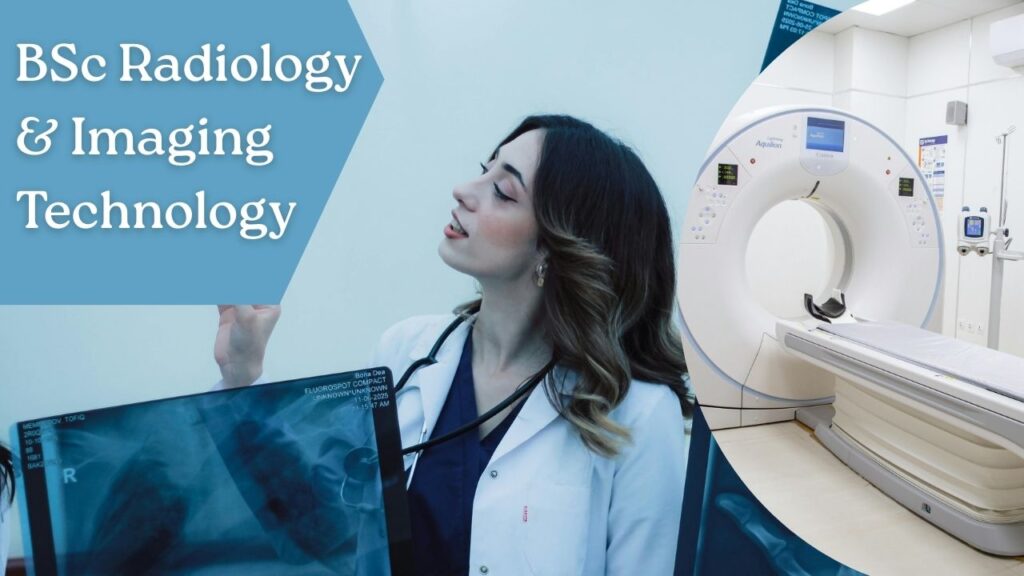
BSc Radiology and Imaging Technology is a three-year program (with one-year internship that is mandatory in most of the institutions) that equips the students with the knowledge of medical imaging. The core science portion of the curriculum (focusing on physics, chemistry, and biology) is integrated with clinical imaging courses including: anatomy and pathology, radiographic procedures, sonography techniques, ultrasound physics, computed tomography (CT), magnetic resonance imaging (MRI), and radiation protection. 

The Bachelor of Science in Medical Radiology and Imaging Technology is becoming the backbone of diagnostic medicine today. This transformation is being driven by three coalescing factors: the full enforcement of National Commission for Allied and Healthcare Professions (NCAHP) Act 2021, the adoption of advanced artificial intelligence (AI) in diagnostic workflow, and the growing world-wide need for expert imaging technologists. 

The course is intended to prepare competent technologists (“radiographers”) who will be well versed in the operation of contemporary imaging equipment and have a solid foundation in the science of diagnostic radiology. 

Who is a Radiology Technologist?

The Radiology Technologist/Radiographer is a clinical scientist who holds at least a B.Sc. or M.Sc. degree in Radiography. They don’t just know how to run the machines, they understand the physics behind the formation of images, the physiological basis of pathology and the important issues surrounding patient safety and radiation protection. 

Why Has This Course Become Important in Diagnostics?

Imaging is at the heart of diagnostics, which are critical to contemporary medicine; more than 80% of hospital care relies on them. B.Sc. In addition to machinery handling the Technician holder needs to perform a large part in the day to day imaging workflow by the year 2026 MRIT graduates holders can expect to be involved with state of the Art technology like PET-MRI, SPECT-CT, Protocol Optimization, Post Processing, QC. 

Also this line job is work during recession. There is a long-term demand for skilled radiographers, particularly those trained in PACS and RIS, as the population of India grows older, lifestyle ailments become more common, and digital healthcare is enhanced under the ‘Ayushman Bharat Digital Mission’. 

Entrance Exams & Eligibility Details For Admission 

NEET UG 2026

National Eligibility cum Entrance Test (NEET UG) shall be the single entrance examination for admission to all the undergraduate allied and healthcare courses like BSc Radiology and Imaging Technology from the academic year 2026-27, according to NCAHP. 

AIIMS — 2026 Paramedical Entrance Test

Along with NEET, there is the AIIMS entrance Test which is held by AIIMS for paramedical courses leading to B.Sc. and M.Sc. The date of AIIMS B.Sc. Paramedical 2026 exam is tentatively on 30 May 2026. 

Note:- Candidates are requested to cross-check this with official notification as some calendars mention July for Examination, however May is the only projected window as per academic calendar.

How to apply:

  • Basic Registration: The schedules released in 2026 March/April. You can create a Registration ID.
  • Final Registration: Involves the generation of a Unique Code (RUC), payment of application fee, usually in May 2026.

Test Format: This computer-based test will consist of 90 multiple-choice questions (MCQs) on biology/mathematics, chemistry, and physics and will last for 90 minutes. Any wrong answer can take away ⅓ marks.

Admissions at JIPMER & PGIMER

JIPMER (Puducherry): B.Sc admissions The admissions to the B.Sc shall be The Allied Health Science at JIPMER (Puducherry) for the year 2026 will be on the basis of the NEET UG scores. JIPMER normally holds its own counseling for these seat(s). 

PGIMER (Chandigarh): The institution holds a separate CBE, these are usually conducted in the months of August/September. The process of application normally commences in June. 

State and Private University Tests

CUET (Common University Entrance Test): Central universities, such as Banaras Hindu University (BHU), utilise the CUET. The essential subject combination for Radiology is Physics, Chemistry, and Biology / Mathematics.

Manipal: in MAHE, Phase 1 is scheduled for April 2026 for admission test, and the next Phase 2 for May 2026. 

CMC Vellore: It is a tough Institute level CBT (Computer Based Test) followed by a Step-2 evaluation (Practical tests and interviews.) 

Eligibility Criteria 2026

Educational qualification: Should be passed class 12th board with physics, chemistry and biology (pcb) and English. Some of the institutes like AIIMS allow mathematics (pcm) for Radiology courses.

Minimum Marks: For the general/EWS/OBC category, it is 50% aggregate and for the SC/ST category, it is 45%.

Read More:- Supreme Court Law Clerk Recruitment 2026 Notification Details

List of Colleges For BSc Radiology and Imaging Technology

There are 140+ colleges around India that offer BSc Radiology and Imaging Technology without taking too much fees, especially in government colleges. If you have interest in lab technologies or figuring out body structures and making reports then take admission for securing your career in this field.

CollegeLocationApprox. FeesNotes 
AIIMS—New DelhiDelhi₹4,500Elite training facility as it is Top-ranked college
PGIMERChandigarh₹10,500Members are mindful and placements opportunities
JIPMERPuducherry₹94,000Excellent internships
AIIMS—RishikeshUttarakhand₹46,000High packages up to ₹24L
GMCHChandigarh₹39,000Affordable govt option
Integral UniversityLucknow, UP₹3.15LGood infra, local pick
Parul UniversityVadodara₹4.6LPrivate, placements ₹6L avg
SGT UniversityGurgaonVariesModern facilities

Academic Curriculum for the Course 

Theory and laboratory practice are included in the curriculum of BSc Radiology and Imaging Technology. The following topics were covered: Human anatomy/physiology, Imaging Physics, General Radiography, Ultrasound Imaging, CT Scanning, MRI Basics, Radiobiology and Radiation Protection, Digital Image Processing, and General Patient Care. 

BSc Radiology and Imaging Technology is a four year degree course. The first three years were spent attending didactic lectures, practical laboratory courses, and clinical observations. The fourth year is a required, full-time clinical internship during which the student serves as a student technologist at a hospital. 

PhaseDurationFocus Areas
Year 1Semesters 1-2Basic Medical Sciences, Communication Skills, Computer Basics
Year 2Semesters 3-4Core Radiography, Radiation Physics, Conventional Imaging
Year 3Semesters 5-6CT, MRI, USG, etc Interventional Radiology
Year 4Semesters 7-8Clinical Internship, Logbook, Project Work

The 2026 Curriculum is intended to establish progressively developing competencies. 

Year 1: The Foundation

The goal is to give the student a foundation in the human body and the hospital setting.

  • Human Anatomy & Physiology: This Is Not a “Fly By” Tour Students are required to study detailed osteology (bones) to learn how to position for radiographic.
  • They are taught body systems physiology to understand how to administer contrast media.
  • General Physics: The basic laws of physics applicable to the production of radiation.
  • Clinical Pathology & Biochemistry: Basics of blood tests (creatinine, urea) which are important prior to contrast administration.
  • English & Communication: Necessary to describe techniques to patients and to calm them. 

Year 2: The Core

Students access the realm of diagnostic imaging in BSc Radiology and Imaging Technology.

  • Radiation physics: The production of X-rays, their interaction with matter, and the design of X-ray tubes.
  • Radiographic Positioning, the science and art of positioning the patient to radiograph the body part (i.e. Towne’s view for skull, Skyline view for patella).
  • Darkroom to Digital: Darkrooms may be a thing of the past, but knowing the history is key. Emphasis is placed upon Computer Radiography (CR) and Direct Digital Radiography (DR) modalities.
  • Radiation Protection: Students learn the ALARA (As Low As Reasonably Achievable) concept along with shielding and dose limit for worker and patient. 

Year 3: The Advanced Frontier

This is the year when the high-end modalities that shape contemporary radiology are covered.

  • Computed Tomography (CT): CT Physics, generations of scanners, helical vs. axial scanning, and protocols for different body regions.
  • Magnetic Resonance Imaging (MRI): Principles of the complicated physics of nuclear magnetic resonance, safety issues related to ferromagnetic materials, and pulse sequences.
  • Ultrasonography (USG): Essentials of acoustics, transducer design, and the technologist’s function in the operation of the sonographer.
  • Interventional Radiology (IR): Orientation to the Cath Lab Sterility and Equipment utilized in Angiography.   
  • Radiation and Radioactivity in Nuclear Medicine Basics of PET-CT Handling of Radioisotopes including Technetium-99m. 

Year 4: The Internship

The purpose of the internship is to transition a student to a worker. Interns rotate through different departments, including X-ray, CT, MRI, Emergency and ICU. They need to keep a logbook of cases they have done, and are evaluated on their technical skills and dealing with patients. 

BSc Radiology and Imaging Technology Career Scope & Salary

Skilled radiographic professionals are sought after in India’s growing healthcare sector. Radiology technicians also work in public and private hospitals, diagnostic laboratories (pathology and imaging centres), government health schemes, private practitioners and emerging digital health platforms including teleradiology and artificial intelligence (AI) imaging start-ups. 

BSc Radiology and Imaging Technology

Clinical Roles

  • Radiologic Technologist: The typical baseline position. Duties are to perform x-rays, triage patients and maintain radiation safety .
  • CT Technologist: So, what’s the place in the hierarchy. Knowledge of cross-sectional anatomy and contrast administration is required.
  • MRI Technologist: A step up. MRI scanners are complicated, and patient safety (screening for metal) is critical. The technologists here typically make 20-30% more than a general radiographer.
  • IR Technologist: The Cath Lab Experience. In a stressful environment, high volume dealing with cardiac and vascular interventions. You’ve got to wear thick lead aprons for long hours – but when you’re done, you’re king and you’ve got money in your pocket.
  • Mammographer: Expert in breast imaging. Because of the sensitive nature of the exam, female technologists are preferred for this position. 

Sector & Role Wise Salary (2026)

RoleExperienceSectorApprox. Monthly Salary (INR)
Jr Technologist0-2 YearsPrivate sector Hospital Rs 18–25k
Jr Technologist0-2 YearsAIIMS/Govt (Contract)Rs 25–35k
Sr Technologist5+ YearsCorporate HospitalRs 45–60k
MRI Specialist3-5 YearsDiagnostic ChainRs 35–50k
Application Specialist2-5 YearsMedical Device Co.Rs 50–80k + other allowance
Govt. PermanentEntry LevelGovernmentRs 45–55k (Initial + Allowance)

Who is Ideal For this Course?

BSc Radiology and Imaging Technology course is for students who like science and technology and want to work in the health sector. The ideal candidate: is detail oriented, is able to follow protocols which are critical for safety, is comfortable using computers and complex machinery, and can interact with patients (explain procedures, position patients). A BSc radiology student should be well versed with biology and physics and should also be calm and responsible because any mistake in imaging can impact the diagnosis. 

Future Value of BSc Radiology and Imaging in Healthcare

In India’s upcoming healthcare scenario, BSc Radiology and Imaging Technology are a must-have. With the proliferation of private hospitals and diagnostic chains in Tier II/III cities, the need for imaging services is on the rise.

Technologies, such as AI-based image analysis, hybrid imaging (e.g. PET/CT), etc, indicate that the profession will continue to be hitech. So BSc (Hons) in Radiography graduates will play a vital role in connecting technology and patient care. The course produces practical professionals who can contribute immediately to hospitals’ diagnostic teams, which is critical in a country like India, where there is a shortage of doctors. 

Conclusion

In a day and age when technology and medicine are coming together closer than ever, the Radiology Technologist is at the controls of the medical world’s most powerful machines. For individuals who are detail-oriented, have a caring nature, and technical mind, BSc Radiology and Imaging Technology offers a fulfilling, stable and ever-changing career. 

Best Government Jobs in Bihar in 2025

The demand for government jobs in Bihar is increasing every year because these jobs offer job security, good salary and social respect. If you are a resident of Bihar and want to make your career strong through a government job, you are at the right place. In this blog, we have brought for you a list of Best Government Jobs in Bihar which includes major government jobs of Bihar for which you can apply. In the table given below, you will find information about each job’s name, department, eligibility criteria and official website so that you can easily start preparing for your desired job.

S.No.Job TitleDepartment/OrganizationEligibilityOfficial Website
1BPSC Civil Services (BPSC CCE)Bihar Public Service Commission (BPSC)Graduatebpsc.bih.nic.in
2Bihar Police SIBihar Police Subordinate Services CommissionGraduatebpssc.bih.nic.in
3Bihar SSC CGLBihar Staff Selection Commission (BSSC)Graduatebssc.bihar.gov.in
4Bihar Teacher RecruitmentBihar School Examination Board (BSEB)D.El.Ed/B.Ed + TET Qualifiedbiharboardonline.bihar.gov.in
5Bihar Police ConstableBihar Police12th Passcsbc.bih.nic.in
6Bihar ANM/GNM NurseHealth Department, BiharANM/GNM Diplomastatehealthsocietybihar.org
7Bihar Clerk/TypistBihar Secretariat or Various Departments12th Pass + Typingbssc.bihar.gov.in
8Bihar Forest GuardCentral Selection Board of Constable (CSBC)12th Passcsbc.bih.nic.in
9Bihar Revenue OfficerBPSCGraduatebpsc.bih.nic.in
10Bihar Rural Development OfficerRural Development Department, BiharGraduaterdd.bih.nic.in
11Bihar JE (Junior Engineer)Bihar Urban Development or Rural Works Dept.Diploma in Engineeringurban.bih.nic.in
12Bihar Court JobsPatna High Court, District Courts10+2 / Graduatepatnahighcourt.gov.in
13Bihar Panchayat SecretaryPanchayati Raj Department, BiharGraduatestate.bihar.gov.in/panchayatiRaj
14Bihar Agriculture OfficerBihar Agriculture DepartmentB.Sc Agriculturekrishi.bih.nic.in
15Bihar Health OfficerBihar Public Health DepartmentMBBS/BHMS/BAMSstatehealthsocietybihar.org

Top Engineering Govt Jobs in India You Shouldn’t Miss in 2025

Top Engineering Govt Jobs in India

There are a large number of engineers in India shaping the country’s future to more advanced development and infrastructures. Best Engineering Govt Jobsare the golden ticket for long-term stable career growth. Candidates who are willing to work in the government sector as engineers can take these top competitive exams. After clearing the examination, candidates can get the job role. You can beat the competition to secure a position in a government job, you must learn about the eligibility criteria, exam structure, and syllabus for study strategically and efficiently. 

UPSC Engineering Services Examination (ESE)

If you want to work in the engineering role for the nation then take this exam. This is the competitive exam. Large numbers of students are preparing for this exam. The departments in the government sector that have a need for engineering candidates are Indian Railways, Central Engineering Services, and Indian Defense Services. 

Eligibility Candidates must have engineering degree in Civil, Mechanical, or ElectricalAge range between 21 and 30 yearsFinal-year engineering students can apply
Salary60,000 to 1,80,000/month ( as it depends on the rank of the candidates)
Perks Travel allowance, pension, housing allowance, and medical coverage
Exam StructurePrelims, Mains, and Interview

Public Sector Undertakings (PSUs)

PSUs such as NTPC, GAIL, and ONGC are responsible for recruitment candidates for various job roles in the government sector. These recruitment processes are based on GATE scores. PSUs offer high package salaries to engineers according to their performance and experience.  

Eligibility Candidates must have engineering degree in any categoryGATE score mandatory specific to the year
Salary50,000 to 2,00,000/month ( as it depends on the position of the candidates)
Perks Travel allowance, pension, housing allowance, and medical coverage
Selection ProcessGATE score mandatory for selection in this job role, Group Discussion, and then Interview

Indian Railways (Junior Engineers, Senior Section Engineers)

The largest sector of employers is Indian Railways in India. RRB offers jobs roles such as Junior Engineer (JE) and Senior Section Engineer (SSE) across the department. Candidates who are willing to choose the challenging career can take the examination for selection in this job role.

Eligibility Diploma or degree in engineeringAge vary for job role as JE, age limit is 18 to 33 years and as SSE is 20 to 34 years
Salary35,000 to 80,000/month ( bonuses) 
Perks pension, housing, discount on Travel allowance
Selection ProcessComputer-Based Test, Document Verification (usual document of the past achievements and academic qualification), and Medical examination 

Technical Roles in Defense Services

There is a role for engineers in the Indian Army, Navy, and Air Force to protect the country from cyber attacks, thefts and protecting the data from the outside of the country. Candidates must have a relevant degree in Engineering to take the exam like TGC (Technical Graduate Course) and SSC Tech.

Eligibility Candidates must have degree in engineeringAge Limit: 20 to 27 years ( according to job roles)Physical FitMedical Fit
Salary56,100 plus bonuses 
Perks Pension, housing allowance, and medical coverage
Selection ProcessThe first stage of selection is Written ExamFitness examination, and Medical examination 

State Public Service Commissions For Engineering Posts

Job roles like Assistant Engineer (AE) and Junior Engineer (JE), candidates are recruited by the state PSCs for various departments in the government sector. The engineers who want a job but also career stability as well, can take this public work option as their future option for the high salary and career growth.

Eligibility Engineering degree or diploma certificate are mandatory for the job roleAge depends on the state rule (usually 21-35 years)
Salary50,000/month grow with experience
Perks Pension, housing allowance, and medical coverage
Selection ProcessThe first stage of selection is Written ExamSecond stage is Interview 

DRDO and ISRO Engineering Jobs

There are several organizations like the Defense Research and Development Organization and the Indian Space Research Organization that need engineers for many jobs in the department that depend on technical expertise. These are the Research-based roles for the engineers as they innovate new things or be reasonable in some new concepts in the technology.

Eligibility Engineering degree certificate are mandatory for the job roleAge must be below 30 years but age relaxation is given to some categories
Salary60,000/month grow with experience to 1,50,000/month
Perks Research Opportunities, housing allowance, and medical coverage
Selection ProcessThe first stage of selection is Written ExamSecond stage is Interview 

Banking Sector 

Government banks like RBI, SBI, and IBPS recruit engineering candidates for digitized banking services, they need some technical experts to do that work. These public sectors offer the Jobs roles such as Specialist Officers in IT, and electrical engineering roles. 

Eligibility Engineering degree certificate are mandatory for the job roleAge must be in the range of 21 to 30 years 
Salary50,000/month with allowance to 80,000/month
Perks Long-term stability and promotions
Selection ProcessPrelims and Mains (Written Exam) Second stage is Interview 

Indian Oil Corporation Limited (IOCL) and Other Energy PSUs

Energy sectors in government also offer an engineer job for engineering graduates. The BPCL and IOCL are the largest public sector in energy but there are some more names. The salary is high and stability of the career is secure with a government job as an Engineer.

Eligibility Engineering degree certificate in Mechanical, Chemical, or other are mandatory for the job roleValid GATE score
Salary60,000/month grow with experience to 1,50,000/month
Perks Incentives Opportunities, housing allowance, and travel coverage
Selection ProcessGATE score-based shortlistGD and Interview 

Teaching Jobs

Engineers can also apply for the teaching position in any government school, college or university. The big Universities of Engineering need real engineers who can teach students advanced level concepts. Those candidates who are interested in this job role can apply for this role.

Eligibility Engineering degree (B.Tech/B.E) certificate are mandatory for the job roleMasters is mandatory for higher positionsUGC NET/SET Qualification is necessary for the assistant professor role
Salary50,000/month grow with experience to 1,20,000/month
Perks Research Opportunities, Pension, and Housing
Selection ProcessQualifies any competitive examInterview by the School or College

Municipal Corporations (Engineering Roles)

Municipal corporations also recruit engineers for infrastructure, public infrastructure, development in areas, Urban planning. They need engineers to make the blueprints for the accurate measures and no errors in any projects. 

Eligibility Engineering degree in Civil or Mechanical is neededAge depends on the state rule
Salary45,000/month grow with experience to 90,000/month
Perks Pension, housing allowance, stability, job security
Selection ProcessThe first stage of selection is Written ExamSecond stage is Interview 

Best Government Jobs in Tripura

Explore the Best Government Jobs in Tripura, whether you are a 12th pass, graduate, or pursuing a master’s degree. Government Jobs are the best career option if you want to serve the nation and be a respected member of society. Many Indians prefer government jobs for their professional growth. Unlike the private sector, these posts offer long-term job security and additional benefits.

S.No.Job TitleDepartment/OrganizationEligibilityOfficial Website
1Assistant ProfessorTripura Public Service Commission (TPSC)Master’s Degree with 55% marks + NET/Ph.D.tpsc.tripura.gov.in
2Graduate Teacher (Class VI–VIII)Teachers’ Recruitment Board, Tripura (TRBT)Graduation + B.Ed./B.El.Ed.trb.tripura.gov.in
3Under Graduate Teacher (Class I–V)Teachers’ Recruitment Board, Tripura (TRBT)Senior Secondary + 2-year Diploma in Elementary Educationtrb.tripura.gov.in
4Police Constable (Men & Women)Tripura Police10th Pass (UR); 8th Pass (SC/ST); Age: 18–24 yearstripurapolice.gov.in
5Junior Engineer (Civil/Mechanical)Tripura Public Service Commission (TPSC)Diploma or Degree in Engineeringtpsc.tripura.gov.in
6Excise Sub InspectorTripura Public Service Commission (TPSC)Bachelor’s Degree in Sciencetpsc.tripura.gov.in
7System AnalystTripura Public Service Commission (TPSC)B.Tech/B.E. or MCAtpsc.tripura.gov.in
8Junior System EngineerTripura Public Service Commission (TPSC)Degree or MCAtpsc.tripura.gov.in
9Research OfficerTripura Public Service Commission (TPSC)MBA in Finance, CA, LLB, or CStpsc.tripura.gov.in
10Junior Forensic Digital AnalystTripura Public Service Commission (TPSC)M.Sc with PG Diplomatpsc.tripura.gov.in
11Principal, College Development Council (CDC)Tripura Public Service Commission (TPSC)Ph.D. Degreetpsc.tripura.gov.in
12Specialist DoctorNational Health Mission (NHM) TripuraPost Graduate, PG Diploma, MD, MS, DGO, DNB, MBBS, DAtripuranrhm.gov.in
13Fishery OfficerTripura Public Service Commission (TPSC)B.F.Sctpsc.tripura.gov.in
14Food Safety OfficerTripura Public Service Commission (TPSC)Degree in Food Technology/Dairy Technology/Biotechnology/Oil Technologytpsc.tripura.gov.in
15Grade-III Judicial ServiceTripura High CourtLLB Degreethc.nic.in

Scroll to Top