High-Paying Police, Army & Security Jobs After 12th You Can’t Miss!

In India, many students want to wear a police uniform after completing their 12th. They are passionate about serving the nation, maintaining law and order, and holding authority. Let’s look into some Top Police Jobs after 12th Pass in both state & central police departments. If you are also planning to join the police, this guide will help you to know the details of every post and make it easier for you to choose which one is right for you.

Police Constable

The constable post is very common and students can easily get this job after 12th in India. The role comes with responsibilities including patrolling, filling FIRs and assisting high-level officers.  

CategoryDetails
Eligibility12th pass from a recognized board
Age Limit18 – 25 years (Age relaxation for SC/ST/OBC)
Selection Process1. Written Exam2. Physical Efficiency Test (Running, Long Jump, etc.)3. Medical Test4. Document Verification
Salary per month₹21,700 – ₹69,100 
Future OpportunitiesFrom Constable post, candidates can achieve higher level position like Sub-Inspector & Inspector

Home Guard

Students who want to volunteer for part-time, this is a good option for them. Many states welcome students after 12th directly into this post with fixed contracts and decent pay. 

CategoryDetails
EligibilityMinimum 10th / 12th pass
Age Limit18 – 35 years
Selection Process1. Physical Test2. Interview3. Basic Training
Salary₹15,000 – ₹25,000 per month (varies by state)
Future OpportunitiesCan be promoted to senior Home Guard roles; in some cases absorbed into State Police

Indian Reserve Battalion (IRB) Constable

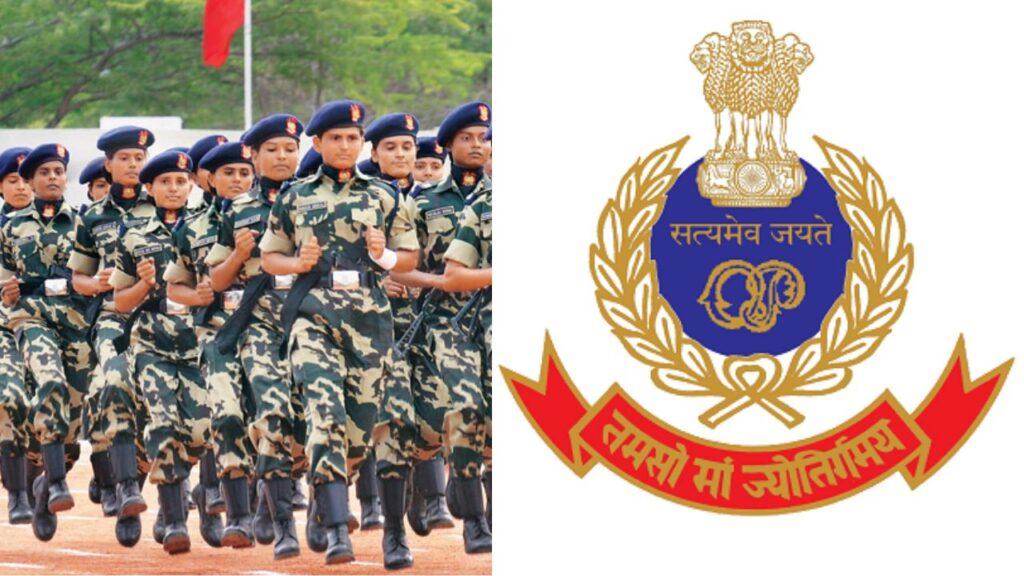
IRB is a more challenging job because it is usually deployed in high-security zones, this is a special armed police post which requires strong physical fitness. The Future Opportunities are good in this job. 
CategoryDetails
Eligibility12th pass with strong physical fitness
Age Limit18 – 25 years
Selection Process1. Physical Test (Running, High Jump)2. Written Exam3. Medical Check-up
SalaryRanges between ₹21,000 – ₹60,000 
Future OpportunitiesFrom Constable post, candidates can achieve higher level position like Sub-Inspector & Inspector 

Read More 👉 Bank PO vs SSC CGL: Which Offers Better Salary and Career Growth?

State Armed Police

State Armed Police is different in each state, it is responsible for internal security. Students who want to join a special security and law enforcement unit can actually apply for this job.

CategoryDetails
Eligibility12th pass candidates with good physical standards
Age Limit18 – 25 years
Selection Process1. Physical Efficiency Test2. Written Exam3. Medical Exam
Salary₹25,000 – ₹60,000 per month
Future OpportunitiesPromotion opportunities into leadership roles with years of service

Special Police Officer (SPO)

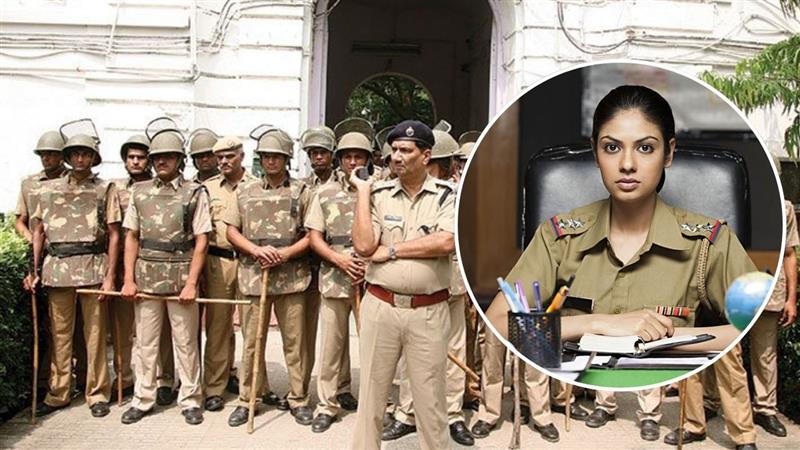
Special Police Officers (SPO) are trained for the high securities, which are needed in the states like J&K and Chhattisgarh. It is a contractual basis job that often leads to permanent positions in some states. 
CategoryDetails
Eligibility12th pass with local residency proof
Age Limit18 – 30 years
Selection Process1. Physical Fitness Test2. Interview
Salary₹20,000 – ₹35,000 per month
Future OpportunitiesSPO (Special Police Officer) → Chance to be absorbed as permanent Constable in some states

Railway Protection Force (RPF) Constable

Railway Protection Force Constable are responsible for safety of the passengers in the train and railway property. This post comes under the central police organization. Students who wish to work at a high job security with good income can consider this as the best option.

CategoryDetails
Eligibility12th pass from a recognized board
Age Limit18 – 25 years
Selection Process1. CBT (Computer Based Test)2. PET/PMT (Physical Efficiency & Measurement Test)3. Medical Test
Salary₹26,000 – ₹32,000 per month + allowances
Future OpportunitiesRPF Constable → Head Constable → ASI → SI

Border Security Force (BSF) Constable (General Duty)

Wanting to serve on the border for guarding the nation, a Border Security Force post is an opportunity to do that. But students must strongly fit in their health to apply for this position after 12th. Internal security operations also come under this post.

CategoryDetails
Eligibility12th pass, physically fit, Indian citizen
Age Limit18 – 23 years
Selection Process1. Written Test2. Physical Efficiency Test3. Medical Test
Salary₹21,700 – ₹69,100
Future OpportunitiesFrom Constable post, candidates can achieve higher level position like Sub-Inspector & Inspector

Salary Overview of Police Jobs After 12th

PostStarting Salary/Month
Constable (State Police)₹30,000
Home Guard₹25,000 
IRB Constable₹45,000 
State Armed Police₹35,000 
SPO (Special Police Officer)₹29,000 
RPF Constable₹44,460 
BSF Constable₹32,985

Other benefits of these posts

  • There are several other benefits which comes with these post after selecting like allowances – housing, dearness, travel
  • Permanent job surety with a government job can be great for life.
  • After retirement, candidates are getting pension according to their level of post. 

Read More 👉 Top 6 Best Engineering Colleges in Varanasi You Must Know in 2025

How to Apply for Police Jobs After 12th

  1. There are various government official websites, and keep following their latest updates to apply for the particular position. 
  2. The recruitment portal will open for a few days to apply online for state or central government jobs.
  3. When the application portal will open, don’t waste a single minute and apply early.
  4. Before applying, you must prepare for the exam, conducted as a recruitment process. 
  5. Upload documents and pay the exam fees. 
  6. Candidates must be physically fit to pass the physical test. 
  7. After clearing the test, wait for the result.

Conclusion

Police jobs after 12th are the best option for the students who want to work in the field and are proud to serve the nation. Whether you apply for state police constable, RPF, and Home Guard, each role provides a strong Future Opportunities and financial security. Strategic preparation for the exam can get you selected for the job. Be consistent with your studies and build an impactful career. 

Leave a Comment

Your email address will not be published. Required fields are marked *

Ultimate Guide to KTET Scores, Kerala TET Result 2026, Eligibility, Career, and Salary

Kerala TET

There are a lot of students who filled the application form for teaching in Kerala and appeared in the exam. They can check their Kerala TET Result 2026 on the official website of Kerala Pareeksha Bhavan. Many candidates wonder about the salary and professional growth at this stage, so here is the full detailed guide to Kerala TET exam. From eligibility to selection process, everything is here.

Achieving a qualifying score on the Kerala Teacher Eligibility Test (KTET) will help to achieve a teaching career. If you missed the 2026 cycle, you can apply next year but knowing every detail lets you understand how to crack the exam.

Overview of Kerala TET Result 2026 

The Kerala Teacher Eligibility Test was conducted smoothly over two days, morning and afternoon shifts due to a large number of applicants.

Exam NameKerala Teacher Eligibility Test (KTET)
Conducting BodyKerala Pareeksha Bhavan (KPB)
Exam CycleDecember Session (Exams held Feb 21 & 23, 2026)
Result Declaration DateMay 26–27, 2026
Official Websitehttps://ktet.kerala.gov.in
Credential RequiredCategory, Registration Number, and Date of Birth
Certificate ValidityLifetime Validity

What is the Kerala TET (KTET) Exam?

Students in Kerala who are dreaming about becoming an educator, The Kerala Teacher Eligibility Test (KTET) is specifically structured to prepare you for teaching and provide you with an official certificate to be able to teach in school. Kerala Pareeksha Bhavan conducts this exam to check whether a candidate has the right knowledge and teaching skills to handle students effectively.  

KTET is designed to evaluate applicant’s psychological understanding of children, teaching methods and proficiency in subjects. There four separate categories for specific educational tier:

Category I (Lower Primary): Focus on Classes 1 to 5. 

Category II (Upper Primary): For those who can teach Classes 6 to 8. 

Category III (High School): Focuses on relevant subjects for Classes 9 to 12 

Category IV: Special teachers (foreign language or Arts) and Physical Education instructors. 

Why is The Kerala TET Exam Important? 

If you want to become an Educator then you need to clear this exam and please remember that this exam will allow you to teach school across Kerala only, not any other state.

Mandatory Entry Requirement 

The state government makes this test mandatory to clear for teaching. Without a valid KTET scorecard, you cannot legally apply for teaching vacancies advertised by the Kerala Public Service Commission (KPSC) or state-aided institutions. 

Lifelong Validity Benefits 

KTET certificates now come with lifetime validity, that’s a huge relief for the teaching professionals. You never have to go through the stress of retaking the test to renew your qualification status. 

Professional Credibility and Up-skilling 

Preparing for the KTET naturally moulds you into a well-rounded teacher. As it covers the curriculum which increases your understanding of educational psychology and child development. 

Step-by-Step Procedure to Check Kerala TET Result 2026

  1. Open your web browser and visit the official Kerala Teacher Eligibility Test website.
  2. Find KTET Result 2026″ link in the notice or on the homepage.
  3. Use the drop-down menu to select your specific exam category and type your Registration Number and DOB to login.
  4. Check the result and verify your name and marks to make sure that it’s yours, then download the PDF.

Eligibility Criteria for Kerala TET

CategoryClasses CoveredMinimum Educational Qualifications
Category IClasses 1–5Passed 12th with 45% marks, plus Trained Teachers’ Certificate OR Diploma in Elementary Education
Category IIClasses 6–8BA/BSc/BCom with 45% marks + Bachelor of Education (BEd) OR Higher Secondary + 4-year Bachelor in Elementary Education (BElEd)
Category IIIClasses 9–12Master’s degree with 50% marks + BEd degree
Category IV (Specialist/Language)Specialist / Language subjectsCertificate, Diploma, or degree in the specific language/subject plus Training Certificate

Minimum Qualifying Marks (Cut-Offs) 

The 150 objective-type multiple-choice questions of the KTET exam carry one mark for right answers. There is no negative marking for incorrect selections. But candidates have to score above the cut offs and its varying by their category:

  • 90 out of 150 marks — General/Unreserved Category 
  • 82 out of 150 marks — Reserved Categories (SC/ST/OBC/PH)  

Selection Process for Kerala TET

Once you got Kerala TET Result 2026 scorecard, you must follow the further path to secure a job:

Document Verification: Immediately after qualifying, you must report to the designated District Educational Officer (DEO) for a thorough physical document verification. Authorities will check your certificates, ID, and educational certificates.

Eligibility Certificate: Once the DEO confirms your documents are original, you will get a formal, valid-for-life KTET Eligibility Certificate. 

Applying via KPSC: You must monitor KPSC notification for teacher eligibility so that you can apply for government school.

Career Prospects and Salary Structure

The doors will be open for you for the lifetime of teaching. You can apply everywhere in Kerala for stability, high community respect, and a rewarding compensation package. 

Diverse Career Pathways

Primary School Teacher (LPST): Guiding children through their formative learning years.

High School Assistant (HSA): Specializing in core thematic subjects like Physics, Mathematics, Social Science, or Literature for older students.

Specialist Educator: Instructing students on Arts and curriculum activities which grow their mind into creativity. Give training on the grounds and manage sports development as a Physical Education teacher.

Institutional Growth: Experience in teacher matters, you will be promoted to the seniority level like Headmaster/Headmistress in a same school without any exam or interview..

Expected Salary Scale

Candidates after clearing KTET examination can easily get the teaching job in Kerala schools. They receive income according to their level of teaching, higher classes require more attention and effort. Primary Teachers get between ₹35,600 to ₹75,400 per month. And High School Teachers earned ₹41,300 to ₹87,000 per month

People also give private tuitions or join coaching centers to earn passive income. The exam increases the chance of getting more valuable offers in future.

Read More 👉 Complete Guide to NTA UGC NET to Become a Teacher

Conclusion 

Kerala TET Result 2026 is out now and candidates can check using their registration number and DOB. Once you get your scorecard, you have to check the teacher jobs notification in Kerala for securing a high paying teaching job.

If you haven’t applied this year, you can apply next time but knowing every detail regarding this examination will help you understand how to clear the examination and most importantly check whether you are eligible or not.

Leave a Comment

Your email address will not be published. Required fields are marked *

PhD Entrance Exam Eligibility 2025: Everything You Must Know About Qualifications, Age Limit & Admission Rules

Are you ready to dive headfirst into the world of research and academia? If you are planning for a PhD in 2025, then be ready to know about the PhD Entrance Exam Eligibility 2025! This guide will offer you all the information regarding Phd entrance exam eligibility. From fundamental academic qualifications to the newest information on entrance exams, so you should prepare according to the eligibility criteria and entrance exams. Whether you’ve just graduated and wanted to get into the research field and make your future brighter, or you’re a working professional thinking about a part-time PhD, we’ve got your back. Let us decode the eligibility criteria for you and help you pave your path for a doctorate!

Core Academic Qualification

The applicant should have one of the following qualifications from a recognized board/institution:

  • 2-year/ 4-semester Master’s degree post a 3-year Bachelor’s degree or a 1-year/ 2-semester Master’s degree post a 4-year Bachelor’s degree.
  • Comparable foreign qualifications if recognized by the relevant bodies.
  • The M.Phil. is also being at least partly phased out in select instances M.Phil. degree holders may apply directly for PhD programmes, albeit. 

Minimum Marks Required

55% marks in aggregate (or its equivalent grade in the relevant subject(s) of study). 

Reserved category relaxation 5% relaxation in the marks (i.e. minimum 50%) is applicable to SC/ST/OBC (non-creamy layer)/PWD/EWS and other similar categories as per UGC policy. 

New Direct Admission Pathways

If you are a 4-year bachelor’s degree holder and sold a minimum of 75%, you are lucky! You can go directly for the PhD without Doing a master’s degree. The catch? You just have to crack the entrance exam to get the seat. So if you’re eager to go right into researching after your undergrad, this might be a good way to skip ahead in your academic career. Just make sure you’re prepared and your grades are good! 

Entrance Exam Requirement For PhD

Major National-Level Entrance Exams for PhD Admission — From 2025 on, the majority of universities and institutes in India will adopt UGC NET scores for PhD admissions, instead of institutional entrance exams. Science, Engineering and Medical PhD- Exam like CSIR NET, GATE, ICMR JRF, DBT JRF, JEST is still flagged. 

Also, some institutions may consider GRE/GMAT scores for management-related disciplines. This change will also help in unifying the process of admission throughout the country. 

Exemption Provision — Those candidates who have qualified national fellowship like NET-JRF, CSIR-JRF, GATE, etc. are usually not required to write the entrance exam but they need to take the interview. 

Interview and Proposal

Admission to PhD programs is usually followed by a personal interview where the research potential and preparedness of the student is assessed, and where the student is questioned about his/her Statement of Purpose (SOP) or a draft research proposal. 

Age Limit

No upper age limit: Adopting a relaxation for the age bar for pursuing a PhD, all those having the requisite academic qualifications will be able to apply for a PhD in India in 2025, there is no age bar for UGC NET or institution-based examinations.

Certain courses or universities (for instance, a few IIMs) may have an upper age limit (typically 40 years).

Part-Time and Full-Time PhD 

Part-time PhD programs are indeed recognized, especially for working professionals, as long as they can provide a No Objection Certificate (NOC) from their employer. 

However, full-time PhD programs demand regular attendance on campus so students must attend regular classes, the minimum 75% attendance is mandatory. Most universities offer hostel accommodations to support students during their studies.

Read More:- Best Books & Online Resources for Banking Exam Preparation 2025

Coursework and Duration for PhD

  • Minimum length of stay: 3 years (coursework included).
  • Maximum Duration: 6 years (up to one year extension in exceptional circumstances for full-time students). 
  • Compulsory propaedeutic course work on research methodology and core courses in the first terms.

Recent UGC Updates for 2025

NET score is compulsory for the admission from the session 2025, replacing the majority of university-level entrance examinations.

Professional/part-time mode with NOC with distance education allowed.

Direct PhDs from four-year undergraduate studies for deserving students. 

Important Takeaways for 2025 Applicants

Most phd admissions are focused on NET scores.

  • It is mandatory to have a Master’s degree with an aggregate of 55% marks or equivalent, else the maximum marks will be relaxed by 5% for reserved categories.
  • There is no age limit for applying for most of the courses.
  • The provisions for Part-Time and Interdisciplinary Research are being promoted under NEP-2020.
  • Interviews and research proposals are required following preliminary screening.
  • Please refer to the individual university portals for detailed and discipline oriented parameters.
  • Regulations are evolving; always check university details before applying. 

Conclusion

Remembering this as you gear up for your PhD journey: the ground is always shifting. Two new direct admission options, and a common entrance test for all, make 2025 the year to watch out for all research aspirants. Keep up with developments, watch out for your marks and check out to universities for fresher information. The dream of having a PhD is a bit nearer for you, and with a little guidance about PhD Entrance Exam Eligibility 2025, you will be able to take a first step towards making your mark in the world of academics. So, get excited, stay motivated and you know what it’s time to make that PhD dream a reality! 

Leave a Comment

Your email address will not be published. Required fields are marked *

MPPGCL AE/ JE Recruitment 2025 Officially Out – Gov Update Wala Has All the Details!

MPPGCL AE JE Recruitment

MPPGCL has officially announced the release of notification for MPPGCL AE/JE Recruitment 2025 on their official website. Candidates can start filling application forms before the portal will close on 21/Aug/2025. Download the official notification for more post-vise eligibility details. You can find a direct link for the official application form link in the article below.

Short Details For MPPGCL AE/ JE Recruitment 2025

Recruitment BoardMadhya Pradesh Power Generating Company (MPPGCL)
PostAssistant Engineer, Plant Assistant, Officer Assistant, Junior Engineer, & other various post
Level of ExamState-Level
PurposeMadhya Pradesh Government is enlisting candidates through this exam for various posts.
Total Posts346
Exam ModeOnline/CBT
Official WebsiteClick Here

MPPGCL AE/ JE Recruitment Dates

Application Starts On23/July/2025
Last Date for Application21/Aug/2025
Last Date for Fee Submission21/Aug/2025
Exam DateUpdate Soon
Admit CardUpdate Soon

Read More 👉 HTET 2025 Admit Card Out: Download Now from bseh.org.in for 30-31 July Exam

MPPGCL AE/ JE Recruitment Eligibility

Candidates can apply for JE post if they are above 18 years old. The minimum age for other posts is 21 years and maximum age is 43 years

Assistant EngineerBachelor’s degree in Engineering such as BE/B.TechObtaining score must be above 65% (Gen/OBC) or 55% (Reserved Category)
Junior EngineerDiploma/Bachelor’s degree in Engineering such as BE/B.TechObtaining score must be above 65% (Gen/OBC) or 55% (Reserved Category)
Other Post10+2 is mandatory in most of the posts. 

Steps To Fill MPPGCL AE/ JE Recruitment Application Form

Step 1Click on the link to the official website. The link will redirect you to the official website of MPPCGL, Haryana.
Step 2On the Official Website, Click on Careers, the new page will open.
Step 3Click on the link “Direct Recruitment For AE/JE” 
Step 4Register yourself by entering your correct details.
Step 5Pay the Application Fee after checking all the details carefully.
Step 6Save the copy of application for future preference
Application Fee
GeneralRs. 1200
EWS/OBC/SC/STRs. 600
Payment ModeOnline
Important Links
Application LinkClick Here
Download NotificationClick Here
Official WebsiteClick Here
HomepageClick Here

Leave a Comment

Your email address will not be published. Required fields are marked *

Latest Government Schemes 2025: Empowering India’s Growth and Development

Government Schemes 2025

As India steadily moves forward with its vision of becoming Viksit Bharat by 2047, the year 2025 serves as a milestone of double-speak reflecting the government’s developmental agenda. The central government has announced an array of progressive and inclusive Government Schemes this year to boost the economy, enhance social welfare and ensuring that the fruits of development reach the last mote of the country. 

These interventions cover the full spectrum of agriculture, education, employment, entrepreneurship and skill development indicating a comprehensive approach to building the nation. For lobbying farmers and upskilling youth to backing gig workers and opening up education, the 2025 policy roadmap aims to fortify India’s base for enduring growth. 

All these schemes have transformative aspirations – generating millions of jobs, reforming technical education, raising rural productivity levels, and increasing access to health care and research. They collectively reflect a clear intent to inclusive development and self-reliance in ensuring that the story of India’s progress touches each and every citizen. 

Pradhan Mantri Viksit Bharat Rozgar Yojana

Among the most challenging 2025 job schemes is the Pradhan Mantri Viksit Bharat Rozgar Yojana (PMVBRY) launched on 15 August 2025, with a whopping outlay of Rs. If successful, this employment-linked incentive scheme would lead to the creation of 3.5 crore jobs in two years, with maximum benefit going to first time job seekers entering workforce. 

The new scheme is aimed at the youth who makes up 68 percent of the country’s population first-time employees would be eligible to receive up to Rs 15,000 in two installments and the employers will get an incentive of up to Rs 3,000 per month for the hire of new staff. The scheme has a special emphasis on manufacturing and MSME sectors and extends financial assistance by way of direct benefit transfer to incentivise formal employment and cover social security. 

MERITE Scheme: Transforming Technical Education

The MERITE Scheme is expected to provide around 7.5 lakh students the benefits of enhanced quality, equity and governance in technical education in line with National Education Policy 2020. Major interventions comprise internship options, updation of curriculum aligned with the industry, faculty development programmes, research centres and skill labs for increasing the employability and diminishing the unemployment of engineering graduates. 

Read More:- Upcoming Government Exams After 12th: Your Gateway to a Secure Career in 2025-26

PM Dhan-Dhaanya Krishi Yojana

The PM Dhan-Dhaanya Krishi Yojna was announced by prime minister Narendra Modi in October 2025. Inspired from Aspirational Districts Programme, this scheme focuses on 100 low-productivity districts of the country covering around 1.7 crore farmers, of which the majority are small and marginal. 

The schema subsumes 36 existing schemes of agriculture and allied sectors and is being implemented through 11 ministries with focus on districts which have low crop productivity, medium cropping intensity and have been identified as “having languishing status of credit flow”. The programme is expected to enhance irrigation facilities, increase crop productivity, facilitate greater access to credit and storage facilities and promote sustainable farming practices. 

PM Internship Scheme

The Prime Minister’s Internship Scheme was launched on 3 October, 2024 with an aim to provide 1 crore paid internship in top 500 companies of India for a period of five years. The scheme provides 1.25 lakh seats for institutions which are of 12 months duration during 2024-25 and out of that duration, 6 months is to be spent in gaining practical experience. Interns in the age group 21-24 years get a monthly stipend of Rs. 5,000 and a one-time assistance of Rs.6,000 along with industry exposure in 24 sectors, ranging from IT, banking, automotive, manufacturing to hospitality. 

One Nation One Subscription 

From January 1, 2025, the One Nation One Subscription scheme for students and faculty will cover 13,000 international scholarly journals from 30 leading publishers, allowing 1.8 crore students and researchers of 6,500+ government higher education and R&D institutions to access these journals. Backed by Rs.6000 crore for 2025-2027, ONOS is set to remove subscription barriers and duplication, providing free access to research of publishers including that of Oxford, Cambridge and Elsevier, thus making it easier to conduct interdisciplinary research and democratising knowledge in all Indian institutions – including those in tier 2 and tier 3 cities. 

Healthcare for Gig Workers

In a major social security boost, the government also said it had registered 1 crore gig and platform workers on the e-Shram portal, offering them healthcare coverage under PM Jan Arogya Yojana (Ayushman Bharat). The program acknowledges the expanding workforce in the gig economy and offers some formal social security protection to workers in ride sharing, food delivery and other platform-based services who, until now, were without universal health insurance coverage. 

Conclusion

The 2025 government schemes seem to be focused on the overall development of a nation including employment generation, skill building, farm output, excellence in education, support to entrepreneurs and social welfare. These schemes pitch in billions of dollars in investments and underline the government’s dedication to realising Viksit Bharat by 2047. If you are a farmer, student, entrepreneur, job seeker or researcher, these schemes can help you find paths to empowerment, prosperity and inclusive growth. Keep track of the eligibility requirements and how to apply through the official portals to make the most out of these programmes that are transforming the future of India. 

Leave a Comment

Your email address will not be published. Required fields are marked *

Best M Tech Colleges in India Without GATE You Can Apply to in 2025

best M Tech colleges in India without GATE

There are several Best MTech Colleges in India without Gate, you can take admission with other entrance exams and personal interviews. Some top colleges of India for MTech are IITs, NITs, Anna University, Delhi University, Banaras University, and some private universities such as BITS Pilani, VIT, SRM, and Jamia Millia Islamia. Let’s explore the best colleges in India which can offer you an MTech degree.

You don’t have to go through the GATE exam but still  you need to score in their respective entrance exam. Some private institutes like VIT and SRM can offer MTech on merit. These colleges not just provide degrees but also offer placement opportunities to their students. 

Best M Tech Colleges in India Without GATE

IIT Delhi

IIT Delhi

IIT Delhi offers admission through GATE but some seats are vacant for the industry-sponsored candidates for MTech. It also offers a part-time MTech program for working professionals. You may have to clear their own entrance exam to get admission. Your graduation CGPA also matters as a part of the admission process. 

Fee (Approx.)₹36,950 per semester
M.Tech SpecializationsComputer Science, VLSI, Data Science, Cyber Security, Structural Engg, Mechanical Design, others
Average to Highest Salary₹18.8LPA – ₹41.1LPA

Delhi Technological University

Delhi Technological University

If you are searching for the best college for MTech program in Delhi then this is one of the best in engineering where you can get quality education and placement opportunities. If candidates do not have GATE scores then they must pass the entrance test for the admission. DTU approves candidates with above 60% marks in their Bachelor’s degree.

Fee (Approx.)₹90,000 – ₹1,60,000 per semester
M.Tech SpecializationsCS, IT, VLSI Design, Thermal, Structural, Manufacturing, Mechanical, Electronics, others
Average to Highest Salary₹10 to ₹60 LPA

Jamia Millia Islamia

Jamia Millia Islamia

Jamia Milliam Islamia is one of the oldest universities that offers various programs. MTech from this college will be worth your career opportunities. Admission is conducted via GATE but it also offers MTech through their own entrance exam. 

Fee (Approx.)₹18,350–₹56,590
MTech SpecializationComputer Engineering, Env. Science & Engineering, ECE, Mechanical, Nanotechnology, Power Systems, Control Systems, Data Processing, Thermal Engineering, Energy Science, Production & Industrial, Earthquake Engg.
Average to Highest Placement ₹5–₹22 LPA

Aligarh Muslim University

MTech offers vast opportunities to the AMU students with good placement opportunities. That’s not it, AMU offers a professional program on a low budget so every student can get equal opportunity for higher education. The admission is done through GATE or their own entrance exam. You can take that entrance exam and secure your seat in MTech.

Fee (Approx.)₹6,000 – ₹15,000 per semester
M.Tech SpecializationsStructural, Electronics, Environmental, Civil, Mechanical, Electrical Machines, CS, others
Average to Highest Salary Package₹5 to ₹20 LPA

Jawaharlal Nehru University

Jawaharlal Nehru University

JNU offers MTech at lower price, students can easily pursue their higher education but they must have cleared the JNU entrance exam for the admission. Candidates must score 55% above in graduation. 

Fee (Approx.) for MTech in other field₹1.28 Lakhs for entire course
Fee (Approx.) for MTech in CS₹385 per year
MTech SpecializationComputer Science & Technology is a key specialization available at JNU. Other specializations are limited as JNU primarily focuses on niche areas.
Average to Highest Placement ₹11 to ₹33 LPA

SRM Institute of Science and Technology 

SRM Institute of Science and Technology

This is a private institute which offers MTech in Computer Science, Electronics, and many more. A degree is valuable if you want a good position in the industry, many companies hiring students from this college with a good package. The admission is done through SRMJEEE PG entrance exam other than GATE.

Fee (Approx.)₹1.12 to ₹3.2 lakhs per semester
MTech SpecializationCS, Mechatronics, Biomedical, Chemical, Electronics, IT, others
Average to Highest Placement ₹7 to ₹50 LPA

Read More:- Top Government MTech Colleges in India You Must Know in 2025

BITS Pilani

BITS Pilani

BITS Pilani: This is one of the best colleges for MTech programs, you can get admission through your GATE score or BITS HD Test. If you hold a bachelor’s degree with above 60% score in engineering then you are eligible for this program. 

Fee (Approx.)₹2.42 L to ₹10.38 L for entire program
MTech SpecializationBiotechnology, Civil, Chemical, Computer Science, Manufacturing, Microelectronics, Cloud Computing, others
Average to Highest Placement ₹14.45 to 21.6 LPA

Amity University

Amity University, Lucknow Campus

Amity is also a private university and offers a good education to the MTech students. Students can get admission through other entrance exams and it depends on your graduation marks. The campus is a good and well-oriented research facility for students.

Fee (Approx.)₹2.9 Lakhs for entire program
MTech SpecializationElectrical, Microelectronics, Mechanical, advanced programs
Average to Highest Placement ₹8 to ₹45 LPA

Vellore Institute of Technology

Vellore Institute of Technology

VIT also takes industry-sponsored students and its highly advanced courses are in demand for the industries. An MTech from VIT is worth your career growth and high salary. The admission is done through their own entrance exam. 

Fee (Approx.)₹3.85 Lakh for 2 years
MTech SpecializationMechanical, Computer Science, Civil, Electronics, Advanced IT programs
Average to Highest Placement ₹9 to ₹60 LPA

Conclusion

There are Best MTech Colleges in India without GATE which can open doors to the best opportunities in the top companies. They offer a good salary package because the colleges have provided quality education and industry exposure through their assessments that make them smart and adaptive in industry work. 

Whether you choose Government or private college for admission in MTech. Kindly check their exam fees and admission dates on their official websites. The fee and placement packages we mentioned here are based on approximate data. You must check on their official procedures before applying.

Leave a Comment

Your email address will not be published. Required fields are marked *

Scroll to Top