Top 7 Best B Pharma Colleges in Lucknow You Must Know in 2025

Pursuing a BPharma means you are going to enter in the drugs and medicine fields. Students can make their career bright by choosing the best college for their further education because the best college not only offers a degree but also offers industry knowledge, support in their training, and strong curriculum. Top 7 Best B Pharma Colleges in Lucknow stand a chance to provide you placement opportunities in pharmaceutical companies with good salary packages.

Lucknow is a growing education hub in almost every field. So, let’s look into the college’s details to help you decide which one aligns with your requirement and meets the budget area. 

ERA University

Most of the students prefer to get admission in Era University for medical and pharmacy courses including B.Pharma. It is the best college in Lucknow for providing quality education with both theory and practical knowledge. BPharma 
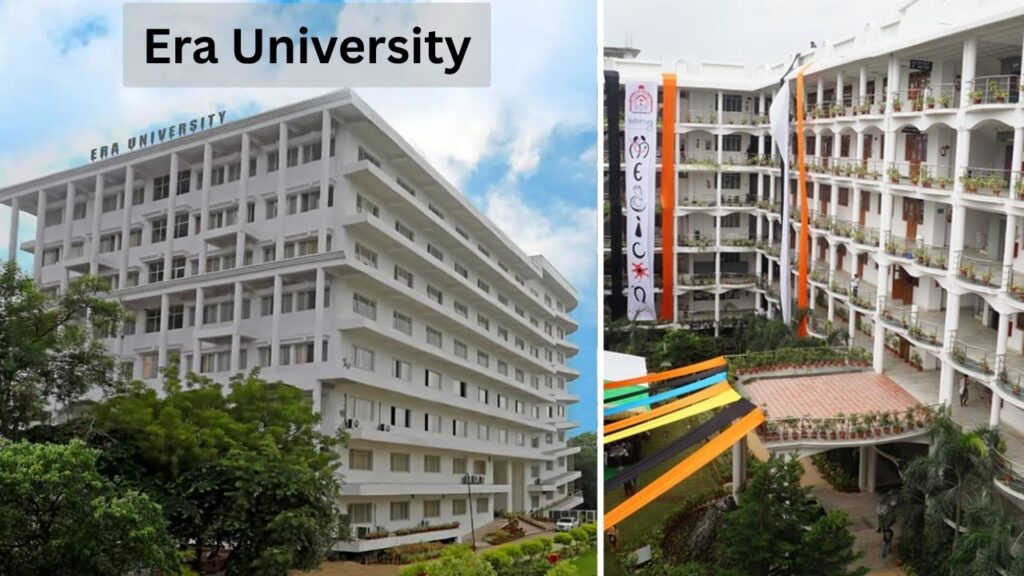
Era University nursing lab with students learning under faculty supervision.

Era University fee, placement record, and admission process:

BPharma Total Fee₹5,60,000
Placement₹4 lakh per annum (achieve 90% placement rate)
Admission Process10+2 in Science stream (Biology, Physics, Chemistry)Test-based selection

Integral University

Integral University offers various courses across diverse fields. It has become the best university in Lucknow and offers a four year BPharma program with a quality education, practical assessments, and good placement to most of the students. 
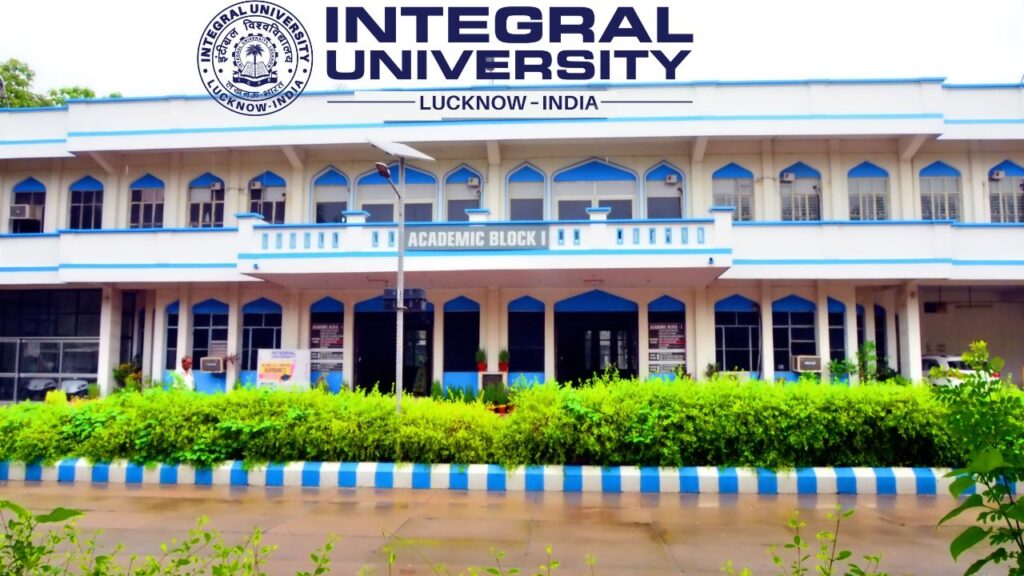
Integral University, Lucknow

Integral University fee, placement record, and admission process:

BPharma Total Fee₹5,20,000 (additional fee may vary the final amount)
Placement₹3–4 lakh per annum (achieve 85% placement rate)Highest package can go up to ₹32.57 LPA
Admission Process10+2 in Science stream (Biology, Physics, Chemistry)Entrance: IUET (Integral University Entrance Test)100 seats for BPharma every year

Saroj Institute of Technology & Management

Saroj Institute of Technology is a private college which offers pharmacy courses that make your career shine in pharmaceuticals. Many companies hired students from this college through placement drives. Students can take admission in the popular programs including B.Pharma, D.Pharma, and M.Pharma.

Saroj Institute of Technology & management fee, placement record, and admission process:

BPharma Total Fee₹2.82 lakh (additional fee may vary the final amount)
DPharma Total Fee₹1 lakh
M.Pharma Total fee₹1.5 lakh
Placement₹3.8–4.2 LPA (achieve 90% placement rate)Highest package can go up to ₹7 lakh LPA
Admission Process10+2 in Science stream (Biology, Physics, Chemistry)Entrance: CUET scoreCounselling after selection

University of Lucknow

This well-known University of Lucknow offers students a better scope in their pharmacy field. This government university offers a four year BPharma program with a strong curriculum, training, and placement opportunities. Curriculum includes pharmacy practices, human anatomy, pharmaceutical analysis etc.
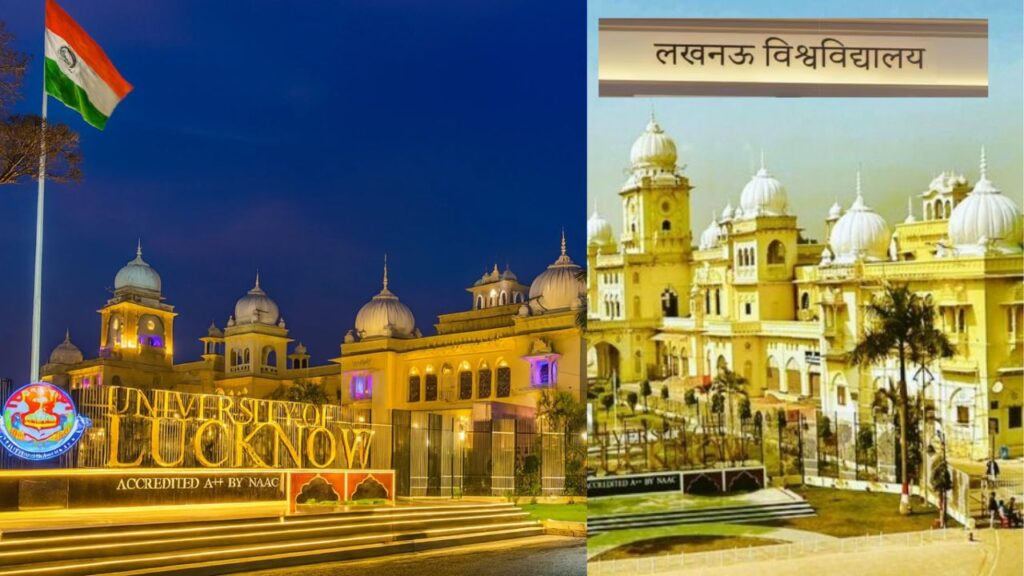
University of Lucknow fee, placement record, and admission process:

BPharma Total Fee₹4.8 lakh (additional fee may vary the final amount)
Placement₹3–4 LPA 
Admission Process10+2 with Physics, Chemistry, Biology/MathematicsEntrance: UPTAC counseling & UPSEE score

Amity University Lucknow Campus

Amity University is the most prestigious university of India which offers a diverse range of courses. Students can make their future brighter by pursuing BPharma course from this college. It can open up their opportunity in the pharmaceutical industry. It offers a strong curriculum with pharmacognosy, pharmaceutical analysis, health education, hospital training and placement support including skill-building workshops, strong industry connections, and internship opportunities.
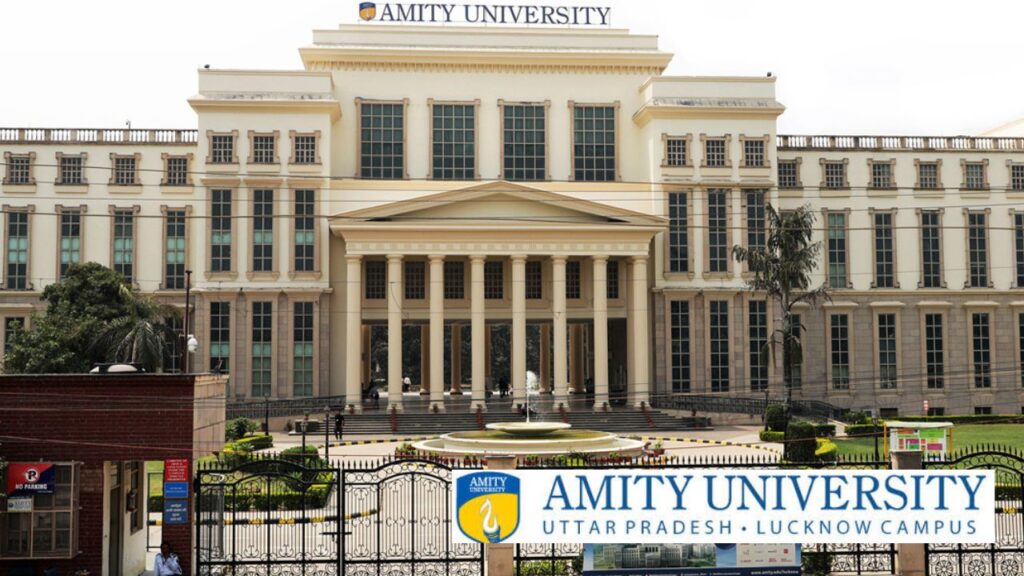
Amity University, Lucknow Campus

Amity University Lucknow Campus fee, placement record, and admission process:

BPharma Total Fee₹6.8 (additional fee may vary the final amount)
Placement₹3–4 LPA it can go up to ₹6 LPAmajor pharmaceutical firms take part in Amity’s placement drives
Admission Process10+2 with Physics, Chemistry, Biology/MathematicsEntrance: scores from Amity JEE or any other national/state-level entrance exam score 

Babu Banarasi Das University

BBDU is considered as Lucknow’s best college which offers many programs including BPharma. It is a four year program designed for providing pharmaceutical careers to the students who are interested in pharmacy and drugs.
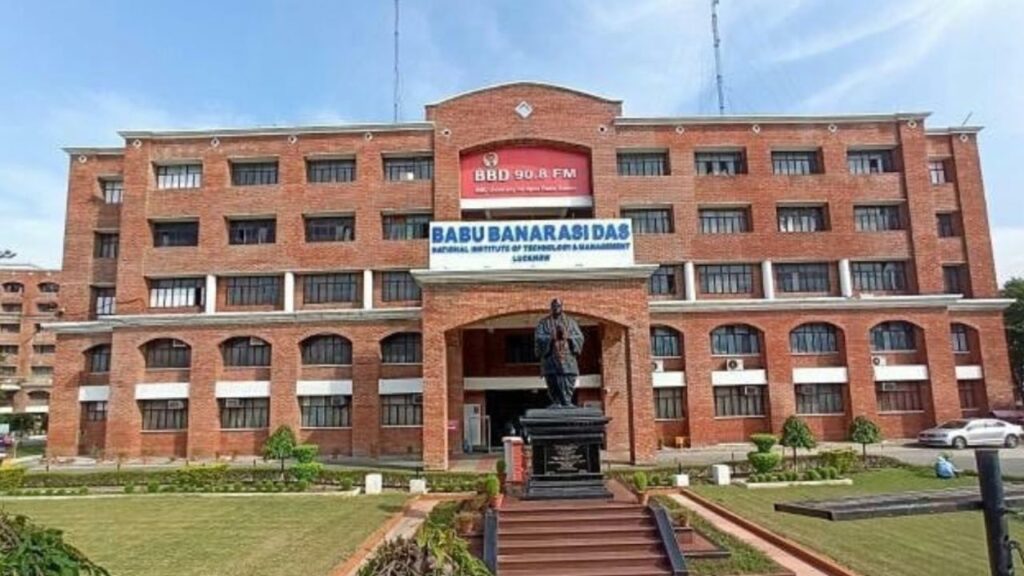
Babu Banarasi Das University - BBD University

Babu Banarasi Das University fee, placement record, and admission process:

BPharma Total Fee₹5.2–5.8 lakh (additional fee may vary the final amount)
Placement₹3–4 LPA it can go up to ₹6 LPAmajor pharmaceutical firms take part in Amity’s placement drives
Admission ProcessMinimum 50% in 10+2 with Physics, Chemistry, Biology/MathematicsEntrance: scores from NEET, UPSEE or any other national/state-level entrance exam score 100 seats for BPharma every year

T.S.Mishra University, Lucknow

T.S Mishra University is a well-known university for BPharma course due to its strong curriculum, experienced faculty members, and practical approach. It produced industry-ready professionals with their designed course. It offers a 4 years BPharma course with 3 months of compulsory hospital training and 1 month of industrial training.
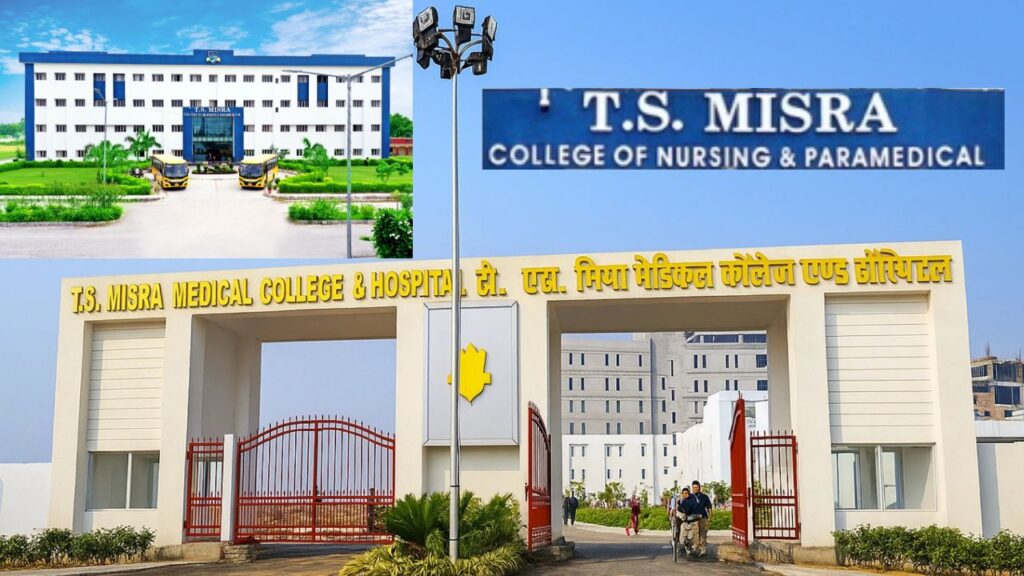
T.S.Mishra University fee, placement record, and admission process:

BPharma Total Fee₹4.1 lakh (additional fee may vary the final amount)
Placement₹3–4 LPA it can go up according to your resume
Admission Process10+2 with Physics, Chemistry, Biology/MathematicsEntrance: merit-based selectionUniversity’s entrance tests60 seats for BPharma every year

Conclusion 

Students can see all the best BPharma colleges in Lucknow in detail and choose the right one. These colleges offer practical and theoretical knowledge for pharmaceutical sciences which can help students to build their foundation in the field of medicine & Drugs.


Leave a Comment

Your email address will not be published. Required fields are marked *

UP Police Constable Syllabus, Salary & Preparation Strategy 

UP Police Constable Syllabus

Getting a government job in India isn’t a cakewalk, and UP Police Constable exam is no exception to it. Every year, thousands of applicants vie for handful vacancies, which is making it one of the popular and toughest exams in the state. With a right approach toward UP Police Constable syllabus, and with persistent preparation, this target is of course achievable. 

If you want to put on the khaki with pride or if you want a stable career with good salary and benefits, this exam could be your ticket. But these benefits asked you to work harder and get it. This breakdown—eligibility, selection process, syllabus, salary, and a practical preparation plan of UP Police Constable will help you plan to crack this exam.

Eligibility Requirement For UP Police Constable

You need to check eligibility requirements before buying books for studying UP Police Constable syllabus and doing push ups. UPPRPB is recruiting candidates for this post under strict guidelines. So you must follow before applying: 

Educational Qualification 

No fancy degrees are required for a UP Police Constable. Candidates must acquire 12th standard (Intermediate) marksheet from any recognized board in India. 

Age Limit 

Male Candidates (General) 18 to 25 years 
Female Candidates (General) 18 to 28 years 

Reserved category candidates can get age relaxation but you must check the latest recruitment official notification to know age relaxation. 

Physical Standards (PST) 

CategoryUR/OBC/SCST
Height for Males168 cm160 cm
Chest for Males79–84 cm77–82 cm
Height for Females152 cm147 cm
Weight for FemalesMinimum 40 kgMinimum 40 kg

UPPRPB Selection Process For UP Police Constable

It’s not just one written exam here, you must pass all the stages to reach that position. It requires commitment and hard work for securing an honourable government job for the nation.

Stage 1: The Written Examination

It’s a written offline OMR-based exam. Candidates have to get above the cut off marks by answering all the MCQs accurately then you move on to the physical rounds. Questions come from the four main subjects (GK, Hindi, Mathematics, Reasoning).

Stage 2: Verify Docs And Physical Standard Test (PST)

Once you qualify stage 1 with preparation and hard work, you need to provide documents– 10th/12th mark sheets, caste certificates, domicile papers for verification. And your body measurements like height, weight and chest (men) will be taken to pass you on to the next stage of selection.

Stage 3: Physical Efficiency Test (PET)

PET is a mandatory exam for candidates without getting marks. This final round can throw you out of the list if you fail. 

  • Running for a 4.8 km run in 25 minutes is a mandatory test for male candidates. 
  • If you are a woman then you must be able to run 2.4 km in 14 minutes.

Stage 4: Detailed Medical Examination (DME)

Physical and mental health matters for this job, it has regulations if you have weak eyesight, color blindness, hearing, flat feet, knock knees. 

UP Police Constable Syllabus Breakdown

The written test contains 150 questions which is of 300 marks (2 marks per question). But be careful, there’s negative marking!  

The written exam is divided into four main subjects which you can qualify with right preparation on the syllabus.

I. General Knowledge (38 Questions)

Knowing about the world revolves around you, especially Uttar Pradesh is necessary. GK tests you based on the questions based on national and international current affairs, History/Civics, Geography, Science and Finance of India.

II. General Hindi (37 Questions)

If you attended a Hindi-medium school, this is your section to score. Even if you didn’t, you can get good marks by doing some basic grammar practice. Focus on Hindi Grammar (Vyakaran) , Unseen Passage, Famous writers & their work, Synonyms, Antonyms, Idioms and Phrases (Muhavare). 

III. Numerical and Mental Ability (38 Questions)

Question comes from basic mathematics of 9th and 10th, if you are good at maths then practice daily on Number systems, Percentages, Profit & Loss, Ratio and Proportion, Simple & Compound Interest, Time, Work & Distance, Mensuration and Data Interpretation (Tables and Graphs). 

IV. Mental Aptitude, IQ & Reasoning Ability (37 Questions)

This part examines your mind and thinking ability, and also tells you how you could potentially think in police work situations. Coding-decoding, Series, Blood Relation, Direction Sense, Syllogism, Venn Diagram, Non-Verbal (Pattern and Figure). There will also be situation based questions to test your attitude towards public interest, laws and order, communal harmony and police force. 

How to Prepare For A Police Constable

Avoid beginning to study with difficult mock tests. Instead, strengthen your foundation with standard books like Lucent GK, R.S. Aggarwal (Math & Reasoning) and a good hindi grammar book.

Keep practicing last year’s question papers. They give you a clear idea about the exam level and the types of questions that are asked. UPPRPB also has a penchant for posing questions similar (even a same question sometimes) to what they had already asked. 

Once you have completed about 60-70% of the syllabus, begin attempting full-length mock tests. Use a timer when you practice so you can work on your speed and accuracy. Check your mistakes to correct them each day. 

Don’t neglect physical fitness. Most candidates qualify the written exam but they are unable to clear the 4.8 km run. Something as simple as a 30-minute jog each day will smoke out your stale lungs and build your stamina. 

So, for the present events keep it simple. Just subscribe to a good monthly magazine (eg. the Economist) or a decent Youtube channel and don’t bother with the dailies. 

Salary and Perks After Getting a Job

UP Police pays its constables quite a good salary with additional perks that makes it worth the struggle to secure a position.

CategoryAmount
Pay ScaleRs. 5,200 – 20,200
Grade PayRs. 2,000
Basic Pay MatrixRs. 21,700

Under the 7th Pay Commission, the salary is distributed but other allowances also given to the constable which sum up to Rs. 27,000 to Rs. 32,000 per month.

  • Dearness Allowance (DA)
  • House Rent Allowance (HRA)
  • Travel Allowance (TA) & City Compensatory Allowance.
  • Ration Money & Uniform Allowance

Career Growth & Promotions 

A government job is not just a job, it is a career for a lifetime. Joining as a Constable does not imply that you will retire with that rank. The UP Police is providing a transparent path for promotions along the years of services, departmental exams and your performance record. 

  1. Police Constable (Your starting point)
  2. Senior Constable
  3. Head Constable
  4. Assistant Sub-Inspector (ASI)
  5. Sub-Inspector (SI)
  6. Inspector

If you have the ambition, you can appear for departmental exams for Sub-Inspector which will speed up your promotion rather than waiting wholly on seniority. An honest and sincere police officer can easily get retired as Inspector and in some rare cases even as DSP (Deputy Superintendent of Police) from the post of Constable with the blessing of the Almighty. 

Read More:-  Banking Job vs SSC Job: Details On The Top Government Jobs 

Conclusion

Passing the UP Police Constable exam is a challenge for mind and body. It needs a balanced approach, practicing math and checking daily news then getting up to run on the track. 

Focus on UP Police Constable Syllabus and your health to secure your position. The large number of applicants is not to be discouraging. You just need to prepare yourself for one seat.

The salary and additional perks are good with lifetime growth opportunities in the department, so there’s a golden door, you just need to jump long.

Leave a Comment

Your email address will not be published. Required fields are marked *

BSc Medical Laboratory Technology (MLT): Course, Fees, Career & Scope in India

BSc Medical Laboratory Technology

Imagine being the silent crusader for every correct diagnosis, working your magic inside blood samples, body fluids and tissue slides to find secrets that physicians need to know to save lives. That is the magic of BSc Medical Laboratory Technology (MLT). If you are scientific, you love precise work, and want a solid and stable career in health care, but don’t want the frenetic pace of working directly with patients, this degree could be just right for you. 

In India, where healthcare is booming, MLT professionals are highly sought after. So, here we go through all you need to know to be able to dig in to this sleeper powerhouse discipline. 

What is BSc Medical Laboratory Technology (MLT)?

The BSc MLT course is basically a three years long undergraduate course (six-month internship in some colleges) which is designed to make you a medical lab technologist. You’ll learn the art and science of analyzing body fluids, tissues, cells and microbes in clinical laboratories. Consider it detective work in a white coat: gathering samples, running tests on machines such as microscopes, analyzers and polymerase chain reaction (PCR) units, and producing results that influence treatments for everything from infections to cancer. 

The curriculum is a mix of biology, chemistry and technology. 

  • Year 1 involves Fundamentals such as human anatomy, physiology and biochemistry. 
  • Clinical microbiology, hematology (study of blood), and immunology by year 2. 
  • The final year is a rush with supplements such as histopathology (study of tissues), blood banking and molecular diagnostics. Practical laboratory sessions constitute 40-50 per cent of the course, so prepare for a lot of practicals. 
  • The best of institutions like AIIMS Delhi, Manipal University, Jipmer Pondicherry provide it with world class facilities, often including certification in lab automation. 

Who Can Jump In? Eligibility and Admission Scoop

You are considered eligible if you have obtained at least 50% in Physics, Chemistry, and Biology (PCB) from a recognized board – relaxed to 45% for reserved categories. Most private colleges don’t require NEET, while government ones may require state-level exams like KCET or MHT-CET. Most private unis are merit-based or have their own tests.

The admission season is followed after 12th boards, May-July. Apply online on the college portals– application fees range between Rs 500 to Rs 2000. Pro tip: Create a beachhead profile with science projects or volunteer work in labs; it shines in interviews. 

Fees, Scholarships, and ROI

  • Cheap but really beneficial—that’s BSc MLT for you. The fee of government colleges range around 10,000–50,000 per year, so the total fees of the course would be approximately 30,000 — 1.5 lakh.
  • The cost of private colleges is high and ranges between 1–3 lakh per year (rough 3–9 lakh in total). 4-5 lakhs can be charged by the top class institutes such as Symbiosis, Pune. In the range of ₹50,000 — ₹1 lakh per annum will be your hostel and books additional cost. 
  • Scholarships reduce the burden: Post-Matric for SC/ST from the State and Central government, merit scholarships from AICTE. 
  • Most of the institutions have 20-50% waivers for the toppers. ROI is stellar, starting salary ₹3-6 LPA, scaling to ₹8-15 LPA in 5 years. Compare that with the cost of the course, and it’s quite a smart bet. 

Skills You’ll Gain From BSc MLT Course 

This isn’t just book learning, it’s skill-building gold. You’ll learn phlebotomy (blood drawing), use high-tech equipment such as flow cytometers, learn quality control and even bioinformatics for genetic testing. 

Soft skills: Accuracy, good attention to detail, and ethics required—there is potential for misdiagnosis if a single mistake is made. 

A day in the life: Mornings are often spent collecting samples, then running tests such as CBC, ELISA, and cultures. The position also requires calibration of instruments and result reporting via LIS software. 

Hospital shifts can be demanding (8–12 hours), whereas diagnostic labs usually provide ordinary 9 to 5 hours office-based positions. 

Read More 👉 CTET Exam 2026: Check Exam City, Notice, Exam Dates, Syllabus and Eligibility Information

Future Opportunities For Students

Graduates are not left in labs for eternity. 70% of alumni are hired as lab techs or supervisors (₹25k-50k/month in the beginning) by hospitals (Apollo, Fortis). 

₹30k-60k work offer with diagnostics like Dr. Lal PathLabs or Metropolis. 

Government jobs through ssc, esic or state health services are also there with a good package of ₹35k+ along with benefits, crack exams ssc, junior paramedical.

So what about Advanced options? 

You may select from choices such as MSc MLT, PGDM in Hospital Management, or a PG Diploma in Cytotechnology, Histopathology or Forensics. A Salary of ₹10–20 LPA is possible. On the international front, the US and Canada are among the top seekers of certified MLTs. Professionals are able to make $50,000 or more per year by passing the ASCP exams. 

Career RoleAvg Starting Salary (₹ LPA)Top Employers
Lab Technician3-5Hospitals, Clinics
Medical Lab Supervisor5-8Diagnostic Chains
Blood Bank Technologist4-6Red Cross, Govt Hospitals
Research Associate4-7ICMR, Pharma Cos
Quality Control Analyst5-9Biotech Firms

Challenges and the Bright Side

There are also challenges including long hours, exposure to biohazards (so the right PPE is the must), and having to keep pace with new technology, including AI-driven diagnostics. But the advantages are clearly more than the disadvantages. 

The fact that healthcare jobs are expanding rapidly (at about 15% each year, according to NITI Aayog), private labs provide a superior work-life balance, and the soft assurance that your work really helps people, even if it’s behind the curtains. 

Conclusion

In a society that worships doctors and nurses, BSc Medical Laboratory Technology (MLT) is the silent force behind 70% of medical decisions. If you are detail oriented, love science, and want to future proof your career, then go for it. India’s healthcare industry requires an additional two million laboratory professionals by the year 2030, your spot awaits.

Check NAAC-accredited colleges and start prepping. This degree is more than just a credential, it is the key to a fulfilling life that is recession-proof in healthcare. 

Leave a Comment

Your email address will not be published. Required fields are marked *

Latest UPSC Notification & Exam Pattern Changes For 2025

UPSC Notification & Exam Pattern Changes

If you are preparing for the UPSC exam then getting every update for the exam is necessary to appear in the exam and achieve your goal. Get UPSC Notification for UPSC CSE 2025 Exam which will happen in 3 phases—Prelims, Mains, and Interview. Aspirants should prepare according to the exam pattern. You can check the eligibility criteria, and exam pattern in this article.

Highlights Of The UPSC Exam

Conducting ByUnion Public Service Commission
Exam NameUPSC Civil Service Exam
PostsGroup A & B Officers
Vacancy1129
Selection ProcessPrelims, Mains, Interview
Starting SalaryRs. 56,100 per Month
Notification Release22/January/ 2025
Application Starts On 22/January/ 2025
Application Ends On11/February/ 2025
UPSC Prelims Exam Date25/ May/ 2025
UPSC Mains Exam Dates 22, 23, 24, 30, & 31/August/2025
Final Result Update Soon

Exam Pattern for UPSC Exam 2025

Prelims: General Studies and CSAT, the two objective types of paper are conducted in prelims. Candidates must complete the first paper within 2 hours, the same duration applies to 2nd paper 2 too. Each paper is holding 200 marks, negative marking of 1/3 for every wrong answer. 

CSAT Qualifying: 33% is the least to get in Paper 2 (CSAT) for clearing the exam and there is no change in the marking scheme. 

Mains: Nine papers descriptive in terms 3 hours each, total marks 1750. 

Interview: Personality Test is conducted of 275 marks

No major changes: In exam pattern for 2025, just procedural changes happen this year and you can find the updates on the official website.

Read More 👉 RBI Grade B Admit Card 2025 – Direct Download Link, Exam Date & Instructions

Eligibility Criteria

Age LimitGeneral: 21 to 32 years
Age Relaxation for Reserved categoryOBC: up to 35 yearsSC/ST: up to 37 yearsPwBD: up to 42 years
Education QualificationGraduate degree or final-year students eligible but they must provide proof of their education until Mains stage
Attempts6 (General), 9 (OBC), unlimited for SC/ST

Useful Links

NoticeClick Here
NotificationClick Here
Official WebsiteClick Here

Leave a Comment

Your email address will not be published. Required fields are marked *

RBI Grade B Admit Card 2025 – Direct Download Link, Exam Date & Instructions

RBI Grade B Admit Card 2025

RBI Grade B Admit Card 2023: Download Link Out – Candidates can start their exam preparation after the release date of RBI Grade B Admit card on the official website. Candidates can get the direct link to download the admit card and take a printout of it as it contains valid information of the candidate. There are 120 posts in total for Grade B and the exam will take place on 18th and 19th October 2025. 

Candidates can get the examination hall details in the admit card. Take your admit card along with you to the examination hall. It contained your name, roll number, and centre name etc., various positions are offered in this recruitment.  

Highlights & Important Dates of RBI Grade B Admit Card 2025

DetailInformation
OrganisationReserve Bank of India (RBI)
Post NameOfficer Grade B (General, DEPR, DSIM)
Total Vacancies120
Admit Card Release Date12th October 2025
Phase 1 Exam Date (General)18th October 2025
Phase 1 Exam Date (DEPR/DSIM)19th October 2025
Login Credentials NeededRegistration Number & Password/Date of Birth
Official WebsiteClick Here

Eligibility Criteria for RBI Grade B

Minimum Age21 years 
Maximum Age30 years 
Educational QualificationGraduation/Post-Graduation as per post requirements
Age RelaxationSC/ST: 5 years, OBC: 3 years, PwBD: up to 15 years

Read More 👉 SLPRB Final Result 2025 Declared – Download Constable & SI Merit List

Steps to Download RBI Grade B Admit Card 2025:

  1. Visit the RBI Official website www.rbi.org.in or click on the direct link for admit card.
  2. Go to ”Opportunities@RBI” or career opportunities.
  3. Download the Relevant MERIT, CUT OFF, and ANSWER KEY for the above said result/scheme from the link given below for may RBI Grade B Phase 1 Admit Card 2025.
  4. Type in registration number/roll number and password/date of birth.
  5. Verify Captcha, and Submit.
  6. Download the call letter in PDF form and print it out. 

Remember these points:

  • Arrive at the exam center much before the reporting time. 
  • Bring the printed admit card and an ID proof. 
  • Read all the rules and regulations given on the Hall Ticket and prescribed by the Exam Authorities. 
  • Use of mobile phones, calculators or any other electronic gadgets is not allowed in the examination hall.” 

Leave a Comment

Your email address will not be published. Required fields are marked *

How to Crack State PSC Exams in First Attempt: Strategy & Resources

Govt. jobs are undoubtedly one of the most safe and respected career options in India and passing the State Public Service Commission (PSC) exam in first attempt is a dream for many aspirants. As the competition is rising and the syllabus is vast, it sometimes feels like a difficult mountain to scale. But, with the right approach, intelligent study techniques, and diligent efforts, passing the exam is not an impossible dream. The crux is to understand the syllabus in depth, follow the right resources and adhere to a disciplined schedule that would cover both prelims & mains preparation.

Quick Thoughts Gathering to Begin With

  1. Download official syllabus + all past papers of 8 years.
  2. Make a list of books you own/need (start with NCERTs).
  3. Select optional subject.
  4. Put together a weekly schedule you can live with.
  5. Create a one-pager daily current affairs file.
  6. Enroll in test series / good coaching (online/offline) and commit to weekly mocks.
  7. Start your NCERTs (goal: 2–3 chapters/day).

Big-picture study strategy (what to study & why)

Build bedrock knowledge first: NCERTs (6–12) for History, Geography, Economics, and Pol. These give a clean conceptual base.

Proceed to standard books for each subject (more below). Read for understanding, not rote.

Current affairs daily — newspaper + short notes. Link events to static syllabus.

Notes + revision cycle — Make short revision notes (1–2 pages) per topic; revise them frequently.

Practice smartly: MCQs for prelims + answer writing under time pressure for mains. Mains wins jobs — practice answer structure & linking facts to syllabus keywords.

Mocks & feedback: Do full length mocks and get answers evaluated (peer/mentor) and you improve your answer style and technique of scoring.

Recommended core resources (common, high-utility) 

(You will need to add in your state-specific books / local history that you must have from your state board / PSC Recommended Readings)

  1. Cover Basics 

NCERTs 6–12 — History, Geography, Pol. Science, Economics (start here).

Indian Polity — M. Laxmikanth (efficient + concise for governance & state-centred comparative questions).

Modern Indian History — Spectrum’s A Brief History of Modern India / Bipin Chandra (for depth).

Indian Economy — Ramesh Singh or any good concise economy book, supplemented with RBI / Economic Survey summaries.

Geography — Certificate Physical & Human Geography (G.C. Leong) or equivalent concise books.

Environment & Ecology — normal environment compendium/ class notes, track Recent Events.

State-specific history & polity — whatever books your PSC cites, in addition to local gazetteers and state government documents.

  1. Current affairs & general reading

One daily national newspaper (The Hindu / Indian Express) or their summaries. Government releases: Press Information Bureau (PIB), state government portals, official reports (for schemes and facts). Monthly magazines or current affairs compendiums (good for revision).

  1. Practice

Collection of previous years’ PSC papers (must have). A good questionbank or mock test series (free/paid) for practicing in time bound manner. Answer writing notebooks (keep one for mains answers). 

Sample schedules — choose according to the time you have

If you have 12 months

1st to 4th month: complete NCERTs + standard books for GS I–III fundamentals; decide optional & finish fundamentals.

Months 5 to 8: Complete other standard books + begin consolidating notes; begin on PYQs.

9th and 10th months: High-intensity test series – full-length prelim mock test every week; augments revision of weak topics.

Months 11–12: Final run through + daily PYQs + last-mile current affairs. Mains answer practice (if prelim cleared).

If you have 6 months

1st month: Preparation for NCERTs + syllabus mapping + optional selection.

2nd to 4th month: Read standard books, prepare short notes, solve MCQs and PYQs.

Month 5: Rigorous mock tests (prelim-benchmarked); Time management to be calibrated.

Month 6: Re-visit everything + frequent mock tests + current affairs wrap-up.

If you have three months

  • Fast NCERT reading + priority standard book chapters on some important subjects.
  • Study 7-10 hours a day: current affairs in the morning, theory in bulk in mid-day, MCQs + past papers in the evening.
  • Mocks repeatedly at intervals of 3-4 days Analyze each. 

Prelims strategy (objective test)

A good preparation strategy would be to start with the NCERTs along with one standard book per subject to establish a strong base. While learning content, same importance should be given to speed and accuracy by daily practicing MCQs gradually going to 500 – 1000 in a week. To gain maximum returns in minimum time, concentrate on high-yield topics such as Polity, the Constitution, Economy (primarily basic indices), Geography (with emphasis on map work), Environment, and Current Affairs. The Previous Year Questions (PYQs should be backbone of your preparation as it helps you to identify the areas/themes which the exam repeatedly tests). 

Also Read : Top 10 List of Exams Conducted by UPSC After Graduation in 2025

Mains strategy (subjective / descriptive)

Start writing answers from the early days of preparation, while upgrading yourself with the ability to write a good structured answer that has an introduction, a well-structured body (with headings or bullet points, if necessary) and a brief conclusion or way forward. Static knowledge and linking current affairs with theoretical knowledge need to be a part of answers as they give depth and relevance to answers. At the mid-stage of your preparation, doing a full answer paper every week – both essays and GS papers — is useful in developing regularity and you can increase the frequency as the exam comes closer. Regular assessment or peer review also is necessary, as it improves presentation as well as the density of content, leading to more effective answers. 

Interview / personality test

Prepare short biographical stories related to: accomplishments, academic projects, work experience and expertise in optional subjects. Stay informed on regional issues and national affairs. Conduct mock interviews with mentors or peers, concentrate on clear communication, serenity, and concise responses. 

Common Mistakes to Avoid

  • Learning everything superficially diminishes its utility; depth is much more valuable than breadth across different fields at surface level isn’t very rewarding.
  • Disregarding previous years’ papers is the biggest blunder as these papers bring out the themes that repeat, the patterns of questions and the areas to be concentrated.
  • Not timing yourself while you practise MCQs or while writing answers results in bad speed and poor accuracy in the exam.
  • Too many resources create noise and confusion, while focusing one’s attention on too few resources creates blind spots. A small set of high quality, reliable resources is the best bet for clarity and retention.
  • Avoiding regular revision destroys the power of retention; one should revise systematically and at frequenter intervals to be able to recite confidently and be assured of long term recall. 

Conclusion

How to Study Smart for First Attempt State PSC (Public Service Commission) Exam It is not about studying for countless hours, but it is about studying smart by keeping focus and being consistent. This trip requires a very clear mind, discipline, and a problem-solving attitude. Candidates with the right resources and guidance, along with consistent practice and revision, can not only cram for the exam but gain the confidence to ace at the Interview round. Wait for it… Success in the competitive exam is for those who start early, prepare strategically and have a firm belief till last that they will pass the exam. 

Leave a Comment

Your email address will not be published. Required fields are marked *

Scroll to Top