Staff Selection Commission is recruiting candidates for filling out the Delhi police vacancy 2025. This organization officially announced the recruitment process and the official notification is also released for the candidates to check every detail regarding the post or online application. There are a total of 7565 positions vacant for this post, candidates can apply for this till 21 October 2025. You can find the direct link for the application in the article.
Candidates who are applying for the Delhi police vacancy 2025 could meet the eligibility criteria for this position. Must apply for this position before the last day of registration or else he or she will not be able to apply anymore.
Follow these steps to apply online:
Visit Delhi police official website which is mentioned in the article.
After visiting the official page, search for the New Registration option to click.
Once you click that, the box will appear on your screen.
Fill them with your correct information and carefully check again.
After registration, you can login with your registration number and password, then you can fill out the application form for delhi police vacancy 2025
Preview the form before the final submit and download the copy for reference.
UP Board Exam Date 2026 has been announced — and it will be the moment for students across Uttar Pradesh to stop waiting and start preparing. The Uttar Pradesh Board (UPMSP) has released the modified schedule for Class 10 and Class 12 on the official website upmsp.edu.in, Students can now check the revised time table for UP Board 2023 on the official site. As exams are from 18 February to 12 March 2026, students can now prepare study plan accordingly and stay free from last moment pressure.
Whether you are finalizing your notes, giving last minute practice tests, or cramming difficult calculations, holding the official schedule brings a ne find structure to your day. To cater to the large number of candidates the board has also declared two shifts for the exam that will be conducted in well-organized manner at the centers across the state.
So, the final schedule is here now, students can get ready for the first step in their life for their career journey.
Revised Exam Dates For UP Board 2026
The board examinations for class 10 and 12 of this session (2026) will be conducted from 18 February to 12 March 2026. Now everyone can get relief about the exam dates because it’s time to prepare yourself for the final exam. The official time table was published in early November 2025 and it makes everyone’s life easier who is preparing for one of India’s biggest state board exams.
So, whether you are cracking your last mock tests or memorizing those hard formulas, keep remember that this marksheet will be a valuable asset for the lifetime and make sure to mark these dates on your calendar.
Two Shifts for the Board Exams
The board has mentioned that the exams will be conducted in the morning and afternoon to manage the large number of students:
Morning Shift
8:30 am to 11:45 am
Afternoon Shift
2:00 pm to 5:15 pm
This system is better to handle the huge crowds, and it would allow everyone ample time to get to the exam site and take the paper with no rush whatsoever.
Pro tip: It is wise to arrive at your exam center at least an hour before your shift begins. This will help you avoid facing last minute hassles or getting delayed and start your exam with a peaceful mind.
Dates & Subjects For Board 2026
Some important dates and topics are as follows for the UP Board exams. This is a sample of how the major subjects for classes 10 and 12 are spread roughly across the dates, though the exact subject wise date sheet may vary:
UP Board High School (Class 10)
Date
Shift
Subject
18/February/2026
8:30 am – 11:45 am
Hindi
18/February/2026
2:00 pm – 5:15 pm
Elementary Hindi
19/February/2026
8:30 am – 11:45 am
Computer
20/February/2026
8:30 am – 11:45 am
Social Science
23/February/2026
8:30 am – 11:45 am
English
25/February/2026
8:30 am – 11:45 am
Science
27/February/2026
8:30 am – 11:45 am
Mathematics
28/February/2026
8:30 am – 11:45 am
Sanskrit
9/March/2026
8:30 am – 11:45 am
Urdu
12/March/2026
8:30 am – 11:45 am
Agriculture
Note: For Class 12th, the afternoon shift will be given mostly but please check on the official website for accurate timing details of each paper.
To view or download a detailed subject-wise routine, you can visit the official website of UPMSP (upmsp.edu.in) and get the latest PDF timetable.
What Changed in the Revised Time Table?
The most important modification of the schedule for 2026 is that the schedule adjustment applies to certain big papers such as Hindi. Earlier, Hindi (Both Class 10 & 12) was conducted in the same shift but due to the large number of students, the UP Board has now divided them. For instance, Class 10 Hindi will be held in the morning shift, and Class 12 Hindi will be held in the evening shift on the day.
The segregation is expected to check the latest rush at exam centers and the smooth and fair conduct of exams. In the same vein, the board also changed the shift for the Class 12 Sanskrit exam to lessen congestion.
Exam Center Allocation
The UP Board is also adopting a digital, computer-based center allotment process for 2026. Within a radius of 7 – 15 km from your school or residence, you will be assigned an exam centre. This digital policy is aimed at ensuring that students do not have to travel too far and the centres are determined based on availability of infrastructure, safety etc.
The process of center determination has already been initiated and it will be finalized by December 2025 so students can expect to know their exact centers for various courses.
How to Download the Official Date Sheet
Getting your official exam dates is super simple:
Visit the Official UP Board Website: upmsp.edu.in
Check for the link “UP Board Time Table 2026” or “Date Sheet 2026” on the main page.
Press the link of Class 10 or Class 12 as your requirement.
Save the PDF and take a printout for future reference.
Always trust on the official UPMSP website for the latest updates and don’t believe in rumours from non-official sources.
Related Exam Updates
September 1, 2025 was the last date of submission of fee for board examination. School has confirmed all your details are correct or not on 6th of September 2025. Ensure that your details are correct before submission as corrections could be problematic afterwards.
Correction Period: For any error in the registration form, a correction window was open from September 12 – 20, 2025.
Admit Card: You’ll get your admit card through your school, or you can download them from the official site.
Lab Tests: These shall be held separately prior to the theory test, tentatively in January – February 2026. To be informed on dates by your school.
Useful Tips to Prepare for UP Board Exams
Make a revision schedule: The exam dates are now out, so decide on your revision topics and give yourself days to focus on tricky subjects.
Solve previous years’ papers: It makes you familiar with the pattern and important questions.
Schedule rest stops and downtime: You’re not getting any points for working yourself to the bone – you need to rest and relax to be able to focus.
Keep in touch with your teachers: Ask for help if you need it – don’t be afraid.
The official updates, reschedules, or other notices would be announced on the UPMSP website only.
Check regularly, as your admit card and practical exam dates are approaching.Don’t believe in rumours— rely on only official announcements for information about your board exams.
Conclusion
The UP Board exam 2026 syllabus is now well-organized and clear, and some steps have been taken to make the experience fair and smooth for the students. The 2026 Olympics will take place from February 18 to March 12, 2026, and with all the major updates already out of the way, it’s time to set your mind to preparation with a calm and clear plan.
Keep in mind that you don’t need to work hard for a board exam to do well but work smart and timely. Good luck to all the candidates! may you get the results you want for all your efforts.
Candidates who are waiting to know their exam city, can now check UPSSSC PET Exam City 2025 on the official website of Uttar Pradesh Subordinate Staff Selection Commission. Candidates can check the exam centers online by clicking on the link mentioned here. The 2025 PET exam dates are 6th & 7th September, 2025, candidates must prepare themselves for this exam.
Check out the details of this exam and download notice of the exam city list 2025. If you want to know eligibility and other details in depth, you can download the official notification.
The WBSSC Result 2025 is available on the official site from 16.11.2025 to 14.12.2025. By submitting your Roll Number / Application Number and Blind Box Number on the website, you can check your result. WBSSC SLST has officially opened the link to download the SLST exam result which will fill the 35,726 positions. For your convenience, we also played with a link to download the result.
The candidates are suggested to verify the cutoff marks and the merit list to know the next stage of selection process. For more information and updates, the candidates are advised to regularly visit the WBSSC website.
Key Dates to Follow Up
Application Start
16/June/2025
Last Date to Apply Online
14/July/2025
Exam City Available
As Per Schedule
Admit Card Date
15/August/2025
Exam Date (Class 09–10)
07/September/2025
Exam Date (Class 11–12)
14/September/2025
Result Date
07/November/2025
Interview Date
17/November/2025
Class 09 to 10 Assistant Teacher Salary
Basic Pay
₹33,400 per month
Pay Level
Pay Level 11
House Rent Allowance
₹4,008 (12% on basic)
Medical Allowance
₹500
Dearness Allowance (3% on basic)
₹1,002
Gross Salary
₹38,910
Professional Tax (PTax)
₹150
In-Hand Salary
₹38,760
Class 11 to 12 WBSSC SLST Salary
Basic Pay
₹42,600 per month
Pay Level
Pay Level 15
House Rent Allowance
₹5,112 (12% on basic)
Medical Allowance
₹500
Dearness Allowance (3% on basic)
₹1,278
Gross Salary
₹49,490
Professional Tax (PTax)
₹200
In-Hand Salary
₹49,290
Selection Process for WBSSC SLST Teacher Position
There are various stages in the WBSSC SLST 2025 selection process to test the aspirants in different aspects. Initially, candidates appeared for a written examination to assess their expertise in the domain. Then officials scrutinize school records, to verify the education and value. Those who pass now go on to a panel interview that assesses speaking ability, subject matter expertise, and job fit. Followed by a teaching demo to assess teaching skills and classroom management. Top choices then confirm that the papers are real. A health check is the last to fulfil basic fitness criteria. That’s the step-by-step process to getting the right people for the job.
Guide to Follow for Downloading the WBSSC SLST Result
Visit the official site to download the WBSSC SLST Result 2025 or simply click on the direct link which will be updated on this page.
Search for the option to “download the result” link and click on it. When the page opens, provide Your Roll Number or Application Number and Your Date of Birth.
Hit the Submit button to continue.
After confirming, a result will be shown on your screen.
Download/save your scorecard or take a print if required for further reference.
Verify all the details twice, so that there are no mistakes in the procedure.
Finding a stable, respected, and rewarding job in Bihar is not hard because government jobs can provide you with all of these features. I have maintained a list of the Best Government Jobs in Bihar along with their details. Whether you are a 10th, 12th pass, graduate, or even a postgraduate, there are roles in various government ministries and departments for different-level jobs.
Government jobs are still the first choice for many because of job security, high salary, reputation, and long-term benefits like a pension. Whether you’re from a rural or urban background, Bihar has options for all.
Each job has different eligibility, salary, and exams for selection. Worth applying for any government job because it will also provide you with career growth.
Top 10 Best Government Jobs in Bihar
1. BPSC – Administrative Services
This exam is designed to recruit high-level administrative roles. One of the best and hardest exams in Bihar. Popular posts include:
Deputy Collector
Block Development Officer (BDO)
Revenue Officer
DSP (Police Officer)
Supply Inspector
Eligibility
Age Limit
Selection
Salary
Graduate in any stream
21–37 years
Prelims → Mains → Interview
₹50,000 – ₹70,000/month
2. Bihar Police Jobs
If you are interested in the defense sector then you can apply for this job. There are different roles in the Bihar Police Service:
Sub-Inspector
Constable
Assistant Sub-Inspector
Inspector
Eligibility
Age Limit
Selection Process
Salary
12th pass to Graduation (depending on post)
18–37 years
Written Test + Physical Efficiency Test + Medical Exam
₹25,000 – ₹45,000/month
3. Bihar Teacher Recruitment Exam by BPSC
If you want to work in a Peaceful job, with long holidays, ideal for women and parents, teaching jobs have gained a lot of attention in Bihar, especially among women with thousands of vacancies in recent years. Popular posts include:
Primary Teacher (Class 1–5)
Upper Primary (Class 6–8)
PGT (Higher Secondary)
TGT (Secondary School)
Eligibility
Selection Process
Salary
D.El.Ed/B.Ed + CTET/Bihar TET
Written Test conducted by BPSC
₹30,000 – ₹50,000/month (based on class level)
4. Bihar Staff Selection Commission (BSSC) Jobs
BSSC is another body that recruits thousands of candidates for various roles which offers plenty of vacancies and it’s easy to prepare. Popular posts include
Clerk
LDC (Lower Division Clerk)
Assistant
Data Entry Operator
Stenographer
Eligibility
Age Limit
Selection Process
Salary
12th pass or Graduation
18–37 years
Written Test + Skill Test (for some posts)
₹20,000 – ₹40,000/month
5. Bihar Court Jobs (High Court & District Court)
These are all office-based jobs which offer fixed working hours. Judiciary departments in Bihar offer non-legal posts like:
Various roles for local development recruited under schemes like MGNREGA and PMAY, Bihar Government hires for local development roles like:
Panchayat Secretary
Block Program Officer
Technical Assistant
Computer Operator
Rozgar Sevak
Eligibility
Selection Process
Salary
Why Apply
Graduate or Diploma in a related field
Written Test + Document Verification/Interview
₹20,000 – ₹35,000/month
Local postings, social impact, and less stressful work
7. Health Department Jobs (NHM Bihar)
If you are interested in working for the health department then Bihar health sector jobs are in demand after COVID, especially under the National Health Mission (NHM). Popular posts include:
Community Health Officer (CHO)
Staff Nurse
Pharmacist
ANM / GNM
Lab Technician
Eligibility
Selection Process
Salary
Diploma/Degree in Nursing OR Pharmacy
Written Test + Document Verification
₹25,000 – ₹40,000/month
8. Bihar Rural Development Department
Government-funds schemes are implemented under this department. These schemes are initiated for the Bihar Development projects. You can apply for these roles if you are interested in office-based and project-related work. Some common posts are:
Gramin Awas Sahayak
Account Assistant
MIS Executive
Junior Civil Engineer
Eligibility
Selection Process
Salary
ITI/Diploma/Graduate
Written Test + Skill/Trade Test
₹18,000 – ₹35,000/month
9. Banking Jobs in Bihar
If you want financial security and fast promotions then banking jobs can offer you that. The Bihar government recruits candidates for public banks each year. You can apply for the following common posts:
Clerk (Office Assistant)
Probationary Officer (PO)
Officer Scale I, II, III
Eligibility
Selection Process
Salary
Graduation in any discipline
IBPS Prelims → Mains → Interview
₹30,000 – ₹60,000/month
10. Group D & 10th Pass Jobs
Those with basic education can apply for Group D posts in the railways or post offices. There are several jobs that are common:
Railway Group D (Helper, Track Maintainer)
Postman/Gramin Dak Sevak
Peon, Watchman, Office Assistant in various departments
Eligibility
Selection Process
Salary
10th pass
Merit-based or a simple written test
₹18,000 to ₹30,000 per month
Tips to Get a Government Job in Bihar
Start early Preparation: For common posts, Group D has easy exams that can be prepared within 4-6 months but some exams like BPSC or BSSC take 6–12 months of preparation.
Know the syllabus and exam pattern: Focus on Bihar GK, Current Affairs, Math, and Reasoning more.
Practice daily: To finish the exam in a given time you need to be prepared with practice like Mock tests.
Stay updated: Check on recruitment announcement on the official Bihar Government website. Here are the websites for Bihar government job updates:
Keep multiple options open: Know your interest in the field and then apply for the role but apply for at least 2-3 roles to increase chances.
Conclusion
There is no shortage of good government jobs in Bihar if you are ready to prepare and stay consistent. Don’t waste your time thinking that you can’t beat the competition, the core syllabus and the right strategy for exams can help you get high level jobs.
Whether you’re aiming for a high-ranking BPSC officer post or want a peaceful teacher’s life, the Bihar government also gives a chance to 10th pass students who want to start earning early and become a government employee. Choose any of the Top 7 Best Government Jobs in Bihar that ensure respect, stability, and financial peace for the long term.
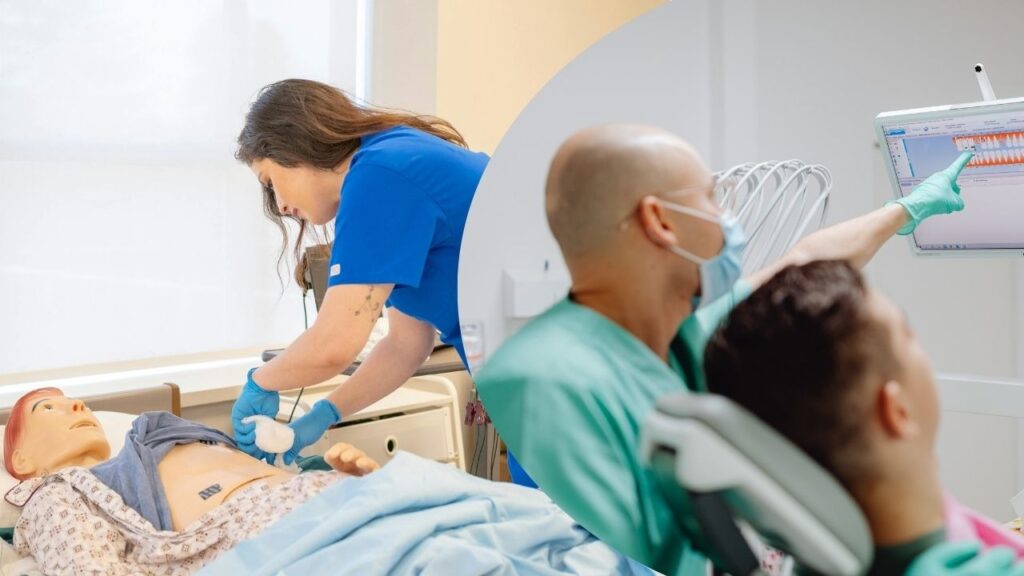
The AIIMS Nursing Officer Recruitment is the greatest Career option for the nursing candidates. The job notification dated 13-Feb-2026 contains 3,614 vacancies for Nursing Officers at different AIIMS across India and highlights the need for competent nursing professionals in the industry of healthcare. This isn’t a new government exam notification, it’s an entry point into the center of India’s most admired healthcare system, under the legendary All India Institute of Medical Sciences.
To thousands of nurses, NORCET-10 offers not just employment, but dignity, stability, advancement, and meaning in a profession tasked with the obligation of rescuing lives every day.
The Indian public healthcare system is growing at a rate never seen before. Under national healthcare missions, new AIIMS campuses and tied up trauma centers are being established across the country. It’s a Nursing Officer behind every doctor, every ICU machine, every code red hospital protocol, who is the real backbone of hospital care.
In order to select these candidates in a just, transparent and merit-driven way, the Ministry of Health and Family Welfare (MoHFW) organizes a centralized national examination named NORCET (Nursing Officer Recruitment Common Eligibility Test).
The NORCET-10 (2026) will be the 10th edition of this exam, and it stands as the gold standard of nursing recruitment in India. It would anticipate 3,625–3,700 seats, a big fill new for the trauma centers and super-specialty wings. To the aspirants, particularly GNM or B.Sc. Nursing graduates, it’s an opportunity to get rid of private sector uncertainty and come under the central government umbrella.
This one test is being held for recruitment to the posts of Nursing Officer in:
Various AIIMS located in different parts of India
Top central government hospitals like
ESIC hospitals and associated medical institutions
One examination can provide you with different career options in the whole of India, That’s what it means.
Schedule For AIIMS Nursing Officer Recruitment 2026
Event
Date (2026)
Short Notification
13/February
Detailed Notification
By 24/February
Application Start
24/February
Application Close & Fee Payment
16/March, 5:00 PM
Stage I (Prelims)
11/April
Stage I Results
16/April
Stage II (Mains)
30/April 30
Final Results
11/May
Eligibility: Who Qualifies?
NORCET-10 is open to fresh graduates of B.Sc Nursing (Hons/Post Basic), experience not required and GNM certificate holders with 2 years post-qualification experience in a 50+ bed hospital. All the candidates must have a valid Nurse/Midwife registration with the INC or any State Nursing Council.
Age: 18–30 for UR/EWS (as on 16 March). Exemptions shall be applicable as under: 5 years for Ex-Servicemen 15 years(56 years) for SC/ST PwBD Category person.
Application Fee
Category
Fee
General / OBC
₹3000
SC / ST / EWS
₹2400
PWBD
₹0 (Free)
Massive Opportunities in 2026
With AIIMS Nursing Officer Recruitment 2026 NORCET-10, there is great scope for Nursing Officers, as a total of 3600+ posts are available across all AIIMS campuses, ESIC hospitals, and central government medical institutes.
While this round of recruitment is not just replacing stagnation but also echoes a scale up of healthcare infrastructure – new ICU blocks, super speciality wings, trauma centres and regional AIIMS culturing. Notably, the growth is not metropolitan-centric and there are good job prospects in tier-2 and tier-3 cities as well.
Vacancy Breakdown
Category
Seats
%
UR
1,467
40.5
OBC
1,020
28.1
SC
536
14.8
EWS
353
9.7
ST
249
6.9
Exam Pattern: Two-Stage System
Preliminary
Exam Parameter
Details
Total Questions
100 MCQs
Total Marks
100
Exam Duration
90 minutes
Sections
Breakdown
General Knowledge & Aptitude
20 questions
Nursing Subjects
80 questions (covering nursing practices and theories)
An AIIMS Nursing Officer is entitled to financial benefits under Pay Level 7 of 7th CPC. Their gross salary is ₹44,900 per month and the net salary is ranging from ₹65,000 to ₹72,000 per month. This works out a yearly package of ₹8–9 lakh. Other allowances include Dearness Allowance (DA), House Rent Allowance (HRA), Nursing Allowance, Uniform Allowance, Night Duty Allowance.
This Job brings:
✔ Financial stability
✔ Government job security
✔ Pension benefits
✔ Medical facilities
✔ Social respect
✔ Family stability
Career Future Opportunities
Freshers
After the successful selection, candidates are appointed at the post of Junior Nursing Officer or Staff Nurse for the first time Nursing Officers commence their career. Initially, they get paid between INR 9,300 and 34,800 per month with a grade pay of INR 4,600.
Skill Development and Specialization
The nursing officers are allowed to attend many training and workshops to upgrade their knowledge throughout their service. The specialization options allow nursing professionals to enhance their expertise and earn higher pay for taking on specialized roles and advanced positions for example in pediatrics, oncology or critical care.
Promotions and Higher Roles
Through experience and skills growth, nursing officers can get promoted to the post of Charge Nurse, Nurse Manager or Clinical Nurse Specialist. These positions are usually more responsibility and more pay. For example, Nurse Managers can make a great deal more money, as they are leaders, managing teams of nurses and the day to day operations.
Future Scope Of AIIMS NORCET Nursing officers who qualify through the AIIMS NORCET will be placed in a good position in a career that will only grow. With growing healthcare and a demand for trained nurses, there are plenty of opportunities to move into senior management or education roles. such as those concerned with supervising the practice of nursing or developing policies, or those that involve teaching.
The process to apply for the AIIMS Nursing Officer Recruitment 2026 is simple and involves few steps.
The online application process for the AIIMS NORCET 10 exam will be started from 24 February 2026. Submissions are due by March 16, 2026 and none will be accepted after 5:00 p.m.
Applicants are required to register on the official website of AIIMS by entering the requisite details.
Application Form Submission: They will now be required to submit the application form along with their personal, educational and professional details.
Document submission: Need to submit all required documents such as educational certificates and nursing registration with the application form.
Payment of application fee: The application fee should be paid by the last date i.e. 16th March 2026. The fee information is usually available on the above section in this blog
Final Submission: Print it out as it will be needed in the future after final submission with all the necessary documents.
The AIIMS Nursing Officer Recruitment Common Eligibility Test (NORCET-10) for 2026 is more than just a regular recruitment, it is the cornerstone of quality maintenance in India’s top public health care system. By becoming one of the first exams in the country to make the change from ‘learning by rote’ to a highly secured two-level scenario based examination, AIIMS has raised the bar of cognitive abilities required in a nursing professional in India – bringing home recruitment at par with the most stringent clinical excellence globally.
GovUpdatewala is your trusted source for real-time updates on government exams and jobs in India. We provide verified info on SSC, UPSC, Banking, Railways, Defense, and Teaching exams. From syllabus and patterns to important dates and career tips — we support aspirants at every step.