Meet the Best Hindi Teacher for Competitive Exams Who Can Boost Your Success

Best Hindi Teachers for Competitive Exams – SSC, UPSC, Railway & State Level

Best Hindi Teacher: If you aim to clear the competitive exams like SSC, UPSC, RRB, & state-level exam, right guidance for best scoring is important. And for that, the choice of a teacher matters. While preparing for other subjects likeGeneral Knowledge, Mathematics, Reasoning, and English. Don’t forget to focus on Hindi because it is most important in many government exams. Hindi teachers not only help you by providing the core syllabus but they will prepare strategically for the exam. These teachers have a unique teaching style that will help you understand grammar, comprehension, Letter Writing, Unseen Passages and vocabulary.  

Aspirants can learn easily through their guidance including exam pattern, mock test, and shortcut methods that will help you to memorize. Few teachers provide live sessions, recorded videos, notes, and quizzes, so you can easily prepare for the examination. 

Mock test series will help you in revision and remember that every teacher has their unique way to explain hindi. Take a demo class to select the right teacher whose explanation reaches into your mind. 

Explore best Hindi teachers, they are known for their deep knowledge, best teaching style and make complex concepts of grammar easy for students.

Nitin Sir

Nitin Sir from Study91 is known for clear explanations with a practical approach. He doesn’t just explain from books but tries to relate with real-life examples from newspapers or stories to make the hardest grammar rules easy for students to understand.
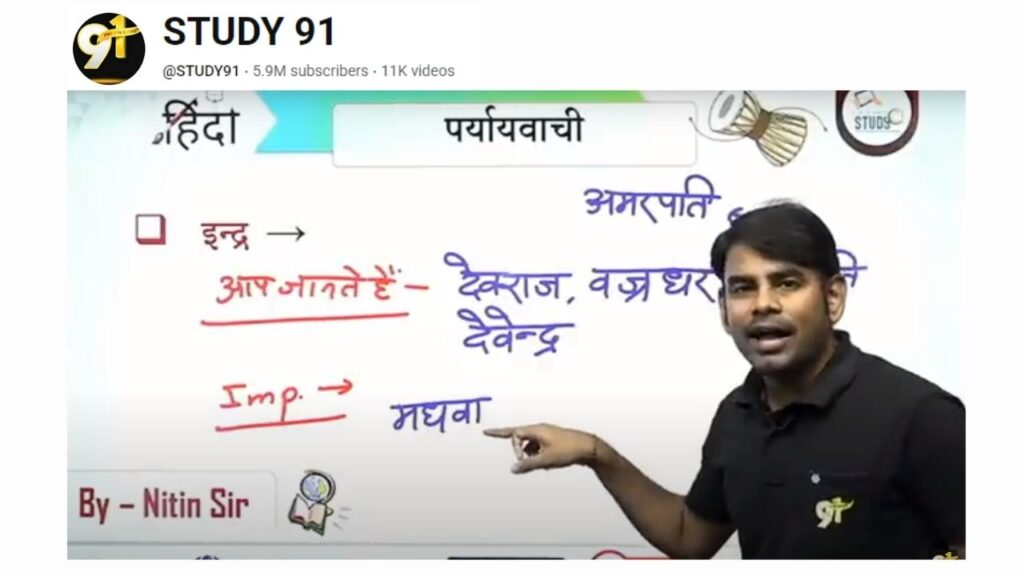
Nitin Sir Hindi Teacher Study91

Students easily memorize it, but most importantly they understand why grammar rules are used. He also gives plenty of questions to practice which is the real key to success.

Vivek Sir

Vivek Sir’s creative style of teaching makes him one of the best Hindi teachers in India. Hindi is a language of culture and creativity, according to Vivek Sir. That clearly showed his mastery of story-based teaching style which makes grammar memorable. He uses humour, short stories that don’t make students bored in Hindi classes.
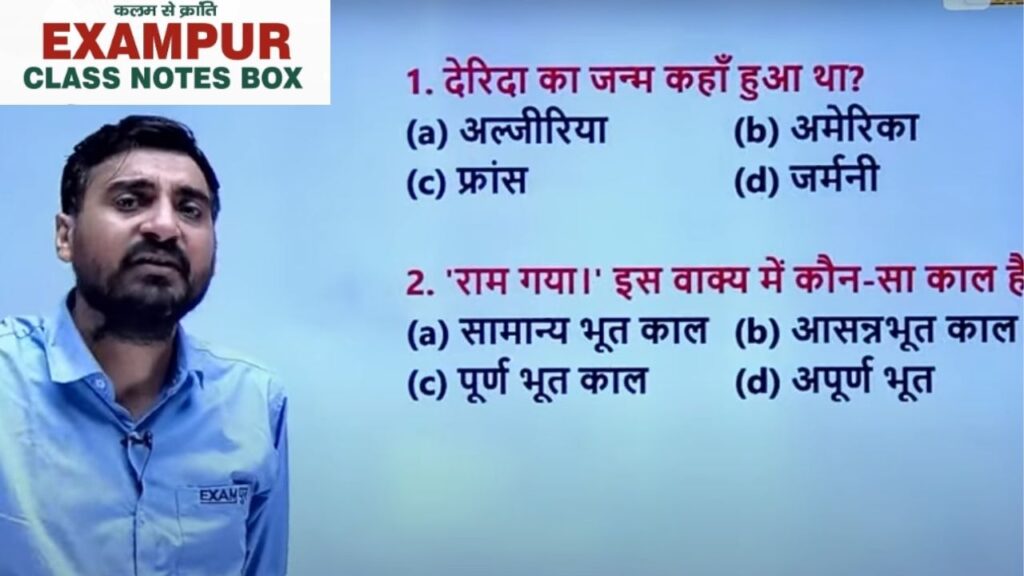
Vivek Sir Hindi Teacher for SSC, Railway, TET

Ideal for those who don’t memorize anything easily and it’s hard for preparing Hindi for exams like Railway, SSC or TET. His method is effective to recall in exams quickly, so these techniques will make students remember even under pressure.

Dr. Ajay Anurag

Dr. Ajay Anurag is a best educator of Study IQ and reputed for his deep knowledge in Hindi grammar and literature. Students looking for one teacher who can teach them both grammar and literature, Ajay Sir is the best choice.
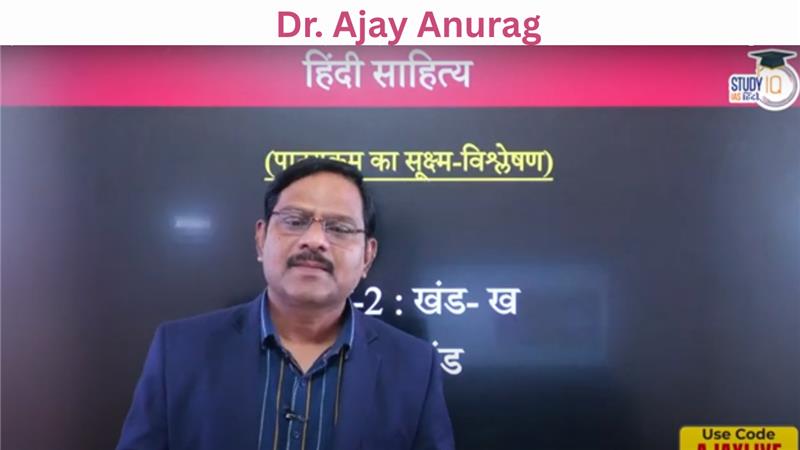
His concept-based teaching makes you understand each topic easily in minimum duration. But he doesn’t rush topics, he explains “why” behind every grammar rule.

Students who don’t just want to learn but understand Hindi topics can easily access his systematic and well-structured lessons. He also provides study material which is so detailed and exam-focused that it makes it easier for the students who are preparing for government exams.

Jitendra Soni (KGS – Khan Global Studies)

He is the best educator of KGS who is extremely popular for his Hindi Foundation Batch. Jitendra Soni is focused on friendly-tone, conduct doubt-clearing sessions, and handwritten notes.
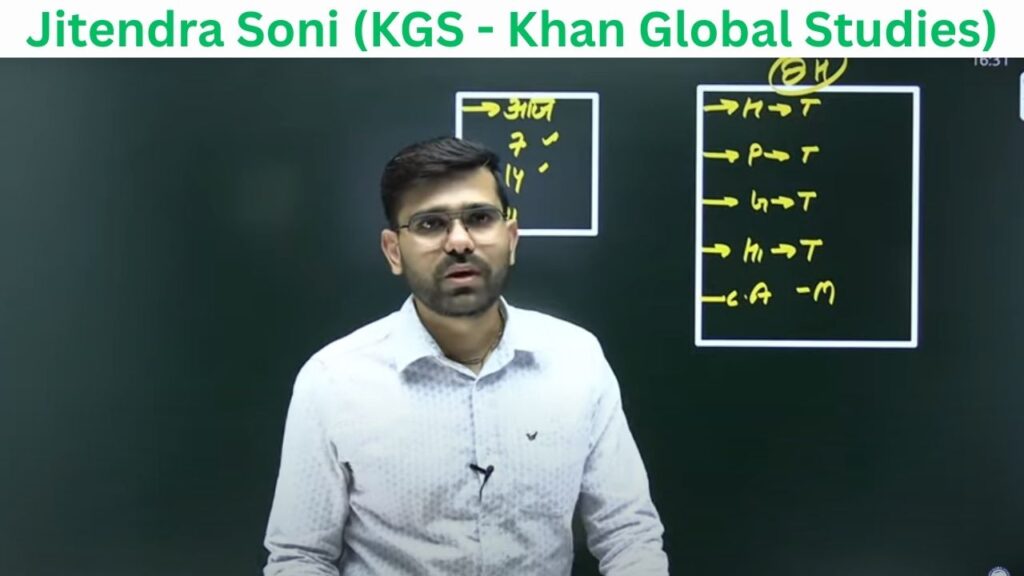
Jitendra Soni Hindi Teacher KGS

Students can simply understand every topic due to his explanation of lengthy stories, complex topics of grammar, and comprehension. Once you have taken his demo class or follow on YouTube, you will know how interactive and energetic his sessions are.

Vishal Sir (Mission Selection) 

Vishal Sir is a well-known Hindi teacher on the growing platform Mission Selection. Vishal Sir is popular among the students because of his exam-oriented preparation method. His short explanations are impactful, he helped many students with shortcuts, tricks, and practical approaches.
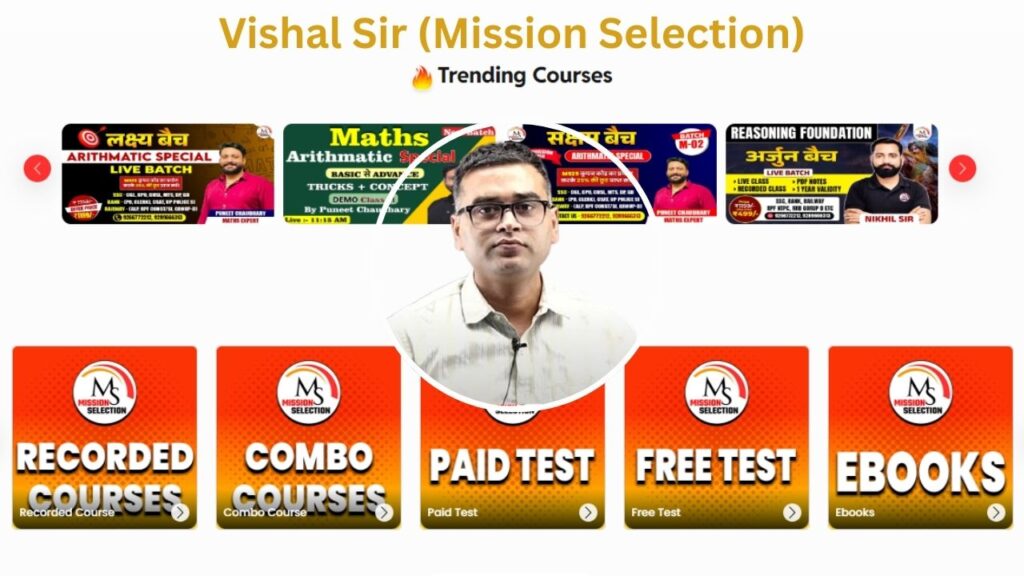
Vishal Sir Hindi Teacher Mission Selection

He is the best teacher for Police, SSC GD, Railway, Constable, and state-level exams preparations. Students who want to complete this subject within less time, they can follow Vikas Sir.

Arun Sir

Arun Sir is an excellent teacher who teaches many students for the competitive exams. He focuses on Hindi grammar complex topics to provide a detailed explanation which can help students to understand Hindi in more depth. His command over vocabulary, comprehension, and writing are valuable for the exams like SSC, Railway, and UPSC. 
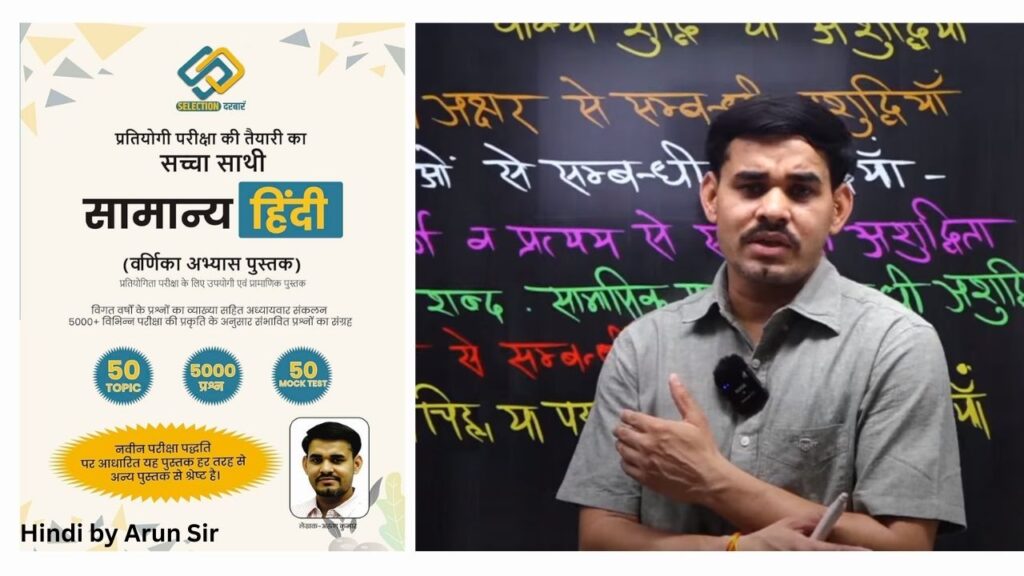
Arun Sir Hindi Teacher for SSC and UPSC

Students can easily understand his way of teaching as breaking complex topics into simpler parts including real-life examples. He helps students to practice mock tests and previous year questions for building their strong foundation on Hindi.

Naveen sir

Naveen Sir is a master of answer writing, if you are preparing for UPSC or state exam then you should make your descriptive writing good in Hindi. You will become an expert in essay writing, letter writing, and precise writing in Hindi with his consistent training.
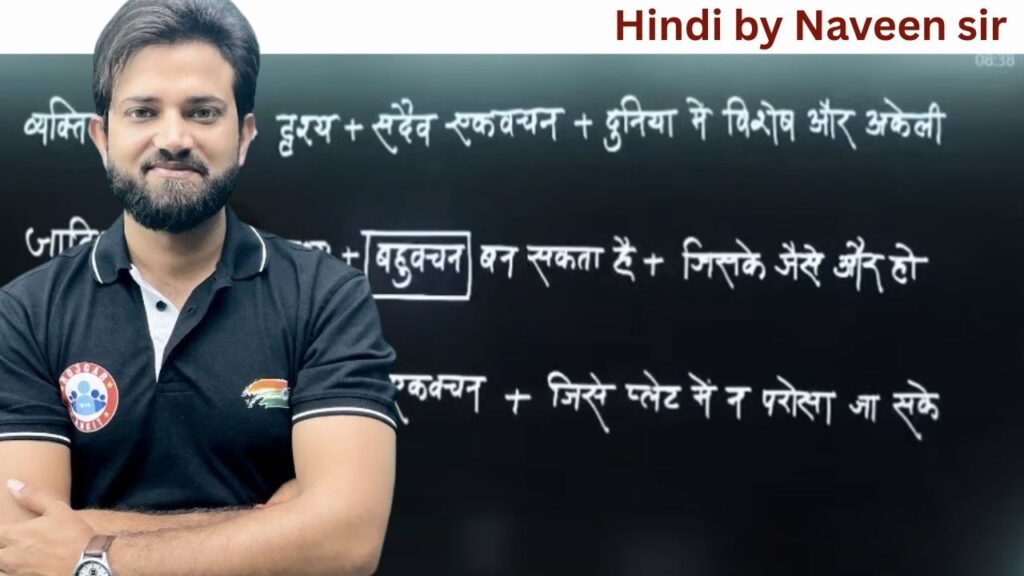
Naveen Sir Hindi Teacher for UPSC Answer Writing

He is an ideal teacher for students who want to improve their writing skills and present their answers in clean, structured, and detailed.

Other Recommended Hindi Teachers

Apart from the above names, there are a few more respected teachers who can provide you best lessons for Hindi in competitive exams:

Dr Vikas Divyakirti (Drishti IAS) – He teaches Hindi Literature with depth and clarity, making him ideal for UPSC aspirants.

Alok Sir (Adda247) – Alok Sir is focused on short-trick and not go for lengthy explanations that makes him ideal for SSC aspirants

Ritesh Sir – he also helps students to prepare for the SSC exam because he makes Hindi grammar easy through continuous practice.

Read More 👉 Meet the Best Current Affairs Teacher for SSC CGL Who Can Boost Your Score

Why these teachers stand out

Apart from their unique teaching styles, they have the same common qualities that make them best Hindi teachers.

Simple explanation – they explain every topic in easy language that helps every student to understand easily.

Practical Approach – their style including examples from newspapers, current events, and daily-life that make Hindi more understandable.

Focus on Practice – continuous practice of questions from previous year and test series, they ensure that every student solves enough questions to mentally prepare for the exam.

Motivation & Support – Hindi is so difficult for some students who came from convent schools, these teachers inspire them to make learning enjoyable.

Read More: Best Online Coaching for Bank Exam: Master Every Topic for Success

Final Thoughts

When students are focusing on tough subjects to clear competitive exams, they often forget to prepare Hindi to fuel their score. With the right teacher, Hindi can become your strongest subject. These Best Hindi Teachers for Competitive Exams have already taught many successful students now you could become next.

If you give you full potential for your exam with their guidance, you can clear the most toughest exams. They focus on exam patterns and important topics that need to be prepared well for government exams.


Leave a Comment

Your email address will not be published. Required fields are marked *

Top NEET Colleges in Lucknow with High Ranks, Fees, Seats and Details

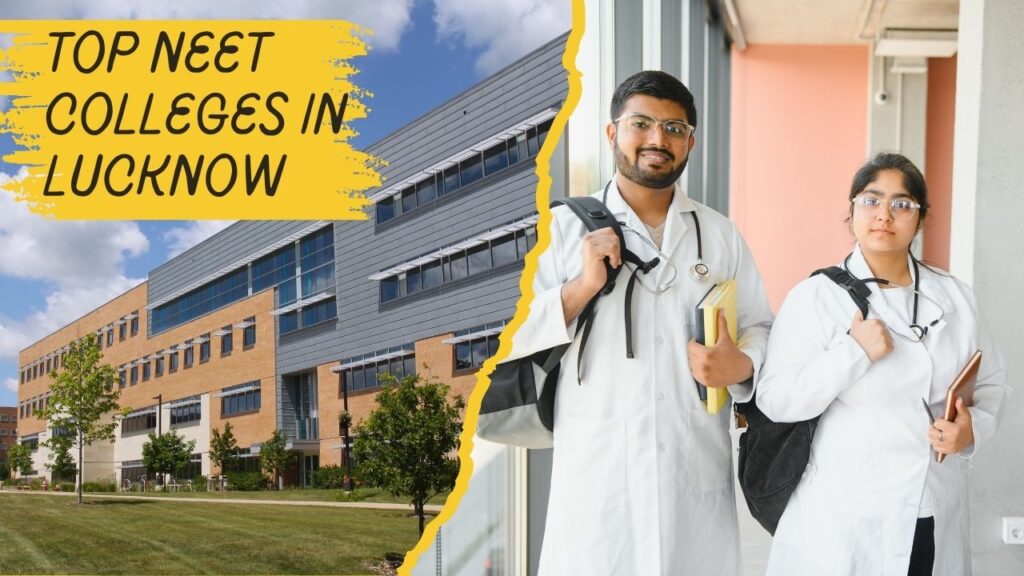
Top NEET Colleges in Lucknow

Lucknow, the Capital of Uttar Pradesh, has now become a prominent area for medical education in India. If you’re a NEET aspirant looking to get admission in a good medical college, then the city of Lucknow holds an impressive list of both government and private colleges who are recognized at the national and international level. For those who are looking for an economical government seat or want to know the top private colleges with world-class amenities, this article will help you in knowing the top NEET colleges in Lucknow, along with detailed information about the rankings, fee structure, availability of seats and the USP of each institute.  

Understanding the Medical College Landscape in Lucknow

Before we get into the names of specific colleges, it is necessary to know that the medical education in Lucknow is multi-faceted and thriving. Ranging from government colleges with very minimal fees to super premium private colleges having infrastructure at par with global standards. It has national level post graduate institutes, century old undergraduate medical colleges and some of the best private medical colleges in the country with rigorous academic regimen and modern day teaching methodologies.​  

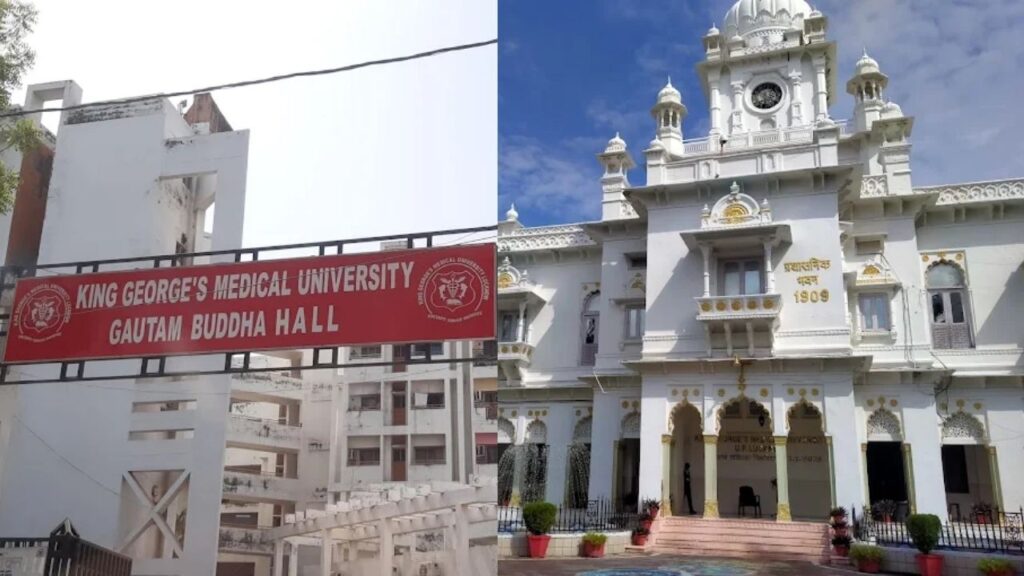
King George’s Medical University (KGMU)

King George's Medical University
Ranking & Recognition
KGMU is a premier medical college in India and is ranked 8th in the NIRF 2025 medical college ranking. KGMU has been a synonym of medical excellence in North India, that has been a legacy for more than a century. The university is well known for its research in oncology, transplant sciences and infectious-disease genomics. 
Fees & Seat 
The KGMU MBBS seat matrix is a total of 250 seats, with 15% seats allotted to the All India Quota and 85% seats are for State Quota. For state quota candidates, the fee per year is about ₹54,600, and for non-resident students, it is ₹3,52,400 per year, which is really cheap. There are some who will say they can afford higher fees but the reality is that a total fee of around rupees 2.38 lakhs for a 5.5 year (4.5 years of classwork and 1 year internship) course is a bargain for a quality medical education. 
NEET Score
King George’s Medical University takes students through NEET score which is expected to be around 625-635 marks. 
Hostel & Campus Life
The charges for Single Seater room is of Rs. 3600/- per annum and the electricity charges are Rs. 3500/-. On the other hand, the Double Seater Room is available for Rs. 2400/- per annum electricity charges are to be paid separately. 

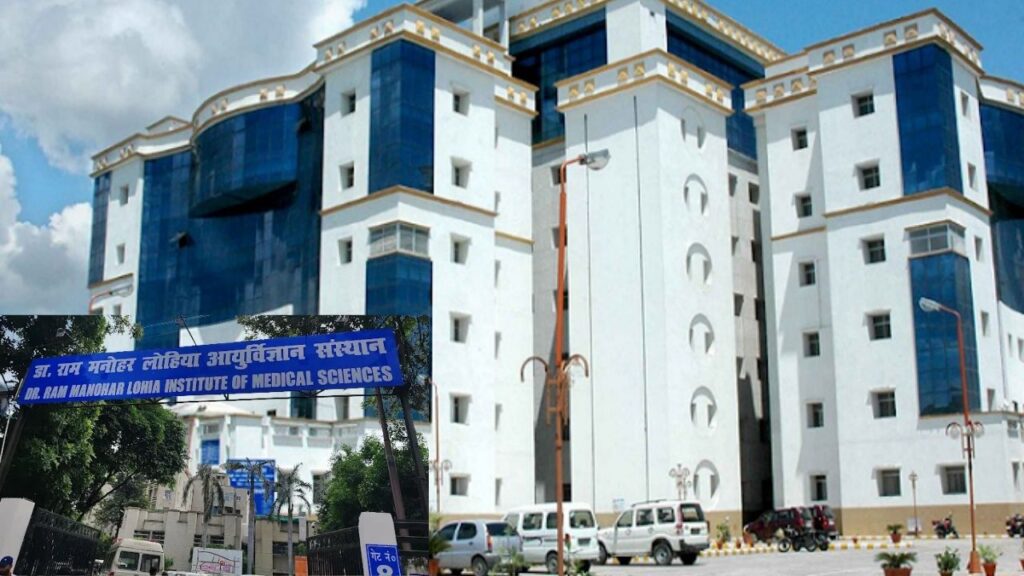
Dr. Ram Manohar Lohia Institute of Medical Sciences

Dr. Ram Manohar Lohia Institute of Medical Sciences
Ranking & Recognition
RMLIMS was formed and became operational as a State University from 2018 and has the distinction of being ranked at 61 position among Medical Colleges (NIRF 2025) which is a great achievement with an overall score of 982/2000. The institute has been established in Gomti Nagar in a spacious 42 acres campus with ultramodern infrastructure.  
Seat Distribution & Admission
The college has 200 seats in MBBS from this year, out of which 50% will be filled through All India Quota (AIQ) by MCC and 50% will be filled under State Quota by UP NEET counselling. This balance accommodates opportunities also for candidates at the state level in addition to the national level. 
Fee Structure
For the whole course, the Rs 1.82 lakh fee of MBBS at RMLIMS is one of the cheapest among all government medical colleges. The fee for the year is around Rs 49,700 which covers all tuition and examination fees.  
NEET Score Required
General category 2024 cutoff rank was approximately 2683. For AIQ seats, the aspirants who want to take admission must have been targeting a rank below 2000 with NEET score of 640 marks or above. Due to domicile preferences, the state quota cutoff rank is usually slightly lower.  
Internship & Career Prospects
Students doing internship at RMLIMS get stipend from ₹10,000 to ₹16,000 per month. The university also has 100% placements, with its students getting jobs in renowned organisations like the SGPGI, KGMU, PSUs and private hospitals.   

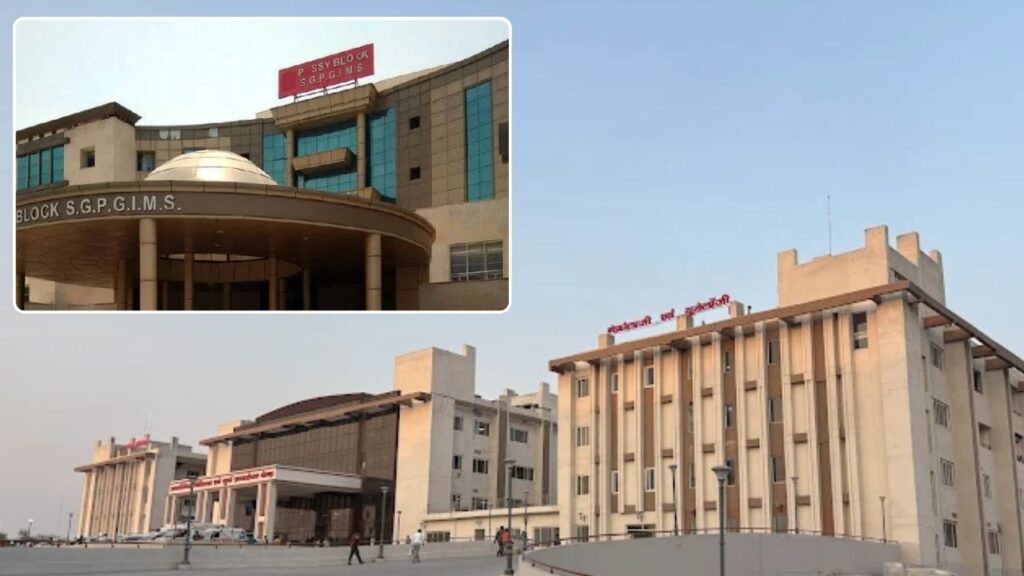
Sanjay Gandhi Medical Sciences Institute

Sanjay Gandhi Medical Sciences Institute
National Stature & Rankings
SGPGIMS is an institute of national importance and ranks 5th in India as per NIRF 2025 with a laudable score of 70.09. The university is known for its high standards in teaching, research, and clinical services and is one of the best medical institutes in India.   
Important Note on SGPGIMS
SGPGIMS is an institute for post graduate and superspeciality courses. For MBBS UG, only KGMU and RMLIMS. However, for post graduation for a specialist, SGPGIMS is the be all and end all.  

Top Private Medical Colleges in Lucknow

Candidates who are looking for private medical colleges that have good infrastructure and other facilities can check out the following list containing the best private medical colleges in Lucknow. 

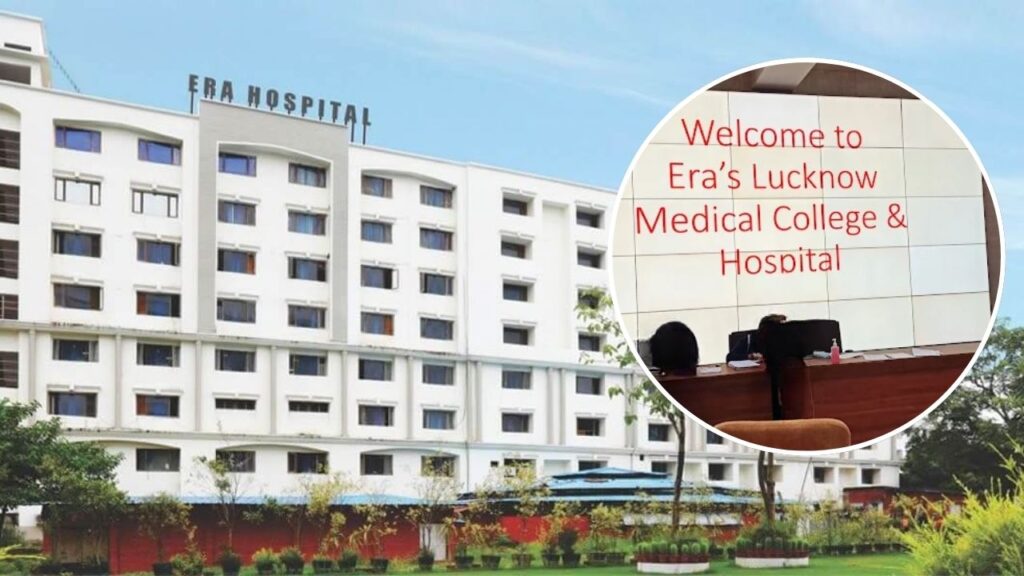
Era’s Lucknow Medical College and Hospital

Era’s Lucknow Medical College has been ranked 32 by India Today 2024 and it is one of the best paramedical colleges in India which provides 200 MBBS seats every year the highest in any pmt college in India. The National Medical Commission (NMC) recognizes the university, and the institution is NABH accredited which implies high educational standards.​

Era's Lucknow Medical College and Hospital

The complete MBBS course fee at Era’s Lucknow is approximately ₹16.6 lakhs p.a, making the the total 5 year program fee to be ₹71.16 Via. NEET cut off 2024 was a general category closing rank of 375,564 as per UP state counselling data.

Era’s is attached to a 750-bed teaching hospital with more than 1,690 OPD cases each day, which is remarkable clinical exposure. The faculty of the college is well qualified doctors and institutions have UG & PG courses. 

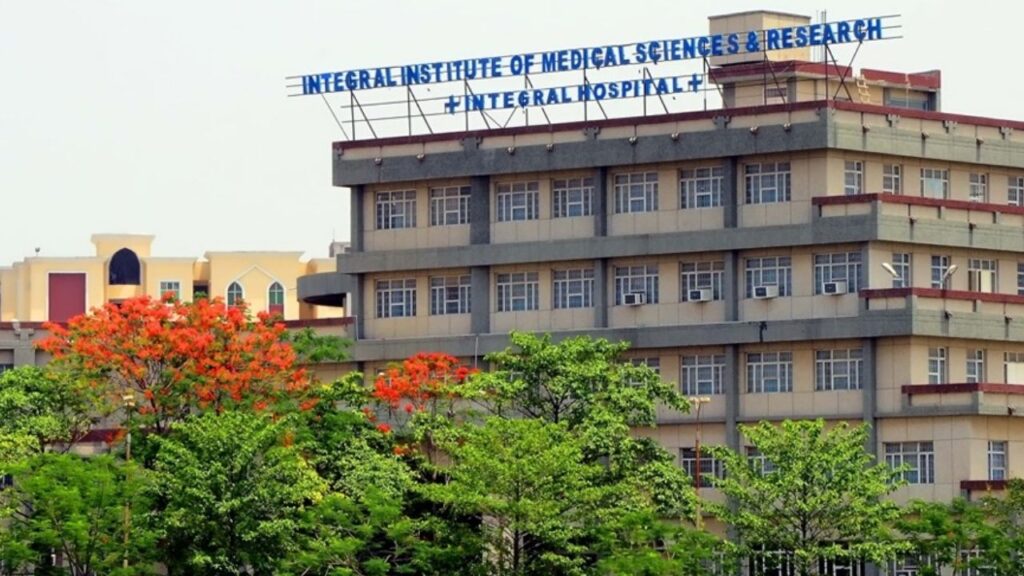
Integral Institute of Medical Sciences & Research 

IIMSR Lucknow was established in 2013 and it provides 150 seats for the course of MBBS and is placed at 118th position in NIRF Ranking with 825 score. The yearly fee is ₹11,40,000, while the overall fees for the course is ₹81 lakhs which include the cost of living in the hostel, mess etc.​

Integral Institute of Medical Sciences & Research 

For 2024, U.P State Counselling the general category closing rank was approximately 428,214. College infrastructure is good and gives internship stipend of Rs. 12,000 – 18,000 per month as per MCI. 

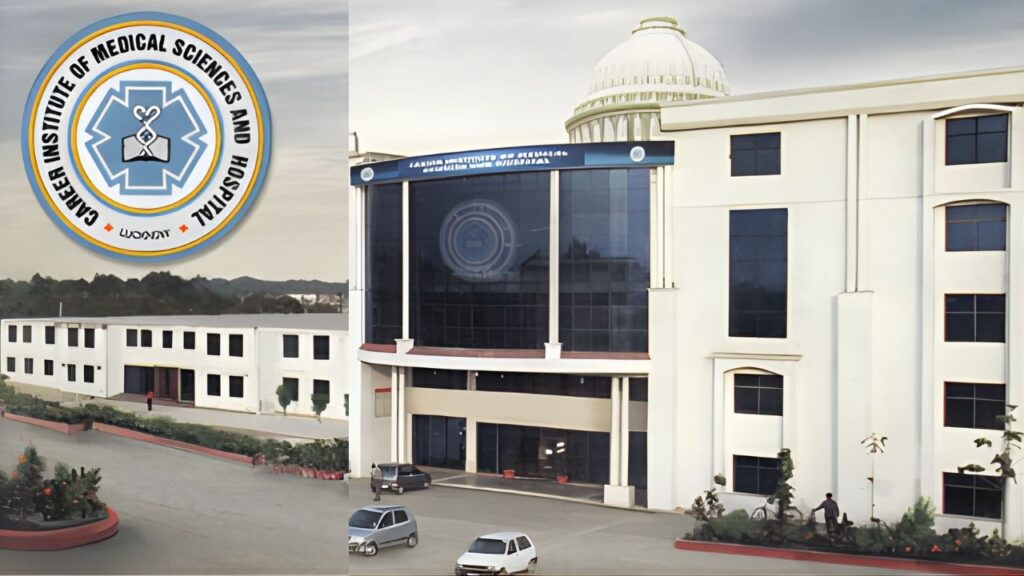
Career Institute of Medical Sciences (CIMSH)

CIMSH has 150 MBBS seats with a fee of ₹71.1 lakhs per year. The closing rank for general in 2024 was 452,601, which is a bit higher than some of the other best private colleges.

Career Institute of Medical Sciences (CIMSH)

The college follows the norms stipulated by the National Medical Commission and imparts overall medical education with clinical training in associated hospital. 

Comparative Fee Structure Overview

Government Colleges
KGMU₹2.38 lakhs total : ₹54,600 annually
RMLIMS₹1.82 lakhs total (₹49,700 annually)
Private Colleges
Era’s Lucknow₹71.16 lakhs total (₹16.6 lakhs annually)
Integral University₹81 lakhs total (₹11.4 lakhs+ annually)
Career Institute₹71.1 lakhs total (approximately ₹14.2 lakhs annually)

Understanding NEET Cutoffs and Rankings

The NEET cutoff denotes the threshold-score and rank prescribed for getting the admission, the one that is the basic requirement aspirants have to meet. It’s important to keep in mind that cutoffs differ wildly between types of applicants:

AIQ (All India Quota) – It tends higher competitiveness, with higher cutoffs, through the MCC for admission.

State Quota – For students of Uttar Pradesh only, higher cutoffs are generally included because of domiciliary preference.

For most government colleges like KGMU, a score of 700+ in NEET for AIQ, 690+ for state quota is a safe bet for gen category aspirants. It would help if you aimed for 640+ marks in RMLIMS if you belong to a competitive category.​

The cutoff of private colleges is very fluctuating as per intake and managing members. But do keep in mind that the fees are significantly higher at Private colleges with lower cutoff ranks.

Read More 👉  Bihar BSSC Inter Level Online Form 2025: Apply Online, Dates & Eligibility

Preparing for NEET to Secure Admission

With a 650+ score in NEET, you have great chances in top government colleges. A 600+ score makes you competitive to RMLIMS as well, below 600 scores are mainly for the private colleges or least ranked government colleges. 

Begin your NEET study preparations around 12-18 months prior to the exam. Work on making concepts crystal clear, no rote learning. Enroll in good coaching if required, be consistent in your studies, and take mock tests frequently to know about your progress. Remember, NEET is to test on your knowledge, analytical abilities and time management. 

Internship Opportunities and Career Prospects

One major benefit of doing medicine in Lucknow is the quality of the internship. Government colleges provide stipend for internship in the range of ₹12,000 to ₹20,000 per month whereas private colleges generally pay ₹12,000 to ₹18,000 per month. And more importantly, lucknow medical colleges have so many diversified medical affiliated hospitals and specialty centers.

After your MBBS then have good scope in lucknow for Post Graduation especially through SGPGIMS which has been nationally recognized for its PG courses. Many graduates of MBBS from Lucknow Colleges like KGMC secure seats in premier institutions for further specialisation. 

Conclusion

The medical colleges in Lucknow provide an all-round ecosystem for quality education at different price brackets. Be it a merit-cum-based student looking at government institutes or a well-heeled parent to afford the best of private institutes in the city, Lucknow has some to match your dreams. The secret is to know what are your strengths, financials, career goals and select based on that.

Start your preparation seriously, be consistent and “Believe in yourself”. Lucknow is one city where you can certainly “make it” if you set your mind to it, your determination and efforts and get into one of the best colleges there is, there is no doubt about that. The right college choice is what starts you on your journey to becoming a compassionate and skilled doctor – and when it comes to that, Lucknow certainly has some great places to get the journey started. 

Leave a Comment

Your email address will not be published. Required fields are marked *

BTech vs BSc vs BA in 2025: Which Degree Offers the Best Future Scope?

BTech vs BSc vs BA in 2025: Which Degree Offers the Best Future Scope?

In today’s world, students must choose their field in which they have interest. Whether you choose BTech vs BSc vs BA in 2025, the future scope is consistently growing, if you follow the right direction. The right direction means if you are interested in teaching then BSc and BA is a good option but if you want to grow in the tech industry then BTech is the right option for you. Focus and the right college is also a matter to build your established career. 

Graduation is the first step in your career so take it wisely. The primary focus of BTech is Engineering & Technology. While BSc opens a path for you in science and research areas. BA is leading you towards further education to get a specialization in any specific subject. Students who are preparing for government exams can also pursue BA after 12th but many posts require other degrees. Before taking any action, you must check eligibility carefully for your future scope. 

Tips To Choose the Field for Graduation

Remember your passion, what you want to become in future? By acknowledging these questions, you can find the answer within yourself and then check the path to reach there. Once you know where to go, you will not get confused about your education. BA and BSc are easy courses, meanwhile BTech is hard, so if you want to become an engineer then you must pursue a BTech degree. 

If you want to become a Teacher, Journalist, Social Worker, HR, or Government Employee then BA is the best option for you. You can pursue other Technical courses and Specializations after BA. If you are interested in Teaching Science, Research, Nursing, or Higher Degrees, you can pursue a BSc. 

Comparison of BTech vs BSc vs BA

BTech (Bachelor of Technology), BSc (Bachelor of Science), and BA (Bachelor of Art) are highly demanding careers which offer a wider range of opportunities to the students. Their comparison is primarily focused on the career scope, course duration, course fees, eligibility and course curriculum.

Course Content of BTech vs BSc vs BA

BTech is a professional degree to deliver hands-on learning for engineering and technology. To advance technology with innovative minds is the motive of the industries. Colleges maintain their curriculum of BTech with application-based skills to get their students industry ready. It covers technical and applied aspects of specific engineering disciplines such as Mechanical, Civil, Computer Science, Chemical, Electrical, and Information Technology.

BSc is a graduation degree with more theoretical education in pure science like Physics, Chemistry, Zoology, Botany, Computer Science, IT, Statistics, Economic, Aeronautics, etc. It offers core concepts on the theories of science & technologies which get you focused on more research methodologies and theoretical understanding.

BA is involved in more Literature, History, Economics, Psychology, Sociology, Political Science, Geography, Journalism, Public Administration, and Social Work. It focuses on more theoretical concepts, creative writing and analytical skills, that is why it is perfect for those who want to become a professor in any of the subjects.

Read More:- SSC JE vs RRB JE: Which Govt Job Offers Better Salary, Growth & Stability in 2025?

Courses Duration 

  • BTech is entirely four years with one year internship. 
  • Standard BSc is a three year course which can be extended in specific programs such as Integrated program or BSc Honors.
  • BA standard degree is a total of three years course but BA honors is extended for four years. 

Eligibility for BTech, BSc, BA Courses

BTech & BSc graduation requires a 10+2 marksheet with science subjects including Physics, Chemistry, Biology & Mathematics. Admission in BSc can be done through an entrance test or direct admission. During BTech admission, you may have to clear JEE Mains/ Advanced which is hard to score well.

Students can take admission in BA after completing their 10+2 in any stream. It is not necessarily important to come from a science or commerce background. Students from arts, commerce, or science are eligible for BA.

Best Future Scope for BTech vs BSc vs BA

BTech Graduates are developing skills in engineering roles in departments of IT, Manufacturing, Chemical, Electrical, Production, Civil, Biomedical. After BTech, students can get a high salary in engineering roles from the top companies like Tata, IBM, Amazon, TCS, Infosys, Cisco, Godrej, and Siemens.

BSc Graduates are offering students a diverse range of opportunities to become job ready but for a higher scope, you should consider a master’s degree after BSc. There are some other specializations in technical courses, data science, and machine learning that can be helpful for getting a job in tech industries. You can also pursue higher education in pure science to become a lecturer or professor.

BA degree is offering many opportunities in further education for research, teaching, nursing, and creative arts & writing. Students can take a BA degree to establish a career in any specific field of subject. It offers many opportunities in the departments like HR, Media & Journalism, Social Work, Event Management, Hotel Management, Content Writer, Digital Marketing, Business Analyst, and Government Sector. Some of these require a diploma or certificate course for applying to the particular role.

How Can You Choose the Best Course?

There is a final answer for that because it all depends on your interest and budget. Let’s start from the lower budget course to the highest budget course:

Choose BA if:

  • You want to become a teacher, professor, analyst, content creator, digital marketing, sales executive, owning a business or preparing for a government job. 
  • You can’t afford the heavy expenses of the course.
  • You are working professionally and want to continue your education.
  • You want to pursue another degree (MA, BEd, LLB) or diploma and don’t want to burden yourself with a ton of syllabus.

Choose BSc if:

  • You are interested in science and want to research into this field.
  • You want to become a professor in a science subject.
  • You cannot afford BTech so you can choose BSc with a technical subject.
  • You are not prepared for the entrance tests, direct admission can happen in BSc.
  • You want further studies after graduation.

Choose BTech if:

  • You want to become an Engineer, interested in Physics, Chemistry, and mathematics.
  • You can afford to study from a recognized college.
  • You want the highest salary package after graduation.
  • You want a structured program to grab industry opportunities. 
  • Higher education like MTech for leadership roles in tech-driven industries. 

How do BTech, BSc, and BA degrees differ in career prospects

A comparison table will be good to observe the differences easily among them:

DegreeKey Career ProspectsTypical RolesSalary and Opportunities
BTechTechnology, engineering, IT, manufacturingSoftware engineer, mechanical engineer, data scientist, IT consultantHigher starting salaries, strong industry demand, direct recruitment in technical roles
BScResearch, academia, pharmaceuticals, environment, governmentResearch scientist, lab technician, data analyst, teacherModest starting salaries, very good with advanced qualifications, flexible career paths
BAHumanities, social sciences, media, civil servicesJournalist, teacher, public relations officer, civil servantGenerally requires higher studies for career growth, diverse but less technical roles

Conclusion

Whether it is a debate of BTech vs BSc vs BA, you can choose your degree according to your interest and need for your career scope. Let’s explore the differences in each degree’s details and career scope which can help you to decide the right degree for you. It’s a turning point of your life after 12th, you can’t decide just in a second. You have to list out your choices, interest, and budget then come back to this article to explore every detail for the BTech, BSc, and BA degree future scope.

Leave a Comment

Your email address will not be published. Required fields are marked *

Top IT Government Jobs in India You Must Apply for in 2025

Top IT Government Jobs in India

If you are an IT graduate or tech enthusiast looking for a well-paying and stable career then you can consider IT Government Jobs in India. This is the best option for job security and competitive salaries but also offers career growth and work-life balance. There are top  IT government jobs in India that you should know before applying and check the eligibility criteria, salary, and the selection process for each job. If you are scared from sudden layoffs in the private sector or no retirement benefits. You can choose this path for an excessive amount of perks.

Best IT Government Jobs in India 

Scientist/Technical Assistant – National Informatics Centre (NIC)

This is the top-tier position in the government involving high-end projects for national development. IT professionals are selected by the NIC in the government sector. Vacancy notice is presented on the NIC official website. The job roles are Scientific Officer, Technical Assistants, Scientist-B, these roles offer a great salary and benefits.

DepartmentMinistry of Electronics & Information Technology
RoleSoftware Development, System Management, Cybersecurity
EligibilityProfessional degree is required for this roleB.TechMasters in Computer Application (MCA)M.Sc (IT or CS)
Career GrowthPromotion to Scientist ‘C’,  Scientist ‘DProgression to Senior Technical Assistant or Scientist roles 

Important Skills

  • Candidates should be experts in coding.
  • Command on concepts of cybersecurity, cloud computing, and AI.
  • Ability to Collaborating with teams.
  • Problem-solving and analytical thinking are mandatory skills for this role.

Selection Process

Written ExaminationObjective test focusing on logical reasoning, quantitative aptitude, and IT/Computer Science
Skill TestShortlisted candidates has to give Hands-on assessment of IT skills 
InterviewAssessment of domain expertise, problem-solving skills, and understanding of IT solutions.

Assistant Programmer OR Data Processing Assistant 

This post is filled through the competitive exams like SSC CGL or SSC Selection Post. The positions come under the Group B or C but have fixed hours, growth, posting, or promotion to the next level and also increase salary according to the level. 

DepartmentSSC (Staff Selection Commission)
RoleSoftware coding, troubleshooting, database maintenance
EligibilityBachelor’s in Computer Science/IT, Certifications in programming, networking.
ExperienceFreshers are eligible for entry-level positions
Age LimitGenerally between 18 to 30 years
Career GrowthPromotion to Senior Programmer, System Analyst, Data Manager and Technical Officer roles

Important Skills

  • Expert in programming languages like PHP, Java, Python.
  • Understanding of MYSQL or Oracle.
  • Candidates should be able to solve IT issues within a minimum time period.
  • Problem-solving and analytical thinking.

Selection Process

Written ExaminationObjective test focusing on logical reasoning, quantitative aptitude, and Computer Science
Skill TestShortlisted candidates has to give technical assessment 
InterviewOn technical skills and job responsibility

ISRO Scientist/Engineer – SC (Computer Science)

ISRO is one of the top popular IT developers because it has developed top level projects. The job in ISRO required professional skills in a specific field. The recruitment process occurs to fill the vacancies and is completed by the written test and interview.  IT Professional’s top-notch choice for their career as a ISRO Scientist. There are opportunities for the ISRO workers such as Work on Space, Excellent training programs, Growth, housing, and medical allowances.

DepartmentIndian Space Research Organisation
RoleSoftware development, control systems, data analytics
EligibilityB.E/B.Tech in CS or IT with 65%+
Age LimitMaximum 28 years for Gen, SC/ST has 5 years relaxation, OBC has 3 years relaxation
Career GrowthPromoted to Higher scientific roles, Promotions are based on years of experience and performanceOpportunity for Specialization in space applications, AI, cybersecurity

Important Skills

  • Good knowledge in software development tools and environments.
  • Candidates should be proficient in programming languages.
  • Candidates should be Expert in networking, and cybersecurity.
  • Problem-solving and analytical thinking.
  • AI and ML knowledge would be good for understanding current time tasks.

Selection Process

Written ExaminationObjective test focusing on Operating Systems, Networking, and DSA.
InterviewTechnical round and HR round
Medical ExaminationCandidates must meet ISRO’s medical and fitness standards

Read More 👉 Top Government Jobs After MBA in 2025 You Shouldn’t Miss!

DRDO – Scientist ‘B’ or Technical Officer

If you can clear the GATE exam and get a high score then you can be considered a DRDO scientist or technical officer. Just apply through the official website of DRDO for these job roles, there are a large number of vacancies for technical officers. You can also take the CEPTAM exam for this job role. You can get a chance to work on High-tech defence-related IT project. The Research-oriented environment is actually the impressive Secure government job with attractive pay.

DepartmentDefence Research & Development Organisation
RoleSecure AI/ML-based projects
EligibilityB.Tech/M.Tech in any field like electronics or mechanical
Age LimitGenerally up to 35 years
Career GrowthScientist ‘B’ promoted to Scientist ‘C’, ‘D’, Technical Officers promoted to Senior Technical Officer and Chief Technical Officer positions.

Selection Process

Written ExaminationTechnical paper based on IT concepts
InterviewShortlisted candidates are called for an interview. This process checks the ability in their technical expertise 

IB ACIO (Assistant Central Intelligence Officer) – Tech

The Assistant Central Intelligence Officer is a high position in the IB, you have to maintain your technical skills for this role. You must have technical expertise as the role demands advanced skills to handle the government task related to intelligence and security. Position also involves strategic-level cybersecurity work, management of technical equipment, Handsome salary with risk allowances, and coordinated intelligence efforts.

DepartmentIntelligence Bureau
RoleCyber surveillance, network monitoring, IT analysis
EligibilityB.Tech in Computer Science/IT/ECEKnowledge of cybersecurity, networking, or Command on computer language
Age Limit18-27 years (age relaxation for reserved category)
Career GrowthPromotion to senior level deputy positions

Important Skills

  • Good knowledge of networking and cybersecurity.
  • Candidates should be able to handle data analysis tools.
  • Have a good knowledge in surveillance technologies.
  • Ability to work under pressure in confidential and high-stakes scenarios.

Selection Process

Written ExaminationA technical paper based on the expertise mention by the candidate
InterviewShortlisted candidates are called for an interview. This process checks the ability in their Skills
Medical Fitness TestIB has some medical standards, candidates should meet the requirement.

Tips to Crack IT Government Exams in 2025

Check out the official website of government recruitments for these job roles. Notices updated on the website to fill the vacancies.

Prepare yourself for technical and aptitude tests. Most of the exams have the same topic like reasoning, GK, and technical topics.

Prepare with online resources because they offer great test series.

Code consistently for coding roles, Especially for NIC, ISRO, and DRDO roles.

Conclusion

IT government jobs will come in a large number of vacancies. Grab the opportunity now for the technical roles in the government sector as soon as possible and enjoy the lifetime freedom from private sectors incapability of providing high salaries to the developers or engineers. If you are good in coding or IT concepts you should consider the government roles for better career growth and also start preparation to beat the interview and skill test to get selected for the job roles.

Leave a Comment

Your email address will not be published. Required fields are marked *

JEE Main Result 2026 – Eligibility, Syllabus, Dates, Pattern Explained

JEE Main Result

The JEE Main 2026 exam has been made the necessary academic test for Indian engineering aspirants since now for the engineering aspirants. On 16th February 2026, candidates who appeared for the exam will be able to check the JEE Main Result 2026 for January session. JEE Main is a system that requires one to be mentally strong, strategically enduring and regulation-tight  not only about ability. 

JEE Main Result the gateway exam for prestigious technical institutions in the country including the National Institutes of Technology (NITs), Indian Institutes of Information Technology (IIITs), and Centrally Funded Technical Institutes (CFTIs) the exam goes through a scale of participation that is unprecedented globally. Because it also serves as the single entrance path to the JEE Advanced, it represents a major turning point for the Indian education system. 

The information shows a strong increase in registrations with more than 1.35 million candidates for Session 1 alone. This demographic bulge requires a granular analysis of the test’s structural elements, including eligibility rules and the statistical normalization of scores. 

NTA Reforms & Administrative Changes in JEE Main 2026

In a bid to ensure the sanctity of the procedure, the NTA has brought in game changing measures:

  • Biometric Security : Now there is a “Live Photograph” taken during application that restricts impersonation.
  • Operative Changes: The test will be given on multiple dates and will require an advanced statistical “normalization” process to equate different levels of difficulty.
  • JEE Main Result Timeframes: Although administrative delays such as the Session 1 result postponement from February 12 to February 16, 2026 — do induce stress, they are vital for thorough validation of data. 

Examination Schedule and Timeline 

The NTA has adopted a two-tier system for the hour long sessions, offering candidates a tactical cushion. This enables students to view the January attempt as a baseline and the April attempt as a fine-tuning move.

The JEE Main Result 2026 Session 1 

Paper 1 (B.E. / B.Tech) was held on January 21, 22, 23, 24, and 28 over multiple days, while Paper 2 (B.Arch/Planning) was held on January 29.

The JEE Main Result delay is due to the complexity of the normalization process, it is now expected on February 16. For the NTA to be fair, it must normalize the scores within the millions of data points. 

Session 2 Dates 

EventSession 1 (January)Session 2 (April)
Application WindowConcluded1—25/Feb/ 2026
Exam Dates21–29/Jan/20262–9/Apr/2026
JEE Main Result Declaration16/Feb/202620/Apr/2026 (Expected)

Eligibility Architecture: The 75% Rule and Beyond

It is necessary to know the funnel of eligibility to avoid getting disqualified in the stage of admission process.

Age and Attempts Age: There is no upper age limit for JEE Main, however some institutions may have their own fixed limits.

The Three-Year Window: You should have passed Class 12 in 2024, 2025 or appearing in 2026.

Attempts: The exam can be attempted for three consecutive years by the candidates. 

The Performance Threshold

But the access to NITs, IIITs and CFTIs is limited by eligibility criteria that includes:

General/OBC-NCL/EWS: Minimum 75% in aggregate in class 12th.

SC/ST: 65% aggregate minimum.

Option 2: Be in the Top 20 percentile of your respective Board. 

State of Eligibility

Your ‘Home State Quota’ will be decided on the basis of the state of examination of your Class 12, not your residential status. For example, a student of Bihar coaching in Kota (Rajasthan) will come under Rajasthan Home State quota. 

Read More:- Railway RRB ALP Admit Card 2026: Download Now From Direct Link

Examination Pattern For JEE Main

AspectDetails
Exam ModeComputer-Based Test (CBT); focuses on application and speed.
Total Marks300
Duration3 Hours
SubjectsPhysics, Chemistry, Mathematics (each with two sections)
Section A20 Mandatory MCQs per subject
Section B10 Numerical Value Questions (NVQs) per subject; attempt any 5
Penalty Rule-1 negative marking for both MCQs and NVQs; precision required

Subject-Wise Syllabus Breakdown

Mathematics, Physics and Chemistry have strategic places where one must focus to improve performance:

Mathematics:  

Learn Calculus and Algebra well as they are the basics.Don’t ignore Vectors and 3D Geometry as these are very easy and carry good amount of marks in examinations.Also focus on Coordinate Geometry, Matrices and Statistics for high yield.

Physics:  

Concentrate on concepts and the use of the formulas. Modern Physics, Semiconductors = very good marks, not much calculation. Things are inevitably going to move around in your lab, so you need to be comfortable with experimental skills, especially Vernier Calipers and Error Analysis, handy points as well.

Chemistry:  

Chemistry is a very efficient subject for which you could save a lot of time and spend more time in Mathematics.  

Physical Chemistry: Be good at numericals to do well.  

Inorganic Chemistry: Be good in p-block trends;solidify your knowledge of Coordination Compounds.  

Organic Chemistry: Learn the reaction mechanisms and Biomolecules,bcoz they are very important.

Your study time can be better used and your score can be higher by focusing on these areas with the greatest yield. 

Post-Session 1 Roadmap to April

Reviewing how you did in January is the first step towards doing well in April.

  • Category A (98+ Percentile): Begin dedicating 70% of your time to JEE Advanced questions.
  • Category B (90-98 Percentile): Look for “low-hanging fruit.” Earn higher accuracy in Physics and Chemistry to enter the elite group.
  • Category C (<90 Precentile): Go back to basics. Concentrate your efforts on the most common chapters that ask questions instead of covering all the syllabus. 

The “Golden Window”

To Those Who Are Taking Boards In Feb-March The gap between the last Board exam and JEE on April 2 is crucial. Prepare Board to learn NCERT concepts which are directly used in the questions of Inorganic Chemistry and theoretical Physics. 

JoSAA & CSAB Counselling Process 2026

Admissions counselling for engineering in India is not limited to just ranking, as the Centralised Joint Seat Allocation (JoSAA) Authority in six rounds of seat allotment. Candidates may opt Freeze to accept and confirm their seat, Float to accept their seat and appear for seat updation in subsequent rounds, or Slide to retain the seat and try for an improved branch in the same institute. If there are still vacant seats after the JoSAA rounds, the procedure is continued by CSAB through special rounds which tend to be the last chance for many students with lower ranks to get an admission in a reputed NITs and other top institute. 

Conclusion

JEE Main 2026 is not just a good entrance exam—it is a good portal to sift through all the engineering institutes in the top Indian engineering colleges. Success is based on more than just knowledge: you also need to have a plan, be consistent, and make smart decisions. From understanding the exam pattern and eligibility criteria to utilising both attempts to the maximum and managing JoSAA–CSAB counselling effectively, every step will determine your outcome. Clarity, discipline, long term vision and direction in studying helped these students not only to qualify, but to open the right “doors” for their future. 

Leave a Comment

Your email address will not be published. Required fields are marked *

PFRDA Grade A Recruitment 2025 Out – Apply Online for Assistant Manager Post

PFRDA Grade A Recruitment 2025

The application process for PFRDA Grade A Recruitment 2025 ends on 6th August 2025. Fill out the form before the last date of application. The portal is open on 23rd June 2025 to apply online and the link will activate soon. Official notification has been released, you can download it through the link mentioned in the article. A total of 20 vacancies for the Assistant Manager which you can apply for. If you are willing to build your career in the government sector, it is time to fill out an application on the official website.

Pension Fund Regulatory and Development Authority selects candidates through a 3-stage selection process. Candidates should pass the Preliminary exam (1st stage), Main Exam (2nd stage), and Interview (3rd stage). Those candidates who clear out these three stages will be selected for the Assistant Manager Post.

OrganizationPension Fund Regulatory and Development Authority 
PostAssistant Manager
Number of Vacancies20
Apply OnlineClick Here
Official websiteClick Here

Dates To Remember For PFRDA Grade A Recruitment

Notification Date23rd June 2025
Application Starts On23rd June 2025
Application Ends On6th August 2025
Fee Submission Last Date6th August 2025
Exam Date6th September 2025
Application Fee
General/EWS/OBCRs. 1000/-
SC/ST/PWD/Female0/-

Read More 👉 Top Courses After 12th Arts With High Salary – Best Career Paths Revealed!

Vacancy For Assistant Manager PFRDA 2025

StreamsVacancies
General 8
Finance & Accounts2
Information Technology2
Research (Statistics)2
Research (Economics)1
Actuary2
Legal2
Official Language1
Total20

Eligibility for PFRDA Grade A Recruitment

Age Limit 
Minimum Age18 years
Maximum Age30 years
Education Required
GeneralPost Graduation in any relevant subject, Graduate in Law/Engineering from any recognized board, ACA/FCA from ICAI, ACS/FCS from ICSI, CFA from the institute, OR ACMA/FCMA from ICMAI
Information TechnologyUG with Engineering (cs, electrical, electronics), PG with Computer Application, UG with any discipline + PG in CS/IT, OR UG/PG/Diploma in AI & ML 
Finance & AccountsUG with ACA/FCA from ICAI, ACS/FCS from ICSI,  CFA from CFA institute, ORACMA/FCMA from ICMAI.
Research (Statistics)Post Graduation in Finance/Economics/Statistics
Research (Economics)Post Graduation in Statistics/Economics/Commerce
ActuaryBachelor’s in Core subjects of Actuaries of India examination
LegalGraduation in Law from any recognized college.
Official LanguageUG & PG with Hindi, English OR Mater’s in Sanskrit/Economic/Commerce with Hindi as a subject at Bachelor’s level from any recognized college.

Important Links for PFRDA Grade A Recruitment

Apply OnlineClick Here
Join Telegram ChannelClick Here
Official websiteClick Here

Leave a Comment

Your email address will not be published. Required fields are marked *

Scroll to Top