Microsoft Offers Buyouts to 60,000 Employees as AI Spending Surges

Microsoft Offers Buyouts

Microsoft Offers Buyouts to 60,000 Employees as AI spending surges across India across the US, the UK, and Canada, that wasn’t a hypothetical scenario—it was reality. More than a quarter of Microsoft’s global workforce of 2,23,000 full-time staff just received a “Voluntary Exit Offer”.

Before panic sets in, let’s clear up the biggest misconception floating around social media. Microsoft is not firing 60,000 people. In fact, CFO Amy Hood expects 3,000 or fewer employees to actually take the deal and walk away by the end of the year.

Still, extending an exit door to a quarter of your company is a massive cultural moment. And when you look at the timing, it reveals an uncomfortable truth about where Big Tech is headed: the bill for the artificial intelligence revolution has arrived, and companies are rearranging everything—including their people—to pay for it.

This is Not a Traditional Layoffs, Career Change Opportunity

Unlike traditional layoffs where people are blindsided and lose access to their accounts overnight, this is a calculated, optional off-ramp. Microsoft’s Chief People Officer, Amy Coleman, framed the move in an internal memo as a way to let employees who are already contemplating a career change “make that transition now with support”.

The details of the offer show just how broad this shake-up is:

  • Who is eligible: Employees in the Group below Staff Level 70 (Vice President level) across participating teams in India, US, Canada and the UK. This is unlike previous retirement policies with no age or length of time in the business requirements and past performance is disregarded. 
  • The payout: The package is expected to equal roughly a month of pay for every year in service at Microsoft. Staff have until December to make up their minds.
  • The teams included: Employees in Windows + Devices, Xbox, Finance, HR, and—surprisingly—even parts of the Copilot and AI Experiences teams are on the list.
  • The untouchables: If you work directly inside data centres, cybersecurity, sales, marketing, or quantum computing, you aren’t getting this email. Microsoft needs every single pair of hands in those departments right now.

Read Also👉  Why Are Companies Replacing Employees With AI in 2026?

A $175 Billion AI Appetite Is Really A Reason Or a Cover Up

Why would one of the richest companies on the planet suddenly try to trim its payroll? Because building the future of AI is astronomically expensive.

With $175 billion, Microsoft has predicted capital expenditures for all of 2026. To put that in perspective, their capital spend more than doubled from $64.6 billion in FY2025 to $116 billion in FY2026 — nearly 35% of their annual revenue. 

That money isn’t going toward office perks or sprawling campuses. It is being poured into concrete, cooling systems, power grids, and millions of ultra-expensive AI chips to keep Azure and Copilot running. In fact, just days after announcing the employee buyouts, Microsoft went to the US debt market for the first time since 2017 to raise $25 billion through an immense bond sale. 

When a company spends $175 billion on hardware, borrowing additional tens of billions, Wall Street is keen on watching the operating margins. Every dollar that company saves is a dollar that helps offset the depreciation of a brand-new AI server farm. 

The Quiet Death of Pandemic-Era Hiring

There is also a deeper structural shift happening under the hood. During the COVID-19 boom between 2019 and 2022, tech companies hired aggressively, assuming the digital boom would grow in a straight line forever. Microsoft’s headcount swelled by over 50%, hitting roughly 2,21,000 in 2022, and has stayed mostly flat since.

Meanwhile, the entire direction of the software industry changed overnight. A company that hired tens of thousands of people for a pre-AI world now needs a completely different mix of skills.

Instead of enduring the PR nightmare and morale crush of another round of mass layoffs—following the 15,000 cuts in 2025 and 4,800 cuts earlier in 2026—Microsoft is trying a softer reset. If 3,000 unmotivated or burnt-out employees voluntarily take a cheque and leave, managers get to shrink their budgets or free up headcount for specialised roles without having to play the bad guy.

Read Also 👉  AI Is Changing Tech Jobs: Are Software Developers at Risk?

Conclusion 

For those of us watching from the Indian IT sector and global tech hubs, Microsoft’s move is a wake-up call. Notice how even employees inside the Copilot and AI divisions were offered buyouts, while hard-infrastructure data centre staff and cybersecurity engineers were strictly excluded.

The era of “growth at all costs” with sprawling teams is over. Today’s tech giants want leaner teams, heavier automation, and capital freed up for raw computing power. Offering 60,000 people a polite, paid exit isn’t a sign that Microsoft is struggling—it is a sign that in the AI arms race, silicon is now taking priority over headcount.

Leave a Comment

Your email address will not be published. Required fields are marked *

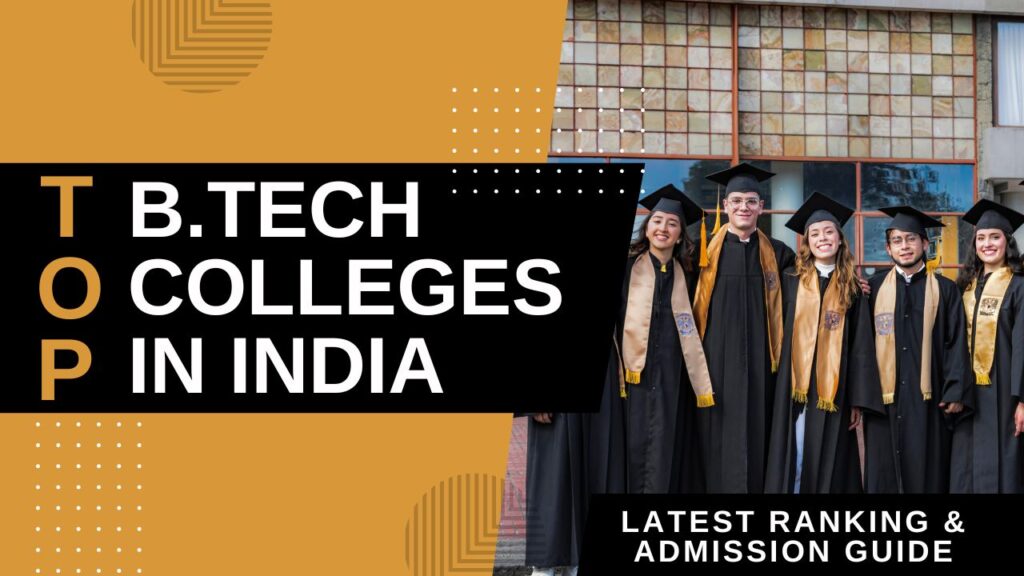
Top B.Tech Colleges in India: Latest Ranking & Admission Guide

BTech Colleges in India

When thinking about starting a career in engineering then choosing among the top BTech Colleges in India is the priority for every student. The race for a Bachelor of Technology (BTech) course has gotten much tougher and thrilling as there are plethora of options for would-be engineers across the country. If you’re a Class 12 student planning to appear for entrance exams or a parent navigating the admissions maze, this one-stop guide will give you an overview of the current scenario of top BTech colleges in India, their rankings, placements and admission criteria. 

Understanding the Current Landscape: NIRF Rankings 2025

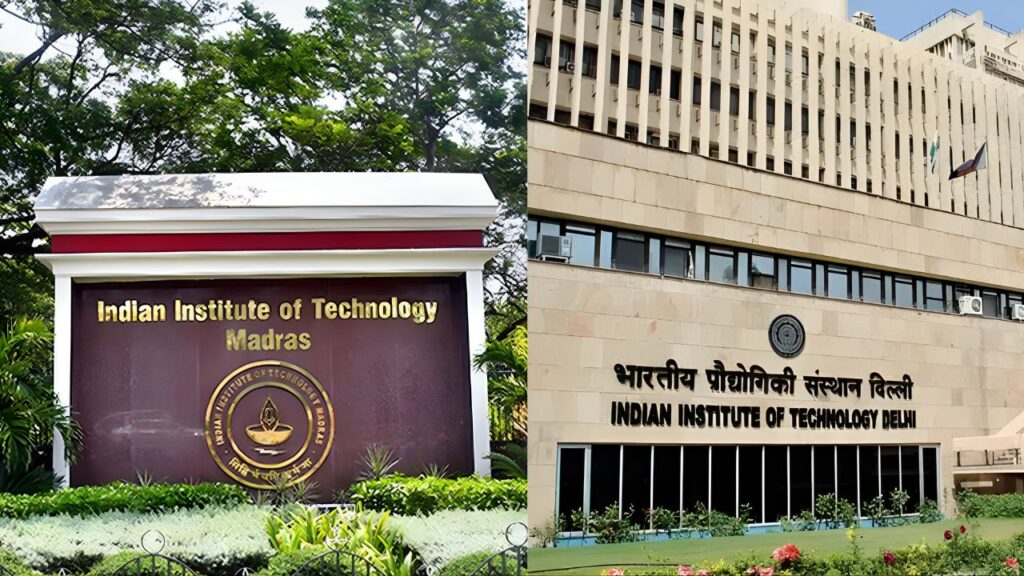
Indian BTech Colleges NIRF Ranking 2025 is considered as the standard for deciding the best BTech colleges in India. As per the updated list, IIT Madras ranked 1st once again for the ninth straight year, further consolidating its hold on engineering. The top five Engineering institutes in India according to NIRF 2025 are IIT Madras, IIT Delhi, IIT Bombay, IIT Kanpur, and IIT Kharagpur.​

 IIT Madras, IIT Delhi

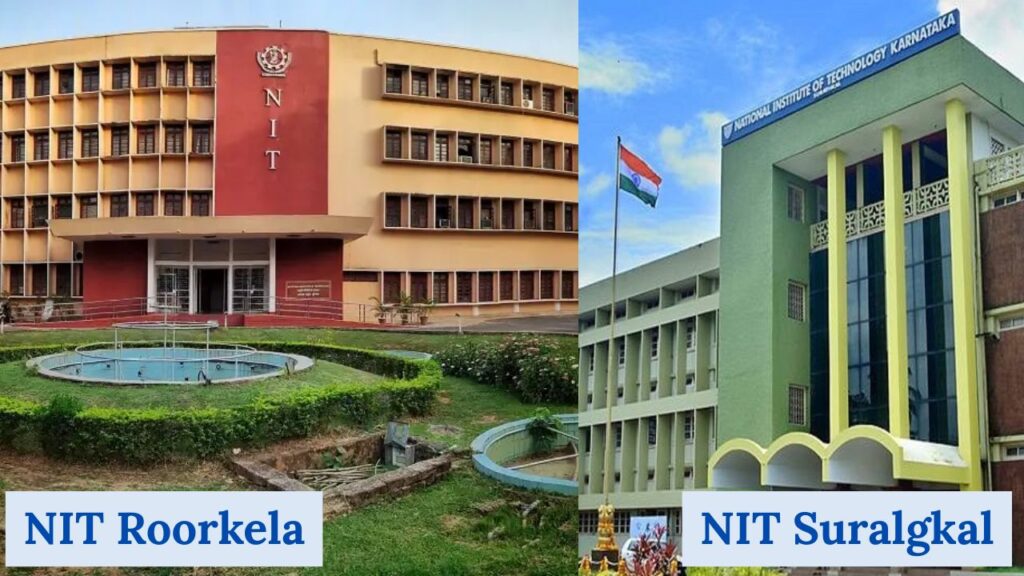
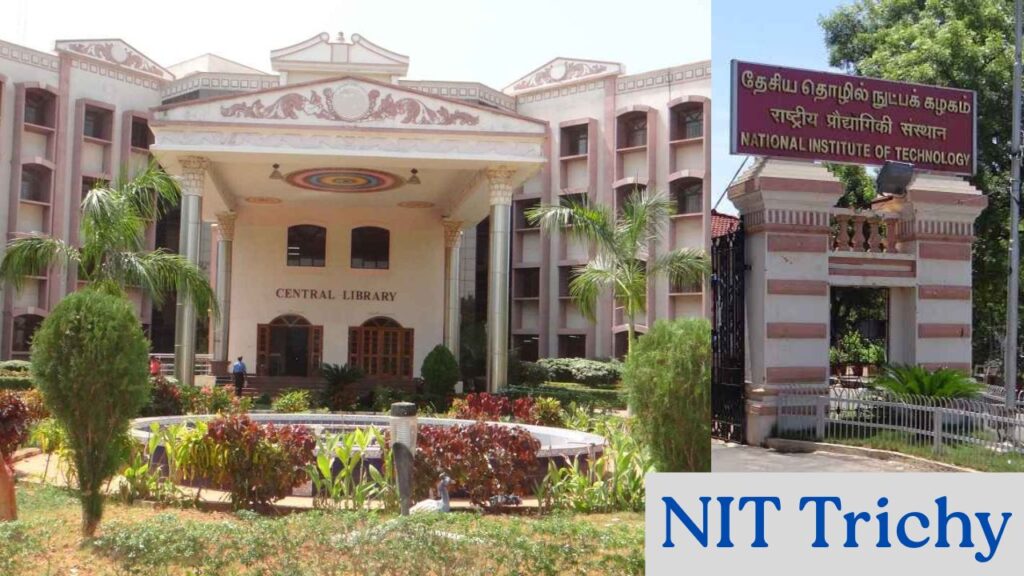
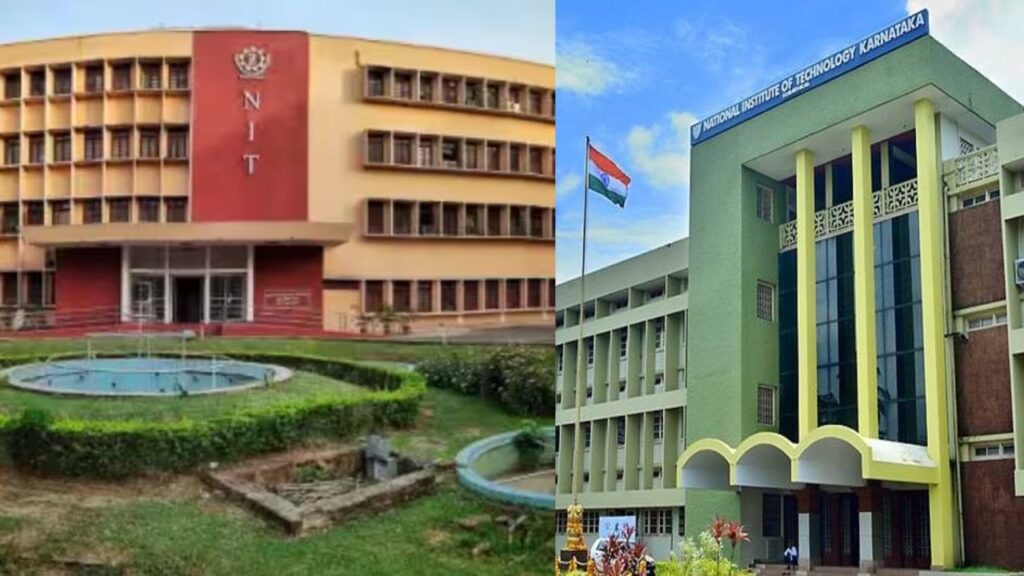
But the story is not all IITs, the NIRF Rankings are not limited to the only IITs. As far as the National Institutes of Technology (NITs) are considered, only NIT Trichy emerges among the top 10 at rank 9 in the list, which speaks about the immense competition in rankings. Following NIT Trichy we have the older NITs like NIT Roorkela, NIT Suralgkal, we have NIT Calicut who all regularly get top 25! 

NIT Roorkela and NIT Suralgkal

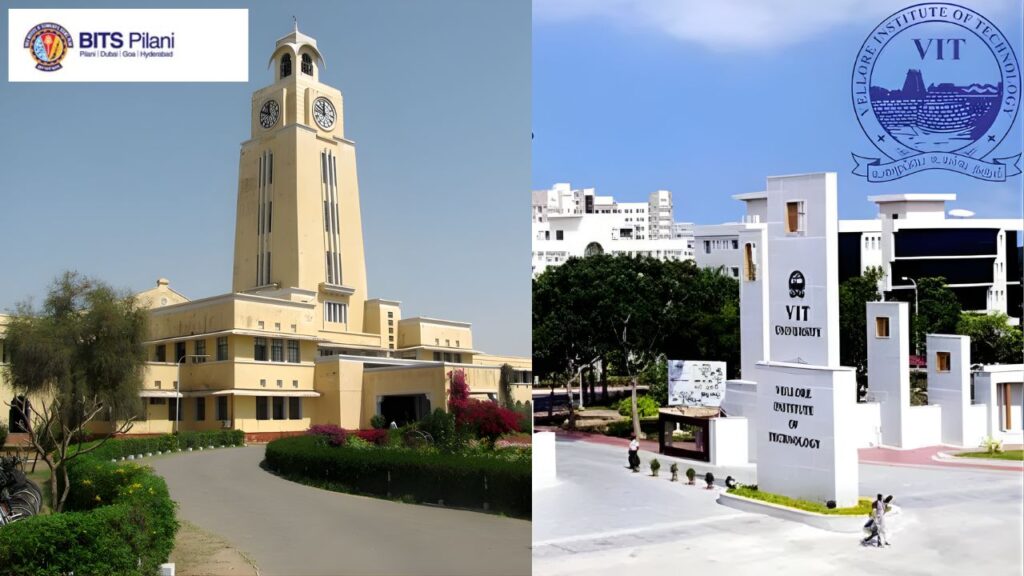
Private institutes have also made a place for themselves, with BITS Pilani at Rank 11 and VIT Vellore at Rank 16 in NIRF 2025. These colleges are no joke, they do provide a world class education and you will have no problem finding employment. 

The Tier System

In addition to the usual rankings, a number of industry insiders grade schools according to tiers based on placement results, presence of recruiters, and number of competitive cutoffs. This gives a more refined sense of the college pecking-order. 

Tier 1 (Premier Institutes) consists of the legendary IITs such as IIT Bombay, IIT Delhi, IIT Madras, IIT Kanpur, IIT Kharagpur, IIT Roorkee, IIT Hyderabad, and IIT Guwahati. These are also engineering colleges which dream destinations for most engineering aspirants. Indian academics are tough and placement records are also excellent.​

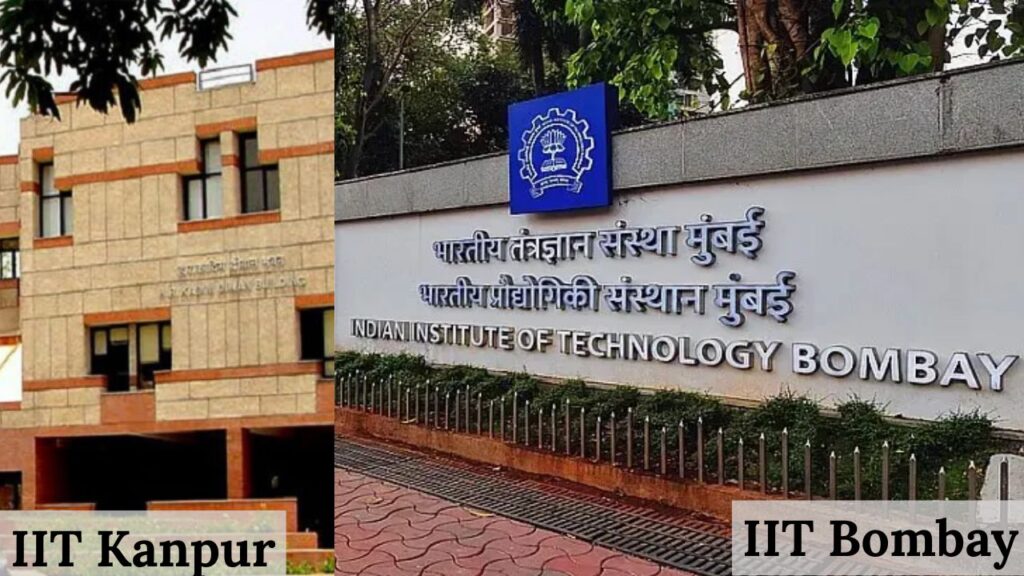
IIT Kanpur and IIT Bombay

Tier 1.5 (Strong and Competitive) has institutes such as IIT BHU (Varanasi), IIT Indore, BITS Pilani, IIT Ropar, IIT Gandhinagar, NIT Trichy, NIT Surathkal, and NIT Warangal. These universities have good academics and employment potential and have gained significant traction in reputation. 

Tier 2 (Well established with Consistent Track Records) Institutes of the second tier like IIT Mandi, IIT Jodhpur, IIT Bhubaneswar, IIT ISM Dhanbad, NIT Rourkela, NIT Calicut, BITS Goa, BITS Hyderabad, and the likes, boast of consistent placement records coupled with strong alumni network. These are established institutes and provide assured opportunities for students for career growth and links with industry.  

Placement Statistics

While selecting a college, the chief concern is usually the placement. Let’s dig into the real figures. The average salary package at IIT Bombay soared to ₹23.5 LPA in the 2024 placement drive, showing a 7.7% rise from last year’s ₹21.8 LPA. The highest package at IIT Bombay soared to a staggering ₹3.67 crore, with 22 students bagging offers scaling the ₹1 crore per annum mark. 

The placement rate for IIT Bombay’s BTech programme is a healthy 74.53%, with 1,475 students placed out of 1,979 registered. Curiously, Computer Science Engineering is the most in demand branch with 230 offers, then closely matched by Electrical Engineering (232) and again by Mechanical Engineering (229).​

The average package at IIT Kanpur hiked up to ₹26.27 LPA, whereas IIT Delhi saw an average package of ₹17.60 LPA with a highest package of ₹2.05 crore. These statistics attest to the amazing value top engineering colleges provide their students. 

Admission Process For B.Tech

Anyone with ambitions to be a part of these institutions should know the process of meteoric rise, which is Understanding the process of admissions is essential for any aspirant who wants to get into these esteemed organizations. The route for BTech admission in India: Your Class 12 results and entrance exams largely decide your fate.​

NIT Trichy

An all India examination termed JEE Main is required to be passed by the candidates for admission to the institutes like IITs, NITs. Candidates are required to qualify in JEE Advanced, which is the next level after JEE Main, for seeking admission to IITs. JEE Advanced for admission to IITs can be attempted only by JEE Main rank holders (JEE Main is qualifying exam for JEE Advanced), and seat allotment in IITs is done on the basis of JEE Advanced ranks alone. 

The eligibility criteria is simple, but important: candidates should have completed class 12th (science stream with physics, chemistry, and mathematics) with minimum marks of 50% to 75% which varies as per the institute and category. For reserved category contenders the qualification is generally 65%.​

Admission Process For B.Tech

The BTech admission schedule is designed in a manner that helps you to plan well in advance. Application period: It may be from November to March of next year, subject to specific entrance examination. 

Entrance exams are generally held in April-June, followed by counselling and seat allotment after the exams then classes usually start around August or September. 

Cutoff Ranks Matters

In top colleges, an applicant with a JEE Main rank less than 5,000 can expect to get one of the top five NITs. For example, NIT Trichy’s Computer Science Engineering has an opening and closing rank of 1000-2000 in general category, NIT Surathkal’s CSE has ranks in the range of 1500-3500. 

General 91-95
EWS 79-83
OBC-NCL77-81
SC 58-62
ST 44-48

Under this category, the likely cutoff percentile for JEE Main 2025 is General (91-95), EWS (79-83), OBC-NCL (77-81), SC (58-62), ST (44-48). But, all these are predictions based on the past year’s trends of the exam, the actual figure of cutoff may be different. 

Popular BTech Specializations

The present day BTech courses are not only confined to traditional engineering branches. Computer Science Engineering (CSE) leads the list as the most preferred branch for a bright career in software development, data science and cybersecurity. 

Popular BTech Specializations

But today the BTech branches in the specializations are far more than the CSE. Mechanical Engineering, Civil Engineering, ECE (Electronics and Communication Engineering), and IT (Information Technology) are still the standard choice but some new fields are emerging that are taking over the engineering world. AI and Data Science, Cyber Security, Cloud Computing, Biomedical Engineering, and Robotics and Automation Engineering are the courses currently making waves owing to high demand in industry. ​

Emerging disciplines such as these are the future of engineering, and firms looking to attract the best graduates in those niche are already hard-pressed to come up with competitive salary packages. 

Understanding the Financial Reality

It is also necessary to consider the expenses related to BTech. The entire course fee amount for government colleges like NITs and IITs is generally between ₹8.35 lakhs and ₹9.17 lakhs which is really affordable considering the kind of opportunities these institutes offer.​

Private universities such as BITS Pilani have much higher fees at ₹23.9 lakh for the full course, although they do have a variety of advantages such as more flexible curricula and better placement results.​

With a low fee structure of ₹8.35 lakh, IIT BHU, Varanasi also has the highest ROI of 239.52%, due to a median package of ₹20 LPA. 

Conclusion

Selecting a BTech college is among the most crucial decisions in your academic life. Despite the importance of rankings and placement statistics, you must keep in mind your interests, what you want to do in your career and your personal circumstances. If you’re going for the elite IITs, the perpetually decently performing NITs, or the private ones like BITS Pilani, do remember that your success depends as much on how hard you work as how good your education institution is.

Start your JEE Main preparation today, aim for a good rank, and keep track of the dates of the admission process. After all the efforts and proper guidance, it’s not going to be long before you’re striding down the hallways of the top engineering colleges in India, ready to make a mark on the world. 

Technical Government Jobs in India: A Complete Guide for Engineers and Diploma Holders

Technical Government Jobs in India

If you are looking for Technical Government Jobs in India, that means you must prepare yourself for a high salary, additional benefits, respect from society, and a secure future. But it does cost you fun and time since absolute dedication is the key for securing a position among lakhs of aspiring candidates. 

SSC JE, RRB JE, state PWD recruitment happen every year to fill thousands of vacancies. But the paths of every engineer is different, someone who wants a Railway JE posting is preparing for a completely different life than someone chasing an ISRO Scientist/Engineer role. This guide will help you understand these paths and what fits you right.

SSC JE (Junior Engineer): The Most Common Entry Point

The Staff Selection Commission’s Junior Engineer exam is where most Civil, Mechanical, and Electrical engineering graduates start. It recruits for departments like CPWD, MES, BRO, and the Central Water Commission. The exam runs in two stages — Paper 1 is objective (general knowledge, reasoning, and technical subjects), Paper 2 is a more detailed technical paper based on your branch.

The appeal of SSC JE is its predictability. The syllabus barely changes year to year, previous papers are widely available, and postings tend to be closer to home compared to Railways or Defence roles. Pay lands in the Level-6 pay matrix, roughly ₹35,000–₹40,000 in-hand after allowances, depending on posting city and department. The catch is that promotions are slow — a JE can spend eight to ten years before moving to Assistant Engineer, and that stagnation is the number one complaint from people already in the role.

RRB JE and RRB ALP: Railways’ Technical Backbone

Railways run two separate technical recruitment tracks that people often confuse. RRB JE (Junior Engineer) is for those wanting supervisory technical roles maintaining tracks, signals, electrical systems, or bridges. RRB ALP (Assistant Loco Pilot) is a different animal entirely — it’s the entry point to actually driving trains, and it comes with its own physical and psychometric tests beyond the written exam.

Railways technical postings come with perks civilians don’t always factor in — free or discounted travel passes, quarters in many postings, and a pension structure that’s still meaningfully better than most PSU jobs. But the tradeoff is posting uncertainty. A Railway JE from Lucknow could easily end up posted in a remote section in Northeast Frontier Railway for the first few years, and that’s something aspirants researching only the syllabus tend to overlook.

Read More 👉 Government Jobs After Graduation in India: Complete Guide for 2026

Defence Technical Entries: Army, Navy, and Air Force

This is where things diverge sharply from civilian technical jobs. The Indian Army’s SSC Technical entry (the batch numbering keeps advancing — the 68th course cycle, for instance, recruits engineering graduates directly as officers into the Corps of Engineers, Signals, or EME, skipping the JCO/NCO route entirely). Unlike SSC JE or Railways, this isn’t a desk-adjacent technical job — it’s a commissioned officer role with military training at OTA Chennai before the technical posting even begins.

The Navy and Air Force run parallel technical officer entries — the Navy’s Short Service Commission (Executive/Technical branches) and the Air Force’s Technical Branch through AFCAT. Pay here is structured differently too — officers get a fixed pay scale plus Military Service Pay and allowances that push in-hand compensation well above equivalent civilian technical roles, sometimes crossing ₹1 lakh a month for junior officers once field and flying allowances are added. What people don’t talk about enough is the SSC (Short Service Commission) design itself — these are typically 10-14 year engagements, not permanent careers, and the transition back to civilian technical work afterward needs its own planning.

PSU Technical Recruitment: ONGC, NTPC, ISRO, DRDO

Public Sector Undertakings run their own technical recruitment, separate from SSC or UPSC, and this is genuinely the highest-paying bracket in government technical work. ONGC and NTPC recruit through GATE scores directly — no separate written exam, which is a huge relief for anyone who’s already invested a year preparing for GATE for M.Tech admissions anyway. 

Starting packages at Maharatna PSUs like ONGC or NTPC can cross ₹10-12 lakh per annum for a fresh Graduate Engineer Trainee, which is a different league from the ₹4-5 lakh range typical of SSC JE roles.

ISRO and DRDO sit in their own category — Scientist/Engineer ‘SC’ recruitment through GATE or their own written exam (ISRO doesn’t accept GATE scores for most positions and runs an independent test). These aren’t just jobs, they’re research-adjacent careers, and the selection bar reflects that — competition is brutal, and the interview process digs deep into core subject knowledge rather than generic aptitude.

Read More 👉 Indian Army SSC Technical 68th Men Recruitment: Details for Engineering Graduates

State Engineering Services: PWD, Irrigation, and Jal Nigam

Every state runs its own Assistant Engineer (AE) and Junior Engineer (JE) recruitment through its Public Service Commission or a dedicated recruitment board — UP has UPPSC and UPSSSC running parallel tracks, for instance. These roles are attractive to candidates who prioritize staying within their home state over chasing an all-India posting, and the pay, while modest at the JE level, comes with strong long-term security and a clearer path into the state’s engineering cadre hierarchy.

The tradeoff here is exam frequency and vacancy unpredictability — state-level technical recruitment doesn’t run on the same predictable annual cycle as SSC or Railways, and vacancies can be sparse in years when the state government is tightening hiring.

Which Path Actually Fits You?

If you want to enter a government sector for a stable career, choose SSC JE which is best for everyone. If you are looking for a higher salary and you can secure a good GATE score then PSU roles are good options. 

If leadership, discipline, and a fixed-term high-intensity career appeal to you, Defence technical entry is a completely different but rewarding route — just go in knowing it’s a commission, not a permanent civilian job. And if roots matter more than reach, state engineering services quietly remain the most underrated option on this list.

Conclusion of Technical Government Job

Technical Government Job in India offer a secure future which can be prestigious in this time. Private jobs don’t give high salary and long-term stability but the government sector offers engineering roles in every department including the country’s infrastructure, transportation, defence, and scientific progress.

Before beginning your preparation, understand every detail that is required to beat the exam. It will also help you pick the path that aligns with your strengths and interests. Staying consistent is the key for rewarding a technical career.

RRB NTPC Apply Online Form 2026: Graduate and UG Level Dates, Vacancies, and How to Apply

RRB NTPC

RRB NTPC 2026 short notice comes along with an opening of 5,165 Non-Technical Popular Categories posts. But the exact dates will be released after the official notification release. The Railway Recruitment Board announced both Graduate and Undergraduate levels posts. RRB NTPC 2026 Online Form will start on 15 October 2026. 

That detailed PDF, which will spell out final eligibility, exam pattern, and post-wise zone allocation, is scheduled for 7 October 2026 for Graduate posts and 14 October 2026 for Undergraduate posts. Until those land, treat today’s numbers as reliable but not final — RRB has occasionally revised vacancy counts and dates through corrigenda in past cycles.

Important Dates of RRB NTPC 2026

EventGraduate Level (CEN 06/2026)Undergraduate Level (CEN 07/2026)
Indicative / Short Notification Release21–26 September 202621–26 September 2026
Detailed Notification PDF7 October 2026 (tentative)To be notified
Online Application Start8 October 202615 October 2026
Last Date to Apply Online6 November 2026 (23:59 hrs)13 November 2026 (23:59 hrs)
Last Date for Application Fee Payment8 November 2026 (as per short notice)To be notified
Application Correction WindowTo be notifiedTo be notified
CBT-1 Exam DatesTo be announcedTo be announced
CBT-2 / Further StagesTo be announcedTo be announced
Age Calculation Cut-off Date1 January 2027 (as per notice)1 January 2027 (as per notice)

RRB NTPC Graduate 2026 (CEN 06/2026)

RRB NTPC Graduate 2026 is offering 3,477 seats this year, covering posts like Station Master, Goods Train Manager, Chief Supervisor. Typing is also required if the job is Junior Accounts Assistant cum Typist, and Senior Clerk cum Typist but they all sit under the Pay Level 5 and 6 of the 7th CPC matrix. 

Online applications open on 8 October 2026 and most sources have the window closing on 6 November 2026 at 11:59 PM, though a couple of reports list 11 November — worth confirming against the detailed CEN once it drops, since a five-day gap matters if you’re planning document uploads around a tight schedule.

For context, the last Graduate cycle (CEN 06/2025) pulled in over 58 lakh applications for 5,810 posts. This year’s pool is smaller — 3,477 against that backdrop — so competition per seat is realistically going to be tighter, not looser.

Read More 👉 Voice-to-Notes Tools for Students: Study Faster Without Typing

RRB NTPC Undergraduate 2026 (CEN 07/2026)

RRB NTPC Undergraduate posts (which require only a Class 12 pass) opens for 1,688 vacancies. The posts candidates will get are Commercial cum Ticket Clerk, Accounts Clerk cum Typist, Junior Clerk cum Typist, and Trains Clerk which falls under Pay Level 2 and 3.

Applications open on 15 October 2026 after a week of graduate level window — and close on 13 November 2026. Age for UG applicants is being cited as 18 to 30 years, calculated as on 1 January 2027, though this too should be treated as tentative until the detailed notification confirms it.

Eligibility For NTPC UG and Graduate Candidates

Graduate posts need a bachelor’s degree from a recognised university; a couple of roles, like JAA and Senior Clerk cum Typist, additionally require typing proficiency in English or Hindi. 

UG posts need a 12th pass certificate from a recognised board — no further qualification required at entry. 

On nationality, RRB accepts Indian citizens, subjects of Nepal and Bhutan, and Tibetan refugees who settled in India before 1 January 1962, along with a few other categories that need a government eligibility certificate before applying.

One thing last cycle’s notification did that’s worth watching for again: RRB gave Graduate-level candidates a one-time age relaxation, pushing the upper limit from 33 to 36. Whether that repeats for CEN 06/2026 isn’t confirmed yet — it’s the kind of detail that changes who’s even eligible to apply, so don’t finalize your own age-limit calculation until the detailed PDF is out.

Selection Process

Both levels follow the same broad structure: a First Stage CBT, a Second Stage CBT, a Typing Skill Test or Computer-Based Aptitude Test where the post requires it, and finally document verification with a medical exam. 

The first-stage CBT typically runs 90 minutes covering General Awareness, Mathematics, and General Intelligence & Reasoning, with a one-third negative mark for each wrong answer — that penalty structure alone is why guessing blind on NTPC papers tends to backfire more than it helps.

Read More 👉 Why ChatGPT Ads Deserve a Place In Your 2027 Media Plan 

Application Fee

Based on RRB’s standard structure across recent cycles, expect ₹500 for General and OBC candidates and ₹250 for SC/ST/PwBD/women/ex-servicemen/EBC candidates, with a partial refund issued to those who actually appear for CBT-1. 

Confirm the exact figure once the detailed CEN is published, since fee structures are one of the few things RRB does occasionally tweak between cycles.

How to Apply For RRB NTPC 2026 Online Form

  • Applications go through the official RRB portal at rrbapply.gov.in — not through any single national link, since each of the RRB zones runs its own regional application window. 
  • You’ll register with basic details, upload your photograph, signature, and required documents in RRB’s specified format.
  • Pay the fee online, and submit before the deadline for your category. 
  • Save your registration number; you’ll need it for every step afterward, including admit card download.

One Preparation Move Worth Making Now

Don’t wait for the detailed notification to start preparing — the CBT-1 syllabus for NTPC has stayed structurally consistent across cycles, so pull last year’s CEN 06/2025 CBT-1 question pattern and start timed practice sets on Mathematics and Reasoning now. Those two sections are where most candidates lose time, not marks, and three extra weeks of practice before the form even opens is three weeks your competition isn’t using.

The detailed notification will settle the open questions — final age limits, exact fee, zone-wise vacancy splits. Don’t wait for that, get ready your official documents including educational certificates, ID, cast certificate, and photo so your time doesn’t waste when the application opens. 

Read More 👉 Upgrade Laptop Like New Model In Low Budget

Conclusion

RRB NTPC 2026 brings 5,165 Graduate and Undergraduate vacancies, with applications starting in October. Since some details are still subject to the detailed notification, candidates should keep their documents ready and begin CBT preparation now rather than waiting for the final dates.

Best Government Jobs in Chandigarh

If you are living in Chandigarh and do not want to relocate for a stable career. You need to think of getting a government job that offers more salary, allowances, medical coverage, and other benefits. If you are an average student in your class you can clear the exam if you study hard and prepare well according to the exam pattern and new syllabus. Apply for a data entry operator job because this role does not require a master’s degree. 

S.NoJob TitleDepartment/OrganizationOfficial Website Name & Link
1Assistant CommandantChandigarh PoliceChandigarh Administration
2House SurgeonNational Health Mission (NHM), ChandigarhNHM Chandigarh
3Junior Engineer (Civil)Chandigarh Public Works Department (PWD)Chandigarh Administration
4Medical OfficerGovernment Multi-Specialty Hospital (GMSH), Sector 16Chandigarh Health Department
5Project Research ScientistPGIMER, ChandigarhPGIMER Official Website
6Lower Division Clerk (LDC)Chandigarh AdministrationChandigarh Administration
7Data Entry OperatorGovernment Medical College and Hospital (GMCH), ChandigarhGMCH Official Website
8Assistant ProfessorPanjab University, ChandigarhPanjab University Official Website
9Police ConstableChandigarh PoliceChandigarh Police
10Accounts ClerkChandigarh Municipal CorporationChandigarh Administration
11Project NursePGIMER, ChandigarhPGIMER Official Website
12Anganwadi HelperWomen and Child Development (WCD), ChandigarhChandigarh Administration
13FiremanChandigarh Fire and Emergency ServicesChandigarh Administration
14Multi-Task WorkerDepartment of Environment Studies, Panjab UniversityPanjab University Official Website
15Cooperative InternHaryana State Cooperative Apex Bank (HARCO), ChandigarhHARCO Bank Official Website

CBSE vs State Board: Choose the Right Board For Primary Education

Comparison of Different Boards

Educational boards have different advantages and disadvantages for students in India. Schools are the first stage for students to build their knowledge and shape their minds for a career. A student’s entire future depends on it. If you are a parent or educator then you must understand that when it comes to the classic debate of CBSE vs State Board, there is no one-size-fits-all answer.

There are factors including a student’s learning style, future goal, or central/state opportunities which can help you to decide the right one. So, let’s walk through this guide which explains the core differences between CBSE and State Board to help you make the right decision.

What is The CBSE Board?

CBSE offers a standard curriculum for students, schools authorized by CBSE board offer the same syllabus whether it is in Mumbai or Lucknow. This is best for students who change their cities frequently, so their studies won’t be disturbed. It is managed under the Union Government and heavily focused on Science and Mathematics. Schools offer both medium English and Hindi.

What is a State Board?

In India, every state has its own educational board for schools. The curriculum is designed to have one state’s language along with English as the primary language. For example, Hindi/Sanskrit in UP board and Marathi in Maharashtra board. It is focused heavily on the state’s geography, history, culture with leaning more towards science and mathematics. 

Best board for students who are aiming for state-level government exams or jobs. The lessons are also easy and point-to-point that will help students to easily understand their topic within less time.

Core Differences in CBSE vs State Board

To understand which board is better, we need to compare them across several critical parameters.

1. Curriculum and Syllabus

CBSE: The syllabus has been designed considering NCERT curriculum which is more inclined towards integrated theory and practical aspects. Students who have high level of analytical thinking can easily handle the CBSE syllabus as it is not based on rote learning. 

State Board: They punch a lighter syllabus but are heavily skewed towards a local language, history and geography. That curriculum would not be gone into with the same depth in CBSE.

2. Difficulty Level and Grading

CBSE: The exam structure is tough and built to test students’ reasoning skills. Scoring basically depends on continuous and multiple exams in a year which reduces the pressure of a single final exam. overall difficulty level is high in CBSE board for students. 

State Board: Traditionally, this has come down to relatively simple calculations and memory-based tests. The end of year board examination is the most important one. In general, students consider that it is simpler to get high marks in the State Board exams as questions are more direct. 

3. Alignment with Competitive Exams

If student wanted to make their career in government sector then choose accordingly. 

CBSE: If the goal is to crack national-level entrance exams like the JEE or NEET as these are the biggest exams for engineering and medical students, CBSE board students have advantage because their exam curriculum are same as students’ high school syllabus. 

If student is thinking about central government jobs like IRS or defence job, the analytical foundation built by CBSE gives them a distinct edge.

State Board: State boards are excellent if the target is state-level engineering and medical entrance exams (like UPSEE or MHT-CET). They are also highly beneficial for state civil services exams, as the localized curriculum provides a strong base in regional general knowledge.

4. Extracurriculars and Holistic Development

CBSE: There is an active promotion of academic and non-academic activities by the board. The majority of the CBSE schools possess strong infrastructure in sports, arts, and debate and consider them as part of the curriculum. 

State Board: It’s all studied-based. There are some extracurricular activities, but these are generally subordinate and become dependent on the management of the particular school and what they can provide. 

Read More:- Skill Development Courses For Indian Students

Which Board Should You Choose?

The decision ultimately boils down to what you envision for the student’s future.

Choose CBSE if:

  • You are moving all over India because of your parent’s job.
  • The student is targeting national-level exams (JEE, NEET) or central government jobs.
  • You need a syllabus that’s focused on concepts and their application, and not on memorising.
  • You want the best of both worlds, academically and extra-curricularly with the extracurricular side not taking a back seat. 
  • You are looking for a balanced approach with equal focus on extracurricular development.

Choose State Board if:

You live in one state permanently and have no intention of moving. 

The student intends to enter the civil service, but only in that particular state. 

You want the student to be well versed in regional languages and local customs.  

The student is involved heavily in passions outside of school (like competitive sports or music production) and needs a more forgiving academic schedule.

Conclusion

No board is naturally “best” or “worst.” They are just for different uses.

The CBSE board reigns supreme for national competitiveness and standardized pan-India education. It equips students for the tough national exams and is very analytical in its method of teaching. hly analytical approach to learning.

State Boards provide a localized, accessible, and culturally relevant education. They tend to be more flexible, granting students additional time to partake in outside activities or to prepare for opportunities at the state level. 

Evaluate students’ strengths, talk about their long-term objectives and what board is best suited for their individual path. Choose the right one over the best. 

Scroll to Top