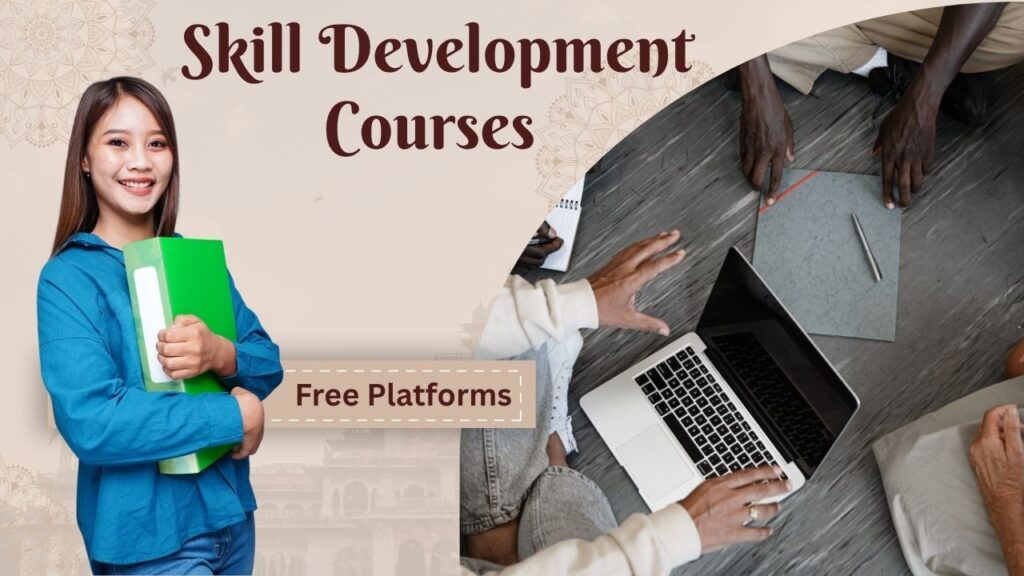
Skill Development Courses For Indian Students

Skill Development Courses For Indian Students

A traditional college degree is a great foundation, but it is rarely enough to guarantee a job on its own in India. Whether a student is aiming for the corporate world, planning to freelance, or spending years preparing for highly competitive government exams like SSC CGL or state-level exams, Skill Development Courses for Indian students are needed. Nowadays, hands-on skills are non-negotiable, every department prefers experienced candidates over candidates who only hold degrees. 

The good news is that the internet has made it easier than ever to build a high-income skillset from anywhere. Here is a detailed guide to the best Skill Development Courses Indian students should focus on right now.

1. Digital Marketing and SEO Content Strategy

The most demanding job right now in India is Digital Marketing Specialist or SEO executive. Where SEO is part of digital marketing, you can enter in this field as an intern for one of the positions. Then get promoted to approach at the senior digital marketing specialist. 

In today’s world, every department including education, agencies, and commercial industries need attention on the internet. Learning how to capture and keep that attention is one of the most profitable skills you can develop.

In a vast field of Digital marketing, few core areas:

  • Search Engine Optimization (SEO): Learning SEO means understanding how on-page, off-page and technical SEO enable your content to reach the target audience when they search for it on Google. Learning keyword research, audit reports, and maintaining the quality of websites are part of SEO.
  • Performance Marketing (PPC): Knowing how to run and manage Google Ads or social media campaigns teaches students how businesses spend money to acquire customers.
  • Content Writing & Strategy: Gone are the days of keyword stuffing. Write blog posts, service pages, and informative articles that Google actually wants to show on its first page. It is about matching what people are searching for with high-quality, human-written answers. 

Read More:- Allahabad High Court RO / ARO / CA Recruitment 2026 For 543 Seats

2. WordPress and Web Management

Engineering doesn’t define your coding skills. Students who started learning technology earlier don’t need any degree to build and manage powerful websites. But bachelor’s or master’s in engineering needed to work in a multinational company. It can also increase your package but learning CMS is a very powerful Skill development course for Indian students. A vast majority of the web runs on Content Management Systems (CMS), and mastering them opens up incredible freelance and full-time opportunities.

  • Advanced WordPress Skills: Moving beyond basic themes is where the real value lies. Most students think that making a website on WordPress using a free theme will get them a job but businesses won’t grow for a long time. Learning how to manage custom post types, create specific meta fields, and handle API integrations allows you to build complex platforms like job boards, real estate listings, or educational portals. That’s where you can make yourself fluent and secure a job.
  • Website Maintenance: Once you build a large website or software for a company, your work is not done yet. Running it efficiently and smoothly is a real task, knowing how to securely manage a website, update its plugins, and ensure it runs fast is a constant requirement for businesses worldwide.

3. Practical Data Handling and Cloud Productivity

Handling data is hectic, even more when it’s large. But every work is being recorded in every sector or department. It helps keep the workflow smooth in business, set preference for customers online, and keep an eye on systems inside the government department. No matter where you go, data handling is needed in every sector. Acquiring these skills will make you flexible to work anywhere and quickly get hired.

  • Spreadsheet Mastery: It’s a very large software, you will realize once you start to explore. Basic data entry is not a skill, you need to learn advanced functions in Microsoft Excel and Google Sheets to become valuable for the opportunities. It helps in organizing large datasets, tracking campaign performances, and managing schedules.
  • Cloud Collaboration: There are popular cloud storage ecosystems (like OneDrive or Google Workspace) which help in managing the data but understanding how to use it, ensures you can work seamlessly with remote teams or clients.

4. AI Prompting and Writing Assistance

Traditional writers can write a genuine, manual researched based article in 7-8 hours but same writers can write more compelling articles in just 3 hours with the help of AI. professionals who have hands-on experience of Smart Editing and Rapid Asset Creation can make it to the top. Search engines like Google prioritize personal experience and real-word context.

  • Smart Editing: Polish your draft by using tools like Grammarly for improving grammar, claude for summarizing and insert tables, charts while maintaining your unique, human voice.
  • Asset Creation: Support your information by using attractive images for blogs and websites and videos for social media. 

Free Skill Development Courses For Indian Students

You don’t always need to pay for expensive private bootcamps. Some of the best knowledge is highly accessible:

  • SWAYAM: The Government of India created this portal for Skill Development Courses for Indian students to learn their favorite skills and secure a job. It offers from basic to advanced level online courses.
  • Google Skillshop: If you want to focus on maintaining Google Ads and Google Analytics work skills then learning from the original source would be better and it’s completely free.
  • YouTube: Youtube teachers are very helpful for finding every problem’s solution quickly. No need to spend a lot of money grabbing these skills when it’s free. Some particular topics like how to set up a specific WordPress plugin or how to structure an SEO article—YouTube remains an unmatched resource.

Read More:- UPSSSC UP Combined Lower Subordinate Services (Graduate Level) Recruitment Process, Eligibility, And Salary

Conclusion

Waiting to finish the graduation for any job or work is long gone, you are now in the era of digital education. There are different Skill development courses for Indian students to polish their skills and enhance the practical experience. Only degrees are not valuable in the Indian job market today, your salary package depends on your skills and academic qualification. So acquire both for better job opportunities from any sector. 

There are many courses available on youtube and coursera but the top skills that are in demand right now are SEO, web management, or content strategy.

Leave a Comment

Your email address will not be published. Required fields are marked *

RRB NTPC Graduate New Vacancy Notification 2026 — Check Every Detail

RRB NTPC Graduate New Vacancy Notification

RRB NTPC Graduate New Vacancy Notification 2026 is a great chance for job seekers who want stable and high-paying careers in the government sector. As this is one of the largest employers in the world. Lakhs of students who have graduated recently can apply for this exam and prepare for it.

The Railway Recruitment Board (RRB) has brought transparency in the recruitment process by issuing the annual recruitment calendar. It is helpful for students in focusing their preparation with a crystal clear, organized roadmap for exams rather than browsing through the notifications everyday. 

This detailed guide will cover everything you need to know about the RRB NTPC Graduate vacancies in 2026 – from available seats to who can apply.

What Is RRB NTPC Graduate?

Non-Technical Popular Categories is an exam for roles on different zonal railways and production units of the Indian Railways, this recruitment drive run by Railway Recruitment Board every year. 

It doesn’t require any technical degree as it is non-technical, so many graduates can apply for this exam. It provides stability, career growth, and respect in your early age. Apply as fast as you can because there are thousands of students waiting for this opportunity already.

Undergraduate level posts aren’t paid as high as graduate level posts within the railway system.

RRB NTPC Graduate New Vacancy Notification 2026 – Numbers Breakdown

There are 8,868 vacancies under 2026 recruitment drive in which 5,810 vacancies are for graduate-level posts that leaves only 3,058 for 12th pass students. The application process for (CEN) 06/2025 was finished in 2025 and the CBT-1 exam took place from March 16 to March 27, 2026.

Now candidates are waiting for the CBT-1 result so that they can move to the next stage CBT-2  of selection. If you missed this chance then apply for the upcoming RRB NTPC Graduate posts in August 2026. The notification will release soon according to the RRB Annual Calendar. The formal assessment of vacancies across zones will start between June and July 2026 and official notification will drop in August.

ActivityTimeline
Vacancy Assessment across ZonesJune 2026
Indenting of Vacancies in OIRMS PortalJuly 2026
Proposal for Draft CEN NotificationAugust 2026
Release of Official Public NotificationAugust 2026
Commencement of Online ApplicationsAugust – September 2026
CBT Stage 1 ExaminationLate 2026 / Early 2027

The Ministry of Railways set the calendar for the candidates to prepare themselves. The vacancy number dropped from last year (11,558) means the competition is tighter. Take this matter seriously to prepare properly for securing a seat in Railways.

List of Graduate Posts and Their Roles

You have chosen your preference in different roles in the application form. To make a decision, you must know the job profile under the title, so here are the primary graduate-level options:

1. Station Master (SM)

It is a highly responsible role that falls under Pay Level 6 in which you have to check running trains have reached their assigned destination safely and efficiently. Safety of passengers and the public by controlling signals and ensuring all the safety protocols have followed is Station Master responsibility.

2. Goods Train Manager (GTM)

Also known as Good Guard, they are responsible for safety and movement of Goods Train. You will work along with Loco Pilot, check packages reached at their destination, and ensure no damage occurs during transit. This position has the maximum share of vacancies in recent charts. 

3. Chief Commercial cum Ticket Supervisor (CCTS)

You must have the ability to handle communication in pressure because this role is responsible for managing ticket counters, checking reservations, overseeing luggage and handling customers politely whether you are in mood or not. Overall, you have to deal directly with the public or supervise commercial tasks.

4. Senior Clerk cum Typist

You must have fast typing speed as it is required to handle clerical work, maintain staff files, process data, and assist higher authorities in administrative departments. Senior clerk is an excellent job if you prefer an officer desk job with regular working hours.

5. Junior Accounts Assistant cum Typist (JAA)

Numbers are your skill? Then Junior Accounts Assistant cum Typist is an ideal job for you. You are responsible for managing financial bookkeeping, processes bills, keeps track of expenditures, audits internal payments. Working in the finance and account department of railway is to ensure that the railway zone’s finances are running smoothly without any false transmission.. 

6. Traffic Assistant

Control rooms are the system’s mind so the trains run smoothly. Traffic Assistant works there and manages line clearances along with assisting operational managers in optimizing railway traffic networks in control rooms to handle traffic movement operations.

Salary and Perks 

Post Name7th CPC Pay LevelInitial Basic Pay (INR)
Station MasterLevel 6₹35,400
Goods Train ManagerLevel 5₹29,200
Chief Commercial cum Ticket SupervisorLevel 5₹29,200
Junior Accounts Assistant cum TypistLevel 5₹29,200
Senior Clerk cum TypistLevel 5₹29,200
Traffic AssistantLevel 4₹25,500

These salaries are the bare minimum. And as you gain more experience and move up in the salary matrix, there are incremental hikes. Additional benefits of working for the railways include free or concessional travel on the railways, medical facilities, pension (under National Pension System) and job security that few private players offer. 

Are You Eligible For The RRB NTPC Graduate New Vacancy Notification?

You have to be eligible to apply for the 2026 vacancies to be announced. Getting a job in Indian railways is the ambition of all the job seekers. 

Education Required 

As it is a graduate-level vacancy, you must have a degree in any stream from a recognized university or college. If you are in the final year, you can apply but a degree certificate must be obtained by the university at the document verification process.

Age Limit For Candidates

Minimum 18 Years 
Maximum 33 Years 

Age Relaxations for Reserved Categories

OBC 3 Years (36 years )
SC / ST 5 Years (38 years )
PwBD 10 to 15 Years 
Ex-Servicemen Period of service rendered plus an additional 3 years 

Medical Standards 

Jobs in the railway have their own medical standards. Applicants must satisfy vision standards and other physical fitness requirements to ensure you take responsibilities of the biggest network of India.

Complete Application Process for RRB NTPC Graduate New Vacancy Notification

  1. Visit the application portal on the official site of the Railway.
  2. Put your number and email on the registration box to make your account and remember the credentials.
  3. Fill out the application form with correct details including education, category, and personal information.
  4. Choose your preferred job roles (check 3 preferences) and region where you can work easily. 
  5. Upload document — ID, Signature, Photo, Category certification, Educational Certificate. Pay the amount to complete the application via online payment methods
General / OBC / EWS Candidates Rs 400 
SC / ST / Female / Ex-Servicemen / PwBDRs. 250 

Check your application once again to edit the incorrect or mistake. Submit and print it out for later references.

Exam Dates For Both Undergraduate And Graduate Level Post

The Graduate Level CBT 1 examination has already been held from 16 March to 27 March 2026. If you had appeared for that, the subsequent rounds will come accordingly your performance. 

The second CBT at the undergraduate level is being held from 7 May to 21 June 2026 in various stages at present. More than 6.3 million candidates had registered for the exam at the UG level alone. That should give you some idea of how tough this recruitment is. 

The RRB NTPC Selection Process 

This is the multi-level selection process in which you must go through four stages of selection to secure a position:

Stage 1: CBT 1 

The first stage of the exam in which 100 questions have been asked from Mathematics, General Intelligence and Reasoning, and General Awareness. You have to give the correct answer within 90 minutes because the wrong answer took one-third of a mark. But CBT-1 marks are not counted in merit list, it is just a door for CBT-2 exam. 

Stage 2: CBT 2 

The paper is more relevant to your preferred job role and difficulty level also depends on different pay levels but the syllabus is the same as CBT-1. This is where you have to perform well because a CBT-2 score adds to the final merit.

Stage 3: Skill Test 

Only hard level posts will attempt this stage such as Station Master and Traffic Assistant posts. There is a Computer-Based Aptitude Test which has 30% weightage in the final merit, so clear it with concentration.

Typing tests are required for Junior Clerk, Senior Clerk, and Accounts Assistant roles. Typing speed in both English and Hindi are required but it is just a qualifying test.

Stage 4: Document Verification and Medical Exam

Original documents are checked by the authorities to verify every detail you provided. Then a medical test to analyze if you have any permanent illness or weak vision. 

Complete Syllabus of RRB NTPC Graduate New Vacancy Notification

Mathematics — Prepare basic 10th level questions from topics like integers, decimals, LCM and HCF, ratio and proportion. Focus more widely on percentage, profit and loss, simple and compound interest, time and distance. If you have more time and do not wanna miss a single question then practice on algebra, geometry, trigonometry, and elementary statistics. 

General Intelligence and Reasoning — Prepare your logic skills with practice on pattern recognition, analogies, coding-decoding. Basic mock tests will help you, there are other topics such as series, puzzles, syllogisms, Venn diagrams, and data sufficiency.

General Awareness — Most of the questions come from this topic, keep aware of the current events, General Science, Indian history, geography, politics, and economy. Check news everyday and follow government schemes and policies regularly.

Read More :- UP Home Guard Result 2026 – Check Merit List & Cut Off

RRB NTPC Graduate Exam Pattern 

Exam pattern is crucial to understand because it will help you complete the paper in a limited time. Both CBT-1 and CBT-2 feature multiple-choice questions (MCQs) but the difficulty level and questions density is different. 

CBT-1 Exam Pattern

Subject AreaNumber of QuestionsTotal Marks
Mathematics3030
General Intelligence & Reasoning3030
General Awareness4040
Total100100

CBT-2 Exam Pattern

Subject AreaNumber of QuestionsTotal Marks
Mathematics3535
General Intelligence & Reasoning3535
General Awareness5050
Total120120

Tips to Crack the RRB NTPC 2026 

Since the vacancies have shrunk, the competition gets higher and you need a right strategy to crack the exam.

Basics are important so start practicing questions in maths and reasoning. Then move to the advanced level questions but start with basics will build your core foundation. Solve previous year questions and mock tests so you become fluent with some questions which are repeated many times.

Take time to revise because both accuracy and speed matters. Focus on General Awareness because most of the scores depend on that section. It needs your daily consistency so don’t break the score.

If you are preparing for the Station Master role then prepare for CBAT too. Because the Psycho test is also important without clearing this stage, you can secure a position.

Conclusion

The RRB NTPC Graduate 2026 is a major employment opportunity for graduates in this year. Yes, the vacancies are less than previous year. Yes, there is stiff competition. But that has never stopped determined aspirants from cracking it. 

If you have already given CBT 1, continue preparing for the CBT-2. If you missed the chance, do not worry, the Railway Recruitment Board will release the next recruitment notification in August. So, it is a great time to start laying your groundwork so when the next notification pops up, you can hit the ground running. 

Leave a Comment

Your email address will not be published. Required fields are marked *

BSc Operation Theatre Technology: Course Guide, Fees, Career & Salary

BSc Operation Theatre Technology

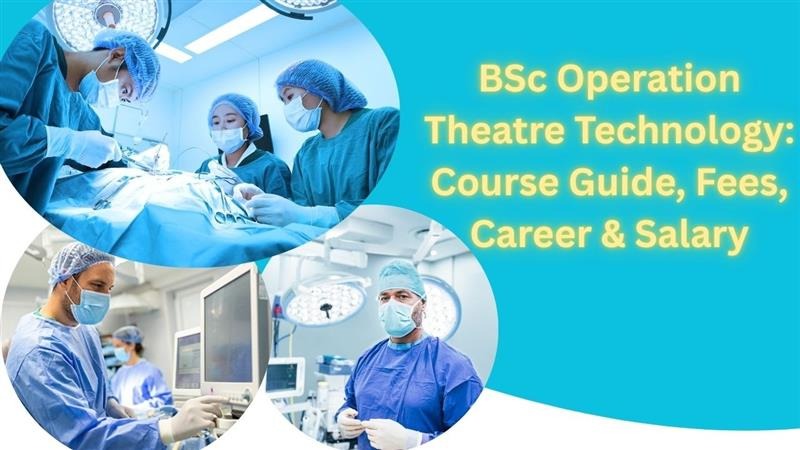
If you’ve ever seen a surgical scene in a film, the camera almost always lingers on the surgeon. While behind every successful operation, there is a team, who make everything run smoothly silently in the background. One of the most vital members of the team is Operation Theatre Technologists. Degree in BSc Operation Theatre Technology (BSc OTT) trains students to undertake this pivotal position in the healthcare organisation. 

It is a professional undergraduate course for aspirants who wish to collaborate with surgeons, anesthesiologists and nurses within the operating room. From instrument preparation to ensuring sterility to direct procedure support, OT technologists are paramount to patient safety and managing successful surgeries.

For the students who are interested in medicine but do not want to do MBBS, BSc Operation Theatre Technology course has emerged as a very lucrative career option with rising demand in hospitals across India and abroad. 

What is BSc Operation Theatre Technology About?

BSc OTT (BSc Operation Theatre Technology) is an undergraduate course which makes you ready to be the backbone of surgeries. OT professionals ensure the operating theater is clean, equipment works flawlessly and patients are protected during their surgical journey, above and beyond what the surgeons have time to do themselves. The training enables you to work as a surgical technologist with surgeons and anesthesiologists in the operating room, as a surgical instrument sterilizer, and an assistive user of the advanced technology on which today’s surgical procedures rely.Consider it the technical conductor of an orchestra where every instrument must play perfectly in time. 

Course Duration and Structure: What to Expect

This is the interesting part and also the part you should keep a very close eye on because it changes depending on where you study.

Standard Duration: BSc Operation Theatre Technology is a 3-year course and accompanied by the attendance of a 6 month to 1 year mandatory internship.However, a few top listed universities such as SRM University, Apollo University provide the option of pursuing it as a 4 year course.Professional training in anesthesia technology is provided along with OT management. 

Welcome to Year 1, Are you ready to make a start all you need to do is dust off your knowledge for the big four; Anatomy, Physiology, Biochemistry and Microbiology. But it’s not like just cramming textbooks. You will also begin to understand more general nursing principles, as well as the language that healthcare professionals really speak on a daily basis. Think of it as learning to walk before you run.

The second year is when things start to get a bit more “real”. You’ll advance into pharmacology, gain surgical skills, and for the first time — enter the realm of OT management and sterilization techniques. That’s when you start to realize how all that stuff you learned in Year 1 actually relates to what takes place in an operating room.

Year 3 is where it gets real. You will be learning advanced surgical procedures, anesthetic methods and intensive care. There’s a similar emphasis on quality control, because in medicine, precision and responsibility aren’t optional, they are everything.

Then you do the Internship and that is where everything changes. No more simulations. No more hypotheticals. You’ll be in a real hospital operating theatre, assisting in real surgeries on real patients. Yes, it’s intense. And I was tested in ways I never thought I would be. After all, it is the final stage of your training, but also the most important one, because this is when you stop being a trainee and start becoming a practitioner.  

Are You Eligible For BSc Operation Theatre Technology?

Check your qualification before applying for the admission into this course, Here’s what you need based on official university guidelines:

Educational Background: You need to have done Class 12 (10+2) in Science stream with Physics, Chemistry And Biology (PCB) as core subjects. Some universities allow Mathematics instead of Biology, but the latter is the better choice.

Minimum Marks: Most organizations expect you to have minimum 50% aggregate marks in your PCB. While 55% and 60% needed for the top colleges like AIIMS Delhi and Brainware University.

Age Limit: Starting from 17 and the upper age limit is usually 40 years, with 5% relaxation for reserved categories.

Medical Fitness: A compulsory medical certificate of fitness from a government medical officer must make sense since you’ll be hectoring life. 

Admission Process: How to Get In

If you’ve been panicking over entrance exams, here’s some relief. The cut throat competition is not that much higher as compared to BSc Operation Theatre Technology when it comes to MBBS seats. It’s really not too bad if you know what to expect.

For most colleges, both government and private, it all boils down to your Class 12 PCB percentage. That’s it. If you work hard in your board exams, that work directly opens doors for you here. No complicated formulas, no years of entrance prep — just your actual academic performance talking.

A few universities want to play it their own way. There is no one all India entrance test for BSc Operation Theatre Technology but a few institutions/universities conduct their own tests or they accept students based on their CUET scores for admission. 

Course Fee

As we all presume that it’s not always a career choice that’s based on passion, but also what makes practical sense for you and your family. 

BSc Operation Theatre Technology fees: The good news here is BSc Operation Theatre Technology is really one of the less costly healthcare courses you will find anywhere, more so if you get a government college seat. We’re talking anywhere from ₹10,000 to ₹50,000 per annum and that is fairly affordable when you compare with most private medical courses. For a lot of students, this is what separates the dream from the doable. 

Private colleges have, as one would expect, a more varied selection. Most are in the range of ₹50,000 to ₹2,50,000 per annum, but among the premium institutions the total cost of the course can go up to ₹10 lakhs for the entire programme. 

That’s a big cost, so you should consider what you’re getting in return — facilities, faculty, hospital partnerships, and placement assistance all make a difference. Other expenses like books and hostel costs are not included in these fees.

A majority of the government hospitals and colleges provide scholarships or stipends for pursuing internships. It is helpful for taking ideas on how things work. So look into what assistance you’re eligible for before you commit anything. That one conversation or Google search could save you a pretty meaningful amount of money over four years. 

Where Can Your Career Take You?

Here’s where your heart might skip a beat (and I mean that in the best possible way). The Indian healthcare sector is booming and OT technologists are highly demanded.

  • OT Technician/Technologist: Your main role will be to assist in surgeries and help in the theatre
  • Anesthesia Technologist: Role required to keep monitor patients and machines.
  • Surgical Assistant: Assisting doctors/surgeons during operations.
  • CSSD Technician: Crucial industrial service in central sterile supply departments
  • Emergency Care Technician: Managing Critical Care and Trauma Cases 

Salary Expectations

You can have a good career in this field and it no doubt grows much better with intense experience. For freshers 0-1 years experienced, they get paid from 15k to 25k in government hospitals with job security, pension and all other benefits.

Private hospitals salary ranges from minimum 20k to 35k and maximum 40k in top corporate chains.

₹ 30,000 to ₹ 50,000 per month – With 2 to 5 years Experience Team leader Position holders And Private sector job holders.

Senior Experienced – If you are a senior with 5+ years of experience, you can earn anywhere between 50,000 to 80,000+ Rs per month, be it managerial role or any other specialized area. So, this just build up that how much you can get financial support and more out of this career.  

Read More:- Bihar BPSC APO Recruitment 2026: Eligibility, Vacancy & Apply Online

The Next Step After BSc Operation Theatre Technology Course

Having gained experience in BSc Operation Theatre Technology, expanses of job associated with go up in professional life are endless. Experts may become teachers to mentor and educate students who want to become OT technologists, or they may apply their skills in medical equipment sales, with firms such as Siemens or GE Healthcare, which can be quite rewarding. 

Also, a career in hospital management through MBA in Hospital Management can lead to the door to the top management. 

Specialization is also a viable option for career growth with specialized certifications in robotic surgery, endoscopy and critical care. Learning always pays off for career growth. 

Postgraduate studies such as MSc in Operation Theatre Technology or Anesthesia Technology allow individuals to take on advanced clinical roles, while MBA in Hospital Administration qualifies one for leadership opportunities. 

PG Diplomas in Critical Care or specific Surgical Procedures, along with Certifications in Robotic Surgery, Laparoscopy or Medical Coding, also enhance the career prospects. It is through these career paths that professionals can grow both personally and professionally but at the same time make a meaningful impact on the healthcare sector. 

Conclusion

BSc Operation Theatre Technology is not only a degree, it’s an opportunity to be a crucial part of life saving surgeries. With the healthcare industry in India expected to grow to $638 billion by 2025 and the medical device market expanding at 28% per year, the need for talented OT practitioners is strengthening.

You’ll be at the heart of the hospital, seeing medical miracles every day, and have a stable, respectable career with real upward mobility. If you envisage a career in India’s best AIIMS hospitals or want to work abroad, this degree takes you there.

The operating room isn’t for everyone—it’s stressful, physically and mentally exhausting, and you have to be totally exact. But for those who have the passion for healthcare and the disposition to work in a high-pressure set-up, BSc Operation Theatre Technology provides a career path, that allows you to make a difference in the lives of patients — each and every day. 

Leave a Comment

Your email address will not be published. Required fields are marked *

Top B.Tech Colleges in India: Latest Ranking & Admission Guide

BTech Colleges in India

When thinking about starting a career in engineering then choosing among the top BTech Colleges in India is the priority for every student. The race for a Bachelor of Technology (BTech) course has gotten much tougher and thrilling as there are plethora of options for would-be engineers across the country. If you’re a Class 12 student planning to appear for entrance exams or a parent navigating the admissions maze, this one-stop guide will give you an overview of the current scenario of top BTech colleges in India, their rankings, placements and admission criteria. 

Understanding the Current Landscape: NIRF Rankings 2025

Indian BTech Colleges NIRF Ranking 2025 is considered as the standard for deciding the best BTech colleges in India. As per the updated list, IIT Madras ranked 1st once again for the ninth straight year, further consolidating its hold on engineering. The top five Engineering institutes in India according to NIRF 2025 are IIT Madras, IIT Delhi, IIT Bombay, IIT Kanpur, and IIT Kharagpur.​

 IIT Madras, IIT Delhi

But the story is not all IITs, the NIRF Rankings are not limited to the only IITs. As far as the National Institutes of Technology (NITs) are considered, only NIT Trichy emerges among the top 10 at rank 9 in the list, which speaks about the immense competition in rankings. Following NIT Trichy we have the older NITs like NIT Roorkela, NIT Suralgkal, we have NIT Calicut who all regularly get top 25! 

NIT Roorkela and NIT Suralgkal

Private institutes have also made a place for themselves, with BITS Pilani at Rank 11 and VIT Vellore at Rank 16 in NIRF 2025. These colleges are no joke, they do provide a world class education and you will have no problem finding employment. 

The Tier System

In addition to the usual rankings, a number of industry insiders grade schools according to tiers based on placement results, presence of recruiters, and number of competitive cutoffs. This gives a more refined sense of the college pecking-order. 

Tier 1 (Premier Institutes) consists of the legendary IITs such as IIT Bombay, IIT Delhi, IIT Madras, IIT Kanpur, IIT Kharagpur, IIT Roorkee, IIT Hyderabad, and IIT Guwahati. These are also engineering colleges which dream destinations for most engineering aspirants. Indian academics are tough and placement records are also excellent.​

IIT Kanpur and IIT Bombay

Tier 1.5 (Strong and Competitive) has institutes such as IIT BHU (Varanasi), IIT Indore, BITS Pilani, IIT Ropar, IIT Gandhinagar, NIT Trichy, NIT Surathkal, and NIT Warangal. These universities have good academics and employment potential and have gained significant traction in reputation. 

Tier 2 (Well established with Consistent Track Records) Institutes of the second tier like IIT Mandi, IIT Jodhpur, IIT Bhubaneswar, IIT ISM Dhanbad, NIT Rourkela, NIT Calicut, BITS Goa, BITS Hyderabad, and the likes, boast of consistent placement records coupled with strong alumni network. These are established institutes and provide assured opportunities for students for career growth and links with industry.  

Placement Statistics

While selecting a college, the chief concern is usually the placement. Let’s dig into the real figures. The average salary package at IIT Bombay soared to ₹23.5 LPA in the 2024 placement drive, showing a 7.7% rise from last year’s ₹21.8 LPA. The highest package at IIT Bombay soared to a staggering ₹3.67 crore, with 22 students bagging offers scaling the ₹1 crore per annum mark. 

The placement rate for IIT Bombay’s BTech programme is a healthy 74.53%, with 1,475 students placed out of 1,979 registered. Curiously, Computer Science Engineering is the most in demand branch with 230 offers, then closely matched by Electrical Engineering (232) and again by Mechanical Engineering (229).​

The average package at IIT Kanpur hiked up to ₹26.27 LPA, whereas IIT Delhi saw an average package of ₹17.60 LPA with a highest package of ₹2.05 crore. These statistics attest to the amazing value top engineering colleges provide their students. 

Admission Process For B.Tech

Anyone with ambitions to be a part of these institutions should know the process of meteoric rise, which is Understanding the process of admissions is essential for any aspirant who wants to get into these esteemed organizations. The route for BTech admission in India: Your Class 12 results and entrance exams largely decide your fate.​

NIT Trichy

An all India examination termed JEE Main is required to be passed by the candidates for admission to the institutes like IITs, NITs. Candidates are required to qualify in JEE Advanced, which is the next level after JEE Main, for seeking admission to IITs. JEE Advanced for admission to IITs can be attempted only by JEE Main rank holders (JEE Main is qualifying exam for JEE Advanced), and seat allotment in IITs is done on the basis of JEE Advanced ranks alone. 

The eligibility criteria is simple, but important: candidates should have completed class 12th (science stream with physics, chemistry, and mathematics) with minimum marks of 50% to 75% which varies as per the institute and category. For reserved category contenders the qualification is generally 65%.​

Admission Process For B.Tech

The BTech admission schedule is designed in a manner that helps you to plan well in advance. Application period: It may be from November to March of next year, subject to specific entrance examination. 

Entrance exams are generally held in April-June, followed by counselling and seat allotment after the exams then classes usually start around August or September. 

Cutoff Ranks Matters

In top colleges, an applicant with a JEE Main rank less than 5,000 can expect to get one of the top five NITs. For example, NIT Trichy’s Computer Science Engineering has an opening and closing rank of 1000-2000 in general category, NIT Surathkal’s CSE has ranks in the range of 1500-3500. 

General 91-95
EWS 79-83
OBC-NCL77-81
SC 58-62
ST 44-48

Under this category, the likely cutoff percentile for JEE Main 2025 is General (91-95), EWS (79-83), OBC-NCL (77-81), SC (58-62), ST (44-48). But, all these are predictions based on the past year’s trends of the exam, the actual figure of cutoff may be different. 

Popular BTech Specializations

The present day BTech courses are not only confined to traditional engineering branches. Computer Science Engineering (CSE) leads the list as the most preferred branch for a bright career in software development, data science and cybersecurity. 

Popular BTech Specializations

But today the BTech branches in the specializations are far more than the CSE. Mechanical Engineering, Civil Engineering, ECE (Electronics and Communication Engineering), and IT (Information Technology) are still the standard choice but some new fields are emerging that are taking over the engineering world. AI and Data Science, Cyber Security, Cloud Computing, Biomedical Engineering, and Robotics and Automation Engineering are the courses currently making waves owing to high demand in industry. ​

Emerging disciplines such as these are the future of engineering, and firms looking to attract the best graduates in those niche are already hard-pressed to come up with competitive salary packages. 

Understanding the Financial Reality

It is also necessary to consider the expenses related to BTech. The entire course fee amount for government colleges like NITs and IITs is generally between ₹8.35 lakhs and ₹9.17 lakhs which is really affordable considering the kind of opportunities these institutes offer.​

Private universities such as BITS Pilani have much higher fees at ₹23.9 lakh for the full course, although they do have a variety of advantages such as more flexible curricula and better placement results.​

With a low fee structure of ₹8.35 lakh, IIT BHU, Varanasi also has the highest ROI of 239.52%, due to a median package of ₹20 LPA. 

Conclusion

Selecting a BTech college is among the most crucial decisions in your academic life. Despite the importance of rankings and placement statistics, you must keep in mind your interests, what you want to do in your career and your personal circumstances. If you’re going for the elite IITs, the perpetually decently performing NITs, or the private ones like BITS Pilani, do remember that your success depends as much on how hard you work as how good your education institution is.

Start your JEE Main preparation today, aim for a good rank, and keep track of the dates of the admission process. After all the efforts and proper guidance, it’s not going to be long before you’re striding down the hallways of the top engineering colleges in India, ready to make a mark on the world. 

Leave a Comment

Your email address will not be published. Required fields are marked *

PCS Exam (Provincial Civil Services): Roles, Structure and Selection Process

PCS Exam (Provincial Civil Services)

PCS Exam (Provincial Civil Services) is an important pillar for the state administration in Indian states. And this is what closely shapes the state through its good governance, which is ultimately determined by the effective application of the policies and programmes. This blog will be a brief account of what PCS is about, the exam pattern for PCS, the recruitment procedure, the responsibilities, duties to be performed by PCS officers and importance of civil services in the Indian scenario. 

What is PCS?

The Provincial Civil Services (or PCS Exam) is an administrative services of state, which works under state government. Whereas every state in India has its own civil services responsible for law and order of the state, execution of the policies of the government and delivery of services to the citizens. The PCS officers are state government officers and are posted at various levels to district administration, revenue and welfare of public. 

Importance of PCS

Administrative Backbone: The PCS Exam is considered to be the backbone of the state administration, as it is the vehicle for enforcement of the government at the village level.

Service to Public: Public servants under the PCS Exam have the duty of dispensing important public services — health, education, infrastructure.

Implementation of Policies: They are also instrumental in the execution of several government plans and programmes for the citizens.

Local Governance: In many cases, PCS officers serve in local governments, which brings them closer to the population they administer. 

Structure of PCS

State Administrative Service (SAS)

  • The State Administrative Service (SAS), a key component of PCS Exam, is equivalent to IAS at the state level that deals with core district administration. 
  • Officers begin their careers as Deputy Collectors or Sub-Divisional Magistrates (SDMs) and are District revenue officers in charge of implementing Schemes such as MNREGA and PMAY, Revenue matters, Public grievances and Disaster management. 
  • After 8-10 years they get promoted to DM at Pay Level 10 (₹56,100–₹1,77,500) along with benefits like official residence, vehicles, and allowances. 
  • It is conducted through PCS Exam Prelims, Mains and Interview, is having a bachelor’s degree and aged between 21-40. For instance, in UPPCS, one can expect SAS posts to start as Naib Tehsildars in tehsils. 

State Police Service (SPS)

  • The State also has its own police force namely the State Police, which is the principal law enforcement agency.
  • DSPs are recruited through PCS Exam with physical tests as mandatory duties include investigation of crimes, dealing with cybercrime, providing security to VIPs, managing traffic and community policing and from there you can be promoted to the ranks of Superintendent of Police or DIG.  
  • Pay levels vary from 10-12 (₹56,100–₹2,08,300) with uniform and arms allowances. 
  • Relevant for graduates between the ages of 21-40, is popular in urban-heavy states like Uttar Pradesh, where DSPs combat Noida crime surges. 

State Revenue Service (SRS)

  • Land Revenue and Taxation and Records is a branch of the State Revenue Service (SRS) that acts as the keeper of land revenue and taxation and related records, it is directly linked with the highest levels of the member starting from entry level as Naib Tehsildars through PCS exams. 
  • The Officers are responsible for issuing caste/income certificates, they settle land disputes under various acts like UP Zamindari Abolition, they also collect stamp duty and also supervise mutation, they also get promoted as Tehsildars or Additional Collectors. 
  • Level 10 Pay is inclusive of rural-related allowances. 
  • Awareness of land laws is indispensable for this cadre and for an agrarian state like Rajasthan where water and wastelands are such a big issue. 

Other Services

PCS has a number posts such as State Forest Service (SFS) for wildlife conservation and anti poaching (like Uttarakhand PCS). It also contains the State Engineering Service (SES) in public works and irrigation (MPCPS). 

Other posts include BDOs, Commercial Tax Officers, and many state specific posts like Bagasse Officers in Bihar. 

Percentage varies 40-50% SAS, 20-30% Police, Technical background preferred for technical posts. It used to have its own state level administration which was only after 8+ years that were IAS/IPS. 

Read More:-India Post GDS 2026 Recruitment Notification & Apply Guide

Recruitment Process of PCS in Detail

Who Can Apply

The candidates should meet the following criteria to apply for the PCS officer:

Qualification: The minimum requirement for this is a bachelor’s degree from an accredited institution. 

Age Limit: The age limit is generally 21-32 years, with relaxation in upper age limit for reserved categories.

Nationality: The applicant should be an Indian citizen or a non-resident Indian and he should fulfill certain criteria laid down by the state government. 

Examination Process

Generally, the recruitment procedure for PCS Exam is as follows:

  • Preliminary Examination: This is an objectivity-type exam which measures the general knowledge and awareness level of aspirants. It acts as a test in eliminating the candidates for the main exam.
  • Main Examination: The eligible candidates who have successfully qualified in the preliminary exam can apply for the main exam. These are descriptive type papers based on different subjects like general studies, language and optional subjects.
  • Interview: In this round candidates are assessed on their personality, communication ability and whether they have the makings to be part of the civil services. 
  • Final Selection: Final merit list will be prepared on the basis of result of main exam and Interview. 

Roles and Responsibilities of PCS Officers

PCS officers are given a multitude of duties, depending on where they are posted. Some of the most important ones are:

What is a District Collector? 

The District collector is the head of the district administration and is responsible for the collection of revenue, maintenance of law and order, and implementation of various development schemes. 

Sub-Divisional Officer (SDO): 

SDO is the chief officer of a sub-division and the officer-in-charge of administration at the sub-divisional level, monitors developmental works in the sub-division along with maintenance of law and order. 

Tehsildar

This officer is responsible for revenue collection, maintenance of land records, settlement of land disputes, and execution of government schemes at the grass root level at tehsil level. 

Block Development Officer (BDO)

At the block, BDOs have to implement, run and monitor the rural development programmes, coordinate with the local bodies, and attend to public grievances and be the communication between the Government and the rural people. 

Challenges Faced by PCS Officers

Having the title of a PCS officer is a prestigious and fulfilling job, but it has its share of challenges:

  • Work Pressure: Officers are regularly under tremendous pressure to meet deadlines and provide output on a timely basis.
  • Political Interference: The political environment is not always easy for the officers to perform its duties in the political interference of nature.
  • Public Expectations: Expectations from the street can be very high, and officers have to try to live up to them with limited resources.
  • Corruption: Nowhere is the battle more difficult to win, or the temptation to strangle it with myriad legs more prevalent than in the PCS system. 

The Significance of PCS in Society

The importance of PCS Exam in society is invaluable. These officers play a crucial role in determining the future of the state and in translating government policies into action. They serve as the government’s interface with citizens to redress grievances and promote development.

Furthermore, the PCS allows people to positively give back to society. It draws passionate and driven people looking to have an impact in their communities. The feeling of doing service to the public and being part of the process of governance is only one among many reasons which make the PCS a dream for many. 

Conclusion

The PCS Exam (Provincial Civil Services) is the catalyst of the state administration in India. It provides an exciting and challenging career for those who love public service and governance. With its organised selection procedure, varied assignments, and the chance to bring about positive changes in society, PCS continues to lure men and women of talent dedicated to the nation. As we march forward for building a New and Modi-led India, the role of PCS officers will be no less important in spearheading this change and in ensuring the effective governance of the state.

So, for the candidates who are willing to apply for the exam, knowing about the PCS exam and preparing well can give them a good career in civil services, through which they can contribute to their state and the country. 

Leave a Comment

Your email address will not be published. Required fields are marked *

Indian Navy Agniveer SSR / MR Recruitment 2026: Eligibility, Dates, Salary & Apply Online

Indian Navy Agniveer SSR

If you want a respectable job and interested in defence then this will be your best chance to enter the Indian Navy Agniveer SSR. Underneath the gleaming, wave-piercing hulls of the latest destroyers and over the thunder of carrier-based jets is a more basic change in the types of people who operate them. MR Recruitment 2026 Notification, Navy shows aggressive approach to shape a force that is youthful, tech-savvier and quickest.

Whether you’re a young aspirant staring at the blue skies or just someone curious to speculate on how India is evolving its maritime defence, 2026 cycle offers an interesting peek into the “Agnipath” model at play. 

The MR Recruitment 2026 Ecosystem

The MR Recruitment 2026 drive is not simply a call for applications, it is a ‘stress test’ for a new method of military talent management. With the Navy moving away from legacy long-term service models, it wants to reduce the average age of its ranks. This means that those on the front lines have the highest end physical and digital literacy needed to run modern sensor nets and high-end weapons. 

This cycle for Indian Navy Agniveer SSR is composed of three main pillars:

SSR (Senior Secondary Recruit): The fleet’s technical backbone.

MR (Matric Recruit): The ship’s vital logistic and support core.

SSR (Medical Assistant): A specialized cadre of combat lifesavers.

Critical Timeframes for Indian Navy Agniveer SSR

The Navy runs on “man-of-war precision,” and so too does the recruitment calendar. The period for submitting applications is deliberately short to discourage procrastination among candidates. 

EventDate
Online Applications Open14/March/2026
Application Deadline06/April/2026
Correction Window10 – 11/April/2026
Stage I (INET) ExamMay/2026
Induction (Batch 01/2027)December/2026

Who Can Apply?

The Indian Navy Agniveer SSR has a very particular group in mind. They seek people at the height of their “biological plasticity” — i.e., they are young enough to be shaped by strenuous training and old enough to take on the enormous duty of naval service.

Marital Status and Age

17.5 to 21 years old candidates are eligible for this post, neither below nor above. So check your age as you must have been born on or between the 1st day of December, 2004 — and the 31st day of October, 2009 to lie between these range cycles. 

And all applicants must be single. Intense mobilization and deployment are hallmarks of the four-year Agniveer stint. The Navy wants people who can keep their laser focus on the mission, not who have the immediate bureaucratic hassles of legal dependents. 

Education Standards

  • Indian Navy Agniveer SSR: You should have a 10+2 (Intermediate) education with Maths and Physics along with one more subject such as Chemistry, Biology, or Computer Science. 50% in aggregate is compulsory.
  • MR Recruitment 2026: A day scholar can be a simple pass in Class 10 (Matriculation) with 50% marks from a state-recognized board.
  • SSR (Medical Assistant): This is the most academically demanding route. Higher education with Science subjects, and gain at least 40–50% in Phy, Che, Bio to be eligible.

Stage I: The INET

The first barrier is the Indian Navy Entrance Test (INET). It’s not only a test of what you know, it’s a test of how fast you know it.

For SSR – 100 questions and 60 minutes. That’s about 36 seconds per question. This is the same high-pressure decision making you need in a navy emergency. The syllabus includes classical mechanics and thermodynamics ( necessary for engine rooms ), up to higher calculus ( needed for navigational work and missile trajectories ).

Note on Marking Scheme: You get a mark for every correct answer but a wrong answer deducts 0.25 marks. Random guessing is life-threatening in the Navy, you can’t be careless. 

Read More:- MPESB Group 5 Paramedical Recruitment 2026: Complete Guide to 291 Government Jobs in MP

Stage II: The Crucible of Physical Fitness

If you are successful in the written examination you get the physical test. Life aboard a warship is a physical ordeal. You’re always walking on rolling decks, carrying gear and going up and down steep ladders.

The Benchmarks

The given numbers are especially designed for men and women with different approach to give maximum smoothness in their fitness standard qualification:

Physical TestMaleFemale
1.6 km Run6m 30s8m 00s
Squats (Uthak Baithak)2015
Push-ups15
Bent Knee Sit-ups1510

Additionally, a candidate’s height also matters in order to use shipboard systems including isolation valves and bridge consoles. So, for men, the min height required is 157cm and 152cm for women.

Life as an Agniveer

The Agnipath scheme’s fiscal mechanism is a 180-degree change from the past. It is meant to be a “capital infusion” rather than a long-term pension obligation.

The “Seva Nidhi” Package

It starts from Rs 30,000 to Rs 40,000 as it will increase every month for four years. But 30% is deducted and matched by the Government.

At the completion of your four-year stint, you walk away with the Seva Nidhi package, which is estimated to be around ₹11.71 Lakh. Importantly, this sum is completely tax-free. That’s a huge financial leg-up for a 21-year-old to start a business, go for higher education, or head into a corporate job. 

The Medical Assistant Exception

Fascinatingly, the Indian Navy Agniveer SSR post as a Medical Assistant takes a different trajectory. Since medical training is highly specialized, the Navy likes to retain these people. After their initial training stipend, they are placed into the Level 3 Defence Pay Matrix (₹21,700 – ₹69,100), indicating that some niche skills are just too valuable for the standard four-year turnover. 

Conclusion

A recruitment year for I st year in Indian Navy Agniveer SSR and being a part of pioneering generation. You are the digital natives who will sail on the next generation of stealth frigates and indigenous aircraft carriers. Whether you are staying just for 4 years or for one permanent role (which about 25% of the batch will), the discipline and technical skill and financial foundation that you come away with, is unmatched.

Are you ready to take the watch? You have enough time to fill the application for Indian Navy Agniveer SSR and is available until 6/April/2026 for MR Recruitment 2026. 

Leave a Comment

Your email address will not be published. Required fields are marked *

Scroll to Top