If you’re an engineering graduate eyeing a career in uniform, the wait is over. Indian Army SSC Technical 68th Men Recruitment is going on. The Indian Army has thrown open applications for the 68th Short Service Commission (Technical) Course, Men, set to commence in April 2027. Alongside it, the 39th SSCW Tech entry has been announced for women candidates. Together, the two intakes will fill 381 vacancies, and this piece breaks down everything a male candidate needs to know before hitting submit.
How Many Seats Are Actually Available
There are overall 381 posts, out of which 350 are for SSC Tech 68th Course for male candidates and 31 posts are for SSCW Tech 39th Course for female candidates. That’s a meaningful jump from recent cycles, where vacancy counts hovered in the double digits, so this is genuinely one of the larger technical intakes the Army has floated in a while.
Important Dates You Cannot Miss
The online application portal for male candidates opens from 9/July/2026 to 7/August/2026. That’s a short window for filling out the application form.
Item
Details
Opening date (male)
9/July/2026
Closing date (male)
7/August/2026
Duration
Less than 30 days
Applications are submitted exclusively through the official Join Indian Army website, joinindianarmy.nic.in. No offline forms, no third-party portals — anything else claiming to process your application should be treated as a scam.
Who Can Apply
Eligibility is fairly specific, and getting it wrong is the easiest way to get your application rejected at the shortlisting stage itself.
Age limit: Candidates must be between 20 and 27 years old as reckoned against the course commencement benchmark.
Educational qualification: You need a B.E./B.Tech degree in a relevant engineering discipline from a recognized university. Final-year students aren’t excluded either — they can apply provided they submit proof of having cleared the degree, along with semester-wise mark sheets, by the time the selection process demands it.
Marital status: The entry is open only to unmarried male candidates.
Nationality: Applicants must be Indian citizens, or in specific cases, subjects of Nepal or Bhutan, or persons of Indian origin holding the requisite eligibility certificate.
The Selection Process For Indian Army SSC Technical 68th Men Recruitment
Here’s something that surprises a lot of first-time applicants — there’s no written entrance test for SSC Tech entries. Selection runs entirely on academic merit and a structured evaluation process. Once your application is cleared based on your records which you have provided, you’re called for the Services Selection Board interview.
The SSB interview is conducted over several days that takes assessment step-by-step to check the candidate’s leadership potential and mental resilience. There are group tasks, and personal interview rounds that are structured in a way that test skills of candidates rather than just textbook knowledge.
Those who clear the SSB are required to appear for medical examination, and the medical board recommends the merit list after taking medical fitness into consideration.
Where and How Long the Training Runs
Candidates who qualify in the final merit list will be put through the 49 weeks training at Officers Training Academy(OTA), Gaya, Bihar. Should the course commence as planned in April 2027, the training would end in the beginning of 2028 and exact training calendar will be confirmed by the Indian Army closer to the start of the course.
During training, cadets receive a monthly stipend of ₹56,100, which cushions the transition before commissioning.
On successful completion of the training, candidates are commissioned as Lieutenants in Pay Level 10 having a minimum pay of ₹56,100 which can go up to ₹1,77,500 in Level 10 as per the 7th CPC Pay Matrix. With military allowances and field area pay, and other perks added, a fresh lieutenant’s effective pay package normally works out to about the ₹17-18 lakh per annum figure although that doesn’t include free medical coverage or travel concessions.
As officers move up the ranks — Captain, Major, and beyond — pay levels rise accordingly, all the way up to the Chief of Army Staff at Level-18.
Conclusion
If you’re an engineering graduate looking for a career that combines technical work with leadership responsibility and long-term financial security, this is one of the more accessible entry points into the Indian Army officer cadre — no written exam, a straightforward merit-based shortlisting process, and one of the larger vacancy counts seen in recent SSC Tech cycles. The application window is short, though, so candidates planning to apply should start gathering their engineering mark sheets and eligibility documents well before 9 July 2026.
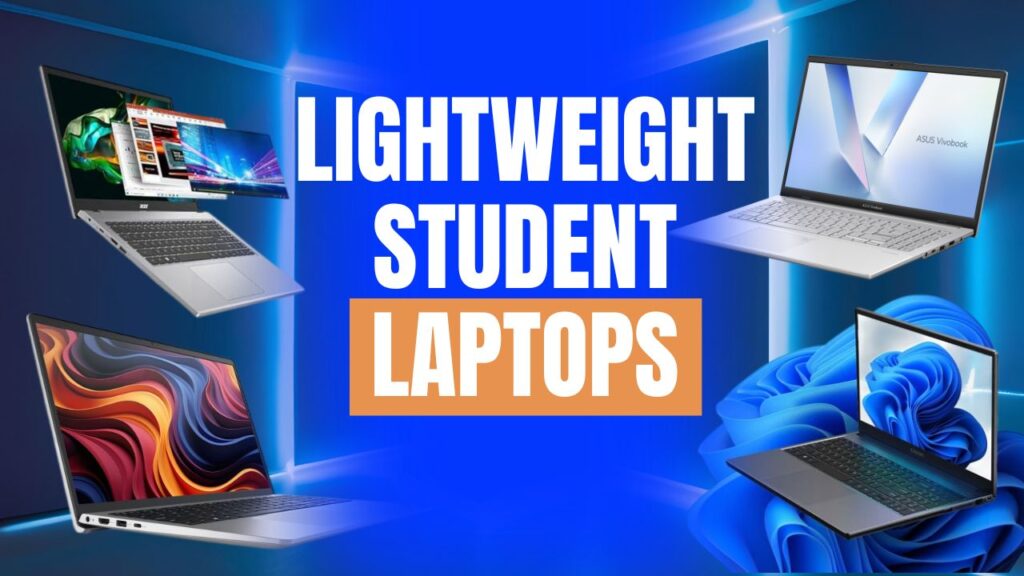
Six months into college, nobody’s complaining about their laptop’s benchmark scores. They’re complaining about their shoulders. A 2 kg laptop doesn’t feel heavy in a store demo — it feels heavy on the fourth flight of stairs to a 9 a.m. class, or on the walk from hostel to library with three textbooks and a water bottle sharing the same bag. That’s the real case for lightweight student laptops: not a spec-sheet flex, but something you’ll actually carry every single day for the next three or four years.
Here is a list that sticks to laptops built with that in mind — machines with a confirmed weight under roughly 1.5 kg, or ones explicitly built and marketed as ultraportables where the brand hasn’t published an exact figure for every configuration. Starting from ₹30,000 and goes up to premium models of laptops and every laptop is mentioned with their outstanding features to let you decide which one fits for you.
The prices mentioned below for each laptop as of August 2026 across Indian retailers but they always vary in festive season, so check the live price on online platforms like Amazon and Flipkart or offline store before buying it.
What “Lightweight” Actually Means for a Student Laptop
Under 1.5 kg is the number worth remembering — that’s roughly where a 14-inch laptop stops being a minor inconvenience in a backpack and starts being genuinely easy to forget you’re carrying. Below that, most manufacturers are using magnesium-aluminum alloy or a denser polycarbonate blend instead of the thicker plastic shells common on budget 15.6-inch machines.
The trade-off is usually battery capacity and port selection — thinner chassis mean smaller batteries and fewer full-size ports, so you’ll see more USB-C-only designs and dongles in this category. Screen size matters too: a 14-inch panel can shave 200–300 grams off an otherwise identical 15.6-inch laptop, which is why several picks below come in 14-inch variants specifically. If you genuinely need the extra screen real estate for CAD software or spreadsheet-heavy coursework, that’s a fair trade to make consciously — just don’t assume a 15.6-inch “slim” laptop weighs the same as its 14-inch sibling, because it usually doesn’t.
The Best Lightweight Student Laptops in 2026
1. CHUWI CoreBook X Pro — Under ₹30,000
Processor: Intel Core i5-12450H
RAM: 16GB (upgradeable)
Best for: Tightest budgets
If you still want a genuine H series processor, pick CHUWI CoreBook X Pro for ₹30,000 which is a hard ceiling. Instead of U-chip, its offer 12th‑gen Intel Core i5‑12450H and 16 GB of RAM. Combining them will give you excellent performance which you can get in a laptop which costs you twice and both the RAM and SSD are user‑upgradeable later.
The only drawback is CHUWI is a Chinese brand so it’s hard to find service centers in most regions in India compared to Dell, HP, Lenovo, or Acer. if something goes wrong then it takes longer to repair than usual. Exact weight figures also aren’t always independently confirmed, so check it carefully before buying.
2. Dell Vostro 14 3440 — ₹39,990
Weight: 1.46 kg
Processor: Intel Core i3
Best for: Portability-first budget pick
This is the most lightweight student laptop with 1.46 kg at ₹39,990. Dell Vostro is a proven reliable laptop with Core i3 for daily office work, support smooth streaming, and browsing with multiple tabs but it gets stuck when you attend zoom call, play spotify with chrome tabs.
It also offers business-grade hinges and a keyboard that doesn’t get loosen quickly on daily typing. This is a sensible choice for students who want to read PDF’s, make presentations, and complete assignments which don’t require compute-heavy operations.
3. Acer Aspire 15 AS15-42 — ₹40,999
Processor: AMD Ryzen 7 7730U
RAM: 16GB
Storage: 512GB Gen4 SSD
Best for: Performance-per-rupee
Give a few hundred extra and get a totally different laptop which supports Ryzen 7 7730U processor and 16GB RAM which most laptops do not offer at this price point. If students want to buy a lightweight student laptop for coding, data work, or large operation tasks which require more cores rather than raw single-thread speed.
Acer doesn’t prominently list an exact weight for this configuration but the size of the 15.6‑inch chassis suggests that it will noticeably heavier that the 1.46 kg Vostro. If you need a reliable and well-performing laptop over portability then pick this one.
4. ASUS Vivobook Go 15 (2026) — ₹46,990
Category: Ultrabook
GPU: AMD Radeon (integrated)
Best for: Mid-range Windows ultraportable
Its name defined its purpose overall, ASUS launched this Vivobook Go 15 especially for students to carry it easily wherever they go. This new 2026 variant is built with AMD-powered chip and Radeon graphics for more high performance and support for everyday multitasking than Intel’s equivalent integrated graphics.
Exact RAM and storage vary by the specific SKU you land on, and ASUS’s spec sheet for this listing doesn’t pin down a precise weight — the smaller 14-inch Vivobook Go models have historically landed between 1.3–1.5 kg, so this is a reasonable proxy, but confirm the number on the exact variant before ordering.
5. HP Pavilion Plus 14 — ₹69,990–₹79,999
Processor: Intel Core i5-1335U (13th Gen)
RAM: 16GB DDR5
Storage: 512GB SSD
Best for: Video calls and note-taking as daily habits
This is the thinnest laptop in the Pavilion range making it best for students who use the laptop for video calls and take notes directly. The 16GB of DDR5 and a genuinely sharp Full HD panel with a solid webcam of HP Pavilion Plus 14, make it noticeably better for online classes than most laptops at this price.
Price may fluctuate according to the retailer and offers in your area but this one genuinely listed between ₹69,990 to ₹79,999. You can compare its prices across various platforms before ordering it.
6. Apple MacBook Air 13″ (M4) — ₹89,990 (MRP ₹97,900)
Weight: 1.24 kg
Battery: Up to 18 hours video playback
Best for: Design, media, and Apple-ecosystem students
There is no fan noise, long-lasting battery which survives the whole day with you, and 1.24 kg weight that lets you carry it anywhere. Apple’s silicon efficiency consistently holds up in everyday use. This is the lightest and longest-running laptop on this list with honest value.
The present cost is ₹97,900 but Flipkart offer brings down the price to ₹89,990. The price has been varying a few times in the last months and still is, so better check the exact price before ordering.
The only downside is that many engineering programs and courses that involve a lot of CAD are not compatible with macOS exclusively, so be sure to check what you will need, or what your specific programs require, before making the switch.
Dell Vostro 14 vs Acer Aspire 15: Different Purpose in Same Price
The price difference is just ₹1,000 but ideal for students with totally different purposes, so it’s worth putting them side by side directly.
Dell Vostro 14 3440
Acer Aspire 15 AS15-42
Price
₹39,990
₹40,999
Weight
1.46 kg (confirmed)
Not confirmed — expect heavier
Processor
Intel Core i3
AMD Ryzen 7 7730U
RAM
Not specified in listing
16GB
Storage
Not specified in listing
512GB Gen4 SSD
Best for
Carrying it everywhere without thinking about it
Coding, multitasking, heavier workloads
If you’re choosing between these two, the question to ask yourself isn’t “which is better” — it’s “do I carry this laptop more often than I max it out.” Arts, commerce, and most humanities students will rarely hit the Vostro’s ceiling and will feel the weight difference every day. Engineering, CS, and design students doing real compute work will hit the Vostro’s ceiling within a semester and should take the Aspire’s extra RAM and cores over the lighter chassis.
Which Laptop Should You Actually Buy
Under ₹30,000 and not fussed about brand recognition: the CHUWI CoreBook X Pro gives you specs nothing else at this price matches, provided you’re comfortable with a smaller service network.
Around ₹40,000 and your coursework is reading- and writing-heavy: the Dell Vostro 14 3440 is the lightest confirmed option in this bracket and built to survive years of daily use.
Around ₹40,000 and your coursework involves code, data, or design tools: the Acer Aspire 15 AS15-42 gives you real multi-core performance for barely more money, at the cost of some portability.
₹47,000 range, want a Windows ultrabook rather than a budget laptop: the ASUS Vivobook Go 15 is the pick, with the caveat that you should confirm the exact weight and RAM on your specific variant before paying.
₹70,000–₹80,000 and you’re on video calls constantly: the HP Pavilion Plus 14’s webcam, display, and DDR5 memory earn their premium over the cheaper picks on this list.
₹90,000 and up, and battery life or a fanless, silent machine matters more than Windows-specific software: the MacBook Air M4 is the lightest and longest-lasting laptop here, full stop — just confirm your course doesn’t require Windows-only tools first.
None of this is a push to spend more than you need to. Most students finish a degree comfortably on the ₹40,000 tier; the ₹70,000-plus laptops earn their price mainly if you’re on calls all day or you specifically want the Apple ecosystem.
Two Things That Matter More Than Weight (But Get Ignored)
Weight gets all the attention because it’s the easiest thing to compare across a spec sheet, but two other factors decide whether a laptop actually holds up through a degree.
RAM you can’t upgrade later. Several budget laptops in this price range solder RAM directly to the motherboard, which means the 8GB you bought with is the 8GB you’re stuck with for the laptop’s entire life. This matters more each year as browsers, note-taking apps, and coursework software get heavier — 8GB that felt adequate on day one can feel tight by the second semester. Where a listing doesn’t explicitly say “upgradeable” or list a soldered/DDR5 spec, it’s worth asking the seller directly before you buy, especially on marketplace listings where the exact SKU isn’t always obvious from the product photo.
Charging reality in a hostel room. A laptop rated for 10+ hours on paper is genuinely useful if you’re not fighting for a plug point between four roommates and a limited number of sockets. USB-C charging (as on the MacBook Air and most of the ultraportables above) means you can share a charger with your phone or a power bank in a pinch — a proprietary barrel-pin charger, common on some budget Windows laptops, means losing that one cable is a bigger problem than it sounds. If your hostel setup involves shared or limited charging points, weigh this alongside battery life rather than treating them as separate factors.
Where to Buy (and How to Not Overpay)
Don’t lock into a single retailer before comparing — Flipkart, Amazon India, Croma, and Reliance Digital regularly carry the same laptop at different prices, and the gap can run into a few thousand rupees on any given week.
Several brands, including HP, Dell, and Lenovo, run student-ID discount programs periodically that aren’t always visible on the main listing page, so it’s worth checking the brand’s own site alongside the marketplace listing.
Big sale windows — Flipkart’s Big Billion Days in October and Amazon’s Great Indian Festival are typically when the steepest cuts show up, so if your purchase isn’t urgent, timing it around one of those is the single easiest way to save money on any laptop on this list.
Here you can get a list of lightweight student laptops which helps you understand which one fits you better. The laptop which lets you do your work smoothly and easy to carry anywhere is the best one, not the premium price laptops. So read and check by yourself carefully before ordering it because the price can go down or high with time.
Bihar Vidhan Parishad BVP Recruitment 2025: Bihar Vidhan Parishad (BVP) under Government Of Bihar has invited BVP Recruitment application for 64 vacancies of Personal Assistant, Data Entry Operator (DEO), Lower Division Clerk (LDC), Stenographer posts. Eligible candidates can apply from 28 November 2025 to 05 January 2026. The applicant must be above 18 years of age and there is an age limit for maximum which is 42 years on 01 August 2025. For more information, candidates can visit the official website or read the notification.
If you are an intermediate pass or graduate or a sure shot middle class, you are sure to get posts in Bihar Vidhan Parishad: the door is open for all.
Dates, Application Fee & Short Details of Bihar Vidhan Parishad Recruitment
UG Degree/Stenography 100 wpm & also Typing Speed 30 wpm
₹44,900 accor. to 7th pay Level 7
Data Entry Operator—DEO
35
Intermediate Marksheet/133 keystrokes per minute
₹25,500 accor. To the (Level 4)
Lower Division Clerk—LDC
10
Intermediate Marksheet/Speed should be 30 wpm
₹19,900 – ₹63,200 (Level 2)
Stenographer
12
Graduation/Stenography 80 wpm/Typing 30 wpm
₹25,500 – ₹81,100 (Level 4)
The position of DEO is undoubtedly the star of this recruitment with a staggering 35 vacancies – your chances of selection are truly bright! But don’t rule out the PA position if you have the stenographic skills, the pay is unbelievable at Level 7, it affords the best financial package of any job.
BSc Dialysis Technology course is recognized a professional course under the regimen of which the students are prepared and polished to serve in the field of renal care and dialysis. The course duration is 3 to 4 years and is a mix of theoretical concepts as well as practical training. Subjects studied include anatomy, physiology, renal pathology, dialysis techniques, biochemistry and pharmacology. Also, patient care management is stressed so that graduates will be able to function at a high level in clinical environments, such as hospitals and dialysis centers.
Eligibility and Admission
Requirements for the Admission in BSc Dialysis Technology courses are the possession of higher secondary education with a science background. Some colleges may also demand entrance tests and/or interviews as a part of the application process. Here is the full breakdown of Eligibility for Bsc Dialysis Technology:
Educational Background:
Candidates are generally expected to have passed their 10+2 or an equivalent higher secondary education examination with science stream (with the subjects of Physics, Chemistry, and Biology (PCB)) from a recognized board.45% to 60% in aggregate in these subjects is required by most institutions coming with variations as per applicant category i.e. general,sc/st or obc.
Entrance Exams:
BSc Dialysis Technology programs entrance examination may differ from one college to another, however, many colleges conduct B.Sc in dialysis technician examination for admission, to check the candidate’s knowledge and comprehension of basic scientific concepts related to the field of dialysis-tech. So, they accept admissions through their merit scores.
The mentioned premier institutions including JIPMER, SGPGI and Jamia Hamdard have started admitting students on the basis of entrance exams like NEET, CUET, KCET (Karnataka Common Entrance Test), KEAM (Kerala Engineering Architecture Medical).
But most of the colleges accept students on their 10+2 scores with subjects including physics, chemistry and biology or mathematics.
Admission Process
Check the colleges that offer BSc Dialysis Technology courses then visit their official website to enroll yourself.
The admission portal opens for a short period of time, mostly in April and March. Students need to apply with supportive documents which includes marksheets and certificates of qualifications. Please fill the application carefully while applying for admission.
If there is any entrance exam required during the admission then the notification will be released for the examination, you must check carefully.
Some programs may also require an interview after the entrance exam to determine if the candidate is truly interested and if he or she would be a good fit for the field of dialysis technology.
Institutions generally prepare a merit list considering aggregate performance in the written-test, interview (if applicable) and the qualifying examination which is used for offering the admission to the applicants.
BSc Dialysis Technology Syllabus Details
The educational content of the BSc Dialysis Technology syllabus is designed to be comprehensive for developing required skills in students to carry out dialysis procedures and patient care. The course duration is 3 years which may extend to 4 years including internships and practice-based activities. Important topics are:
You’re going to learn the human body’s systems, mainly the renal system, so you know how dialysis works on your body.
Renal Pathology: How the kidneys work, what goes wrong in the different kinds of kidney illnesses.
Understanding Different Dialysis Modalities: Obtain specialized knowledge about various dialysis modalities, including hemodialysis and peritoneal dialysis, such as machine operation, procedures, and patient care during treatment.
Biochemistry Metabolic alterations in patients with kidney diseases and the contribution of dialysis to these biochemical alterations.
Pharmacology Medications used in renal care: Drug interactions and patient safety during dialysis.
The objective of the syllabus is to make the student well versed with the theoretical and practical aspects of the dialysis technology profession.
Practical Training
Besides the core subjects the curriculum also includes practical modules, which enable the students to become familiar with the real work situation. This training is frequently conducted in the following settings:
Clinical Rotations: Students complete clinical rotations in hospitals or in specialized dialysis centers, offering hands-on experience with the dialysis processes and patient care procedures.
Simulation Labs: Numerous programs include simulation training to train students in a simulated environment prior to working with real patients.
Elective Modules
In some universities, optional courses are available where students can develop their knowledge in particular fields, as:
Nutritional Support in Renal Disease: This study unit focuses on the dietary management of renal patients, including those receiving dialysis.
Advanced Renal Nursing (Beginners) Suitable for residents who wish to further their nursing knowledge in renal care.
Investigations in Dialysis Technology: This section considers new developments and breakthroughs in the renal procedure.
Assessment Methods
The syllabus often involves different methods of assessment including the following:
Written examinations: To test knowledge of theoretical subject areas.
Practical tests: At clinical rotations or labs, you will undergo testing.
Projects: To promote research and investigation on particular subjects in the field of dialysis technology.
Skills Acquired in BSc Dialysis Technology
Dialysis Technicians are an important part of the healthcare team, especially in caring for patients with kidney disease that must undergo dialysis. What they need to learn are technical skills as well as interpersonal skills.
Dialysis technicians require a suitable combination of technical skills and people skills. Technically, they have to operate dialysis machines, watch patient vital signs, handle vascular access and interpret lab results to deliver safe and efficient care.
They must also be empathetic and possess the ability and skills to communicate with patients, attend to emergencies and work with medical teams. They serve an educational role, as well, teaching patients about treatment, lifestyle and managing illness, so patients can become active participants in their care.
Career Opportunities & Future Scope
Dialysis technicians are a subset of technologists, who work with the machines located at a dialysis center, the dialysis machine. Indraprastha Apollo Hospitals (New Delhi), Fortis Memorial Research Institute (Gurgaon) and Max Hospital (Several locations) are among the best employers, offering vacancies for patient care technicians and clinical managers.
Hospitals: Dialysis Technicians may work in a hospital setting, providing care to patients who require dialysis. These specialized technicians are essential to deliver safe and effective treatment.
Travel Placement: Something a few travel dialysis tech are able to do, is to work on a travel basis at various locations. Companies like Nephro Plus help these travel positions, typically with great pay and benefits.
Home Dialysis: Or in some cases, technicians work in the home care arena. Companies like DCDC Kidney Careaiding patients that dialyze in their own homes. They assist with instructions and follow-up care, monitoring that patients operate their equipment safely.
Some of the top global Dialysis Hospitals and Companies that offer first class patient care, not only this but they hire in a massive figure from India too. So, students can also apply outside of India. There are few top Dialysis centers including AMN Healthcare, Aya Healthcare, Cross Country Healthcare etc.
Career Advancement
Specialization: Dialysis technicians may further specialize, and become a certified dialysis technician (CDT). This certification could improve employment opportunities and generally results in higher salaries and more advanced positions.
Additional Education: Further education, such as an associate’s degree in nursing or supplemental certifications in nephrology, may qualify you for more advanced positions as registered nurse roles.
Management Opportunities: Senior technicians or lead in-centre technicians frequently go on to management, they may manage teams, manage patient care provision, and day-to-day logistics of dialysis clinics – center operations management.
Dialysis technician salaries may be different according to various factors like the location, the experience, and the nature of the organization they work in.
Dialysis Technicians in India make about ₹2,00,000 to ₹4,00,000 a year. Our the ceiling is 5,00,000 which is not unrealistic for a technician with 8+ years of experience.
It is normal for people living in or around the cities of Delhi, Chennai etc to have a higher demand for health care. A skilled technician can make between ₹4,00,000 and ₹6,00,000 annually in these regions.
Also, earning specialized training – such as hemodialysis or peritoneal dialysis certification, salaries can also go up. They may earn the opportunity to further increase their income.
In the US, the average dialysis technician salary is $25 per hour which is about $51,316 per year. For example, in California, the wage per hour for a dialysis technician is about $26.47.
Conclusion
BSc Dialysis Technology is tailor made for Students who are aspiring to be a Backbone of Renal Healthcare Sector. This combination of theoretical and practical knowledge enables the graduate to confidently perform advanced procedures such as dialysis, patient care and clinical work.
Due to the increasing number of patients suffering from kidney disorders in India as well as all over the world, the opportunity for trained Dialysis Technicians is also increasing. From hospitals and dialysis units to home-care agencies and world health services, job prospects are varied—and growing.
For students seeking a secure, respected and impactful healthcare career with immense potential for growth, BSc Dialysis Technology is a winning choice that will not just help them reach their professional goals, but also provide them the satisfaction of being able to make a real difference to the lives of patients.
Each year, countless graduates in Uttar Pradesh enroll in a coaching center or app, purchase a ton of GS books, and convince themselves this is the year they will make it to RO/ARO. Many of them will fail because they commit the same mistakes that could be avoided, even if they finish the entire syllabus. There are 10 mistakes to avoid while preparing for UPPSC RO/ARO.
If you want to earn your Samiksha Adhikari badge, the best thing you can do before opening one more book is to get a clear sense of what goes wrong for most aspirants.
What Is UPPSC RO/ARO, Exactly?
RO/ARO stands for Review Officer and Assistant Review Officer, two of the most respected Group B posts recruited through the Uttar Pradesh Public Service Commission. These officers are posted at the state secretariat, the UP legislature secretariat, different government departments where they work on file inspection, preparation of policies, writing official letters in Hindi and English, etc. It isn’t a flashy, headline-grabbing post like PCS, but it comes with something many aspirants value even more — genuine job security, a respectable pay scale, steady promotions, and a real seat inside the machinery of state governance.
The examination, which is held in three parts, consists of a Preliminary examination (for aspirant screening), a Mains examination (which prepares the merit list) and a Skill or Typing Test (which packs the final selection). Sounds straightforward on paper. In practice, each of these three stages tests a completely different skill set, and that’s exactly where most preparation strategies fall apart.
Why This Exam Demands Full Dedication, Not Part-Time Effort
Here’s the part most aspirants underestimate: RO/ARO isn’t just a general knowledge test. It’s a rare combination of GS depth, Hindi language mastery, drafting precision, and typing speed, all rolled into one recruitment cycle. You could have Polity and Economy on your fingertips and still get eliminated at the typing test stage. You could ace your Prelims and then lose the plot in Mains because your Hindi essay writing was never taken seriously.
Add to this the sheer competition — UPPSC RO/ARO regularly draws hundreds of thousands of applicants for a few hundred vacancies. In a pool that dense, small inefficiencies in your preparation don’t just cost you marks, they cost you your entire attempt. That’s why this exam isn’t something you can prepare for in stray hours between other commitments. It needs a dedicated, structured block of time where GS, Hindi, current affairs, and typing practice all get their fair share, week after week.
If you’re starting from scratch — no prior GS foundation, no typing practice, Hindi grammar rusty since school gives yourself a minimum of 10 to 12 months before the expected Prelims date. This gives you enough runway to build NCERT-level GS foundations, work through UP-specific static topics, develop a daily current affairs habit, and still leave 3 to 4 months purely for revision and mock tests.
If you already have a General Studies base from a previous PCS or SSC attempt, 6 to 8 months of focused preparation is realistic, provided you’re consistent. What you should never do is wait for the official notification to start preparing. UPSC RO/ARO is not conducted as per a fixed year, so there can be a short duration between notification and Prelims. Candidates who begin their preparation just after the release of the notification are almost always muggers and mugging does not survive a 200 question, negative marking paper.
Eligibility Criteria You Need to Meet
You must have completed a bachelor’s from a recognized university in any subject and there is no specific stream requirement, which is one of the reasons why the exam has such a broad range of applicants.
As regards age limit, the candidates belonging to General category are required to be 21 to 40 years of age as on the cut-off date with age relaxations applicable to upper age limit for OBC, SC/ST and other reserved categories as per Rules of UP Domicile. Indian nationality is mandatory, and candidates must meet UPPSC’s standard physical and character eligibility norms laid out in the official notification.
Note: exact eligibility requirements, age limit and relaxation, and total vacancy numbers are confirmed for every cycle in the UPPSC official notification for that cycle, so always cross-check on the UPPSC website before filling your form.
How Selection Actually Works for UPPSC RO/ARO
The journey to becoming an RO or ARO runs through three checkpoints, and clearing one doesn’t guarantee comfort in the next.
The Preliminary exam is a 200-mark objective paper covering General Studies and General Hindi, with a negative marking penalty of one-third mark for every wrong answer. It’s a qualifying stage only — your Prelims score doesn’t carry forward into the final merit, but a wrong strategy here (guesswork, poor time management, ignoring the negative marking) can knock you out before the real test even begins.
The Mains exam is where the actual merit list takes shape. It includes multiple descriptive and objective papers covering General Studies, General Hindi and Drafting, and a dedicated Hindi Essay paper. This stage rewards candidates who can write with clarity, structure their answers logically, and demonstrate genuine command over formal Hindi — not just candidates who’ve memorized facts.
Finally comes the Skill or Typing Test, a qualifying round where candidates must demonstrate a minimum typing speed, typically around 25 words per minute in Hindi typewriting. It sounds like a formality until you meet someone who cleared Mains comfortably and then lost their selection purely because they never practiced typing.
10 Mistakes to Avoid While Preparing for UPPSC RO/ARO
1. Treating Hindi as a formality instead of a scoring subject. A huge number of candidates assume Hindi will “sort itself out” because it’s their mother tongue. But it’s not true, original Hindi is tough and not like we speak in real life. UPPSC examines the formal grammar, vocabulary, comprehension and drafting at a level in Hindi paper which most of us have not reached since our school days. Skipping this section is one of the quickest ways to lose easy marks that other test takers are eagerly grabbing.
2. Delaying typing practice until after Mains. This is possibly the costliest mistake in the entire selection process. Candidates pour a year into GS and Hindi, clear Prelims, clear Mains, and then discover in the last few weeks that their Hindi typing speed isn’t anywhere close to the required benchmark. Typing is a motor skill — it needs weeks of daily, disciplined practice, not a last-minute crash course. Start practicing typing from month one, in parallel with your GS preparation, not after.
3. Ignoring UP-specific General Studies content. Don’t cover everything in GS, UPPSC RO/ARO exam heavily rely on state-specific current events. So start gaining more knowledge of Uttar Pradesh’s history, geography, culture, government schemes, and current affairs. Skipping UP-specific content means leaving guaranteed marks on the table that a well-prepared local candidate will happily pick up.
4. Underestimating the negative marking in Prelims. With a one-third mark penalty for every wrong answer, blind guessing can do real damage to your score. Aspirants who walk into the exam hall without a clear elimination strategy — attempting only questions they’re reasonably confident about — often end up with a lower score than candidates who attempted fewer questions but did so smartly.
5. Not practicing descriptive writing and drafting. The Mains exam isn’t an extension of the objective Prelims. It demands structured essay writing, formal letter drafting, and precise official-language usage. Those who are doing full year ‘solely on objective style MCQ’ practice and who are not writing a full-length descriptive answer in timed conditions would get a rude shock when they finally sit for Mains.
6. Studying in isolation without solving previous year papers. Studying alone without practicing past year papers. Reading the notes and highlighting the textbooks is productive, but it does not tell you how UPPSC formulates questions. Aspirants who do not go through previous year papers and full-length mock tests, usually end up entering the exam for real without ever having been under genuine pressure of exam-hall conditions.
7. Chasing too many sources instead of trusting a core few. It’s very tempting to gather every available resource, be it YouTube playlists, telegram channels, coaching PDFs, when everyone around you is following a different resource. In actual fact, this divides your training and encroaches on time for revision. The same message from toppers is relentlessly repeated: choose a handful of trustworthy sources for GS, Hindi and current affairs and keep going through these for multiple revision cycles, rather than “starting afresh” with new material every couple of weeks.
8. Neglecting current affairs until the final months. Current affairs isn’t something you can compress into a 30-day sprint before the exam. UPPSC draws questions from developments spread across the entire preparation window, particularly those tied to Uttar Pradesh’s state government initiatives. Aspirants who ignore monthly current affairs and try to cram a year’s worth of news in the final weeks usually retain very little of it under exam pressure.
9. Skipping revision in favor of constantly consuming new content. There’s a strange guilt many aspirants feel when they’re “just revising” instead of learning something new. But retention comes from repetition, not from the volume of fresh material you’ve covered once. Without scheduled revision cycles, most of what you studied eight months ago simply won’t be accessible to you on exam day, even if you technically “covered” it once.
10. Not building a realistic, disciplined daily routine. Perhaps the most common mistake of all — starting preparation with enthusiasm, studying erratically for a few weeks, then losing momentum entirely once motivation dips. RO/ARO preparation spans many months, and inconsistent, mood-driven study almost never survives that distance. A realistic daily timetable that balances GS, Hindi, current affairs, and typing practice, even if it’s just 4 to 5 focused hours a day, will consistently outperform sporadic 10-hour study binges followed by days of burnout.
Conclusion
UPPSC RO/ARO gives its aspirants an actual chance to prepare for the exam with 3-stage evaluation of knowledge, language and skill, rather than the exam they assume it to be. The candidates who clear are not necessarily the ones with maximum hours of study put in, but the ones who follow these 10 mistakes to avoid while preparing for UPPSC RO/ARO.
Start your journey early to make it possible to select for this position. Only the ones who dedicate themselves for the preparation can beat the exam.
If you’ve been waiting for the Rajasthan Rajya Vidyut Utpadan Nigam Limited to open the portal for candidates to apply for RRVUNL JE, Junior Assistant Recruitment 2026. Total vacancies are 2,005 which will be after the test on various positions including Junior Engineer, Junior Accountant, and Junior Assistant / Commercial Assistant-II. The timeline ends on August 25, 2026 but you have plenty of time from August 5 to apply.
RRVUNL JE, Junior Assistant Recruitment 2026 Short Notice Detail
RRVUNL has issued a short notice for the recruitment of posts in Five Rajasthan Power Utilities, namely, RVUN, RVPN, JVVN, AVVN, and JdVVN. Under Advertisement No. RVUN/Rectt./2026-27/01, the notification includes three types of posts – Junior Engineer (Electrical, Civil, Mechanical), Junior Accountant, and Junior Assistant/Commercial Assistant-II.
The 2,005 figure is the combined total across all three; the post-wise and utility-wise split hasn’t been published yet and is expected with the detailed notification. If Junior Assistant is your target, keep an eye on that breakdown before you start serious preparation.
Who Are Eligible For This Recruitment
For the Junior Assistant / Commercial Assistant-II post, the qualification bar is straightforward: graduation in any discipline from a recognized university. No specific subject requirement, which is exactly why this post draws such heavy competition every cycle — it’s open to arts, commerce, and science graduates alike.
Age will be calculated as on January 1, 2026, and the usual government relaxations for reserved categories will apply. The exact minimum and maximum age limits for this cycle hadn’t been confirmed in the short notice at the time of writing, so don’t lock in your eligibility assumptions from last year’s cycle — wait for the detailed notification before you rule yourself in or out.
Key dates on your calendar
Event
Date
Online Apply Start Date
05 August 2026
Online Apply Last Date
25 August 2026
Last Date For Fee Payment
25 August 2026
Exam Date
Notify Later
Treat everything from the detailed notification as the final word — short notices exist to give candidates a heads-up on timelines, not to lock in every eligibility detail.
The selection process — two phases, no interview
RRVUNL has kept this refreshingly simple: there’s no personal interview for these posts. Selection comes down to a written exam followed by document verification, and for Junior Assistant specifically, a second phase most candidates underestimate.
Phase-I is a computer-based test (CBT) — objective-type multiple choice questions, carrying 40% weightage in the final selection.
Phase-II is a Computer Proficiency Test: typing speed and efficiency checks in both Hindi and English. This phase carries 60% weightage — more than the written exam itself.
That weightage split is the single most important thing to internalize if you’re serious about this post. A lot of candidates pour every hour into GK and reasoning practice and treat typing as an afterthought to sort out “closer to the date.” For Junior Assistant, that’s backwards. If your Hindi and English typing speed isn’t already exam-ready, start now — it’s worth more to your final score than the written paper.
What The Written Exam Actually Tests
The Phase-I paper for Junior Assistant and Commercial Assistant-II covers five areas: General English, General Hindi, Reasoning and Mental Ability, Mathematics, and General Knowledge & Everyday Science. It’s a 120-minute objective paper with negative marking of 0.25 for each wrong answer, so accuracy matters as much as coverage — guessing blindly on a paper with this negative marking structure can cost you more than it earns.
The reasoning section leans on standard topics: number and letter series, coding-decoding, analytical reasoning, mirror images, and clock-based questions. Maths covers the usual government-exam staples — simple and compound interest, time and work, time and distance, HCF-LCM, ratios, and simplification. Hindi tests grammar, vocabulary, comprehension, and muhavare (idioms), while English mirrors that at a similar difficulty level. None of this is unfamiliar territory if you’ve prepared for any state-level clerical exam before — the syllabus is conventional, which makes cutoffs high and margins thin.
Salary and Pay Structure
RRVUNL has confirmed a starting salary around ₹33,800 per month for Junior Engineer posts, paid under the Level 10 pay matrix, along with Dearness Allowance, House Rent Allowance, Transport Allowance, and medical benefits. What hasn’t been separately confirmed yet is the exact Junior Assistant pay figure — most of what’s public so far centers on the JE post.
Until it’s specifically stated in the detailed notification of RRVUNL JE, Junior Assistant Recruitment 2026, don’t presume Junior Assistant gets that salary too; in most of the state power utility recruitments, Junior Assistant and Junior Engineer have different pay levels.
How To Apply For RRVUNL JE, Junior Assistant Recruitment 2026
Applications go through the official RRVUNL/Rajasthan power utilities recruitment portal once it opens on August 5. The process of RRVUNL JE, Junior Assistant Recruitment 2026 follows the standard pattern:
Register first then login using User Id, Password along with Captcha, enter required details for education and personal information, photograph and signature in the prescribed format, pay the processing fee and submit the online application.
Keep scanned copies of your graduation certificate, category certificate (if applicable), and ID proof ready in advance — form-filling day is not the time to be scrambling for document scans.
How to Prepare For The Exam
With the RRVUNL JE, Junior Assistant Recruitment 2026 application window closing August 25, here’s the realistic sequence:
Verify your eligibility against the detailed notification the moment it drops, complete your form early rather than in the last 48 hours.
Start splitting your prep time between the written syllabus and typing practice from day one — not after Phase-I is behind you.
Given the 60% weightage on the Computer Proficiency Test, candidates who start typing practice late are competing at a real disadvantage against those who’ve been building speed for weeks.
That’s the edge worth building now, while the form is still open.
Conclusion
RRVUNL JE, Junior Assistant Recruitment 2026 is a golden door to get recruited in the state of Rajasthan with five power utilities. Junior Assistant aspirants must note that though the written exam is important, the Computer Proficiency Test has a weightage of 60% and therefore, typing speed and accuracy are as important as the subject knowledge.
The end date for submission of the online application is 25.08.2023, so complete the registration process before that date. Stay tuned for detailed notification of each post-wise vacancy and eligibility criteria. Start preparing for both the tests from day one to get a better chance of selection.