Good news for job seekers in India! The Railway Recruitment Board (RRB) has released RRB Group D Recruitment 2026 notification with approximately 22000 Level-1 posts. This drive, for CEN 09/2025 will fill posts of Track Maintainer, Assistant (Workshop), Pointsman and the like and is suited for 10th-pass youngsters aspiring for handsome coach packets jobs in railways.
Key Dates at a Glance
Short Notification
19/Jan/2026
Online Registration Start
31/Jan/2026
Application Deadline
02/March/2026
Detailed Notification
Update Soon
Application Fee For RRB Group D Recruitment
General/OBC/EWS : Rs. 500 per person
Female/SC/ST/PWD : Rs. 250/-
Eligibility Essentials For RRB Group D Recruitment 2026
Candidates who have 10th pass (or ITI from NCVT/SCVT for certain posts) are qualified to apply for this job. Age must be above 18 and below 33 years (relaxation for SC/ST/OBC). No degree required, so it’s open to millions. Physical health and rudimentary abilities are important also.
Criterion
Requirement
Education
10th Pass / ITI
Age Limit
18-33 years
Nationality
Indian Citizen
Age relaxation is provided for reserved category
Selection Process Breakdown
The procedure of selection is conducted in phases: at the beginning, a Computer-Based Test (CBT) includes the subjects Mathematics, General Awareness, Science, and Reasoning (100 questions within 90 minutes).
Then, there is a Physical Efficiency Test (PET), consisting of running and lifting, among other things. This is followed up by Document Verification and Medical Examination.
Aspirants are shortlisted in accordance with merit, so begin your preparations for the PET right away.
Salary and Perks
Get the job and enjoy Level-1 pay: Basic 18,000 + DA, HRA, TA – take-home 22,000-25,000 a month. Throw in job security, pensions, free travel and prospects for advancement.
Follow These Steps To Apply
Go to Official Website via direct Link given in the below section
Under the ‘Notices’, click on the Railway Recruitment 2026 and find registration form
Once the link will be active to the application portal, you can fill up your details and submit.
While submitting it requires you to pay the amount and print out the offline copy of the application.
Students who want to start a business while studying that will grow with time when they get passed out but don’t know how to start a mineral water business, stay consistent and understand everything step-by-step. Why the Mineral Water Business ? Because it’s easy and needs less investment so students can easily work it out.
In every area there’s someone on a bicycle, two or three 20-litre cans strapped to the back seat, making rounds before the 9 a.m. lecture. And you’re wondering about the cost per can, number of houses in the block, weekly demand and deciding to start a mineral water business. It sounds like the side income you’ve been looking for.
It’s not a bad instinct. Even if you don’t have six months of free time, and lakhs of rupees sitting idle. You can still set up your small business amid juggling a timetable, a hostel curfew, and exam weeks. Here’s what actually applies if you’re starting this while you’re still enrolled.
Mineral Water Business Is Different From Packaged Drinking Water
The label gets used loosely, and that’s where a lot of first-time entrepreneurs trip up. Under Indian standards, “natural mineral water” (IS 13428) and “packaged drinking water” (IS 14543) are two different categories. The natural mineral water is sourced from a protected mineral spring, while packaged drinking water is the RO-and-UV purified water in cans and bottles that almost every local plant actually sells.
If you’ve ever seen a delivery guy with unbranded 20-litre cans, that’s packaged drinking water, not mineral water in the technical sense — even though everyone calls it “mineral water” on the street.
It matters because both categories legally require BIS certification if you’re selling them in a sealed, labelled container under a brand name. FSSAI registration is a separate, additional requirement that applies to anyone in the food and water supply chain — manufacturer, distributor, or reseller.
Skipping either one isn’t a grey area; local FDA teams do seal unlicensed plants, and it happens more often than people expect. If you don’t have much money then you can apply for FSSAI certification to start with.
The Reality of Setting Up A Brand of Water
If the plan is to manufacture and bottle your own brand, here’s the honest range, based on current supplier and consultancy listings — treat these as ballpark figures and verify locally, since they shift by state, capacity, and vendor:
BIS/ISI certification facilitation through a consultant typically runs somewhere in the ₹35,000–₹70,000 range.
Entry-level packaged drinking water machinery (RO plant, filling, capping) starts around ₹2.4 lakh for lower-capacity units and climbs past ₹13 lakh for higher-capacity setups.
A full project — machinery, water-testing lab, premises — can land around ₹25 lakh once you include everything, which is roughly the scale seen in real project reports built for government-backed loans like PMEGP, financed mostly through a bank loan plus KVIC margin-money subsidy.
None of that is pocket money, and the setup timeline — BIS testing cycles, layout approval, machinery installation — usually runs months, not weeks. It’s a business for after you graduate, or for a family that already owns a plant.
How to Start a Mineral Water Business While Studying
The workaround isn’t to skip compliance — it’s to skip manufacturing. Instead of building a plant, tie up with a local packaged drinking water plant that already holds FSSAI and BIS certification, and become their reseller or delivery partner in a specific area you can actually cover between classes.
You’ll still need your own FSSAI Basic Registration — it’s mandatory for anyone distributing or reselling food and water products, not just manufacturers, but it’s a low-cost, online process aimed at businesses with turnover under ₹12 lakh a year. No lab, no machinery, no factory inspection required at this tier.
However, you can’t put your own brand name on someone else’s water without their manufacturer backing you under their BIS license. Either sell openly under the supplier’s existing brand as their authorized reseller, or have a documented dealership arrangement. Your own labelled brand is the manufacturing route above — a later-stage move, not a starting point.
How to Manage Your Business While Attending Classes
A few things make the difference between this staying manageable and it eating your semester:
Keep the radius tight. Your own hostel block, one PG cluster, or a few shops near campus — something you can cover in under 15 minutes so it fits around lecture slots.
Vet suppliers in person. Visit two or three candidate plants, ask to physically see their FSSAI certificate and BIS license number rather than taking their word for it.
Apply for FSSAI Basic Registration early — it’s inexpensive and doesn’t take long, but it’s not something to leave until customers are already asking for it.
Run subscriptions, not daily orders. A weekly or monthly can subscription over WhatsApp is far easier to manage during exam weeks than fielding one-off orders every day.
Budget for the deposit cycle. Most local can systems run on a refundable can deposit — commonly in the ₹50–100 range per can, though this varies by supplier. That money is tied up as working capital until the empty can comes back, not profit you can spend.
GST registration only becomes mandatory once turnover crosses ₹40 lakh a year for goods in most states (lower in a few special-category states). Most student-run operations won’t hit that in year one.
Where Student Water Businesses Usually Fail
Three patterns show up repeatedly, and they’re worth naming before you start rather than after:
Treating it as passive income when it’s really a logistics job — someone has to physically move 20-kilogram cans at a fixed time, every week, including exam season. Letting the deposit-cash mismatch creep up — if thirty cans are out with customers and only ten deposits have come back, the working capital gap is real and it stalls reorders.
And trying to compete on price against an established local operator who already owns the plant and the delivery network — a student reseller almost never wins that fight, and shouldn’t try. The actual pitch is convenience: reliable timing around class hours, UPI payment, water dropped right at the door.
Skip the machinery quote for now. Call two local packaged drinking water plants and ask if they take resellers.
Apply for your FSSAI Basic Registration online.
Then run a 20-can pilot in your own hostel or nearby block before spending a rupee on anything beyond that.
If the pilot survives one full exam cycle without a missed delivery, you’ll know whether this is a real business or just a good week.
Conclusion
Understanding how to Start a Mineral Water Business as a student is different from starting as a manufacturer. So don’t follow large-level business instruction points, begin with less investment and short area to cover.
While attending your classes, you can set up your side business for passive income and it gets succeeded then you can turn it into a large-scale business. Apply FSSAI registration and track down your reliable provider who already has a water plant industry. Expand the network in the hostel and nearby block to easily deliver the mineral water cans.
Stay consistent and don’t get bored in just one week, keep up with the idea and you’ll get a success.
In the new digitized India, fake job offers are becoming common. Let’s take a look at how to verify if a Job Offer is real or fake. Whether a private or government job, scams often happen in both sectors. Mostly, freshers get wrapped up in scammer’s false offer letters because they don’t have a clue from the real industry. Scammers often use real companies’ names to fool you out and ask for money as a security deposit. Here are the signs that can help you to spot a fake job offer and protect yourself.
How to Identify Fake Private Job Offers
1. They Ask You To Pay Money
Always remember the fact that real companies never ask for any kind of money from you. They hire on the basis of a person’s qualifications and skills. If they ask you any of the following:
Registration Fee
Internship Fee
Security Deposit
Job Guarantee
They‘re scamming you, and freshers get stuck into this thing once in their lifetime because they are easily manipulated by seeing a chance to start their career. No reputable company charges you to give a job, whether it’s a government or private.
2. Offering High Paying Salary
If they are offering Rs. 50,000 or Rs. 1 Lakh per month for just entry-level jobs. Think about it, getting a job with such a salary and without any experience is kind of a miracle, and miracles don’t happen in real time. These are usually fake because real companies check your skills and experience before offering big packages.
3. No Official Interview Process
Real companies always hire you after an interview session whether it’s a government or private sector. If they say “NO INTERVIEW REQUIRED”, they are a red flag. Even if they ask for an interview on WhatsApp or Google Meet, you must check their company’s visibility on Google or LinkedIn. If they are not seen on any of the social platforms then it is a fake company. There are several rounds in the selection process:
Application review
HR round
Written Test
Technical Interview (if applying in the technical round)
Assessment
Experience Proof (if you have any)
Document Verification when you get selected after the interview.
4. Unprofessional Emails or Offer Letter
Fake company’s emails or offer letters does not contain any of the following:
Email ID: Fake company has emails including gmail.com or yahoo.com. However real companies own their domains like tcs.com or hdfcbank.com
Grammar Mistakes: You can check the spelling mistakes or errors in their mail or offer letter because they usually do that. If the scammers are pro they can send you a fluent message. So, try other things to check.
Company Logo or details: Real offer letters always present their logo and company details like location, contact, and terms are clearly written on the letter.
5. Missing Company Details
If you are suspicious about the job offer, you must check their company name, details, and address. People who were scammed before by the same company also shared reviews on social media platforms. Search for the company first and don’t just be impressed by vague job descriptions like “work from home” or online project”.
6. Pressure To Accept The Offer Letter
If they say that job vacancies will be filled up sooner and accept the offer letter now. It is a really big fish in the pond, real companies always will give you time to think about it. So, take your time to check everything out about the company. Fake recruiters often say these things:
Hurry! Limited seats.
Confirm today or you will lose the job.
Register now with half payment.
They ask you to pay anything like a security fee.
7. The Company Has No Online Presence or Bad Reviews
If they post online about the hiring check their company page, people reviews, or employees. If others have been cheated they usually post on social media for others to be aware of the scam. Real company has an official website, LinkedIn profile, and no bad reviews.
Tips To Stay Safe From Scammed Jobs
If a company asks for your Aadhaar Card, PAN Card, or Bank Details before the interview or official joining. It’s a fake company that wants to take advantage, freshers or experienced are advised to not share any personal details before the official joining.
Big companies review your resume on these websites and then ask for the interview round if they’re satisfied with your resume. The interviews are usually taken by the interviewer on screening or on-site.
Government Jobs often recruit candidates by a competitive examination by the particular organization. The announcement of the vacancies on the various posts will be presented on the official website.
There are a lot of advertising papers on the wall in India that promise government jobs without an exam or get selected directly for government jobs. They are scamming you surely, making money in the name of a government job is common in India.
1. Fake Agents Promising Jobs
If you ever cross paths with any agent who claims to get you hired because he has some connection on the inside in any sector like Railways/SSC/UPSC. They ask you to pay 50k or 60k for direct selection, never give them money.
Government jobs are only given through the examination and any details about the job process or list of candidates that are selected always came through from an official website for every government organization. There is no middleman who can get you a job.
2. Fake Job Portals
Scammers copy the real website that looks like the real website and fool people around. Here is an example of a fake and real website difference:
Fake: sscrecruitment.com
Real: ssc.nic.in
3. Fraud Coaching Centres
Spot fake claims from coaching centres like:
100% job guarantee in SSS/Railway.
Get placement after the course.
Be alert of these scams because no coaching centres can guarantee to give you a government job or help you get one. Only your exam performance and qualifications decide your selection for a government job.
How to Stay Safe From Fake Government Job
You can apply for a government job through their official website. Whether you are applying in Railways, Scientist, Clerk, IAS, IPS, or any other post. The official websites for government jobs are:
If you are applying for a private job or government job, always double-check the offer letter and recruitment process. In both sectors, people are hired only by their performances, whether it’s experience, assessment, or merit list. The candidates who clear out the rounds of the selection process can get a job. If you don’t know How to Verify If a Job Offer Is Real or Fake? You can check out the signs to spot fake offers. Getting a real job takes effort, no shortcut can replace that.
The SBI Clerk Recruitment 2025 is started as it was released officially on the SBI website. You can check the notification for the entire process details of the recruitment. The examination is expected to happen on 20th September 2025, if you want to apply for this post then fill the form before the closing date.
Eligibility Criteria for SBI Clerk Recruitment 2025
Education: Candidates must have a valid graduation degree from a recognized university or college. Final year students can also apply but they must have proof of the passed graduation exam at the time of selection.
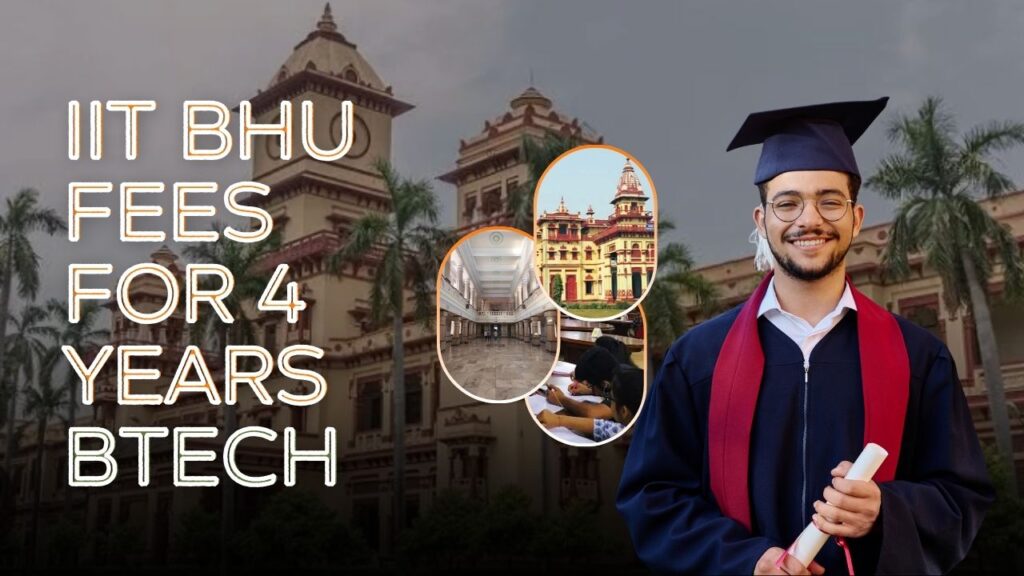
Students must be aware of the entire IIT BHU fee structure if they are planning to pursue the B.Tech degree for 4 years, as the Institute operates on an income- and category-based system. IIT BHU is considered one of the best value for money engineering colleges in India with good placements and govt backed fee waivers and the fee is moderate as compared to many other IITs.
The overall academic fee for four years for General/OBC/EWS students having an annual family income of more than ₹5 lakh is almost ₹10.4 lakh, while due to hefty tuition fee waivers, the students coming from lower income groups or reserved categories are charged a lot less. Students should also keep in mind that in addition to tuition realistic these fees are as well as hostel and mess charges while calculating up the actual four-year budget.
IIT BHU B.Tech Fees Overview
IIT BHU (Varanasi) has a caste cum income-based fee structure and hence what you have to pay depends both on your caste category as well as your annual income. Academic fees include the fees for tuition, examination, registration, hostel seat rent and other institutional charges, but mess fees must be paid separately every semester.
For a General/OBC/EWS student with income above ₹5 lakh per annum, the total academic cost for 4 years of B.Tech (not including mess and personal expenses) comes to around ₹10.41 lakh. The addition of hostel and mess makes the true 4 year cost regularly cross ₹11.5-12 lakh, based on yearly revisions and your lifestyle.
IIT BHU B.Tech Fees Fee Structure Table
The following is the approximate fee structure of B.Tech course of IIT BHU for 4 years for various categories and income slabs (Mess charges are not included). These figures are for indicative purpose for 2025-entry students and are subject to minor changes in future circulars.
Category
Admission Cost
Semester Fee
First-Year Total
4-Year Total
GEN/OBC/EWS with Income less than ₹5L
₹15,750
₹1,06,350
₹1,21,600
₹10,00,000
GEN/OBC/EWS with Income less than ₹1-5L
₹15,750
₹39,683
₹54,933
~₹3,20,000
GEN/OBC/EWS with Income less than ₹1L
₹15,750
₹6,350
₹21,600
~₹50,000
SC/ST/PwD with no income limitations
₹15,750
₹6,050
₹21,300
~₹48,000
Fee Structure in More Detailed Way
One-Time Charges at Admission
₹5,750
Refundable Deposits at Admission
₹9,000
Tuition Fee
₹1,00,000
Additional Charges
₹16,500 per semester
Realistic Budget: Academic + Hostel + Mess
While academic fees only are quoted in brochures, parents should calculate fees with hostel and mess included so as to not suffer a financial shock later. IIT BHU Hostel fee (seat rent plus utilities) is very nominal compared to fees, but mess bills are a hefty recurring cost.
Seat rent for the hostel and utilities: a few thousand rupees per semester (added to the normal semester fee).
Mess advance: usually ₹15,000–17,000 a semester – rates depend on the mess committee.
Estimated four-year mess cost: ₹1.2–1.4 lakh (based on eight regular semesters and modest inflation has been taken into account).
General/OBC/EWS Candidates who have their house income less than 5 lakh have a good all inclusive practical 4 year budget (academics+hostel+mess) would be around 12 lakh.
This is the lower fee budget particularly for those who receive full or partial tuition waivers, students with lower-income can have a shot at IIT BHU.
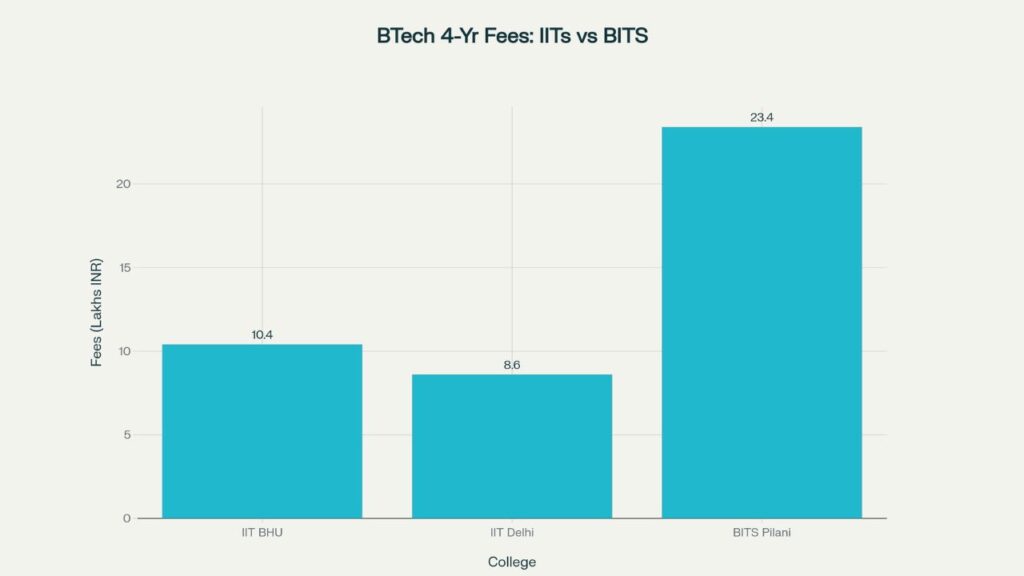
In order to get a sense of how affordable IIT BHU is, it makes sense to compare its 4-year B.Tech fee with that at other reputed institutes like IIT Delhi and BITS Pilani. The following amounts (approximates) are for General/OBC/EWS students with income above ₹5 lakh per year and do not include hostel/mess.
Both IIT BHU and IIT Delhi receive government subsidies that make the cost of tuition approximately ₹8–10 lakh for 4 years.
Since BITS Pilani is a private deemed institution the fees are much higher, the total cost for 4 years (including hostel and mess) can easily cross ₹22-24 lakh.
Fee Comparison With IIT Delhi And BITS Pilani
4-year BTech Academic Fee Comparison (2025)
IIT BHU and IIT Delhi 4-year fees are about ₹10.4 lakh and ₹8.6 lakh respectively for the same duration. Meanwhile, tuition fees at BITS Pilani vary from ₹19 lakh to ₹22 lakh for 4 years, not inclusive of inflation and full residential expenses.
For students who are granted income-based fee waiver or belong to SC/ST/PwD categories, IIT BHU becomes significantly better option over private colleges, as their burden of tuition fees is substantially reduced or waived off. This balance of modest fees, good placements and central government support is what makes IIT BHU one of the best ROI engineering options now available in India.
Conclusion
The B.Tech fee at IIT BHU is kept as per the income slabs of students, Hindi Medium assistance patches are provided. With substantial waivers for economically backward sections and SC/ST/PwD students, and government subsidies making the aggregate academic fee lesser than most of the premier institutes, IIT BHU promises one of the best ROI among the top engineering colleges.
The bottomline is that the 4-years cost of attendance remains affordable when compared to private institutes like BITS Pilani, whose fees can run to almost twice this amount, even after adding hostel and mess charges. If you are a student who wants a good mix of fees, quality education with good placements, IIT BHU is a very cost-effective and future proof bet.
This year’s Festive Season Sale In October will bring many new offers and discounts on electronic products — massive offers hit on smartphones. If you’ve been sitting on an upgrade — whether that’s finally moving off a three-year-old Galaxy or jumping into the iPhone ecosystem for the first time — this is the window the entire Indian smartphone retail calendar builds toward.
When the sale is live, which smartphone will actually get a discount and what’s coming to this season, know everything before planning around.
When Does the Festive Season Sale Start?
The Amazon Great Indian Festival 2026 is going live on October 8 with no closing date, so treat this as a multi-week sale. Prime members get early access from October 7. This Festive Season Sale has flagged on many categories, including mobile phones, electronics, home appliances, and fashion. With 160,000 seasonal jobs secured by Amazon to handle the load, this shows how big this year’s event is expected to be.
Flipkart’sBig Billion Days 2026 goes live for everyone on October 9, a day after Amazon, with early access on October 8 for Flipkart Plus, Flipkart Black and select co-branded credit card holders. Flipkart has also been running a slower build-up than usual: Early Bird Deals started September 24, and official price reveals on flagship phones have been trickling out since September 26.
October 7–9 for early access across both platforms, then the main event running through most of October. If you’re the type who wants to plan a purchase around the calendar rather than react to a flash notification, mark October 7 as your first checkpoint.
What Discounts and Bank Offers to Expect
Neither platform has published final smartphone pricing yet — genuinely, this is one area where numbers are still moving daily, and anyone claiming exact final prices two weeks out is guessing. What’s confirmed on the banking side is more solid:
On Amazon, SBI credit and debit card users get a flat 10% instant discount on eligible transactions, including EMI purchases, and Amazon has said overall discounts across electronics could run up to 80%, with an additional 10% on top for SBI cardholders. There’s already a Prime Coupon Bonanza running ahead of the main event, offering up to ₹6,000 off select Samsung and Sony televisions — a hint at how aggressive the electronics category is shaping up to be.
On Flipkart, Axis Bank and ICICI Bank cardholders get a 10% instant discount on eligible debit and credit card transactions, Flipkart Plus and Black members get up to 12% additional card discount, and Bajaj Finance EMI options are being pushed hard for higher-ticket purchases like flagship phones. Flipkart is projecting discounts climbing as high as 90% across electronics, appliances, fashion and home decor — though that ceiling figure almost always applies to accessories and older inventory rather than current-generation flagships.
Best Smartphone Deals Expected This Festive Season
1. iPhone 17 (256GB) — Best for iOS Upgraders on a Budget
The launch price of iPhone 17 is ₹82,900 for 256GB storage but if you purchase 512GB, the price rises up to ₹1,02,900. Flipkart’s dropping iPhone 17 price under ₹80,000 during Big Billion Days. From above Rs 1 lakh to Rs 80 thousand, the difference is quite big.
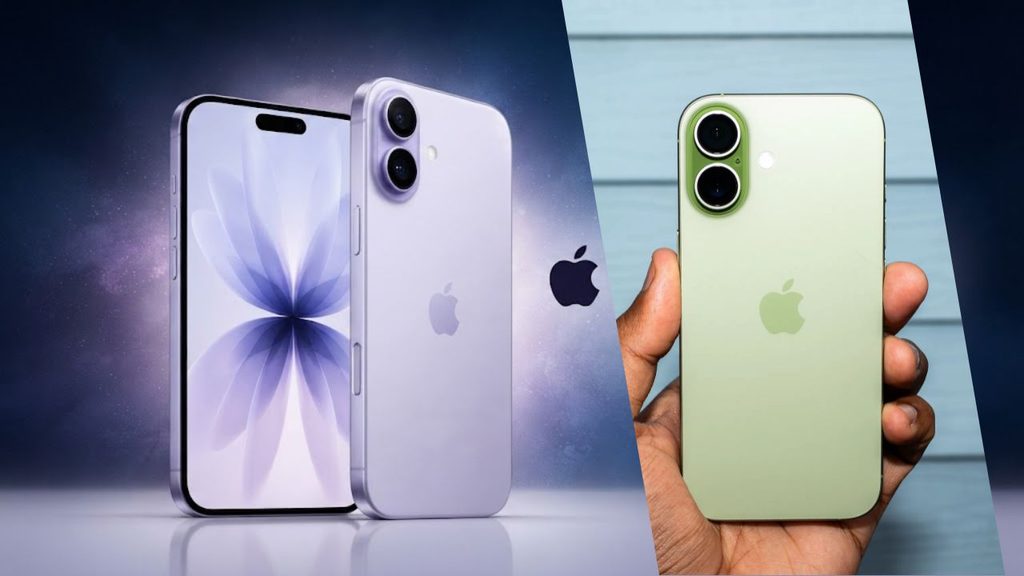
At a sub-₹80,000 price point, this is the cheapest true current-generation iPhone has ever launched into a festive sale with outstanding features including 6.3-inch Super Retina XDR display, A19 chip, dual rear camera system. It is available in 5 colours — Black, White, Mist Blue, Sage and Lavender.
Limitation: You still don’t get the telephoto lens or ProMotion display that the Pro models carry, so heavy zoom-shooters and gamers chasing 120Hz will feel the gap. But a perfect model for anyone upgrading from an older iPhone who needs a clear camera and high-end features.
2. Samsung Galaxy S25 Ultra — Best Flagship Value Pick
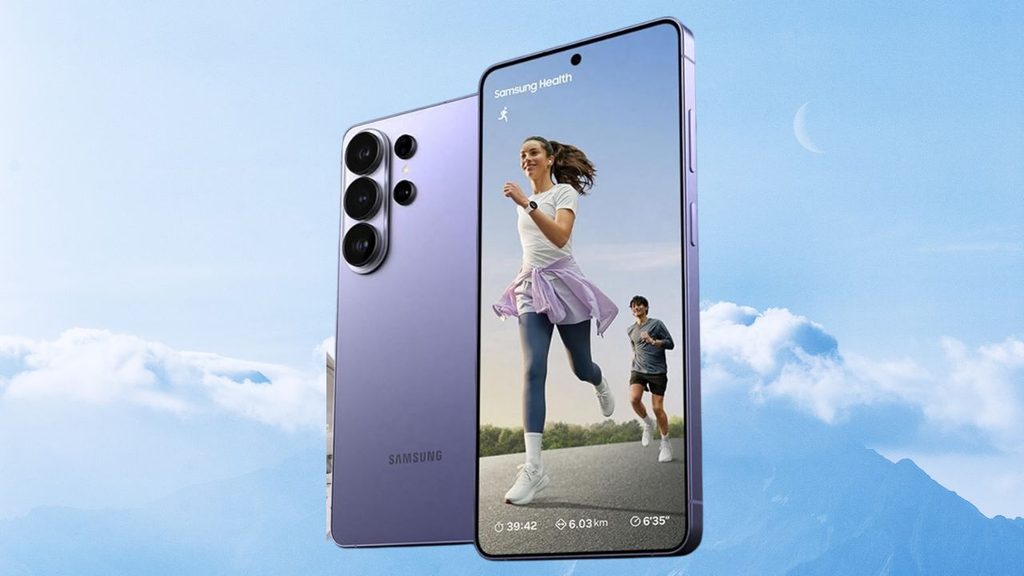
Samsung put the launching price ₹1,29,999 on Galaxy S25 Ultra which was around ₹84,999 after a discount during Amazon’s July Prime Day and as low as ₹94,999 during the May Great Summer Sale and both offers flagged by the same retailer. Now it’s preparing for the festive push. Expect festive pricing to land in a similar ₹85,000–₹95,000 band.
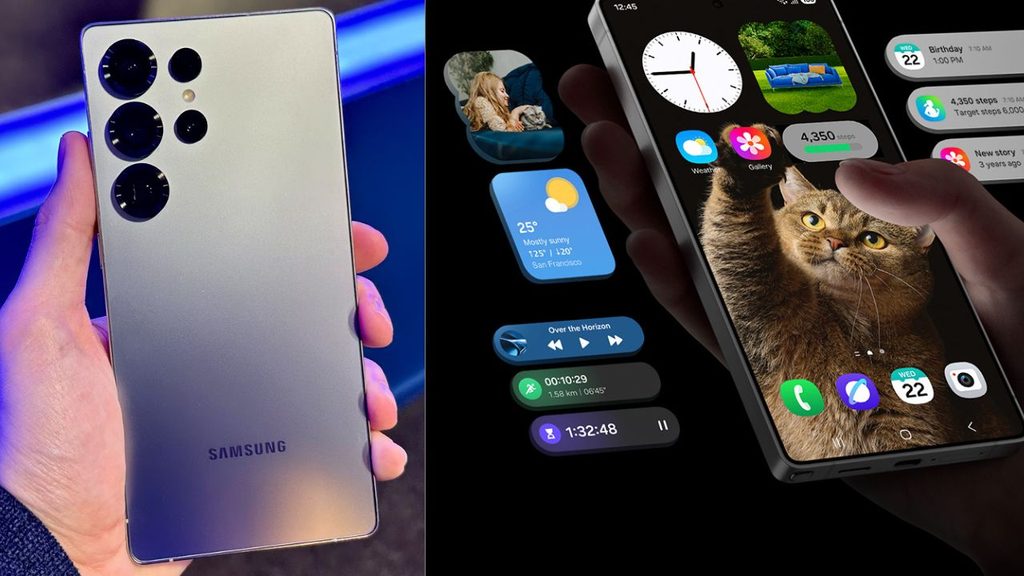
You’re getting a phone that was a ₹1.3 lakh flagship a year ago for roughly two-thirds the price. Buyers who are searching for best cameras and display smartphones can afford the Snapdragon 8 Elite for Galaxy chipset, which still holds up against 2026 competition. The flagship specifications 6.9-inch Dynamic AMOLED 2X display at up to 2,600 nits brightness, 12GB RAM, titanium frame with Corning Gorilla Armor 2 glass.
Limitation: It’s now the previous generation — no Galaxy S26’s Snapdragon 8 Elite Gen 5 or the newer Privacy Display feature, and Samsung’s software support clock started a year earlier than on the S26.
3. Samsung Galaxy S26 Ultra — Best for the Latest Hardware
Another Samsung’s flagship model launched in 2026 at ₹1,39,999 for 12GB+256GB and for higher storage, price rises up to ₹1,59,999 for 512GB and ₹1,89,999 for 16GB+1TB. This smartphone is delivering a high-end technology — Snapdragon 8 Elite Gen 5 for Galaxy, 6.9-inch display and first built-in Privacy Display for limiting side-angle screen visibility. The festive offer lands near ₹1,24,999 because July sale cuts to the same.
A 200MP main camera with an absolute hardware system which can’t be broken easily. Buyers who are looking for 2026 latest smartphones at a range over 1 lakh, this is the best time to think about it.
Limitation: Because it’s this fresh, don’t expect S25 Ultra–style 35% festive cuts. If your budget caps around ₹1 lakh, the S25 Ultra is the more realistic festive buy.
4. Samsung Galaxy S25 FE — Best Mid-Flagship Pick
Flipkart teased S25 FE deals alongside the S25/S25 Ultra as part of its Big Billion Days smartphone lineup, Galaxy S25 FE discounted prices will land near ₹60,000. Buyers who can’t afford S26 Ultra for the series design language and camera hardware, this one provides them the same two features at an affordable range in this festive season.
Limitation: Detailed specs and confirmed pricing are still pending official reveal — if you need certainty before buying, wait for Flipkart’s price-reveal window closer to the sale date rather than an early-bird listing.
Compare iPhone 17 vs. Galaxy S25 Ultra On an Overview
iPhone 17 (256GB)
Galaxy S25 Ultra (256GB)
Expected festive price
Under ₹80,000
₹85,000–95,000 (based on recent 2026 sale pricing)
Display
6.3″, Super Retina XDR
6.9″, Dynamic AMOLED 2X, 2,600 nits
Standout strength
Cleaner ecosystem, resale value
Bigger screen, S Pen support, titanium build
If display size and a stylus matter more to you than the Apple ecosystem, the S25 Ultra is the better festive buy at a comparable post-discount price. If you want the newest chip generation with the smallest footprint, the iPhone 17 wins.
Don’t Lock Into One Platform Too Early
Amazon and Flipkart are running near-identical bank-offer structures this year, but the specific phone deals won’t be identical — Samsung’s S25 Ultra pricing has historically differed by a few thousand rupees between the two platforms in past sales, and the same is likely this October.
Check both listings once early access opens on October 7–8 before finalising a purchase; a single-retailer comparison isn’t a real comparison.
If your budget is under ₹80,000 and you want the newest possible chip, wait for the iPhone 17’s Festive Season Sale price to drop and buy it in the first 48 hours of early access — historically, the steepest festive cuts on genuinely new-generation phones show up early, before stock tightens.
If you’re chasing flagship specs on a ₹85,000–95,000 budget, the Galaxy S25 Ultra is the stronger buy this cycle, since last year’s flagship pricing has already proven it can fall that far. And if you specifically want Samsung’s newest chip and can stretch past ₹1.2 lakh, hold out for the S26 Ultra rather than compromising — buying older hardware you’ll regret in a year isn’t really a discount.
One practical step regardless of which phone you pick: add it to your Amazon or Flipkart wishlist now, and note the current listed price before October 7. That’s the only way to verify a “festive discount” is real rather than a price that was quietly bumped up the week before the sale.