Meet the Best History Teacher for Competitive Exams Who Can Boost Your Score

Best History Teachers in India for Competitive Exams UPSC SSC RRB

Aspirants of competitive exams like UPSC, SSC, RRB, State PSC think history is the hardest subject, the truth, it is hard without the right guidance. To understand the facts behind the history instead of rote learning, you need the best history teachers for competitive exams. History is an important subject among all other subjects because it demonstrates the past events across the country, generations and world. 

History is divided into its past in three periods — Ancient, Medieval, and Modern, so if you are preparing for a government exam then consider History is an important role in prelims, mains, and even interviews.

And the right teacher will simplify timelines, connect events and make you remember the logic behind every topic. This will help you remember quickly during the exam or interviews. 

Let’s explore the details of these teachers to understand why they are the best:

Praveen Sir

Praveen Sir is the top ranked teacher for providing best lectures of History online. Many students cleared their exams because his clear explanations and structural approach is quite helpful. Students understand easily because he breaks down complex topics into simple storytelling with factual accuracy. 
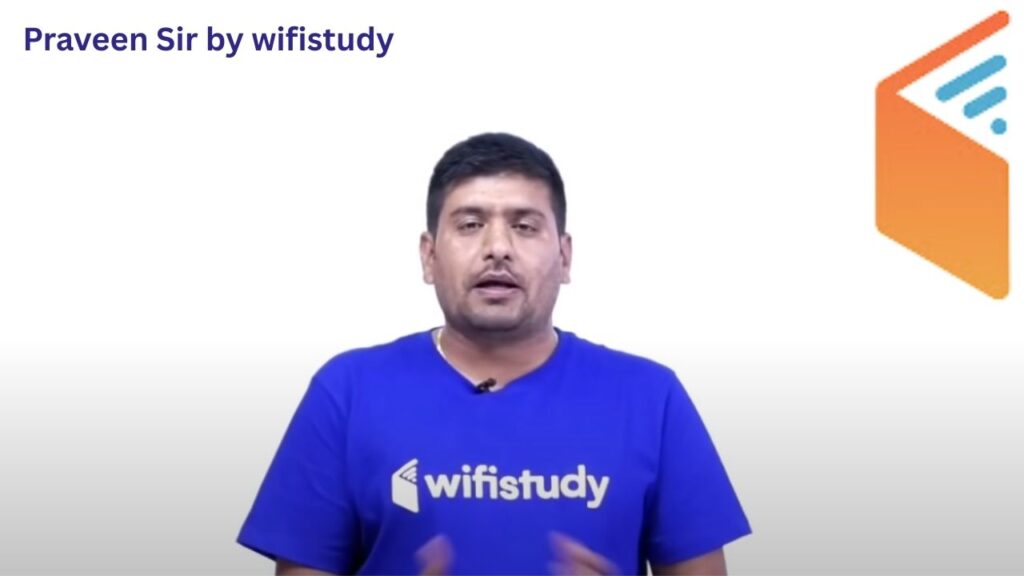
Praveen Sir teaching online History lecture for competitive exams.

He makes hard topics like cultural development, Mughal administration, and freedom movement remembered with systematic notes and practical examples. 

Abhishek Suman
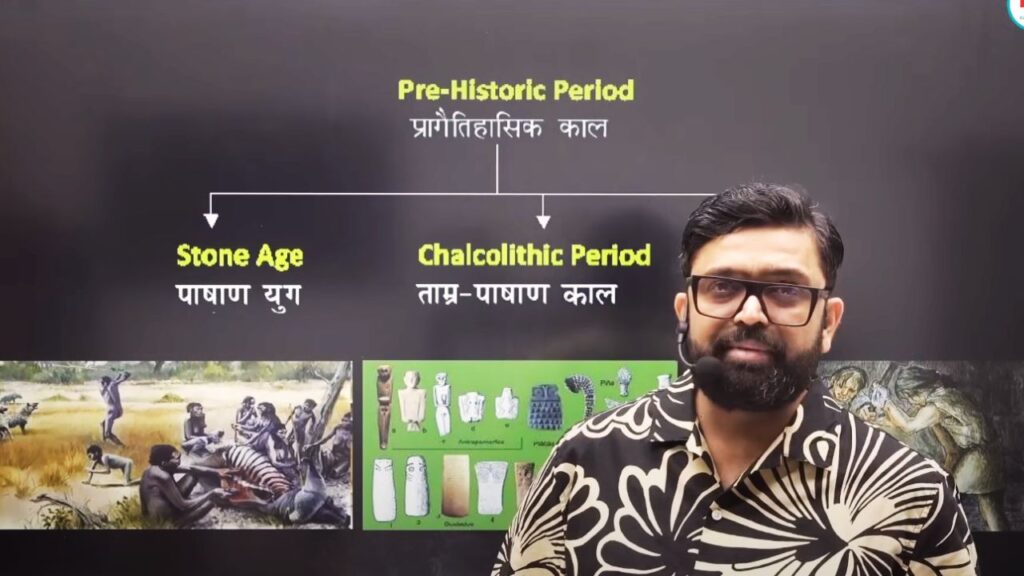
Abhishek Suman explaining modern history concepts in classroom.

Abhishek Suman is a popular History teacher and is growing his numbers by providing interesting History Lectures. He makes boring topics become interesting with his explanation of events, he elaborates them with reasoning and connecting them with the present. Students appreciate him for clearing small doubts, especially in modern history. 

Khan Sir 
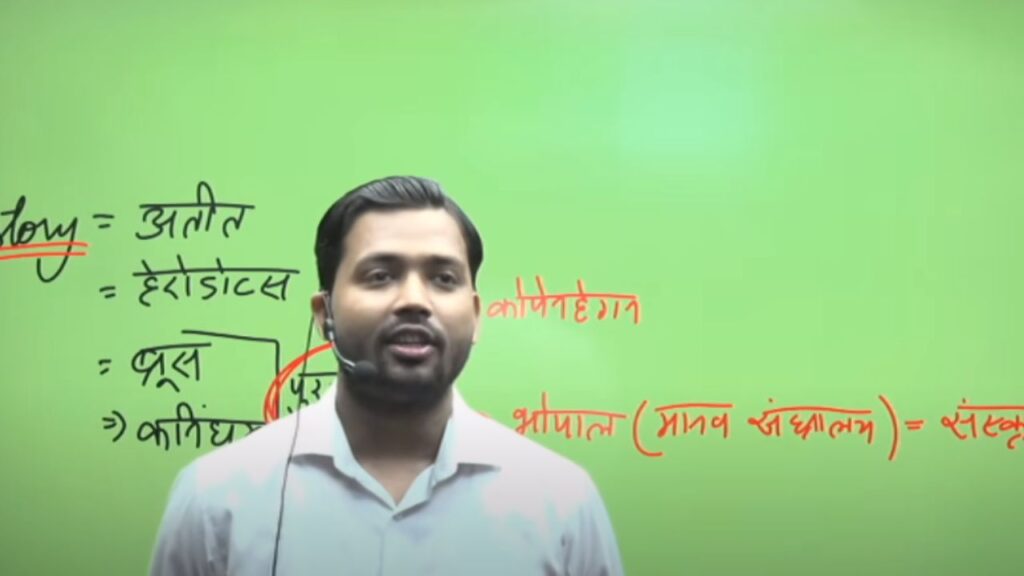
Khan Sir delivering a humorous yet informative History lecture.

Every aspirant knows Khan Sir from Patna because he is the most famous and growing teacher for the preparation of competitive exams. His teaching style is funny but effective, using real life relatable examples and humour to make every tough topic easier. Students praised his lectures that helped them to understand world history & Modern History. 

Awadh Ojha Sir
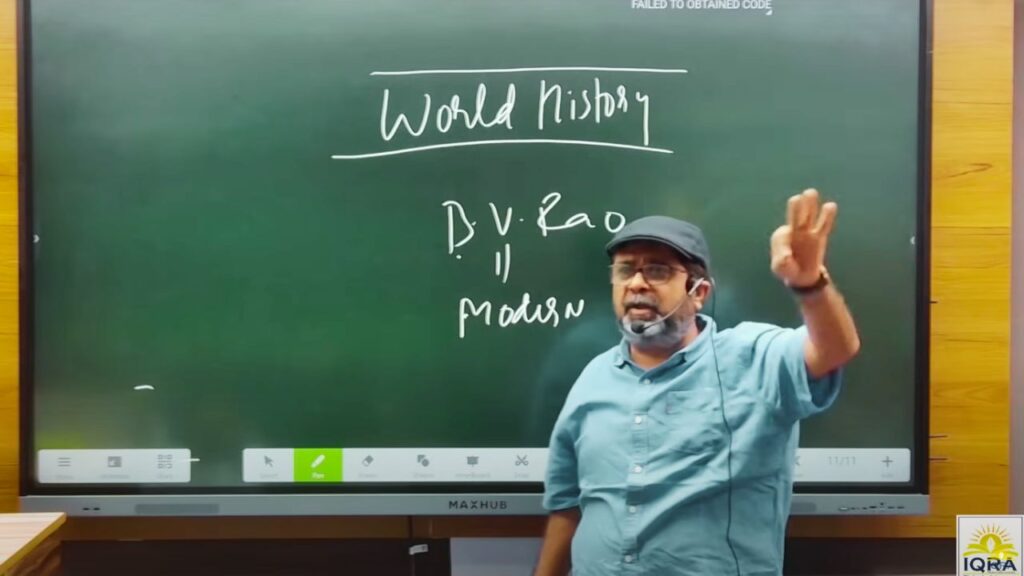
Awadh Ojha Sir teaching Modern Indian History to UPSC aspirants.

Awadh Ojha Sir is ideal for UPSC aspirants who struggle to understand modern Indian History. His deep analysis and straightforward teaching style make every student attentive through his lecture. Students admire his passion and dedication for Modern History. His in-depth explanation and motivation pushes students to stay consistent.

Rishabh Sir
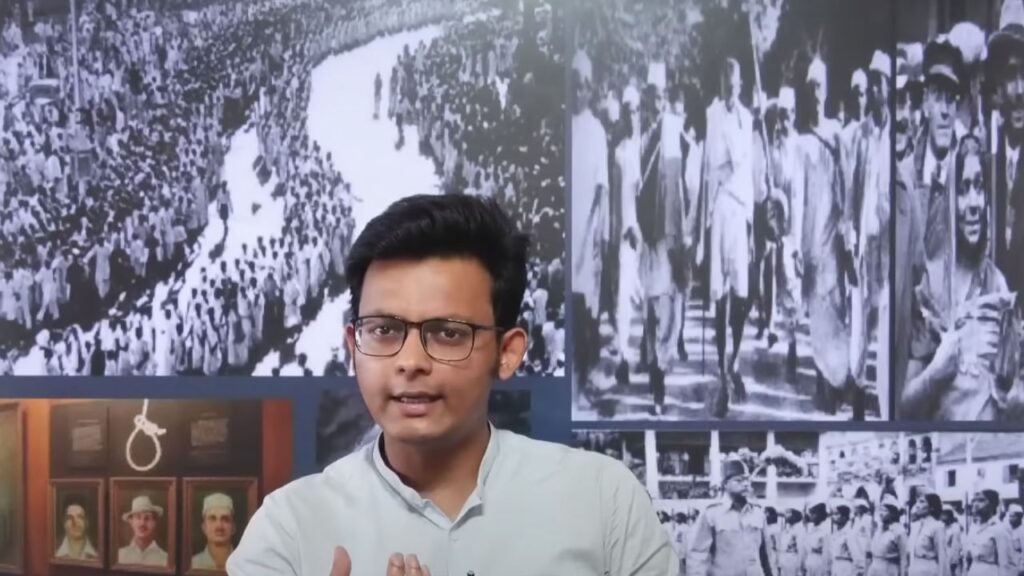
Rishabh Sir giving structured history lessons for competitive exams.

Rishabh Sir is also a best history teacher, he focuses on strategically preparing for the government exam. He teaches in a structured way to get students ready for the History Exam. ideal for those students who don’t want to give big time for history but cover up every important topic. He also provides compact notes and highlights on youtube for Ancient, Medieval, and Modern History.

Kumar Gaurav
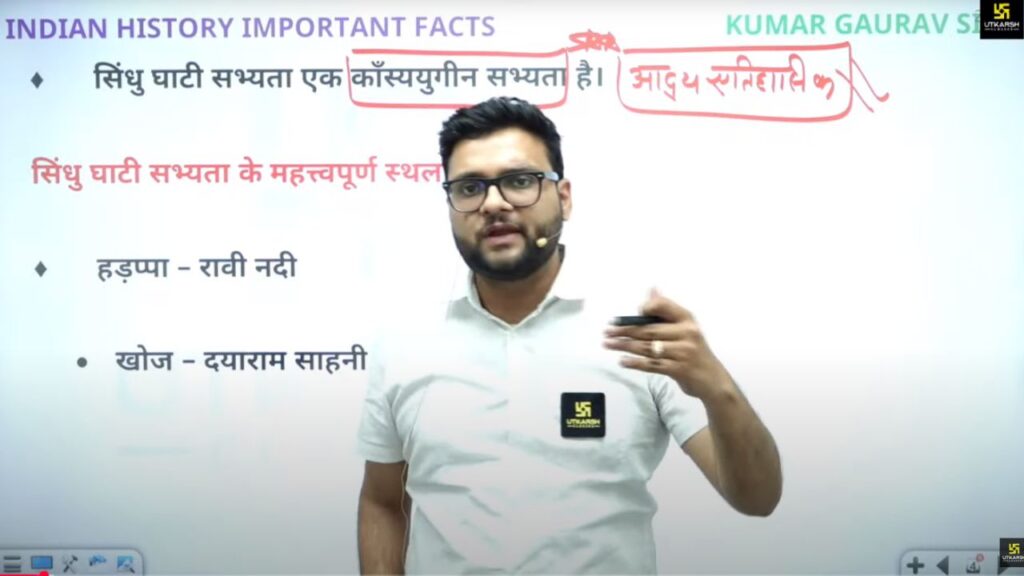
Kumar Gaurav teaching chronological history events to students.

Kumar Gaurav’s methodological and calm teaching style is connecting events chronologically, it helps students to understand events without getting lost. He is the best for those who are not good with dates and events. 

Dr. Vikas Divyakirti
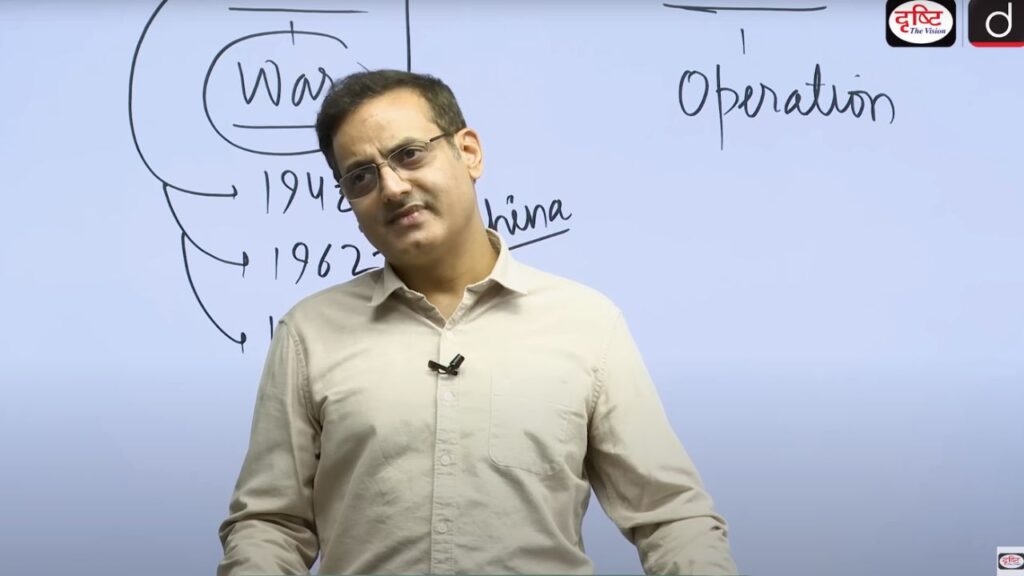
Dr. Vikas Divyakirti conducting a history lecture integrating culture, society, and polity.

Dr. Vikas Divyakirti is a founder of Drishti IAS, he motivates students to stay consistent. He emphasizes every event in History, connecting them with culture, society, and polity which makes it easier for students to understand easily. His deeper knowledge of history and integration with philosophy and polity make lectures a key success to interview stages. 

Sumit Sir

Sumit Sir providing exam-oriented history revision classes.

Sumit Sir is focusing on exam-oriented teaching, stressing on previous year question practice to ensure students are aligned with the exam pattern. He helped clear the student’s confusion in difficult parts. He also provides exam notes and takes revision classes which is extremely useful before exams.

Why Choosing the Right History Teacher Matters

There is no single answer for the right teacher because it depends on the student’s mind and thinking. Some students get irritated or sleepy during History lessons because they get bored and don’t even understand the topic’s heading. The right teacher comes when you find the lessons more interesting and easy rather than difficult and boring. 

These factors can help you find your right mentor

Teaching Style: Take a demo class of a few teachers and check which teacher’s explanation you understand better. Find the right mentor whose style aligns with your preparation needs.
Exam Orientation: You prefer to study according to the exam pattern.
Resources: Good teachers always provide concise notes, practice questions.
Motivation: beyond just a teacher, they also inspire students to stay consistent.

Read More👉 Meet the Best Hindi Teacher for Competitive Exams Who Can Boost Your Success

Conclusion

History is not just a subject of delusion and theory, it is the journey of society, culture, and politics from years to years. The right teacher can make this interesting rather than boring events which makes it hard to remember. 

Choose the right one in the list of Best History Teachers for Competitive Exams because he can make the burden go away. With the strong preparation in History can help you score high in any competitive exams.

Leave a Comment

Your email address will not be published. Required fields are marked *

Essential Government Exams for 12th Pass Students in 2026: A Complete Guide

Essential Govt Exams for 12th Pass 2026 Guide

Post 12th Government exams are the best means to get a lucrative job in the government sector in India. Due to high salaries, job security, and lifetime benefits, these exams are dream of lakhs of students. In 2026, as we look to the future, several big recruitment cycles in Railways, SSC, Banking, Defence and Police departments are expected to be announced, which will once again pour in its biggest ever recruitment for 12th pass candidates.

Whether you are going to appear for RRB, SSC CHSL, MTS, Police or Defence services i.e. NDA or Navy, you can get complete information about Eligibility, Salary, Age Limit, Exam Pattern. If you have been looking for Govt exams for 12th pass 2026 then what you are reading is the most exhaustive 2026 roadmap for government jobs after 12th you will find online. 

Railway Exams (RRB)

RRB NTPC is one of the most popular railway recruitment to apply for jobs in Commercial Cum Ticket Clerk, Accounts Clerk Cum Typist, Junior Clerk Cum Typist etc. 

Railway Exams
Image Creadit : govupdatewala
  • 3,058 Posts are notified with the pay scale between ₹ 19,900 to ₹ 35,400. 
  • 12th pass or equivalent with 50% marks in aggregate is minimum eligibility. 
  • Selection Process: The selection will be two CBT (CBT 1 & CBT 2), typing skill test and document verification. 
  • Age Limit: 18-30 years. 

RRB Group D is one of the biggest recruitment by Indian Railways. Amidst the ongoing exams from November 2025 to January 2026, the recruitment process will extend to 2026. This exam can be appeared by both 10th and 12th pass candidates and it will be about 1 lakh of vacancy every year. Posts such as Track Maintainers, Helpers and more under Level 1 category. Salary ranges from ₹18,000 to ₹35,000, in most cases. The selection includes CBT, PET, Document Verification, Medical Examination. 

SSC (Staff Selection Commission) Exams

SSC CHSL (10+2) 2022 is conducted for the posts of LDC (lower division clerk), DEO (data entry operator). As per the 2025-26 calendar, this exam is generally held in September with the dates of the exam scheduled from 8-18 September 2025 and the following cycles continuing in 2026. The minimum qualification is 12th pass in from a recognized board. 

SSC MTS (Multi-Tasking Staff) is a non-technical post but the pay is lucrative. As per SSC schedule, notifications are usually issued in the month of June with exams in the month of September-October cycles. The pay scale is between ₹18,000 and ₹29,200 according to the post and experience. 

SSC (Staff Selection Commission) Exams
Image Creadit : govupdatewala

Recruitment for 2026 will be conducted in January-February 2026 with an expected 25,000-50,000 vacancies. The age limit is 18-23 years and the aspirants must be 12th pass. The selection procedure is Computer-Based Test (CBT), Physical Standard Test (PST), Physical Efficiency Test (PET) and Medical Test. 

SSC Stenographer (Grade C & D) is a 12th class level exam of SSC that requires good typing skills in English or Hindi. These are usually published around June-July and later in the year the exam is conducted. 

IBPS Banking Exams

IBPS RRB Clerk has Pre (Online) examinations on 06, 07, 13 & 14 December 2025 and IBPS RRB Clerk Mains 2025 on 01 February 2026. These roles generally offer pay per packages from ₹18,000 per month upwards. Age limits for the candidates is 18 to 28 years depending on the post. 

IBPS Banking Exams
Image Creadit : govupdatewala

The IBPS PO 2026 will probably follow the pattern of former cycles, the notifications to be released around August 2026, application process in August-September 2026, Preliminary Exam in October 2026, and Mains in November 2026. Applications are invited from eligible candidates to fill the posts of Electronic Engineer (EE) for this position PO requires generally a graduate degree; however, watch the notifications as for some posts the eligibility is 12th pass. 

Police & Armed Forces Recruitment

SSC Delhi Police Constable Recruitment 2020 is out @ssc.nic.in, Apply online for 7565 posts via 10+2 or equivalent. Age Limit 18-25 years. Selection Procedure is Computer Based Examination (CBE), Physical Endurance Test (PE&MT) and Document Verification. Candidates should possess a valid driving license (2-wheeler or 4-wheeler) for LMV (Motorcycle/Car). Salary Generally Salary ₹25,000-40,000 Per month. 

Recruitment for the police is state dependent The State Police in most states recruit for the position of Constable in the year 2026. The Age limit is generally between 18-25 years with relaxations for reserved categories. Education qualification is 10th/12th pass. Written Exam, Physical Efficiency Test (PET), Physical Standard Test (PST), Medical Test and Document Verification are the part of selection procedure. 

Police & Armed Forces Recruitment
Image Creadit : govupdatewala

12th Pass From a Recognized Board is Required for Indian Navy (Sailor SSR) Recruitment. Sailor jobs are the highest paying in this country to compete with salary packages. Age is usually 17.5 to 21 years. 

Indian Coast Guard Navik GD (General Duty) is for those candidates who have passed 12th with Physics and Mathematics. The age limit is 18-22 years for 260 vacancies declared for 01/2026 and 310 for 02/2026.The selection process consists of Written Exam(Stage I), Physical Fitness Test, Document Verification and Medical Examination. 

Indian Coast Guard Navik DB (Domestic Branch) is not only for the 10th pass candidates but 12th pass students can also apply. This is a little more within reach for the 12th pass candidates. 

NDA (National Defence Academy)

  • It happens two times a year, usually in April and September. 
  • The minimum age is 16.5, Candidates born between January 2, 2008, and January 1, 2011 are eligible to apply for 2026. 
  • For Air Force and Naval Wings you need to have passed 12th with Physics & Chemistry as compulsory subjects. 
  • There is no age relaxation in any category. 
  • The selection procedure consists of Written Exam( Mathematics and General Ability Test), SSB Interview and Medical Test. 

Read More 👉 SEBI Officer Grade A Recruitment 2025: Key Dates and Application Process 

2026 Government Exams Calendar

QuarterKey Exams Preparation Focus
Q4 2025 RRB Group D & Clerk Prelims/SSC GD/IBPS (on-going)Intensive prep is needed
Q1 2026 NDA/Police/NTPC/SSC GD Multiple exam focus
Q2 2026 NDA/SSC CHSL/Railway further processNDA, CHSL applications and initial preparation
Q3 2026 SSC CHSL exams/SSC MTS/Bank PO recruitmentInitial preparation
Q4 2026 Banking exams/ Stenographer exams/final recruitment cyclesFinal major exams

Strategic Preparation Tips

Choose the examinations according to your interests and strengths, do not attempt all at once. Stability and pension benefits are the other advantages of the railway jobs. It’s competitive to clear the Banking exams but the salary growth is amazing. 

  • A study planner will help you to schedule every topic for a limited time. You must focus on subjects including quantitative aptitude, reasoning, English, general awareness. 
  • Previous year question papers & Mock Test helps to understand the pattern and importance of the particular topic. 
  • Keep track of the notifications on the official website for the latest updates regarding exam date/pattern. 
Exam EligibilityAge LimitStarting SalaryHighest PaySelection Process
RRB NTPC12th Pass with 50%18–30 yrs₹19,900  ₹35,400CBT 1 & 2, Typing, DV
RRB Group D10th / 12th Pass18–33 yrs₹18,000  ₹35,000CBT, PET, DV, Medical
SSC CHSL12th Pass18–27 yrs₹25,500 ₹81,100CBT 1, CBT 2, Skill Test
SSC MTS10th / 12th Pass18–23 yrs₹18,000  ₹29,200CBT, PET, PST, Medical
SSC Stenographer C & D12th Pass + Typing18–30 yrs₹25,000  ₹81,100CBT + Skill Test
IBPS RRB Clerk12th / Graduation (varies)18–28 yrs₹18,000+Prelims + Mains
Delhi Police Constable12th Pass + Driving License18–25 yrs₹25,000 ₹40,000CBE, PET, PMT, DV
State Police Constable10th/12th Pass18–25 yrs₹20,000  ₹45,000Written + PET + Medical
Indian Navy SSR12th PCM17.5–21 yrs₹35,000₹45,000Written, PFT, Medical
Indian Coast Guard Navik GD12th with PCM18–22 yrs₹25,000₹35,000Written, PFT, DV, Medical
NDA 12th PCM 16.5–19.5 yrsStipend + Officer PayWritten + SSB + Medical

Conclusion

The preparation for government exams in the 12th standard itself is a smart move to secure a bright future. Well with thousands of job vacancies expected in 2026, Railways, SSC, Police, Defence, Banking you name it is raining vacancies, the wait is finally over and it is time for aspirants to start structured preparation. 

Pick your exam wisely based on interest and strength, uniformed services, clerical posts, railways, defence and stick with practice tests and mock exams. If you want a job that’s solid with long-term perks, this is the time to go. Begin at the right time, maintain your focus and the right opportunity will be yours. 

Leave a Comment

Your email address will not be published. Required fields are marked *

Allahabad High Court HJS Admit Card 2025 Released – Direct Link and Full Details by Gov Update Wala

Allahabad High Court HJS Admit Card 2025 has been released on the official website of the High Court of Judicature at Allahabad. Candidates must download and print out their admit card before the exam. If you want more details about the examination, you can download the official notification of admit card & exam through the direct link. 

To fill 83 District Judge vacancies through this examination. Candidates have to pass the three stages of selection – prelims, Mains, and interview to get the position. 

Conducting byHigh Court of Judicature at Allahabad
Post NameHigher Judicial Services
Vacancies83
Admit Card Date11 July 2025
Exam Date20 July 2025 
Selection ProcessPrelims, Mains, Interview
Official WebsiteClick Here

Read More 👉 How to Take Admission in Delhi University in 2025 – Full Process Explained!

How to Download UPHJS Admit Card 2025

You can download your admit card through the official website of the Allahabad High Court. Therefore, you can find the official website link or download it directly from the link provided here.

  1. Click on the official website link and the page will appear on your screen.
  2. Select the UPHJS 2025 Admit card in the section of Recruitment.
  3. Enter your roll number and password to get the admit card.
  4. Once you submit, the admit card will show.
  5. Download and save it for a hard copy.

Admit Card Details

Candidate’s roll number, name, exam date, time, photograph, sign, exam centre, and other instructions for the examination hall. Candidates are allowed to enter the examination if they have their admit card. That is why it is mandatory to get the admit card before the exam.

Important Links
Download NotificationClick Here
Download Prelim Admit Card NotificationClick Here
Download Admit CardUpdate Soon
Official WebsiteClick Here

Leave a Comment

Your email address will not be published. Required fields are marked *

UP Police Computer Operator Grade-A Online Form 2025: Apply, Dates & Eligibility

UP Police Computer Operator

If you have completed 12th with a science subject and are interested to join the Uttar Pradesh Police Force then this is the chance to transform your life! The application process has begun for the Uttar Pradesh Police Recruitment & Promotion Board (UPPRPB) Computer Operator Grade-A vacancies – the total number of vacancies is 1,352. So, let’s get into all that we need to know about this golden opportunity. 

A career with UP Police is an excellent opportunity for youth having technology savvy to establish their bright future in law-enforcement. With 1,352 vacancies available and a good pay scale of Level-4 (₹25,500 – ₹81,100), this job is not only offering colorful career but also financial security. The registration is valid for both men and women across the UP, so the whole terrain of the state could participate in it. 

Mark Your Calendar With These Dates

EventDate
Online Application StartDecember/16/2025
Registration DeadlineJanuary/15/2026
Fee Payment Last DateJanuary/15/2026
Fee Correction WindowJanuary/16-18/2026
Exam DateTo be notified
Admit Card ReleaseNotify Later

Do You Qualify For This Post?

RequirementDetails
Age Limit18-28 years
Educational Qualification10+2 with Physics & Mathematics
Computer CertificationDOEACC ‘O’ Level OR Diploma in IT/Computer/Electronics Engineering
Hindi Typing Speed25 words per minute (WPM)
English Typing Speed30 words per minute (WPM)

Category-wise Vacancy Breakdown

CategoryVacancies
General577
Other Backward Classes (OBC)364
Scheduled Caste (SC)283
Scheduled Tribe (ST)128

Read More 👉 BBA in Artificial Intelligence: Course Details, Admission, Fees and Career Scope

Simple Steps to Fill The Form

The procedure of application for Uttar Pradesh Police Recruitment and Promotion Board (UPPBPB) is easy and in online mode only. Step by step instructions are provided below:

1. Visit the official page of UPPBPB at the official website which is also mentioned in the article.

2. Sign up with a valid mobile number and email id.

3. Follow the guidelines to complete the One-Time Registration (OTR).

4. Fill in the details in the application form correctly related to your Personal and Educational Qualification etc.

5. Attach all relevant documents, i.e. mark sheets, certificates, a recent photograph and the signature.

6. Submit the application fee as applicable through the online mode.

7. Complete this and then apply with your full application and print the confirmation page for your document.

Make sure that all the information they are providing is true and correct, and that the files they upload are according to the size, format, etc. specified above so that they don’t have to face any trouble. 

Application Fee
General/OBC/EWS₹500
SC/ST₹400

Selection Process

StageDescription
Written Examination200 MCQ questions (400 marks)
Typing TestHindi & English typing skill test
Document VerificationAuthenticate original certificates
Final Merit ListBased on written exam performance

Exam Pattern

The question paper has a General Hindi, General Knowledge, Mental Aptitude/Reasoning and Computer Science section. All the three sections contain 50 questions and every question carries two marks thereby the maximum score for the paper is 100 marks. 

Useful Links
Apply HereClick Here
Download NotificationClick Here
Official WebsiteClick Here

Leave a Comment

Your email address will not be published. Required fields are marked *

B.Sc Agriculture Government Jobs – Career Options, Salary & Exams

B.Sc Agriculture Government Jobs

B.Sc Agriculture Government Jobs offers high salary, security, and professional growth then consider applying in the government sector. In India, government jobs offer many additional perks that private jobs can’t offer. BSc Agriculture opens you a vast range of options in the agricultural sector of India, it offers roles based on research, administration, and field officers.

But getting selected for one of the government jobs is really tough. By preparing hard and strategically, you can achieve your goal. 

Students who have a background in agriculture can be appointed to these roles including Agriculture Officer, Lab Assistant, Forest Officer, AFO, and Specialist. However, clearing out the competitive exams for these roles is still a big deal. 

There are various job opportunities in different sectors like rural development, agriculture research, and many more. Those who are interested in working in agricultural development can take these job roles. 

B.Sc Agriculture Government Jobs – Best Career Options

The field of agriculture offers many options for career, especially in the government sector. You can explore jobs in agriculture that offer stability, high salaries, and contribution to the nation’s development. B.Sc students can grab any of the options in which they find interest. But choosing the job which aligns with your skills is the right decision.

Agriculture Officer 

The Agriculture Officer works for agriculture production by providing techniques and advice to the farmers. To get potential output they implement government policies. 

ResponsibilitiesGood crop selection, pesticide control techniques, irrigation, agriculture development schemes implementation, and inspections.
Recruitment ExamIBPS SO or state-level exam
Salary RangeRs. 40,000 to Rs. 70,000 per month

National Seed Corporation Roles

In this category, there are various roles for BSc Agriculture graduates including Seed Analyst or Assistant Manager. But overall work is related to maintaining seed quality and production of the field.

ResponsibilitiesEnsuring Quality and production, Seed certification, and promoting certified seeds.
Recruitment ExamNSC recruitment exam
Salary RangeRs. 35,000 to Rs. 65,000 per month

Agriculture Research Scientist

Agriculture Research Scientists are very helpful to this industry, they focus on research to provide better options for farming and resolve problems in agriculture.

ResponsibilitiesResearching, innovating, developing varieties of crops, and experimenting with disease-resistant crops.
Recruitment ExamICAR ARS/NET recruitment exam
Salary RangeRs. 60,000 to Rs. 80,000 per month

Field Officer in Fertilizer and Agricultural Companies

There are multiple companies in the public sector that work for agriculture fertilizers and agri-inputs to ensure proper seeding of the crops. The field officer is responsible for distributing them properly in all the different lands. 

CompaniesIFFCO, NFL, and FCI 
Recruitment ExamCompanies recruit field officers through separate exams
Salary RangeRs. 35,000 to Rs. 60,000 per month

State Agricultural Department

Students after BSc in Agriculture can work in different roles for the state agricultural department. The work in these departments is rural development, implementing welfare schemes, and providing field support to farmers.

PostsTechnologists, Agriculture Officer, Development Officer
Recruitment ExamRecruitment through PSC exam
Salary RangeRs. 30,000 to Rs. 55,000 per month

Read More 👉 Government Job vs Private Job: Which Career Offers a Better Future in 2025?

Other Career Options After B.Sc Agriculture

Further Studies: Students can pursue a masters degree in agriculture for more professional growth. Acquire specialization in Agronomy, soil science, and plant breeding can help them solve bigger problems in the agriculture sector. 

Private Sector Jobs: Agro-based companies can hire candidates with a BSc in agriculture for food processing firms, and biotech-related roles.

Entrepreneurship: Start-up ideas are good in the agricultural sector, if you are interested in this, there are options like farming ventures, organic farming, and agritech businesses.

Competitive Exams: UPSC exams like IFS Indian Forest Service will help you get a better job in the government sector with a high salary and additional perks.

Additionally, BSc Agriculture graduates can work as Block Development Officers, Plantation Managers, Food Safety Officers, and Agricultural Banks. These roles can pay you enough to settle down but the starting salary range is not high, 3 to 7 lakh per annum for beginners, it will increase with experience.

Core Agricultural RolesAgricultural Officer, Field Officer, Plantation Manager, Agriculture Technologist
Research & InnovationICAR Scientist, Junior/Senior Research Fellow, Agricultural Research Assistant, Project Associate, Plant Breeder, Animal Breeder, Seed Technologist
Business & Market-FocusedAgricultural Analyst, Agricultural Sales Officer, Marketing Executive
Agricultural Bank JobsLoan Officer, Rural Development, Field Officer, Junior Associate, Probationary Officer.

Teaching and Research Scientist Government Jobs

Many students like to teach and research while being interested in agriculture or farming. Students can get a different post in government jobs. Becoming a teacher in agricultural universities is a great option but check the selection process to get every detail and be prepared. The Pay scale range is Rs. 40,000-70,000 per month. You can level up your position to senior lecturers or researchers. 

Why Pursue a BSc Agriculture

BSc Agriculture is designed to shape students’ skills to become professionals in their respective roles. To achieve your goal, whether it’s research, entrepreneurship, or field officer. You need to polish your skills to keep the agricultural industry on the right track. Providing the best options to minimize the risk and new challenges with crops.

High Demand: With growing demand for food, India has a very large production of food crops. So, it required advancement in the agricultural industry to fulfill the need for crops. 

Good Salary: The average salary package for technologists is 3 LPA and Agriculture Officer is around 9 LPA. The Indian population’s livelihood depends 40% on agriculture. 

Affordable Education: BSc Agriculture is a budget-friendly course. Anyone can afford it, the fee range is 15,000 to 1,00,000. 

Conclusion

BSc Agriculture Government Job is a seamless offer for students to make an impactful career. It opens up a gate to many roles from research and fieldwork to administration and entrepreneurship. This field is largely to secure a job in any role. Students can apply after graduation through competitive exams. These jobs not only provide financial security but a chance for professional growth and future security.

Leave a Comment

Your email address will not be published. Required fields are marked *

How to Crack State PSC Exams in First Attempt: Strategy & Resources

Govt. jobs are undoubtedly one of the most safe and respected career options in India and passing the State Public Service Commission (PSC) exam in first attempt is a dream for many aspirants. As the competition is rising and the syllabus is vast, it sometimes feels like a difficult mountain to scale. But, with the right approach, intelligent study techniques, and diligent efforts, passing the exam is not an impossible dream. The crux is to understand the syllabus in depth, follow the right resources and adhere to a disciplined schedule that would cover both prelims & mains preparation.

Quick Thoughts Gathering to Begin With

  1. Download official syllabus + all past papers of 8 years.
  2. Make a list of books you own/need (start with NCERTs).
  3. Select optional subject.
  4. Put together a weekly schedule you can live with.
  5. Create a one-pager daily current affairs file.
  6. Enroll in test series / good coaching (online/offline) and commit to weekly mocks.
  7. Start your NCERTs (goal: 2–3 chapters/day).

Big-picture study strategy (what to study & why)

Build bedrock knowledge first: NCERTs (6–12) for History, Geography, Economics, and Pol. These give a clean conceptual base.

Proceed to standard books for each subject (more below). Read for understanding, not rote.

Current affairs daily — newspaper + short notes. Link events to static syllabus.

Notes + revision cycle — Make short revision notes (1–2 pages) per topic; revise them frequently.

Practice smartly: MCQs for prelims + answer writing under time pressure for mains. Mains wins jobs — practice answer structure & linking facts to syllabus keywords.

Mocks & feedback: Do full length mocks and get answers evaluated (peer/mentor) and you improve your answer style and technique of scoring.

Recommended core resources (common, high-utility) 

(You will need to add in your state-specific books / local history that you must have from your state board / PSC Recommended Readings)

  1. Cover Basics 

NCERTs 6–12 — History, Geography, Pol. Science, Economics (start here).

Indian Polity — M. Laxmikanth (efficient + concise for governance & state-centred comparative questions).

Modern Indian History — Spectrum’s A Brief History of Modern India / Bipin Chandra (for depth).

Indian Economy — Ramesh Singh or any good concise economy book, supplemented with RBI / Economic Survey summaries.

Geography — Certificate Physical & Human Geography (G.C. Leong) or equivalent concise books.

Environment & Ecology — normal environment compendium/ class notes, track Recent Events.

State-specific history & polity — whatever books your PSC cites, in addition to local gazetteers and state government documents.

  1. Current affairs & general reading

One daily national newspaper (The Hindu / Indian Express) or their summaries. Government releases: Press Information Bureau (PIB), state government portals, official reports (for schemes and facts). Monthly magazines or current affairs compendiums (good for revision).

  1. Practice

Collection of previous years’ PSC papers (must have). A good questionbank or mock test series (free/paid) for practicing in time bound manner. Answer writing notebooks (keep one for mains answers). 

Sample schedules — choose according to the time you have

If you have 12 months

1st to 4th month: complete NCERTs + standard books for GS I–III fundamentals; decide optional & finish fundamentals.

Months 5 to 8: Complete other standard books + begin consolidating notes; begin on PYQs.

9th and 10th months: High-intensity test series – full-length prelim mock test every week; augments revision of weak topics.

Months 11–12: Final run through + daily PYQs + last-mile current affairs. Mains answer practice (if prelim cleared).

If you have 6 months

1st month: Preparation for NCERTs + syllabus mapping + optional selection.

2nd to 4th month: Read standard books, prepare short notes, solve MCQs and PYQs.

Month 5: Rigorous mock tests (prelim-benchmarked); Time management to be calibrated.

Month 6: Re-visit everything + frequent mock tests + current affairs wrap-up.

If you have three months

  • Fast NCERT reading + priority standard book chapters on some important subjects.
  • Study 7-10 hours a day: current affairs in the morning, theory in bulk in mid-day, MCQs + past papers in the evening.
  • Mocks repeatedly at intervals of 3-4 days Analyze each. 

Prelims strategy (objective test)

A good preparation strategy would be to start with the NCERTs along with one standard book per subject to establish a strong base. While learning content, same importance should be given to speed and accuracy by daily practicing MCQs gradually going to 500 – 1000 in a week. To gain maximum returns in minimum time, concentrate on high-yield topics such as Polity, the Constitution, Economy (primarily basic indices), Geography (with emphasis on map work), Environment, and Current Affairs. The Previous Year Questions (PYQs should be backbone of your preparation as it helps you to identify the areas/themes which the exam repeatedly tests). 

Also Read : Top 10 List of Exams Conducted by UPSC After Graduation in 2025

Mains strategy (subjective / descriptive)

Start writing answers from the early days of preparation, while upgrading yourself with the ability to write a good structured answer that has an introduction, a well-structured body (with headings or bullet points, if necessary) and a brief conclusion or way forward. Static knowledge and linking current affairs with theoretical knowledge need to be a part of answers as they give depth and relevance to answers. At the mid-stage of your preparation, doing a full answer paper every week – both essays and GS papers — is useful in developing regularity and you can increase the frequency as the exam comes closer. Regular assessment or peer review also is necessary, as it improves presentation as well as the density of content, leading to more effective answers. 

Interview / personality test

Prepare short biographical stories related to: accomplishments, academic projects, work experience and expertise in optional subjects. Stay informed on regional issues and national affairs. Conduct mock interviews with mentors or peers, concentrate on clear communication, serenity, and concise responses. 

Common Mistakes to Avoid

  • Learning everything superficially diminishes its utility; depth is much more valuable than breadth across different fields at surface level isn’t very rewarding.
  • Disregarding previous years’ papers is the biggest blunder as these papers bring out the themes that repeat, the patterns of questions and the areas to be concentrated.
  • Not timing yourself while you practise MCQs or while writing answers results in bad speed and poor accuracy in the exam.
  • Too many resources create noise and confusion, while focusing one’s attention on too few resources creates blind spots. A small set of high quality, reliable resources is the best bet for clarity and retention.
  • Avoiding regular revision destroys the power of retention; one should revise systematically and at frequenter intervals to be able to recite confidently and be assured of long term recall. 

Conclusion

How to Study Smart for First Attempt State PSC (Public Service Commission) Exam It is not about studying for countless hours, but it is about studying smart by keeping focus and being consistent. This trip requires a very clear mind, discipline, and a problem-solving attitude. Candidates with the right resources and guidance, along with consistent practice and revision, can not only cram for the exam but gain the confidence to ace at the Interview round. Wait for it… Success in the competitive exam is for those who start early, prepare strategically and have a firm belief till last that they will pass the exam. 

Leave a Comment

Your email address will not be published. Required fields are marked *

Scroll to Top