UP GNM Entrance Test UPGET: Eligibility, Syllabus, and Selection Process

UP GNM Entrance Test UPGET

UP GNM Entrance Test UPGET is conducted for the aspiring Nurse. Nursing is a field of taking care of injured, weakened, and fighting for life in the hospital or private care center. It is considered as the most respected and important field in the medical field. If you enjoy helping people, being a nurse can provide a lot of personal reward and job security. 

In the case of students of Uttar Pradesh who want to pursue this noble field, it is the best way to begin with the General Nursing and Midwifery (GNM) diploma course. 

But how to get admission in the best nursing college in UP? That is exactly where the UP GNM Entrance Test (UPGET) enters the scene. 

If you are a student perplexed about the UPGET, thinking who is it for, for what reason is it conducted or what to prepare, you have landed at the right place. In this complete guide for UPGET, we will cover each and every information regarding the UPGET exam, which will provide you with the latest updates as well as a clear path for your career. 

What Is The UPGET Exam? 

UP GNM Entrance Test UPGET is a way to proceed admission for those selected candidates who prefer to study 3 years General Nursing and Midwifery (GNM) diploma course.

Earlier the norms for GNM course admission were merit-wise based on the marks a student scored in their 10th and 12th board exams in uttar pradesh. But now, in a bid to make the admissions process more transparent and uniform, the Atal Bihari Vajpayee Medical University (ABVMU), Lucknow has been given the responsibility to conduct the UPGET. 

This examination is for one time for all. After passing the UPGET, students will be admitted to any of the Government GNM Training Centers and Private Nursing Colleges. 

(Latest Update: ABVMU officially conducting UPGET 2026 for the students, form portal is active from 29th April 2026 and exam will be held on 16th June 2026.)

Who Is This Test For? 

UPGET is conducted for those candidates who aspire for a career in nursing and healthcare but not for 4-year B.Sc. Nursing degree. The UPGET is designed for the candidates who want to pursue a career in nursing and healthcare but do not wish to take the route for a four years B.Sc.Nursing course or are not qualified for the same.  

Recent 12th Graduates: Those who have completed 12th standard (Intermediate) recently and want to enter the healthcare workforce at the earliest by opting for a 3-year diploma. 

Students from Diverse Academic Backgrounds: Science students are the most preferred for medical fields, but through UPGET the GNM course opens doors for students belonging to Arts and Commerce stream too to apply for the same if they have English as one of the core subject and other minimum percentage bar is met. 

Registered ANMs: Registered Auxiliary Nurse Midwives (ANMs) who wish to upgrade their qualification and career path can take this exam to shift to the higher GNM post. 

Why Is The UPGET Conducted? 

You may be thinking why an additional entrance examination is necessary when 12th-board marks are already there. Changing from a merit-based system to an entrance-exam system (UPGET) went through for several very compelling reasons: 

  • Different education boards (CBSE, ICSE, UP Board) follow their own set of marking schemes. Some are very strict, some a bit lazy. UPGET is a fair examination where all candidates are assessed on the same question paper. 
  • Nurses are going to deal with human lives. The government also wants to test students for a basic proficiency in science, logical thinking and English before they can enter government-run hospitals and the best private ones. 
  • Students though would no longer have to run from private college to private college seeking to pay heavy donation fees, UPGET ushers a system of centralized counselling. You appear for one exam, get one rank and then you choose your college online on the basis of merit. 

Eligibility Criteria For UP GNM Entrance Test UPGET

  • You must be above 17 years old and have no max age limit for this exam.
  • Intermediate passed candidates are eligible for this exam, with above scoring of 40% marks. 
  • You must know basic English or study it as a subject in 12th.

Alternative Eligibility for ANMs 

If you have passed the vocational course of ANM with a minimum of 40% marks or if you are registered as ANM and have qualifying marks, then you can apply for the UPGET. 

Citizenship 

Only Indian citizens are eligible for this exam. Possession of a valid Uttar Pradesh domicile certificate also assists in availing the benefits of state-sponsored reservations (SC/ST/OBC/EWS). 

Syllabus: What To Study For UPGET? 

The good thing about UPGET is that the syllabus is manageable, as opposed to NEET. It evaluates your fundamentals. Try each question (100 MCQs) as there is no negative marking.

Syllabus breakdown for right preparation:

1. General Science (Class 10th Level) 

Basic aspects of Physics, Chemistry and Biology are discussed in this section. Nurses therefore understand the human body and chemicals at a fundamental level, so focus heavily on Biology (human anatomy, diseases, nutrition, cells) with a bit of basic Physio as well. 

The questions on physics and chemistry are very basic—like motion, light, simple chemical reactions, and acids/bases. NCERT Science textbooks from Class 9 and Class 10 are very helpful to prepare yourself.

2. English (Class 12th Level)

A nurse needs to read medical charts, know what a prescription says and talk to people. Basic grammar rules, vocab, syno/anto-nyms, and correcting the sentences basically checks your ability to check the fundamentals of English.

3. General Knowledge & Current Affairs (Class 12th Level)

This part tests your general knowledge. It is on basic Indian history, geography, civics and some of the major current affairs(especially in health, science, and national news). Specially focus on healthcare schemes launched by the UP Government and the Central Government that are currently in progress.

Passing Marks & Required Score 

Due to no negative marking for the UPGET exam, the average marks are on the higher side. But the criteria vary for the Government College and for a Private College. 

There are required marks for the admission, 50% for Unreserved/General categories candidates and 40% for those who belong to SC/ST/OBC category.

You need to secure a seat with a higher score, Out of 100, aiming for a score of 75 to 85+ to take a chance. Private institutes will take you if you pass the cutoff marks along with the counseling process.

Step-by-Step Selection Process

Step 1: Candidates should visit the ABWMU Official website when the notification is out (Expected in April/May). You have to register,mention your personal and educational details,upload a live photograph and signature and pay the examination fee. 

Step 2: Admit cards are mandatory as they act as an entry card in the examination. Candidates need to download them when the official release is declared a few days before the exam and visit their allotted examination center. 

Step 3: The results will be declared by ABVMU on their portal. According to the scores, a state-wide Merit List is formed. Your position in this list is everything. 

Step 4: Qualified applicants will apply for online counseling. You need to fill your “Choices” (Colleges you want to opt in the order of preference). 

Step 5: Your college will be allotted to you on the basis of your rank, category and the options submitted. You have to accept the seat and then go to the college along with your original documents (12th mark sheet, Aadhar Card, Caste Certificate, Domicile) for verification and submission of fee. 

What to Do If You Don’t Clear UPGET?

Failing an entrance exam can seem like the end of the world but in medicine, setbacks are par for the course. You have plenty of good backup options if you don’t get a high enough score for admission: 

  • Take a Drop and Re-attempt, a dedicated 6-month preparation plan will almost guarantee a great rank next year. 
  • You can also consider a 2-year ANM diploma course which is actually easier to get into. 
  • There are other diploma courses which are highly demanded and are offered by the UP State Medical Faculty, including D.Pharma, DMLT, X-Ray Technician, or Physiotherapy. 
  • If you are willing to pay a slightly higher fee, you can approach private institutions directly to inquire if they accept direct admissions without a top UPGET rank  

Conclusion 

The UP GNM Entrance Test UPGET is a big chance for the one who wants to make career in nursing and serving the people in the state of Uttar Pradesh. As the state government switches to entrance test system, it would now be merit-based and allowing students from diverse background to compete and make it to the top nursing institutions. 

The way to success in UPGET is to know the syllabus, read the basic 10th science, refresh your English and keep updated with GK.
Leave a Comment

Your email address will not be published. Required fields are marked *

How to Crack UPPSC RO/ARO Without Coaching  

Crack UPPSC RO/ARO Without Coaching

Every year, lakhs of students in Uttar Pradesh start their RO/ARO preparation the same way — by joining a coaching institute the moment they decide to attempt the exam. It feels like the safe choice. Everyone around you is doing it, the institutes promise structured guidance, and the fear of “missing something important” pushes you toward enrolling even before you’ve opened a single book on your own.

I can’t speak for your specific goals, but what a lot of successful RO/ARO candidates will tell you once they’ve actually passed the test is: coaching never made the difference. What mattered was whether they understood the exam, built a routine around it, and stayed consistent long enough to see results. 

If you fall into the category of not being able to afford coaching or if you’re just an individual who likes to learn on his own terms, there’s no issue in attempting RO/ARO exams. You can start your preparations by yourself with the right guide. Proper syllabus, exam pattern, right schedule, responsibility are the core steps to take to prepare for the exam.

1. Understand Exam Pattern to Make the Right Strategy

You probably saw or heard that self-study failed many students not because they lacked intelligence but because they didn’t understand the exam’s purpose and importance. There are stages in the exams to clear and each one requires a different kind of preparation.

  1. UPPSC RO/ARO has a Preliminary exam to check how well you know General Studies and General Hindi and it rewards speed and accuracy over depth. 
  2. The Mains, on the other hand, wants you to write with clarity and present arguments, not just recall facts. 
  3. And the Typing Test, ignored by most aspirants until the last month, has quietly ended the dreams of candidates who cleared both written exams but never practiced typing seriously.

Before you buy a single book, spend two or three days just going through the official syllabus and the last five years of question papers. You’ll notice patterns almost immediately — certain topics from Indian History, Indian Polity, and UP-specific General Knowledge repeat in some form every year. This is the kind of pattern-recognition that coaching institutes charge lakhs to hand you on a platter. You can get there yourself with a notebook and some patience.

2. Build a Study Routine That Doesn’t Depend on Motivation

Coaching institutes work partly because they impose a schedule on you — classes at fixed times force a kind of discipline that self-study doesn’t naturally have. When you’re preparing alone, motivation runs out fast, usually within the first three weeks. What replaces it is routine.

Pick a time of day when your mind is sharpest — for most people, that’s early morning — and treat that slot as non-negotiable, exam day or not. Break up your week so that you have each subject in a chunk of the day, instead of bouncing around among all of them every day. A general division that helps for RO/ARO is General Studies in the morning, Hindi grammar and comprehension in the afternoon, and revision and mock tests in the evening. The exact hours matter less than the consistency of showing up.

What trips up most self-study candidates isn’t laziness — it’s the absence of a feedback loop. In a coaching class, a teacher tells you when you’re falling behind. Alone, you have to build that feedback into your own routine. Keep a simple tracker, even a basic notebook works, where you log what you studied and how confident you feel about it. Revisit that tracker every Sunday and be honest about the gaps.

Read More 👉 Data Science vs AI: Which Career Is Better?  

3. Choose the Right Books Instead of Too Many Books

One of the biggest traps for self-study aspirants is book overload. When you ask about which books toppers used, they might give you different answers. But each one of them has the topics which are frequently asked in the previous question papers. So, choose the book which you can understand when you read. Stick to that particular book per subject rather than jumping between multiple books hoping one of them “clicks.”

For General Studies, a common NCERT-based core syllabus in History, Geography, Polity and Economy is a much better option than jumping straight into exam-specific guides. Once your basics are solid, move to a UP-specific General Knowledge book, since a noticeable chunk of the RO/ARO paper focuses on state-level facts that national-level books simply don’t cover. For Hindi, focus heavily on grammar rules and previous year papers rather than generic Hindi literature books — the exam tests application, not literary depth.

Newspapers are non-negotiable, but read them with intent. Don’t read every article; scan for anything related to government schemes, UP-specific developments, and national events with policy implications. Ten focused minutes with a newspaper beats an hour of aimless reading.

4. Practice Like the Exam Is Already Tomorrow

Self-study candidates often make the mistake of treating mock tests as an afterthought — something to do once the syllabus is “finished.” In reality, mock tests should start early, even when you know only half the syllabus. Testing yourself regularly does two things coaching classes usually do for you: 

  • It shows you where your weak areas actually are 
  • And it trains your brain to work under time pressure

Solve at least one previous year’s paper or a full-length mock every week, and don’t just check your score — go through every wrong answer and understand why you got it wrong. Was it a factual gap, a silly mistake, or a comprehension issue? Each of these needs a different fix, and lumping them together as “I need to study more” won’t get you anywhere.

The typing test deserves its own separate practice schedule starting at least two months before your written exams are clear, not after. Waiting until results are declared to start practicing typing is one of the most common and avoidable mistakes RO/ARO aspirants make.

5. Find Your Community, Even Without a Classroom

The one genuine advantage of coaching is the peer group — people preparing for the same exam, sharing doubts, comparing notes, and keeping each other accountable. You can recreate this without paying for it. Online communities of RO/ARO aspirants, study groups on messaging apps, and even a couple of serious friends preparing for the same exam can replace this function almost entirely.

Use these groups to clarify doubts, share useful resources, and occasionally test each other. Just be careful they don’t turn into distraction hubs — the goal is accountability, not endless discussion about strategy that never converts into actual studying.

Read More 👉 Top 10 Mistakes to Avoid While Preparing for UPPSC RO/ARO

The Real Difference Between Coached and Self-Taught Candidates

Coaching gives structure to people who can’t build it themselves. If you can build that structure on your own — a study routine, the right books, regular self-testing, and a support system for accountability then there’s genuinely nothing coaching offers that you can’t replicate. 

What ends up separating candidates who clear RO/ARO from those who don’t isn’t whether they paid for classes. It’s whether they stayed consistent long enough, tested themselves honestly, and treated every mock test result as information rather than judgment.

Self-study for RO/ARO isn’t the harder path. It’s simply the path that asks more of your discipline instead of your wallet — and for a lot of aspirants across UP, that trade has worked out just fine.

Conclusion — How to Crack UPPSC RO/ARO Without Coaching

Clearing the UPPSC RO/ARO exam without coaching is entirely achievable if you get started with the right attitude and strategy. The course, past year papers, textbooks, sample tests, and current affairs are all available online nowadays. Because in the end, your success is going to be determined by the work that you do every day, not by how much money you spend on prep. The real challenge isn’t finding resources—it’s using them consistently.

CAT vs CMAT: Which Exam Is Better for Your MBA Journey?

Preparing for an MBA program to establish your career in the management sector might be tough but possible with the right college. Top colleges can give you a lot of opportunities right after completing your MBA program. CAT vs CMAT is a common debate that generated from the confusion among students. CAT (Common Admission Test) and CMAT (Common Management Admission Test) are entry tickets for great business schools. There is a slight difference in both exams, IIMs accept only CAT highest scores. So, it might be difficult to achieve the highest scores among lakhs of students. 

Other top business schools can accept both CAT and CMAT scores for admission. The best way to achieve the best scores in these exams is the right strategy for preparation.

Get deeper details of their exams to clear out and get into yourself in the top business schools of India.

The CAT: Gatekeeper to the Elite

CAT is one of the tough exams for students who have eyes on a top-tier management career can start preparing for this exam. Students who work hard and learn properly are able to beat the competition. This exam is designed in three sections — Verbal & Reading Comprehension, Data Interpretation & Logical Reasoning, and Quantitative Aptitude. 

Read More 👉 Difference Between CBSE and ICSE: Which Board is Better for Your Future?

Why CAT Matters

Prestige and Recognition: CAT is an entrance exam to most of the reputed colleges, especially IIMs. IIM colleges are given to those students who got the highest scores. Beyond IIMs, other colleges also take the CAT score as mandatory procedure for the admission in MBA programs. 

Test your True Potential: This test is not just a normal test but it checks your ability to think under pressure. Questions are tough and based on the purpose of assessing a candidate’s analytical ability and problem solving skills. CAT is a well-known test of your management aptitude.

Gateway to Top Placements: Business schools provide opportunities to their students with higher offers from top companies. Business schools who accept CAT scores for admission have a highly valuable and strong alumni network that can be helpful to find good jobs.

The CMAT: Smart & Strategic Choice

CAT is a risky but high-rewarding exam, it will open the gates to bigger opportunities. But if you are unable to clear, CMAT is a smart and strategic choice for those students. It also opens a wider range of opportunities for your career. It is easier than CAT but comes with five sections including Quantitative & Data Interpretation, Logical Reasoning, Language Comprehension, General Knowledge, Innovation & Entrepreneurship.

Why CMAT Matters

Wider Acceptance: there are 1000+ colleges in India accepting CMAT scores for admission. AICTE-approved thousands of colleges offering various programs, especially management. 

Less Intense Competition: students who take CAT exams but not get selected for the IIM college, this is the best option because the competition for top seats is less intense. CMAT is a huge advantage for good students who aim for broader opportunities. 

Focus on All-Round Knowledge: General Awareness is included in the CMAT exam which tests your ability of current world knowledge. The Innovation & Entrepreneurship section tests students’ ability for forward thinking that will be helpful in the business world.

FeatureCAT (Common Admission Test)CMAT (Common Management Admission Test)
DifficultyVery HighModerate
AcceptanceIIMs & other Top-Tier B-Schools (FMS, MDI)1,000+ AICTE-approved colleges (JBIMS, GIM)
Exam Pattern3 sections with strict sectional time limits5 sections with no sectional time limits
Skills TestedDeep analytical, logical, and verbal skillsFoundational aptitude plus general knowledge
Career ProspectsHigher average salary, top placementsGood placements, strong ROI, broader options

CAT or CMAT: Which Exam is For You?

The decision is yours in the end because it depends on your strength and aim to clear these exams.

CAT is the right option for those who want to get into IIM or most reputed top Indian business schools. Students having confidence in their analytical skills, able to give proper time to establish a command on analytical thinking. Sure to clear the CAT exam with your preparation journey, so it will maximize your chances of high-paying jobs.

CMAT is a great and smart option for students to get admission in top business schools across India. Students can easily crack the exam without the stress of high competition. A wider range of options is a great benefit for students. A strong general knowledge is countable in a great skill that will make a huge impact. 

Conclusion

It’s not fixed that there is only one exam you can take, you can take both CAT vs CMAT exams. CMAT is a solid backup for the CAT exam, many students are unable to clear CAT, they have a second option to enter into the management. The common thing is preparation, the only way for admission in an MBA program. It’s a journey for self-improvement and achieving your success with the right strategy.

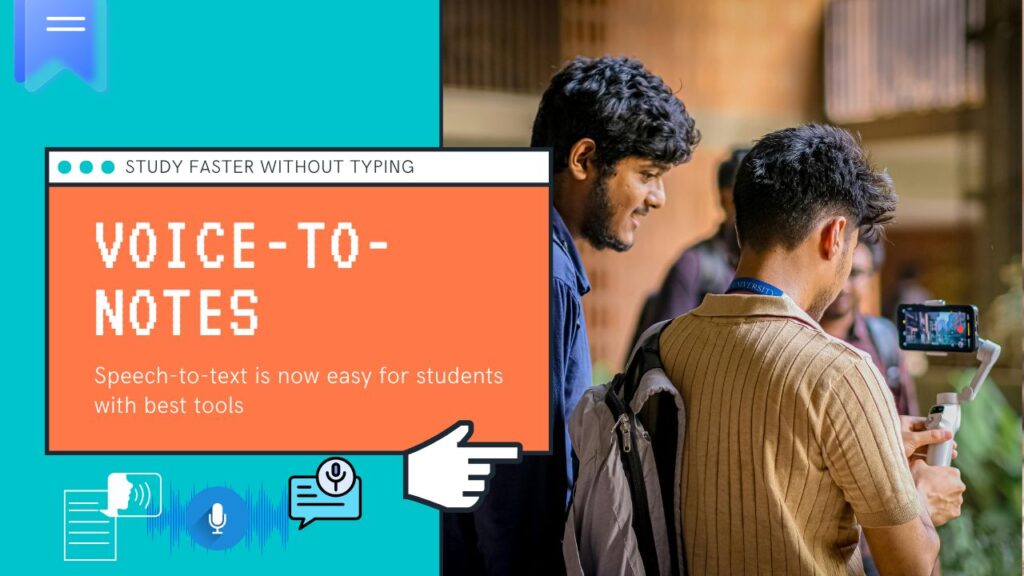
Voice-to-Notes Tools for Students: Study Faster Without Typing

Voice-to-Notes Tools

Voice-to-Notes Tools are really helpful from turning large study lectures into simple notes in just few minutes. Writing everything down is an old fashion technique that takes a lot of time for a few pages notes but everything is going easy with fast pacing technologies. Whether it’s hours of session or long research sheets, enabling speech to text is the smarter way to take notes. 

You’re forty minutes into a lecture, the professor has moved through three concepts, and your notes still say “photosynthesis — light reaction —” because your hand gave up before your brain did. Speaking runs at roughly 150-160 words a minute while typing tops out around 40 for most people. 

That gap is the entire case for Voice-to-Notes Tools , and for Indian students juggling coursework in English, Hindi, or a regional language, the tool you pick matters more than the concept itself — because most of the tools were built for American office meetings, not for Indian classrooms. 

Best Voice-to-Notes Tools For Indian Students 

There are plenty of tools that can turn your voice into text but then you find an error — spelling, whole different word (except, accept), not able to turn your regional language — that’s because it doesn’t understand. Some AI integrated voice tools that turn your every word into text without major errors is here:

Gboard Voice Typing — free, and it’s already on your phone

Before downloading anything, check what you have. Google’s Gboard keyboard has an in-built voice typing feature which you can use by clicking on the mic icon. If the icon is invisible then enable it from the setting so Voice-to-Notes can be easy and quick without downloading any new app.


It works in Hindi plus eight regional languages — Bangla, Gujarati, Kannada, Malayalam, Marathi, Tamil, Telugu, and Urdu — Indian students can use this keyboard in any app that takes input in the same language, not just Google’s own apps. 

For a student jotting quick revision notes in Hindi between classes, this is the lowest-friction option because there is no signup, no subscription, no separate app to remember to open.

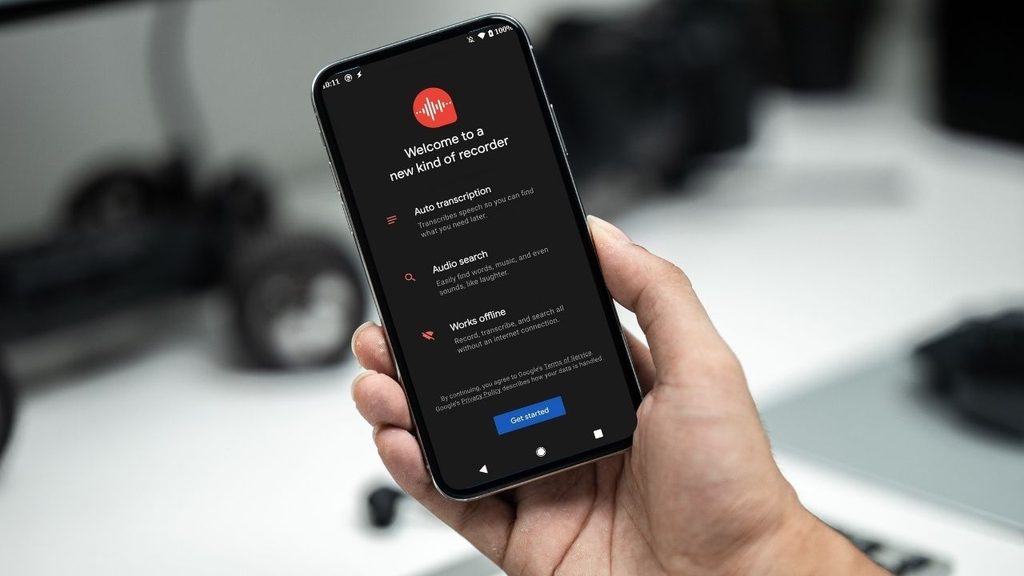
Google Recorder — real-time transcription, best if you have a Pixel

Google Recorder transcribes live as you speak and runs the processing on-device, which matters if your hostel Wi-Fi is unreliable. The catch: it’s tied to Pixel phones for its full real-time transcription experience, so if you’re on a different Android device or iPhone, this one’s off the table.

Otter.ai — good for English lectures, but it skips Hindi entirely

Otter is the name that comes up first in most “best Voice-to-Notes Tools” lists, and for English-medium lecture capture it’s genuinely capable — live transcription, speaker labels, searchable transcripts. 

The free tier gives you 300 minutes of transcription a month, capped at 30 minutes per recording, which covers maybe eight or nine standard lecture sessions before you hit the wall. The Pro plan runs $16.99/month billed monthly, or roughly $8.33/month if you pay annually (about $99.99/year). 

But for Indian students: Otter’s transcription supports English and a small set of other languages — Spanish, French, German, Japanese, Chinese depending on the source you check — but not Hindi or Indian regional languages. If your coursework happens in Hindi medium, Otter simply won’t understand you, no matter which plan you’re on.

Wispr Flow

Wispr Flow is the strongest option because it works inside almost any application. Students who want long-form writing and fast drafting can use this tool but unlimited dictation requires a subscription, which costs around $15 per month or $12 per month when billed annually. Since it supports more than 100 languages and gives accuracy for names and jargon along with AI editing, the cost is worth it.

VoiceToNotes.ai 

Its features include real-time transcription, grammar correction, AI summaries so it can become a useful tool for students which turn spoken thoughts into structured notes. Some professionals consider this tool as more affordable than many full-featured AI assistants but free usage is limited. The catch: accuracy still depends on microphone quality and background noise.

Mindgrasp

Mindgrasp is primarily an AI learning and content-understanding platform. Students can use it for lectures and study material — it helps in creating flashcards and quizzes automatically. Best for exam preparation and research but some features are tied to specific subscription tiers. 

Lisup 

Lisup focuses on accessibility and hands-free writing. It can be used across desktop applications so access will be easy and it is specifically designed for in-place speech-to-text features. It’s not built for broader use but enough for students to take notes easily. 

Soniox — the app actually built for Hindi dictation

Soniox is less well-known in student circles but solves exactly the gap Otter leaves open. It handles Hindi across regional varieties like Khariboli and Braj Bhasha, works system-wide across any app or text field on your phone rather than locking you into one note-taking interface, and covers 60-plus languages total with the ability to switch languages mid-sentence. 


It’s useful if you naturally code-switch between Hindi and English while explaining a concept to yourself. It’s free to start, with weekly free credits rather than a hard monthly cap, and the company states it doesn’t store your recordings or use them for model training, which is worth knowing if you’re dictating exam-prep notes you’d rather keep private.

Sarvam AI — worth watching, not quite a student app yet

Sarvam is India’s most-funded sovereign AI company, and its speech models (Saaras v3) handle 22 Indian languages with genuinely strong accuracy claims. But as of now, Sarvam’s product lineup is built mainly for enterprises — voice agents for banks and government call centers, APIs for developers — rather than a polished consumer app you’d install and use for lecture notes. 

A consumer-facing voice app was announced in February 2026, aimed at exactly this kind of mass-market, multilingual use case, but a public launch isn’t happening right now.

Read Also 👉 Why ChatGPT Ads Deserve a Place In Your 2027 Media Plan 

Why Do Students Need These Tools?

Most of the time students missed points while trying to understand the same topic simultaneously. Writing it down on paper or in a mobile is the same thing — it consumes a lot of time and misses points. So, these Voice-to-Notes Tools help students take notes without tiring their hands. 

There are some free and some paid tools, if you just need to take notes of what your processor is explaining then a free tool is enough for you. But if you are a Ph.D student or you need to do heavy research, organize every note, and make summaries from online content, you need a tool which can handle all of that, even if it costs you a little.

Which Speech-to-Text Tools are Best For Studies?

Google’s Gboard keyboard is the best free Voice-to-Notes Tools which I have used personally and crafting many documents in English, Hindi and Urdu. I recommended to students who wanted to take notes before exams and stop writing everything manually and waste their time. 


Gboard offers unlimited access to use on any other applications like docs, word, and on any device (mobile or laptop). Most of the students take their mobile to the college, so it runs smoothly. But sometimes it makes minor errors in spelling which you can edit later. 

Second is Wispr Flow but you have to pay after a limited use and many students can’t afford it but those who can afford can consider Wispr Flow as the best tool for making notes.

Read Also👉 Upgrade Laptop Like New Model In Low Budget

Conclusion for Voice-to-Notes Tools

The world is changing and for solving traditional problems by adapting new technology. One of the old problems is taking notes in a mid-session in your classrooms. Students have to understand the topic and write down their important concepts — two jobs at once.

If they forgot, they have to ask other students and it appears a problem if you don’t have a lot of friends. So the problem is solved now, you can spend your time to understand the topic without worrying about the notes as these Voice-to-Notes Tools do that job for you.

UPSC Principal and Vice-Principal Recruitment 2026: Must Check Complete Details

UPSC Principal and Vice-Principal Recruitment 2026

UPSC Principal and Vice-Principal Recruitment 2026 has started and now is the time to grab the chance if you want to become a government school head. UPSC has only put out a short notice so far. The detailed advertisement including the one with the actual syllabus, exam pattern, and category-wise vacancy split hasn’t dropped yet. So here’s a full breakdown of the recruitment drive.

If you’re an educator eyeing a senior administrative role in the government school system, this is  the largest hiring drive right now.

Overview of UPSC Principal and Vice-Principal Recruitment 2026

UPSC released the short notice for UPSC Principal and Vice-Principal Recruitment 2026 on 21 July 2026, for hiring multiple candidates for this position. This is a huge chance for educators in India, if you are one of them and want to apply then hurry. The online application form will be accepted from 25 July 2026 to 14 August 2026.

Here’s the vacancy split:

  • Principal: 124 posts (Pay Level-12), including 7 reserved for Persons with Benchmark Disability (PwBD)
  • Vice-Principal: 704 posts (Pay Level-10)
  • Total: 828 posts

That’s a heavily Vice-Principal-weighted drive — for every Principal vacancy, there are roughly five to six Vice-Principal openings. If you’re an aspirant with fewer years of leadership experience, the odds naturally favor the Vice-Principal track.

Important Dates for UPSC Principal and Vice-Principal Recruitment 2026 

You should start preparing for collecting the documents and be ready to apply on 25/July/2026.

EventDate
Notification released21 July 2026
Online application start25 July 2026
Last date to apply (online)14 August 2026 (till 11:59 PM)
Last date for fee payment14 August 2026
Exam / selection dateTo be notified later

Eligibility Needed for this Recruitment

Education Requirement: The short notice indicates that candidates need a Master’s degree from a recognized university and a Bachelor of Education (B.Ed) or equivalent qualification, along with relevant teaching and administrative experience. 

Experience: Exact experience requirements (how many years and in what role you have worked before) has not been confirmed yet – that kind of detail is usually in the full notification. But still min 10 years as PGT/TGT in recognised schools for principal post is needed and min 2 years as PGT or 3 years as TGT in recognised schools for Vice‑Principal.

Age Limit: The maximum age is placed between 35 and 50 years depending on the post, and is reckoned as on 14 August 2026 (the last date of application). The relaxation in age will be applicable as per the standard rules of Govt. of India for reserved category. If you’re close to a cutoff, don’t eyeball it — run your date of birth through an age calculator against 14 August 2026 before you assume you’re eligible.

Application Fee

Reported fee for General/OBC/EWS male candidates is Rs. 25, payable online via net banking, debit/credit card, or UPI. As always with UPSC, women candidates and SC/ST/PwBD candidates typically get fee exemptions — but confirm this against the official notification rather than a secondary source once it’s out.

Scope in UPSC Principal and Vice-Principal Recruitment 2026 

A few things make this recruitment worth paying attention to beyond the headline vacancy count:

It’s Group-A territory. Selected Principals will function as Group-A gazetted officers, which puts this squarely in the same administrative tier as many other UPSC-recruited posts — not just a teaching promotion, but a genuine entry into government administrative service.

Pay Level-12 for Principal is a serious jump. For anyone currently at a lower pay level in the school, this is a meaningful step up the ladder, not a lateral move.

828 posts in one go is unusually large. Government recruitment drives of this size don’t come around often, which also means competition will likely be intense, especially for the 124 Principal seats.

Read More 👉 NICL Assistant Online Form 2026: Apply Online & Eligibility

What to Do Right Now

  1. Don’t wait for the detailed notification to start preparing your documents. Educational certificates, experience certificates, and category certificates take time to compile — start pulling these together now.
  2. Double-check your age eligibility against 14 August 2026 using the post-wise limits once confirmed.
  3. Register or update your One-Time Registration (OTR) on the UPSC ORA portal if you haven’t already — this step trips up more candidates at the last minute than almost anything else.
  4. Keep checking upsc.gov.in directly, not just other sites, but check the official website and notification for every update on this recruitment. 

How to Fill Application Form for UPSC Principal And Vice-Principal Recruitment 2026 

Click on https://upsconline.nic.in/ora to redirect on the official website.

  1. If you are new then do One‑Time Registration with a valid Mobile number and email ID.
  2. Login to apply for Principal and Vice‑Principal recruitment 2026 or go to the recruitment section.
  3. Fill the application form with your correct information like Personal Details, education, teaching experience, Reservation Details, Posting Preference etc.
  4. Once you fill it now upload the documents of the same detail as you mentioned in the application form.
  5. Preview & Verify then submit Application Fee if you don’t belong to the reserved category.
  6. Submit and save the form for your records.

Conclusion 

This is a genuine opportunity for experienced educators to move into senior administrative roles within Delhi’s government school system, with a clear pay grade jump and Group-A status attached. But the sensible move right now is preparation, not panic — get your documents in order, watch the official portal for the detailed notification, and apply well before the 14 August deadline rather than in the final scramble.

Best Government Jobs Daman & Diu

Daman & Diu offer many various job roles in the government sector. When it is hard to find a job in the private sector at a place like Daman & Diu, you can have a government job after clearing the exams. There are the Best Government Jobs in Daman & Diu in the list below which ensure job security, a stable career, and a good income.

S.NoJob TitleDepartment / OrganizationOfficial Website Name & Link
1Assistant ProfessorGovernment College, DamanDaman & Diu Administration, https://daman.nic.in
2Medical OfficerDirectorate of Medical & Health Services (DMHS)Health Department, https://daman.nic.in
3Primary School TeacherDirectorate of Education, Daman & DiuEducation Dept., https://daman.nic.in
4Police ConstableDaman & Diu Police DepartmentPolice Dept., https://daman.nic.in
5Sub-Inspector (SI)Daman & Diu Police DepartmentPolice Dept., https://daman.nic.in
6Junior Engineer (JE)Public Works Department (PWD), Daman & DiuPWD, https://daman.nic.in
7AccountantFinance Department, Daman & DiuFinance Dept., https://daman.nic.in
8Lower Division Clerk (LDC)Various Departments, Daman & DiuDaman & Diu Admin, https://daman.nic.in
9Nursing OfficerDirectorate of Medical & Health Services (DMHS)Health Dept., https://daman.nic.in
10Forest GuardForest Department, Daman & DiuForest Dept., https://daman.nic.in
11Junior Lab TechnicianHealth Department, Daman & DiuHealth Dept., https://daman.nic.in
12Data Entry OperatorPlanning & Statistics DepartmentPlanning Dept., https://daman.nic.in
13Executive AssistantSecretariat, Daman & DiuAdmin Dept., https://daman.nic.in
14Veterinary OfficerAnimal Husbandry DepartmentAH Dept., https://daman.nic.in
15Driver (Class IV)Daman & Diu AdministrationAdmin Dept., https://daman.nic.in
Scroll to Top