Best Government Jobs in Madhya Pradesh 2025

If you are looking for a government job in Madhya Pradesh, then 2025 has brought new opportunities for you. There are many such posts in Best Government Jobs in Madhya Pradesh in 2025 which provide job security and respect along with good salary. Recruitment takes place every year in departments like MPPSC, Police, PWD, Health, Education, and Forest, which is beneficial for students of every qualification.

Whether you are 10th pass or graduate, Madhya Pradesh government has many great job options for you. There are good chances of promotion along with job. Below we have made a list of top 15 government jobs for you in which details of job title, department, eligibility and official website are given. This table will make it easier for you to choose the right job.

S.No.Job TitleDepartment/OrganizationEligibilityOfficial Website
1Deputy Collector (MPPSC)Madhya Pradesh Public Service CommissionGraduate Degreehttps://mppsc.mp.gov.in
2Deputy Superintendent of PoliceMadhya Pradesh Police DepartmentGraduate + Physical Standardshttps://mppolice.gov.in
3Assistant Engineer (Civil)MP Public Works Department (PWD)B.E./B.Tech in Civil Engineeringhttps://mppwd.gov.in
4Sub EngineerMP Urban Administration & DevelopmentDiploma in Engineeringhttps://urban.mp.gov.in
5Forest RangerMP Forest DepartmentGraduate in Science/Forestryhttps://forest.mponline.gov.in
6Staff NurseMP Health & Family Welfare DepartmentGNM / B.Sc. Nursinghttps://health.mp.gov.in
7Lecturer (School Education)MP School Education DepartmentPostgraduate + B.Ed + TEThttps://educationportal.mp.gov.in
8PatwariMP Revenue DepartmentGraduate + CPCT Certificatehttps://esb.mp.gov.in
9Jail PrahariMP Prisons Department12th Pass + Physical Fitnesshttps://esb.mp.gov.in
10Assistant Grade IIIMP Secretariat / Govt Offices12th Pass + Typinghttps://esb.mp.gov.in
11Food Safety OfficerMP Food Safety & Drug AdministrationB.Sc. in Food Tech / Microbiologyhttps://food.mp.gov.in
12Assistant District Public ProsecutorMP Law and Legislative Affairs DeptLLB + Advocate Licensehttps://law.mp.gov.in
13Veterinary Assistant SurgeonMP Animal Husbandry DepartmentB.V.Sc & AHhttps://animalhusbandry.mp.gov.in
14Rural Extension OfficerMP Panchayat & Rural DevelopmentGraduate Degreehttps://prd.mp.gov.in
15Junior Statistical OfficerMP Planning, Economics & Statistics DeptGraduation with Statistics/Mathshttps://mpplanning.gov.in

Leave a Comment

Your email address will not be published. Required fields are marked *

BPSC AEDO Syllabus, Recommended Books, Pattern, Job Profile & Skills Required

BPSC AEDO

BPSC AEDO Syllabus: It gives me immense pleasure to believe that a graduate can make such a difference by choosing to be in the education sector or education administration and directly impacting the lives of so many students. The Bihar Public Service Commission (BPSC) has recently made the entry for the position of Assistant Education Development Officer (AEDO). With 935 posts available, this is a golden chance for the candidates who want to get permanent and reputed government jobs in Bihar. l

But clearing a state level competitive exam is not a cakewalk. It needs a very strategic planning, strong study schedule and well understanding of examination pattern. Decoding the BPSC AEDO Syllabus is your starting line and most vital step, however attaining the job also depends on knowing fully the position that you are going to fill. 

This is the complete guide for BPSC AEDO syllabus in which you can get each and every information regarding this exam. From understanding the job profile and expected salary to analyzing the syllabus and best books, this article is your guide for everything you should know. 

What is the BPSC AEDO Job Profile?

The reality of the job must be understood before beginning preparation. The Assistant Education Development Officer (AEDO) post is a combined administrative and supervisory post. The AEDO is the vital link between the state’s education department and the schools at the ground level. 

As an Assistant Education Development Officer, you ensure the execution of educational policies and keep a watch on schools in that area to see if they adhere to the minimum standards of education and infrastructure. 

Key Responsibilities of an AEDO:

  • Educational Supervision: AEDO officers must check the working of government schools in their region consistently to speed things.
  • Scheme Implementation: Monitoring every government schemes to be implemented properly.
  • Analysis & Reporting: To generate believable reports with information such as student enrollments, attendance rates, dropout rates, and pass rates for students across courses.
  • Administrative Mediation: Redressing grievances of teaching staff, resolving logistical issues, ensuring adequate supplies and proper functioning of schools.
  • Quality Control: To conduct inspections for up keep the good quality in teaching and to ensure the syllabus is covered as per the state board. 

There is no typical desk day in this position. You’ll need to be out in the field or on campus, talking regularly with staff at schools, and taking the lead on identifying and addressing any administrative roadblocks. 

Salary and Perks: Why is the AEDO Role Highly Sought After?

Apart from the prestige and societal level impact associated with the post, the BPSC AEDO post provides very good salary and excellent job security. 

Salary is given under the Pay Level 5 as the government’s pay matrix.

Basic Pay: ₹29,200 per month.

Allowances:

  • Dearness Allowance (DA), 
  • House Rent Allowance (HRA), 
  • Travel Allowance (TA), 
  • Medical Allowances

The initial in-hand salary ranges between ₹40,000 to ₹45,000 per month.

Growth/Promotion: One can become a DEO or take up other high administrative posts in the Bihar Education Department from an AEDO with the experience of years and departmental promotions. 

Eligibility Criteria and Essential Skills Required

Educational & Age Criteria:

CategoryMinimum AgeMaximum Age
Educational Qualification–Any Stream’s Bachelor’s Degree in any discipline from a recognized university 
Unreserved (UR) Male21 years37 years
Women (All Categories)21 years40 years
OBC/EBC21 years40 years
SC/ST21 years42 years

Essential Skills for Success:

  • Fluency in Hindi and English: You need to have good communication skills in Hindi and English while dealing with teachers, government officials and the public.
  • Analysis: Reporting requires you to collect data on student enrollment, for example, or financial records then analyze that information to come to conclusions.
  • Leadership and Mediation: You may need to negotiate disputes within administration to hold the line on discipline and maintain orderly learning conditions.
  • Versatility: You were to expect to go and work at different blocks, and more than you expects at getting curve balls in logistics. 

Complete BPSC AEDO Syllabus and Exam Pattern

Understanding the exam pattern very well will only help you to crack the written exam. Here is a brief about BPSC AEDO exam pattern 

The BPSC AEDO papers are in the objective type questions (MCQs) format spread over three papers. The two-hour papers are of 100 marks each. 

Guideline on Negative Marking: 1/3rd of the mark allocated to the question will be deducted for each wrong answer. Precision is just as important as the number of tries. 

PaperSubjectTotal MarksDurationNature of Exam
Paper 1General Language (English – 30, Hindi – 70)1002 HoursQualifying (Min. 30% in both separately)
Paper 2General Studies1002 HoursEvaluated for Merit
Paper 3General Aptitude1002 HoursEvaluated for Merit

The Detailed BPSC AEDO Syllabus

A focused plan of preparation depends on the exclusive understanding of the given official BPSC AEDO Syllabus. Let us now discuss each paper:

Paper 1: General Language (Qualifying)

This exam is to check your basic grammar knowledge. You will have to obtain a minimum score of 30% in both English and Hindi parts minimum for your other papers to be evaluated. 

English (30 Marks): 

  • Basic Grammar, 
  • Vocabulary, 
  • Synonyms & Antonyms, 
  • Idioms & Phrases, 
  • Sentence Correction, 
  • Reading Comprehension.

Hindi (70 Marks): 

  • Hindi Vyakaran (Grammar), 
  • Sandhi, 
  • Samas, 
  • Paryayvachi Shabd (Synonyms), 
  • Vilom Shabd (Antonyms), 
  • Muhavare (Idioms), 
  • Unseen passages.

Paper 2: General Studies (Merit-Based)

  • History: Indian History both old and new. Bihar contribution in Independence of India. 
  • Geography: Indian Geography. Focus on Bihar economic and physical geography which covers Drainage, soil and mineral wealth of Bihar. 
  • Indian Polity & Economics: Indian Constitution, governance and Policies implemented by the Central Government. 
  • Basic Science: Biology, Physics, and Chemistry of 10th class. 
  • Current affairs & General Knowledge: Big events and global summit of India specifically current events of Bihar in last 10-12 months. 

Paper 3: General Aptitude (Merit-Based)

General Quantitative Aptitude should best be learned by building your fundamentals with clear concepts of class 6th to 8th level books that are worked on in a very plain and simple way on all the necessary things. Concentrate on the following Chapters – Number Systems, Ratio and Proportion, Simplification, Averages, Profit and Loss, Percentages, Simple and Compound Interest, Time and Work, Speed and Distance and some Basic of Mensuration (2D and 3D). 

Also, reasoning plays a vital role, so you must practice topics like Number and Alphabet Series, Analogies, Coding Decoding, Blood Relations, Syllogism and non-verbal reasoning topics like Mirror Images & Paper Folding on a regular basis. 

The data interpretation is also very important aspect in the exams, where you have to frame questions on the basis of tabular data, pie chart and bar graph and solve them, so on these fronts you need along with gre speed you also require gre accuracy. 

Best Books for BPSC AEDO Preparation

With so much information out there, it’s natural to feel intimidated about where to start. The trick is to have a small number of dependable books, go through them a few times and not to hoard too much revision material. Below are some of the best books recommended for each section: 

For General Language:

  • Objective General English by S.P. Bakshi (Arihant Publications)
  • Samanya Hindi by Lucent Publications

For General Studies:

  • General Knowledge by Lucent Publications
  • Bihar Samanya Gyan by Manohar Pandey or Crown Publications
  • NCERT Books (Class 6th to 12th)
  • Monthly Current Affairs Magazines or News Paper

For General Aptitude:

  • Quantitative Aptitude for Competitive Examinations by R.S. Aggarwal (S. Chand)
  • Fast Track Objective Arithmetic by Rajesh Verma (Arihant)
  • A Modern Approach to Verbal & Non-Verbal Reasoning by R.S. Aggarwal

Pro Preparation Strategy to Crack the Exam

Having the right textbooks and knowing the syllabus is only half the battle. How you organize your daily study routine, now that’s the killer, that’s what’s really going to make or break you.

Don’t Disregard Paper 1: Many students end up underestimating the language paper because it is “acting as a gatekeeper”. But if you are not getting minimum 30 per cent in both Hindi and English, you will be disqualified no matter how many marks you are getting in others papers. Form a habit of completing at least 45 minutes language sessions daily.

Concentrate on Bihar-centric issues: Geography, history and current affairs of Bihar carry more weightage in GS. Consider “Bihar Special” as a separate paper and study accordingly. 

Be good at managing your time: You have 100 questions in the Aptitude section to be solved in 120 minutes. It provides you 1 minute for each question. Practice learning to skip the harder and more time-consuming questions and answering the simpler questions first. 

Mock Tests are non-negotiable: Start taking full-length mock tests not later than 2 months prior to the exam. It will get you used to the 1/3rd negative marking pattern. Analyze the questions you get wrong to see where you are weak and to improve your guessing. 

Revise Consistently: Use your weekends to go over everything you learned during the week. Keep your notes brief and clear so you can quickly review them in the last weeks.  

Read More :- UPSSSC Excise Constable Recruitment 2026 Complete Guide to Prepare Early

Conclusion

BPSC AEDO exam is a good way to get a respected and secure job in government service. The competition will be hard but well disciplined based on complete knowledge of BPSC AEDO Syllabus and Exam Pattern will make you ahead from the rest. Get your material, prepare a realistic timetable and start your preparation now. To qualify the state level public service exams, constancy counts more than severity. 

RRB JE Notification OUT With RRB JE Vacancy Of 3,993 Posts 

RRB JE

The Railway Recruitment Board announced RRB JE vacancy count which is 3,993 posts, spread across Junior Engineer, Depot Material Superintendent, and Chemical & Metallurgical Assistant roles. The RRB JE Notification was released on August 13 with important dates, eligibility, vacancy figure, exam pattern and salary. 

RRB JE Vacancy 2026: Post-Wise and Category-Wise Breakup

The 3,993 vacancies cover four engineering streams — Civil, Mechanical, Electrical, and Signal & Telecom along with the DMS and CMA posts. That’s a real jump from the previous cycle, which had closed at 2,588 vacancies, so this is one of the larger JE drives in recent years.

Category-wise, the RRB JE Vacancy split works out to 1,699 for Unreserved, 913 for OBC, 624 for SC, 394 for EWS, and 363 for ST candidates. Zone-wise, Kolkata leads the pack with 457 posts, followed by Mumbai at 411 and Chennai at 362 — useful to know if you’re weighing zone preference during the application, since your posting zone affects both competition and your eventual place of work.

Dates You Actually Need to Track

EventDate & Time
Short notice released21/July/2026
Detailed notification out13/August/2026
Online application window opens14/August/2026
Last date to apply13/September/2026 (11:59 PM)
Correction windowOpens after the application period closes (exact dates to be notified)

Eligibility For Students to Apply

The age bracket is 18 to 33 years, calculated as on January 1, 2027 — not the application date, which trips up a lot of candidates who calculate their age wrong and either apply thinking they’re ineligible or, worse, apply thinking they qualify when they don’t. Reserved category candidates get the usual RRB age relaxation on top of this.

On qualification, you need a Diploma or a B.Tech/BE degree in the relevant engineering discipline — Civil, Mechanical, Electrical, or Electronics/IT, depending on which post you’re targeting. If your degree doesn’t map cleanly onto one of the notified branches, it’s worth checking the equivalence list in the detailed PDF before you pay the fee, not after.

How Will You Get Selected For RRB JE in 2026?

RRB JE recruitment runs through four stages. CBT-1 is common to everyone regardless of discipline — 100 questions in 90 minutes, covering general awareness, mathematics, general intelligence, and general science. 

Clear that, and you move to CBT-2, which is discipline-specific: 150 questions in 120 minutes, including a technical abilities section tied to your branch, with an on-screen virtual calculator provided during the exam.

Both stages carry negative marking of one-third mark per wrong answer, so guessing blind isn’t free. 

CategoryQualifying %Equivalent marks (out of 100)PwBD relaxation
UR40%40−2 marks (i.e., 38) where applicable
EWS40%40−2 marks (i.e., 38) where applicable
OBC-NCL30%30−2 marks (i.e., 28) where applicable
SC30%30−2 marks (i.e., 28) where applicable
ST25%25−2 marks (i.e., 23) where applicable

After CBT-2, it’s document verification followed by a medical exam — and only your CBT-2 score determines the final merit list, CBT-1 is purely a screening round.

Read More 👉 RRB Section Controller 2026: Job Role, Eligibility, Salary, and How to Apply

RRB JE Salary Package & In-Hand Earning

Candidates who got the place in RRB JE Vacancy are going to earn around ₹35,400 under Pay Level 6 of the 7th CPC which increases with candidates experience up to ₹1,12,400. The In-hand salary lands somewhere in the ₹40,000–₹50,000 range per month, although the exact amount can vary based on the place of posting and applicable deductions. 

On the application fee, the short notice confirms that candidates who appear for CBT-1 get a refund minus applicable bank charges, but the exact fee amount for this cycle isn’t listed in what RRB has published so far — check the fee section of the detailed CEN PDF directly before you pay, rather than going by last cycle’s number.

Where To Start Preparing Yourself For RRB JE Exam

Start with CBT-1 prep, not CBT-2. Since CBT-1 is the common gate for every discipline, the candidates who clear it fastest are usually the ones who treat general awareness and reasoning as seriously as their core engineering subjects, instead of saving all their time for the technical paper. You can branch into discipline-specific CBT-2 prep once CBT-1 is behind you — trying to do both at once from day one is how most aspirants burn out before September even arrives. 

Apply through rrbapply.gov.in, and keep your documents, especially your diploma/degree certificates and category proof — scanned and ready before you sit down to fill the form. The application window is open now; there’s no reason to wait on this one.

How to Apply for RRB JE Vacancy 2026

  1. The entire process runs on the RRB Official Website, and it starts with One-Time Registration (OTR). If you’ve never applied to an RRB CEN before, you’ll need to complete OTR first: enter your basic details, mobile number, and email ID, then verify both through OTP before you get a registration ID and password. If you already hold valid OTR credentials from an earlier RRB cycle, you can skip straight to login.
  2. Once you’re in, go to the “Apply” section, select CEN 04/2026 – JE/DMS from the list of active notifications, and choose your preferred post, discipline, exam language, and RRB zone. Zone choice matters more than people think — it affects both how competitive your slot is and where you could end up posted, so don’t just pick your home state by default without checking that zone’s vacancy count against the others.
  3. From there, fill in your educational and personal details carefully, upload your photograph, signature, and category or PwBD certificate where applicable, and move to fee payment.  JE cycle charged ₹500 for General/OBC/EWS candidates, with ₹400 refunded after CBT-1 appearance, and a lower, fully refundable fee for SC/ST, women, Ex-servicemen, and PwBD candidates — treat that as a reference point, not a confirmed number, and check the fee section of the detailed PDF before you pay.

Review every field before hitting submit — RRB doesn’t allow changes to most details after the correction window closes, and errors in category, post preference, or documents can cost you the entire cycle. Once submitted, download and save the confirmation page. And don’t leave this for September 12: the portal slows down badly in the final 48 hours of every RRB cycle, and a payment that fails at 11:58 PM on the last date isn’t RRB’s problem to fix.

Read More 👉 Best Lightweight Sunglasses for Student Life 

Conclusion

The RRB JE Notification is out, the number of RRB JE Vacancy is 3,993, and the application window is open right now — the uncertainty phase of this cycle is over, and what’s left is execution. 

The CBT-1 date hasn’t been announced yet, which actually works in your favor if you use the gap between now and September 13 to get your OTR done, your documents scanned, and your CBT-1 prep started, instead of waiting for the exam date to create urgency for you. 

Top 10 Mobile Apps for Government Exam Preparation in 2025

Top 10 Mobile Apps for Government Exam Preparation

The struggle of preparing for competitive exams is a common issue, students find it hard to get helpful resources. The top 10 Mobile Apps for government exam preparation will be helpful for you. It’s not about knowing the apps but understanding which app has a particular resource for your exams is challenging, especially when you’re just starting. There may be dozens of apps promising “success” and “selection,” but let me be honest with you, only a few are genuinely helpful. 

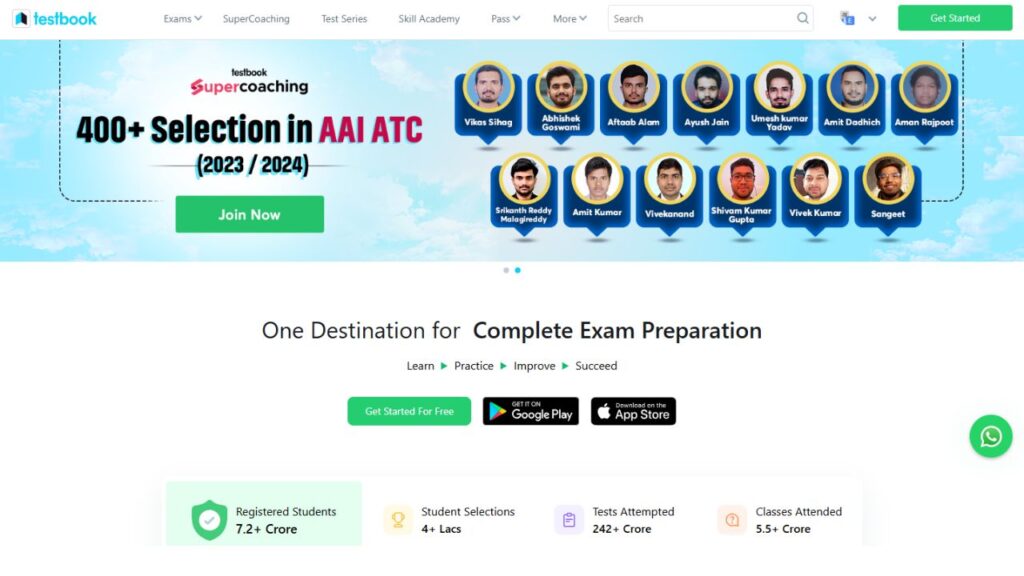
Testbook – The All-Rounder You Can Trust

If you are someone who wants to prepare for SSC, PSUs, RRB, Defence, or even State-level exams, Testbook is your best starting point. This App has a simple design which makes it user-friendly and powerful mock tests. After each test you have, it generates a detailed performance report like where you’re weak and how much time you spent on each question. It’s used by more than 5 crore students across India. Even if you’re just in 10th or 12th now, you can start building your basics here slowly.

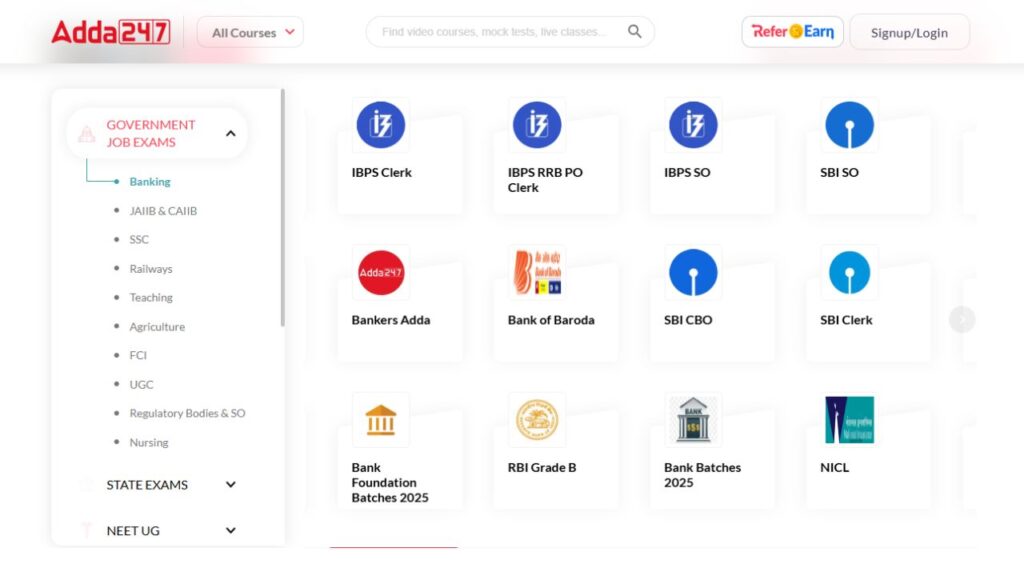
Adda247 – Best for Hindi Medium and Bilingual Students

If you want to learn in your native language like Hindi or want preparation in both Hindi and English, Adda247 is a great option. It’s very popular for Government Exams. This app provides daily notes on current affairs, live video classes, free PDFs, and QAs. The best part is you will also find motivational sessions and free YouTube content from their teachers. Many girls from small towns mentioned that they prepare for their exams with this app on Google Reviews. 

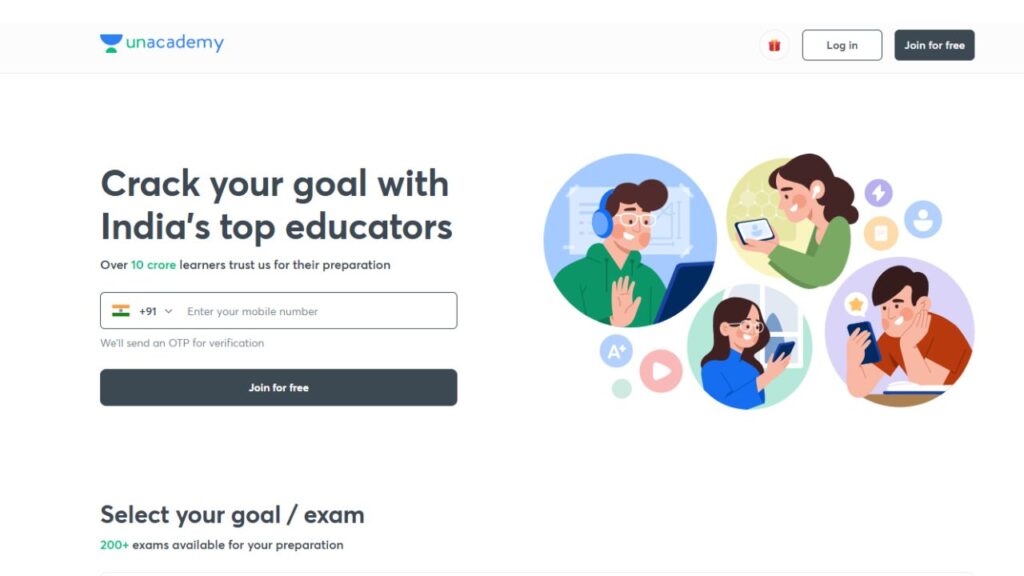
Unacademy – Learn Live from Top Educators

Unacademy is perfect if you like learning from live classes rather than just reading PDFs or solving MCQs. Some students are capable of learning by listening faster than notes. Concepts were explained by the top educators in a detailed manner. Whether it’s UPSC, SSC, Bank, or State PSC exams, you’ll get proper guidance. With this app, you can record a live session to watch later. The app offers more features in the paid version but many free classes are also available.

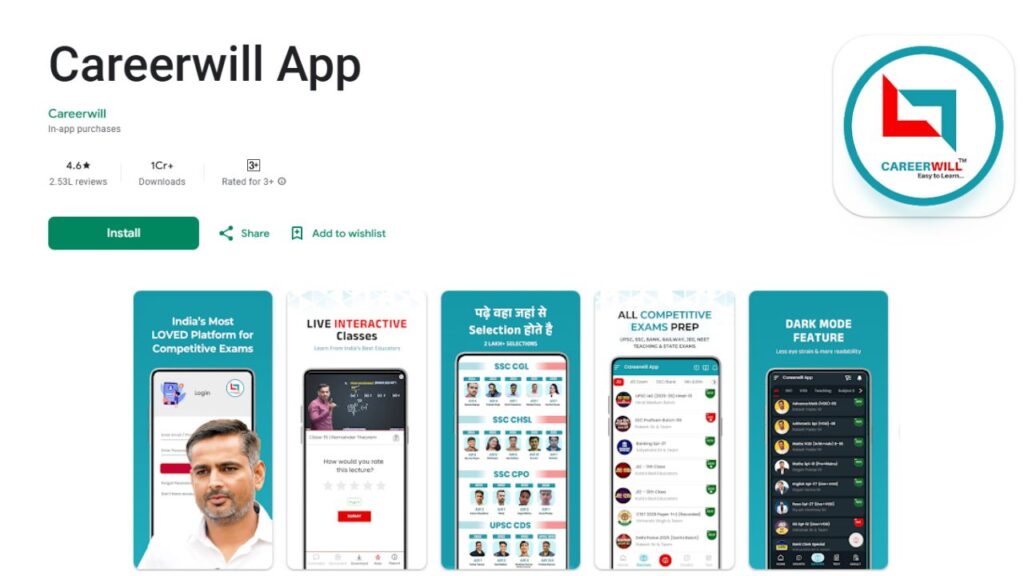
Careerwill App – Structured Courses for Serious Learners

This app is preferred for senior people who want to switch their careers to a government job. If you like planning, schedules, and a fixed timetable, Carerwill can be a solid choice. Start preparing with the help of top educators on this app. They provide quality content and latest exam patterns to prepare fast and strategically to level up in competitive exams. It’s especially good for students who don’t want to get lost in a lot of syllabi but need the right direction.  

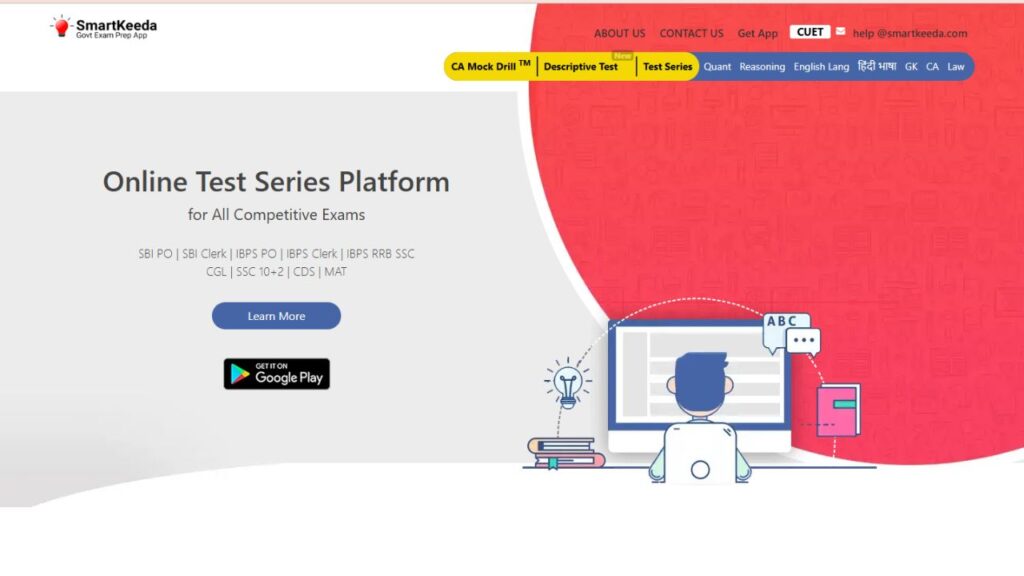
Smartkeeda – Best for Practice and Analysis

It’s not just about reading but you need strategic planning to cover all the points which help you clear out the exam. Practicing with Smartkeeda which prepared you for Banking, SSC, and Insurance exams. Their time-based analysis, solution quality, and explanation format are top-notch. Many toppers credit their success to Smartkeeda’s mocks. If you are full of knowledge and just need to polish your exam content then this is the best app.  

Khan Global studies is an ideal app for those who want to assess the deeper knowledge in each subject to score in 90 above. You must have to give time consistently to prepare for the competitive exams. It offers live lectures, test series, and study material for UPSC, MPPSC, RRB, SSC, PSU, NDA, CPF, AirForce, and many more. You can record lectures for later revision. This app is launched by Khan Sir, use this app to level up your preparations.

Students of primary classes have dreamed about becoming an IAS or IPS, and this app is perfect for them. The language is easy to understand and makes them prepare with time and effort. After following up with ClearIAS, the app focuses purely on civil services preparation. It gives current affairs, daily MCQs, subject-wise notes, and strategy sessions. 

If you’re someone already thinking of a future in the Banking sector, CrackitToday is made for specific banking exam preparation. This app includes daily quizzes, monthly PDFs, and a ranking system that tells you where you stand. So, be smart to download and start preparing today. The user interface is very beginner-friendly so anyone can use it easily. The app keeps updating its content with new trends and expected questions.

Another interesting option for daily practice is Kadmik. If you love challenging games then consider this app as your career saver. Start your study without getting bored. It also has the option for you to earn points, climb leaderboards, and revise previous mistakes. It has questions for SSC, Banking, and Aptitude tests. Ideal for those who want to engage in fun while studying.  

PW is well-designed and contains solid questions. Ideal for those who want to prepare seriously without wasting time. It is best for peaceful study for JEE, NEET, SSC, UPSC, GATE, and Railways exams. The App rating is 4.6 and many students praised its content quality.

Read More 👉 Top Highest Paying Government Jobs in India That Pay Like Private Sector!

Staying regular and starting early is a smart choice for students who want a career in government jobs. Don’t run here and there for resources just download the app according to your needs. Confusion begins when you start using too many apps at once. 

  • To get study materials and start preparing from scratch, use Testbook or Unacademy.
  • If you want to learn in Hindi, download Adda247.
  • Students preferring coaching structures and videos can go for Byju’s exam prep.
  • Help to build study habits, use Qudoo or Kadmik. 
  • Revised helpful apps: Smartkeeda and CrackitToday. These apps are masters in building your concepts solid.

Before you start your journey for a government job. Consider these apps on your mobile to help you get one step ahead in the competition. Many students had to search for books, ask teachers, and sit in crowded coaching classes. These top 10 Mobile Apps for government exam preparation are helpful to start your journey.

Don’t try too many questions in a single day, just try to be consistent and everything’s wrapped up naturally. Your journey may seem long now but with the right tools and mindset, you can achieve your goal. So choose your app smartly. Make a daily habit. Start small. And stick to it.

MPPSC Scientific Officer Details: Lab Geek to Crime-Solving Pro Journey

If you love solving puzzles and investigating small incidents in your life then your mind is already adapted with critical thinking. If you are interested in biology, it will be a bonus point to choose to become a MPPSC Scientific Officer.

The Madhya Pradesh Public Service Commission (MPPSC) regularly recruits Scientific Officers to work in the state’s Forensic Science Laboratories (FSL). If you have a strong education degree with biology and chemistry then you can apply for this role. It is one of the most unique, respected, and fascinating government jobs out there.

It requires specialized skills as this is such a specialized role, you probably have a lot of questions like how can you apply for this role? 

Here is the whole guide to become a Scientific Officer and eligibility criteria to apply for the MPPSC Scientific Officer role. 

What Does an MPPSC Scientific Officer Actually Do?

You probably imagine a government job as tons of files on the desk and endless tasks to complete. But the role of a Scientific Officer is entirely different. 

The Criminal Justice system needs a man with expertise to identify and analyze the founding elements (evidence) from a crime scene. This duty comes with a huge responsibility that is why the Scientific Officer considered the backbone of the criminal justice system. If you are selected for this job, you will be posted in any forensic labs across Madhya Pradesh. 

The job is divided into different disciplines based on your educational background:

Physics Division: Marks on the wall, floor, crack glass, tool marks, are the expertise of the Scientific Officer (physics division) who has to analyze the crime scenes and examine crime scene photographs.

Chemistry & Toxicology Division: Any crime conducted using chemicals, illicit drugs, explosives, are the Chemistry & Toxicology Division Scientific Officer responsibility to examine. He also tests for poisons in biological samples.

Biology & Serology Division: Involves with biology evidence like DNA from hair and blood stain and profiling is Biology & Serology Division Scientific Officer responsibility.

In this role, you are not working in the lab. The police department and court rely upon your reports. It can literally make or break a criminal investigation. So, it’s a strong sense of ethics and absolute precision. 

Who Can Apply? 

Since it’s such a technical position, you can’t just walk in with a regular bachelor’s degree. The MPPSC needs experts on the subject. 

Educational Qualifications: 

You need a Master’s degree (M.Sc.) but choose a particular subject according to the requirement of the division.

You can choose Physics or Forensic Science in both BSc and MSc if you want to enter a physics division.

You can choose Chemistry or Forensic Science in both BSc and MSc if you want to enter a chemistry division.

You can choose Botany, Zoology, Biochemistry, Microbiology, Genetics, or Forensic Science in both BSc and MSc if you want to enter a Biology division.

Age Limit: 

For candidates from Madhya Pradesh the age limit is generally 21 to 40 years. But, a big age relaxation is there mentioned for SC/ST/OBC candidates, women candidates and govt employees of mp. The upper age limit for the candidates applying from out of madhya pradesh is usually 28 or 30 years, as per the particular notification. 

The Exam Pattern

The MPPSC selection process for this post is quite simple. There are generally two stages: a written exam (OMR-based) and an interview.

So, Let’s check at the written exam: It is in two parts and the full exam is of 450 marks with 50 marks for the interview. 

Part A: General Knowledge and Computer Knowledge (150 Marks) 

This is the stumbling block for many science students. Maybe you’re a genius in the lab, but you›ve also got to know your state. Part A comprises of:

B) General Knowledge of Madhya Pradesh – History, geography, economy, arts and culture of MP. You have to know the state like the back of your hand.

National and International Current Affairs: What the world and India is up to at present.

Information and Communication Technology: Basic computer literacy, internet, cybersecurity and e-governance. 

Part B: Your Subject Specialization (300 Marks) 

This is your moment to shine. B is completely specific to the subject you applied for (Physics, Chemistry, or Biology). The syllabus of this part is actually your whole M.sc. You can anticipate deep, conceptual, and technical multiple choice questions. 

One mark can be cut from your answer sheet if you answer incorrectly and give you 3 marks for the right answer.

Read More:- State Police SI vs SSC MTS: Most Prestigious Government Jobs Comparison

Salary of the MPPSC Scientific Officer

Scientific Officer is a Class-II Gazetted Officer post. So this is equal to respect to and you enjoy a good pay scale. The pay scale and the grade pay of the basic pay fall under a very comfortable range of pay (usually basic pay would be in the range of Rs. 56,100 as per 7th Pay Commission). 

After including DA, HRA and other government benefits, your net salary becomes very attractive. In addition, you receive unbeatable job security afforded by a state government position, plus health care and a pension plan. 

Conclusion

MPPSC Scientific Officer is not merely a job, rather it’s a platform to utilize your scientific knowledge for the welfare of the society. It’s hard, mind-bending work, and a fantastic feeling. 

The competition exists, but as the eligibility is limited to certain post-graduate degrees, the crowd is much lesser when compared to common exams like the State Service Exam (PCS). You don’t have to compete against millions; you have to compete against your peers. 

If you have the prescribed qualification and a planned study schedule, then there is no way this exam can not be cleared by you. Be clear with your concepts, be updated with current affairs of mp and start your preparation from today itself. Good luck! 

Regular vs Distance Education: Which Is Better for You?

Student comparing Regular vs Distance Education with books and a laptop, symbolizing classroom learning and online flexibility

Choosing the right educational path after 12th with any stream is confusing. Many students want to work while pursuing their higher education and some of them want to focus on their studies properly. Regular vs Distance Education is best in their own perspective, whether you have an educational background in science, commerce or arts. Let’s look into this topic further to differentiate both the topics in more detail. To resolve the confusion, analyze – Which one holds more value? Which option is best for your career? 

I have seen many students and parents discussing this issue and get confused. Let me tell you one thing, it depends on your degree. Theoretical degree – you can get from distance but not MBBS or B.Tech because it requires practical experience.

In this article, we will look at both options by giving every detail of both education, so you can make a smart choice that fits your life, your goals, and your budget.

What is Regular Education?

Think of regular education as the traditional “college life” you see in movies. You have to:

  • Attend classes on a fixed schedule.
  • Go to a physical campus every day.
  • Talk and be responsive to your teachers and classmates face-to-face.
  • Some colleges are strict about the 75% attendance percentage.

Students who aim to learn not from just books but also from being part of a college community, participating in events, and living the campus life. 

What is Distance Education?

Distance education, also known as Open and Distance Learning (ODL), is all about flexibility. 

  • You study further in your choice of career from anywhere in India.
  • Take resources at your preference such as online materials, videos, and books.
  • You can study at your preferred time and have no issues with attending daily classes.
  • No face-to-face Interaction with teachers and students. Interaction happens mostly on online platforms or weekends.
  • You can manage work and study parallely. 

Top government-recognized universities like IGNOU and private ones like Symbiosis are offering distance education in India.

Quick Comparison for Regular vs Distance Education

FeatureRegular EducationDistance Education
LocationFixed CampusAnywhere in India
ScheduleDaily classesFlexible
CostVery High (Tuition + Living)Very Low (Mainly tuition)
InteractionFace-to-face with teachers/peersVirtual (Online forums, email)
DisciplineDriven by teachers & timetableRequires high self-discipline
Best ForPractical, lab-based coursesTheory-based courses, upskilling

Regular Education – Pros & Cons

Pros:

  • Networking Growth: You can have a chance to grow your network in the same field for more career benefits. Strong relations to both students and teaching can develop your communication skills.
  • Direct Teacher Guidance: You can respond to teacher’s questions and ask them individually to clear your doubt. Some teachers are good at encouraging students for their career.
  • Campus Life: Extra curricular activities and sports can be beneficial for your mental and physical health. Overall development is something you only get on campus.

Cons:

  • Expensive: Some students can’t afford college fees, but they need to hold the degree to grow in their career. 
  • No Flexibility: You cannot work a full-time job if you are attending regular classes. Part-time jobs can give you any experience for your career. If you want to prepare for any competitive exam then distance education is a good option.
  • Relocation for Studies: Students who live in lower regions have to move out for studies and it will be difficult for them.

Read More 👉 BTech vs BSc vs BA in 2025: Which Degree Offers the Best Future Scope?

Distance Education – Pros & Cons

Pros:

  • Affordable: Anyone can afford distance education fees because these are half of the regular degree fees.
  • Earn While You Learn: You can do both at the same time – working full time and take your lessons whenever you get free. 
  • Prepare for Competitive Exam: You can also prepare for the competitive exams.
  • Accessible from Anywhere: A student from a small town can get a degree from a top university in Delhi without leaving their hometown.

Cons:

  • Needs Self-Discipline: You need to focus on self-study because there is no teacher to push you.
  • The Digital Divide: While Improving, Still many students do not have laptop or wifi access to their home for study.
  • Limited Practical Labs: You can pursue master degree or theoretical education from distance education but for engineering and medical, you need hands-on lab experience.

Who Should Choose Regular Education?

  • Recent School Pass-outs (12th Graders): If you are young and want the full college experience, and your family can afford it, regular mode is a great choice.
  • Students Pursuing Technical/Lab Courses: For degrees like B.Tech, MBBS, or pure sciences, the hands-on practical training in a regular college is essential. These courses are not valuable for career and UGC also prohibits them.
  • Structured Environment: Many students are not able to study on their own so they need big support from teachers to help them stay on track.

Who Should Choose Distance Education?

  • Working Professionals: If you are already in a job and want to upskill for a promotion (e.g., getting an MBA), distance education is perfect.
  • Homemakers: women who can’t afford to attend regular classes because of their responsibilities can choose to continue their study from distance education 
  • Competitive Exam Aspirants: UPSC, SSC, Railways or banking aspirants often take a distance B.A. or B.Com degree to meet the eligibility criteria while focusing on their main preparation.
  • Students in Rural: They mostly need to move out for education and some students can afford this, they can get quality education at their doorstep.

Career Scope & Recognition in India

This is the most important part. The University Grants Commission (UGC), the main body for higher education in India, has officially stated that degrees from Regular, Distance (ODL), and Online modes are to be treated as equivalent.

This means if a job requires a B.Com degree, a B.Com from IGNOU is just as valid as a B.Com from Delhi University for applying to that job, including government jobs. In 2025, Indian companies care more about your skills and whether your degree is from a UGC-recognized university, not the mode you studied in.

Universities Delivers Regular & Distance Education

Top Universities for Regular Degree

Read More 👉 MTech vs MBA in 2025: Who Earns More and Why? Find Out Now!

Top Universities for Distance Degree

Top Universities for Both (Distance & Regular)

  • NMIMS 
  • Amity University
  • Lovely Professional University

Conclusion

There is no single answer for this confusion, you must think about the option that aligns with your career, situation and budget.

Choose Regular Education if: 

  • You can afford
  • You are a recent school graduate
  • You want an immersive campus experience

Choose Distance Education if: 

  • You need flexibility
  • want to study while working 
  • limited budget
  • focused on a competitive exam.

In today’s India, both paths can give you a better career if you have developed skills in yourself. There is no 100% guarantee in both education that you can get a placement. What can give you guarantee is your hard work and improved skills. The right path is the one that takes you to your destination without derailing your life.

Scroll to Top